Bees and Bee Keeping in Kuwait
Also from the Kuwait Agrifood Website – who knew? Who knew there was a family in Kuwait working to build a viable honey-production culture? I came across this accidentally, and love the site.
Growing up, i remember hearing that people with allergies should eat local honey, it helps build resistance (don’t ask me, I’m not a doctor!) and, in addition, we are all trying to shop and live more locally, so having Kuwait honey is – to me – way cool.
Have you seen honey from this farm in the markets? Can you tell me where?
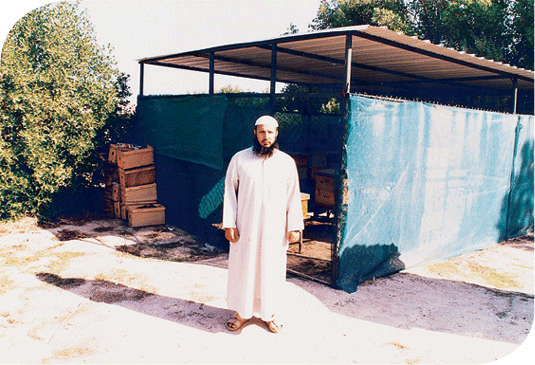
Established in 1996 as a small apiary with 1-15 hives. A year later the apiary was supported with 5 hives imported from Al Yahya Company in Egypt which appeared to be a good start and was of distinguished quality and quantity. That encouraged us to invest in this field and plan to take it as a side job
Ever since that time the apiary grew year after another till the number of hives reached 300 in the year 2002 and it greaw rapidly in the following year till it became 700 hives distributed in different areas of Kuwait
Our production is divided into 3 Seasons. We produce 4 different kinds of honey: These are Cidar honey (main products) lasts from 10/9- 10/11 every year. The second season includes 2 products: flowers honey. (Rhanterium epoposum) and spring honey i.e. flowers of inhabited areas this lasts from 10/3-10/5 every year. The third season started in 10/5- 10/7 and is mainly kina honey
We bread a good kind of bees internationally well known: Crinoboly and Italian, both are originated from AlYahya Company- Egypt. We are producing Italian queens of a very good quality able to adapt with Kuwait environment. A test is being implemented in our apiary upon which we will decide whether we will be able to fill our needs and the needs of local market
We have a specialized team who know how to choose good places, provide wooden hives, import bees and settle it inside the wooden hives and carry out all necessary care such as follow up, supervise, feeding and honey cultivation
FAHAD BIN AJAJ Apiary
Jaber Al-Ali Suburb 7th – block 1 – Street 5
7911796-7192738 7192738 – 7911796 – Tel
e-mail: hunyQ8@yahoo.com
Sarrayat (Weather in Kuwait 9 April – 13 May)
I found this at Kuwait Agrifood Website as I was busy looking for Jasmine Farms, who grow some of the world’s greatest spinach. I love knowing that this season has a name, that it is not just me, it really is HUMID from day to day, and that the temperatures fluctuate wildly in this part of “warm Spring.”
SARRAYAT (9thApril – 13 th May )
This is the season of sarrayat ( Local thunderstorms), they usually develop in the afternoon or during night and are occasionally accompanied with severe dust storms during which visibility may fall to zero.
The resulted rain may be very heavy and usually occur during a few minutes (maximum intensity of 38.4 mm during 20 minutes was recorded on 4th April 1967 at Kuwait International Airport ).
The south – easterly winds during this peroid become hot and humid . Air temperature is characterized by sudden changes and may drop to 10C within one minute .
Temperatures from one day to another are changeble by particularly during the period 11th-30th April;they may rise to the summer mean level for a few days then drop to a noticable degree due to the influence of the north – westerly winds .
Seabreeze is predominant during May, shifting the north -westerly winds of the morning to easterly in the afternoon, tremperature mean ranges between 30C at the beginning of this period and 40 C at the end .
Thunderstorms are likely to occur during the intervals : 8 th – 12th , 16th, 22nd, 26th, April and 7th – 10th May .
Traffic Pollution Linked to Low Birth Weight Babies
This is definitely NOT good news, not for Seattle, not for Kuwait:
Pollution link with birth weight
From BBC Health News
Traffic pollution was identified as a significant problem
Exposure to traffic pollution could affect the development of babies in the womb, US researchers have warned.
They found the higher a mother’s level of exposure in early and late pregnancy, the more likely it was that the baby would not grow properly.
The study, published in the Journal of Epidemiology and Community Health, looked at 336,000 babies born in New Jersey between 1999 and 2003
UK experts said much more detailed research into a link was needed.
The researchers, from the University of Medicine and Dentistry in New Jersey, used information from birth certificates and hospital discharge records.
They recorded details including each mother’s ethnicity, marital status, education, whether or not she was a smoker – as well as where she lived when her baby was born.
Daily readings of air pollution from monitoring points around the state of New Jersey were taken from the US Environmental Protection Agency.
The scientists then took data from the monitoring point which was within six miles (10 km) of the mothers’ homes to work out what their exposure to air pollution had been during each of the three trimesters of pregnancy.
It was found that mothers of small, and very small, birth weight babies were more likely to be younger, less well educated, of African-American ethnicity, smokers, poorer, and single parents than mothers with normal birth weight babies.
But, even after these factors had been taken into account, higher levels of air pollutants were linked to restricted foetal growth.
Two kinds of pollution produced by cars – tiny sooty particles and nitrogen dioxide – were found to have an impact.
Particulate matter is produced from vehicle exhausts and can lodge in the lungs. Fine particles, such as PM 2.5s, which penetrate deep into the lungs, have been linked to deaths from heart and respiratory diseases.
You can read the entire article Here, at BBC Health News.
Celebrating Cultures – Kuwait!
From today’s Al Watan:
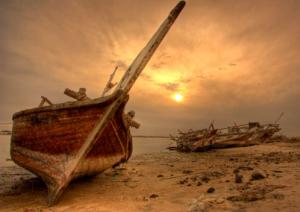
This photo is so gorgeous, it almost makes me weep! Woo HOOO on you, Christopher Sanan; you showed the beautiful face of Kuwait to the world!
Canon Middle East announces Kuwaiti one of the 13 winners of ”Celebrating Cultures”
KUWAIT: Canon Middle East, the worldـleading innovator and provider of imaging products and solutions, has announced the winners of its regional photography competition titled “Celebrating Cultures ـ How Do You See Your World?” With more than 42 entries from Kuwait, Christopher Sanan was announced as one of the 13 winners for his photograph titled ”Drought”.
The Canon photography competition encouraged photographers of all ability to submit a cultural, historical or heritageـinspired photograph of their country for a chance to win a state of the art DSLR Canon camera ـ the EOS 1000 D.
“We were impressed with the overall high standard of photography across the region, especially Kuwait, and were amazed at the depth of talent that exists. The inaugural Canon “Celebrating Cultures ـ How Do You See Your World?” competition was very well received and has created a platform for the region”s talented photographers to showcase their work. Many of the images captured the diversity, beauty and spirit of the region. Winning entries are currently being exhibited at GPP 2009, for all photography enthusiasts to see,” said Hendrik Verbrugghe, CCI Marketing Manager, Canon Middle East.
The quality of entries from across the region made the judging process difficult for the independent onـline panel of experts which consisted of well known photo editors, photographers and a representative from Canon Middle East.
“Canon Middle East is committed to supporting photography in the region and making it accessible to all. The Canon Photography Competition is an ideal platform to nurture and recognise local talent. The tremendous response to the Canon Celebrating Cultures ـ photo competition is a testament to the region”s exceptional photographic talent,” concluded Hendrik Verbrugghe.
To view the winning entries visit the Canon stand at GPP or visit the Canon micro site on http://www.gulfphotoplus.com/canoncompetition/winners.php
Canon is a worldـleading innovator and provider of imaging and information technology solutions for individuals and businesses. Canon provides both individual products and complete networked technology solutions for information input, management and output. Its product range is divided between Business Solutions (developing IT products, solutions and services for both the office and professional print environments) and Consumer Imaging (photography, video and digital camera, Laser and Inkjet printers). Canon Middle East is the operational headquarters for Canon in this region, and is based in Dubai, UAE. Further information about Canon Middle East is available at: http://www.canonـme.com
Last updated on Thursday 9/4/2009
Build Brainpower – Stay Young
From Real Age, an article about keeping young in mind as well as in body.
Build Your Brainpower
Think of your brain as your body’s fuse box. It gives you the mental powers needed to accomplish everything from simple tasks, like tying your shoes, to more challenging ones, like doing your taxes. To keep your intellectual juices flowing freely for years to come, we have a 3-step plan that’s focused on one concept: Feed your head. Nourish it with new challenges, new knowledge, and new places.
1. Take on New Challenges
Just as athletes hone their skills by training to attain out-of-reach goals, you can train your brain to be sharper by testing yourself just beyond your capability. So if Wednesday’s crossword puzzle is a breeze, but you barely get half of Sunday’s done, do your brain a favor and keep taking a whack at Sunday’s (as long as it’s not so frustrating that it’s no fun). It will trigger brain neurons and dendrites (the parts that catch info from neurotransmitters) to regrow.
2. Learn New Tricks
By finding ways to stretch yourself mentally, you’ll actually avoid brain shrinkage. The classic way to do this is to learn something new — whether it’s learning how to speak Spanish, play Sousa tunes on the harmonica, or make risotto. The point is for you to use parts of your brain that you normally don’t. Like muscles, your brain grows when it’s working outside of its normal routine.
3. Explore New Places
Driving, walking, or studying the subway system of a new city forces you to use many different parts of your brain at once. You’re using visual-spatial skills when you read a map and then need to translate it into verbal code for whoever’s driving (Honey, turn left! Now!). When you’re driving, you need to make quick decisions about where to go, which involves processing info quickly. Get lost? Even better. Figuring out how to get back also contributes to the brain-building process.
Can’t get away? Daydreaming about exploring new lands will also stir up your brain.
Being open to trying new things will help you steer clear of the mental monotony of a daily rut, and it’s the key to boosting your brainpower at any age.
Today’s Jargon Watch
Jargon Watch: Satellite Sheik, Spitterati, Locasexual
Jonathon Keats
Today, 07:00 AM
(From Wired News Feed
Satellite Sheik n. A televangelist for Islam. These media-savvy religious leaders broadcast moderate Muslim beliefs on satellite TV and social networks, appealing to Arabs alienated by traditional imams.
Spitterati n. Celebrities who attend posh soirees organized to collect saliva for genetic sequencing. Power players like Rupert Murdoch and Harvey Weinstein have hosted spit parties to provide convenient venues for dispensing the requisite half teaspoon of drool.
Sea Grape n. Pet name for the newly discovered Gromia sphaerica. This grape-sized relative of the giant amoeba leaves an animal-like trail as it rolls itself along the seabed. It may be responsible for tracks in Precambrian fossils that were previously attributed to more complex organisms.
Locasexual n. An environmentalist who applies locavore logic to affection and, on principle, will date only locally. Refusing long-distance attachments and coolly calculating “sex miles,” this carbon-conscious canoodler makes love as romantic as a spreadsheet.
William Dalrymple: The Age of Kali
Having read and loved In Xanadu: A Quest by William Dalrymple, and having received recommendations by friends who say they read ALL of William Dalrymple, I started on this second book, The Age of Kali. I didn’t like it, not one bit. I am proud to say I read it all the way to the end, because often if I don’t like a book, I will say to myself “I don’t need this!” and toss it, but I didn’t, I stuck with it. I am proud because it isn’t easy to stick with a book you don’t like, and I didn’t like this book.

In Xanadu, Dalrymple was wryly funny, hilariously funny, and most of the humor was directed at himself. In The Age of Kali, there is nothing funny.
The Age of Kali is a series of interviews and adventures in India and Pakistan. The author did these interviews and took notes (some are published in slightly different forms as magazine articles) over a period of ten years and then strung them all together to form this book. There is little or no linkage from one to the other. They are grouped geographically.
Here is what I like and admire – this man achieves the most amazing interviews, many times just by asking the right person at the right time. He insinuates himself, asks easy questions, and then sticks in a hard question. He doesn’t seem to flinch from putting himself in danger, and he doesn’t stand on respect when asking his questions. I admire that he went difficult places, interviewed difficult people, and wrote the interviews up without fawning over the celebrity status of his interviewee.
What I don’t like is that he doesn’t seem to like anybody very much. There are no funny anecdotes. By the end of the first interview, I began to get an impression that he doesn’t like India very much (and I believe that is NOT true, as he lives part-time in Delhi) and that India is not a place I want to visit. He interviews corrupt politicians, descendants of the moghuls, Benazir Bhutto – and her mother, Imran Khan (the cricket player) and many others. In each and every interview, he maintains a distance that tells us he doesn’t like these characters very much.
Here are some quotes from early in the book:
These days Bihar was much more famous for its violence, corruption and endemic caste-warfare. Indeed, things were now so bad that the criminals and the politicians of the state were said to be virtually interchangeable: no fewer than thirty-three of Bihar’s State Assembly MLAs had criminal records, and a figure like Dular Chand Yadav, who had a hundred cases of dacoity and fifty murder cases pending against him, could also be addressed as the Honorable Member for Barth.
As he interviews Bihar politician Laloo Prasad Yadav:
I asked Laloo about his childhood. He proved only too willing to talk about it. He lolled back against the side of the plane, his legs stretched over two seats.
‘My father was a small farmer,’ he began, scratching his balls with the unembarrassed thoroughness of a true yokel.
OK, that was funny. I had to read it aloud to AdventureMan. One of the things that still unnerves me living here is that the men are always touching themselves – something so totally forbidden in my culture as to be simply unthinkable.
In his section about Pakistan:
These people – the Pathans – have never been conquered, at least not since the time of Alexander the Great. They have seen off centuries of invaders – Persians, Arabs, Turks, Moghuls, Sikhs, British, Russians – and they retain the mixture of arrogance and suspicion that this history has produced in their character. History has also left them with a curious political status. Although most Pathans are technically within Pakistan, the writ of Pakistan law does not carry in to the heartland of their territories.
These segregated areas are in effect private tribal states, out of the control of the Pakistan government. They are an inheritance from the days of the Raj: the British were quite happy to let the Pathans act as a buffer zone on the edge of the Empire, and they did not try to extend their authority in to the hills. Where the British led, the modern Pakistani authorities have followed. Beyond the checkpoints on the edge of the Peshawar, tribal law – based on the institutions of the tribal council and the blood feud – rules unchallenged and unchanged since its origins long before the birth of Christ.
When I read this, I think of recent headlines about the problems Pakistan is having maintaining order, fighting the status of “failed-nation”, and the chaotic administration of tribal “justice.” The old ways have endured – but as we learned in Three Cups of Tea, there are villages where villagers are eager to have modern schools, eager to educate their daughters, and they, too, are victims of the fanatics who burn the schools and throw acid on women attending school.
The author is told, time and time again by Indian citizens, that India has entered The Age of Kali, “the lowest possible throw, an epoch of strife, corruption, darkness and disintegration.” The book reflects the darkness, corruption and disintegration the author found. I only wish there were some moments of relief, of lightness, hope or humor to encourage the reader on his/her way, but the documentation of this lowest throw was relentless.
“I Look Deep Inside . . .”
We were at one of those official dinners, and, as is my habit, I found someone even more shy than I am and started asking questions. It’s an old trick; it gets me through the most endless affair. She turned out to be very smart, very witty and entertaining, this Nigerian woman, so elegant, so well-mannered. We were having a great conversation.
“So what do you do in Kuwait?” I asked, almost yawning, I was so ashamed of myself for asking such a boring, common question.
She paused, looking at me like she was measuring me.
“I look deep within people, and I tell them things about themselves they never knew,” she responded.
“Oh no!” I thought to myself, “is she some kind of fortune-teller?” (Fortune tellers are strictly forbidden in my religion.) I’m usually pretty good with the old poker-face, but my eyes probably shifted, looking quickly for a polite exit.
She watched me, her eyes twinkling, grinning like a fisherman with a live one on the hook.
“I’m a radiologist,” she added, and we both cracked up. She really had me: baited me, caught me, hooked me good, and then did the old catch-and-release.
Gigantic Sunrise
It’s not photoshopped, or any kind of shopped – it’s the “light haze” that makes this rising sun appear so gigantic. I can’t even focus as I try to shoot it, there is so much refracted light. I just have to trust, as I snap the shutter, that the camera can figure out how to manage it. Once again, I focused on the reflection; it was the only line the camera could focus on; the rest is just a blur. I am using my smaller Lumix, it doesn’t have a viewfinder, so it is much harder to see what you are shooting.

It’s going to be HOT today. For me, anyway, anything above 22°C / 72°F is getting a little heated up. 😉

Have a great day, Kuwait.
Through the Eyes of AdventureMan
I’ve had some really smart friends in my life, and sometimes, those who are really really smart get confused about normal everyday things.
We had a wonderful friend, Bill. His wife was a high school teacher, and when he saw the sign “Aim High – Air Force!” on Ramstein Air Force Base, he said “Look, sweetie, there’s the high school!”
Another time, on Mother’s Day, we were sitting in church with Bill and his wife and my husband said to Bill “I really like your new Land’s End jacket!” and Bill said “How did you know it was from Land’s End?” and my husband said “Because you still have the label on the cuff.” We were all still crying from laughing so hard when the priest glared at the four of us (troublemakers!) as he processed down the aisle.
AdventureMan is a lot like that. He thinks differently. Driving along the Gulf Road the other day, he said “You wouldn’t think there was enough demand for models here that they would have a special school.”
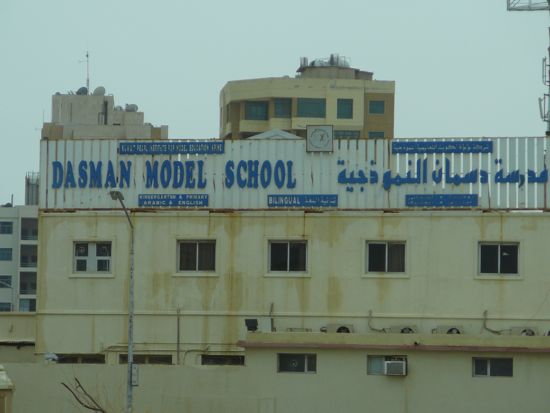
Then he said “what’s up with that?”

We both started laughing, because to us, it looks like something called an “entrenchment tool” or shovel, and we use them when camping to make a temporary toilet, so it’s not exactly something we would mount on the back of our truck, all gleaming and shiny. But we may be thinking differently, and there may be a really good reason this is done that we don’t know about, so if any of you know why it would be a good idea to mount a shiny shovel, please share!
The other night AdventureMan couldn’t get his at-home wireless connection to work, he’d been trying for several nights and couldn’t get a signal. I moved the stack of books and papers directly behind his laptop, between him and the router, and voila! instant wireless connection. He is a really really really smart man, but just has a little problem with the small things. 😉
(He always looks to see if I have mentioned him in the blog)
Recent Comments
ExpatAlien on What Country am I Living … intlxpatr on Yellowstone: Old Faithful to C… Michelle on Yellowstone: Old Faithful to C… Cathy on No Grown-Ups in Charge intlxpatr on Waiting for Snow Wikipedia Donate Button

Amazina


Early Voting in Florida


 Here There and Everywhere