Alaska 2026: A Bonus Day at the Alaska Native Heritage Center
This was an odd day, as we packed out of the Alaskan Jade B&B. Our flight wasn’t leaving Anchorage until 8 that night, so we had time to visit the Alaskan Native Heritage Museum.
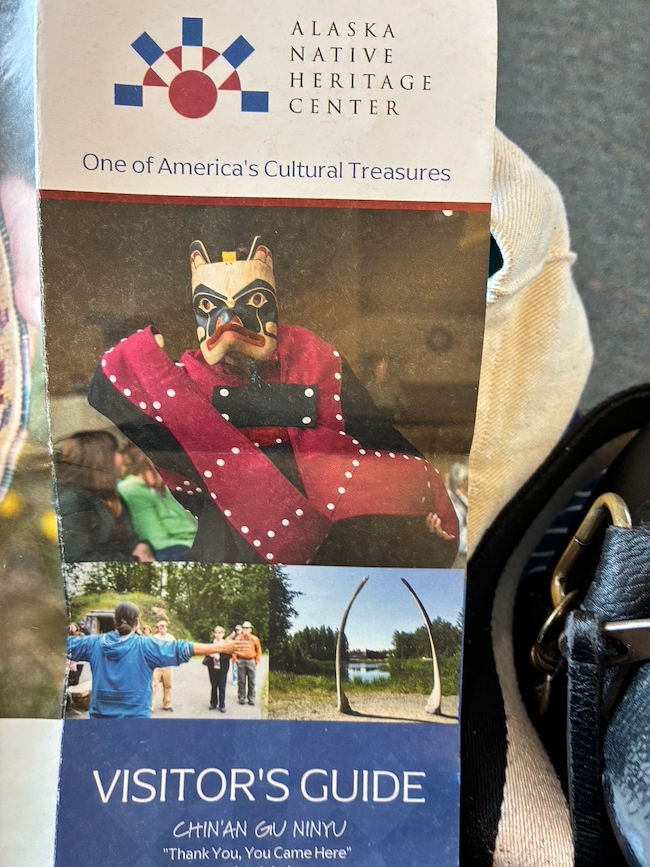
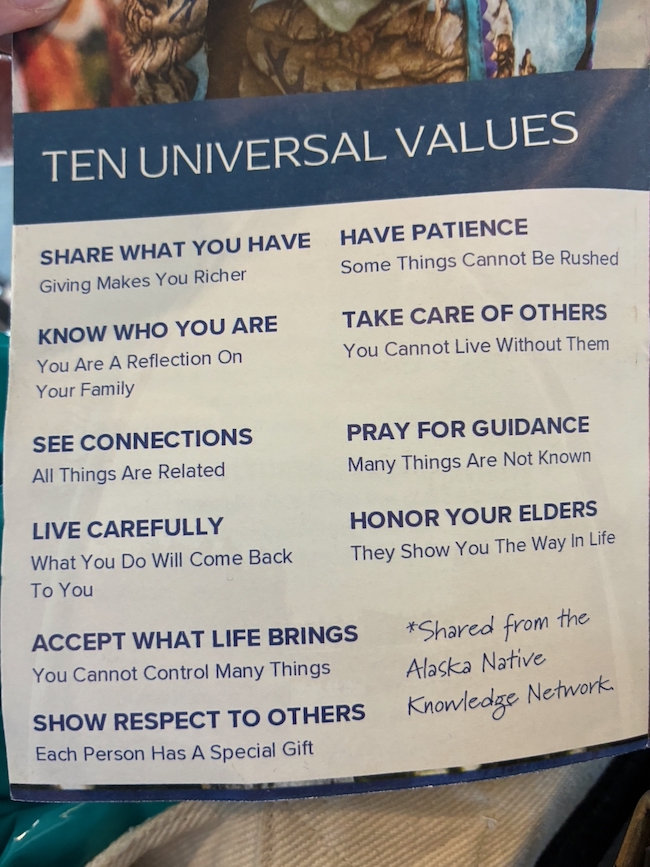
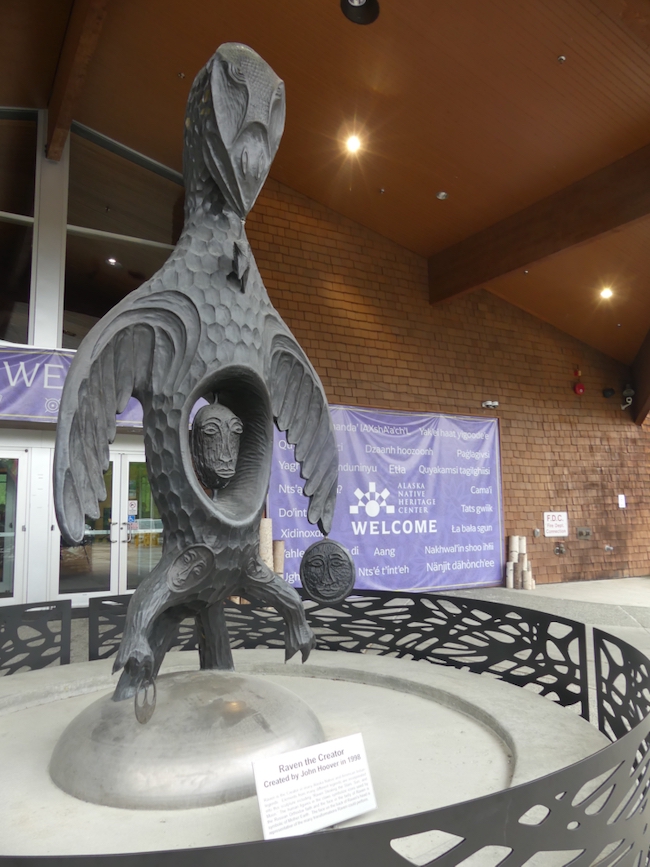
As we arrived, a demonstration of traditional games had just begun, and following that, a dance demonstration, with descriptions of the costumes, how they were made and how they were used.
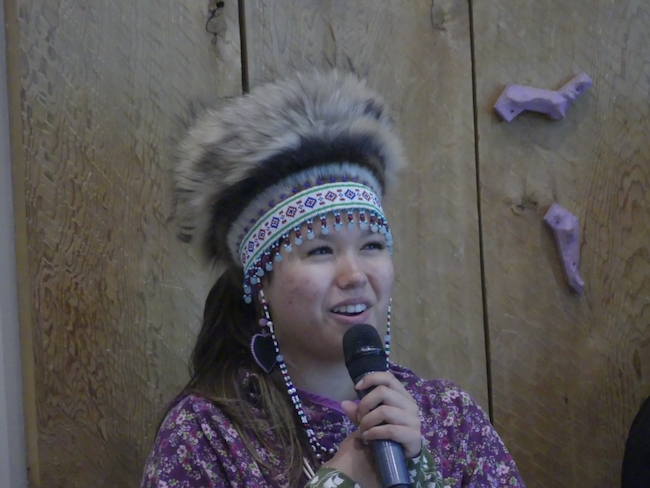
All this was done by a group of young people who were having great fun as they shared their culture and heritage.
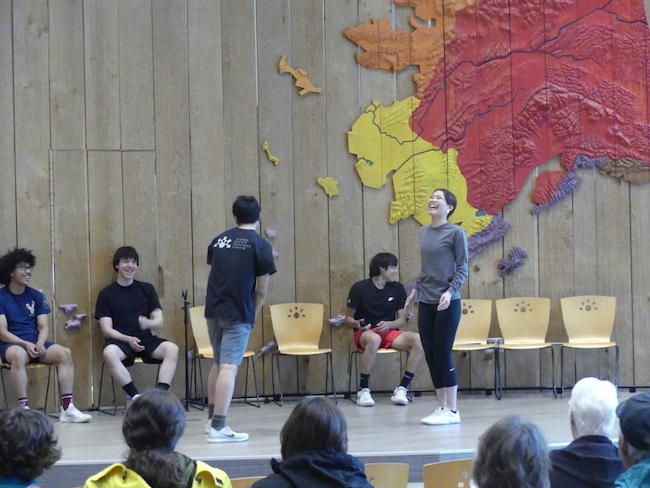
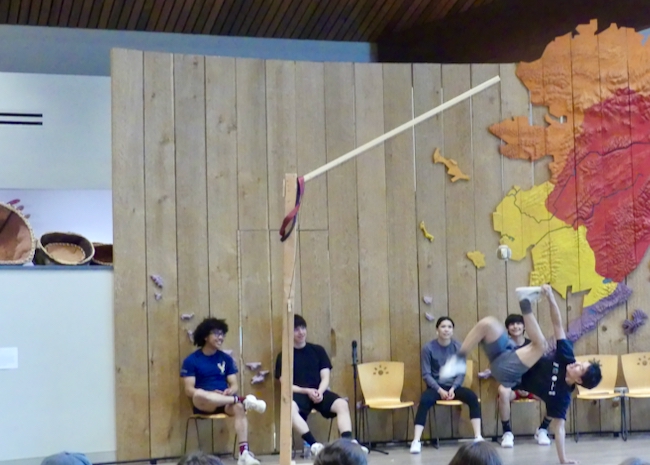
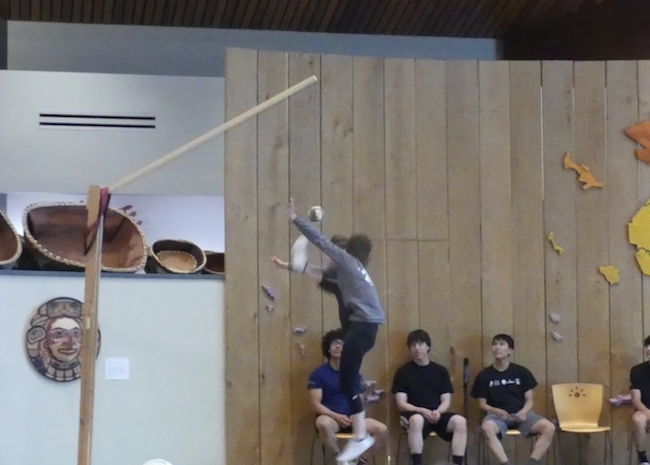
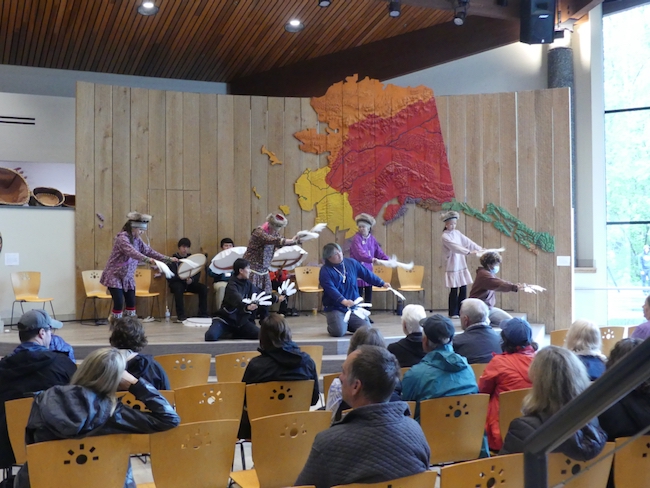
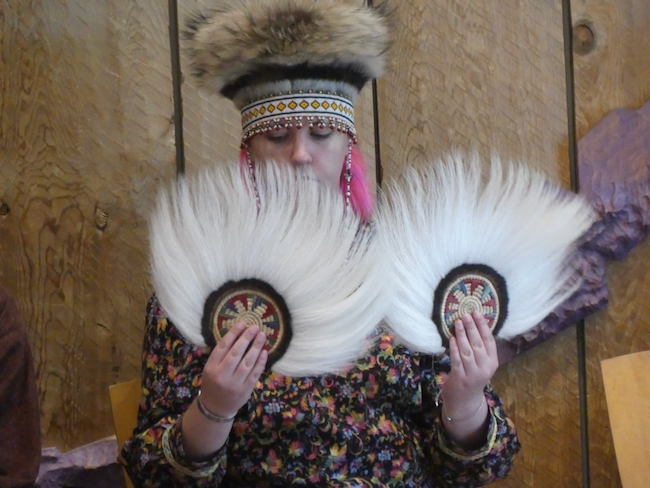
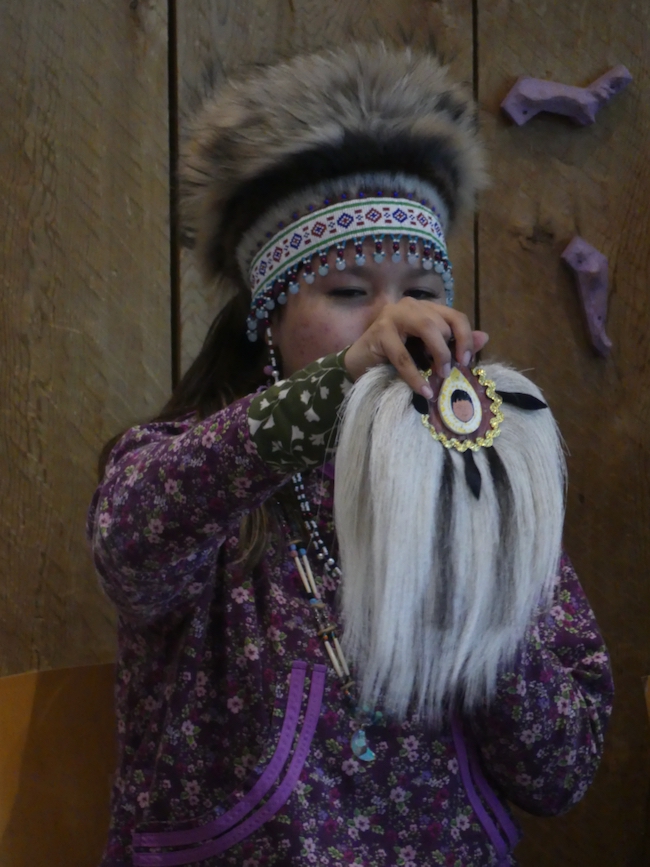
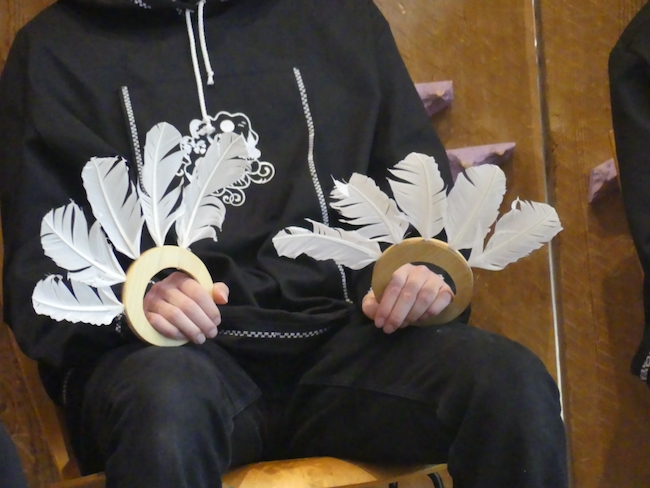
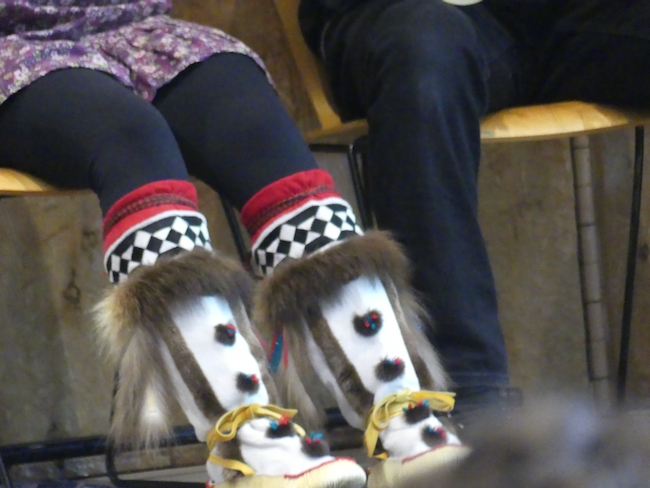
We spent an hour watching the games and dances, then toured the museum, and did the walk among the tribal dwellings. I’d forgotten, it was raining lightly. We don’t remember rain on this trip. The photos remind us.
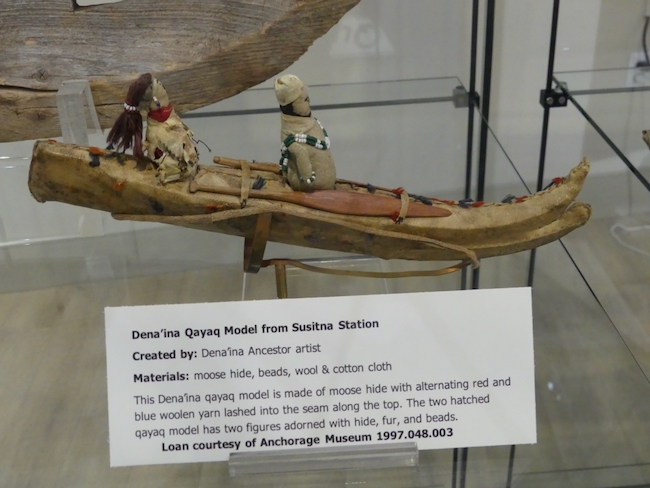
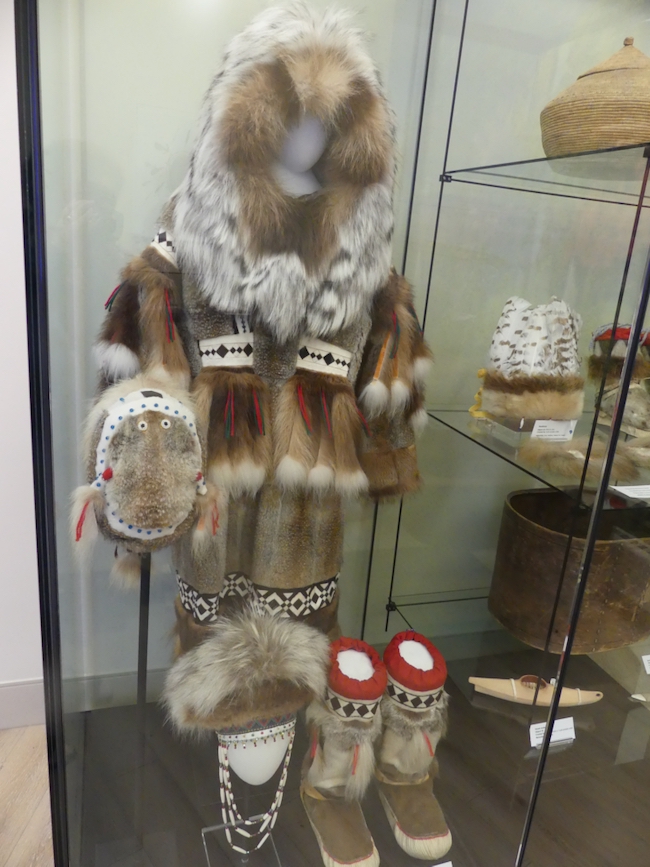
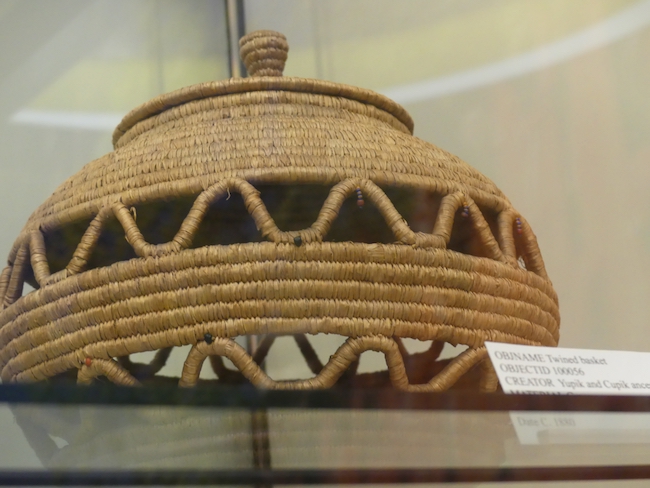
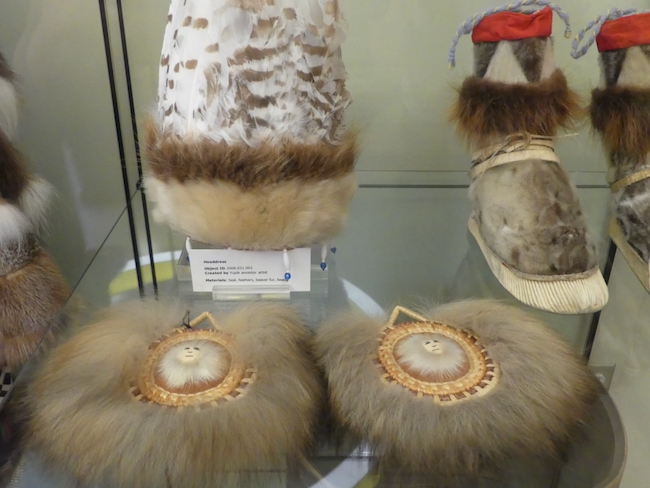
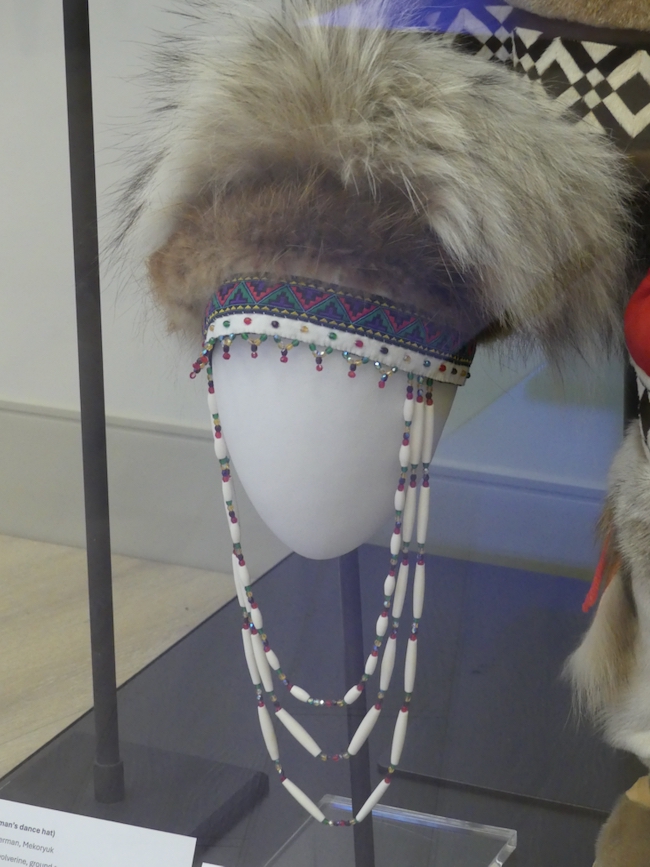
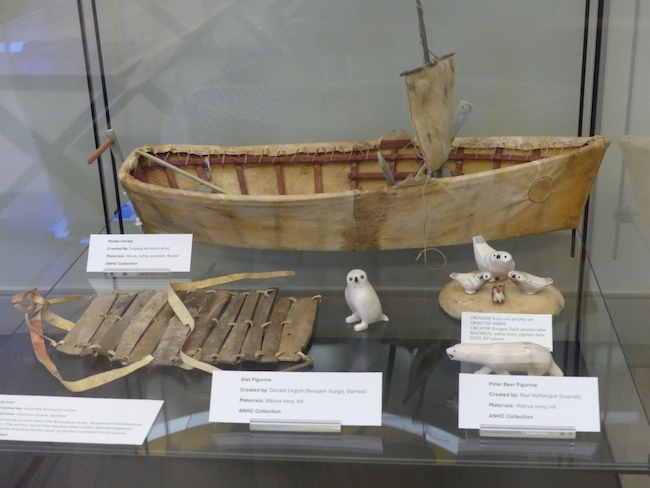
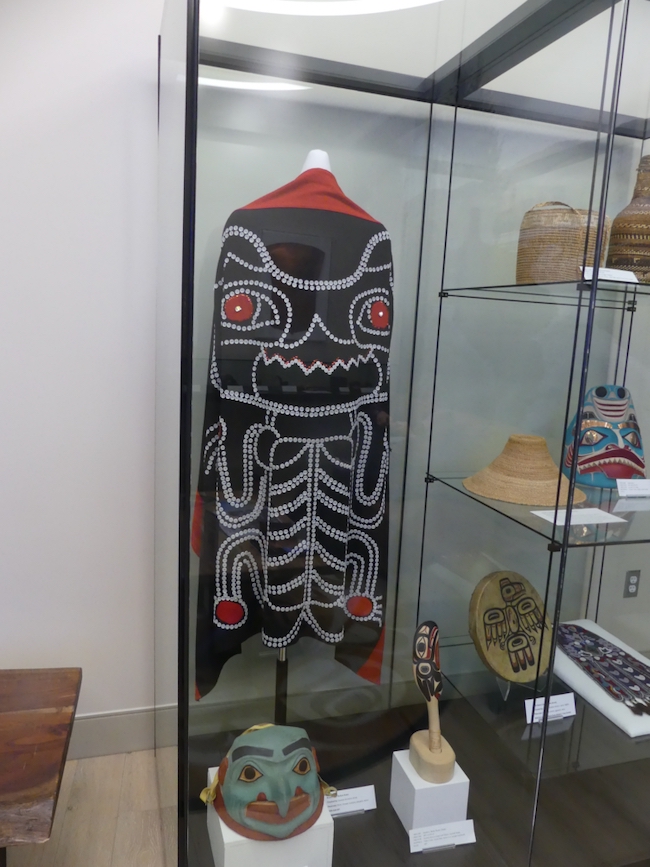
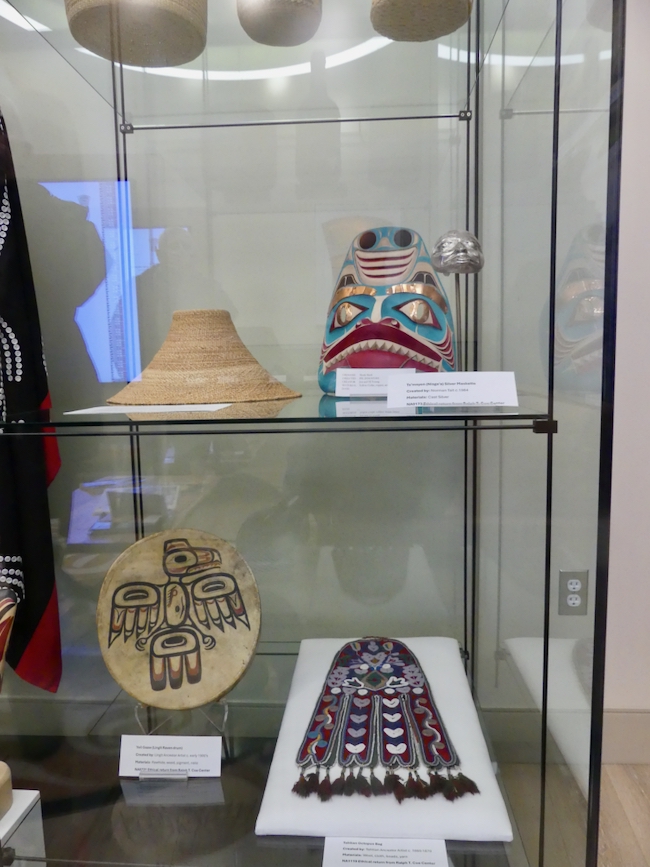
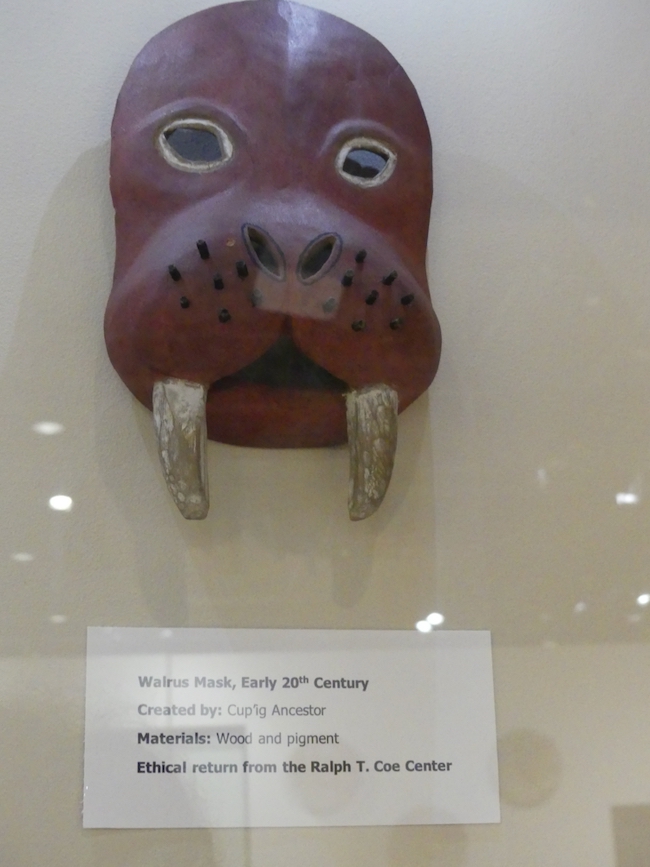
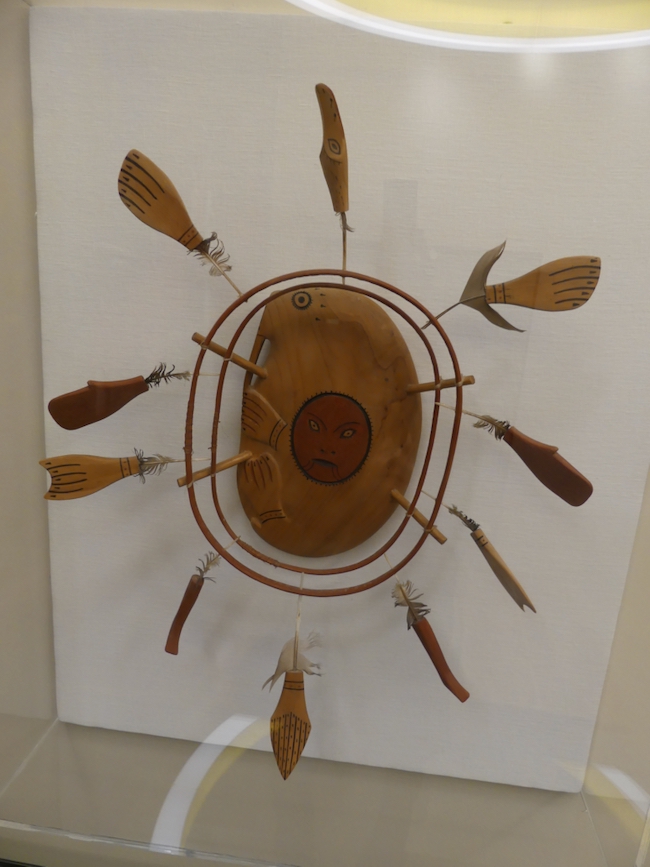
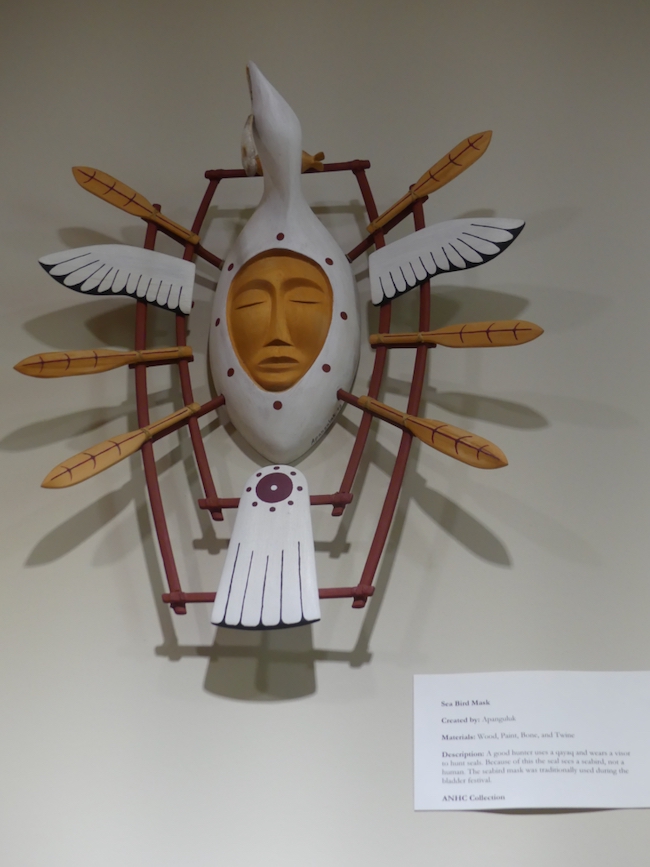
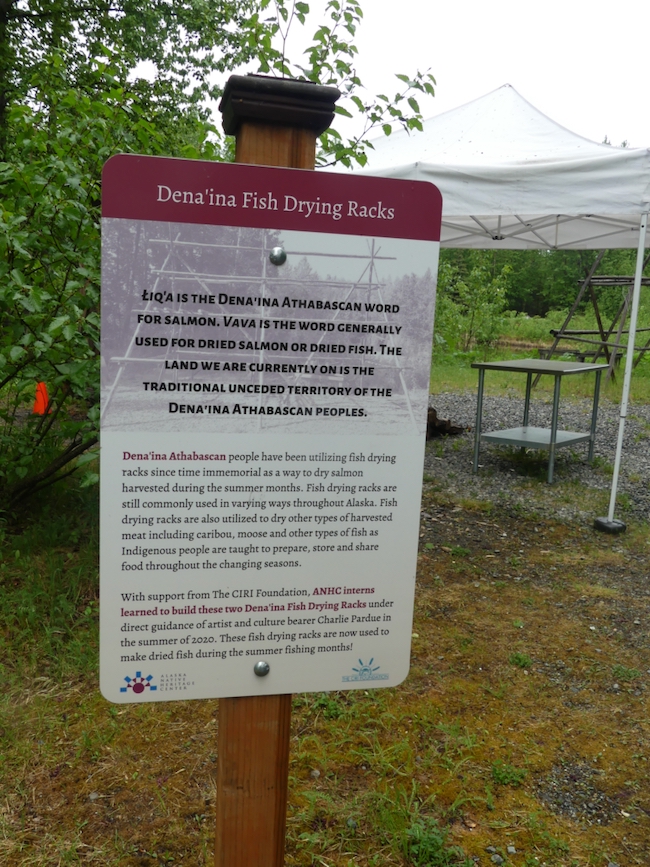
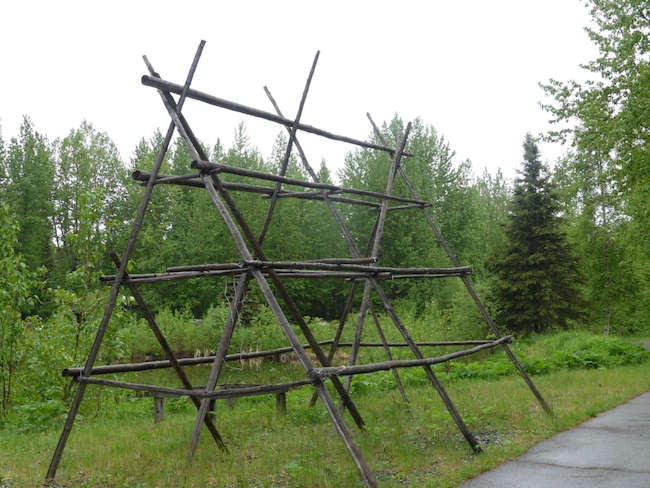
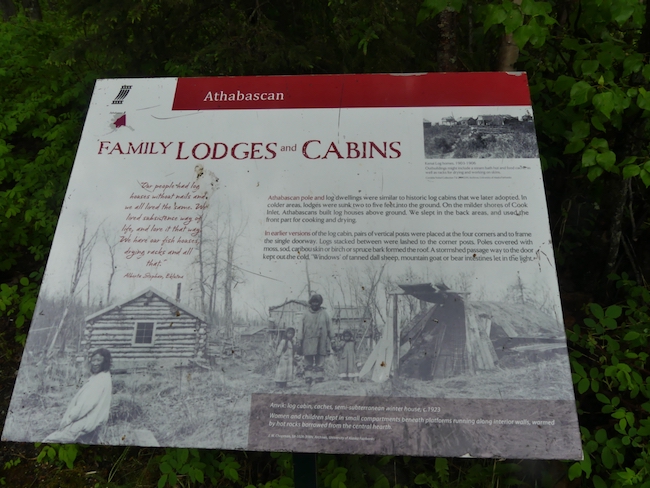
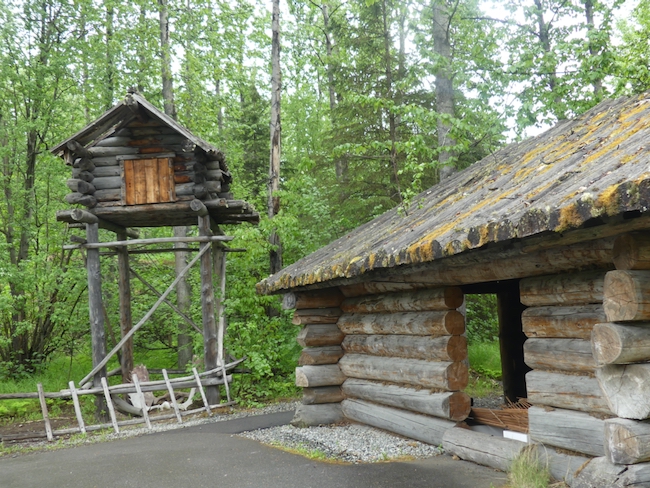
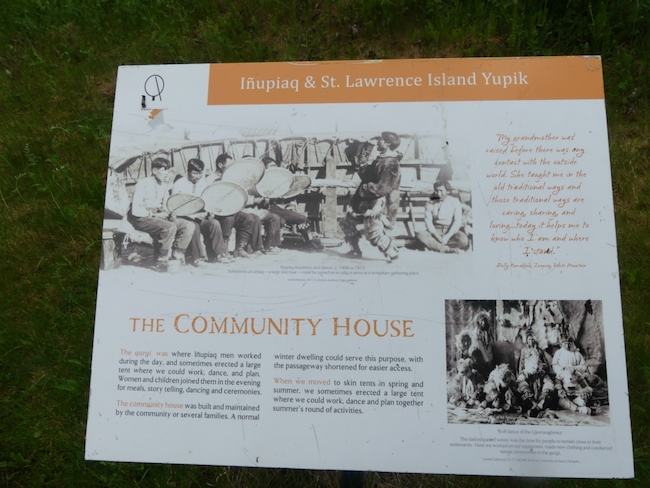
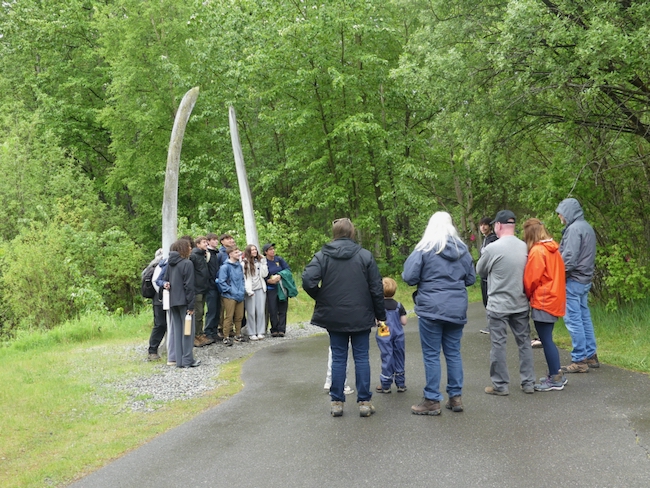
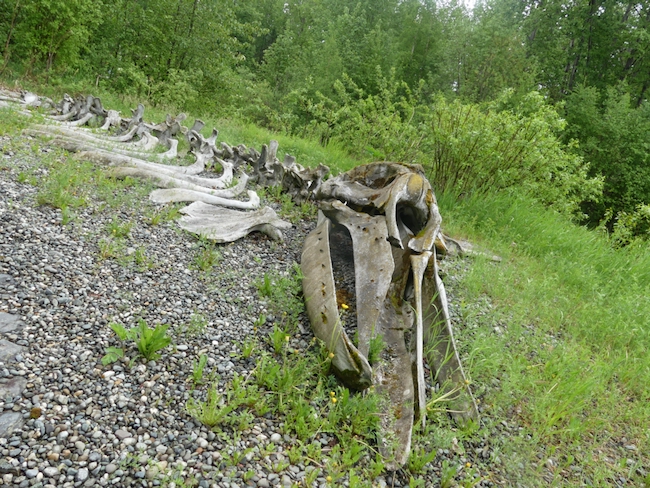
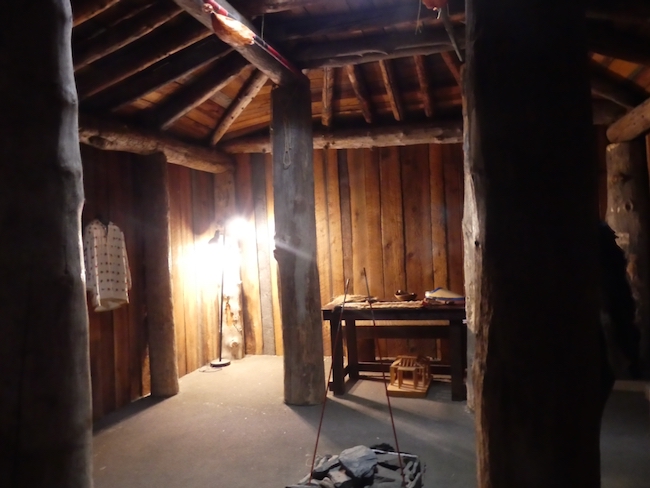
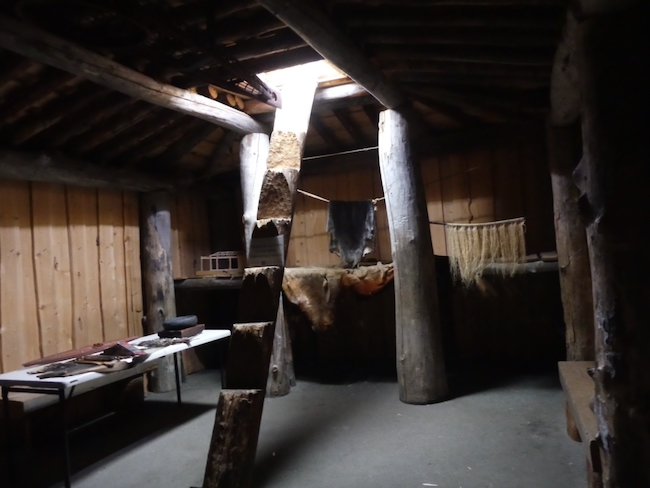
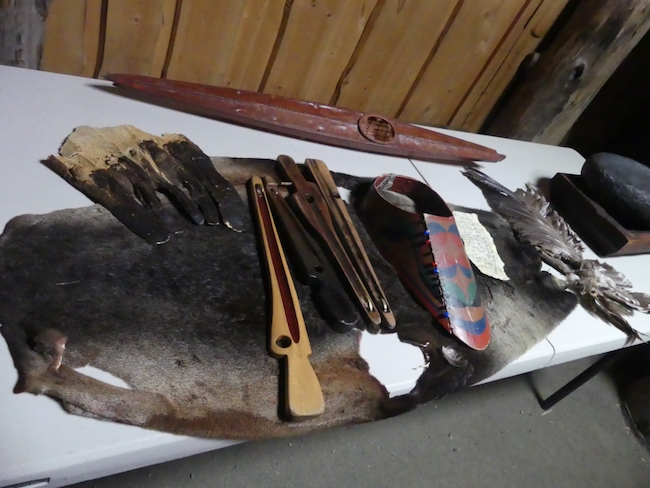
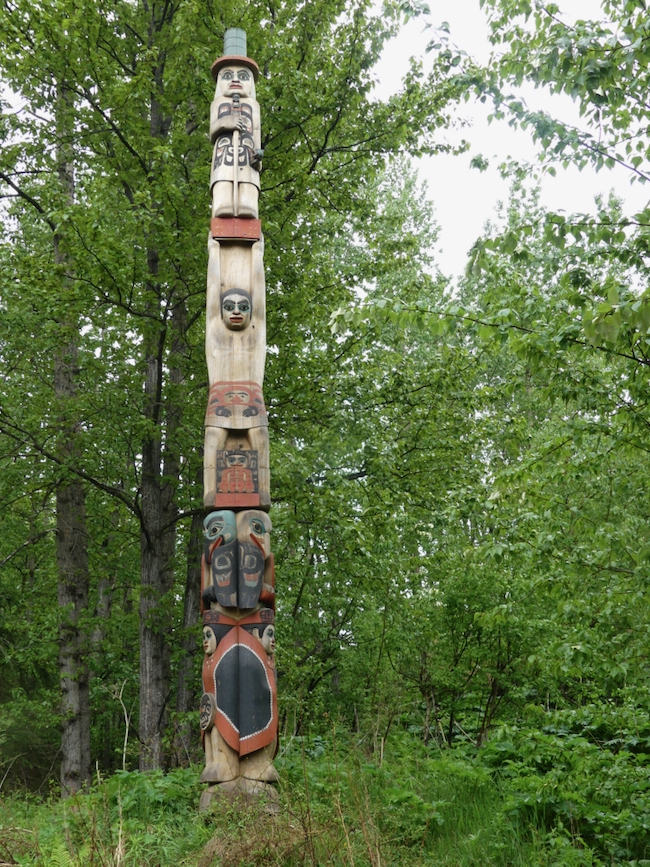
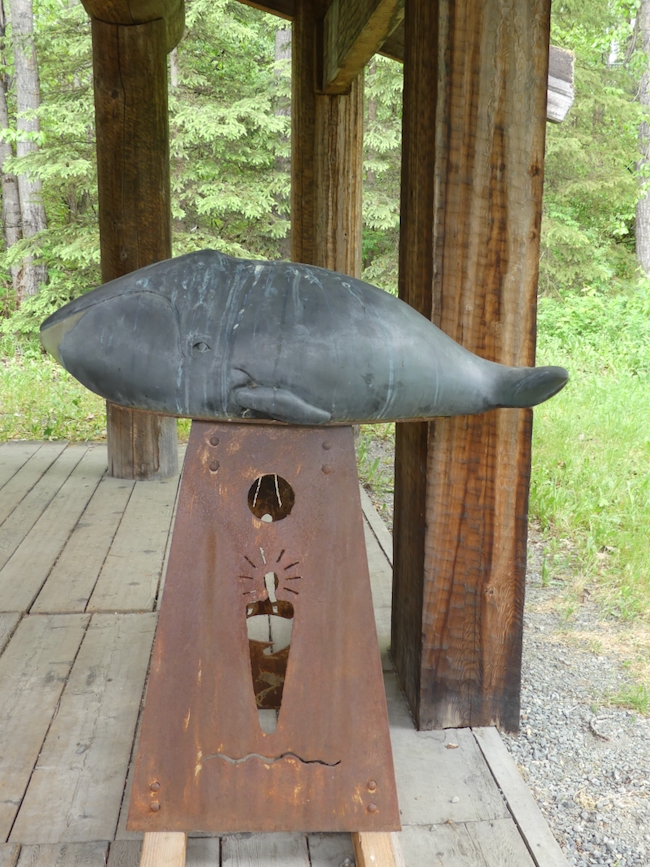
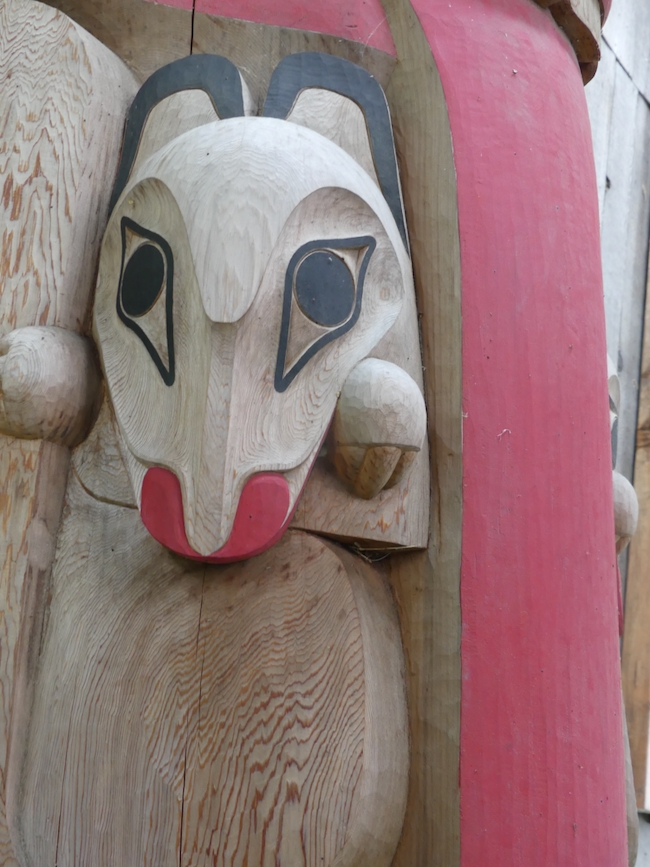
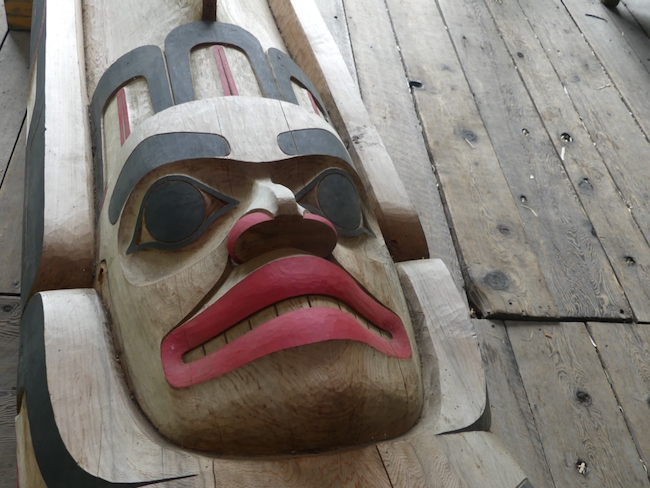
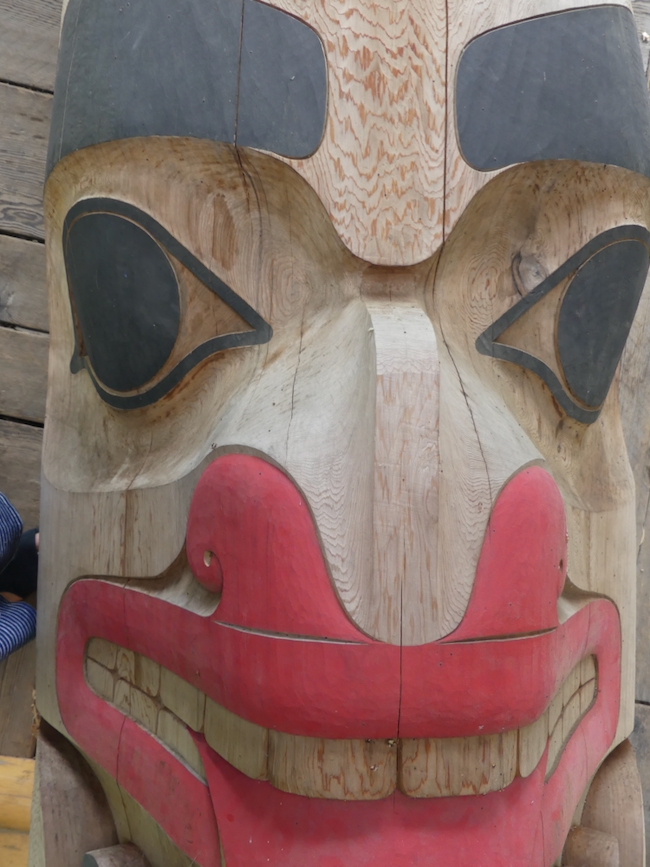
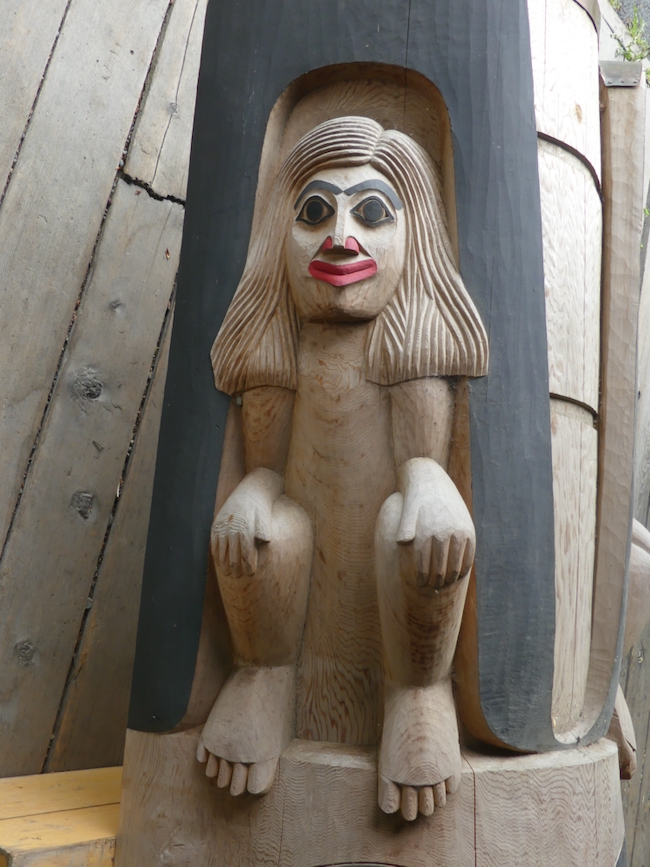
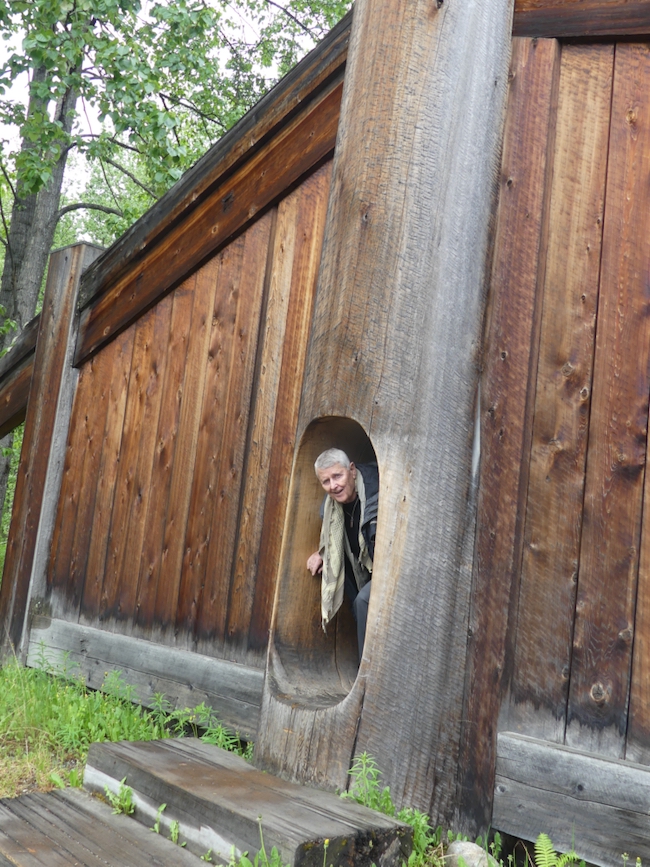
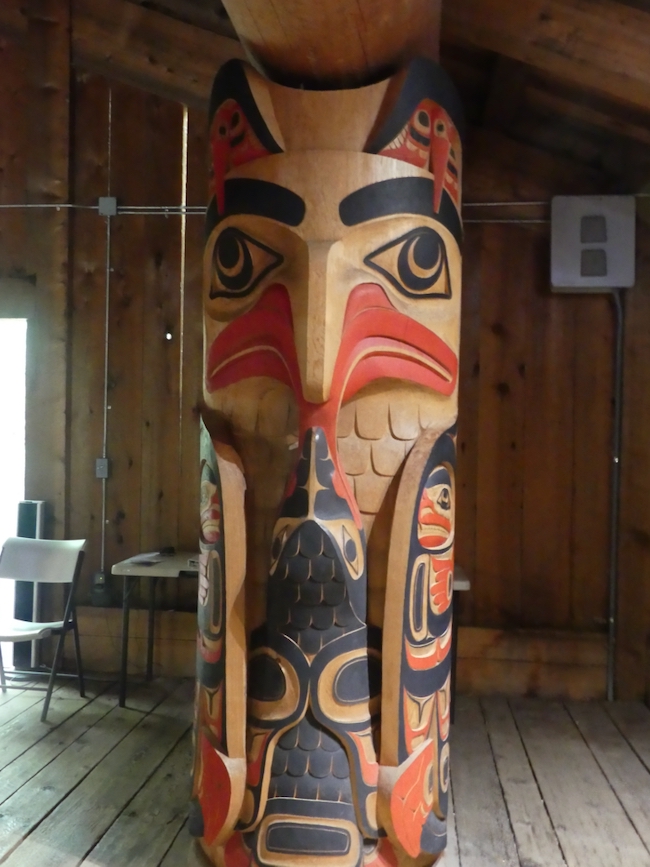
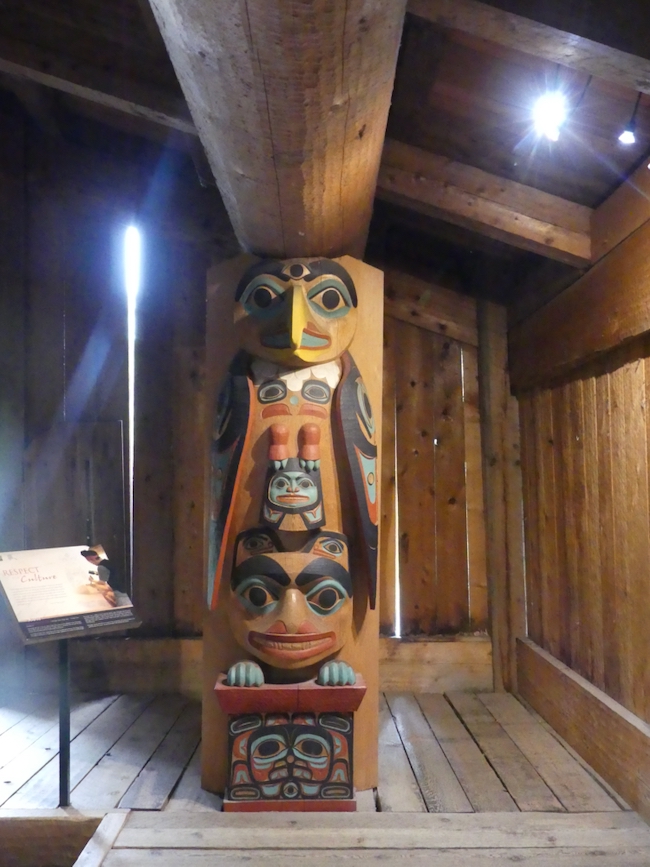
Leaving the Alaskan Native Heritage Museum we headed downtown, looking for the historical museum and for a place to eat lunch.
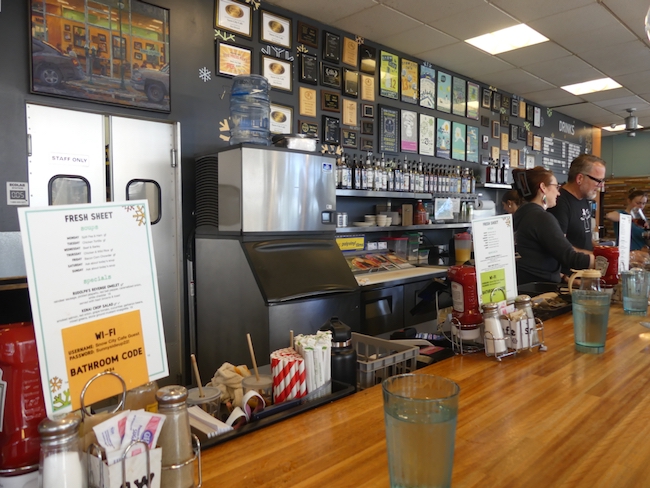
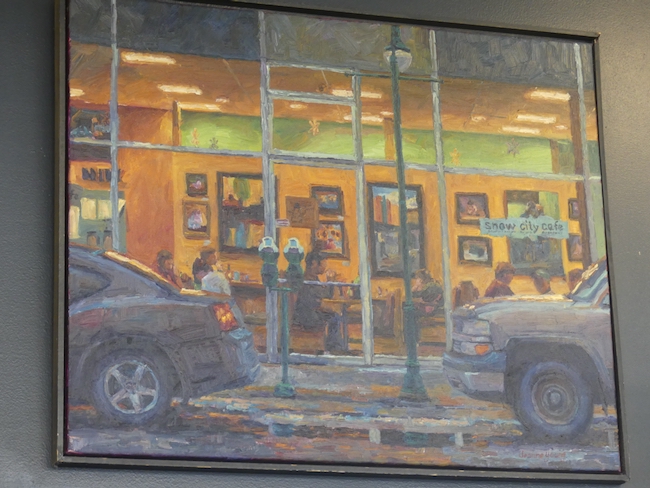
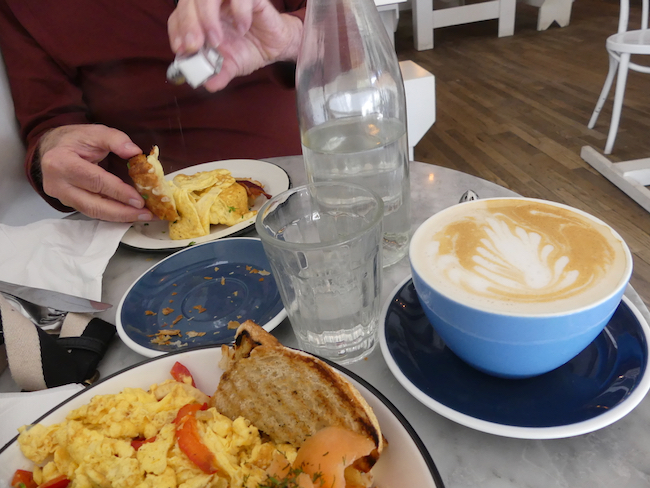
We walked to the Snow City Cafe, which we had spotted earlier, and were in for one last very Alaskan experience. The place was packed, and we sat at the bar.
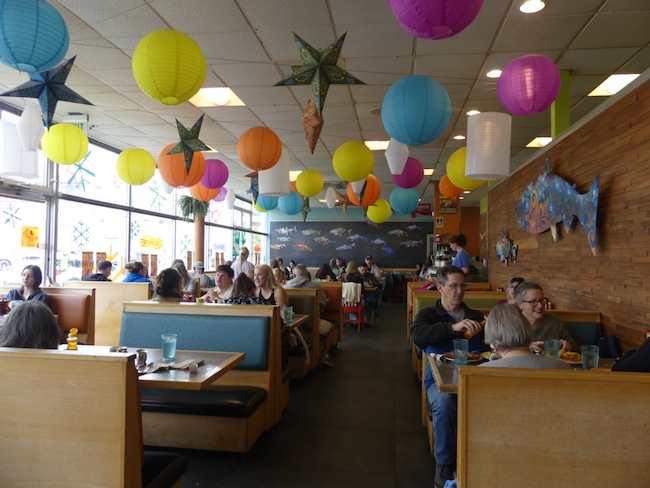
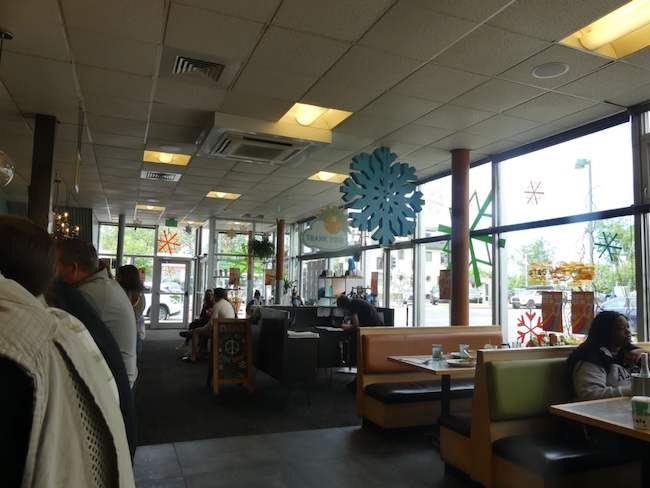
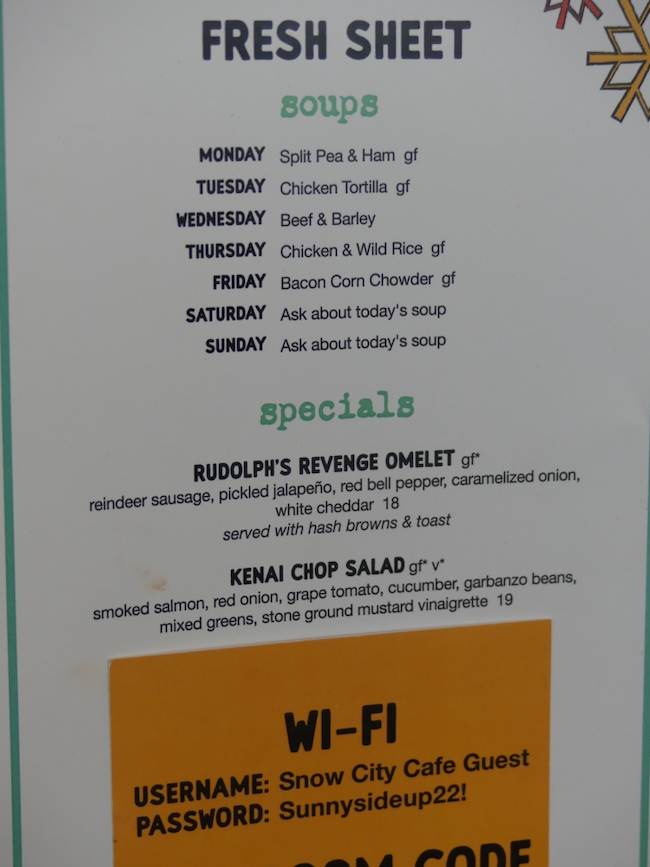
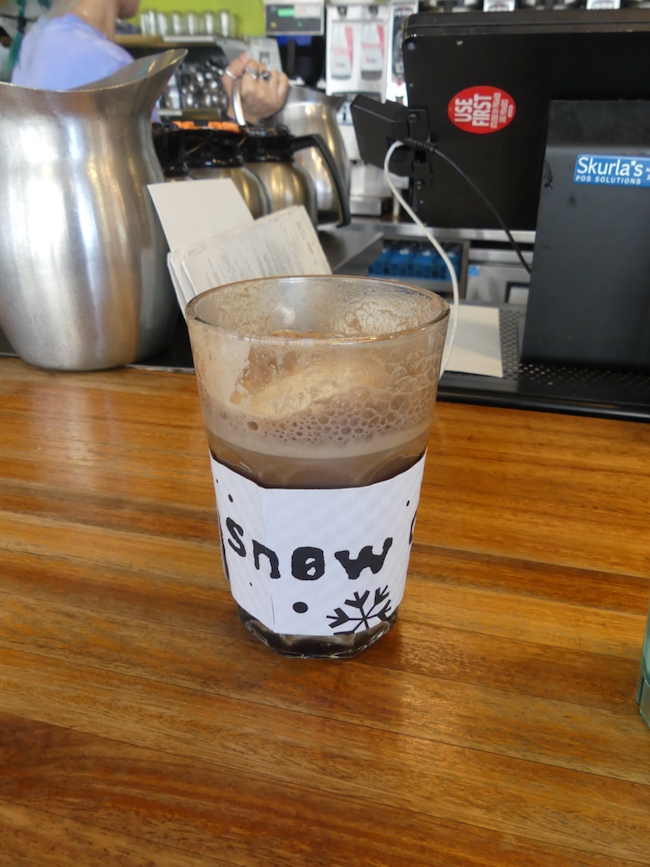
Almost all the customers were young people eating breakfast foods (at noon) so we did, too. There was this great party vibe, great coffee, good food in generous portions, and a lot of energy. We were out in our allotted hour, picked up our car and headed south, to find a filling station and head to the airport.

Alaska 2026: Alaska Loves Her Veterans

Getting ahead of myself a little bit, on our last day in Anchorage, we were downtown looking for a place to park. We found a parking lot, but it had different areas with different rules and we found it very confusing. A young man was headed to his truck near us, so AdventureMan asked him what the procedure was for this section.
Taking in AdventureMan, he said “Are you a Veteran, Man?” and AdventureMan said “Yes.”
The young man gave a huge grin and said, “You don’t have to pay! I never pay! Alaska loves her veterans! They won’t come after you if you are a veteran. I park her all the time. I never pay!” and then, as soldiers do, they pulled out their resume’s and started comparing where they had served and it was old home week. Happens all the time.
As we were saying our farewells, he remembered something.
“Just try to keep it under an hour,” he said. “I can’t guarantee you can park longer than that, and I try to be respectful and not push my luck.”
“I try to be respectful . . .” I found that so refreshing.
We found evidence everywhere that Alaska truly does love and treasure and remember her veterans. By the side of the highway, as we neared Anchorage, we found this lovely Memorial.
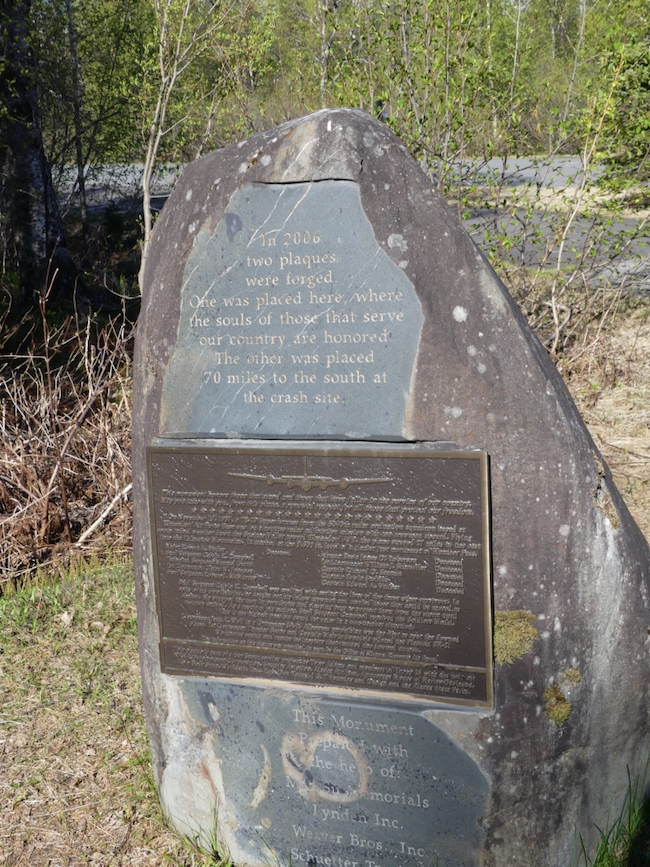
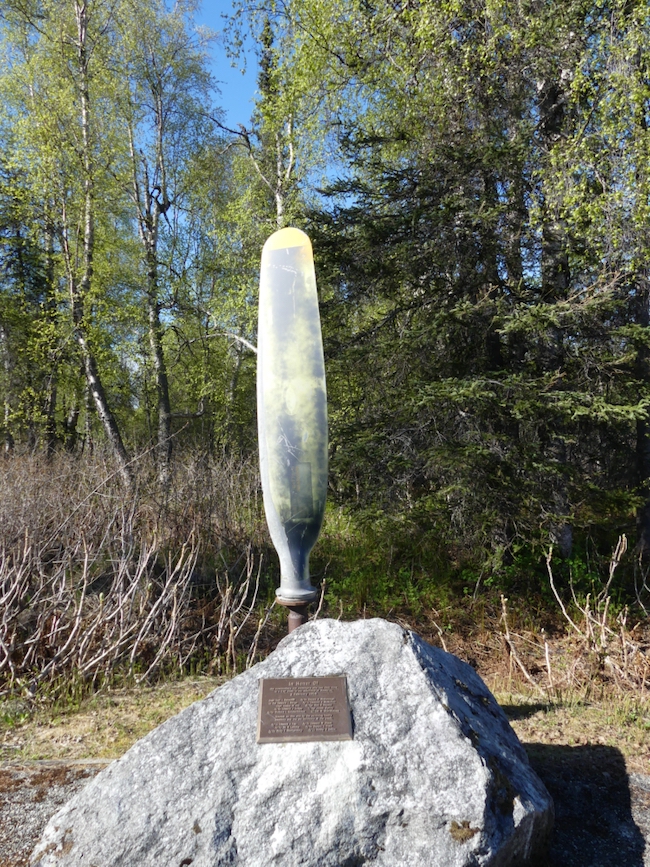
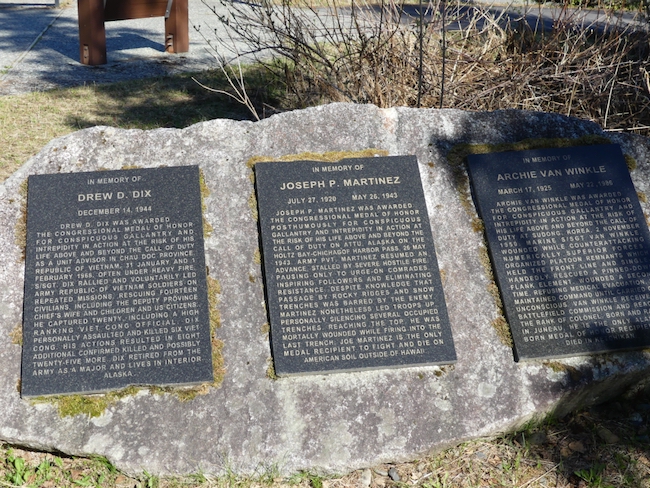
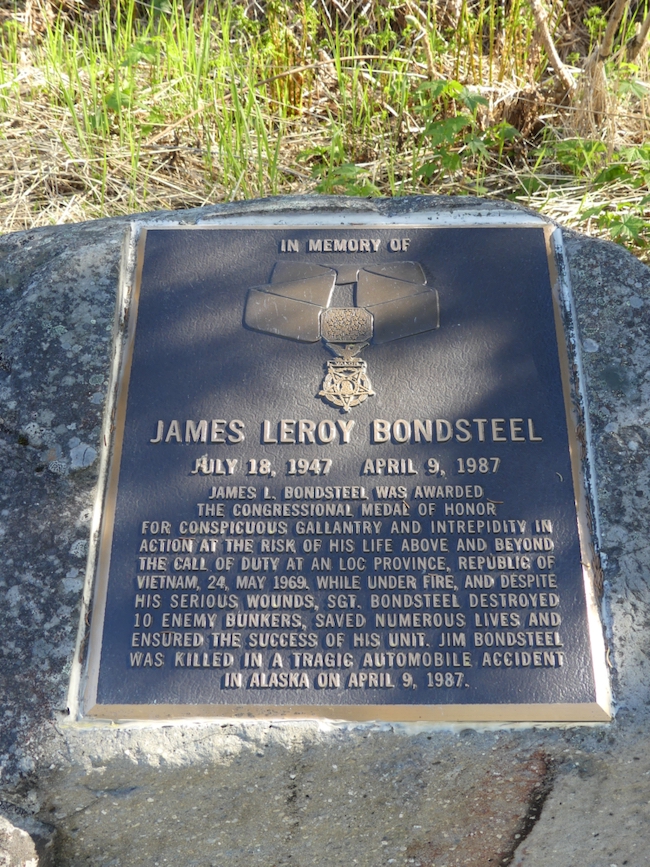
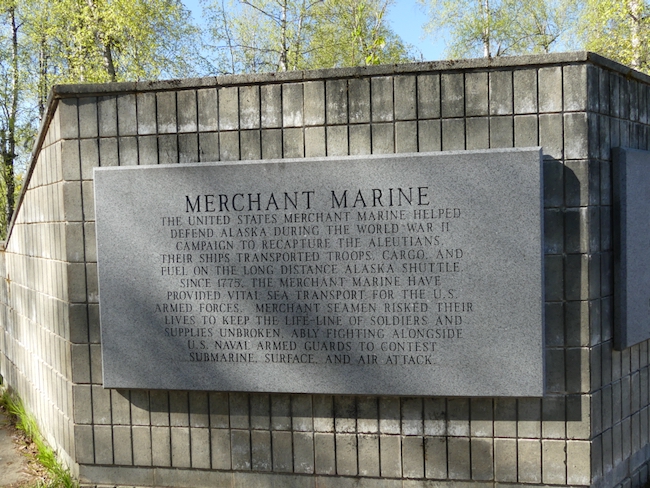
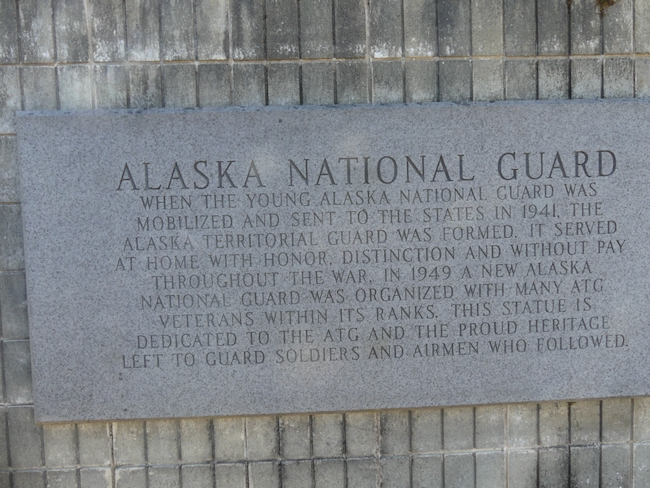
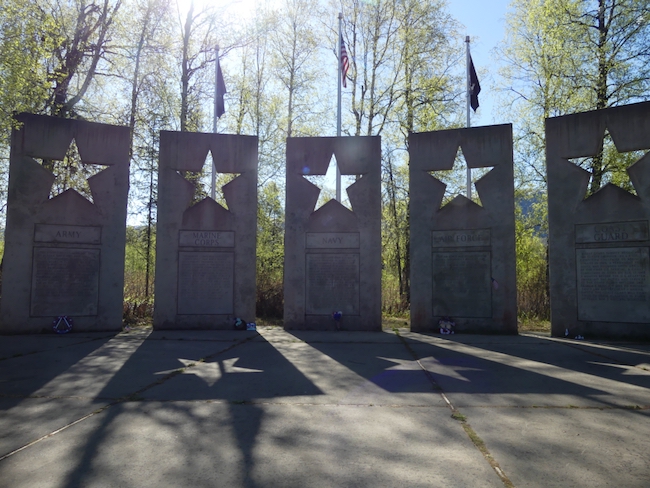
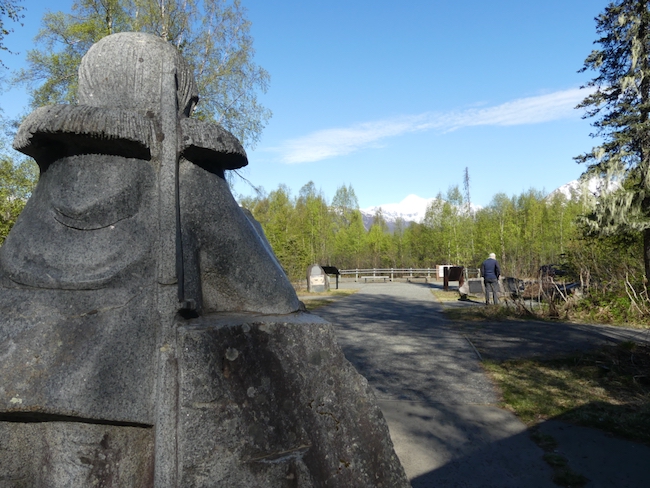
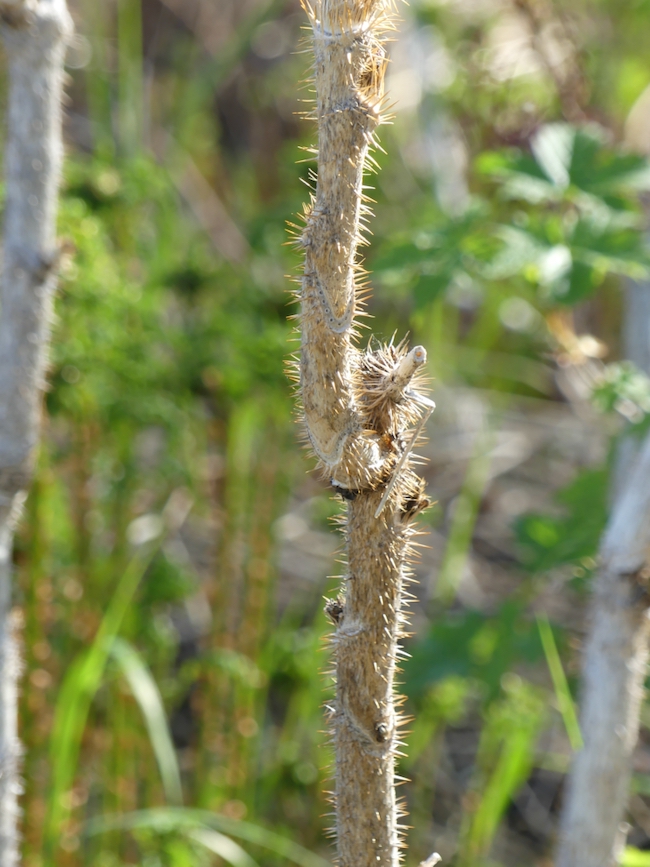
At this memorial, I ran into a childhood nemesis. I don’t know the scientific name. As children, we called it Devil’s Club, and it grows in patches, and it scared us to death. Whe kids got mean, they might cut down a Devil’s Club and threaten one of the younger kids. It could really hurt, too, if you got hit with one.
Bored of Peace

The man who mercilessly called Joe Biden “Sleepy Joe” dozes through his own “Peace” meeting. Pony up a billion dollars and anyone can join. Maybe his son-in-law gets in for free.
What will greed and corruption contribute to the Palestinian situation in Israel? When Trump talks of villas and high rises facing a Mediterranean basin, is he talking about housing for Palestinians? Is he talking about establishing a beautiful Palestinian state on the Gaza strip?
Or is he seeking to monetize and take advantage of a political void to eliminate the Palestinian inhabitants and create a sleazy nouveau riche community a la Mar-a-Lago?
A Tale of Grace
For perspective, this is the legendary acquisition by Father Abraham of the first Jewish purchase of land. It is a tale of grace, hospitality, and sharing between two cultures:
Genesis 23:1-20
23
Sarah lived for one hundred and twenty-seven years; this was the length of Sarah’s life. 2And Sarah died at Kiriath-arba (that is, Hebron) in the land of Canaan; and Abraham went in to mourn for Sarah and to weep for her.
3Abraham rose up from beside his dead, and said to the Hittites, 4‘I am a stranger and an alien residing among you; give me property among you for a burying-place, so that I may bury my dead out of my sight.’
5The Hittites answered Abraham, 6‘Hear us, my lord; you are a mighty prince among us. Bury your dead in the choicest of our burial places; none of us will withhold from you any burial ground for burying your dead.’
7Abraham rose and bowed to the Hittites, the people of the land. 8He said to them, ‘If you are willing that I should bury my dead out of my sight, hear me, and entreat for me Ephron son of Zohar, 9so that he may give me the cave of Machpelah, which he owns; it is at the end of his field. For the full price let him give it to me in your presence as a possession for a burying-place.’ 10Now Ephron was sitting among the Hittites; and Ephron the Hittite answered Abraham in the hearing of the Hittites, of all who went in at the gate of his city,
11‘No, my lord, hear me; I give you the field, and I give you the cave that is in it; in the presence of my people I give it to you; bury your dead.’ 12Then Abraham bowed down before the people of the land. 13He said to Ephron in the hearing of the people of the land, ‘If you only will listen to me! I will give the price of the field; accept it from me, so that I may bury my dead there.’ 14Ephron answered Abraham,
15‘My lord, listen to me; a piece of land worth four hundred shekels of silver—what is that between you and me? Bury your dead.’ 16Abraham agreed with Ephron; and Abraham weighed out for Ephron the silver that he had named in the hearing of the Hittites, four hundred shekels of silver, according to the weights current among the merchants.
17 So the field of Ephron in Machpelah, which was to the east of Mamre, the field with the cave that was in it and all the trees that were in the field, throughout its whole area, passed 18to Abraham as a possession in the presence of the Hittites, in the presence of all who went in at the gate of his city. 19After this, Abraham buried Sarah his wife in the cave of the field of Machpelah facing Mamre (that is, Hebron) in the land of Canaan. 20The field and the cave that is in it passed from the Hittites into Abraham’s possession as a burying-place.
History the White House Doesn’t Like: The List of Exhibits Trump Wants Gone
It’s a strange honor to have exhibits selected that the President wants gone. As in Literature, when you read through the list, you learn a lot about the fears and the prejudices of the creator. In recent decades, the United States of America has had a greater tolerance for the idiosyncratic views of artists, appreciating their differing perceptions. The list below is taken word for word from the White House Post called The President is Right About the Smithsonian.
- The National Museum of African American History and Culture debuted a series to educate people on “a society that privileges white people and whiteness” — defining so-called “white dominant culture“ as “ways white people and their traditions, attitudes, and ways of life have been normalized over time” and portraying “the nuclear family,” “work ethic,” and “intellect” as white qualities rooted in racism.
- The campaign featured content from hardcore woke activist Ibram X. Kendi

As part of its campaign to stop being “wealthy, pale, and male,” the National Portrait Gallery featured a choreographed “modern dance performance“ detailing the “ramifications“ of the southern border wall and commissioned an entire series to examine “American portraiture and institutional history… through the lens of historical exclusion.”
The National Portrait Gallery features art commemorating the act of illegally crossing the “inclusive and exclusionary” southern border — even making it a finalist for one of its awards.
(Intlxpatr comment: This painting reminds me of the painting of Mary, Joseph and the Baby Jesus escaping to Egypt to avoid King Herod’s massacre of the innocents)

The National Museum of African Art displayed an exhibit on “works of speculative fiction that bring to life an immersive, feminist and sacred aquatopia inspired by the legend of Drexciya,” an “underwater kingdom populated by the children of pregnant women who had been thrown overboard or jumped into the ocean during the Middle Passage.”
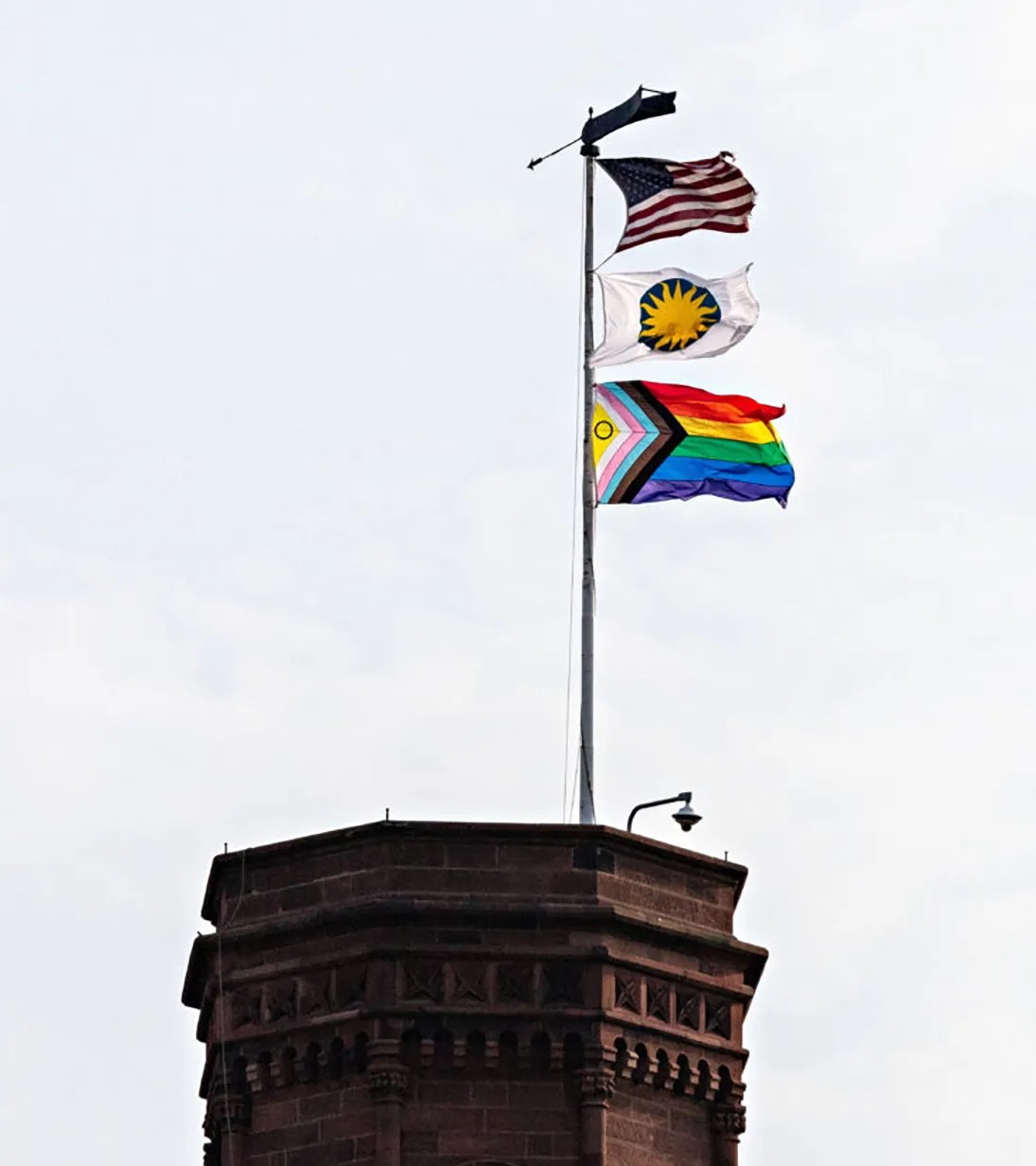
The American History Museum’s “LGBTQ+ History” exhibit seeks to “understand evolving and overlapping identities such as lesbian, gay, bi-sexual, transgender, queer, transsexual, transvestite, mahu, homosexual, fluid, invert, urning, third sex, two sex, gender-bender, sapphist, hijra, friend of Dorothy, drag queen/king, and many other experiences,” and includes articles on “LGBTQ+ inclusion and skateboarding“ and “the rise of drag ball culture in the 1920s.”
The National Museum of the American Latino features programming highlighting “animated Latinos and Latinas with disabilities” — with content from “a disabled, plus-sized actress” and an “ambulatory wheelchair user” who “educates on their identity being Latinx, LGBTQ+, and disabled.”
The National Museum of the American Latino characterizes the Texas Revolution as a “massive defense of slavery waged by ‘white Anglo Saxon’ settlers against anti-slavery Mexicans fighting for freedom, not a Texan war of independence from Mexico,” and frames the Mexican-American War as “the North American invasion” that was “unprovoked and motivated by pro-slavery politicians.”
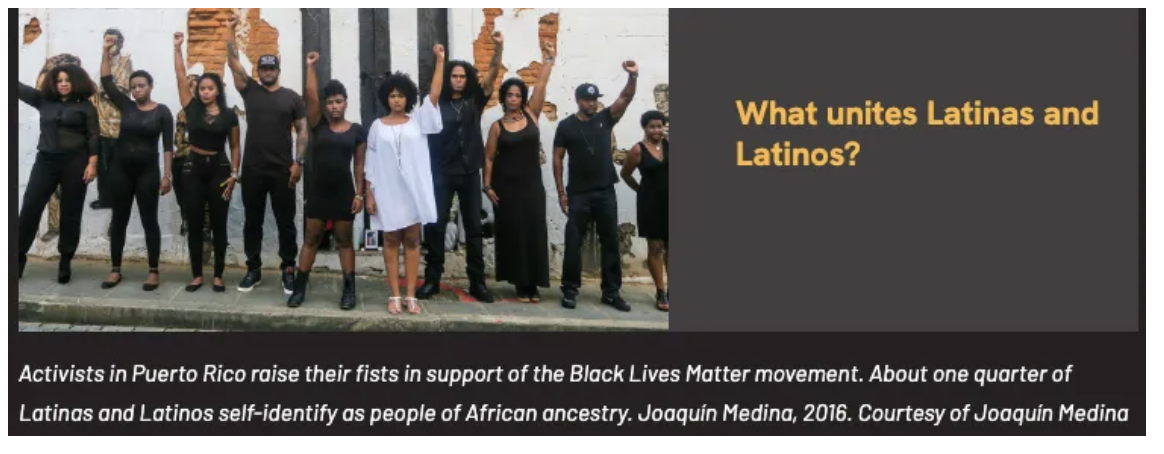
According to the National Museum of the American Latino, “what unites Latinas and Latinos“ is “the Black Lives Matter movement.”
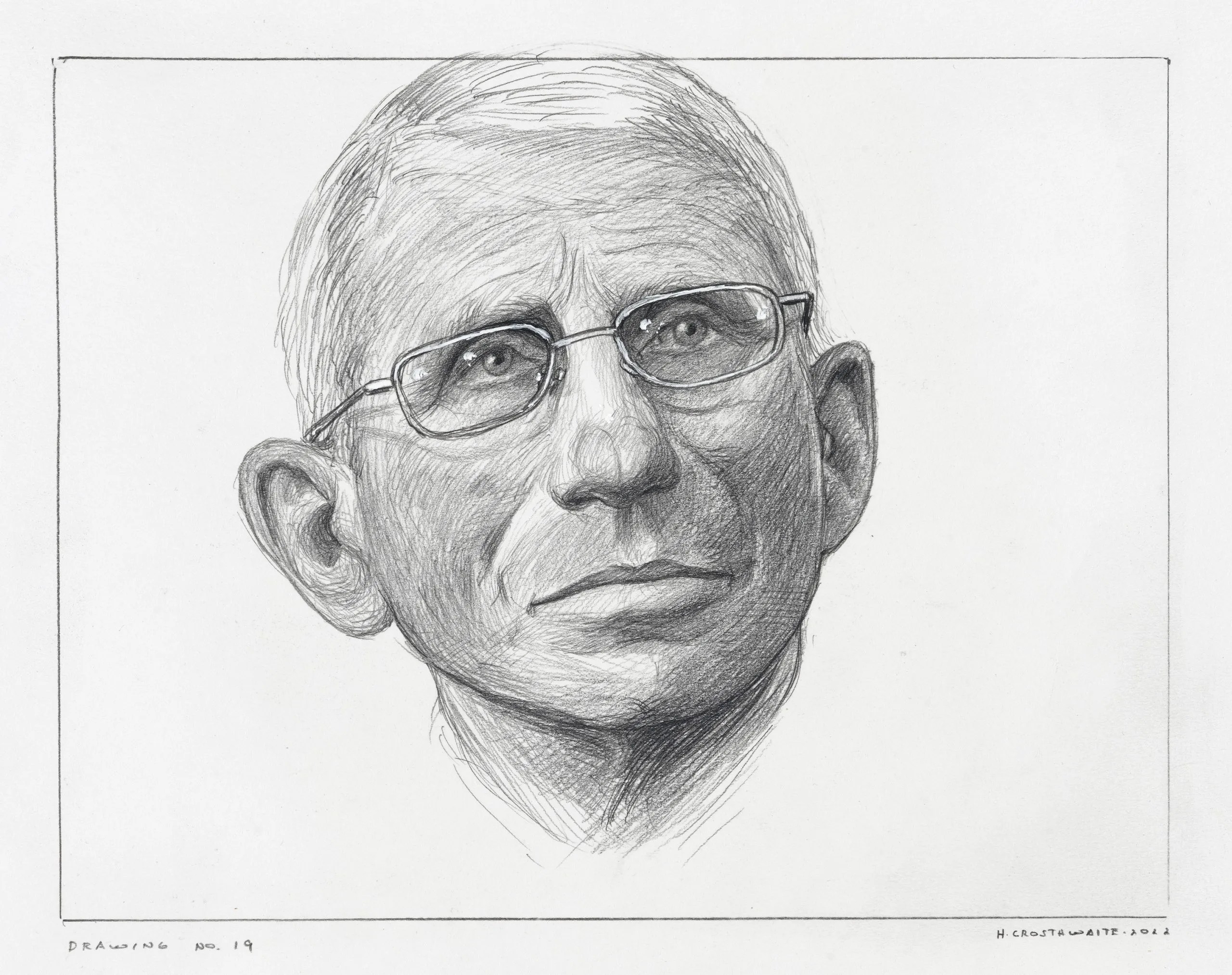
The National Portrait Gallery commissioned a “stop-motion drawing animation” that “examines the career“ of Anthony Fauci.
The American History Museum’s exhibit marking the 50th anniversary of Title IX includesbiological men competing in women’s sports and argues in favor of “transgender” athletes competing in sports against the opposite biological sex.
A exhibit at the American History Museum depicts migrants watching Independence Day fireworks “through an opening in the U.S.-Mexico border wall” and says America’s founders “feared non-White immigration.”

The American History Museum features a display that refers to the founding of America as “a profound unsettling of the continent.”
The American History Museum’s “American Democracy” exhibit claims voter integrity measures are “attempts to minimize the political power” of “new and diverse groups of Americans,” while its section on “demonstrations” includes only leftist causes.
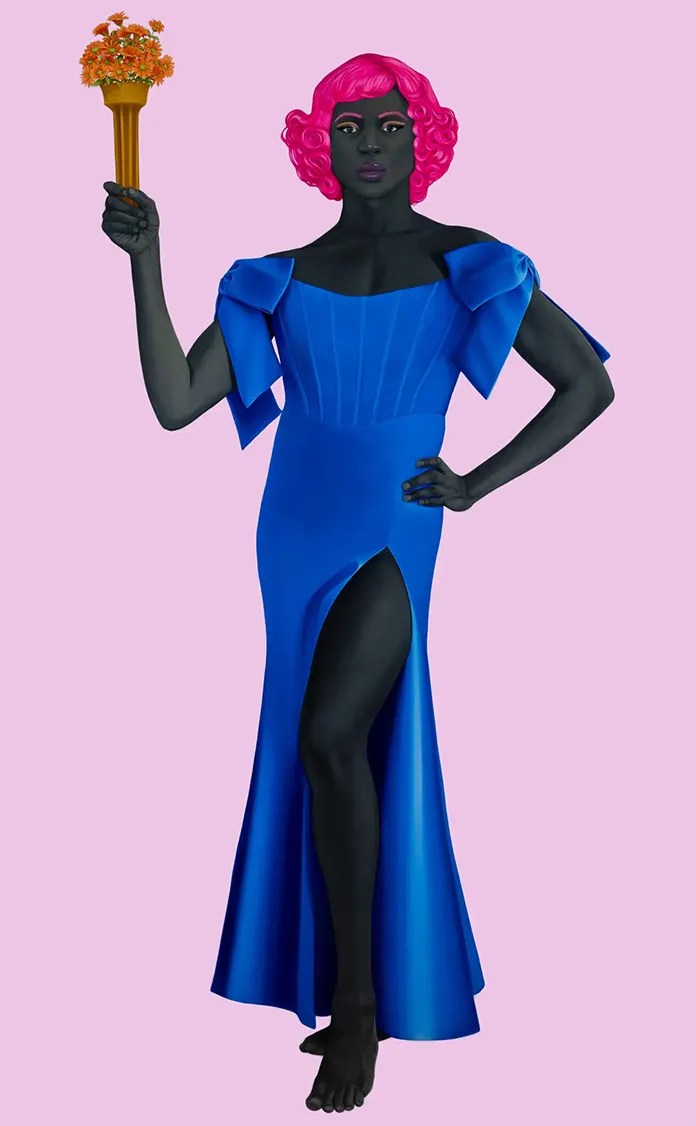
An American History Museum exhibit features a depiction of the Statue of Liberty “holding a tomato in her right hand instead of a torch, and a basket of tomatoes in her left hand instead of a tablet.”

- The National Museum of the American Latino features an anti-American exhibit that defines Latino history as centuries of victimhood and exploitation, suggests the U.S. is stolen land, and characterizes U.S. history as rooted in “colonization.”
- The exhibit features writing from illegal immigrants “fighting to belong.”
- The exhibit displays a quote from Claudia de la Cruz, the socialist nominee for president and a director an anti-American hate group, as well as another quote that reads, “We didn’t cross the border; the border crossed us.”
- The exhibit remains prominently featured on its website alongside a quote from the Communist Party USA’s Angela Davis, who was once among the FBI’s Top 10 Most Wanted Fugitives.

- The National Museum of the American Latino features an anti-American exhibit that defines Latino history as centuries of victimhood and exploitation, suggests the U.S. is stolen land, and characterizes U.S. history as rooted in “colonization.”
- The exhibit features writing from illegal immigrants “fighting to belong.”
- The exhibit displays a quote from Claudia de la Cruz, the socialist nominee for president and a director an anti-American hate group, as well as another quote that reads, “We didn’t cross the border; the border crossed us.”
- The exhibit remains prominently featured on its website alongside a quote from the Communist Party USA’s Angela Davis, who was once among the FBI’s Top 10 Most Wanted Fugitives.
The former interim director of the future Smithsonian American Women’s History Museum declared the museum will be “inclusive” of biological men posing as women.
Commentary from The Hill, August 22, 2025:
White House lists 20 objectionable Smithsonian exhibits, artworks
BY ASHLEIGH FIELDS – 08/22/25 10:34 AM ET
The Trump administration specifically targeted the American history museum’s “LGBTQ+ History” exhibit and condemned a separate display lauding the 50th anniversary of Title IX with a focus on transgender athletes. President Trump signed an executive order in February barring transgender women from competing in women’s sports.
The decision to highlight more than a dozen exhibits and artworks as “woke” comes days after Trump criticized the history museum for its depiction of slavery and its impact on Black Americans.
“The Smithsonian is OUT OF CONTROL, where everything discussed is how horrible our Country is, how bad Slavery was, and how unaccomplished the downtrodden have been — Nothing about Success, nothing about Brightness, nothing about the Future,” the president wrote Tuesday in a Truth Social post.
“We are not going to allow this to happen, and I have instructed my attorneys to go through the Museums, and start the exact same process that has been done with Colleges and Universities where tremendous progress has been made,” he added. “This Country cannot be WOKE, because WOKE IS BROKE.”
During his first term, Trump lauded the opening of the National Museum of African American History and Culture for its portrayal of harsh truths and storied victories for disenfranchised Black citizens.
Trump’s issue with the depiction of slavery in museums has been widely challenged by Black historians and community leaders.
“Just as the Holocaust is remembered in all its brutality, so must America reckon with the truth of chattel slavery, Jim Crow and racial terror,” Toni Draper, publisher of the Afro-American Newspaper — the archives of which were used to help curate the museum — wrote in a recent op-ed for Afro.com. “Anything less is historical erasure, a rewriting of facts to make the nation appear more palatable.”
“But history is not meant to comfort — it is meant to confront. And only in confrontation do we find the lessons that lead us forward,” she added.
Morocco Malta and the Med: Casablanca and El Jadida
I can’t be staying in bed when we are coming into port in a new city.

This was seriously disturbing.

That mist looks sulfuric!


We are warned that Casablanca is an industrial port. No kidding!

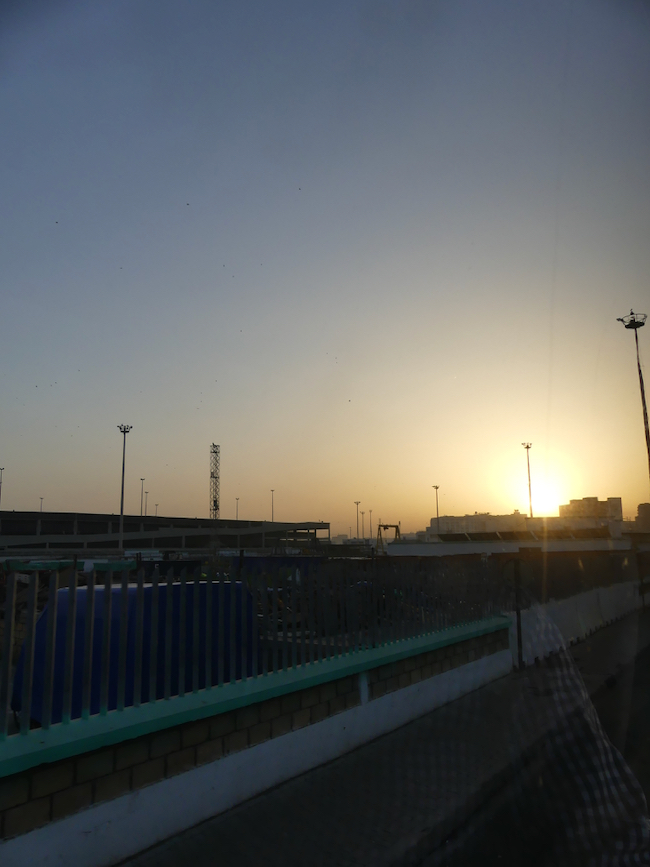
Quick breakfast and we are off to El Jadida, an old Portuguese fortress city. We were actually here ten years ago on our very first cruise, The Moors in Spain and Morocco. We really love Morocco. One year we came here at Christmas, which was also Ramadan, rented a car and drove all around Morocco with our son. We had such a great time.


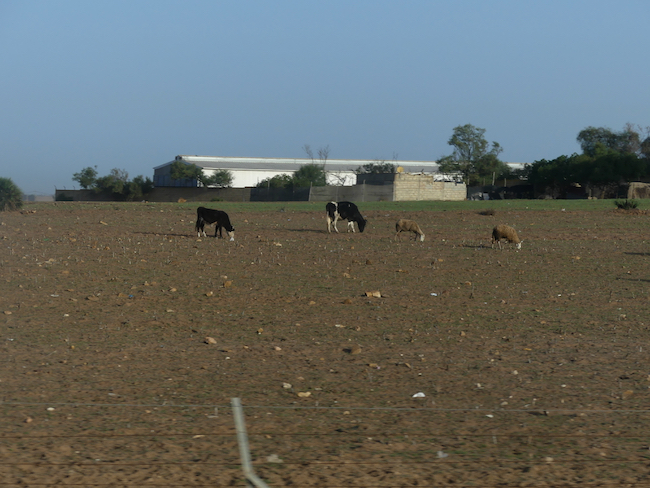
Our guide tells us this area near El Jadida is famous for raising horses for racing and showing.


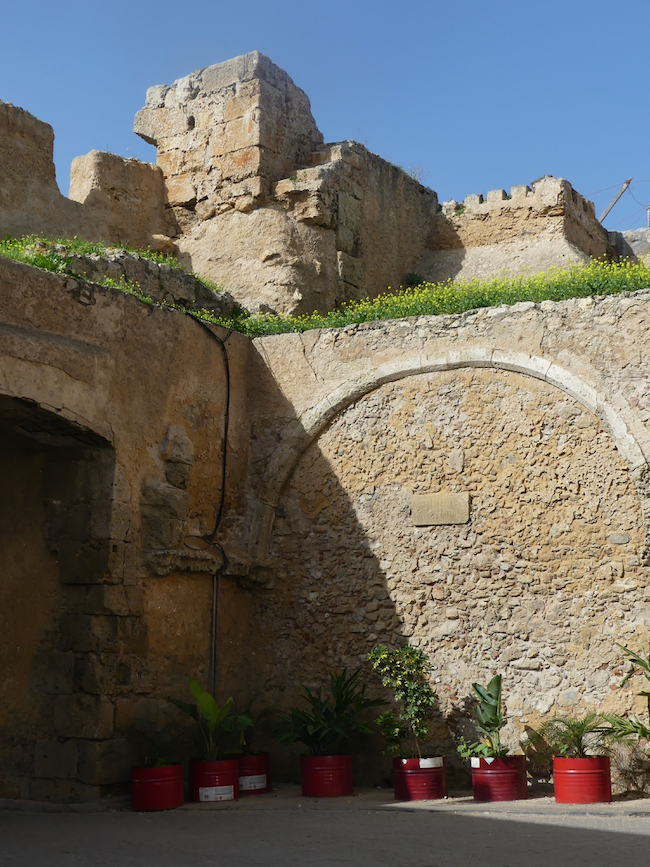
Me and my stone walls!


Getting close to El Jadida:
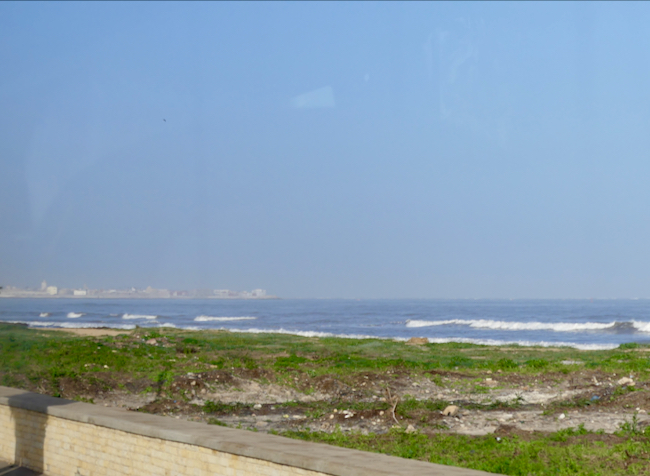
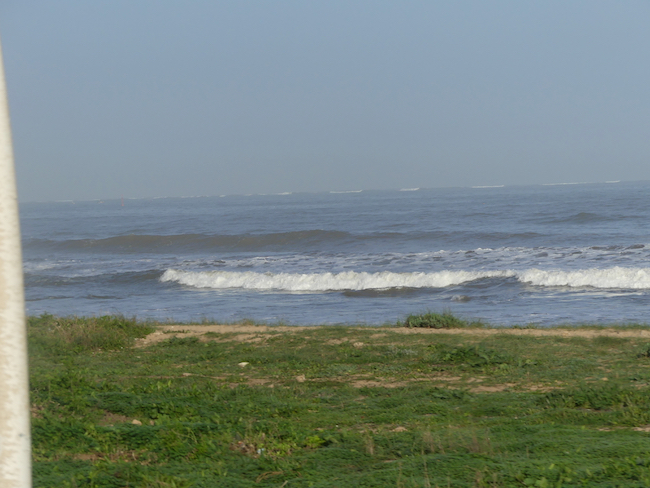

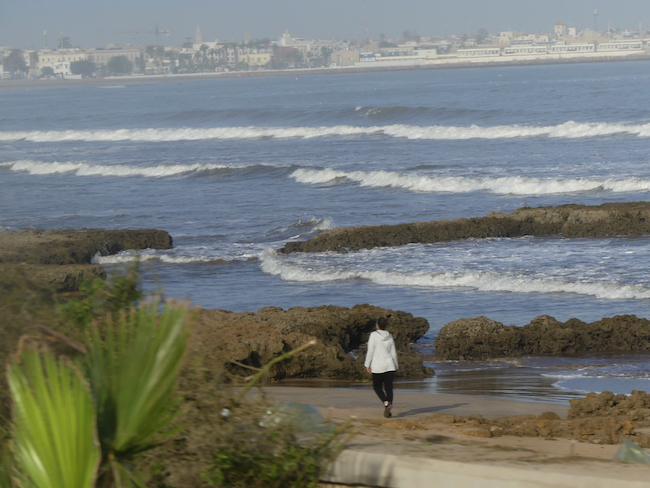

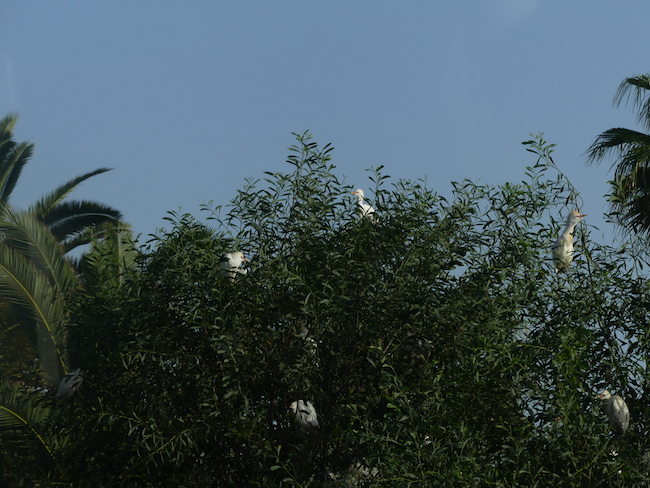



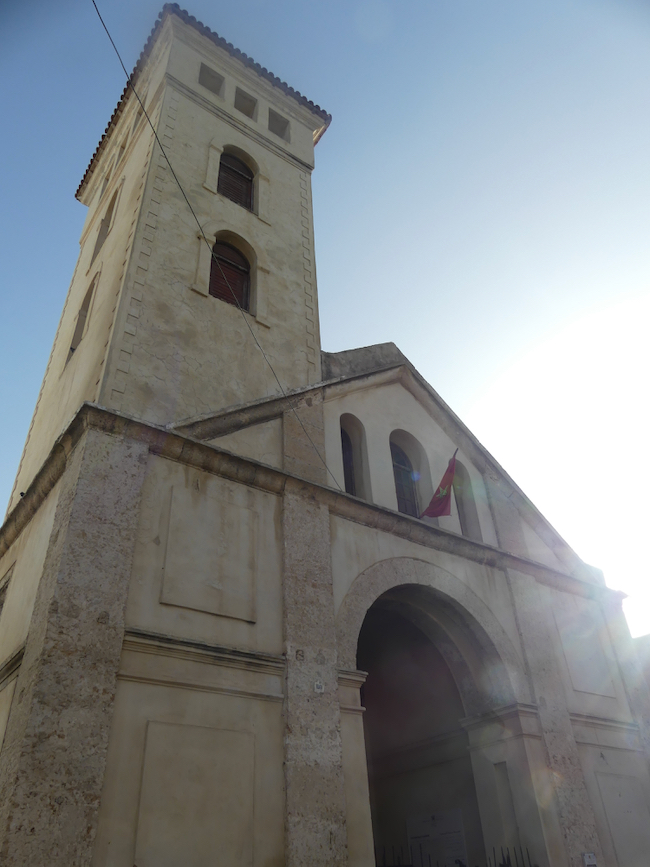
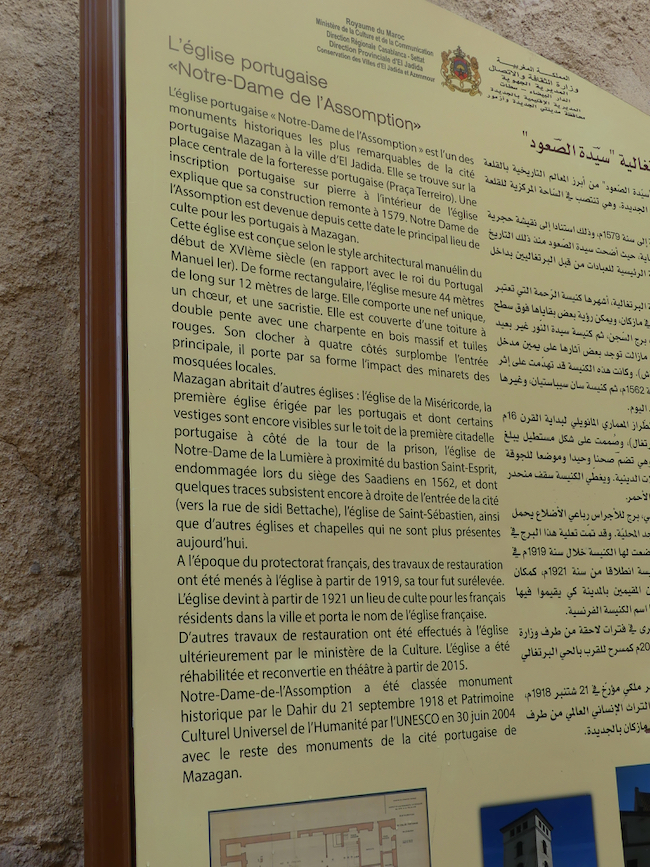
An old Portuguese Catholic Church in El Jadida. The people around Casablanca make it a point to discuss frequently how tolerant the area is, with Jewish and Christian populations as well as Muslim and Berber. Our guide was proudly Berber.
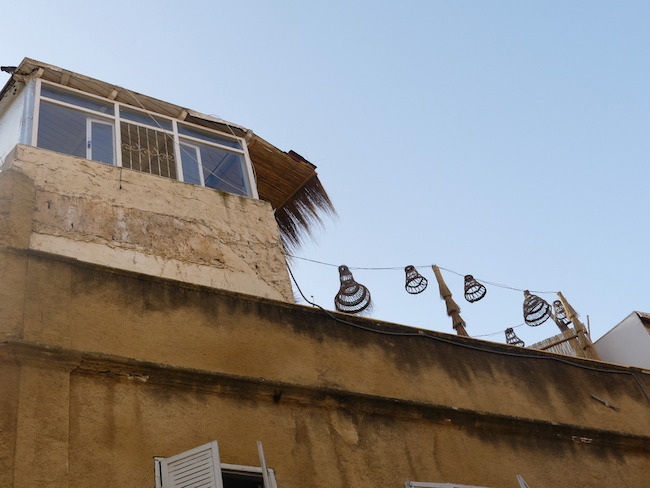


We had been warned that the beautiful old Portuguese Cisterns were closed for restoration, so the photo below is the exterior only, but I have a treat for you. Below the shot of the exterior is a photo of the interior I took ten years ago. I still love to look at it. The cisterns are so beautiful as well as functional.

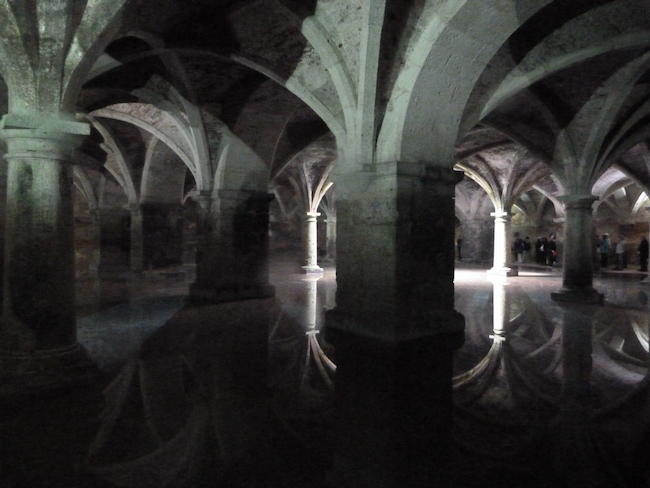
I don’t consider this cheating; I consider it . . . um . . . illustrating. . . or embellishing to show you what you might see when you go to El Jadida.
Below are Moroccan silk weavings.


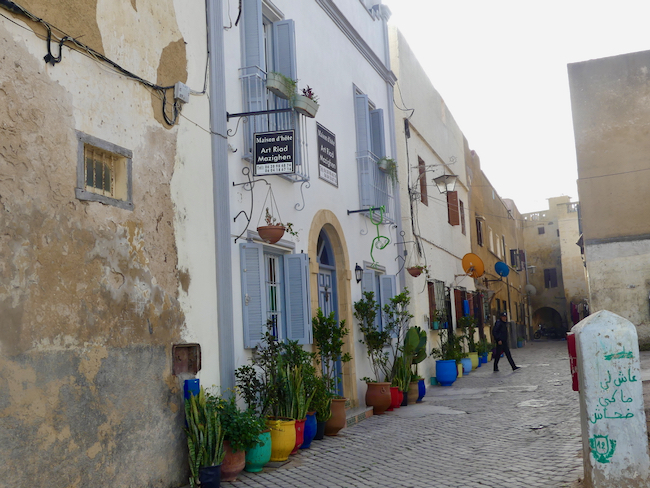
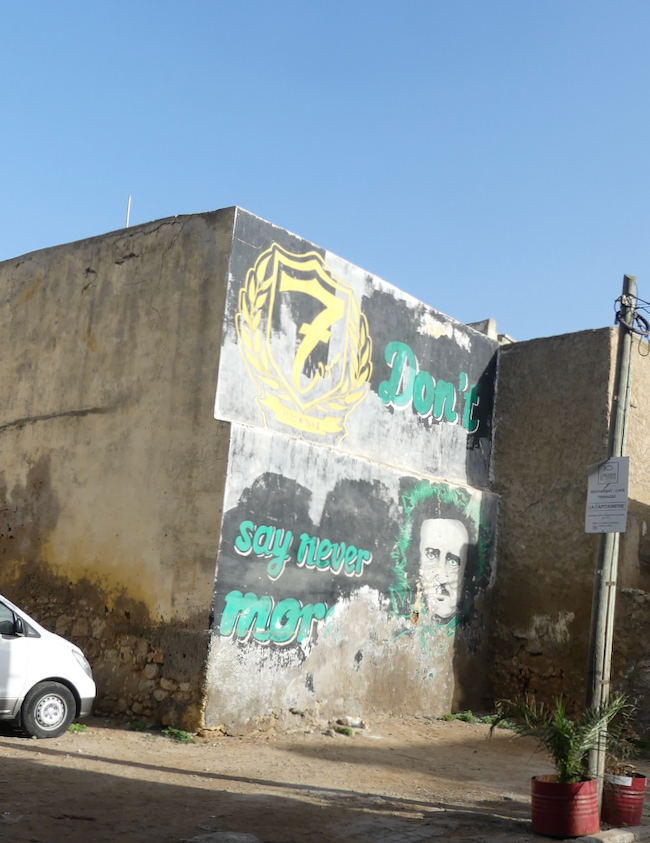
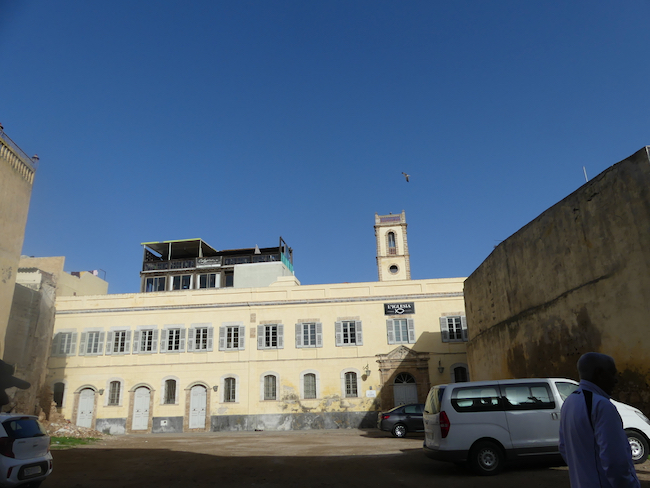
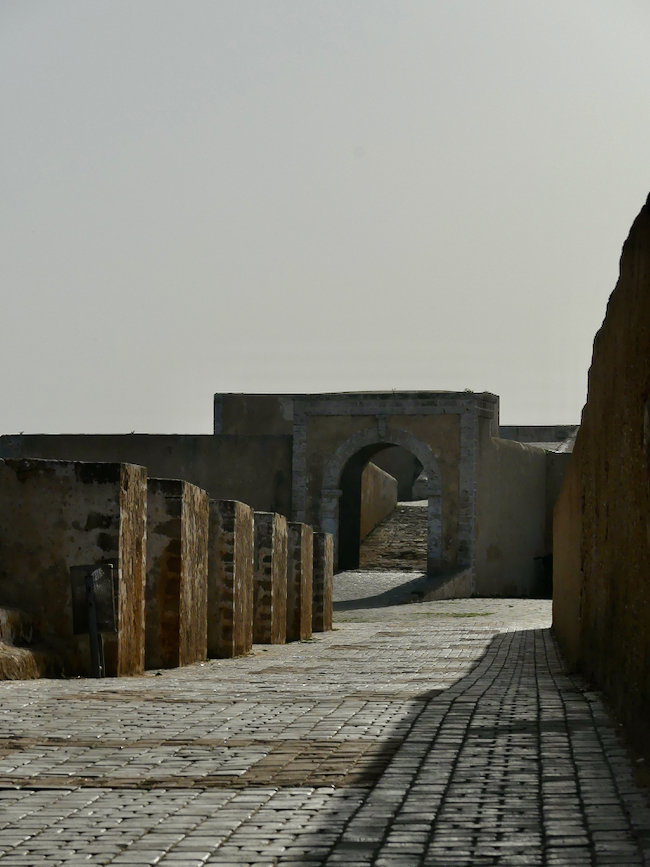


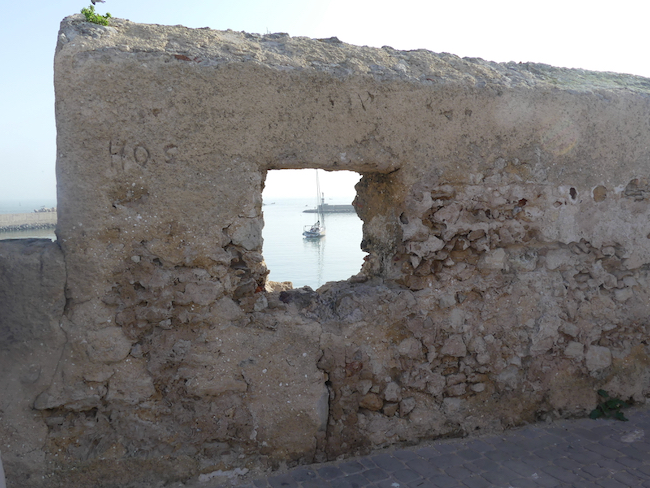

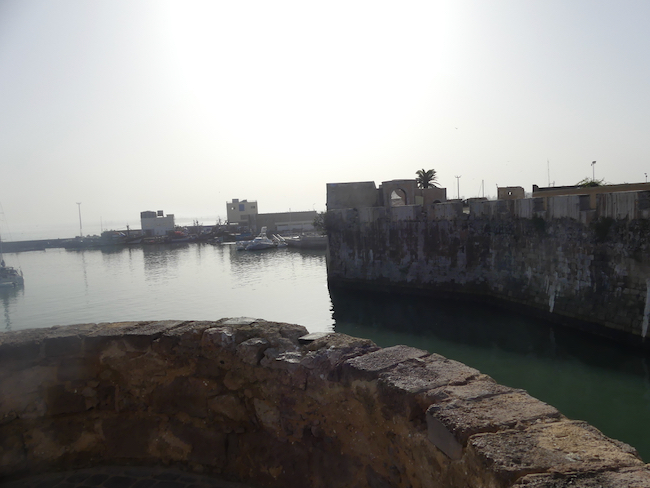
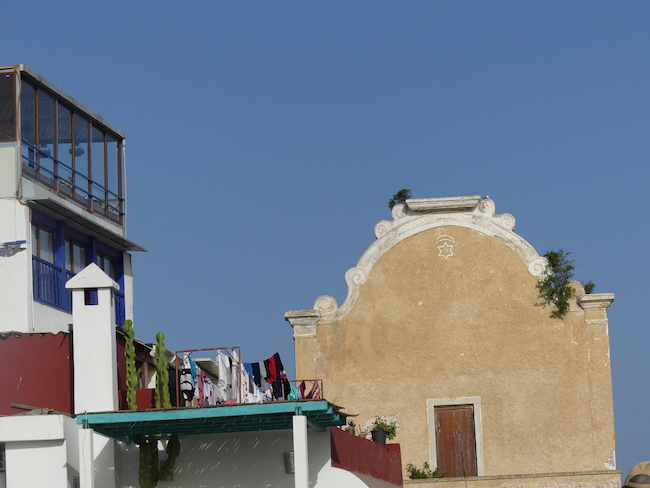
I believe this is the old Jewish bakery.
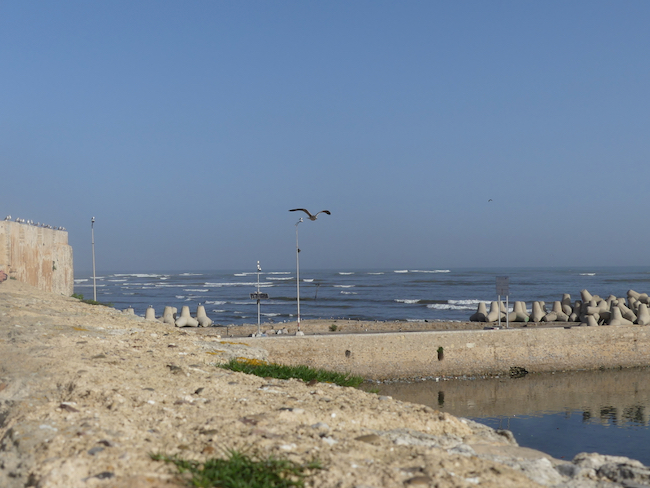

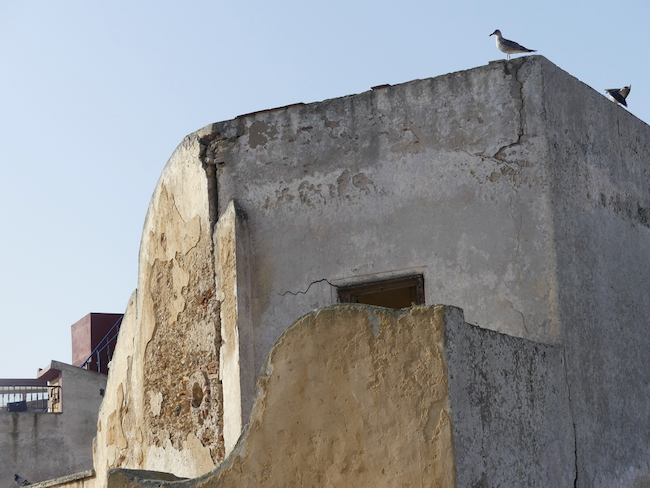
When you read old histories or bible stories about prisoners being cast into a well, it could look a lot like this:


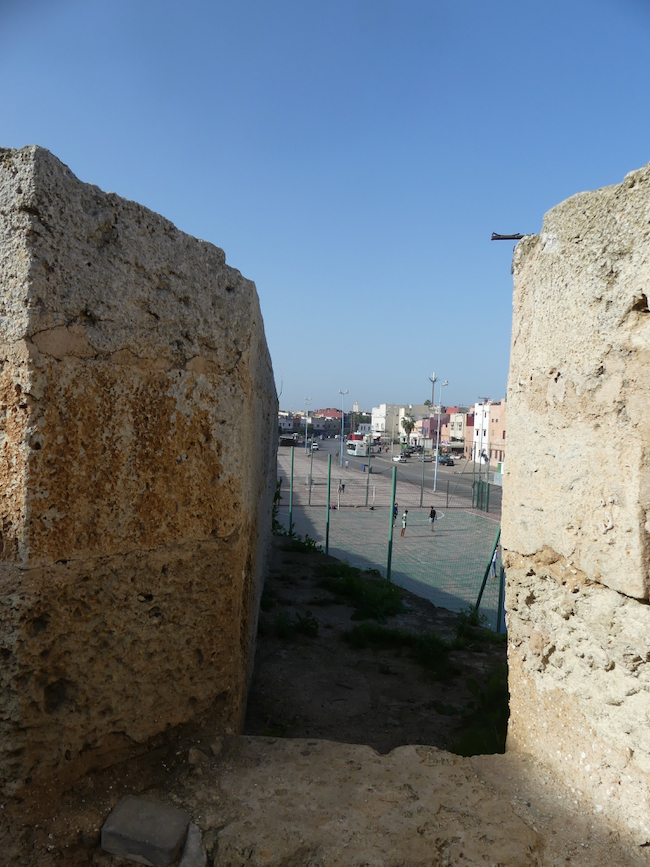


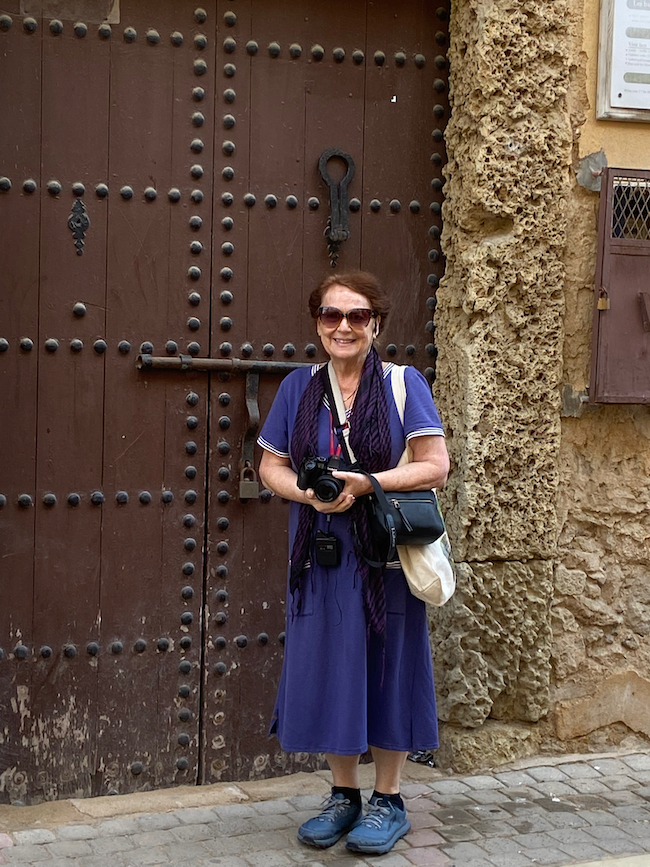
This picture below is hilarious because I am wearing an expensive pair of shoes that I find clunky. The trip description said it was challenging, with uneven hikes, rocks, and hills. It was a very mild hike; I could have worn my sandals.

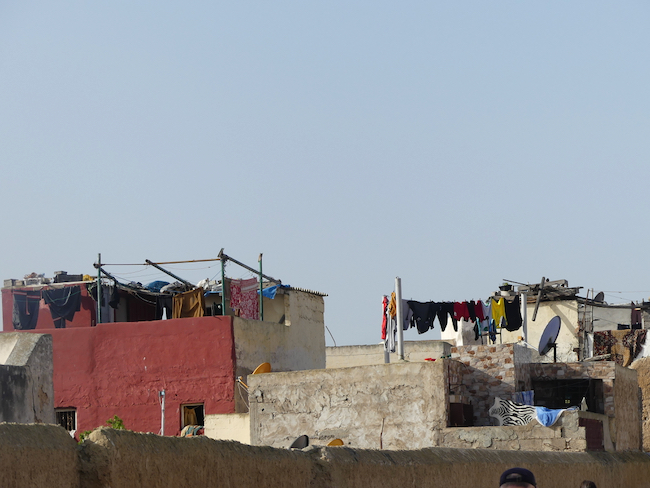
My husband took this photo below; he loved the contrast of the drawing of the cisterns and the laundry hung to dry over the cisterns.


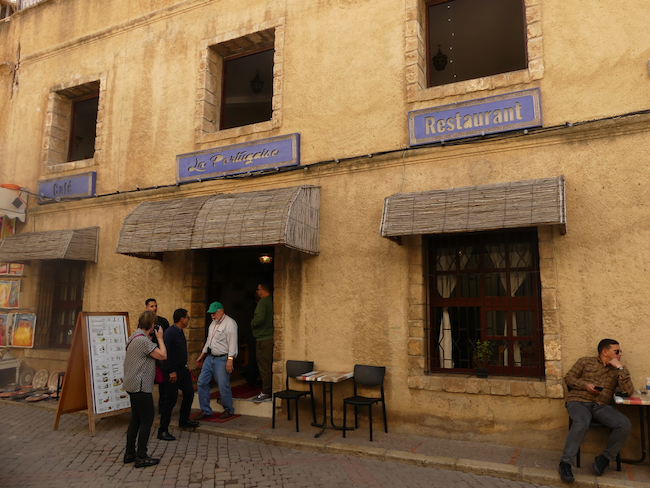
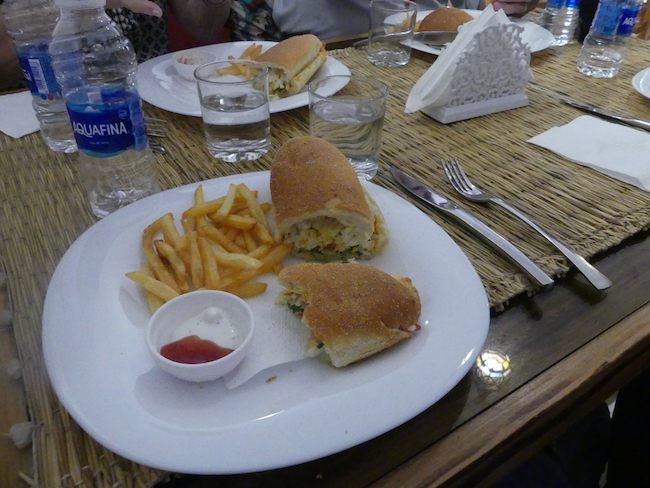
It’s going to be a couple hours ride back to the ship, but the guide has a treat for us – “Snacks” at a local restaurant, part of the tour, no extra charge. The small restaurant was just big enough to hold all of us, had a nice clean restroom and place to wash up, and served these delicious sandwiches, followed by a selection of house baked Moroccan cookies, and Turkish coffee or Mint Tea. The owner and his wife were so hospitable. They made us feel like very special guests. It really was a treat!




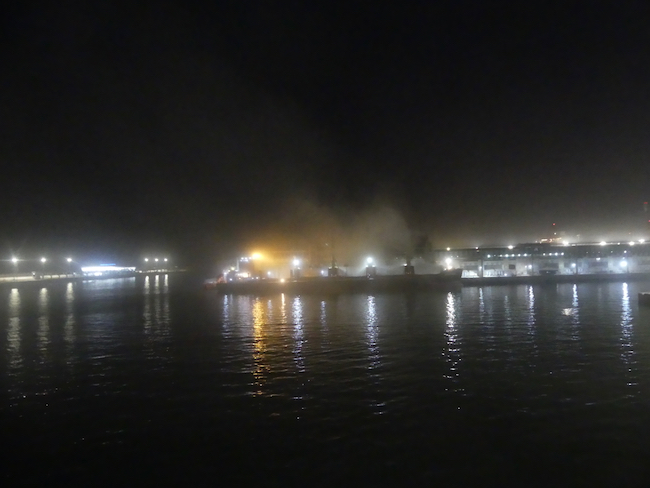
As we sail away from Casablanca, that same ship continues to be surrounded with that yellow steamy cloud.
For us, we have seen everything we wanted to see. We think Cadiz and Malaga will be pretty tame after the excitement of Ajaccio, Malta, Tunis and Algiers. (We were wrong!)
Saying Goodbye to Al Marai Coffee Cups

All my nomadic life, I have had to sift, sort and weigh the value of my belongings – literally. As an Army wife and later a corporate wife, I had a weight allowance as we moved from country to country. My life was full of leaving things behind – friends, churches, social groups, jobs, my identity – as well as belongings.
Unlikely items made the cut. In 2003, when we moved to Doha, Qatar, I discovered a nearby store, the LuLu (which means lovely large pearl), where a gallon of Al Rifai milk came with a free coffee cup sturdily taped to it. I was delighted. I’ve always believed good design does not necessarily correlate with price – and these cups were a perfect size and had these wonderful scenes from Doha life, where there was a dhow harbor in the center of town, dhows in the harbor, and camel races with human riders on Saturdays. Look! The dhow coffee cup even has a wind tower in the background.
So yesterday, Christmas Day, as I opened two beautiful new coffee cups, one from Giverney and one from Barcelona, my husband looked at me sorrowfully, and approached the subject gently.
“It’s time we give up the Doha coffee cups,” he said.
“They have served us well. They are over 20 years old. They were free, probably made in China from materials we don’t even want to think about. I use them all the time, and even as I do, I wonder what might be leaching into my drink.”
I know he is right. There is no marking of any kind to indicate origin. After all these years, marks are appearing where we have stirred for twenty years. And yet – these cups have served me loyally. They are still bright and unmarred. I love their memorialization of a slower time in Doha. And I have options.
At Christmas breakfast, I have the cups out on display and offer them to my son. He is a discerning collector of first editions by selected authors, first edition Legos from the space exploration collections, edged weapons, and selected items that catch his attention. He also knows how to buy and sell on the Internet when he wants to refine his collections.
He expresses interest but does not take them with him. Their departure, however, is Christmas Day chaotic – bags full of presents, the food divided to be used for quick meals in the coming week (even our grandchildren contributed to our Christmas Eve dinner, my grandson a crab dip and my granddaughter a wreath made of crescent roll wrapped little smokies. My son, who was never interested in cooking, astonished us with a baked Brie!) and last-minute check-ins on upcoming family plans.
I am a patient woman. I know those cups deserve to find new appreciation in a new home. I believe my son will get involved but if not, I have other options.
Update: This is what it is like to be me. It is not that I am getting older, it is that I will tell you things I believe to be true, and they are close, but not the same.
My friend Yusuf, below, said he thought it must be Al Marai, and that sounded familiar. AdventureMan said maybe really we should keep the cups, and as he handled them, He found Al Marai logos on the cups. Not just one. Two on each cup.

In our family, we are all very very sure we are right. When we are not right, we are required to humbly state it. I was wrong, so very very wrong; the cups were labeled, Al Marai, not Al Rifai, and YOU, Yusef and AdventureMan, were RIGHT.
And we are keeping the cups!
Taos, So Beautiful, We’ll Be Back
Some places, when you arrive, you just feel at home. We felt that way arriving in Taos. Our active-aging demographic went hand in hand with the young skier/snowboarder/rafter athletic demographic, and the two seemed to co-exist well.
We met a man in town who loves petroglyphs as I do, knows the secrets of where to find them and also has a vibrant and active mind. We found great walking, and beautiful spaces. We can’t wait to go back to Taos.



Mesa Verde, Cliff House Loop and Coyote Village
We decide to head back to Mesa Verde for our last full day and see some of the sights we didn’t get to yesterday. We started with the Cliff House loop, and were amazed to see how many people were there before us. There was a bus full of Italians, and a bus full of French people. There were all kinds of people our age waiting for the Ranger tour of the Cliff House; you need reservations and the numbers are limited. We did it the last time so felt comfortable skipping it this time, and went on to view other sites, some of which were open, and some not.


The most productive site for us was the Far View site, where archeologists have excavated much of a village and reservoir from ancient times.


The Docent Ranger tells us that they may have to close the exhibit soon because some of the walls are so fragile that even with careful visitors, the stress on ancient stones and foundations are too fragile to survive the number of visitors, which is affecting their condition.


We were able to see the storage rooms and the kivas. People talk about the ceremonial functions of the kivas – they look to me like they had functional purposes, perhaps keeping people out of the heat and out of the elements, perhaps gatherings, yes, and it made me think of Thanksgiving and how a very casual gathering could be described as ceremonial.


I think we toss that word around too lightly. I think we are often discussing customary, daily doings and elevating these daily rituals by calling them ceremonial. Am I ceremonial while I wash my dishes, or hang my laundry? Do I ceremonially cook our dinner?


I love visiting these sites and having these conversations in my head.

We take a chance on getting a table at the Absolute Bakery in Mancos, a place we love. Very casual, everything home made and delicious, and we are lucky, they have enlarged and have a room in the back which they open for us, and then others, too.


Back at the cabin, we finish off the spaghetti and garlic bread back at the cabin for our last dinner in Cortez, and the last few bites of Gustavo’s lemon pie. I check with Cecilia and Alison about what is required for check out (every B&B has its own requirements) and they tell me just to leave our food, that they will use what they can and take care of the rest. We won’t be doing our own cooking for the rest of the trip.
Recent Comments
intlxpatr on Shampoo Ginger tigerbutterya0c5ff1d… on Shampoo Ginger intlxpatr on British Soldier Kidnapped, Esc… John on British Soldier Kidnapped, Esc… intlxpatr on British Soldier Kidnapped, Esc… Wikipedia Donate Button

Amazina


Early Voting in Florida


 Here There and Everywhere