September 11; A Day of Infamy

I was in Seattle for a wedding, staying with my sister. My nephew and I were up early, and he called to me, “Come see something! This is so weird. A plane just flew into the World Trade Center!”
I didn’t believe him, but I went to his room across the hall to see. As we watched, the second plane flew into the second tower.
“That wasn’t an accident,” I said. “It’s not that easy to fly straight into a building.”
But mostly, I was thinking “Will I ever see my husband again?”
We were living in Germany. The phone lines were blocked. I couldn’t hear his voice.
My sister got a call, and she left for work. My nephew left for work. I had a coffee date with one of my former professors; she never showed up. She called me later to say she was stuck in the ferry line; the ferries weren’t operating, and neither was her phone until now.
So I hit the quilt shop. I knew I would spend the rest of the day rivited to the television screen, trying to learn what had just happened. We had seen it, we kept seeing it, over and over, but none of us could understand what we were seeing.
The New Yorker cover, above, captures it perfectly – we were all in the dark.
I was scared, and I felt angry. I wanted to DO something. I wanted to have something positive to come out of this horror. I designed a quilt. I cut out the pieces. I hand stitched all the pieces. It got me through.

Maybe late that night, AdventureMan was able to call me. We still didn’t know exactly what was going on or if the planes would ever fly again. I held my breath in the coming days, as my flight reservation day approached.
I was on one of the first planes out. I remember the pilot coming on as we were departing, and telling us to introduce ourselves to each other, to be neighbors on our flight, that we would help one another if anything went wrong. It was greatly moving, unexpectedly emotional.
September 11 is one of those days when everyone knows where he or she was when the planes hit. Everyone has a story. On our first safari to Botswana, we met a New Yorker who had been working in downtown New York and who had to walk miles to get home and somehow ended up barefoot. She said the walk was the best part, being alive was the best part, and that the streets, on that day of horror, were filled with people who were kind and helpful to one another.
One Compassionate Captain Changed Lives
From today’s Lectionary readings:
DAVID PENDLETON OAKERHATER
DEACON AND MISSIONARY (1 SEP 1931)
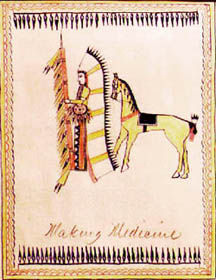
David P. Oakerhater (born around 1850) was a warrior and leader of the Cheyenne Indians of Oklahoma, and led a corps of fighters against the United States government in a dispute over Indian land rights. In 1875 he and 27 other military leaders were taken prisoner by the U S Army and sent to a military post in Florida. There, thanks to the efforts of a concerned Army captain, they learned English, were encouraged to earn money by giving art and archery lessons to visitors, and encountered the Christian faith. David and three others were moved to become Christians and to go north to study for the ministry. David was baptized in Syracuse, New York, in 1878, and ordained to the diaconate in 1881. He returned to Oklahoma and there founded schools and missions, and continued to work among his people until his death on 31 August 1931. When he first returned to Oklahoma in 1881, he said:
You all know me. You remember when I led you out to war I went first, and what I told you was true. Now I have been away to the East and I have learned about another captain, the Lord Jesus Christ, and he is my leader. He goes first, and all He tells me is true. I come back to my people to tell you to go with me now in this new road, a war that makes all for peace.
by James Kiefer
Note: the “military post in Florida” is Castillo de San Marcos in St. Augustine, now a National Monument. Should you visit, you can learn more about his imprisonment there.
Intlxpatr: One brave captain, unnamed, had compassion on a group of indigenous Americans and encouraged them to earn with their skills. He treated them with respect and won their respect in return. Such gentility influenced them to adopt and spread the Christian faith to others. One unnamed captain, reaching out his hand in loving charity, produced more influence than government policies.
How a Grown Up Ends a War and Wins

It is not my intention here to give our current president a strategy for a gracious exit from the War with Iran. I am writing this only because I believe he is incapable of adopting my solution.
Years ago, my very smart husband, AdventureMan and I played strategic board games. One time, I beat him in only six moves, at which point he stood up and stomped his foot (a very strong statement from a normally restrained man) and yelled “You can’t do that! It’s unorthodox!”
And that’s how wars are won. Yes, you can waste billions on sophisticated weaponry, and have a lot of fun with bombs and destruction. High T at work. You can also waste lives, and I believe that is a crime against your country. Our young people are not expendable.
We’ve all started fights we can’t win. It’s wired into us as human beings. What is the way out?
“I’ve made a big mistake. I take full responsibility. I’m sorry I got us into this mess, and now, I am going to do everything in my power to make it right.”
Those words, and the humility it takes to say them, save relationships, re-establish peace, and a firm foundation for moving forward.
It takes a grown-up to say them. It takes a grown-up to even think them. To continue on a losing path is wasteful and self-destructive.
We are not winning.
It’s time to own up, exit, and begin rebuilding our alliances.

New York’s Participation Trophy for Trump and his Iranian debacle. Everyone invited to contribute; no achievement too paltry to commemorate. The more gilt, the merrier.
When Lies Control the Narrative . . .

Truth disappears.
Today, National Pulic Radio reports the following:
The Trump administration has mass-deleted information regarding prosecutions related to the Jan. 6, 2021, attack on the U.S. Capitol, including cases involving defendants who assaulted police officers. This move marks the latest attempt by Trump to alter the narrative surrounding the violent riot. Last week, Justice Department news releases that detailed guilty pleas, jury verdicts and prison sentences disappeared from government websites. An NPR review found that the deletions included information about some of the most serious assaults on law enforcement that happened that day.
We all watched the attack on the Capitol happen in real time, with our own eyes, and much of it filmed by the insurrectionists who had been told the election was stolen. Mike Pence didn’t believe it and did not do as he was instructed to do. He supported the truth of the 2020 election of Joe Biden,
And now, we have a Trumpian edict of “non-disclosure” for all Federal Employees.
We used to take pride in the transparency of our government – not even that long ago! Less than one presidential administration ago! What happened to oversight (DOGE’D out of existence) and whistleblowers calling out corruption?
Calling out corrution is inconvenient for this regime. Bringing corruption into full view should make the corrupt squirm, but this administration has no scruples, no embarrassment.
And now, we have a new corrupt senatorial candidate out of Texas, Ken Paxton. Paxton has been charged with scandal and corruption by his own fellow Republicans, and is a welcome addition to the shameless corruption of the Trump Administration, bellying up to the trough, feeding off the taxpayers.
Did you know that “Tromper” in French is to fool? Si je ne me trompe pas.
Anna Julia Haywood Cooper
Today the church honors Anna Julia Haywood Cooper, an extraordinary woman who prevailed against prejudice.
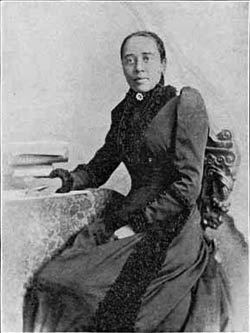
ANNA JULIA HAYWOOD COOPER
EDUCATOR
(1964)
Anna Julia Haywood Cooper (August 10, c1859- February 27, 1964). Educator, advocate and scholar. Born in Raleigh, North Carolina to an enslaved woman and a white man, presumably her mother’s master, Anna Julia was an academically gifted child and received a scholarship to attend St. Augustine Normal School and Collegiate Institute, a school founded by the Episcopal Church to educate African-American teachers and clergy. There she began her membership in the Episcopal Church. After forcing her way into a Greek class designed for male theology students, Anna Julia later married the instructor, George A.C. Cooper, the second African-American ordained to the Episcopal priesthood in North Carolina.
After her husband’s death in 1879, Cooper received degrees in mathematics from Oberlin College, and was made principal of the only African American high school in Washington D.C.. She was denied reappointment in 1906 because she refused to lower her educational standards.
Throughout her career, Cooper emphasized the importance of education to the future of African Americans, and was critical of the lack of support they received from the church. An advocate for African-American women, Cooper assisted in organizing the Colored Women’s League and the first Colored Settlement House in Washington, D.C. She wrote and spoke widely on issues of race and gender, and took an active role in national and international organizations founded to advance African Americans.
At the age of fifty-five she adopted the five children of her nephew. In 1925, Cooper became the fourth African-American woman to complete a Ph.D degree, granted from the Sorbonne when she was sixty-five years old. From 1930-1942, Cooper served as president of Frelinghuysen University.
from the Episcopal Women’s History Project
History the White House Doesn’t Like: The List of Exhibits Trump Wants Gone
It’s a strange honor to have exhibits selected that the President wants gone. As in Literature, when you read through the list, you learn a lot about the fears and the prejudices of the creator. In recent decades, the United States of America has had a greater tolerance for the idiosyncratic views of artists, appreciating their differing perceptions. The list below is taken word for word from the White House Post called The President is Right About the Smithsonian.
- The National Museum of African American History and Culture debuted a series to educate people on “a society that privileges white people and whiteness” — defining so-called “white dominant culture“ as “ways white people and their traditions, attitudes, and ways of life have been normalized over time” and portraying “the nuclear family,” “work ethic,” and “intellect” as white qualities rooted in racism.
- The campaign featured content from hardcore woke activist Ibram X. Kendi

As part of its campaign to stop being “wealthy, pale, and male,” the National Portrait Gallery featured a choreographed “modern dance performance“ detailing the “ramifications“ of the southern border wall and commissioned an entire series to examine “American portraiture and institutional history… through the lens of historical exclusion.”
The National Portrait Gallery features art commemorating the act of illegally crossing the “inclusive and exclusionary” southern border — even making it a finalist for one of its awards.
(Intlxpatr comment: This painting reminds me of the painting of Mary, Joseph and the Baby Jesus escaping to Egypt to avoid King Herod’s massacre of the innocents)

The National Museum of African Art displayed an exhibit on “works of speculative fiction that bring to life an immersive, feminist and sacred aquatopia inspired by the legend of Drexciya,” an “underwater kingdom populated by the children of pregnant women who had been thrown overboard or jumped into the ocean during the Middle Passage.”
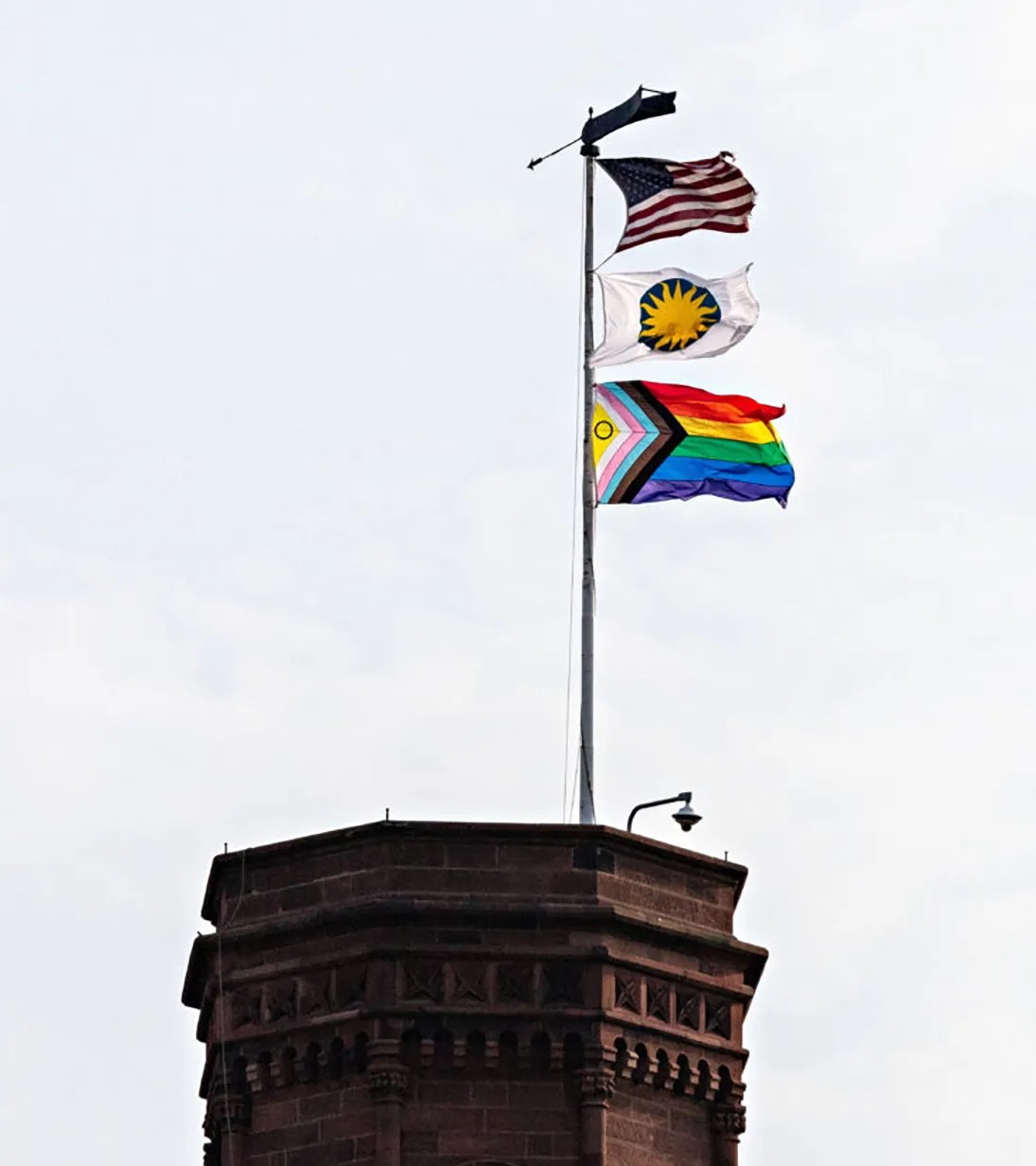
The American History Museum’s “LGBTQ+ History” exhibit seeks to “understand evolving and overlapping identities such as lesbian, gay, bi-sexual, transgender, queer, transsexual, transvestite, mahu, homosexual, fluid, invert, urning, third sex, two sex, gender-bender, sapphist, hijra, friend of Dorothy, drag queen/king, and many other experiences,” and includes articles on “LGBTQ+ inclusion and skateboarding“ and “the rise of drag ball culture in the 1920s.”
The National Museum of the American Latino features programming highlighting “animated Latinos and Latinas with disabilities” — with content from “a disabled, plus-sized actress” and an “ambulatory wheelchair user” who “educates on their identity being Latinx, LGBTQ+, and disabled.”
The National Museum of the American Latino characterizes the Texas Revolution as a “massive defense of slavery waged by ‘white Anglo Saxon’ settlers against anti-slavery Mexicans fighting for freedom, not a Texan war of independence from Mexico,” and frames the Mexican-American War as “the North American invasion” that was “unprovoked and motivated by pro-slavery politicians.”
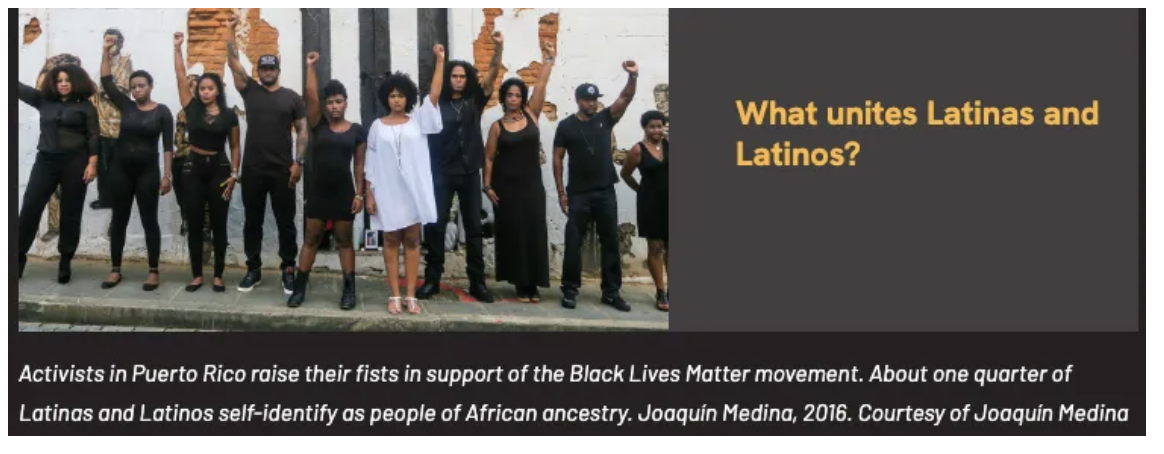
According to the National Museum of the American Latino, “what unites Latinas and Latinos“ is “the Black Lives Matter movement.”
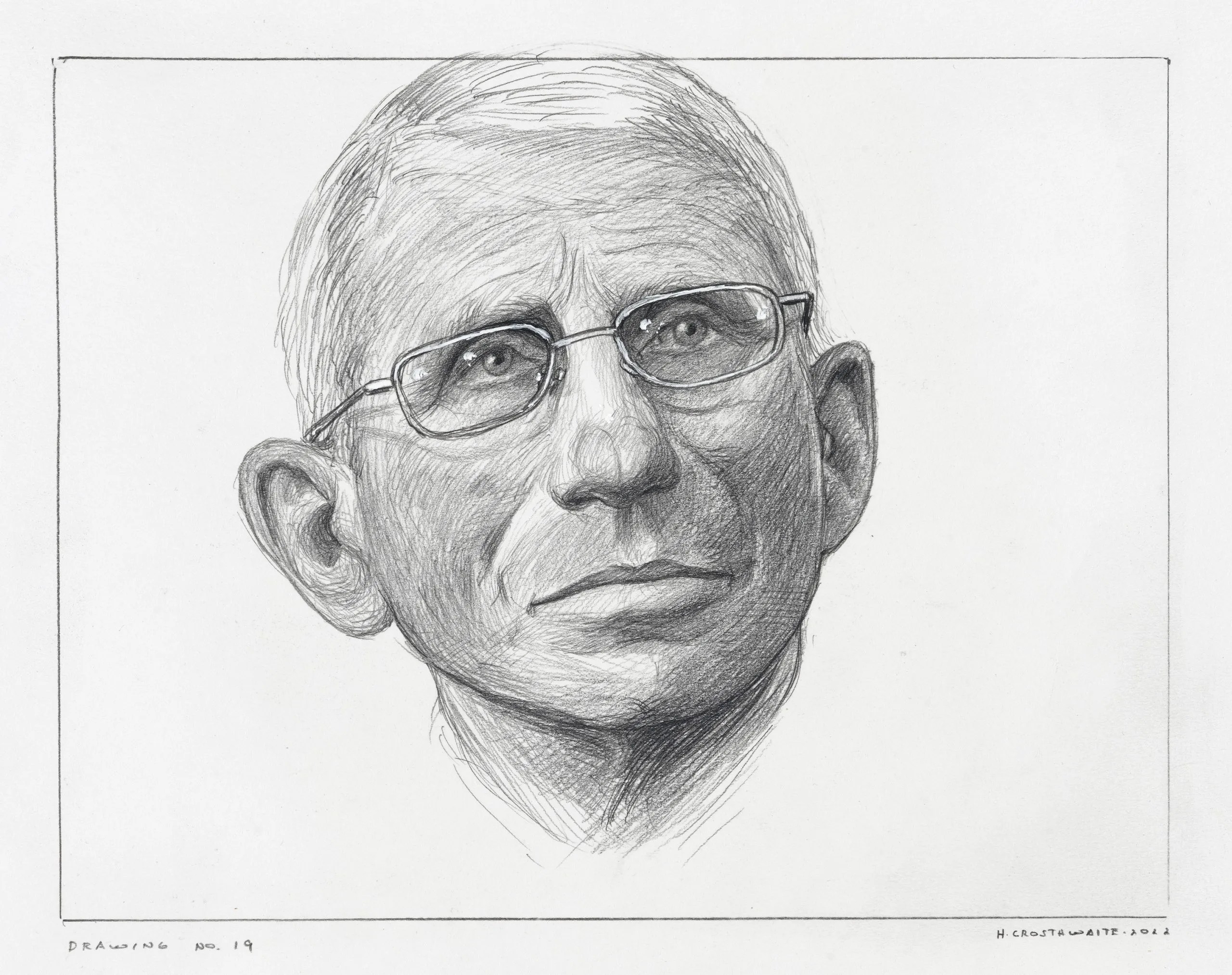
The National Portrait Gallery commissioned a “stop-motion drawing animation” that “examines the career“ of Anthony Fauci.
The American History Museum’s exhibit marking the 50th anniversary of Title IX includesbiological men competing in women’s sports and argues in favor of “transgender” athletes competing in sports against the opposite biological sex.
A exhibit at the American History Museum depicts migrants watching Independence Day fireworks “through an opening in the U.S.-Mexico border wall” and says America’s founders “feared non-White immigration.”

The American History Museum features a display that refers to the founding of America as “a profound unsettling of the continent.”
The American History Museum’s “American Democracy” exhibit claims voter integrity measures are “attempts to minimize the political power” of “new and diverse groups of Americans,” while its section on “demonstrations” includes only leftist causes.
An American History Museum exhibit features a depiction of the Statue of Liberty “holding a tomato in her right hand instead of a torch, and a basket of tomatoes in her left hand instead of a tablet.”

- The National Museum of the American Latino features an anti-American exhibit that defines Latino history as centuries of victimhood and exploitation, suggests the U.S. is stolen land, and characterizes U.S. history as rooted in “colonization.”
- The exhibit features writing from illegal immigrants “fighting to belong.”
- The exhibit displays a quote from Claudia de la Cruz, the socialist nominee for president and a director an anti-American hate group, as well as another quote that reads, “We didn’t cross the border; the border crossed us.”
- The exhibit remains prominently featured on its website alongside a quote from the Communist Party USA’s Angela Davis, who was once among the FBI’s Top 10 Most Wanted Fugitives.

- The National Museum of the American Latino features an anti-American exhibit that defines Latino history as centuries of victimhood and exploitation, suggests the U.S. is stolen land, and characterizes U.S. history as rooted in “colonization.”
- The exhibit features writing from illegal immigrants “fighting to belong.”
- The exhibit displays a quote from Claudia de la Cruz, the socialist nominee for president and a director an anti-American hate group, as well as another quote that reads, “We didn’t cross the border; the border crossed us.”
- The exhibit remains prominently featured on its website alongside a quote from the Communist Party USA’s Angela Davis, who was once among the FBI’s Top 10 Most Wanted Fugitives.

The former interim director of the future Smithsonian American Women’s History Museum declared the museum will be “inclusive” of biological men posing as women.
Commentary from The Hill, August 22, 2025:
White House lists 20 objectionable Smithsonian exhibits, artworks
BY ASHLEIGH FIELDS – 08/22/25 10:34 AM ET
The Trump administration specifically targeted the American history museum’s “LGBTQ+ History” exhibit and condemned a separate display lauding the 50th anniversary of Title IX with a focus on transgender athletes. President Trump signed an executive order in February barring transgender women from competing in women’s sports.
The decision to highlight more than a dozen exhibits and artworks as “woke” comes days after Trump criticized the history museum for its depiction of slavery and its impact on Black Americans.
“The Smithsonian is OUT OF CONTROL, where everything discussed is how horrible our Country is, how bad Slavery was, and how unaccomplished the downtrodden have been — Nothing about Success, nothing about Brightness, nothing about the Future,” the president wrote Tuesday in a Truth Social post.
“We are not going to allow this to happen, and I have instructed my attorneys to go through the Museums, and start the exact same process that has been done with Colleges and Universities where tremendous progress has been made,” he added. “This Country cannot be WOKE, because WOKE IS BROKE.”
During his first term, Trump lauded the opening of the National Museum of African American History and Culture for its portrayal of harsh truths and storied victories for disenfranchised Black citizens.
Trump’s issue with the depiction of slavery in museums has been widely challenged by Black historians and community leaders.
“Just as the Holocaust is remembered in all its brutality, so must America reckon with the truth of chattel slavery, Jim Crow and racial terror,” Toni Draper, publisher of the Afro-American Newspaper — the archives of which were used to help curate the museum — wrote in a recent op-ed for Afro.com. “Anything less is historical erasure, a rewriting of facts to make the nation appear more palatable.”
“But history is not meant to comfort — it is meant to confront. And only in confrontation do we find the lessons that lead us forward,” she added.
Morocco Malta and the Med: Casablanca and El Jadida
I can’t be staying in bed when we are coming into port in a new city.

This was seriously disturbing.

That mist looks sulfuric!


We are warned that Casablanca is an industrial port. No kidding!

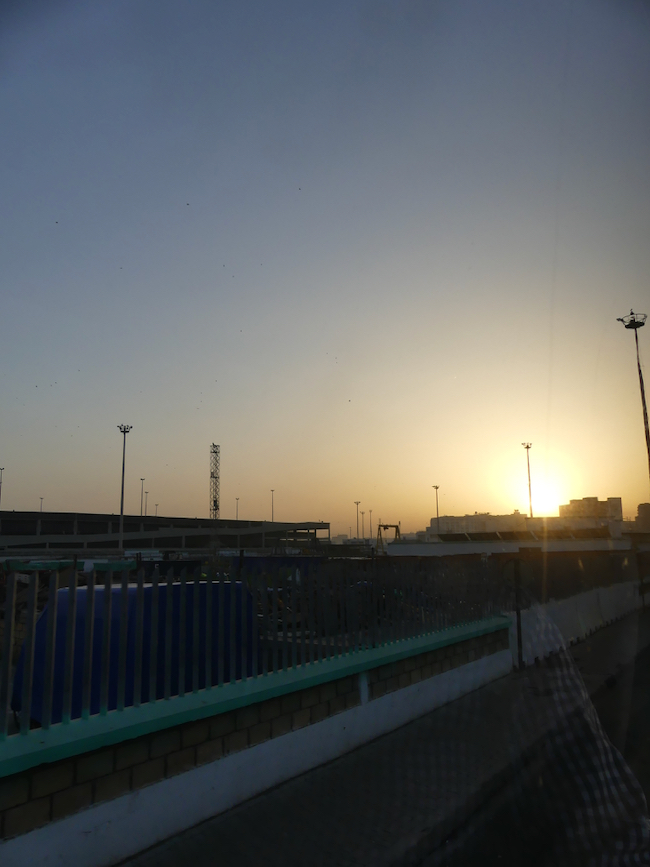
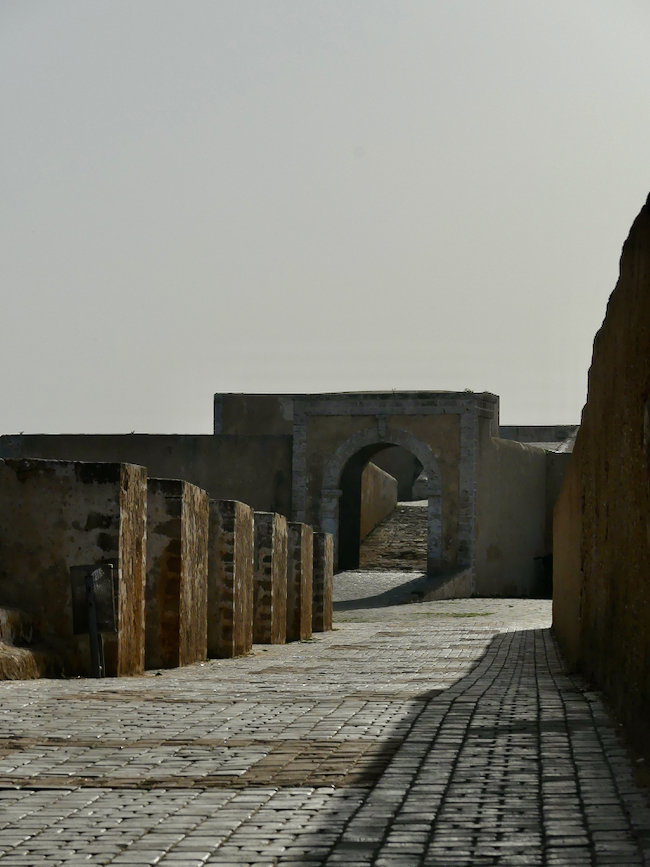
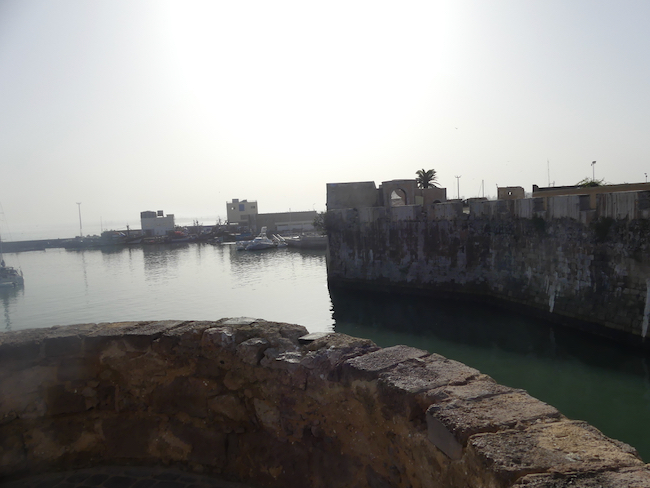
Quick breakfast and we are off to El Jadida, an old Portuguese fortress city. We were actually here ten years ago on our very first cruise, The Moors in Spain and Morocco. We really love Morocco. One year we came here at Christmas, which was also Ramadan, rented a car and drove all around Morocco with our son. We had such a great time.


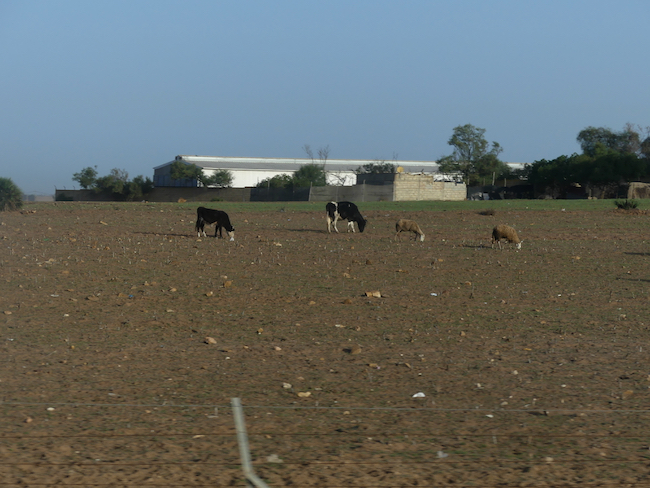
Our guide tells us this area near El Jadida is famous for raising horses for racing and showing.


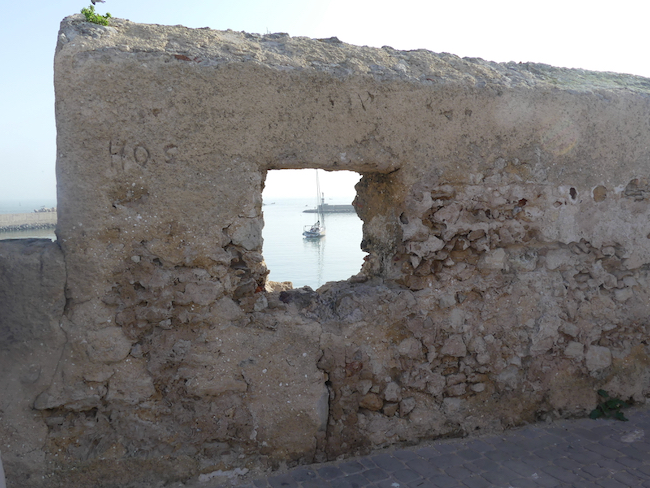
Me and my stone walls!


Getting close to El Jadida:
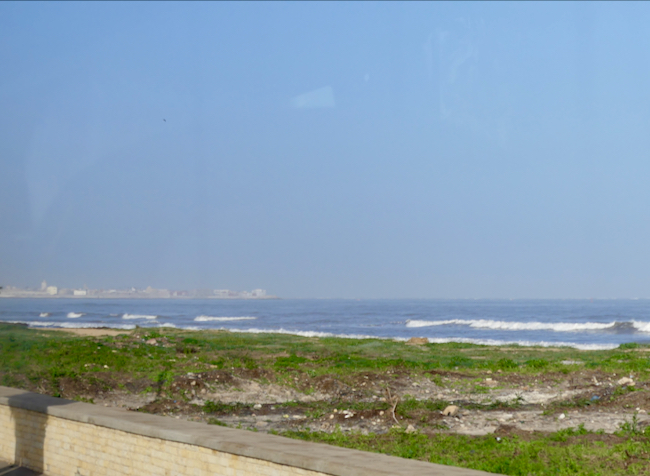
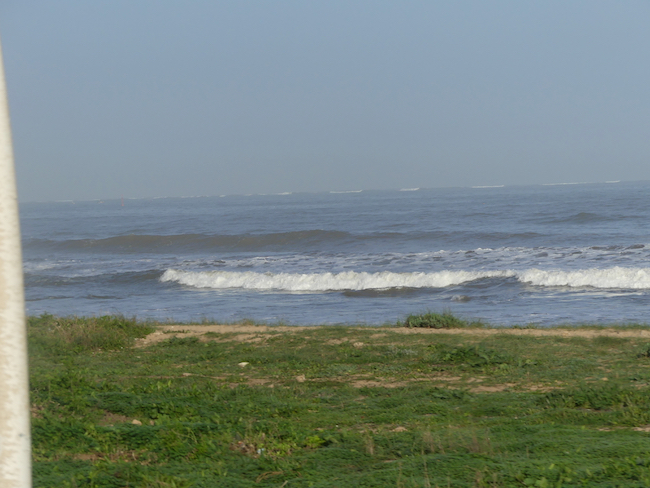

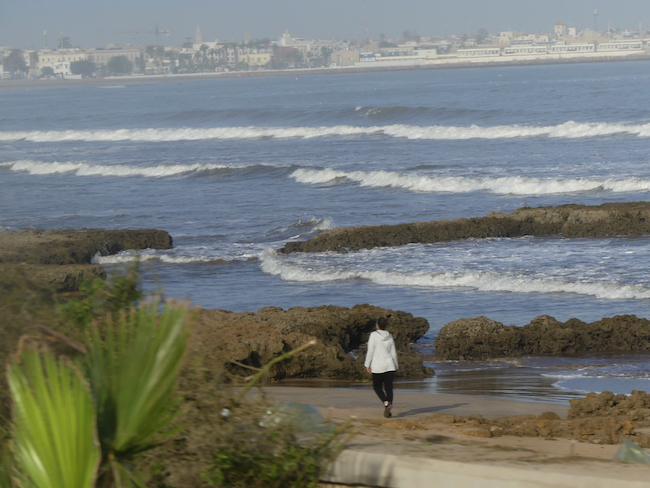

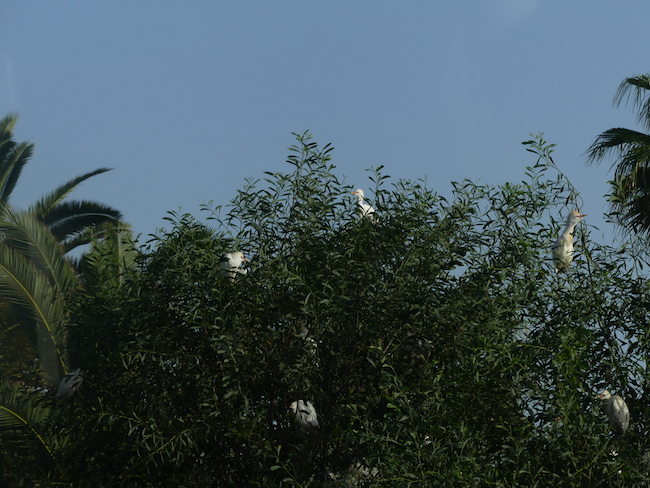


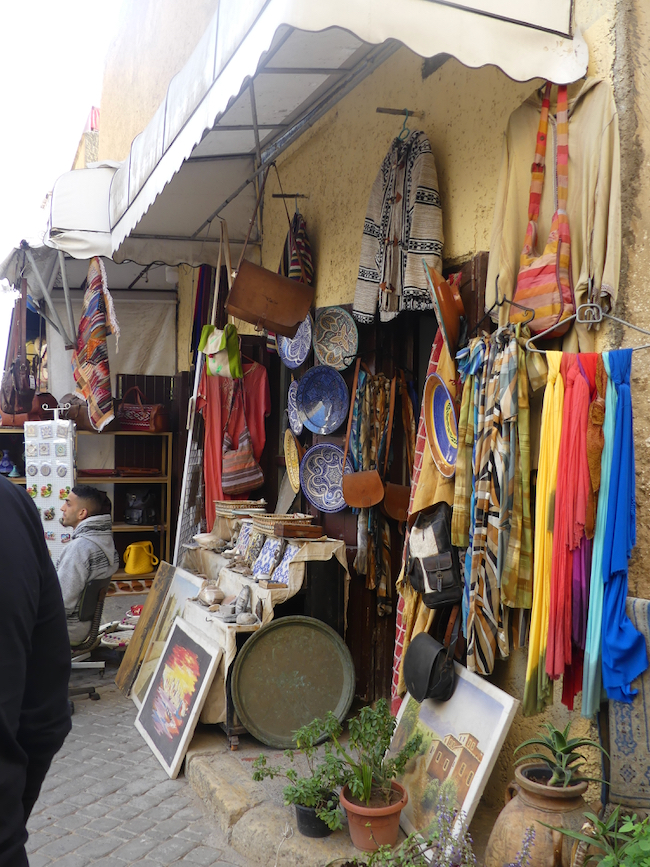

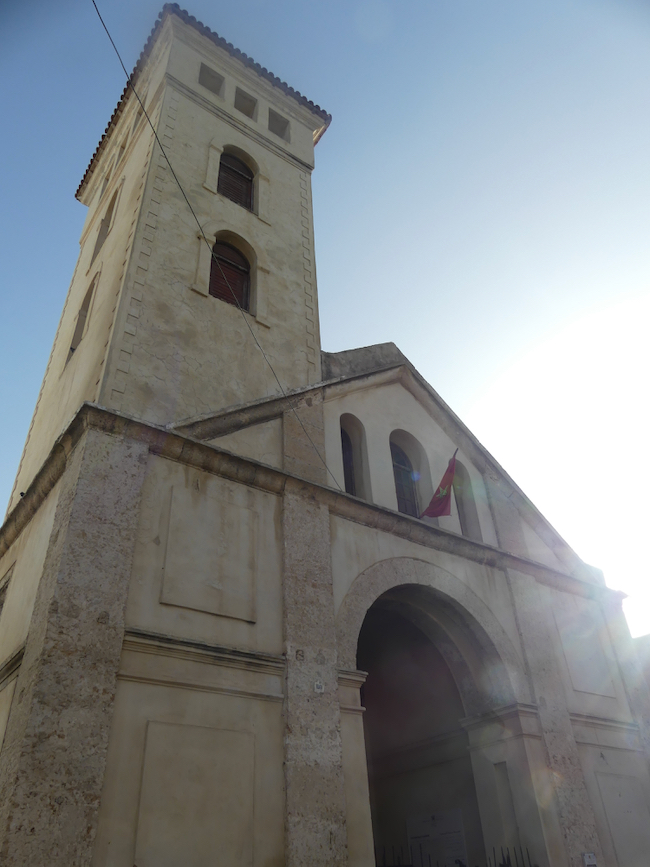
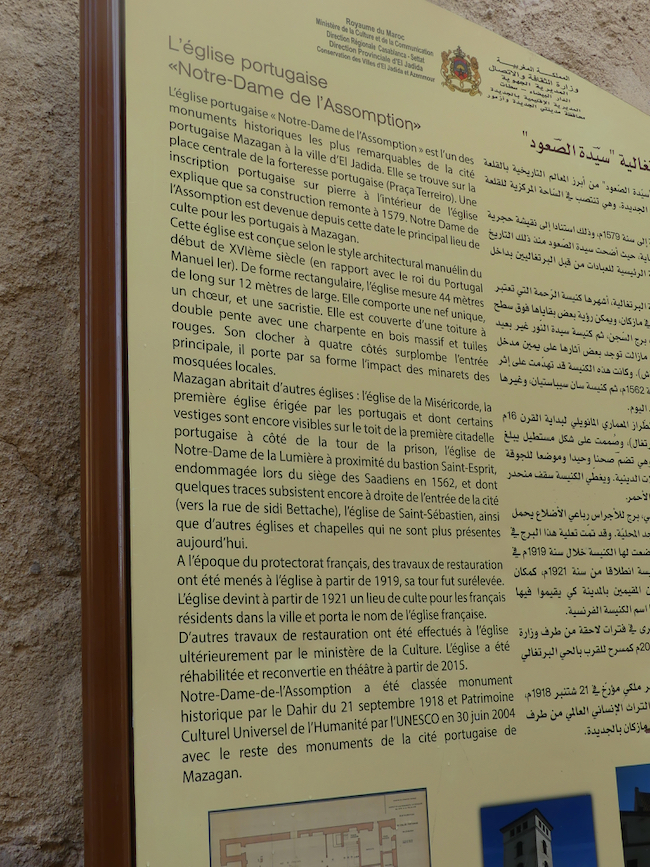
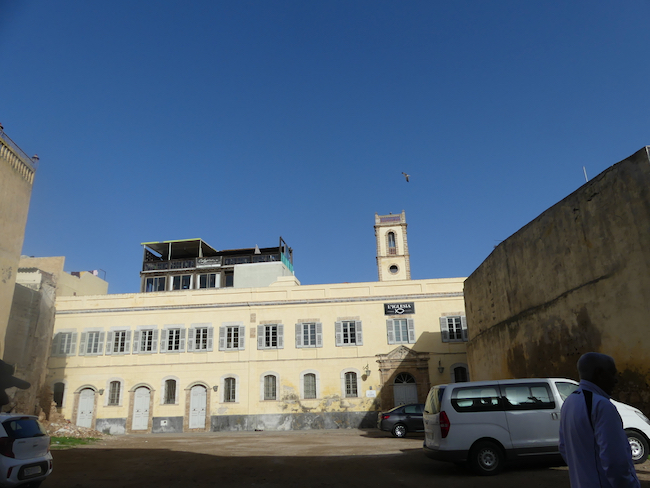
An old Portuguese Catholic Church in El Jadida. The people around Casablanca make it a point to discuss frequently how tolerant the area is, with Jewish and Christian populations as well as Muslim and Berber. Our guide was proudly Berber.
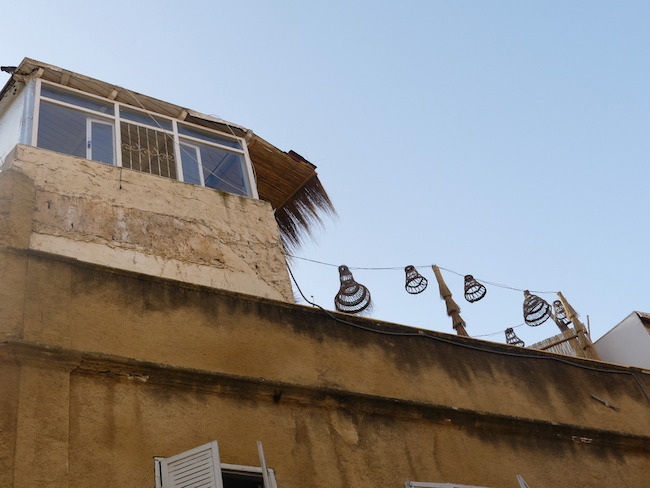


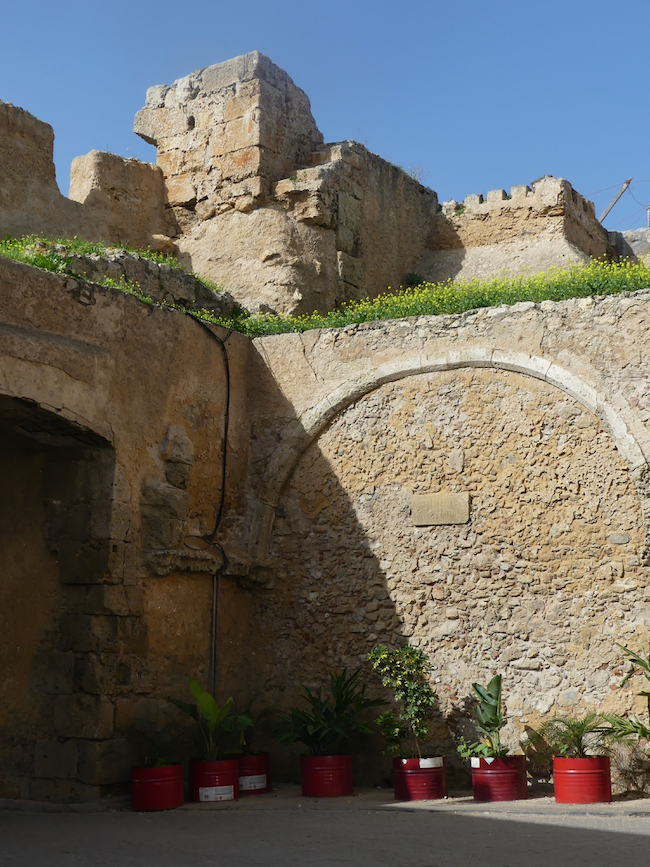
We had been warned that the beautiful old Portuguese Cisterns were closed for restoration, so the photo below is the exterior only, but I have a treat for you. Below the shot of the exterior is a photo of the interior I took ten years ago. I still love to look at it. The cisterns are so beautiful as well as functional.

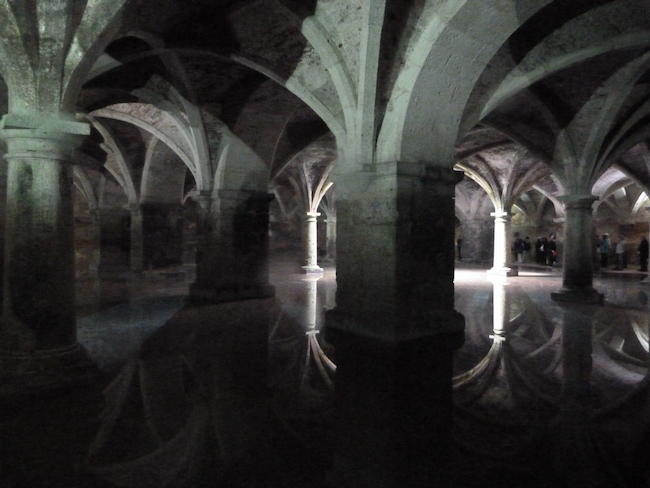
I don’t consider this cheating; I consider it . . . um . . . illustrating. . . or embellishing to show you what you might see when you go to El Jadida.
Below are Moroccan silk weavings.


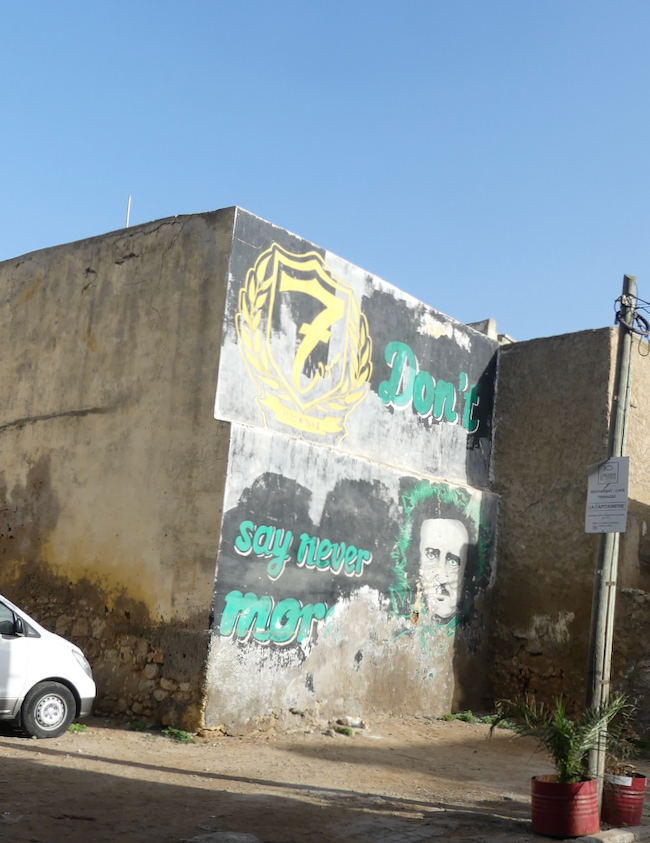



I believe this is the old Jewish bakery.
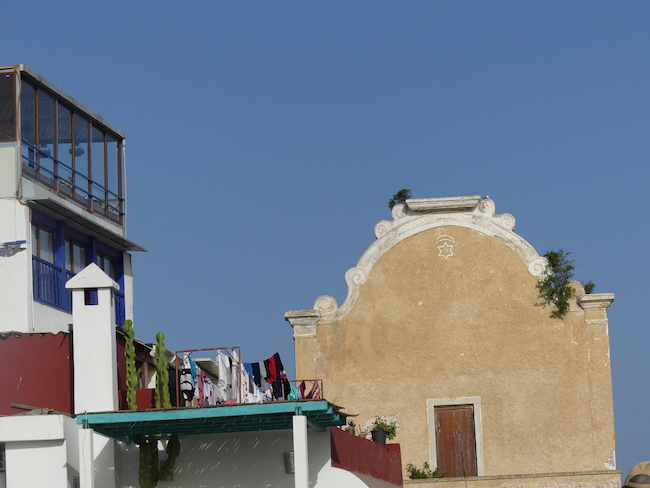
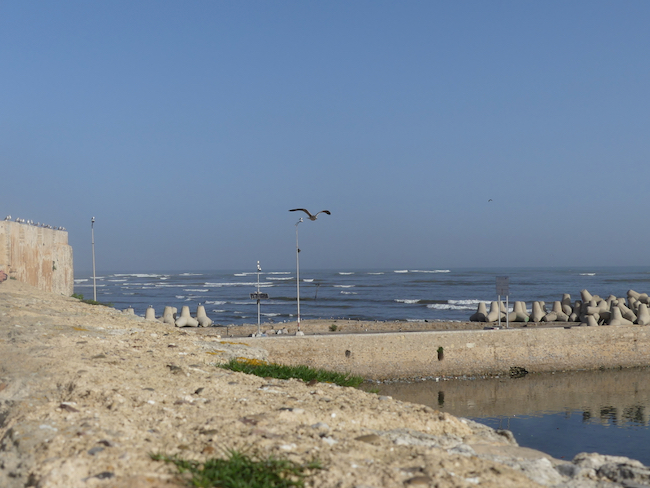

When you read old histories or bible stories about prisoners being cast into a well, it could look a lot like this:


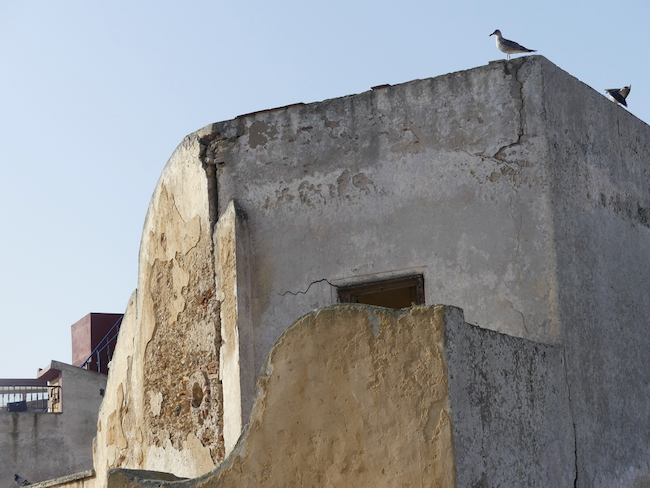
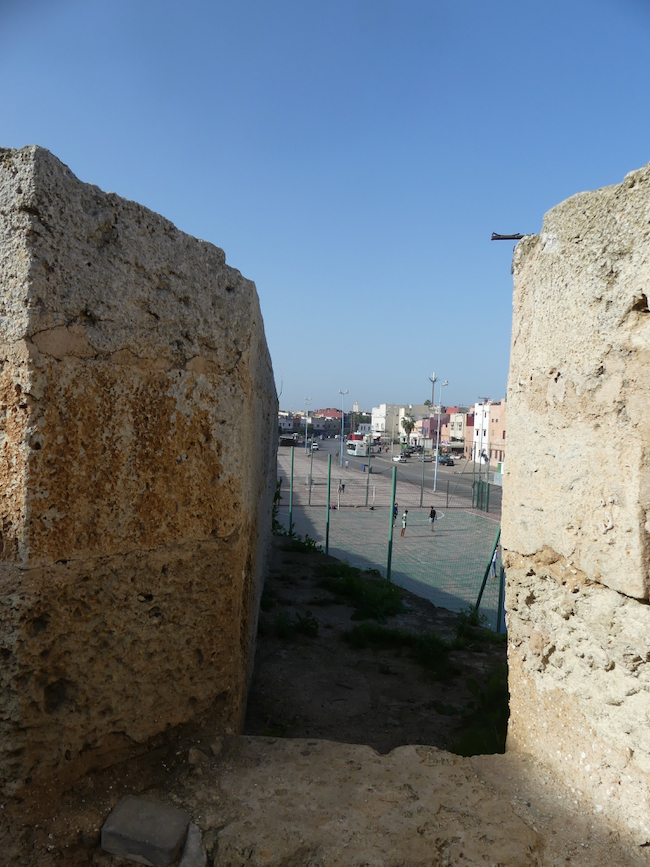


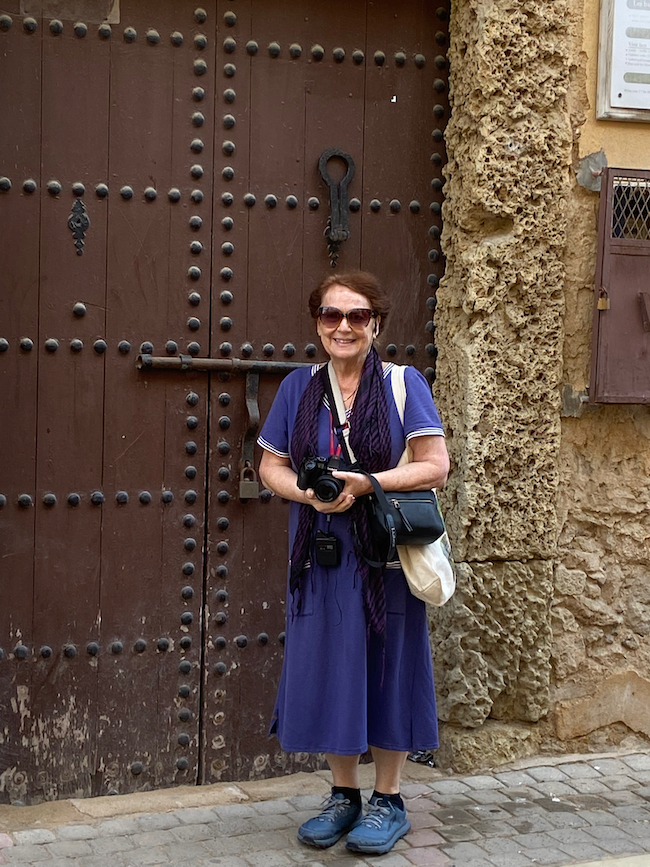
This picture below is hilarious because I am wearing an expensive pair of shoes that I find clunky. The trip description said it was challenging, with uneven hikes, rocks, and hills. It was a very mild hike; I could have worn my sandals.

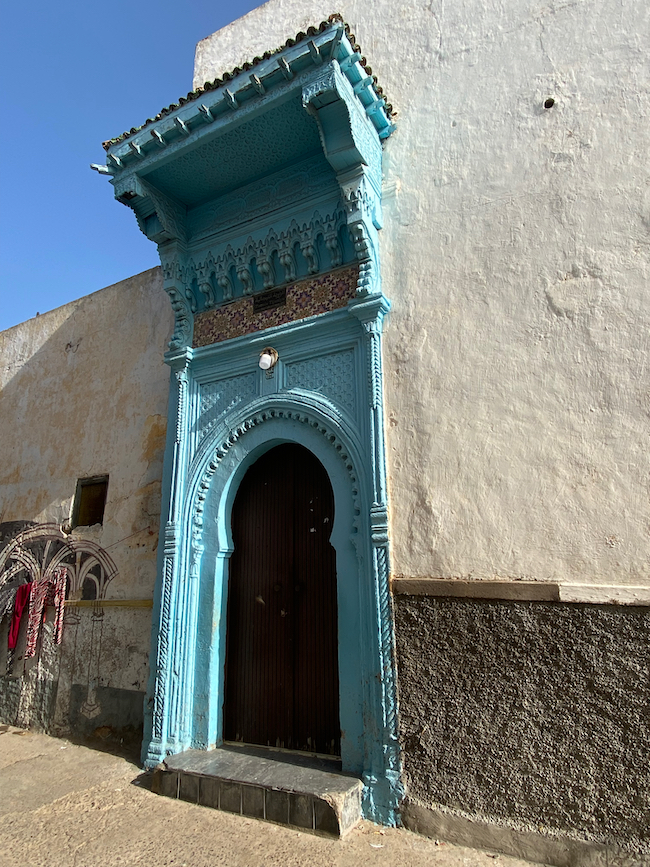
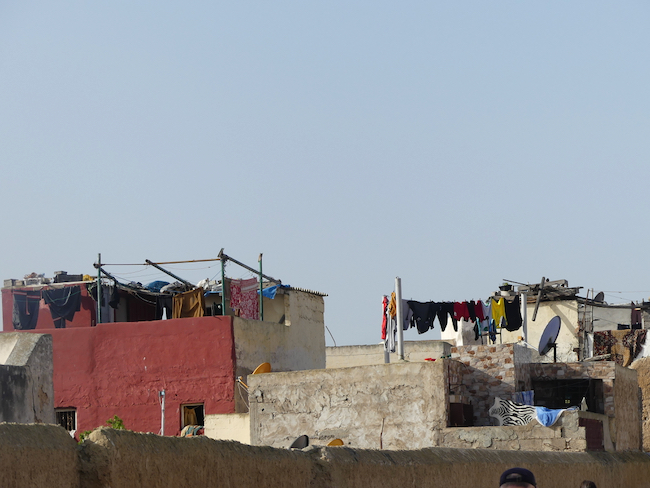
My husband took this photo below; he loved the contrast of the drawing of the cisterns and the laundry hung to dry over the cisterns.


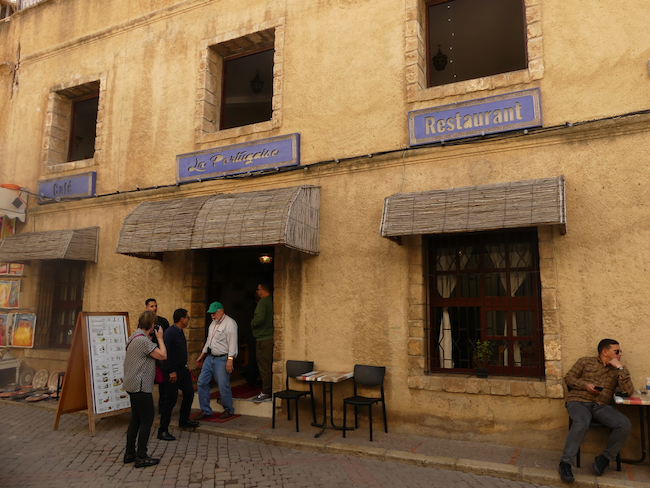
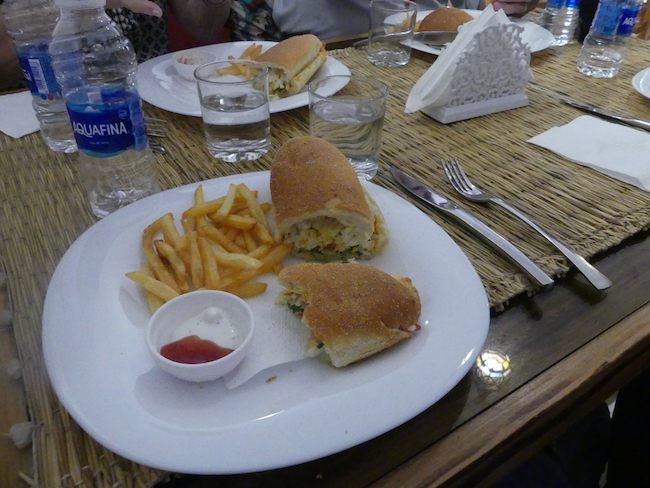
It’s going to be a couple hours ride back to the ship, but the guide has a treat for us – “Snacks” at a local restaurant, part of the tour, no extra charge. The small restaurant was just big enough to hold all of us, had a nice clean restroom and place to wash up, and served these delicious sandwiches, followed by a selection of house baked Moroccan cookies, and Turkish coffee or Mint Tea. The owner and his wife were so hospitable. They made us feel like very special guests. It really was a treat!




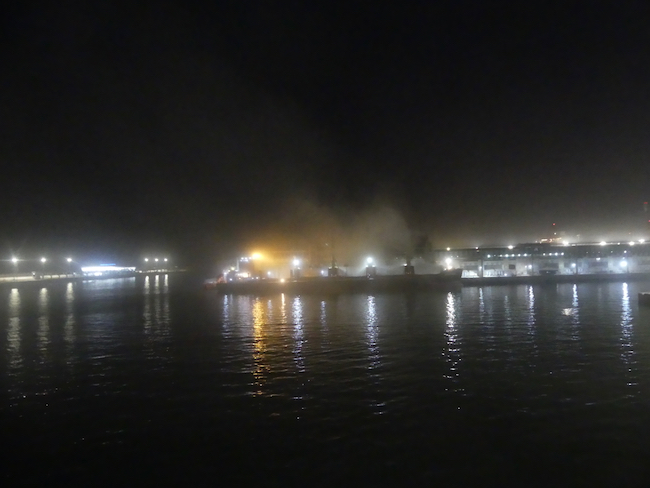
As we sail away from Casablanca, that same ship continues to be surrounded with that yellow steamy cloud.
For us, we have seen everything we wanted to see. We think Cadiz and Malaga will be pretty tame after the excitement of Ajaccio, Malta, Tunis and Algiers. (We were wrong!)
Giverny and Monet’s Gardens
Early morning; we have the gardens to ourselves before the crowds arrive.

Early morning in Vernon/Giverny. It is so chill I am wearing a sweater over my dress.

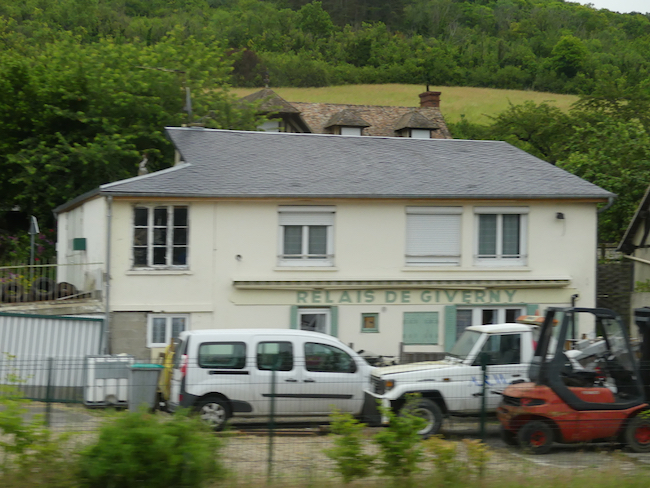


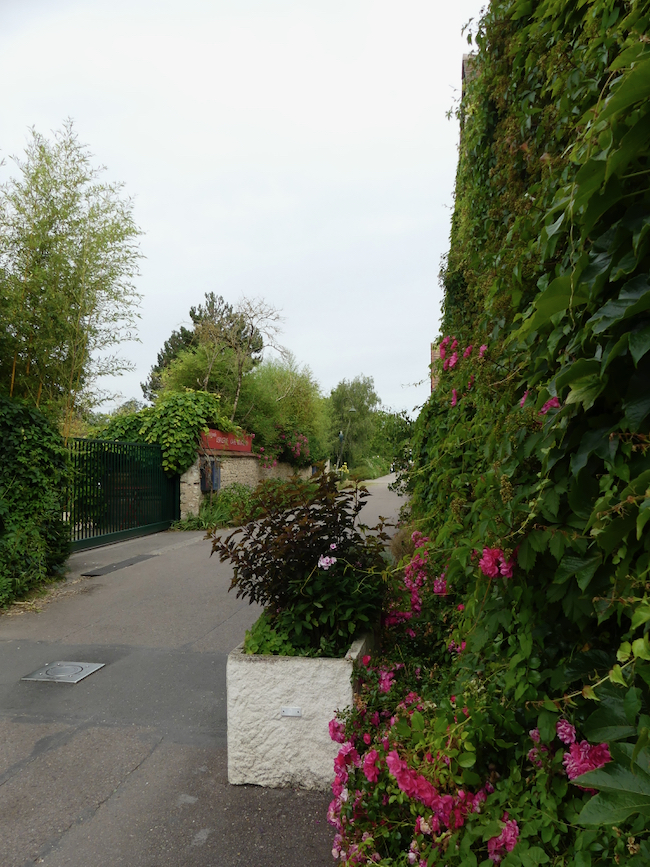

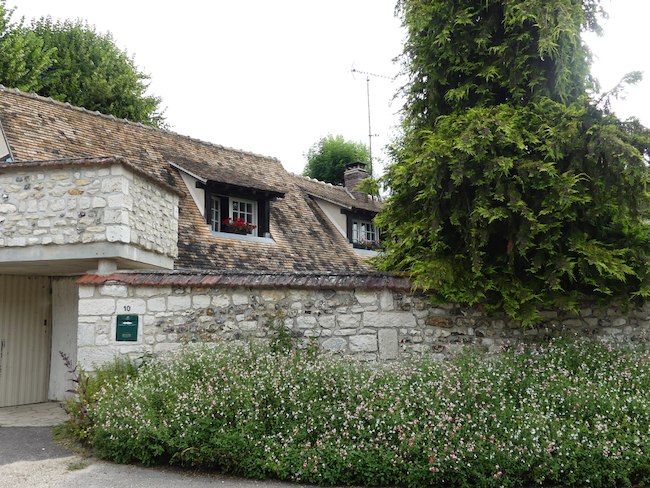
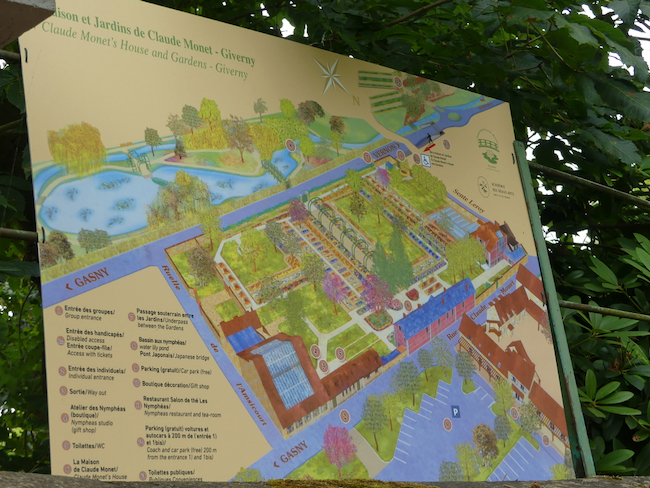











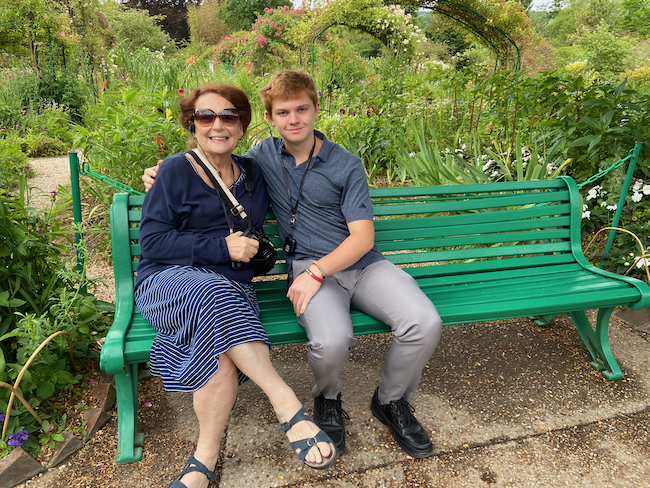
Monet’s house at Giverny. Every painting in the house is a reproduction; the originals are at the Marmottan, or in other art museums.


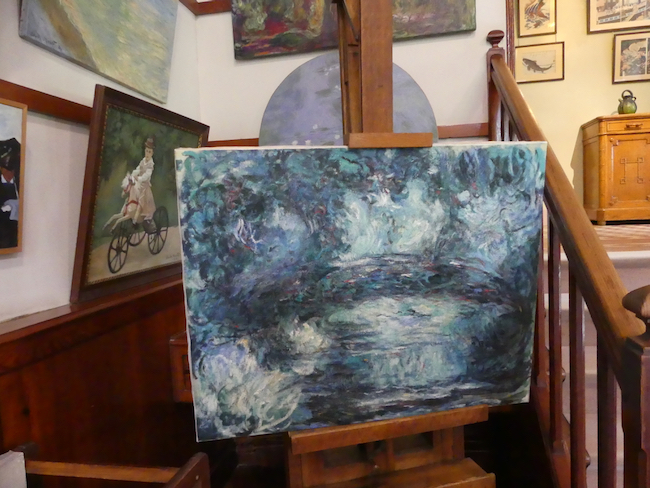


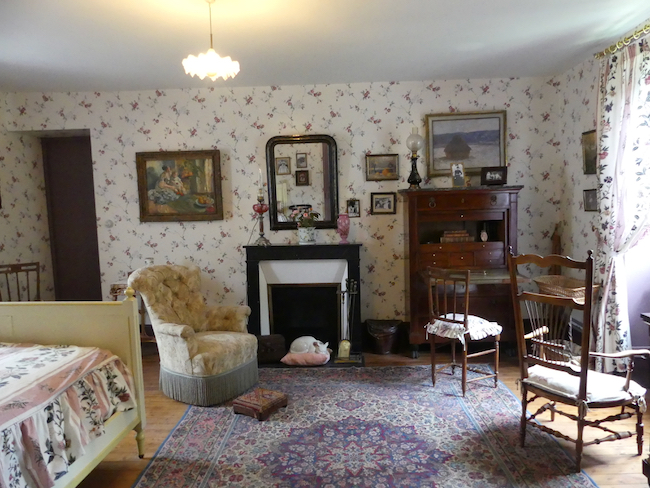
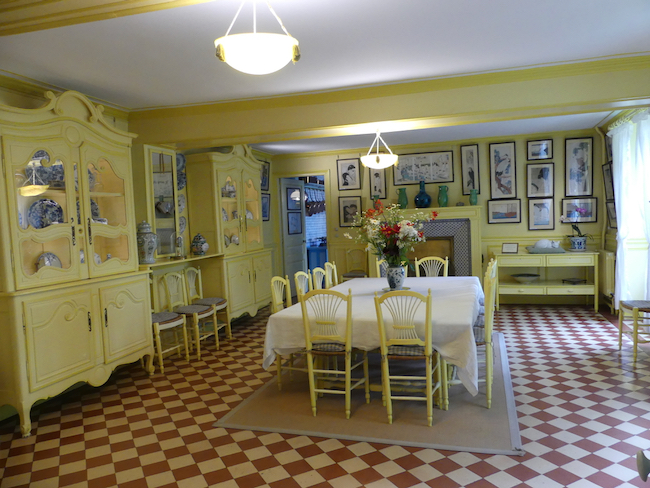

The gift shop is bright and full of goodies.

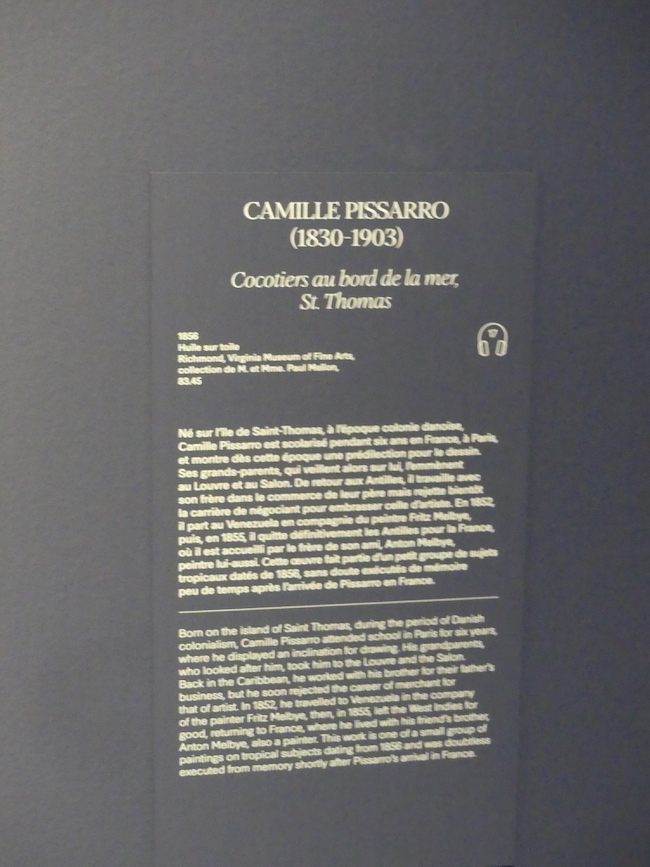
Some choices from the nearby Impressionist Museum. Camille Pissarro was one of the earliest Impressionists.
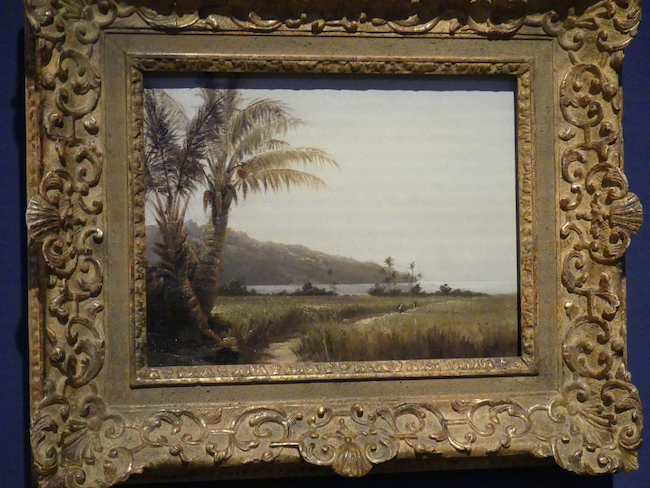

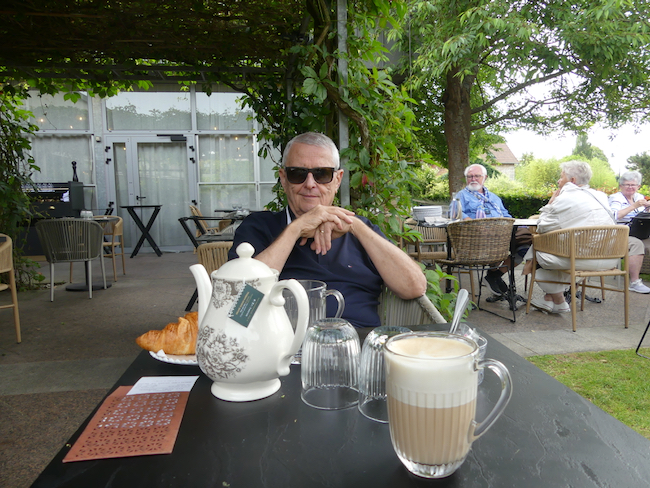
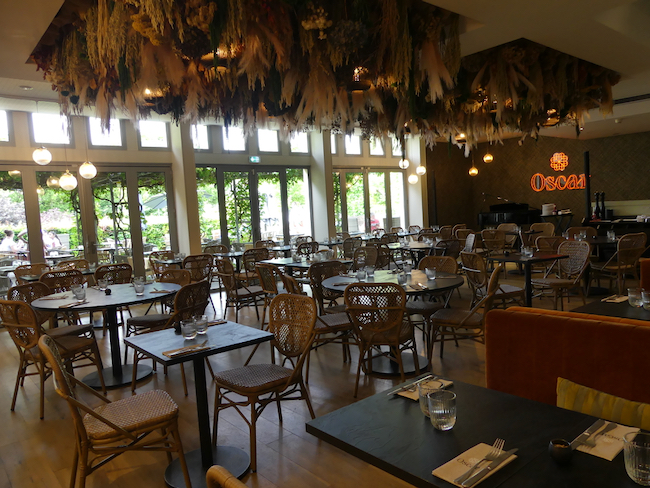
The Impressionist Museum has a wonderful cafe’, Oskar’s, which also has really good coffee.

Buying macarons

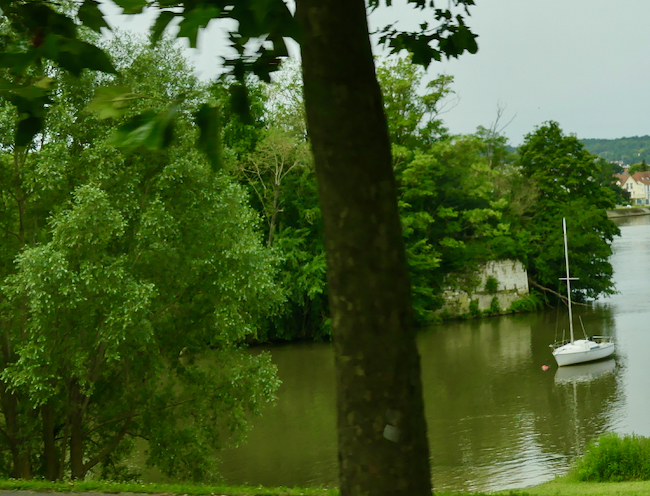
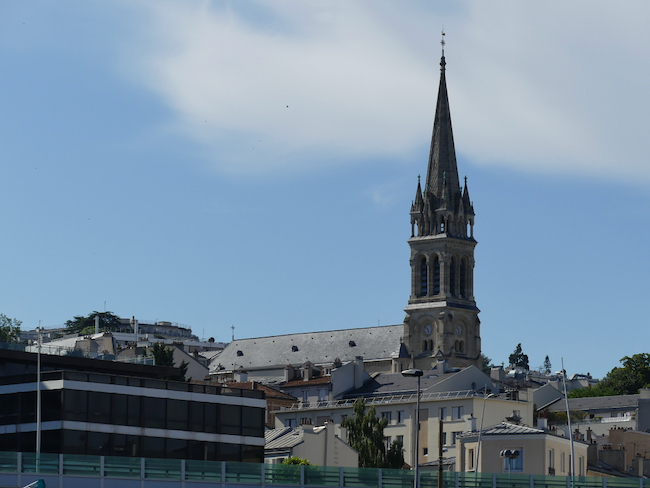
I can walk forever when the temperatures are cooler!
Christmas Markets on the Elbe: Treasures of Dresden
We were already underway when I woke up, on our way from Meissen to Dresden. Along the way, we heard a musical salute and knew we were passing Beyla’s sister ship on the Elbe, the Astrid, headed from Prague to Berlin. She is the only ship we passed the entire five days cruising on the Elbe, other than ships passing in the larger cities.
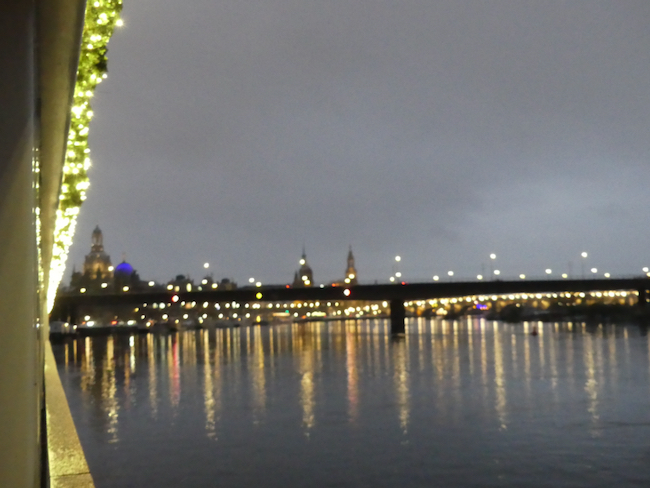
Our bus did a tour of Dresden neighborhoods, which also allowed for some history, and then got to the Zwinger and the old city of Prague. We toured the museum full of wonders (it’s an amazing thing to be a king, to contract wonderful works of gold and baroque pearls, crystal, cut gems, silver – and the largest green diamond in the world.)
I found Dresden to be an elegant and spirited city. The total destruction of the city by the Allied bombers toward the end of WWII, when it was already clear that the war was almost over, was devastating. Years later, there was rubble everywhere. The citizens of Dresden had hidden many of the city treasures in cellars, in the ground, in all kinds of places, and although many were plundered, some fabulous pieces still remain. I’m inspired to re-read Vonnegut’s Slaughterhouse Five.
Dresden has rebuilt. Much of what looks old is actually rebuilt, re-using the rubble remaining after the bombing. This is what I mean by spirit. Years after the Russian occupation and the dreary years of the GDR, Dresden is like a phoenix rising out of the ashes, glorious, and incorporating the old to build the new. I admire that spirit.



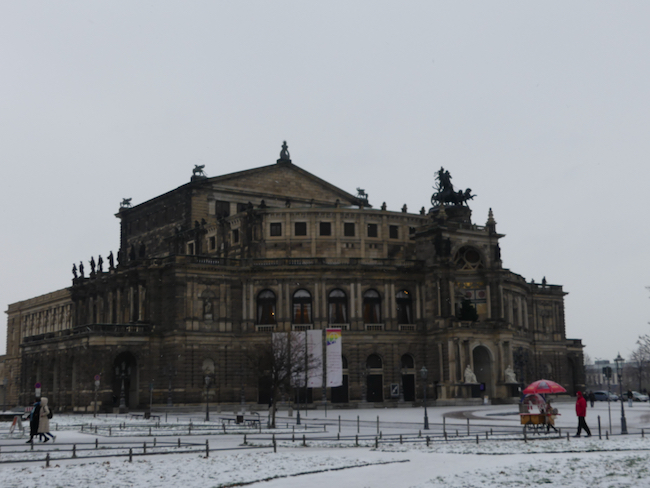
The Dresden Opera house, made to look like the original, but much larger.


We heard the porcelain bell concert as the clock reached 10:15. Delightful! Impressive!

This is the Zwinger Palace courtyard; I don’t show the courtyard because the gardens are all torn up. Even with the snow cover, it is a mess.


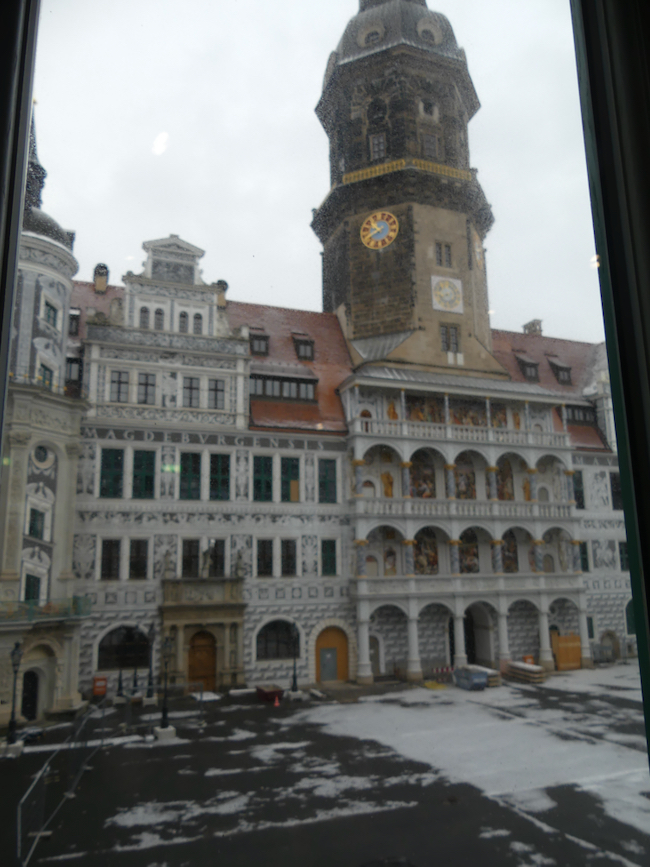


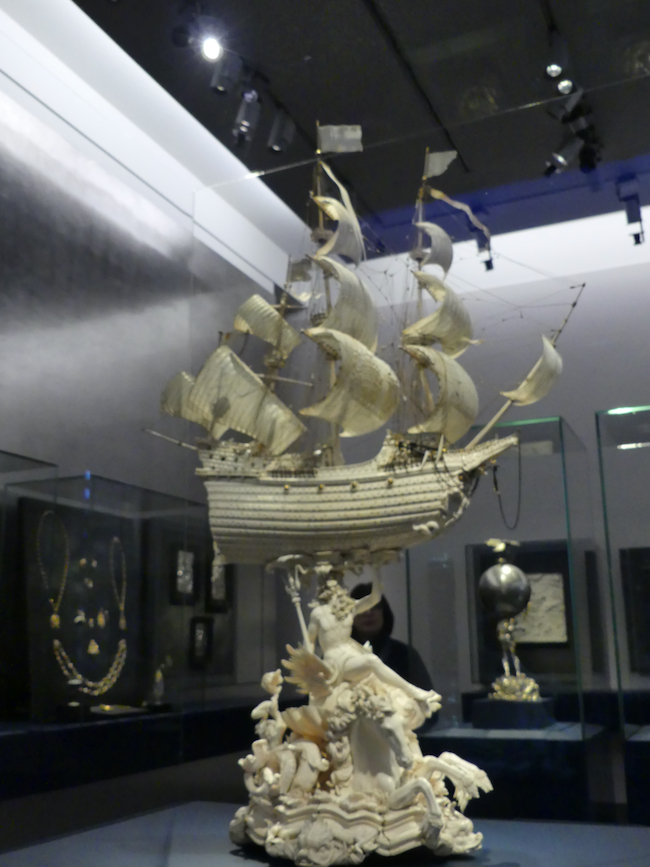
Imagine being a ruler with so much wealth to spend on these luxurious objects.

This carved ivory piece reminds me of the design of the iconic Kuwait water towers.


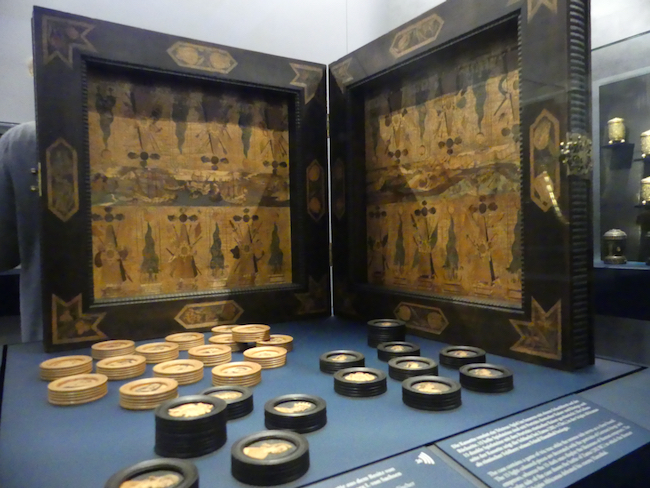


LOL you get a chance to see my clunky walking shoes. I’ve been wearing them on every tour since Sans Souci. They keep me comfortable and safe.

A huge green diamond

As we left the museum, we told our guide we would not be returning to the ship with the group, and we took off, exploring the very crowded old Striezelmarkt, full of families and friends drinking gluhwein. One of the best places we found was a booth selling the wine we had found, a Saxon wine, Schloss Wackerbarth. We had a bottle with us on board the Beyla, and I really liked it.
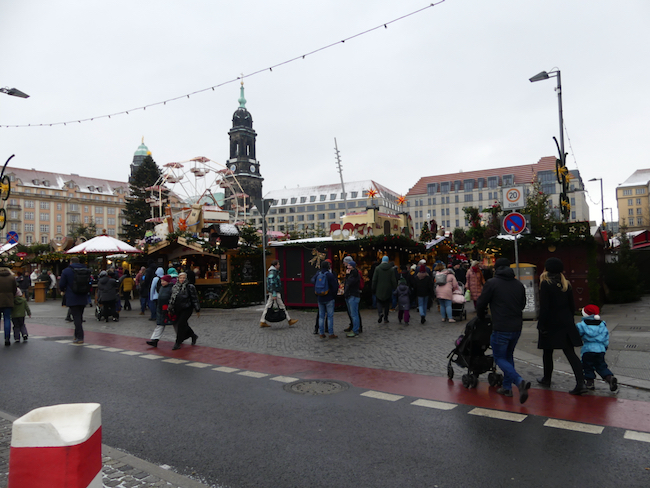

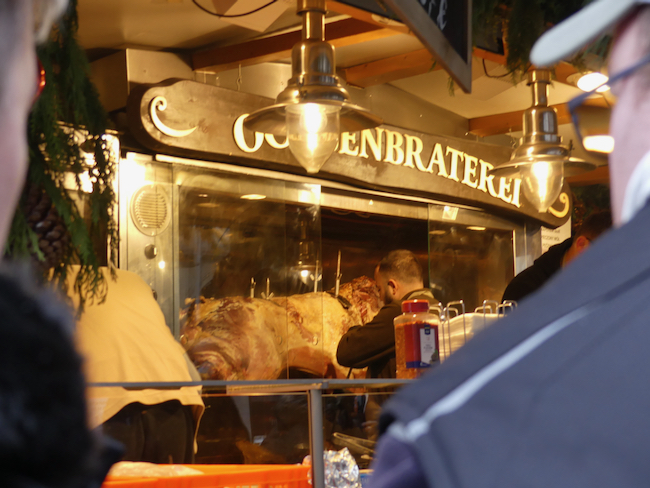
That is a whole ox they are turning on the spit.
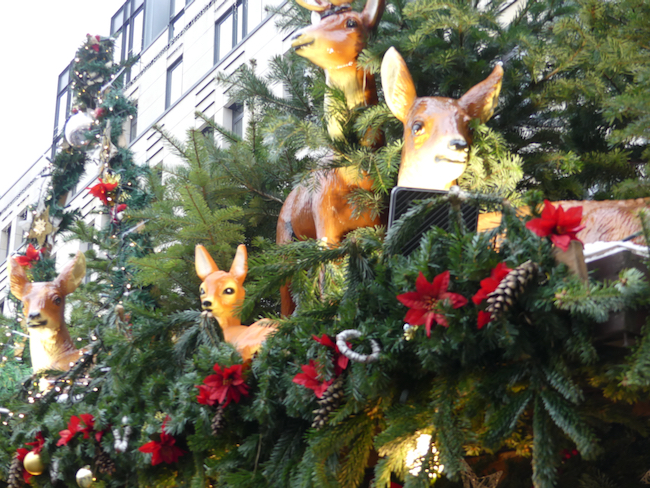
Dresden had some of the most unique shops and decorations we saw on the whole trip.


Took a lot of photos, bought nothing, and found a brewery serving duck where we had lunch. It was full of locals, and us. We were near a rowdy bunch, having a great time, and the two in Santa hats allowed me to take their photos.


Leaving there, we found our way to the Medieval Christmas Market in the old stable area.


We had to pay 5 Euros each but it was worth it – the drama of kettle drums and the smells of oxen grilling, vendors of iron works being sold by the blacksmith, glassware sets, each unique and beautiful, medieval games, tankards of different kinds of hot brews, including one “gleubier” (we didn’t try it). Lots of kids, lots of fun going on, consumed players, a lot like a Medieval Knights Tournament or Renaissance Fair.

That’s a huge rocking pig the children are riding.


Then on to the Frauenkirch market, very similar to the non-medieval markets, but where we were able to access a cash machine for our daily allotment of Euros.


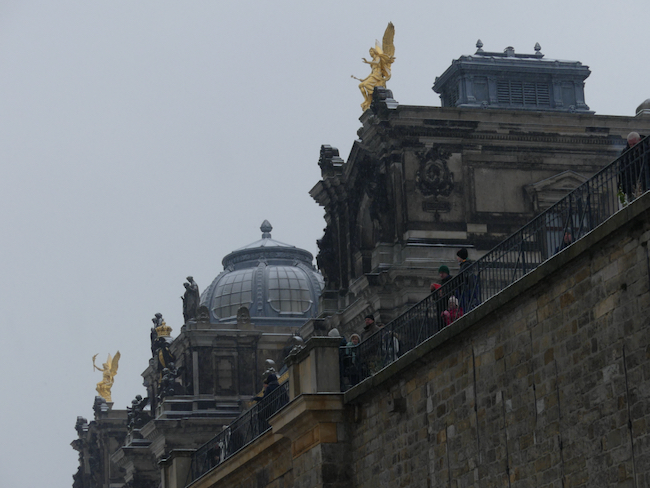
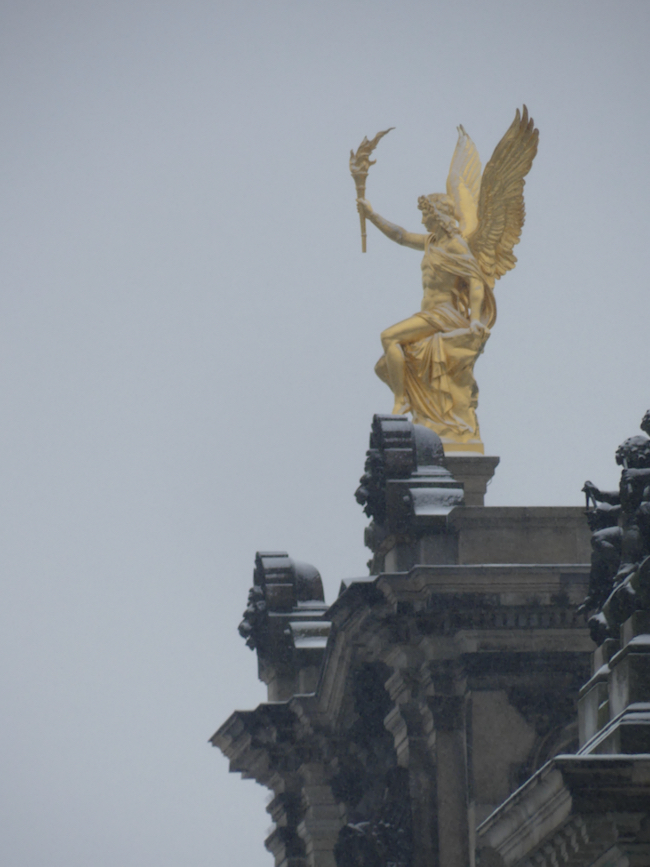


From there, a ten-minute slippery walk to the boat as the snow became heavier and we became happier to be going inside to a warm place. We have good weather gear, but after a while, the wind finds its way to your bones, especially when the humidity goes up and the temperatures go down.
Dresden interests me. Of all the places we have visited, this is the place I want to come back for a longer visit.
The boat is lovely and warm, and we are happy we did all that we did today, and equally happy now to settle in. We need to finish the Schloss Wackerbarth wine we bought in Berlin before we leave the ship in Shandau, so we will fill our glasses and take them to the port talk tonight.
Christmas Markets on the Elbe: Wittenberg
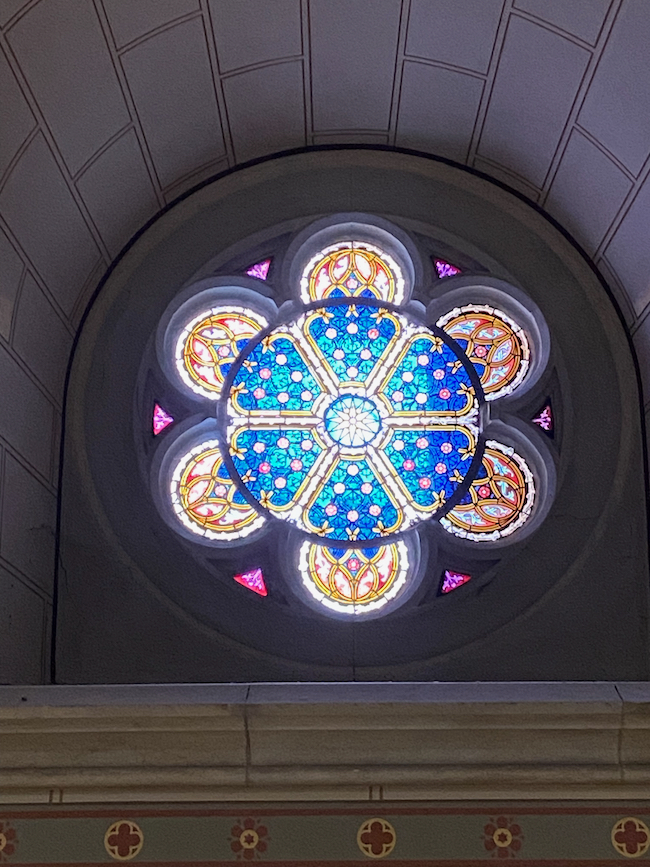
Off to Wittenberg, where our guide Christian takes us first to the old Catholic Church where Martin Luther posted his 95 theses, against practices of the Catholic Church which, according to his reading of scriptures, were just wrong and needed to be corrected. He did not intend to create a schism or a new religion. So here is the portal where there once was a door that is no more, burned in a fire, where Luther posted his 95 theses requesting correction of wrong-doings by the church.

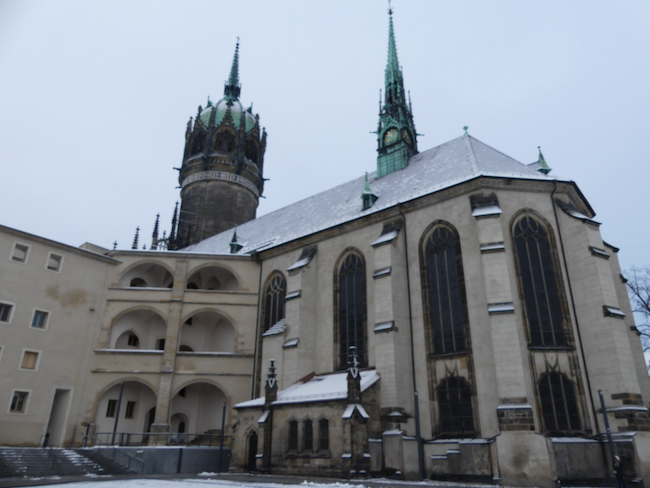
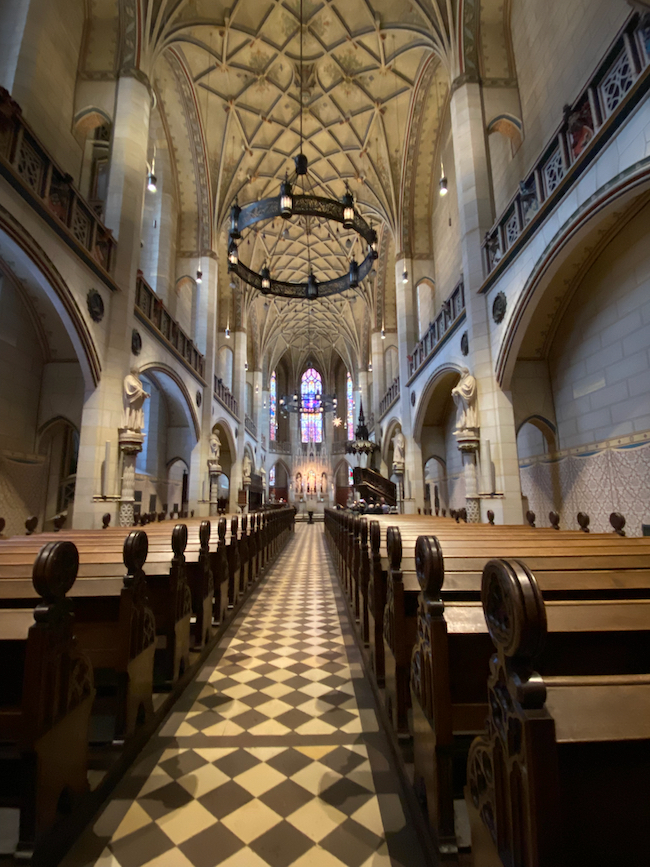


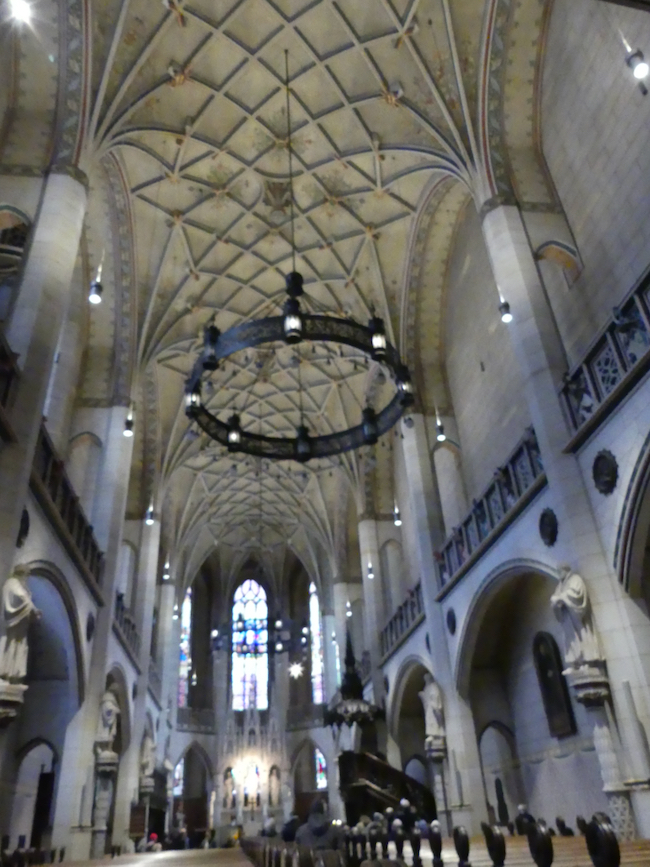

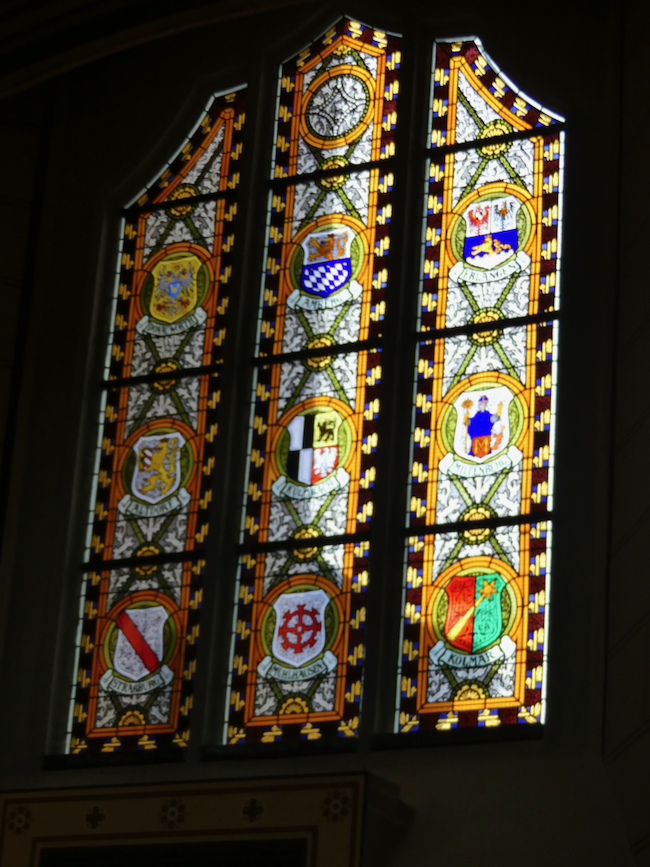

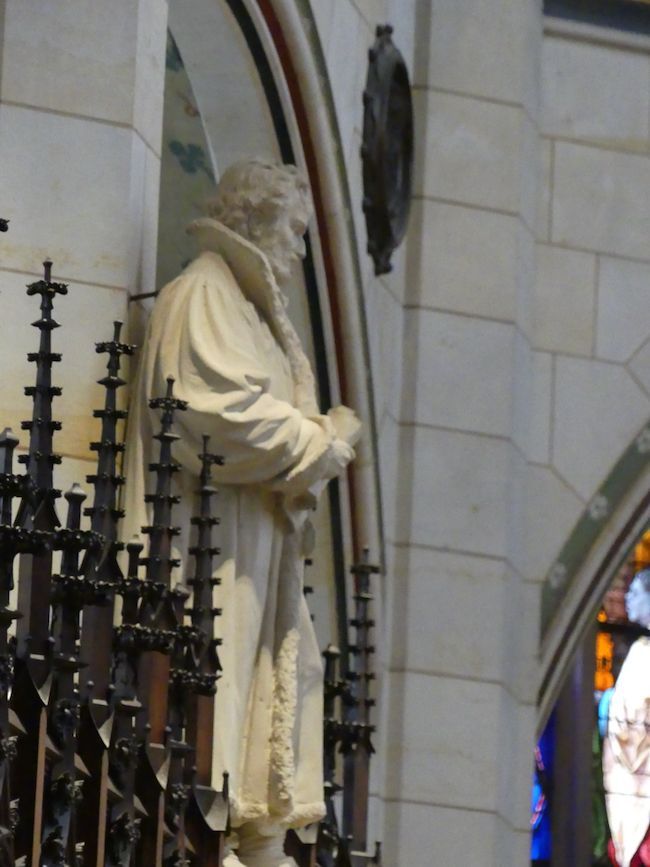

From there, visited various neighborhoods in Wittenberg, visiting Martin Luther’s home with Katerina Von Bora (a wondrous woman Luther referred to as his morning star, a hilarious reference with a double entendre, as a morning star is also a lethal medieval cudgel with pointed spikes on its head.
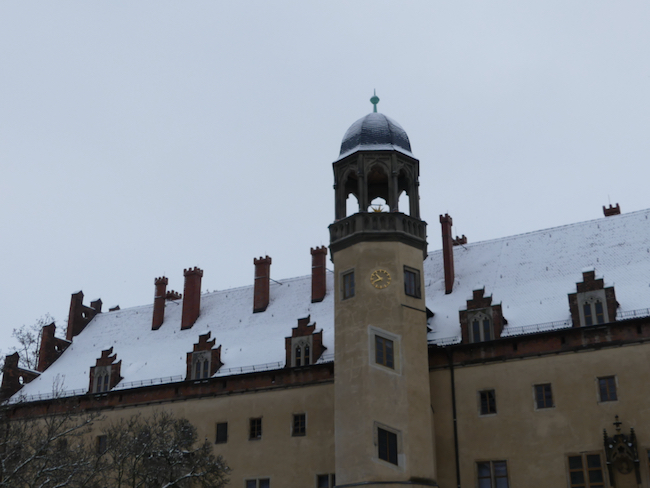
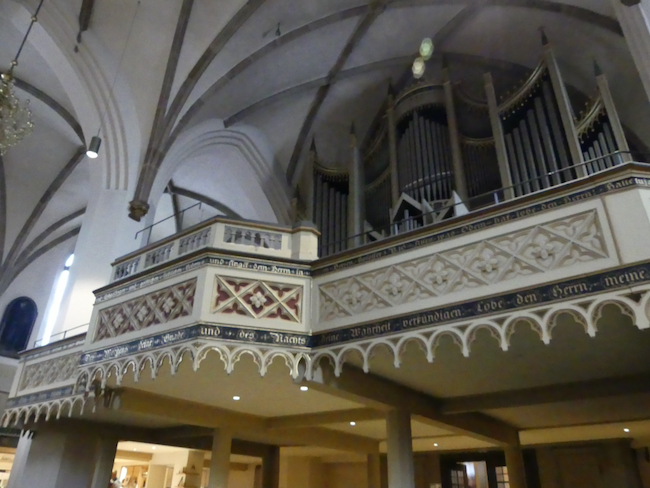
We ended up downtown at St. Mary’s, the church where Martin Luther preached, a beautiful fine place, more simple and much less elaborate than the Catholic Church. Christian gave us so much information; that I am now not able to keep it all straight.
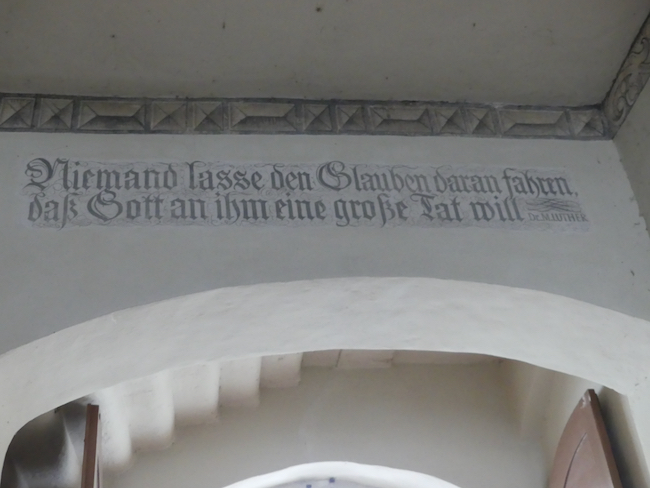


I am grinning because someone had made a snowball and tucked it in Katarina’s curled hand. It wasn’t me! I didn’t do it! But it did give me a grin.
Below is the church where Martin Luther preached, after being excommunicated from the church and marrying Katarina Von Bora, who escaped a nunnery with several other women not interested in being nuns.




He told us about Luther’s anti-Semitism, in the context of the times, and of the town and the church’s continuing attempts to find redemption in coordination with its Jewish community. Christian told us about the tragic waste of the holocaust, how it hurt all humanity, and that the German people are determined that such a mindset will never again take hold in today’s Germany. We can only hope.
This time, we were successful in obtaining money from the ATM. We wandered through the Christmas Market and found our way back to the bus. We had a short trip to meet up once again with the Beyla, which in our absence, had transferred to the little town of Zahna-Elster. We quickly cleaned up, ate lunch and the Beyla left Zahna-Elster to make our way up the Elbe to Torgau, where the American Forces and Russian forces met near the end of World War II.
For the first time since our departure on Monday, we have had some time to breathe. We strolled through the lounge, admiring all the decorated Christmas trees, we organized our room, participated in the safety drill, and met up once again with Janice and Don. It was over very quickly, we came back to our cabin and as my husband napped, I uploaded photos, caught up with correspondence, and organized my thoughts to begin this journal of our journey.
I went to the nearby coffee and tea station, which also has three kinds of cookies, to pick up some chocolate cookies before I woke my husband (his favorite cookies). We gathered in the lounge for the Port Talk with Eva, as she briefed us on tomorrow’s excursions and events. After that, there is a walk into Torgau to view the memorial.
We went early enough to get good seats for the Port Talk, but as my husband decided he would go after all (he hadn’t wanted to get so cold again), and I decided not to go – Eve had emphasized how slippery it was and that anyone with mobility problems might not want to go, and that Torgau is always the coldest place she has ever visited, LOL. I thought “I’ll just skip this one.”
I snuggled under the featherbed, happy not to be out hiking in the dark.
Recent Comments
intlxpatr on Shampoo Ginger tigerbutterya0c5ff1d… on Shampoo Ginger intlxpatr on British Soldier Kidnapped, Esc… John on British Soldier Kidnapped, Esc… intlxpatr on British Soldier Kidnapped, Esc… Wikipedia Donate Button

Amazina


Early Voting in Florida


