BBC Secret Life of Cats Article: Hilarious Site With Mobile Cat Web Cams
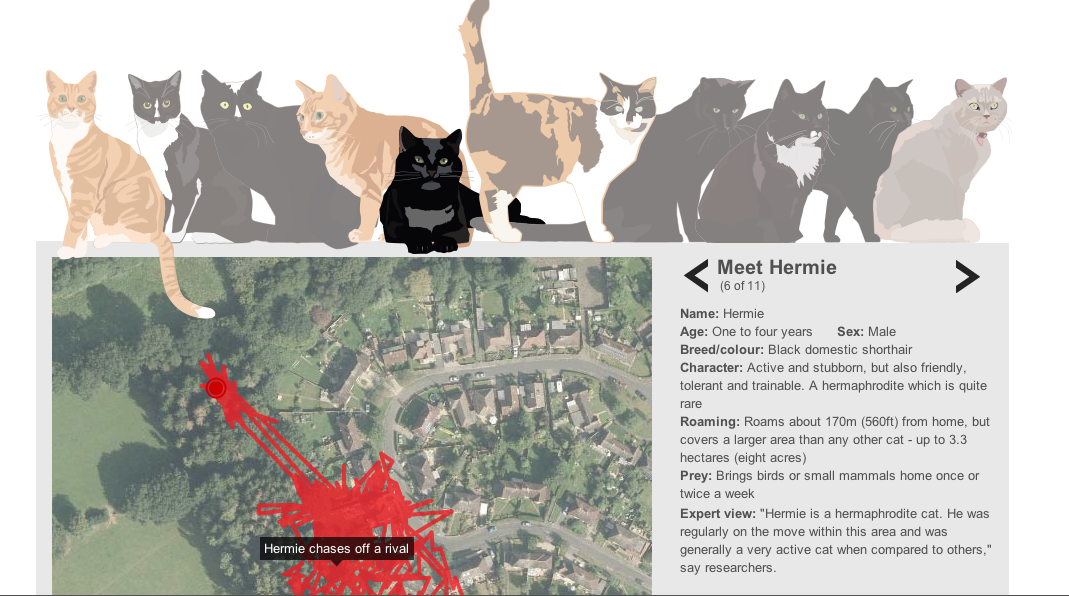
First, you have to go to this BBC Science Website, where cats in a Surrey village were tracked by the Royal Veterinary College to see where they would go during 24 hour periods. You click on each cat to see the route they followed – some are amazing – and then you can click on a video to have a glimpse of cat life, usually including the underside of a cat chin. It is fascinating and hilarious.
Ramadan in Kuwait Starts July 9


Ramadan on July 9
KUWAIT: The fasting month of Ramadan is forecast to begin on July 9 on the basis of astronomical calculations, said astronomer Adel Al-Saadoun yesterday. Saadoun told KUNA the crescent will be visible on July 8 at 10:14 am and disappear some four minutes after sunset.
He added the sighting of the crescent would not be possible at any spot throughout the Muslim world, but would be seen through telescope in southern America. However on July 9, it would be visible in some countries including Kuwait.
Ramadan is a yearly month of fasting observed by millions of Muslims throughout the world. Kuwaitis observe and celebrate its advent and Eid Al-Fitr marking its end. People fast from dawn to dusk, and public eating, drinking or smoking is punishable by law.
My very first year blogging, I wrote a post which has become one of my all time statistical highlights, Ramadan for Non-Muslims. It was a rich time for blogging in Kuwait, lots of interchange of ideas. If you want to know more about Ramadan, be sure to read the comments by clicking on ‘comments’ at the end of the article.
One in Five Qataris Needs Mental Health Assistance
A Qatar Mental Health survey shows 1 in 5 Qataris suffering from a mental ailment, commonly depression or schizophrenia, with fewer than 1 in 4 of those afflicted receiving treatment, due to fears of social stigma . . . from the Gulf Times, Qatar.
By Noimot Olayiwola/Staff Reporter
A Mental Health Strategy, which is awaiting the endorsement of the Supreme Council of Health’s executive committee, is expected to be completed this year.
It is being envisaged that the Mental Health Strategy will lead to a reduction in the incidence and severity of mental illness in Qatar, besides increasing the proportion of people with emerging or established mental illness who are able to access the right care at the right time, with a focus on early intervention.
The strategy will also provide the opportunity to increase the ability of people with mental illness to participate in education, employment and training, enhance public education and awareness and thereby reduce the stigma associated with mental ailment, reduce the prevalence of risk factors that contribute to the onset of mental illness and prevent longer-term recovery, and establish Qatar as a centre of academic excellence in mental health research and education.
Speaking on the strategy at an event held recently, Hamad Medical Corporation’s (HMC) General Adult Psychiatry senior consultant and Weill Cornell Medical College in Qatar assistant professor Dr Suhaila Ghuloum said the mental health initiative contributes to the Human Development pillar of Qatar National Vision 2030, which recognises that a healthy mind is as important as a healthy body.
She said a study has shown that around 20% of the country’s population suffers from a form of mental disorder and less than 25% of the people with mental ailments actually receive the care that they need.
Stating that the actual prevalence rate of mental health ailments would soon be published, Dr Ghuloum added that around 20% and 18% of the population also suffered from depression and anxiety disorder, respectively.
The Psychiatry Department is the only facility providing primary, secondary and tertiary care for people with mental illness in Qatar. “We conducted the study on adult patients visiting the primary healthcare centres and found that one in five people here will experience a mental disorder with conditions such as schizophrenia and depression on top of the list,” she said.
According to her, schizophrenia, depression and substance abuse are three of the top five causes of disabilities in Qatar. “A condition like schizophrenia can prevent a child from attending school,” she said.
Dr Ghuloum said social stigma, which is a combination of ignorance and discrimination, is the biggest challenge facing people with mental illness in Qatar.
“Through interaction with some of our patients, we realised that many had delayed getting medical help due to fear of stigma and the negative attitudes of some of the patients themselves, their family members as well as physicians,” she noted.
The official called for comprehensive care for people with mental illness, saying the Psychiatry Department has already started a system that is all encompassing and comprehensive – through primary care – besides providing treatment for some patients on an in-patient basis, who are co-located in general hospitals, as well as community-based services being offered to those in need of long-term care.
“The transformation of Qatar’s mental health services focuses on early intervention and recovery, and will give people a range of options on how to access mental healthcare tailored to their needs. Whether it is in a primary care, community-based or a hospital setting, people with mental health issues will have access to the right care, at the right time and in the right place,” she asserted.
Men Not Mature Until 43 (!)
From The Business Standard, a recent study verifies that men simply mature later than women do. “Men were nearly twice as likely as women to describe themselves as immature.” (!)
Women often accuse men of being immature – and there may be some truth in it after all!
The age that men mature completely is 43 – which is 11 whole years after women, a new UK study has found.
Women were regarded as being mature at the age of 32, the research commissioned by Nickelodeon UK found.
Eight out of 10 women quizzed in the study believed men ‘never stop being childish’ and said the biggest bug-bears were how they found flatulence amusing, eating fast food in the early hours and playing video games, ‘The Daily Express’ reported.
Staying silent after rows, racing another car at traffic lights, being unable to cook simple meals and sniggering at rude words were also regarded by women as signs of male immaturity.
Men were nearly twice as likely as women to describe themselves as immature.
Also, females were twice as likely as men to feel that they were the ‘grown up’ in a relationship. A third had broken up with a man they thought was too immature.
Men whose mothers still did their washing or cooked them meals rated low in the maturity stakes.
Owning a skateboard or BMX bike was another no-no for women, as was wearing cartoon pyjamas or having a cartoon bedspread.
One in four women felt they were the ones who made all the important decisions in the relationship with the same percentage wishing their partner would talk about themselves and their feelings more often.
Almost 46 per cent of women have had a relationship in which they felt they had to mother their partner a bit too much, the study found.
The Hummus Wars
WARNING! This article is long, and will take some time to read! Found it in the AOL/Huffpost:
I wish they would start a Muhammara war; I love the stuff!

Sabra’s Quest To Push Hummus Mainstream Is About Much More Than Chickpeas
Posted: 06/10/2013 8:04 am EDT | Updated: 06/10/2013 5:01 pm EDT
Last winter, executives from the snack-food empire Frito-Lay invited Ronen Zohar, the Israeli head of America’s biggest hummus company, to watch the Super Bowl from a luxury suite at the Superdome in New Orleans.
For the snack-food industry, the Super Bowl amounts to something like Christmas and every kid’s birthday party wrapped into one, a day on which the average American consumes the caloric equivalent of 20 servings of Utz’s sour cream and onion dip. For Sabra, whose red-rimmed tubs of hummus are increasingly found inside American refrigerators, the stakes were particularly high.
“People are dipping in Super Bowl,” Zohar said. “They are looking for what to dip. Unfortunately they are dipping in the wrong product. But we try to change this. And we are doing okay.”
Around Sabra’s offices just outside New York City, employees are fond of saying that they hope to put their Middle Eastern chickpea dip “on every American table.” Though that mission is far from achieved, the company is off to an impressive start. In the last half-decade, overall sales of hummus have climbed sharply in the United States, with Sabra capturing about 60 percent of the market, according to the Chicago-based market research firm Information Resources, Inc. This spring, Sabra announced an $86 million dollar expansion of its Virginia factory, a move that the company says will create 140 jobs.
As the company’s leader during this stretch, Zohar has overseen a wide-ranging publicity effort aimed at simultaneously coaxing Americans to open their minds to a new taste of foreign origin while downplaying controversial aspects of the product’s provenance. In an age of significant spending by America’s pro-Israel lobby, even chickpeas have been swept into the debate over Israel’s occupation of Palestinian lands, its attitude toward its Arab neighbors and its reliance on American support.
Pro-Palestinian activists have in recent years organized boycotts of Sabra’s Israeli parent company, Strauss, for providing care packages to the Golani Brigade, a branch of the Israeli army that has allegedly committed human-rights abuses in the West Bank and Gaza. Groups in Lebanon have criticized Sabra for reaping the spoils of what they say is an intrinsically Lebanese dish. To quote a saying that has surfaced on the Internet, “First our land, then our hummus.”

Zohar, a blunt-spoken man of 52 who rose through the industry by persuading more Israelis to consume American corn products, dismisses both groups of critics as irrelevant. The Palestinian boycott amounts to mere “noise,” he says. As for the argument that hummus belongs to Lebanon: “I am very happy if Lebanon is going to fight about the hummus and not about anything else.”
Like any businessman, Zohar likes to talk about his product’s promising future. But hummus has a long history. And in the Middle East, history has a way of intruding upon the present, shaping questions about the legitimacy of what Sabra has been adding to the American table.
“The history of this food is that of the Middle East,” writes Claudia Roden, an Egyptian-Jewish cookbook author who has been credited with introducing Middle Eastern food to the West. “Dishes carry the triumphs and glories, the defeats, the loves and sorrows of the past.”
HUMMUS WARS
No one knows for sure how far back the history of hummus goes, but traces of chickpea, the key ingredient, have turned up in Middle Eastern archeological sitesdating to 7,500 B.C. In his bestselling book, Guns, Germs, And Steel, the anthropologist Jared Diamond identifies the chickpea as one of several hardy, nutrition-packed food crops that grew in the Fertile Crescent and enabled its people to develop agriculture and, in turn, cities, armies, systems of taxation and governments.
As civilization spread outward, chickpeas did, too, becoming garbanzos in Spain and chana in India. In the Middle East, they were boiled, mashed and mixed with the sesame paste known as tahini, becoming “hummus bi tahini,” more commonly known as hummus.
In recent years, the growing popularity of hummus has made the dip an object of controversy. Sabra instigated one of the fights at a publicity event in New York in 2007, where it served several hundred pounds of hummus on a plate the size of an above-ground swimming pool, prompting its executives to boast that they had produced the largest dish of hummus in the history of the world.
A year later, an Israeli competitor, Osem, responded by serving 881 pounds of hummus at an outdoor market in Jerusalem. The event took place on Israeli Independence day, or as Palestinians call it, Al Nachbar, The Disaster. A Guinness representative was there to document the victory.
Lebanon entered the fray about a year after that, doubling Osem’s record at a cook-off in Beirut. The chefs, who had been convened by a pair of Lebanese business associations, used spices to decorate what was now the world’s largest hummus plate with a picture of the Lebanese flag. While they were at it, they also broke Israel’s record for the largest bowl of of tabouli, a bulgur and parsley dish. According to The Daily Star of Lebanon, the groups that organized the event had a more grandiose goal than merely notching a volume record: They hoped to promote the idea that the Lebanese had invented both tabouli and hummus.
In the months after that feat, Lebanon and Israel traded shots, with Lebanon delivering what has so far proved the victorious blow, serving 23,042 pounds of chickpea dip at a weekend-long gathering in 2010. On the eve of the event, Ramzi Nadim Shwaryi, a Lebanese TV chef and one of the festival’s coordinators, told the Lebanese press that he and his allies were in it for Lebanon’s honor.
“We will stand together against this industrial and cultural violation and defend our economy, civilization and Lebanese heritage,” he said.
At about the same time the hummus wars were playing out in Lebanon, a group of Palestinian-sympathizers in the United States tried to call attention to Israel’s military activities in the West Bank and Gaza by pressing for boycotts of two Israeli-owned hummus companies — Sabra, and one of its larger competitors, Tribe.
The boycotters identified themselves as supporters of a broader movement called Boycott, Divest and Sanctions. Launched by Palestinian activists in 2005 following failed peace negotiations, the organization aimed to apply economic pressure on the Israeli government to end its 46-year occupation of Palestinian territories.
A YouTube video produced by protesters in Philadelphia who were part of the movement caught the attention of student activists at Princeton and DePaul universities in 2010. They tried to persuade their schools’ dining services to stop offering Sabra. Although they didn’t succeed, activists in the movement are still trying to garner support for their anti-Sabra efforts.
Still, Zohar does not seem particularly distressed by the potential implications for Sabra’s sales.
“The protesters make noise, but they make noise to themselves,” he said. “It doesn’t have any influence on our business.”
THE HUMMUS RELIGION
As the protests played out in the margins, Sabra aimed its product at the American mainstream. It deployed volunteers in trucks to hand out free samples of hummus in cities around the country, and expanded its product line to include more familiar dips, including guacamole and salsa.
It launched a national television ad campaign, exhorting people to “taste the Mediterranean,” and moved its staff in 2011 from an old industrial building across the street from a Queens cemetery to a sleek suburban office park, where the company heads plotted the conquest of the American marketplace in conference rooms named after touristy, exotic destinations like Madagascar and Morocco. (Perhaps unsurprisingly, none of the rooms were named after Lebanon or Israel.)
At the root of Sabra’s success was an influx of corporate money and resources. Strauss, an Israeli snack-food giant, bought half of Sabra in 2005, and Frito-Lay, the snack-food division of Pepsico, entered a joint-partnership agreement with Strauss in 2008. Zohar worked closely with the Frito-Lay people, who had scored a big victory for a foreign dip in the early ’90s, when Tostito’s salsa beat Heinz Ketchup to becomeAmerica’s best-selling condiment.
With Frito-Lay and Strauss’ investments, Sabra built its Virginia factory, where it developed flavors intended to appeal to the average American consumer: Spinach and Artichoke, Pesto, Buffalo Style. As Arabs and Israelis quarreled over the origins of hummus, Sabra was putting out a product that bore about as much resemblance to the authentic dish as a Domino’s BBQ Meat Lovers pie does to a genuine Italian pizza.
In Israel, meanwhile, yet another hummus debate was raging, and although it was the least overtly political of the controversies, it was no less capable of provoking feelings of hostility and anger. As the celebrated British-Israeli chef and food writer Yotam Ottolenghi and his Palestinian-born business partner and co-author Sami Tamimi wrote in the 2102 cookbook Jerusalem, “Jews in particular, and even more specifically Jewish men, never tire of arguments about the absolute, the only and only, the most fantastic hummusia.”
A hummusia is the Israeli equivalent of a New York pizza parlor, a cheap establishment that usually serves only hummus and a few other dishes. But the debates about hummusias are more intense than even the most impassioned pizza threads on Yelp.
“The hummusia fetish is so powerful that even the best of friends may easily turn against each other if they suddenly find themselves in opposite hummus camps,” Ottolenghi and Tamimi wrote. The arguments “can carry on for hours,” they noted, with the debaters delving into the minutia of whether hummus is better served warm or at room temperature, smooth or chunky, topped with fava beans or cumin and paprika, or nothing at all.
In a letter to The New York Times at the height of the hummus wars, Israeli food writer Janna Gur went even further, calling Israel’s fascination with hummus a “religion.” She noted that the most treasured restaurants are invariably owned by Arabs, a phenomenon she traced to the early Zionist settlers who arrived in the Holy Land determined to put the customs of the Diaspora behind them, while embracing a new identity in the Levant. They traded Yiddish for Hebrew, yeshivas for plowshares, and matzoh balls and tsimmis for falafel balls and hummus. “This love affair, that has been going on for decades, shows no signs of dying,” Gur wrote.
Last summer, while traveling in Israel, I visited as many of the hummusias as I could, hoping to come to my own conclusions about the craze. I was joined in this mission by my father, who moved from Israel to New York in the early 1970s and has griped about the quality of America’s hummus offerings ever since. Like many Israelis, he looks down not just on corporate hummus brands like Sabra and Tribe, but also on local shops that package their own hummus in take-out containers. As far as he is concerned, the religion of hummus forbids packaging of any kind.
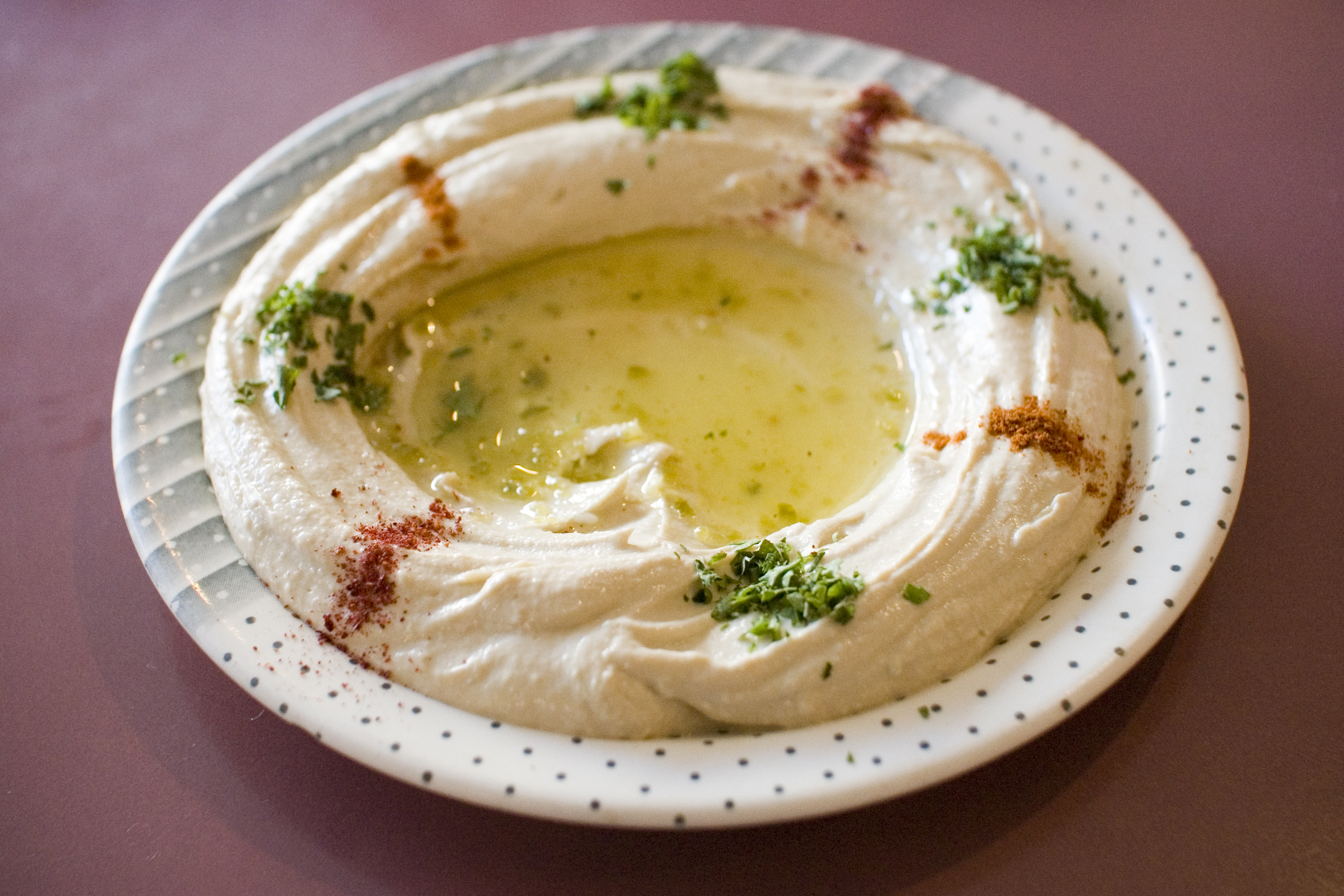
In the Middle East, hummus is served fresh from the pot, on a big communal plate dripped with olive oil and sprinkled with paprika and cumin. The plate has to be big enough and flat enough so that you can comfortably wipe up the hummus with a pita, an activity that my father refers to as “swiping.” He insists that hummus should have a subtle, earthy flavor, and disdains spicy hummus, lemony hummus, hummus with chipotles, hummus with artichoke, hummus with basil, sun-dried tomato or spinach, and most of all, the dip referred to as “black bean hummus.”
As he has pointed out many times, hummus is the Arabic word for chickpea; by definition, hummus made of black beans isn’t hummus.
In Israel, my father and I ate at Abu Hassan, a bare-tabled hummus den in the seaside town of Jaffa, where the staff starts serving early in the morning and shuts down the shop after the pot runs out, often in the early afternoon. We wandered the narrow streets of Jerusalem’s Old City, past the pilgrims crowding into the Church of the Holy Sepulcher, until we reached a tiny hummus shrine adorned with black-and-white pictures of people sharing a meal at the shop sometime in the 1930s.
One day we drove to a city in Palestine’s West Bank known for its tahina factories and uprisings. By law, Israelis are forbidden from entering the Palestinian territories, except to travel to the Jewish settlements, but we felt that no hummus pilgrimage would be complete without a trip to Nablus.
At the checkpoint, an Arab cab driver pulled over and said he hoped, for our own sake, that we wouldn’t enter the city in our Israeli rental car. We thanked him and drove past the Israeli guards, through the rounded hills studded with olive trees. My father grew quiet. When he’d first traveled those hills, in 1967, he was in a tank, pushing forward toward the Jordan River as thousands of Palestinian refugees streamed down the sides of the road. The Six-Day War had broken out and the Israeli army had conquered the Palestinian villages.
After a while we reached the outskirts of Nablus, parked and made our way through the maze-like casbah, to a dim, windowless hummus restaurant with electrical wires hanging from the ceiling. A teenage boy strolled into the room with an unmarked bottle of olive oil, tipping it onto people’s plates. After a few minutes of “swiping,” my father announced that this was the best hummus he’d tasted on the trip — though he also remarked that the excitement of entering forbidden territory had enhanced the flavor. By that point I knew that my hummus palate wasn’t refined enough to discern the subtle differences between the various hummusia offerings, but I liked them all better than any hummus I’d ever had in America.
Toward the end of our stay, we traveled to the fertile hills of the Galilee region, where an Arab chef named Husam Abbas had been garnering praise for his gourmet take on Arab food, defying a number of Israeli assumptions about Palestinian culture.
Abbas, who has been described as a leading figure of Israel’s Slow Food movement, broke ground at his chain of high-end restaurants by showing Israelis that Arab cuisine isn’t just hummus and kebab. His specialties include a spicy watermelon salad with diced mustard stems and stuffed summer squash in a tomato bisque, and he uses produce grown in fields that his family has tended, by his account, for 1,700 years.
Abbas met us by the side of the road in his pickup truck and led us into his fields. A gruff man with a leathery face, he tramped down the leafy aisles with a cigarette lodged in his mouth, stooping to gather purple-tipped string beans, young cantaloupes that looked more like cucumbers, several kinds of summer squash, and beautifully misshapen heirloom tomatoes.
Later, in the dining room of one of his restaurants, he explained that when the growing season ends, he and his children go into the hills to gather wild herbs with names like “olesh” and “aqab” and “hobeza.” The herbs grow only locally and only in the winter.
“But because hummus is dry, it can be used throughout the year,” he said.
When I asked how he accounted for the dip’s popularity, he kept his answer short: “Low cost, high calorie.” He seemed a little annoyed at the need to deliver this dictum.
FLAVOR HOUSE
As Sabra strives to make its chickpea dip as popular as bagels, burritos and other foreign-born fixtures of the American diet, it is employing a flavor palette that would test the limits of acceptability in the Middle East.
One recent day, Mary Dawn Wright, Sabra’s executive chef, stood before an array of hummus containers at the company’s Virginia factory, discussing these techniques. She popped open a tub labeled Asian Fusion.
“Israelis would never ever think it’s considered to be hummus,” she admitted.
A glistening spoonful of some brightly colored carrot and ginger mixture distinguished the dip from anything you’d find in a hummusia. Sabra collaborates with outside “flavor houses,” whose scientists also help develop classic American products like Doritos, she explained.
Asian Fusion is just one of more than a dozen flavors that Sabra has invented in its effort to convert more Americans to hummus, and Wright was almost certainly correct in her frank assessment of what Israelis might think of them. Even Zohar didn’t bother to feign enthusiasm for Sabra’s Buffalo Style flavor. “I detest it,” he said.
But for Zohar, and presumably for the rest of Sabra’s executives, personal feelings about the flavors are as irrelevant as hummus’ place of origin. What matters are the cravings of the average American consumer, and Zohar seems to think that no American is beyond the company’s reach.
At the Superbowl, he noticed that many of the tailgaters were eating Louisiana fare — “all kinds of crabs and shrimps, whatever it is.”
He didn’t see any hummus containers amid the jambalaya and gumbo.
“Maybe in New Orleans they are eating hummus not as much as people in New York are eating hummus,” he said recently. “But give us two years. They are trying it, and when they try it they become a lover.”
Stormy Ending to a Glorious Weekend
We had a great weekend, and thank you for all your good wishes. 🙂
In spite of the storm warnings, Friday and Saturday were glorious beach days, and oh what fun we had in the pool with our son, his wife, and our grandson, who is becoming a real swimmer. Then, some time during the night, a storm really did blow in, lowering the temperatures, lowering the skies and creating the perfect opportunity to get back home to the Qateri Cat.
The sitting area in our room; around the corner was also a little kitchen 🙂





In contrast the the previous two days, this morning was cool and very very rainy and windy, a great day to head back home. There were people body surfing those waves!



Thank you, AdventureMan. After all these years, so many great times, so many adventures, and the fun continues. 🙂
Qatar Prepares For Leadership Transition as Emir Steps Down
Thank you Grammy, for forwarding this article from The Telegraph. Who knew? I thought the current Emir was looking slimmer and healthier than before, but maybe he just wants a quieter, more private life, and the prince is willing to take the reins?
We watched Doha go from a sleepy little seaside capitol to a skyscraper-laced booming natural gas economy. It was an amazing time to be living in Doha. Sounds like more changes may be in store.

By Damien McElroy, Foreign Affairs Correspondent7:00PM BST 09 Jun 2013
Senior figures in Qatar have briefed foreign counterparts that the time has come for Sheikh Tamim bin Hamad, the 33-year-old crown prince to take over the leadership of the gas-rich Gulf state, the Daily Telegraph has learned.
The succession plan, which is due to be launched by the end of the month, will see Hamad bin Jassim, the prime minister and one of the biggest investors in Britain, give up his post.
Within weeks of that decision the royal court will announce that the emir, Sheikh Hamad bin Khalifa, who has struggled with health problems, will cede powers to the Sandhurst-educated crown prince.
A prominent British visitor to the gas-rich Gulf state was told of the plans earlier this year and sources said other key states, including the US and Iran, have also been briefed about the succession.
“The plan is to manage a staged handover of power that allows the crown prince to come to the fore,” said one source with knowledge of the discussions. “The stakes are very high because Qatar is at forefront of events in a very sensitive region.”
Representatives of the Qatar government were not able to comment on the discussions about the emirate’s future leadership but analysts said any changes in Qatar’s leadership would have huge implications for the Middle East and Western foreign policy.
“The legacy of the emir and the prime minister has been to make Qatar a player in the world,” said Michael Stephens, a Gulf researcher at the Royal United Services Institute. “It was an outpost when they took over and now it has grown into a modern city, it is one of the biggest investors in Europe and Britain, has set up a very powerful Arab television station [Al Jazeera] and has a very prominent foreign policy. That is almost all down to the driving force of those two men.”
Sheikh Hamad, the emir, took power in a bloodless coup in 1995, taking advantage of his father’s absence on a trip to Europe. The charismatic monarch has overseen the transformation of the emirate, which lies just 21 miles from the coast of Iran. His glamorous wife Sheikha Mozah, who was last week seen at a charity function with the Prince of Wales at Windsor Castle, has been a symbol of women’s rights in the Arab world.
The resignation of Hamad bin Jassim has huge consequences for Britain even though he is staying as chief executive of the Qatar Investment Authority, an immensely well resourced sovereign wealth fund that recycles the emirate’s gas revenues.
He will continue to be the driving force behind the entity that owns Harrods and invested in prime property projects in London, including The Shard, Europe’s tallest building.
With a relatively tiny population of less than two million, Qatar is an outsized force in Middle East politics.
Although Sheikh Tamim is well known to diplomats and foreign officials, there are questions over the future direction of policies under the new leadership.
As a result of his education in Britain and Qatar’s role as the host of an American airbase, he has close links to Western militaries.
But observers point to his close alliance with the Islamist Muslim Brotherhood as a potential sign that he will not be as liberal as his father and the prime minister.
The country has spent liberally on supporting Islamist movements in the Arab Spring, playing a key role in providing arms and logistics for rebels in Libya, Egypt and Syria.
Character Becomes Your Destiny . . .
A friend recommended these daily meditations, which as it turns out, I love. He keeps it simple and understandable
Richard Rohr’s Daily Meditations
Seven Underlying Themes of Richard Rohr’s Teachings
Fourth Theme: Everything belongs and no one needs to be scapegoated or excluded. Evil and illusion only need to be named and exposed truthfully, and they die in exposure to the light (Ecumenism).
You Must Nip It in the Bud
Meditation 4 of 52
Remember, always remember, that the heartfelt desire to do the will of God is, in fact, the truest will of God. At that point, God has won, and the ego has lost, and your prayer has already been answered.
To sum up the importance of an alternative mind this message says it all:
Watch your thoughts; they become words.
Watch your words; they become actions.
Watch your actions; they become habits.
Watch your habits; they become character.
Watch your character; it becomes your destiny.
From Breathing Under Water: Spirituality and the Twelve Steps, p. 103
“I Will Wipe out the word WASTA from the Traffic Dictionary”
Wooo HOOOO on You, Major General Abdulfattah Al-Ali!
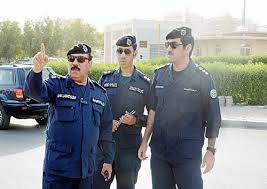
Sometimes, when you are reading a newspaper looking for content, the most significant articles can be little small ones:
Major Al-Ali vows to redraw traffic map
KUWAIT: “I have orders from higher authorities to organize the traffic and the law will be implemented strictly, Assistant Interior Ministry Under Secretary for Traffic Affairs Major General Abdelfattah Al-Ali said. “I will change the traffic map within six months and wipe out the word wasta from the traffic dictionary ,” he added. “I have strict orders from higher authorities to organize traffic and the law will be implemented very strictly,” Major Ali said.
The Kuwait Times got his title wrong; it is Major GENERAL, not Major, LOL, that’s a big difference. It appears he has the clout – and the backing – to make a brave and steadfast stand:
“WIPE OUT THE WORD WASTA FROM THE TRAFFIC DICTIONARY”
I can hardly believe my eyes. This is going to be very painful for young Kuwait men, who have learned – from prior experience – that the rules do not apply to them. IF Major General Abdulfattah Al-Ali can maintain his strong position, there may be more young Kuwait men who live to be grown-up men, there may be fewer heart-wrenching funerals, far fewer trips to the emergency room (did you know that some of the best head-trauma physicians in the world are in the ER’s in Qatar, Kuwait, and the UAE? There’s a reason for that.) The days of seeing babies on their daddy’s laps in traffic may be over. People may actually start wearing seatbelts!
Wooo HOOO on You, Major General Abdulfattah Al-Ali. You are a brave and courageous man, with a vision for a safer future for Kuwait.
11,800 Deported: Kuwait Deportations Continue “Without an End Date”
I still have a large contingent of loyal readers from Kuwait, but by early this morning, I could see something was up:
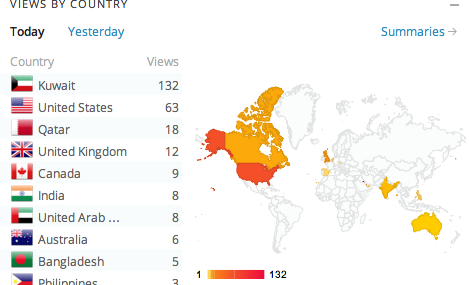
It’s not often that I have 132 Kuwait hits before noon.
So I checked the Kuwait Times:
Expat deportations will continue: Traffic chief – 11,800 deported in two-and-a-half months
KUWAIT: Major General Abdulfattah Al-Ali’s name has become synonymous with extensive traffic campaigns, aimed at enforcing the law at all costs, including implementation of mass deportations. The senior Interior Ministry official, who takes pride in deporting 11,800 people and impounding 3,000 vehicles during his tenure as head of the Ahmadi Security Department over the past two and a half years, told a local daily that deporting expatriates for serious violations will continue without an end date. “Administrative deportation of violating expatriates is not going to stop, especially of those carrying passengers illegally, in which case a person would be in violation of traffic and labor regulations,” Maj Gen Al-Ali, the Interior Ministry’s Assistant Undersecretary for Traffic Affairs, told Al-Rai on Friday.
He added that any ticket can be disputed “by a request to refer the case for traffic department investigations”. In the series of crackdowns that started late April, at least 2,000 traffic violations were registered, including 1,000 tickets issued directly on the street, while thousands of people were reportedly deported. Moreover, Maj Gen Al-Ali revealed that the ministry collected KD4 million, out of the KD24 million owed in traffic fines, during the same period. In that regard, the senior official pointed out that only KD8 million worth of fines are registered against individuals, while the rest are against companies and state departments. Out of the KD8 million, KD6 million is registered against expatriates, Maj Gen Al-Ali said. “Cases are soon to be filed with the traffic court in order to issue travel ban orders against people with more than KD80 in fines owed to the ministry,” he added.
Al-Rai published Maj Gen Al-Ali’s statement yesterday, along with a transcript of an interview with Al- Watan TV during which he defended the ongoing campaigns. “Our procedures are necessary to save lives, with average statistics indicating that 450 people are killed and 3,000 are injured annually due to traffic accidents,” he explained. During the interview, Maj Gen Al-Ali insisted that all drivers are equal when it comes to implementation of the law. “There have been doctors among the people deported, including a surgeon caught driving without a license for three years,” he said, before confirming news reports that he had taken a decision to impound a vehicle owned by Minister of Cabinet Affairs Sheikh Mohammad Al-Abdullah Al-Sabah on grounds of repeated violations committed by his personal driver. Meanwhile, the senior official urged any person who had obtained a license through illegal means to dispose of it “because once caught, they are going to be charged with forgery”. —Al-Rai, Al-Watan
Recent Comments
Cathy on No Grown-Ups in Charge intlxpatr on Waiting for Snow intlxpatr on Waiting for Snow Abou Tabblouleh on t… on Waiting for Snow Abou Tabbouleh on in… on Waiting for Snow Wikipedia Donate Button

Amazina


Early Voting in Florida


 Here There and Everywhere