Qatar Congestion Eases (FAIL)
This totally cracked me up; the Qatar Gulf Times publishes an article about how smoothly traffic flowed on the day the Indian schools opened, noting that Arab and Independent schools will open on succeeding days. They published this photo with the article:

Morning rush hour traffic on a Doha street yesterday. PICTURE: Najeer Feroke.
LLLOOOOOLLLLLLLLLLLLLLLL!
Revisiting Old Haunts and The Island Pub on Douglas Island
First, some random shots from our afternoon in various parts of Juneau, Alaska:
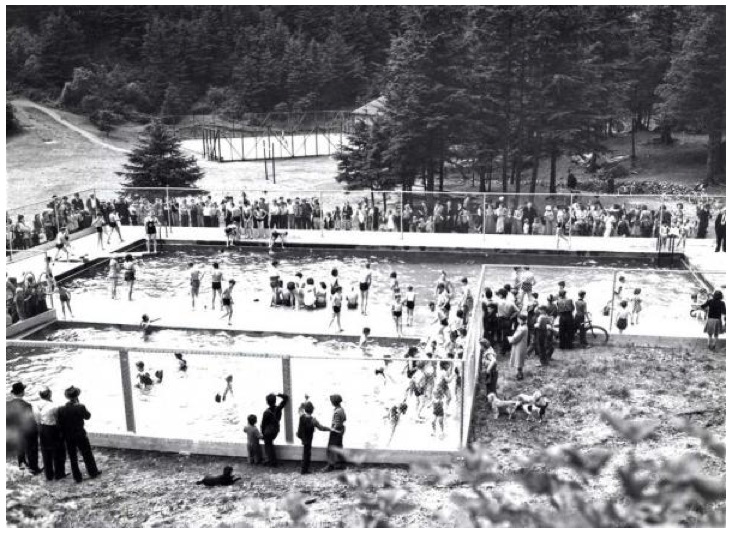
I didn’t take this photo, but I might be in it. I found it in the historical annals available from the Juneau-Douglas Museum. This is the old Evergreen Bowl pool, fed by glacier streams, where I learned to swim. This pool doesn’t exist any more; they have a new, indoor year-round pool:
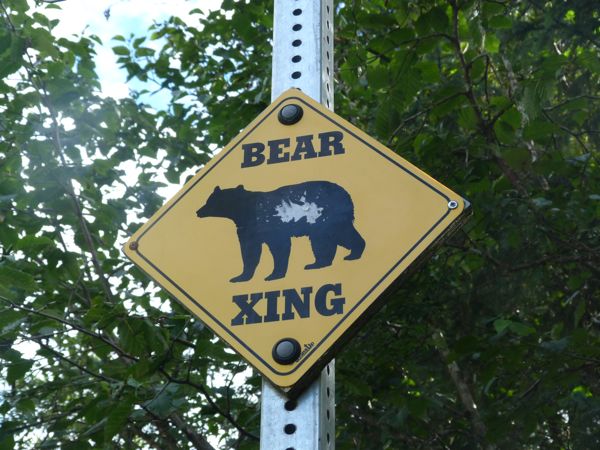
Out at Mendenhall glacier; no bears this trip, only their crossing sign and a lot of stripped salmon 🙂 Sleep well, salmon-fed bears!
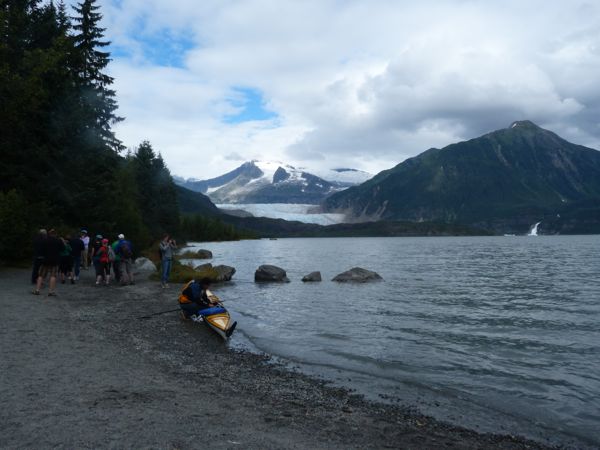
Kayakers at Mendenhall Lake; this is across the lake from the glacier observation point
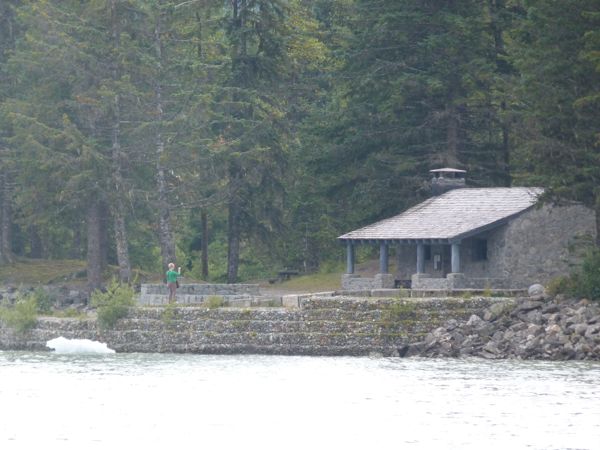
The old Skater’s Cabin, where we used to go ice skating when the lake would freeze. Volunteers from civic organizations would get up early and take home-made snow-pushers, and make paths through the snow on the ice, and clear a large patch where people could skate. The ice was rough, not like an ice rink at all. If you could skate here, you could skate anywhere 🙂
AdventureMan insisted I stop at this quilt shop while he read brochures in the car, LOL! No, I am not kidding, I am only laughing because he pretended he loves to wait in the car while I visit another quilt shop.

Dinner was at the Island Pub in Douglas, across the Gastineau Channel from Juneau. We used to go to this very same restaurant when I was a kid, then called Mike’s Place, only I never got to sit upstairs; I think that the bar was upstairs. Families went downstairs. They told us that they are thinking of renovating and opening the downstairs, too.

They were packed. We were lucky to get there when we did. I think we were the only people who don’t live on Douglas Island, there were couples and families and friends meeting up after work, and a birthday group – all people who live on the island.

The place has a spectacular view, especially around sunset when Juneau, across the channel, just lights up.
Our friend had said this is her favorite place to eat, and she was right! We had the smoked salmon spread, which was really good and really rich:

When our pizza came, it was also delicious, but the salmon spread on the pizza strips filled us up. We each ate one piece of the huge pizza and packed up the rest to warm up for breakfast the next day. It was still delicious!

This was one of the best meals we had on our trip. Great beer, great wine, great food, great atmosphere, great view.
Juneau and Tracey’s Crab Shack
Getting close to Juneau, we spot these very strange cloud formations:

As we dock, we call the hotel shuttle from Country Lane and they are there within minutes. They drop us off at the hotel so we can unload our bags, then take us over to the airport so we can pick up our car.
You know me and public art. I love these sculptures in the Juneau airport, and especially that they have the traditional Haida forms as part of their form:

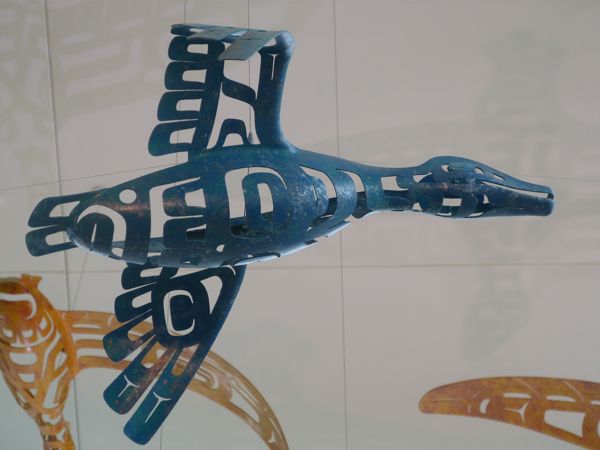
It is a gorgeous day in Juneau, 70°, hey, the sun is shining, it is very warm, this is a great day. We head immediately in to town for lunch at Tracy’s Crab Shack.
This is for my Mom; she likes to see the prices 🙂

Tracy’s Crab Shack is one smart operation. First – location location location. They are right on the cruise ship docks. First thing you step off one of those giant ships, you see Traceys. Second, they don’t rely on location. They have a first quality product. They don’t compromise. They cook the crab legs right out in the open, fresh, while you wait. They have crowds standing in line to get these crab legs, and you eat outside at butcher paper covered tables; the crab meals are served in paper containers and you SHARE tables. It works.

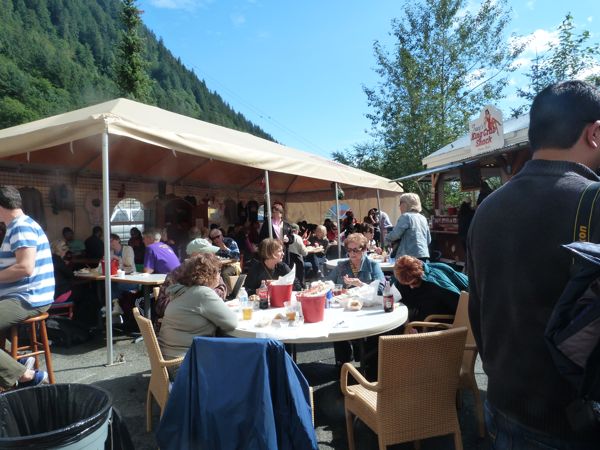


We share a table with two rough young men and have a fascinating conversation. They drove up, have had fabulous adventures and we shared information. I said that the thing that surprised me was that I expected Alaska to be more wired than it is; one of them said that his big surprise was to find Alaska as wired as it is, and that wifi is available at a large number of cafes and restaurants. That was fascinating to me, to opposite perspectives. Part of it, I think, was being on the ferry system – all the ferries in Seattle are wired, so it was a shock to me that the Alaska ferries were not.
One of our tablemates had now visited all 50 states, and the other had visited
49 states.
We saw people from all over the world lined up and eating King Crab at Tracy’s. AdventureMan had the crab bisque over rice and I had the crab cakes. Eating King Crab legs is messy, and I didn’t want to smell like crab for the rest of the day.
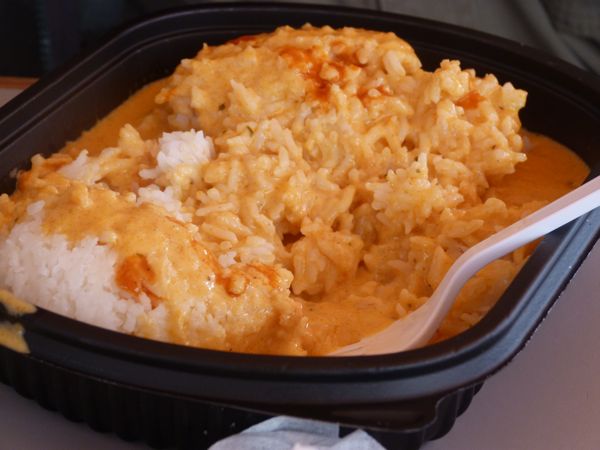

Tracey’s is the number one rated restaurant in Juneau on TripAdvisor and UrbanSpoon. I think it must be the combination of the crowd they attract and the product. Juneau people eat there, too.
The Alaska Gulf: Chenega Bay to Yakutat All Mountains and Glaciers

The sky is full of sunshine as we awake, and we are surrounded by snowy
mountains, gleaming in the sunshine. It is unspeakably beautiful. We eat our breakfast cereal and head outside, after listening to the complaints of a group of Texans at the next table.
“It’s like a bunch of hobos!” one man says of the aft viewing room, “I’ve never seen anything like it! They have their big rucksacks and sleeping bags and pillows all over the place!” The sign says you can only sleep from 8 at night to 8 in the morning, but they are still sleeping.”
Well, or still trying to sleep. Many of these people are living on a shoestring, and the ferry is the only way they can get to the doctor, or get their children to school, or get to their next job. They are frugal, bringing on their own food, trying to keep their kids dressed and entertained. The Alaska Maritime Highway has compassion on these travelers, provides a solarium area where campers can set up tents, rent sizable lockers. There are other areas, the aft lounges, where campers without tents can sleep, and this is where the Kodiak football team and cross country teams hung out. There is a children’s play area where families sleep right under the “no camping” signs, and the ferry personnel look the other way. It’s an Alaskan thing. It makes me proud to be born Alaskan. People take care of one another, and cut each other some slack.
Honestly, people, you are on the wrong ship! This is the Alaska Marine Highway, not the Diamond Princess!
We are drawn to the decks, compelled by the gorgeous scenery. Each snow covered mountain has its own beauty. We meet a Canadian couple; she has to excuse herself when the topic turns to food – she is seasick. A Kansan with whom we have a long conversation is also suffering a little from seasickness, and AdventureMan shares a Dramamine tablet with him.
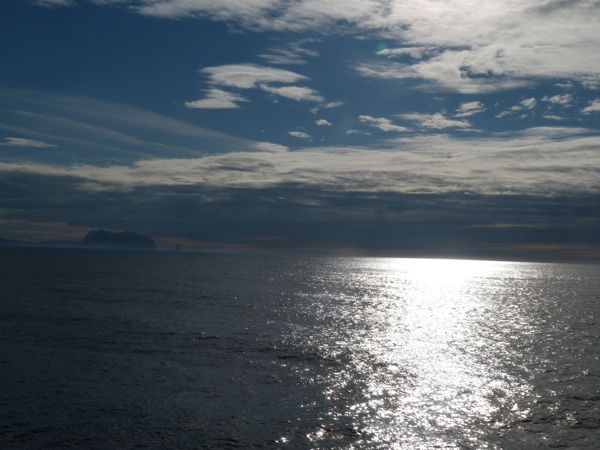
We have already made our reservations for the great Celebration in Juneau next year. It’s the reason we made the trip this year. As we started talking about the Celebration, which is only held every other year, we had so many ideas we knew we needed to take a reconnaissance trip so we would know how easy – or hard – travel is, and have a better idea what we want to see and do. This ferry trip has been a great introduction, and we have questioned many many Alaskans and travelers as to what they have seen and enjoyed.
Some things we know we don’t want to do. We don’t want to be on buses, going through Denali, following one bear. We don’t want to be on a cruise ship. We don’t want to travel in a group. I kind of think that RV rental might be a good way to go, but the truth is, I prefer sleeping in a bed, and I don’t like cooking in camping situations. As I see it – and I’ve done a lot of camping – camping is hard work. It’s all the things you have to do at home – shop for food, prepare food, cook food, and clean up – done under the most primitive conditions. I think we will look for an auto rental and good lodges and restaurants along our route, whatever that route is, after the Celebration in Juneau.
What is the Celebration? The Celebration is sponsored by Sealaska, and brings together all the tribes and clans of Alaskan native inhabitants to share knowledge. They wear their ceremonial clan robes and have a parade down the Main Street of Juneau. They gather to do the dances, transmitting their legends and language to their children. They share craftsmanship; the baskets, the robe making, wood carving, totems. If it is anything like the desert festivals we attended in Tunisia, it is also a time when the young men and women of different – but related – tribes can eye one another with marriage in mind, good for getting some healthy variation in the gene pool. I can hardly wait to see this.
I had planned to call the car rental again as soon as I hit Chenega Bay or Yakutat, so we will have a rental car when we hit Juneau again, but . . . I can only laugh now at my presumption . . . there is no service at either. My phone does not work. It is frustrating.
When I pack for trips, the worst of my obsessive-compulsiveness kicks in. I make lists, and check them – more than once. I order the right maps, and go over them. I check and double check reservations.
This trip, assuming I could just call and use my Google Maps and GoogleEarth, I didn’t worry. Information, in this wonderful day of technology, is literally at my fingertips. This has been a great lesson in just how dependent we all are on technology, and how devastating it is to learn that it cannot always be relied upon.
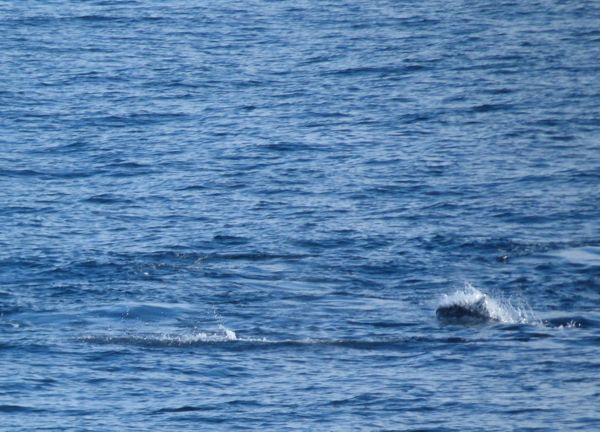
Dolphins frolic, so many and so hard to photograph as they move so quickly!
When I saw this, I thought at first it was part of the tsunami trash drifted over from Japan, and then I saw it was a flat barge loaded with containers. So loaded with containers, you can hardly see the barge:

A brief shift in the weather:

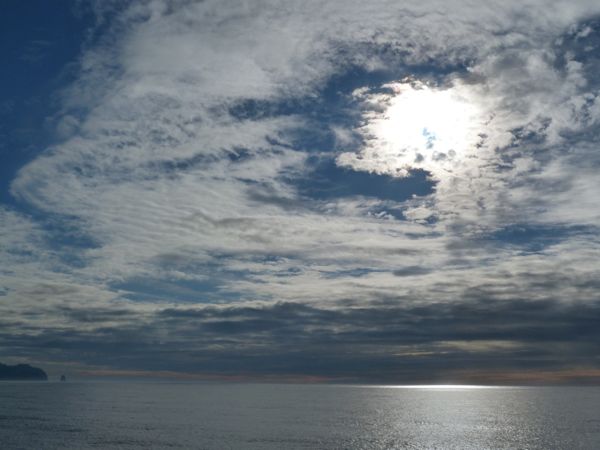
We are out on the deck most of the day, just watching this grandeur pass by, huge mountains, gigantic glaciers, parading past, one after another:
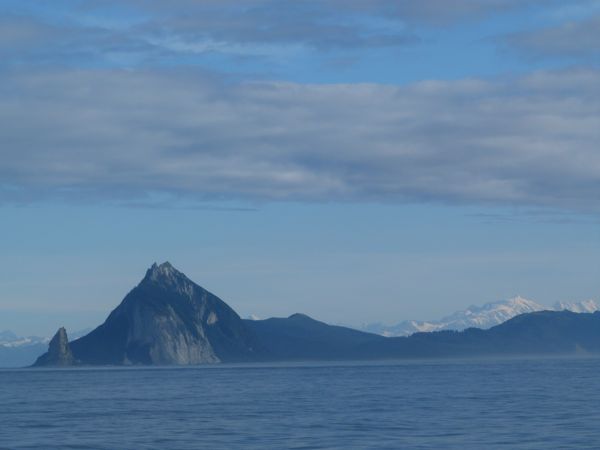

Someone said this is Mount Saint Elias, but I don’t think it is. None the less, it was a very high mountain, higher than anything near. This is the very tip. I spent hours trying to find a time when the whole mountain would come into view . . .

This is about the best I could get, the most of the mountain exposed:

This is what I was dealing with for hours as we passed – it truly is a huge mountain, but weather shifted often, and it was shrouded in these thin grey bands of clouds:

We passed several glacier fields, and I think this one was the Behring:

We are nearing Yakutat, the sun is setting:

In Yakutat I have just enough coverage to make a car reservation before we hit the sack.
Kuwait Traffic Deaths Plunge from 50 to 19 Per Month
From the Kuwait Times, an awesome statistic. In just months, the Al-Ali states the traffic deaths per month have dropped from 50 to 19. That’s incredible:
Traffic chief criticizes ‘non-cooperative’ departments
KUWAIT: Maj Gen Abdulfattah Al-Ali has been credited for positive changes seen on roads around Kuwait ever since he assumed post as Undersecretary Assistant for Traffic Affairs at the Interior Ministry five months ago. The senior official recently said that he did not come up with anything new but merely made sure that the existing laws were enforced. Al-Ali was interviewed by Al-Qabas as he spoke of efforts which have helped reduce traffic violations by 30 percent, cut road deaths and eased traffic jams. “We still have a long way to go because traffic awareness does not happen overnight”, he said, “and there is a lot of work to do before we can reach a level of contentment”.
During the interview Al-Ali criticized several state departments who he accused of being ‘non-cooperative’ with proposals to address the traffic jam problem. “There are ministries who remain unwilling to take simple decisions that can help reduce traffic congestions”, Al-Ali said. He also criticized the Kuwait municipality for allowing contractors to build apartments without allocating enough parking space. He also indicated that efforts to license parking lots with a capacity of 120 vehicles are often rejected. On Tuesday Al-Qabas published figures that Al-Ali mentioned during the interview, including withdrawal of 4,000 driver’s licenses which were obtained through wasta, as well as reducing a monthly rate of issuing licenses from 7,000 to 1,200. The official credited extensive traffic campaigns for reducing the average road deaths from 50 to 19 per month.
The General Traffic Department in the Interior Ministry launched extensive campaigns last April and these have resulted in thousands of traffic tickets, millions of Kuwaiti dinars collected in fines, and the deportation of thousands of expatriate drivers, in addition to firmer penalties against Kuwaiti offenders. No timetable is set for the end of campaigns and Major General Al-Ali has repeatedly indicated that crackdowns will continue as part of the department’s efforts to reduce traffic jams, curb the number of road fatalities and fight traffic offenses. Al-Ali also spoke to Al-Rai daily who quoted his statements yesterday in which he reiterated that fines should be paid to avoid a travel ban and suspension of license.
According to the senior official, the Interior Ministry has so far managed to collect KD 38 million out of KD 41 million it is owed, and withdrew more than 7,000 out of nearly 20,000 forged licenses issued since 2010. Meanwhile, Al-Watan quoted an Interior Ministry source yesterday who blamed state departments for “failure of implementing the General Traffic Department’s plans to reduce traffic”. Speaking on the condition of anonymity, the source stated that unnamed state departments have been ignoring offers to change timings that the traffic departments have been proposing since 2005. Major General Al-Ali attended a meeting last week with officials from the Ministry of Education and the Civil Service Commission, but no consensus was reached to change schools timings ahead of the beginning of the academic year. —
Adventures in Chenega Bay
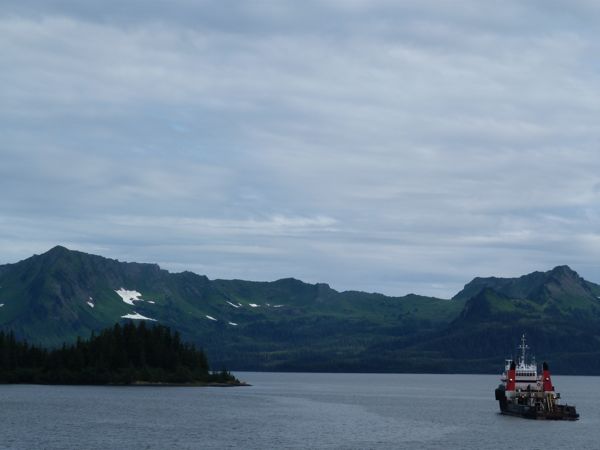
By the time we reach Chenega Bay, we are READY! The departure board tells us we only have a half an hour, but a half an hour is enough to hike to the top of the hill, see the church, take some photos and return. Actually, it took us more than half an hour. It didn’t matter. The ship needed to offload and onload, and the Chenega Bay residents needed their fix of hamburgers and ice cream.
As it turns out – and we should have known this by now – we really had a lot longer. It took a while to load the snow plow and all of its accessories 🙂
Chenega Bay was totally wiped out in a tsunami following an earthquake. Here is what their official site tells us:

Chenega IRA Council
PO Box 8079 * Chenega Bay, AK 99574 * 907-573-5132
The Chenega IRA Council is a federally recognized Indian Tribe that serves the Alutiiq people of Chenega Bay, Alaska. The Chenega IRA Council operates a variety of social, cultural and economic development programs designed to enhance the quality of life within Chenega Bay.
Chenega Bay – Description & Location
The village of Chenega Bay is located on Evans Island in Crab Bay, (42) miles Southwest of Whittier in the Prince William Sound. It is one hundred and four (104) air miles southeast of Anchorage. Until the March 27,1964 earthquake, Chenega was an Alutiiq Native tranquil fishing village located on the southern end of Chenega Island in western Prince William Sound. Founded before the Russian arrival in the late 1700s, Chenega was the longest occupied village in Prince William Sound at the time of the earthquake. Moments after the earthquake, a tsunami destroyed all of the buildings in Chenega village with the sole exception of a single home and the village school. Over a third of the village residents were killed and the survivors were taken initially to Cordova and then were later resettled in the village of Tatitlek by the Bureau of Indian Affairs.
With the passage of the Alaska Native Claims Settlement Act, the former residents of Chenega formed the Chenega Corporation that acquired the right to select 76,093 acres around the old Chenega Village Township. The Alutiiq Natives enrolled in the Chenega Corporation selected their new village site at Crab Bay on Evans Island in the Prince William Sound in March of 1977. This site was carefully chosen following extensive research as the site best able to meet the needs of the residents’ subsistence lifestyle. The Chenega Corporation and the Chenega IRA Council worked together to obtain funding for roads, a water and sewer system, electric generators, a boat and floatplane dock and a school. The new village named Chenega Bay was finally occupied in 1984 following the construction of 21 Housing and Urban Development homes.
Chenega Bay is an isolated community accessible only by air or water. Charter airlines provide the majority of the transportation and the Alaska Marine Highway Ferry System provides weekly ferry service year round.
Commercial fishing and subsistence activities are an important part of the lifestyle of the people of Chenega Bay. Commercial employment is primarily with the local school, the Tribal council, health clinic, and commercial fishing.
The primary business area of the village includes village council offices, a community center, the Russian Orthodox church, small boat harbor, the Alaska marine highway ferry terminal, and a future local display facility.
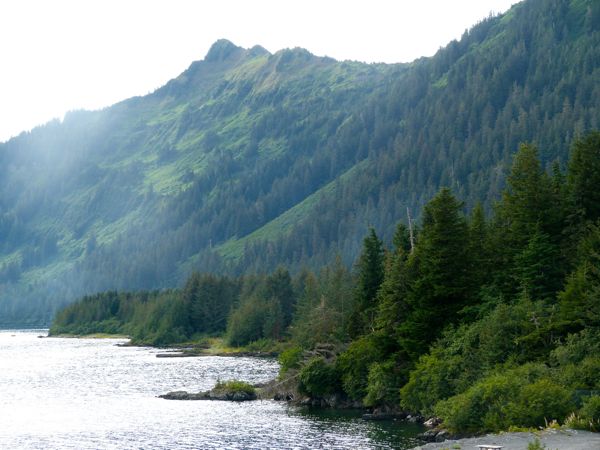
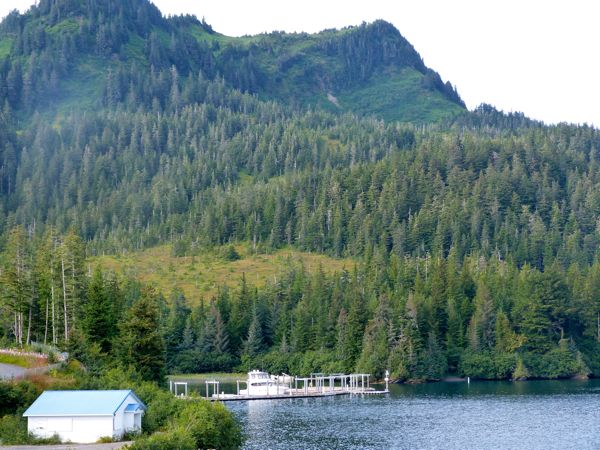
It felt so good to be able to get off and do some hiking. It was also a little overwhelming trying to imagine living in a village this small. Almost all the houses I saw looked exactly alike; maybe the tribe built them all. It is very very small and very isolated, the boat comes in once every week. There are no scheduled airlines, only charters.
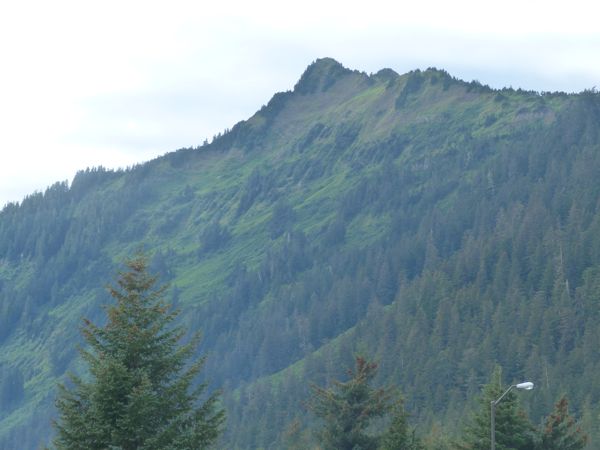


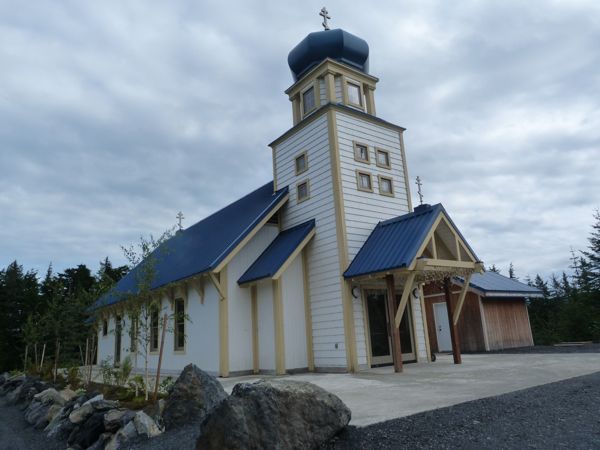
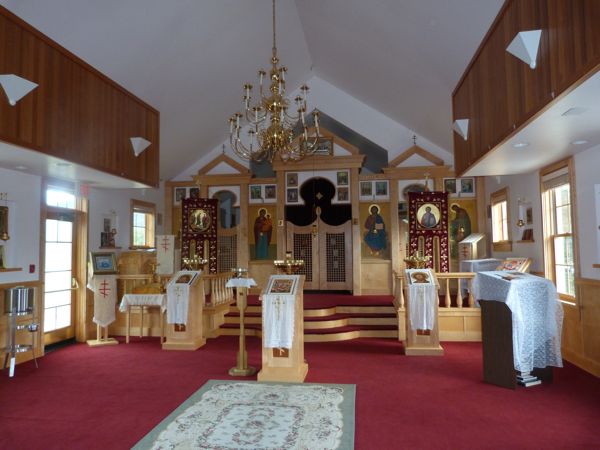
The Russian Orthodox Church, The Nativity of Theodokos, is very new, and very beautiful. We wondered where people sit? Or maybe there are chairs hidded away that are brought out for services, or brought from across the street at the Indian Affairs office? I always check, I love it that so many of the ikons look native. 🙂


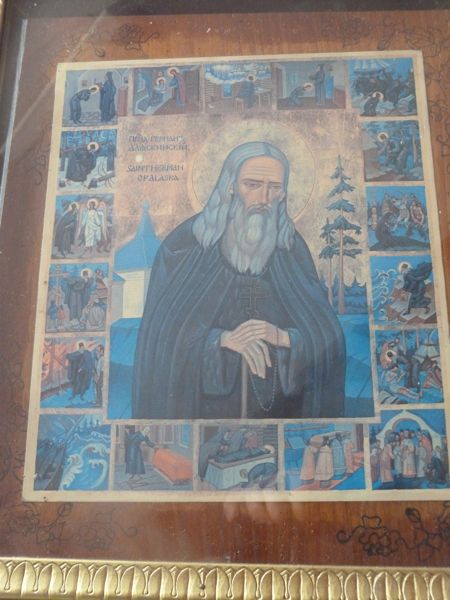
This last photo from the church is St. Herman of Alaska. Here is what Wikipedia says:
Saint Herman of Alaska (Russian: Преподобный Герман Аляскинский, c. 1750s – November 15, 1836) was a Russian Orthodox monk and missionary to Alaska, which was then part of Russian America. His gentle approach and ascetic life earned him the love and respect of both the native Alaskans and the Russian colonists. He is considered by many Orthodox Christians as the patron saint of North America.[1]
The patron saint of North America?! Who knew?!
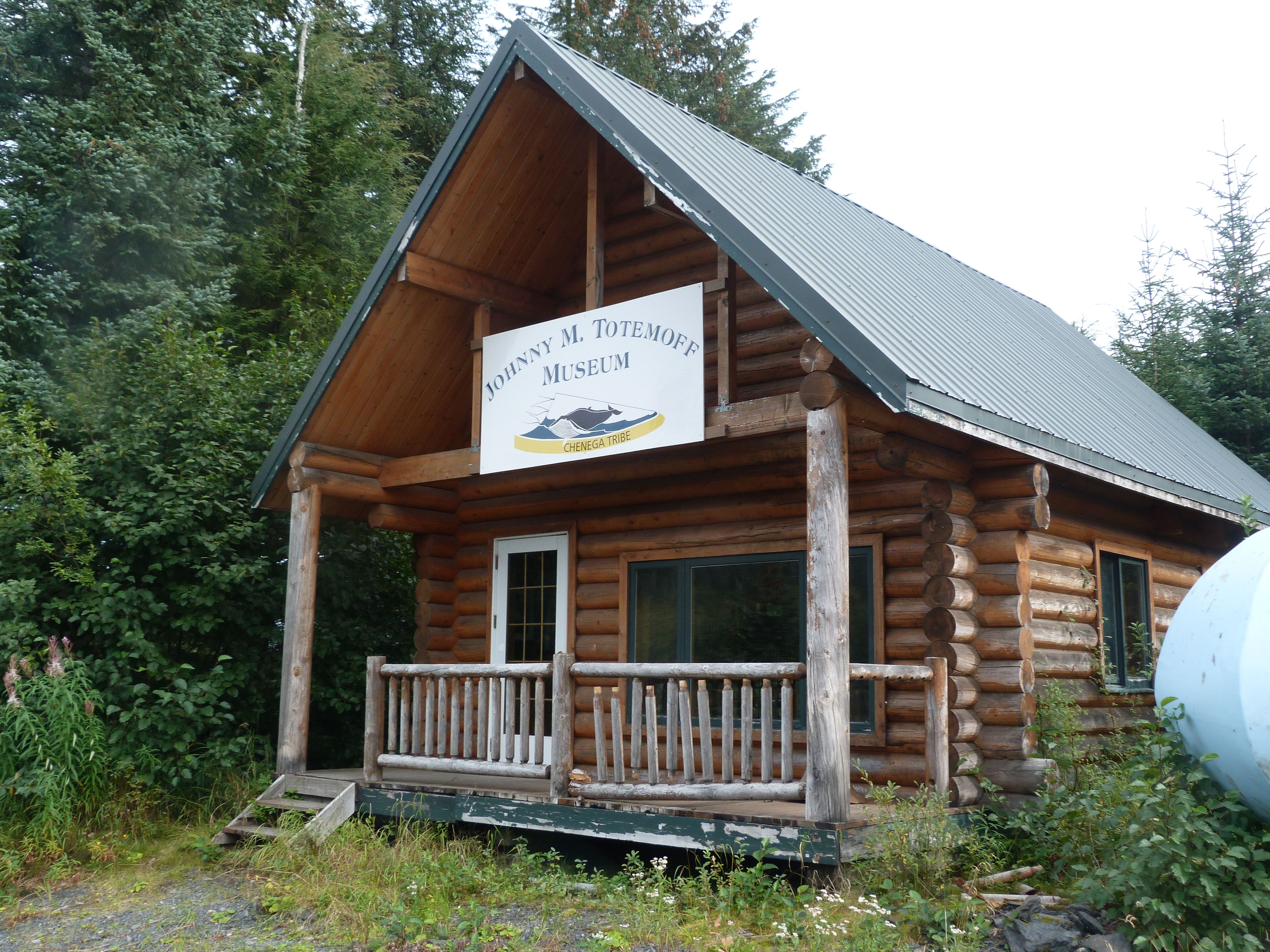
The Johnny Totemoff Museum is sometimes open – not today – and also sells homemade jams made from salmonberry and high mountain cranberries. I would have loved to have some of that! Johnny Totemoff was a local fisherman who always knew where the fish were, and was always coming to the rescue of other in troubled times. I love it that they named the museum after him. (Don’t you wonder how I knew that? On board the ship, they have a notebook at the Purser’s office they put out before you reach each stop. I read about the Totmnoff Museum in the Purser’s book.:-) Now you know.)
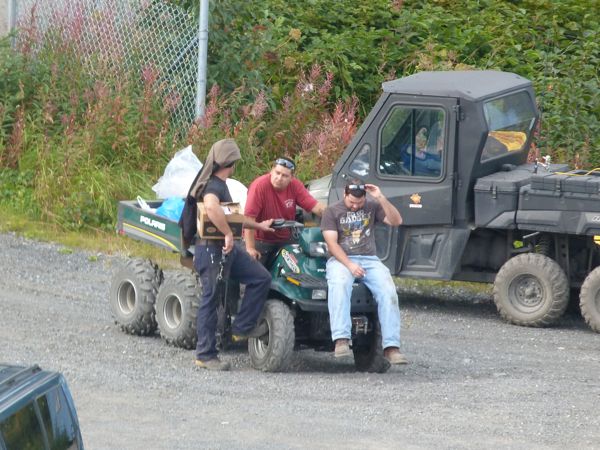
We loved watching the kids play – two of them were waiting for their father to come off the ship with their ice cream. They reminded me of my mom telling me of all the times she wanted to kill me because I did unsafe things, but oh, what fun!

Local transportation:
This is not the Homer otter, this is the Chenega Bay otter, and totally by chance and not by talent, I caught him catching a fish!


Too soon, it is time to depart.

Gospel for 9/11

Are we who we say we are?
Do we follow the spirit of The Word? Do we as believers pick and choose from our holy book(s) or do we humble ourselves, as Christ did, and do as he commands?
The Lord Jesus Christ commanded a very difficult life style. I have met holy people among all religions; I am forced to believe that “the way and the truth and the light” are behavioral, and that there will be many surprises when we get to the last days.
September 11th is a difficult day. This is a difficult Gospel reading for a difficult day:
Matthew 5: 38 – 47
Eye for Eye
38 “You have heard that it was said, ‘Eye for eye, and tooth for tooth.’h 39 But I tell you, do not resist an evil person. If anyone slaps you on the right cheek, turn to them the other cheek also. 40 And if anyone wants to sue you and take your shirt, hand over your coat as well. 41 If anyone forces you to go one mile, go with them two miles. 42 Give to the one who asks you, and do not turn away from the one who wants to borrow from you.
Love for Enemies
43 “You have heard that it was said, ‘Love your neighbori and hate your enemy.’ 44 But I tell you, love your enemies and pray for those who persecute you, 45 that you may be children of your Father in heaven. He causes his sun to rise on the evil and the good, and sends rain on the righteous and the unrighteous. 46 If you love those who love you, what reward will you get? Are not even the tax collectors doing that? 47 And if you greet only your own people, what are you doing more than others? Do not even pagans do that? 48 Be perfect, therefore, as your heavenly Father is perfect.
Mountains and Glaciers En Route to Chenega Bay
Passage was a little rough, once again, going through the Barrens, and AdventureMan took a dramamine. Because we don’t take a lot of medications, when we do, it can have a long-lasting impact, and AdventureMan sleeps in the next day. Not such a bad thing, it is vacation, after all. He is missing a lot of breathtaking scenery, but . . . LOL . . . even breathtaking scenery gets to be a little “oh yeah?” after a lot of breathtaking scenery.
Once all the high school kids got off at Kodiak Island, the boat became very quiet. There are some families, a few tourists, family members en route home, or to medical appointments from remote villages. We are meeting some fine people. One young man for whom we took a photo told us he was from a small village in Israel. I think that is true, and I think it is also disguise. He looks just like my Palestinian friends in Qatar. I expect it is just easier, here in the US, to say you are “from Israel.” I love these young people, many of them out all on their own, all alone, seeing these wonderful sights.
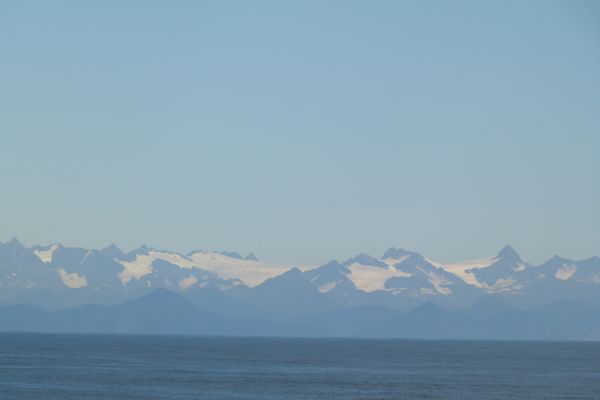


Even though these are all different, after a while . . . Oh! There are a lot more photos! You really want to see them all, LOL?? After a while, you can’t even count the glaciers. My eyes have been so hungry for mountains and blue green pine trees and snow and glaciers, and now . . . I feel overfed!
A Weather Anomoly
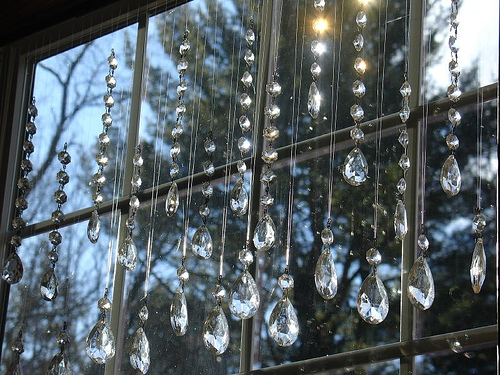
As I lay reading the newspaper yesterday afternoon, my afternoon sparkles were back. I have a variety of shiny surfaces, including a couple Swarovski crystal stars (lacking a piece or two) hanging in my office window; most of the year I have afternoon sparkles and rainbows on my office wall when the sun starts heading west toward sunset. It’s a small thing, but it gives me a jolt of joy.
I lose them just when the Pensacola weather starts hitting “hot and humid” on a regular basis. It’s a double whammy.
Although the temperatures remain hot, nightly temperatures are getting a little lower and the angle of light is different. The humidity is lower. The plants in the gardens know it; we have African iris blooming again, the white roses I love so much are back blooming their beautiful heads off, and the crepe myrtle is in full bloom, the swan song. I’ve even seen some magnolias blooming. It’s a little weird. I’m feeling like planting some tomatoes – last year we had tomatoes even through the coldest part of winter.
What is also a little weird, and there is a superstitious part of me that even hesitates to name it, I don’t want to invite it . . . we have had no hurricanes. It is mid-hurricane season, still plenty of time for angst, horror and destruction, but in spite of dire forecasts of one of the worst years yet, we have had not one single hurricane. Thanks be to God.
Four Men Convicted of Fatal Gang Rape in India
NEW DELHI — An Indian court convicted four men Tuesday in the deadly gang rape of a young woman on a moving New Delhi bus, a brutal crime that galvanized public anger over the widespread – yet widely tolerated – sexual violence faced by Indian women.
As word of the verdict filtered out, protesters outside the courthouse chanted “Hang them! Hang them!”
The men were convicted on all 11 counts against them, including rape and murder, and now face the possibility of hanging. The sentences are expected to be handed down Wednesday.
Judge Yogesh Khanna said in his verdict that the men, who tricked the 23-year-old rape victim and a male friend of hers into boarding the bus they were driving, had committed “murder of a helpless person.”
The parents of the woman, who cannot be identified under Indian law, had tears in their eyes as the verdicts were read. The mother, wearing a pink sari, sat just a few feet from the convicted men in a tiny courtroom jammed with lawyers, police and reporters. The hearing lasted only a few minutes, and the four men were quickly led from the courtroom by policemen after the verdicts were read.
Speaking before the convictions, the father of the victim called for the four to be executed.
“For what happened with her, these brutes must be hanged,” he told reporters as he left home for the courthouse. “Nothing but the death penalty is acceptable to us.”
Protesters called the Dec. 16 attack a wake-up call for India, where women have long talked quietly of enduring everything from sexual comments to public groping to rape, but where they would often face blame themselves if they complained publicly.
“Every girl at any age experiences this – harassment or rape. We don’t feel safe,” said law school graduate Rabia Pathania. “That’s why we’re here. We want this case to be an example for every other case that has been filed and will be filed.”
Lawyers for the men have insisted they were tortured – a common occurrence in India’s chaotic criminal justice system – and that confessions, which were later retracted, were coerced.
A.P. Singh, who at times has worked as a lawyer for all the men, said they were innocent.
“These accused have been framed simply to please the public,” he told reporters. “This is not a fair trial.”
The men were identified by the young woman’s friend, and police say they could be seen on security cameras near the bus.
The men, most of them from a crowded New Delhi neighborhood of hand-made brick shanties filled by migrants from poor rural villages, were joy-riding around the city in an off-duty bus when police say they came across the woman and her friend waiting at a bus top. The pair – by most accounts they were not romantically involved – were heading home after an evening showing of “Life of Pi” at a high-end mall just a short walk from the courthouse where Tuesday’s verdict was read.
It wasn’t late. It wasn’t a bad neighborhood. The bus, by all appearances, was just a way for the two to get home.
Instead, the attackers beat the friend into submission, held down the woman and repeatedly raped her. They penetrated her with a metal rod, causing severe internal injuries that led to her death two weeks later.
The woman, who was from another poor migrant family, had recently finished her exams for a physiotherapy degree. Her father earned a little over $200 a month as an airport baggage handler. She was, the family hoped, their path to the bottom rungs of India’s growing middle class.
The defendants also came from poor and ill-educated families. One, Mukesh Singh, occasionally drove the bus and cleaned it. Another, Vinay Sharma, was a 20-year-old assistant at a gym and the only one to graduate from high school. Akshay Thakur, 28, occasionally worked as a driver’s helper on the bus. Pawan Gupta, 19, was a fruit seller.
With them were two other men. Police say Ram Singh, 33, hanged himself in prison, though his family insists he was murdered. He was the brother of Mukesh Singh, who was convicted Tuesday. Another man – an 18-year-old who was a juvenile at the time of the attack and cannot be identified under Indian law – was convicted in August and will serve the maximum sentence, three years in a reform home.
Facing public protests and political pressure after the attack, the government reformed some of its antiquated laws on sexual violence, creating fast-track courts to avoid the painfully long rape trials that can easily last over a decade. The trial of the four men, which took about seven months, was astonishingly fast by Indian standards. The men can appeal their convictions.
While many activists heralded the changes that came with the case – more media reporting on sexual violence, education for police in how to treat rape victims – they note that women remain widely seen as second-class citizens in India. Girls get less medical care and less education than boys, studies show. Millions of female fetuses are statistically “missing” because of illegal sex-selective abortions.
Victims of sexual assault, meanwhile, often find themselves blamed by their families and police, who deride them for inviting attacks. Activists say most rapes are simply kept secret, even from authorities, so that the woman and her family are not seen as tainted.
“We can celebrate this particular case. But total change is a much larger issue,” said Rebecca John, a supreme court lawyer and prominent advocate for women in India.
“As we celebrate this case, let us mourn for the other cases that are not highlighted.”
The victim’s family was, in many ways, far different from most in India. Her parents had pushed her to go as far as possible in school, and even encouraged her to leave home for a better education, both seen as highly suspect in the conservative village culture that her parents were born into. They had saved for years to help pay her school fees, and made clear that her brother would not be favored.
And when she was raped, the only people they blamed were her rapists.
Their pain has been staggering.
“I always told my children: `If you study hard you can escape this poverty.’ All my life I believed this,” the mother told the AP in an interview earlier this year. “Now that dream has ended.”
Recent Comments
ExpatAlien on What Country am I Living … intlxpatr on Yellowstone: Old Faithful to C… Michelle on Yellowstone: Old Faithful to C… Cathy on No Grown-Ups in Charge intlxpatr on Waiting for Snow Wikipedia Donate Button

Amazina


Early Voting in Florida


 Here There and Everywhere
