“if You Can’t Prevent Rape, You Enjoy It”: Ranjit Sinha
The Chief of India’s Central Bureau of Investigation said this! Was he snorting cocaine in a drunken stupor? Of course he is apologizing, but his careless remark demonstrates the sentiments buried deep in his culture’s heart – it’s only women. Not worth much, not like us men. Outrageous.

NEW DELHI (AP) — India’s top police official apologized Wednesday for saying, “If you can’t prevent rape, you enjoy it,” a remark that has outraged women across the country.
Central Bureau of Investigation chief Ranjit Sinha made the remark Tuesday during a conference about illegal sports betting and the need to legalize gambling. The CBI, the country’s premier investigative agency, is India’s equivalent of the FBI.
Sinha said at the conference that if the state could not stop gambling, it could at least make some revenue by legalizing it.
“If you cannot enforce the ban on betting, it is like saying, ‘If you can’t prevent rape, you enjoy it,'” he said.
The remarks have caused outrage across India, which in the past year has been roiled by widespread protests following the fatal gang rape of a 23-year-old woman on a bus in New Delhi.
On Wednesday, Sinha said that his comments had been taken out of context and misinterpreted, and that he was sorry if he had caused hurt.
Angry activists, however, called for his resignation.
Communist Party of India (Marxist) leader Brinda Karat said Sinha’s comments were offensive to women everywhere.
“It is sickening that a man who is in charge of several rape investigations should use such an analogy,” Karat told reporters. “He should be prosecuted for degrading and insulting women.”
The New Delhi attack on the young woman last December caused nationwide outrage and forced the government to change rape laws and create fast-track courts for rape cases. New laws introduced after the attack make stalking, voyeurism and sexual harassment a crime. They also provide for the death penalty for repeat offenders or for rape attacks that lead to the victim’s death.
MERS Found in Saudi Arabian Camel
RIYADH, Saudi Arabia (AP) — The Saudi Health Ministry says it has discovered a deadly virus in a camel in Jiddah province, on the western coast of Saudi Arabia.
The ministry’s statement released Monday is considered an important development in the search for the origin the deadly illness. There have been more than 60 deaths from the virus known as Middle East respiratory syndrome, or MERS, with all but a handful of the fatalities in Saudi Arabia.
The ministry said a sample from the camel was tested near the home of a patient infected with the virus.
An international research team in August found the mysterious virus that is related to SARS in a bat in Saudi Arabia. They suspected it was perhaps another animal that was spreading the virus directly to humans.
“Great is Your Faith!”
Jesus only commented positively on a person’s faith three times, and two of those times the supplicant was not Jewish, but other, in this case, a Canaanite woman. All she cared about was her daughter. He even says no, he won’t help her, he is there for the Jews. As she persists, as she argues with Jesus and makes her case, he relents, he feels enormous compassion for this woman in her plight, and as he heals her daughter, he makes this extraordinary statement calling attention to her belief. No legalistic requirements, he just heals.

Matthew 15:21-28
21 Jesus left that place and went away to the district of Tyre and Sidon.22Just then a Canaanite woman from that region came out and started shouting, ‘Have mercy on me, Lord, Son of David; my daughter is tormented by a demon.’ 23But he did not answer her at all. And his disciples came and urged him, saying, ‘Send her away, for she keeps shouting after us.’ 24He answered, ‘I was sent only to the lost sheep of the house of Israel.’ 25But she came and knelt before him, saying, ‘Lord, help me.’ 26He answered, ‘It is not fair to take the children’s food and throw it to the dogs.’ 27She said, ‘Yes, Lord, yet even the dogs eat the crumbs that fall from their masters’ table.’ 28Then Jesus answered her, ‘Woman, great is your faith! Let it be done for you as you wish.’ And her daughter was healed instantly.
Clean or Unclean?
This is one of my favorite readings in the Lectionary. People often ask where it is that Jesus declared all foods “clean” and this is one of the scriptures. To me, it is the why of it that makes it interesting – and convicting. There is enough in my heart to make me unclean without worrying about food rules.
Matthew 15:1-20
15 Then Pharisees and scribes came to Jesus from Jerusalem and said,2 ‘Why do your disciples break the tradition of the elders? For they do not wash their hands before they eat.’ 3 He answered them, ‘And why do you break the commandment of God for the sake of your tradition?4 For God said,* “Honour your father and your mother,” and, “Whoever speaks evil of father or mother must surely die.” 5 But you say that whoever tells father or mother, “Whatever support you might have had from me is given to God”,* then that person need not honour the father.* 6 So, for the sake of your tradition, you make void the word* of God. 7You hypocrites! Isaiah prophesied rightly about you when he said:
8 “This people honours me with their lips,
but their hearts are far from me;
9 in vain do they worship me,
teaching human precepts as doctrines.” ’
10 Then he called the crowd to him and said to them, ‘Listen and understand: 11 it is not what goes into the mouth that defiles a person, but it is what comes out of the mouth that defiles.’ 12 Then the disciples approached and said to him, ‘Do you know that the Pharisees took offence when they heard what you said?’ 13 He answered, ‘Every plant that my heavenly Father has not planted will be uprooted. 14 Let them alone; they are blind guides of the blind.* And if one blind person guides another, both will fall into a pit.’ 15 But Peter said to him, ‘Explain this parable to us.’ 16 Then he said, ‘Are you also still without understanding?17 Do you not see that whatever goes into the mouth enters the stomach, and goes out into the sewer? 18 But what comes out of the mouth proceeds from the heart, and this is what defiles. 19 For out of the heart come evil intentions, murder, adultery, fornication, theft, false witness, slander. 20 These are what defile a person, but to eat with unwashed hands does not defile.’
Wooo HOOO the New Q8 Books!
Brava! Brava, Fajer! What a great gift to the children and the community, to make Q8Books more accessible and family friendly. Woooo HOOOOO!
Reading and literacy are key to civilization. Brava!
From the Kuwait Times:
Kuwait’s community bookshop gets new life

Finding quality English books in Kuwait is a challenge as any book lover here knows. Local lawyer Fajer Ahmed, 26, recently took up the challenge when she acquired the small but well-loved bookshop, Q8 Books. She moved Q8 Books from downtown Kuwait City into a renovated space in Bayt Lothan, the non-profit arts and culture center located next to Marina Mall in Salmiya. Home to more than 15,000 titles of all genres including literature, general fiction, history, romance, thrillers and mysteries, westerns, classics, cook books, true crime, self help and motivation, family and lifestyle, business and philosophy and arts and crafts, Q8 Books has something to suit every reader’s taste.
By adding sofas, tables, chairs and beanbags, Q8 Books created a cozy, relaxed atmosphere along with free WiFi that invites customers to come and hang out. “We want to encourage reading, writing and communication in Kuwait, “Fajer explained. “As one example, we provide local writers with a place to display and sell their books free of charge, we also do all the administrative work for them.”
A community bookshop
Q8 Books also holds a free weekly story time for children, offers 50% store credit for trade ins, encourages book clubs and other responsible community groups free space to hold meetings and has an outreach project to support a library in Gambia. “We thank Bayt Lothan for giving Q8 Books a home,” Fajer said. “Without them none of this would have been possible.” Q8 Books’ erudite former owner, Jacob, started the bookshop almost a decade ago with only a handful of books. During his travels, he would browse used bookstores and markets to find quality titles that would be appreciated by the book-loving community in Kuwait. Jacob continues to help out at Q8 Books along with a group of dedicated volunteers and support from the Kuwait Writing Club.
Fajer also organizes regular events in order to build Q8 Books as a community space. On the first of November, Q8 Books hosted a Spooky Book night for kids, which included a story telling by local street artist Monstariam dressed in a bunny costume, a crafts and arts table, coloring and glitter, a costume contest and a chance for parents to browse and chat.
Kid and family friendly
“We really enjoyed Spooky Books night,” said Umm Sara, a mother of three children who attended the event all wearing ‘scary’ costumes. “The kids loved the story telling and we got several books. Much better than going to a mall and they got to draw and color and dress up.” The Kuwait Writing Club also took part, judging over 80 submissions for the writing competition. The winning submission will be published in Kuwait Times. “We also had a cover design competition for children to draw covers for the age appropriate horror story, Goosebumps, and every kid that took park received a free book of their choice,” Fajer explained.
Q8 Books will offer monthly events for children and parents with the goal of encouraging reading. “When kids come in playing games on electronic devices, we try to find books with the same characters and get them interested in reading,” Fajer noted. “Welovekuwait.com Children’s Bookshop has also donated coloring and reading books to give for free for every child that walks in.” Q8 Books encourages Kuwait’s community of readers to share their love of reading. They accept donations and offer store credit for traded in books. They also invite anyone to email ask@q8bookstore.com if they are interested in volunteering, donating or just want to talk to someone about suggestions for what to read.
Q8 Books is located in Bayt Lothan, next to Marina Mall. Store Hours: Weekdays 9am- 1pm and 5pm-9pm. Weekends 11am-9pm. Follow them on Instagram @q8bookstore
By Jamie Etheridge
The Most Expensive Soap in the World Made in Qatar
There is nothing so lovely not so luxurious as a really good soap. My niece introduced me to my very favorite, an Iris scented soap from Santa Maria Novella in Florence which she brought me as a house gift when she visited in Germany.

This (below) is not the Florentine soap made by nuns. This soap is not for sale; it’s for promotion and for royals only – From Qatar’s Gulf Times:

Al-Sherif shows off the soap as Dr Hassoun (second right) and other guests look on at the unveiling yesterday. PICTURS: Jayaram
The “most expensive soap in the world,” made of pure gold dust, olive oil and virgin honey and embedded with diamonds, was unveiled by Khan Al-Saboun Bader Hassoun and Sons at the Qatar Pool and Spa 2013 at the Doha Exhibition Centre yesterday.
Weighing around 100gm and with a price tag of $3,800, the soap dubbed ‘Qatar Royal Soap’ with the word ‘Qatar’ in Arabic inscribed on it, is being dedicated to Qatar and its great achievements in many fields, especially in winning the bid to host the FIFA 2022 World Cup.
Khan Al-Saboun Bader Hassoun and Sons chairman Dr Bader Hassoun explained that the soap was specially made for royalty aside being beneficial for the skin due to its natural and organic contents.
“Our company, based in Lebanon, has been known for specialising in natural and organic beauty products for years and we have very committed patrons due to this specialisation,” said Dr Hassoun, whose family has been in the soap making business for over eight centuries.
He said that the soap, though highly valued, has not been produced for commercial purposes, though it was earlier reported that it will be available for sale in Al-Saboun City Center – one of the company’s six branches in Qatar.
“We have made only this one piece in order to showcase our capabilities for inventions in soap making and just to express our respects for royalty. So, the soap will not be for sale,” he maintained. Lebanese singer Reem al-Sherif was present at the launch.
Speaking More Than One Language Delays Alzheimer’s
From AOL Everyday Health:
WEDNESDAY, November 6, 2013 — A small but growing body of research is finding that people who are proficient in multiple languages have a lower risk of cognitive decline. In the largest study to date on the relationship between bilingualism and dementia, researchers from Hyderabad, India, and Edinburgh, Scotland, demonstrated that bilingualism may stave off symptoms of Alzheimer’s disease and other types of dementia for several years. Their study was published in the journal Neurology.
The research team in Hyderabad evaluated 648 people who had dementia symptoms for 6 months to 11 years before enrolling in the study; 391 of the subjects were bilingual. The researchers found those who were bilingual developed dementia on average 4.5 years later than people who spoke only one language. On average, bilinguals developed dementia symptoms by age 65.6 compared with age 61.1 in people who spoke only one language.
“Nowadays, a lot of companies are having expensive brain-training programs, but I’d say bilingualism is very cheap,” said Thomas Bak, MD, a lecturer in human cognitive neuroscience at the University of Edinburgh, and second author on the study. “The crucial thing about bilingualism is that it offers what we say is constant brain training. A bilingual person Is forced to switch to different sounds, words, concepts, grammatical structure, and social norms.”
Dr. Bak’s study demonstrated the impact bilingualism has not only on the progression of Alzheimer’s disease, but also on other types of dementia. Though the majority of patients in the group studied (37 percent) had Alzheimer’s-related dementia, 29.2 percent had vascular dementia, a type caused by reduced blood flow in the brain from stroke. Frontotemporal lobe dementia — from atrophy or shrinkage of certain areas of the brain — accounted for 17.9 percent of the diagnoses. Lewy body dementia, the second most common type of progressive dementia and one that is related to Parkinson’s disease, accounted for 8.5 percent, while 7.4 percent of people in the study were diagnosed with mixed dementia.
The researchers found bilingualism had the most dramatic effect on people who were diagnosed with frontotemporal lobe dementia. Knowing multiple languages delayed dementia symptoms by as much as six years in this group. Individuals with vascular dementia had an average of almost four extra years before dementia symptoms set in. However, individuals who knew three or four languages weren’t protected longer from dementia symptoms than those who were only proficient in two languages.
The More Different the Languages, the Better
The World Health Organization estimates 35.6 million people in the world have dementia, with 7.7 million new cases every year. And in India the problem is expected to grow even more dire. In 2009, the World Alzheimer’s Report projected India will have 10 million dementia patients by the year 2020. This was the impetus behind the new research, said Suvarna Alladi,MD, lead author of the study, which was funded by the Indian Department of Science and Technology.
“Dementia has become a major public health problem in India, and research that explores potentially protective mechanisms is of tremendous importance,” said Dr. Alladi. “Since many people in India can fluently speak two or more languages in their daily life, it’s heartening for us to know that something that we take for granted may protect our brains from developing dementia early.”
Teluga is the official state language in Hyderabad. Natives of the city are often also proficient in Hindi and Dakkhini, which more closely shares roots with English than with Teluga. This raises questions about the brain and “linguistic distance,” said Bak.
“You could argue the more different languages are, the better they are for the brain,” Bak said. “However you can also argue that when you speak languages that are so closely related you have to suppress one.”
Scientists have also become interested in whether cognitive abilities can be retained in similar ways if a person doesn’t learn a second language until later on in life, but there are yet no studies on this topic. However, many researchers, including Bak, speculate that a person who learns a second language later on life could glean similar benefits. “There are theories that would say you need the constant practice,” he said. “The fact that I can swim won’t make me healthy. If I actually go swimming it will make me healthier.”
Exercising the Brain
Numerous studies have found one of the best ways to slow cognitive decline is by mindfully engaging in brain-flexing activities, such as playing Suduko and crossword puzzles or reading books. I-Chant Andrea Chiang, MD, a professor who specializes in language psychology at Quest University Canada in Squamish, B.C., sees very little difference between language learning and any other type of brain exercise. “The brain is a muscle and it needs to be worked out like any other muscle,” said Dr. Chiang. “All those mental activities stimulate the brain and build up a cognitive reserve, even though there may be physical decline.”
Chiang has consulted with Ryan McMunn, who runs BRIC Language Systems headquartered in New York City. McMunn said a number of Alzheimer’s patients have sought out BRIC language classes online to help offset the symptoms of the disease, or are learning a second language because Alzheimer’s runs in the family. McMunn, who is American and lived in China after college, said his grandmother had Alzheimer’s disease, but he wasn’t aware of the research on bilingualism and dementia until after he began learning to speak Mandarin, which he now does fluently.
“Honestly I can’t think of a more fun way of trying to postpone these things,” said McMunn. “Learn any language; it’s a fun thing to do and it allows you to communicate with new people. I look at it as very beneficial.”
“Mind Your Own Business”

You can be married for a long time and still be surprised. 🙂
I was thinking about other cultures, and then I thought about growing up in Alaska. Alaska is one of those kind of end-of-the-line places. Maybe it’s changed, but except for the native Americans, most people had come from somewhere else. Very few were second generation.
People at end-of-the-line places often have backstories they don’t want to talk about – bad divorces, or worse – bad marriage – no divorce, criminal records, or a million other situations they don’t want to talk about. From an early age, you learn not to ask. There were also a lot of laconic Scandinavians around; they talk about fishing and hunting but are seriously tongue-tied if asked a personal question. So again – you learn not to ask.
“Mind your own business,” I can remember my own mother saying, so I thought it was a rule. “Don’t be a Nosey-Parker.”
All my life I thought that was the rule. It was the way I was raised. Every now and then that curtain of pre-conceptions parts and a light gleams through. I was thinking about other cultures and it occurred to me to ask AdventureMan if he grew up with the same rule.
He just laughed. He looked at me in utter amazement, and laughed.
“I grew up in a town of 3,000,” he laughed, “and some of those were relatives, aunts, uncles, grandparents, cousins – everyone knew everything!”
“There’s no such thing as ‘mind your own business’ when your entire life is known by every single person in town!”
He hooted with laughter at the very thought.
“Everyone knew everything!” he repeated.
It’s expat world right here in my own house. This is a whole new way of thinking about things. I’ve always thought personal privacy was sort of universal, but not so.
One of the many times we lived in Germany, we lived in a small village where people told us everything. It was amazing, a whole different world, being on the inside, but not really being a part of it all. People seemed to feel we needed to be filled-in. One family didn’t speak to another family in the village, and it was awkward, because there were only like 300 people in the village, but many years ago someone’s grandmother had a terrible disagreement with the other family’s grandmother and no one in the families speak to one another now, even though no one can remember the reason.
I’ve escaped a lot of that being an expat, not sticking around longer than five years max, not long enough to develop a reputation you can’t shake. 🙂 But it makes me wonder if things are looser these days, if you can grow and change and be allowed to outlive your mistakes in small places where everything is everyone’s business . . .
Where is Umzimvubu, South Africa?
Today we pray for the Diocese of Umzimvubu, in South Africa:

Matthew 5: 44-46
|
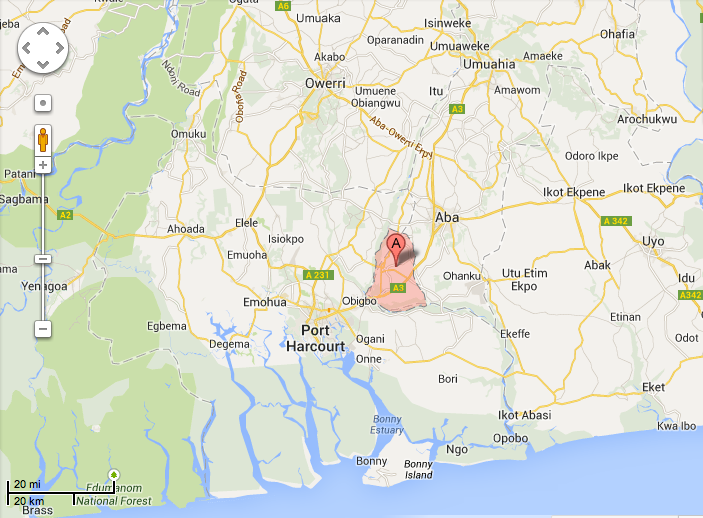
Where Are Dioceses of Ukwa and Umuahia (Aba, Nigeria)?
Every day our church prays for a different part of the world. Today it is Ukwa and Umuahia in Aba, Nigeria. I had to look it up:
Recent Comments
ExpatAlien on What Country am I Living … intlxpatr on Yellowstone: Old Faithful to C… Michelle on Yellowstone: Old Faithful to C… Cathy on No Grown-Ups in Charge intlxpatr on Waiting for Snow Wikipedia Donate Button

Amazina


Early Voting in Florida


 Here There and Everywhere