Benefits of Ginger
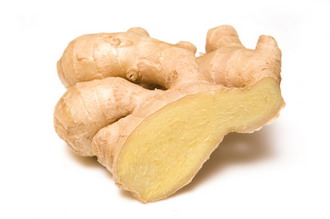
As I bit into a piece of my friend’s freshly baked apple pie, I got a shock – a large slice of ginger. Not a bad shock – just an unexpected shock. When I think of apple pie, mostly I think of cinnamon – and there was cinnamon in this pie. The ginger was unexpected – and thrilling. It was novel, and it complemented the apples, and it was a fresh taste.
I’ve always loved ginger. When I was a little kid, it was ginger ale that would settle a troubled tummy. As I grew older, I learned about ginger beer, ginger tea, ginger pickles, ginger candy and ginger in Chinese foods and Indian foods. It’s always been a welcome taste to me.
My Chinese friend also tells me how healthy it is for me. I used to make my tea with powdered ginger; she taught me to sliver or grate fresh ginger for my tea.
Today, inspired by that slice of ginger in my friend’s apple pie, I decided to see what I could find on the health benefits of ginger. Ginger has a healing reputation in so many cultures – you would think there must be something to it.
There is a LOT of information out there. Most of what I read, I would be afraid to print here, afraid it might lead you to believe ginger can do more than it really can. Finally, I ended up at my old reliable friend Wikipedia, where I found more balance. Here is what I found about ginger, it’s uses, and health benefits – and warnings.
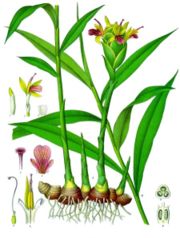
Regional uses
In Western cuisine, ginger is traditionally restricted to sweet foods, such as ginger ale, gingerbread, ginger snaps, ginger cake and ginger biscuits. A ginger-flavored liqueur called Canton is produced in Jarnac, France. Green ginger wine is a ginger flavored wine produced in the United Kingdom, traditionally sold in a green glass bottle. Ginger is also used as a spice added to hot coffee and tea.
In Arabic, ginger is called Zanjabil and in some parts of the Middle East ginger powder is used as a spice for coffee.
In India, ginger is called Aadu in Gujarati, “Shunti” in Kannada language[Karnataka], Allam in Telugu, Inji in Tamil and Malayalam, Alay in Marathi, “Aduwa” in Nepali, and Adrak in Hindi and Urdu. Fresh ginger is one of the main spices used for making pulse and lentil curries and other vegetable preparations.
It is used fresh to spice tea especially in winter. Also, ginger powder is used in certain food preparations that are made particularly for expecting women and feeding mothers, the most popular one being Katlu which is a mixture of gum resin, ghee, nuts and sugar.
In south India, ginger is used in the production of a candy called Inji-murappa (“ginger candy” from Tamil). This candy is mostly sold by vendors to bus passengers in bus stops and in small tea shops as a locally produced item. Candied or crystallized ginger (ginger cured with sugar) is also very famous around these parts. Additionally, in Tamil Nadu, especially in the Tanjore belt, a variety of ginger which is less spicy is used when tender to make fresh pickle with the combination of lemon juice or vinegar, salt and tender green chillies. This kind of pickle was generally made before the invention of refrigeration and stored for a maximum of 4-5 days. The pickle gains a mature flavor when the juices cook the ginger over the first 24 hours. Ginger is also added as a flavoring in tea.
In Japan, ginger is pickled to make beni shoga and gari or grated and used raw on tofu or noodles. It is also made into a candy called shoga no satozuke.
In Burma, ginger is used in a salad dish called gyin-tho, which consists of shredded ginger preserved in oil, and a variety of nuts and seeds.
Indonesia has a famous beverage that called Wedang Jahe, which is made from ginger and palm sugar; Indonesians also use ground ginger root, called jahe or djahe, as a frequent ingredient in local recipes.
In traditional Korean kimchi, ginger is finely minced and added to the ingredients of the spicy paste just before the fermenting process.
In South East Asia, the flower of a the Torch ginger (Etlingera eliator) is used in cooking. The unopened flower is known in the Malay language as Bunga Kantan, and is used in salads and also as garnish for sour-savoury soups, like Assam Laksa.
In the Ivory Coast, ginger is ground and mixed with orange, pineapple and lemon to produce a juice called Nyamanku.
In China, sliced or whole ginger root is often paired with savory dishes, such as fish. However, candied ginger is sometimes a component of Chinese candy boxes, and an herbal tea can also be prepared from ginger.
Medical uses
The medical form of ginger historically was called “Jamaica ginger”; it was classified as a stimulant and carminative, and used frequently for dyspepsia and colic. It was also frequently employed to disguise the taste of medicines.
Ginger is on the FDA’s ‘generally recognized as safe’ list, though it does interact with some medications, including warfarin. Ginger is contraindicated in people suffering from gallstones as the herb promotes the release of bile from the gallbladder.[4] Ginger may also decrease joint pain from arthritis, though studies on this have been inconsistent, and may have blood thinning and cholesterol lowering properties that may make it useful for treating heart disease.[5]
The characteristic odor and flavor of ginger root is caused by a mixture of zingerone, shoagoles and gingerols, volatile oils that compose about one to three percent of the weight of fresh ginger. In laboratory animals, the gingerols increase the motility of the gastrointestinal tract and have analgesic, sedative, antipyretic and antibacterial properties.[6]
Diarrhea
Ginger compounds are active against a form of diarrhea which is the leading cause of infant death in developing countries. Zingerone is likely to be the active constituent against enterotoxigenic Escherichia coli heat-labile enterotoxin-induced diarrhea.[7]
Nausea
Ginger has been found effective by multiple studies for treating nausea caused by seasickness, morning sickness and chemotherapy,[8] though ginger was not found superior over a placebo for post-operative nausea.
Folk medicinal uses
There are a variety of uses suggested for ginger. Tea brewed from ginger is a folk remedy for colds. Three to four leaves of Tulsi taken along with a piece of Ginger on an empty stomach is an effective cure for congestion, cough and cold. Ginger ale and ginger beer have been recommended as “stomach settlers” for generations in countries where the beverages are made, and ginger water was commonly used to avoid heat cramps in the US. Ginger has also been historically used to treat inflammation which several scientific studies support, though one arthritis trial showed ginger to be no better than a placebo or ibuprofen.[5] Research on rats suggests that ginger may be useful for treating diabetes.[9][10]
Local uses
In the West, powdered dried ginger root is made into capsules and sold in pharmacies for medicinal use.
In the United States, ginger is generally recognized as safe by the Food and Drug Administration, though it is not approved for the treatment or cure of any disease and is sold as an unregulated dietary supplement
In India, ginger is applied as a paste to the temples to relieve headache and consumed when suffering from a cold,people use ginger for making tea, in food etc.
In Burma, ginger and a local sweetener made from palm tree juice (Htan nyat) are boiled together and taken to prevent the flu
In China, a drink made with sliced ginger cooked in sweetened water or a cola is used as a folk medicine for common cold* In Indonesia, a type of ginger known as Jahe is used as a herbal preparation to reduce fatigue, reducing “winds” in the blood, prevent and cure rheumatism and controlling poor dietary habits
In Democratic Republic of the Congo, ginger is crushed and mixed with mango-tree sap to make Tangawisi juice, which is considered as a universal panacea
In the Philippines a traditional health drink called “salabat” is made for consumption with breakfast by boiling chopped ginger and adding sugar and is considered good for sore throat.
Reactions
Allergic reactions to ginger generally result in a rash and though generally recognized as safe, ginger can cause heartburn, bloating, gas, belching and nausea, particularly if taken in powdered form. Unchewed fresh ginger may result in intestinal blockage, and individuals who have had ulcers, inflammatory bowel disease or blocked intestines may react badly to large quantities of fresh ginger.[11] Ginger can also adversely affect individuals with gallstones.[5][11] There are also suggestions that ginger may affect blood pressure, clotting, and heart rhythms.[11]
I am still fighting off the Kuwaiti change-of-seasons cold, the sore throat, the cough, feeling tired. I am about to fix myself a cup of ginger tea – a few thin slices of ginger, hot water, sweetened by a little Yemeni honey (my own idea for getting well). Whether it has genuine benefits for my health or not – it tastes good!
Q8Geek’s Sunset Panorama
Whoda thunk there were so many fabulous sunsets in Kuwait? These guys have found them! Here is q8Geek’s Panoramic entry:

Is that breathtaking or what?
Bu Yousef’s Awesome Q8 Sunsets
WOW. All I can say is WOW. I had no idea there were such gorgeous sunsets out there, and I love love love the photos you are posting and sending.
Bu Yousef linked several more sunset photos. I am betting few of you will be going back that far, and checking out the additions, so I grabbed them off his page and and posting them here, hoping you will go to Bu Yousef’s blog and here, too and see all the amazing photos he takes.
Meanwhile, The Great Kuwait Sunset Challenge goes on! Here are BuYousef’s further entries:

BuYousef's Mosque Sunset

BuYousef Sailing Sunset

BuYousef's Kuwait Skyline Sunset
Are they gorgeous or are they gorgeous? 🙂
Happy (Canadian) Thanksgiving
Tomorrow is the official Canadian Thanksgiving, although our Canadian friends have been partying and dining in splendor throughout the weekend. If you have any Canadian friends, be sure to greet them on their special holiday.
Wikipedia says:
Thanksgiving, or Thanksgiving Day (Canadian French: Action de grâce), is an annual one-day holiday to give thanks to God for the things one has at the close of the harvest season. The holiday is celebrated on the second Monday in October.
While the actual Thanksgiving holiday is on a Monday, Canadians might eat their Thanksgiving meal on any day of the three day weekend. Thanksgiving is often celebrated with family, it is also often a time for weekend getaways for couples to observe the autumn leaves, spend one last weekend at the cottage, or participate in various outdoor activities such as hiking, fishing, and hunting.
I saw several references to the Canadian Thanksgiving deriving from the American Thanksgiving, but Wikipedia says otherwise:
The history of Thanksgiving in Canada goes back to an explorer, Martin Frobisher, who had been trying to find a northern passage to the Orient. In the year 1578, he held a formal ceremony, in what is now the province of Newfoundland and Labrador, to give thanks for surviving the long journey.
This feast is considered by many to be the first Thanksgiving celebration in North America, although celebrating the harvest and giving thanks for a successful bounty of crops had been a long-standing tradition throughout North America by various First Nations and Native American groups. First Nations and Native Americans throughout the Americas, including the Pueblo, Cherokee, Cree and many others organized harvest festivals, ceremonial dances, and other celebrations of thanks for centuries before the arrival of Europeans in North America [2]. Frobisher was later knighted and had an inlet of the Atlantic Ocean in northern Canada named after him — Frobisher Bay.
At the same time, French settlers, having crossed the ocean and arrived in Canada with explorer Samuel de Champlain, also held huge feasts of thanks. They even formed ‘The Order of Good Cheer’ and gladly shared their food with their First Nations neighbours.
The centerpiece of the Canadian Thanksgiving is the turkey and stuffing, surrounded by dishes made of root vegetables and gourds – beets, turnips, pumpkin, squashes, etc.
Those Canadians with French roots add special dishes to the mix:
Tortiere (a fabulous meat pie)
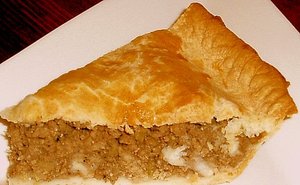
Maple Syrup Pie

I grabbed these photos from a fabulous Quebec blogger page where she has included recipes for the above, and for many other Canadian specialties. I wish One Whole Clove were still blogging. In the meanwhile, visit her pages for some delicious and out-of-the-ordinary delights.
Wishing all of our Canadian friends a delicious and delightful Thanksgiving, with many many blessings for which to be thankful, and for an abundant year to come.
Northpole Goodies
In an e-mail I received this week, a friend had a loooonnnnggggg list of Candy and Cookie recipes for the upcoming Christmas season. Purely out of curiousity, I clicked a few – and wow. These recipes are quick, delicious, and easy.
I don’t think there is a nutritious recipe in the whole website! All the recipes are for sweets! Here is just a partial selection from the Pies department:

I admit it, I am not that vulnerable to candy, but chocolate truffles are my downfall – and I am going to have to try their chocolate truffle recipe!
Here is the website: North Pole Kitchen Cookbook.
Have fun!
Wooo HOOOO MacaholiQ8 Sunsets
Just when I had given up hope of any more entries (you have until next Saturday) I got a set from Macaholiq8 that totally took my breath away. Wait ’till you see these!
He says the first is taken at a farm in Wafra, and the next three are taken at Marina Mall. GOOD eye, Mac!
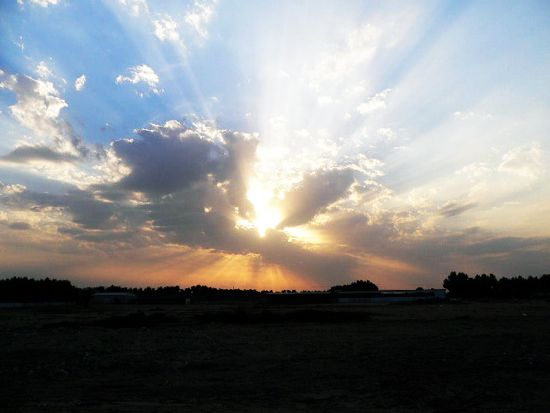
Wafra Sunset

Mac Marina Mall Sunset 1
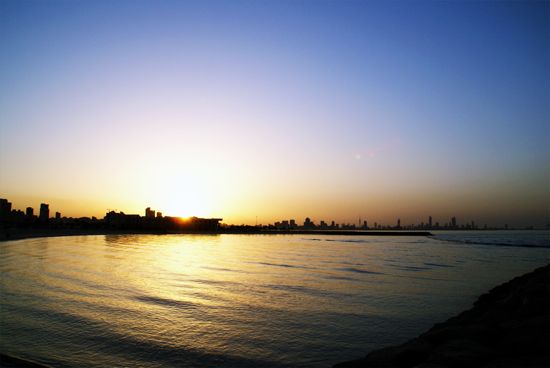
Mac Marina Mall Sunset 2
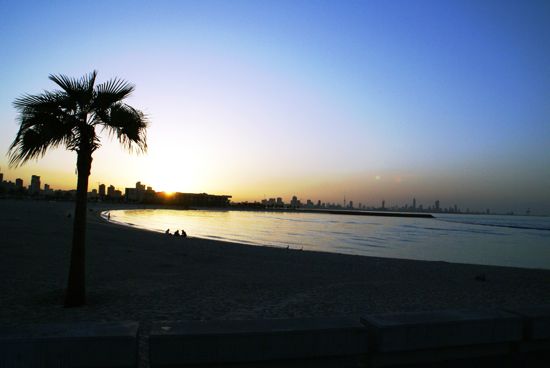
Mac Marina Mall Sunset 3
How about those sunsets, Great Q8 Sunset Fans? 🙂 (Thank you, Mac, for participating. And WOW.)

Pollution Invading Kuwait Hospitals
Thanks to long time Kuwaiti-blogger Hilaliya who alerts us to this article from Al Watan.
Americans put this same granite in their kitchens, and are now paying to have their beautiful granite countertops radon tested – and pulled out. Imagine preparing food on countertops that emit radiation! Imagine inviting patients into a hospital emitting radiation! Some granites emit more radiation than others – these need to be radon tested.
Pollution is invading our hospitals
Dr. Essam Abdullatif AlـFulaij
It seems that we need an uprising at the Ministry of Health. Patients as well as doctors and staff are at risk because of the use of inappropriate construction materials which cause pollution. Despite the warnings of some engineers, the officials at the ministry neglected the issue and concealed the facts so as not to get involved.
In August 2008, Amar magazine published a report by engineer Fotouh AlـAsfour in which she strenuously rang the alarm over what is happening at our hospitals. She submitted the report to two former health ministers and the Ministry of Health”s Engineering Department, members of the Municipal Council and the Parliament but no action was taken.
In her report, Fotouh said: “Having designed and supervised the construction of hospitals and medical centers for the health sector, I know the standards and specifications for materials used in hospitals to protect patients, visitors and hospital staff from microbial contamination. The project to renew hospitals, which began several years ago, has largely contributed to the deterioration of health conditions of both citizens and residents and the mortality rate has increased due to the high level of pollution caused by microbial contaminated materials that were used in the modernization of these hospitals in the absence of proper guidance and control.”
She added: “The use of granite in hospitals is not recommend at all as it is the second biggest cause of lung cancer after smoking, as reported by the American Lung Association. Granite radiates “radon gas” and its impact is worse when using the kind produced by China. It is really strange that granite has been used to decorate the entrance and most wings at the Hussein Makki Jumaa Center for Cancer Treatment.”
Engineer Fotouh stressed the importance of urgent attention saying: “In conclusion, the main reason behind writing this report is not criticism or accusation, but to attract officials” attention to urgently deal with the issue. Reform is not costly and should not be postponed, because the price of further delay is the loss of more lives. A specialized committee must be formed to follow up the issue and replace these materials with medical materials, especially in the Operating Rooms, Intensive Care Units and premature babies wards, causalities, and then in other awards.”
We hope that the report will be considered by officials to protect our patients and hospital staff. It”s time to stop these deadly dangers that are even affecting doctors. The lives of human beings are precious.
Last updated on Friday 10/10/2008
Great Kuwait Sunset Challenge Deadline
So here is how it is going to work. I am going to give you this one last weekend and one last week to come up with your sunset photo. Bu Yousef, AbdulAziz and Someday have shown us that yes, it is possible to find a sunset in Kuwait without streetlights and electrical wires, even a sunset over the water.
I haven’t seen a sunset behind a mosque, or behind one of the fabulous dhows or . . . Liberation Tower, Kuwait Towers. There are still a lot of options out there, and you have ONE WEEK. One week, today, I will post a series of photos narrowed down – some have already been disqualified, because although they were beautiful, they were not Kuwait.
YOU will vote. For one week, bloggers and commenters can vote. Together, we will choose the one we think wins the Great Kuwait Sunset Challenge.
(I already know what the next challenge is going to be. 🙂 )
Warning for American Expat Taxpayers
Many American expats working in the Gulf put off filing taxes because they are working so hard they don’t have the time or energy to pull it all together.
We received a bulletin from our tax preparer today saying the following:
IRS CRACKS DOWN ON LATE FILING EXPATS – To receive the FEI exclusion, the IRS requires that you file within 1 year from the original due date of the return (determined without regard to any extensions). The IRS has recently issued guidance to begin enforcing this long overlooked tax rule. If you have not filed your Expat tax returns for 2006 and earlier years, please contact us ASAP to discuss your options. Worse case scenario – if you owe taxes the IRS can disallow your FEI exclusion, even if you have earned it, thus making 100% of all of your earnings taxable without any benefit of the FEI exclusion. Working in a combat zone does not guarantee Expats any relief from the IRS.
Our tax preparer specializes in expat taxes. He has a thriving business, and really knows our unique situation.
Steven Palazzo, CPA
Palazzo & Co, CPA
PO Box 4634
Biloxi, MS 39535
228-396-8800 – Office
866-272-9224 – Toll Free
305-768-0483 – Fax
WWW.PALAZZOCPA.COM
spalazzo@palazzocpa.com
I publish this because the earned income exclusion is probably the best tax deduction most of us will ever have. You don’t want to lose the exclusion, and your hard earned money, by failing to file in a timely manner.
Recent Comments
intlxpatr on Oh Thank You, Amazon! Rivergirl on Oh Thank You, Amazon! intlxpatr on Give to Those Who Ask ExpatAlien on What Country am I Living … intlxpatr on Yellowstone: Old Faithful to C… Wikipedia Donate Button

Amazina


Early Voting in Florida


 Here There and Everywhere