The Power of Kindness to Change Lives
This week AdventureMan and I have been blessed, greatly blessed. We have met some wonderful people and heard some amazing things. Two stories in particular have shaken the earth for me.
“How It Happened for Me”
The first story is about a friend we met from the newest country on earth, South Sudan. A group of us were sitting together when one woman turned to this man from the South Sudan and asked “How did you find Jesus?”
This was not a religious gathering, so it is an unusual question on a social evening. But this quiet, modest man responded “I will tell you. It is a long story. It starts when I was only five months, not a baby, five months in my mother’s womb.”
He told us of a life with no security. His parents and family fled to the forest, and were on the run continually most of his life – until recently. He told of a life trying to find safe places, sometimes being separated from his parents.

He told of a priest who, when he and his brothers and sisters were very young, taught them to say “God bless Mother and God bless Father and God bless my brothers and sisters and watch over us always.” He was kind to the children, and taught them that God loves them, that God is kind. He said they did not know who this God was, but he and his brothers and sisters said this prayer every night, to keep his family safe. He said they learned other simple prayers. There would be rare times when someone would teach them a letter, or some numbers, drawing in the sand, or the floor of the forest, simple, quick lessons.
“So I don’t know all the stories you do,” he said. “I don’t even know the bible very well, we never had educated priests, just simple men who taught us simple prayers. Only later did we become more educated.”
As we listened, we had huge lumps in our throats. I could hear Jesus’ voice saying that we must believe as little children, and this man had the pure simple faith of a child, a memory from his earliest years, as he prayed for his family to be safe in a world where life was continual chaos and a struggle to survive.
“When I understood about God,” he went on, “there wasn’t even a church or a pastor-man who could baptize me; I had to believe for many years before I could become a Christian.”
As a footnote, he told us that somehow, most of his village managed to survive, helping one another. His entire family made it through, his parents are still alive. The village children little by little gained education, becoming doctors, lawyers, professionals of all kinds. His village now has a church, a simple church, not always staffed, but a church. The war is ended. For him, the simplicity of peace is all he ever wanted.
We will never forget his, and his story. We have met an extraordinary human being.
Today, we went to a lunch, invited by a friend, to raise funds for public education. LOL, this is what I used to do; I worked for an education foundation and raised money for public education. I love this kind of thing. I knew just what to expect – lots of success stories, stellar achievements, and a gentle pitch.
Whoa! Wrong! Darling kids – check. Recognition of important guests – check. Gentle pitch – no way! They got right to business; you will see this form, please take your pens RIGHT NOW and fill it out and give what you can, education funds seem to get cut more every year and we are trying to do more with less and less. Give NOW. CHECK!
The final speaker was a local businessman and patron-of-just-about-everything, a man who also brought baseball to Pensacola. He talked about his own public education. He talked about his speech impediment, and his deafness, he talked about his short stature and his inability to sit still and concentrate. He talked about teachers who identified him and instead of treating him as an obstacle, made him believe they were glad to have him in their class. He talked about teachers who gave him special assignments, who taught him math by having him calculate baseball averages. He knew their names, these saints who kept him in school, no matter how discouraged he might be.
He graduated with a 1.9 grade point, and had no intention of going to college, but ended up astonishing everyone by doing well on the ACT test and having a guidance counselor who found him just exactly the right environment where he could flourish on the college level.
Important people usually enjoy telling you the great things they have done. This man focused on his disabilities, his humiliations and his weaknesses, and how the kindness of educators had pulled him out of a very dark place and set him on the road for the success he is today.
I am willing to bet that the education foundation gained a lot of donors today. We were caught by surprise. We can defend against the powerful and successful, but when the heart speaks from vulnerability and failure, our hearts respond. This man is a success, but he gives credit to those who looked at him with caring eyes, with caring hearts, who lifted him and helped him on his way to the incredible (wealthy) success he is today, with a flourishing business and innumerable local charities who are grateful for his support.
What a week! And it’s only Tuesday! I wonder what the rest of the week will bring?
Election Day Fun
No more same old, same old. Today, Pensacola had a group of up-and-coming leaders from twelve African countries in town studying Grassroots Democracy and the US Elections. There is nothing like questions from non-US citizens to keep you on your toes and even give you a good laugh as you try to explain the eccentricities of our electoral system. This group, brought to Pensacola by the Gulf Coast Citizens Diplomacy Council, asked some great, probing questions.

Their questions were thoughtful and open-ended. At the end of the session, one delegate from Uganda summarized his observation that although we are deeply polarized in this election, we have confidence in our civil servants and the bureaucracy. While the leaders at the top may change, and while policies MIGHT change, they have to go through processes to change. It’s not like one leader or the other comes in and overnight, everything is changed, everything is done a different way.
AdventureMan says he loves that we live in a country where power is transferred peacefully – no coup. No revolution. We might have ugly elections, but they are peaceful, and when one triumphs, thousands of people supporting the losing side are not killed.
Had not thought about it that way. 🙂
These visitors are in Pensacola at just the right time for them to observe our biggest election. They have questions about everything, from the signs in our front yards to voter fraud and deceptive wording on proposed amendments. They talked today with the Supervisor of Elections, with elected officials, and with normal, everyday citizens. Tonight they will attend some of the parties around town, as the votes are counted. It is a very special experience for us, to see ourselves as others might see us, as we hold our elections.
Doc by Mary Doria Russell

Mary Doria Russell is one of my favorite authors because she tackles large topics fearlessly, humorously and with great compassion. I first read her many years ago in a novel called Children Of God; you can read it stand-alone as I did, but I should have read The Sparrow, which preceded it. That one is about the Jesuits who take the Gospel into outer space, and has some laugh-out-loud moments in the midst of utter hopelessness. Yes. She’s that kind of author, my kind of woman.
Here is the ending Question and Answer from an interview at the back of Doc, an interview with John Connelly:
Q: Authors are often asked what advice they’d give young writers. I would like to ask you a similar question: What do you think the worst advice a young writer could get is?
Mary Doria Russell: Major in English. Join a writer’s group. Blog.
My advice is to major in and do something REAL. Have an actual 3-D life of your own. And please, shut up about it until you’ve got something genuinely wise or useful or thoughtful to share. Then again, I’m a cranky old lady! What the hell do I know?
Reading a book about legendary heroes of the Old West is not something I looked forward to, so the book languished on my “to read” pile until one day I picked it up just because it is written by Mary Doria Russell, and because she has knocked my socks off with every book I’ve read by her.
It starts off slow, summing up the early genteel years of John Henry Holliday in Georgia, just prior to, during and after the War Between the States. At 22 he is diagnosed with acute tuberculosis, and is advised that a drier climate out West might provide him with a more comfortable life, as short as it was likely to be. He had trained as a dentist, so he had a skill. Times were hard, and while he was a very very good dentist, it was a good thing he also had skills with card playing, to supplement his income when people didn’t have the money to go to the dentist.
Don’t skip over the early years, because what happens in the early years resonates into his years living in the West. The majority of the book takes place in Dodge, a border town where laws are made over a card game and by the men who will profit from them. Lives are hard, and short. While it is surely the wild west, the focus is on the relationships Doc builds – Wyatt and Morgan Earp (all the Earp brothers), Bat Masterson, the gals . . . here is where Russell’s artistry shines; the cardboard figures begin to become real people. We start to like one or two, admire another, despise one more.
Here’s what I love about Mary Doria Russell – without being at all preachy, she makes you stop and think about some of the values you hold most dear. Once you get west, 80% of the women featured in the book are prostitutes. Most of the characters drink heavily, and routinely use drugs which are today restricted to prescriptions. There is corruption, and murder, and arson, and abortion, and contraception, and adultery, and there is no one character who is purely good or purely evil, they are all complicated, just as we are. She can lead you to dislike a character, who at just the right moment knows just the right thing to say, and suddenly, you see that character differently, because another facet of his or her character has been revealed.
In the questions at the back of the book, we are asked if we were to meet Doc Holliday, would we like him? I had to ask the question the other way around – if I were to meet Doc Holliday, how would he perceive me? I found myself thinking outside the box, found myself thinking that if I knew my life were going to be very very short, would I want to hang around with normal people, dull, predictable people? Maybe people who look better on the outside than they are, or think more highly of themselves than they ought? Doc Holliday hung around with lawmen and gamblers and prostitutes and bartenders; his patients were law-abiding church-going citizens. Who gave greater color and meaning to his life? Who were more likely to be down-to-earth and practical and unpretentious?
There is an absolutely delightful segment about a Jesuit priest from an old Hungarian aristocratic family who finds himself riding out to visit all the small Catholic Indian parishes on a donkey, replacing a highly popular priest who is very sick; he is teased and mocked and treated with disrespect. One night, cold and wet, covered with dirt and filth in the desert, he has an epiphany that changes his life. Mary Doria Russell books have these luminous moments, worth reading the entire book for, and which will bring a smile of memory to your face long after you have finished reading the book.
Fairbanks, Alaska or Brazil

I would have loved to be able to actually watch and see when the actual 2 millionth visitor visited, but as it does, life got in the way. There were things that needed doing, people that needed time and attention, and I by the time I got back to check, I had already gone over.
Using StatCounter, I was able to go back 78 people and figure out that it was either the visitor from Brasil or a visitor from Fairbanks, Alaska.
A couple times, I have thought I would quit blogging, like when I hit 5 years, then six, or maybe when I hit 2 million hits . . . Now, I don’t know. There are times when it is hard to get inspired, hard to think of anything I might have to say that you might find interesting, too.
I have a little trick. When I am stumped, I think of our aqua aerobics group in Doha, Qatar. We weren’t very serious, but we were very committed. We had to show up because the others counted on us. Our motto was “any exercise is better than no exercise” and on very cold days in January, exercise counted as sitting in the hot tub and kicking. We talked to pass the time, and not to think about exercising. We talked about books we had read, dishes we had cooked, movies we have seen, and events in the news. So when I can’t think of anything much to say, I think about my friends, the Aqua Babes (LOL!) and I can usually come up with something.
A long time ago, in Kuwait, there was a blogger called (something) Red, I followed, and she thought about quitting and asked us to give her reasons why or why not. I remember writing that we blog because it’s what we do, we write because it is something in us that needs to be written. Until I wrote that to her, I didn’t even know that I thought that. I guess that is why I keep on, because there is something in me that needs to do what I am doing, and when I don’t need to do it, I will stop.
Discover Relaxing Riyadh
I still get ads from Jazeera airlines, although I no longer live in Kuwait and have asked them for three years to take my name off their mailing list. I have unsuccessfully unsubscribed like fifteen times; now I just have it all sent to spam.
But today, as I was looking over the spam to be sure I wasn’t emptying my box of anything important, I saw this:
Discover Relaxing Riyadh – استمتع بعطلتك في الرياض

LOL – Relaxing Riyadh. A group of the ad guys must have been rolling on the floor when they created that one . . . Or maybe they meant that apart from the spine-tingling traffic, there isn’t a whole lot going on in Riyadh, especially on the social scene . . .
A Butterfly is Born
You can always tell when they are fresh out of the chrysalis; they are slower, they sit longer in one place, fanning their wings as they stretch and dry. They flit just a little, looking for something good to eat.
If you want to have butterflies, you want to have milkweed, to nourish the caterpillars, and then guara, hot lips, golden drop, pentas, etc to nourish the newly emerged butterfly.

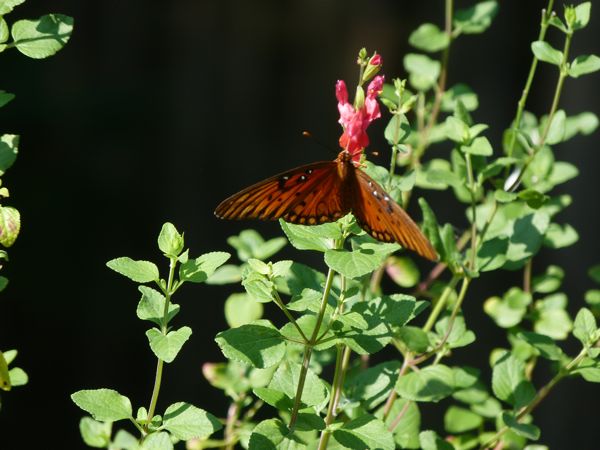

I only know all this because AdventureMan is growing all these wonderful plants which attract Monarchs, Sulphers, Buckeyes, Gulf Fritillaries, hummingbirds, bees and more birds. 🙂
UPDATE: LOL, AdventureMan came to me and told me I had to change things to make them accurate, especially if I was citing him.
Happy Boy Swimming
“How did it go?” AdventureMan asked as I came in. He had a dental appointment and couldn’t take the Happy Little Boy to his swimming lesson, so I had taken him.
“It’s probably one of the best days of my life,” I told him. “Happy Little Boy had so much fun. He was really swimming on his own, using the ring, even floating on his back. He was really happy.”
A year ago, he was more fearful and clingy. He had his good days and bad days at the pool, mostly good, thanks to some really good teachers. To see him so happy, so confident, so joyful – now that is a really good day. I feel so blessed to have been a part of it.
This morning was his last parent-child class; now he will be joining the bigger kids swimming classes, where we take him and he and the other kids work directly with the teacher without us in the pool . . . so this is the end of an era.
My Mother was asking for some recent shots, so this morning AdventureMan took him in, and I shot some photos. These are for you, Mom 🙂

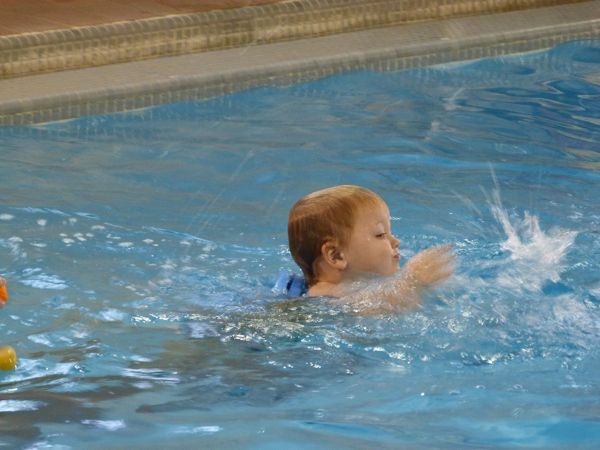

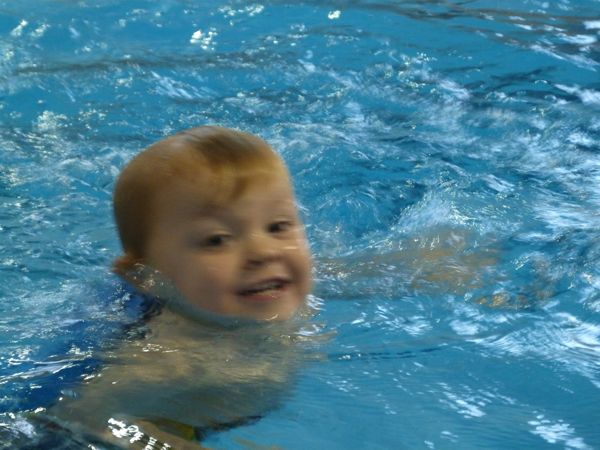


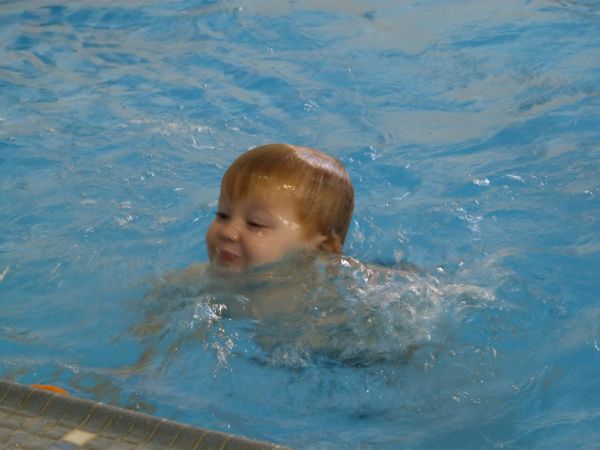
We have strong feelings about children learning as young as possible how to be safe in the water. As one of our swimming buddies said, “Florida is surrounded by water.” They had better know the rudiments of water safety. Thank goodness for the YMCA, Miss Donna and Miss Bonnie.
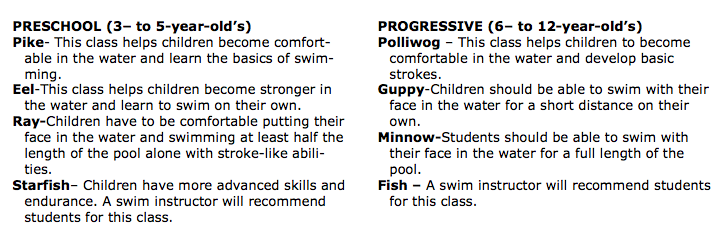
(Photos courtesy of adoring grandmother, LOL!)
Leopard Kill; I Wish This Were My Video
I found this on AOL News this morning; it’s not mine. I wish it were! I am so impressed. Right place, right time and WOW.
Watch this well-hidden leopard fiercely attack an unsuspecting impala. Cowering low amidst the rocks, the leopard silently waits as a herd of impalas comes racing across the landscape. Right as the impala jumps over it, the leopard catches it mid-air bringing it down to Earth.
The video of this event was caught on camera by Martha van Rensburg who was on a photographic safari in South Africa at MalaMala Game Reserve with her husband, Marius van Tonder, wildlife photographer Greg du Toit, and guest Ian Weatherburn.
“It happened so fast but I was lucky enough to get this video and a still photo of the leopard and impala in the air,” Van Rensburg told Grind TV.
According to the American Wildlife Foundation, leopards are known for being secretive, elusive, and shrewd, having the ability to kill prey much larger than themselves. They are currently listed as “near threatened” by the International Union for Conservation of Nature.
Dauphin Island and BBQ!
We got up early, remember? We worked up an appetite walking through the bird sanctuary and exploring the park and environs. One last stop to see those butterflies and we really need to get something to eat.
Fortunately, we passed just the place on the way in . . . Dauphin Island BBQ 🙂

My friends, this is not a fancy place. There is no indoor seating. You order at a window, and grab your plastic utensils, and then you wait for your name to be called. You can fill little cups with condiments, including, of course, Tony Chachere’s special spices, and then you sit at a picnic table and eat out of a styrofoam container. This may not be your style. We like all kinds of styles 🙂


By the time we decided, cars loaded with grandparents, children, lots and lots of children, parents, aunts and uncles, cars and trucks and big RV’s started pulling up and people crowding into Dauphin Island BBQ eager to eat. Clientele lining up:

We got there just in time. We got a good picnic table in the shade. I tried to order oysters, but since Isaac, oysters have been hard to come by. I had fried fish. It was hot and it was delicious.

AdventureMan ordered the pulled pork and said it was delicious:

Not elegant, but tasty, filling, and delicious. As you drive onto Dauphin Island, turn left and watch for this . . . umm . . .lighthouse. Dauphin Island BBQ is located just past this lighthouse-looking building.

If you want to stay on Dauphin Island, there is one Motel, several condominiums, and many rentals. One place to look for beach rentals is Trip Advisor. Trip Advisor also has a few hotel/B&B listings here, but be sure to tell TA to arrange by distance, or you may end up in Gulf Shores or Fairhope, LOL!
The one motel, Gulf Breeze Motel, is nothing fancy, but it is the best there is. Reviewers on Trip Advisor say ‘it’s not the Ritz’ but the prices are reasonable, and people seem to like it.
Dauphin Island: Fort Gaines
Imagine you are a retired military man who likes birds and butterflies and gardens and photography and military history . . .
Now, imagine you can find all of the above on one island. Dauphin Island is a paradise for AdventureMan.
Imagine you are a woman who loves road trips, beautiful beaches, taking pictures, taking walks, beautiful scenery, especially beaches and wading birds . . .
And that is also all on the same island.
We can’t wait to go back to Dauphin Island. Birding season is just kicking up again, after the heat of the summer and the threat of hurricane season. The birds migrating south have their final rest on Dauphin Island, before heading out across the big Gulf of Mexico to warmer climates for the winter.
And there’s an old fort, too!
These forts were built to protect the American southern coast from a variety of enemies, including at one time, our fellow Americans. They are built solidly, with great big cannons.
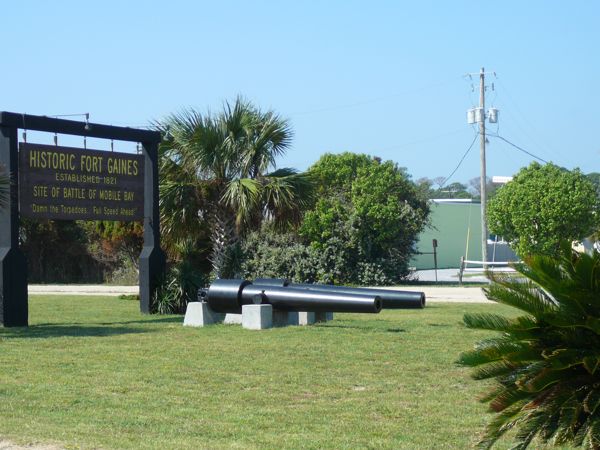


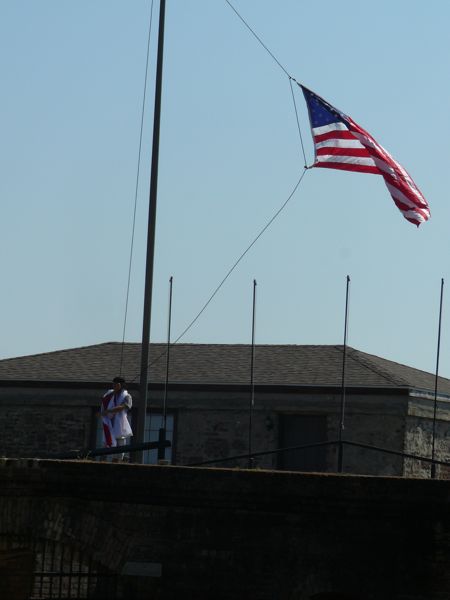


So what is the fort defending against now?


There is another way to get to Dauphin Island from Pensacola, if you get there at the right time and there isn’t much of a line, because this little ferry can’t take a lot of cars. It goes to Fort Morgan, still in Alabama, but across Mobile Bay:
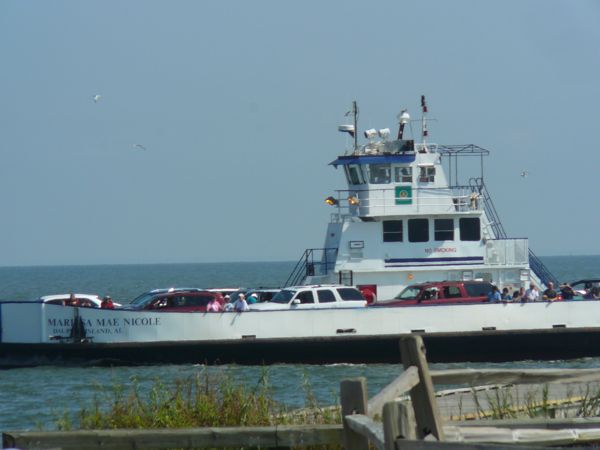
AdventureMan says the forts are built in the style influenced by Marc René, marquis de Montalembert, who is said to want to do for defense what Vauban had done for the attack.
Recent Comments
intlxpatr on Shampoo Ginger tigerbutterya0c5ff1d… on Shampoo Ginger intlxpatr on British Soldier Kidnapped, Esc… John on British Soldier Kidnapped, Esc… intlxpatr on British Soldier Kidnapped, Esc… Wikipedia Donate Button

Amazina


Early Voting in Florida


