MERS Virus Found to be Widespread
Thank you, John Mueller, for this fascinating article from Science NOW:
Middle Eastern Virus More Widespread Than Thought
 Bernard Gagnon/Wikimedia CommonsTrail of infection. Scientists have found MERS virus in camels from Sudan and Ethiopia, suggesting the virus is more widespread than previously thought.
It’s called Middle East respiratory syndrome, or MERS, after the region where almost all the patients have been reported. But the name may turn out to be a misnomer. A new study has found the virus in camels from Sudan and Ethiopia, suggesting that Africa, too, harbors the pathogen. That means MERS may sicken more humans than previously thought—and perhaps be more likely to trigger a pandemic.
MERS has sickened 183 people and killed 80, most of them in Saudi Arabia. A couple of cases have occurred in countries outside the region, such as France and the United Kingdom, but those clusters all started with a patient who had traveled to the Middle East before falling ill.
Scientists have uncovered more and more evidence implicating camels in the spread of the disease. They found that a large percentage of camels in the Middle East have antibodies against MERS in their blood, while other animals, such as goats and sheep, do not. Researchers have also isolated MERS virus RNA from nose swabs of camels in Qatar, and earlier this week, they showed that the virus has circulated in Saudi Arabian camels for at least 2 decades.
Malik Peiris, an infectious disease researcher at the University of Hong Kong, and colleagues expanded the search to Africa. In a paper published last year, they showed that camels in Egypt carried antibodies against MERS. For the new study, they took samples from four abattoirs around Egypt; again they found antibodies against MERS in the blood of 48 out of 52 camels they tested. But the most interesting results came from taking nose swabs from 110 camels: They found MERS RNA in four animals that had been shipped in from Sudan and Ethiopia.
Peiris cautions that it is unclear whether the infected camels picked up the virus in Sudan and Ethiopia or on their final journey in Egypt. Abattoirs could help spread MERS just like live poultry markets do for influenza, he says. “You cannot point the finger exactly at where those viruses came from,” he says. “But I would be very surprised if you do not find the virus in large parts of Africa.”
If so, that changes the picture of MERS considerably. No human MERS cases have been reported from Egypt or anywhere else in Africa, but if camels are infected, they may well occur, says Marion Koopmans, an infectious disease researcher at Erasmus MC in Rotterdam, the Netherlands. “It would be important to look systematically into that,” she writes in an e-mail. “Health authorities really need to test patients with severe pneumonia all across Africa for MERS,” Peiris says.
The researchers were able to sequence the virus of one of the camels almost completely, and it is more than 99% identical with viruses found in people. “I would be very surprised if this virus cannot infect humans,” says Christian Drosten, a virologist at the University of Bonn in Germany. But the virus also shows a few intriguing differences from known camel samples, he says. “We have to analyze this carefully in the next few days, but it looks like this sequence broadens the viral repertoire found in camels,” he says. If the viruses found in camels show more genetic variation than those isolated from humans, that is further strong evidence that camels are infecting humans and not the other way around.
Anthony Mounts, the point person for MERS at the World Health Organization in Geneva, Switzerland, says that it is very likely that human MERS cases occur in Africa. “Wherever we find [infected] camels, there is a good chance we’ll find [human] cases if we look closely,” he says. And humans may be exposed to camels in Africa much more often than in the Middle East: There were about 260,000 camels in Saudi Arabia in 2012, but almost a million in Ethiopia and 4.8 million in Sudan, according to the U.N. Food and Agriculture Organization. The more human cases there are, the higher the risk that the virus will one day learn how to become easily transmissible between people, which could set off a pandemic.
The researchers also looked at the blood of 179 people working at the camel abattoirs for antibodies against MERS virus, but found none. That shows that the virus is only rarely successful in infecting human beings, Peiris says. “What we need to find out now is the reason for these rare transmissions.”
LOL Nigerian Scam
(Reminder, I print these as a warning to others. If you want to mess with these scammers, you do so at your own risk 🙂 )
From: jn48@gmail.com
Attn: Beneficiary,
Re:Your ATM Card US$10.5M is Ready
You Are Hereby Notified That Your Inheritance/Contract Payment Of 10.5m Dollars United States Has Been Approved To Be Made To You Through our ATM Visa Debit Card Unit. You Are Advised To Re-Confirm To Us The Below Information Or Call Me Immediately For More Details: +22961027320
FULL NAME:
DELIVERY ADDRESS:
PHONE NUMBER:
COUNTRY:
OCCUPATION:
SEX:
AGE:
Regards,
Dr Fred Ibe,
Director,ATM Payment
+22961027320
Giving Birth to Gun in the South Sudan
This is the newest blog entry from my friend Manyang David Mayar in the South Sudan He visited Pensacola as part of an IVLP program with our Gulf Coast Citizens Diplomacy Council:

Pregnant women fleeing the fighting in Jonglei state, South Sudan.
I was in the town of Bor when fighting broke out last month in South Sudan. I managed to escape the town despite being shot in the arm. But many other people had a far tougher time – people like Nyiel Magot, nine months pregnant and faced with the awful choice of staying in Bor’s hospital or fleeing into the bush.
Against her doctors’ advice, Nyiel decided to escape the immediate danger, and with her five children, took a narrow path out of town which was packed with people also heading to safety.
But, she told me, with every step she took, she grew weaker and more and more people overtook her.
“I was really tired and the pain became really unbearable,” Nyiel said. “I knew the time had come for me to give birth and I had to get out of Bor immediately to escape the attackers.”
Giving birth in the bush
Later that evening, the pain finally forced Nyiel to stop. Instead of a hospital ward, she found an abandoned grass-thatched house.
Luckily, there was a traditional birth attendant nearby who used her bare hands to help Nyiel deliver a healthy baby boy.
But the cold nights and hot days of December in South Sudan soon started to take their toll on the new born and reports of an imminent rebel attack forced Nyiel and her family to leave their hideout.
They walked for days until they crossed the River Nile and came to a large camp for displaced people in Awerial. And then her baby caught diarrhoea and started to vomit.
He was rushed to a hospital in Juba where, after days of treatment, he recovered.
A child of conflict
It was in the hospital in Juba that I met Nyiel and heard her story – and also learned the name of her little baby.
Nyiel had called him Matuor, the Dinka word for ‘gun’, because he was born amid gunfire.
As the conflict continues in South Sudan, I fear he won’t be the last baby born in the bush with such a name.
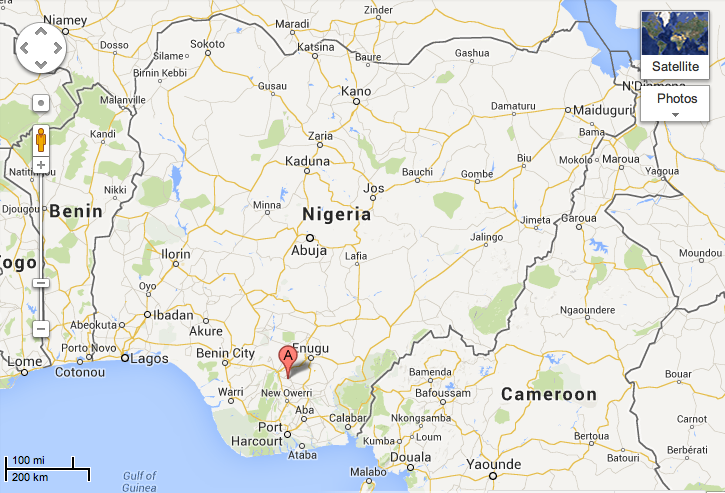
Where is Amichi, Nigeria?
Today the church prays for the diocese of Amichi, in Nigeria:
And we raise our prayers with many for our friend in Texas, hospitalized with a severe bacterial infection.
Manyang: Our Friend in South Sudan
God willing, in life, people cross paths and share their stories. I told you about Manyang, how he visited us near Christmas in 2012 and how his story changed our lives. Now, when we hear stories of the South Sudan, it is immediate, it is real, because we know the story of a young boy grown to be a very fine man, who survived the chaos and horrors of the janjaweed invasions and tribal conflicts before his country attained nationhood.
I recently wrote to Manyang, hoping he is still alive. It was that basic. I asked him, if he could, just to let us know he was alive, and that whether he could respond or not, our prayers were with him, for him, his family and his country.
This morning, by the grace of God, I received this wonderful response. Please, join your prayers with ours for Manyang/David, and his country, South Sudan, for peace, safety and prosperity, for justice and equitable distribution of resources.
I am glad to hear from you again. I have been talking of the nice people I was able to meet in Pensacola. Whenever, I talk about these people you are the first people I talk about. I still remember the nice dinner we had in your house.
I think God touched you to worry about my safety. You might have heard from news report the critical condition my country – South Sudan is going through. It is just like the story of my childhood to many other children now.
A political row in the ruling party here, turned violent in Juba, the capital of this country on December 15, 2013. Heavy artillary were fired and sporadic gunfire broke out in most part of the city. it was a genesis of another war which is now going on. Thousands of people were killed only in Juba.
I was in Bor, the captal of Jonglei State, about 125 miles north of Juba. The violent in Juba quickly spread to us in Bor and I was forced to flee to the bush with my family and the rest of the civil population as the town was quickly seized by anti-government forces. I carried my back on my head, walk long distant and drink dirty water again and eat grains when I was in the bush for seven days.
(This is a screenshot from Google Maps; Bor is the “A” north of Juba)

(These are photos from Manyang’s BBC blog, referenced below. Please go there to read more in his own words about the terrors of the South Sudan chaos.)

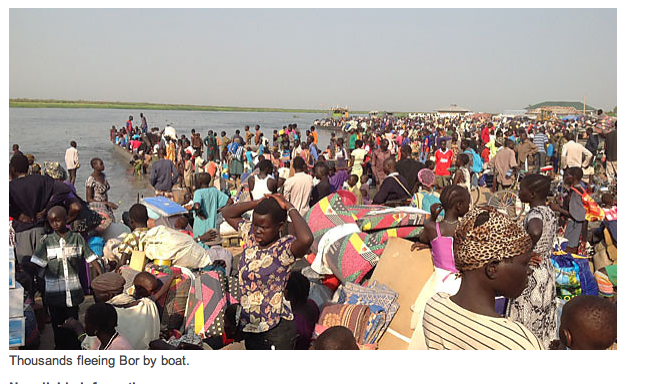
The government forces recaptured the town and we returned to the town. Many more people were killed and bodies were lying everywhere and there was a terrible smell. The rebels killed everyone they found in the town including old women, lame, deaf and all vulnerable people. And I was wounded in the upper left arm by a stray bullet of soldiers celebrating. The wound has healed and I am fine now.
It did not take long for the rebel to recaptured the town of goverment forces for a second time. And I was force to flee, this time cross the River Nile by boat to a makeshift camp across the river. This was where I got an access to go to Juba which was abit calm at the time. I am now in Juba staying in fear, not knowing where else to go.
God was speaking to you those conditions I was in in December and part of January. We spent Christmas and New Year Day on the run. I am glad for your prayers were able to lead me out of that mess. I still have hope that your prayers will continue to press political leaders to reach a peaceful solution to this crisis.
I have a live blog where I am sharing my bush experiences. You may have a look.
http://www.bbc.co.uk/blogs/bbcmediaaction/posts/Pens-down-in-South-Sudan
Share my message with the rest of the great people of Pensacola. My heart is always there with you.
Blessings
Manyang
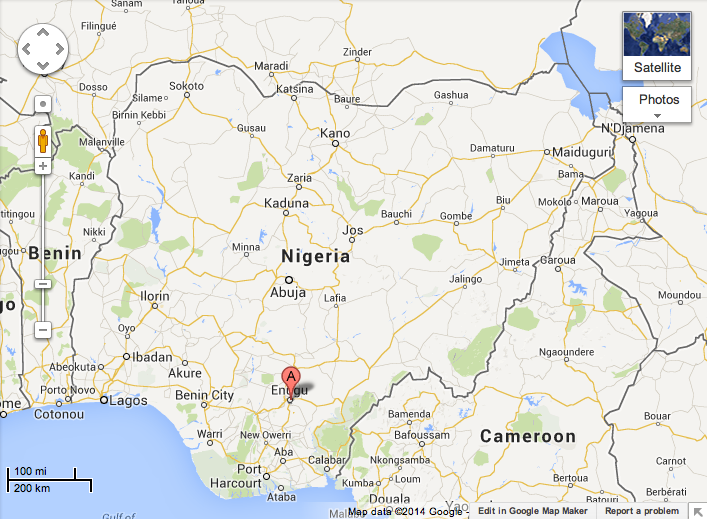
Where is Enugu, Nigeria?
Today the church prays for Enugu, in Nigeria:
As you pray for the well-being of Enugu, would you also pray for all those places where religion is a cause for strife? Syria, northern Nigeria, the newest country in the world, South Sudan? To me, it is just heartbreaking that those who should be living in peace, working together, are in armed bloody conflict against one another.
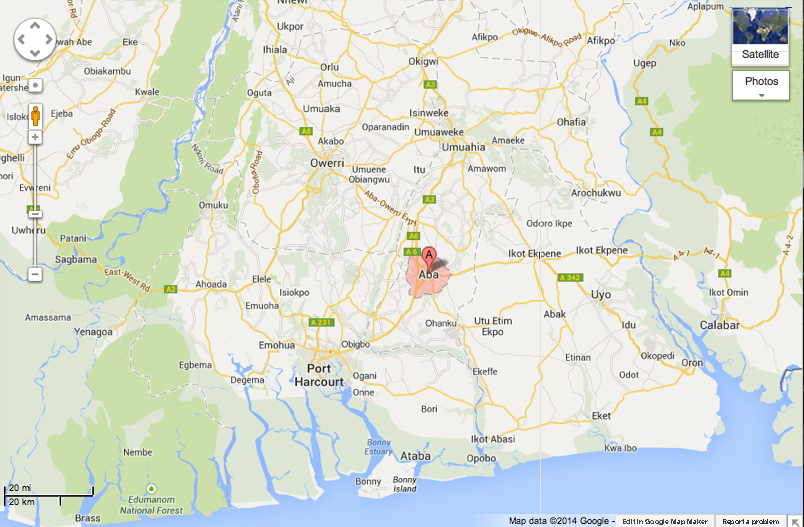
Where is the Diocese of Yei, Central Equatoria, Sudán do Sur – South Sudan?
We don’t always see the timeliness of our prayers, but as we pray for Yei, in the South Sudan, we pray with increased vigor, as the country faces unrest and internal turbulence.

We pray for our friend David, and all the people of South Sudan who have suffered so much for so long. The Lord has blessed them with oil, let them use their resources wisely, for the greater good, and may they enjoy the wealth of their nation in peace with one another.
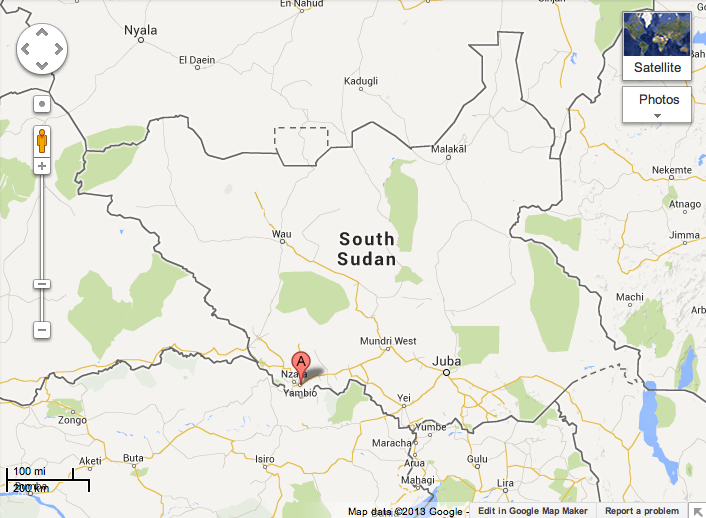
David, and Where is Yambio, South Sudan?
A year ago, we had an extraordinary experience. We often entertain delegates visiting from other countries, and this time we had three African journalists, and, strictly by chance, they all turned out to be Christian. Most of our gatherings are strictly ecumenical, but these were joyful, praying Christians, and the evening took a turn we never anticipated.
“So how did you find Jesus?” one woman asked David, from the newest country in the world, South Sudan. Inside, I was shocked, and when I am shocked, my tendency is to laugh, I don’t know why, it is just the way I am wired. Every culture is so different. In the South, people might ask that of one another, particularly if you worship in a fundamental sect, but our sect is more formal, and to inquire into another’s spiritual life can be perceived as intrusive.
David, however, was not taken aback. “It’s a long story,” he said, and we all settled into comfortable chairs to listen better. It was Christmas, the decorations were up, the lights all twinkling and we had eaten. A good time for a story.
It was a long story. It started with a little boy in a happy family, who one day was told to run! Run! Run into the forest and hide! The riders were coming! His family grabbed a very few things and ran.
His family ran for years. His family ran into forests, across borders, into dry arid spaces. Sometimes some of the children would get separated from their parents for a while, but they would keep asking, and eventually meet up again, only to face separation again. Their whole lives were running, from the Janjaween, from border police, from robbers.
At one point, he and a brother stayed in a church, and a priest taught them about Jesus. Simple stories, simple songs, and he drew letters and numbers in the dirt – that was his early schooling. It was a haven of peace for him.
Many years later, the family was reunited in their village in the new country of South Sudan. Miraculously, every member of his family survived, indeed, most of his village survived. They had maintained lines of communication through all those years of running and separation, and were so thankful. Most of all, now, they were thankful – they had a church in their village. David had learned to love learning, and had completed his education and had found a wonderful job.
“I don’t know the book like you do,” he told us, “I only know it like a little child sitting at the feet of that priest, but I am learning.”
I can’t help but think that David knows more than he thinks. David holds his belief in Jesus like a child, simple and direct. His testimony is powerful and unforgettable. I am in awe, even a year later, of his story and testimony.
Today the church prays for the diocese of Yambio, in the South Sudan:
Where is Umzimvubu, South Africa?
Today we pray for the Diocese of Umzimvubu, in South Africa:

Matthew 5: 44-46
|
Recent Comments
ExpatAlien on What Country am I Living … intlxpatr on Yellowstone: Old Faithful to C… Michelle on Yellowstone: Old Faithful to C… Cathy on No Grown-Ups in Charge intlxpatr on Waiting for Snow Wikipedia Donate Button

Amazina


Early Voting in Florida


 Here There and Everywhere