God Speaking – Are You Listening?
Last week I read an article about a correlation between having more friends and social connections and living a long life. Part of me thought “but what if you are sort of stuck in one place and some of those relationships are toxic?” Doesn’t the nature of the relationship matter? But the study didn’t comment on unhealthy relationships, just that having long standing relationships with people you could go to and trust was a healthy thing.
Then I started to feel a little sad, thinking how many times I have moved and how hard it is to build long-lasting healthy relationships. I thought of how little I participate with the social networking sites, and how my preference for privacy impacts on my socializing. Would this have an impact on how long I will live?
Then, some surprising things started happening. One far-away friend called, just to hear my voice. She had broken her leg, just after unpacking from yet another move, and had been incapacitated. Very shortly, I got a call from another Doha friend, and a chatty e-mail from another. We all lead busy lives; how was it they all thought of me the same week?
My best friend from college e-mailed me, and a friend from long-ago times in Germany e-mailed me to set up a telephone date. A newer friend called to ask us if we’d like to hit the Shakespeare Fest with them. I started to realize that I DO have a lot of healthy, loving, long-term relationships, some with people a lot like me, who have moved a lot and not lived too long in any one spot, and some just the opposite, with people who have lived lives entirely unlike mine, in one spot most their lives.
It made me laugh. Sometimes, God answers prayers you don’t even know you’ve prayed. If you keep your eyes open, if you pay attention, you can see the pattern. It’s one good reason to keep a prayer journal, because so many times our prayers are answered and we forget even to say thank-you; once the prayer is answered, we move on, forgetting even how important our request once was. God spotted my little pity-party and gave me the gift of a little shift in perspective. Thanks be to God.
On a similar train of thought, as I read recently a book on Eleanor of Aquitaine, I think of how incredibly wealthy we all are, living in this day and age, and we live blithely on, unaware how very blessed we are. We worry about having ‘enough’ in terms of material comforts and goods, and never give a second thought to how good we have it.
I think of growing up in Alaska, where my Mother always had to order our annual snowsuits from the catalog so that they would arrive before the last boat could get through. I remember the pipes freezing up, and being sent to the creek to haul water into the house. I remember going with my Dad to the cold-storage locker, where they kept the frozen fish and meats from fishing and hunting season. (I also remember hating Moose-burgers, they were so game-y, but it was what was for dinner.)
AdventureMan laughs and says people were never intended to live in Florida, that Florida is a swamp, but with air-conditioning, it is bearable.
So you think of how the kings and emirs and caliphs and chieftans of old – even a hundred years ago – lived, and you look at how we live, and take it all the way down to border-line poverty. What I’m about to say does not apply to the homeless, or the transient homeless, sleeping in family basements or on friend’s couches. There is a strata of the poorest poor to whom this does not apply.
For the most part, we all have shelter, and most of it is climate controlled. We have some heat for when the temperatures are chilly, and some kind of fan or air conditioning to mitigate hot weather. We have windows with glass that can be opened and shut, and we have coverings for those windows. We have multiple changes of clothing that we can wear in various combinations.
We have toilets, and running water. We have ways to heat that water and to chill it. We have ways to heat food, and to keep it from spoiling. We have entertainment, books, televisions, phones and tablets to amuse us. We have exposure to places and ideas without ever leaving our homes. We can experience the athletes ordeals, frustrations and exaltations in London as they compete for medals. Ordinary people can train and compete on the world stage for these medals.
We have roads which stay stable in rain and heat, not bogging us down in mud and muck or snow, becoming impassable for months at a time. We can speak to friends and family anywhere in the world for a pittance. Anyone can; it’s affordable.
We have, most of us, enough to eat. Our problems are more those of excess than of want.

If Eleanor of Aquitaine were to come visit me, the Duchess of Aquitaine, the wife of the King of France and then wife of the King of England, she would be open-mouthed with astonishment at the luxury of our lives. She lived in palaces, places of great luxury for the times – for a very few. Even so, the palaces had no running water, nor bathrooms. No electricity, no heating other than fires in hearths or stoves. She would think our modest houses with our indoor bathrooms and cooking facilities and gathering spaces were miraculous, and she would be even more astonished that we common folk had such amenities. She would marvel at the privacy we have, rooms in which only one or two people sleep. She would look in our closets and be boggled at the amount of clothing we own which we never even wear, and the quality of the seams and stitching. She would look in wonder at our transport, and how the most common of people have cars, can fly to another city, or across the wide oceans.
She would be astonished that even the very poor and us commoners have rights, and judicial procedures protecting our rights against the rapacity of the nobles. She would marvel at our medical care, and that so many have access to it. I’m certain she would find us cheeky, and lacking in a humble acceptance of our station in life. I suspect she would be appalled at the idea of a person having the freedom to pursue an education and an idea, to create their own wealth by the work of their minds and hands.
She was an enormously capable and talented woman, Eleanor of Aquitaine, but once married, while she maintained ownership of her lands, her husbands controlled their use and revenues. If she could see women today, able to choose their husbands, able to attain an education and earn a living wage, supporting children, sometimes parents, and saving for retirement, controlling their own wealth and choosing their own destiny, she would blink in disbelief.
I would enjoy showing her modern life, the bad along with the good, and telling her about our trips to Africa, and our life lived in many countries in the world. I would show her my treasures gathered from here and there (and everywhere! 😉 ) and maybe take her to Pier 1 or World Market where she could pick up a treasure or two for herself. I would show her my fabric collection and watch her swoon with pleasure, and some of my perfume bottle collection, collected with glee from tiny stores in the Middle East. I’d take her to church with me, and out to lunch at Five Sisters. She could sleep in the guest suite, in a great big bed with soft covers and a walk-in closet and her own private bathroom with hot and cold running water and a jacuzzi tub and a shower. I would show her how the refrigerator works, and the microwave, and the oven, and the outdoor sprinkling system. She would absorb it all, and be full of wonder.
And yet every day, we get up and we live our lives oblivious to our riches . . .
Hemingway and A Movable Feast

After reading The Paris Wife, I had to read Hemingway’s A Movable Feast. I wanted to see how he saw his Paris years, and how his version integrated with the fiction version of Hadley’s. I was prepared to not like the book.
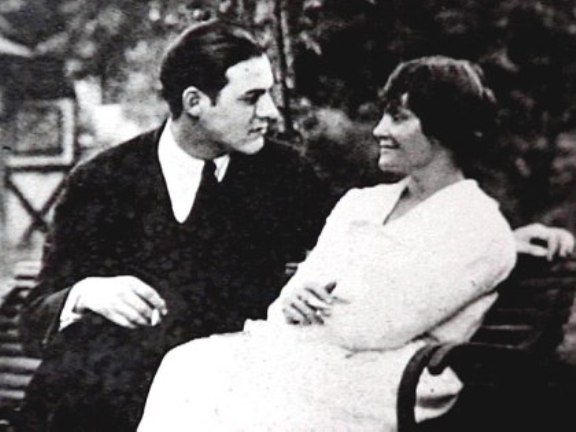
I was not prepared to like it as much as I did. Hemingway writes of the years when he was young, newly married and wildly happy, living a stimulating and lively life with lively friends. They were poor, but he was following his dream. They had a lot of fun.
Hemingway wrote this book, full of stories of their Paris life, full of names you know – Ezra Pound, Scott and Zelda Fitzgerald, Picasso, Closerie des Lilas, Les Deux Magots, Brasserie Lipp, the Louvre . . . and as you read it, you are there. He writes in the moment; you are right there experiencing it along with him. He writes of people he likes, and people he doesn’t like. He writes about his own vices – an addiction to horse racing, for example – and he writes with enormous sadness about how he came to be distracted from his marriage and lost the most wonderful relationship that ever happened to him. He blames it on the careless rich. He takes some responsibility.
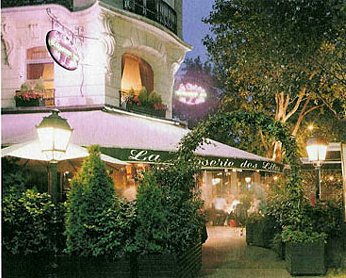
He also writes very frankly and openly about people he doesn’t like and why. I couldn’t help but think it is a heady thing, being an acclaimed author, where you can take revenge by putting people you dislike in your books. Hemingway uses real names and real people and often portrays them in a distinctly unflattering light. It made me wonder if he was planning to commit suicide all along; that or he just didn’t care what people think, and it seems he might have been the kind just not to care.
Just after finishing this book, and talking one last time with his first wife, Hadly, Hemingway committed suicide. It leaves me wondering if he was driven to suicide by regret, or by fears that his bigger-than-life life of adventure, travel, high life and travel was over, or if he had serious bouts of depression all his life, and this was just another, deeper depression?
It is a great read, especially paired with Paula McLain’s book, The Paris Wife. I thought it might be “he said – she said,” but Hemingway and the fictional Hadley in The Paris Wife both agree that they had a love and marriage that was very special, that Paris was a wonderful stimulating, alive environment, and that it was a great tragedy when the marriage ended. A Movable Feast seems to say that destroying his marriage to Hadley was one of a cocktail of self-destructive behaviors over which he tried to ride herd (gambling on the horse races, drinking, drugs, a coterie of star-struck sex partners outside of marriage, inability to focus on his work, a curmudgeonly nature . . .)

It’s also an easy read. I particularly enjoyed reading it on the iPad because you can do that swirly-finger-thing and find out what words mean or see the street locations as he walks Paris, see whether a cafe or restaurant in Paris still exist. It would be a good airline read – keeps your attention and finishes quickly.
As little as I like Woody Allen, it was fun to see Midnight in Paris, and to have some visuals of this go-go inter-war era.
Two things that stuck out for me: Hemingway loved walking in Paris, as do I. He also talks here and there about the benefits of being hungry. There were times when money was tight; they wore old shabby clothes, and there were times they didn’t have much food. He talks about hunger sharpening your other senses. On the other hand, very quickly when he has money, he has a great meal and a drink – or two – or three.
Bottom line, I’m glad I read this book. It’s given me a lot to think about.
Sunlight May Help Prevent Heart Attacks
This report is from Bottom Line. It seems to me that we are more primitive biological organisms that we think ourselves, but it also occurs to me that if sunlight helps prevent heart attacks, and helps limit damages, do people in the sunny places have a lower incidence of death due to heart attacks?
Sunlight Helps Prevent Heart Attacks

Ah, sunlight.
There’s nothing like being outdoors on a summer morning.
What you may not know is that sunshine doesn’t just boost your mood and your vitamin D level—it also may help you ward off a heart attack or minimize the damage that one can cause, according to a new first-of-its-kind study.
I talked to the researchers to find out more about how we can all harness the power of light to brighten our heart health.
I called the study’s lead author, Tobias Eckle, MD, PhD, an associate professor of anesthesiology, cardiology and cell and developmental biology at the University of Colorado School of Medicine in Denver.
Dr. Eckle told me that our circadian rhythm—the physical, mental and behavioral changes prompted by light and darkness that occur over each 24-hour period—helps determine the level of a certain protein that can minimize the cell damage and cell death caused by a heart attack. This protein might even stop a heart attack in its tracks. So Dr. Eckle and his colleagues were eager to see whether exposure to certain kinds of light at a certain time might be effective at boosting levels of this protein.
In the study, researchers divided mice into two groups. One group was exposed to light boxes emitting light that was the same level of brightness as daylight (“bright light”), and others were exposed to regular room lighting (“regular light”). Both groups were exposed to the light first thing in the morning at 6:00 am.
Then the mice were given anesthesia and heart attacks were triggered in them. Researchers found that mice that had been exposed to three hours of “bright light” had three times the amount of the protective protein as the mice that had been exposed to “regular light”—and, incredibly, the “bright light” mice’s hearts had experienced only one-fifth as much damage!
HOW SUNNY ARE THE FINDINGS?
There are, of course, unanswered questions—for example, how the findings might apply to humans and how lasting the benefit of the protein might be.
That said, the results are promising. What’s especially interesting is that it’s the light exposure on the eyes—not the skin—that affects the protein levels, said Dr. Eckle. So humans wearing sunscreen or long sleeves wouldn’t blunt the effect.
SAFE WAYS TO LET IN THE LIGHT
Several forces have conspired over recent decades to keep people out of the sun during the day, such as indoor work and fear of skin cancer. But many people would be likely to benefit from getting more sunlight exposure as early in the morning as possible.
Here are some safe ways from Dr. Eckle to shed more light on your daily routine…
1. Take a daily walk outdoors, and keep wearing sunscreen. Even 10 to 20 minutes a day is better than nothing. Since, as I mentioned earlier, it’s the way that light affects your eyes (not your skin) that matters, apply sunscreen—that won’t dampen the benefits. The added exercise will boost your heart health, too.
2. Get sunlight while indoors. Sit near large, bright windows.
3. Use a light therapy box. If you can’t follow either of the first two tips, or if you’re at high risk for skin cancer and want to avoid UV rays at all costs, this may be the best option for you. Available online for about $50 and up, light therapy boxes mimic the brightness of sunlight while filtering out most damaging UV rays.
Source: Tobias Eckle, MD, PhD, associate professor of anesthesiology, cardiology, and cell and developmental biology, University of Colorado School of Medicine, Denver. His study was published in Nature Medicine.
Ramadan Statistical Anomaly
Ramadan Mubarak! May God Almighty bless your sacrifices and lighten your burdens during your holy month of Ramadan. May you love God with all your heart, and love your neighbor as yourself. 🙂
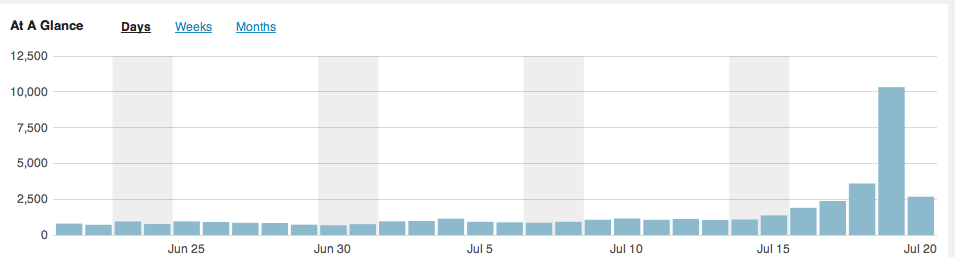
Because I’ve been wishing you well for six years, I had a surge in stats this week, climaxing with what will probably be my all-time high for one day, even if I blog until I am 104 years old, which could happen; my grandmother lived to be 104. Only God knows. 🙂
Here is what my stats look like:
And here are the primary posts:

WordPress gives you an hourly count indicator; the highest was 778 per hour. There have been Saturdays when I would have bee thrilled with 778 total for the day, LOL.

I try not to live by stats. I try not to pander to ratings. I try to write this blog with integrity, focusing on issues and news and goodwill to all. There is a little part of me, however, who stayed up late last night to see if the statistical count for the one day would top 10,000 . . . not a part I’m proud of, but hey, I’m human.
Early Signs of Alzheimer’s Determined
Scientists have assembled a “timeline” of the unseen progress of Alzheimer’s before symptoms appear.
A team at Washington University School of Medicine looked at families with a genetic risk of the disease.
Writing in the New England Journal of Medicine, they say signs appeared up to 25 years before the expected onset of the disease.
UK experts said the ability to detect Alzheimer’s early would give the best chance of successful treatment.
‘Key changes’
The 128 people in the study, from the UK, US and Australia, had a 50% chance of inheriting one of three mutations that are certain to cause early Alzheimer’s, which often develops in people’s 30s and 40s – much earlier than the more common form of Alzheimer’s which generally affects people in their 60s.
Those who carry the mutations will go on to develop the disease.
The researchers looked at the age the participants’ parents were when they developed the disease – and therefore how many years it was likely to be before they too showed symptoms.
The ability to detect the very earliest stages of Alzheimer’s… would enable new drugs to be trialled in the right people, at the right time”
They underwent blood and spinal fluid tests as well as brain scans and mental ability assessments.
The earliest change – a drop in spinal fluid levels of the key ingredient of Alzheimer’s brain plaques – can be detected 25 years before the anticipated age of disease onset, they suggest.
At 15 years, raised levels of tau, a structural protein in brain cells can be seen in spinal fluid – and shrinkage can also be detected within parts of the brain.
Changes in the brain’s use of the sugar glucose and slight memory problems become apparent 10 years before symptoms would appear, they suggest.
Researchers also tested other members of the families without the inherited mutations – and found no changes in the markers they tested for.
Prof Clive Ballard, director of research at the Alzheimer’s Society, said: “This important research highlights that key changes in the brain, linked to the inherited form of Alzheimer’s disease, happen decades before symptoms show, which may have major implications for diagnosis and treatment in the future.
“These findings are a good indicator that there may be key changes in the brain happening early in people who develop non-hereditary Alzheimer’s disease, but we can’t be sure. Further research into this complex condition is needed to confirm a definite link.”
And Dr Eric Karran, director of Research at Alzheimer’s Research UK, said: “These results from people with the inherited form of Alzheimer’s seem to be very similar to the changes in the non-genetic, common form of the disease.
“It’s likely that any new treatment for Alzheimer’s would need to be given early to have the best chance of success.
“The ability to detect the very earliest stages of Alzheimer’s would not only allow people to plan and access care and existing treatments far sooner, but would also enable new drugs to be trialled in the right people, at the right time.”
Not the Day We Expected – Even Better
LOL, as our Friday dawned with thunder and lightning, our day totally changed. We had thought we would rush to our water aerobics class, rush home, hand up our clothes, head out to meet friends for Italian food near Destin, and then come home.
With the thunder and lightning, however, we knew there couldn’t be a class, and so we had an unexpected holiday from exercise, sort of puttered around the house taking care of things that needed taking care of, and headed off to meet up with our friends. We had a great time, great conversations, and they mentioned – as have other friends – how much they enjoyed The Best Exotic Marigold Hotel, and that we really needed to see it. After long, fond farewells, we headed home, via the beach, which we always love. So far, it was a much cooler day, only reaching the 80’s as we drove along, due to the cloud cover.
AdventureMan suggested we look at the GulfBreeze4, a really fun little theatre we love to go to where they show a lot of foreign movies or quirky movies that didn’t make it to the big screen, and there it was, the Best Exotic Marigold Hotel, and we were just in time for the afternoon showing.

It is a delightful movie. It has a lot of fun moments, some sad moments, many very human moments. You know me, I especially love the cross-cultural moments, and the thought that people can grow and adapt – no matter what age. We really enjoyed the movie.
And, when we left, we just had to have Indian food. We stopped at Taste of India on the way home and had Talli. It was one of those nights when almost every table was taken, but they had room for us.
“How spicy?” our favorite waitress asked.
“Spicy,” we stated emphatically.
“Oh!” she exclaimed, “Indian spicy!” and we said “Yes!”
When it came, it tasted like being back in Kuwait, eating food my friends had prepared. Not dumbed down food. Good, strong spicy food. We couldn’t even eat it all; but we know how good it will taste tomorrow. We brought a lot of it home 🙂
So it wasn’t the day we expected, but we feel blessed by the day we had. Good friends, good conversation, lots of laughing, good movie and a good time at Taste of India. A great day altogether.
Laugh and Live Longer?
Found this fascinating article today in AOL News/HuffPost.
Do those who laugh the most live the longest?
Possibly so, according to a new study in the journal Aging.
Researchers from Albert Einstein College of Medicine and Yeshiva University found that people who possess certain personality traits based in genetics may live longer lives — particularly those who are optimistic, laugh a lot and are easygoing.
The study was based on an analysis of 243 people with an average age of 97.6. These people were part of a bigger study, called the Longevity Genes Project at Albert Einstein College of Medicine, which examines 500 Ashkenazi Jews ages 95 and older (Ashkenazi Jews are genetically homogenous, researchers said), as well as 700 of their offspring.
“When I started working with centenarians, I thought we’d find that they survived so long in part because they were mean and ornery,” study researcher Dr. Nir Barzilai, M.D., director of Einstein’s Institute for Aging Research, said in a statement.
“But when we assessed the personalities of these 243 centenarians, we found qualities that clearly reflect a positive attitude towards life,” he said. “Most were outgoing, optimistic and easygoing. They considered laughter an important part of life and had a large social network. They expressed emotions openly rather than bottling them up.”
The researchers also found that the study participants scored lower on tests for neurotic personality and scored higher on tests for conscientiousness, compared with comparable scores for the U.S. population.
Last year, a study in the journal Proceedings of the National Academy of Sciences showed that older people who are happy have a 35 percent lower risk of dying over a five-year period than unhappy people. That study included 3,853 people ages 52 to 79.
“The happiness could be a marker of some other aspect of people’s lives which is particularly important for health,” study researcher Andrew Steptoe, a professor at University College, London, told The Telegraph. “For example, happiness is quite strongly linked to good social relationships, and maybe it is things like that that are accounting for the link between happiness and health.”
“Diesel’s in Time Out”
“Where’s Diesel?” AdventureMan asked our Happy Little Boy, who is now talking up a storm and we are loving every minute of it.
“Oh, Diesel’s in Time-Out,” Happy Little Boy replies, as he continues to roll one of the locomotives around the wooden track. Sometimes he likes to set it up on the table, and have the trains drive off the edge. “Accident!” he crows!
“Why is Diesel in Time-Out? What did he do?” AdventureMan asks.
“Diesel hit Thomas!”

“And Diesel hit Percy!” (big eyes popping out of head!)

“AND Diesel hit Mr. ToppemHat! He had to go to Time-Out!”

He is learning so much, and we love hearing what is going on in his life. We are so glad to live so near, and to be able to be a part of his life.
Customer Service; the Good and the Ugly
We are not rich people. You might look at the places we go and the places we stay and think that we are more comfortable than we are. We learned a secret a long time ago, and that secret is to live UNDER your income. We live under what we can afford, we pay our bills in full, and we pay attention to small leaks that can add up to big financial leakages over time.
First, the ugly. Today I checked my KLM Flying Blue mileage, and they only gave me 25% of the miles I earned flying from Pensacola to Johannesburg and back. That should have been a huge number, but 25% of that number is very very low. I did some exploration on KLM and learned it has to do with a lot of factors, including type of ticket you buy.
To me, that’s just sleazy customer service. A person who buys a ticket should get the full mileage. If you want to give bonuses for higher levels, then do so, but give me the miles I earn, don’t swindle me with a fraction of the miles I flew. It leaves a really bad taste in my mouth. Honestly, I don’t think Delta is all that much better, but I may switch my frequent flyer program to them because now I am flying Delta more often. I had thought because they were all “Sky Team Partners” that the miles were all the same, but I was wrong. And try booking an award ticket on one of the partners – they have wires and mirrors and a series of hoops to jump through, and you get to the end and the answer is not only “No” but then they have the gall to ask “Can I help you with anything else?”
I promise you, I am very polite, but when they ask that, I tell them “You didn’t even help me with what I asked help for!”
Here is the good. I paid as many bills as I could before I left, including some significant travel costs associated with the Grand Canyon / Mesa Verde Trip , but when I got home, I found a letter from the credit card service company, with the check my bank sent, saying that there wasn’t enough account information on the check to credit it. I could see the last five numbers of my account on the check, which I believe many banks are doing to help protect client privacy and exposure to identity theft, so I sent the check back with the account number and today I called and complained, and especially that they had charged me an interest charge, when I had paid the bill in full, they just hadn’t credited it to my account.
They credited the interest charge immediately, no argument. They were pleasant and helpful, and I felt like they were on my side. In a time when banks are not our friends, I had a positive feeling toward our card provider.
I smile when I hear AdventureMan in his office, talking with medical claims people – when we had a recent vaccination, a very expensive one, I was re-imbursed and he was not. He is taking on the bureaucracy, slowly and patiently, to make sure he gets that money back. He is also seeing what can be done about getting re-imbursed for our yellow fever immunizations. It takes a lot of patience and persistence, and it pays off. We laugh that we are becoming those old farts who have enough time to make those phone calls.
Little drops of water . . . and paying attention. Battling bureaucracy, trying to make the most of opportunities . . . that’s how we manage our lush lifestyle.
Recent Comments
Kitchen on Isiais: Winding Down intlxpatr on Shampoo Ginger tigerbutterya0c5ff1d… on Shampoo Ginger intlxpatr on British Soldier Kidnapped, Esc… John on British Soldier Kidnapped, Esc… Wikipedia Donate Button

Amazina


Early Voting in Florida


