British Isles: Lerwick, Shetland and Jarlshof
We are finally here! Were were excited about visiting the Shetland Islands back when we did The Wake of the Vikings, but the weather made the water too tough to dock or tender in, and we had to skip the Shetland Islands. It was particularly disappointing to AdventureMan, as he had watched every episode of Shetland, a mystery series on Netflix.
As it turns out, he wasn’t alone – one of the first things the guide mentions is that everyone wants to see where the murders were committed (and through the trip, she showed us!) but that the show made The Shetlands look like the murder capitol of the world, when in truth, daily life tends to be very routine, and crime of any kind is limited. And everybody knows everybody.
Probably half of our bus had watched the show, or read Ann Cleeves addictive books about Shetland, and there was a lot of enthusiasm and appreciation from the people on the bus when the guide pointed out the places where the crimes really did not take place.
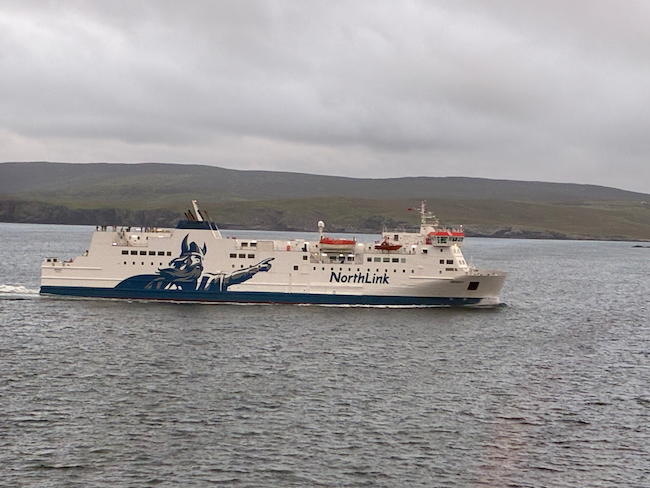
On our way this morning, this cracked me up. The local ferry, the North Link, with a big Viking on it passes the huge Viking ship as if we were barely moving, LOL. I guess it just struck me as funny. Maybe he’s pointing the way, thinking we are lost.
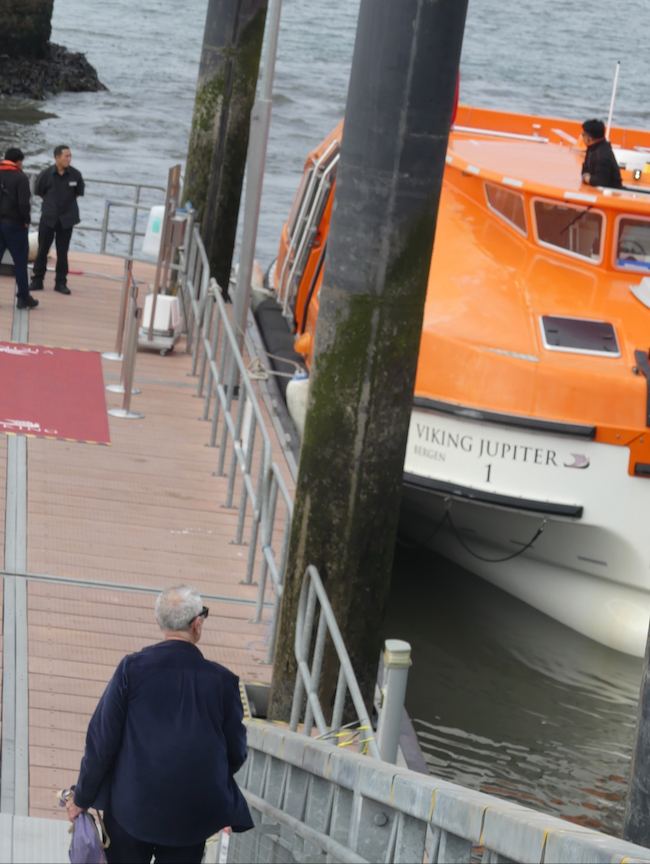
Today, it is cloudy, but they are high clouds, and foggy, the kind that burns off by late morning, and AdventureMan spots a seal sporting in the Viking Jupiter wake as we are docking.
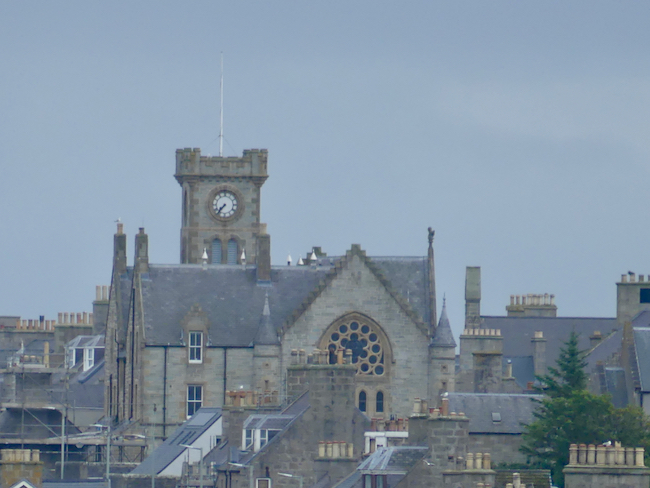


I was wearing a skirt, but I change into Levi’s because it is chill, this is Juneau, Alaska, where I grew up kind of August. I wear a shirt under a sweater, and carry a windbreaker, which I later don when we hit Jarlshof, our destination today.
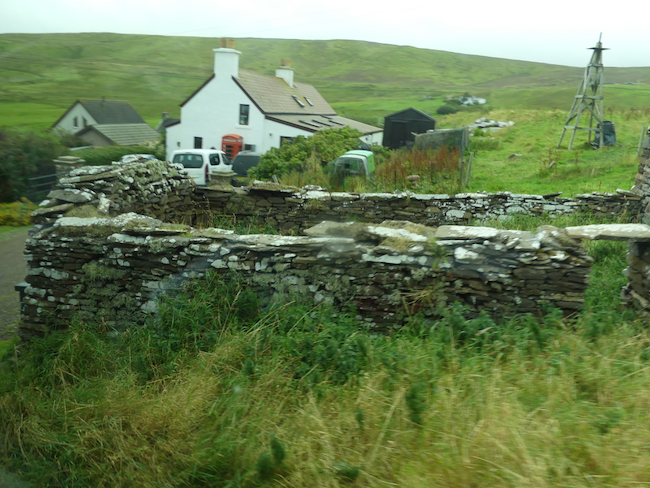
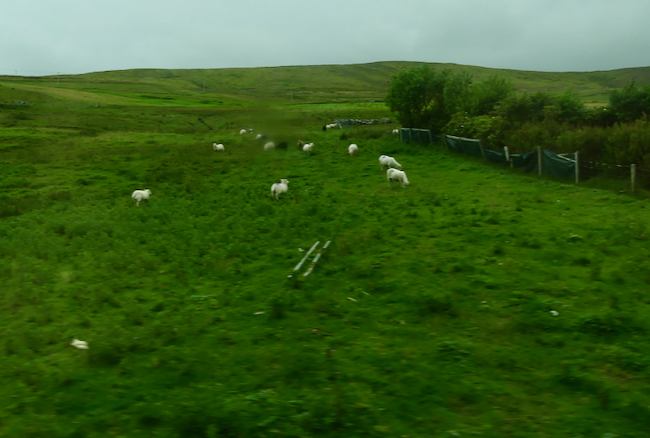
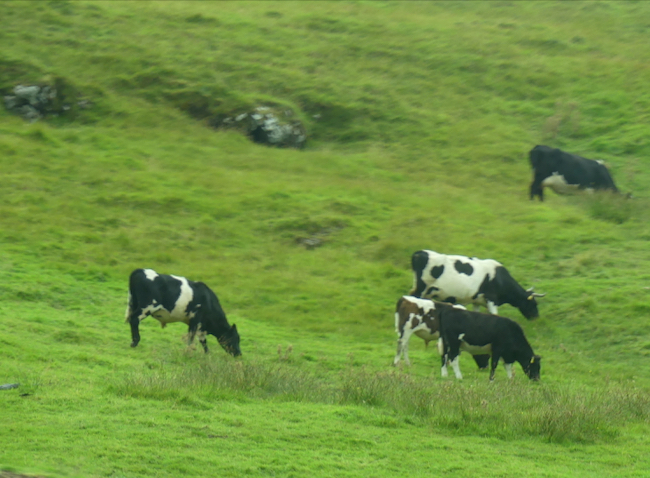
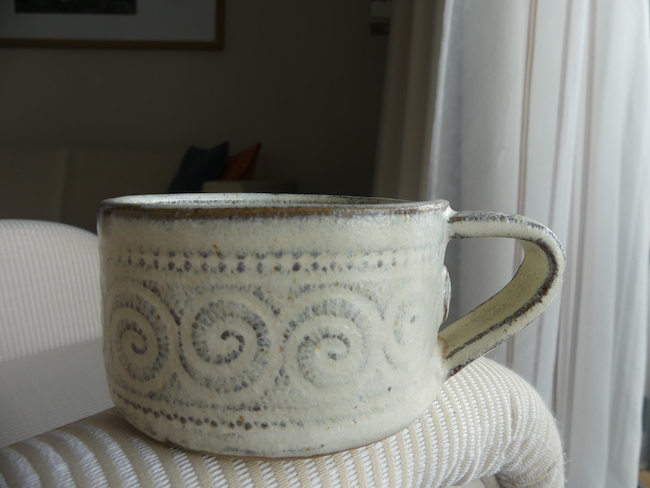
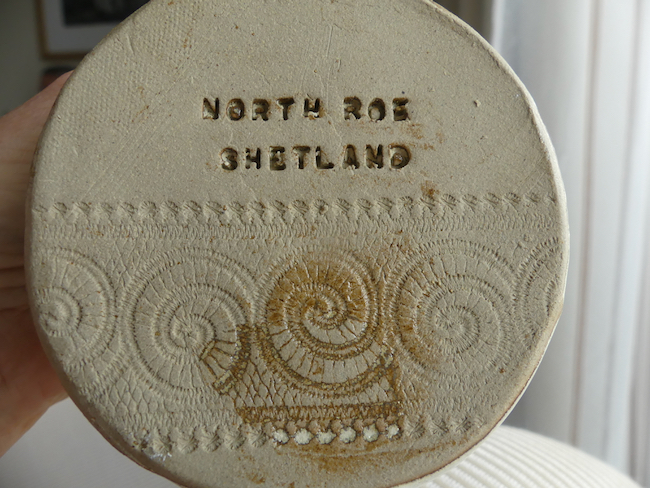
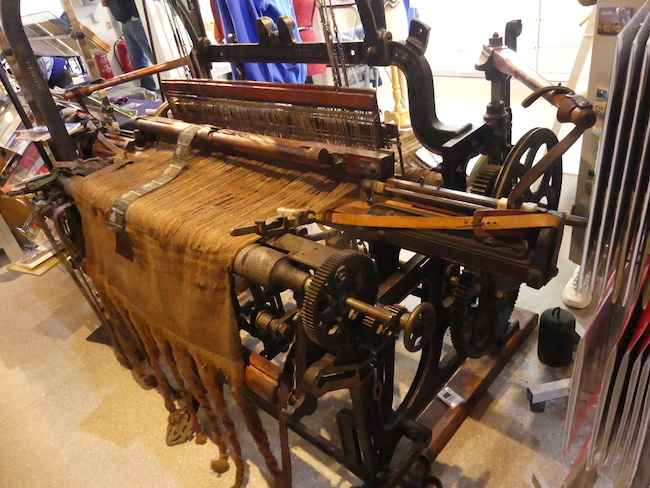
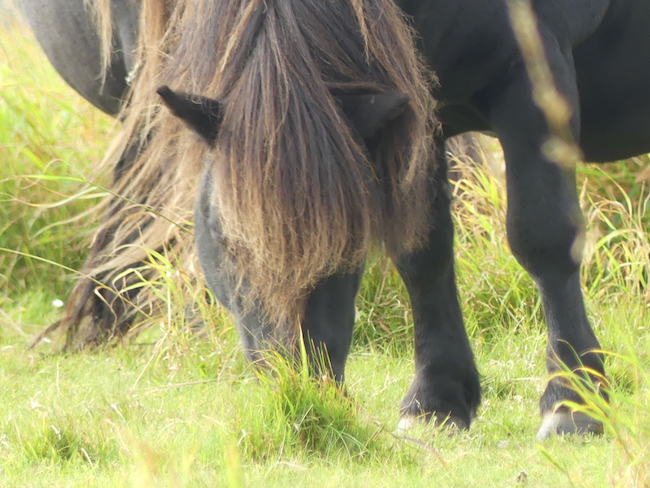
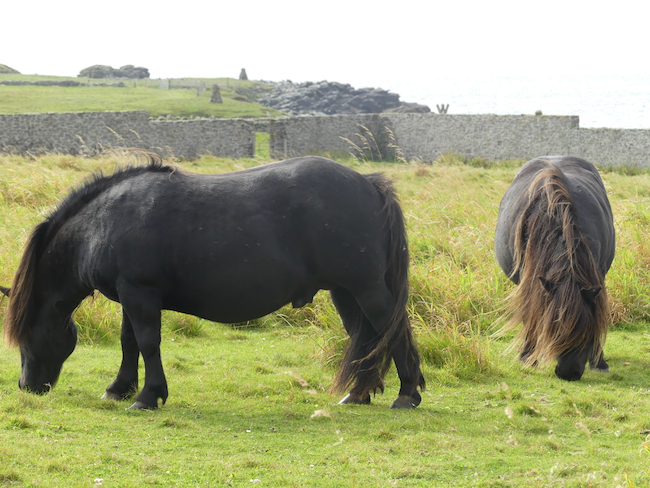
En route, we pass gorgeous bays, fields full of fat, happy sheep, contented cows and frisky Shetland ponies. We stop for a break in Hoswick where I find a gorgeous handmade coffee cup, and love the old crafts demonstrations set up there. It was still very early – barely 8:30, so they had gone to some trouble to be open when we passed through.
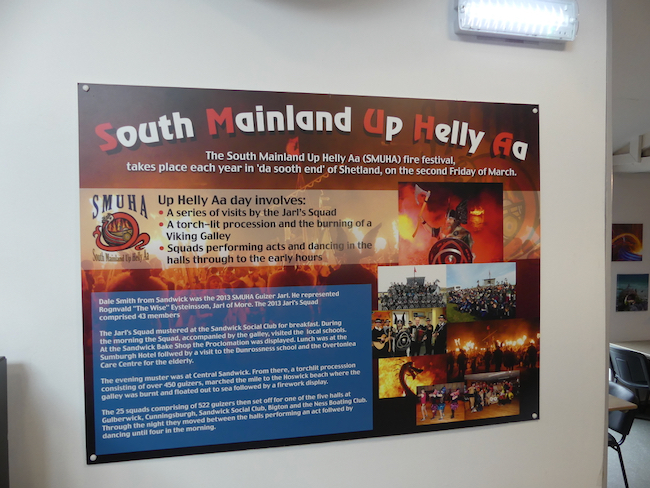
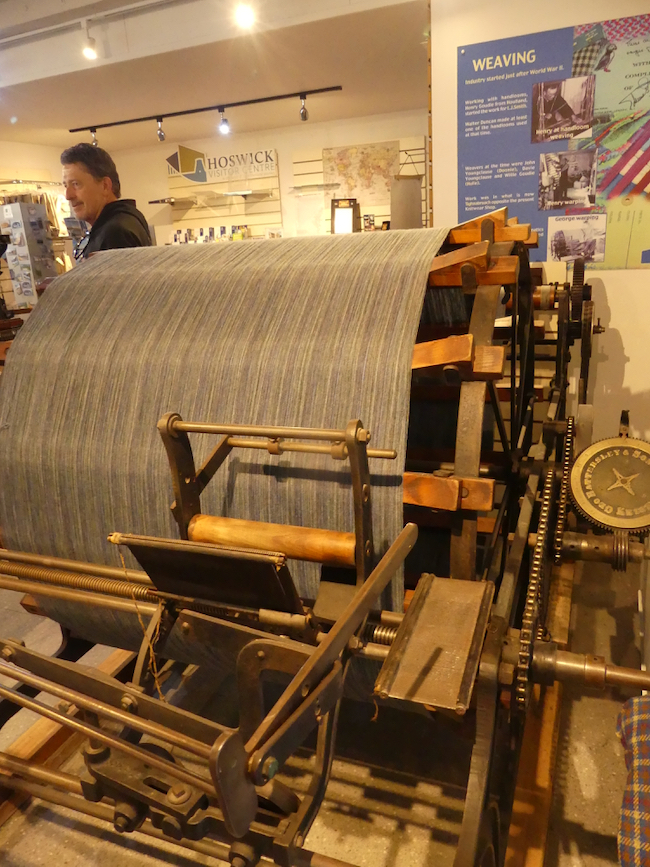
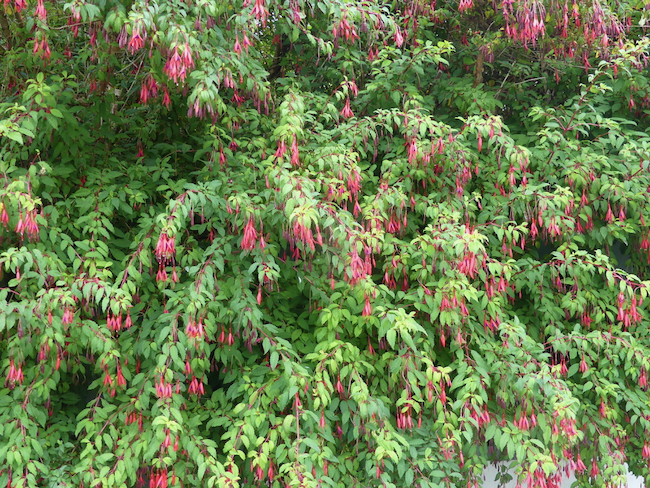
In this village I see something that blows my mind, an entire hedge which is a fuchsia shrub. Fuchsias are special to me; I used to buy one for my Mother for Mother’s Day. I have tried to keep hanging fuchsia’s almost everywhere we have lived, but they are very particular – don’t like heat at all, and need just the right amount of water. The guide tells me this is a hardy fuchsia, and they are grown all over the Shetlands because they love it there. What luxury!


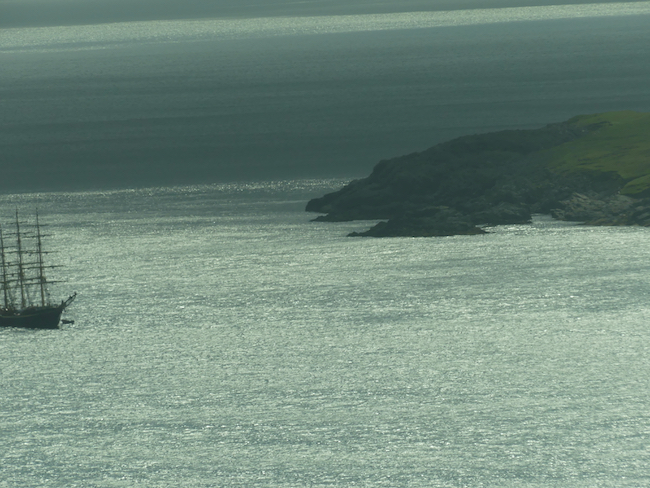
We see a tall ship out in the adjoining bay. Our guide is smart, and a good story-teller. She tells us not much really grown in the Shetlands to support life; the trees are mostly gone, some grow potatoes and vegetables in family plots, but the main industry, until the oil fields came, has been fishing, particularly herring. There are herring stations near where our boat is docked, and she tells us there were women called the “gutting girls” who would flay and salt the herring and put them in barrels to ship around the world.



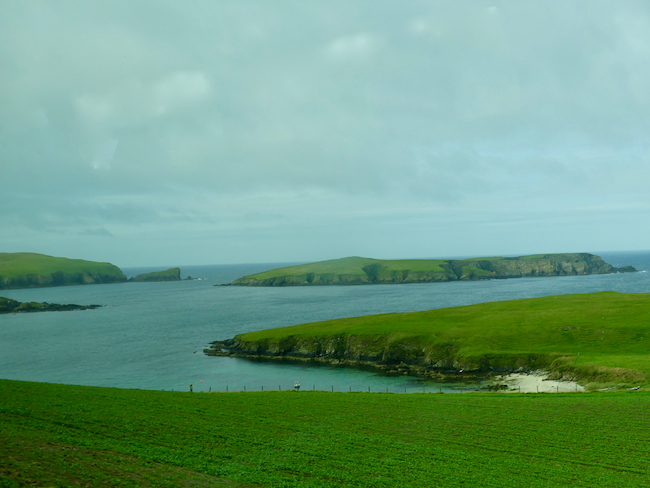
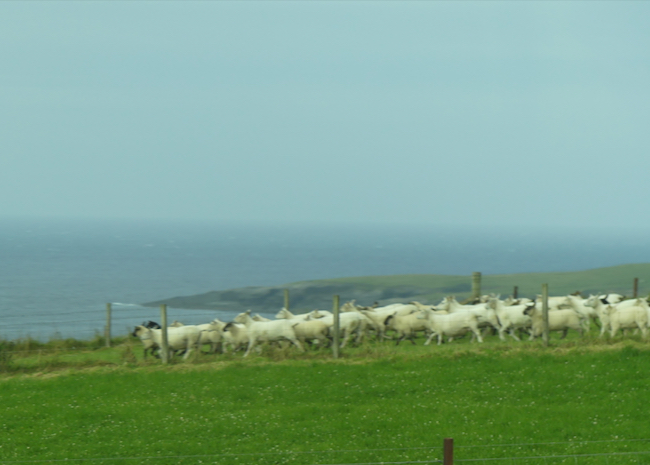
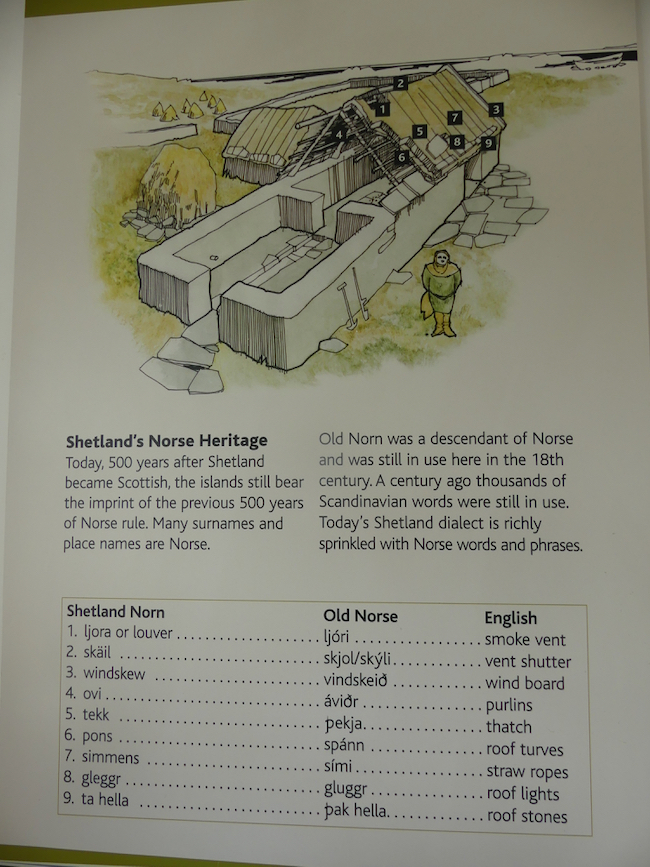
We learned the Shetlands have only been a part of Scotland for the last 500 years; before that they were largely settled by Danes and Norwegians. The streets are named after Norwegian kings, and their language is a marvelous combination of Norwegian language patterns coupled with Scottish vocabulary.
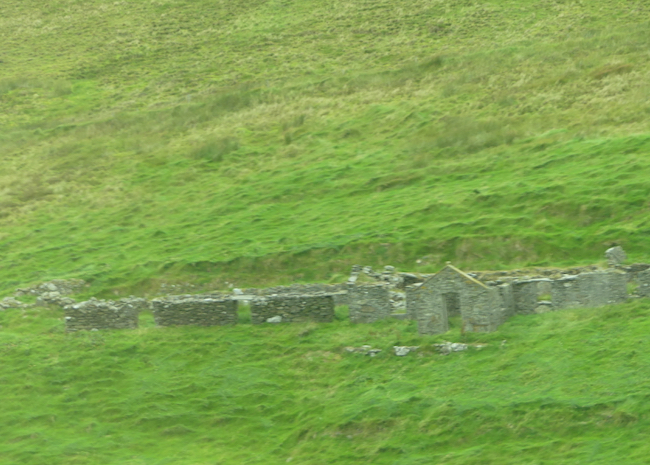
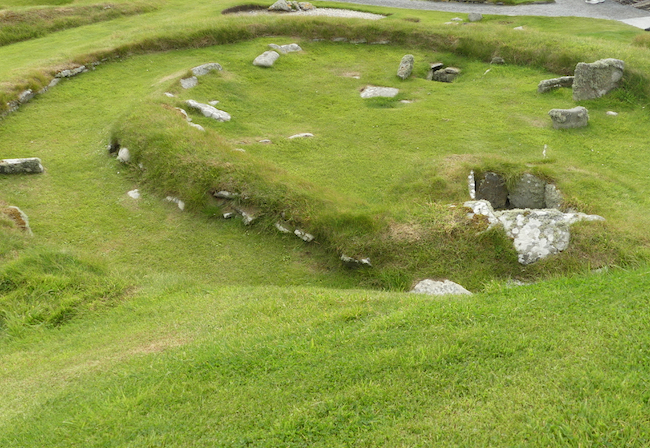
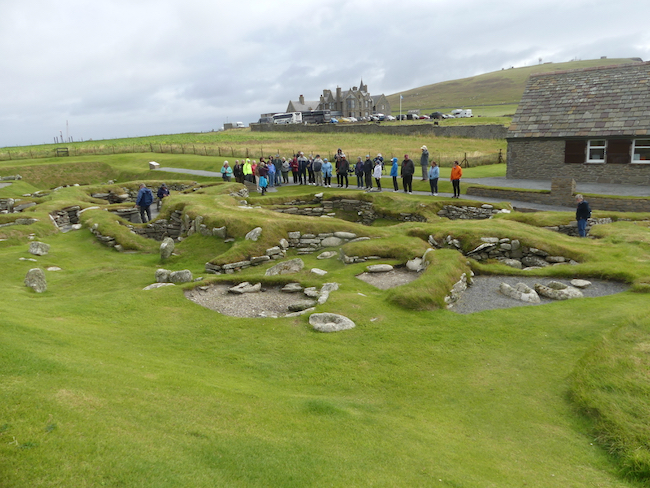
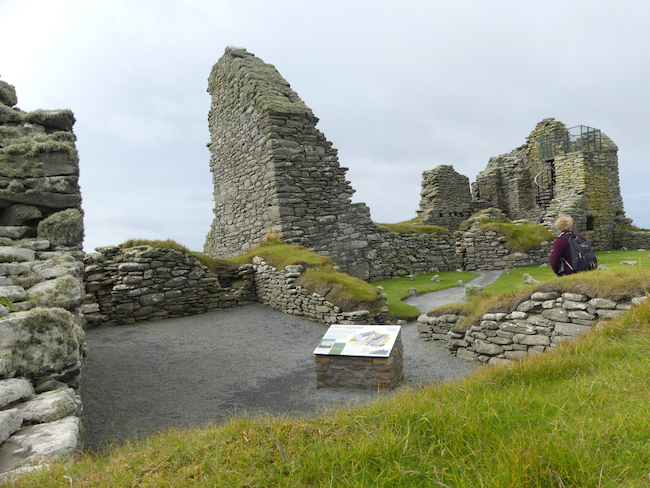
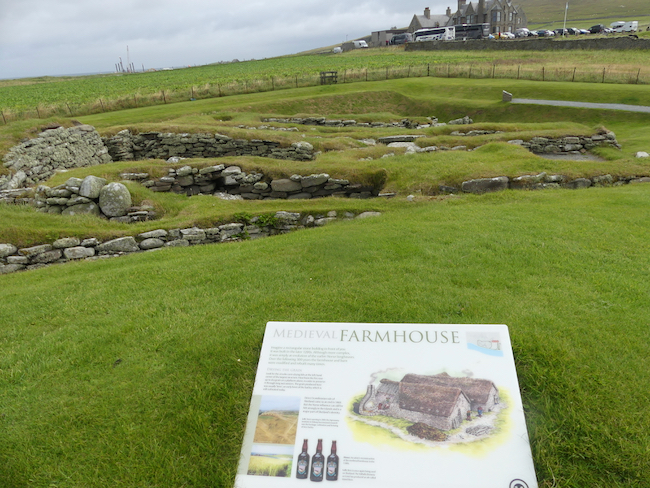
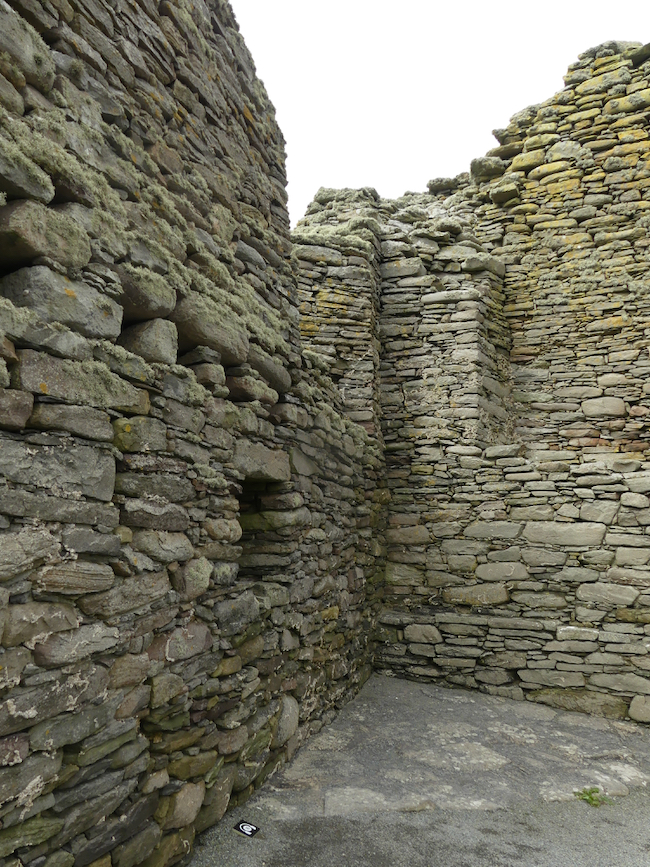
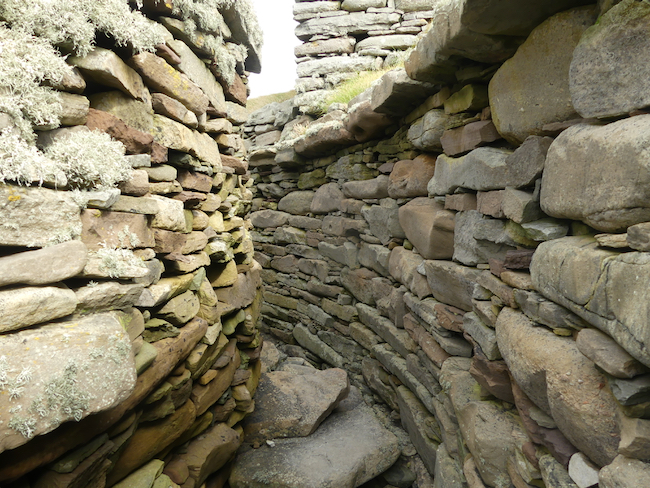
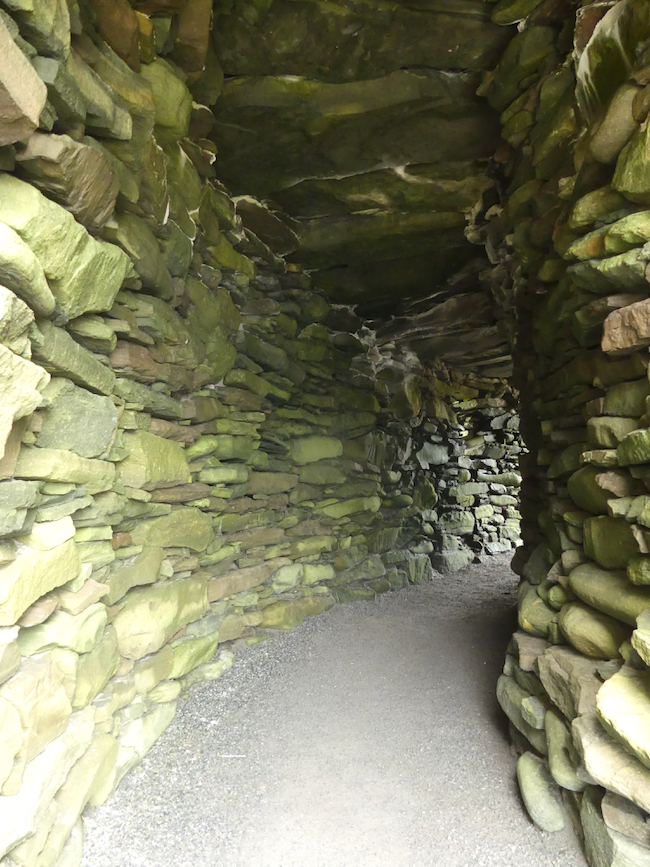
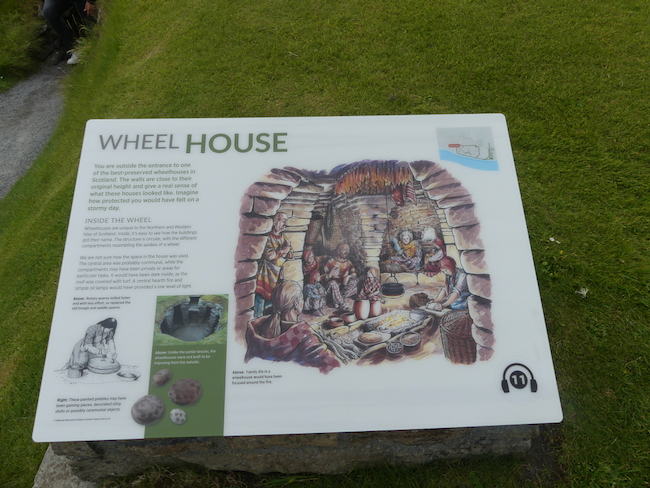
We reach Jarlshof, literally the house of the Earl, and there is a ruin of a medium sized stone house with more-or-less modern dimensions. The treat, though, is that (like Scara Brae in the Orkneys) a large storm uncovered ruins of dwellings dating back more than 4,000 years, built partly underground but covered by sand over the years.
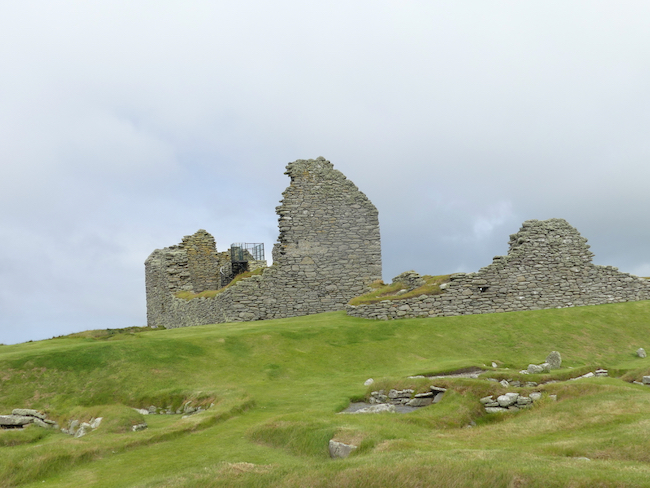
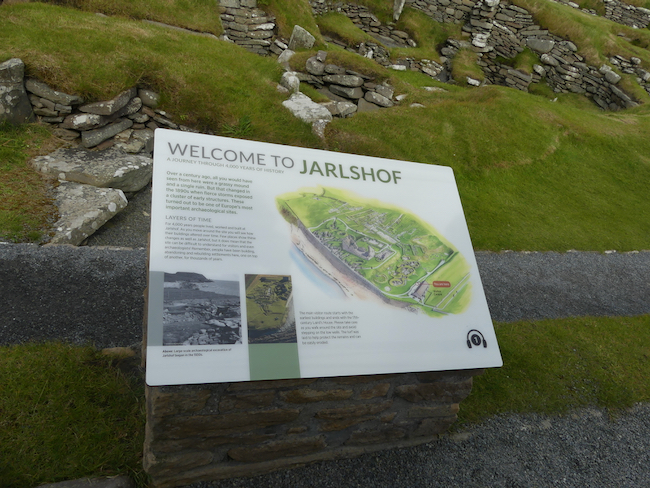
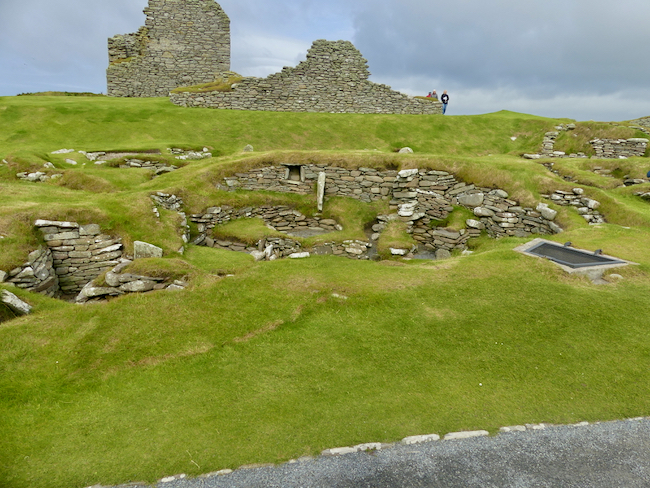
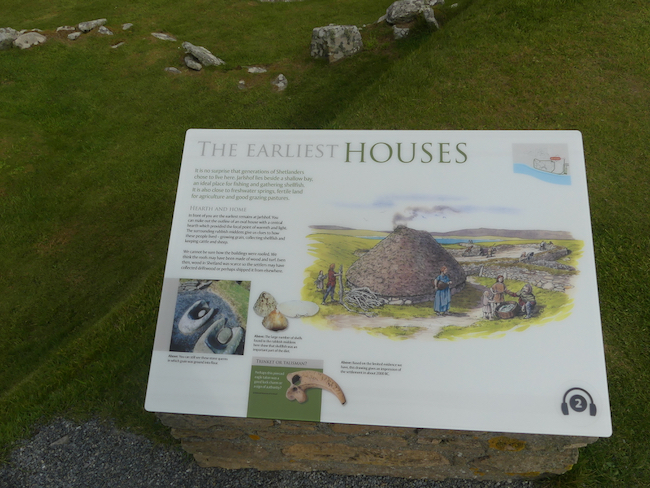
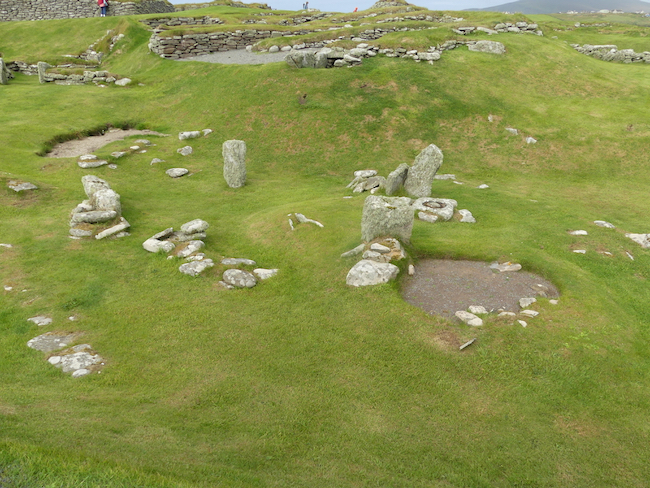


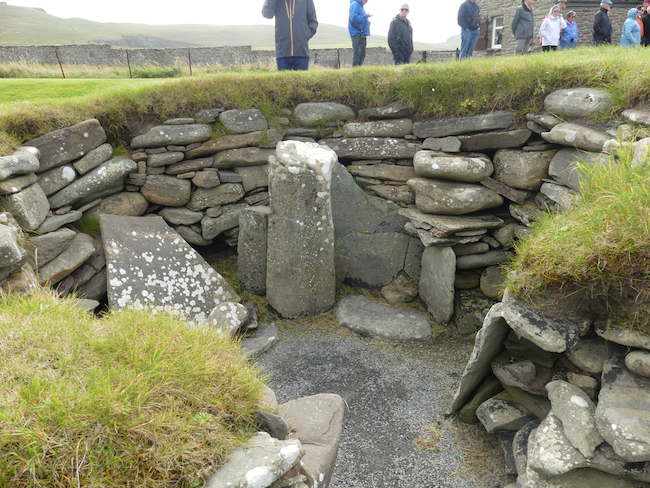
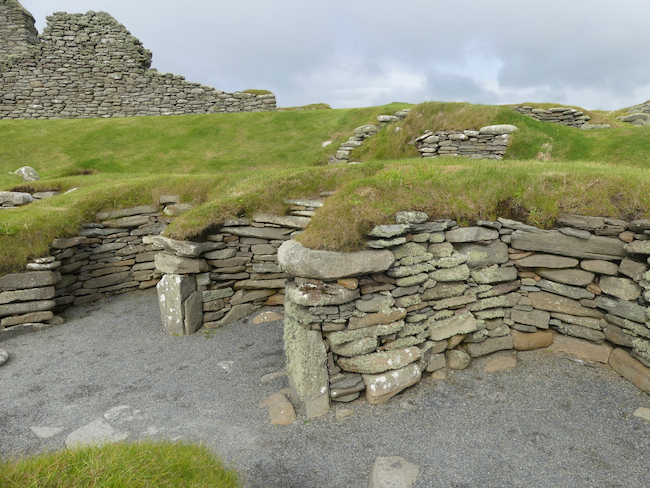
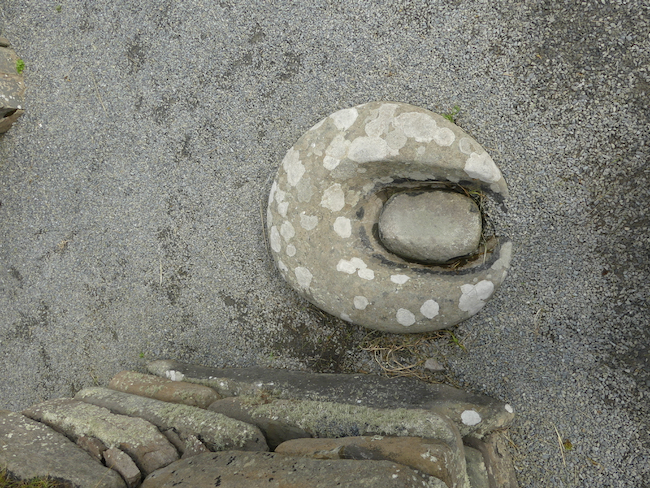
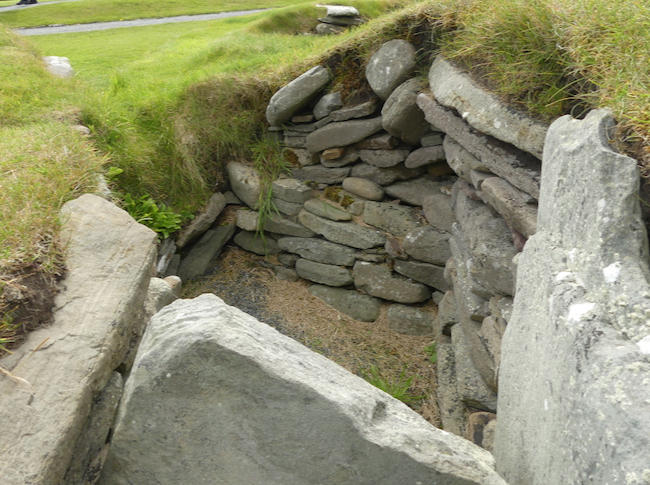


The people who lived here were smart, and inventive. They created archways and strong tunneled wheel-houses, for living, for storage, or so the anthropologists and archaeologists surmise. The truth is, no one knows how or why, or even who made these dwellings. No one really knows whether they died out, or were driven away when the Northmen invaded, or if they assimilated – most of the Orkneys and Shetland Islands have a large portion of Nordic blood running in their veins.
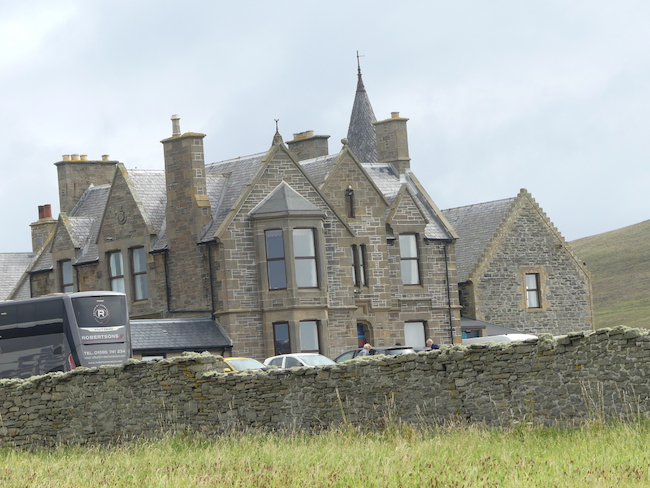
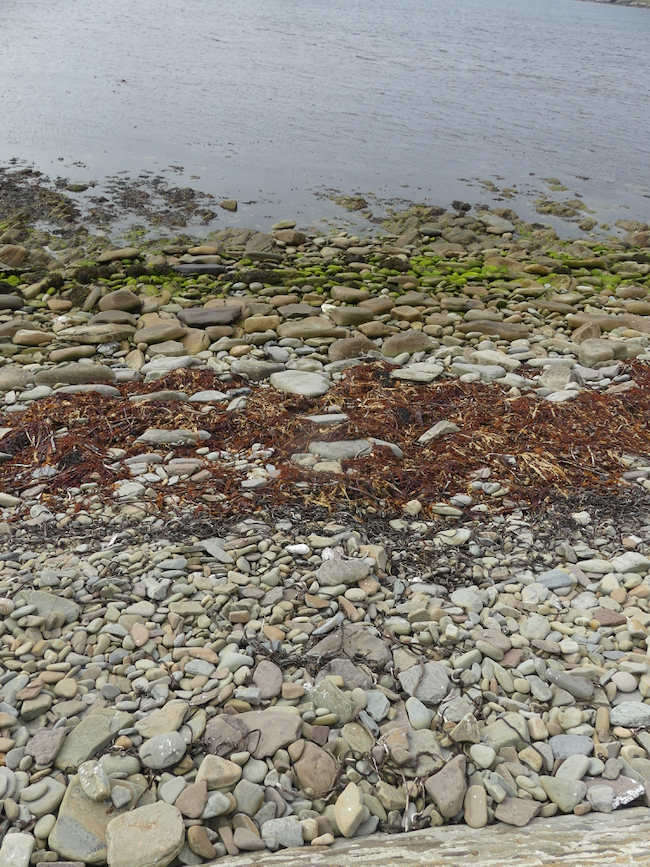

Seeing these early dwellings is a thrill, and it is further thrilling knowing that there may be even earlier dwellings underneath these ones. No one wants to destroy what they have found so far to search for earlier peoples.
Equally thrilling is that while we are touring Jarlshof, the sun breaks through and the landscape looks different, no longer shades of grey and diffuse with fog, now it is bright and shines with energetic colors.




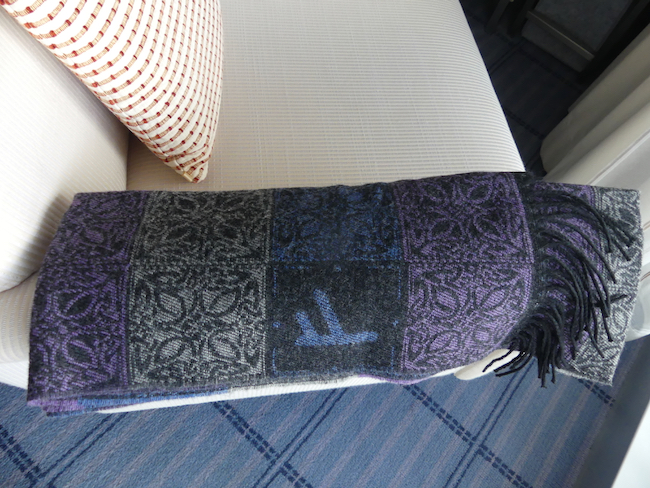
You never know when suddenly you will find a treasure, and today, as I was exiting through the Visitor Center, I saw some truly gorgeous scarves, in classic colors with classic patterns, created by a Scottish Heritage foundation. I couldn’t resist. Sometimes you see something special and you know it. This scarf thrills my heart.
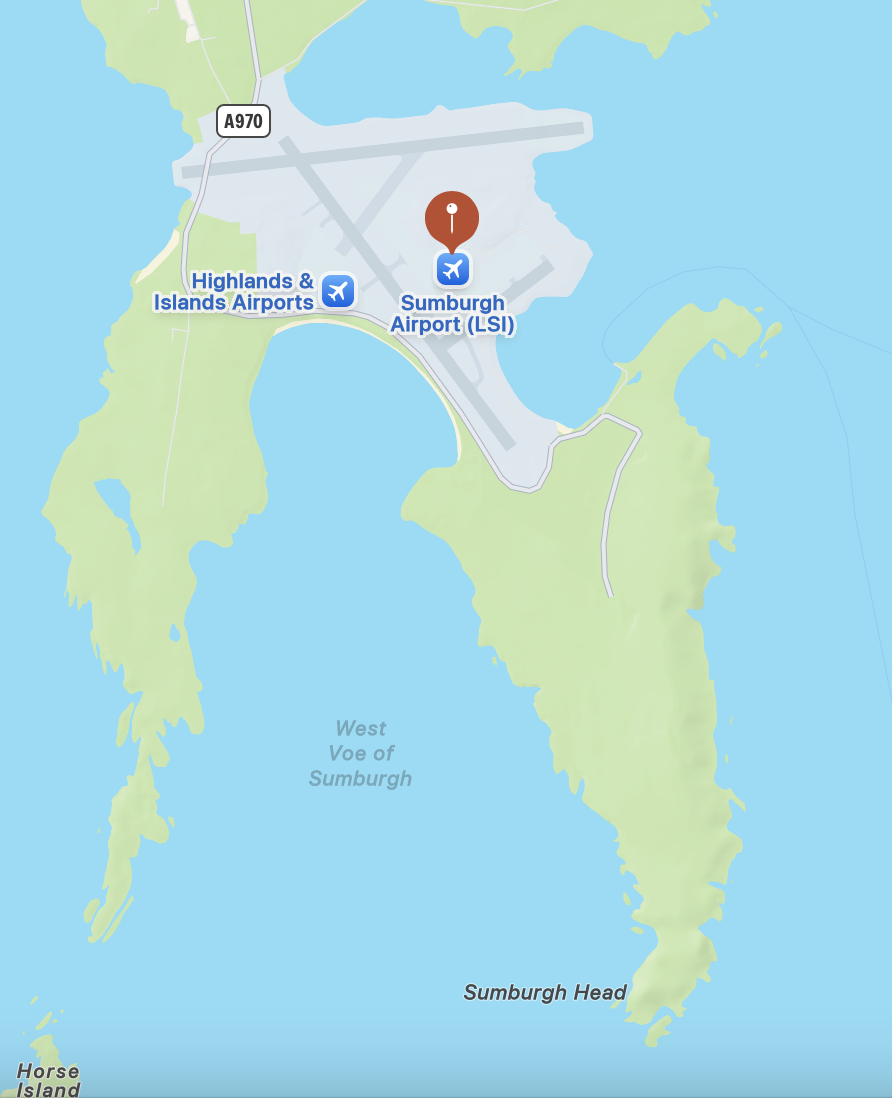
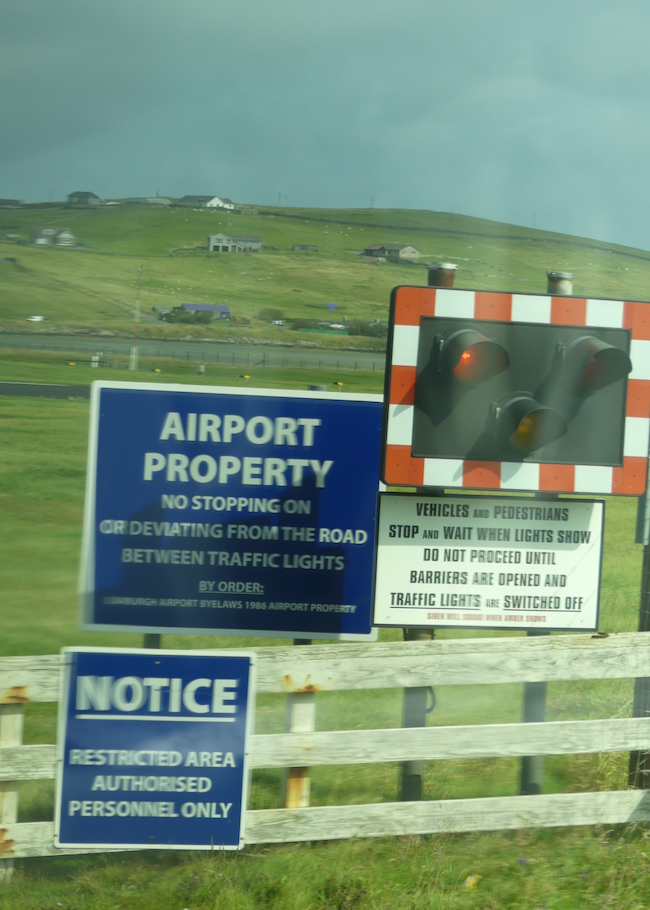
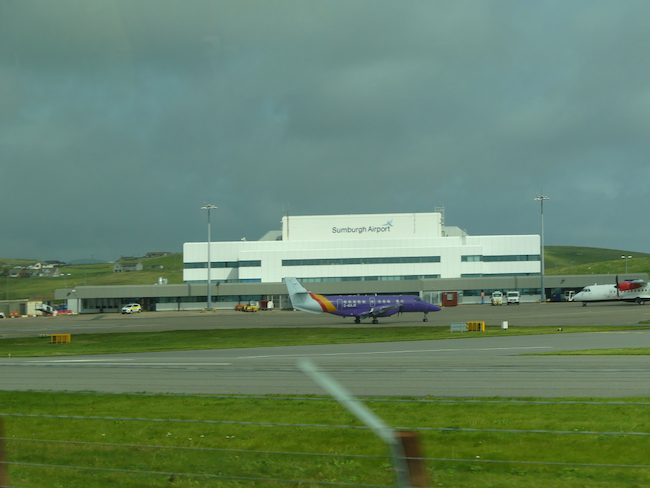
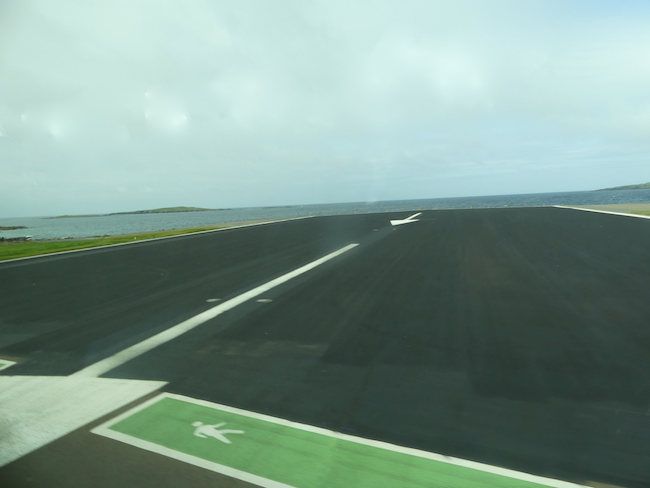
Leaving Jarlhof, we are stopped by a gate across the road and a red light. The road crosses the airport landing strip, and a plane is landing, stopping all traffic in both directions until the gates are lifted once again. We watch the plane land, and then we proceed. I’ve since learned from Ann Cleeves that this is Sumburgh Airport, into which investigators and medical examiners fly from Aberdeen when there are all these murders in Shetland.
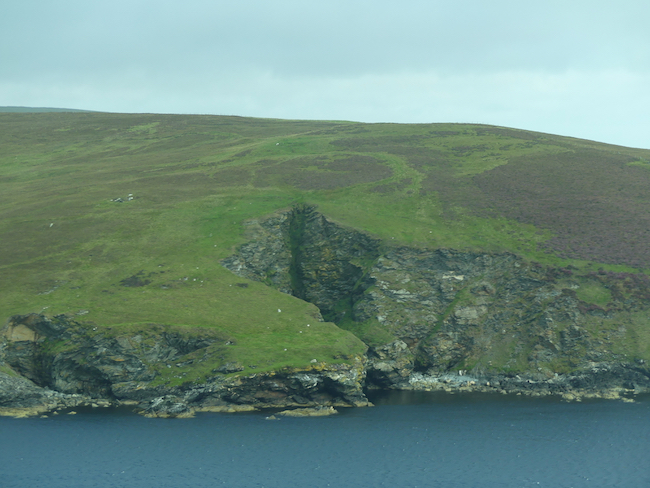
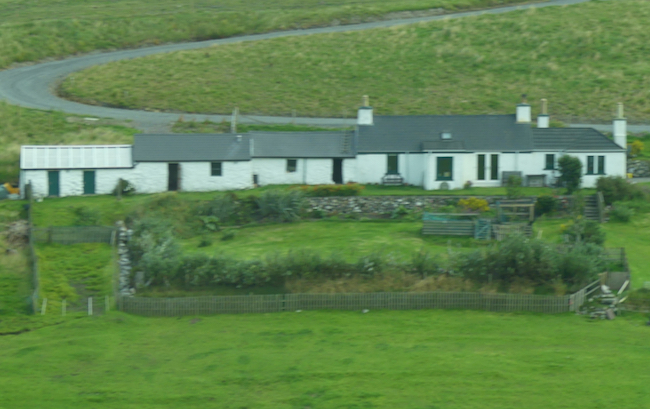

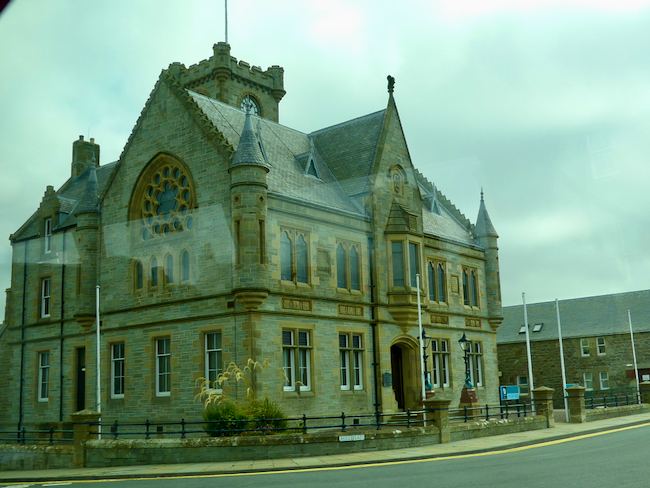
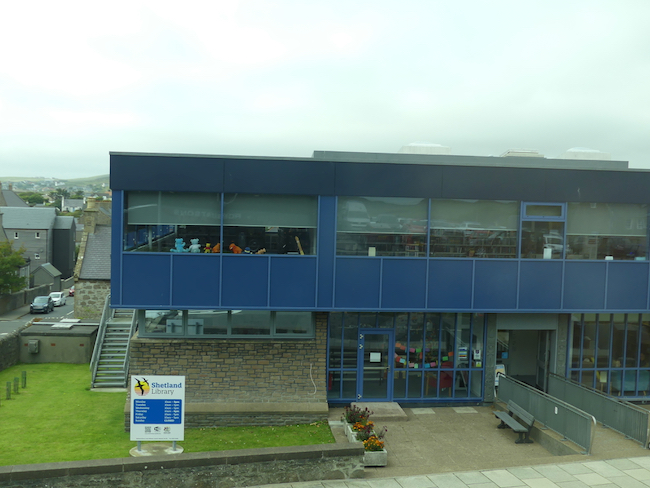

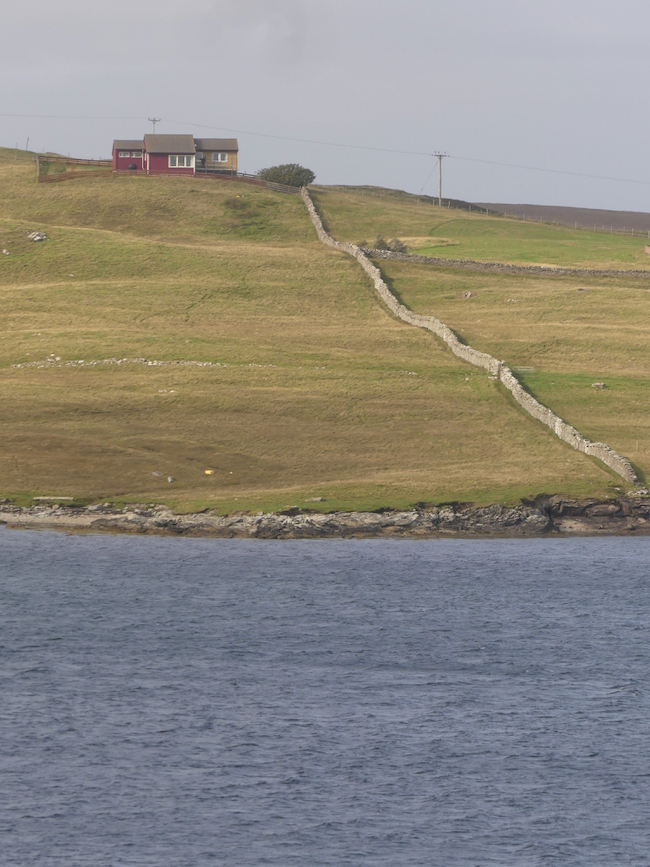
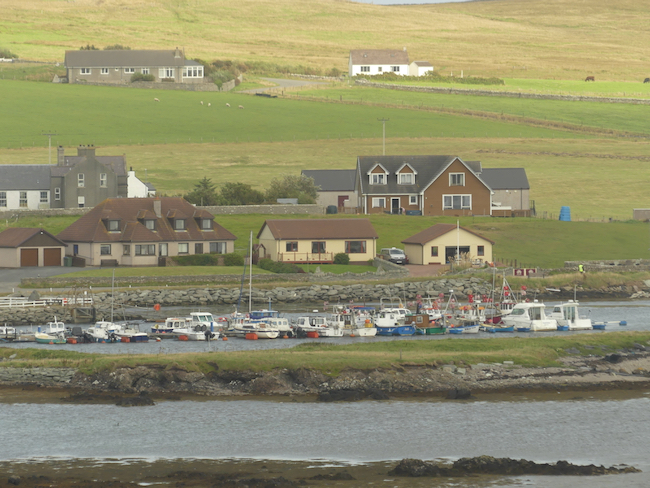
Our ride home is beautiful, again the hills with sheep and cows and ponies, even a few goats. We see small farms, we reach Lerwick where the Viking Jupiter is docked and see granite and sandstone buildings, a high street for shopping and modern supermarkets. Our guide is very proud to tell us that most of the shops in the Shetlands are privately owned, with very few chain stores. Shopping is more personal. Mail order through the internet is iffy – because everything has to come in by air or by sea, weather plays a big role, particularly the wind and rain, and no one guarantees “next-day” delivery.
Back on board, we both choose Malabar beef curry with roasted carrots and are delighted. Afterwards, we go down to the main lounge for coffee, then to the spa to exercise and to recover from our morning.
I try to carve a time each day when I can write this journal while our memories are still fresh, but there is so much! I wake up in the middle of the night remembering new things I need to tell you about!
We are starting to think about packing. Every time we think about it, we put it off. Our ship just departed Shetland for Bergen, Norway, where we will spend the day tomorrow, then depart on Monday for home. We can pack tomorrow.
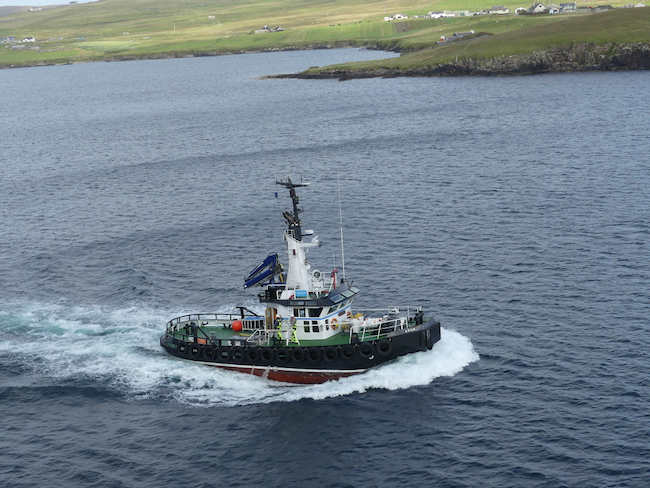

Leaving Shetland – even the skies and seas are the Shetland colors of my scarf!
Maybe this was the best day of our trip?
British Isles: Great Fun in Edinburgh
Early rising today as we are in Group 2 and meeting up at 7:45 am in the Star theatre to tender in to port to catch our bus. Whew! We had a quick breakfast – I am back to oatmeal now that the novelty of so much variety has worn off. We pack up our quiet boxes (it looks like hearing aids, but it allows the guide to speak to us as we are walking along without broadcasting to the world), our windbreakers, our phones, cameras and make sure we have everything we need.

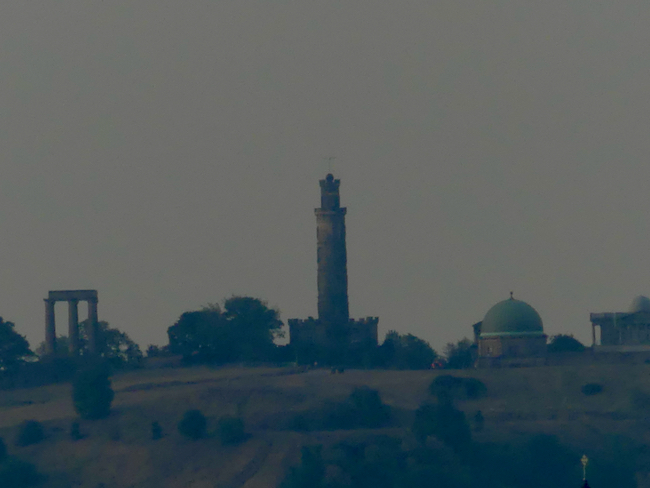
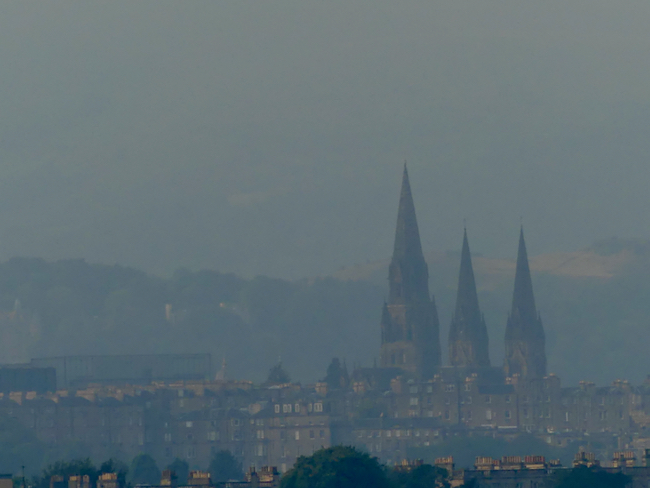
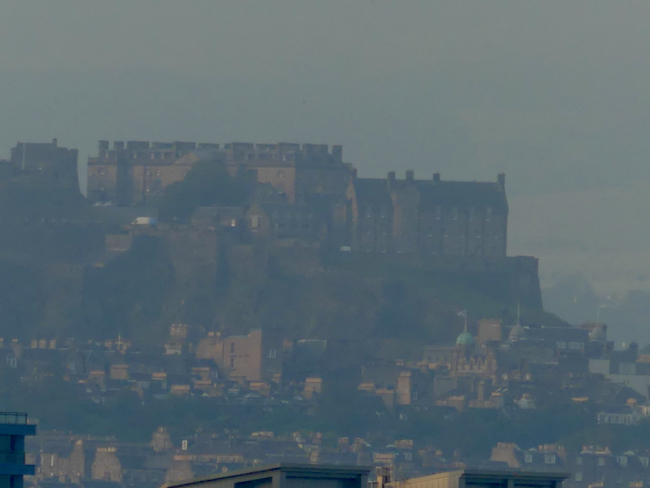
They call our group quickly after group one (Group one is going to play golf at Saint Andrew’s; we are going on the panoramic tour of Edinburgh which is riding around in the bus about one hour looking at important things, then walking up the King’s Mile to the Edinburgh Castle. It is August, the month of the Tattoo, and the Castle has huge grandstands set up for people to come and watch this historical ceremony.
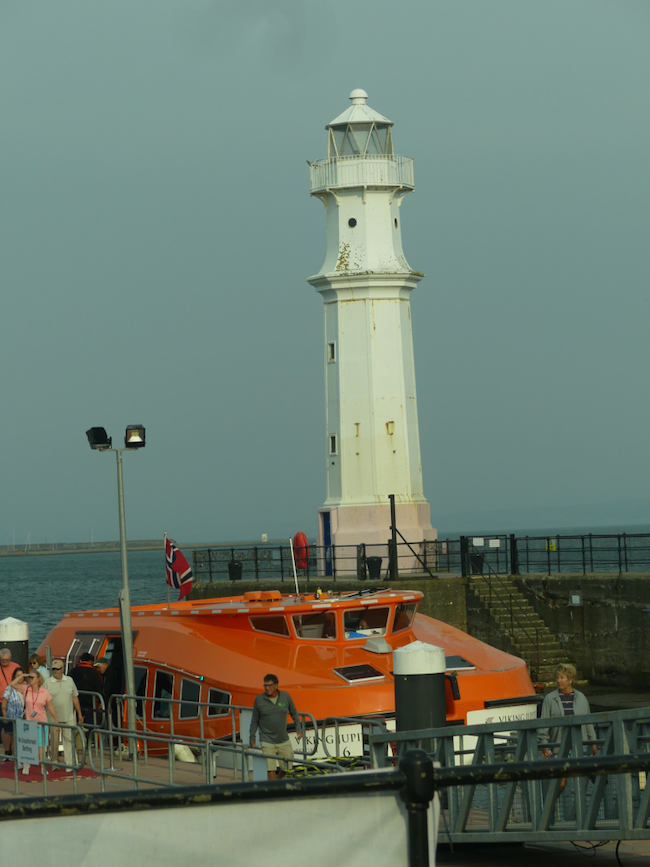
It is also the month of several festivals, so we are glad our bus is first out and full of people who are on time and board quickly. We have the streets to ourselves, shared only with the children and their backpacks headed to school. But look at the skies – so grimy! I try not to think about particulates and to breathe shallowly.
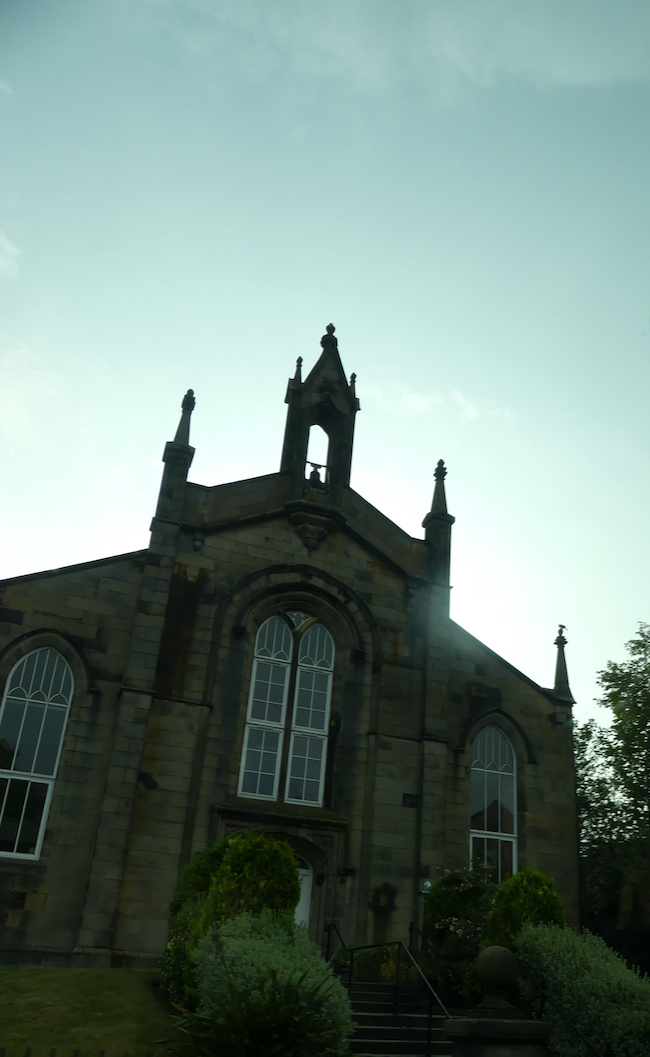
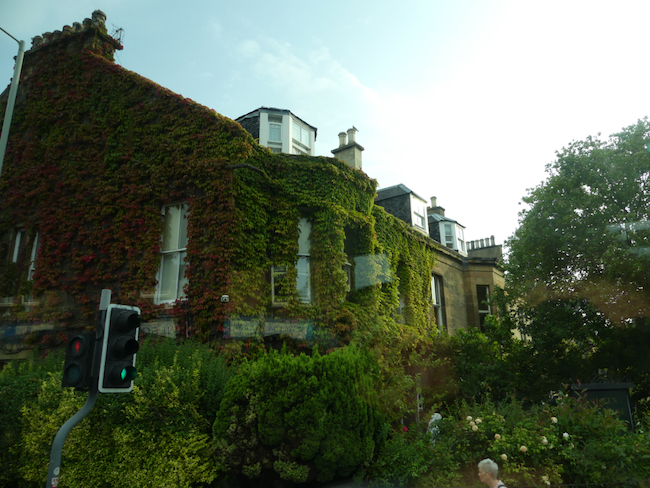
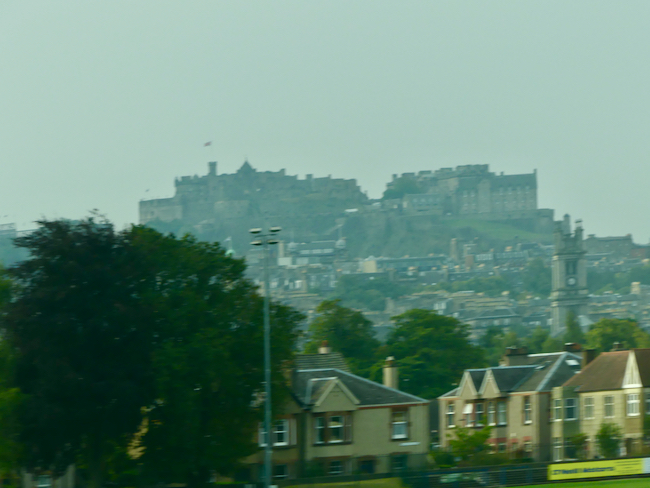
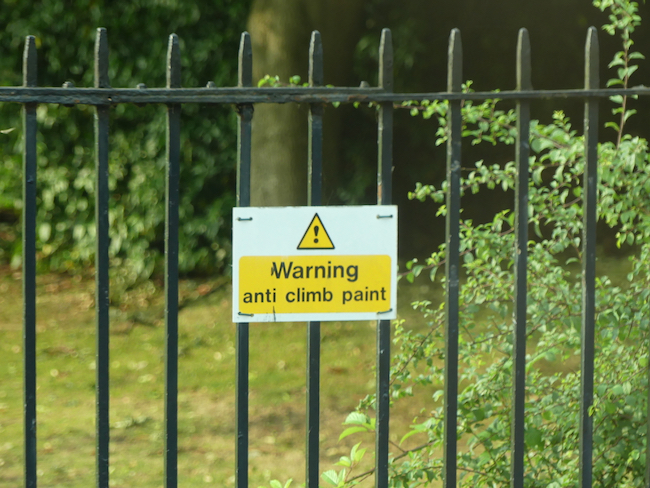
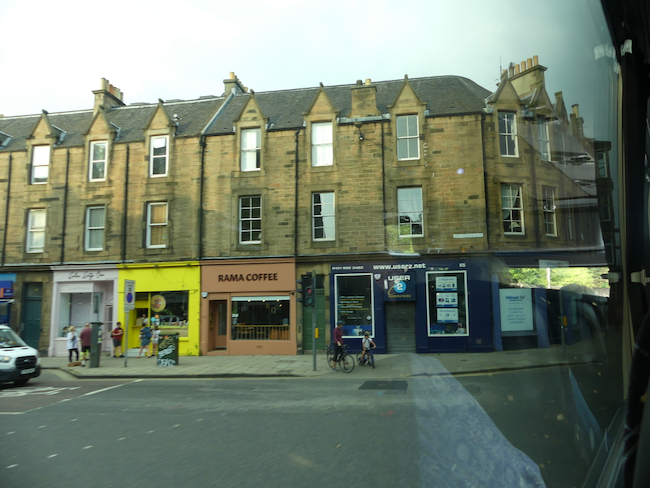
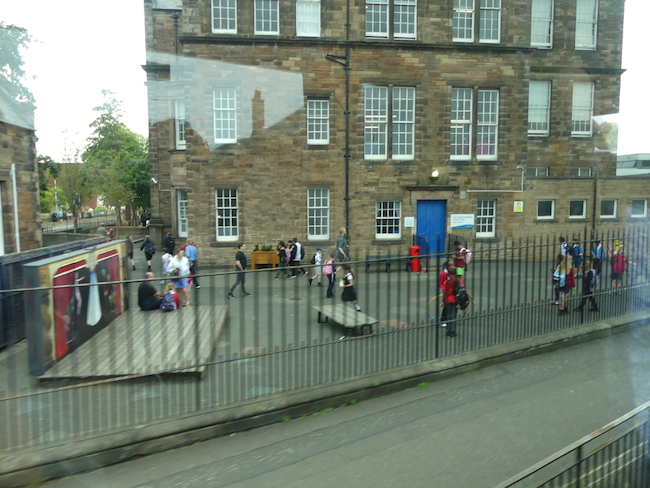
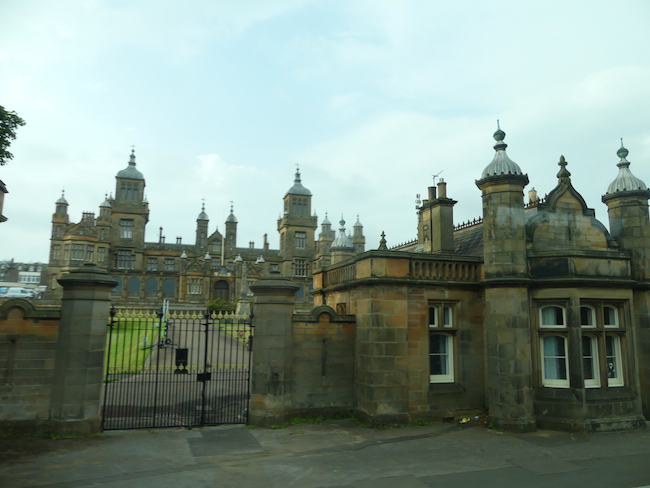

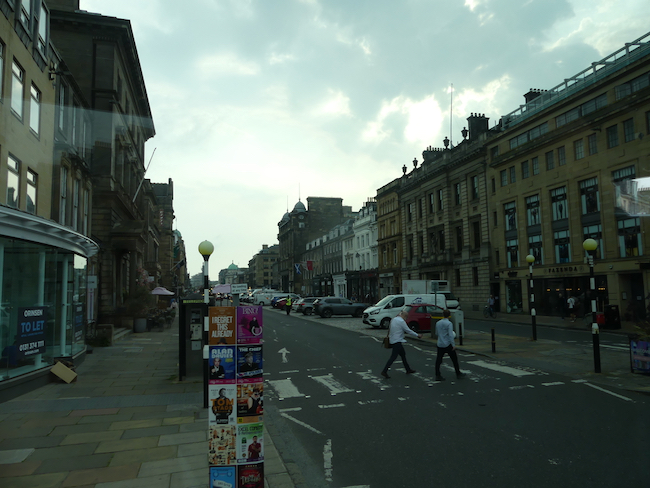
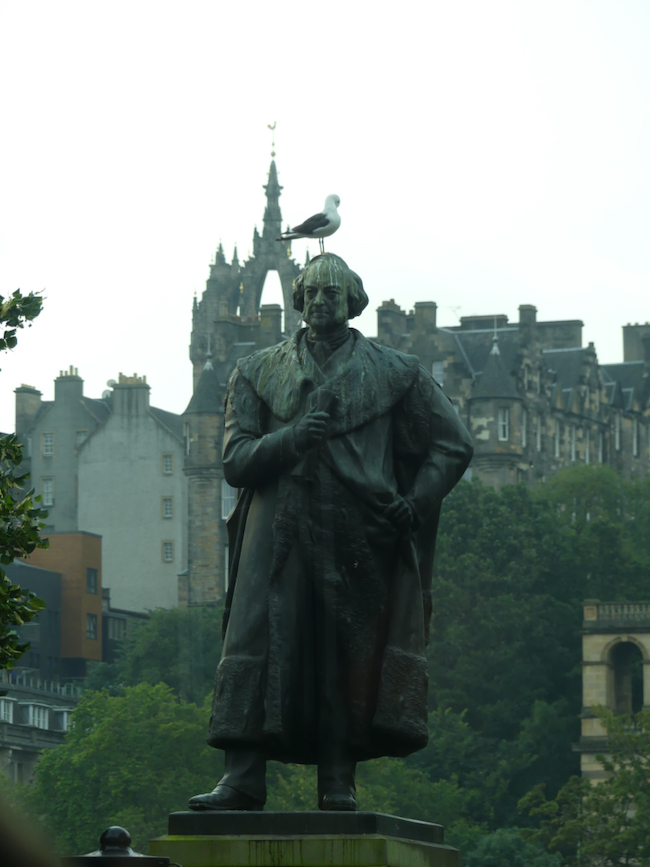
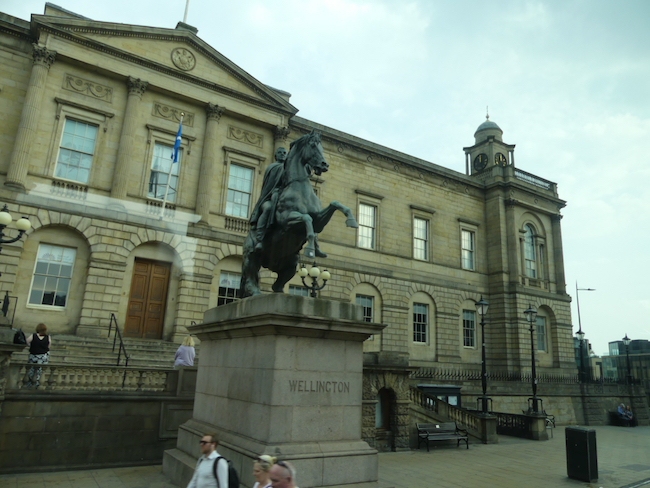
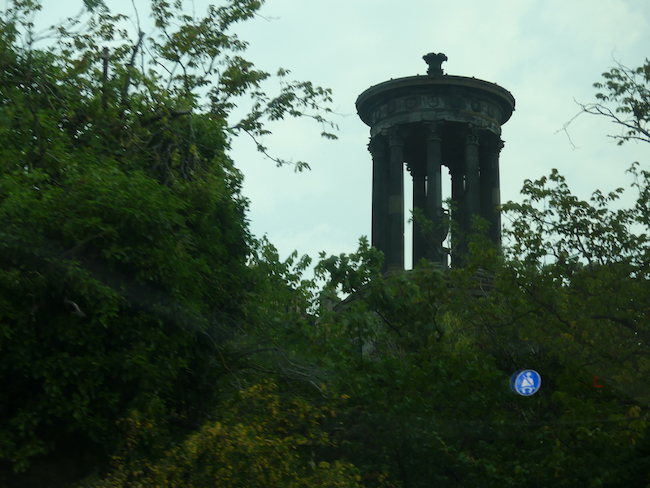
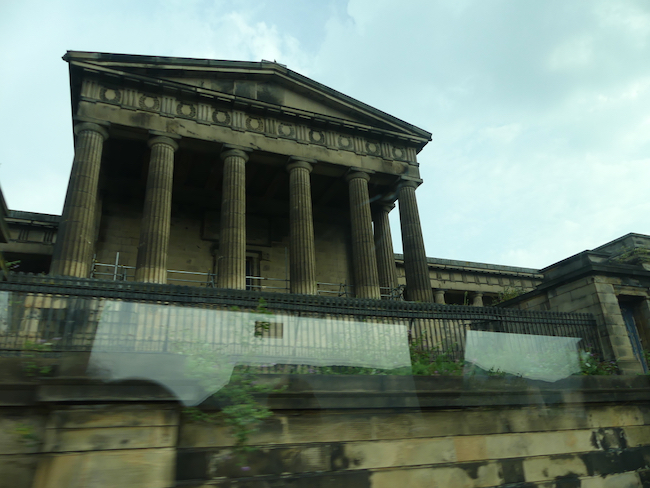
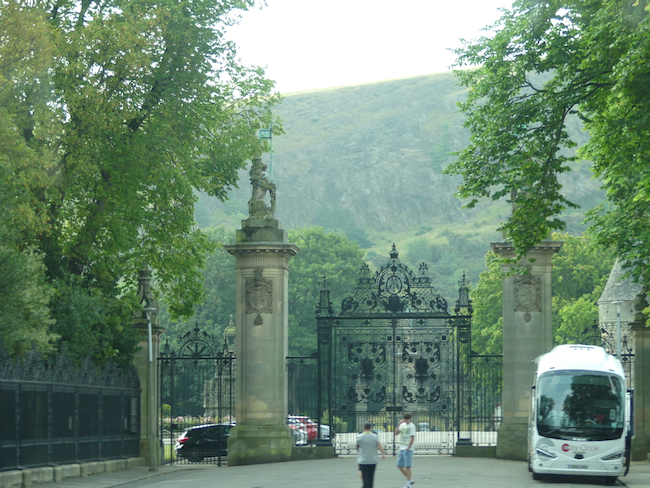
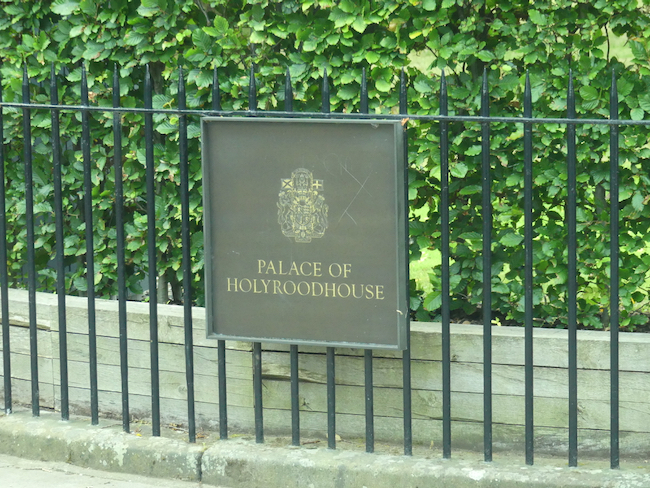

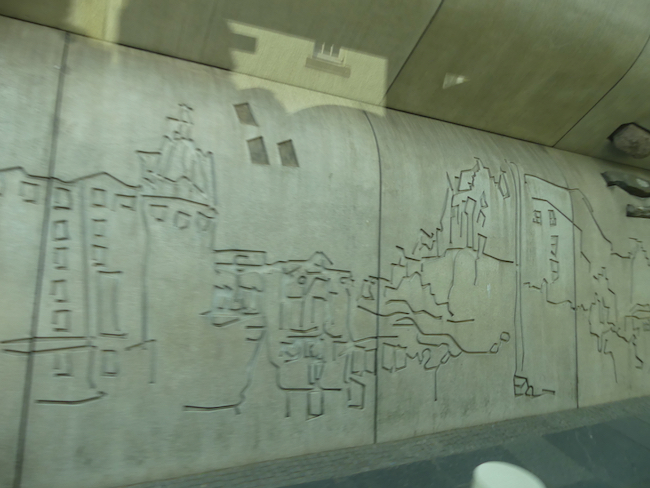

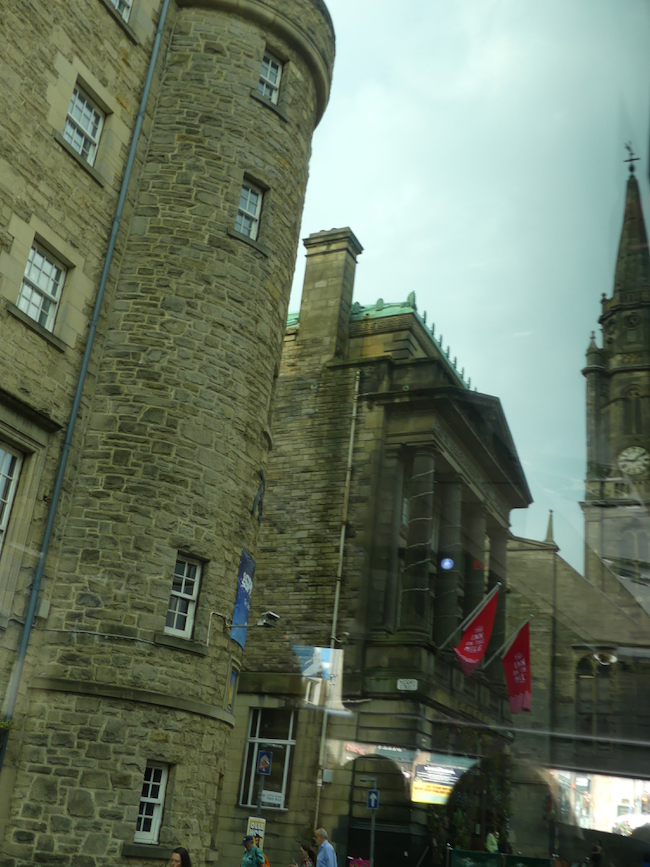
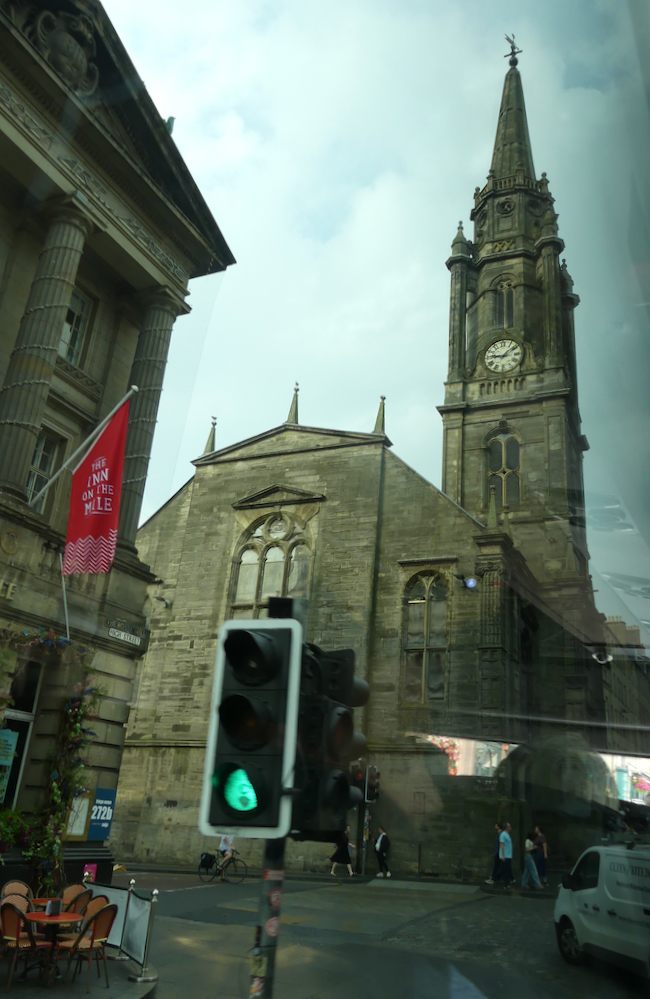
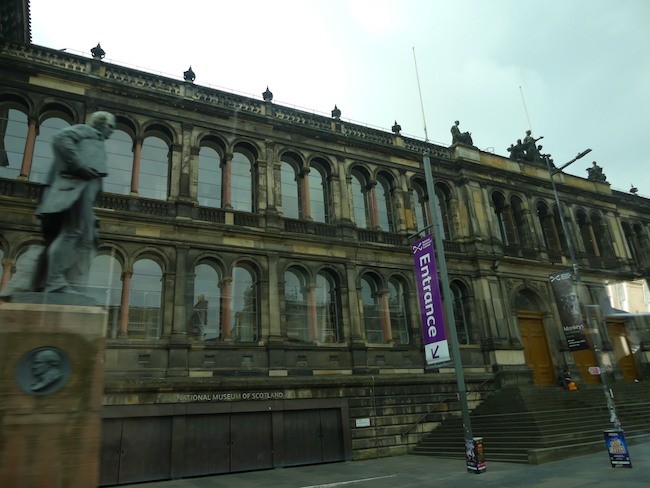

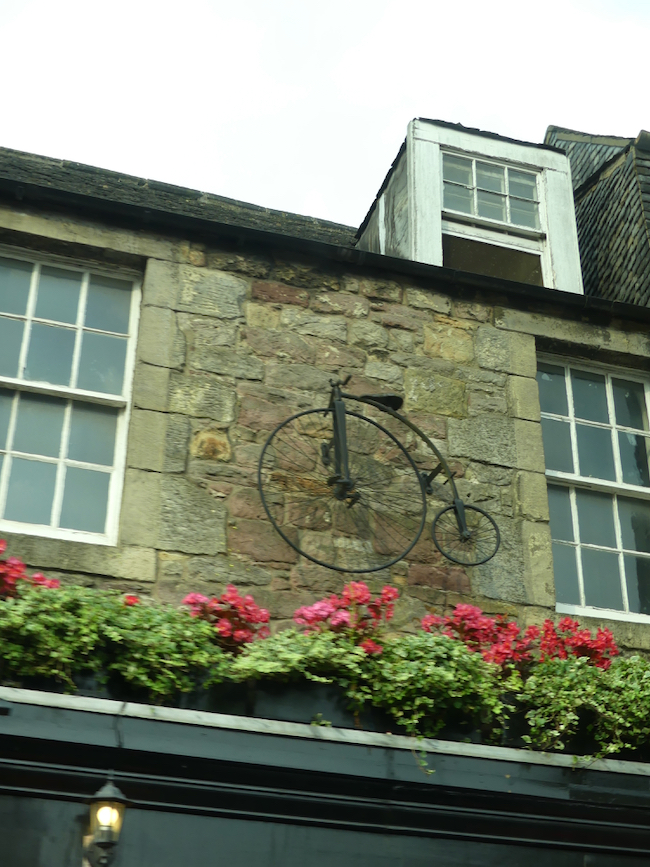
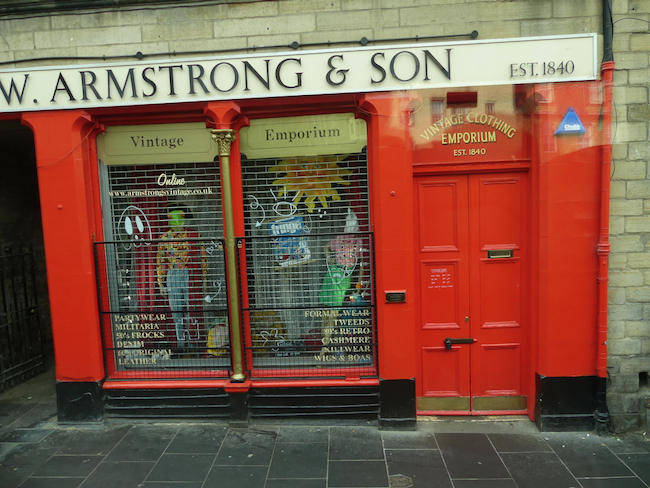
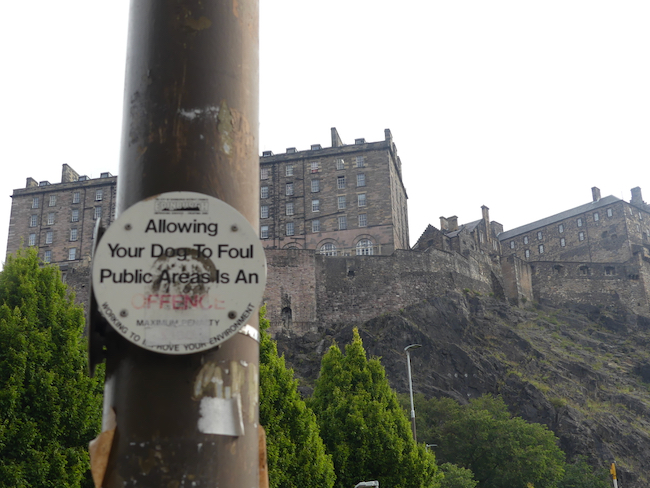

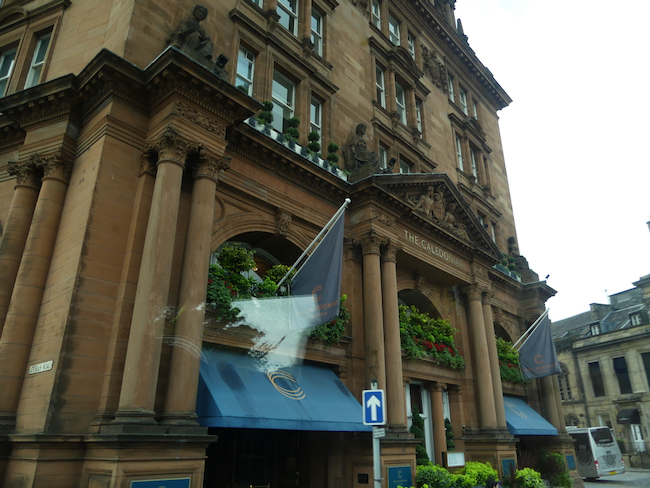
The tour shows us all kinds of buildings – housing for rich and poor, schools, different architectural styles, different kinds of stone and decorations, statues of important men and homes of some of Edinburgh’s famous men. Edinburgh, and Saint Patrick’s Cathedral in Dublin, give of thick Game of Thrones vibes to me. We park and hike up the hill to the castle, and the King’s Mile, where we are on our own for an hour and the crowds begin arriving.
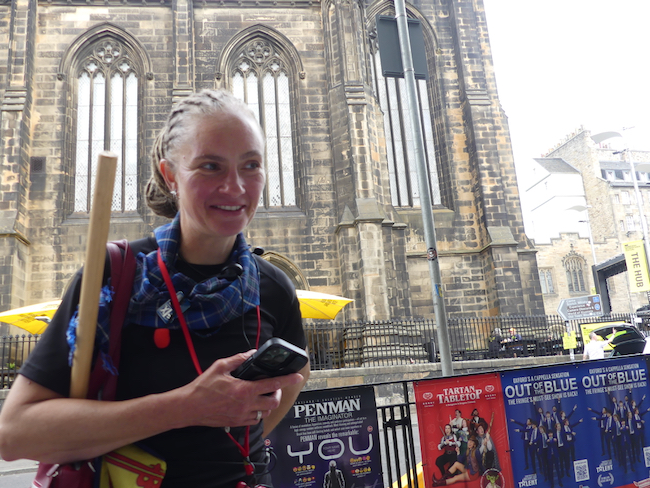
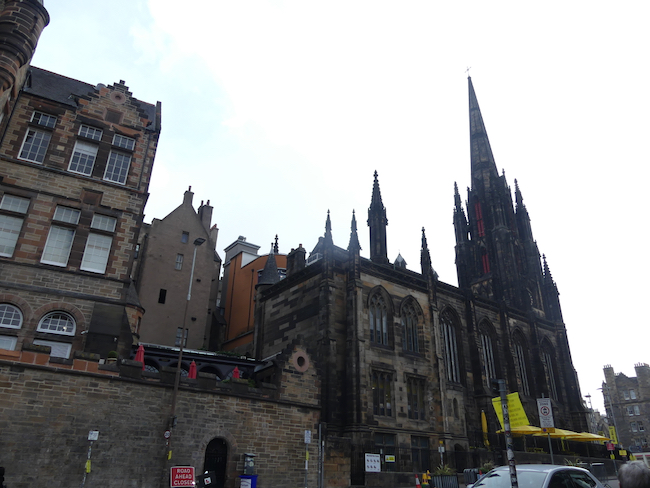
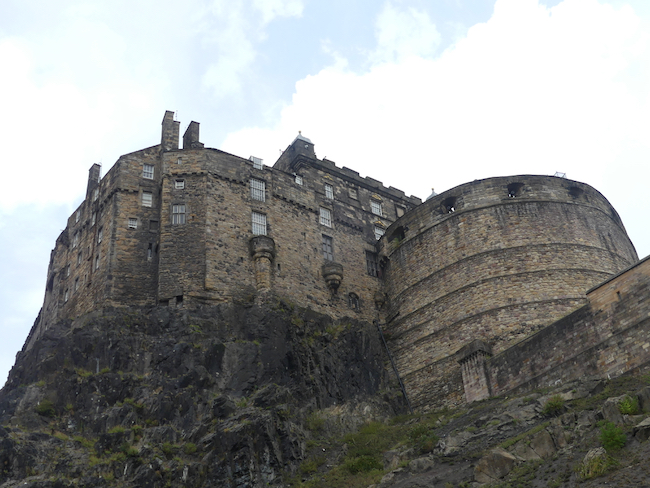
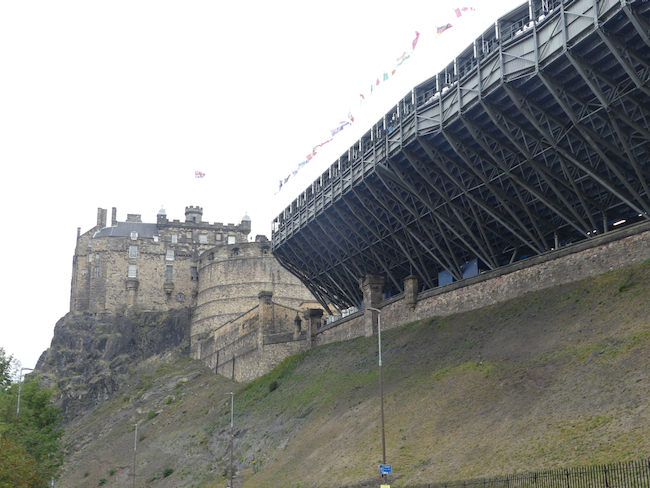
Below are the grandstands built to seat audiences for the Grand Tattoo. It gives me shivers and chills just to imagine sitting there.
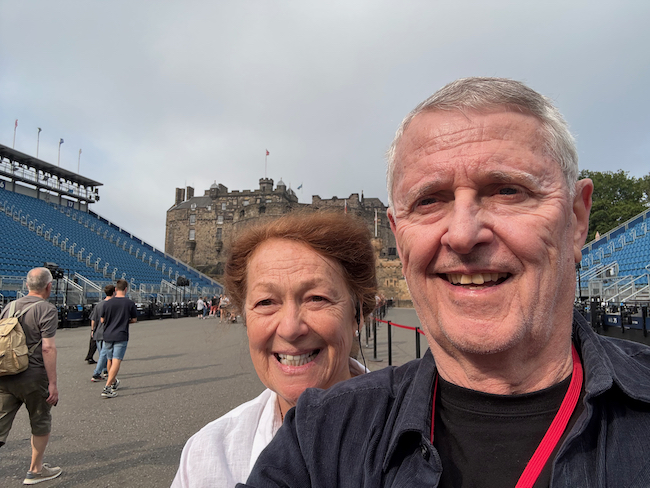
You can see the same grandstands behind us.

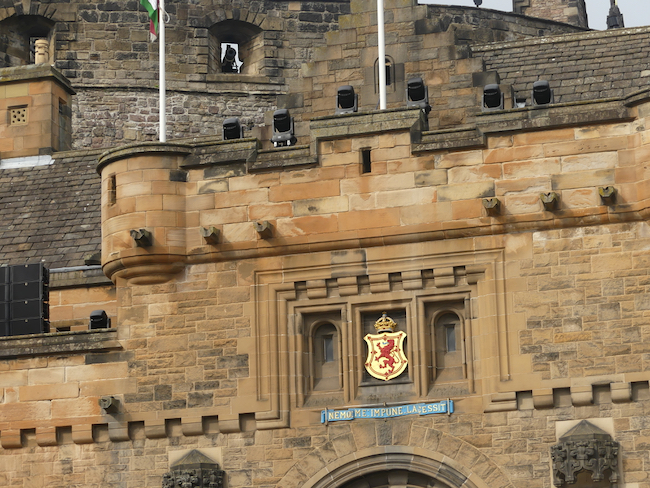
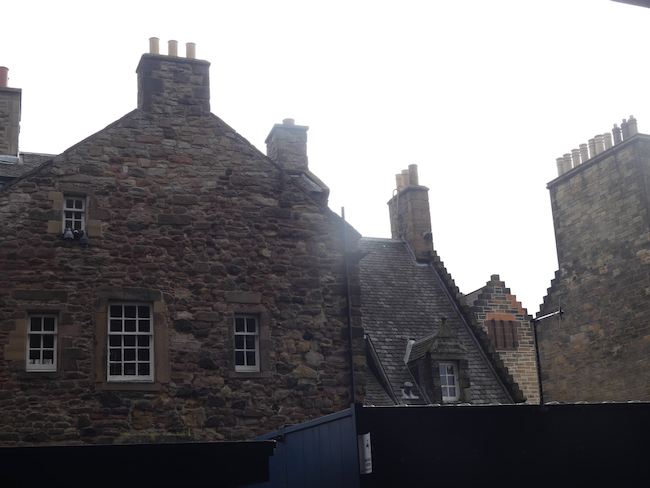
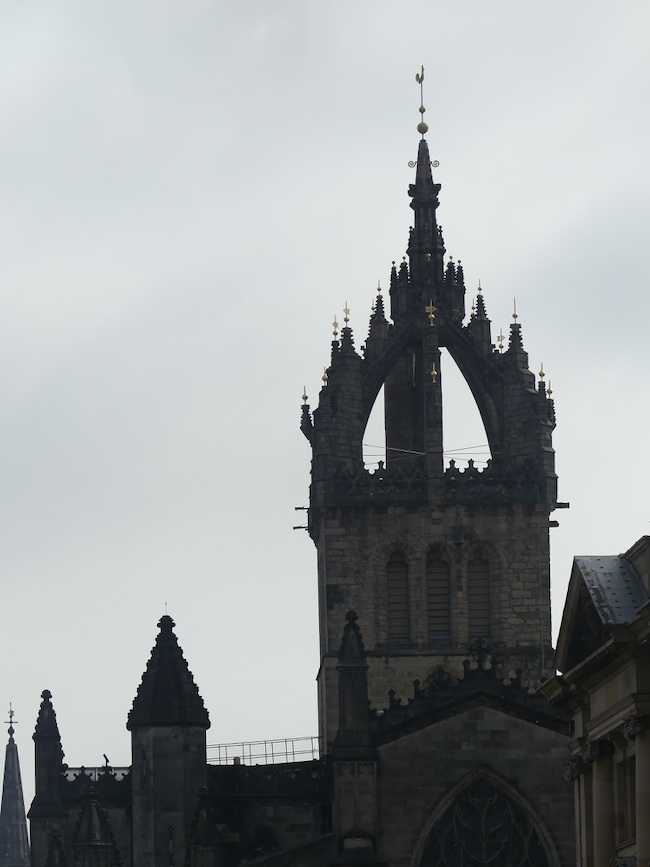

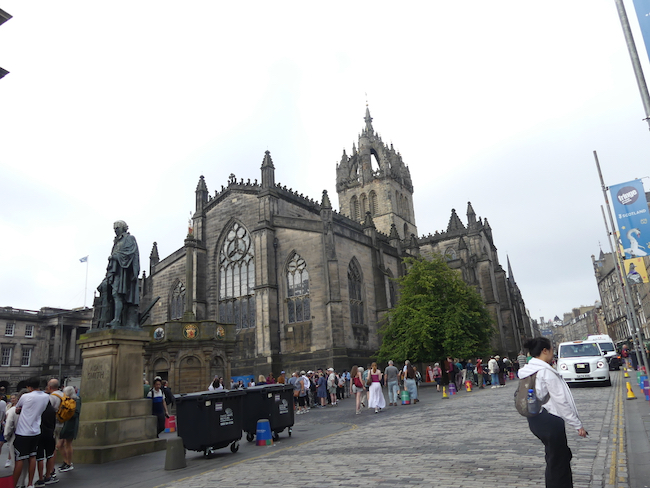


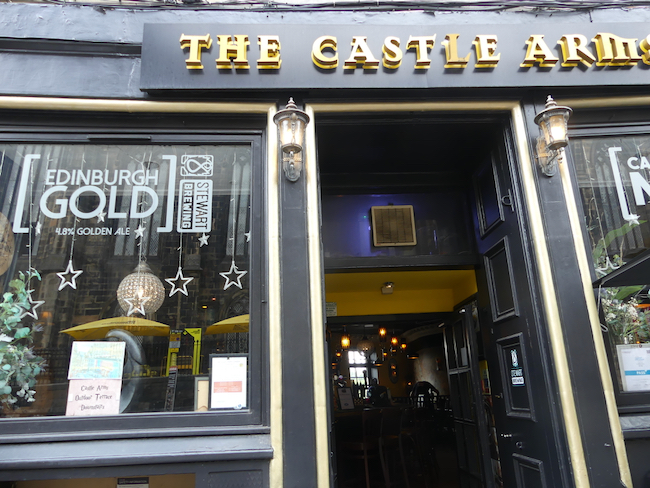
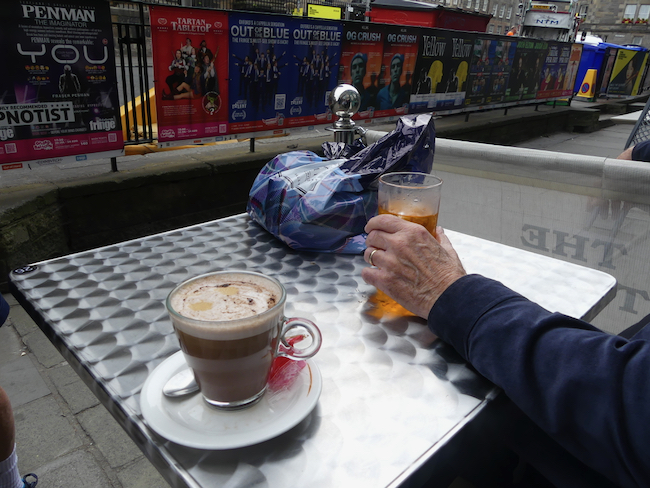
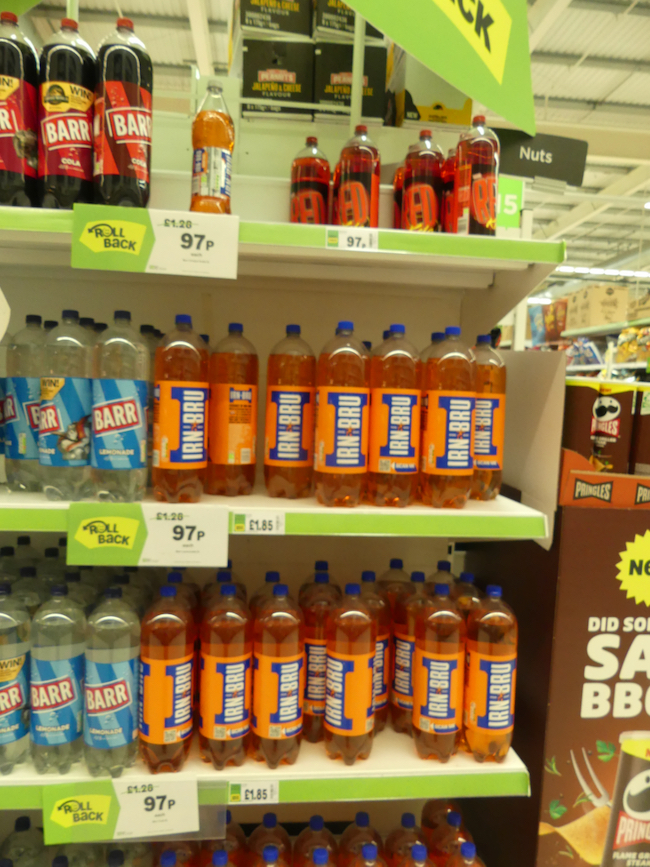
We make a quick stop at the Castle Arms Pub, where they very kindly allow us to use their facilities, then we hike up to the castle, and down the King’s Mile. Then back up the King’s Mile, and we still have 15 minutes to spare so we head back to the Castle Arms Pub to have a coffee and an IRN-BRU (special Scottish soft drink) to thank them for allowing us to stop earlier. Our guide picks us up on the way back down the hill, and everyone going back to the boat is on time, again. We love traveling with Viking people.

When we get back to the port, we decide to explore a little before heading back to the ship, so we look for the grocery store the guide has told us about to see a little of how the real Scots live, or at least where they shop. It is an Asda grocery, but once inside, it sure has the feel of a Walmart, with signs about price rollbacks and arrows, clothing racks and foods – its a supermarket, not unlike you would find in France or Spain or Pensacola. The goods are goods like we would buy in Pensacola. We just see one thing we know is genuinely Scottish:
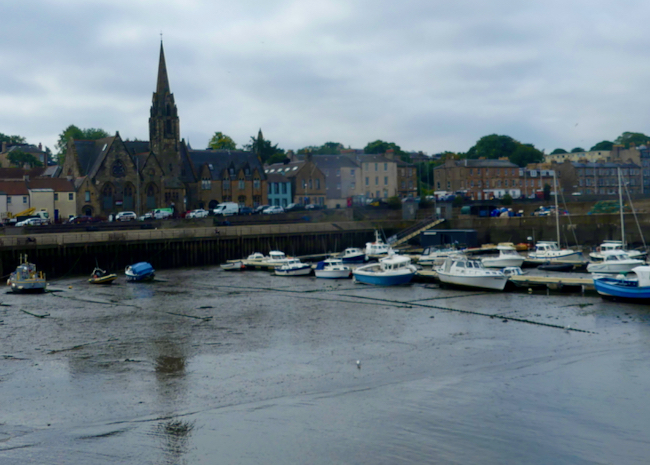
When we get back to port, we board the tender and are back on the ship very shortly. It’s been another great day on this trip, bright sunshine, warm but temperate weather, zero complaints.
We both chose lunch from the noodle shop, broccoli and stir fried shrimp and mushrooms for both. And dessert, of course. Blueberry sorbet, and it is wonderful.
We need a trip to the Nordic Spa, the bubbly hot wave pool down on the first deck, with a snow room, a steam room and lovely serene changing rooms with saunas. Sheer bliss.
We have unruly neighbors. This afternoon we hears thumps and screams amidst the shouting and arguing and finally AdventureMan called security and asked them to make a call to check on their well-being. It stopped for a while. It’s started up again.
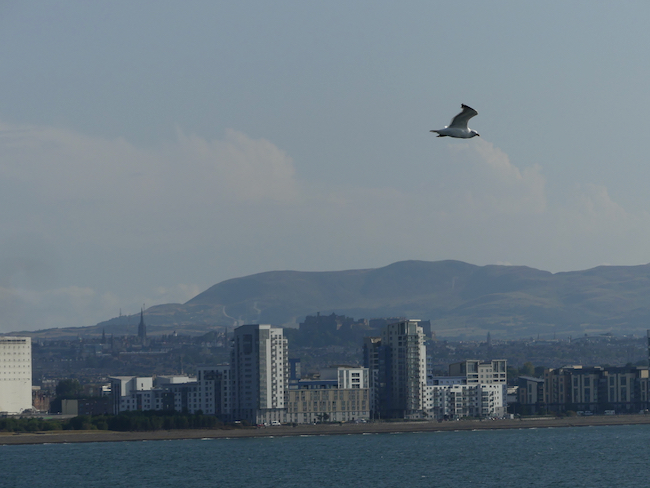
We see the name Lothian on buses and small stores. AdventureMan tells me Lothian is the name of the lowland region that includes Edinburgh, lying between the southern shore of the Firth of Forth and the Lammermuir Hills and the Moorfoot Hills. So you take the high road and I’ll take the low road . . . . Firth is a cognate of fjord, a Norse word meaning a narrow inlet. Thank you, AdventureMan. Now we are leaving Edinburgh.

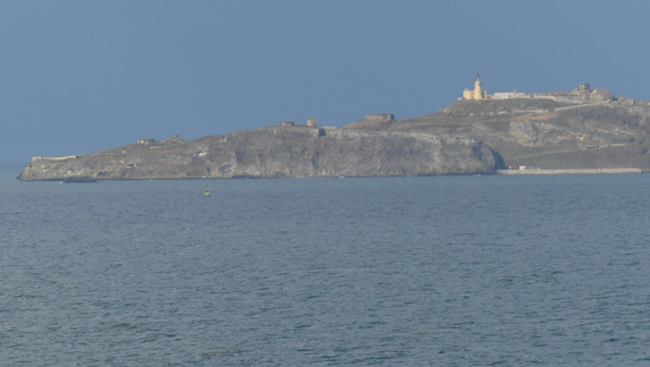

We would come back to Edinburgh again. There is so much history here we just skimmed over. The Romans. Hadrian’s Wall. We need to come back.
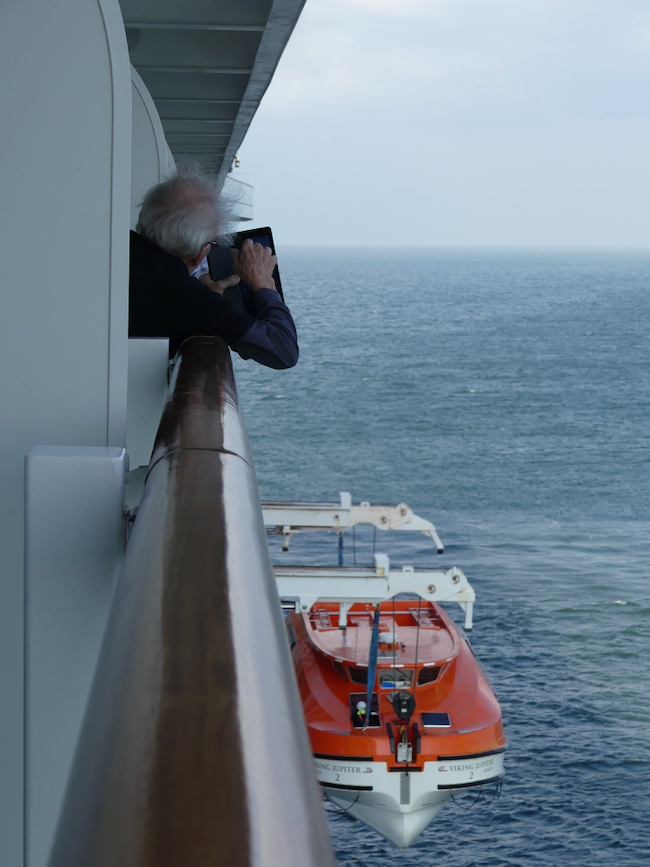
We’ve finished dinner, but we haven’t finished chatting, and there is a big block of something (?) floating off starboard side and people start rushing over to take a picture of the “iceberg.”
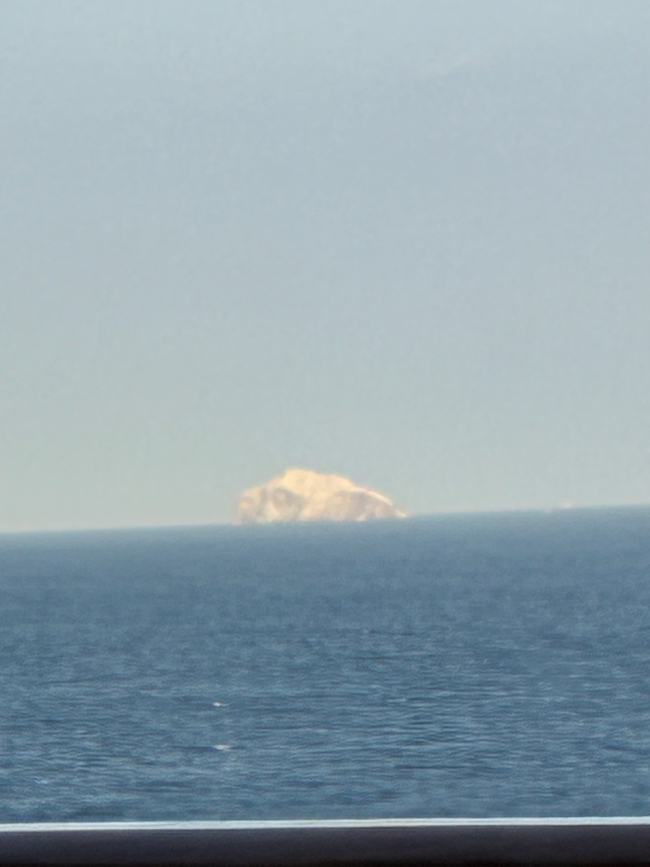
I have no idea what it really was, but I’m pretty sure it wasn’t an iceburg.

Sunset en route to Aberdeen

I haven’t said much about shopping. It’s because I haven’t shopped much. Our great quest on arrival in London was to find good cheese and good wine to have in our cabin. It thrills us to sit out on our balcony with good cheese and a nice glass of wine as we sail away.
Most of the trips we take are busy. These cruises are what you make of them. Some people are really laid back and mostly are on the trip for the cruise experience; they love the shows and on-board games and entertainment (there are better cruise lines for that.) One group on this trip is about golf, and another group is about visiting gardens, and they meet up at night and have great conversations, regaling one another with discoveries and anecdotes. Some love visiting wineries and distilleries at every port. My husband and I are mostly into history, early history for me, military history for my husband. We have lists of what we want to see and scurry to hit our priorities. It can be exhausting – and exhilarating. Shopping, however, gets tucked in where it can.
I found some cool Christmas gifts at the Canturbury Cathedral. I bought chocolate with Irish whiskey and a Celtic coffee mug in Dublin, more chocolate in Wales, and a tin of tea with a dragon on it! That’s about it so far. Some people came back from Edinburgh laden with shopping bags. Most of their shopping was gorgeous woolens, but I have woolens, and I live in Pensacola, Florida, where woolens are mostly irrelevant (and too itchy for me.) So we’re really not spending much. We ARE having a terrific time.
I wish we had another day at sea before Aberdeen; I need time to integrate all these new sights and ideas. No such luck! On one cruise, with several sea days, a friend of the ship’s captain told us that days-at-sea were a hardship for the ship’s crew, that the one thing that can cause big trouble is bored passengers. I can imagine! And I am a woman who needs time to ponder and to integrate!
British Isles; White Cliffs, Castles and Canterbury
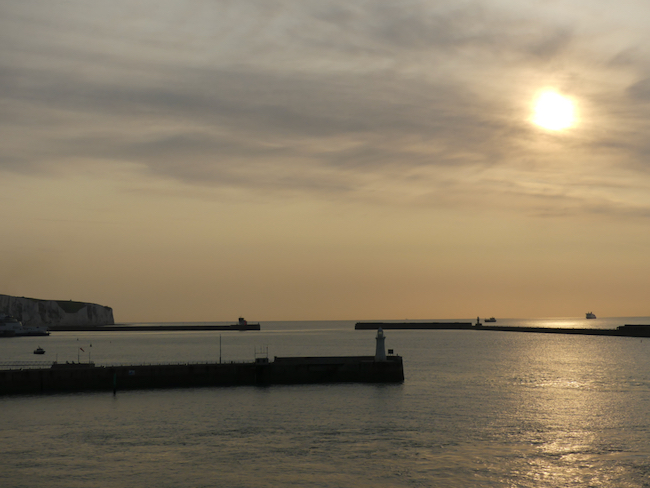
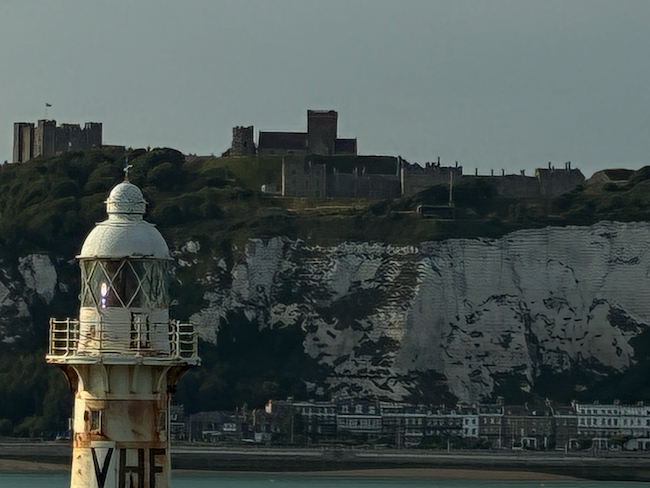

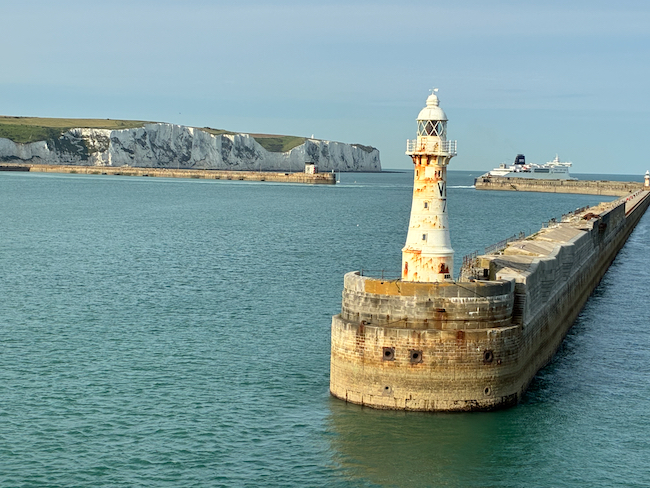
GROAN! We peek out the window and see the White Cliffs, a thrill, but the day is foggy. Morning came so quickly, and my tour, to Leeds Castle and the Canterbury Cathedral will depart at 8:15. AdventureMan’s tour, Britain at War, departs at 8:30. We quickly dress and go to breakfast; it will be a long day.
The tours board quickly, and mine goes through the countryside, full of rolling green hills and white fluffy sheep. As I talked with the tour guide, I asked if their was still any wool industry in this area, Kent, and she said there were people who grew sheep and sheered them, and and a very small artisanal group who spun and dyed the wool and sold it for a very high price to knitters, but they have a saying that it costs as much to feed a sheep as they get from shearing a sheep.
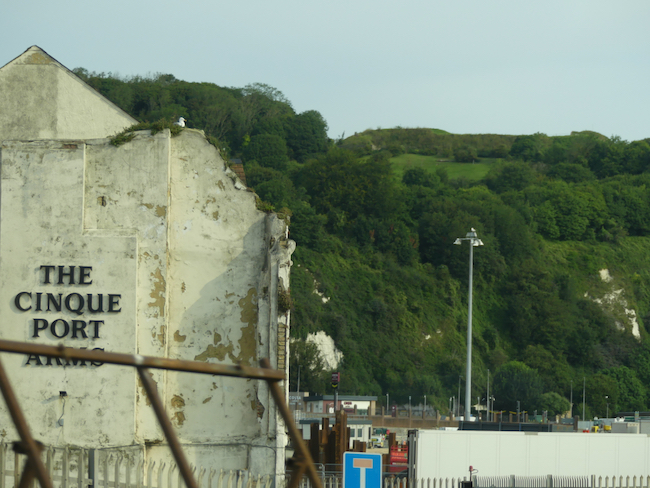
Leeds Castle is beautiful, and intimate, and informal, and we are the first ones there and have it all to ourselves until the teeming hoards arrive.
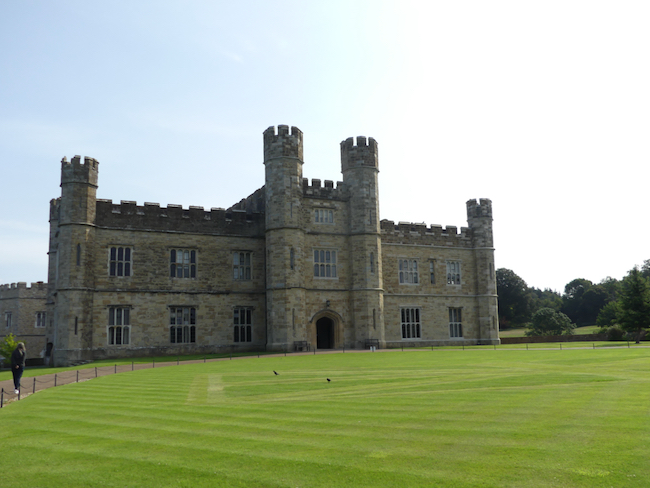
It is a very old castle, handed by kings to their beloved wives, used as a country house, and a stop before nearby Dover where people would depart for France.
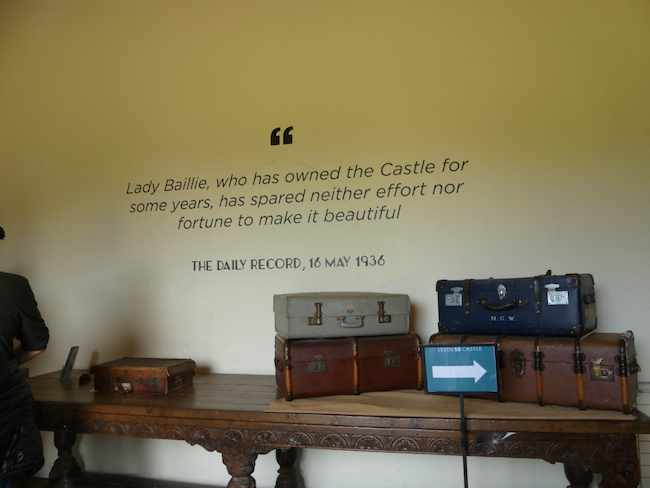
Later, it was owned by a very wealthy American woman, who restored and renovated the castle several times, then donated it along with money to maintain it, to the government. The Leeds castle is open to the public, has a golf course and other entertainments, including one called Go Ape, which has things like ropes from trees, and maybe a zip line, allowing people to experience ape-like behavior, sounds like a lot of fun.
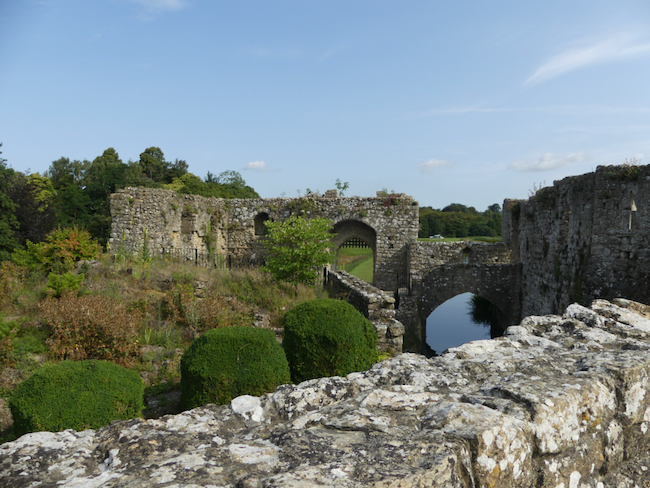
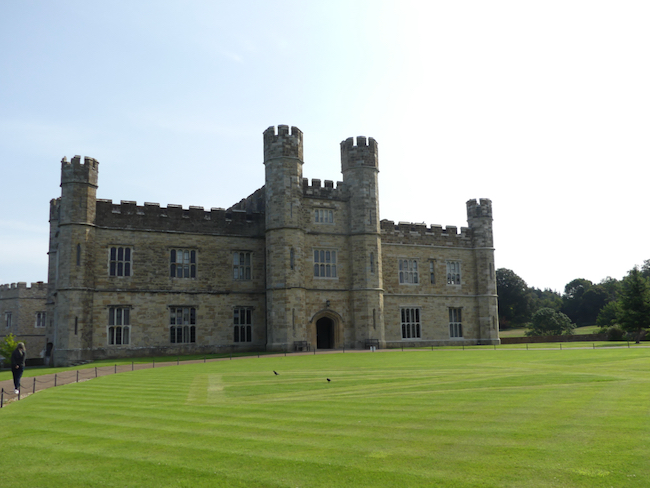
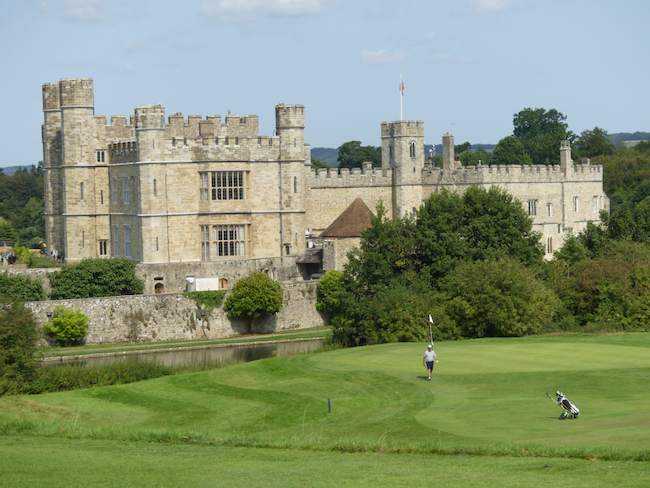
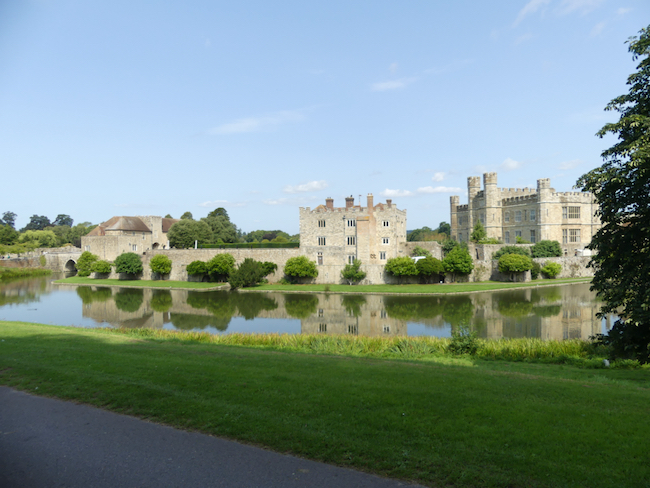
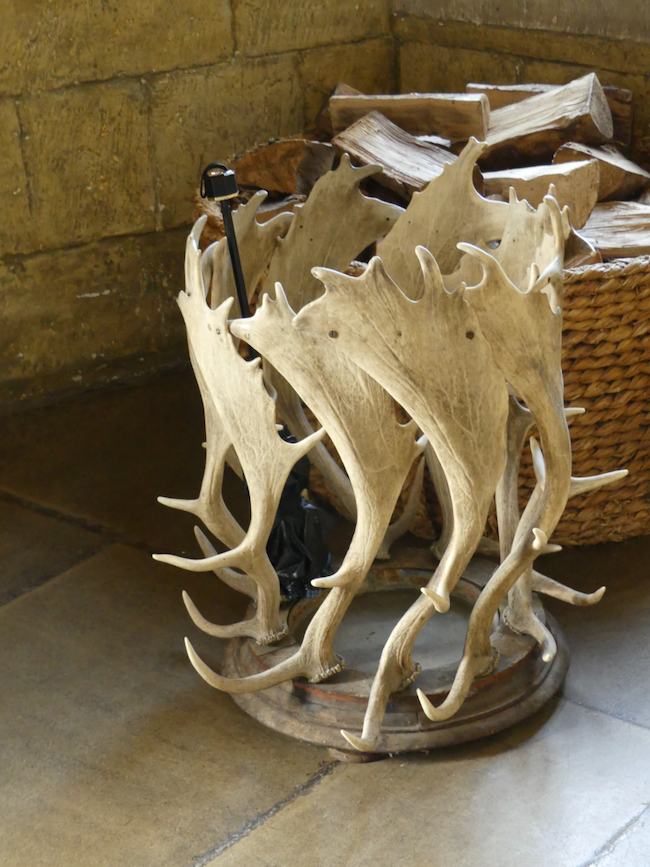
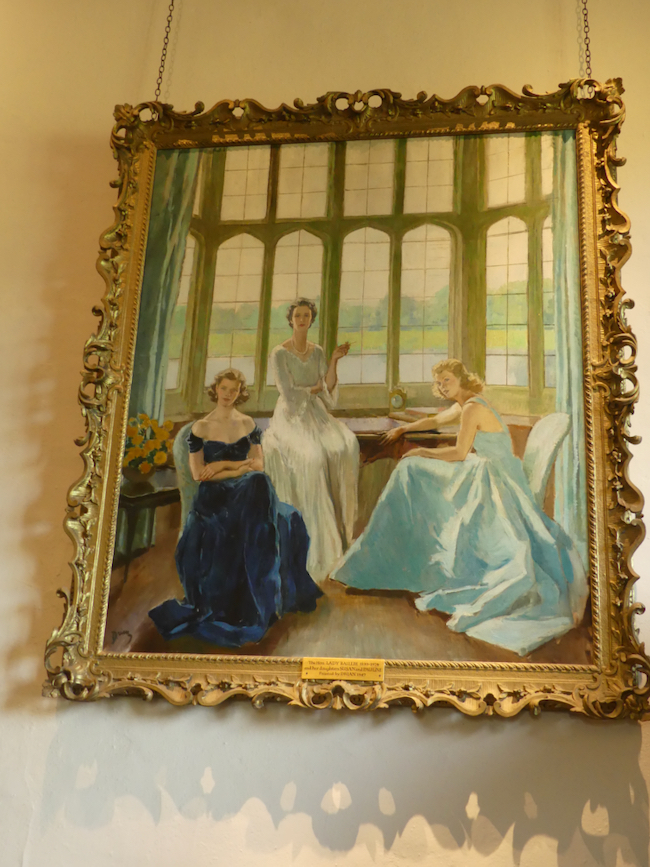
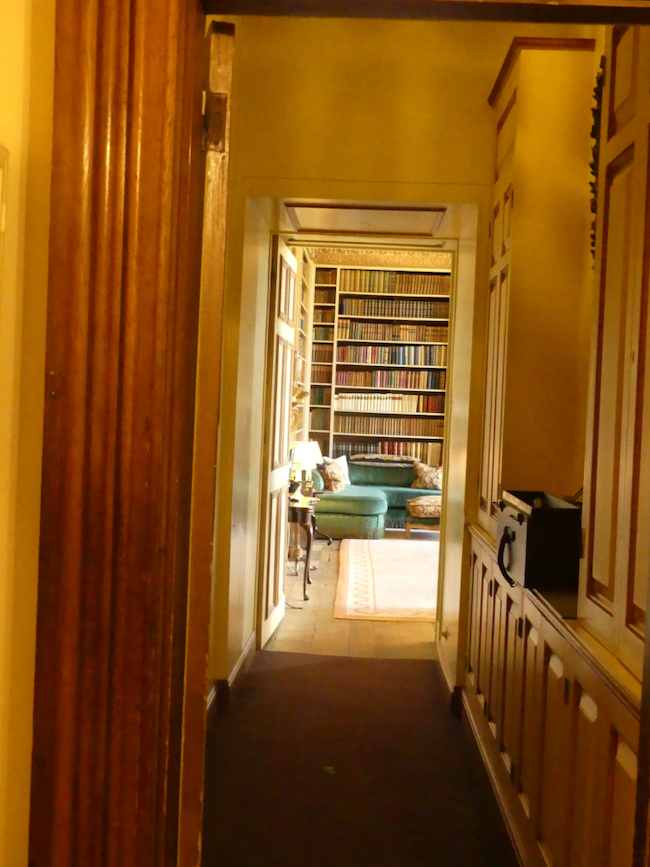

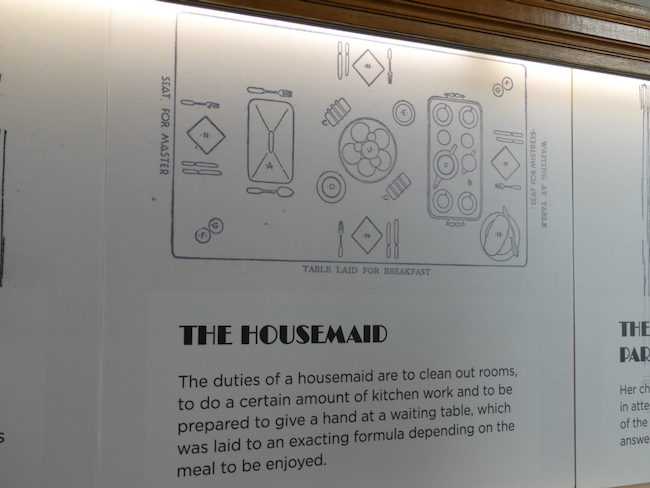
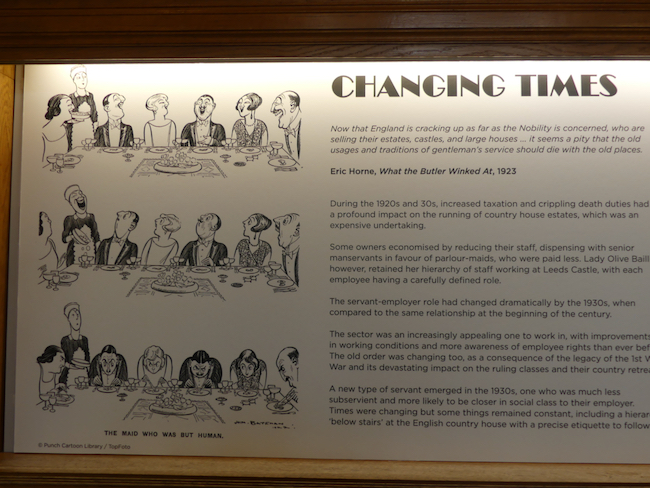
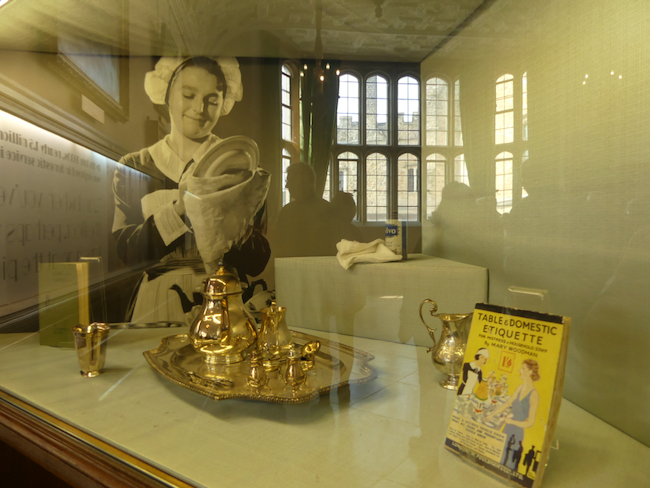
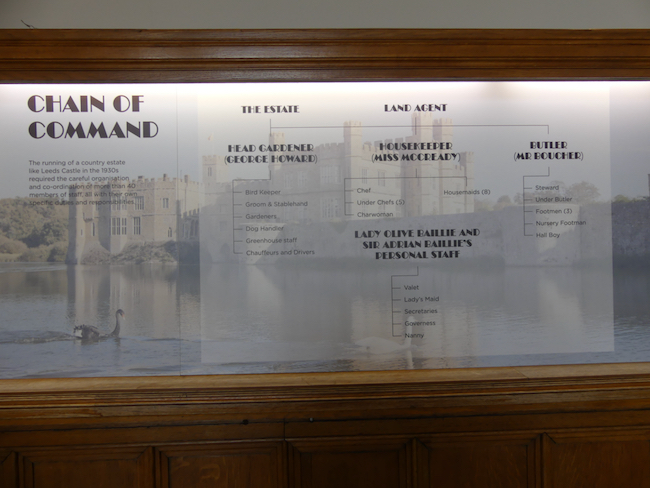
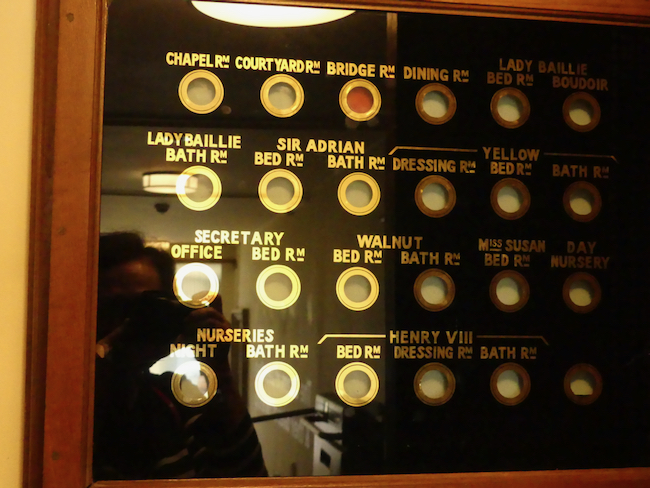
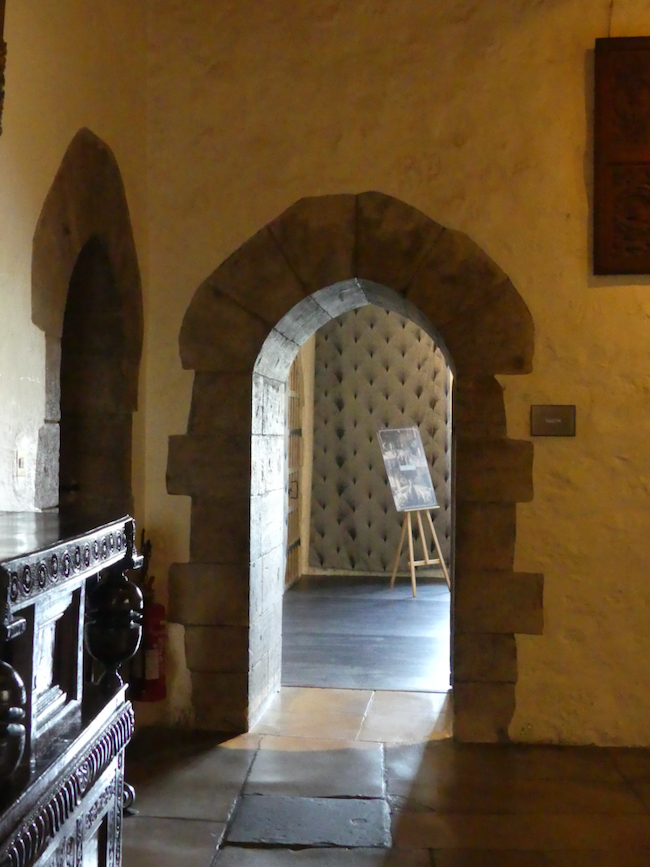
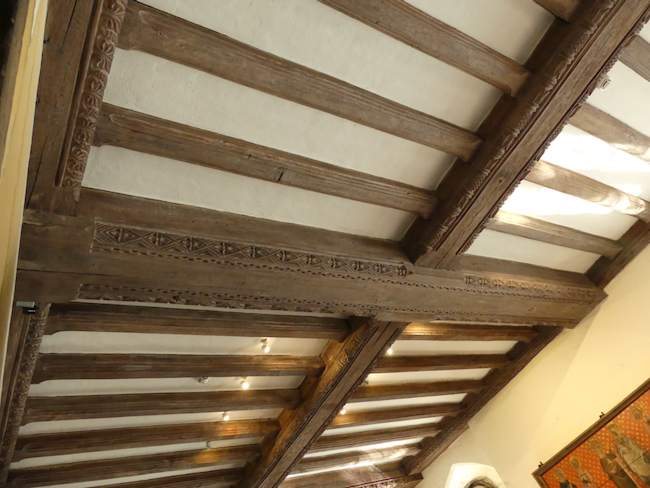

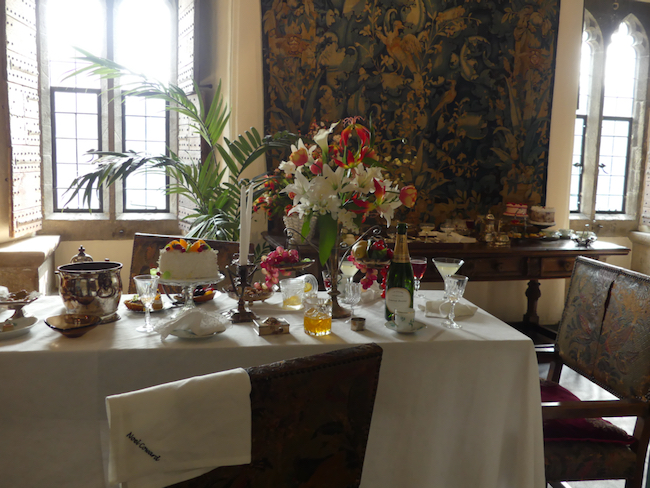
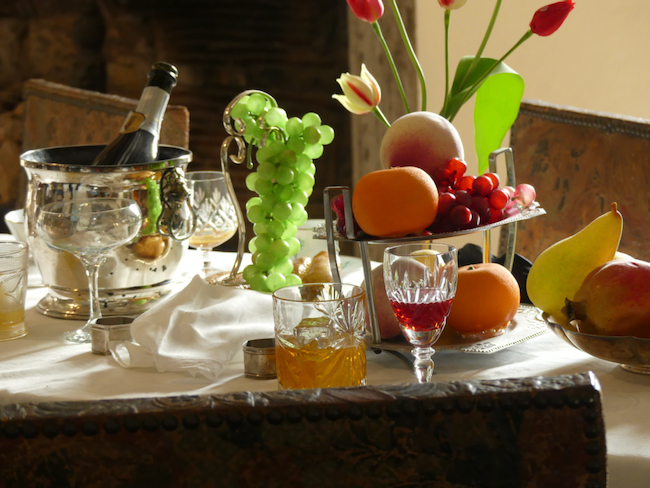
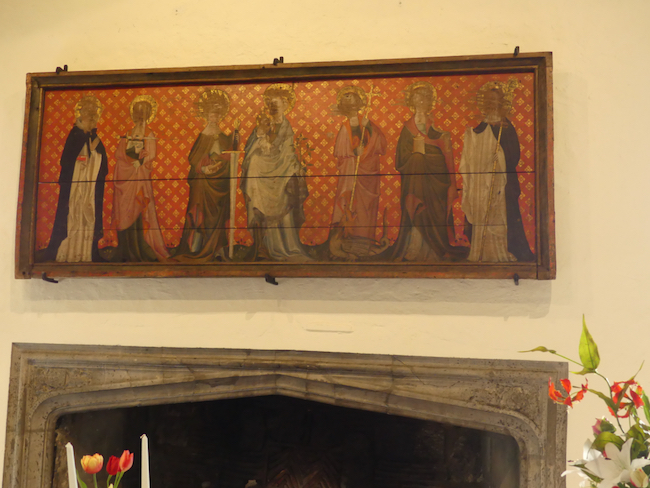
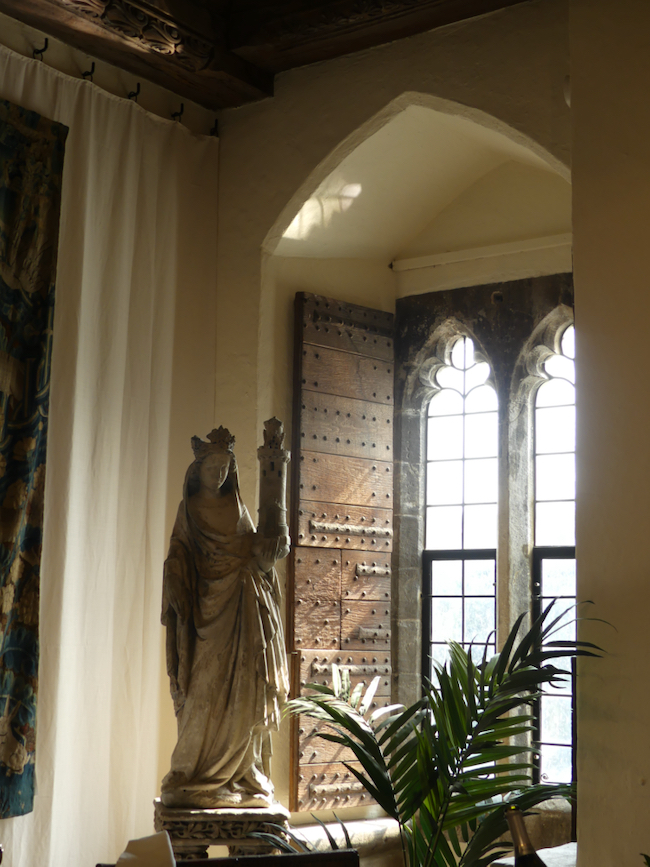
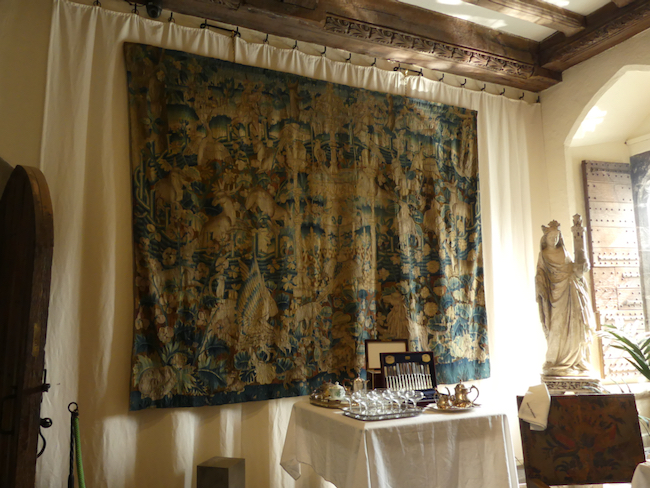
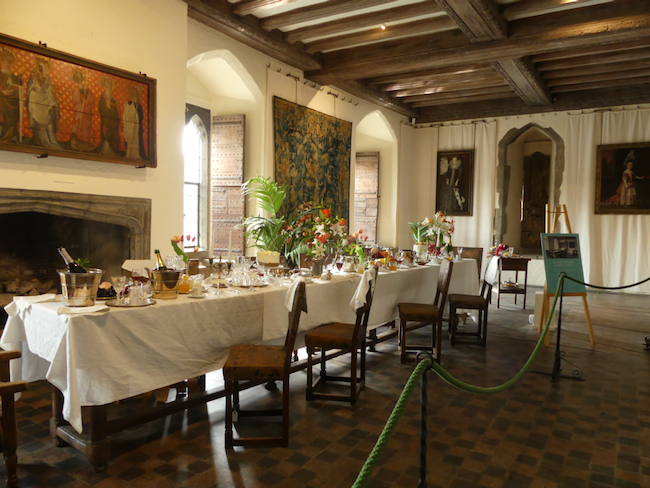
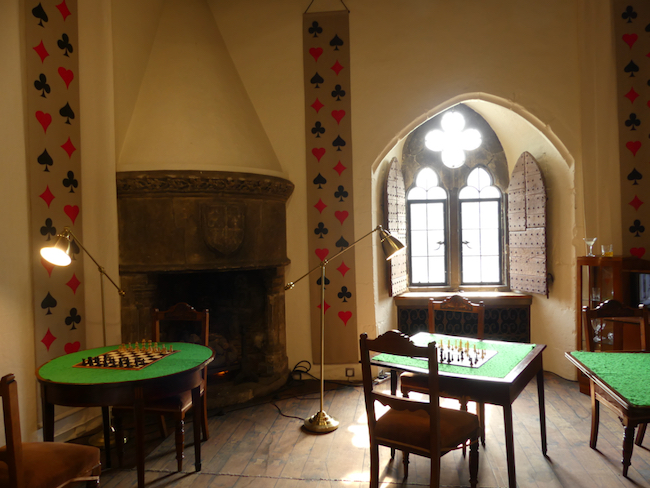
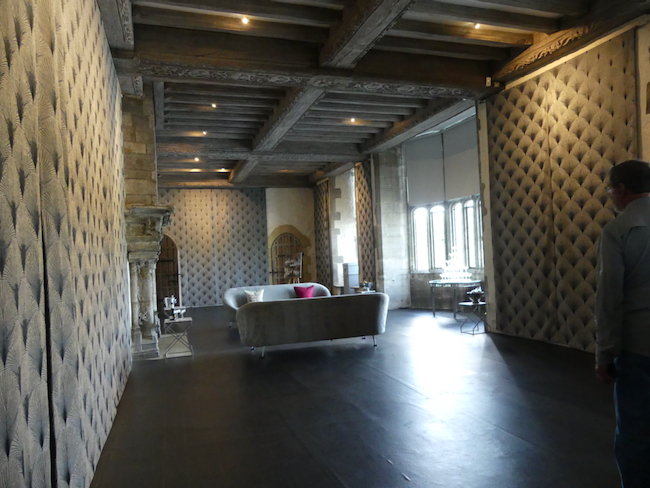
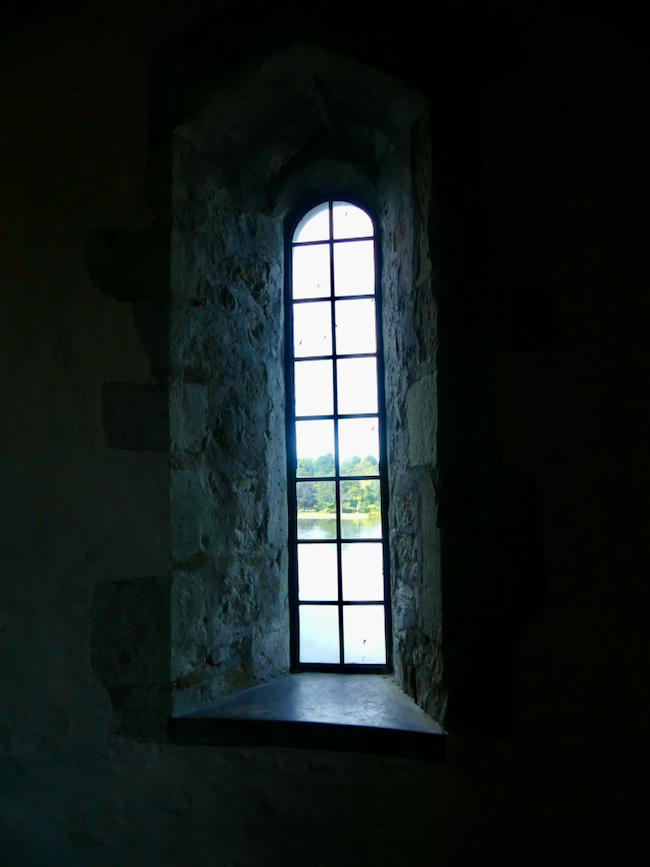
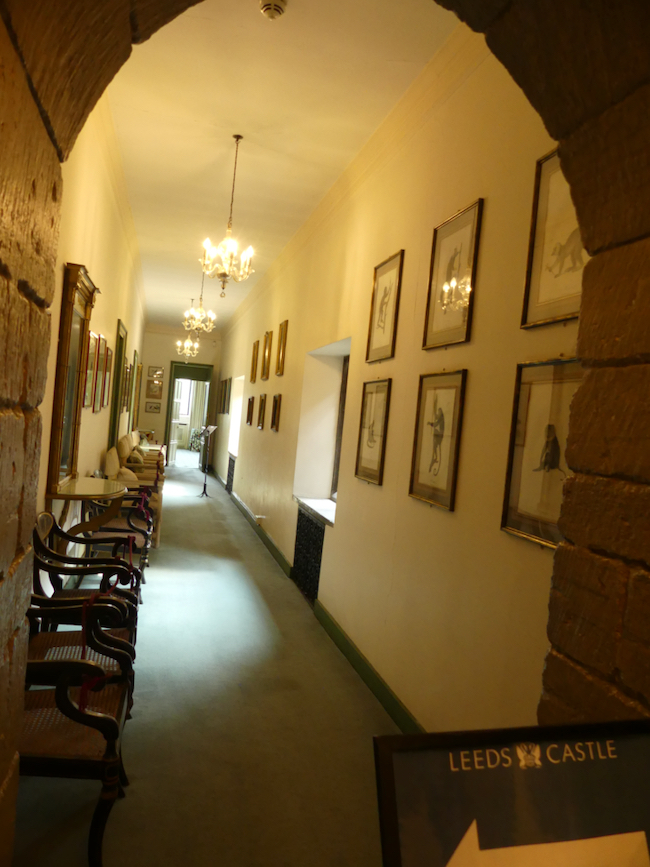
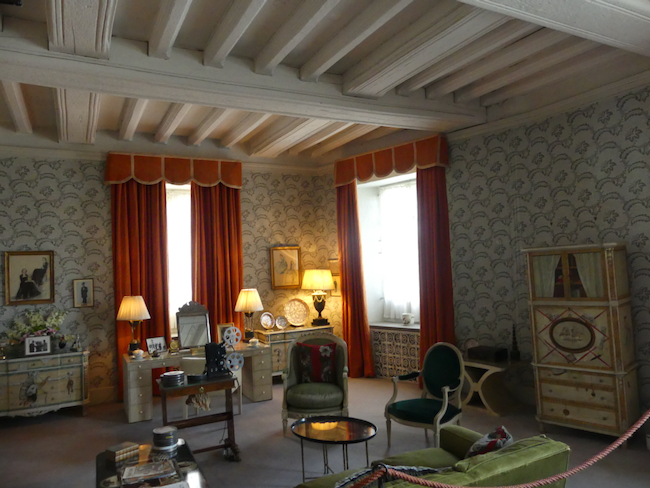
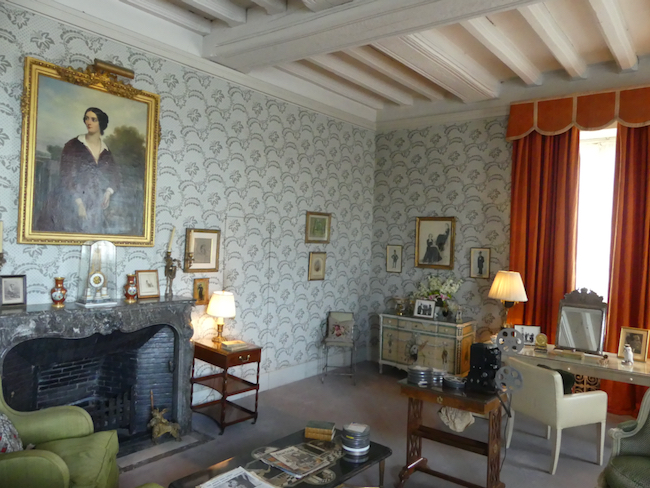
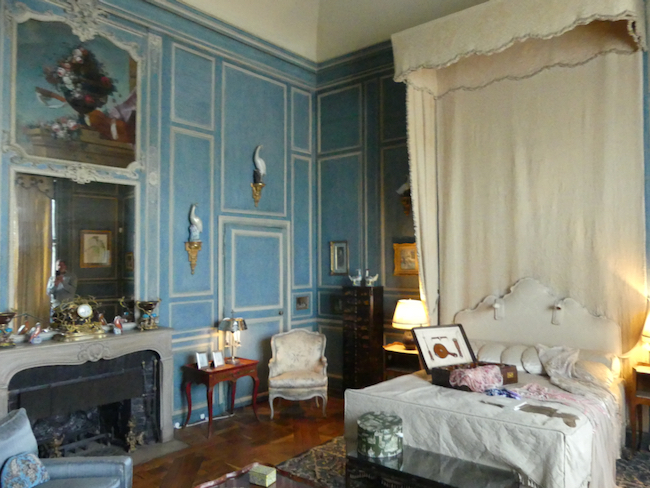
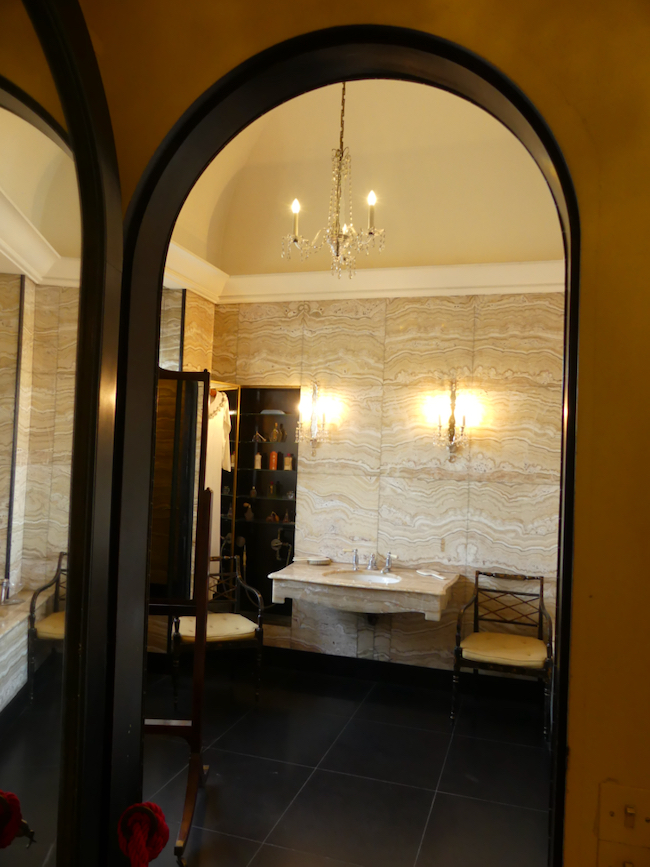
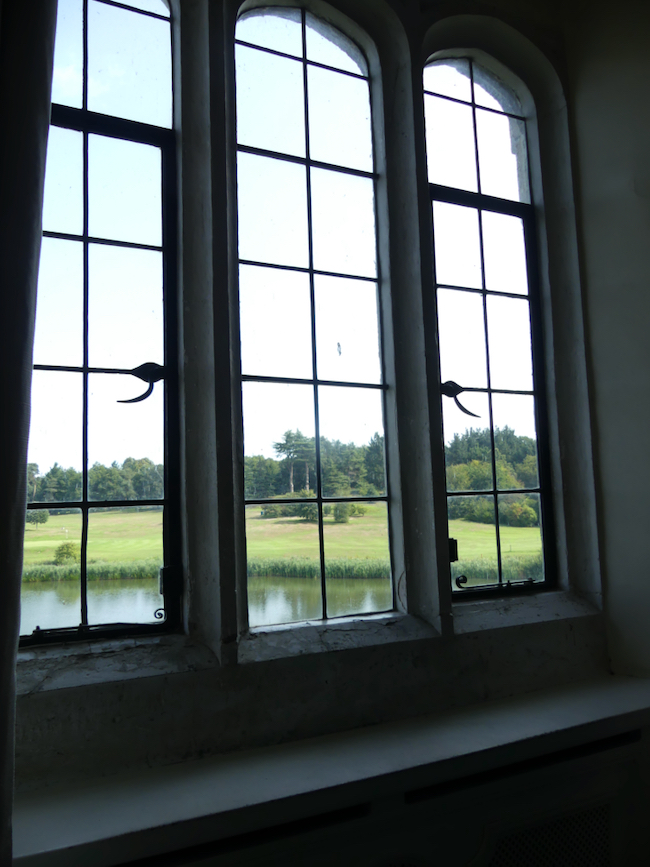
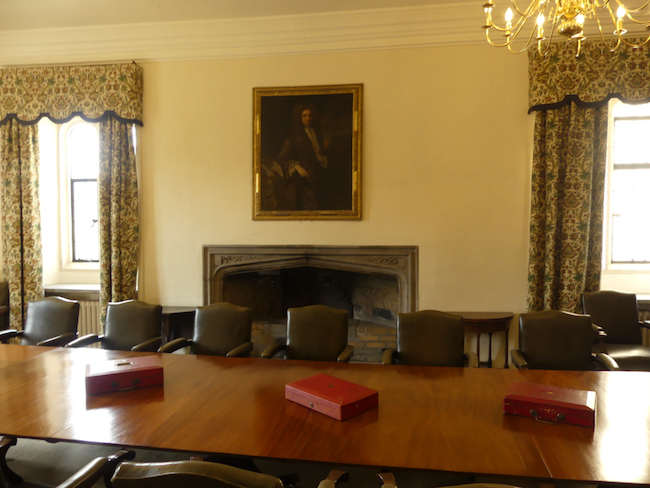
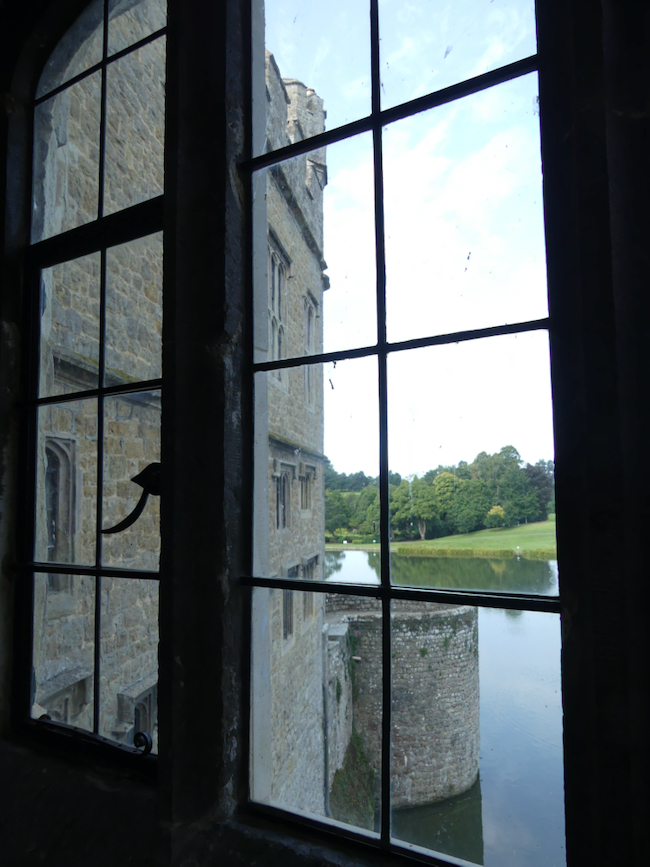
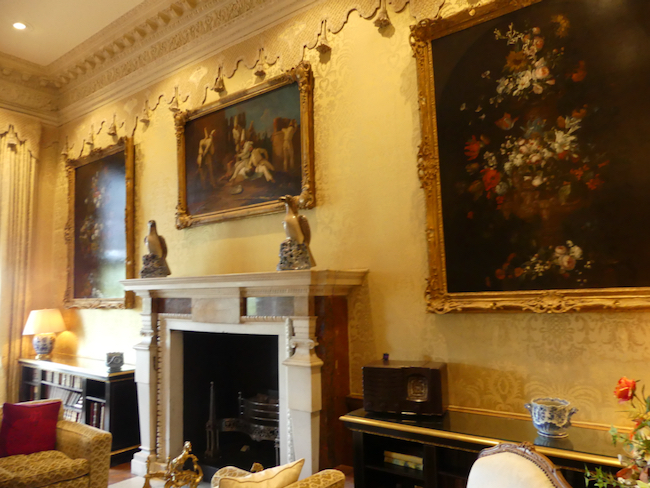
To get these photos, with no people, I hang back just enough to get a clear shot. It’s not easy, taking photos on the run. We are the first group through, lucky us, but we can see more buses arriving. Below is what it looks like with the tour groups coming through:
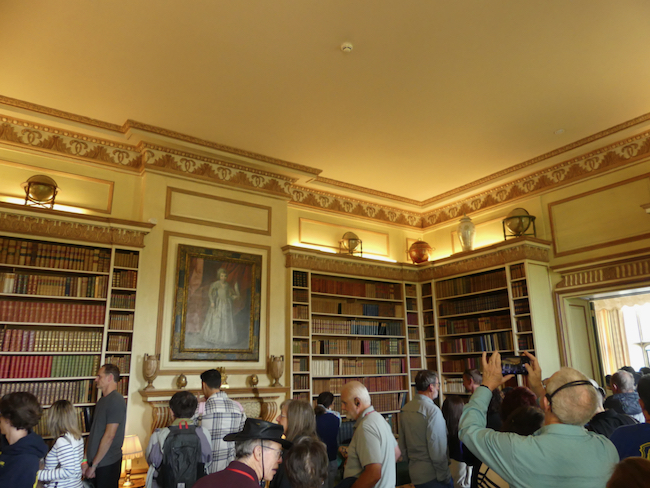
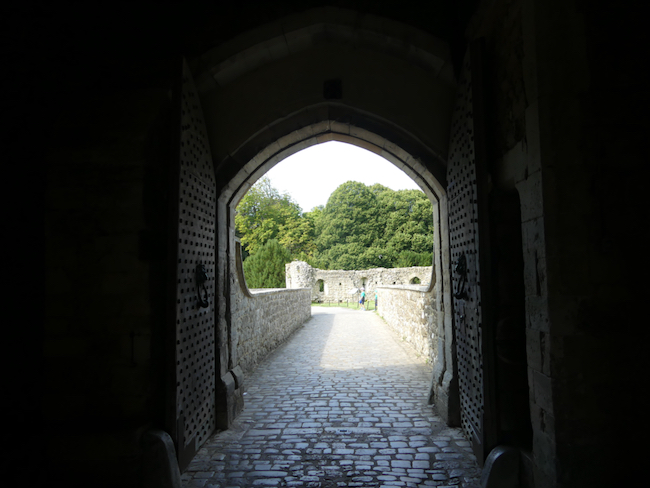
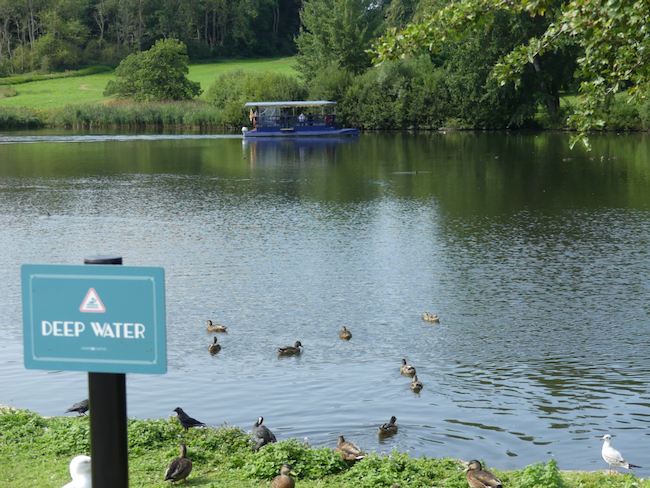
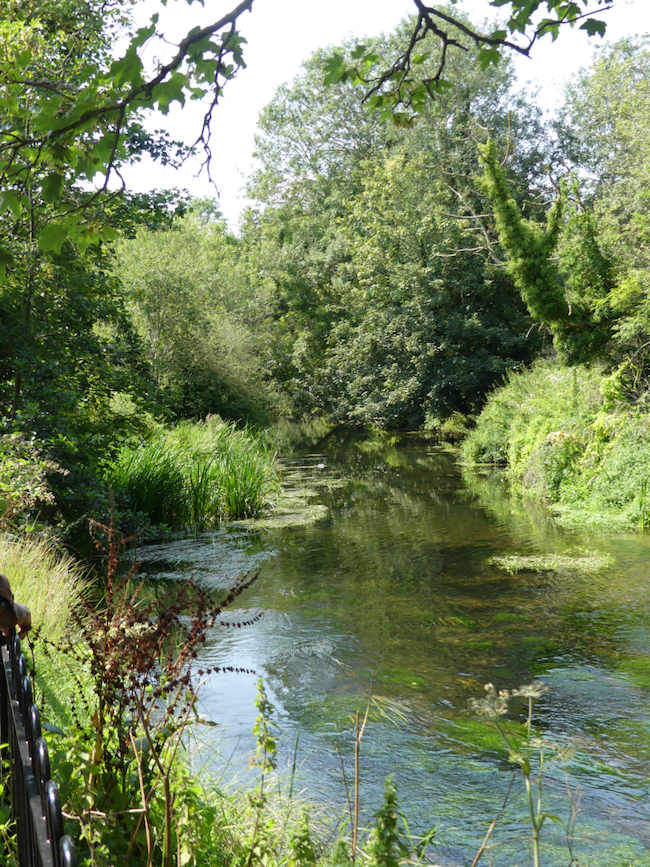
We have a chance to walk around (the grounds are gorgeous.)
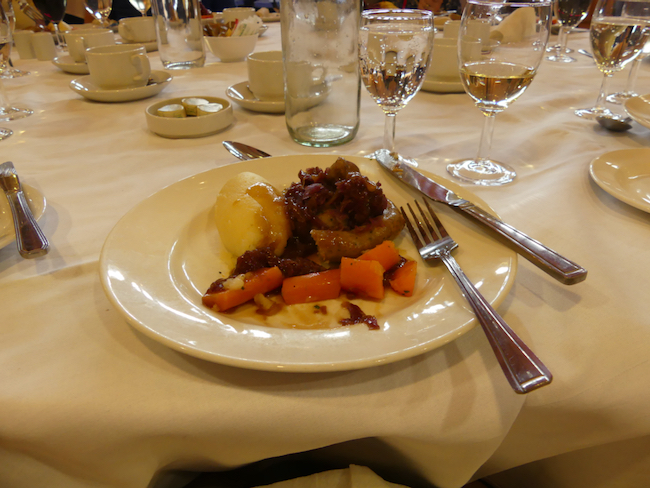
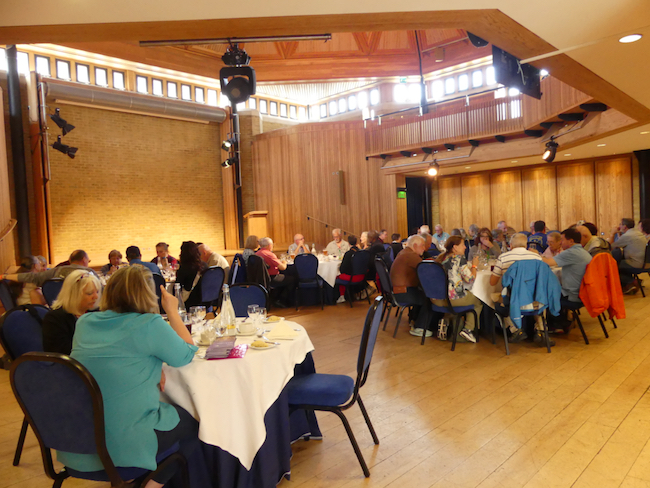
Then we board the bus. Our next stop was Canterbury, where Viking had arranged an English lunch, bangers and mash, for our lunch in a quiet dining area within the Cathedral walls.
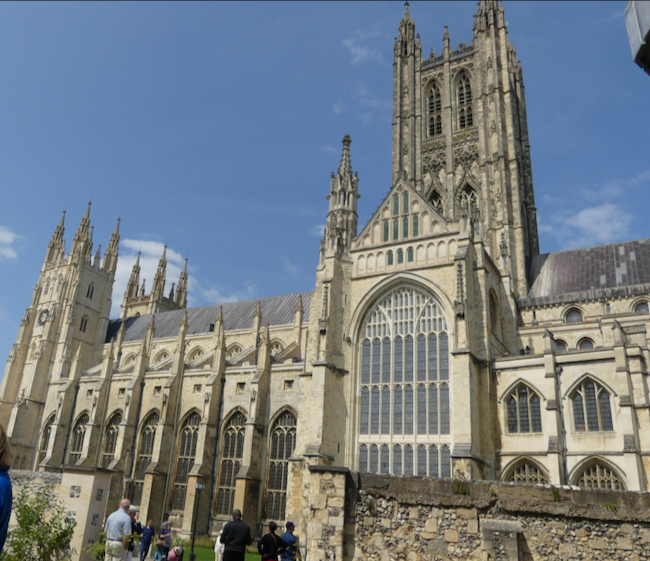
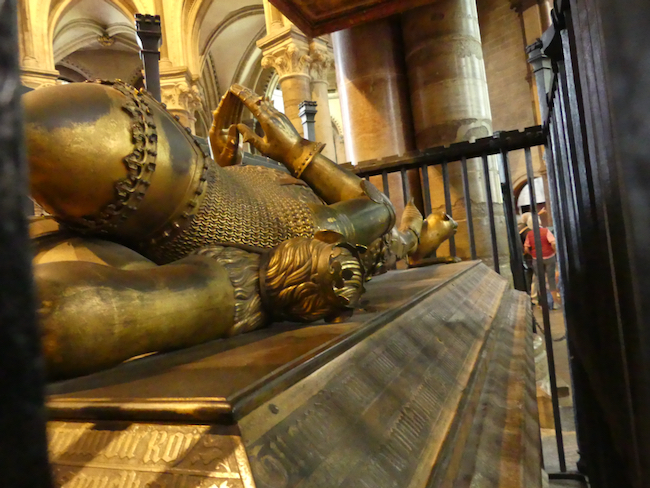
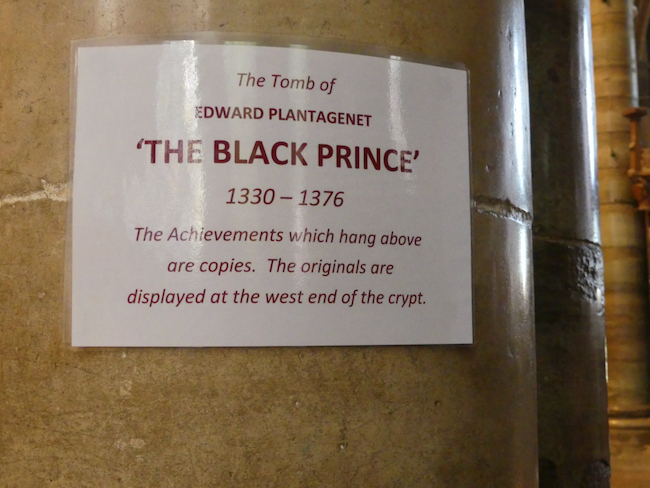
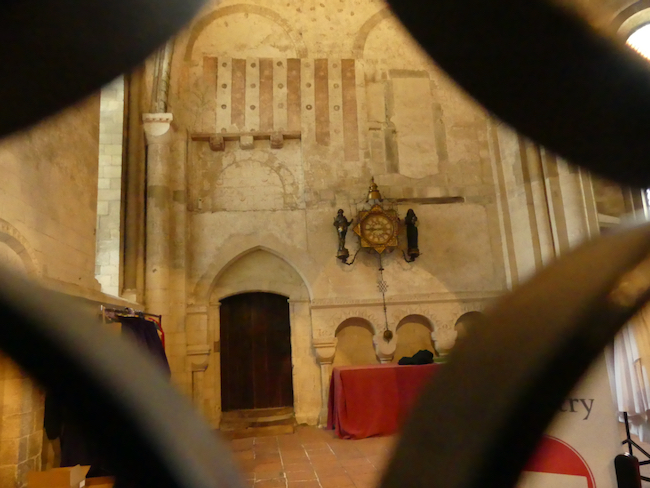
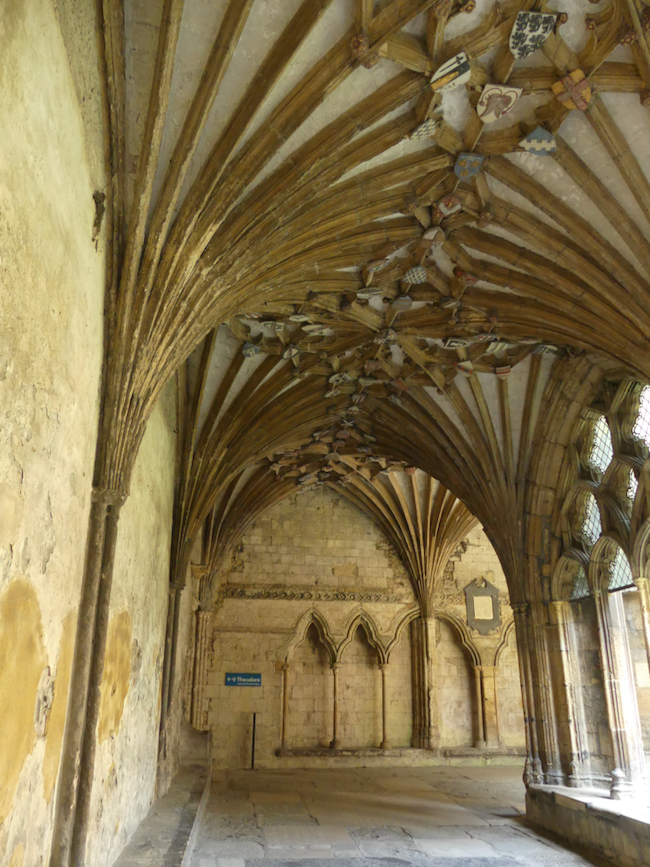
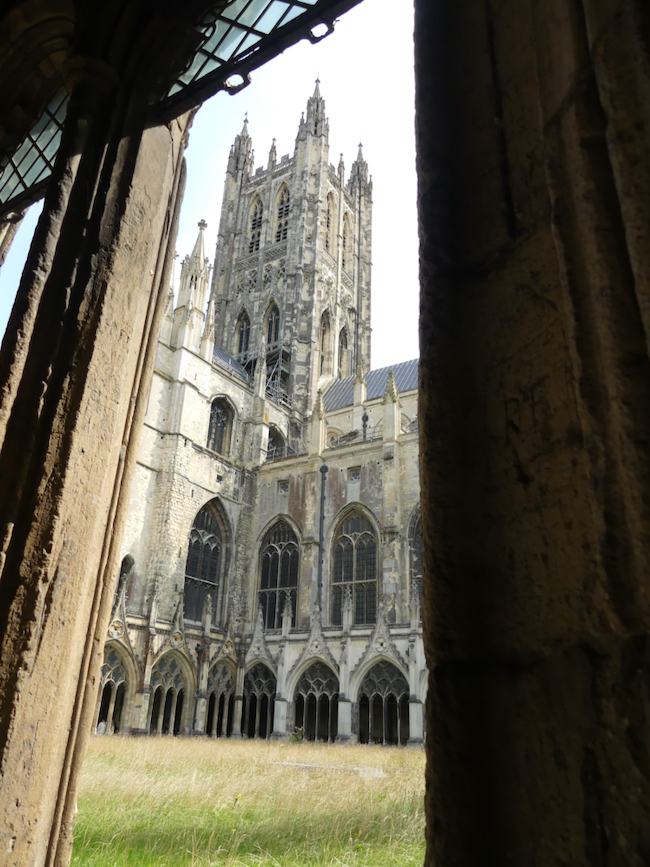
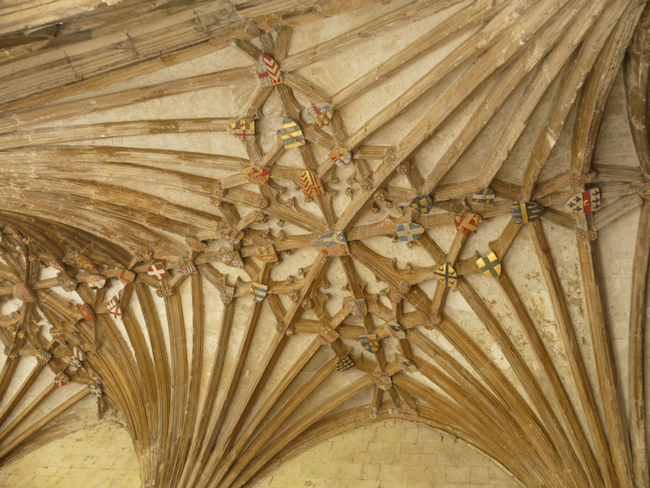
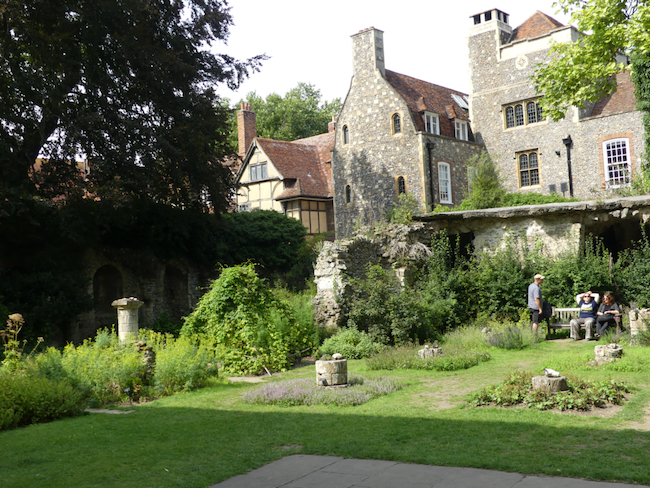
The Cathedral, for me, was beautiful with holy spaces. It has a long history, both as a Catholic cathedral, and then as an Anglican Cathedral, and as the place where Thomas a Becket was brutally murdered by Henry II’s henchmen with swords – in the cathedral, where he had taken sanctuary.
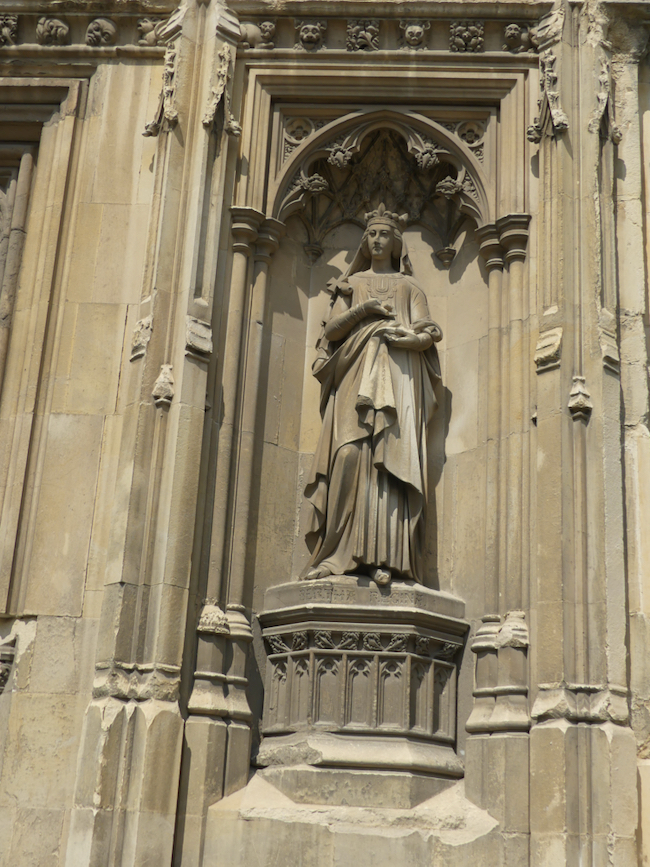
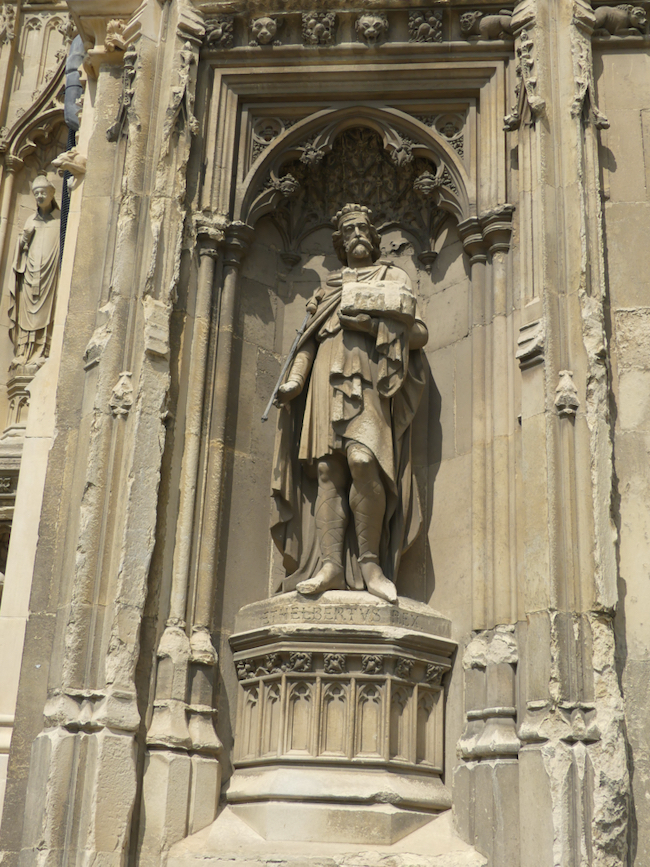
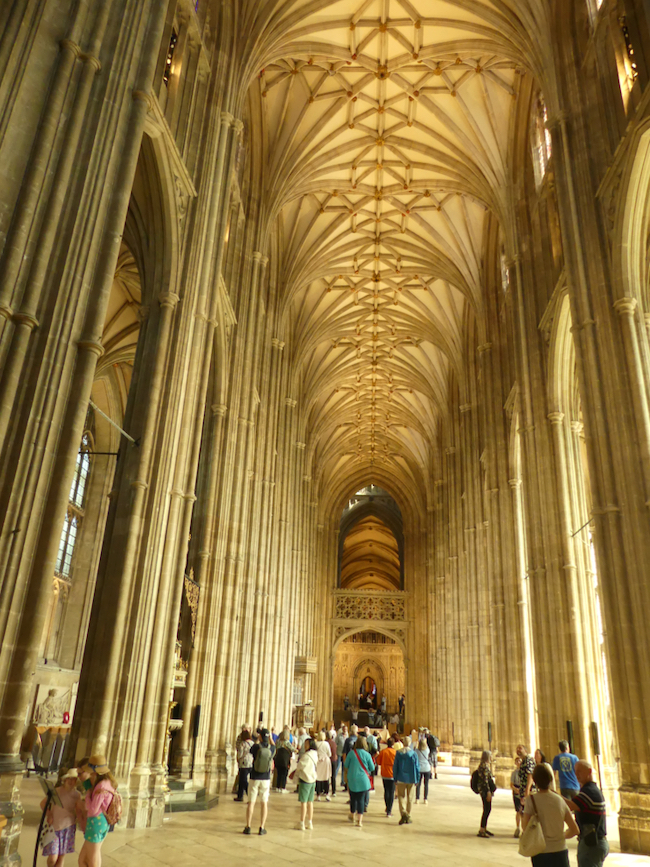
The guide introduced us to the cathedral, then encouraged us to tour, gave us maps, and to find our own sacred spaces. It was a lovely experience.
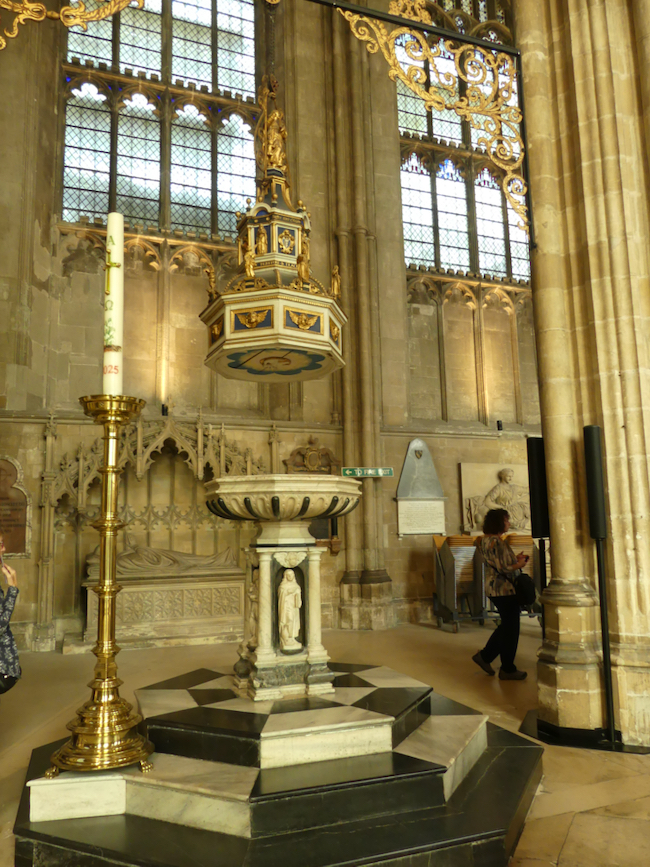
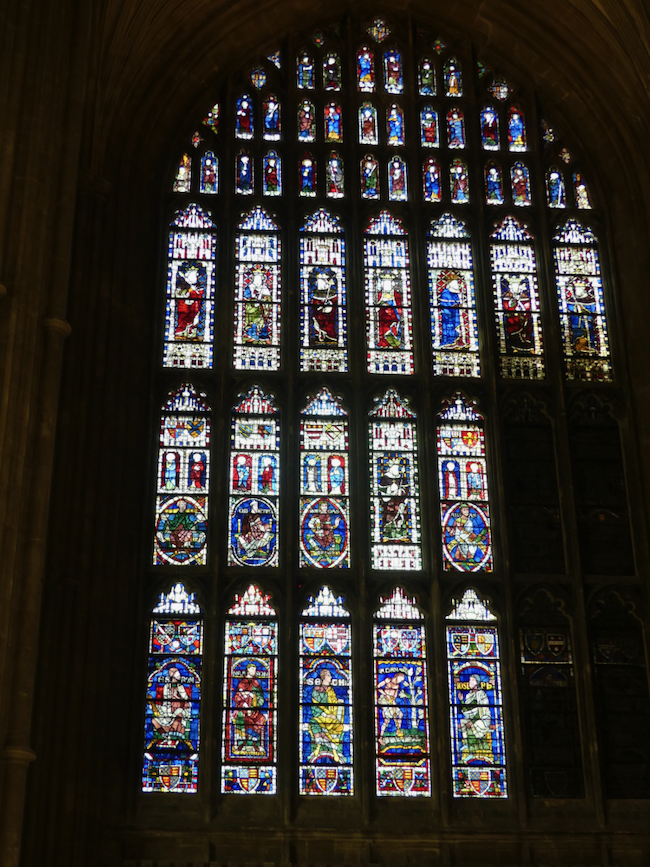

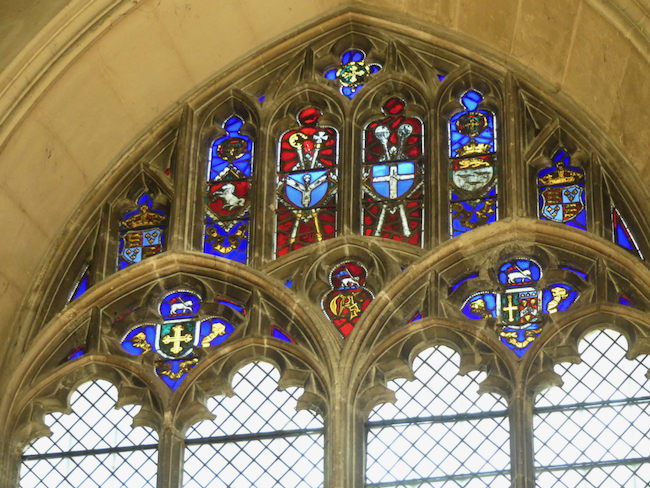
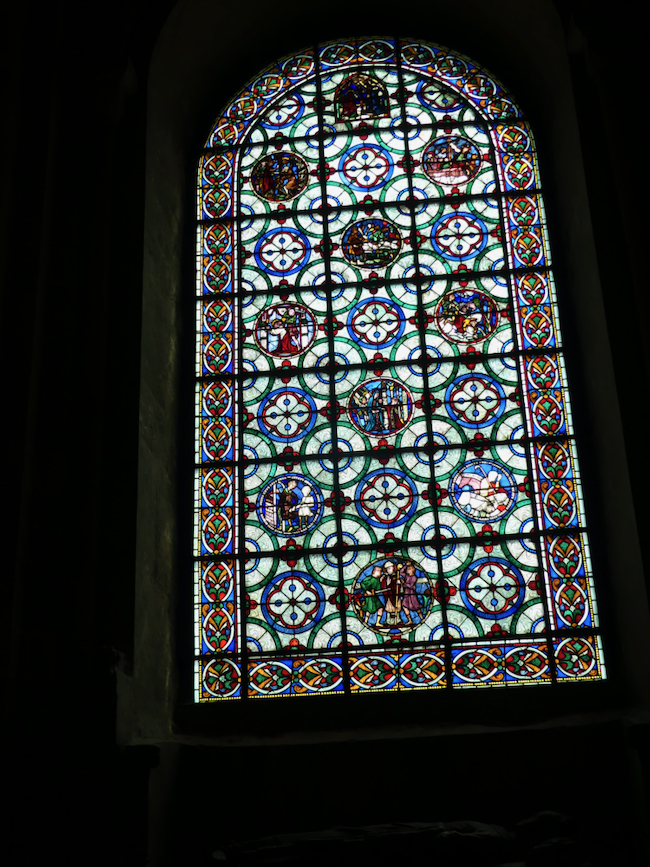
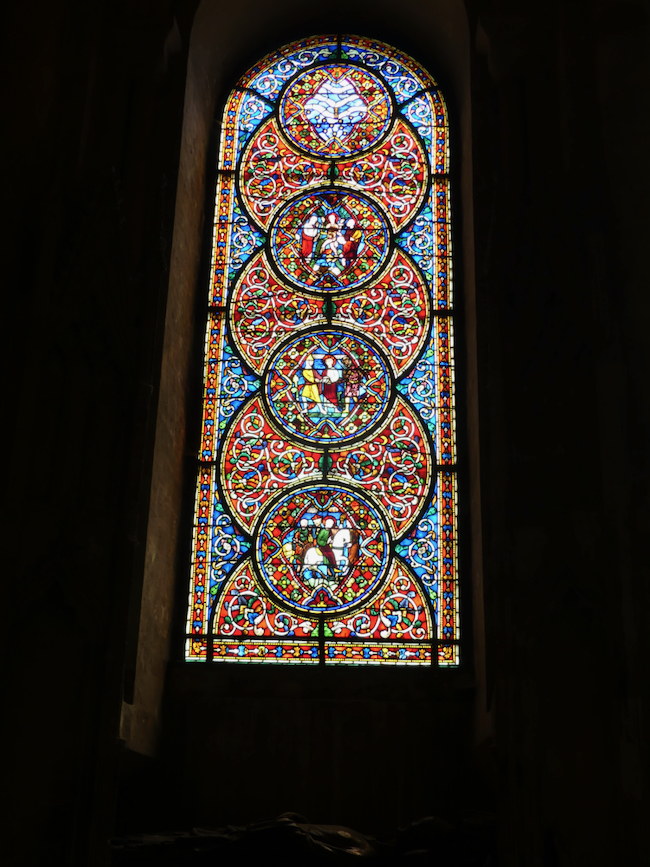
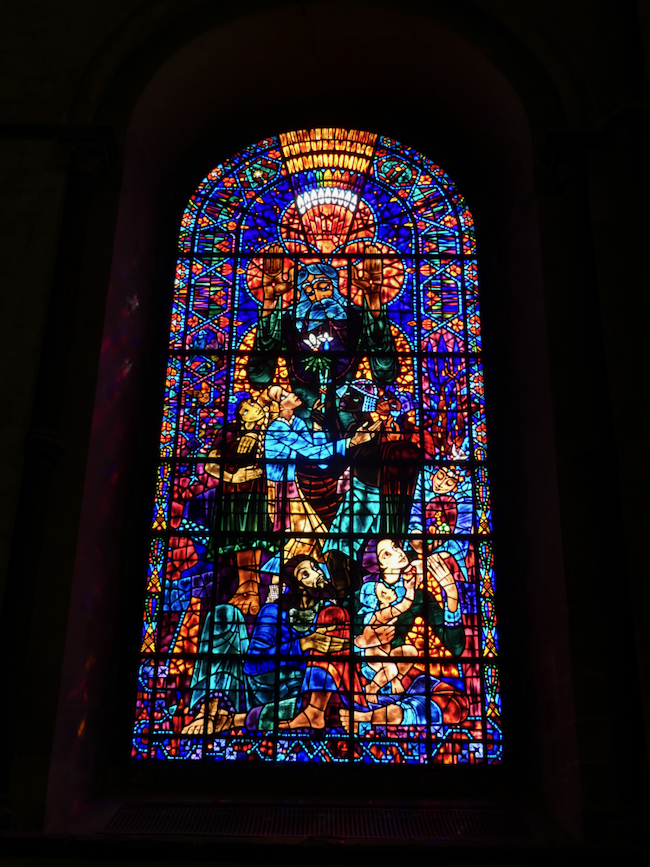
I love all the stained glass, but especially the one below. It is NOT a dying art! Jesus looks Ethiopian!
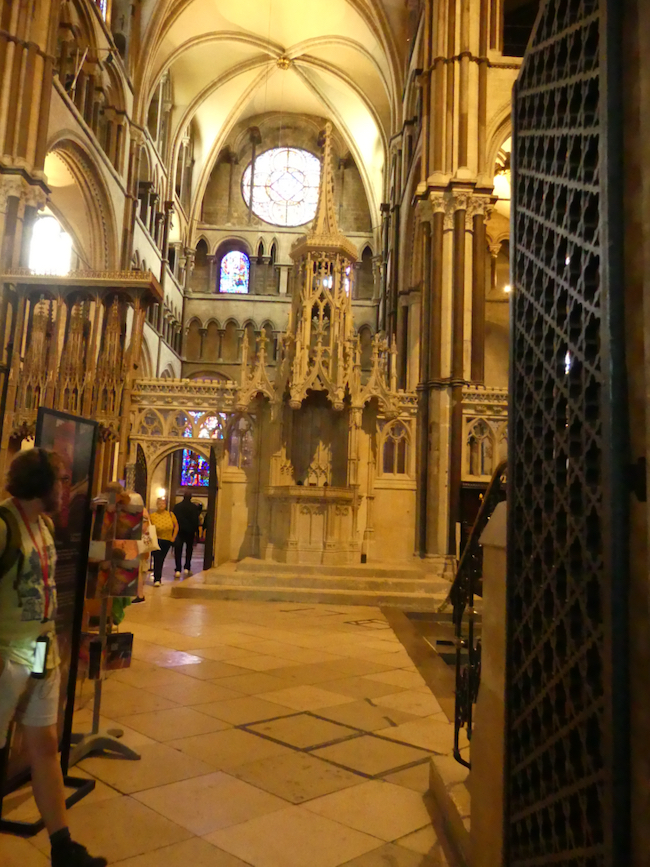
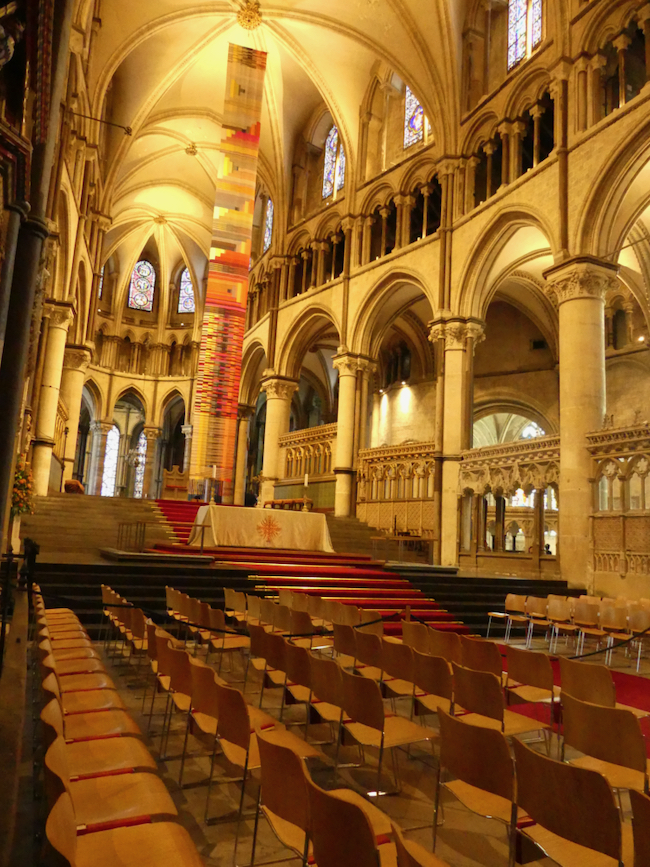
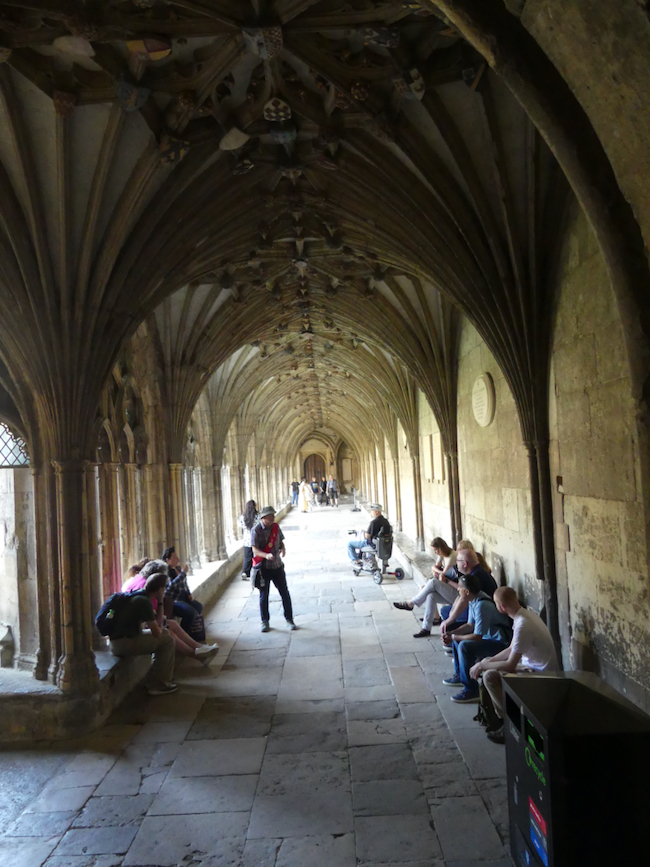
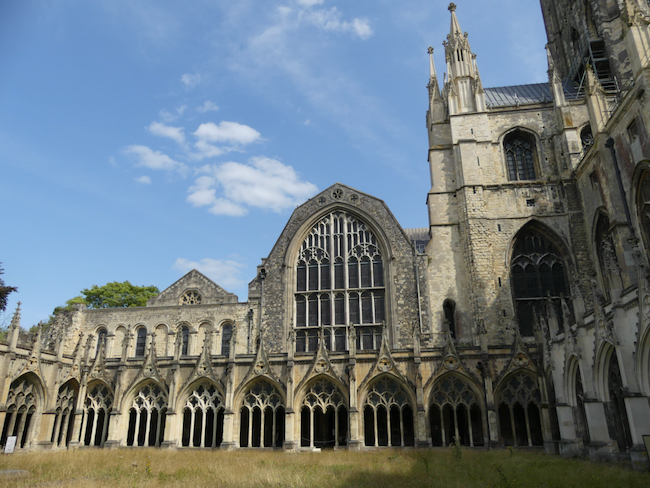
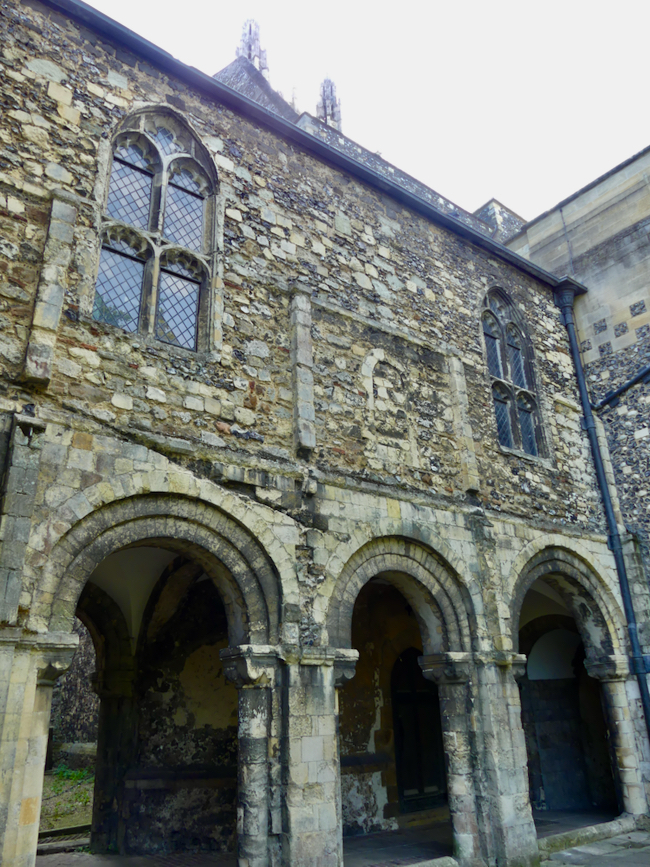

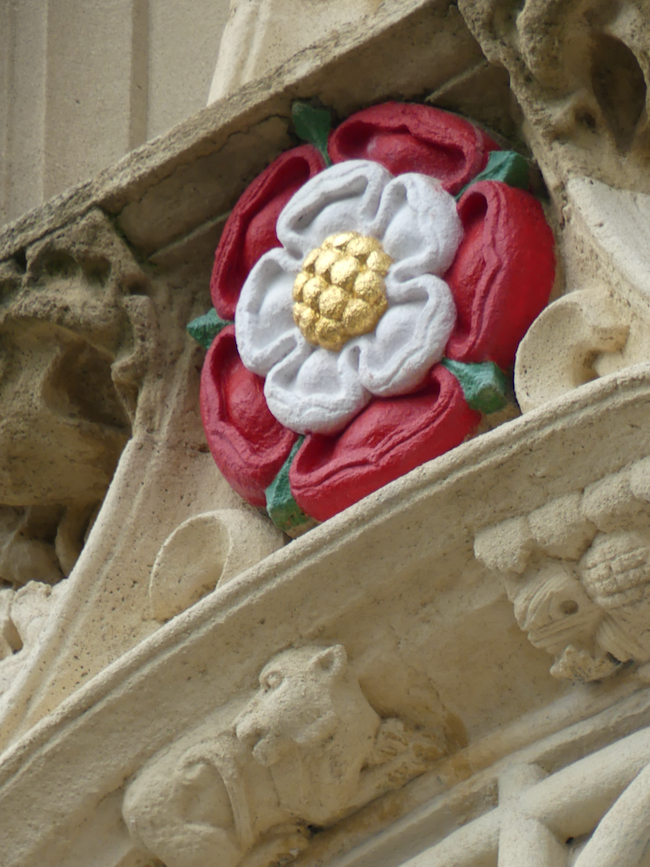
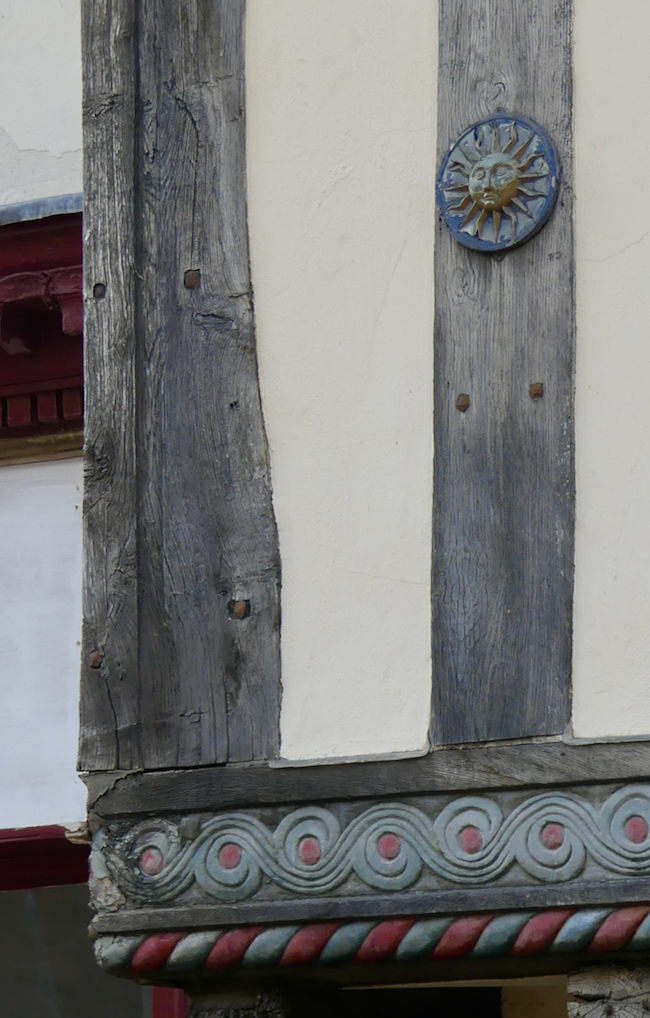
We all met up again outside the cathedral to make the walk back to the bus, and the drive back.
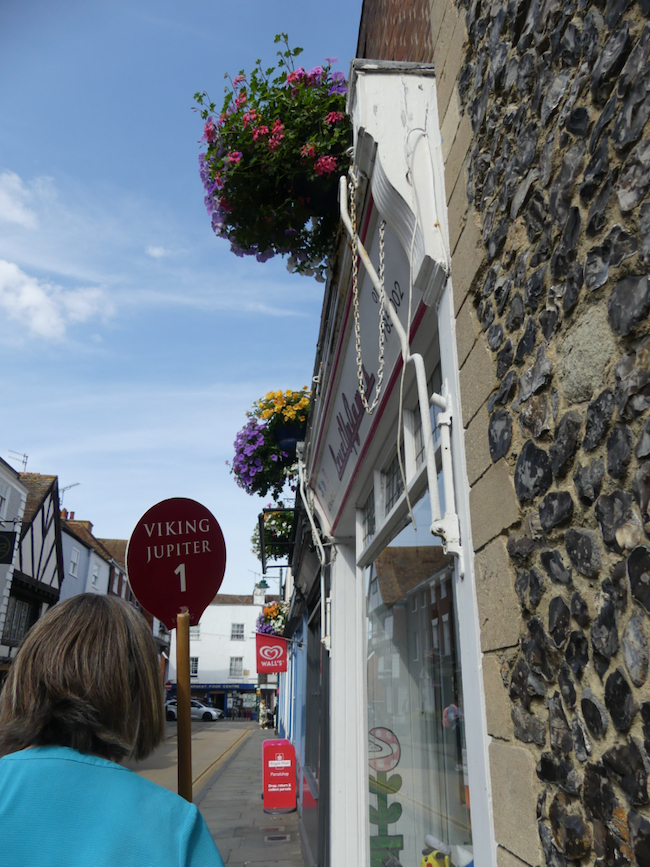
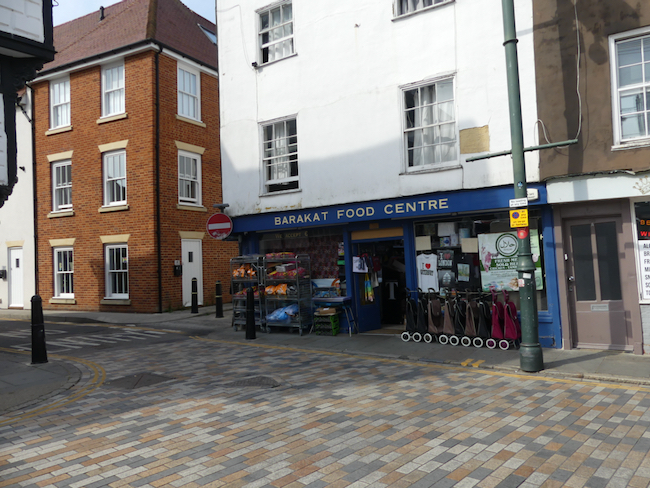
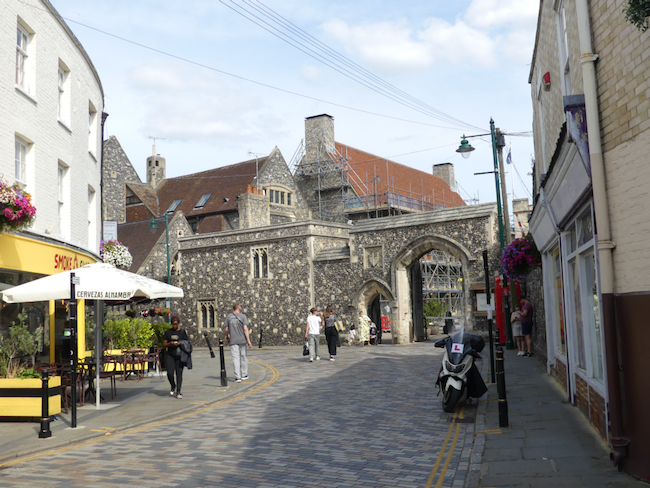
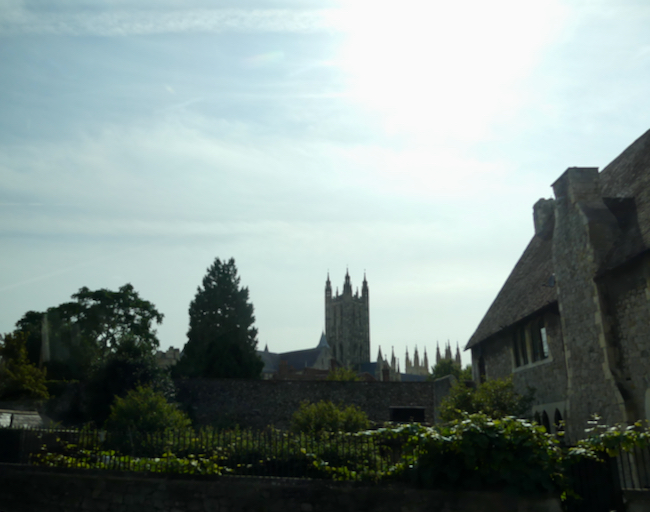

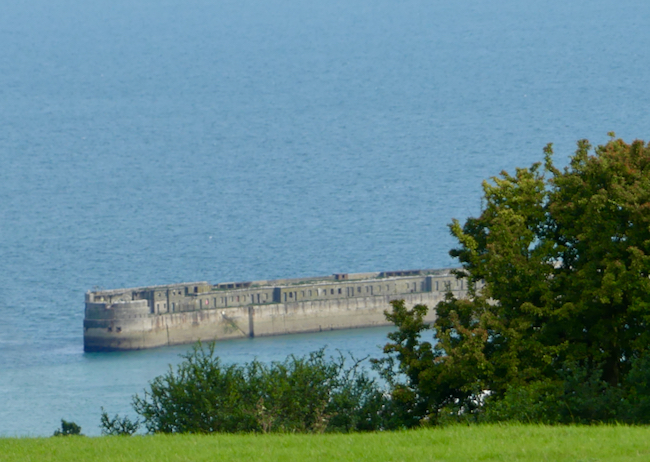
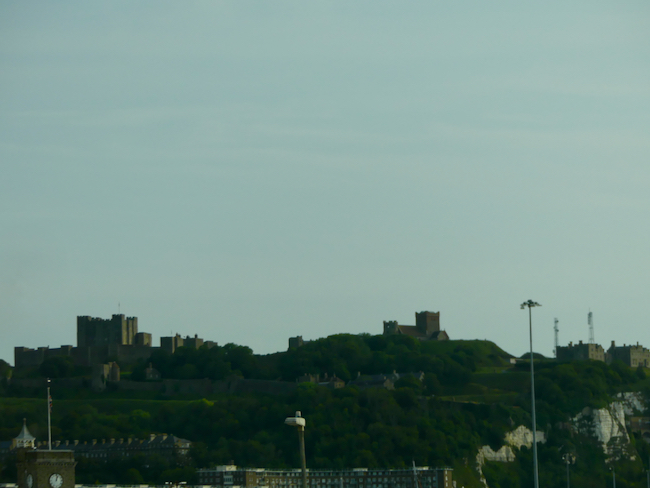
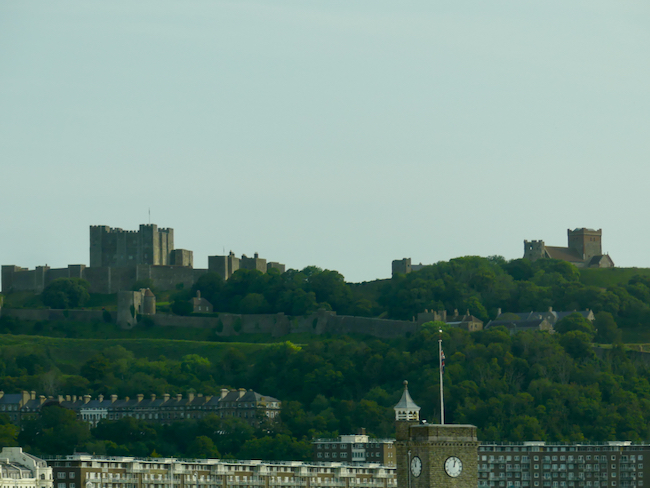
Dover Castle with the late afternoon light:
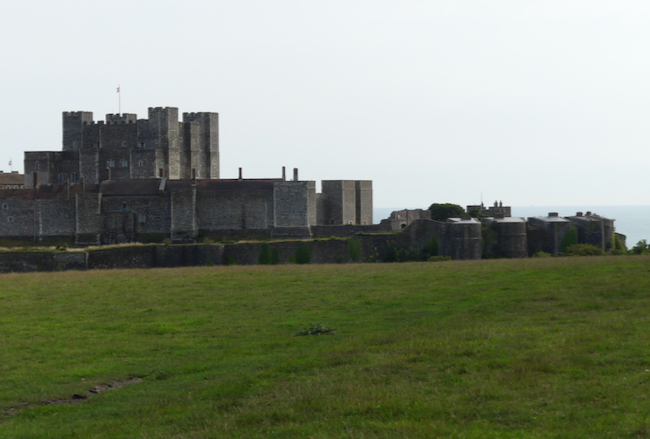
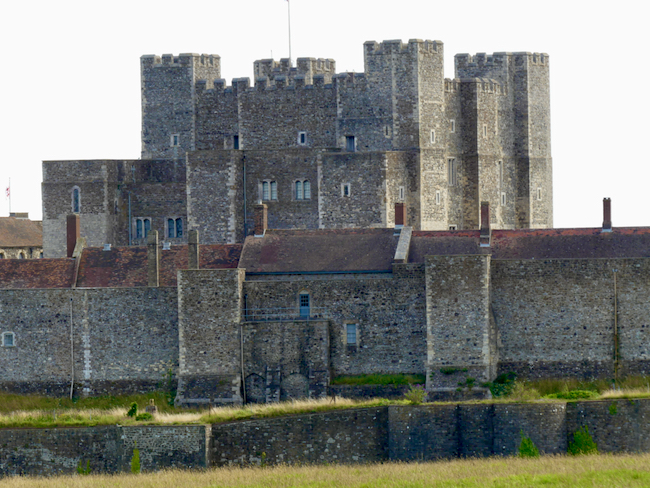
Dinner with our friends this evening at the Chef’s Table, where exquisite small dishes are served in courses. I had thought I was nearly sick; I was so tired, but AdventureMan rubbed my feet (13,897 steps) as we dressed. Conversation, as usual, flowed, and I was revived by the loveliness of the evening and being with our friends. We went to bed delighted with another great day.
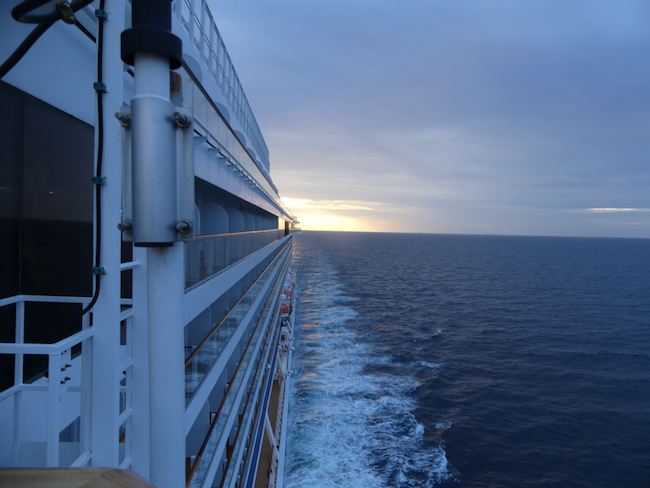
In the middle of the night, I looked out and saw a wonderful Autumnal full moon, a little drifty and ghostly.
Diwali: A Light Sparkles in Dark Times

Today, Labor Day, when dark events are taking place in our country, shutting down the light of liberty and democracy, we got an unexpected invitation – to a Diwali party, coming up in a couple months.
We are so honored. And we know Diwali; we were living in Al Fardan 1, in Doha, Qatar, when an Indian neighbor invited all the residents of Al Fardan to come over for Diwali. We didn’t know what Diwali was, and our internet was dial-up and irregular, but we asked around and were told, with big smiles, to go and find out.
The night of Diwali came, and we walked to our neighbor’s house, along with many of our Al Fardan neighbors. We could see it long before we arrived – thousands of candles set out in patterns in the yard, lining the sidewalk, leading us inside, to more lights and a feast of sweets, platters of sweets, all illuminated by gleaming candlelight.
Such open-hearted hospitality. Such generous sharing. No one was excluded; everyone was welcome, and there was plenty for everyone.
Our neighbors’ beliefs were different from ours, and yet, I believe all such generosity, freely given, springs from the same spirit.
We can’t wait for this upcoming Diwali.
History the White House Doesn’t Like: The List of Exhibits Trump Wants Gone
It’s a strange honor to have exhibits selected that the President wants gone. As in Literature, when you read through the list, you learn a lot about the fears and the prejudices of the creator. In recent decades, the United States of America has had a greater tolerance for the idiosyncratic views of artists, appreciating their differing perceptions. The list below is taken word for word from the White House Post called The President is Right About the Smithsonian.
- The National Museum of African American History and Culture debuted a series to educate people on “a society that privileges white people and whiteness” — defining so-called “white dominant culture“ as “ways white people and their traditions, attitudes, and ways of life have been normalized over time” and portraying “the nuclear family,” “work ethic,” and “intellect” as white qualities rooted in racism.
- The campaign featured content from hardcore woke activist Ibram X. Kendi

As part of its campaign to stop being “wealthy, pale, and male,” the National Portrait Gallery featured a choreographed “modern dance performance“ detailing the “ramifications“ of the southern border wall and commissioned an entire series to examine “American portraiture and institutional history… through the lens of historical exclusion.”
The National Portrait Gallery features art commemorating the act of illegally crossing the “inclusive and exclusionary” southern border — even making it a finalist for one of its awards.
(Intlxpatr comment: This painting reminds me of the painting of Mary, Joseph and the Baby Jesus escaping to Egypt to avoid King Herod’s massacre of the innocents)

The National Museum of African Art displayed an exhibit on “works of speculative fiction that bring to life an immersive, feminist and sacred aquatopia inspired by the legend of Drexciya,” an “underwater kingdom populated by the children of pregnant women who had been thrown overboard or jumped into the ocean during the Middle Passage.”
The American History Museum’s “LGBTQ+ History” exhibit seeks to “understand evolving and overlapping identities such as lesbian, gay, bi-sexual, transgender, queer, transsexual, transvestite, mahu, homosexual, fluid, invert, urning, third sex, two sex, gender-bender, sapphist, hijra, friend of Dorothy, drag queen/king, and many other experiences,” and includes articles on “LGBTQ+ inclusion and skateboarding“ and “the rise of drag ball culture in the 1920s.”
The National Museum of the American Latino features programming highlighting “animated Latinos and Latinas with disabilities” — with content from “a disabled, plus-sized actress” and an “ambulatory wheelchair user” who “educates on their identity being Latinx, LGBTQ+, and disabled.”
The National Museum of the American Latino characterizes the Texas Revolution as a “massive defense of slavery waged by ‘white Anglo Saxon’ settlers against anti-slavery Mexicans fighting for freedom, not a Texan war of independence from Mexico,” and frames the Mexican-American War as “the North American invasion” that was “unprovoked and motivated by pro-slavery politicians.”
According to the National Museum of the American Latino, “what unites Latinas and Latinos“ is “the Black Lives Matter movement.”

The National Portrait Gallery commissioned a “stop-motion drawing animation” that “examines the career“ of Anthony Fauci.
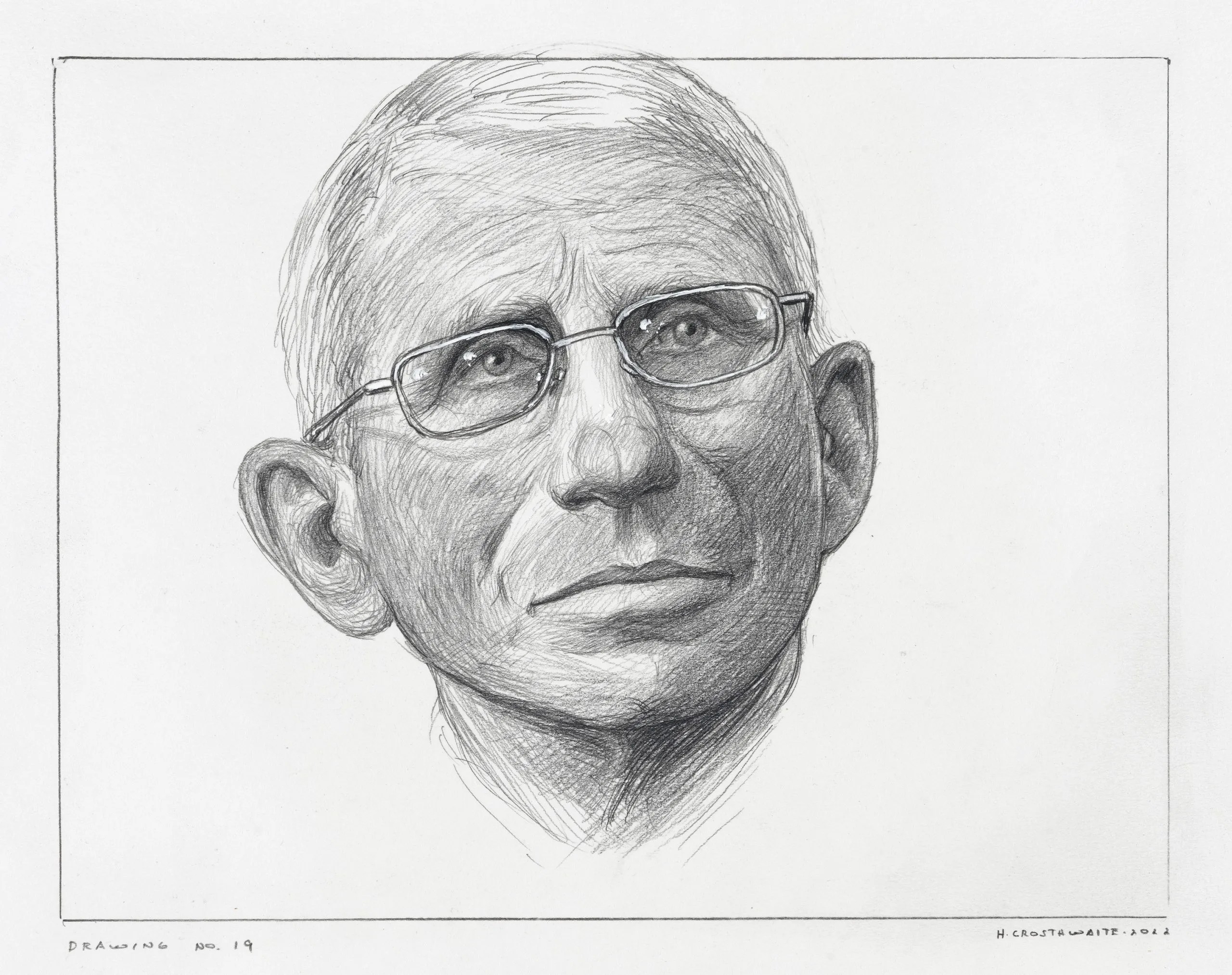
The American History Museum’s exhibit marking the 50th anniversary of Title IX includesbiological men competing in women’s sports and argues in favor of “transgender” athletes competing in sports against the opposite biological sex.
A exhibit at the American History Museum depicts migrants watching Independence Day fireworks “through an opening in the U.S.-Mexico border wall” and says America’s founders “feared non-White immigration.”

The American History Museum features a display that refers to the founding of America as “a profound unsettling of the continent.”
The American History Museum’s “American Democracy” exhibit claims voter integrity measures are “attempts to minimize the political power” of “new and diverse groups of Americans,” while its section on “demonstrations” includes only leftist causes.
An American History Museum exhibit features a depiction of the Statue of Liberty “holding a tomato in her right hand instead of a torch, and a basket of tomatoes in her left hand instead of a tablet.”

- The National Museum of the American Latino features an anti-American exhibit that defines Latino history as centuries of victimhood and exploitation, suggests the U.S. is stolen land, and characterizes U.S. history as rooted in “colonization.”
- The exhibit features writing from illegal immigrants “fighting to belong.”
- The exhibit displays a quote from Claudia de la Cruz, the socialist nominee for president and a director an anti-American hate group, as well as another quote that reads, “We didn’t cross the border; the border crossed us.”
- The exhibit remains prominently featured on its website alongside a quote from the Communist Party USA’s Angela Davis, who was once among the FBI’s Top 10 Most Wanted Fugitives.

- The National Museum of the American Latino features an anti-American exhibit that defines Latino history as centuries of victimhood and exploitation, suggests the U.S. is stolen land, and characterizes U.S. history as rooted in “colonization.”
- The exhibit features writing from illegal immigrants “fighting to belong.”
- The exhibit displays a quote from Claudia de la Cruz, the socialist nominee for president and a director an anti-American hate group, as well as another quote that reads, “We didn’t cross the border; the border crossed us.”
- The exhibit remains prominently featured on its website alongside a quote from the Communist Party USA’s Angela Davis, who was once among the FBI’s Top 10 Most Wanted Fugitives.
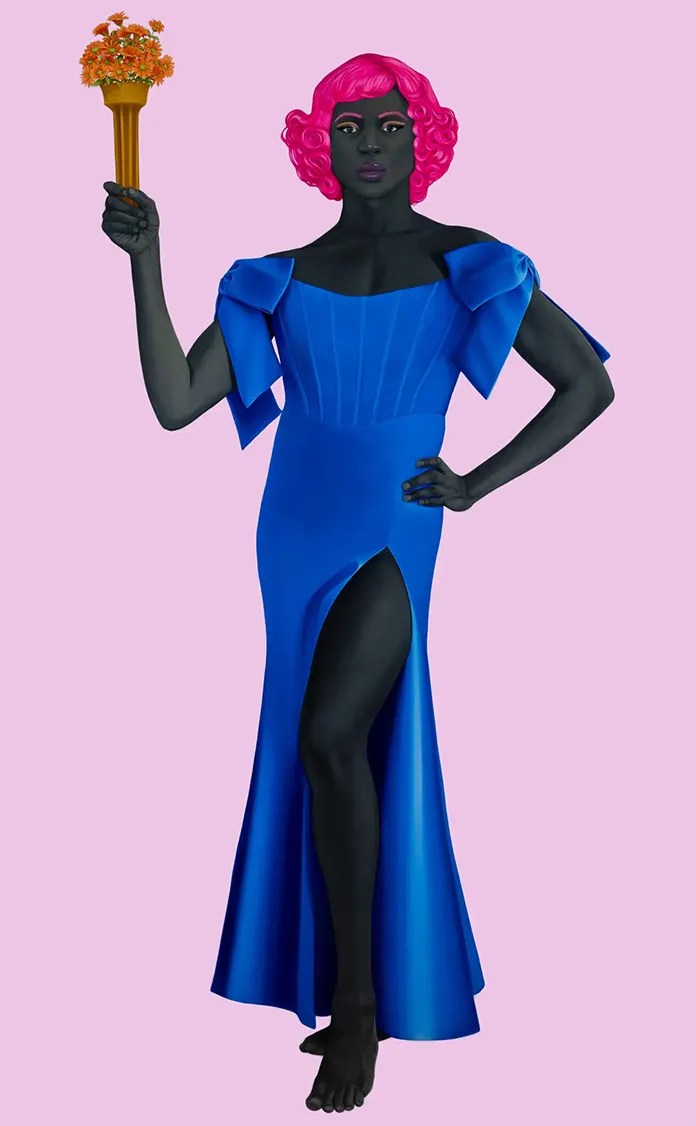
The former interim director of the future Smithsonian American Women’s History Museum declared the museum will be “inclusive” of biological men posing as women.
Commentary from The Hill, August 22, 2025:
White House lists 20 objectionable Smithsonian exhibits, artworks
BY ASHLEIGH FIELDS – 08/22/25 10:34 AM ET
The Trump administration specifically targeted the American history museum’s “LGBTQ+ History” exhibit and condemned a separate display lauding the 50th anniversary of Title IX with a focus on transgender athletes. President Trump signed an executive order in February barring transgender women from competing in women’s sports.
The decision to highlight more than a dozen exhibits and artworks as “woke” comes days after Trump criticized the history museum for its depiction of slavery and its impact on Black Americans.
“The Smithsonian is OUT OF CONTROL, where everything discussed is how horrible our Country is, how bad Slavery was, and how unaccomplished the downtrodden have been — Nothing about Success, nothing about Brightness, nothing about the Future,” the president wrote Tuesday in a Truth Social post.
“We are not going to allow this to happen, and I have instructed my attorneys to go through the Museums, and start the exact same process that has been done with Colleges and Universities where tremendous progress has been made,” he added. “This Country cannot be WOKE, because WOKE IS BROKE.”
During his first term, Trump lauded the opening of the National Museum of African American History and Culture for its portrayal of harsh truths and storied victories for disenfranchised Black citizens.
Trump’s issue with the depiction of slavery in museums has been widely challenged by Black historians and community leaders.
“Just as the Holocaust is remembered in all its brutality, so must America reckon with the truth of chattel slavery, Jim Crow and racial terror,” Toni Draper, publisher of the Afro-American Newspaper — the archives of which were used to help curate the museum — wrote in a recent op-ed for Afro.com. “Anything less is historical erasure, a rewriting of facts to make the nation appear more palatable.”
“But history is not meant to comfort — it is meant to confront. And only in confrontation do we find the lessons that lead us forward,” she added.
Morocco Malta and the Med: Malaga, Spain

Dawn finds us in Malaga, our last new city on this cruise.

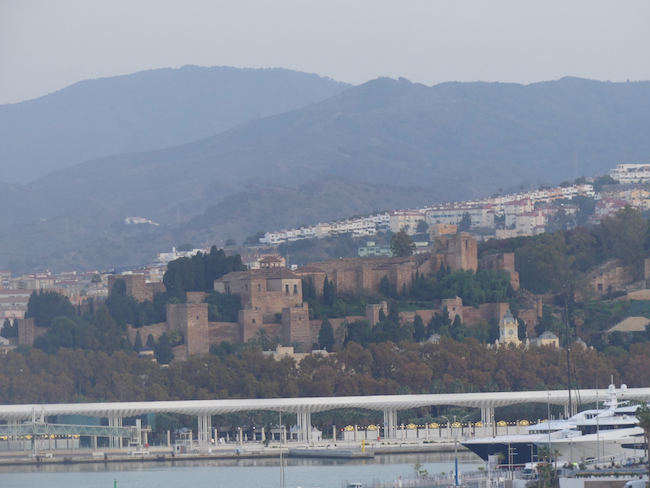
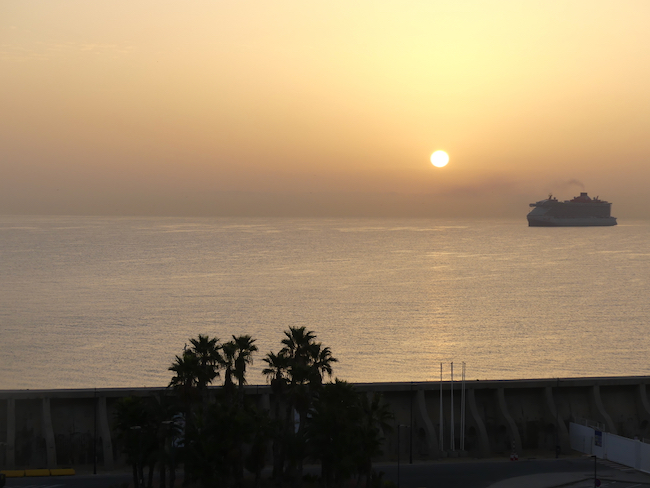
You can see the buses lined up already to take us on tours of the city.
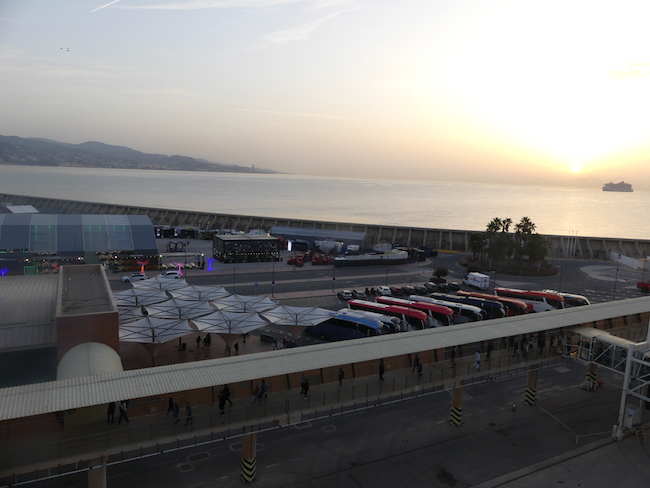
In front of us looks like a huge beer tent!
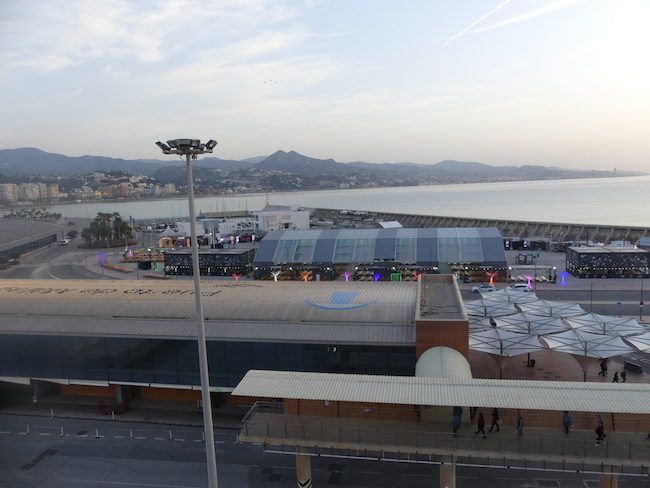
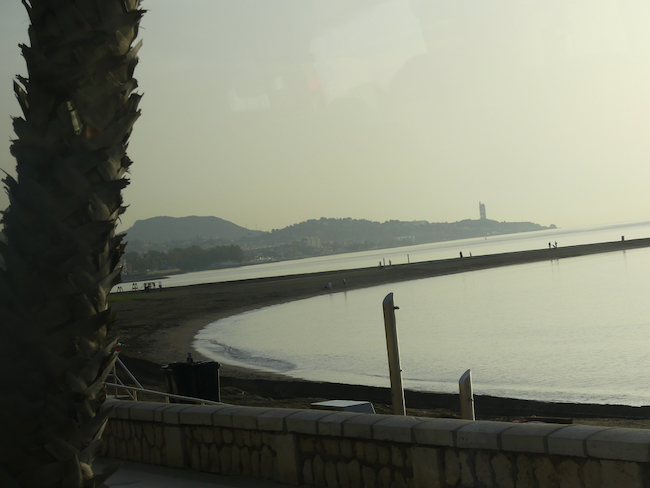

We are told this cruise ship never moves. It is undergoing renovation and no one knows when it will finish.


Lots of Expats buying property in Malaga, forcing prices up, our guide tells us.
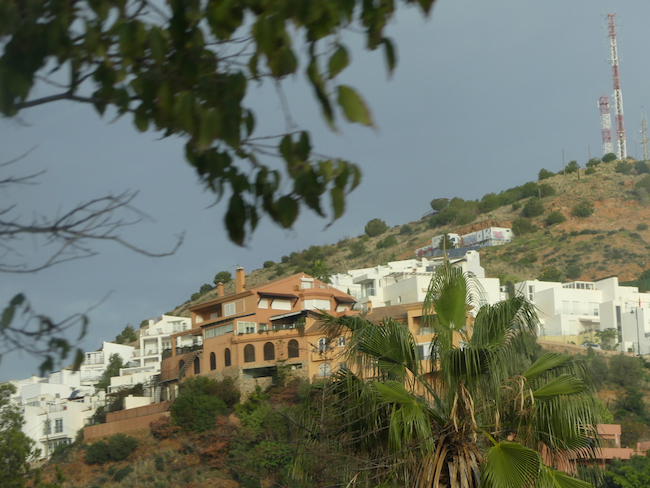
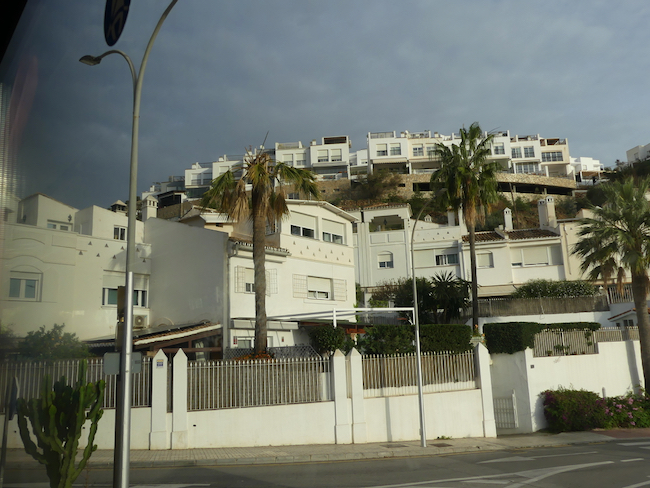
You can see the bull fighting arena from this overlook.

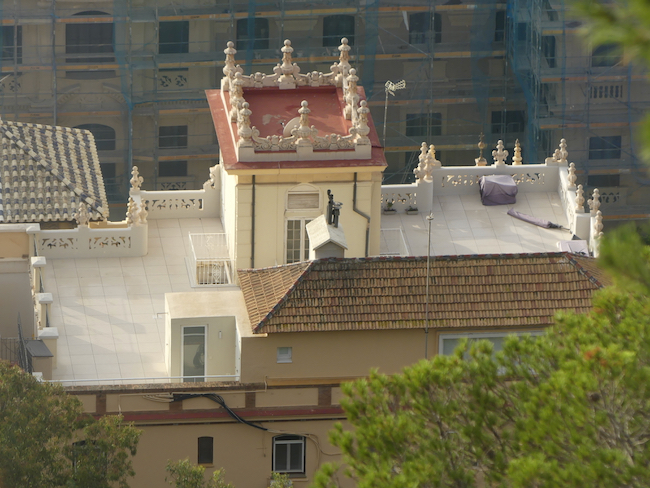

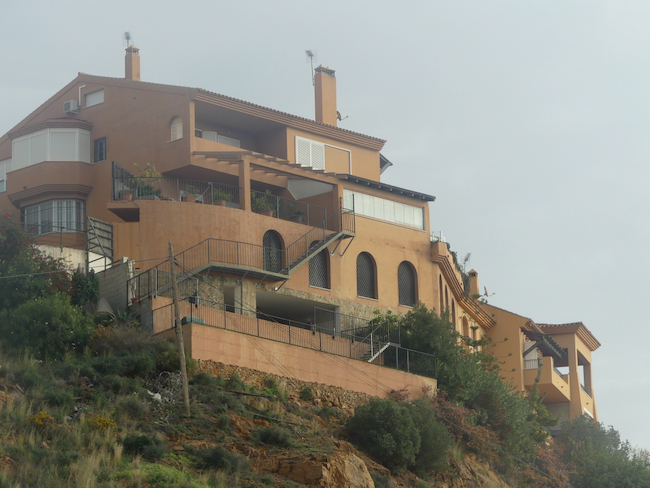


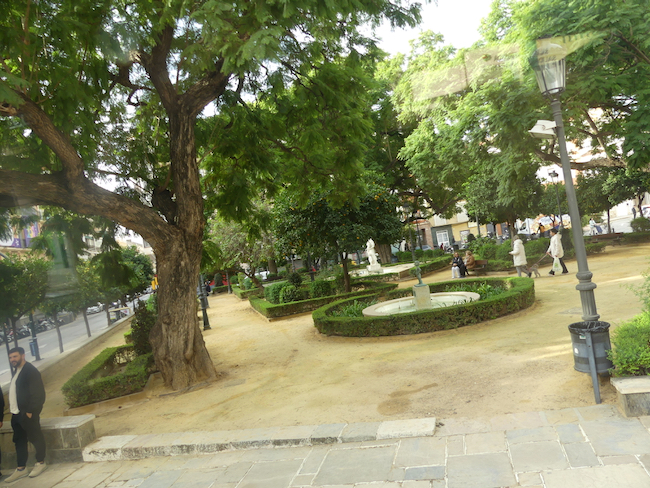


Malaga is proudly home to Picasso’s birthplace.

Once again we were trying to break down some of our larger Euro bills so we went into a supermarket where we found some small things. I went through the cashier and then waited outside for my husband. He got the old fish eye; maybe the cashier is wise to tourists needing smaller change.
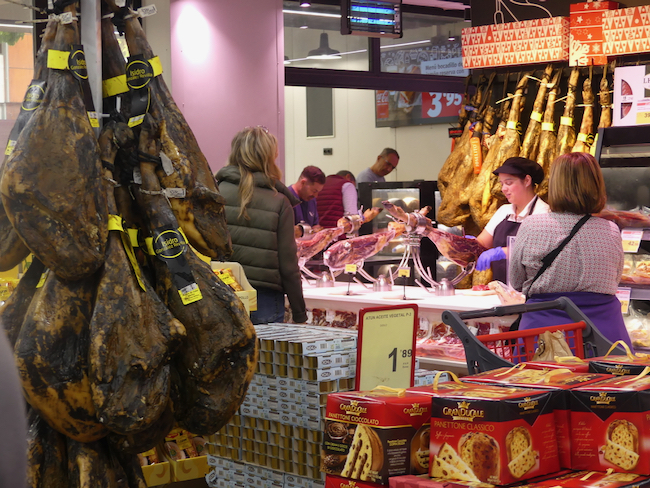


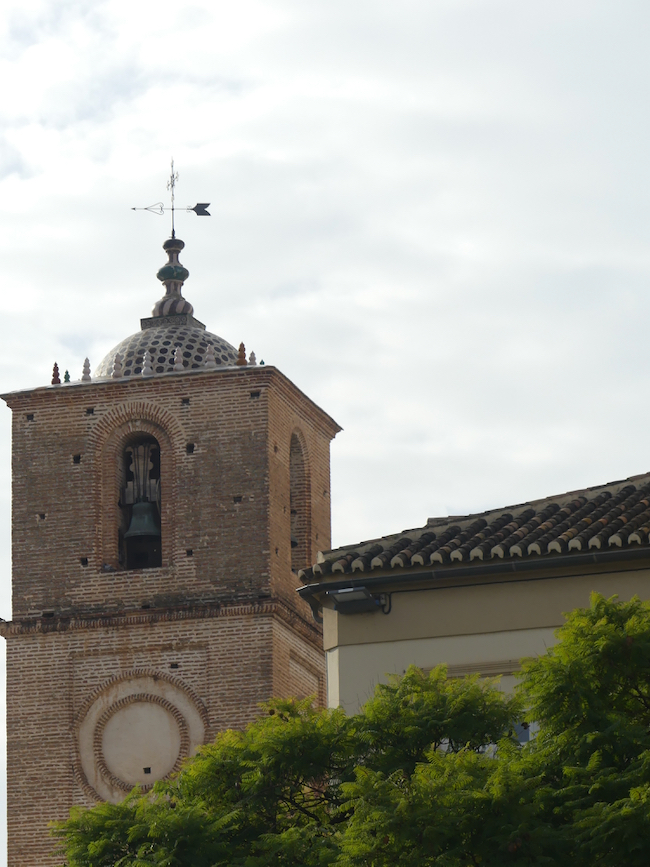

Love to see recycling!

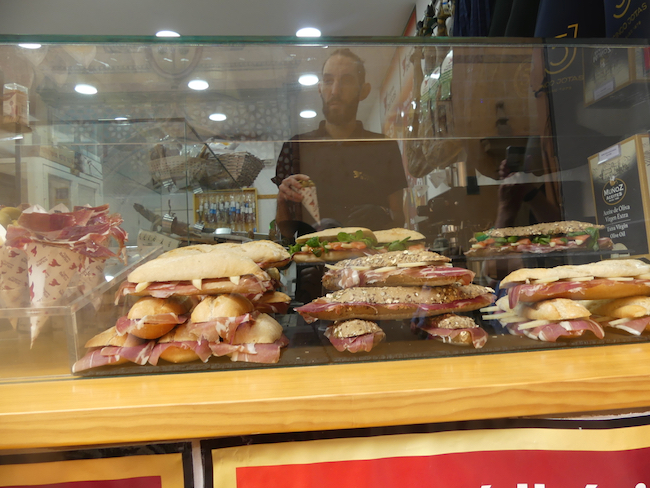


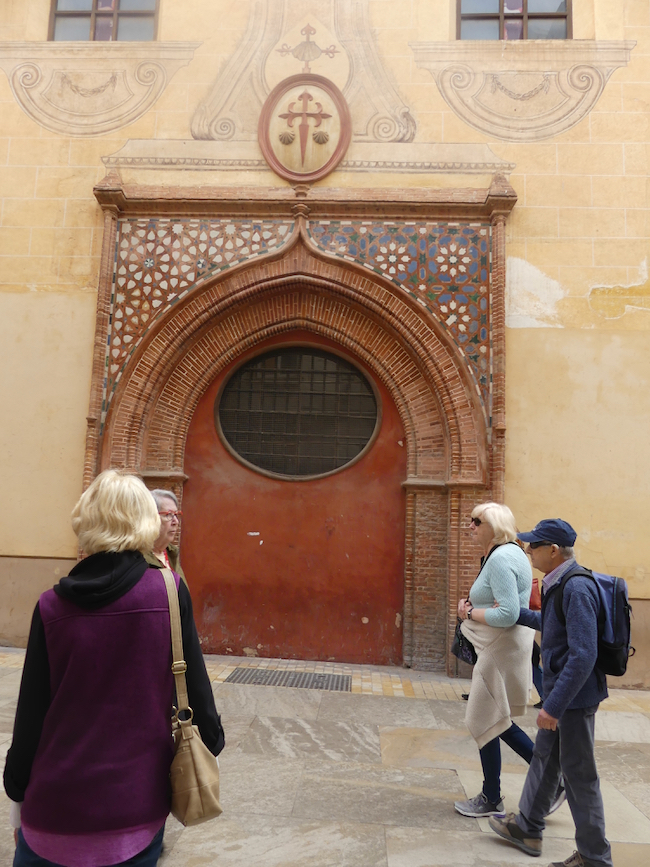
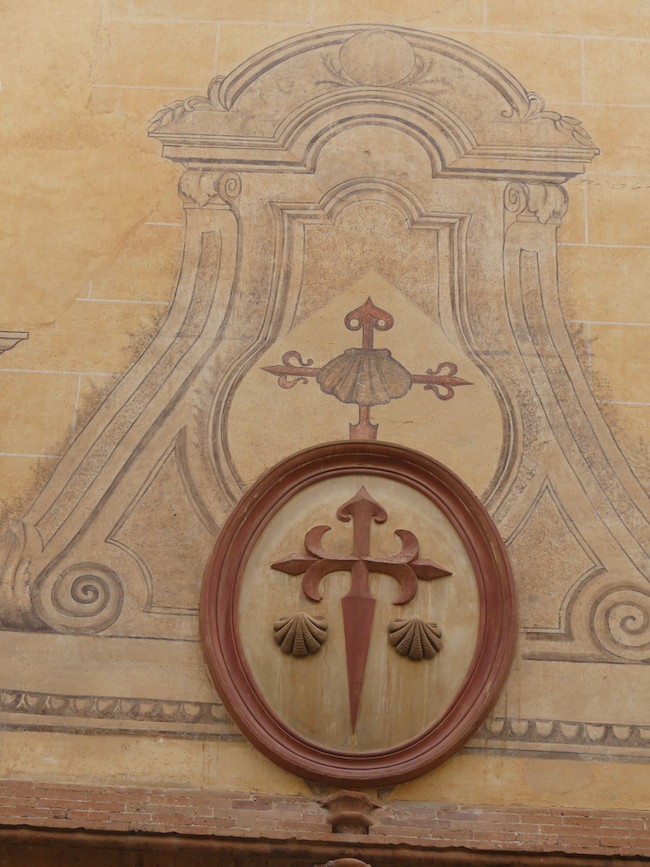

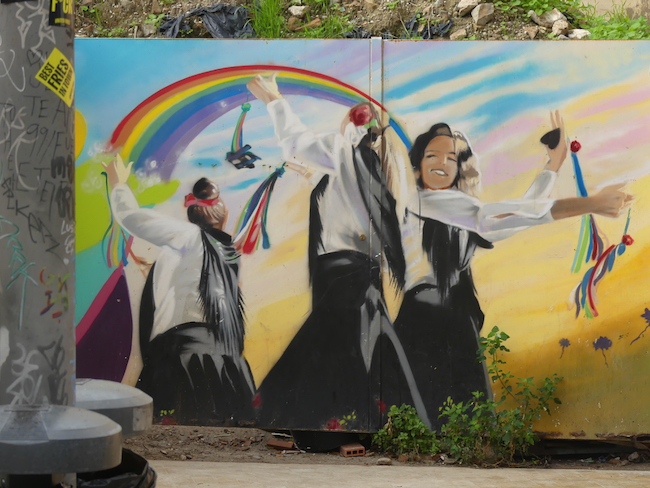

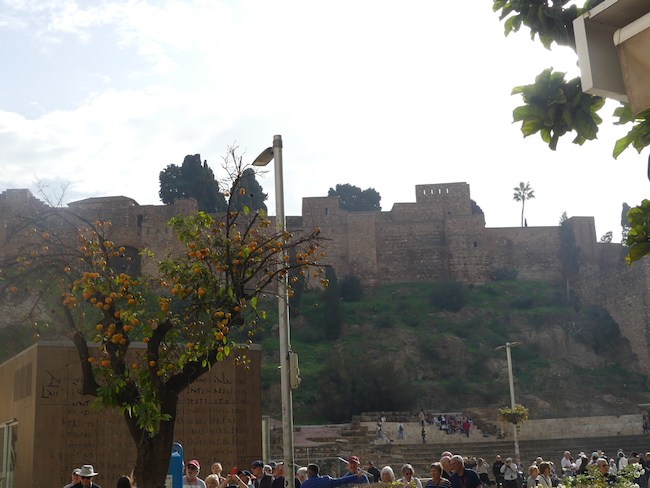


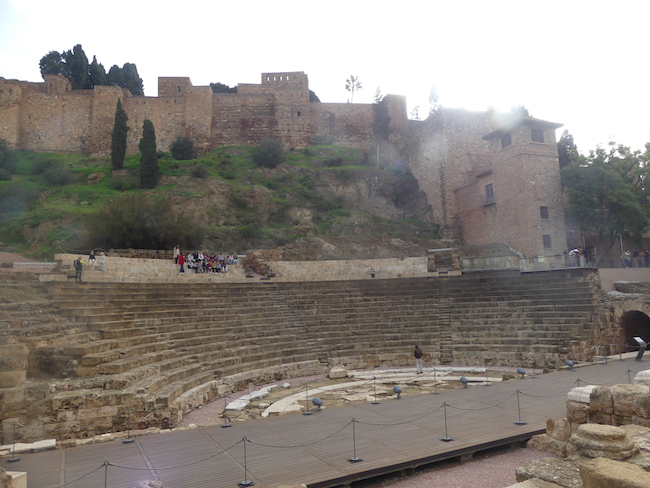


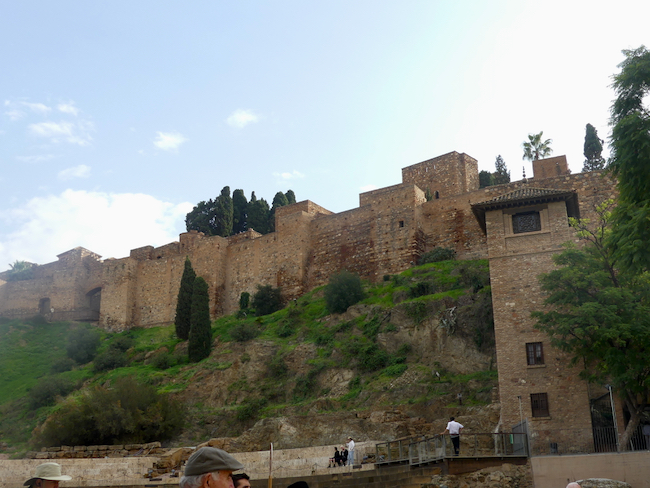
Tourists love Malaga. It is the end of November. The place is packed, expecially here at the castle.
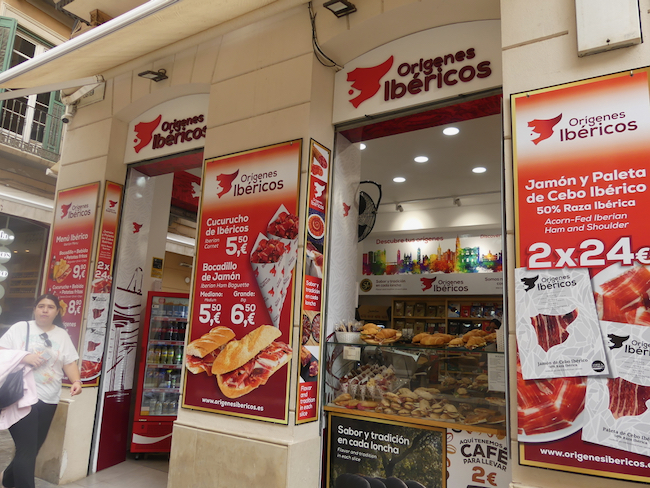


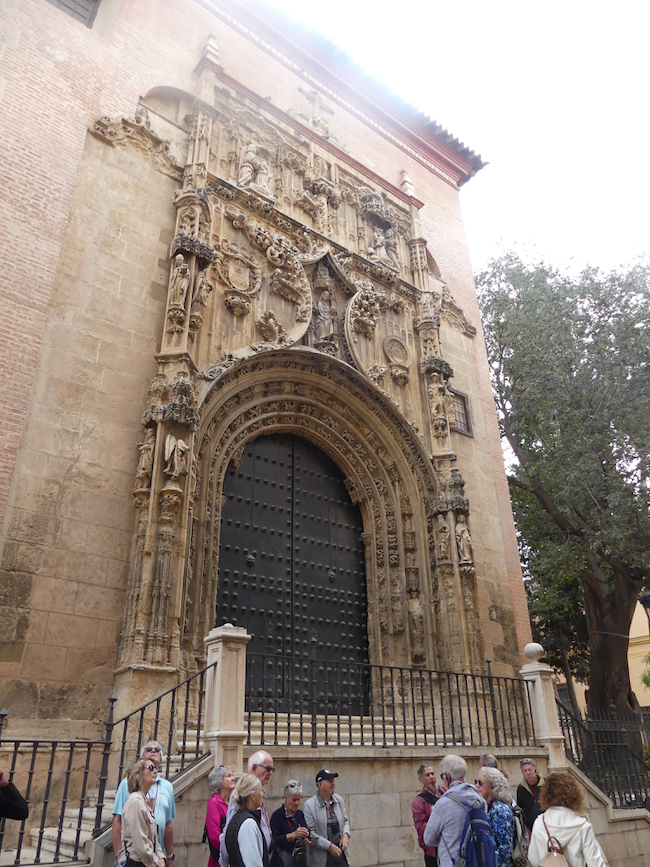

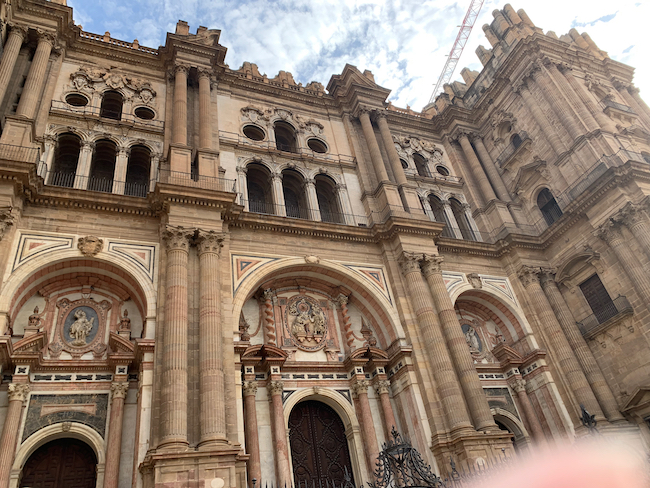
The guide is finishing our walking tour, which has been crowded with many groups of people just like us.


As the guide finishes our walking tour, which has been crowded but informative and a lot of fun, he points out the way to the open market (!) and then shows us where we will be able to catch the shuttle back to the ship. Yes! He also points out one of the oldest ice cream shops in Malaga, famous for the quality and variety of its ice creams. Sign us up!
We thank the guide, tip him with great appreciation, and head off toward the old central market. If you haven’t guessed, this is one of our favorite places to eat (think really fresh), for taking photos, and for seeing people who really live in a place and what they are buying and eating. We find an outdoor restaurant where people are eating interesting-looking food. We get to know the couple at the table next to us; they are from Amsterdam and just down for a four-day weekend to soak up some beach time and some good Spanish food. What a luxury to just come to Malaga for a four-day weekend!
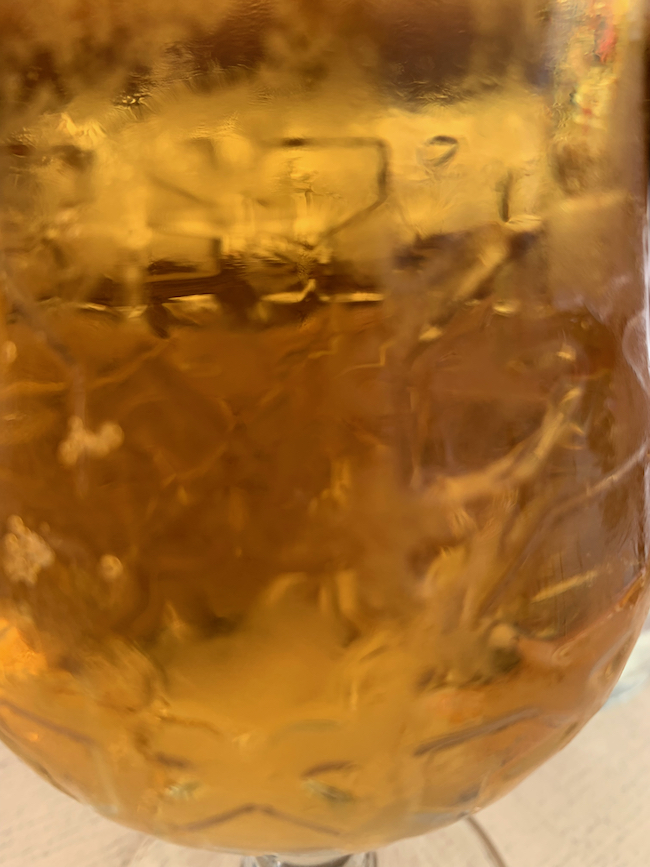
My husband’s beer glass was particularly beautiful. The beer was very good.

Above are Tomatoes and Tuna, very fresh, very good. Below are anchovies in a vinegar brine. A little was good, but this was too much anchovy, and raw, even for me. The green olives were delicious.

A brochette of grilled shrimp – fresh, delicious.

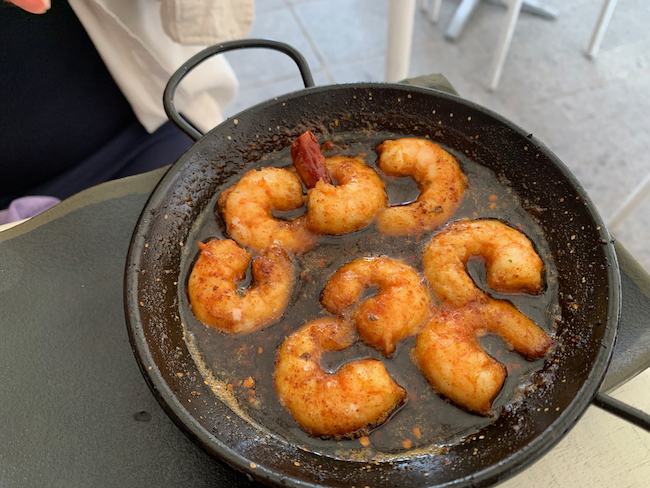
Spicy shrimp with garlic and peppers. You think you are OK and you are thinking how delicious this dish is, and then the heat hits you. Oh Wow! We had fresh bread to soak up the sauces.
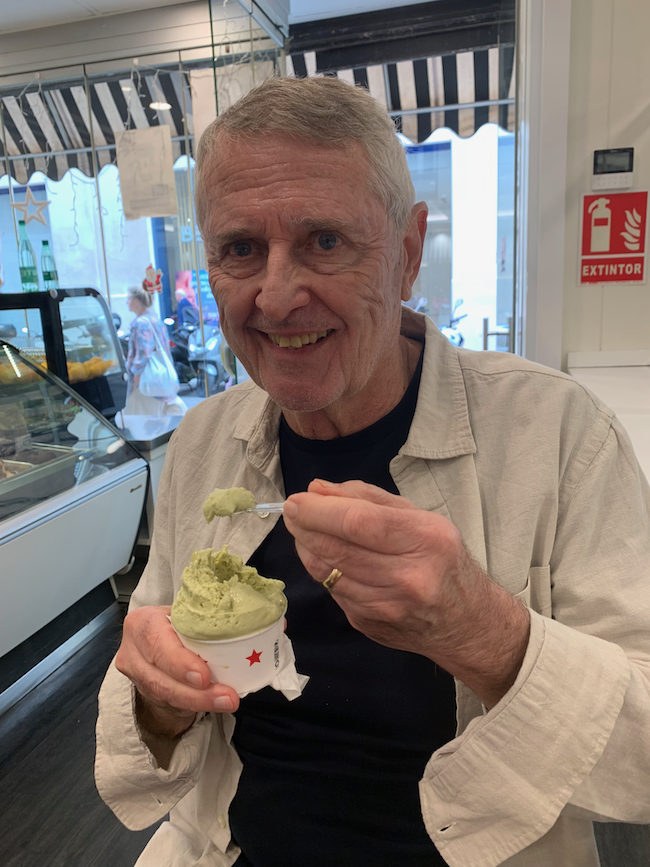
We’ve saved room for dessert and AdventureMan kept track of where the famous ice cream shop was.

Look at that chocolate! It was decadent, so chock full of flavor. AdventureMan had the pistachio and says it was very fine pistachio ice cream.

No, not small servings, but it is our last day in Spain, and the ice cream is so good we choose not to feel guilty about it. As it turned out, it was so rich, I couldn’t eat all of mine anyway.




We walk down to where the guide showed us to catch a shuttle back to the ship, and – nothing. No people, no signage, nothing. Maybe we misunderstood? We walked about a mile along a tourist waterfront walkway and asked people; no one could tell us. At the other end, the Hop On Hop Off boat people said they thought it was back where we started.
Back where we started are some passengers we recognize, and they are all grumbling and complaining. No signage, no red-vested Viking people but this is where the shuttle is supposed to be and they were told the shuttle drivers were taking an hour or so for lunch. There is one young man that they think is with Viking but he is busy looking at his phone, does not seem to speak English (or doesn’t want to) and is not helpful. He does have a red Viking bag.
And then we see the shuttle. It is coming! We get on, and some of the crew get on and we are all riding back together but here come some more Viking passengers and there is no more room in the bus! The passengers are running across the busy street, waving their arms and yelling “Wait! Wait!” but the driver drives faster. We know they got back to the ship on the next bus, but they were angry!
Ah well. Small drama. We put on our swimsuits and head for the spa. As we soak in the waves and bubbles for the last time, we review the trip and think how lucky we are. We never had any serious rain, only maybe ten minutes in Malta. No big deal. And all the ports gave us what we needed – new sights, new experiences, new understanding of how the world works. We love our cabin, our stewards have treated us like royalty, and we’ve met some interesting people and some nice people. This has been a really good trip for us.
Tonight is a special night, a BBQ at the swimming pool with live music and dancing, loud speakers and games.
It is also Thanksgiving. We thought we would go to the BBQ but as we walk through it is crowded and we don’t see anywhere to sit, so we go into the World Cafe. The World Cafe is quieter and we have turkey and whatever else we want. We don’t mind missing the BBQ. We are not too hungry because of the meal at the market and the ice cream 😊.
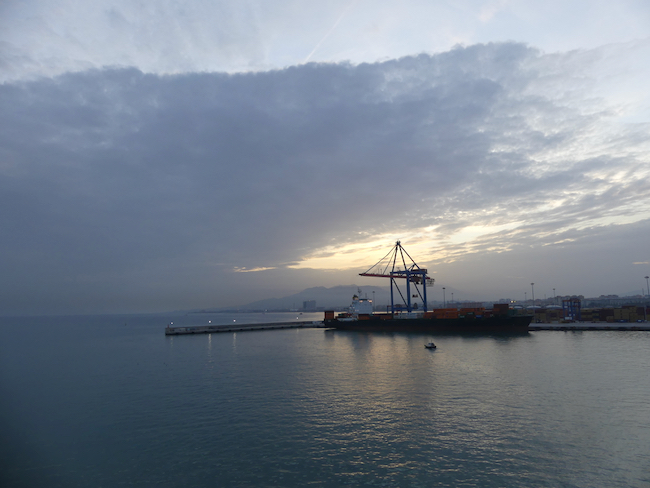
Sailing away from Malaga.
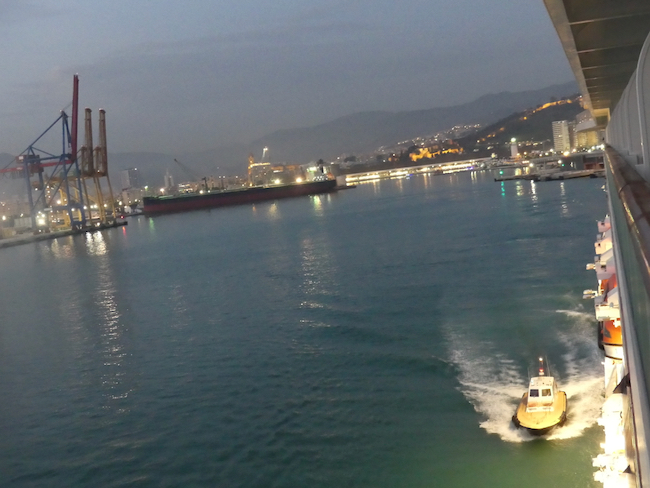
We find life on a ship can be a little compressing; these stops in Cadiz and Malaga have given us what we need; time on our own to walk and explore and learn at our own pace, to stop and eat good ice cream when we want, to just sit and chat with strangers, to stop in a China shop for a hair clip – just time, time to ourselves. These are the things that make us happy when we travel.
Morocco Malta and the Med: Cadiz, An Unexpected Thrill
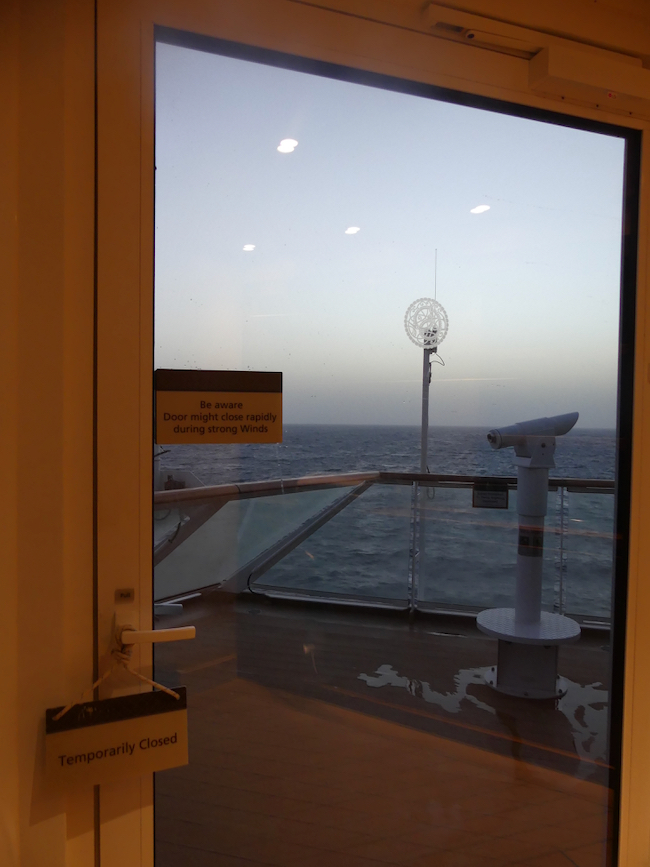
Too early for sunrise, not yet in Cadiz, and not allowed out on the deck – maybe high winds?

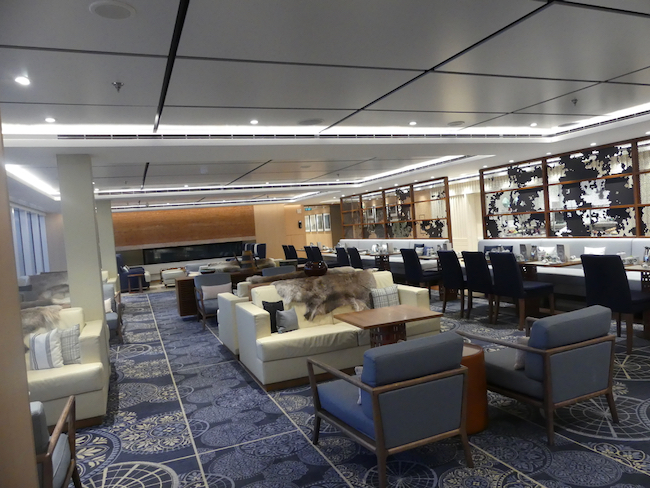
So this is the Explorer’s Lounge, where I hand out early in the morning, catching up with e-mails and Lectionary readings so I don’t wake AdventureMan.

I have a friend who brings me coffee and says “Madam! The sun is about to come up!” I can’t go outside, but shooting through the window works out. We are still not in Cadiz, plenty of time.
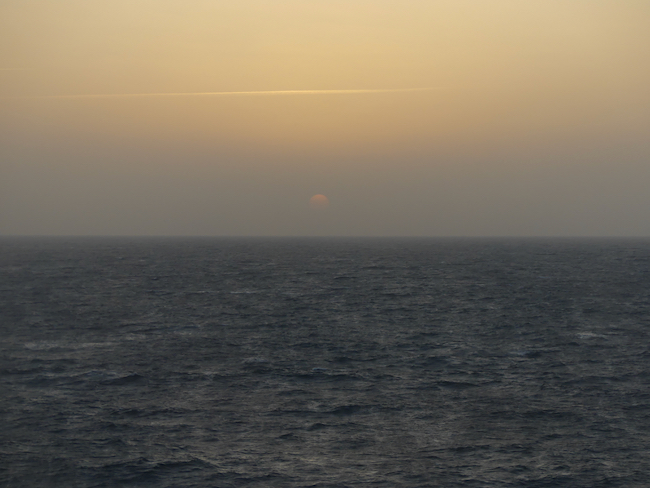

This yellowish haze is disturbing, and it is everywhere. Finally the sun sort of breaks through.
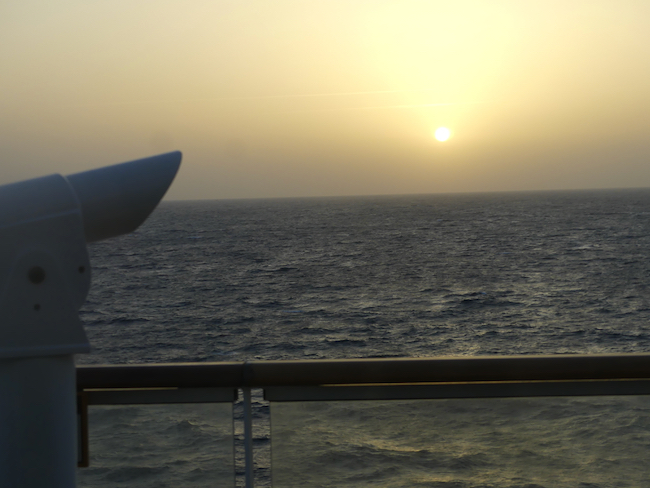
Shortly after breakfast, we approach Cadiz.

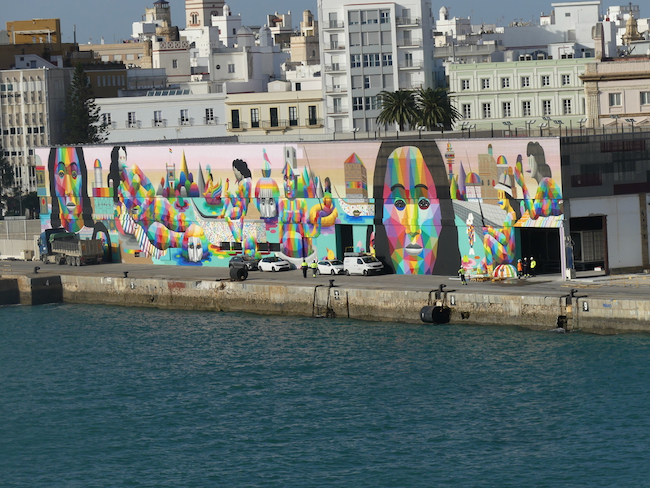
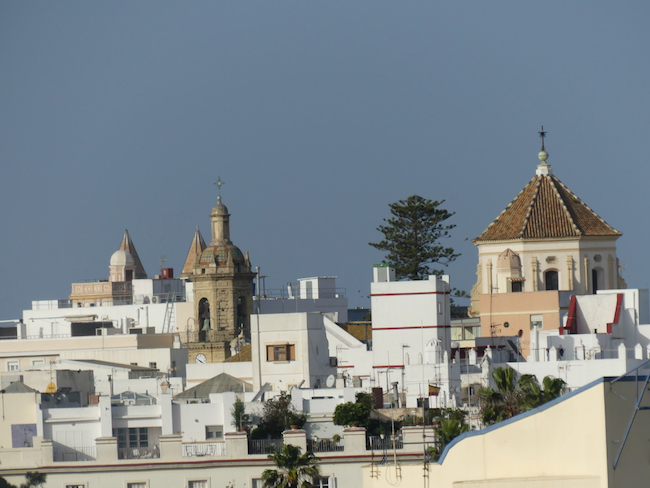
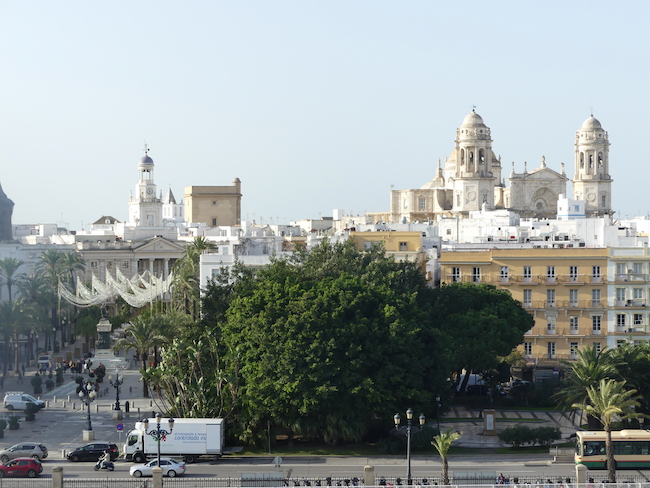
So here is the first unexpected blessing. This is the view from our stateroom:
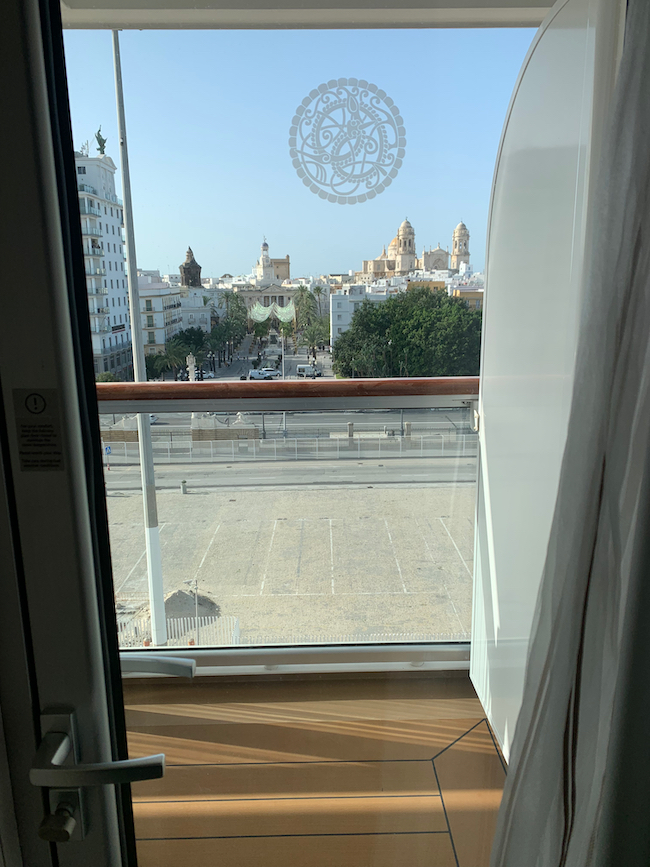
This changes everything. We had booked a walking tour of Cadiz. We cancel it. We are so close we can visit everything on our own, at our own pace, and find a place for lunch.
From Google Earth:
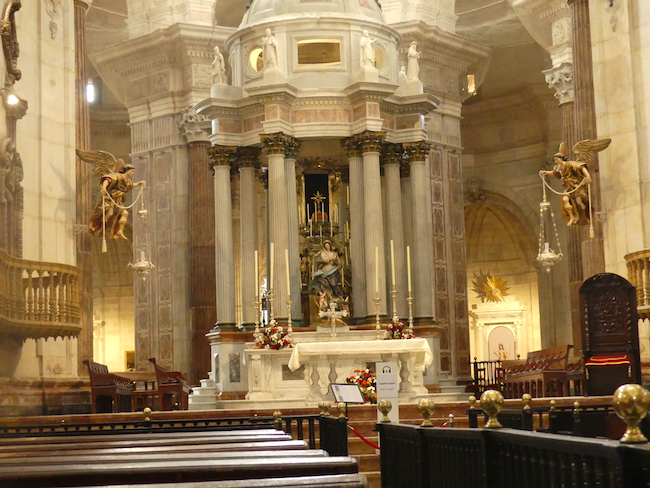
Cádiz is an ancient port city in the Andalucia region of southwestern Spain. The home of the Spanish Navy, the port boomed in the 16th-century as a base for exploration and trade. It has more than 100 watchtowers, including the iconic Torre Tavira, which was traditionally used for spotting ships. On the waterfront is the domed, 18th-century Cádiz Cathedral, featuring baroque and neoclassical elements.
And this is what Cadiz looks like – a narrow isthmus and a quick walk from one side to the other. We are docked in the port to the North east, facing the Cadiz Cathedral.
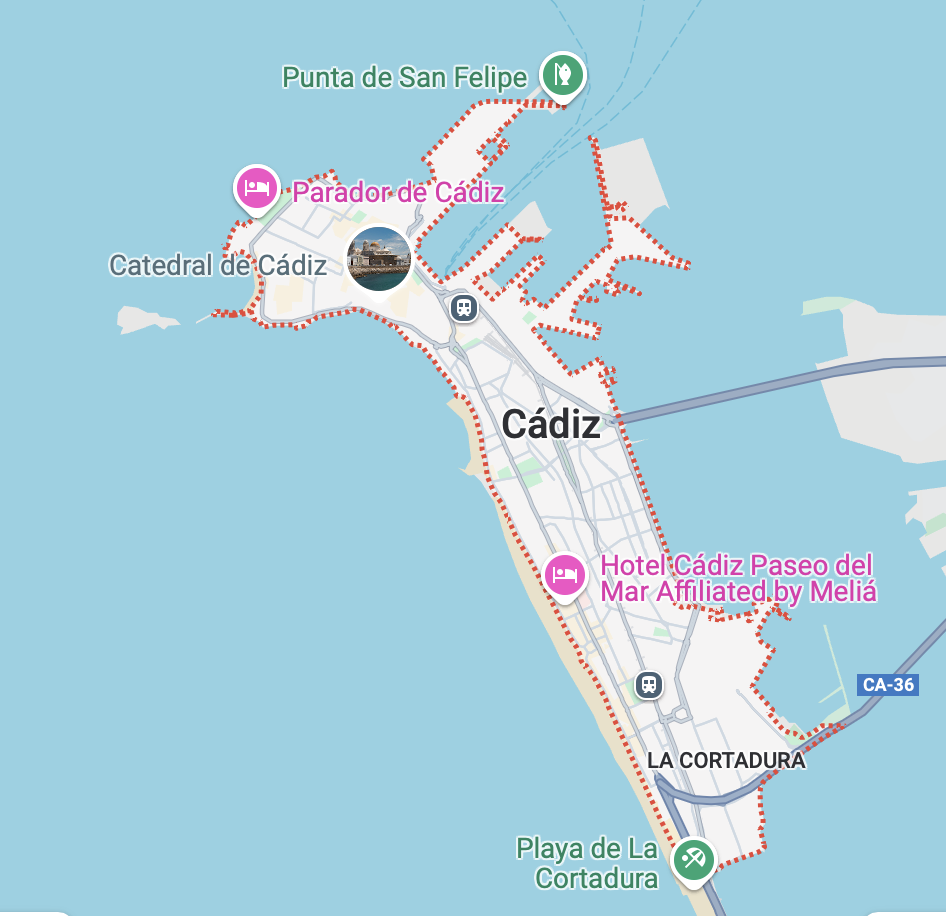
It is just the kind of place we love – great for walking, lots to see, and we can do this on our own!
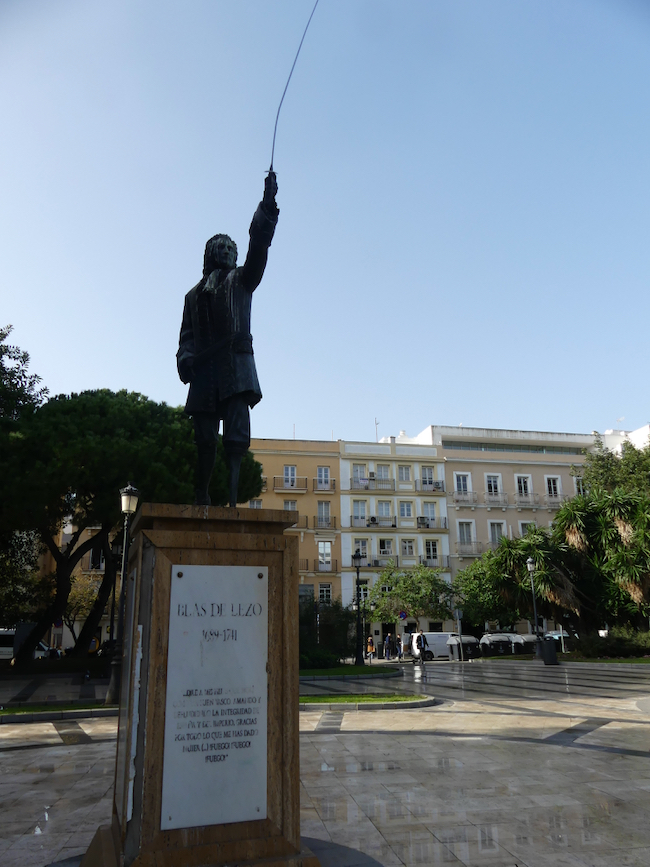
From Wikipedia: Admiral Blas de Lezo y Olavarrieta (3 February 1689 – 7 September 1741) was a Spanish navy officer best remembered for the Battle of Cartagena de Indias (1741), where Spanish imperialforces under his command decisively defeated a large British invasion fleet under Admiral Edward Vernon.
Throughout his naval career, Lezo sustained many severe wounds; he lost his left eye, left hand, complete mobility of the right arm, and had his left leg amputated in situ after being hit by the projectile of a cannon.[1] He perceived his wounds and physical limitations as medals, refusing to wear an eye patch to hide his blind eye. Wearing his past battles history on his flesh won the respect of his peers and soldiers.[2] Lezo used to say that the lack of a leg does not imply the lack of a brave heart. It is said that he sometimes recalled famous Dutch admiral Cornelis Jol, called “pegleg” because of his wooden prosthesis, as an example of a sailor who undertook great enterprises and achieved great renown, especially in piracy and privateering, despite his theoretical disability.[3]
Lezo’s defense of Cartagena de Indias against a vastly larger British fleet consolidated his legacy as one of the most heroic figures in the history of Spain. He is often recognized as one of the greatest strategists in naval history.[4][5]
We really can’t get lost in Cadiz:


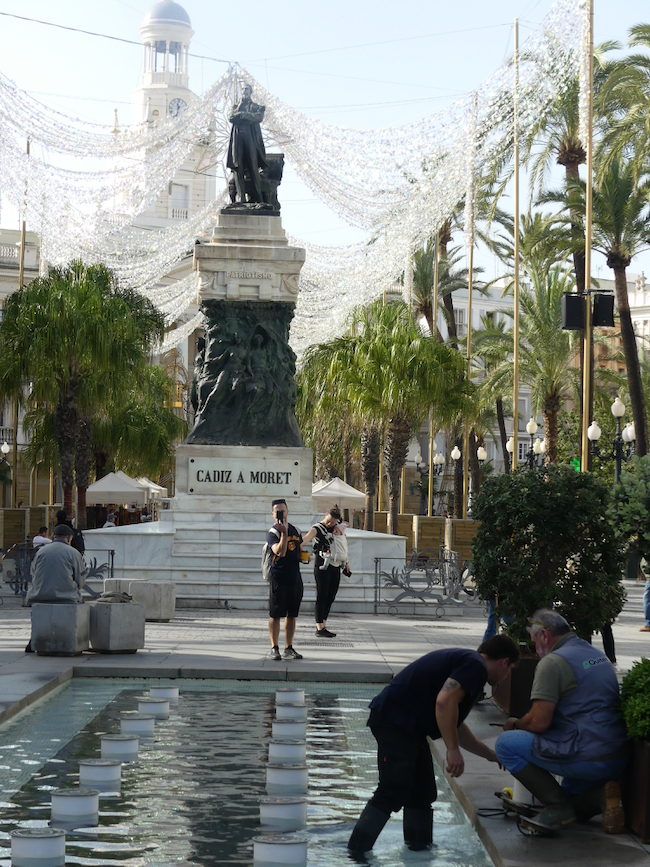
The Christmas Market going up:


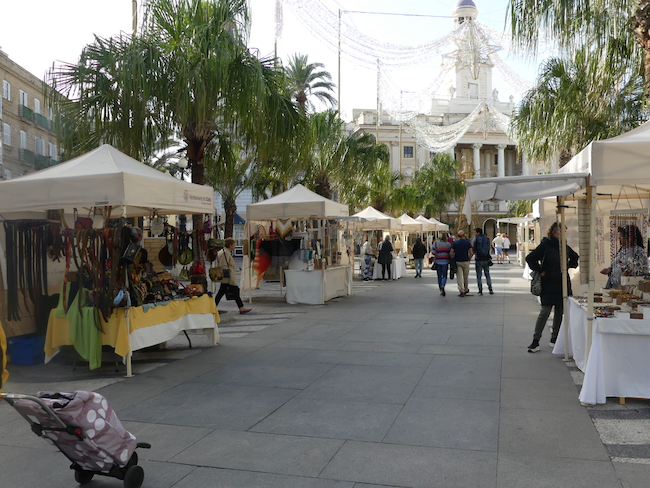

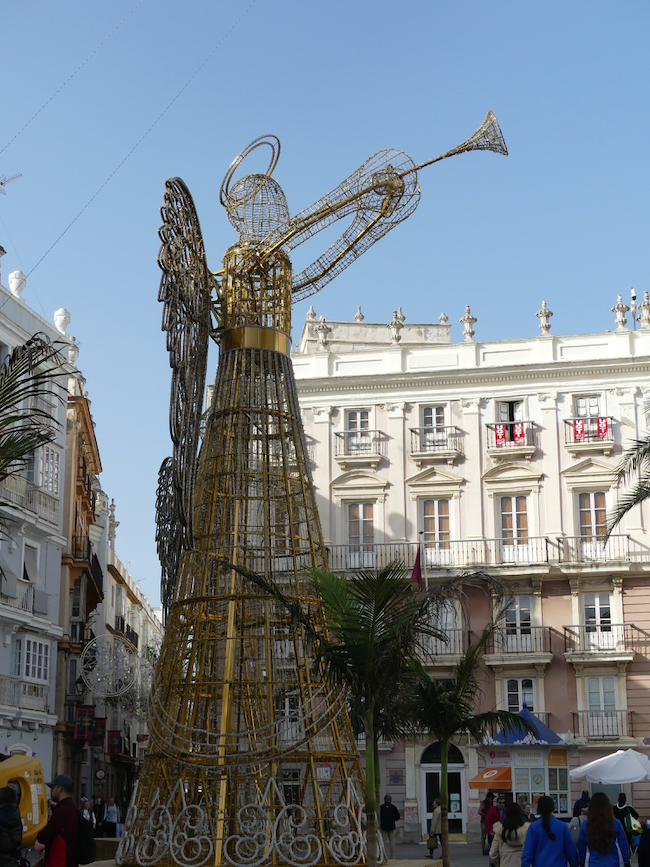


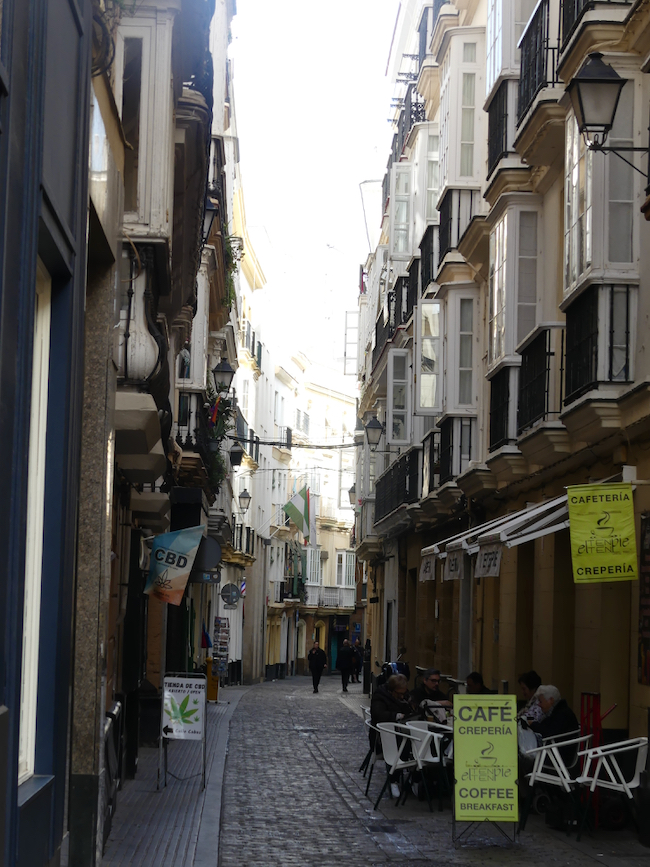
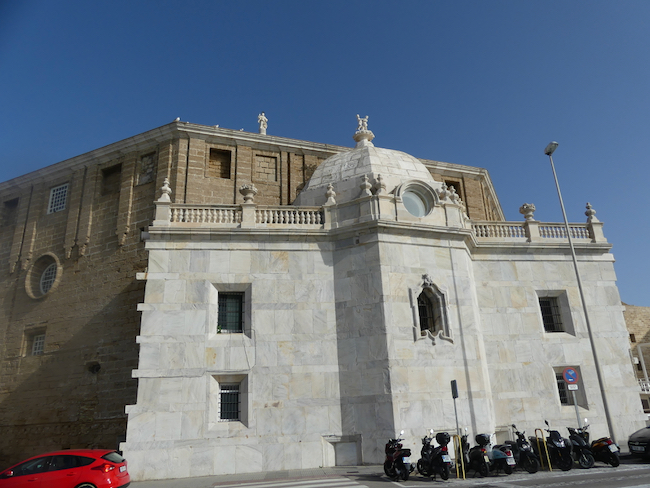

The Cadiz Mariner’s Church and mission
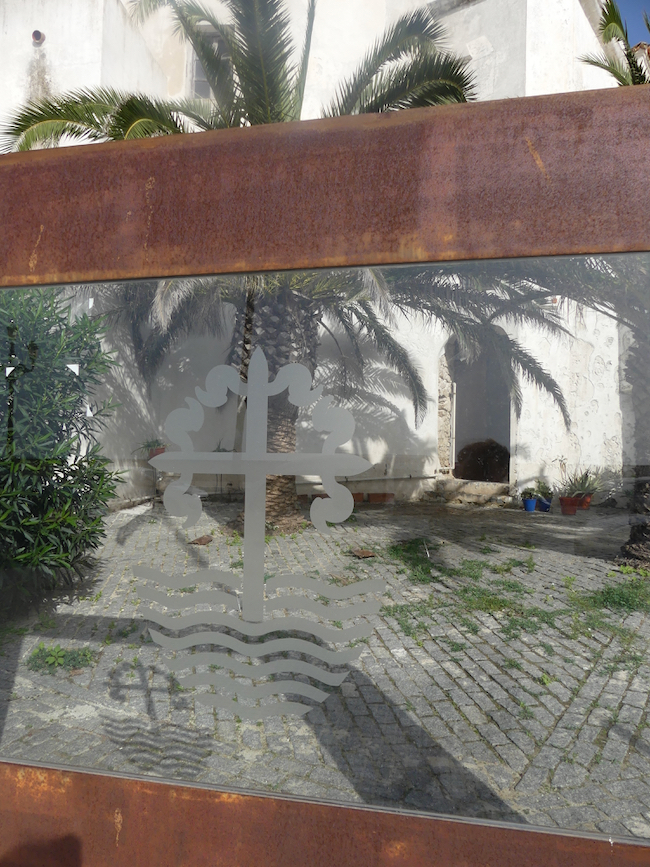

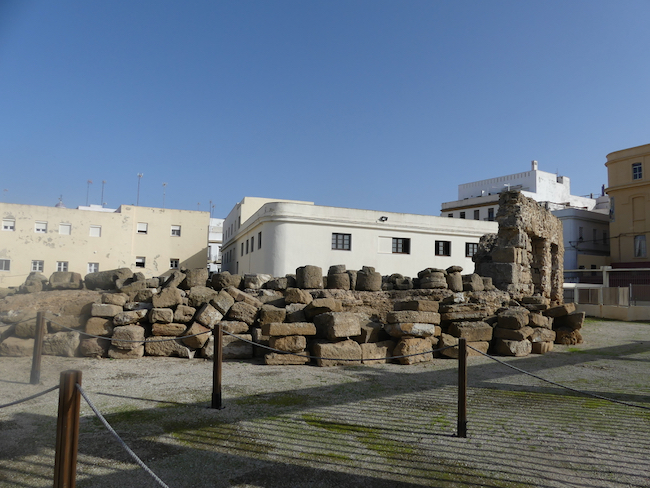
You would think below might be a church, or a mosque, but it is actually a private school for boys.


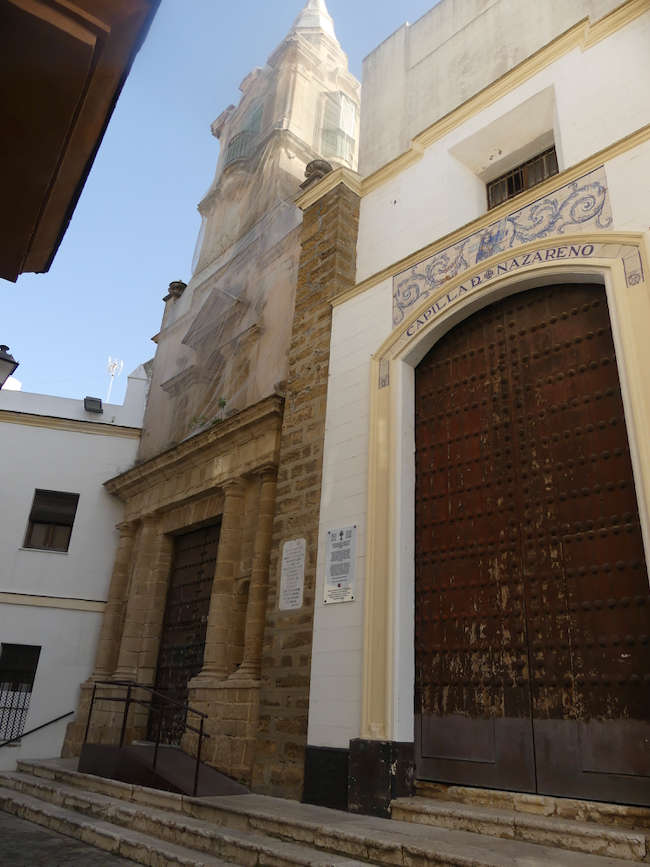
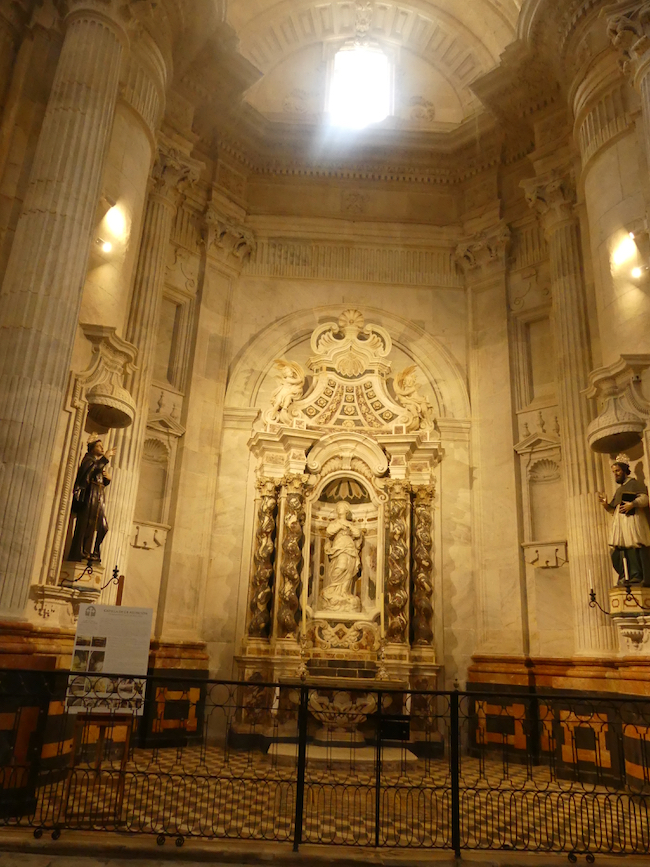


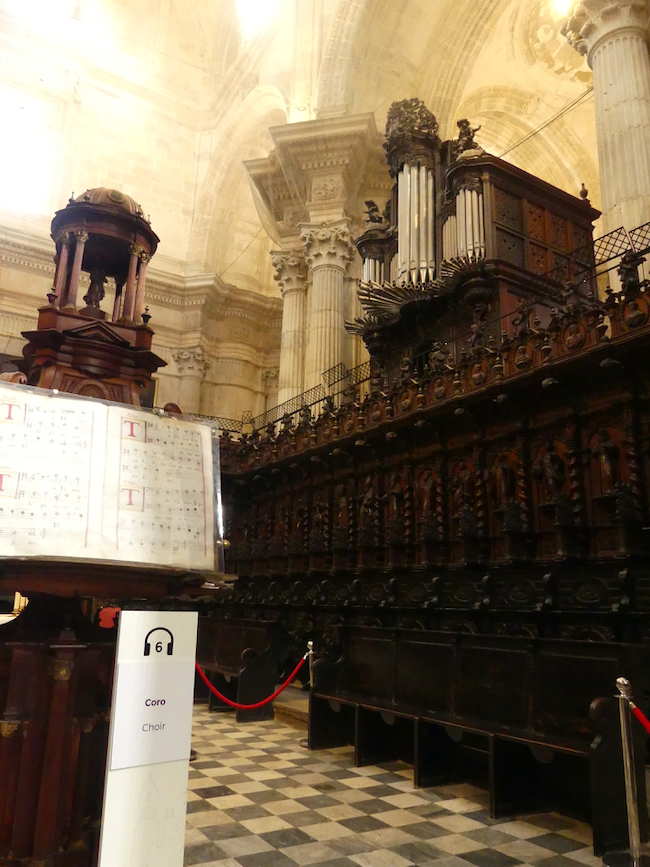
“To Sing is to Pray twice!”



We’ve learned something from our time in Barcelona searching for a hair brush (which, by the way, I had not lost. AdventureMan was right, it is a small brush and it was hiding in the bottom of my purse.) Now I’ve broken my hair clip, which keeps my hair out of my eyes and face while I am swimming or sleeping. It is totally broken, the wire snapped, it is useless. But as we pass this store below, I can hear the Barcelona hairdressers saying “China shop! China shop!”

China Shops are not always called China shop, but you can always tell from the outside because they are crammed with goods, and local people are inside buying what they need. I found a ton of hair clips, and I think I paid 79 pence (less than $1) for a hair clip. I hated to leave. They had a huge inventory of Christmas items, things I don’t need, thinks I can’t pack, but what if I never see them again? I only buy the hair clip, and am proud of myself, but with mixed feelings.
Then AdventureMan spots this store across the street with the most amazing display of PlayMobile figures. I was about to drift by, but he made me stop and pay attention, and I was blown away. If only I had little grandchildren and could justify buying them!
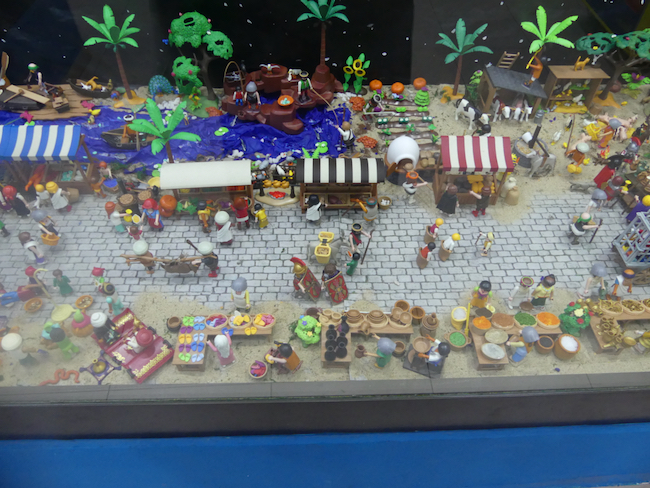
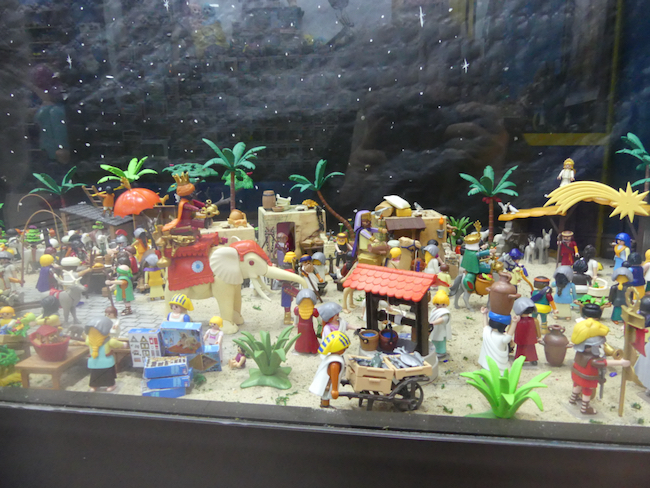

We’ve been hiking around Cadiz all morning, and we are ready to have lunch. We look and look for the right place – not too grand, not too stuffy, but with good local food. Finally, sigh, we settle for a place that is also full of Spanish tourists, so a tourist place, but Spanish tourists.
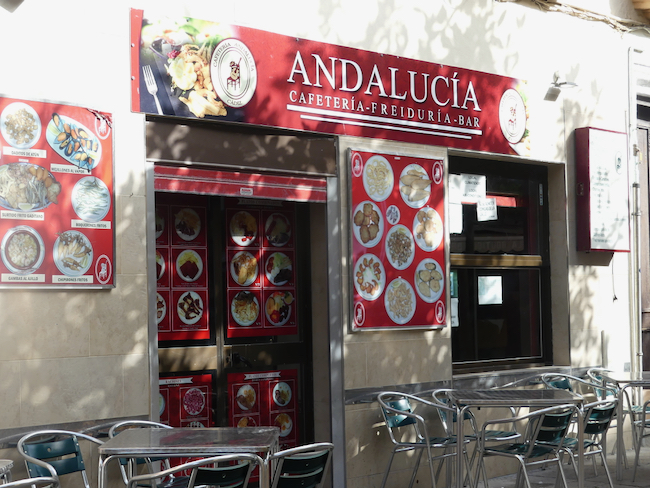
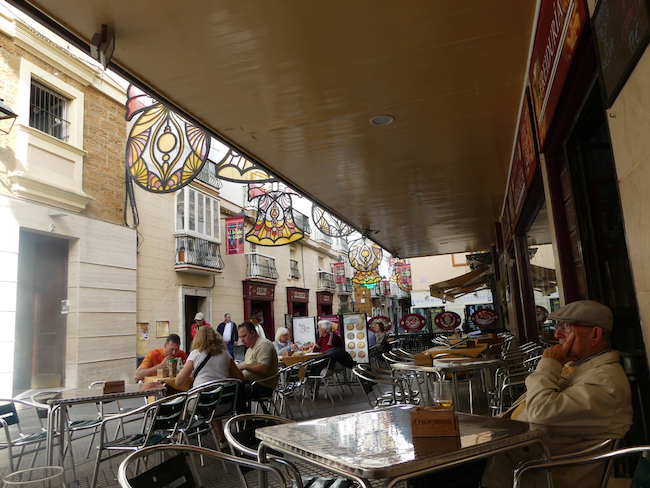
One funny thing happened here; a large group, maybe 12 mobility-impaired people and caretakers, came in, and a table was put together for all of them, and they got menus while one woman took her husband to the washroom. They kept not ordering. When the couple got back, they all got up and left.
We ordered tourist stuff – fish, grilled peppers, paella. It was good and we had a great time watching all the people pass by.


We have to be very careful not to catch this woman’s eye; she is soliciting tourists to buy hand made “African” bracelets, but what catches my eye is her headdress and clothing. When the police show up, she fades away quickly.

As we sit here eating lunch, we see group after group of Viking passengers pass by.
After we eat, we head up the street, only to discover our next blessing which is also a little disappointing, but oh well, it is what it is. Around the corner, if we had just gone a little bit further is the open market! It is colorful, and full of fresh beautiful vegetables, meats and seafood. AdventureMan needs to try some local sherry.

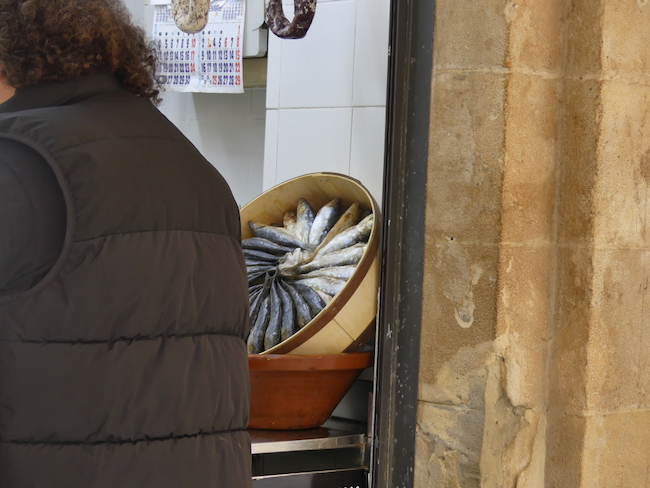


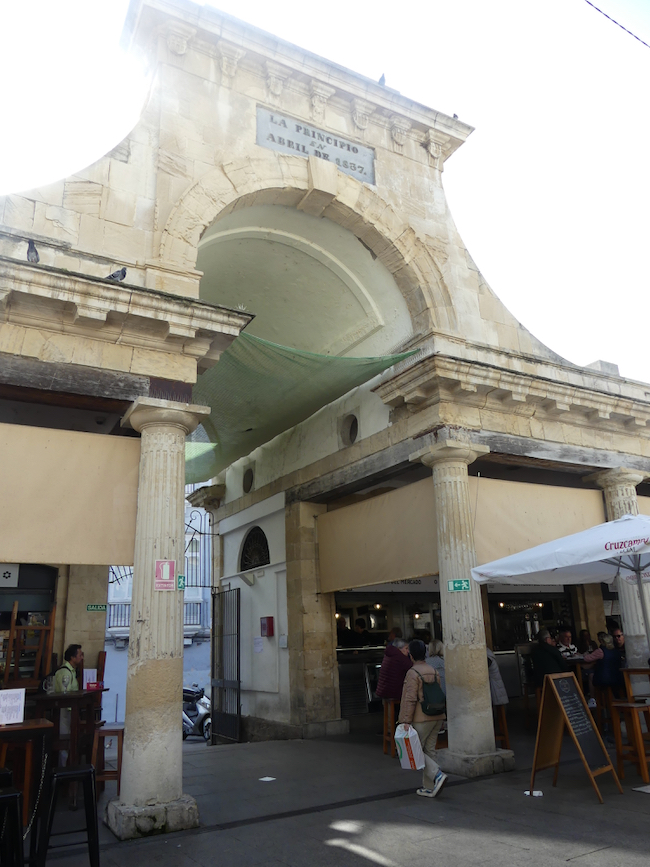

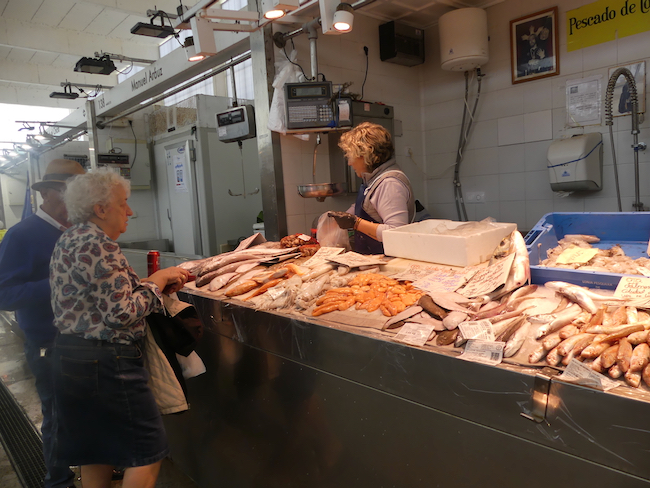
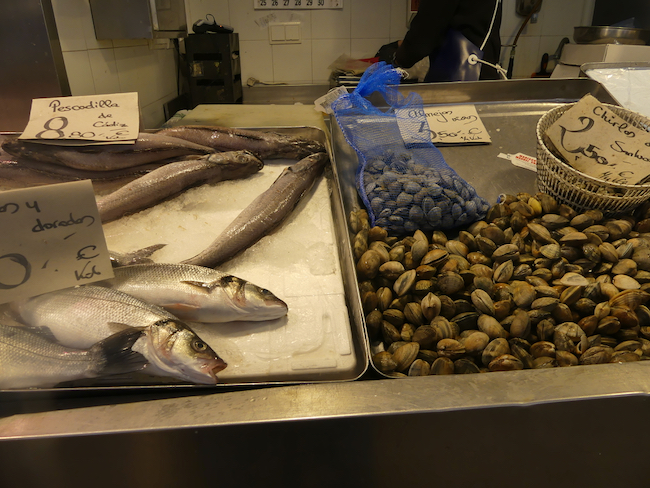

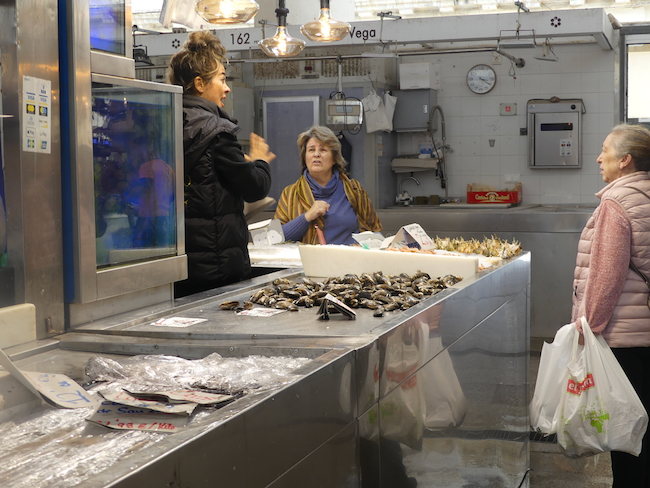
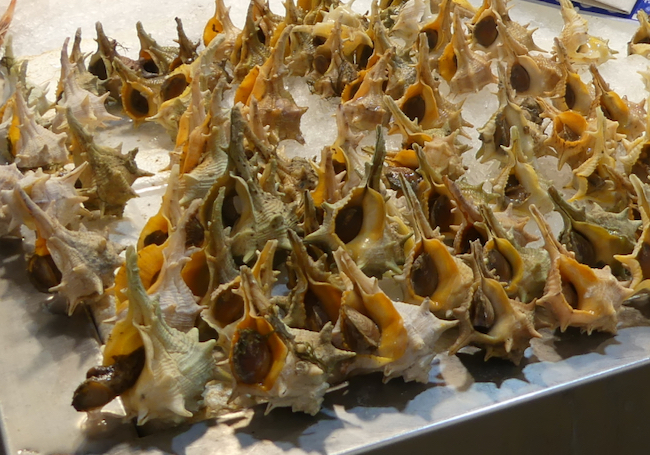

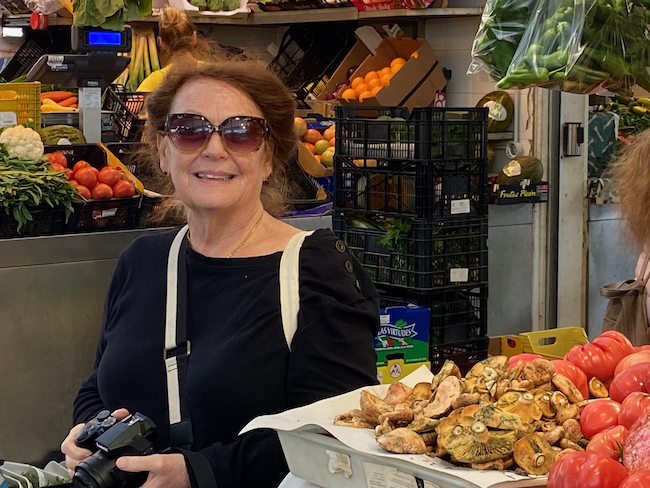
We leave the market, wandering our way back towards the ship. AdventureMan spotted an ice cream shop he wants to try. I got a very black chocolate ice cream, maybe the most chocolaty ice cream I had ever eaten. I think he can’t remember which he had, perhaps a cherry, but he says it “was all good. We had some good ice cream on that trip.”
We take our time heading back to the ship. Cadiz is so walkable, so much fun.
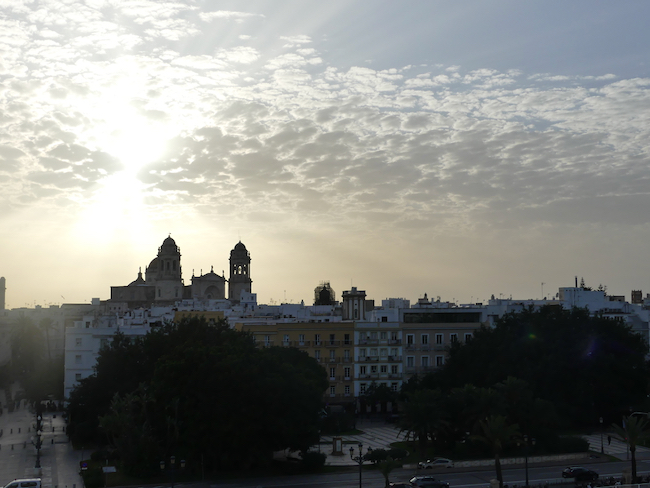
You can quickly go through the rest. I fell in love with our view and the sun setting behind the Cadiz Cathedral, our last thrill for the day in Cadiz before sail away.

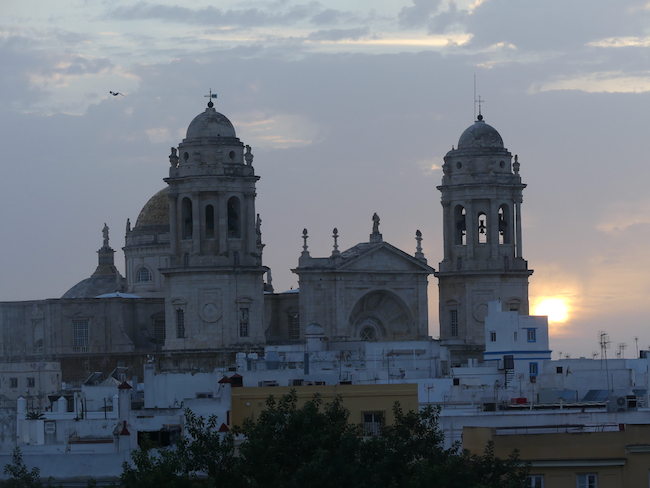
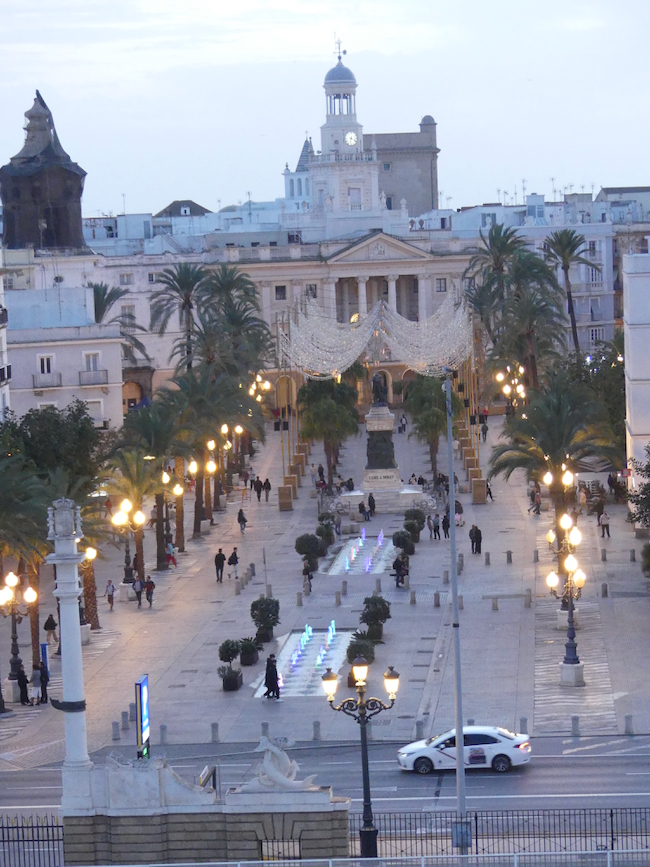


I think this is the night we eat in the ship’s Italian restaurant, Manfredi’s. We had reservations for another night but canceled them when we discovered it was French night at the World Cafe.
The food was pretty good. People compete for these reservations. Our perception is that we have equally good Italian food other places, often better.
We also have discovered this about ourselves – we like food, and we are both a little on the attention deficit side. Sitting for a long time in a restaurant being served makes us restless. We really like the World Cafe; many of the foods are the same ones served in the Dining Room and the specialty restaurants without the time-consuming service. We can also exercise control over the serving sizes and sample something we might like to try but might not like to eat. We like getting up and walking, and we like that if there is something we like a lot, we can go back and get a little bit more. The World Cafe works well for us.
Morocco Malta and the Med: Casablanca and El Jadida
I can’t be staying in bed when we are coming into port in a new city.

This was seriously disturbing.

That mist looks sulfuric!

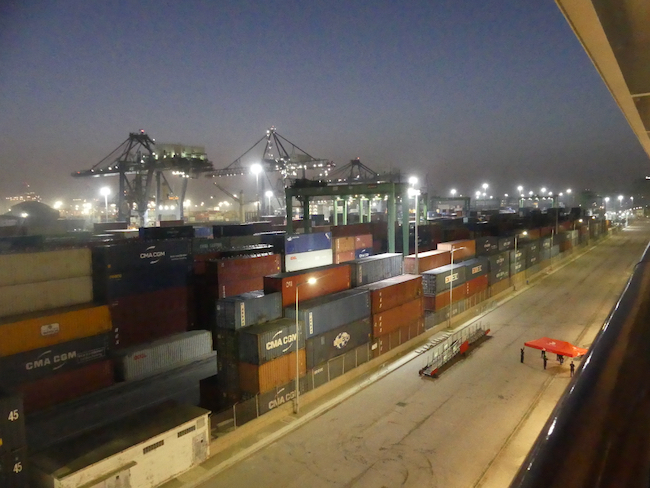
We are warned that Casablanca is an industrial port. No kidding!

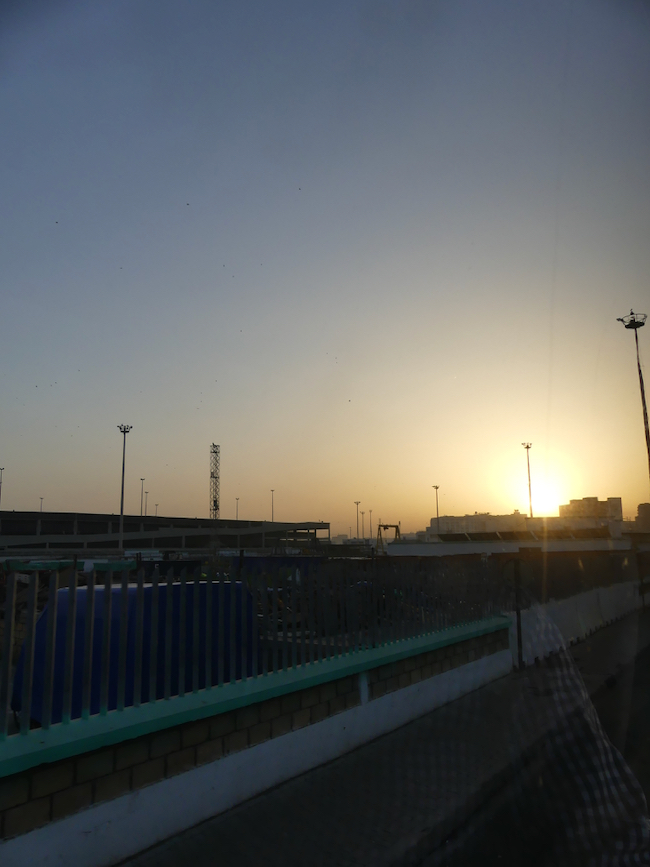
Quick breakfast and we are off to El Jadida, an old Portuguese fortress city. We were actually here ten years ago on our very first cruise, The Moors in Spain and Morocco. We really love Morocco. One year we came here at Christmas, which was also Ramadan, rented a car and drove all around Morocco with our son. We had such a great time.


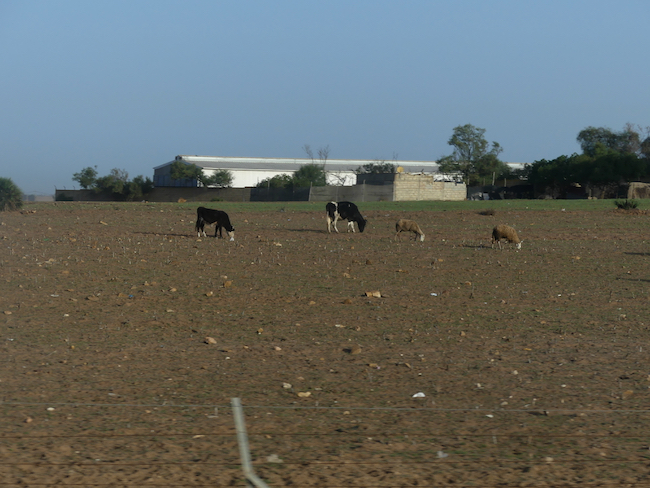
Our guide tells us this area near El Jadida is famous for raising horses for racing and showing.


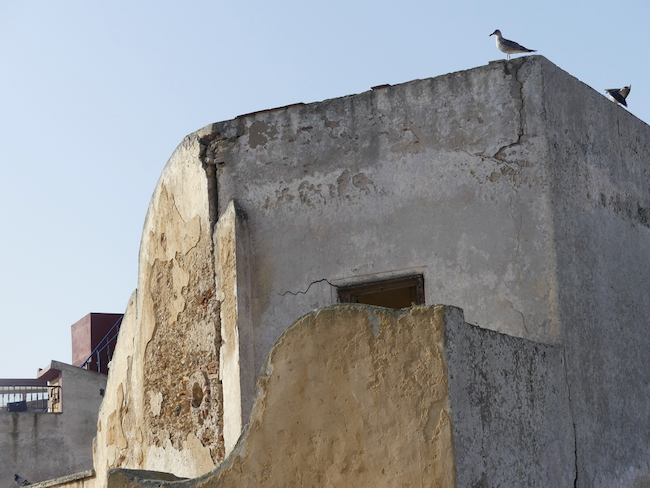
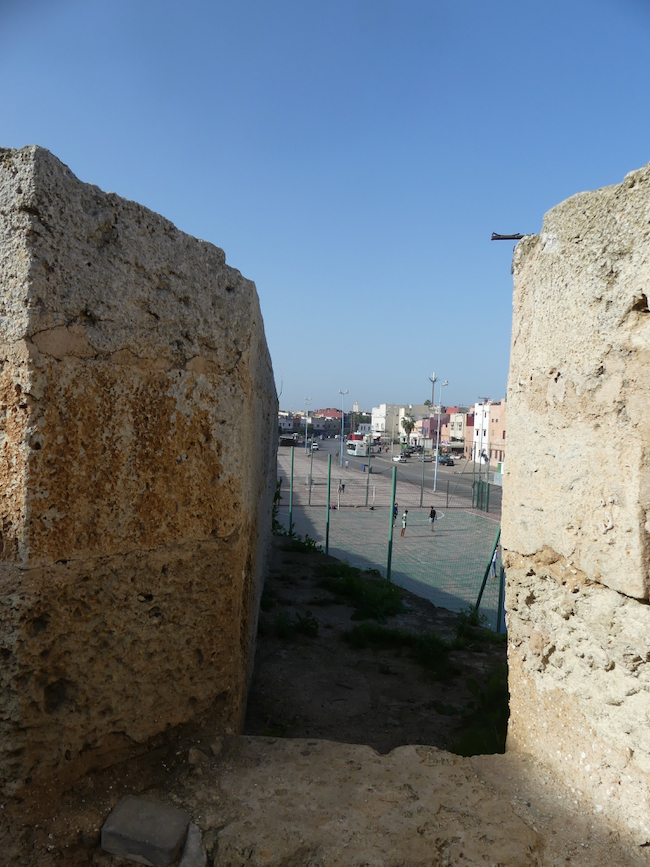
Me and my stone walls!


Getting close to El Jadida:
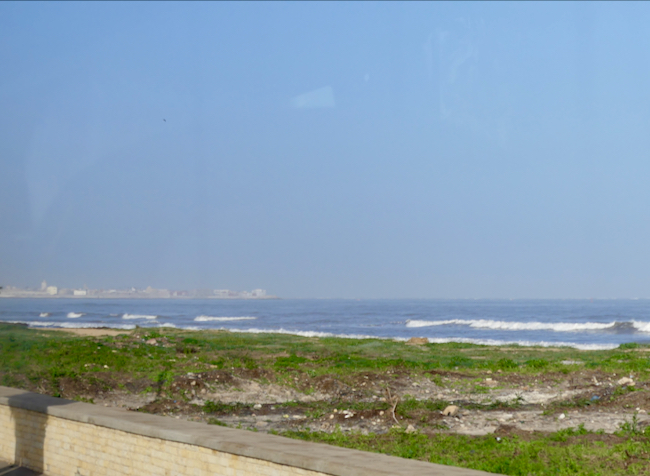
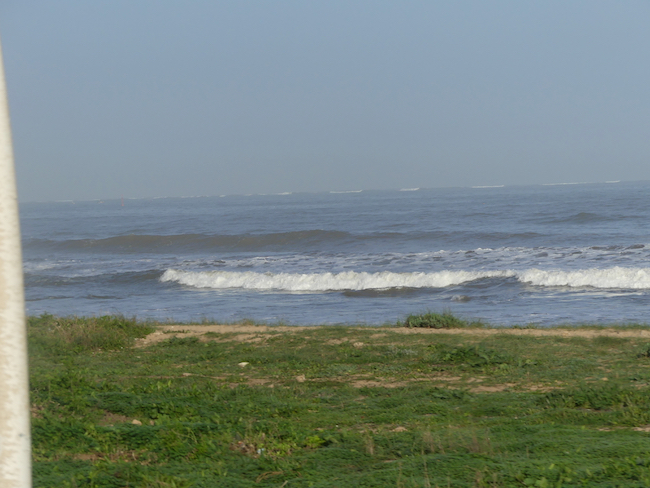

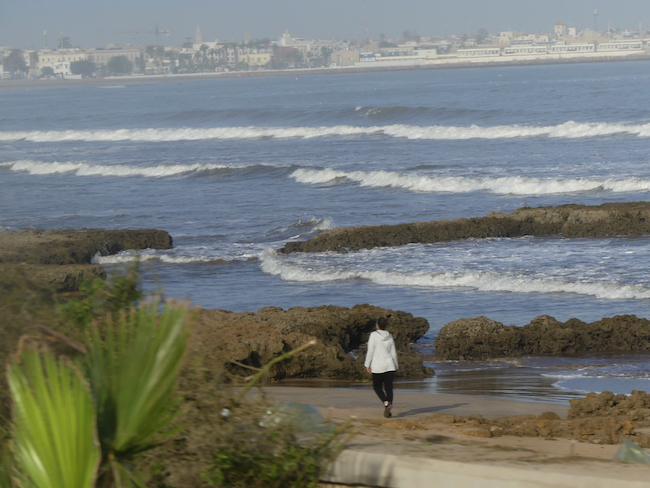

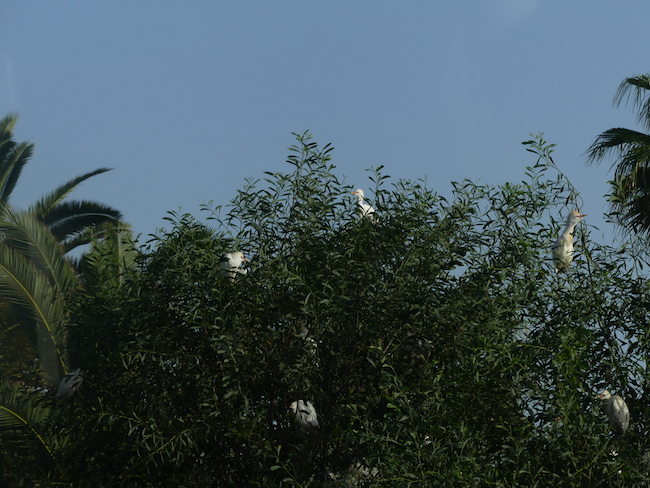


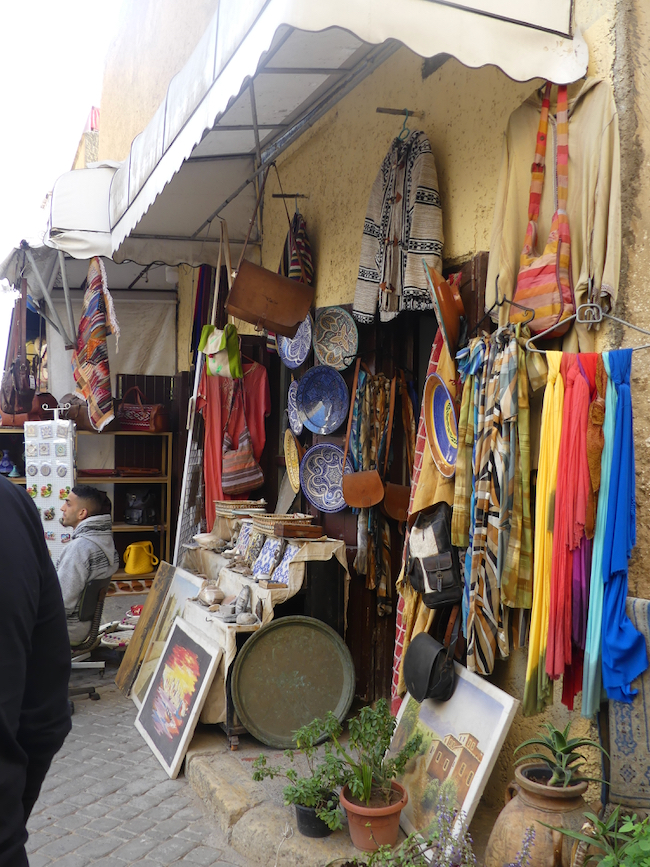
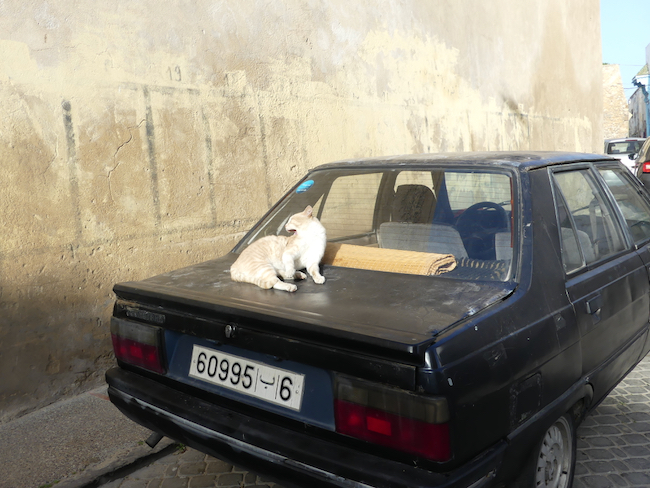

An old Portuguese Catholic Church in El Jadida. The people around Casablanca make it a point to discuss frequently how tolerant the area is, with Jewish and Christian populations as well as Muslim and Berber. Our guide was proudly Berber.
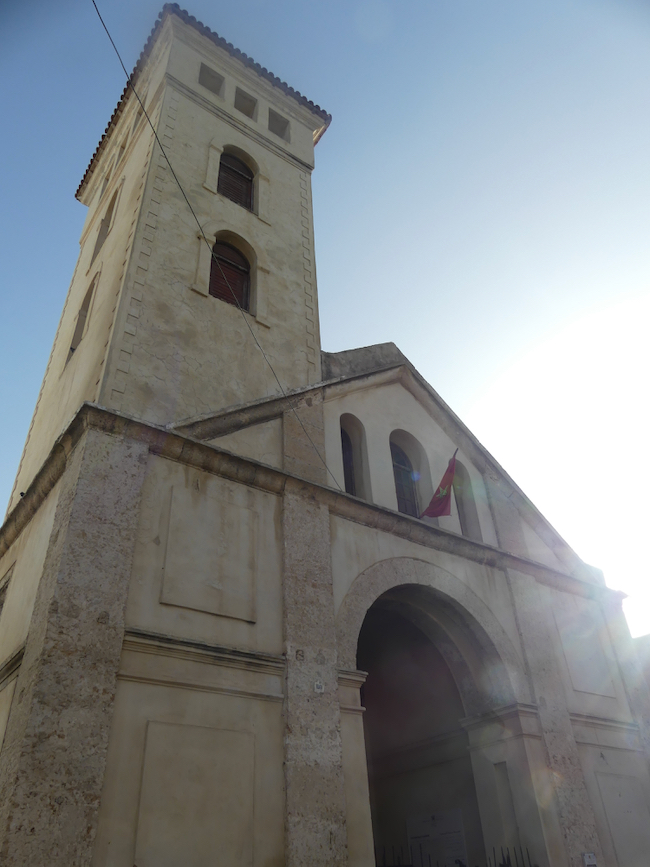
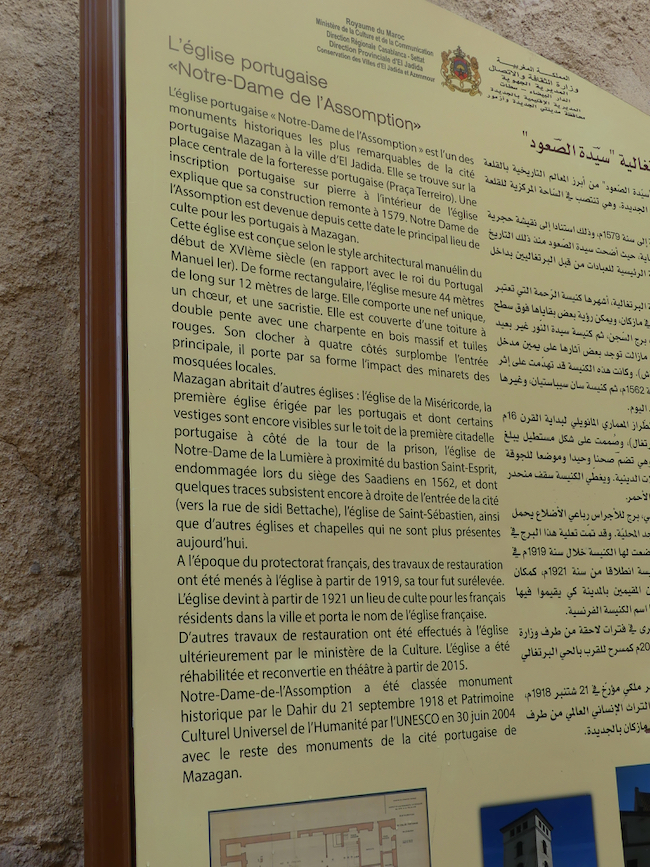
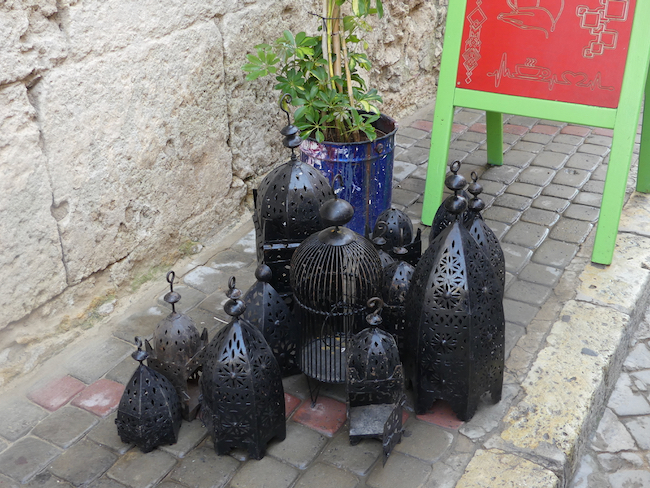
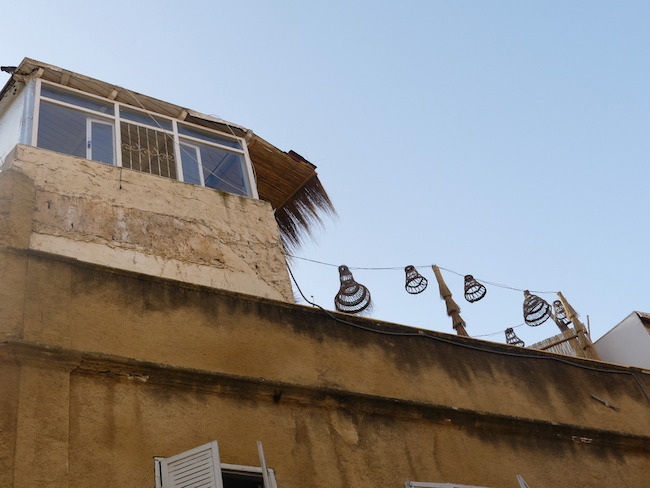


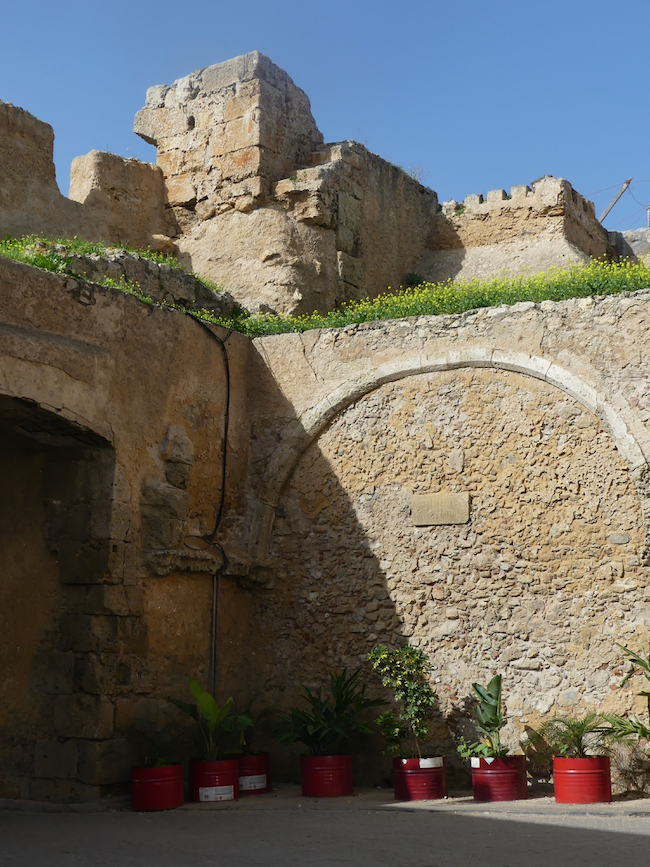
We had been warned that the beautiful old Portuguese Cisterns were closed for restoration, so the photo below is the exterior only, but I have a treat for you. Below the shot of the exterior is a photo of the interior I took ten years ago. I still love to look at it. The cisterns are so beautiful as well as functional.

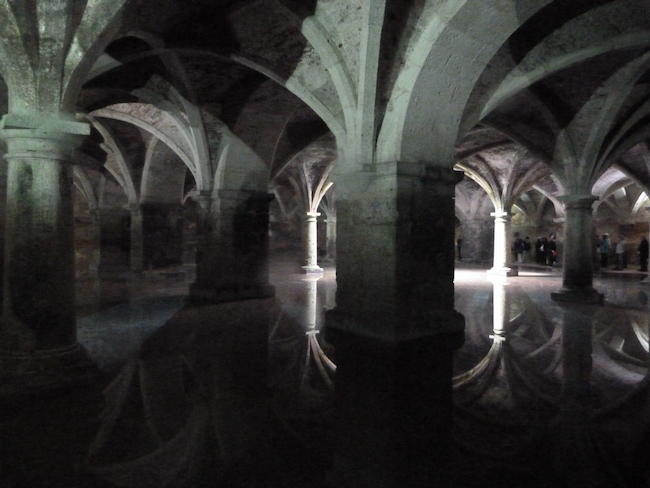
I don’t consider this cheating; I consider it . . . um . . . illustrating. . . or embellishing to show you what you might see when you go to El Jadida.
Below are Moroccan silk weavings.


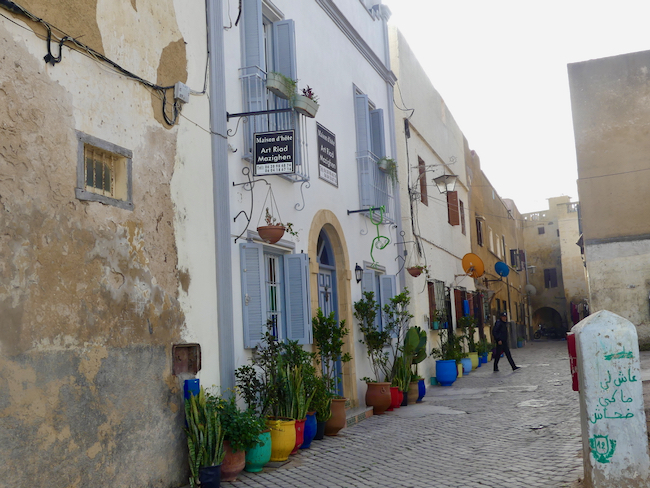
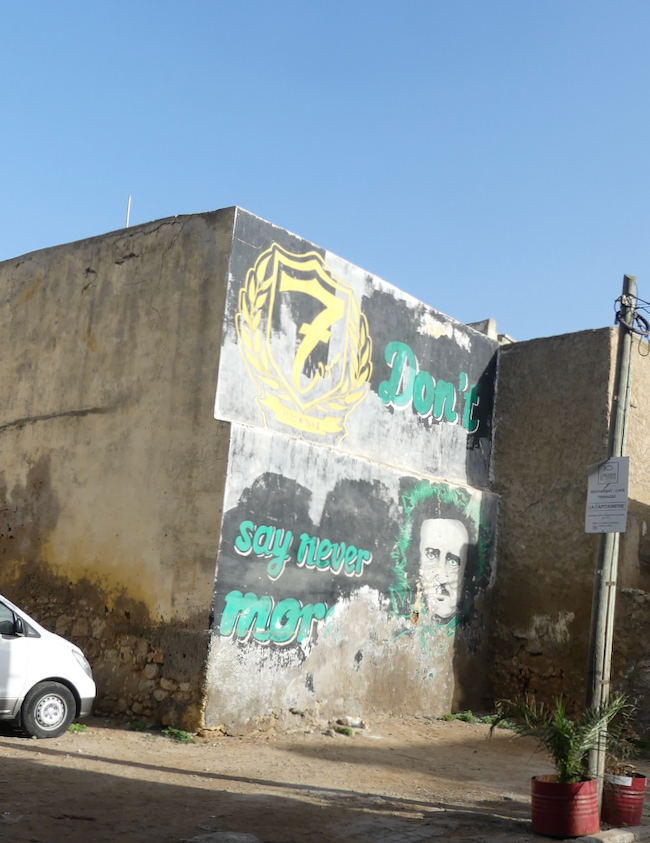
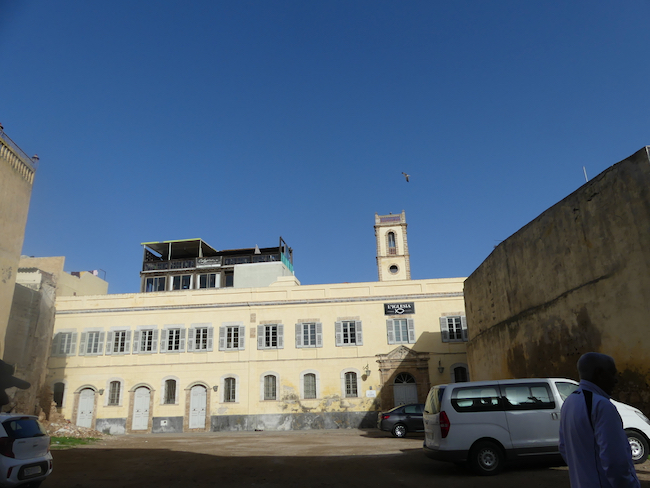
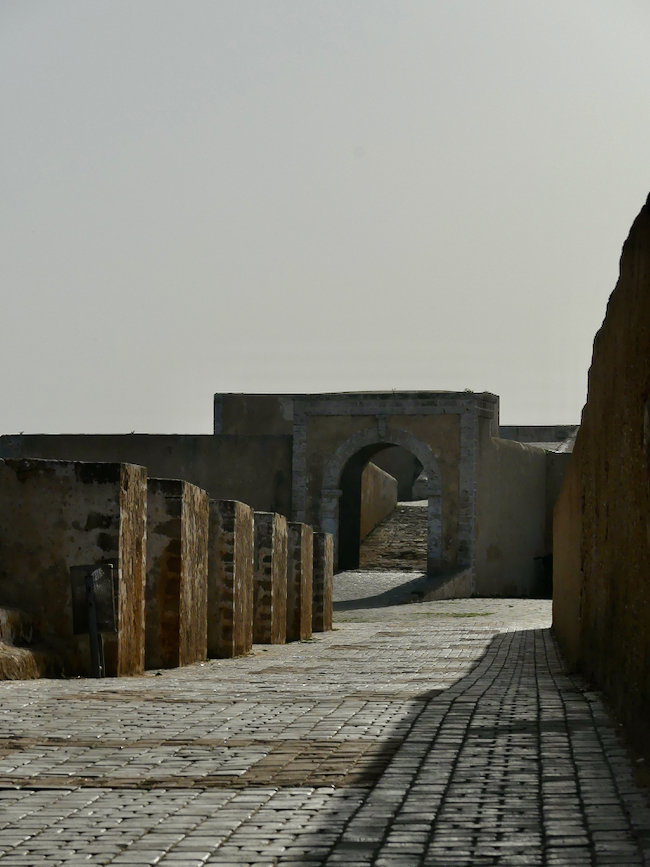


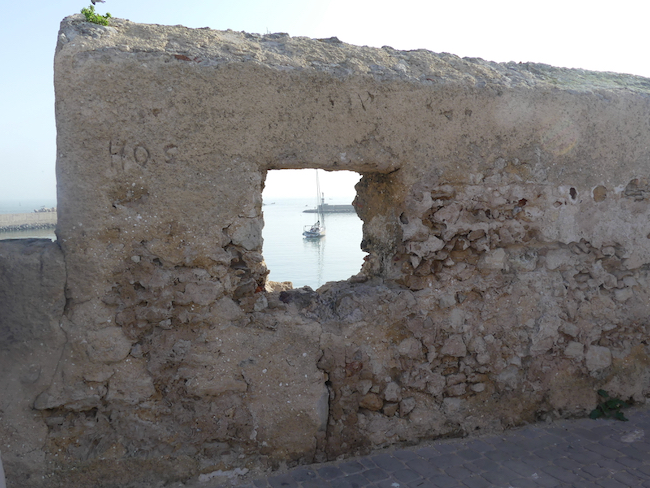

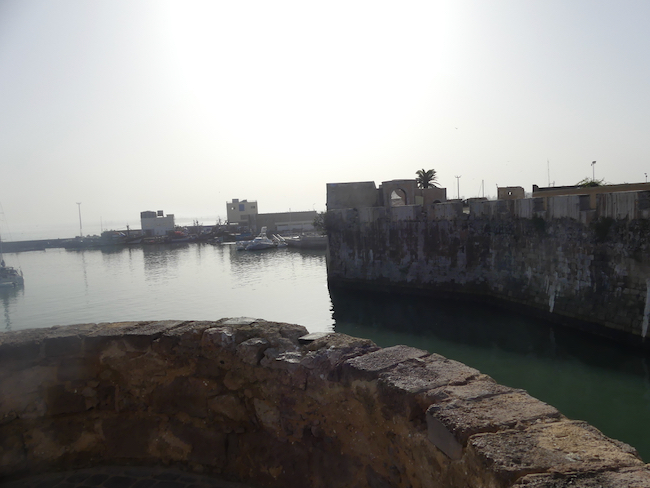
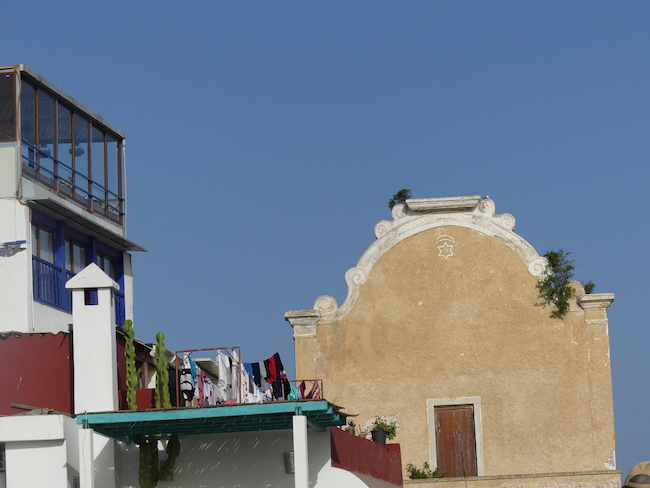
I believe this is the old Jewish bakery.
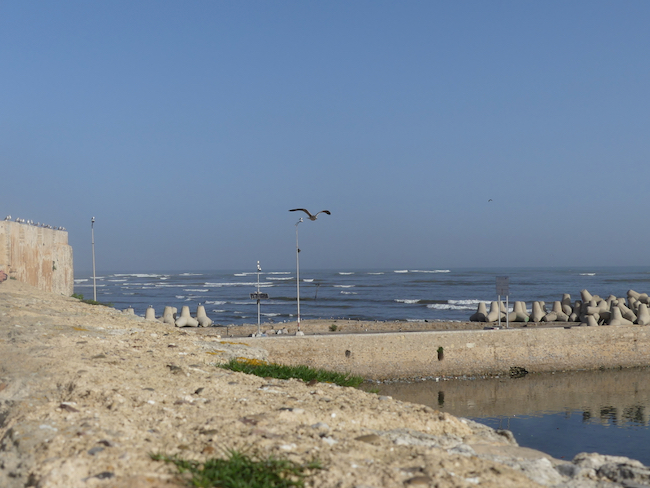

When you read old histories or bible stories about prisoners being cast into a well, it could look a lot like this:




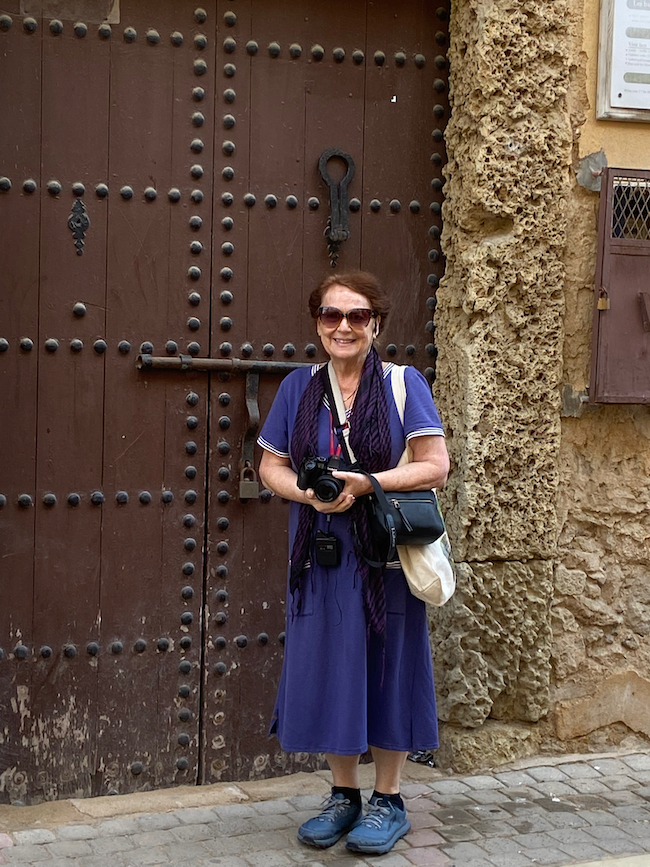
This picture below is hilarious because I am wearing an expensive pair of shoes that I find clunky. The trip description said it was challenging, with uneven hikes, rocks, and hills. It was a very mild hike; I could have worn my sandals.

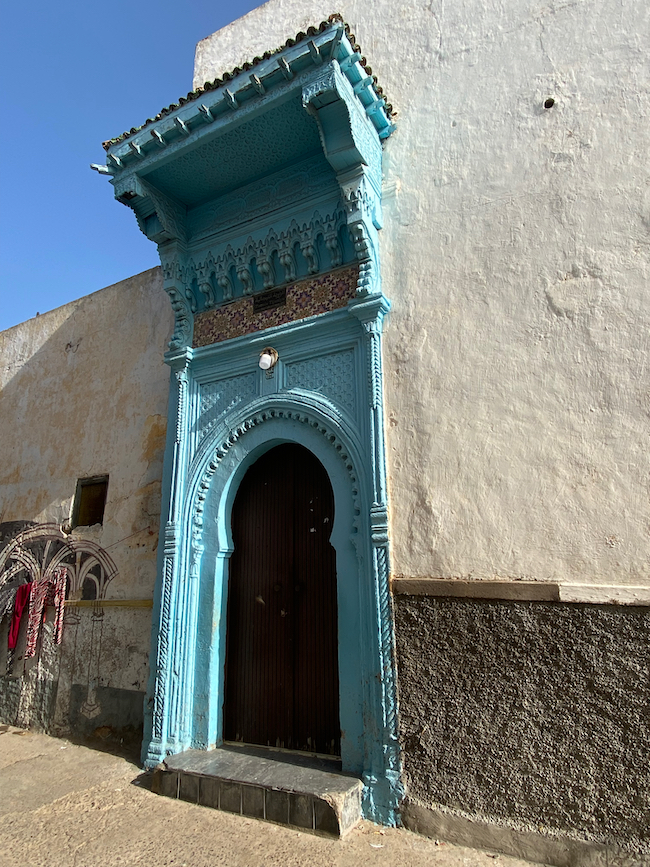
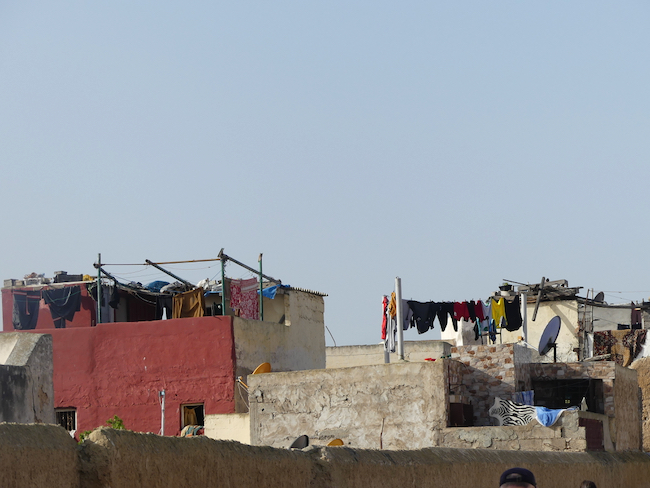
My husband took this photo below; he loved the contrast of the drawing of the cisterns and the laundry hung to dry over the cisterns.


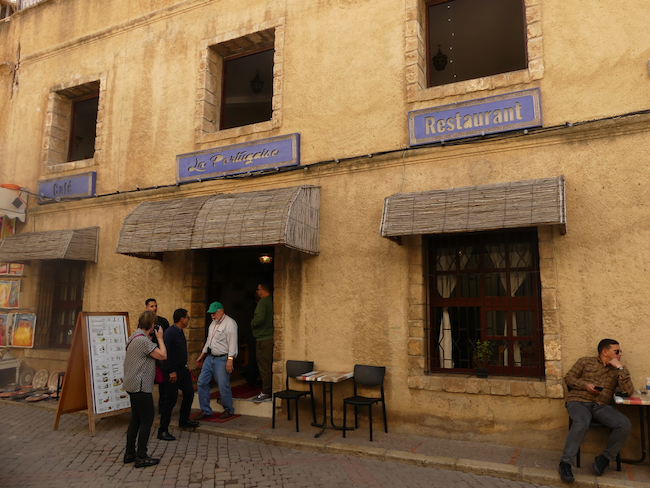
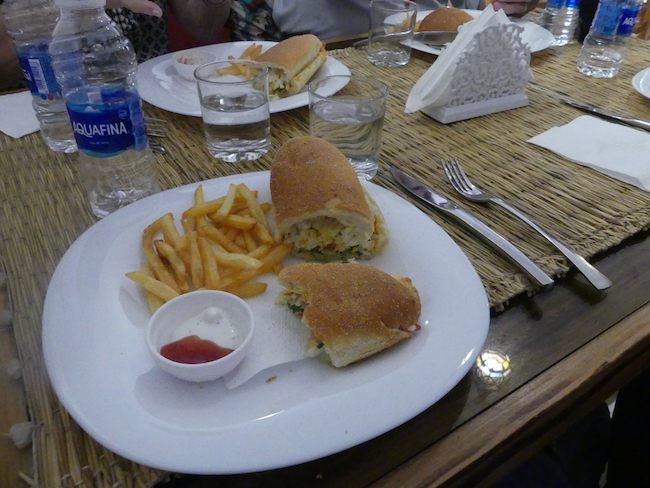
It’s going to be a couple hours ride back to the ship, but the guide has a treat for us – “Snacks” at a local restaurant, part of the tour, no extra charge. The small restaurant was just big enough to hold all of us, had a nice clean restroom and place to wash up, and served these delicious sandwiches, followed by a selection of house baked Moroccan cookies, and Turkish coffee or Mint Tea. The owner and his wife were so hospitable. They made us feel like very special guests. It really was a treat!




As we sail away from Casablanca, that same ship continues to be surrounded with that yellow steamy cloud.
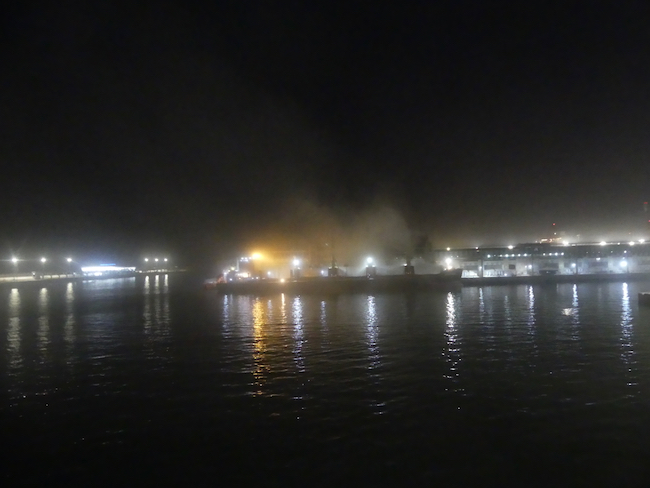
For us, we have seen everything we wanted to see. We think Cadiz and Malaga will be pretty tame after the excitement of Ajaccio, Malta, Tunis and Algiers. (We were wrong!)
Morocco Malta and the Med: Algiers!

We are excited. Algiers is one of the reasons we booked this tour, knowing that things can happen, and that for political reasons, or because of weather, it might not really happen. When you travel, you just have to accept that things are not always going to work out.
(On this trip, by the grace of God, every single thing worked out.)
It’s still dark, and we are sailing into the harbor at Algiers. On the hill I see – A Christmas Tree??!! No, as it turns out, this is a memorial to the martys of the war, the Algerian war for freedom from the French.
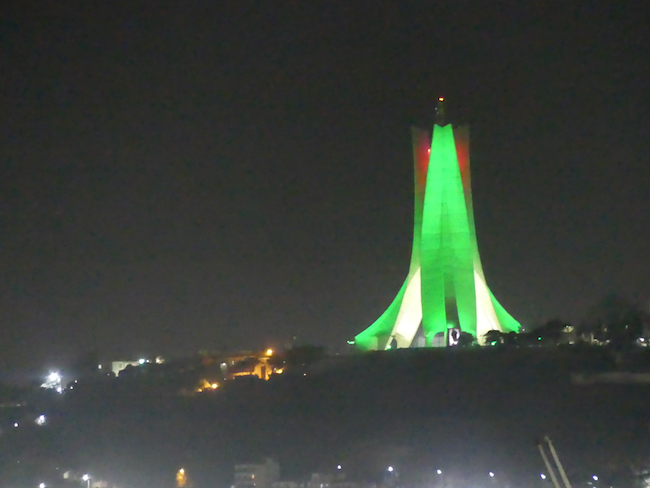
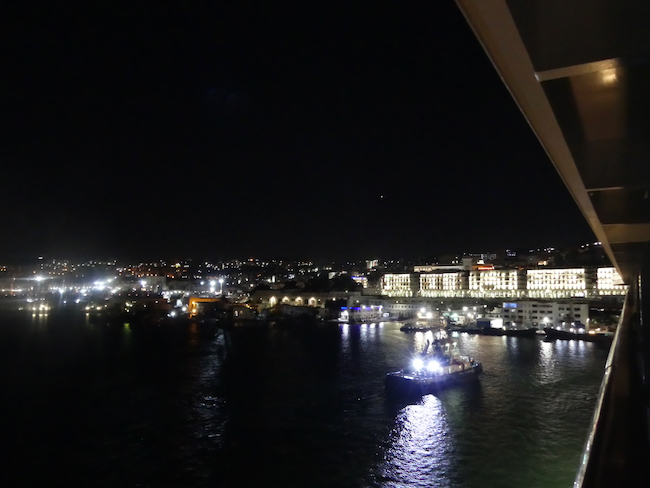

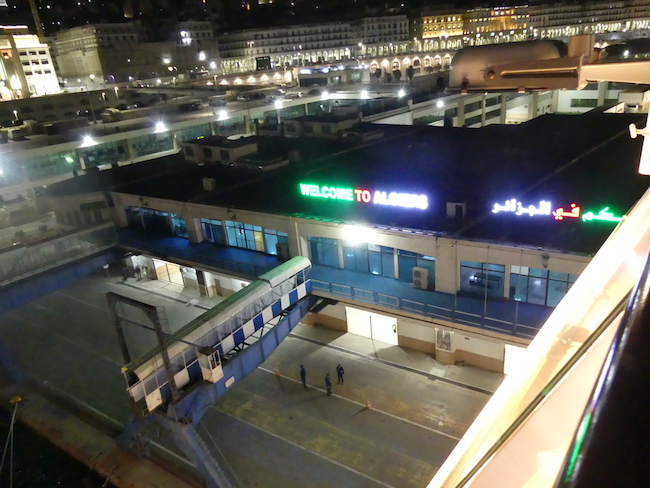
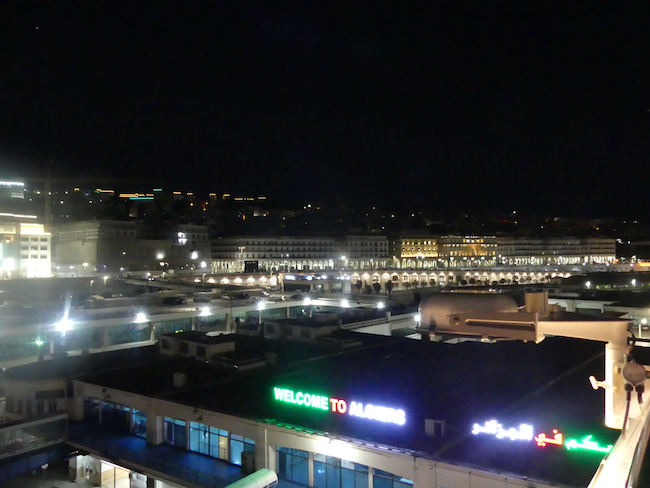
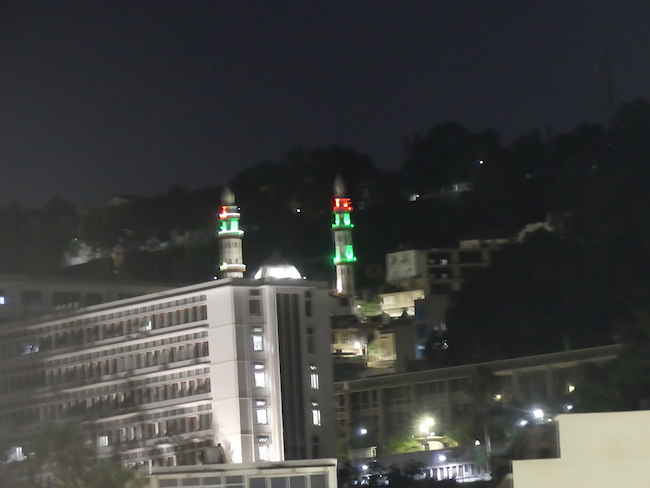
Algiers is the only port in which I heard the call to prayer. It was hauntingly beautiful. The mosques do not all start at the same time, so there is a kind of cacaphonic beauty from a large number of prayers going up at the same time.


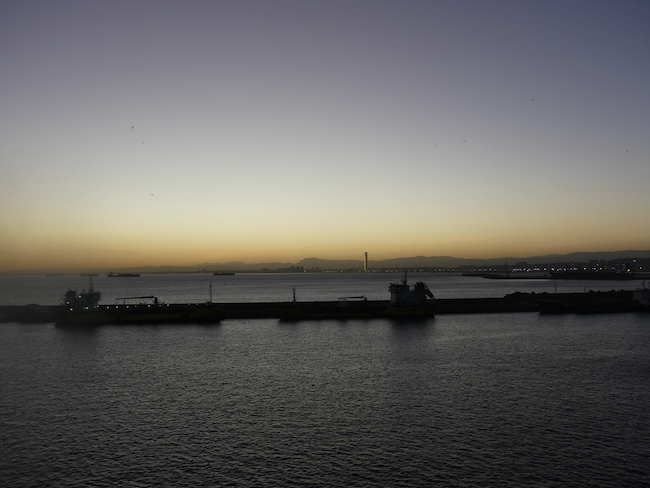

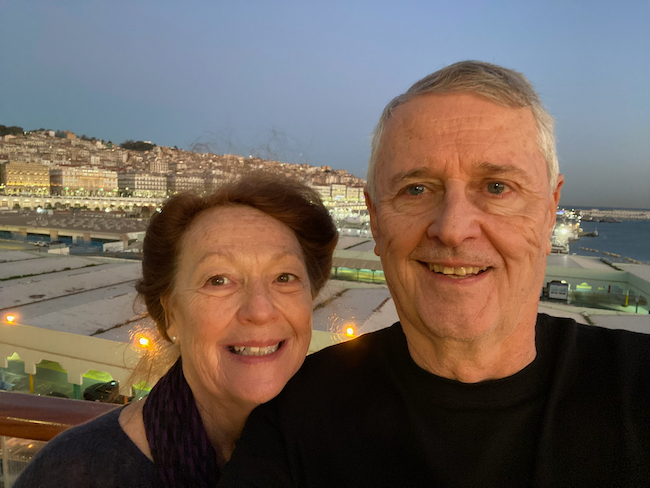
The Hall of Honor is where we process through to get to our buses.

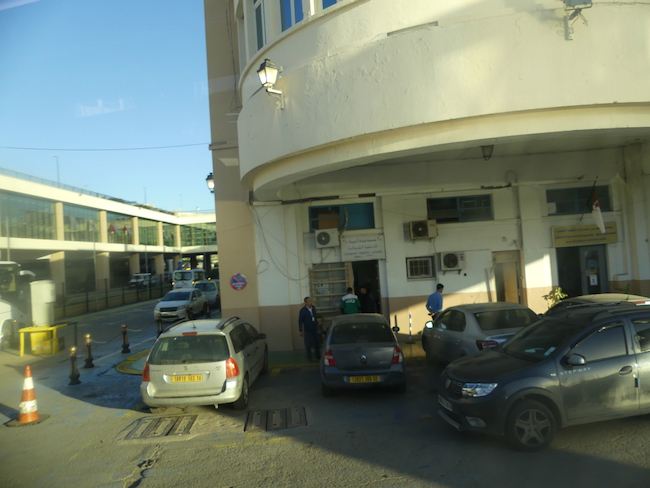
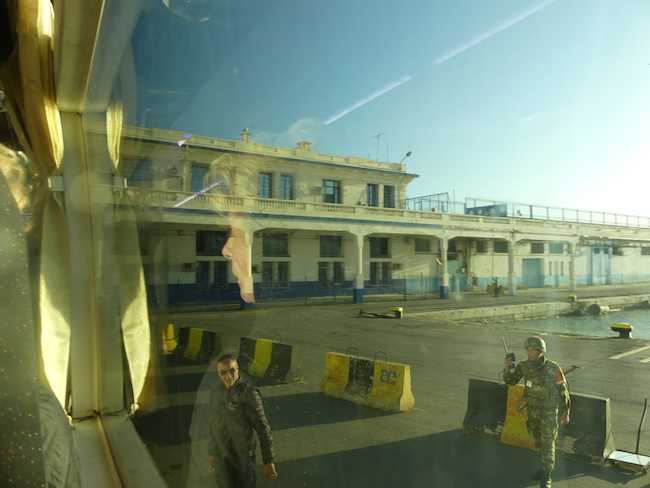


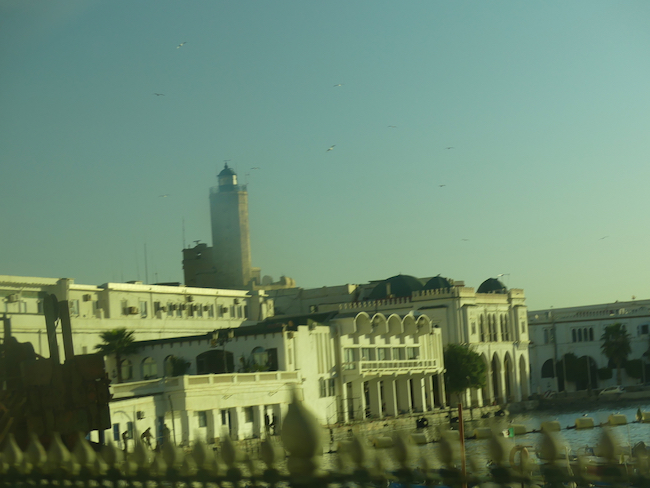
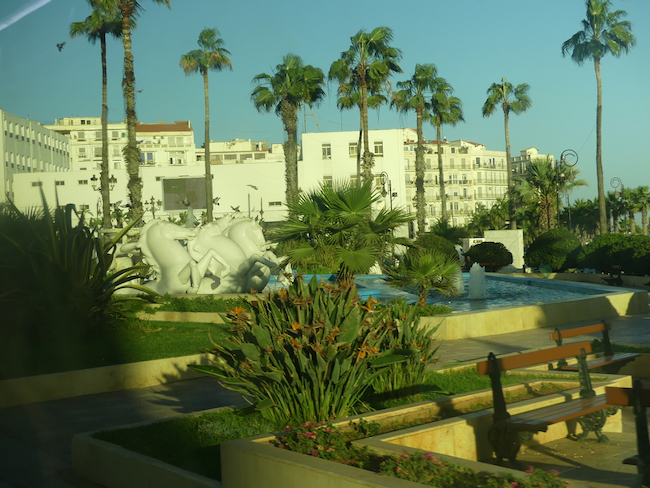
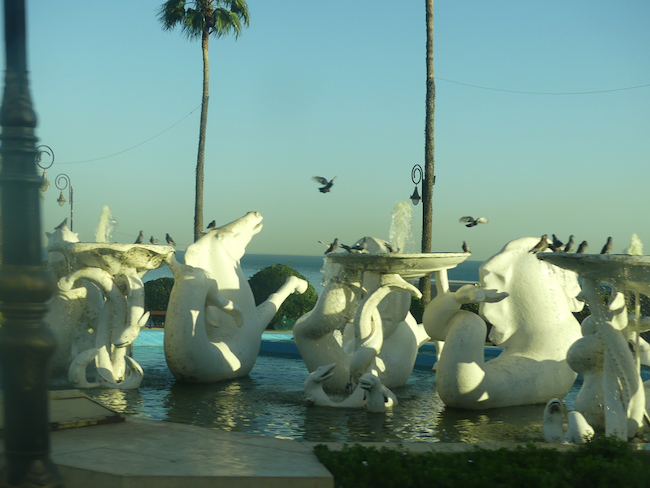
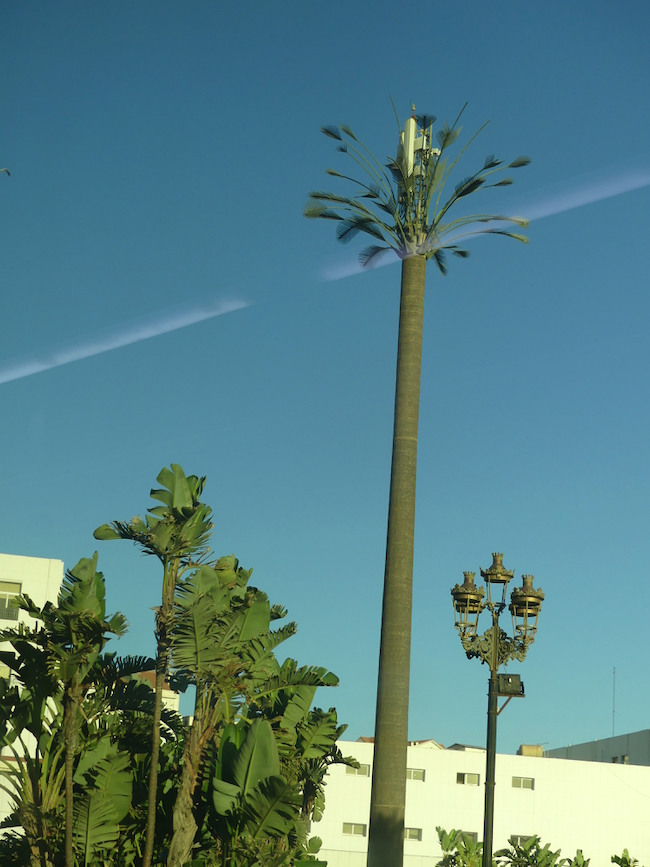
We used to see these “Palm Trees” in Kuwait, really communication towers.
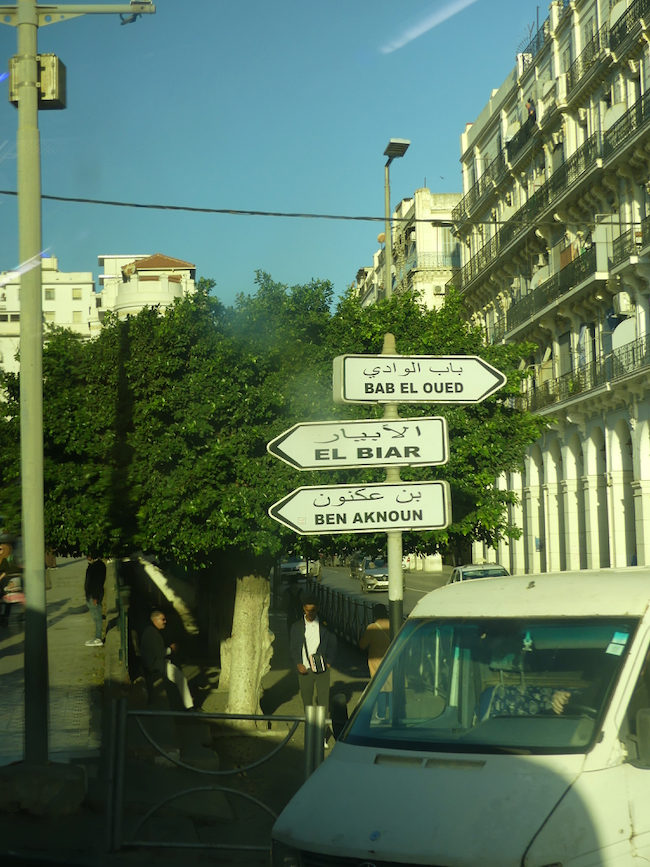
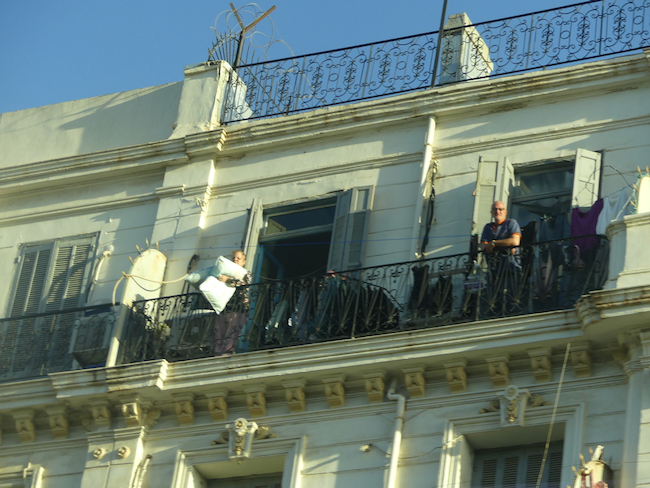


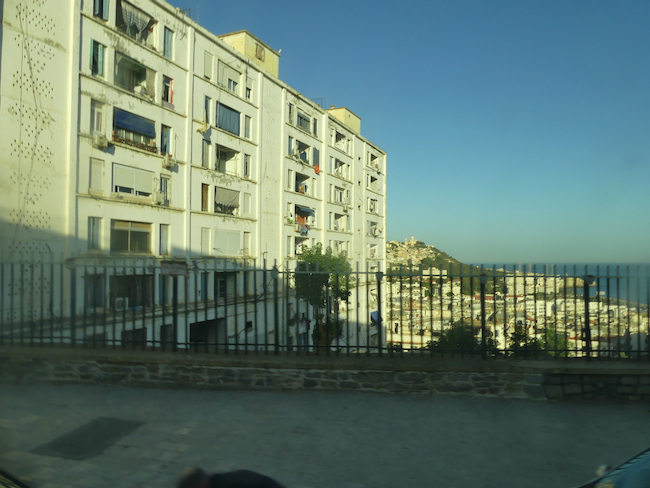
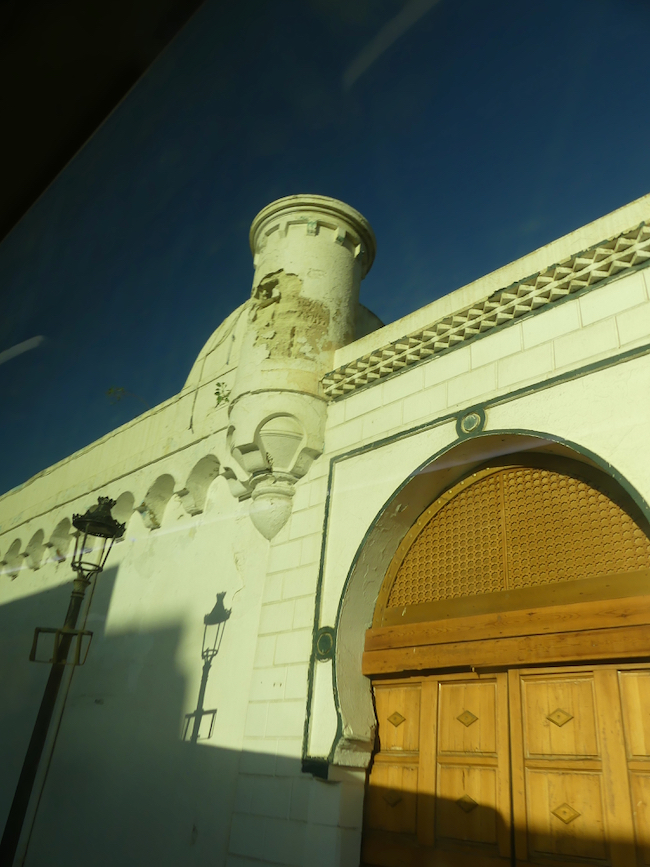


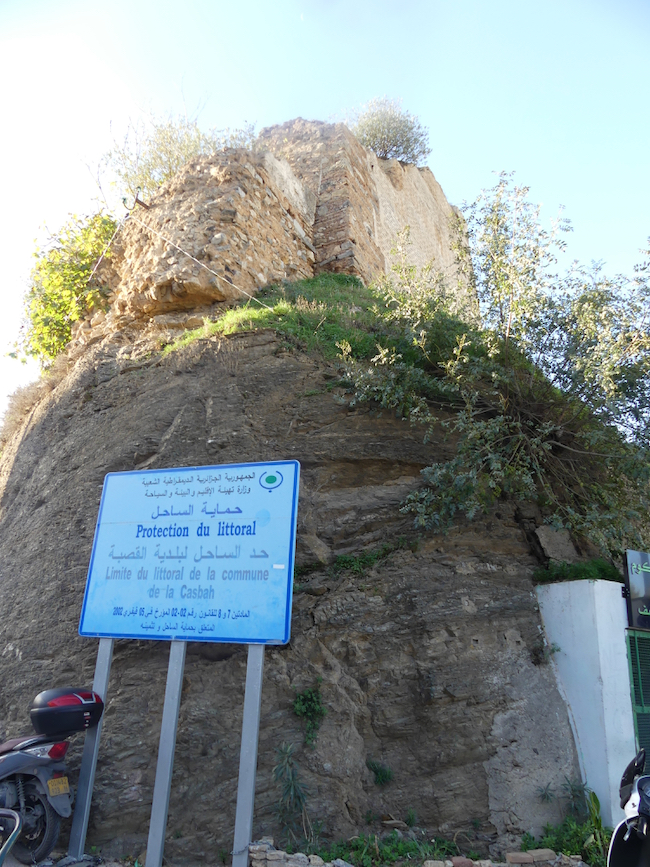


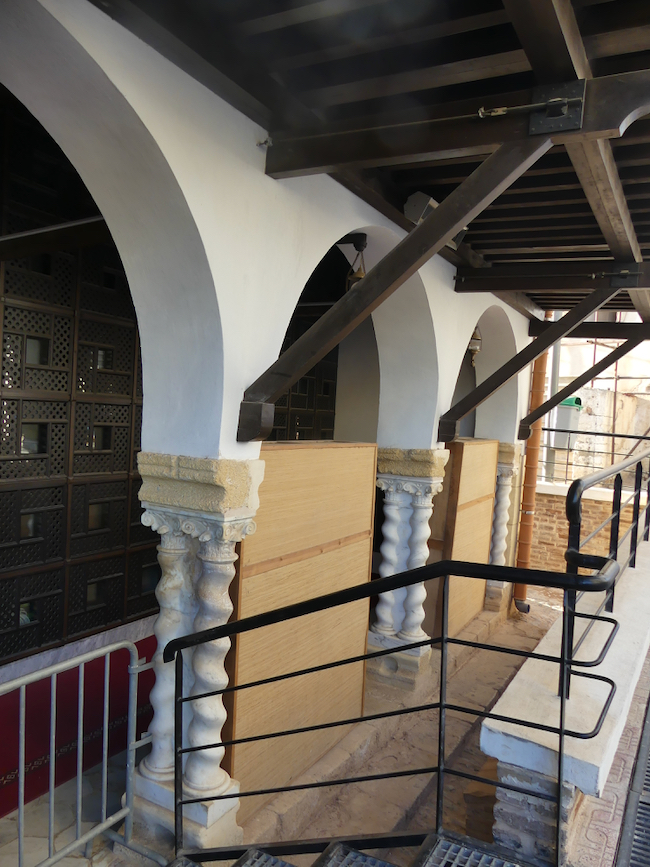
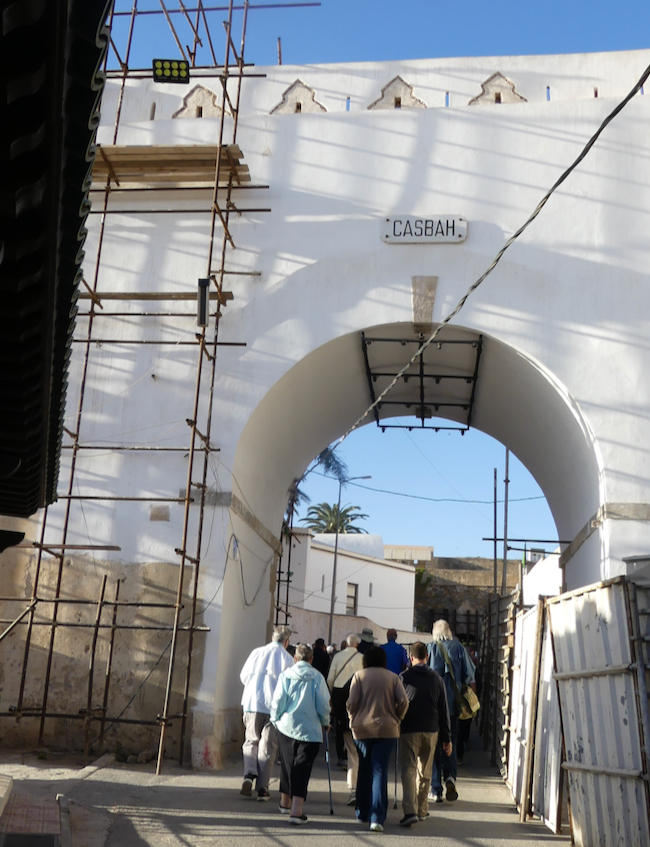
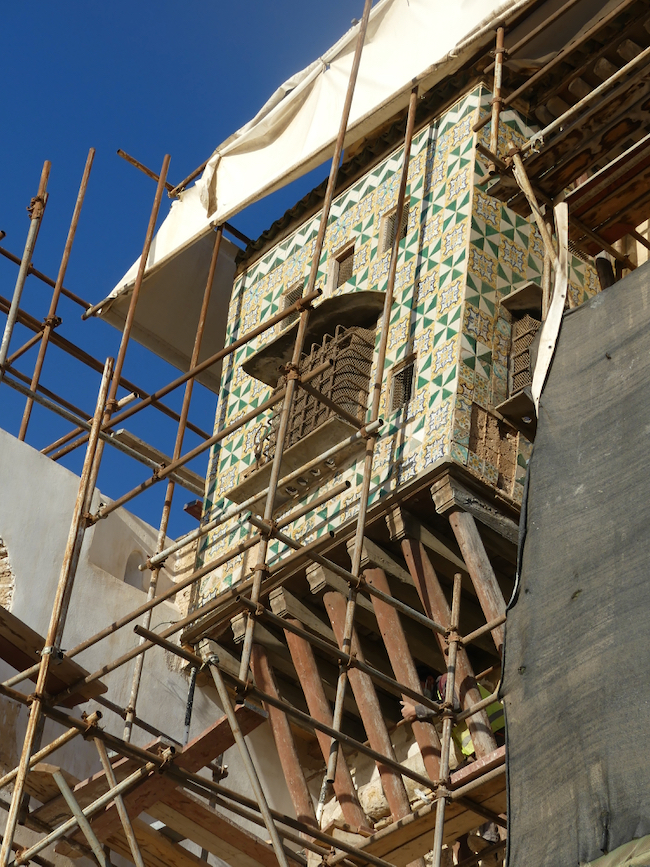



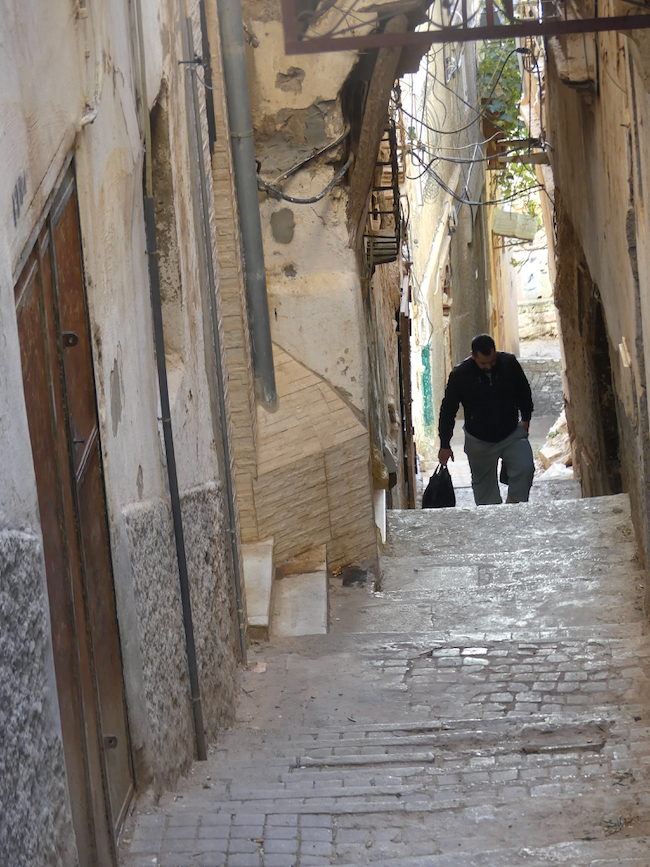
You may be thinking, “Some of the photos here are not the quality we expect!” So, I will explain that I am shooting as fast as I can, surrounded by people I am trying to keep out of my shots, so I can give you an idea of what we are seeing. There is one group after another, all holding up their cameras, getting in one another’s shots. I try to stay ahead or behind, but trust me, the pressure is on. Each group is about twenty-five people, each group with five poorly disguised armed guards, trying to not look like armed guards. They turned out to be really nice guys. Trying to keep American tourists in a line going at a steady pace is a thankless task.




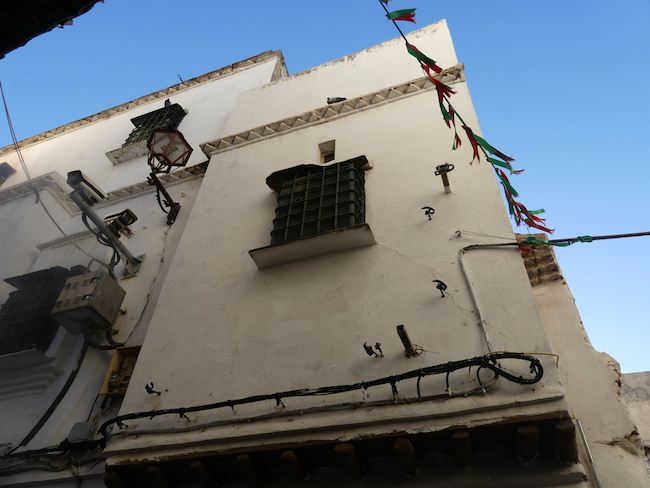
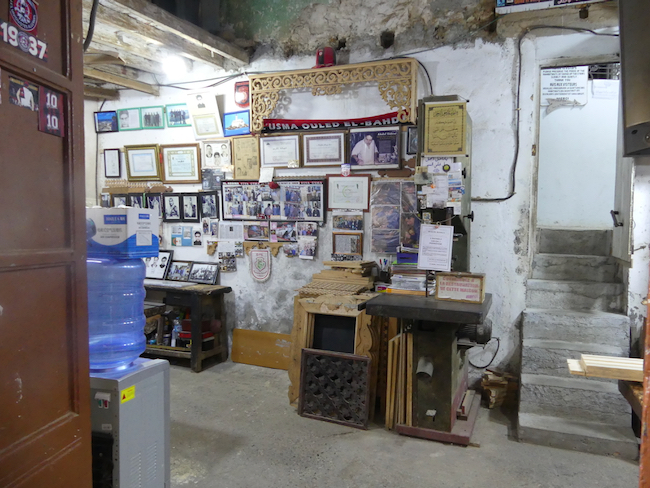

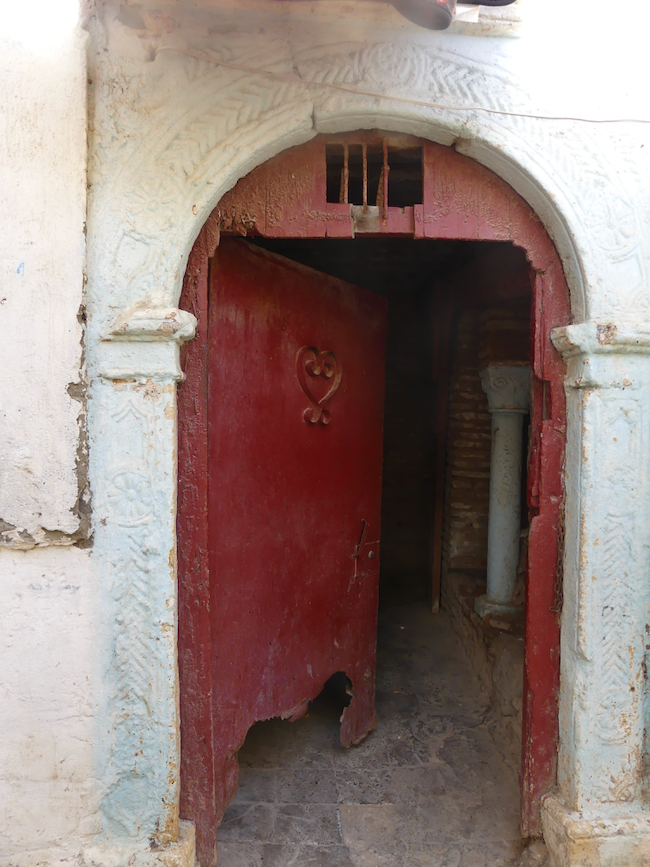


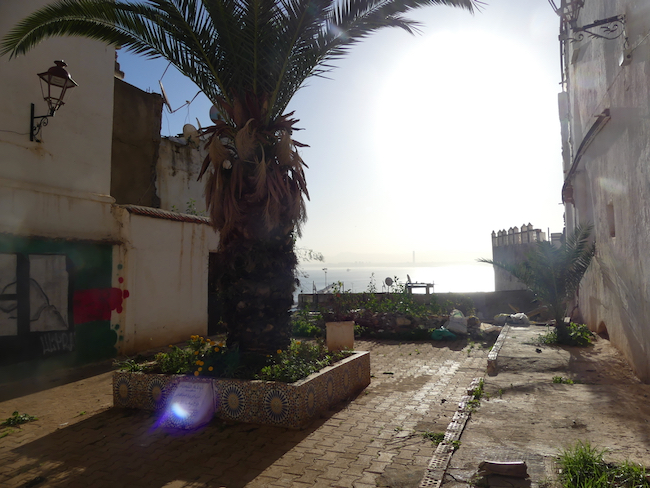
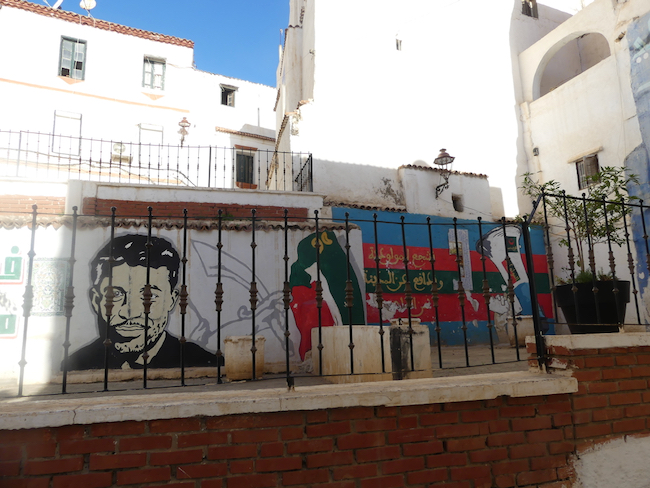

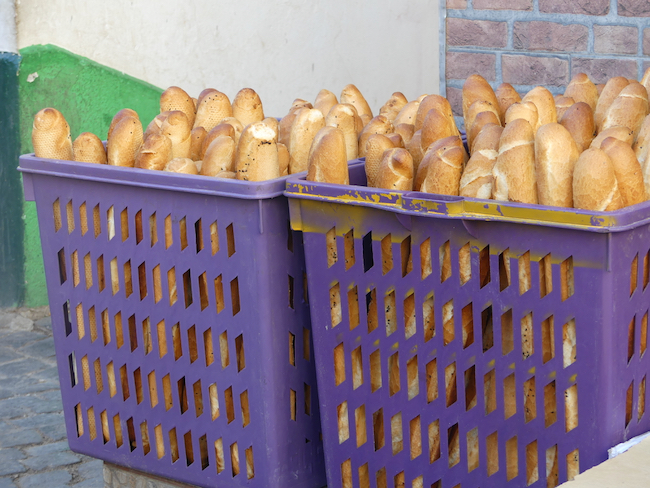
To me it was a little weird that every rectangular plastic basket I saw was purple.
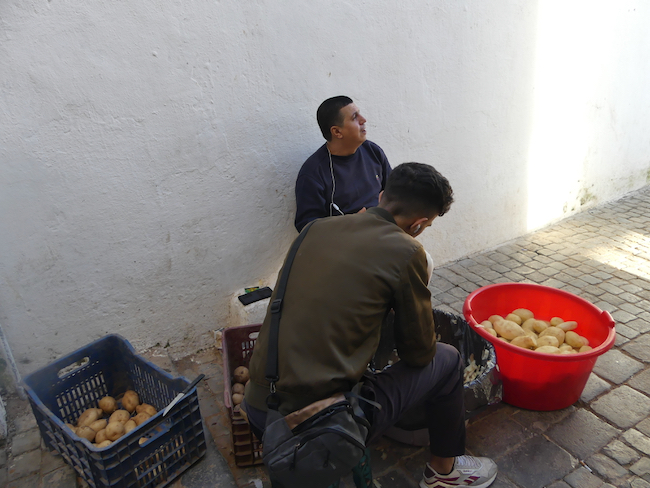
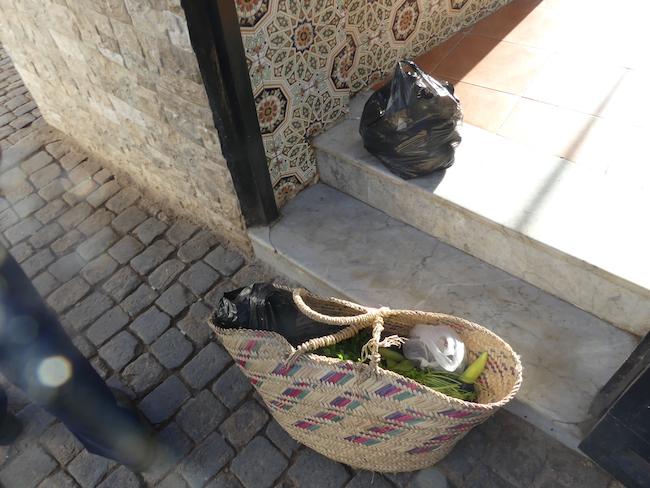
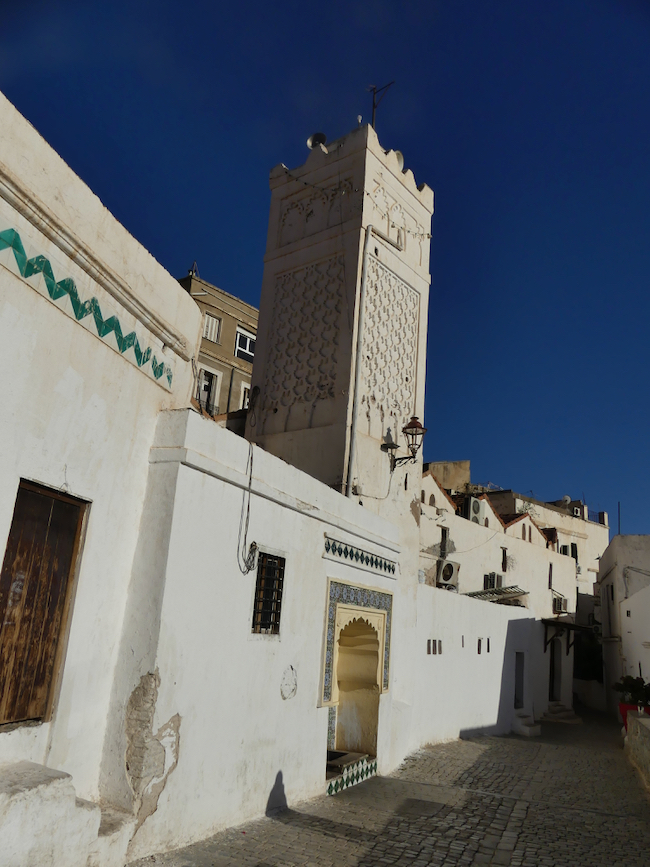

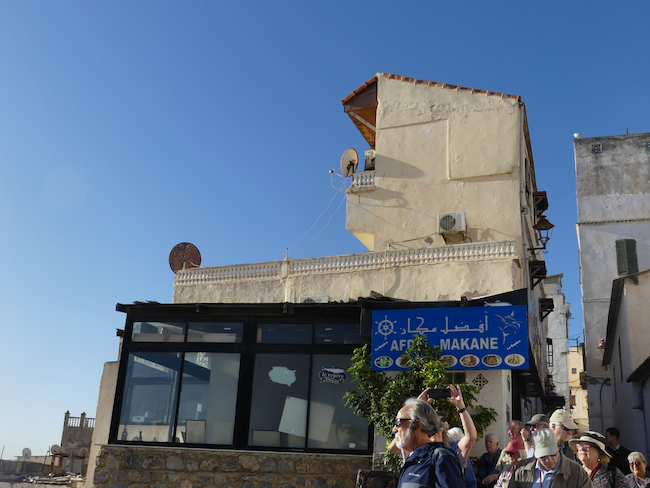
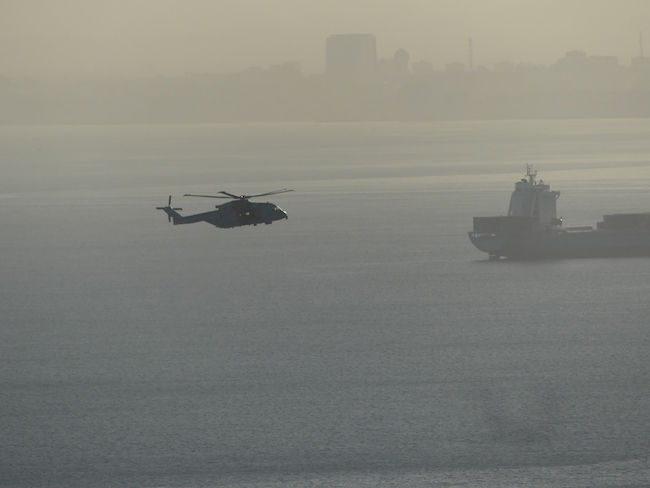
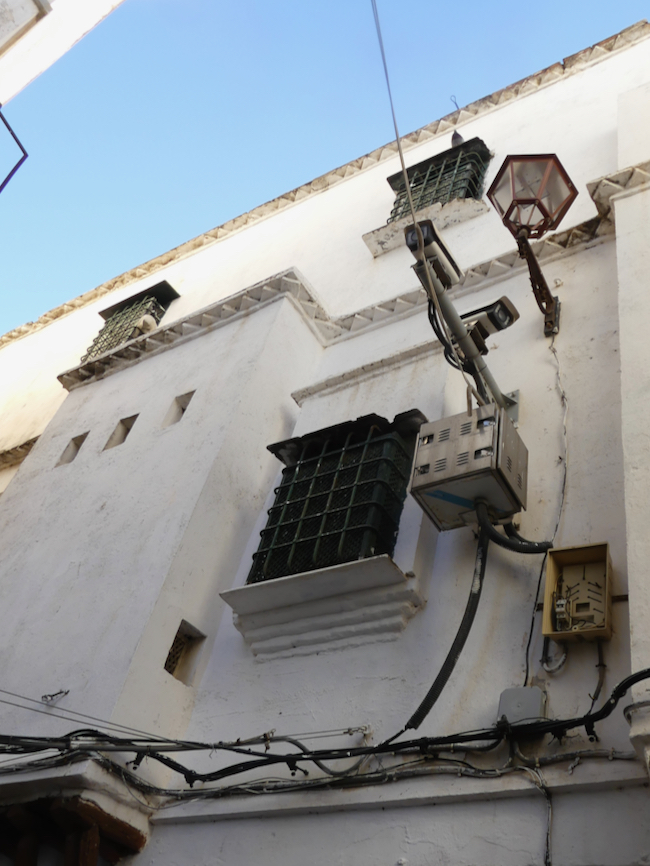
I find some of these construction techniques and electrical wiring workarounds concerning.

We are taken to a hospitality villa, where they serve fresh dates, mint tea from fresh mint leaves, and fresh baked cookies and pastries.


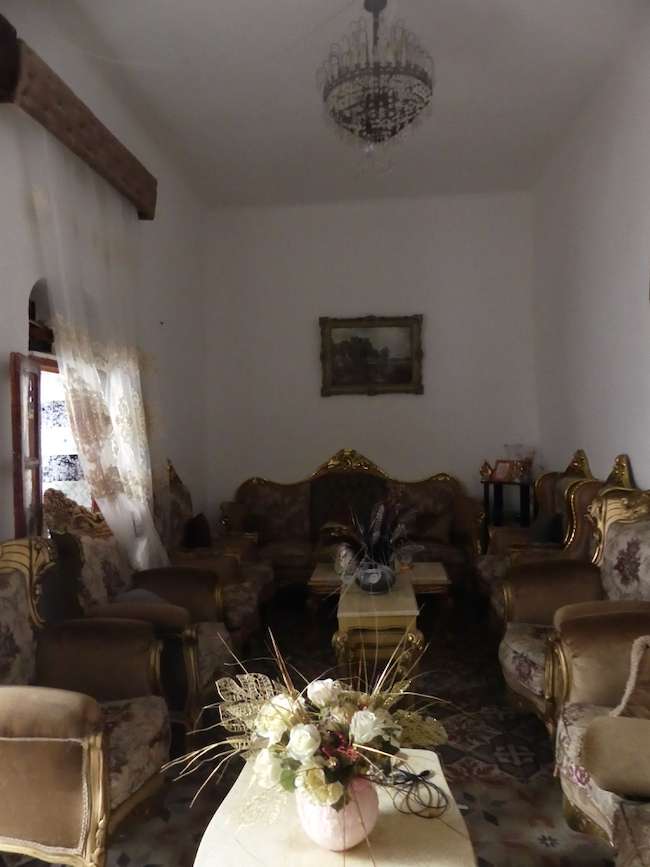
We think our guide is terrific. First, we love that he showed up in old traditional garb (which we learned he had specially made for this very purpose.) He is full of great information, very patient with his flock, and somehow he manages to get us all going in the same direction and is able to keep us somehow together.

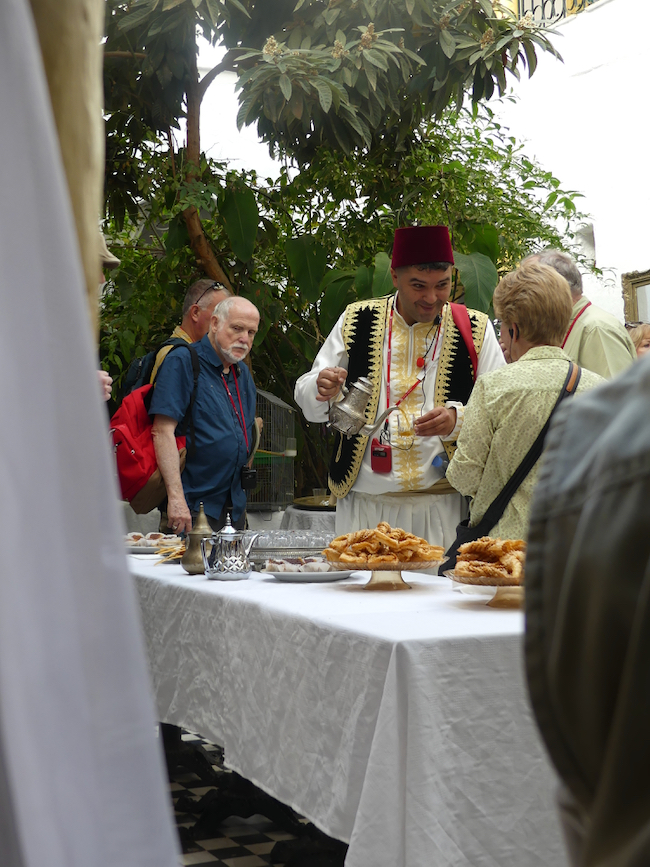

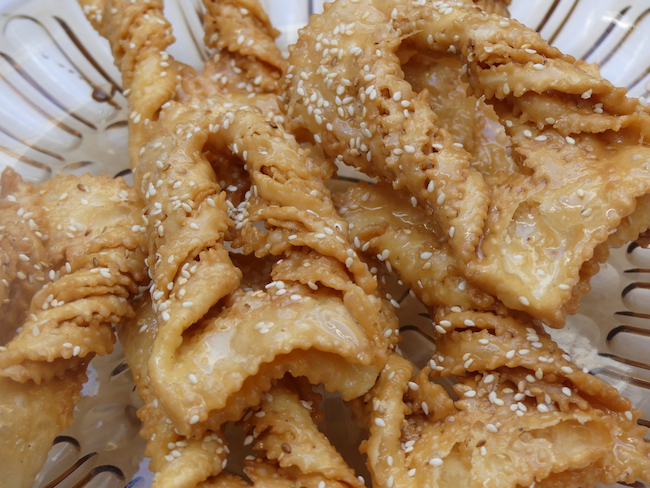
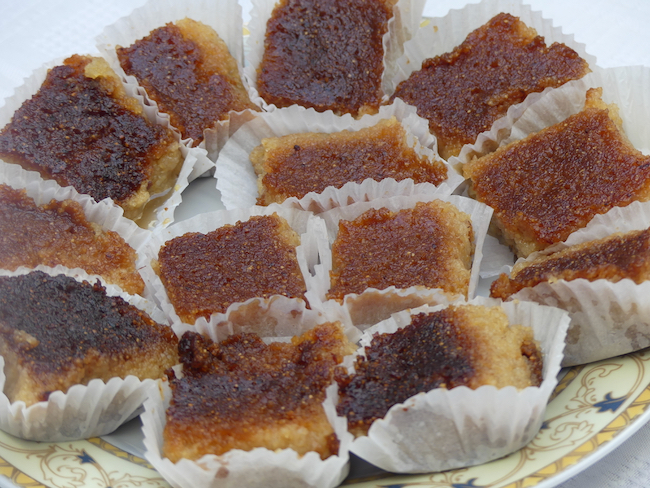


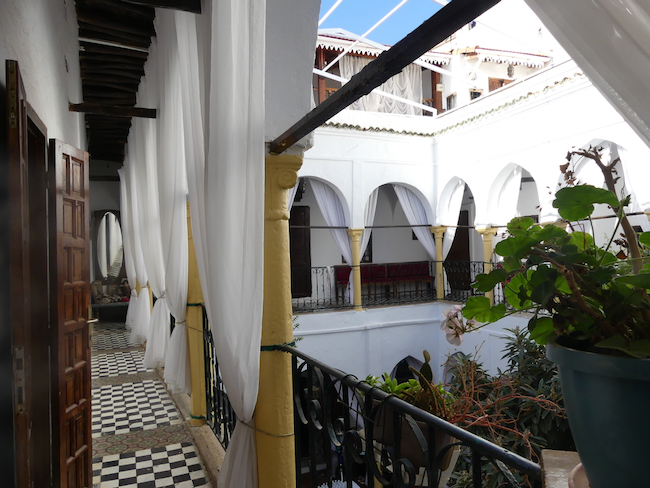

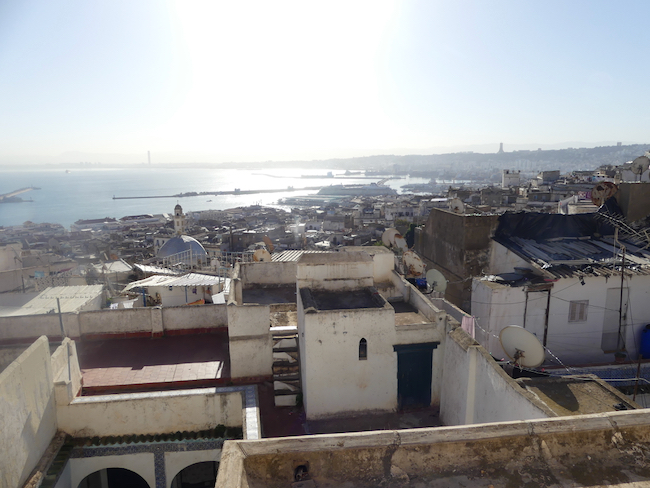
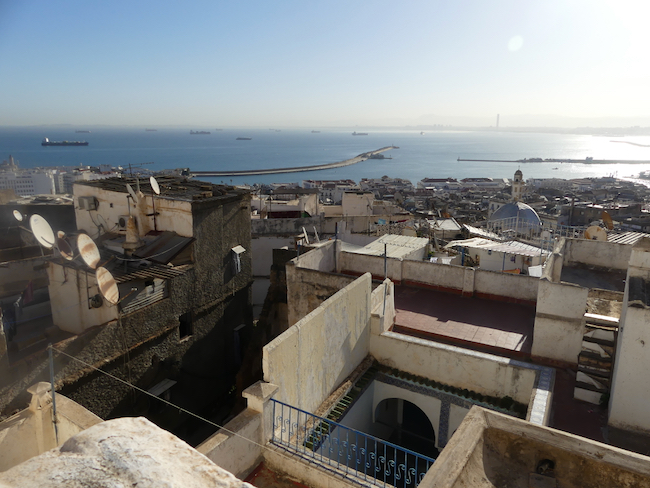

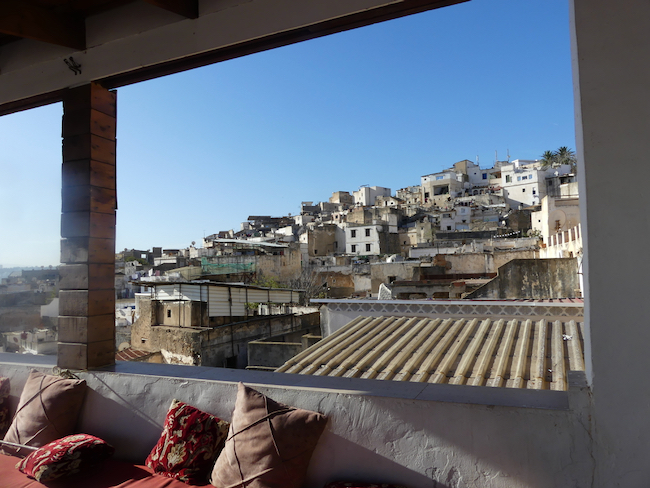


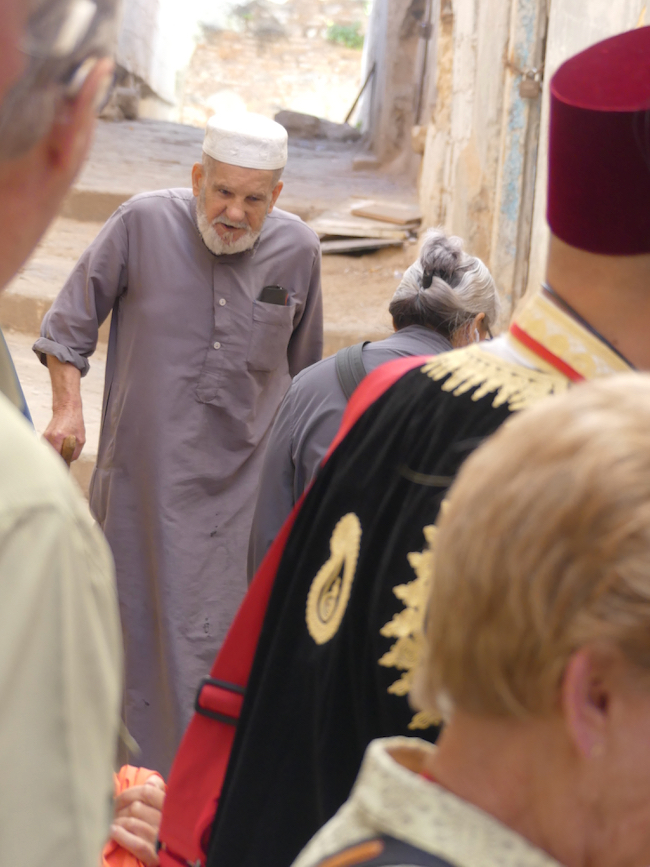
I love this photo. The shopkeeper, trying to keep his street clean and orderly; the donkey, picking up garbage on the street impossible for a garbage truck (and with steps!) and our guide in his traditional garb.


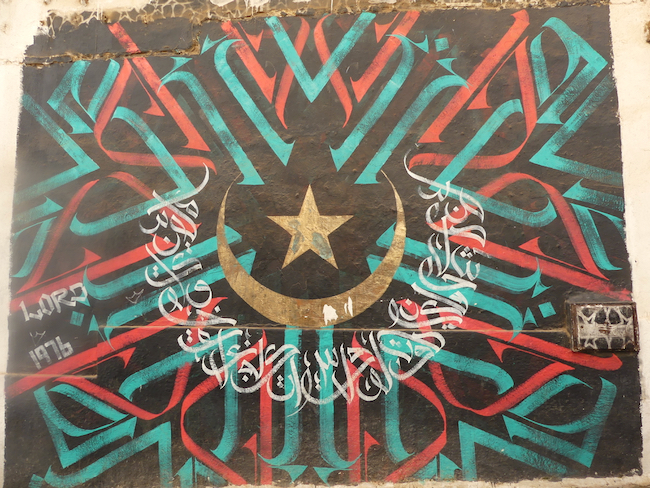

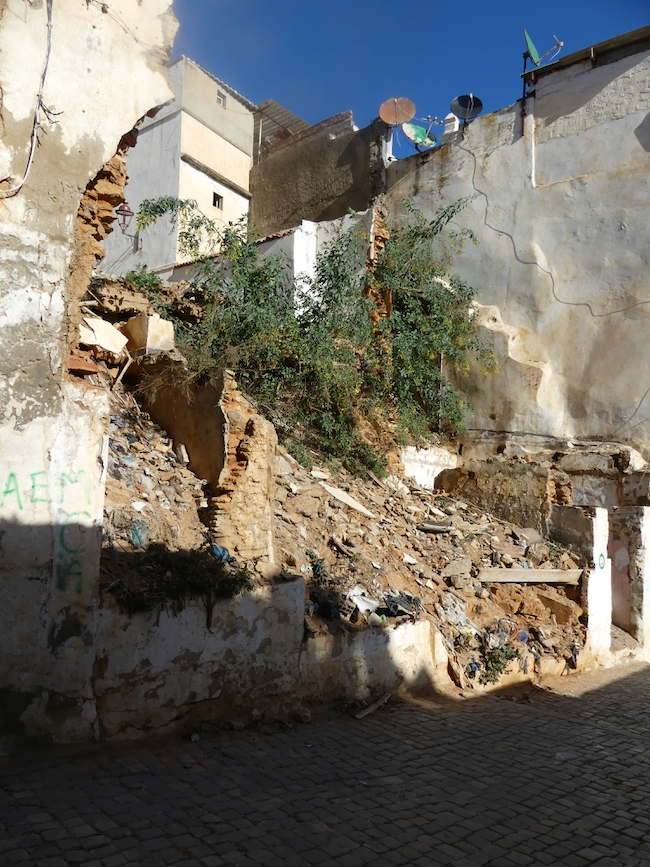
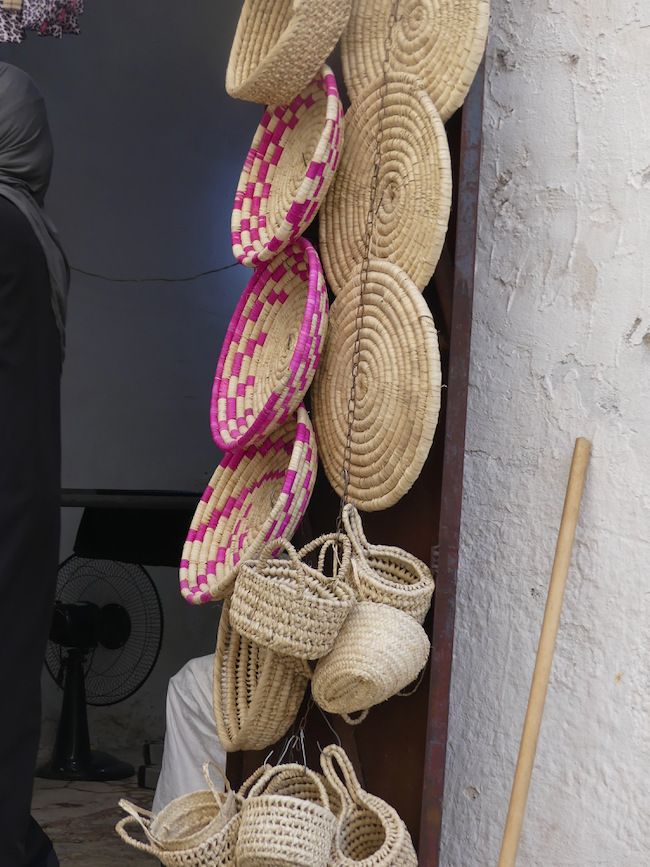


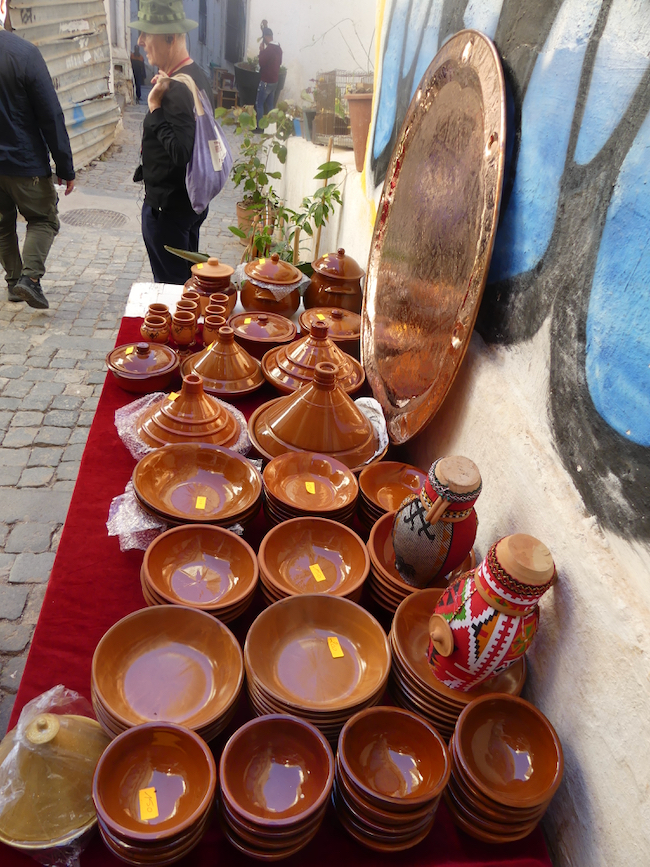
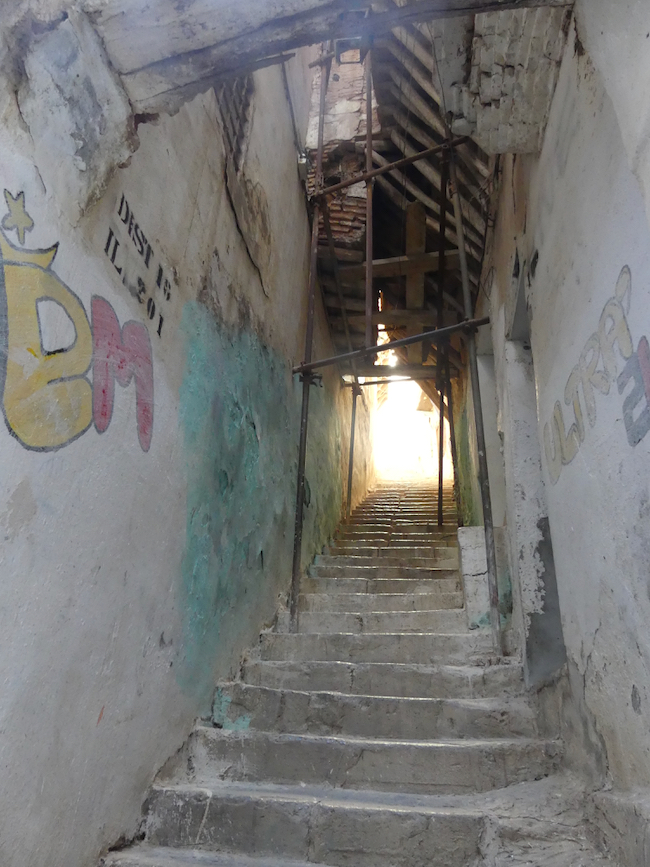
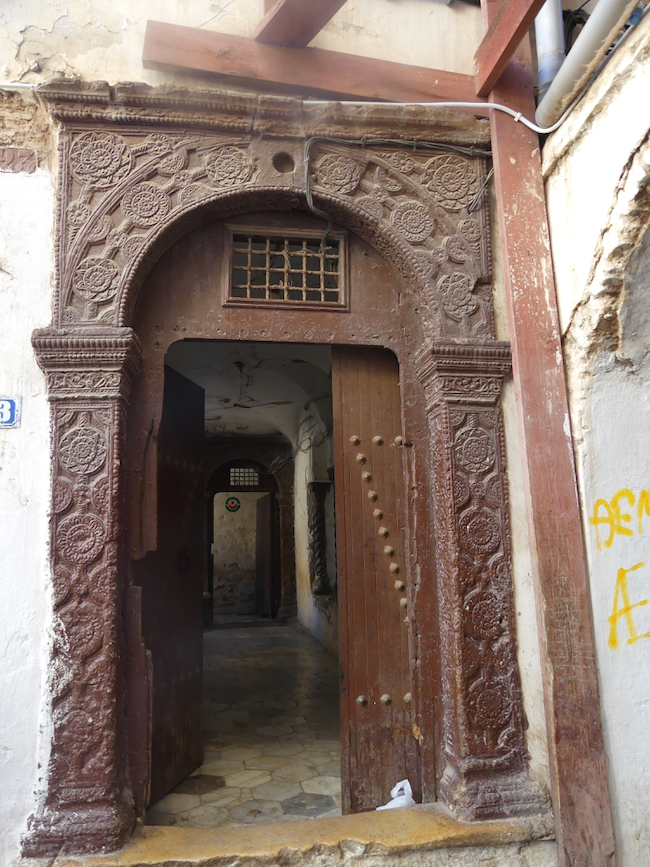

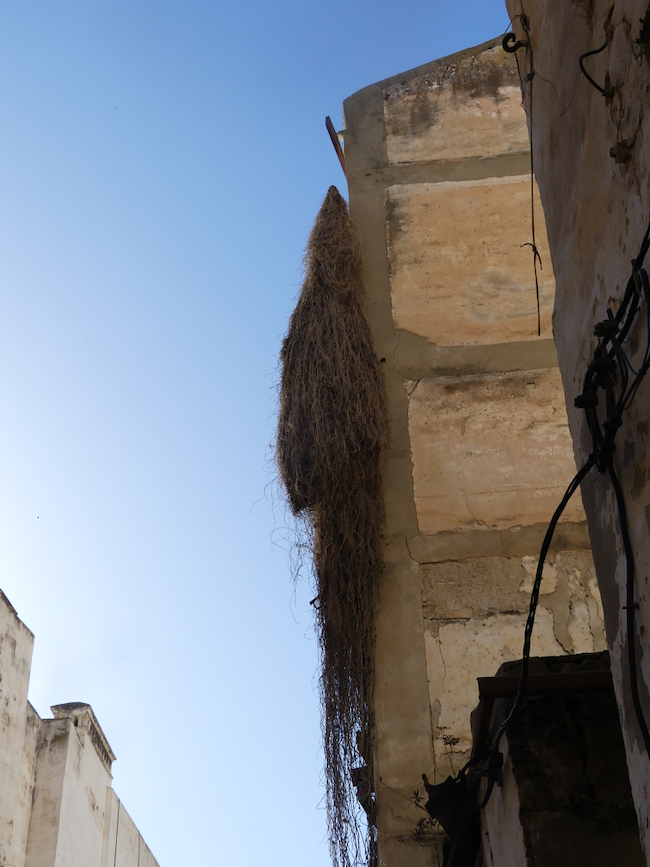


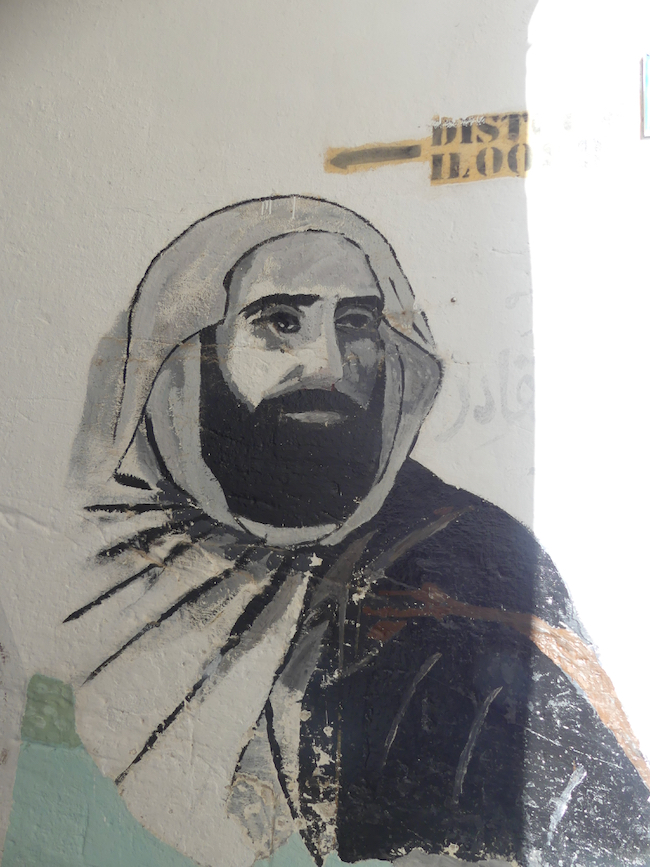
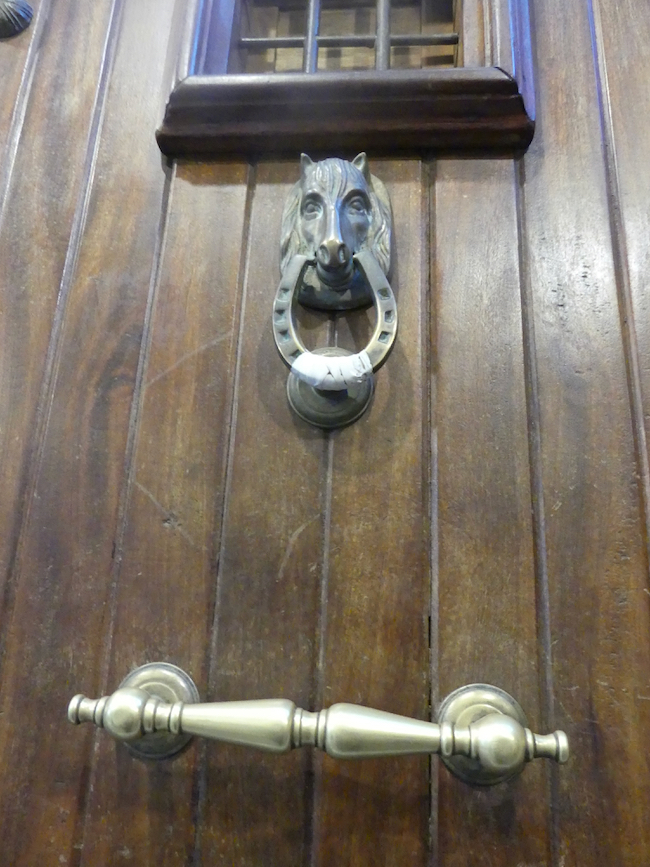

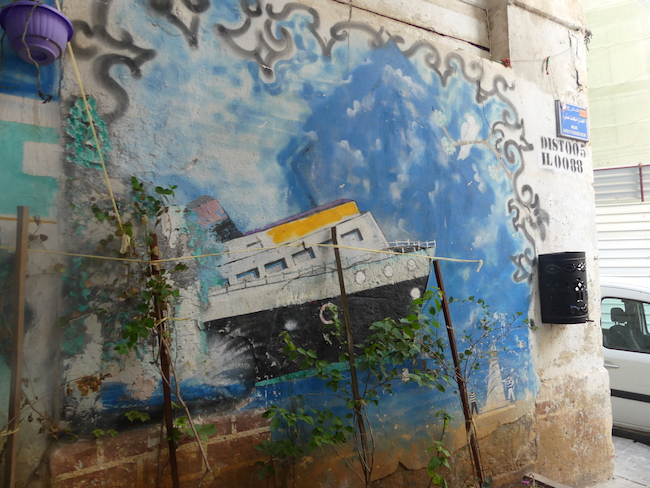
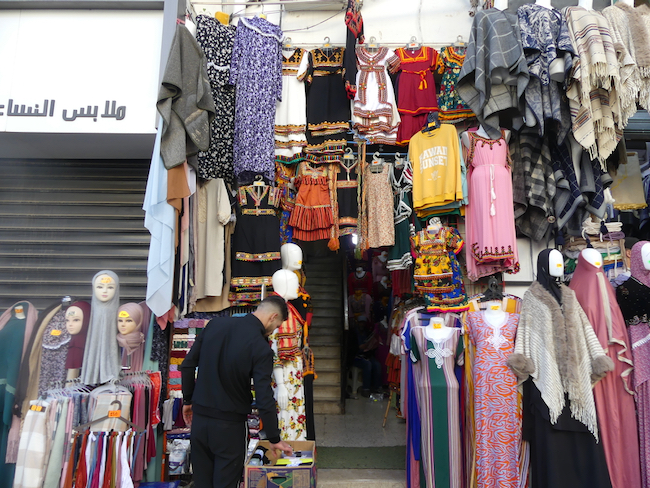
I believe this is the shop that made the traditional outfit for our guide.


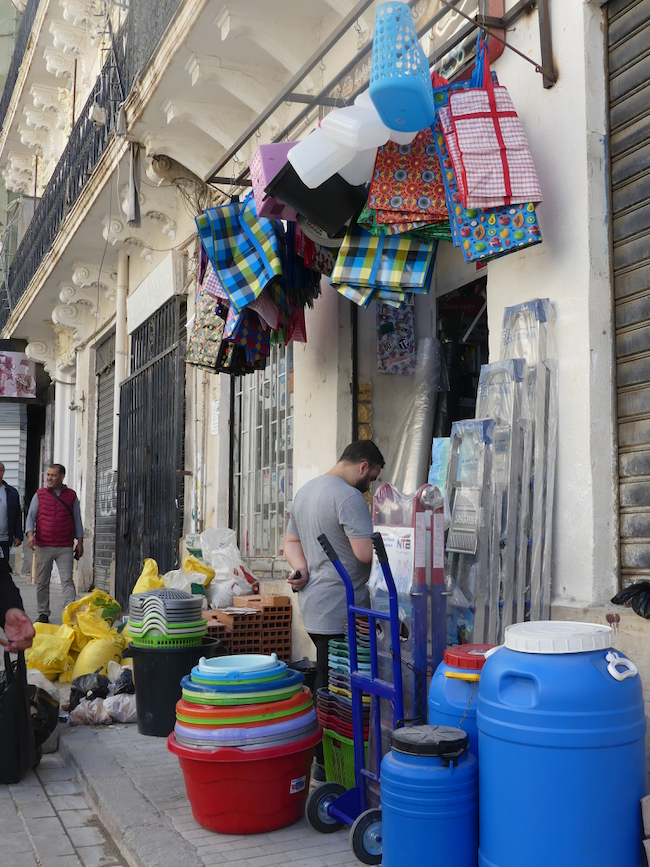


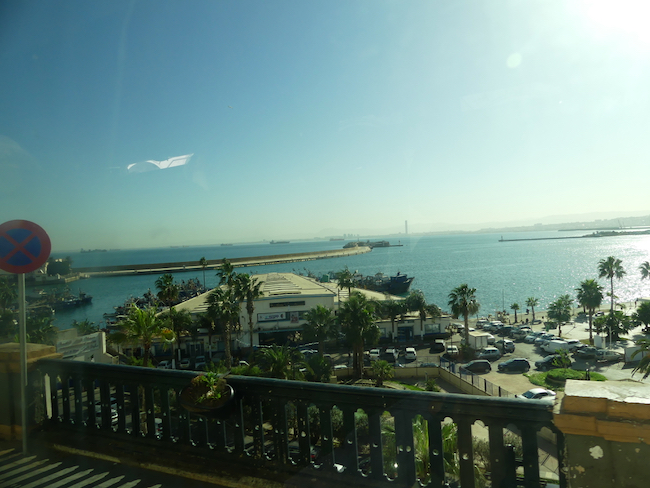
I am betting this is the fish market.
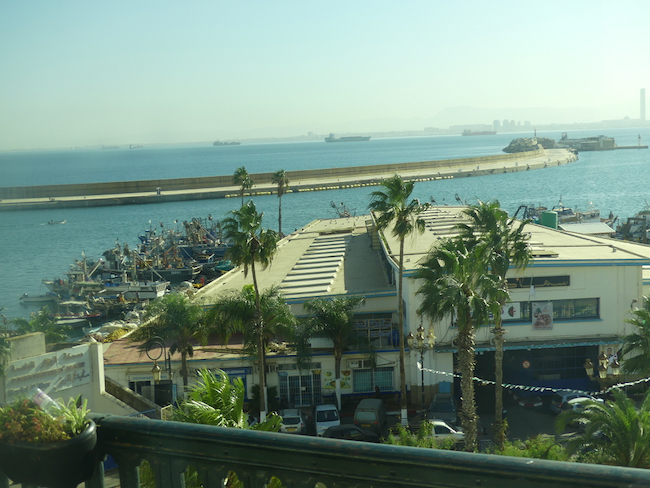
Now I am pretty sure it is the fish market!
We reboard the ship. We can’t get off again. We are really glad we chose the Casbah walking trip, we feel we got a good feel for that part of town. We never felt hostility, only curiosity, even though a huge crowd of Americans in groups of twenty-five on the narrow, normally quiet pedestrian streets must have been disruptive.
For many of the people who chose this trip, the terrain was challenging. It was stone, sometimes slippery due to sand or moisture. The steps were uneven, the stones rough and irregular. For many, the poverty was distressing, and the dirtiness and disorderlyness made them uncomfortable. I think, too, that it would have been good to let them do a little shopping, good for the tourists and good for the Algerian merchants, but the security concerns were so great that tourists were not given any time to interact with the people or the economy. Too bad. We learned that Algiers will not be included in future Morocco Malta and the Mediterranean trips.
I think, too, maybe it felt familiar to us because the slice of Algiers that we saw was very like Tunisia in the late 1970s, and it was at first a challenge to us, but we learned and adjusted.
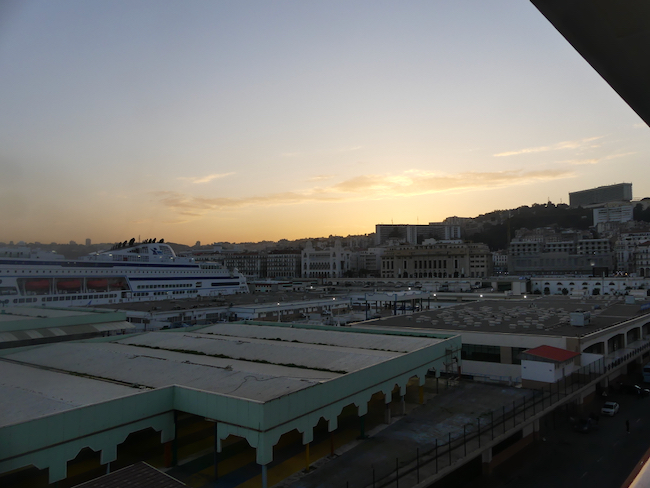


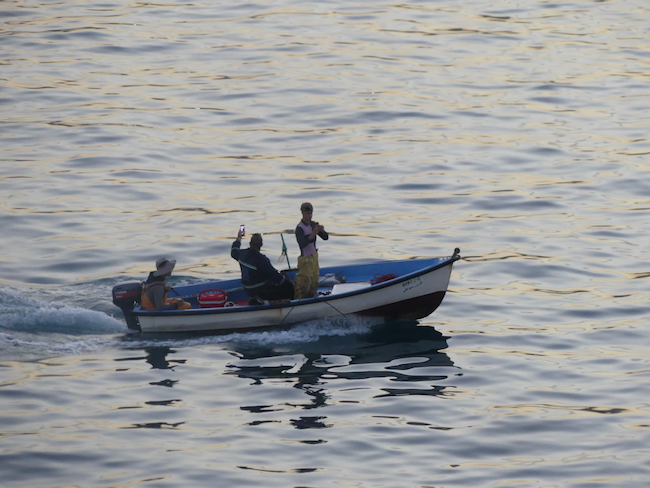

Farewell, Algiers!
Morocco Malta and the Med: Revisiting Life in Tunis

Sunrise getting close to Tunis.
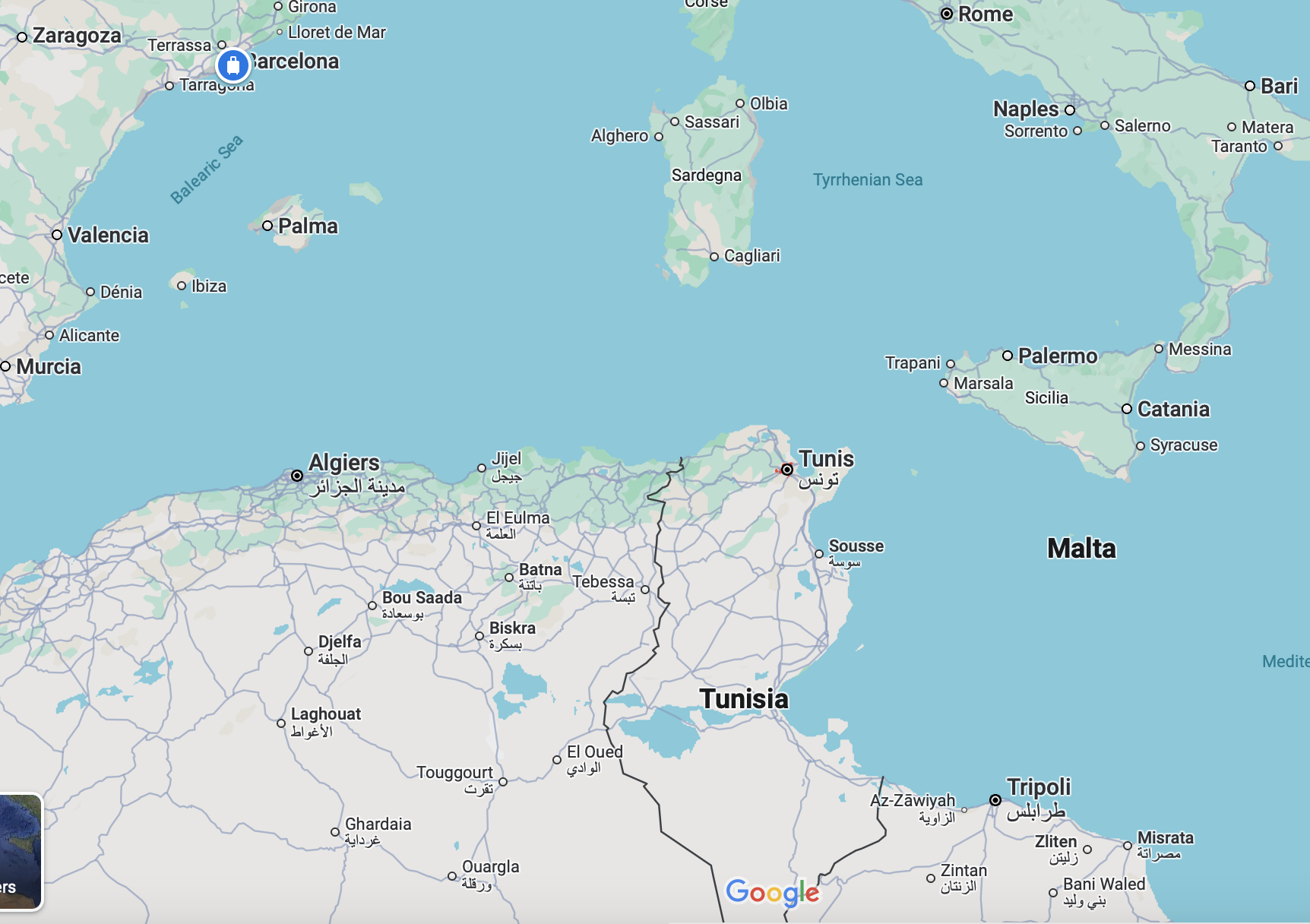
You may be a little hazy on where Tunisia is:
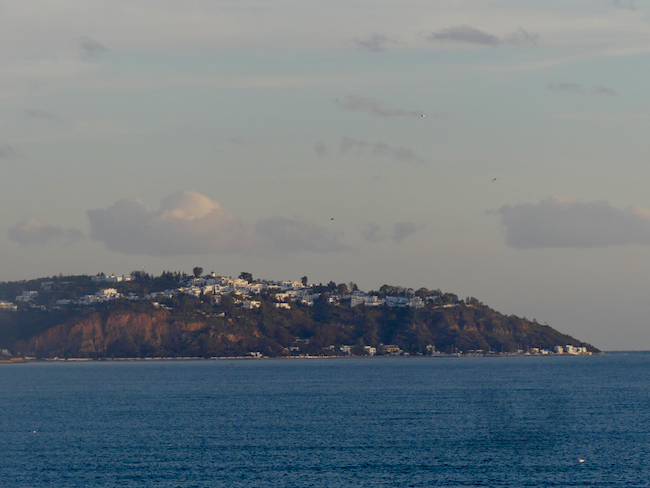
We recognize Carthage and Sidi Bou Said, but everything is so much more built up.

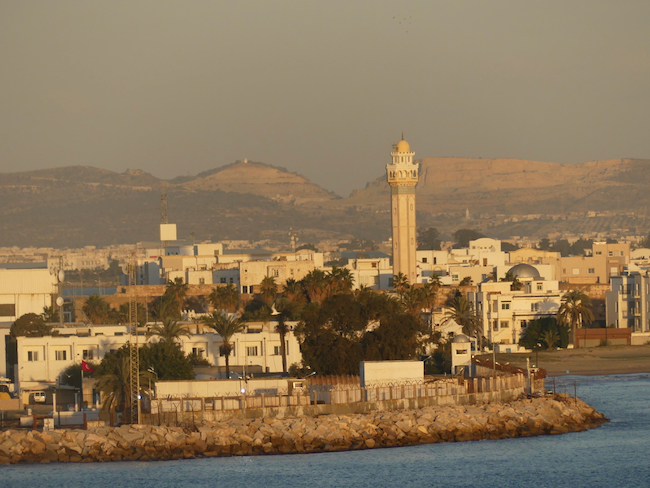


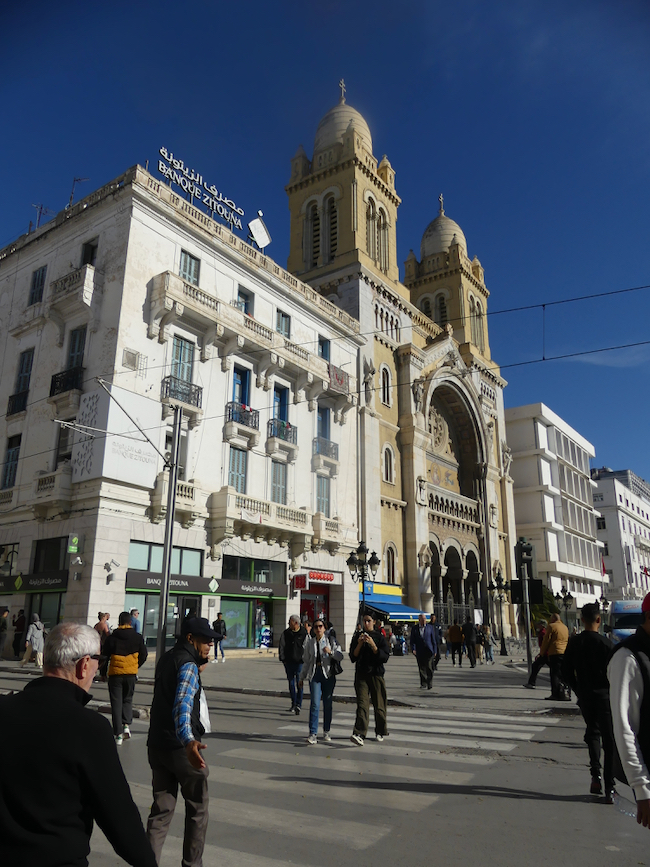
Saint Louis Cathedral up on the hill, we remember. Oh wow, Wikipedia tells me it is no longer a cathedral: Since 1993, the cathedral has been known as the “Acropolium”. It is no longer used for worship, but instead hosts public events or concerts of Tunisian music and classical music. Currently, the only Roman Catholic cathedral operating in Tunisia is the Cathedral of St. Vincent de Paul in Tunis.[1] Hunh. Acropolium.


We had exactly the day we needed in Tunis, thanks to this fine man, Noureddine Boukari. We found him through Tours by Locals, and he corresponded with us to determine exactly what we wanted to see and experience in our precious few hours in Tunis.

He was there to pick us up as we exited the boat. He took us directly downtown, along Habib Bourgiba to the Central Market and the souks as they were opening. It was a great beginning; the Central Market hasn’t changed much in forty years; people can still find the freshest fish and local vegetables as they do their daily shopping.
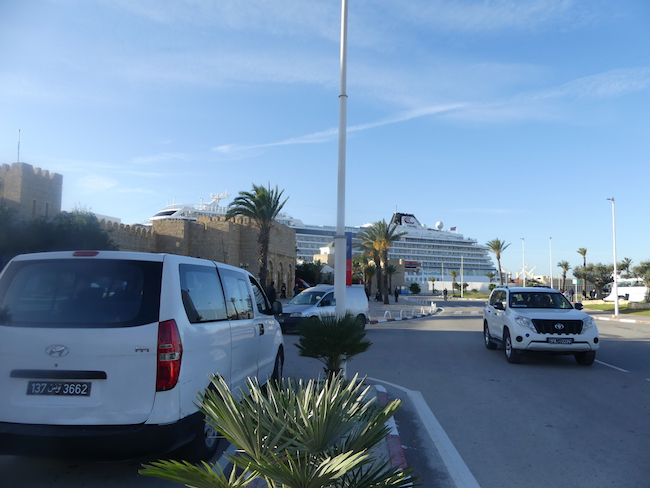
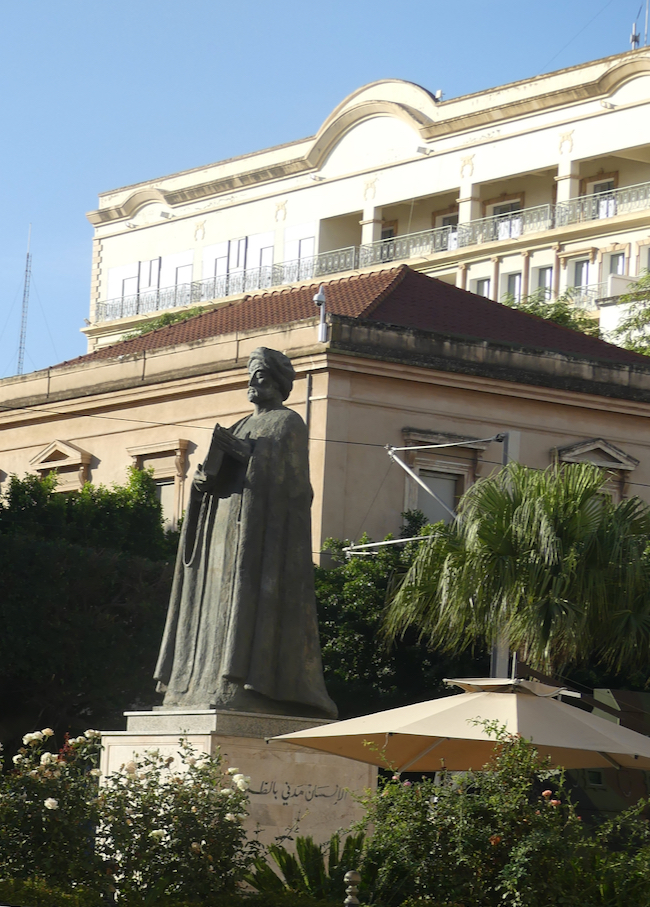

LOL this thrilled my heart!


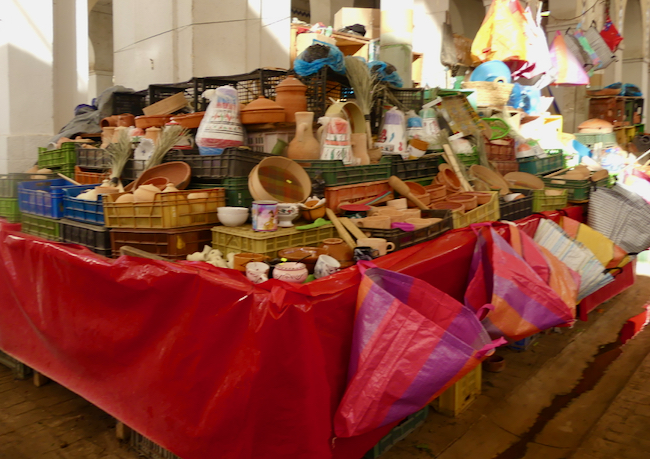
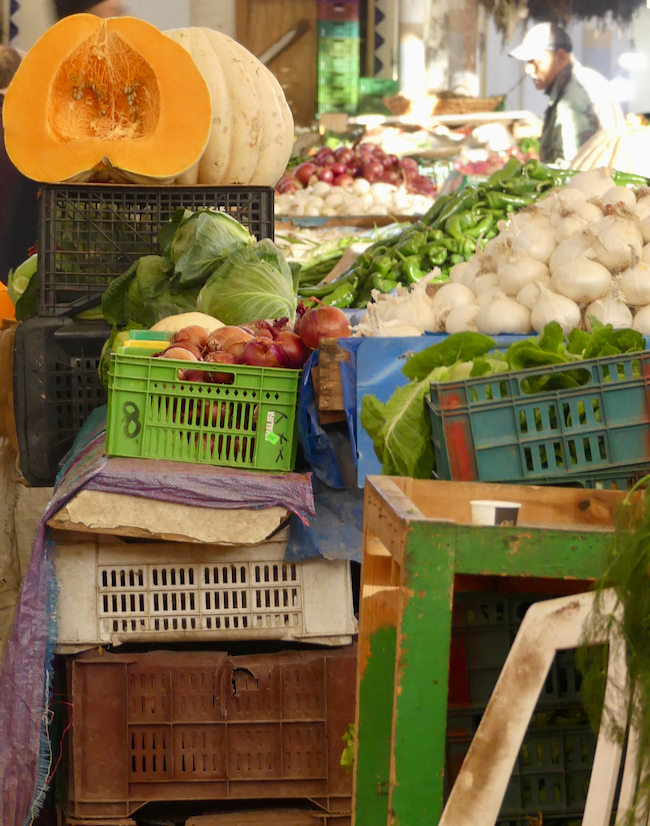
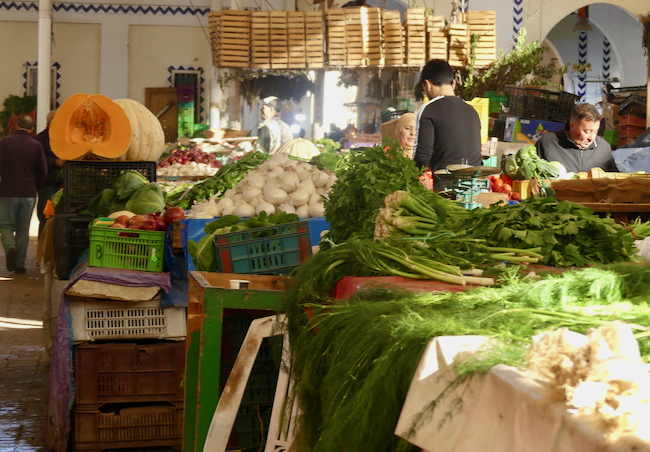


This was so much fun for me – probably because as a young wife, shopping for food was challenging at first – buying by weight in the markets, always carrying our own bags to put our vegetables in. I have so many hilarious stories, mostly because I was so ignorant, and had to learn new ways.

Noureddine introduced us to friends who were shopkeepers, and they had a great time talking with AdventureMan.


As I type this up, I hear the words in French and Arabic for eggs, parsley, pumpkins – it comes roaring back, words I haven’t used in a while.

And we head for the souks, which are just opening. The whole medina area is SO clean now!
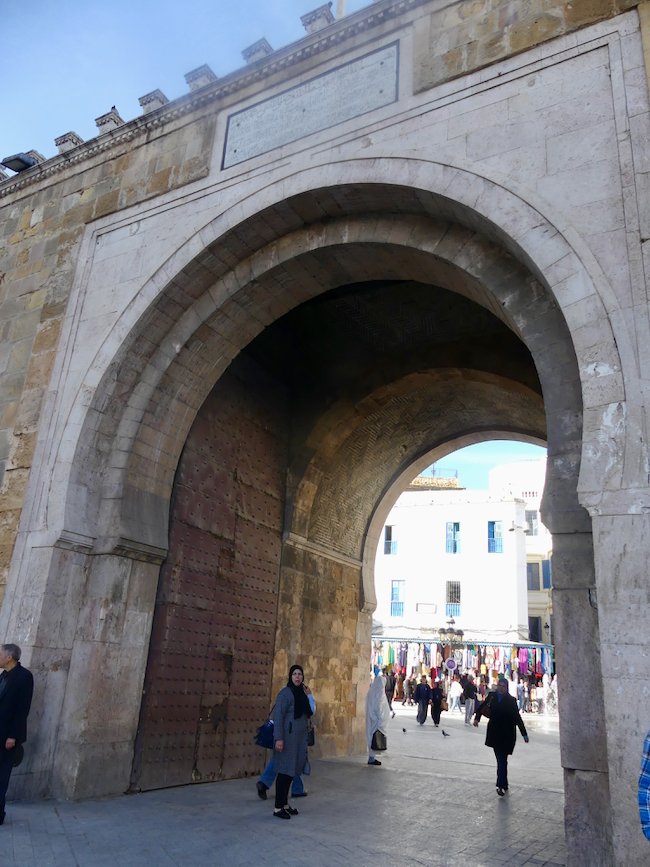
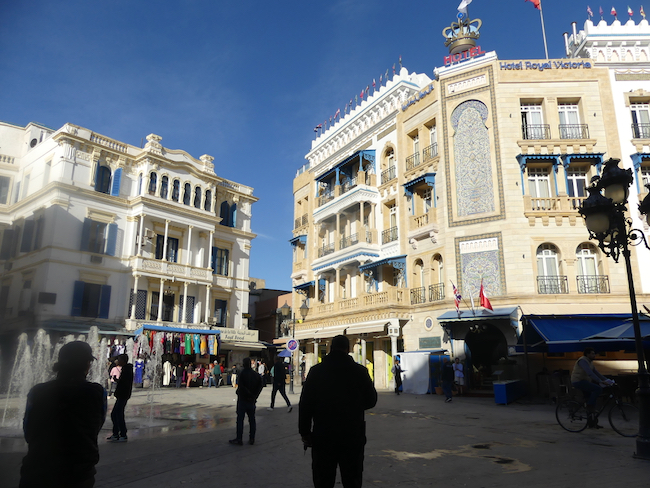
The Hotel Royal Victoria on the right used to be the British Embassy a long time ago, right at the main entry to the souks.

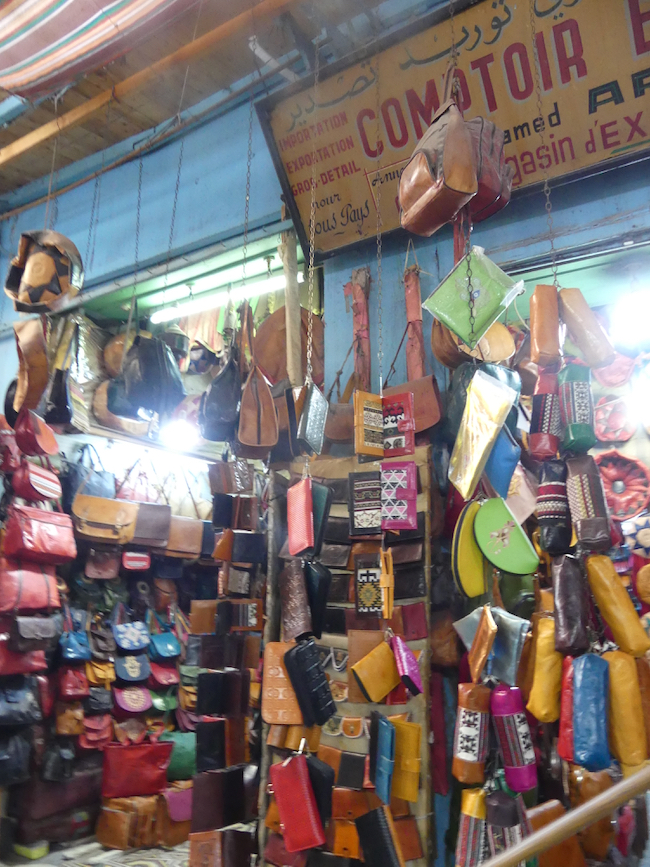
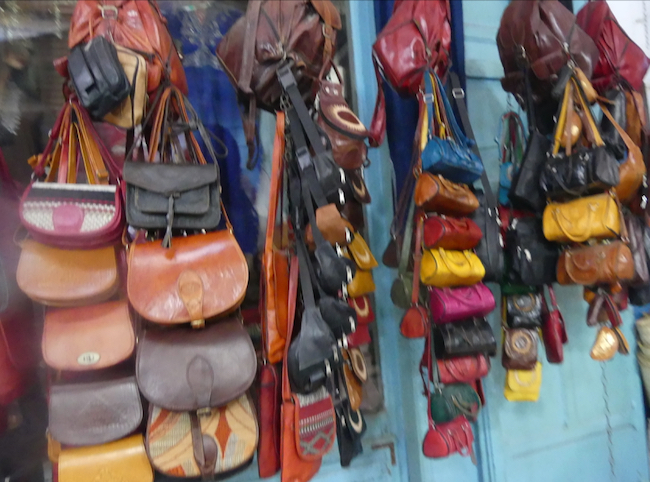
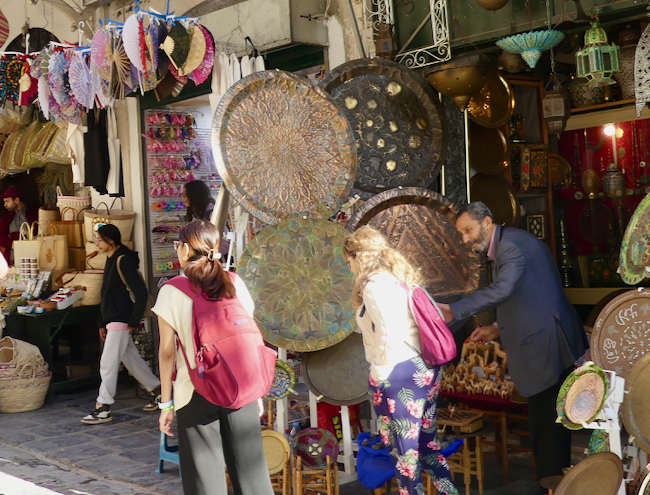
I didn’t do a lot of shopping on this trip, but I found in these souks a beautiful silk scarf hand woven in Mahdia for my daughter-in-law and a huge red sefsari in the old pattern for the woman who stays in our house and cares for the cats while we are gone, and who, like me, loves textiles.


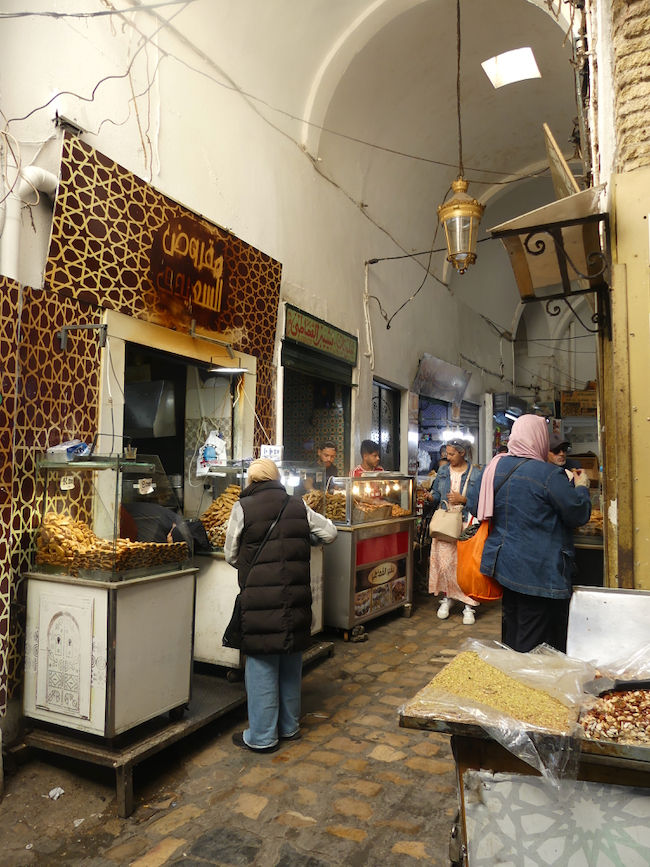
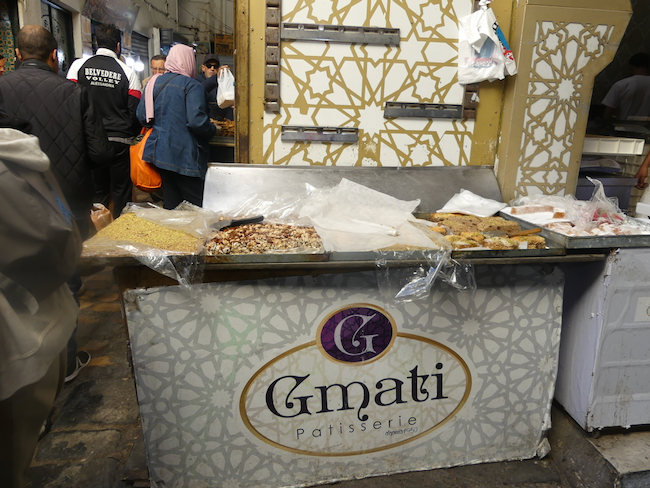



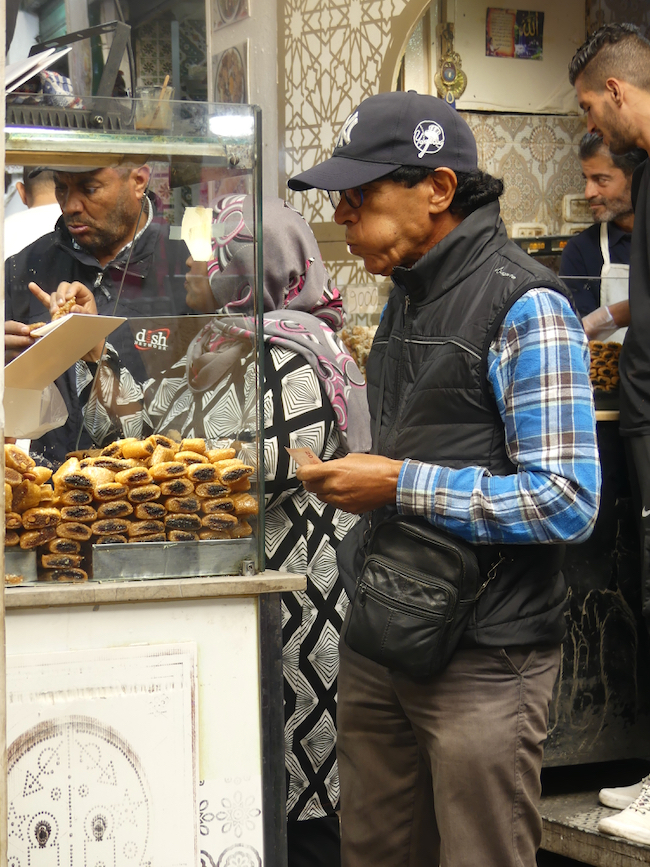
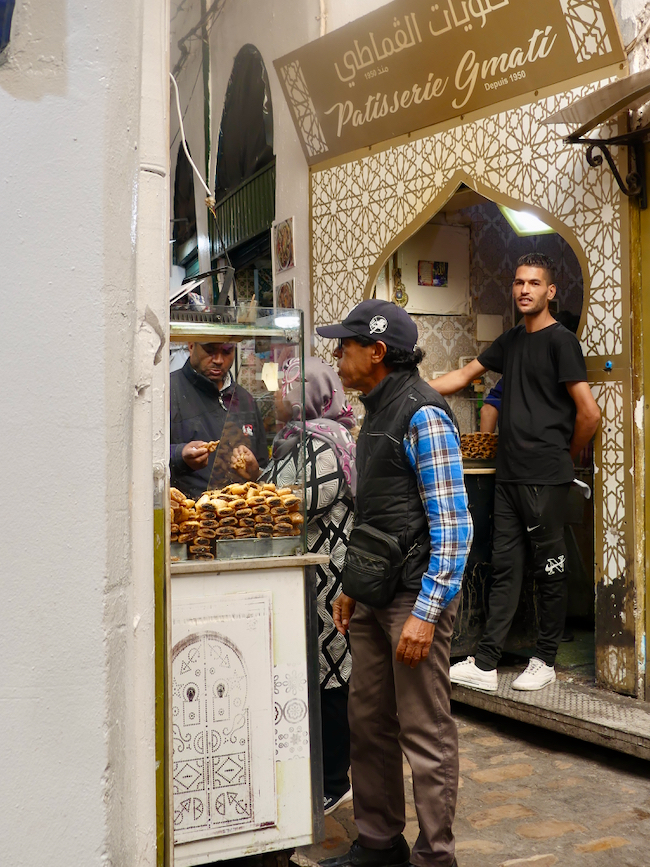
These date pastries/cookies are so delicious. Noureddine is taking a box to his family.
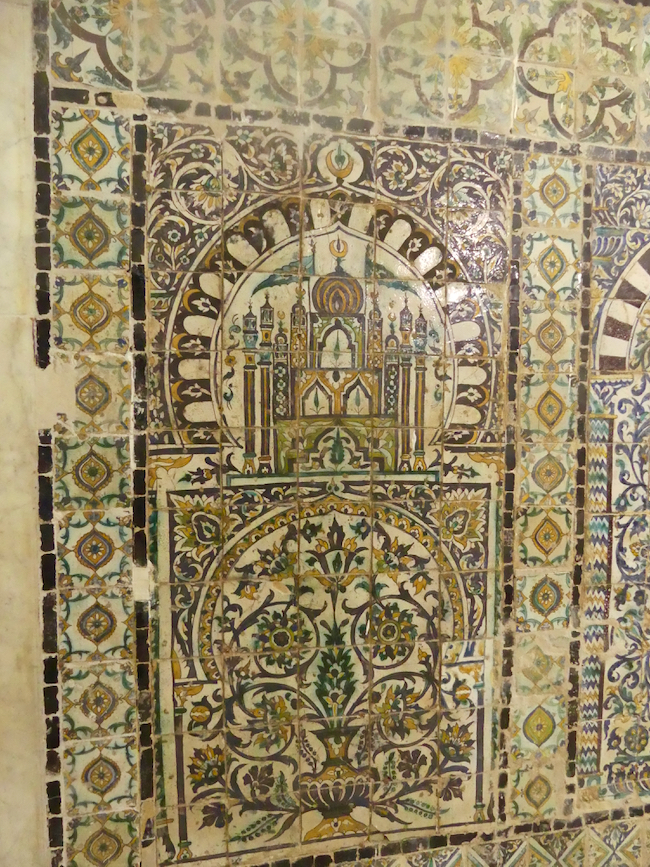
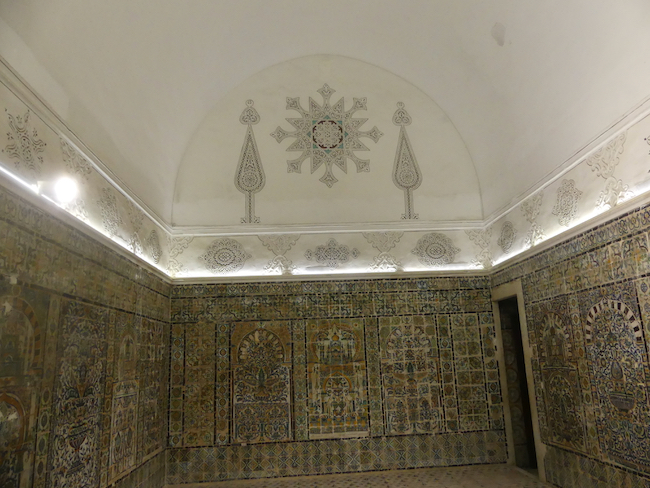
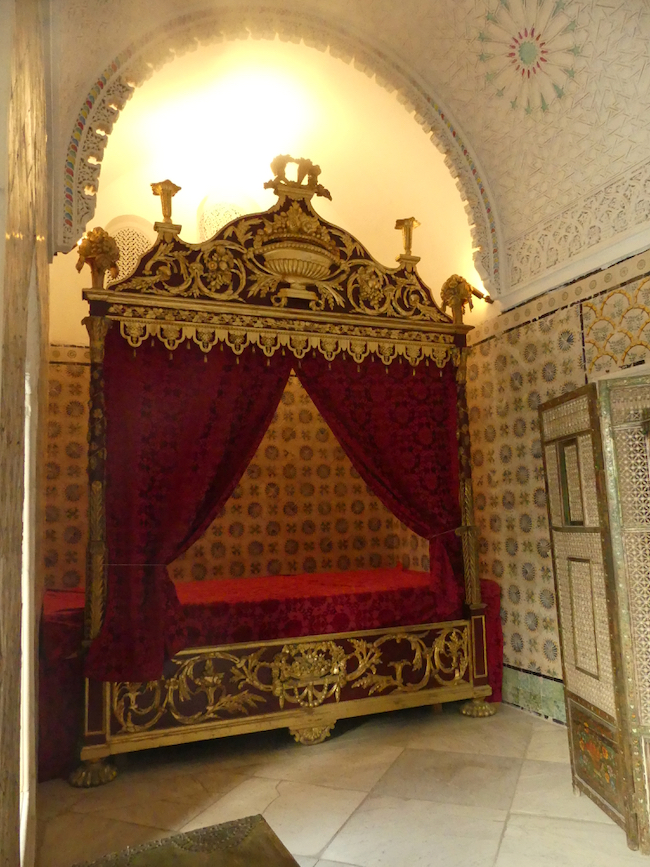
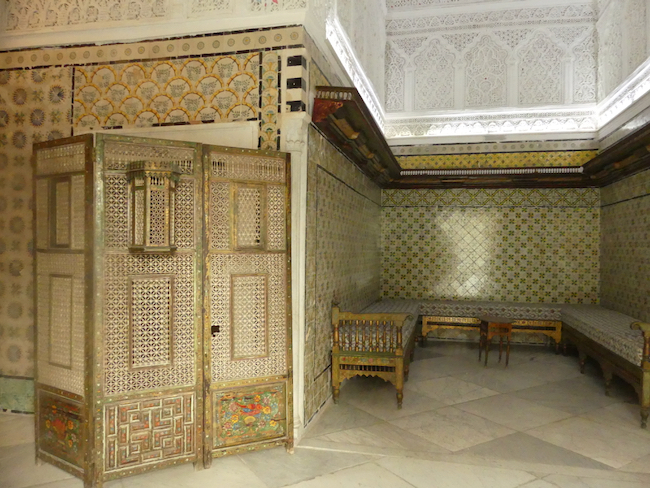
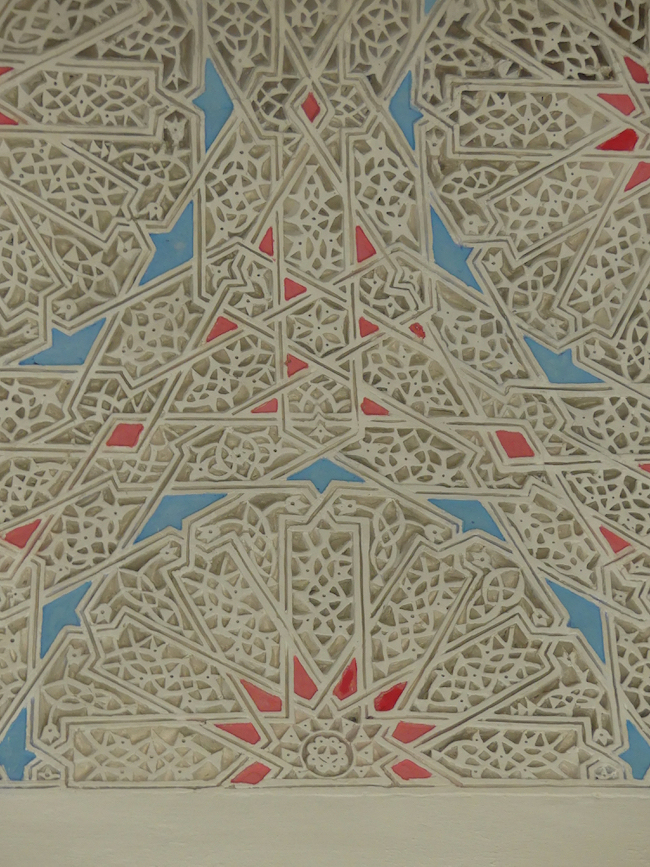
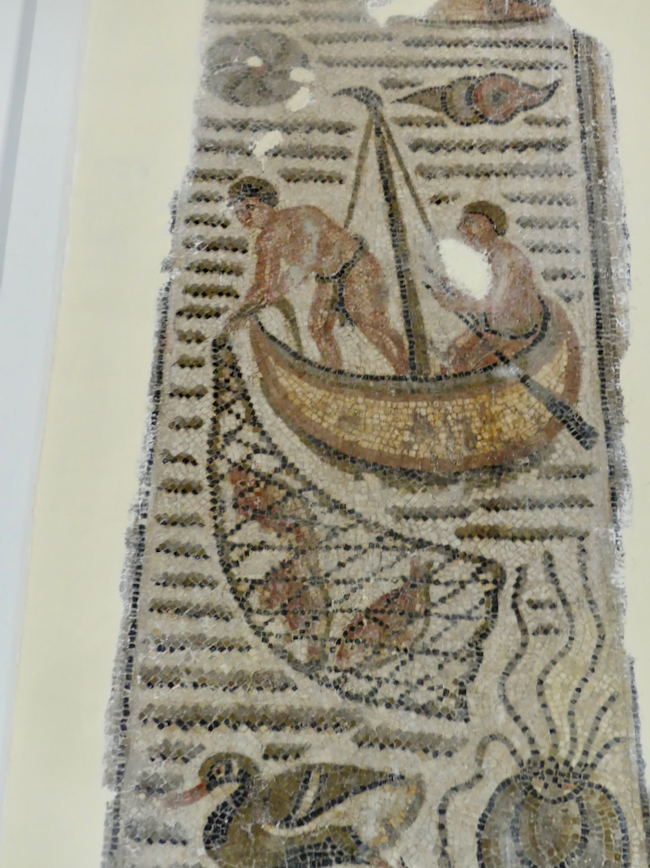
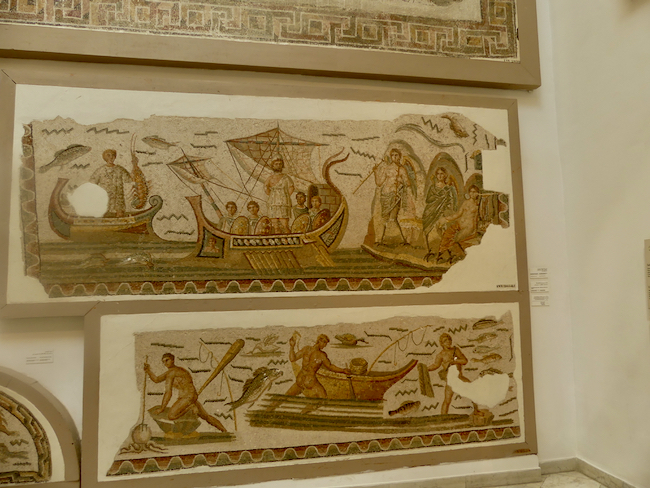
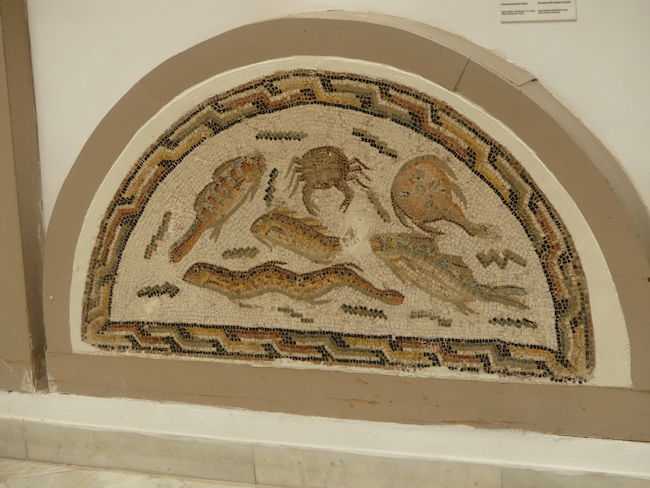
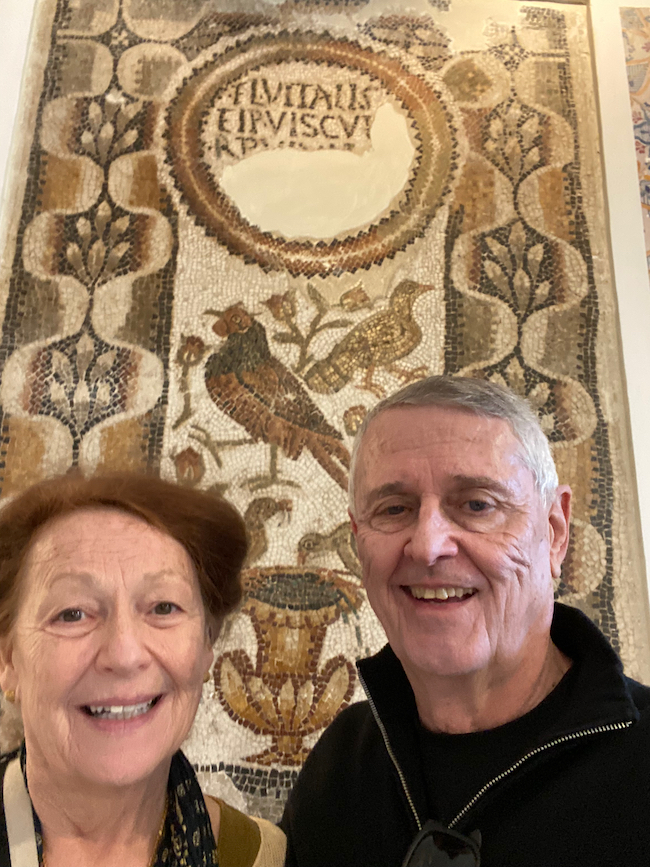
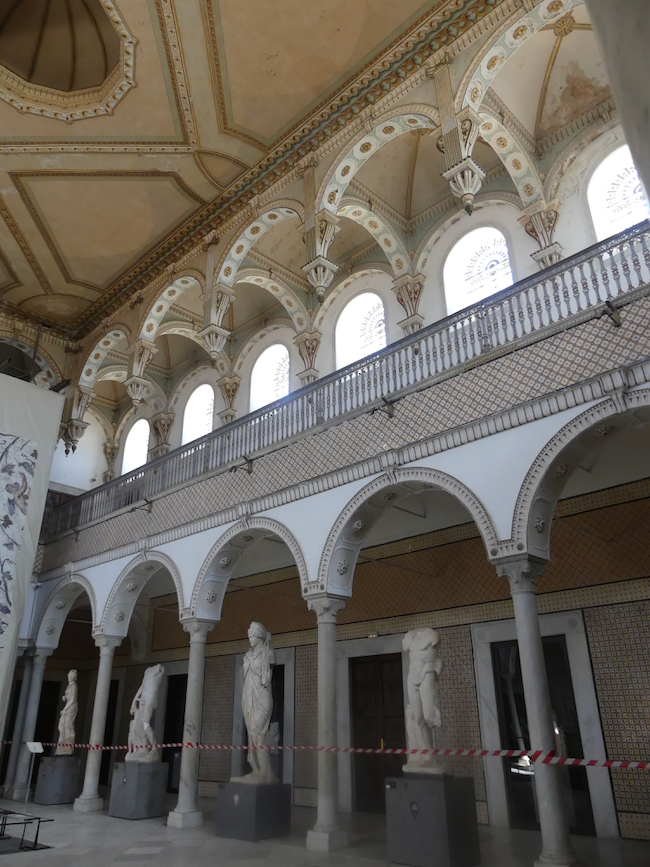
Our chariot awaits. We drive around Tunis and arrive at the Bardo just as all the tour groups are leaving. Noureddine leads us through the centuries of mosaics. The Bardo is more beautiful and more organized than it was all those years ago.
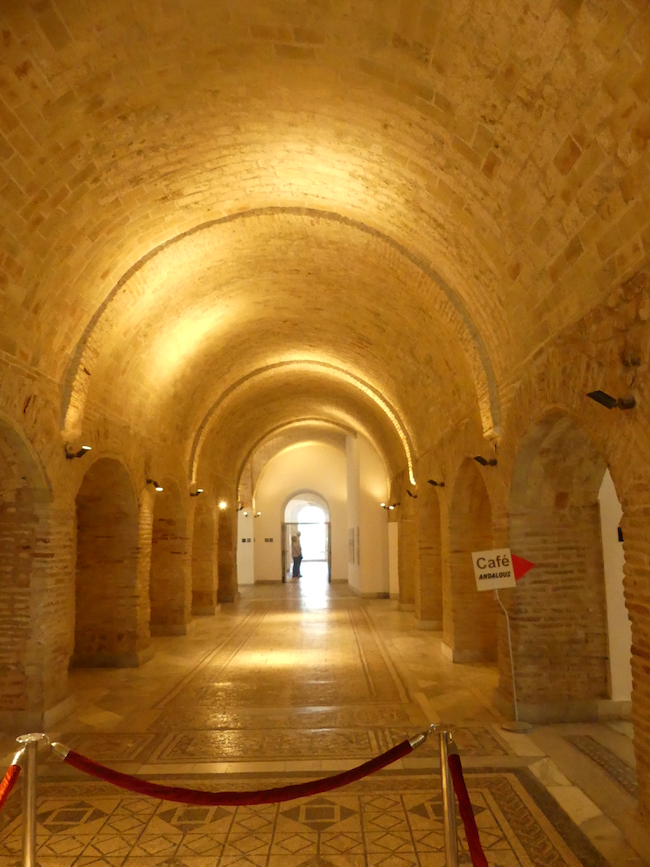
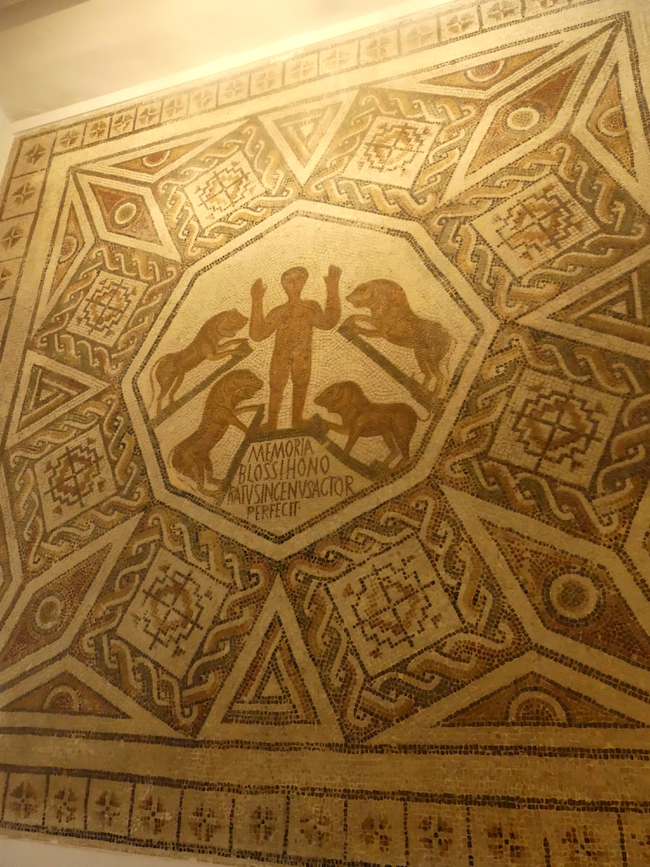
The Bardo itself is a former palace. Now it holds priceless mosaics taken from ruins of houses built throughout Tunisian history (Tunis, Carthage, Dougga, Kairoan, Djerba – it is impressive.)
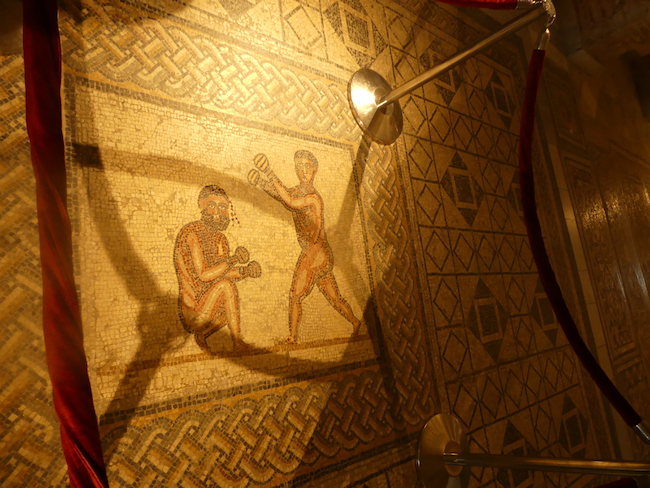

The imagination and the execution of the work is exquisite.


Below is an intricate ceiling.




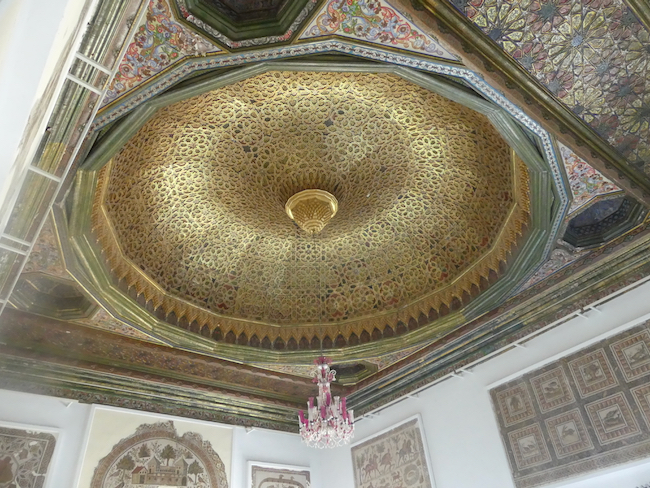


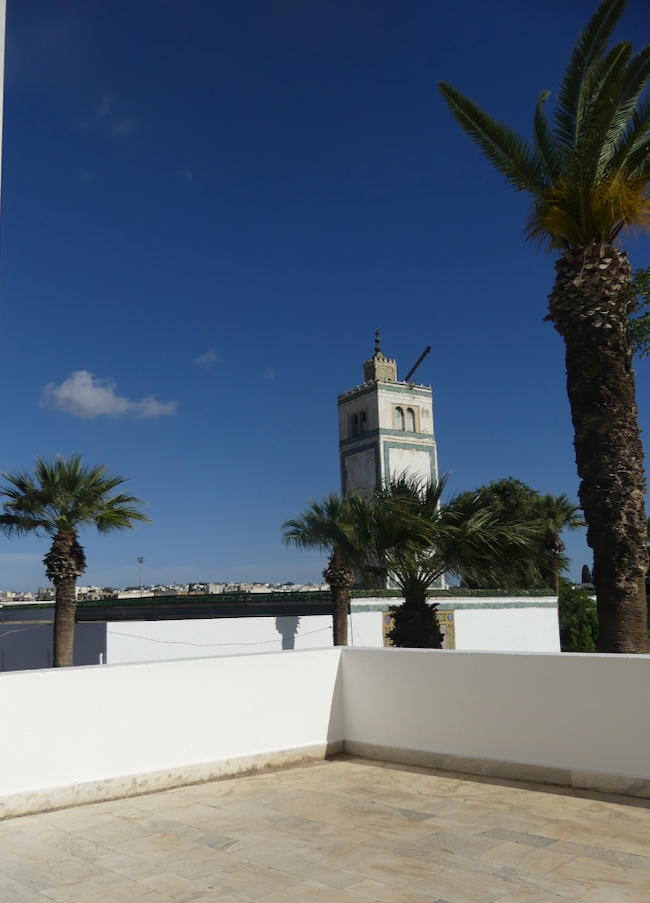
View of Tunis from the Bardo Palace.




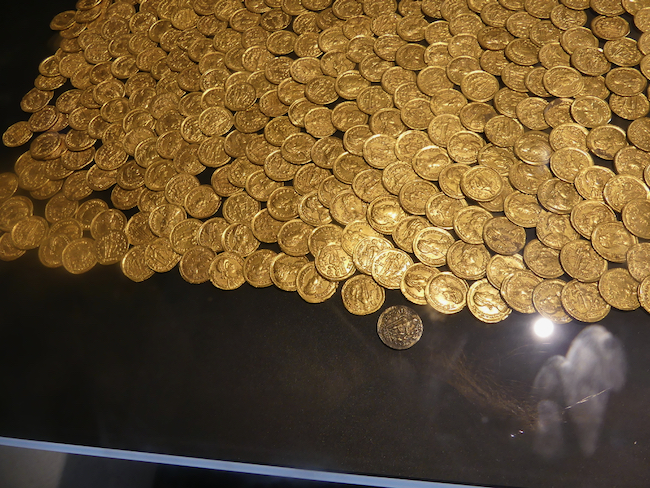
A treasure discovered with hundreds of gold coins and one silver coin (at the bottom).


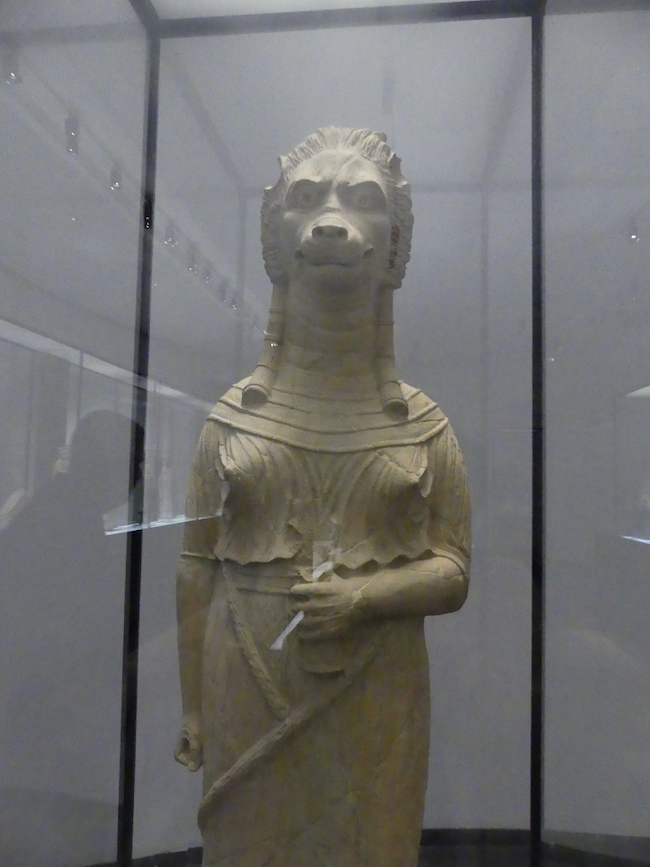
Ancient Punic Gods. Some are really hideous.

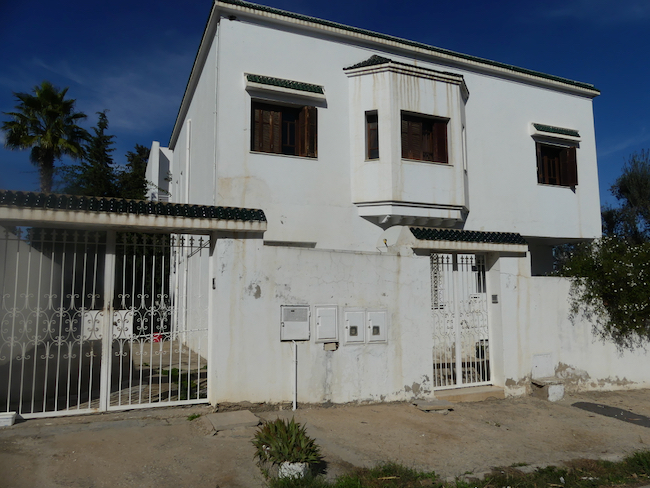
This is the house where once we lived, but not in this house, in the house that used to be there. I am glad Noureddine found the address, but it is not the house where we lived. But it IS on the way to Carthage and Sidi Bou Said, and to a delightful lunch of bric, and couscous.
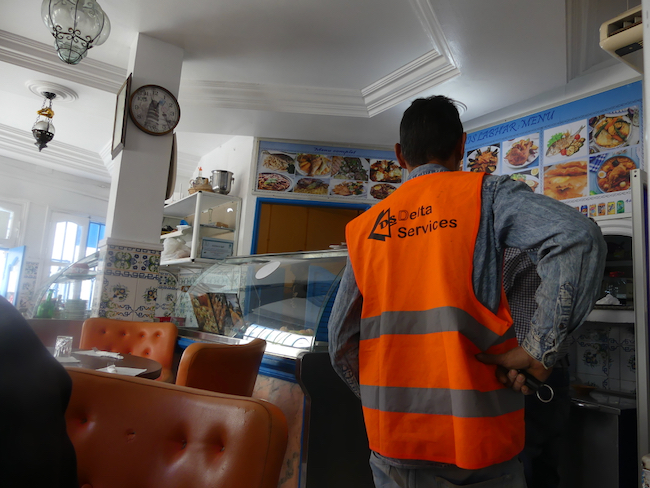
Brik!

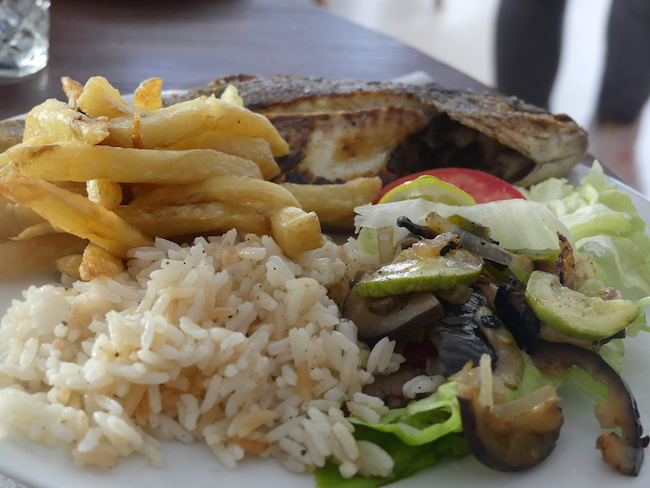
Fresh fish, which Noureddine skilfully deboned for us.
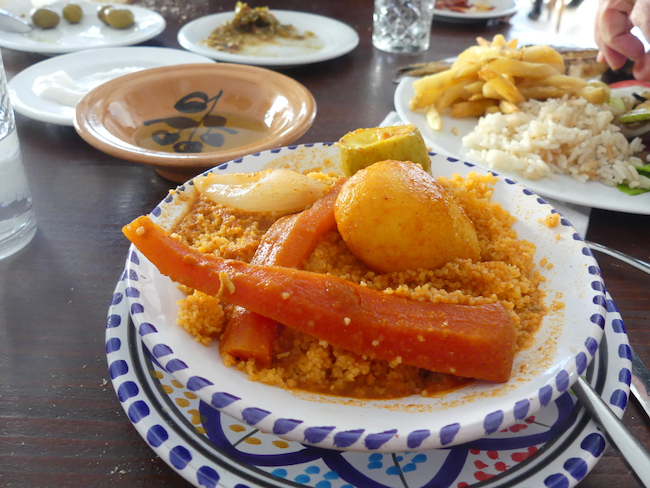
Vegetable couscous. I’ve never tasted carrots as delicious as those grown in Tunisia.
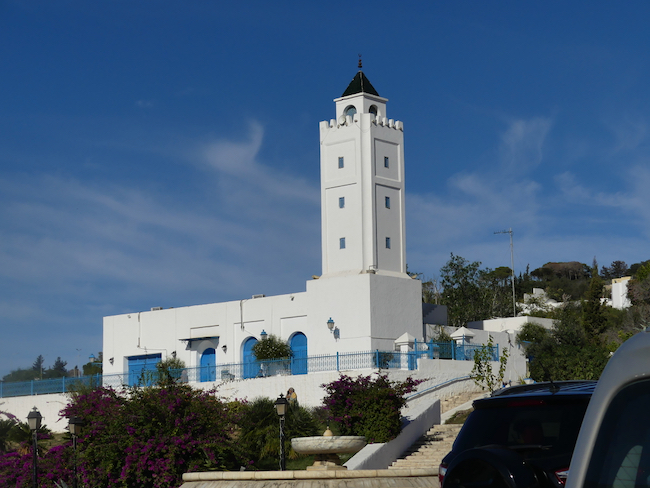
We have a lovely walk around Sidi Bou Said before heading back to the ship.


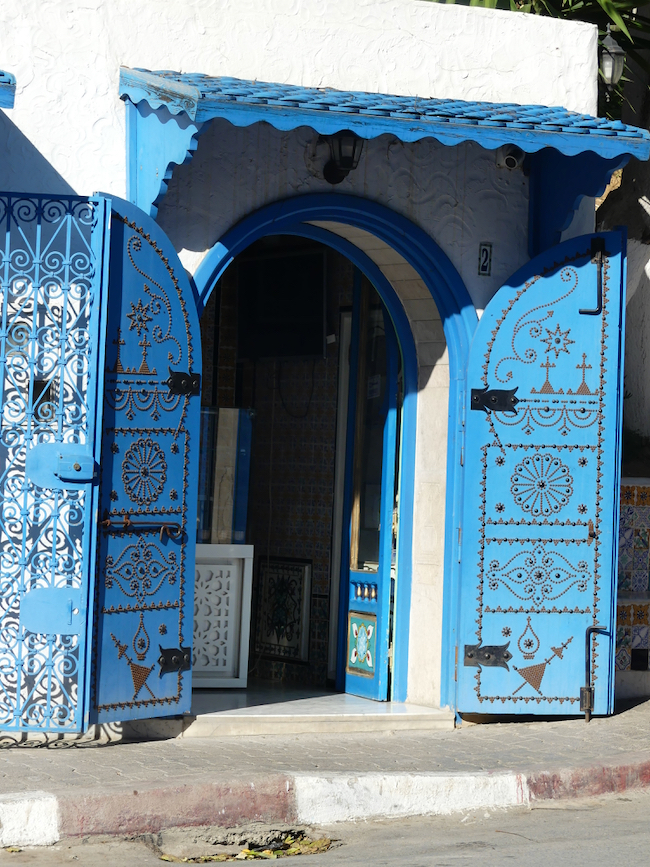
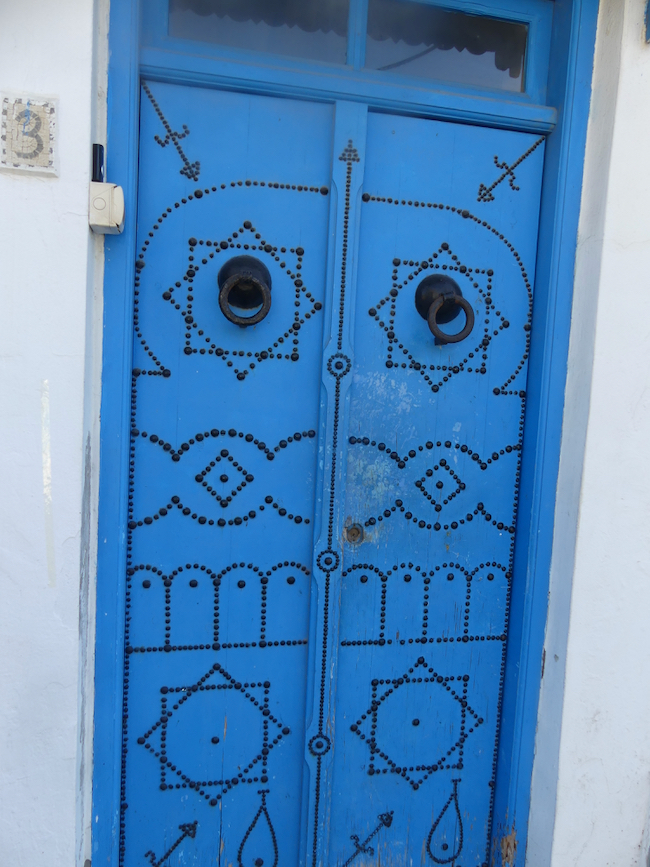
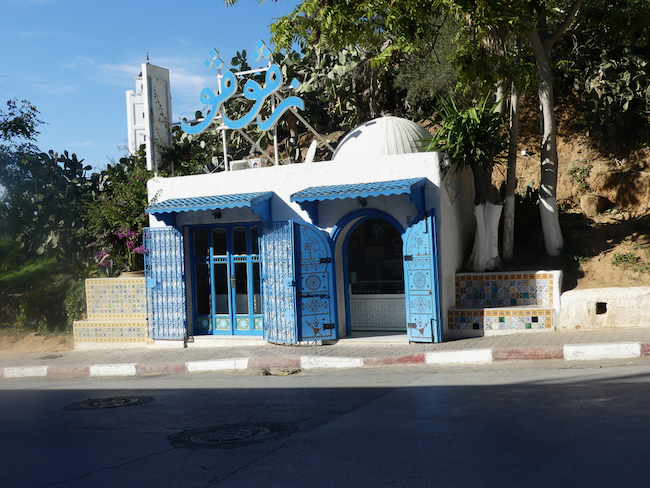

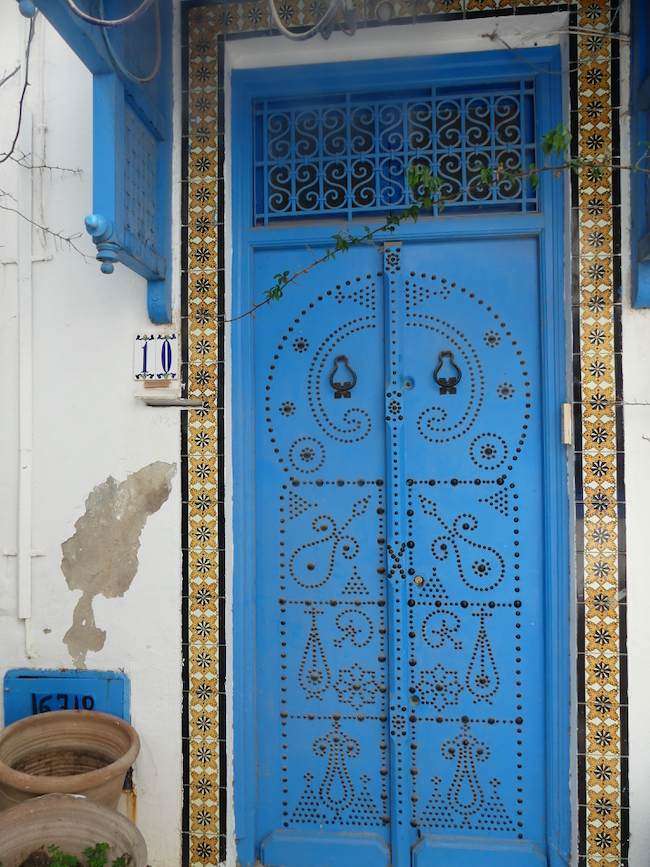

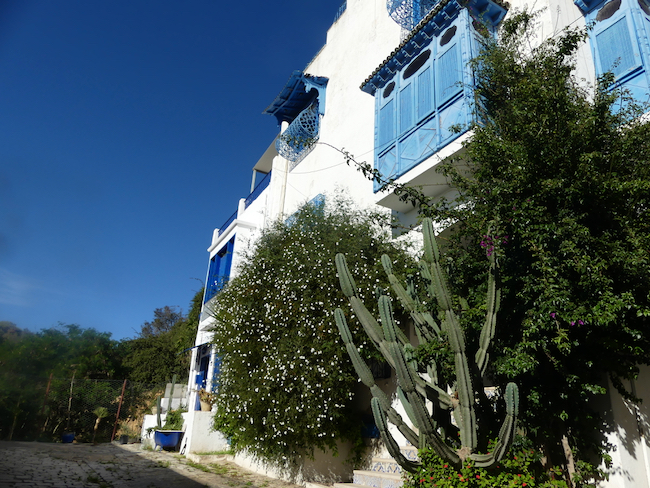

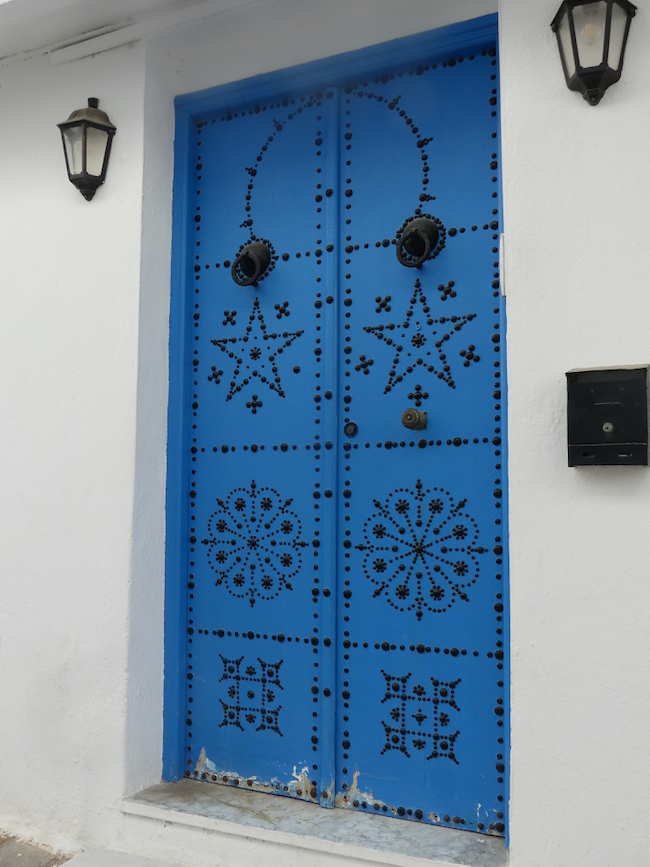

On return to the Viking Saturn, as instructed, we had our shore passes out and ready to give to the official collecting them. But there was no official collecting them! No one was collecting them! We still have them! Just in case.
The sun is setting over Tunis.


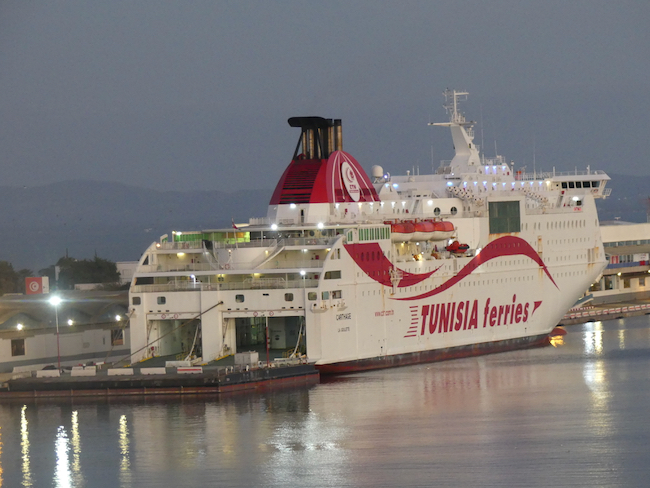

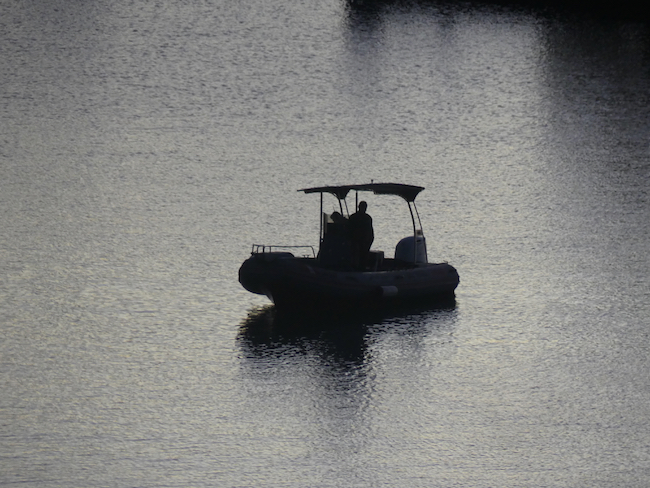
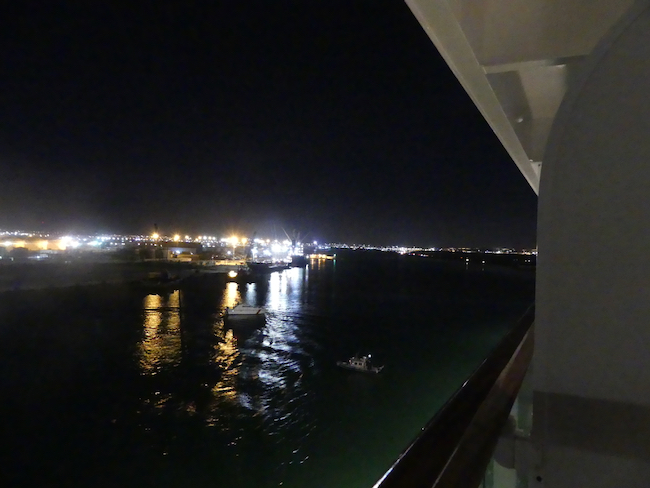

As we sail away, a flock of gulls trail us, hoping for a hand out!

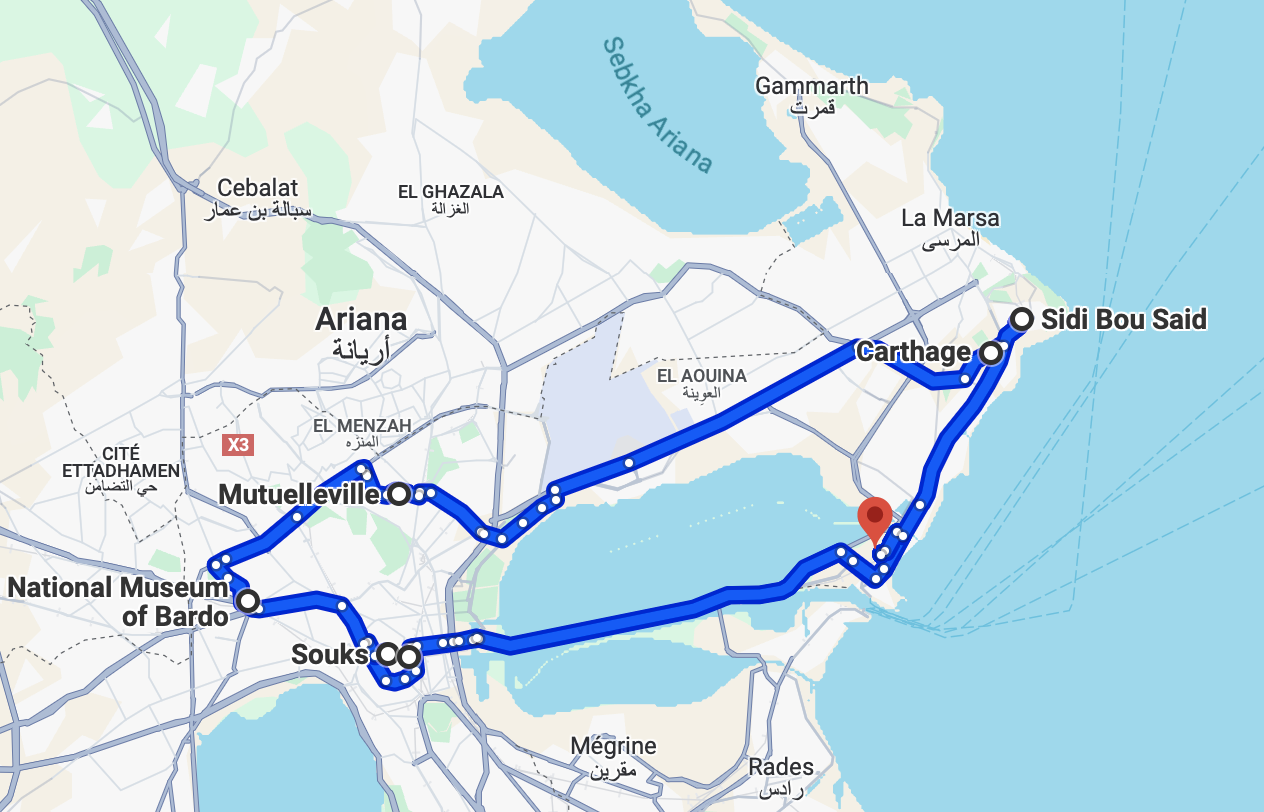
Just in case you are, like me a map person, this is a general idea of the route we took today:
Recent Comments
ExpatAlien on What Country am I Living … intlxpatr on Yellowstone: Old Faithful to C… Michelle on Yellowstone: Old Faithful to C… Cathy on No Grown-Ups in Charge intlxpatr on Waiting for Snow Wikipedia Donate Button

Amazina


Early Voting in Florida


 Here There and Everywhere