Photo Nuts
My two sisters and I all have the same camera, and my niece, and my son and his wife, so we all share information. Like on our trip, EnviroGirl explained that if you made the picture size smaller, it extends the optical zoom, so if you don’t need a really vast photo, you can focus on something and get this huge telephoto. I had no idea until she explained it. Like yes, it is in the book, and I even read the book, but there is SO MUCH in the book.
My sister Sparkle told us about using a feature called Fireworks. She tried it for fireworks – it works! It also works on moon shots, although there is another feature called Starry Nights for that.
One thing totally cracks me up. There used to be a Simple Mode indicated with a heart, it was simple and automatic, and no one liked to use it. The newer models have something called Intelligent Automatic, and we all use that mode because it gets the best photos. We would never dream of using something called “simple” but “intelligent!” That’s very different!
Mariner Man, Sparkle’s husband, doesn’t use the same camera but he showed us a new technique he says is working for him, getting interesting and new photos: put your camera really near the ground or on the ground.

Sand Castle


Good tip, Mariner Man!
So I’m kind of waiting for sunset, and photo ops just keep happening. There are wonderful kids flying kites, and I wait, and I get the shot I want – what joy!

And then, as the sun continues setting, along come a couple surfers.
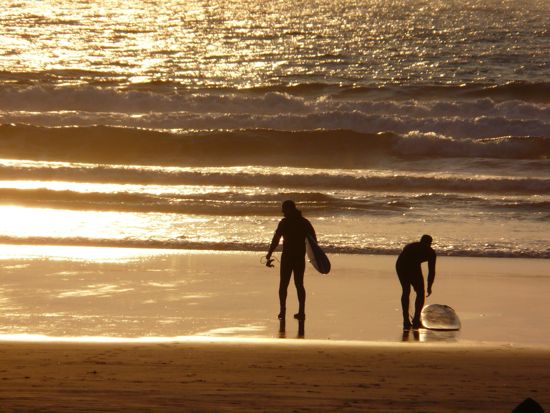
This isn’t such a great shot, but it is the only shot I got of one of them up on his board. He wasn’t up for very long.

This hasn’t happened to me for a long time – my memory card is full. I have to quickly go through and delete anything excessive to have room for the sunset. And then – the sun goes into a fog bank. I had thought it would shine through, but no – the fog EATS the sun! And, just at that moment, the surfers decide to go home and I get my last shot:

Things We Love About Robin’s House
We had reservationsin Nkwali, the jumping off place for most of the Robin Pope Safaris, but we had to change the reservations by a couple weeks, and that meant a total reversal of the reservation. We started off in Tena Tena, then we went to Nsefu, then we ended up in Nkwali. We have always loved Nkwali, loved the cabins there, but this time we were happier than happy – they put us in Robin’s House.
Robin’s House is where Robin and Jo Pope lived before they built a gorgeous house on the other side of the camp.
It is perfect for two couples, or two couples and children. It is perfect in so many ways that I had to make a list of all the things I loved about being there.
* Space – spacious bedrooms, spacious, private bathrooms on each side of the house with a spacious common living/sitting/dining room in the center.
* Indoor/ outdoor living – the windows have screens on them to keep out critters, but indoors or outdoors, it all feels a part of a whole.
* Wrap around windows – a view anywhere you look
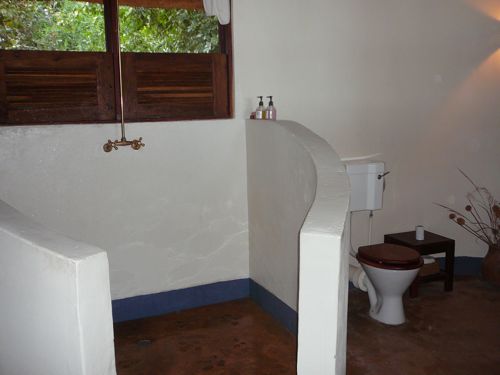
* Huge walk in shower, with animal prints molded into the painted cement floor. Love the whimsy.
* High, airy ceilings, with ceiling fans
* natural materials, canvas colored curtains, a neutral palette with beam accents
* great big soft fluffy bath towels
* all our favorite drinks stocked in the refrigerator, and a liquor bar, which we barely touched, that had Amarula, which I love.
* electricity! We could recharge our own camera batteries without going to the camp itself
* being taken care of by a hostess, a cook, a dedicated guide and Thomas and Amos, who took care of us without over-taking-care of us – they gave us plenty of privacy when we needed it, and were there when we needed them.
* variety of seating for people of different heights
* Tribal Textiles accents – pillows, covers, etc – in rooms
* a book case! With books! and games!
* multiple views of hippos, and hippo sounds at night
* grand, comfy beds with good sheets, good pillows and good mattresses
* kikoys provided for our use
* shaded porch with a variety of seating options
* a hammock with a view
* insect repellant – with a good smell and nice texture, and it really seemed to work
* ditto shower gel and shampoo and conditioner provided
* a drying rack for swimming towels, washed clothes, etc.
Our last day there, LawAndOrder Man and EnviroGirl had to leave for their 32 hour return to the USA, flying Mfuwe – Lusaka – Johannisburg – Dakar – Atlanta – Pensacola – imagine. And they had to work the next day. It was such a sad parting, and we were all glad to have had the last days together in this beautiful, very private location.
Photos:
This is the wing of the house where AdventureMan and I stayed

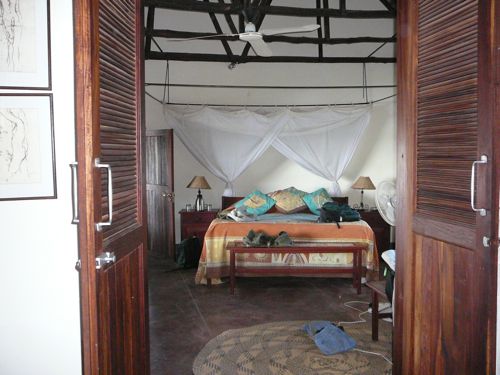
This was our room (sigh!)
And this is the shower we loved
This was the living room/sitting room where we would gather

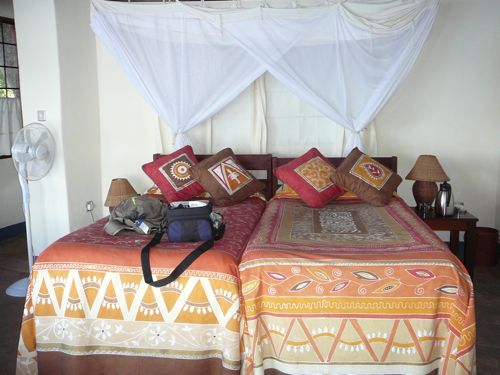
This was the second bedroom – there were additional beds for kids
This is the pool. Other guests from the camp could use it, but no one did while we were there. It was separate from the house but very close.
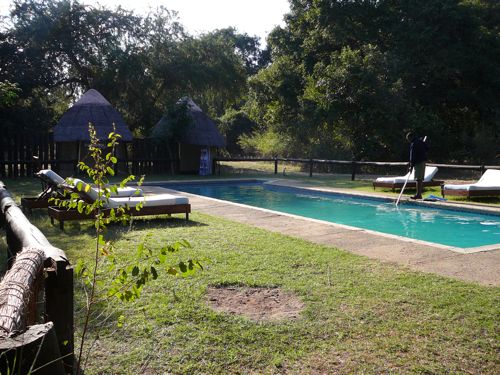
These spaces for outdoor sitting were outside the other wing, where our son and his bride slept


They served our meals privately, too. What wonderful luxury privacy is
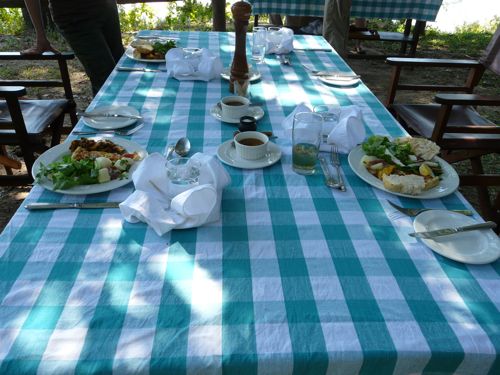
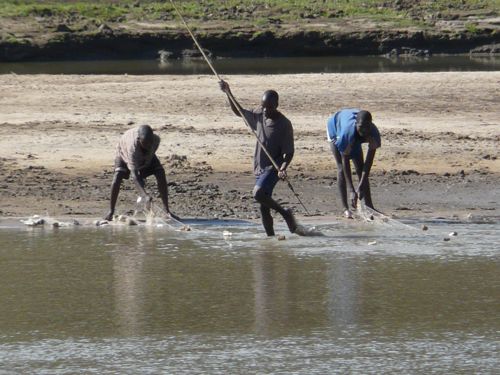
You know, the little Alaska girl is still alive and well inside me, and I am always fascinated with fishing techniques. This was right across the river from Robin’s House, and they caught quite a few fish.
Robin and Jo Pope have expertise, and also VISION. Problems, to them, are opportunities. Need to get tourists to the camps? Invest in an airline. Need to get them to the national park across a river? Build your own pontoon bridge – it gives Zambia additional park revenue, provides additional employment, and gives tourists a thrilling experience. When they solve a problem, everyone wins.
We crossed several times on this boat, and once, in pitch dark, got caught on a tree snagging us from under the water. It took about 15 minutes to maneuver us off, and to get across, but it is not like this ferry is on a schedule. It goes back and forth when vehicles are going into or coming out of the park.

How the boat is pulled across the river

We had some fabulous game drives; I will only bore you with this one. The hippo ponds are covered with nile cabbage, and I just loved this hippo with his nile cabbage blanket

Grin for the Day
Thanks to some great long-time friends for this visual:
The American way of life!

Michelangelo’s famous statue, David, returns to Italy this week after a successful 12 week, 20 city tour in the United States of America.
The David statue after a visit to the USA
Spam for Today
Today, in my spam queue, some lotto ticket guy wrote:
Are you proud of your blog, because it’s a mess.
I know it was only spam, and I know he sent it to thousands of people, and that is how WordPress picked it up as spam. I KNOW it wasn’t personal. But my feelings feel hurt anyway! LLOOLL at myself.
My New Buddy
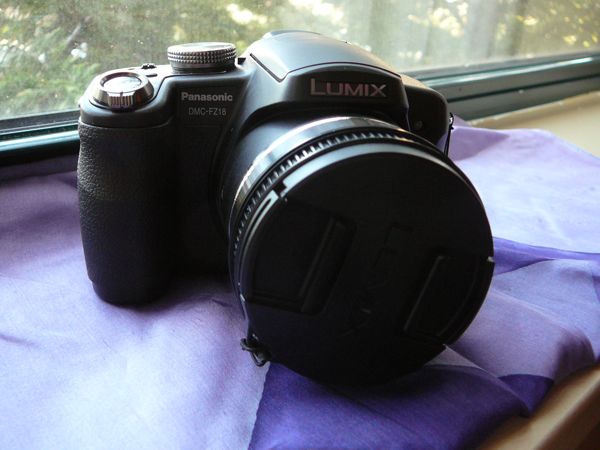
Just days before Sporty Diamond’s wedding, Big Diamond introduced me to a new friend – a Lumix, a Panasonic camera with a Leica lens.
It hardly felt like a real camera. I have lugged around Nikons most of my life, Nikons and their lenses and a variety of super films to capture that special moment. The Lumix felt like a toy.
“Just try it,” she laughed confidently.
Within minutes, she was in on her phone and computer, ordering the same model for Sporty Diamond and myself. That was five years ago.
In January, as I was doing one of the sunrise series, something whirred and clicked and jammed, never to work again. I didn’t worry too much, I had a smaller model of the same camera I bought to use in my purse. I knew I would need another one, but I had time.
When she visited, Little Diamond mentioned that exactly the same thing had happened with Big Diamond’s camera, and we figure maybe it is some kind of planned obsolescence.
Or an excuse to buy the newest model!
While back in the USA, I picked up the newest telephoto model of the Lumix. Without any additional lenses, this little camera goes from 18mm – 574mm. The zoom is so powerful that I can’t always hold the camera steady enough without a tripod, but it also has all the latest shake-reduction technologies. Actually, it has technologies I haven’t begun to master. I thought I would know it all, having had the same camera, but so much has been added in the last couple years, I still have a severe learning curve in front of me.
My sister has the same exact camera, so we can help each other out when we figure out some new capability.
I am not one of your more serious photographers. I don’t bracket my shots; I don’t do a lot of planning before I shoot. Most of my shots are shots of convenience – I even have the camera out on the seat while I am driving, in case I see something at a stoplight. Certainly in case I have a road problem, or in case some idiot drives next to me in the emergency land. I need a camera mostly for family moments, for our African adventures, for my daily Kuwait experiences and for those odd moments that capture my attention.
I am more of a documentary photographer. I grab whatever shot I can get, and delete delete delete all the excess photos. I do love getting to know the camera, and finding out what it can do. What I love the most about this camera is the great big huge zoom, the tiny, light body, and the bright, clear photos it takes under the worst conditions.
I have another buddy, a good friend who has really been there for me while I am jet lagging. The first morning – she knows I am up early – she called me and said she was on her way to the store, did I want to come? I was already getting dressed to go to the store, so I said yes. The truth is, when you are ten time zones out of whack, you are probably better off not driving a whole lot.
Yesterday, once again, she helped me run a couple of significant errands, things I really needed to do and she sacrificed a morning with her husband to help me out. That is a friend, indeed. Not only is she a lot of fun to be running errands with, but when I grabbed my camera and said “that’s a shot I’ve wanted and never been able to take because I am always driving!” she slowed down and let me have the time to take the shot. She didn’t even mind. Now THAT is a friend, indeed!

Nowhere else have I seen bulldozers up in buildings. I can’t imagine the building being destroyed was constructed with specifications supporting the weight of a bulldozer in mind. I can’t imagine what the bulldozer operator must have in terms of life insurance – or, well, too bad, I can imagine he considers himself lucky to have a job that allows him to send some money back home. At least this bulldozer is only three stories above ground – the last one I saw was eight stories above ground. And the driver didn’t even have a construction helmet on.
It is blazing-white-hot in Kuwait right now, but thanks be to God, there is no dust today, and the humidity is relatively low.
Arte Y Pico Award
My friend Lofter, over at Life at the Foot of the Stairs has honored me with the Arte y Pico Award, “given to those who are creative and have a penchant for art.” I am truly honored, Lofter, and I thank you.
There are responsiblities that go with this award:
1. Pick 5 blogs that you consider deserve this award for their creativity, design, interesting material, and also for contributing to the blogging community, no matter what language.
2. Each award has to have the name of the author and also a link to his or her blog.
3. Each award winner (upon acceptance) should show the award and put the name and link to the blog that has given her or him the award.
4. Show the link of Arte y Pico blog , so everyone will know the origin of this award.
5. Show these rules.
So here are my selections:
1. Suresh Gundappa and Meditation Photography. I don’t know how I found this blog, but I find myself returning to it often. We don’t share the same religion, but we share similar values. His photos knock my socks off.
2. In a move of flagrant nepotism, I choose my niece, Little Diamond, at A Diamond in Sunlight because she also has lots of photos, describes daily life in the turbulence of Beirut living, and did I mention she is my niece?
3. Because they are also here, there and everywhere, writing about any and every interesting thing from technology to food to sky photography, and because they have only been blogging since October and have had amazing response, I choose Some Contrast, with bloggers Yousef and Mishary.
4. The Queen of all Kuwait Bloggers, Jewaira because her Jewaira’s Boutique delicately manages to introduce controversial topics without setting the blog-world aflame, because she has the most amazing headers and because she is smart and savvy and a great writer.
5. This last one is a stretch, but I select Purgatory because, like VanGogh, he is an original, people don’t always “get” him, I don’t always get him, but he does original works of art, he thinks way outside the box, and he lets Jacqui give him a new, and usually very artistic look from time to time.
Again, thank you, Lofter, for selecting me for this award.
Sunrise 29 May 2008
Holy Smokes – where did May go? 2008 is slipping through my fingers; I have so many plans and ideas and I don’t know how much will l really get done?
AdventureMan kept me busy and talking until I collapsed around nine last night, and did not sleep all that well. I finally gave up around 4:30 ayem and ended up getting some very Turneresque pre-dawn shots. Had to go out on the balcony to take them because my windows are all smogged with the humidity and smeared with the dust and rain from yesterday.
Going out to take a photo on the balcony requires feeding the Qatteri Cat back in his room, then running to the kitchen and shutting the door, then opening the balcony door. We know QC knows there is fresh air out that door, but we don’t want him to discover the balcony and all the dangers it represents to a logic-challenged cat.
Well, it’s not really dramatic enough for Turner but it has those dramatic elements of opalescent sky, translucent waters and hazy horizon that reminded me of Turner:

Moments later, we had sunrise:

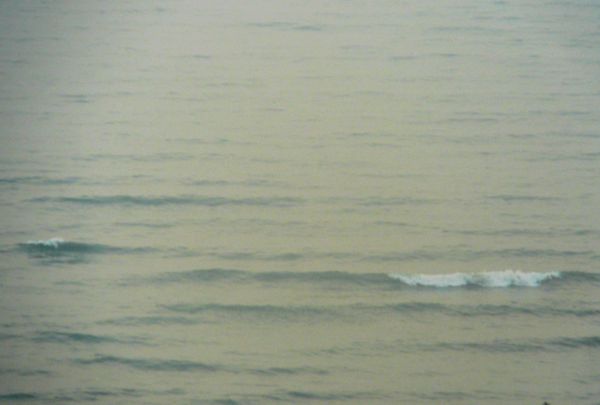
And even some surf this morning:
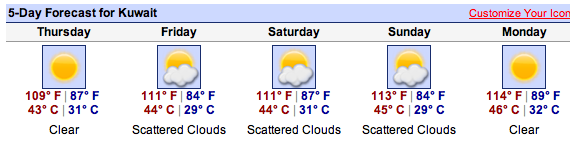
We have a break in the weather today – only 109° instead of the 111’s and 112’s predicted for later on:
It Gives Me Hope
You know who I am, I’m pretty consistent in what I have to say. I believe we all have a lot more in common than we have differences, and I want us to find ways to get along. We, as a species, spend so much time and energy and resources fighting over the pettiest differences. How will we ever call ourselves civilized until we can treat every fellow creature with respect?
I bet Cupertino has problems, too. I know for one thing it is incredibly expensive. Most of what I saw there, I really liked. Whole Foods. High Tech Engineering. A wide variety of people, all working together in peace.
At our hotel, there were five weddings taking place the same day as “our” wedding. I came down in the elevator with one couple and their parents, and I got a photo of them in the hotel garden area before their wedding:

The groom is from India, and the bride is Chinese. The parents, and all the relatives are gathered, and dressed in gorgeous, flowing silks, and the bride and groom are just amazingly in love with each other and it is so beautiful, they are all so happy.
Cupertino takes a lot of pride in being beautiful, and the buildings they build are beautiful and they have “campuses” where lots of related buildings are connected with winding garden paths and ponds full of ducks.
I particularly love this sculpture:

Which looks totally different from the side:

There were flowers and plants everywhere. Many I couldn’t even recognize. I would have to learn a whole new world of gardening in California:

The Grande Finale
Here’s the problem. Our weddings are SO much fun. We all get there early, and as Maurice Sendak says – “Let the wild rumpus begin!”
I think many of you have the same families – we raise our children as a village. My sisters’ children are precious to me, and mine to them. They have visited back and forth between our houses since they were little. When we gather, you never know who will be with what family, which room people will gather in – it is one constant high-energy party.
And, it can also be totally exhausting!
Yesterday was the grand finale, THE wedding. It took place at Ainsley House, in Campbell, CA:
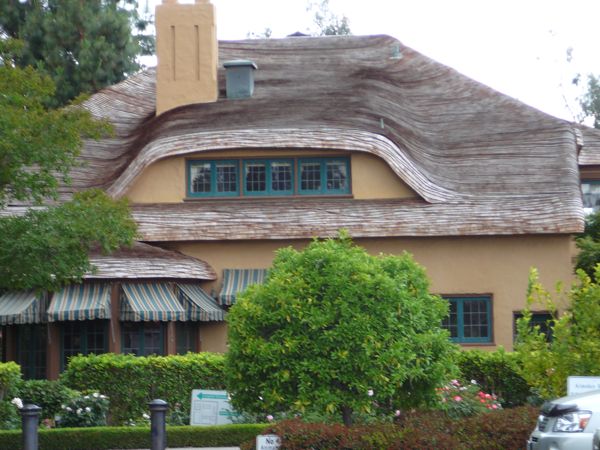
The weather has been unseasonably cool, so there was concern about rain during the wedding. Fortunately, it never rained, the sun came out, the bride was gorgeous and everything came off without a hitch. The bride and groom took their vows:
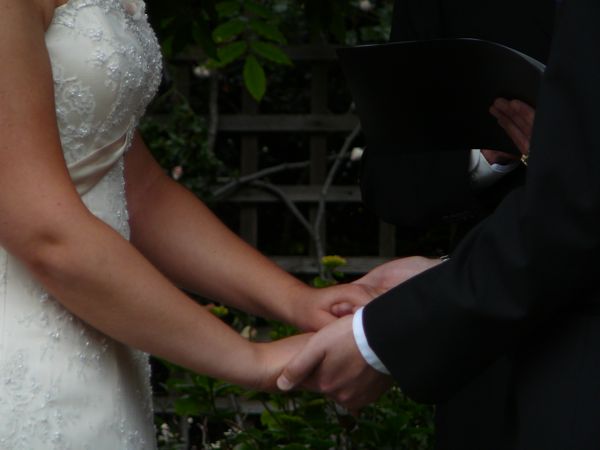
And then they exchanged rings:

After rings were exchanged, and the couple declared man and wife, the guests went on to the reception hall, while the bride and groom and family and attendants had a lengthy photo session. When we gathered for the wedding dinner, it was truly a night to remember!
I loved her table decorations; restrained, elegant, perfect for a beautifully planned wedding:
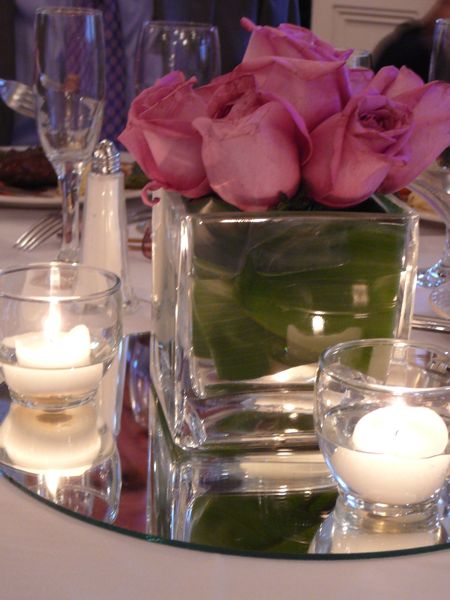
The wedding dinner:

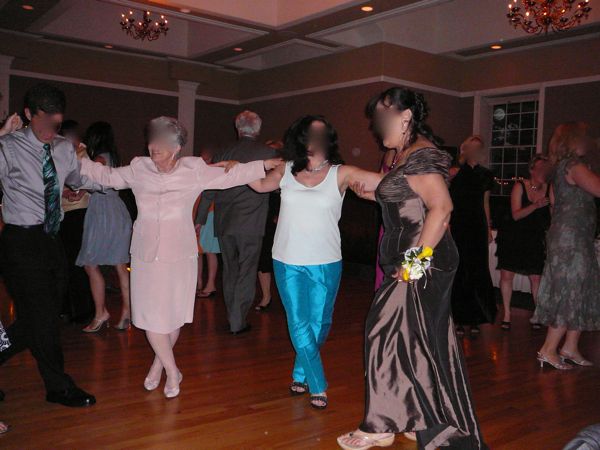
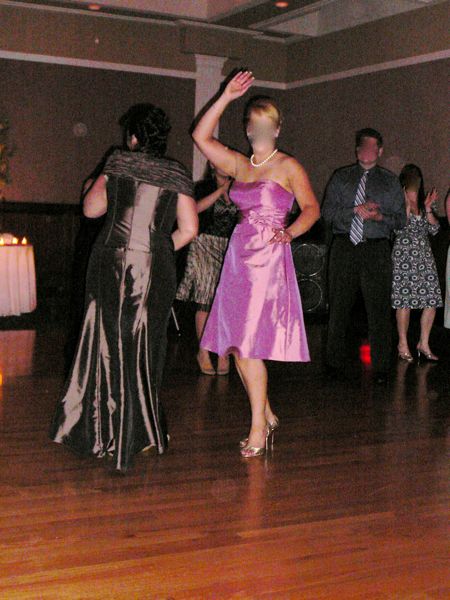
The Greek side of the family danced, and the Iranian side laughed and said they were dancing Iranian style. The Iranians showed us all how to DANCE, and Sparkle is very very good at it. I think she had some coaching from her new daughter-in-law. Everyone had great fun comparing the different styles of dancing:
Our children are marrying into other “villages” and our own village just keeps expanding. It gives me such immense joy to watch this happen; the world grows smaller and smaller. Our children are choosing their mates with care – and joy! And they are choosing well, uniting us with tribes and clans who share the same values, if not nationalities.
We wish you all happiness, Earthling and Bride!
Child’s Play at the Mall
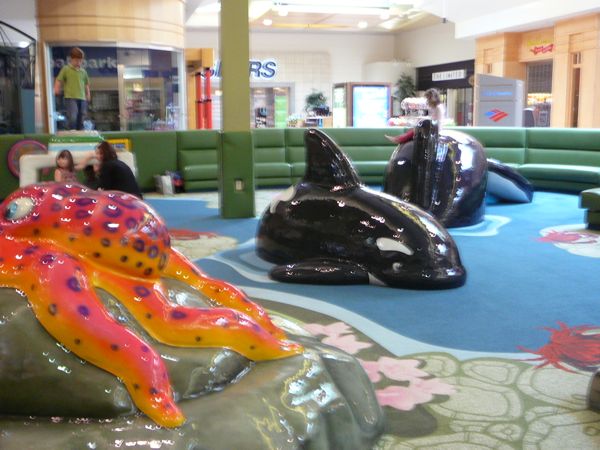
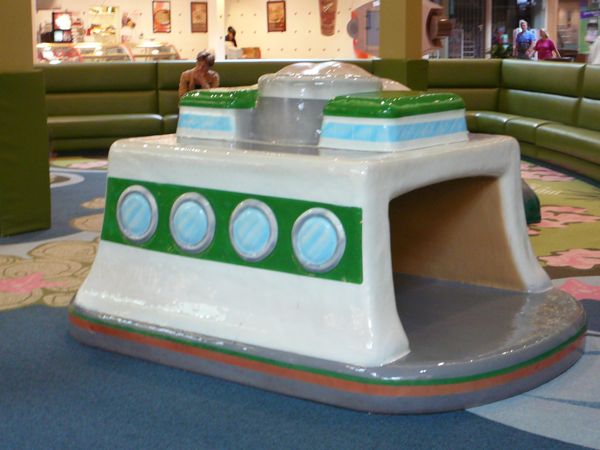
I love these playthings! There was a whole crowd of children in the mall this morning, playing on Mt. Rainier, an octopus, and a couple whales. My very favorite is the big ferry boat:

Recent Comments
Kitchen on Isiais: Winding Down intlxpatr on Shampoo Ginger tigerbutterya0c5ff1d… on Shampoo Ginger intlxpatr on British Soldier Kidnapped, Esc… John on British Soldier Kidnapped, Esc… Wikipedia Donate Button

Amazina


Early Voting in Florida


