Bear in Mind . . .
As a kid growing up in Alaska, I learned to respect bear, and all wildlife. I don’t think they are cute. I think they are creatures like us, who struggle to survive, and who will hurt, maim or kill us if we get in their way. It’s not personal; it’s just the way it is. I’ve seen the damage bear can do; I steer clear.
I did not go with AdventureMan on his bear safari. Hmmm. Let’s see, spend a lot of money to tromp around on a stony beach, maybe cold, often wet, fighting mosquitos and no-place to potty with dignity? Hmmm . . . No thank-you!
But he did get some spectacular bear photos, one I absolutely love, it looks like bears doing the polka, it makes me laugh. I am hoping he will share with me so I can post some bear photos for you later on the blog.


All to Ourselves: Mendenhall Glacier
It’s one of those wonderful mornings, we are still on Pensacola time and wide awake. LO, why not, we hit the sack the night before around seven, unable to stay awake another minute. Quick breakfast in the lobby – we brought our own home-mix cereal, but there is milk and fruit we can add, grab a quick cup of coffee, then out to the glacier. When you say ‘the glacier’ you mean the Mendenhall. People havre been coming for years to visit this glacier.
When I was a kid, it was bigger, farther out, and there were only little trails to take out to get closer. Now, it is built up – a place to watch bear catch salmon as they swim up the stream to spawn, and several built up places where tourists can view the glacier, nice paths to walk on. Normally, there are bus loads of people, and I mean that literally. This morning – holy smokes – we are the only car in the parking lot at almost seven ayem.
There are blue places in the sky between white fluffy clouds. There is sunlight filtering through, lighting up the glacier, and making the icebergs glisten.

While AdventureMan shoots shots of Alaskan terns for his birding friends, I shoot icebergs. We listen to the silence, the utter peace of being alone out in this majestic location.
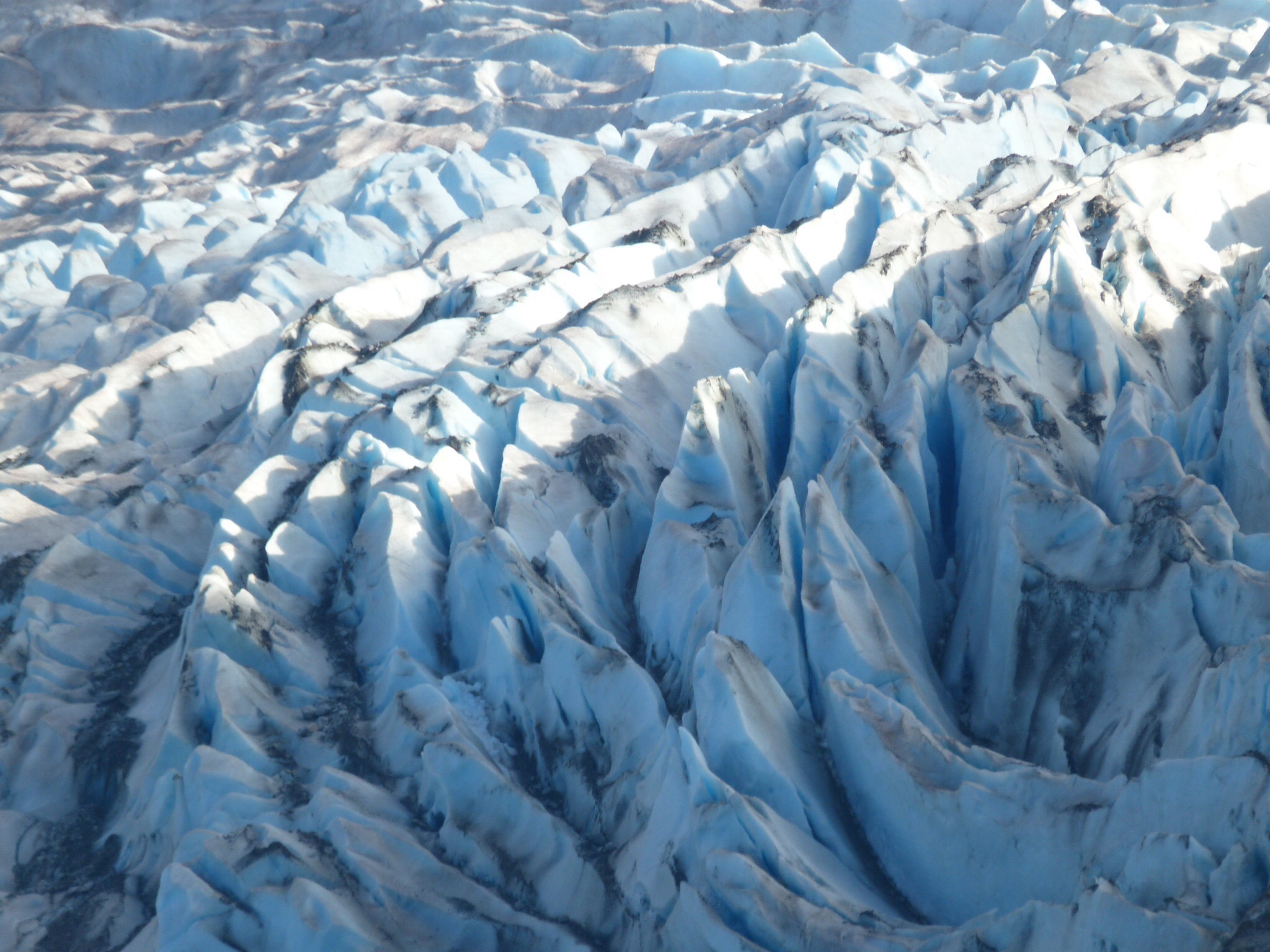
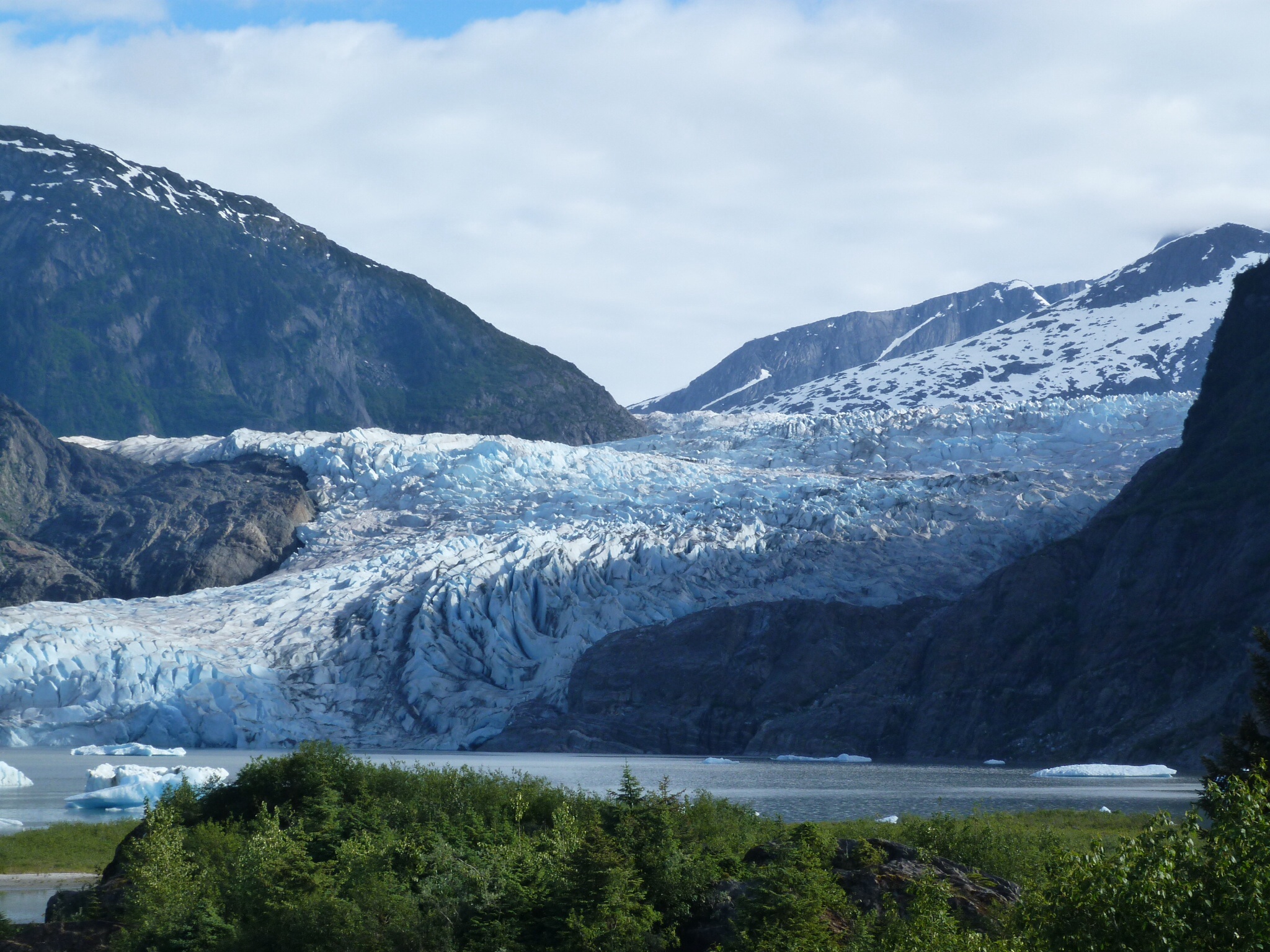
We spend about an hour, hiking around the various viewpoints, feeling so luxurious, the luxury of sheer privacy. As we leave, the buses start arriving. We take the Mendenhall Loop around the lake to Tongass National Forest campgrounds, to see the glacier from another viewpoint.

As we near Skater’s Cabin, full of old memories of my Mom tying up my ice skates and giving us hot chocolate out of a thermos, our old friend calls. We used to go out fishing and berry picking with them on their big former Coast Guard boat, Dad would go hunting with her husband. She is now 90, and she is on the phone inviting us to dinner the next night.
We are so honored. We don’t want to put her out, we don’t want her to have to fix dinner, but we always have such wonderful conversations with us (she asks us things like ‘tell me what it is like grocery shopping in Tunis?’) and we get her to tell tales of life in early Juneau, so we accept.
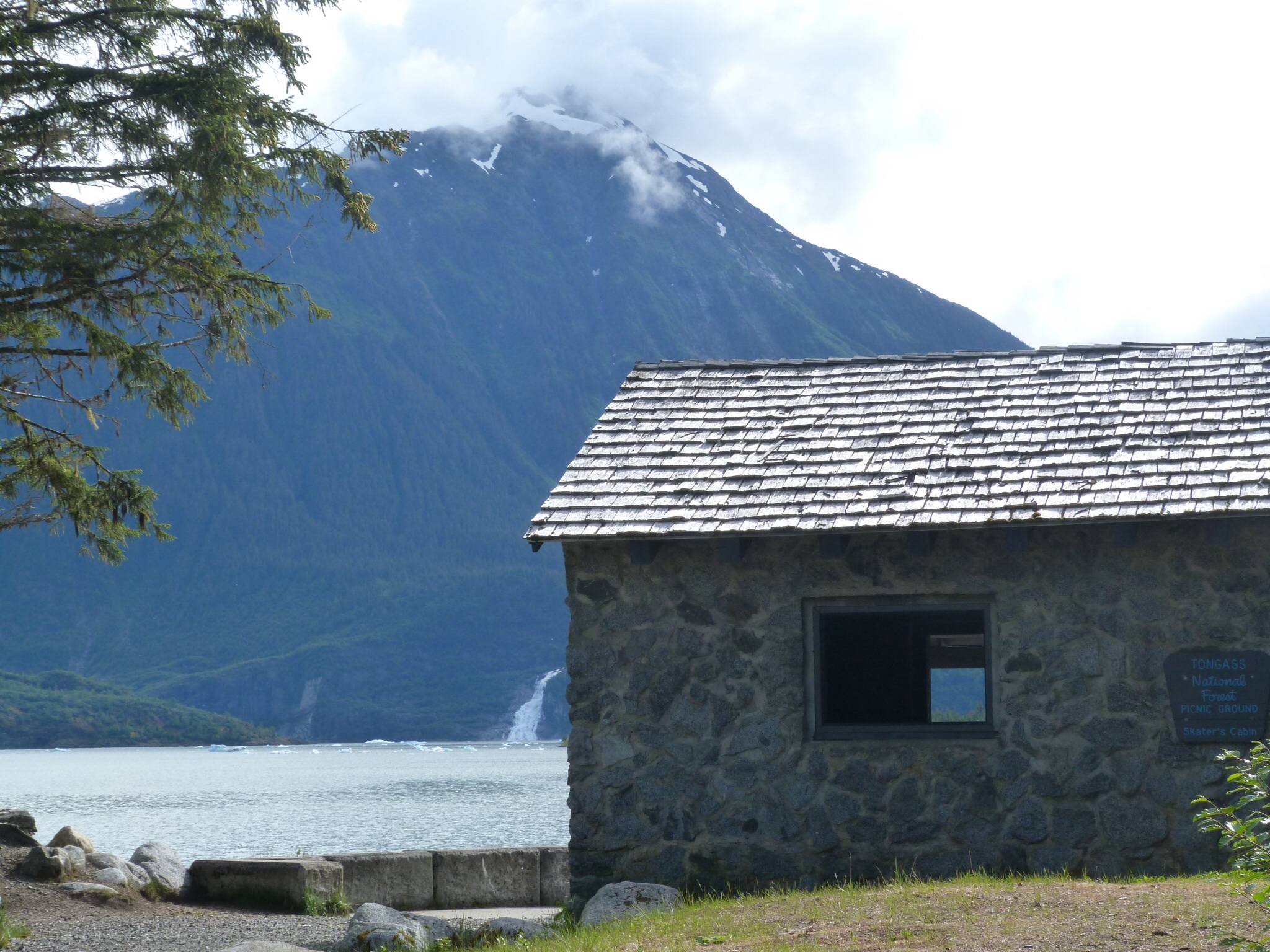
It’s been a wonderful morning. We know just where we want to have lunch, a place we haven’t tried before. And tonight is the opening parade for Celebration 2014!
Pensacola Tough @ Grafitti Bridge
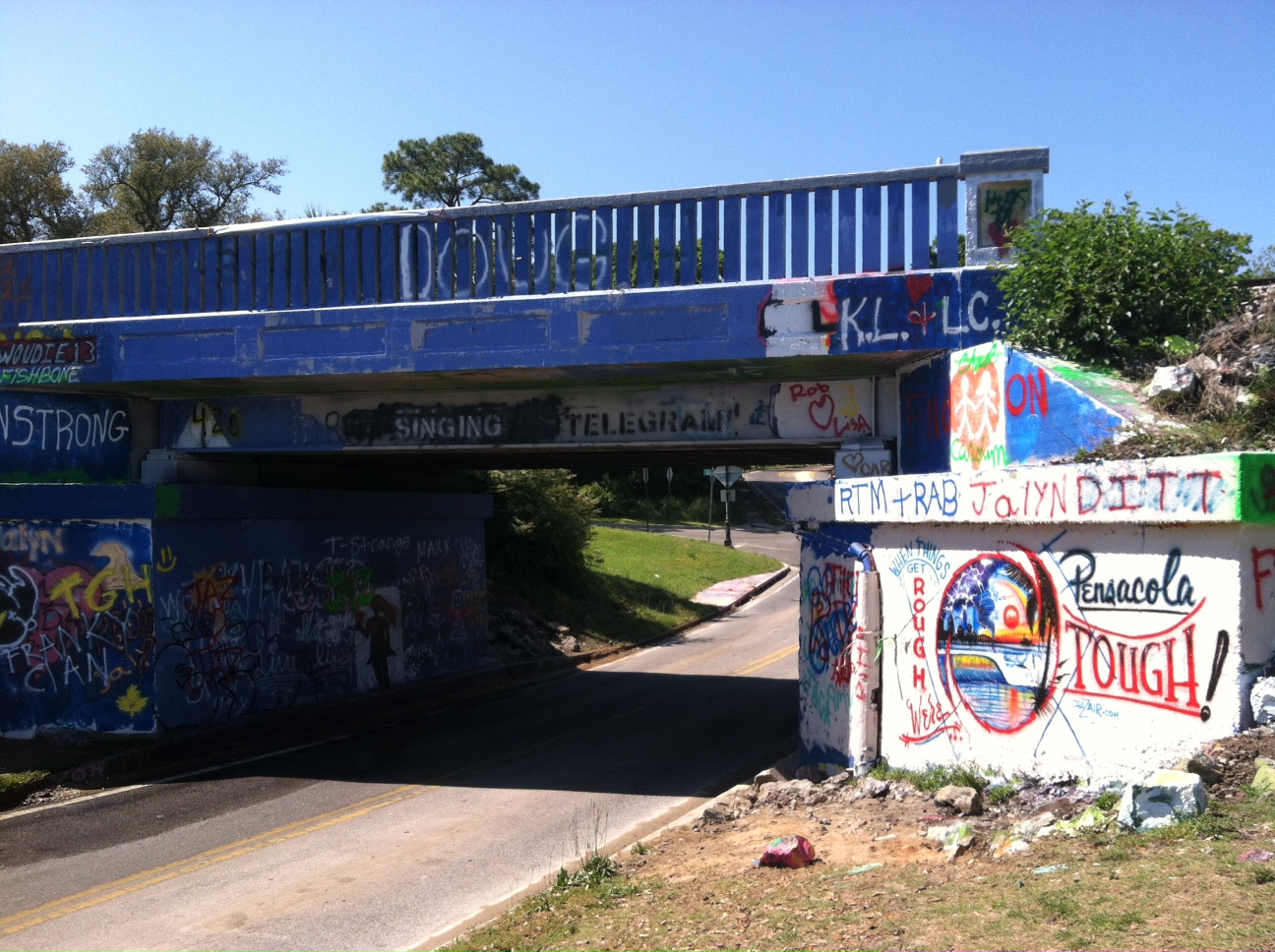
On my way home from a great Algerian pastry treat at SoGourmet, I passed Grafitti Bridge. Grafitti Bridge is one of Pensacola’s quirks. Every month – sometimes every week, even sometimes daily – the bridge is repainted. Sometimes it is that BubbleGum pink of Breast Cancer Awareness, with names of the fallen and names of survivors, sometimes it is Gay Pride, sometimes it is who loves who, or who is a first class jerk, sometimes it is Class of TwoThousandWhatever – it can be whatever someone feels passionate enough about to buy the paint and make it happen. No one gets too bent out of shape about it. Occasionally profanity will show up, but very shortly someone else will spray paint out the offensive word, or, which I love, alter it to have an entirely new meaning.
As I drove past today, I saw a lightning storm, well done, I couldn’t imagine how they had captured what it was like seeing so many strikes at once, and then I saw “Pensacola Tough.” By that time, I was through the bridge, so I had to circle and go back. I had to park, and take a closer look. And then I had to photograph it, and post it here.
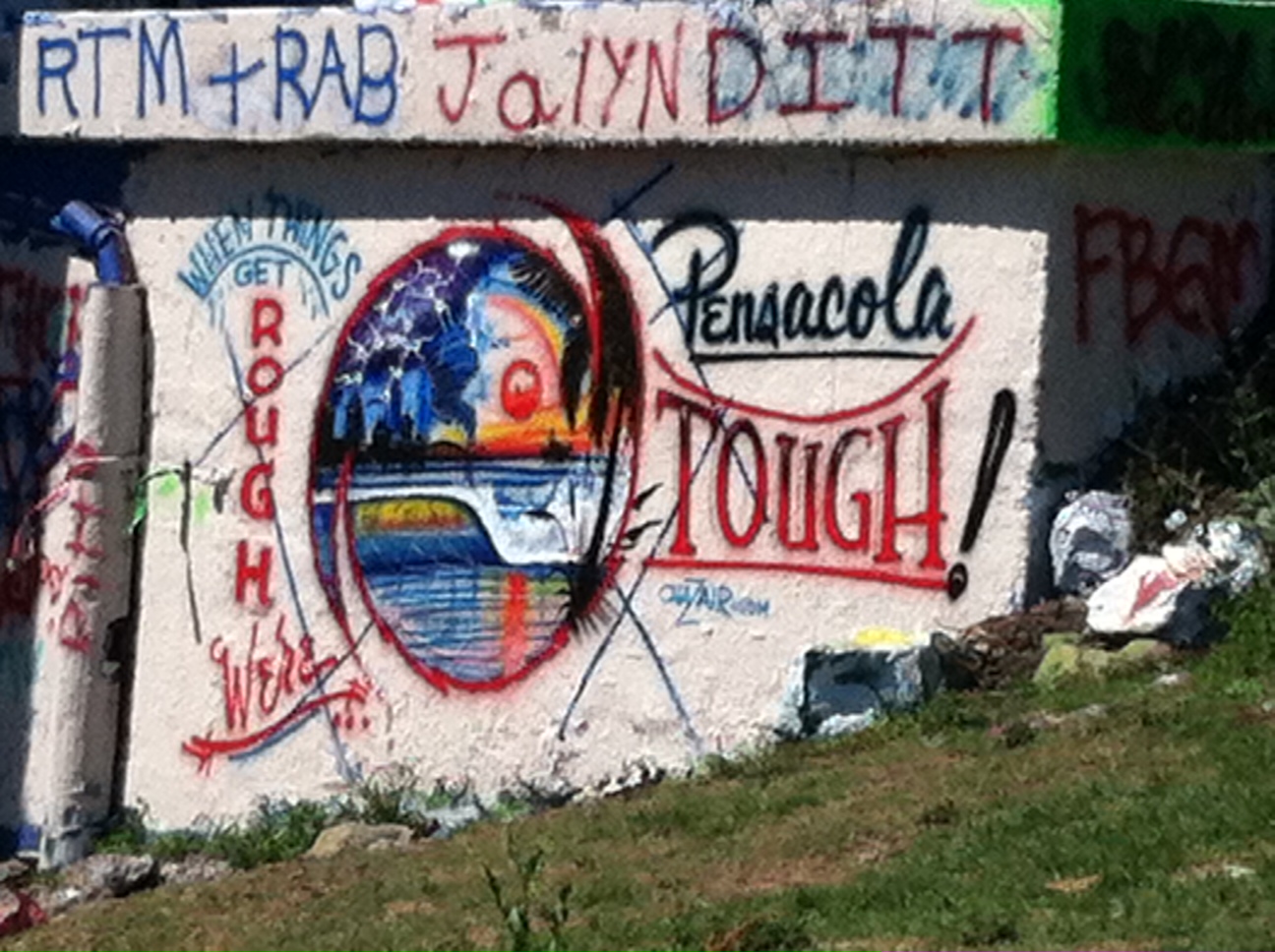
Pensacola Tough. Pensacola got an award as the Toughest City in the USA, based on a criteria that measured percentage of felons in the population (it’s OK, it keeps us humble), sports heros, the number of military personnel, violent crime statistics, etc. It isn’t an award cities run for.
And yet, as the raging water abates, tales of heroism and helpfulness abound. While there have been bands of looters at an apartment complex housing the low-income workers in Pensacola, there have also been bands of volunteers scouring the county, helping clean out houses, pull out sodden carpeting, moving soaked furniture to the curbs for pickup, pulling out drywall and ceilings to prevent black mold. In today’s Pensacola News Journal, there is a story of a man who worked just above where the Escambia County Jail exploded and fell through the floor, breaking legs, ribs and assorted bones. He was paralyzed. His co-worker, also hurt, saw him with his head under water and pulled his head out, and held his head out for over an hour while waiting for help to arrive. She got tired, but the alternative was letting him die. She didn’t let go.
Pensacola Tough.
“When Things Get Rough . . . We’re Pensacola Tough.
You gotta love this place
Kuwait: A Dream Suspended
Thank you, Desert Girl, for making known this wonderful video on earlier times in Kuwait. It brings back so many wonderful memories of our time as a young family in the Middle East and North Africa in the late 70’s and 80’s.
And thank you Ammar Alabbad for a wonderful production. I love this film.

Where is the Diocese of Cashel and Ossary, Ireland?
Today the church prays for the Diocese of Cashel and Ossory. Fascinating history these Irish people have, full of waves of immigrations and invaders and territorial squabbles. Here’s what Wikipedia had to say:
 When we visited Cashel, it was because of the legend of Saint Patrick, and it was one of the most beautiful and memorable places we have ever visited, lots of places to walk and see. Here’s more from Wikipedia:
According to local mythology, the Rock of Cashel originated in the Devil’s Bit, a mountain 20 miles (30 km) north of Cashel when St. Patrick banished Satan from a cave, resulting in the Rock’s landing in Cashel.[1] Cashel is reputed to be the site of the conversion of the King of Munster by St. Patrick in the 5th century.
The Rock of Cashel was the traditional seat of the kings of Munster for several hundred years prior to theNorman invasion. In 1101, the King of Munster,Muirchertach Ua Briain, donated his fortress on the Rock to the Church. The picturesque complex has a character of its own and is one of the most remarkable collections of Celtic art and medieval architectureto be found anywhere in Europe.[2] Few remnants of the early structures survive; the majority of buildings on the current site date from the 12th and 13th centuries

Chimamanda Ngozi Adichie: Americanah
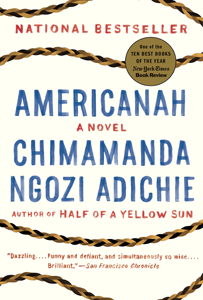
“Ouch! Ouch, Chimanda! Stop!”
(Oh wait.)
Don’t stop.
It’s me who can’t stop. I read everything Chimamanda Ngozi Adichie writes. I only started reading her by accident, when I was facilitating the Kuwait Book Club I never intended to belong to, and found myself reading so many books by authors I had never heard of. We were reading Half Of a Yellow Sun and all of a sudden, I WAS Nigerian. She can do that. She uses the senses, she uses the thoughts in our head. We are really not so alien, us and the Nigerians I start to think. I have Nigerian friends, from the church. We all get along. We have a good time together.
“Not so fast!” Chimamanda tells me in Americanah, her newest book, which I put off buying until I could find it in paperback. “You are very different! You think differently! And growing up in a country where there are black and white, race becomes an issue that it is not when you are black, and everyone is black, and you are growing up in Nigeria.”
Hmmm. OK. That makes sense. I mean, I thought I was Nigerian because in Half of a Yellow Sun, I was Igbo, living in an academic community in Nigeria, and hmmmm. You’re right, Chimamanda, there were no white people around. Just us Nigerians.
Chimamanda, with her sharp, all-seeing eyes, her sharp ears and her sharp tongue make me cringe as she comes to the USA and comes up against assumptions many have about Africa. Do you even know where, exactly, Nigeria is? Do you know where Ghana is? Most Americans can find Egypt on a map of Africa, and MAYBE South Africa, but the rest is . . . mostly guesswork. Because we send clothing and food aid to African countries, we have the idea that all Africans are poor, but that is not so, and is insulting to the middle-class and upper class Africans who travel elsewhere for leisure – and education.
I don’t know how much of Chimamanda Ngozi Adichie’s book is autobiographical and how much is fiction. I know that her observations are acute, she nails expat friendships, she spotlights our blind spots and hypocricies, and she holds you in her grip because she is no less harsh with herself – if, indeed, her Ifemelu, the main character in Americanah, is reflecting Chimamanda’s own experience. The experiences, coming here, the overwhelming differences in manners and customs, even volume of voice and width of hand expression, are so immediate, so compelling, so well described that they have to have been experiences she herself had, and had the eyes to see. She must have taken notes, because she totally nails the expat experience.
Book ads and book reviews focus on Americanah as a book about being black in America, and it truly is that – as seen from the eyes of a non-American black, as she often reminds us.
She is hard on herself, returning to Nigeria, and quick to note that much of the change is in herself and her changed perspective. While I love the romantic storyline, I was disappointed by the fantasy ending, given how self-disciplined Adichie is at keeping it real in every other facet of the novel. On the other hand, I am still trying to think of an ending that would work for me, and I can’t. While her ending wraps it all up neatly, it’s the one part of the book where her sharpness dulls.
One of the things I liked best about the book was going behind the scenes, being Nigerian, going to school, having coffee, working, going to parties with other Nigerians, chatting with my girlfriends. We’ve done things with nationals of different countries before, but you know as soon as you walk in that your presence changes things. Chimamanda Ngozi Adichie takes me with her and no one knows I am there, observing, learning, figuring out how things are done when it’s “just us” Nigerians.
Here’s why I am a Chimamanda Ngozi Adichie addict. She keeps it real. She has eyes that see, and ears that hear, and a gift for capturing what she sees and hears and a gift for writing it down. She has insight, into herself, into others, into character and motivations. She is sophisticated and unpretentious, she admires and she mocks, but when she mocks, it is as likely to be self-mockery as mockery of another person, class, ethnicity or nation. Reading Adichie, I understand our similarities – and our differences. I believe she would be a prickly friend to have, but I would chose her as a friend.
Awards
● Winner of the 2013 National Book Critics Circle Award for Fiction
● One of The New York Times’s Ten Best Books of the Year
● Winner of the The Chicago Tribune 2013 Heartland Prize for Fiction
● An NPR “Great Reads” Book, a Washington Post Notable Book, a Seattle
Times Best Book, an Entertainment Weekly Top Fiction Book, a Newsday Top 10 Book, and a Goodreads Best of the Year pick.
Spring: Hope Eternal
Yesterday we had a crew at our house helping us get the gardens cleared out and some replacements put in. Most of our plants had survived the first great freeze, but the second freeze did them in – or so we thought.
Even the bougainvillea, which people assured me would not thrive in Pensacola, shows signs of coming back. The Plumbago, originally a native of South Africa, is showing some tiny signs of resilience. The grasses survived; we even took part of the Pampas grass and started a new area elsewhere. The mints, the lavender, the thyme, oregano, cilantro, the parsleys, the rosemarys – they thrived. The sages are coming back with a vengence. The drift roses are blooming early. It is truly a fabulous Spring, full of hope and a little replanting.
One of our very favorites, the Mona Lavender (which is not a lavender at all, but a gorgeous shrubby plant) totally bit the dust. My cherished begonia looks melted. I have accepted that it’s not coming back.


Pensacola this week is a sea of azaleas. Who knew azaleas came in so many vibrant colors? While many yards are that intense fuchsia, there are also yards full of white, pink, deep coral, light coral, deep burgundy azaleas. I smile every time I see them and think of our Saudi friend living here, who called them Ah-za-LEE-as. We call them that now, too, just between AdventureMan and me. 🙂
I can only guess that something in the great Pensacola freeze ignited in the azaleas an urge toward survival that resulted in the most amazing display of luxurious, abundant blossoms I have ever seen.


Blinded by the Light . . .
Yesterday I had my annual eye exam. This is the South. I could hear them all talking in the back, talking about personal things, and OTHER PEOPLE! I used to run a library, and one of the very very first things I would tell my library workers was NO PERSONAL CONVERSATIONS when we had the library open. Keep your private life private! I’m not all about the library being quiet, but I am about it being not-annoying. Hearing gossip, hearing details of your last medical procedure, hearing about Maizie, bless her heart, who just lost another husband – these things are not my business, nor the library customer and are not appropriate for a discussion where the public may be listening in, even when they don’t want to be.
OK, OK, I know these are dated professional standards, but I can’t help it. Please. Do not burden me with overhearing your latest disaster unless we are friends and sitting down together over a cup of coffee.
At 30 minutes past my appointment time, I went back to see if my paperwork had been misplaced only to be told they were just a little behind and I would be taken soon. Fifteen minutes later I was in the office.
Now, when they dilate your eyes, you can still drive yourself home. It was a little bright, but I managed. Things are a little blurry.
Fast forward to last night, driving home, WOW. Every streetlight, every headlight, even the beautiful thin crescent moon had a spiky halo. It was like I had that sparkle lens you can put on your camera, only this was on my eyes.

This morning when I got up, I thought it would be all over, but my eyes are still dilated, and still sensitive. They must have given me a wallop of a dose.
But for the drive home, it was all Lucy in the Sky with Diamonds . . . it was so incredibly beautiful, it felt sort of surreal.

The Creole Nature Trail

In the next to the last episode of True Detective, at the very beginning of the episode, you see this sign, old and beaten, alongside a narrow country road.
And here is one reason AdventureMan and I have been married over 40 years. He looked at me, and I looked at him, and we knew where our next mini-adventure would take us. The Creole Nature Trail is mere hours away, in a part of Louisiana we love.
Even better, this is so cool, you can download an app for The Creole Nature Trail, free, and using your geo-tracking capabilities in your smart phone, it can tell you about each stop along the 180+ miles of natural wilderness along the trail. I love technology.
True Detectives was atmospheric; the atmosphere was so thick it was like it was a character in the series. The cameras loved the bayous, and the shacks, and the run-down bars; the cameras loved the trees and the semi-swampy lowlands – and they made Woody and Matthew run through them often, LOL. The end comes in a fortification that looks a whole lot like our own Fort Pickens, but is one of what must be several colonial forts, some abandoned, some maintained, along the Gulf coastline.
The Creole Nature Trail is just past the area we know from our visit to the James Lee Burke sites around New Iberia, one of our favorite trips. We know it will be wild, and beautiful, and in some places, a little bit bleak. We know to take insect repellant, as they have world famous mosquitoes in Louisiana. This photo is from our trip to Avery Island, where they make the world’s most famous Tabasco Sauce.

I’m just thankful to be married to a man who is up for the same adventures I’m up for 🙂
Ladysmith Black Mombazo Live in Niceville
My co-Mother-in-Law leaned over and said “I don’t think they could have done this twenty-five years ago.”
I think she’s right. Northwest Florida is still one of the most conservative societies in America, and yet, in spite of all probabilities, we are in the Mattie Kelly Cultural Center, in Niceville, Florida, surrounded by a HUGE and enthusiastic audience, all of whom have shelled out big bucks to hear this talented group out of South Africa.

As soon as we saw the initial ads, AdventureMan marked his calendar, so we could call the very first day tickets were available. I don’t really believe in bucket lists, but I do believe in grabbing an opportunity when it presents itself; we have loved the sounds of Ladysmith Black Mombazo forever.
Last night was a thrill. I was astonished at how wildly enthusiastic the audience was; it was a mix of all walks of the population, academics, retired folk, groups of school children, and . . . fans. Wildly enthusiastic fans. A group knows when it is treasured, and it feeds on the positive response. Ladysmith Black Mombazo thrilled our hearts.
Here is one of my favorites, expecially the introduction:
Recent Comments
ExpatAlien on What Country am I Living … intlxpatr on Yellowstone: Old Faithful to C… Michelle on Yellowstone: Old Faithful to C… Cathy on No Grown-Ups in Charge intlxpatr on Waiting for Snow Wikipedia Donate Button

Amazina


Early Voting in Florida


 Here There and Everywhere