The “Righteous Gentiles”
Today in our church Lectionary, we celebrate those who stood up to the Nazi policies and shielded and rescued thousands of Jewish people who might otherwise not have survived the torture, imprisonment and extermination, solely for being “the other.”
PRAYER (contemporary language)
Lord of the Exodus, who delivers your people with a strong hand and a mighty arm: Strengthen your Church with the examples of the Righteous Gentiles of World War II to defy oppression for the rescue of the innocent; through Jesus Christ our Lord, who lives and reigns with you and the Holy Spirit, one God, now and for ever. Amen.
“THE RIGHTEOUS GENTILES”
Although the phrase “Righteous Gentiles” has become a general term for any non-Jew who risked their life to save Jews during the Holocaust, it here appears to apply specifically to: Raoul Wallenberg [Swedish, d. 1947] Hiram Bingham IV [d. 1988, American]; Karl Lutz [d. 1975, Swiss]; C. Sujihara [d. 1986, Japanese]; and Andre Trocme [d. 1971, French].

Raoul Wallenberg (August 4, 1912 – July 17, 1947?) was a Swedish humanitarian who worked in Budapest, Hungary, during World War II to rescue Jews from the Holocaust. Between July and December 1944, he issued protective passports and housed Jews, saving tens of thousands of Jewish lives.
On January 17, 1945, he was arrested in Budapest by the Soviets after they wrested control of the city from the Germans, and was reported to have been executed while a prisoner at Lubyanka Prison, although this is not entirely certain.
Wallenberg has been honored numerous times. He is an honorary citizen of the United States, Canada, Hungary and Israel. Israel has also designated Wallenberg one of the Righteous among the Nations. Monuments have been dedicated to him, and streets have been named after him throughout the world.
— more at Wikipedia

Hiram “Harry” Bingham IV (July 17, 1903 – January 12, 1988) was an American diplomat. He served as a Vice-Consul in Marseille, France, during World War II, and helped over 2,500 Jews to flee from France as Nazi forces advanced.
In 1939, Bingham was posted to the US Consulate in Marseille, where he, together with another vice-consul named Myles Standish, was in charge of issuing entry visas to the USA.
On June 10, 1940, Adolf Hitler’s forces invaded France and the French government fell. Several influential Europeans tried to lobby the American government to issue visas so that German and Jewish refugees could freely leave France and escape persecution.
Anxious to limit immigration to the United States and to maintain good relations with the Vichy government, the State Department actively discouraged diplomats from helping refugees. However, Bingham cooperated in issuing visas and helping refugees escape France. Hiram Bingham gave about 2,000 visas, most of them to well-known personalities, speaking English, including Max Ernst, André Breton, Hannah Arendt, Marc Chagall, Lion Feuchtwanger and Nobel prize winner Otto Meyerhof.
— more at Wikipedia
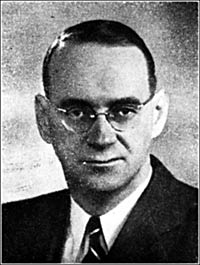
Carl Lutz (b. Walzenhausen, 30 March 1895; d. Berne, 12 February 1975) was the Swiss Vice-Consul in Budapest, Hungary from 1942 until the end of World War II. He helped save the lives of tens of thousands of Jews from deportation to Nazi Extermination camps during the Holocaust.
Lutz immigrated at the age of 18 to the United States, where he was to remain for more than 20 years. Lutz’s sojourn in the United States ended with his assignment as vice-consul to the Swiss Consulate General in Jaffa, in what was then Palestine.
Appointed in 1942 as Swiss vice-consul in Budapest, Hungary, Lutz soon began cooperating with the Jewish Agency for Palestine, issuing Swiss safe-conduct documents enabling Jewish children to emigrate.
Once the Nazis took over Budapest in 1944 and began deporting Jews to the death camps, Lutz negotiated a special deal with the Hungarian government and the Nazis: he had permission to issue protective letters to 8,000 Hungarian Jews for emigration to Palestine. Lutz then deliberately misinterpreted his permission for 8,000 as applying to families rather than individuals, and proceeded to issue tens of thousands of additional protective letters, all of them bearing a number between one and 8,000. He also set up some 76 safe houses around Budapest, declaring them annexes of the Swiss legation. Among the safe houses was the now well-known “Glass House” (Üvegház) at Vadász Street 29. About 3,000 Jews found refuge at the Glass House and in a neighboring building.
— more at Wikipedia
Chiune Sugihara (1 January 1900 – 31 July 1986) was a Japanese diplomat, serving as Vice Consul for the Japanese Empire in Lithuania. During World War II, he helped several thousand Jews leave the country by issuing transit visas to Jewish refugees so that they could travel to Japan. Most of the Jews who escaped were refugees from German-occupied Poland or residents of Lithuania. Sugihara wrote travel visas that facilitated the escape of more than 6,000 Jewish refugees to Japanese territory, risking his career and his family’s life.
When asked why he did it, he responded:
“You want to know about my motivation, don’t you? Well. It is the kind of sentiments anyone would have when he actually sees refugees face to face, begging with tears in their eyes. He just cannot help but sympathize with them. Among the refugees were the elderly and women. They were so desperate that they went so far as to kiss my shoes, Yes, I actually witnessed such scenes with my own eyes. Also, I felt at that time, that the Japanese government did not have any uniform opinion in Tokyo. Some Japanese military leaders were just scared because of the pressure from the Nazis; while other officials in the Home Ministry were simply ambivalent.
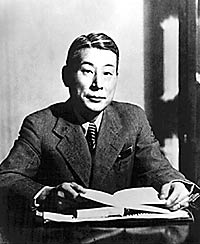
People in Tokyo were not united. I felt it silly to deal with them. So, I made up my mind not to wait for their reply. I knew that somebody would surely complain about me in the future. But, I myself thought this would be the right thing to do. There is nothing wrong in saving many people’s lives …. The spirit of humanity, philanthropy … neighborly friendship … with this spirit, I ventured to do what I did, confronting this most difficult situation —and because of this reason, I went ahead with redoubled courage. ”
When asked why he risked his career to save other people, he quoted an old samurai saying: “Even a hunter cannot kill a bird which flies to him for refuge.”
— more at Wikipedia
André Trocmé ( April 7, 1901 – June 5, 1971) and his wife Magda (née Grilli di Cortona, November 2, 1901, Florence, Italy – Oct. 10, 1996) are a couple of French Righteous Among the Nations. For 15 years, André served as a pastor in the town of Le Chambon-sur-Lignon on the Plateau Vivarais-Lignon in South-Central France. He had been sent to this rather remote parish because of his pacifist positions which were not well received by the French Protestant Church. In his preaching he spoke out against discrimination as the Nazis were gaining power in neighboring Germany and urged his Protestant Huguenot congregation to hide Jewish refugees from the Holocaust of the Second World War.

In 1938, André Trocmé and Reverend Edouard Theis founded the Collège Lycée International Cévenol in Le Chambon-sur-Lignon, France. Its initial purpose was to prepare local country youngsters to enter the university. When the refugees arrived, it also took in many Jewish young people wishing to continue their secondary education.
When France fell to Nazi Germany, the mission to resist the Nazis became increasingly important. Following the establishment of the Vichy France regime during the occupation, Trocmé and his church members helped their town develop ways of resisting the dominant evil they faced. Together they established first one, and then a number of “safe houses” where Jewish and other refugees seeking to escape the Nazis could hide. Many refugees were helped to escape to Switzerland following an underground railroad network. Between 1940 and 1944 when World War II ended in Europe, it is estimated that about 3500 Jewish refugees including many children were saved by the small village of Le Chambon and the communities on the surrounding plateau because the people refused to give in to what they considered to be the illegitimate legal, military, and police power of the Nazis.
— more at Wikipedia
I am thankful for Sawtucket, who has kept me up with my daily Lectionary readings for more than 22 years. I thank Sawtucket for today’s reading, reminding us that we are all of one blood, one humanity, no matter our skin color, our nationality, nor our religion. We are human beings, and our job is to watch over one another.
Barcelona to Abu Dhabi: Friday in Wadi Rum

It thrilled our hearts to see the Jordanian flag on the pilot boat leading us into Aqaba. We later learned that Abu Dhabi has plans to take over port management in Aqaba. We wonder how that works?


We lost an hour in transit, so when we docked in Aqaba at 7 a.m. our body time was 6 a.m. We ate a quick breakfast, grabbed our gear (headed for the desert) and met up the Nautica Lounge to get our assignment. We caught up with shipboard friends Ed and Alan, who were headed to Petra, and with Glennys and Blaise. We were on a larger bus, and 43 people, none of whom we knew well. We drove about an hour to the new visitor center.


Arriving at the visitor center, we were pointed to the restrooms and were told to form groups of five or six to ride in the back of the trucks. The trucks and drivers were waiting; we just headed for a truck with several others and it turned out to be a good choice, pure luck, as the guide, Majd, was riding in this truck with the son of the village chief. Majd also turned out to be the tour leader.

We were with a Czech couple now living in Toronto, and a guy from Buffalo, and it was a good group. We had to climb into the truck over the back gate. Actually, this cracked me up, bumping along in the back of the truck, wind in our faces. Once again, it is a relatively cool day, even chill in the shadows, so I am thankful for the bargain kufiyah I picked up in Luxor.


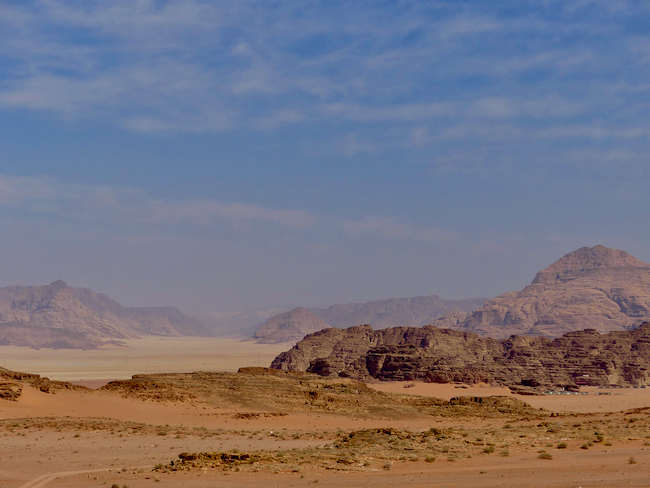
We bumped out through the mountains to a site where camels waited, and there were some petroglyphs on the wall.
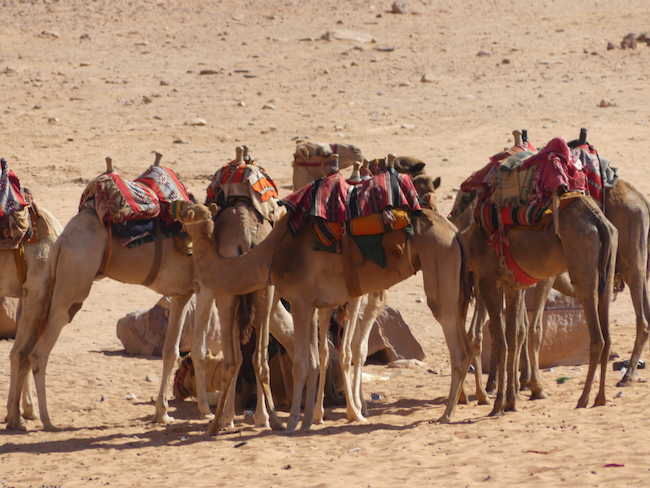
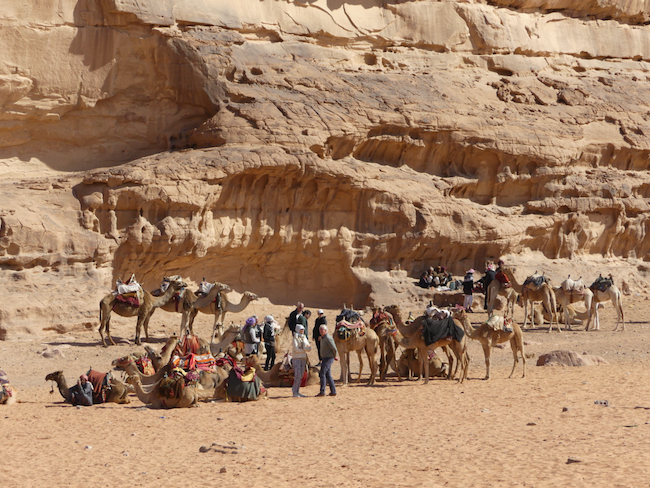

Majd said they used to be higher, but an earthquake changed the topography.



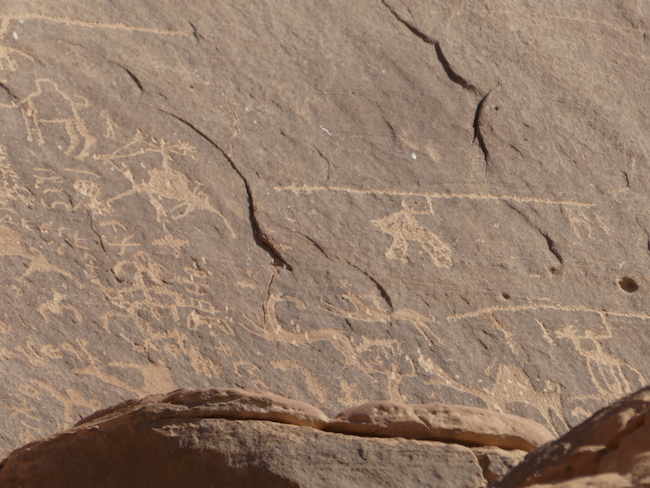
I am guessing some of these petroglyphs are more contemporary. Some may be older.

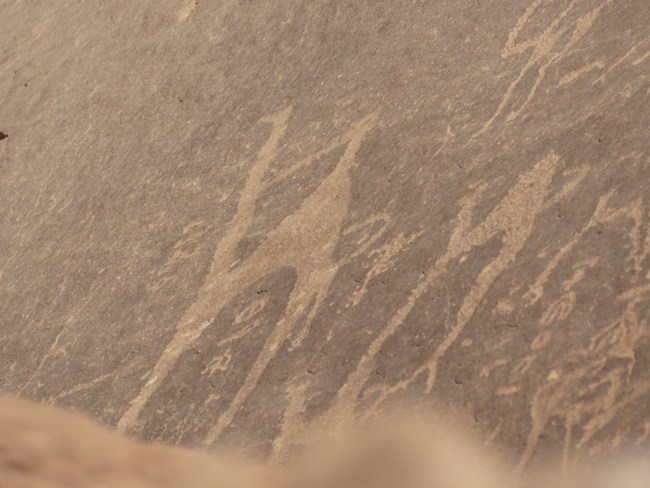


We loaded up and bumped along to another site for taking photos, a short distance away. It was amazing to me to see all the semi-permanent camping set-ups in the wadi. Hard to imagine Lawrence of Arabia and his group of marauders here among the campers.


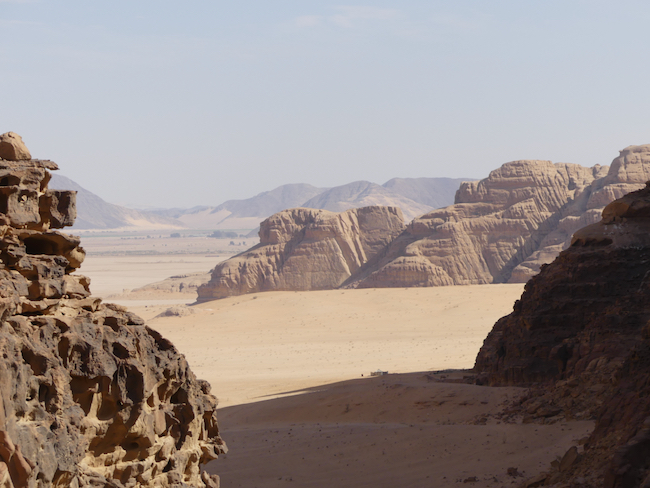
Then we drove to a majlis-style tent and drank coffee or tea with little cookies. It was a large air-conditioned in-the-style-of-a-Bedouin-tent, with tables and chairs, and there was an outdoor sitting area, where we could imagine at night they might hold campfires.
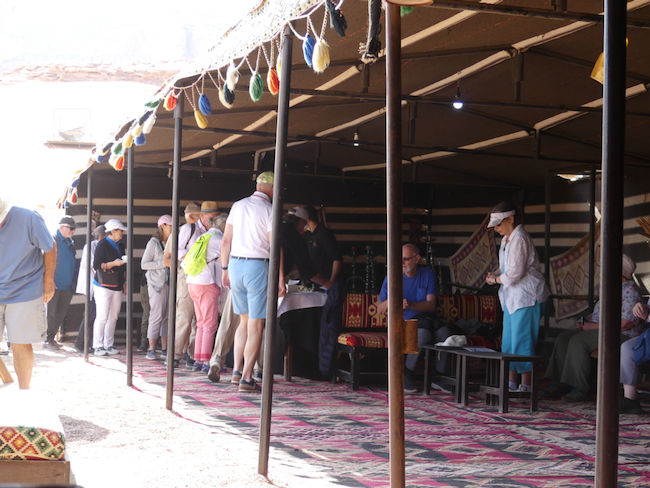
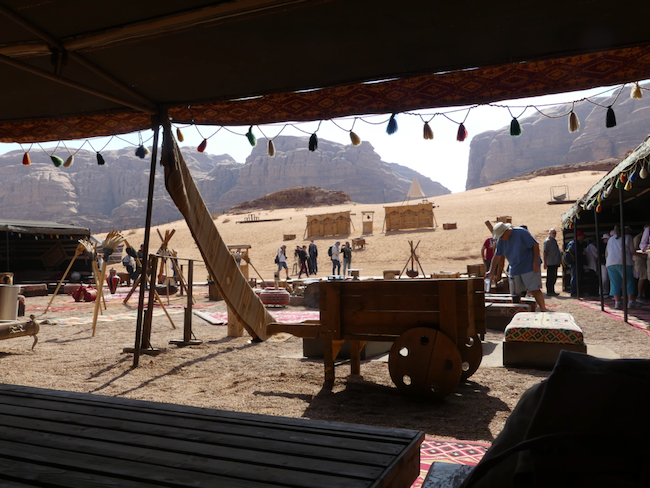
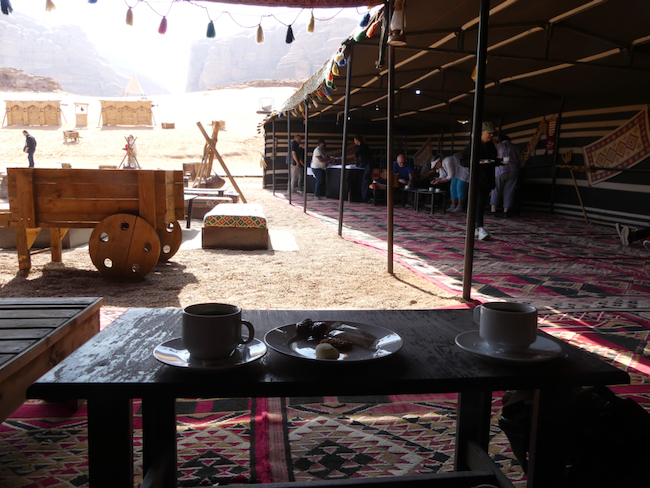


The bus was waiting to take us back to Aqaba. Alas, no more fresh air in the back of the truck, which I thought was really fun.

People wanted to stop for souvenirs, so Majd called a friend who opened his shop for those who wanted to shop. That reminded me of the old Jordan. It was Friday, the Muslim holy day when people normally have a large mid-day meal with family, but for his friend, he opened the shop. Next to the shop were some less modern structures, probably to contain domestic animals, or maybe camels 🙂

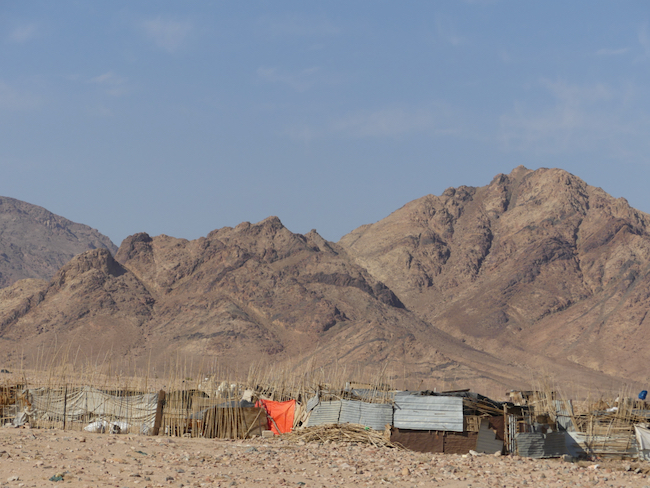


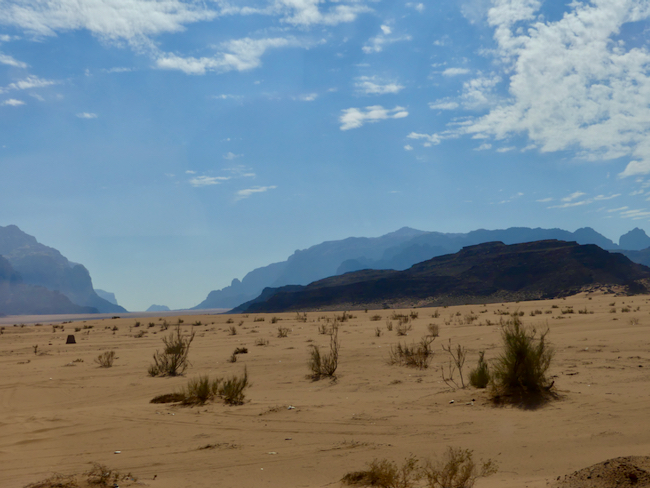

Jordan is a beautiful country, with amazing sights. It’s a pity to have only a short time here, but a short time is better than no time. On the whole, our time actually in Wadi Rum was about an hour, the rest at the tent.
For me, it was just sad. I have such wonderful, vivid memories of how wild and free and beautiful Wadi Rum can be. We used to be able to walk in the long slot canyons.
Now, there is trash all over the Wadi, plastic bags, plastic bottles, a pile of old broken toilets, old tires – detritus of civilization. I can understand why the Jordanians would limit access.
Here I am, a tourist. I remember the days when tourists were rare. We who lived there had to wait for the relatively cool weather in November, and for the full moon, to make the trip. We rode on camels into the Wadi, with a feast of kebabs and salads and bread, and young bedouin men jumping through the fire at night, just for fun. We slept on the sand, still warm from the day’s sunlight. I’m glad we have such a lovely memory; these things are just not possible now.
Forty years ago, November in Wadi Rum: AdventureMan of Arabia 🙂
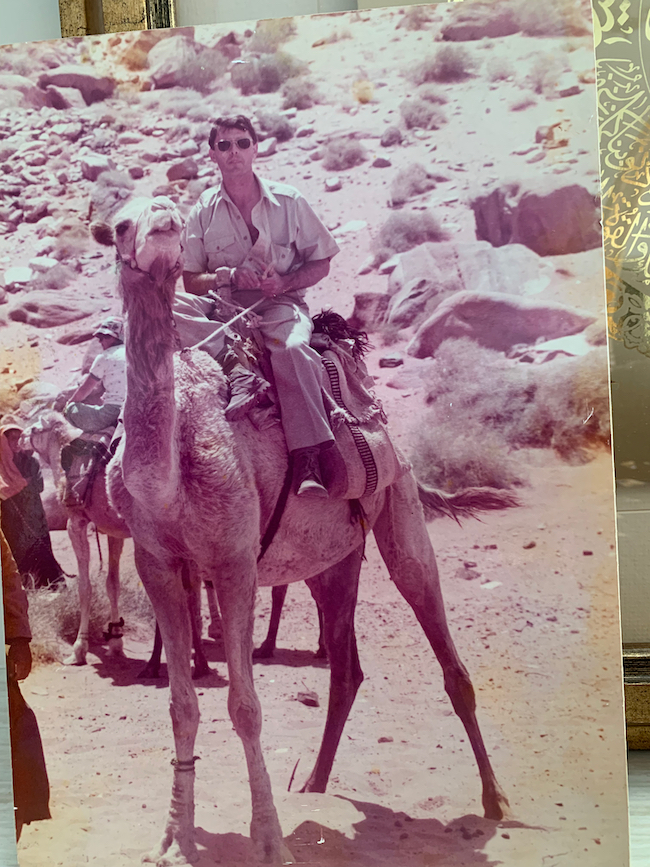

Heading out into the desert.

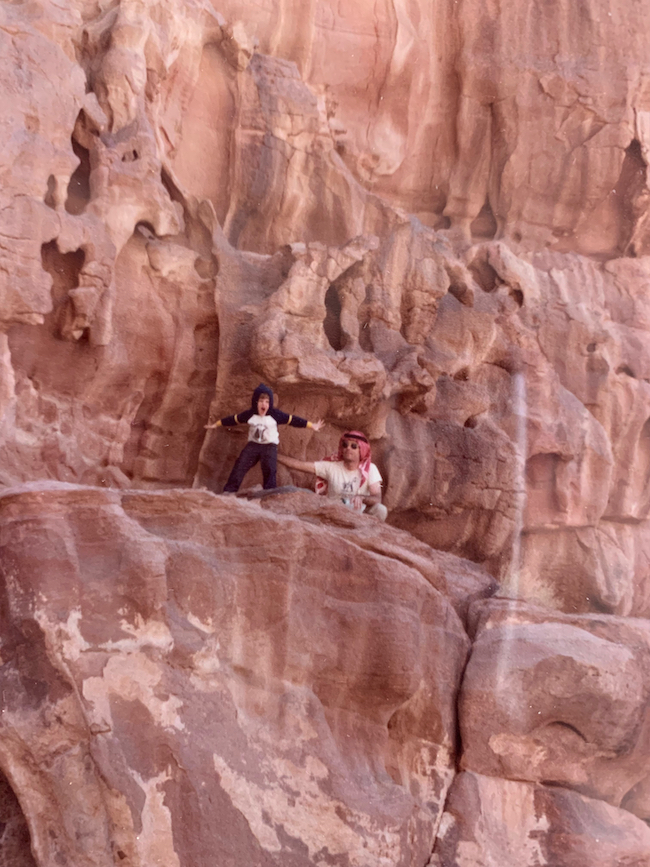
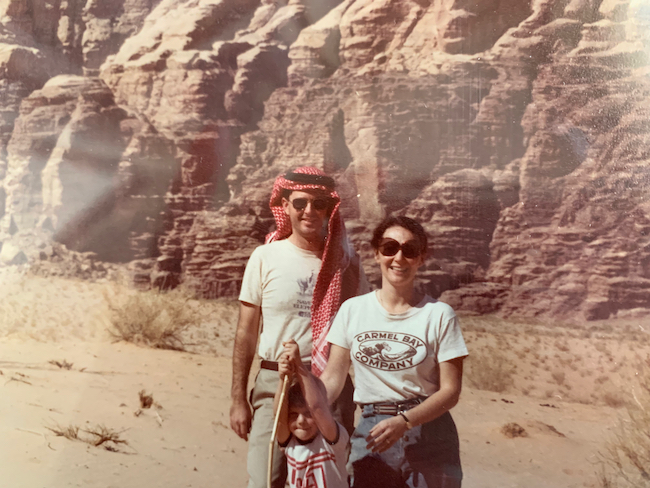
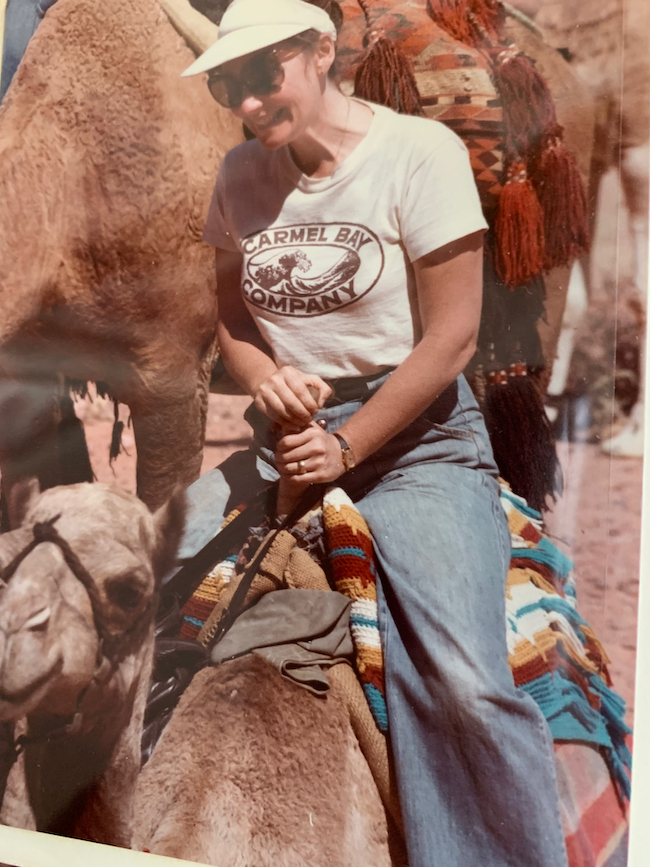


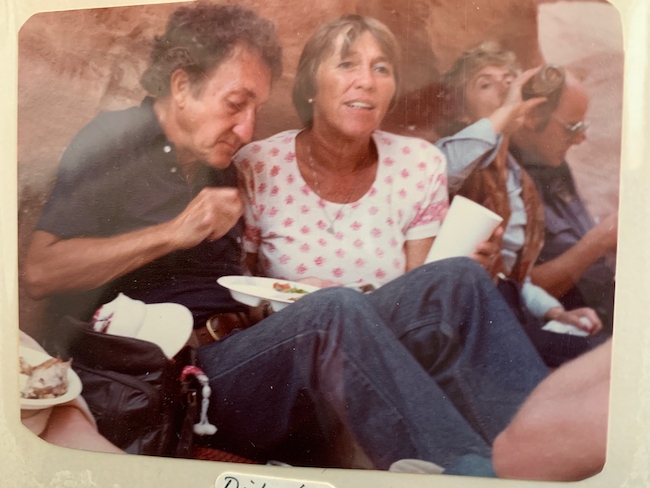
What fun, to revisit these wonderful adventures!

Enough nostalgia. We are back at the boat; Aqaba has little going on today, Friday, and most of the action seems to go right by our balcony – it’s a great day for boating.


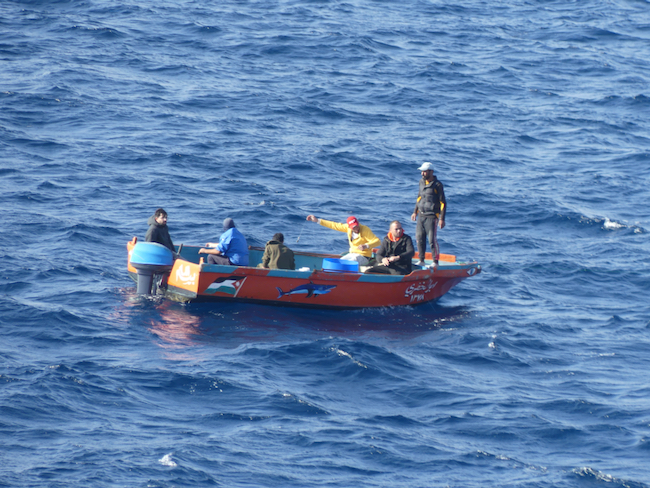

We unbundled ourselves, then went for lunch at Waves. We split a Surf and Turf (steak and lobster) sandwich, and I had some salad, And AdventureMan had a strawberry shake.
After lunch, while AdventureMan went to the steam room, (the spa is being cleaned out and maintained) I did a load of laundry to make sure I have enough clothes to get me through the rest of the trip. Actually, I kind of like doing laundry; it is not hard, and it is sort of meditative.

For dinner, Ashok brought us an appetizer, and then dinner – two onion soups, smoked salmon, a mezze plate and we split a creme brûlée. We eat in our nightclothes and sit on our balcony as we pull out of Aqaba and floated south past the border with Saudi Arabia. A lovely, quiet, private evening.
Once again, a day of surprises. The happy part was that it was cool, not hot, and I was happy to have my new kufiya with me. We were glad to be with another good group in the back of the truck; we had some good conversations. The downside for us was that Wadi Rum has become a place for tourists, and we, who once roamed Wadi Rum on camelback, are now tourists, not people who live there and absorb and learn from the culture. We are nostalgic for our old lives . . . and pragmatically, we are no longer the people who lived those lives.
But the surprises aren’t over! As we leave Aqaba, we are shortly off the coast of Saudi Arabia, where we also once lived, and Saudi Arabia has these huge electric signs to greet cruisers.
I believe the first one is the Muslim shahada, profession of faith that there is no God but God, and Mohammed is his prophet. It is HUGE:

I have no idea what this one says, but maybe it is a blessing for those on boats?

All in all, a great day.
Barcelona to Abu Dhabi: Safaga to Luxor

We docked in an industrial port in Sfaga, no getting off and wandering around. We have breakfast in our room, beautiful, quick and easy. We have to wait a while until the Egyptians have examined and stamped our passports.
All departing passengers gather in the Nautica Lounge – we are number 20, one of the last to go. We go through exit procedures (facial scan, Egyptian inspection) and discover we are on a small bus, a group of only eight people, for the next two days. We don’t know any of them, but we feel very fortunate to be with a very small group. We are happily surprised. We had thought we might be on a large bus with coughing and sneezing people and need to mask.
This is a very popular location. There are all kinds of trips going out, to various locations for various amounts of time. The buses are all lined up, and the immigration center we all have to go through is on the far left.


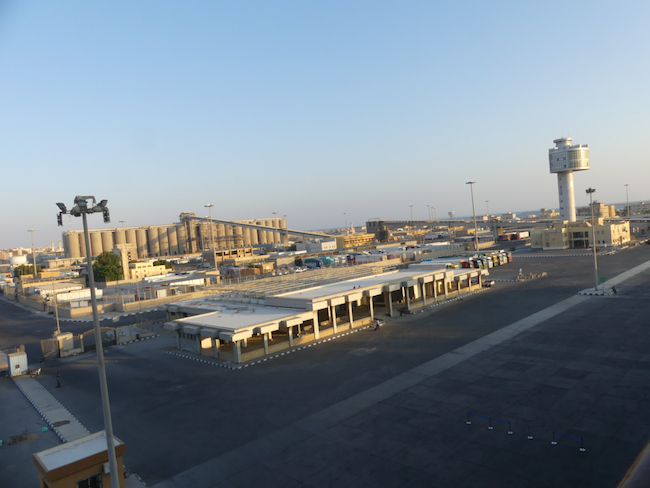


Another happy surprise is that the weather is cool on the ship, and cool in the morning, cool enough to need a scarf. (This night, for dinner, I will need a sweater over my dress.) This is a happy surprise. I really hate being too hot.


We are on a two day trip, today and tomorrow with an overnight in Luxor.
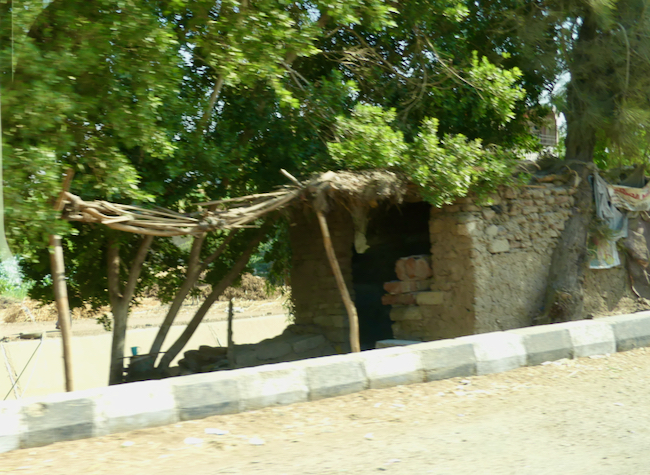
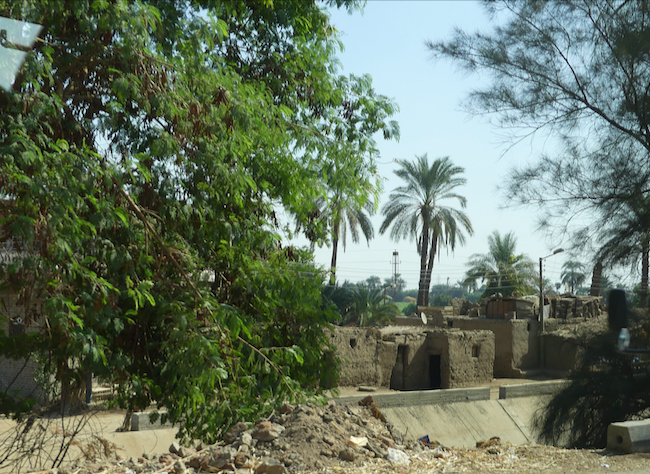
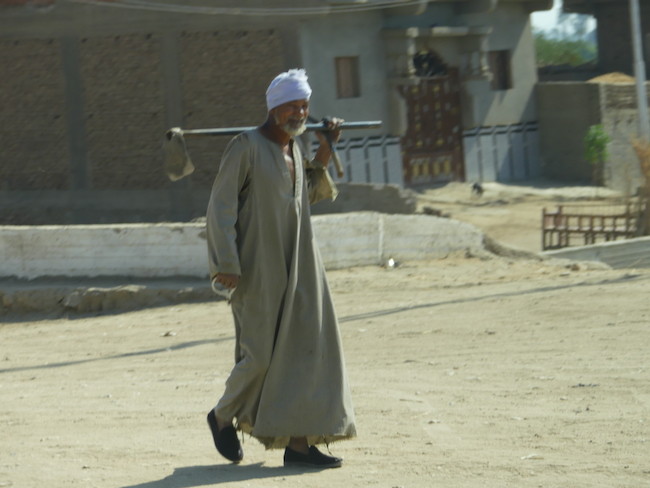
Almost immediately, Merv, our guide, has us introduce ourselves. We are traveling with Steve and Becky from Austin, Dave and Patricia, from Toronto, and Tom and Deb from Vancouver. We have a long drive, through the stark mountain area of Egypt (!) and then along the luscious, fertile valley of the Nile, where I take almost all my photos. Steve and AdventureMan discover they have lived just miles from one another. All our fellow passengers are well-traveled. Becky has some mobility issues, but does a great job and never complains.
When you think of Egypt, do you think of mountains? I never did. This first stretch we cover is full of desert and stark mountains, and I envision Moses, shepherding for his father-in-law and his encounter with the great I Am, in a bush that burned and was not consumed. I could imagine long treks with the sheep to find enough to eat, and long days to think about things.


My Arab friends always laughed when I would tell them their countries reminded me of growing up in Alaska, but there are wide open stretches that go on forever and harsh climates. In Alaska, you dress for the cold and stay inside through the worst of it; in the Middle East, you dress for the heat and stay inside for the worst of it, and you spend as much time as you can outdoors when temperatures are mild as you can. I am a big fan of dark skies and myriad stars, both Alaska and deserts provide food for my soul.


We make a stop at a rest stop along the way. We were supposed to travel in a caravan, with security, for our protection, but we were last to leave and our smaller bus did not have onboard facilities. It was really nice being able to get out and walk around, but it cost us in terms of convenience later on. Because we had lost our convoy, the police kept stopping us and questioning our credentials. They found us a curiosity. Finally, at one point, a police van led us several miles and vouched for our right of passage. It was an interesting experience. Our tour guide was relentlessly aggressive with the police, and rather than offending them, they were respectful to her.


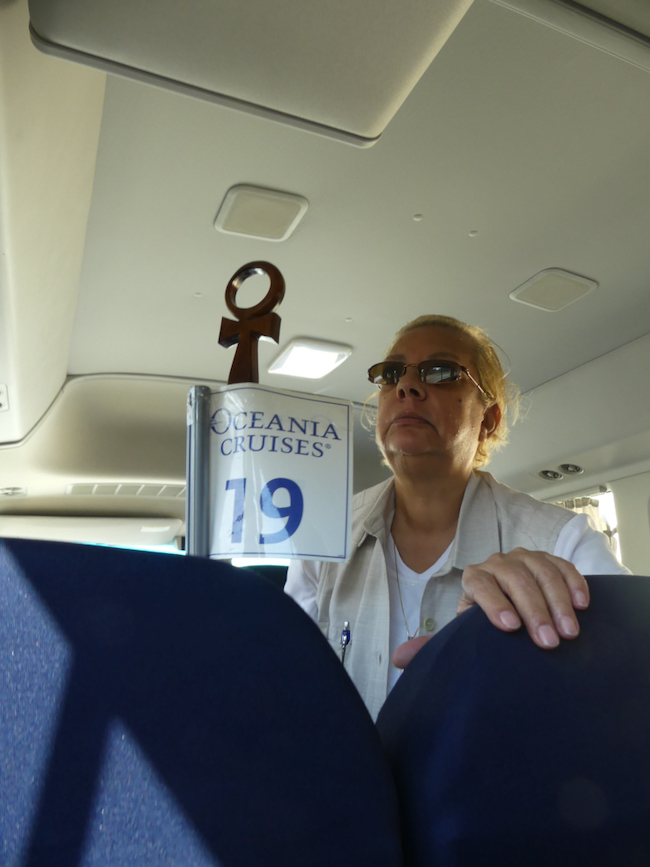
Our tour guide was a formidable woman, one of the senior tour guides in Egypt. Her assignment with us was her second to last career assignment; she is retiring. What I loved about having her as a guide was that she was so knowledgeable. She filled us in on politics, social issues, and current events, as we drove a couple hours through the rural areas en route to Luxor.
My geographical knowledge of Egypt was slight. Now I feel really stupid. I had kind of thought the Red Sea and the Nile were somehow related, but the Nile is inland from the Red Sea. The micro-climates inland are lush and fertile.


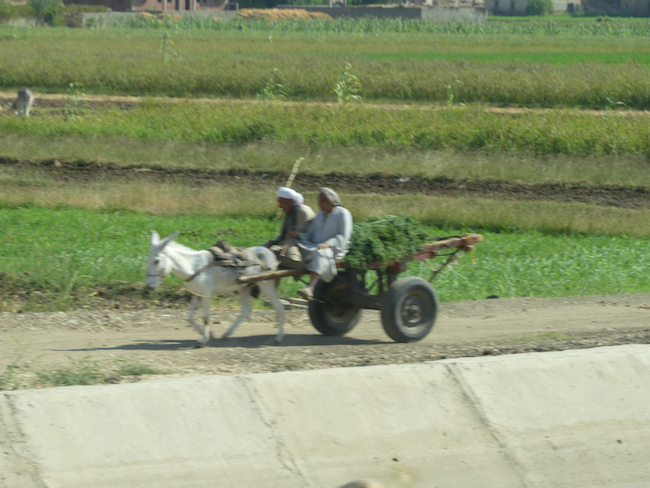
You might see the donkey, but the reason I took this photo is that in our times living in Middle Eastern countries, we often saw rugs drying at service stations, especially those with car washes. The car washes get them nice and clean and have room to hang them so that they can dry. This is a nice, non-humid day, perfect for having carpets cleaned.


One of the things we learned is that Egypt has become more conservative with so many Egyptian men working as guest laborers in Saudi Arabia and other Gulf countries. Egyptian women were at one time freer and better educated and had more civil rights than now. Husbands and fathers returning from stricter countries enforced stricter standards on their daughters, wives, and family members. Interesting, hmmm?
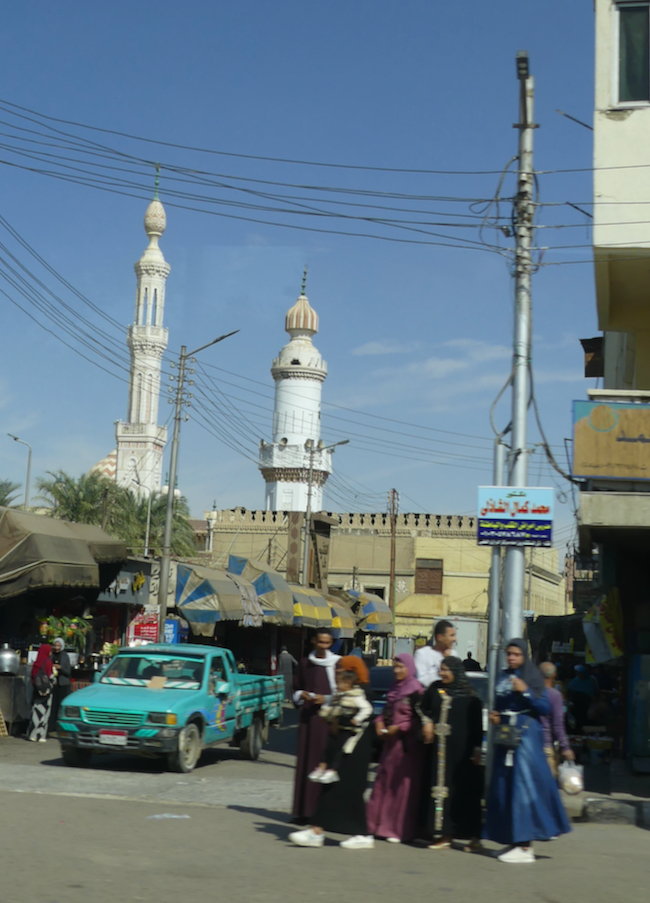





Here is our friendly police escort below:


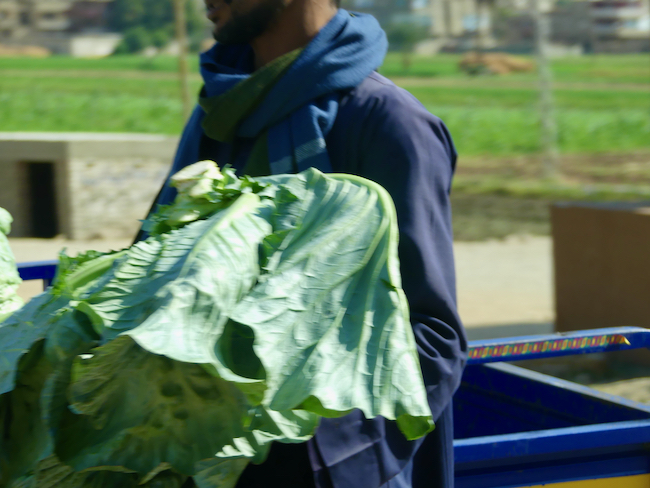
This is one of my favorite photos – these gourds, which are some kind of pumpkin or squash, are in season, and there are piles of them everywhere! I remember in Tunisia when pumpkins came into season, they were huge! In the market, you bought them by the slice, huge, thick, meaty pumpkins, one of the essential ingredients in couscous.
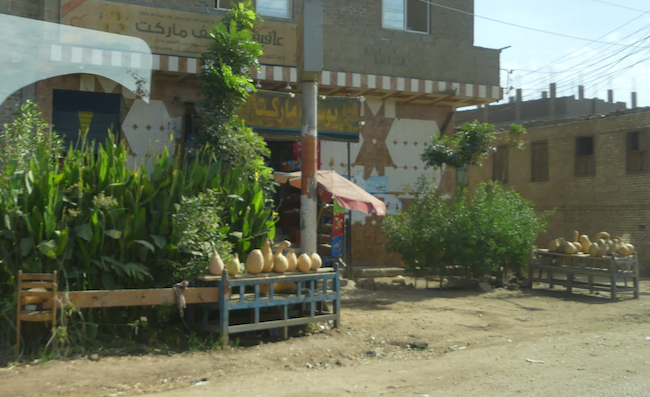
I remember in Qatar when the Queen found laundry hanging on balconies inelegant and banned it; had a law passed which forbid it. And yet – where were the apartment dwellers to dry their laundry? Laundry continued on the balconies, and I never heard of anyone arrested for it.

Look at this wall, made of recycled broken pots and clay.


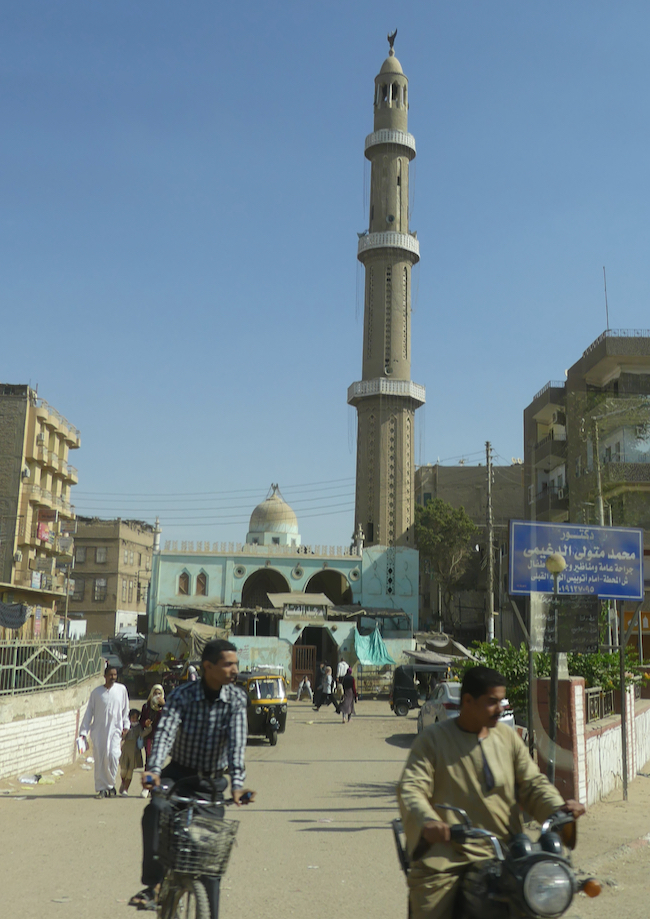
There is a line behind the waiting man of little tuk-tuk taxis, many with curtains, with one driver in front and passengers in the back.


We go directly to the hotel once we get to Luxor, check-in, go to our rooms and clean up, then have lunch, which is an international buffet. That means mostly western food. Eating western food in the heart of Egypt was a surprising disappointment to me. I totally get it. Luxor is a huge destination, and Egypt needs the tourist currency. Hotels have to please a large number of people. We were yearning for a good felafel.

The truth is, I did not have high hopes for this part of my cruise. The last time we were in Egypt, we were staying with friends, in Cairo, and we had great adventures. We have actually been to Luxor and Karnak before, and I discovered that I did not like going down into tombs; to me, they are very musty and give me a claustrophobic feeling. I stay above ground and take photos.
I had no idea we would have such a great tour guide; she is a blessing, so full of information and opinions. I don’t always have to agree with her to like her. I respect her! I also had no idea we would be spending so much time traveling through villages where people live their normal lives, and I love it. I’m finding in general the tourist experience is restrictive; we are at the mercy of other people’s schedules, other people’s timing, and where other people find it expedient to take us.
This group is different. The people with whom we are traveling in this small group are all very respectful of being on time and not going missing – in fact, if anyone is guilty of going missing, it is me. I tend to wander off. I make it a point to keep Merv informed about where I will be and to always be on time for departures. She gives me latitude. She allows me to wander – here there and everywhere. 🙂
And, as random as life is, I am so thankful not to be too hot. I am having a great time. I got to go through the Suez Canal! I am going back to Wadi Rum! I am going to sail past Saudi Arabia, and Sudan, and Eritrea, and Djibouti, and Yemen en route to Oman! I am a happy woman!

Living off My Fat: Adaptation
It probably all started growing up in Alaska, where my mother would measure us in July to order our snowsuits as soon as the new catalogs came out. We lived where ships didn’t come in the winter, so supplies for the winter needed to be ordered – and received – before the ships could no longer navigate the channel.

Then came our life in Germany, where we lived by what my sister called “Commissary rules.” Her one word of advice as a newlywed leaving Germany, while I was staying, was “When you see something in the Commissary or PX you think you MIGHT need, buy it.” Definitely a no-regrets philosophy.
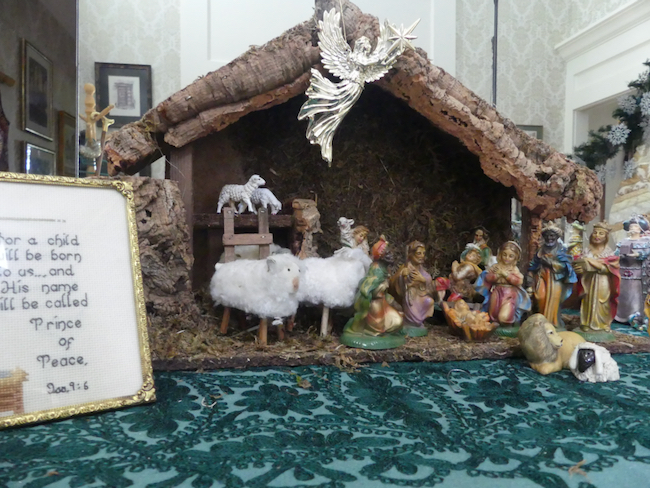
When we were sent to live in Tunisia, in the late 1970’s, we were instructed to take everything we might need for the next two years. Some things – chocolate chips – we learned to live without. We adapted to new foods, new ways of doing things. One of the great treats was the fresh, gorgeous, silky olive oil; I would take my jar to the little olive oil vendor at the nearby souk and he would weigh my jar, fill it, subtract the weight of the jar and charge me for the oil, which made everything taste French.

I did have a two-year supply of shoes for a growing toddler, also clothing for him in graduated sizes, and two years of age-appropriate books I could pull out of the closet. We were able to mail-order through the embassy pouch, and my mother was able to mail me little extras. One year, when I was running the Christmas bazaar, she was able to find red and green Christmas fabrics in July, at a discount, and mail them to us for our crafting. It was such a luxury!
In Qatar, I was always bringing back duffels with quilting rulers and rotary cutters for my quilting friends. In Kuwait, it was books for my book club and American sugar for a friend who liked to bake. Kuwait had sugar, but more coarse, and American sugar melts more quickly for a finer result. Who knew?
There are items from the past I still have in abundance – dental floss, women’s underwear, shoes – and staples I buy but no longer use in the quantities I once did because we no longer live a life where we entertain a lot nor prepare for unexpected people on temporary duty who need a meal and an exchange of currency. I am trying to bring down my supplies of artichoke hearts and pimentos, beans and rice, canned tomatoes, chutney, Tupperware and hand soap.

My Little Free Library, one of the best birthday gifts ever, helps me keep my books from overflowing.

We are happy, these days, to be living with less. We are still caught by surprise by rolls of baking parchment we are still using from Kuwait, dental floss leftover from our years in Tunis and an excess of Christmas decorations we still need to pare down. We try to go easy on ourselves. “Ah,” we sigh, “it’s a process.” God grant that we live long enough to use up all those supplies we bought “just in case.”
Back in Kuwait
No, No don’t get excited. It’s a metaphor.
When I lived in Kuwait, I would tell my friends it was a lot like living in Alaska, and I loved the look on their faces. Then I would explain – in Alaska, people wait eagerly for good weather, and when it comes, they can’t get enough of it. We are outdoor people.
For much of the year, Alaskans are trapped inside, and have to be good at finding things to do to keep themselves from going crazy.
In Pensacola, as it was in Kuwait, the temperatures are very hot. Kuwait was mostly very dry, and had sandstorms, unlike Pensacola, but shared having a long coastline, and heat with humidity in the summers.
So now, as in Kuwait, I am up early, to get to the pool and swim my laps, so lovely and cool. If I need to grocery shop, I try to shop on the way home, so as not to have to venture out again as the day heats up. I get home, and tend to the Little Free Library while it is still in the shade. Most of the rest of the day I spend inside, except for picking up grandchildren at their camps.
It is a great time to do some quilting. I am just about to start when Ragnar, my helper, comes in to join me. (Also, AdventureMan is outside weed-eating and edging, which is of endless amusement and torment to Ragnar, who forgets he was once a feral, outdoor cat, and was lucky to survive.)

I do a couple more things to set up, hoping Ragnar will take the hint and move off to find something more interesting. He doesn’t. In the end, I have to lift him (lovingly) and place him in another room on a blanket we call Blue Mama, because Ragnar particularly loves sleeping on this blanket.
He doesn’t come back, and I spend the morning “back in Kuwait,” enjoying my confinement by working with fabrics and colors I love, patterns I would never wear but enjoy the challenge of working them into quilts.

Insh’allah
One of today’s readings in the Lectionary always brings a smile to my face. I can hear my teacher at the Qatar Center for the Presentation of Islam (where I was studying Arabic in Doha, Qatar) saying to me “don’t you know your own book? It tells you never to say you are going to do something without adding Insh’allah (God willing) because we never know even what the next minute will bring.”
James 4: 13-17
Boasting About Tomorrow
13 Now listen, you who say, “Today or tomorrow we will go to this or that city, spend a year there, carry on business and make money.” 14 Why, you do not even know what will happen tomorrow. What is your life? You are a mist that appears for a little while and then vanishes. 15 Instead, you ought to say, “If it is the Lord’s will, we will live and do this or that.” 16 As it is, you boast in your arrogant schemes. All such boasting is evil. 17 If anyone, then, knows the good they ought to do and doesn’t do it, it is sin for them.
It’s a perfect reading for the last day of a troubled year, preparing for a year in which we have no idea what joys or troubles are in store for us.
Today, I look back with gratitude to that whole period in my life where I lived in the Middle East and was forced to confront my own ignorance. I was not only ignorant about my Muslim neighbors, I was equally ignorant about my own religion. My years among the Muslims motivated me to learn more about what I believed, and why.
This month, my religious mentor died. She had an enormous influence on my life, on bringing me to where I am today. When I returned to the United States, understanding how little I knew about my own religion, I enrolled in a four-year seminar in theology through an Episcopal Church program called Education for Ministry. It was life-changing. The first-year students read Old Testament, the second-year students read New Testament, the third-year students read Diarmaid MacCulloch’s book Christianity: The First Three Thousand Years, and the fourth-year students read a variety of theological perspectives.

(MacCulloch’s book is thick and intimidating – and surprised us all with how much fun it was to read.)
My mentor was a skilled counselor and guide; she led us through all-year discussions of our weekly readings, so in the four-year program, we not only were reading our own year but giving input on the other’s readings. The discussions were lively and provocative. Slowly, even without realizing it, the students bonded closely with one another. We learned a very important lesson – how to disagree with people, especially when you felt strongly about an issue, and remain respectful.
It has served me well, living as I do in another alien culture. Although I was raised in a hunting culture (Alaska), when I lived there people kept their weapons locked away when not in use. There was no open-carry. As kids, we were lined up at school and given vaccinations, which we accepted as being necessary for our own well-being and the well-being of the community. I don’t believe we had a single black person in town, but we had the original inhabitants, Inuit, Haida, Tlingket and we all went to school together peaceably. My father worked for the government, he served. Service to country is a tradition in my family. I am aghast at elected officials who mistake staging political drama for good governance. I struggle to achieve civil discourse about issues about which I feel strongly.
And so I am thankful for all the years living among others; among the vanquished in Germany, among the desert people of Tunisia, and among the people of Abraham’s other son, Ishmael. Their patience with me taught me so much about myself, and that even my strongly-held convictions may not be nuanced enough to capture what passes for truth. It serves me well to this day, and, I hope, will continue to humble me as we enter this coming new year, Insh’allah.
Florence Nightengale Made a Difference
Today, in addition to the readings from the Old Testament, New Testament and Gospels, the Lectionary celebrates Florence Nightingale. I had no idea how influential this woman-ahead-of-her-times was in making hospitals safer places in which to treat our wounded and sick. She observed, studied and documented sanitary practices and how changing small things – like changing the linens on beds between patients, clean latrines – could make a big difference. She brought order out of chaos, truly a Godly woman.
FLORENCE NIGHTINGALE
NURSE, RENEWER OF SOCIETY (12 AUGUST 1910)
 The commemoration of Florence Nightingale is controversial. On the one hand, she doubted or denied many of the central articles of the Creed. On the other hand, she believed in God and devoted her life to His service as she understood it.
She was born in Florence on 12 May 1820 of upper-class English parents travelling through Italy, and named for her native city. (“Florence” was not an accepted first name at the time. Her sister was born in Naples and named “Parthenope,” the Greek name for that city.) Florence was reared in the Unitarian Church, but later joined the Church of England.
In her diary, an entry shortly before her seventeenth birthday reads: “On February 7th, 1837, God spoke to me and called me to his service.” She did not know what the service would be, and therefore decided that she must remain single, so as to have no encumbrances and be ready for anything. With this in mind, she rejected a proposal of marriage from a young man whom she dearly loved. She suffered from “trances” or “dreaming” spells, in which she would lose consciousness for several minutes or longer, and be unaware when she recovered that time had passed. (Could this be a form of petit mal epilepsy? No biographer of hers that I have read uses the word.) She found the knowledge that she was subject to such spells terrifying, and feared that they meant that she was unworthy of her calling, particularly since she did not hear the voice of God again for many years. In the spring of 1844 she came to believe that her calling was to nurse the sick. In 1850 her family sent her on a tour of Egypt for her health. Some extracts from her diary follow:
March 7. God called me in the morning and asked me would I do good for Him, for Him alone without the reputation.
March 9. During half an hour I had by myself in my cabin, settled the question with God.
April 1. Not able to go out but wished God to have it all His own way. I like Him to do exactly as He likes without even telling me the reason.
May 12. Today I am thirty–the age Christ began his mission.
Now no more childish things. No more love. No more marriage. Now Lord let me think only of Thy Will, what Thou willest me to do. Oh Lord Thy Will, Thy Will.
June 10. The Lord spoke to me; he said, Give five minutes every hour to the thought of Me. Coudst thou but love Me as Lizzie loves her husband, how happy wouldst thou be.” But Lizzie does not give five minutes every hour to the thought of her husband, she thinks of him every minute, spontaneously.
Florence decided that she must train to be a nurse. Her family was horrified. In her day, nursing was done mostly by disabled army veterans or by women with no other means of support. It was common for nurses of either sex to be drunk on the job most of the time, and they had no training at all. It was common practice never to wash or change the sheets on a bed, not even when a patient died and his bed was given to a new patient. Florence was told to go to Kaiserswerth, Germany, to learn and train with the Lutheran order of Deaconesses who were running a hospital there. Back in England again, she used the influence of Sidney Herbert, a family friend and Member of Parliament, to be appointed supervisor of a sanatorium in London. Under her able guidance, it turned from a chamber of horrors into a model hospital. The innovations introduced by Miss Nightingale were, for their day, little short of revolutionary. She demanded, and got, a system of dumb-waiters that enabled food to be sent directly to every floor, so that nurses did not exhaust themselves carrying trays up numerous flights of stairs. She also invented and had installed a system of call bells by which a patient could ring from his bed and the bell would sound in the corridor, with a valve attached to the bell which opened when the bell rang, and remained open so that the nurse could see who had rung. “Without a system of this kind,” she wrote, “a nurse is converted to a pair of legs.”
While working in the poorer districts of London, Miss Nightingale encountered a Roman Catholic priest, Henry Edward Manning (later Cardinal Manning), who was working among the poor of London. She was impressed by the assistance he gave to many who had nowhere else to turn, and they became friends for life. She was greatly attracted by Roman Catholicism, but rejected much of its theology, and so reluctantly decided against joining it.
 Then war broke out in the Crimea (in Russia, on the north edge of the Black Sea), and Sir Sidney Herbert, now Secretary of War, obtained permission for Florence to lead a group of 38 nurses there. Of these, 10 were Roman Catholic nuns, 14 were Anglican nuns, and the remaining 14 were “of no particular religion, unless one counts the worship of Bacchus.” They found conditions appalling. Blankets were rotting in warehouses while the men did without, because no one had issued the proper forms for their distribution. The lavatories in the hospitals had no running water, and the latrines were tubs to be emptied by hand. But no one emptied them, since official regulations did not specify which department was responsible for doing so. The result was that the hospital had a foul stench that could be smelled for some distance outside its walls. Far more men were dying in hospitals of infection than of wounds. The chief concern of many of the Army doctors was that the nurses might usurp some of their authority. Florence gradually managed to win the doctors and other authorities over, and to reform hospital procedures, with spectacular results. Once the medical situation had ceased to be an acute problem, she turned her attention to other aspects of the soldiers’ welfare. For example, most of them squandered all their pay on drink. She noted that there was no trustworthy way for them to send money home to their families, and she set up facilities for them to do so. First, she undertook to send money home herself for any soldier in the hospital that wanted it sent, and the soldiers brought in about 1000 pounds a month. She asked the authorities to set up an official service to do this, and they refused. By appealing to Queen Victoria herself, she overcame opposition to the idea, and the men sent home 71,000 pounds sterling in less than six months. She established with her own money a reading-room with tables for writing letters, and the men used it enthusiastically. She imported four schoolmasters to give lectures, and the halls were filled to overflowing. All this was done despite opposition from officers who said, “The men are hopeless brutes. You cannot expect anything from them.”
At night, she would often patrol the wards, carrying a dim lamp, to make sure that all was well and no one was in need of help. She became famous as “the Lady with the Lamp.”
 In April 1856 the war was over, and by mid-July the hospital was emptied and her work in Crimea over. She returned to England a national hero, with a great welcome prepared for her; but she slipped into the country unnoticed and went to a convent that had supplied some of her nurses. There, she spent the day in prayer before coming out to face the public and beginning to lobby Parliament for suitable legislation. She wrote pamphlet after pamphlet, pointing out by pie charts, for example, that the major cause of deaths in the Army was not wounds caused by enemy action but disease caused by lack of proper sanitation. She is perhaps the first person to use pie charts and similar graphic devices to convey statistical information. She obtained the formation of an Army Medical Staff Corps and a Sanitary Commission to oversee military health conditions.
Throughout these efforts, she relied on the help of Sidney Herbert, insisting that he must work hard and long to get the legislation she needed through Parliament. When he protested that she was asking too much, she would not listen. His health broke, and he died in August 1861. Florence prayed God to raise him from the dead, explaining that she needed him for the job. When God failed to comply, her faith was badly shaken. She wrote a book called, Suggestions for Thought: An Address to the Artisans of England, in which she explained that God was less of a Person and more of a Cosmic Force than is generally supposed by Christians. (But note that she was working on this book before Sir Sidney died, and one cannot call it simply a response to his death.) Advance copies were given to a few friends, such as John Stuart Mill, who praised it highly. However, it was never published (I have not seen it, and neither the Library of Congress nor the National library of Medicine has a copy, nor any other library in the United States that I have been able to learn of), since Florence kept revising it — arguably, because her beliefs on the nature of God were simply not internally consistent. Eventually, it seems, God spoke to her again and said, “You are here to carry out my program. I am not here to carry out yours.” She wrote in her diary, “I must remember that God is not my private secretary.”
Before his death, Sir Sidney had gotten her involved in Indian affairs. She served on the Indian Sanitary Commission. In May 1859, she decided that there were insufficient data available in England on conditions in the Indian Army, and she wrote to 200 military stations there, asking for copies of all regulations and all documents relating to the health and sanitary administration of the army. The reports that came back filled two vans. She read them all and summarized them for the Report of the Commission. Her conclusion was that the death toll from disease in the Indian Army was appallingly high (69 out of 1000 annually), and that this was largely due, not to the climate, but to lack of sanitation, and that preventive measures included sanitation not just for army posts but for neighboring villages and, in the long run, for all of India.
She was a friend of General Charles George Gordon, who captured the British imagination when he and his troops were beseiged at Khartoum in the Sudan, and finally captured and killed. After his death, Florence wrote to a friend that suffering, disappointment, and lack of success are the tribute which it is the soul’s greatest privilege to present to God. In Gordon’s death, she wrote, we see “the triumph of failure, the triumph of the Cross. With him, all is well.”
She met the scholar Benjamin Jowett, who was translating Plato into English. They became fast friends, and she contributed to the translation. She also began an anthology of mystical writings, called “Notes from Devotional Authors of the Middle Ages, Collected, Chosen, and Freely Translated by Florence Nightingale.” It was her contention that mystical prayer is not just for monks and nuns, but should form a part of the every-day life of ordinary persons.
Under the strain of ceaseless overwork, her own health broke, and she was an invalid for the latter half of her life. On Christmas Day when she was sixty-five, she wrote: “Today, O Lord, let me dedicate this crumbling old woman to thee. Behold the handmaid of the Lord. I was thy handmaid as a girl. Since then, I have backslid.” She wrote a manual called Notes for Nurses, and a set of instructions for the matron in charge of training nurses, emphasizing the importance for a nurse of a schedule of daily prayer. A few years before her death, she was the first woman to receive the Order of Merit from the British government. She died at ninety, and, by her directions, her tombstone read simply, “F.N. 1820-1910”.
Florence Nightingale died on 13 August 1910, and is commemorated on this day on the Lutheran Calendar. The Episcopal calendar commemorates Jeremy Taylor on 13 August, and accordingly has shifted the commemoration of Nightingale to 18 May. I am not sure of the significance of this date, but it is the date (or nearly) of the opening of the Nightingale Training School for Nurses in 1860. [Note: the current date in the Episcopal Church for her commemoration is 12 Aug.]
by James Kiefer
Tales from Before the Blog
Tonight we were eating Indian food, and talking about some of the truly great Indian restaurants where we had eaten in Doha. Our two favorite had separate veg and meat sections, and one, The Garden, even had them on two separate floors. The other, the Welcome, was a wonderful place, a place I would never dare to take my mother but a place we often went with friends. Once, we took another couple we liked, and we started with chots and dosas, and then ordered entrees. When the bill came, AdventureMan picked up and the other man objected – but only momentarily; AdventureMan showed him the total bill was 44 Qatari Dinar – somewhere around ten dollars.
Both The Welcome restaurant and the Garden were torn down to make way for a grand new walking street going down to the Souq al Waqif. We never saw prices like that again, or that kind of Indian-comfort-food-at-low-prices.
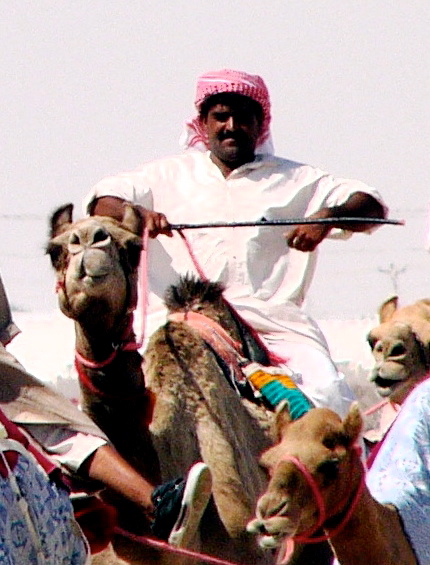
One story led to another.
“Take Her! Take Her!”
AdventureMan preceded me to Doha; I stayed behind and packed out, found new renters for our apartment, sold my car and arranged for my diabetic cat to fly with me to Doha.
When I got to Doha, I showed the veterinary papers showing Morgaine had the veterinary papers in order, but, as it turned out, I had not requested permission from the Qatar Department of Animal Health to bring in my cat, so I would have to leave her until I got permission. I discussed this politely with the customs official, a young soldier, and then I started pulling out my packets of syringes and vials of insulin, and I explained to him that she needed X amount of insulin injected at such and such a time, two times a day.
He looked at me in utter horror and said “Take her! Take her!” and I didn’t wait a single second but got everything back in my bag and walked out as fast as I could with my unpermitted cat. Things were easier then; there were always men with carts eager to take all your bags, so all I had to do was grab the cat and run.

“She’ll Have to Sign a Waiver”
No sooner had I arrived in Doha than a car showed up at my villa, a car I hadn’t requested nor chosen, but I guess the car I was meant to have. I had to learn to think in a whole new way. It was a really good thing I had the car because Operation Enduring Freedom was breaking out, and I knew I might not see my husband again for a while. He took an hour off the day after I arrived to show me where two grocery stores were; the one near us for the basics, and the French Carrefour, across town, but worth the drive.
But the company was horrified I wasn’t leaving. “We’ll pay your passage!” they said. “You can go anywhere! You don’t want to stay here, war is breaking out.”
I had just gotten to Doha. I was settling in. I had my abaya and scarf from our time in Saudi Arabia, and I knew the way to the airport; I could walk if I had to. My niece, Little Diamond, was coming to stay with me. We both spoke some Arabic, she spoke more than I did. I wasn’t afraid, and I didn’t want to leave.
“She’ll have to sign a waiver,” they told AdventureMan. I signed the waiver.

There were some dangers. While the USA and allies were gearing up to help the Kuwaitis take back Kuwait from the Iraqis, not everyone was on board. We learned to alter our body language, to walk and speak quietly, not to draw any attention to ourselves. We did our shopping calmly and efficiently. Even so, on occasion there was an occasional shop clerk who might ignore me and refuse to wait on me, but those occasions were rare, and the occasions of great hospitality from local citizens were many.

The day the war started, my sweet cat died. She had problems breathing early in the day, so I took her to the vet. Going to the Vet in Doha was not like any going-to-the-vet I’ve ever experienced before; you go, you sign in, you sit, if there is a chair left, and you wait your turn. It doesn’t matter how sick your animal is. It was chaos. Many people got very emotional and wanted to be taken out of turn. When I got to see the vet, who was always very kind, he gave her a shot and said “Now she will feel better.” I told him I thought she was close to the end, and he said maybe or maybe not. I took her home.
About three hours later she came and lay next to me quietly and I knew she was saying goodbye. She started gasping again, so I put her n her cage and drove as quickly as I could to the vet, but it was Friday afternoon, the day everything closes for mid-day prayer, he was closed, and could not be reached. By the time I got home, she was dead.
So the war is starting, my cat has died and I am not in a rational place. AdventureMan called and my niece talked to him. I think she told him the cat had died and I thought there was a chance it might just be a fit and she might come back to life, which was true. AdventureMan came home, I don’t know how he did it, but he did, and we drove out to the desert and buried our cat. He brought me back home and went back to the base and I didn’t see him for a while, except on television; as the CNN reporter stood in front of a sign at the press center on base, my husband sauntered behind him and gave me a wave. We still laugh about how he took a break to bury our cat just when war was about to break out, but managed to get back in time for the opening. He showed up when it mattered.
Welcome to Doha.
Seek the Welfare of the City
Jeremiah 29:1,4-7
29These are the words of the letter that the prophet Jeremiah sent from Jerusalem to the remaining elders among the exiles, and to the priests, the prophets, and all the people, whom Nebuchadnezzar had taken into exile from Jerusalem to Babylon. 4Thus says the Lord of hosts, the God of Israel, to all the exiles whom I have sent into exile from Jerusalem to Babylon: 5Build houses and live in them; plant gardens and eat what they produce. 6Take wives and have sons and daughters; take wives for your sons, and give your daughters in marriage, that they may bear sons and daughters; multiply there, and do not decrease. 7But seek the welfare of the city where I have sent you into exile, and pray to the Lord on its behalf, for in its welfare you will find your welfare.
We are about to embark on a trip, and as I read the Lectionary readings this morning, I found a verse I found comforting in my life as a nomad, the verse above.
We kept ending up in the Middle East. I wasn’t unhappy about it, but I did wonder why. I trust God has a plan for each one of us; even late in life, however, mine appeared fuzzy, if not opaque. What was the purpose?
The verse above comforted me; I didn’t need to know my purpose, I just needed to live my life, and to pray for the people in the places we were posted. When you pray for people, you find yourself mixed in their lives, they become more real, more understandable. The exiles found themselves in an alien environment, and the Lord tells them to marry, build houses, plant gardens, live normal lives AND to seek the welfare of the alien country and the alien people among which they find themselves. It resonates in my soul.
Best Birthday Ever
A few years ago, I hit a number and I felt like my life was over. Rationally, I knew I was doing fine, but just the sound of the number hit me hard. I remember feeling the same way when I hit 50, and I thought it was going to be terrible, but that very day I went to pick up my photos for my Saudi pass and my photograph was fabulous.
OK, you know, here goes that rationality thing again. The RULES in Saudi Arabia say you are forbidden to retouch photos. The photographer just stood there with a big grin as I looked at photos of me with all signs of aging totally removed. Inside, my heart was dancing. My head knew it wasn’t really how I looked, but my heart danced.

In spite of the heartache of my Mother dying of COVID, this has turned out to be a sweet year. I had some stellar moments, dancing-heart moments. I love our new/old house, as you can guess from all the sunsets I post. Now, my son and AdventureMan installed a Little Free Library for me to care for, and another dream has come true, and my heart dances for joy. My family was together, my grandchildren helped fill the Little Free Library, and we all had cake and ice cream together, masked most of the time.
I’ve always loved libraries, and the first job I ever had, at six years old, was checking out books at the little library in Alaska. The clerk had failed to show up; the librarian was busy with a big time-sensitive book order and I volunteered. She showed me what to do. So easy a six year old could do it, and I had a ball.
I avoided book clubs until I ended up so many years in the Middle East. A group of women I knew and trusted asked me to form a book club, and I reluctantly turned them down because I didn’t want that responsibility. Very gently, they kept inviting me to start a book club and finally, I asked “Why me?”
“You’re the only one who can bring in the books we want to read,” they told me.
I learned so much from these women, and the book club was a huge blessing, a window into the way a lot of women think who are from different countries and different cultures from me. I learned how HUGE it is when ideas can be examined, and discussed openly, even when one must speak indirectly. I learned again and again how many mistaken assumptions I had made, how narrowly I saw the world. Books matter. Ideas matter. Sharing books and ideas challenge our narrow views and give us broader understanding of our complex world, and our fellow human beings.
Tonight AdventureMan is making Pasta Carbonara, which I should never eat, but once or twice a year, I do. It’s not like AdventureMan loves Pasta Carbonara; he makes it for me because I love it. Some of those excess calories come off as I dance and dance for joy.
The year I thought my life was over, some amazing things happened. I’m not going to get all excited, like this is going to be the best year ever, but I am so grateful, I feel so blessed, to have some dreams I know I dreamed come true, and some unexpected dreams I didn’t know I was dreaming also come true.
“In my life, I’ve loved them all.”
Recent Comments
ExpatAlien on What Country am I Living … intlxpatr on Yellowstone: Old Faithful to C… Michelle on Yellowstone: Old Faithful to C… Cathy on No Grown-Ups in Charge intlxpatr on Waiting for Snow Wikipedia Donate Button

Amazina


Early Voting in Florida


 Here There and Everywhere