Kuwait Elections: Vote Buying
Front page of the online Arab Times:
They’re buying votes … Do something
KUWAIT CITY : The Ministry of Interior should immediately take the necessary action to curb the widespread vote-buying in some constituencies and prevent incompetent candidates from entering the Parliament, former MPs and 2008 parliamentary election candidates told the Arab Times.
One of the smartest bloggers out there, Touche´, wrote a comment on an earlier election blog entry, and it was SO good, so memorable (this man should be writing and editing for one of the daily English papers and teaching Political Science) on vote buying and how it is implemented that I am going to reprint his comments here to illustrate how the vote buying in Kuwait is accomplished.
Let me indulge you with our rotten political trends.
This is a funny ironic melancholic TRUE story, I have a colleague at work who is “Mutawa” (fresh your old post) who belongs to “Salaf a.k.a. The Islamic Heritage Rejuvenating Society (this is my best translation) and who is has the last name of one of the tribes. Now on the last elections back on 2006 I asked him to whom did you vote, thinking that he must have voted for that group’s candidates, and the shocking news is that he said the week before elections I swore an oath with all the area followers to vote for the Islamic candidates and I quote him “When I went there to vote and tried to vote for the sworn names, the pen would go directly to those candidates who belong to my tribe, I couldn’t do it, so I voted for one of the Islamic candidates and the other vote went to our tribe’s guy”. Now I told him that you’ve sworn on the Quran!! How cold you do that? The answer was simple, “I just couldn’t, it’s in my blood, it’s something beyond your comprehension”
As for your question about votes purchasing, it starts as follows (sorry but I had to put them into steps for clarity purposes:
1. The buyer’s representative (BR) scouts the area for the right voters who are willing to sell their votes for money.
2. BR approaches the voter and persuade him/her and both agree on the price of each vote (female votes are being negotiated with the woman’s brother, father or husband)
3. Once the deal is closed, the voter has to submit his/her national ID to the BR to insure that voter hasn’t closed another deal with another candidate and the documents are held with the BR until elections day (on extreme cases, a trust worthy voter won’t submit the documents and his word is taken as it is considered stronger than oak)
4. All BRs know each other as they are basically residents of the same area and they exchange a list of those voters who sold their votes an cross examine them for duplications to prevent any frauds.
5. Now the interesting tactics, on election day, a candidate may choose not to give the national ID to the voter if the he feels that he has secured his win and thus eliminating any chances of any frauds by voter to shift his votes to opponents.
6. If the candidate needs the vote, the corresponding BR calls up the voter and walks him to the election classroom signaling another same candidate’s BR who sits in that classroom to observe the integrity of the processes, now that guy knows that the voter isn’t a supporter and has been paid based on the signal thus he keeps a hawk eye on him trying to see how many ticks were placed on the voting form and does the tick fits the area on the form where candidate’s name is printed (it’s merely an approximate observation).
P.S.
a. The timing of the purchased votes isn’t random and are chosen specifically by the candidate’s campaign and usually the purchased voted are being herded as sheep in groups either at the early morning or an hour before the closing time.
b. The paid amount is %50 before voting and the remaining %50 when the inside BR sms the voter’s delivery BR that the vote has been verified based on his observation and thus the full payment is due.
c. The vote’s price depends on the nature of the vote itself (solo/dual for the old election ways). Solos are the highest paid and the ones which BRs aim for.
d. Buying votes isn’t to insure number of votes, the key element of the whole process is to target those votes which are considered as opponents insured votes, by keeping those national ID (voting ID for this election) the candidate uses a term called “Votes Burning” where he holds back those IDs and never giving them to voters until election boxes are sealed to eliminate opponents’ insured votes.

Blogger Chirp reports being offered KD 4000 (that’s about $16,000) for her vote. Imagine the temptation! Chirp has character and integrity, and turned it down, but imagine how tempting that might be to a young person who wants education, or a new car, or to pay off debts, or who has a wedding coming up. That’s a LOT of money for just one vote; imagine the deep pockets who can afford to buy that many votes?
Schism vs Fitna
On the front of the Friday Kuwait Times (kind of the weekly tabloid edition) there is a headline article about Saudi Blogger Raed Al Saeed, who made a 6 minute video picking out verses from Samuel, Numbers, Deuteronomy, etc. to illustrate horrorific illustrations from the Bible, to parallel Geert Wilder’s movie, Fitness, which picks out verses from the Qura’an to illustrate the violence of Islam.
He says” It is easy to take parts of any Holy book that are out of context and make it sound like the most inhuman book ever written. This is what Geert Wilders did to gather more supporters to his hateful ideology.”
He’s right. It’s easy to point fingers, and to create fear and hate. It’s a whole lot harder to try to build bridges of understanding and compassion, to find similarities, to find ways to respect one another, to work together, to try to build a better world, and to agree to disagree when our books take different directions.
New Look at WordPress
On this very sleepy Saturday morning I am up a little late, grab my coffee settle in with my laptop while AdventureMan reads aloud to me from a book he is perusing, and after I take care of my e-mail, I check in the blog.
WHOA!
What is this?
Overnight, WordPress instituted a new, very elegant desktop. When I sign in, I have an overview, with a lot of information clearly presented (I can only “snap” a part of the new desktop:)

Writing a new post also has a totally new look. Most of the changes are intuitive; I have only had a little trouble understanding the photo-insertion process, which was also the hardest part for me in the old WordPress format:

All in all, a happy surprise for a quiet Saturday morning!
Go For the Bloat
It is breathtaking in its audacity. In a report from CondeNastPortfolio.com we learn of a reverse approach by Carl Jrs. / Hardee’s – going full out towards mega-caloric burgers.
This post is dedicated to Mark, at 2:48 the b-side who is on a quest in Kuwait for the ultimate burger. I am afraid he is going to – literally – eat his heart out.

It was a patriotic statement that went a bit too far afield: an attempt to create the “ultimate picnic burger.” Called the Fourth of July Burger, it was tested last summer at seven locations by the West Coast fast-food chain Carl’s Jr. and consisted of a huge beef patty topped with pickles, ketchup, mustard, potato chips, and a hot dog. Stacked high and loaded with fat and calories, it was the food equivalent of the national anthem played through a sousaphone, a perfect distillation of a peculiarly American form of balls-out, postmodern gluttony that, at least outwardly, we’re all supposed to be ashamed of right now.
Yet for all its pomp and glory, it didn’t quite work. When John Koncki, director of product development for Carl’s Jr., talks about it now, he comes across a little wistful. It tasted really good, he says, but the name and the concept proved too much for the testers. “Sometimes,” the earnest Koncki says, “some of the sandwiches are so unique that consumers can’t wrap their heads around them.”
The uniqueness isn’t the only thing that’s hard to get your head around. During the past few years, CKE Restaurants, the parent company of Carl’s Jr. and Hardee’s, has employed an audacious go-for-bloat approach that defies just about everything you’ve come to assume about the business of modern fast food. (See nutrition data for CKE franchises and other fast-food chains.) In an age when other chains have been forced to at least pretend that they care about the health of their customers and have started offering packets of apples and things sprinkled with walnuts and yogurt, Hardee’s and Carl’s Jr. are purposely running in the opposite direction, unapologetically creating an arsenal of higher-priced, high-fat, high-calorie monstrosities—pioneering avant-garde concepts such as “meat as a condiment” and “fast-food porn”—and putting the message out to increasingly receptive consumers with ads that are often as controversial as the burgers themselves.
You can read the rest of this article, and similar articles, by clicking HERE.
Bullying and 19 Minutes; Jodi Picoult
When my blogging friend Chirp makes a recommendation, I have learned to order the book and read it. She reads books that make you think! The latest book is Jodi Picoult’s 19 Minutes, a book about a kid who is sensitive and kind and funny, and plays by the rules – he is good at sharing, and listening and all the things we try to teach our children to be good at.
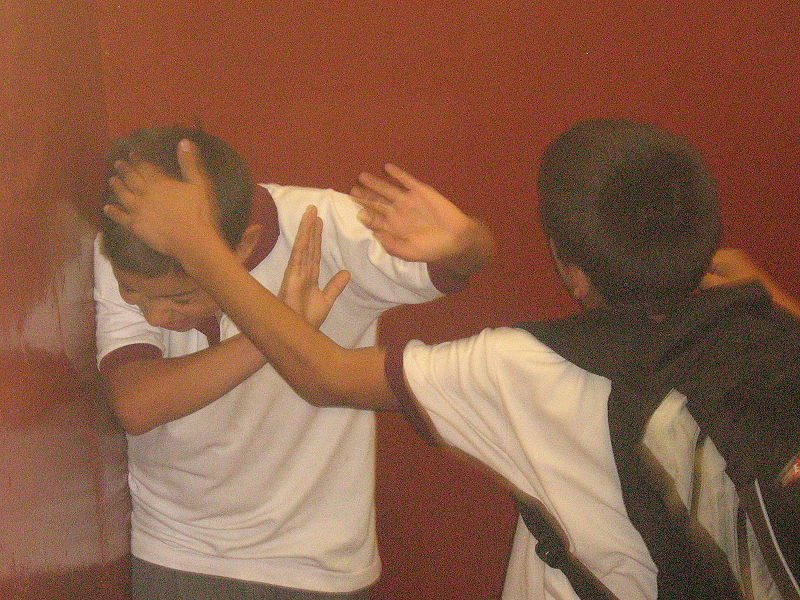
He gets bullied. From the time he starts school, he is bullied physically and mentally and emotionally. He does the right thing – he reports it. The schools do nothing, or so little that it only makes things worse for him. Pushed too far, one day snaps, he goes ballistic. He walks into the school and shoots 19 of his classmates.
One problem is access to weapons. Literally, physically teenagers have not yet developed the judgement areas of the brain. I am guessing in males it takes even longer, and I only guess that because of all the traffic fatalities and physical damage adolescent boys inflict upon themselves – and their victims. Maybe it is that fatal combination of poor judgement and testosterone that pushes them too far. Access to weapons – guns, knives, fast cars – makes them even more lethal.
Before I wrote this review, however, I had to do a lot of thinking. This book is about bullying, and even as adults we come across bullies. Our household helpers are terrified of the police – those who are here to protect us. The police use their position to try to bully phone numbers out of pretty Kuwaiti girls, and to exact sexual favors from the Asian domestics. Not all police are bullies, but if a person has that tendency, the position allows him/her to use that power wrongly.
And bullying doesn’t stop with graduation from high school. We are seeing the same kinds of behavior at universities – Virginia Tech – and in the workplace – “going postal” and GMAC just to name two. People who are bullied sometimes turn, they go out in a blaze of glory.
I’ve been bullied. People who are raised to have good manners are often victims of those who are willing to overstep the boundaries. We make excuses for them – we say they are oblivious. I am beginning to think that many a bully is NOT oblivious, but has learned to push to get his or her own way.
With men, the bullying is more physical, and it’s all about jockying for position – number one in the pecking order, the next promotion, the boss’s golf partner, etc. If you think women are gossips – you oughta hear the men! When I hear men “bantering” it’s all about who’s got the “biggest.” Or maybe, the devil whispers in my ear, it’s about who can make you THINK his is the biggest.
With women, in my experience, most of the bullies are physically bigger. They are women who – literally – throw their weight around. They are women who will interrupt anyone and override their suggestion with a loud voice. They are women who have temper tantrums, and hurt feelings, who go from person to person forming alliances that dissolve with the next disagreement. That’s the sad truth – a bully wants his or her own way – all the time. Once you go against them, you have to watch your back.
Picoult has done her homework. Bullies are often likeable enough people! A bully carries his/own burden, however – and that is a desperate need for popularity. You can see this in animal behavior; once a creature has achieved dominance, it takes enormous energy to maintain that position, so much energy that the rest of your life shrinks as your focus must be on maintaining dominance.
The UK, Canada, and the US all have websites about bullying, trying to put a stop to it in the schools. What do they define as bullying?
People calling you names
Making things up to get you into trouble
Hitting, pinching, biting, pushing and shoving
Taking things away from you
Damaging your belongings
Stealing your money
Taking your friends away from you
Posting insulting messages on the internet or by IM (cyberbullying)
Spreading rumours
Threats and intimidation
Making silent or abusive phone calls
Sending you offensive phone texts
Bullies can also frighten you so that you don’t want to go to school, so that you pretend to be ill to avoid them
What can people with manners do against a bully?
In general, the first thing to do is tell an adult – it doesn’t have to be your parents. Additonal suggestions suggest creating your own support network – create a wide network of friends. Join interest groups, in our out of school.
When our son was bullied in school, he worked hard and earned a black belt in karate, and then went on to earn further degrees, and to teach karate – while still in high school. Just knowing that he had a lethal skill made him walk differently, made the bullies afraid to target him. He went to a magnet school, where there was a high degree of chaos, and he sought out and made friends with the biggest people he could find. He used his head. He made it through. Of all his accomplishments, one of the things that made us most proud of him was his ability to stick it out and to prevail.
I worked in a high school. My office was a safe haven for many kids, kids who found high school dynamics pure hell. Most of them were emotionally years ahead of the crowds roaming the hallways, the cruel kids, for whom high school will probably be the highlight of their lives.
“You’re going to love being an adult,” I would tell them. “Hang in there. For them, this may be as good as it gets, but your life is going to get better and better.”
Geeks don’t always get a lot of respect. The two guys that graduated high school at the bottom of the class with my son already had a flourishing computer networking business going. If you haven’t noticed, most of the people who are making it big financially are people who have learned how to use their heads.
I have learned something else. You can beat a bully at his or her own game. Bullies usually rely on instilling fear in others, but rarely do they do their homework.
Choose your battles. Bullying hurts everyone. If you see someone being bullied and you can do something about it then and there, stand up for the person being bullied. All you have to do is say “that’s not funny, just stop.” Many times bullies are so shocked at being challenged, they will stop! If your judgement tells you it would be unsafe to say anything, quickly tell an adult, a supervisor, a manager, what you have seen.
If a bully is trying to push through something you believe is wrong, you can quietly discuss things one on one with others, and make a plan. You can call for a vote! You can quietly stand up to a bully. You can tell a bully “it’s my turn to talk” and they have to shut up! (When you do this, you have to be very careful to listen when the bully is speaking so that everyone knows it really IS your turn to talk.) You can use a little gentle humor – bullies usually only like humor when it is aimed at someone else. They haven’t a clue what to do when it is aimed at them!
If it is annoying, but not something worth fighting over, let the bully get his or her own way. They usually end up shooting themselves in the foot, self-destructing. The adult bully ends up driving people away, and then wondering why he/she has no friends?
Living your own life well is your best revenge!
Thank you, Chirp, for another book that really made me think!
Spam Comments
Before you go any further, this comment which I found in SPAM is a “fund-raising” SCAM. I am only printing it as an example of some of the “Nigerian” scams out there – this is a new one for me, clearly targeting Muslims. It is hard for me to believe that people act on these letters, and find themselves out of their life savings.
The moral: if it seems to good to be true, it IS too good to be true. Don’t let greed blind you. This is a SCAM:
Dear Sir,
I’m Ali Ahmed, from Gambia West Africa,I want to explain my problem to you as Muslim father.My biological father name is Mohamed Ahmed,my father was born in a christian home,but my father and I find Islamic religion as the only true religion,and my father and I started practising Islam for good two years before my father relatives poison him because he changed to Islam.Now they after me,trying by all means to terminate my life,so that they will wipe Islamic religion in the family, As am writing to you my life is in danger,I can no longer go to my fathers compound,I cannot move freely in the street because their running behind me, My father was a successfully international business man, he trade on mineral resurces all over Africa.My father deposited 20,000 000 Million united state dollars to the national security company Gambia,of which I am the next of kin.All the documents both the depositing certificate is in my possession, Pleas sir, I want you in the name of Allah to help me come to your country and invest this money. May Allah Bless you, You can call me through this number
Tel (removed by blogger)
Email (removed by blogger)
Thanks
Yours faithfuly
Ali Ahmed
A Long Way Gone: Ishmael Beah
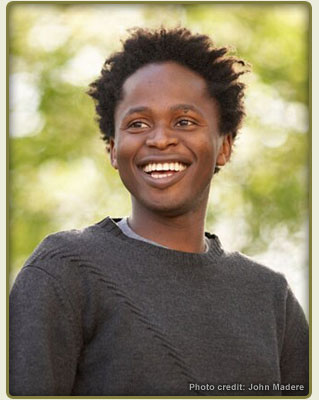

Back when I wrote an update on Dharfur, my blogging friend Chirp recommended a book, A Long Way Gone; Memoirs of a Boy Soldier by Ishmael Beah. I ordered it that very day, and read it this last week.
It is a truly heartbreaking autobiographical book about a young mischievous boy growing up in Sierra Leone, leading a relatively simple and carefree life in his village with his family. It is very African. He talks about the games he and his friends play, his fascination with rap music and the simple joys of the life he is leading.
Then the rebels come. The invade the villages, hopped up on dope, their dead eyes with no pity, raping, killing, chopping off limbs, stealing all the village food and burning the village behind them, often with people locked inside their huts.
Ishmael escapes once with friends, eventually returning to the village to find his entire family gone. Most of the book has to do with what he has to do to survive. Many villages are very afraid of groups of boys, even boys as young as these are – in their early adolescence – and will hurt them. At the very least, most of the villages hurry them along. At one point Ishmael is hiding out in the jungle forest on his own, hiding from lions, giant feral pigs, sleeping up in trees and looking for the rare fruit or grass that he can eat without getting sick.
Finally, after meeting up with some other boys and continuing to try to find his family, a village takes him in, a village run by the state soldiers. As they are attacked by rebels, the boys are forced to make a choice – go out on their own again (where the rebels will also try to recruit them, and if they refuse, will kill them) or agree to be soldiers. These are kids 12, 13, 14 carrying AK 47’s. As part of their training they are given drugs on a regular basis which keep them hopped up, full of energy, and not sleeping for days. The young boys learn to kill without pity. He becomes the very people he was fleeing.
This is a book about redemption. At the center where the boy soldiers are taken, they are constantly told “none of this was your fault.” It is a very African approach, a very human and loving approach to redemption of lives that might have been totally lost to the horrors they have witnessed and inflicted. The author is now nearly 30, and sounds – unlikely as it might be – happy.
Thank you, Chirp, for recommending this wonderful book.
Trivial
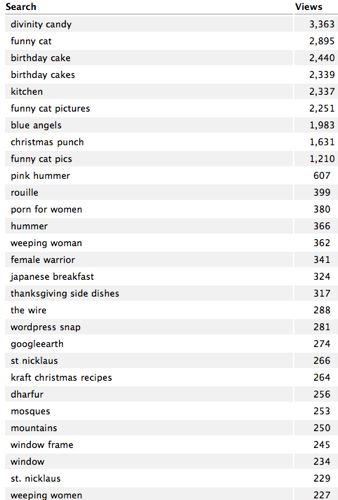
Any time I start to get all puffed up about readers complimenting me on my blog, I just take a look at the search terms that bring them in.
You know, I would love to think it is our discussions about political and social issues, the books I review, the travel destinations I recommend, the human experiences we share . . . I would love to think that.
It just isn’t the truth. Here is what brings the most people to look at Here There and Everywhere. It is truly, truly humbling.
Deemaland
You know, I always visit my commenters to make sure they are not someone marketing drugs or enlargements or some kind of objectionable filth, and also because I often find a blog I haven’t seen before, and I really like.
I found one like that yesterday – Deemaland. When you go there, the first thing you see is this:
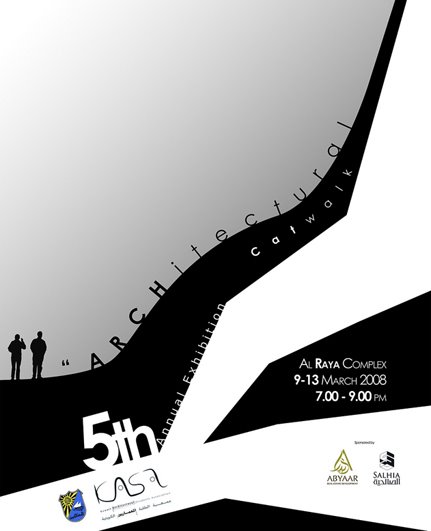
Oh my friends, is that gorgeous, or what?
Then, she tells us about an exhibit:
9-13 Mar. 2008
Event: “Architectural Catwalk”
5th Annual Exhibition of Architecture
Host: Kuwait Architectural Student Association [KASA]
Type: Exhibition of the students work.
Location: Al-Raya Complex, Sharq district, Kuwait City.
(the exhibition is in the Ground floor of the mall side)
Only on HER blog, even the information looks artistic.
This woman has an EYE. She publicizes events that otherwise might go unnoticed. Go visit Deema’s starkly beautiful blog. Also, take a look at her gorgeous Flicker photos.
“So Many Christians!”
My Kuwaiti friend was shaking his head in disbelief. He had been to the old city to pay a condolence call on a Friday, and happened by the Lighthouse compound near the Sheraton circle on a Friday morning, just as some of the services were getting out.
“I had NO idea!” he looked at me in absolute amazement.
I just laughed. When we first got here, we attended church on that compound; our church moved off only months ago, when the road construction work got seriously under way and parking increasingly became a problem. It was the most amazing experience on earth – there were the Indian Men’s Catholic services and the Philipine Evangelical service and the rock-music evangelical service and the staid Anglican services and the family Philipine Catholic services and . . . well, you get the picture. There are an amazing number of expatriate Christians in Kuwait. At any one time on the compound, there are about twelve different services going on, and no sooner does one finish and the participants exit, than the new group is coming in.
Now, churches meet all over Kuwait. They met in villas, they meet in schools, they meet in every neighborhood. Today, in our church, we asked for blessings on Kuwait, on the Emir and his family, and those in leadership positions in Kuwait. We prayed for the leaders of all the countries in our congregation (English, Irish, Scottish, South African, Chinese, Indian, Nigerian, Kenyan, Dutch, Egyptian, Ethiopian, American, Australian {I have forgotten a few, I am sure} . . . lots and lots of blessings!) Most of all, we thank God for the freedom to worship in Kuwait.

(This is not our church in Kuwait. This is the Church of the Holy Sepulcher, in Jerusalem. I was looking for a church that looked more Middle Eastern than Western, and this is what I could find!)
Our pastor also has a blog, q8bridge about which he says “The purpose of this blog is to enable a bridge to be built between Christians and Muslims, especially those living in Kuwait. Through questions and dialogue we hope to promote deep friendships and mutual understanding.”
He examines the beliefs we have in common, and where we differ, and some of the reasons why we differ. I urge you to have a look.
Recent Comments
intlxpatr on Shampoo Ginger tigerbutterya0c5ff1d… on Shampoo Ginger intlxpatr on British Soldier Kidnapped, Esc… John on British Soldier Kidnapped, Esc… intlxpatr on British Soldier Kidnapped, Esc… Wikipedia Donate Button

Amazina


Early Voting in Florida


