Rainbow to the Rescue in Pensacola
This post is about an amazing blessing. You won’t think it is a blessing at first, you will think it borders on disaster, but stop. Think about it.
Late this afternoon, our contractor friend was in putting bars in the guest suite that people can use to help navigate around, help lift themselves off the toilet, etc. We were busy looking for a stud for the shower bars when it started raining.
“That’s raining pretty hard.” he said.
“It rains like that all the time,” I said blithely.
But it really was coming down, and it wasn’t just for a few minutes, it poured, and it kept pouring. The lightning was really close and we heard a loud CRACK! and then BANG and the power transformer on the post near my house was hit, but my power must come from somewhere else because, by the Grace of God, we didn’t lose power.
“Oh no! This has never happened before!” I exclaimed as I saw water seeping in the guest suite where we were working. (This has been cleaned up a little bit for this family blog.)
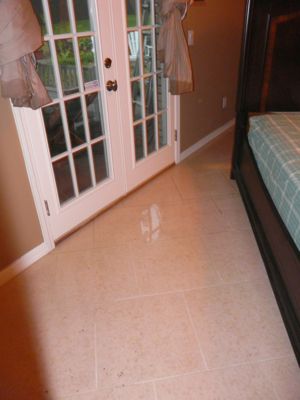
I thought it was coming in under the French doors, but when I grabbed the old towels for soaking up purposes, I saw that there was more . . . coming from under the walls! Horrors! I was almost stopped still in my tracks – there aren’t enough towels in Pensacola to handle the amount of water seeping in!

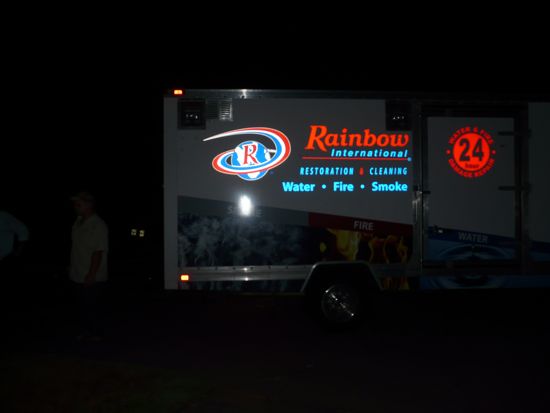
“This is a task for Rainbow!” my contractor said, and ran for his truck, to exchange it for his Rainbow truck (he is both a contractor and a Rainbow franchise operator).
While Dave was gone, his assistant, Bobby, used their wet vac to get as much water up as he could, dumping the full tank several times out the window as we struggled. Finally, the rain slowed, and we could mop up the remaining wetness. He started a fan.

Dave came back with the big Rainbow truck and an intimidating amount of equipment. Now I will go into a parenthetical gripe about men and their toys. The biggest part of me is incredibly grateful to have this resourceful man who helps us with our construction and renovation needs, and then is there, like Superman, to the rescue, when disaster strikes. Another part of me wishes he didn’t have that excited gleam in his eye. My problem is his challenge – he loves the adrenalin.
Honestly, it’s only a small part, and mostly it’s because I wish I didn’t have any problem at all. Dave has a meter that shows where water is still sitting in the grout between the tiles, and how it has soaked the baseboards and begun to creep up the sheet rock. He explains how in Florida, where the humidity is so high, the sheet rock can’t always dry out fast enough to avoid mold formation, and that even though it eventually may dry on its own, the mold can survive until the next moisture hits. Oh aarrgh!
Hours later, we have huge fans running, and we have dry air in oscilations being wafted into our walls to insure they dry thoroughly, but not too much. We have machines taking readings. Our insurance company says we are doing all the right things and the adjuster will come by on Monday or Tuesday.
This was supposed to be a quiet Saturday night. If it had been a normal quiet Saturday night, we might have been upstairs, watching some TV, listening to the lightening and not worrying too much about it. We would have gotten up in the morning and gone to church. We might not have even known our guest suite was flooded for days!
So honestly, I feel blessed. I am blessed that if this disaster had to happen, I had people with me who knew exactly what to do, and did it.
As they left, the Gulf Power people were out fixing the exploding power transformer, and I thought how many heroes there are on this earth, people who do their job under the worst circumstances, people who leave their families to serve because there are jobs that must be done.

God bless you, all of you, health workers, police, firemen, electricians, plumbers, emergency services, soldiers and sailors and airmen – all who sacrifice and serve. May you sleep well at night, and may God bless you and your families who support you.
I had a disaster, but I was surrounded by every resource I needed to deal with it. Thanks be to God.
If you have a disaster, and you live in the greater Pensacola area, I can recommend:
Rainbow International Restoration Services
David Murphy
O: 850-994-4411
Cell: 850-281-0232
Kuwait or Qatar or Pensacola?
Showering after my water-aerobics class, I could hear voices discussing a local political-social situation. A benefits agency has groups of families working in it, and they know all the tricks. They know how to insure more of their own family members hired, and they know how to help all their family members (and friends) take advantage of all the entitlements.
Expats abroad call it nepotism, and scorn it as a third-world corruption. In truth, it happens everywhere.
There is an ongoing schism taking place in Qatar and Kuwait, countries that have been gracious and welcoming to me. The nationals of Kuwait and Qatar control citizenship carefully. The citizen base is about 20% of the population, on a good day. The rest of the population are people who are in Kuwait and Qatar to work. Most there to work can never hope for citizenship. For many, the poverty in their home country is so brutal that no matter how hard the working conditions, at least it is a salary, and they can send something home so that, literally, their families can eat. They dream – like we do – of educating their children so that they will have a better, more secure life.
Here is the problem. When 80% of the population is NON-Kuwaiti, or NON-Qatari, your country starts to change. One way in which things have changes is that in a very short time, the highways have gone from very quiet to gridlock, due to a dramatic increase in drivers and cars. In Qatar, the situation is made worse by nationalization of the taxi service, resulting in so few taxis that hotels now use private limo services, because finding a taxi at peak times is near to impossible.
That’s one issue. The second issue is language. Imagine your elderly parents going into shops to buy something – in their own country – and the clerks don’t speak their language. As they are stumbling and bewildered, some noisy “workers” walk in, state their needs, are understood, conduct their business and exit before you even get served. This is happening in Kuwait and in Qatar; everyone is speaking English. In a country where the workers are Indian, Nepalese, Philipino, Saudi, Yemani, Omani, Lebanese, Syrian, French, Dutch, English, Australian, South African, American (and about thirty or forty others) the common language has evolved to be English, not Arabic.
How do you think you would feel if it were happening here? If the great majority of cars on the road were not “us” but “guests” in our country? If the clerks in stores couldn’t understand what you want, because although they are in your country, they don’t speak your language?
Another problem is what to do with the huge, disproportionate number of geographically single males brought in to work as builders, cleaners, heavy equipment operators, dishwashers, drivers, security guards and other fairly low-paid positions? In Kuwait and in Qatar, non-married sex is strictly forbidden, even holding hands in public is considered an affront to morality. These men are banned from malls where families might gather, and from other public places. Their existence is grim, and they often find themselves unpaid, or paid far less than they were promised for their labor.
Last, but not least, this very modest Gulf culture has people – foreign guest workers – parading themselves on their streets in various states of undress. Think about it – that’s how we look to them. We have no shame. We bare our faces. We flaunt the glory of our uncovered hair. Sometimes a shawl might drop and a glimpse of bare arm or even a hint of cleavage might shock the modest eyes of a believer.
In Pensacola, there are also fundamentalists who wear long skirts, long sleeves, and determinedly modest clothing. I wonder what these believers think about the skimpy clothing on the beaches, or in the malls?
Coming home has been a real eye opener. It was easy for me to be critical of things I saw in Qatar and in Kuwait. Coming home, we joke all the time about “Kuwaiti drivers” here in the US, but the real joke is – they sure look a lot like us.
Last week, we saw a man here make a U-turn right in the middle of the road, and rock as he tried to regain control of his truck, and almost blast right through a red light he didn’t see. The back of his truck was down, and items loose in the truck bed were heading toward the highway – fortunately he figured that out, and last we saw, he had stopped to fix his rear door. Maybe he wasn’t sober. Maybe he had had an argument with his wife or boss or someone and was not paying close attention to his driving. All I know is that we have seen a goodly number of inattentive drivers here, too.
When a bureaucracy gets corrupted, when the rules are not applied equally to all, when select groups get favored treatment – here in Pensacola, at the immigration department in Kuwait or in the traffic department in Qatar – everyone suffers. It’s a political problem, a social problem, and a systemic problem. God willing, if we are truly evolving as a species, we will find a way to create truly fair and transparent systems which will work as they are ideally intended to work.
It’s on us. We have to make it happen. We have to want it badly enough to make it happen, even making sacrifices for the greater good.
I don’t have any answers. I don’t know how to make us better people that we are, how to make ourselves make the right choices. I do know this – whether it is a tiny village in Germany, or an eagle’s aerie in Kuwait, or the lush life of Doha – we are all more alike, and share more similarities and problems, than we are different. If we could only learn to see through one another’s eyes, maybe we could find ways to resolve our differences and learn to cooperate.
My Newest Friends
Welcome! Welcome!
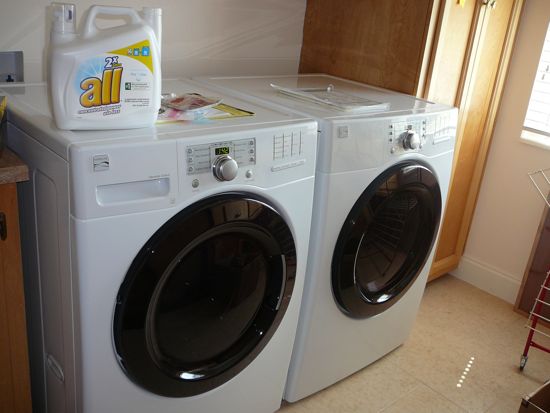
We ordered the washer and dryer almost a month ago, but because of a huge energy star promotion, there was a backlog, and it took forever to get them.
In the meantime, our household goods from storage – 12 years of storage – arrived, and almost everything we are keeping needs to be cleaned.
We had two old featherbeds from the former East Germany that had a little mildew on them. I almost threw them away, but I thought since I am going to throw them away, I might as well see if they could be saved. I put them in (one at a time; they are each too big to be put in together) on a cycle called “sanitize” and then dried them on high and . . . they came out perfect! Wooo HOOOO!
As you can see, even though I have done many loads, I still have a ways to go:

No, not the brass pot; it is not going in the washer. It needs to have a handle put back on, so it is waiting there with other low-priority projects for me to get around to it. 🙂 Isn’t this a great laundry room?
Tawash Restaurant
We didn’t end up at the Brussels. As we walked into the souks, we smelled a whiff of grilling meat and decided we wanted Arabic food while we could get it. We walked up and down and decided this was the night to eat at the Tawash.

The Tawash is gorgeous. Somebody put a lot of thought into it. You can eat outside, along the walkway, or outside on the balcony, or outside on the upstairs terrace. Or you can eat inside, in a private dining room, or in a large dining room that can be separated by tent-like hangings that drop down between tables. It is beautifully thought through.
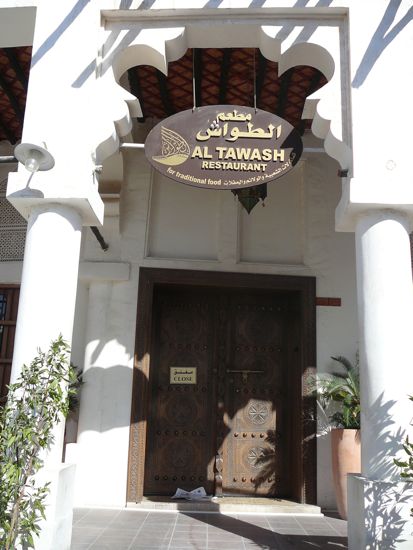
We chose the balcony – we wanted to be outside, but I don’t like to eat right out on the street, with people walking by and oogling my food.
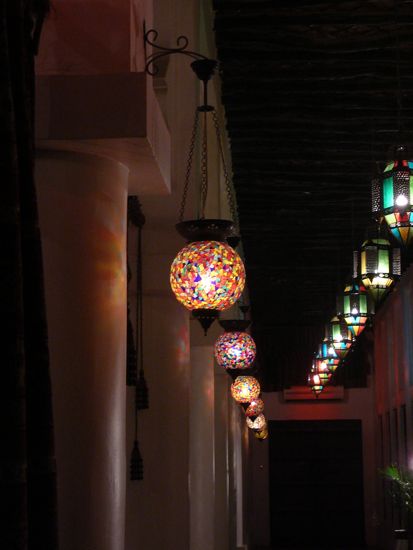
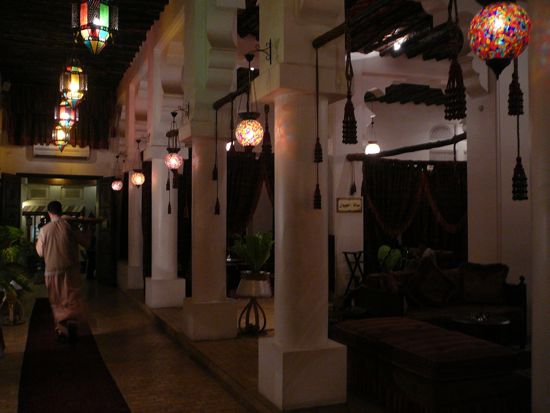
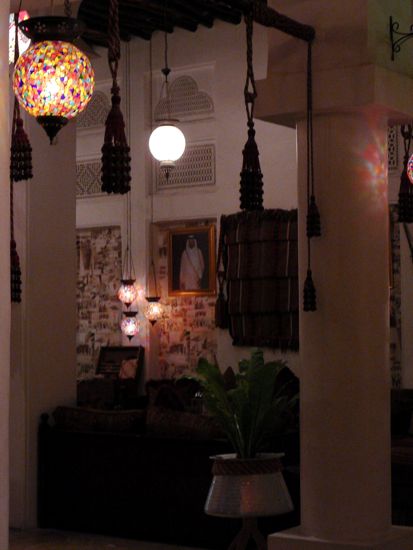
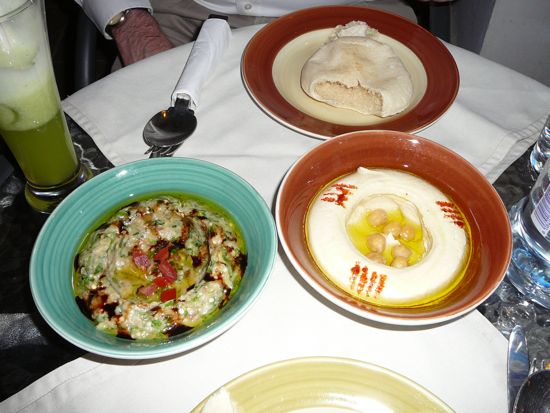
We started with hummus and baba ghannoush, served with hot hot bread:
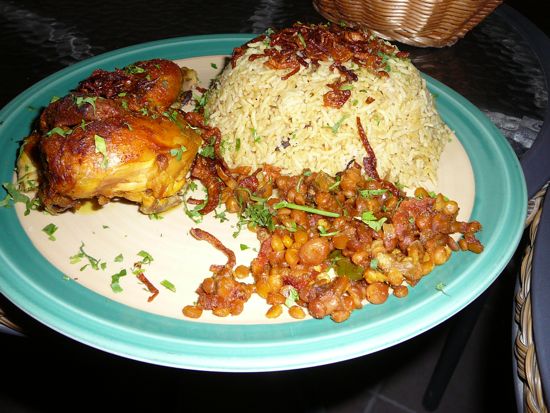
And then we had two great dishes, a traditional Kepsa (mensaf in Jordan) which is rice cooked with delicious spices and, in this case, chicken:
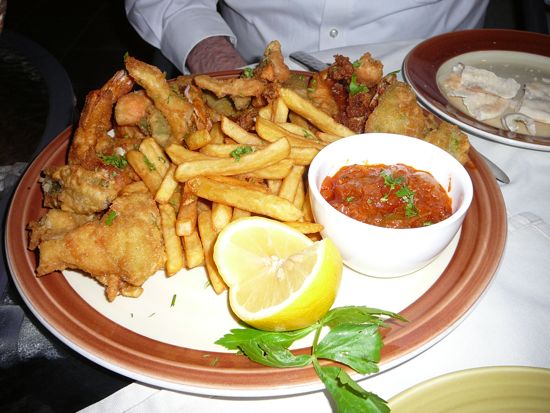
And a shrimp dish, the shrimp marinated in yoghurt, then fried, accompanied by fried vegetables, sort of like tempura – the batter was very light:
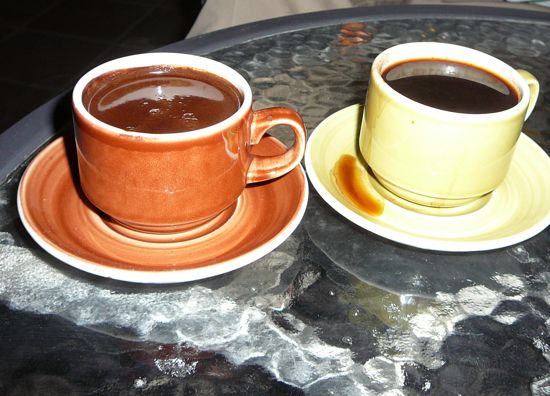
And we finished with strong, grainy coffee:
If you have special guests in town for only one night, this would be a great place to take them. It is a beautiful building, it has character and charm, the food is very good, the service is attentive without being intrusive, and it has a kind of magic, a uniqueness that sets it apart from the chains of restaurants also in the souks. If the weather allows you to sit outside – do so. Part of the charm for us was the great parade of humanity passing by as we conversed and ate. It’s an altogether lovely restaurant.
One in Four American Mortgages ‘Underwater’
Underwater Mortgages Hit 11.3 Million
Posted: February 23, 2010 at 7:25 pm
There is a reason that 702 American banks, nearly one in ten, were on the FDIC “problem list” as of the end of 2009. A large number of small and mid-sized banks are burdened with home and commercial mortgages that are in default and may even go into foreclosure.
New data from First American CoreLogic shows why the solution to the problem banks face is so difficult to find. Eleven million, three hundreds thousand homes had underwater mortgages as of the fourth quarter of last year. That number represent 24% of all residential homes loans in America.The mortgage numbers are much worse when homes with equity of less than 5% are included. First American reports that ”an additional 2.3 million mortgages were approaching negative equity at the end of last year, meaning they had less than five percent equity.” That means that three out of ten homes have virtually no financial value to their owners.
The pressure that the home value trouble puts on banks is clear. The aggregate dollar value of negative equity was $801 billion at the end of last year, up $55 billion from $746 billion in Q3 2009. People who believe there is no hope of their homes ever having any economic value are more likely to default on mortgages, especially in an environment where unemployed and under-employed people make up 17% of the total available workforce nationwide. Many homeowners are as concerned about their employment future as they are about the value of their houses.
Problem home loans are concentrated in the regions where real estate values have fallen the most–Arizona, Florida, Nevada, Michigan, and California. First American says that “among the top five states, the average negative equity share was 42 percent, compared to 15 percent for the remaining 45 states.” In other words, the odds are relatively high that some of the home owners in those states will never sell their houses for more than the amount of their mortgages. That creates a vicious cycle in which high numbers of people with underwater loans default in the states where real estate values have dropped the most. There is no easy way to create a foundation under home prices.
The FDIC has closed 20 banks this year, Five of those were in the five states where mortgage equity problems are at their worst. The agency closed 15 banks in December. Of those, five were in Arizona, Florida, Nevada, Michigan, or California. The bank failure and mortgage failure problems area inextricably linked.
The First American numbers do not leave much hope for a home price rebound this year. It is too hard to sell a house with an underwater mortgage because the bank has to be paid the balance of the loan in cash at closing. Many people do not even try make home payments or cannot afford to under those circumstances. The Mortgage Bankers Association reported that a record 15% of American mortgage holders are either in foreclosure or at least one payment behind.
The difficulties that face small and mid-sized banks, which ultimately are a problem for the FDIC, are to a large extent still a fallout of the deteriorating real estate sector. The underwater mortgage problem is still growing and that almost certainly means bank closings will be high again this year as well.
Douglas A. McIntyre


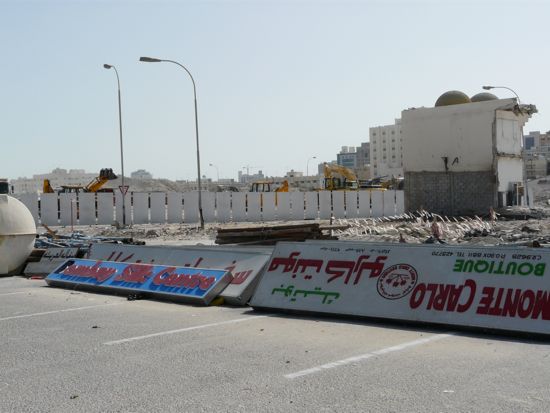
Heart of Doha Creates Beauty out of Destruction
‘Heart of Doha’ construction work to begin
Web posted at: 1/11/2010 1:47:59
Source ::: The Peninsula / By Huda NV
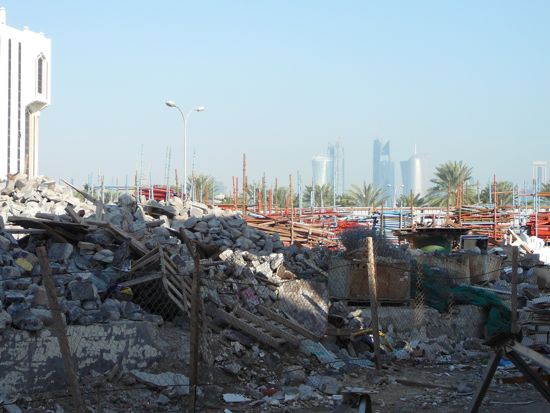
DOHA: Dohaland, a subsidiary of Qatar Foundation, is all set to begin the construction work of its signature project “Heart of Doha”. Under the patronage of
H H Sheikha Mozah bint Nasser Al Missned, Chairman of the Qatar Foundation, the foundation stone will be laid at a special event on Wednesday at a specially build venue at the Corniche.
“Heart of Doha has all together brought in a new language of architecture by understanding the essence of the place which led to rediscovering its poetry,” said Jawaher Al Khuzaei, Assistant Manager, Public Affairs.
“We have finished the preparation stage of the first phase of the project which is expected to be completed by February 2012. Embodied in traditional Qatari architecture are the timeless aspects of beautiful proportions, robustness, simplicity, ornament, along with tried-and-tested local responses to the hot climate and intense daylight. Local traditions have been studied and analysed to distil the essence of Qatari architectural character rooted in the past, appropriate for the present and looking to the future.”
The first stage – Phase 1A has Diwan Emiri Quarter which includes Emiri Diwan annexe, Emiri Guard head quarters and the National Archives. It also has a heritage quarter which includes the Eid prayer ground and four heritage houses – a Company House, Jalmoot House and Houses of Mohammed bin Jasim and Abdullah bin Jassim. Dohaland is working with Qatar Museum Authority to make the best use of the houses.
The first phase infrastructure includes central cooling plant, utilities and waste provision, basement service roads and parking. In the second stage, which will is expected to begin this year and conclude in 2013 a multimedia centre for arts, central hotel and serviced apartments, luxury shopping street, exclusive town house, a primary school, the Ferjan Square mosque and see the first satge of rebirth of Al Kahraba street. The later stages will include a connection to souq wakif, a retail mall, more hotels, offices apartment, shops, a tram system and an underground Metro station hub apart from to Nakeel Square.
“We have also done archiving of photographs of the area prior to demolition. The area will be for mixed use and will have house more than 25,000 people.”
The project with an estimated cost of QR 20 bn, and an area of 35 hectares is expected to be completed in 2016 in five phases. Heart of Doha will become a hub of activity as a place to live, work, shop, visit and spend time with family and friends once completed
THE PENINSULA
Update: Dohaland has been renamed Musherib.
New Doha Details
Once I shot the skyline, that perfect morning last week, I had to drive down the Corniche and pick up some details. If Doha were more stop-friendly, there would be more. Sometimes, I am holding up the camera and shooting and not even able to see what exactly I am shooting because I am really focused on driving.
The good news is, for some reason, there isn’t a lot of traffic in the “business” section of Doha. Most buildings are still under construction, still unoccupied. But there are some spectacular buildings.


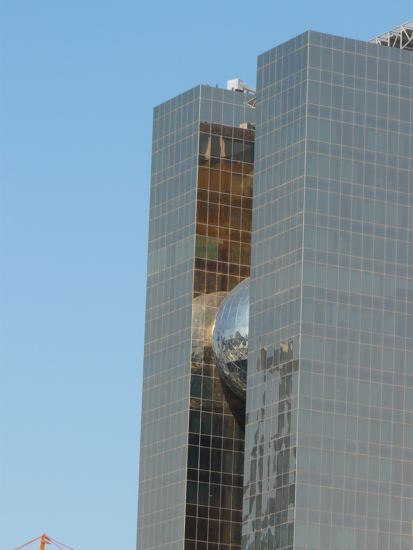
Some of the new buildings are breathtaking:
Doha: The Best Time of the Year
We have the windows open and the A/C off, well, most of the time. Some times it gets humid, and we have to turn the AC on to keep our carpets and textiles from molding. Aarrgh!
Yesterday dawned a crisp 60+°F, clear, sunny, the birds are singing and I have errands to do but . . . it’s also a great day for taking photos. I decide maybe I can do both, but I give the photos a priority and get myself down to the Corniche.
There is also a part of me that wanted to see if I COULD drive on the Corniche; it has been on-again-off-again as people prepare for the grand parade at – oh yes, 0800 Friday morning.
0800 Friday morning? No one in Qatar is up at 0800 on Friday morning. You are going to START a parade at 0800 on Friday morning? Like soldiers will have to be up early? Pilots flying those cool fast little planes – up before dawn? This is Qatar – no one is up at 0800 on a Friday morning!
The weather is gorgeous and the photos take themselves. There has been so much building on the Corniche and over in the West Bay Business district:


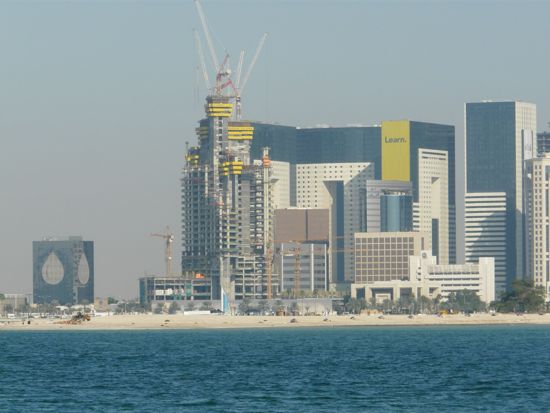
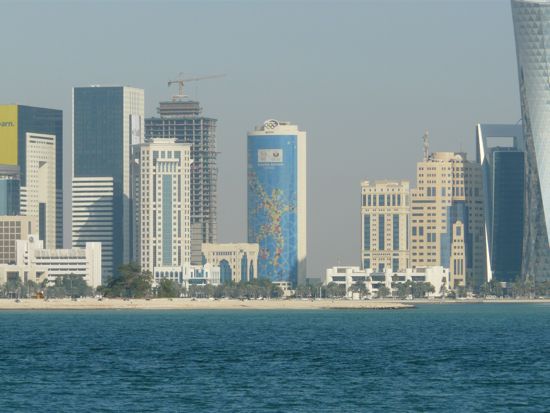


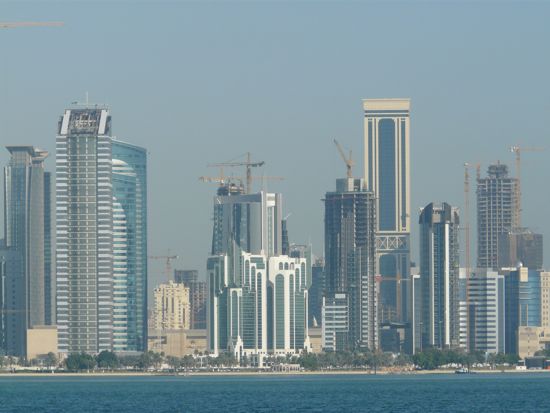

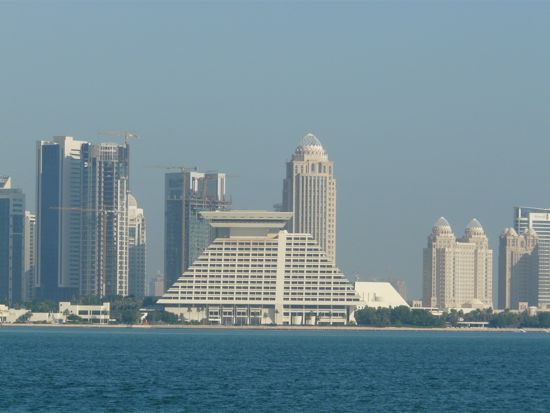
Off in the distance, glimmering like Shangri-La, are the buildings going up on The Pearl:
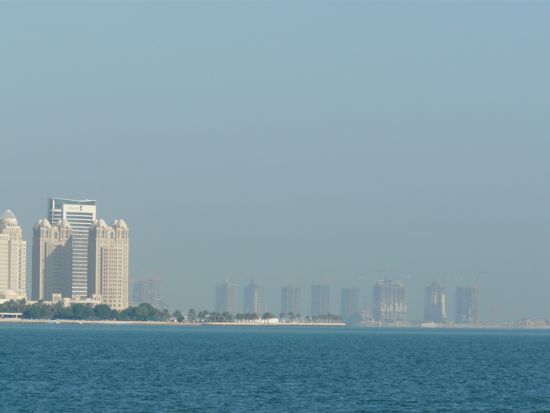
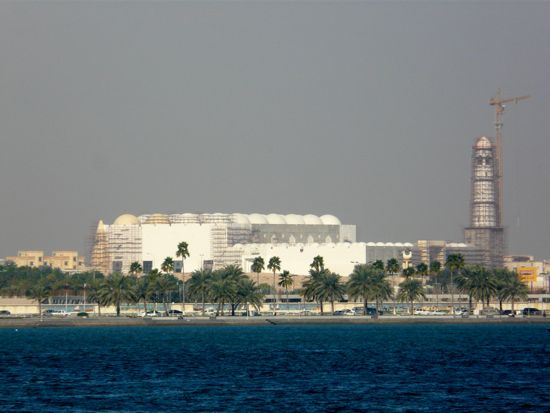
And look at the minaret on the new National Mosque! It’s as tall as many of the taller buildings! Do you think they will have an elevator? Will the muezzins be able to call out the call to prayer after climbing 37 stories?
Another Doha Perspective
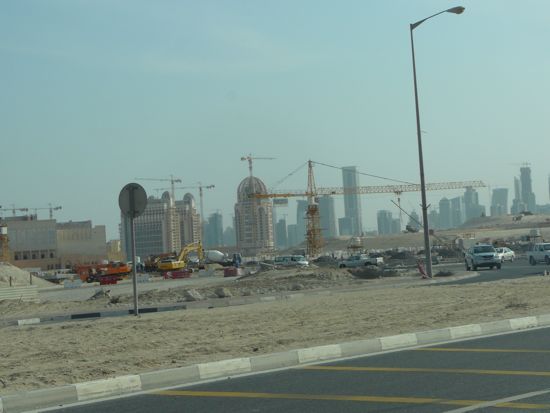
Looking from the Diplomatic Club area (over on the left; you can no longer see the Diplomatic Club) toward the Sheraton/business center area of Doha.
Recent Comments
intlxpatr on Yellowstone: Old Faithful to C… Michelle on Yellowstone: Old Faithful to C… Cathy on No Grown-Ups in Charge intlxpatr on Waiting for Snow intlxpatr on Waiting for Snow Wikipedia Donate Button

Amazina


Early Voting in Florida


 Here There and Everywhere