Gulf Power and Customer Energy Use Monitoring
I love this! Yes, I am a nerd, yes, I get excited about geeky things, but after my first year in Pensacola, paying electrical bills in the $400’s because I like to be cool, I have learned a few tricks about spending less, like turning the a/c up when leaving the house, it really makes a difference.
And now, we monitor our energy use on a DAILY basis. I love it! When you log into your Gulf Power account, you can see your energy usage calculated against the daily temperatures, with a range of your estimated end-of-month bill. No more bad surprises!
I think I inherited a small bit of my father’s engineer mentality; I love being able to manage my energy use 🙂

Thank you, Gulf Power, for making it possible.
And The Mountains Echoed by Khaled Hosseini

I danced when I saw the Amazon box; rarely do I buy hardcover (hurts too much when they fall over if I fall asleep reading, too bulky to carry on planes) but this one I was on the waiting list for, mail it as soon as it is published! Khaled Housseini, author of Kite Runner and A Thousand Splendid Suns has a new runaway best-seller; thanks to him I’ve just spent three days in Afghanistan, Paris and Los Angeles.
As the book opens, I am big brother to a baby sister whose Mom died in childbirth, living in a remote village in Afghanistan. Life is tough, but through the eyes of these children, life is idyllic, even though food is scarce and winters are cold. We have a huge oak tree with a swing, we play with the other children, and we have each other. Our father’s new wife is kind enough, but is busy with her own children, and the drudgery of cooking, cleaning and making do in a very small, poor Afghan village.
Later, I am Pari, living in Paris with an alcoholic, self-absorbed mother, making a life for myself, but always with a nagging feeling of something just outside my peripheral vision, another life . . .
The tale is told through the eyes of many, and on the way to the end of the tale we meet a wide spectrum of humanity, suffer the ills of war, callousness and unintended cruelties. We find that the man with superficial charm also saves and changes the lives of many, we find a doctor who finds fulfillment serving in the poorly resourced hospitals of Afghanistan, and we feel the agonies of a dutiful daughter watching her father fade into the world of Alzheimer’s.
It’s a wonderful, wild ride, richly textured, and when it finishes, you are not ready for it to end.
Prohibited For Travel in Kuwait
LOL, the have you been to the web page of all the items that are banned for traveling in and out of Kuwait? It’s all in Arabic, but you can understand the photos.
My last move to Kuwait, I was allowed several hundred pounds to take on the airplane. I packed an entire set of flatware, and all my good kitchen knives, and lots of scissors. . . like, who can live without scissors???
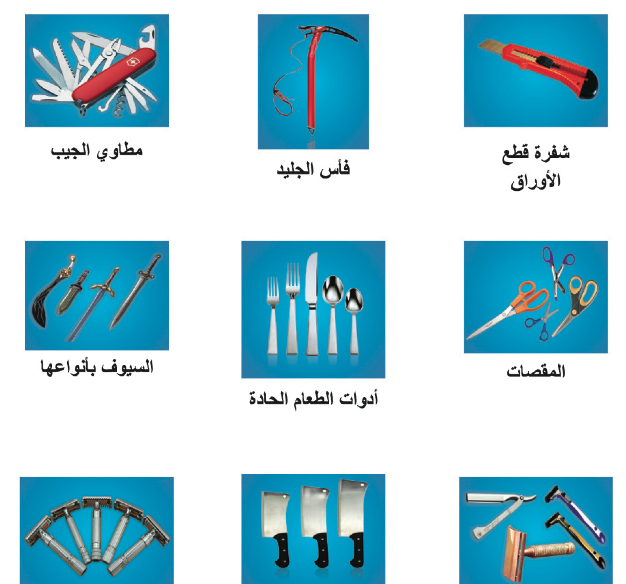
Honest Judge, so sorry, I had NO idea! No one asked me if I was carrying dangerous flatware in my baggage!
What Are Kuwait Traffic Laws?
You all know me – I am a law and order kind of gal. I like order, I like laws, especially those voted on by the people. I like laws which can be enforced, and are enforced, equally, for all people equally in the country. Oh? I did? I said EQUALLY twice?
We are all equal before the law.
Now here is the tricky part. Have you ever seen a listing of traffic laws in Kuwait? Can you find a listing of laws, violations, and their charges? When we apply for driver’s licenses in almost any country, we get a little booklet to memorize, with the laws written inside it. The laws are clear. Clear laws are enforceable.
I’ve looked at the MOI website. I see something that looks like it might be a traffic code in Arabic. I have looked everywhere; I cannot find one in English. I find no reference to any handbooks for people applying for their driver’s license.
How can you enforce a law if the law is not published? Is there a code somewhere listing violations and fines? I published one many years ago, something that all the expats were sending around as ‘the new Kuwait traffic rules’ but IF it was, there was never anything in the paper about it to confirm its validity.

If you are going to have a major campaign to enforce traffic codes, you might want to publish the laws . . . in all major languages use today in Kuwait.
From the Kuwait Times:
Ali vows to rid traffic ‘disease’
Interior Ministry Assistant Undersecretary Maj Gen Abdulfattah Al-Ali
KUWAIT: Interior Ministry Assistant Undersecretary Maj Gen Abdulfattah Al-Ali stressed that all traffic violation-related deportations are in accordance with the law. Speaking at a press conference at the Kuwait Journalists Association (KJA) headquarters, Ali said that deporting people for traffic violations was also adopted by the US and other countries worldwide. “The problem is that we were very tolerant with violators and this does not mean that law violation is a right for motorists,” he underlined, urging all human rights organizations who have criticized Kuwait’s traffic police to examine human rights in their respective countries before talking about Kuwait.
“We have filed over 70,000 traffic citations including 43,000 serious ones such as running red lights, driving under the influence of alcohol, driving on the wrong side and many others,” he elaborated, pointing out that those already deported did not want to respect the traffic laws they had repeatedly violated. Ali added that the results of studies of traffic problems revealed many and that once one problem was solved, another emerged immediately.
“We have various problems… including the fact that motorists speak many languages and dialects which requires a large number of specialists to develop their traffic awareness,” he explained, noting that the traffic remedy strategy started by diagnosing the “disease” by studying random “specimens” at different times of the day at places with heavy traffic flows such as Jleeb Al-Shuyoukh, Shuwaikh Industrial Area, Amman Street, Bnaid Al-Gar, Khaitan, Farwaniya and Fahaheel.
“The specimens showed some major problems such as domestic drivers using private vehicles as taxis, taxi and large vehicle drivers who do not hold general driver’s licenses and people driving without licenses at all,” he said, adding that this called for strict law enforcement.
“Traffic in Kuwait is like an old sick man who once treated for one aliment develops another,” he noted, adding that 18 traffic inspection teams dressed in civilian clothes had been formed and deployed in various places. “Fortunately, traffic police only file 100 daily citations in Jleeb compared to 1,000-1,500 in the past”, he concluded.
One in Five Qataris Needs Mental Health Assistance
A Qatar Mental Health survey shows 1 in 5 Qataris suffering from a mental ailment, commonly depression or schizophrenia, with fewer than 1 in 4 of those afflicted receiving treatment, due to fears of social stigma . . . from the Gulf Times, Qatar.
By Noimot Olayiwola/Staff Reporter
A Mental Health Strategy, which is awaiting the endorsement of the Supreme Council of Health’s executive committee, is expected to be completed this year.
It is being envisaged that the Mental Health Strategy will lead to a reduction in the incidence and severity of mental illness in Qatar, besides increasing the proportion of people with emerging or established mental illness who are able to access the right care at the right time, with a focus on early intervention.
The strategy will also provide the opportunity to increase the ability of people with mental illness to participate in education, employment and training, enhance public education and awareness and thereby reduce the stigma associated with mental ailment, reduce the prevalence of risk factors that contribute to the onset of mental illness and prevent longer-term recovery, and establish Qatar as a centre of academic excellence in mental health research and education.
Speaking on the strategy at an event held recently, Hamad Medical Corporation’s (HMC) General Adult Psychiatry senior consultant and Weill Cornell Medical College in Qatar assistant professor Dr Suhaila Ghuloum said the mental health initiative contributes to the Human Development pillar of Qatar National Vision 2030, which recognises that a healthy mind is as important as a healthy body.
She said a study has shown that around 20% of the country’s population suffers from a form of mental disorder and less than 25% of the people with mental ailments actually receive the care that they need.
Stating that the actual prevalence rate of mental health ailments would soon be published, Dr Ghuloum added that around 20% and 18% of the population also suffered from depression and anxiety disorder, respectively.
The Psychiatry Department is the only facility providing primary, secondary and tertiary care for people with mental illness in Qatar. “We conducted the study on adult patients visiting the primary healthcare centres and found that one in five people here will experience a mental disorder with conditions such as schizophrenia and depression on top of the list,” she said.
According to her, schizophrenia, depression and substance abuse are three of the top five causes of disabilities in Qatar. “A condition like schizophrenia can prevent a child from attending school,” she said.
Dr Ghuloum said social stigma, which is a combination of ignorance and discrimination, is the biggest challenge facing people with mental illness in Qatar.
“Through interaction with some of our patients, we realised that many had delayed getting medical help due to fear of stigma and the negative attitudes of some of the patients themselves, their family members as well as physicians,” she noted.
The official called for comprehensive care for people with mental illness, saying the Psychiatry Department has already started a system that is all encompassing and comprehensive – through primary care – besides providing treatment for some patients on an in-patient basis, who are co-located in general hospitals, as well as community-based services being offered to those in need of long-term care.
“The transformation of Qatar’s mental health services focuses on early intervention and recovery, and will give people a range of options on how to access mental healthcare tailored to their needs. Whether it is in a primary care, community-based or a hospital setting, people with mental health issues will have access to the right care, at the right time and in the right place,” she asserted.
Qatar Prepares For Leadership Transition as Emir Steps Down
Thank you Grammy, for forwarding this article from The Telegraph. Who knew? I thought the current Emir was looking slimmer and healthier than before, but maybe he just wants a quieter, more private life, and the prince is willing to take the reins?
We watched Doha go from a sleepy little seaside capitol to a skyscraper-laced booming natural gas economy. It was an amazing time to be living in Doha. Sounds like more changes may be in store.

By Damien McElroy, Foreign Affairs Correspondent7:00PM BST 09 Jun 2013
Senior figures in Qatar have briefed foreign counterparts that the time has come for Sheikh Tamim bin Hamad, the 33-year-old crown prince to take over the leadership of the gas-rich Gulf state, the Daily Telegraph has learned.
The succession plan, which is due to be launched by the end of the month, will see Hamad bin Jassim, the prime minister and one of the biggest investors in Britain, give up his post.
Within weeks of that decision the royal court will announce that the emir, Sheikh Hamad bin Khalifa, who has struggled with health problems, will cede powers to the Sandhurst-educated crown prince.
A prominent British visitor to the gas-rich Gulf state was told of the plans earlier this year and sources said other key states, including the US and Iran, have also been briefed about the succession.
“The plan is to manage a staged handover of power that allows the crown prince to come to the fore,” said one source with knowledge of the discussions. “The stakes are very high because Qatar is at forefront of events in a very sensitive region.”
Representatives of the Qatar government were not able to comment on the discussions about the emirate’s future leadership but analysts said any changes in Qatar’s leadership would have huge implications for the Middle East and Western foreign policy.
“The legacy of the emir and the prime minister has been to make Qatar a player in the world,” said Michael Stephens, a Gulf researcher at the Royal United Services Institute. “It was an outpost when they took over and now it has grown into a modern city, it is one of the biggest investors in Europe and Britain, has set up a very powerful Arab television station [Al Jazeera] and has a very prominent foreign policy. That is almost all down to the driving force of those two men.”
Sheikh Hamad, the emir, took power in a bloodless coup in 1995, taking advantage of his father’s absence on a trip to Europe. The charismatic monarch has overseen the transformation of the emirate, which lies just 21 miles from the coast of Iran. His glamorous wife Sheikha Mozah, who was last week seen at a charity function with the Prince of Wales at Windsor Castle, has been a symbol of women’s rights in the Arab world.
The resignation of Hamad bin Jassim has huge consequences for Britain even though he is staying as chief executive of the Qatar Investment Authority, an immensely well resourced sovereign wealth fund that recycles the emirate’s gas revenues.
He will continue to be the driving force behind the entity that owns Harrods and invested in prime property projects in London, including The Shard, Europe’s tallest building.
With a relatively tiny population of less than two million, Qatar is an outsized force in Middle East politics.
Although Sheikh Tamim is well known to diplomats and foreign officials, there are questions over the future direction of policies under the new leadership.
As a result of his education in Britain and Qatar’s role as the host of an American airbase, he has close links to Western militaries.
But observers point to his close alliance with the Islamist Muslim Brotherhood as a potential sign that he will not be as liberal as his father and the prime minister.
The country has spent liberally on supporting Islamist movements in the Arab Spring, playing a key role in providing arms and logistics for rebels in Libya, Egypt and Syria.
“I Will Wipe out the word WASTA from the Traffic Dictionary”
Wooo HOOOO on You, Major General Abdulfattah Al-Ali!
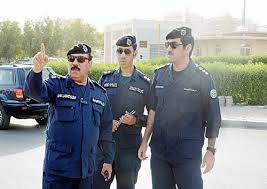
Sometimes, when you are reading a newspaper looking for content, the most significant articles can be little small ones:
Major Al-Ali vows to redraw traffic map
KUWAIT: “I have orders from higher authorities to organize the traffic and the law will be implemented strictly, Assistant Interior Ministry Under Secretary for Traffic Affairs Major General Abdelfattah Al-Ali said. “I will change the traffic map within six months and wipe out the word wasta from the traffic dictionary ,” he added. “I have strict orders from higher authorities to organize traffic and the law will be implemented very strictly,” Major Ali said.
The Kuwait Times got his title wrong; it is Major GENERAL, not Major, LOL, that’s a big difference. It appears he has the clout – and the backing – to make a brave and steadfast stand:
“WIPE OUT THE WORD WASTA FROM THE TRAFFIC DICTIONARY”
I can hardly believe my eyes. This is going to be very painful for young Kuwait men, who have learned – from prior experience – that the rules do not apply to them. IF Major General Abdulfattah Al-Ali can maintain his strong position, there may be more young Kuwait men who live to be grown-up men, there may be fewer heart-wrenching funerals, far fewer trips to the emergency room (did you know that some of the best head-trauma physicians in the world are in the ER’s in Qatar, Kuwait, and the UAE? There’s a reason for that.) The days of seeing babies on their daddy’s laps in traffic may be over. People may actually start wearing seatbelts!
Wooo HOOO on You, Major General Abdulfattah Al-Ali. You are a brave and courageous man, with a vision for a safer future for Kuwait.
11,800 Deported: Kuwait Deportations Continue “Without an End Date”
I still have a large contingent of loyal readers from Kuwait, but by early this morning, I could see something was up:
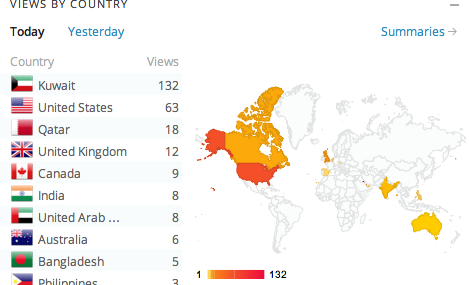
It’s not often that I have 132 Kuwait hits before noon.
So I checked the Kuwait Times:
Expat deportations will continue: Traffic chief – 11,800 deported in two-and-a-half months
KUWAIT: Major General Abdulfattah Al-Ali’s name has become synonymous with extensive traffic campaigns, aimed at enforcing the law at all costs, including implementation of mass deportations. The senior Interior Ministry official, who takes pride in deporting 11,800 people and impounding 3,000 vehicles during his tenure as head of the Ahmadi Security Department over the past two and a half years, told a local daily that deporting expatriates for serious violations will continue without an end date. “Administrative deportation of violating expatriates is not going to stop, especially of those carrying passengers illegally, in which case a person would be in violation of traffic and labor regulations,” Maj Gen Al-Ali, the Interior Ministry’s Assistant Undersecretary for Traffic Affairs, told Al-Rai on Friday.
He added that any ticket can be disputed “by a request to refer the case for traffic department investigations”. In the series of crackdowns that started late April, at least 2,000 traffic violations were registered, including 1,000 tickets issued directly on the street, while thousands of people were reportedly deported. Moreover, Maj Gen Al-Ali revealed that the ministry collected KD4 million, out of the KD24 million owed in traffic fines, during the same period. In that regard, the senior official pointed out that only KD8 million worth of fines are registered against individuals, while the rest are against companies and state departments. Out of the KD8 million, KD6 million is registered against expatriates, Maj Gen Al-Ali said. “Cases are soon to be filed with the traffic court in order to issue travel ban orders against people with more than KD80 in fines owed to the ministry,” he added.
Al-Rai published Maj Gen Al-Ali’s statement yesterday, along with a transcript of an interview with Al- Watan TV during which he defended the ongoing campaigns. “Our procedures are necessary to save lives, with average statistics indicating that 450 people are killed and 3,000 are injured annually due to traffic accidents,” he explained. During the interview, Maj Gen Al-Ali insisted that all drivers are equal when it comes to implementation of the law. “There have been doctors among the people deported, including a surgeon caught driving without a license for three years,” he said, before confirming news reports that he had taken a decision to impound a vehicle owned by Minister of Cabinet Affairs Sheikh Mohammad Al-Abdullah Al-Sabah on grounds of repeated violations committed by his personal driver. Meanwhile, the senior official urged any person who had obtained a license through illegal means to dispose of it “because once caught, they are going to be charged with forgery”. —Al-Rai, Al-Watan
Recent Comments
ExpatAlien on What Country am I Living … intlxpatr on Yellowstone: Old Faithful to C… Michelle on Yellowstone: Old Faithful to C… Cathy on No Grown-Ups in Charge intlxpatr on Waiting for Snow Wikipedia Donate Button

Amazina


Early Voting in Florida


 Here There and Everywhere