Bravo, Judge Leon!
Judge Leon blocks Pentagon and Hegseth in prosecution to punish Mark Kelly over ‘illegal orders’ video
U.S. District Judge Richard Leon, an appointee of former President George W. Bush, noted that while serving in the armed forces, military forces have limitations on some of their freedoms, but said that no court had ever extended that doctrine to retired service members, and he would not be the first to do so.
“This Court has all it needs to conclude that Defendants have trampled on Senator Kelly’s First Amendment freedoms and threatened the constitutional liberties of millions of military retirees,” the judge wrote.
Leon quoted singer-songwriter Bob Dylan to say, “You don’t need a weatherman to know which way the wind blows.” ”
The Judge had some pithy and appropriate things to say about military retirees and their rights to free speech, and in particular to Kelly’s position not only as a retired veteran, but also as a current Senator, where his responsibility to represent his electorate would be severely hampered by intimidating threats to take away or reduce his pension, or bring him back on duty to court-martial him for his “crime.”
His crime? Senator Kelly appeared in a video with five other veterans serving in the Senate reminding service members they have a responsibility NOT to obey illegal orders.
After WWII, many German leaders tried to excuse their crimes by saying “We were only following orders.”
When orders violate the Constitution, we do not have to comply. Constitutional rights apply to all people living in the United States, all residents; every person is authorized due process of the law.
These Constitutional Rights are being tested. Judge Leon is a Bush appointed judge, a man with years of judicial procedures behind him.
We are finding some ironic ways in which our President is unifying us. Republicans and Democrats alike recoiled in horror at the goon-squad “policing” in Minnesota. Republican and Democrat judicial appointees are correcting mistaken applications of power and brute force, and corraling them back where they belong. And God Bless Bad Bunny for reminding us that America is two continents, and that we are all stronger together. The vast majority of Americans on both continents were ready for some joy, and words of brotherhood, liberty and equality. We have more in common than we have differences.
If the United States of America is to continue to be a land welcoming those seeking opportunity and freedom, we all have to work towards this together, supporting our common values and finding ways to cooperate, even in areas where we disagree.
By the way, under the catagory of unanticipated consequences, Senator Mark Kelly received a huge surge of financial contributions to defend himself against this intimidation by our Secretary of Defense. This is a man who could successfully run for President, with his presence, his courage, his background and his steadfast approach.
Make No Peace With Oppression
From today’s Lectionary readings on the Feast Day of Saint Agatha of Sicily:
PRAYER (contemporary language)
Almighty and everlasting God, who strengthened your martyr Agatha with constancy and courage: Grant us for the love of you to make no peace with oppression, to fear no adversity, and to have no tolerance for those who would use their power to abuse or exploit; Through Jesus Christ our Lord, to whom with you and the Holy Spirit be all honor and glory, now and for ever. Amen.
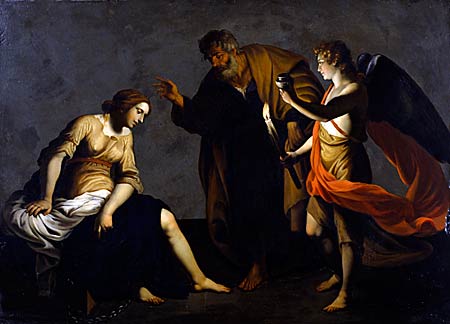
Read the story of Saint Agatha by clicking on link above.
Sunset on the Coldest Night of the Year

What you can’t see is the wind blowing, and the white caps on the bayou. We had to re-cover and re-clothespin the roses and plumbago, and the ice on our water tubs was an inch thick. No problems with the running water freezing – so far. We have some cold days yet to come, but this is likely to be the coldest day of the year.
We saw One Battle After Another yesterday at the theater downtown that shows art films, foreign films and award nominees. The tickets are $10, the venue is provided free and the guy that runs the show does it for the love of film. Not only do we watch the films, but there are also great discussions.
Friends told me I probably wouldn’t like the movie, but I loved it. Going to Uni on the West Coast, I felt like I knew those people, on both sides. And dark as it was, it held a mirror up to current themes. I love actors who choose challenging roles, and even roles in which they play people who make bad decisions, or aren’t the brightest bulb in the chandelier. Leonardo diCaprio had his work cut out for him in this role, and I think he nailed it. Yes, it is wacky and violent. We are living in wacky and violent times. Who would have thought we would elect a liar, cheat, and felon to be President of the United States, and that we would stand by, helpless, as he gutted our Constitution? Wacko. It’s all wacko.
Today is a Full Moon, a new month and God willing, a time to turn things around. Bruce Springsteen has the number one song in 19 countries, with The Streets of Minneapolis, a roaring anthem fit for the times, and Minneapolis has been nominated for the Nobel Peace Prize for their activism and self-restraing in the face of the goons of ICE.
Atlantic Monthly has a new article on how the Proud Boys aren’t coming in the counter the hundreds of demonstrators; that the Homeland Security and ICE squads are doing a fine job – and they have photos to show how an organization theoretically doing customs enforcement now looks just like the Proud Boys. When did Customs Enforcement dress like troops going into villages in Afghanistan? What legitimate law enforcement officers wear masks? Who in their right minds arrests little children?:
Proud Boys in Washington, DC

ICE agents in Minneapolis
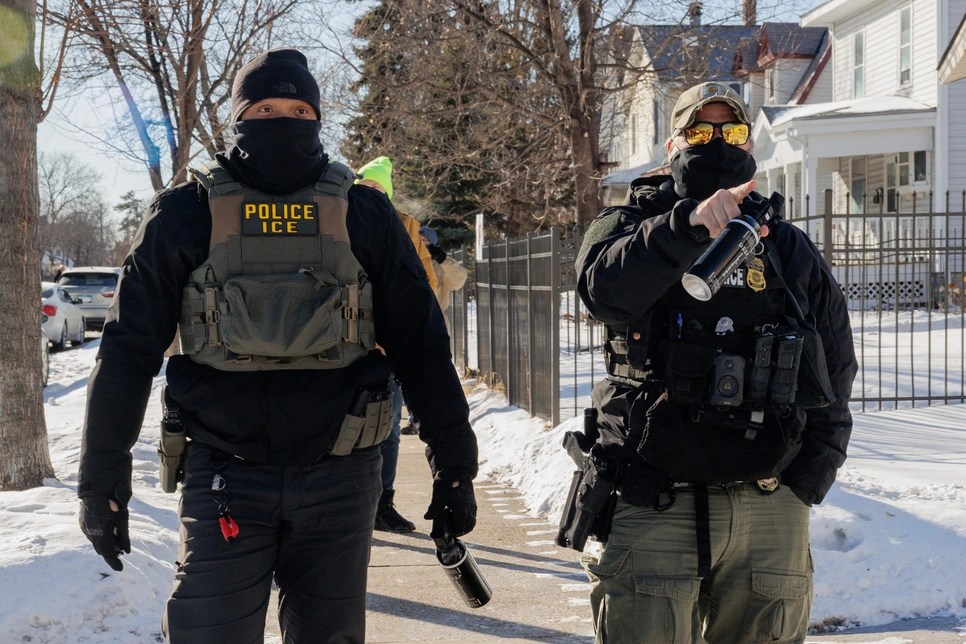
Law Enforcement officers, in civilized countries with laws protecting the innocent (and who are innocent until the system determines them guilty), are TRAINED to operate with restraint. Trained personnel do not fire on civilian bystanders.
I’ve watched the Minneapolis tapes, especially the one filmed by officer Jonathan Ross. I listened to him as, just after the shooting, he said “F@#king B!tch” and I don’t think he was even thinking about Good; I think he was angry that Good’s wife had called him “Big Boy” and told him to go get a sandwich. Most of the guys we see in those uniforms are hefty, and slow, and clumsy. And they do not respond to mockery with self-restraint – as we have seen. They need training. And it wouldn’t hurt if they had grown-up leadership. The kinds of vague, unconstitutional and inciting instructions they have received seem designed to be incendiary.
Oath of Citizenship: Joyful Celebration
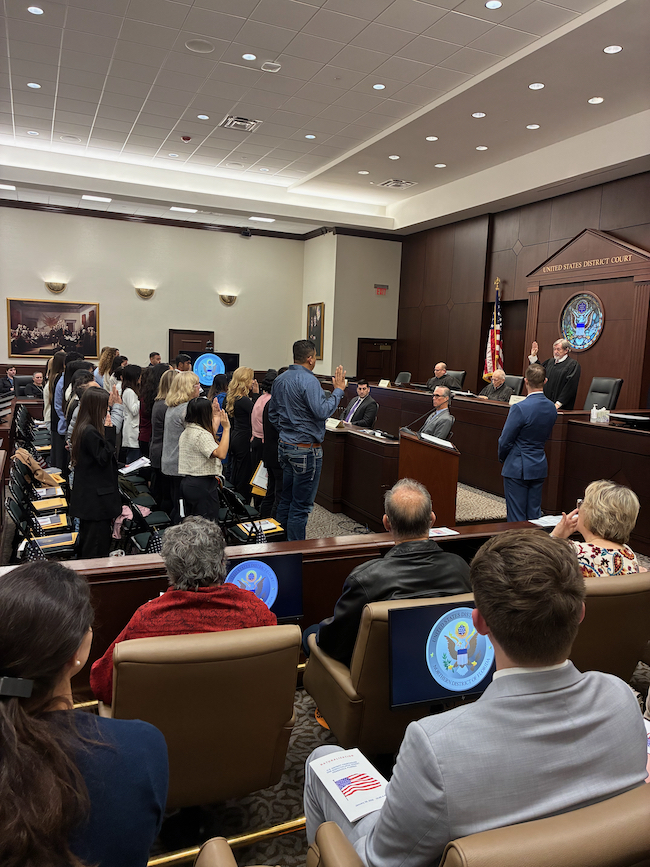
It’s not often a courtroom is packed with joyful people. And only for this one significant celebration are cameras allowed – even encouraged – in the courtroom. The difference in atmosphere is palpable.
Yesterday, 33 people from a variety of nations took their oath to be responsible American citizens. There were moments when their was no sound, no noise at all, in the courtroom; the silence was a salute to the importance of the event, and respect for the moment.
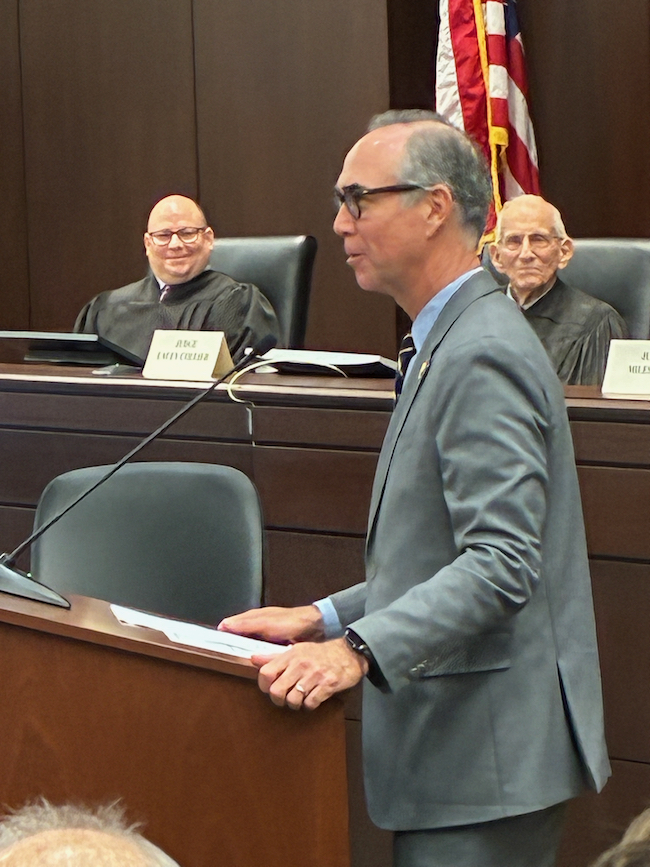
Judge Collier managed to be both solemn and celebratory, lauding the diversity of the group and the importance of their choice to be US citizens. He, and other, congratulated the applicants for “earning” their citizenship by learning our history, customs and language, and appreciating it’s rewards even more than those of us who are citizens by birth and heritage.
David Stafford, our long time Supervisor of Elections, now the right-hand man to Pensacola’s Mayor Reeves, gave a moving and motivating speech about the gift of citizenship, its rewards, and the great responsibility each citizen has to sign up to vote – and to vote.
My friends, you receive my frustrated rants and my frequent musings. Today, I share with you a day full of pure joy. A packed courtroom, for all the right reasons; official speeches, short, pithy, and full of positivity and possibilities, and people who fully believe in the Rule of Law, Equality, Diversity as a strength, and the great inclusionary current of neighborly brotherhood that connects people in the United States of America.
Orwellian Insurrection Talk v. Free Elections
I am haunted by memories of our Janus-like leader telling people while running for the office of President that if we voted for him, we would never have to vote again. What could he have meant by that? Aren’t elections part of what we value as a Democracy?
I am troubled by a leader who insists that what we saw with our own eyes on January 6th, that the thugs beating policemen, breaking and entering the Congress, chasing down Mike Pence with a noose was NOT an insurrection, not at all what he was going for when he told followers to “Fight Like Hell!” or we would have no Democracy. This leader who said he would be with them, and scurried back to the white house to watch events unfold on his Presidential television. He didn’t call off these hooligans and goons until HOURS after the violence began.
He PARDONED these thugs who invaded the Congress. He now calls it a “Day of Love.” Like we can’t see with our own eyes?
Just in time for Black History Month, he continues to dismantle exhibitions exploring the relationship between the enslaved and the enslavers. If it makes white people uncomfortable, isn’t that appropriate? Is slavery something we want to return to? And who, exactly do we enslave. Like are camera bearing Democrats candidates for the new underclass?
Armed with Whistles and Phone Cameras
J.D. Vance tells us to “lower the temperature” and help the ICE forces. J.D. Vance, you are talking to Minnesotans! You are talking to the descendants of Norwegians, the very nationality our orange leader wants to come to the USA! You are talking to people who have peacefully incorporated people from many nations, welcomed them! YOU created a spurious policy, based on a poorly made video by a social influencer. Yes, there was a child care scandal, and the people charged were not Somali but US citizens! YOU are creating the rise is heated emotions, and those you are shooting are armed with whistles and phone cameras!
Who has a history of creating violent insurrections? Who has sent unwelcome storm troopers into Minnesota? Who is poking Minnesota officials? Who is creating the problem and like every school boy bully, blaming the victim – “You started it!”
Go HOME, ICE. You are not welcome, you are not needed. You are invading the homes of US CITIZENS without a warrant, and laughing! You are shouting “Boo HOO!” to witnesses when you shoot a non-violent demonstrator 10 times! 10 Times! If that isn’t excessive force, what is?
I applaud the citizens of Minneapolis who are standing against this villainy and this bullying. I applaud their self-restraint and their persistence. I applaud Portland, Oregon for utilizing the legal system to lower the temperature and resist the pressure to give the radical bullying thugs any opportunity to raise the stakes.
Self restraint and Persistence while we activate the legal system is our only hope if we want to continue to have free and safe elections, and I believe that is what this is all really about.
From Axios: America’s Healthiest and Least Healthy States

(The United Health Foundation was established by UnitedHealth Group in 1999 as a nonprofit, private foundation dedicated to improving health and health care. To date, the United Health Foundation has committed more than $845 million to programs and communities around the world, including a $100 million commitment to help advance and grow the health care workforce.” (from the United Health Foundation website)
This is one of the non-governmental agencies using facts and statistics to measure outcomes of health practices in the USA. Official statistics are disappearing. Entire years of government studies have been deleted from websites. Fortunately, there are people who saw it coming and who recorded the data from the websites, hoping for a future that respects science, research and statistics, and uses that research to create a greater good for us all, and shares that knowledge and best practices with the world.
So Much For Health and Transparency
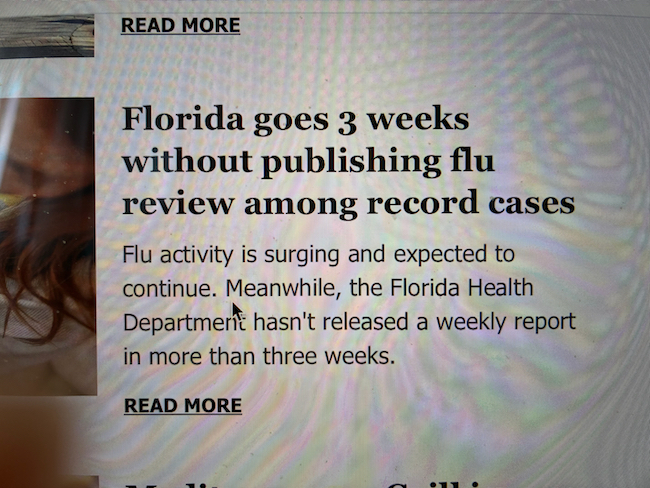
It started during COVID. Politicians and their Administrations stopped publicizing statistics when the stats revealed their government was doing little or nothing to prevent spread of disease. Now, under the cover of cost reductions and eliminating fraud they are gutting the agencies that maintain the statistics and restricting publications of what few statistics are being gathered. Fortunately, private institutions and individuals are watching, keeping track, and doing their best to keep a vulnerable population informed.
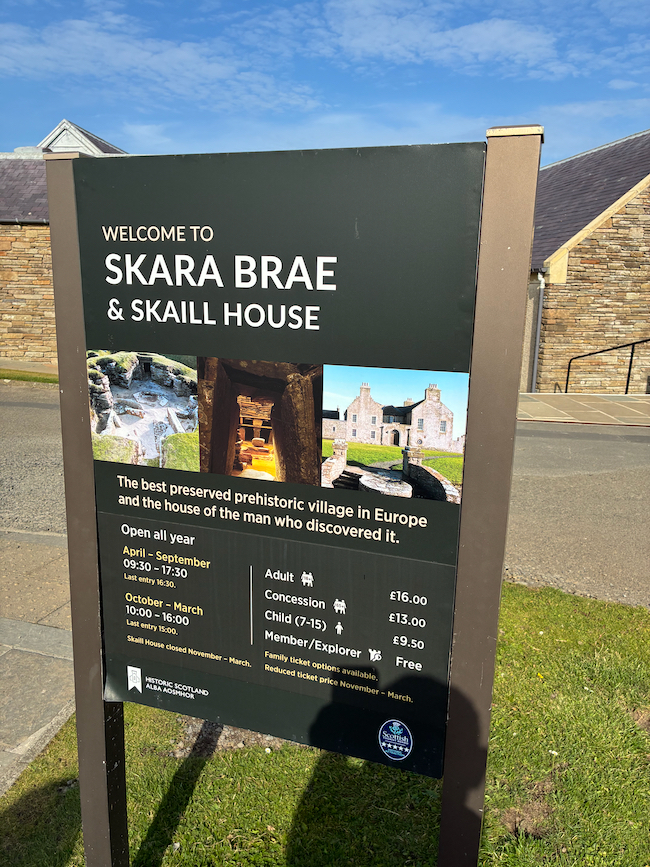
British Isles: Kirkwall, Scara Brae – The Best Day of Our Trip?
We think this day was the best day of our trip. We think every day of this trip has been stellar, above expectations, because we expected both heat and rain, and have had neither. We have had glorious days and breathtaking experiences, and today was the best of the best.

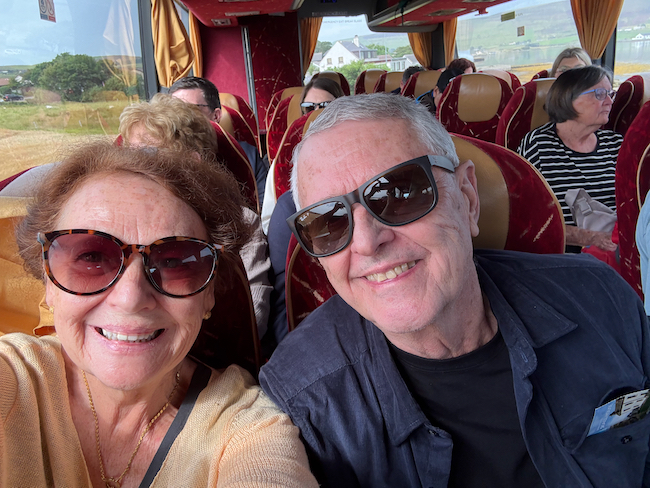
Thank you, AdventureMan, for helping me out with photos. I wish I had more.
We wanted to see two major geographical locations coming to Kirkwall, and we got to see them, and more.
One was Scapa Flow, a huge inland harbor, one of the largest inland harbors in the world. Vikings used it as a natural harbor for centuries. The British kept a fleet there in WWI, and the Germans scuttled their ships there after WWI rather than surrender the ships to the British.
A German U-boat came in after 1939 and sunk the Royal Oak, a British battleship, and over 800 people perished. Among them were 16 year old boys working on the ships with the Navy, causing such outrage in Britain that they no longer recruited 16 year olds.
For the British, the Scapa Flow is a memorial on the level of Pearl Harbor for the Americans. It’s a protected area.
Continuing on, we were able to see the Stone Circles of Brodgar and Stromness, These huge circles of stone pre-date Stonehenge by centuries.
And then we reach our goal, Scara Brae.
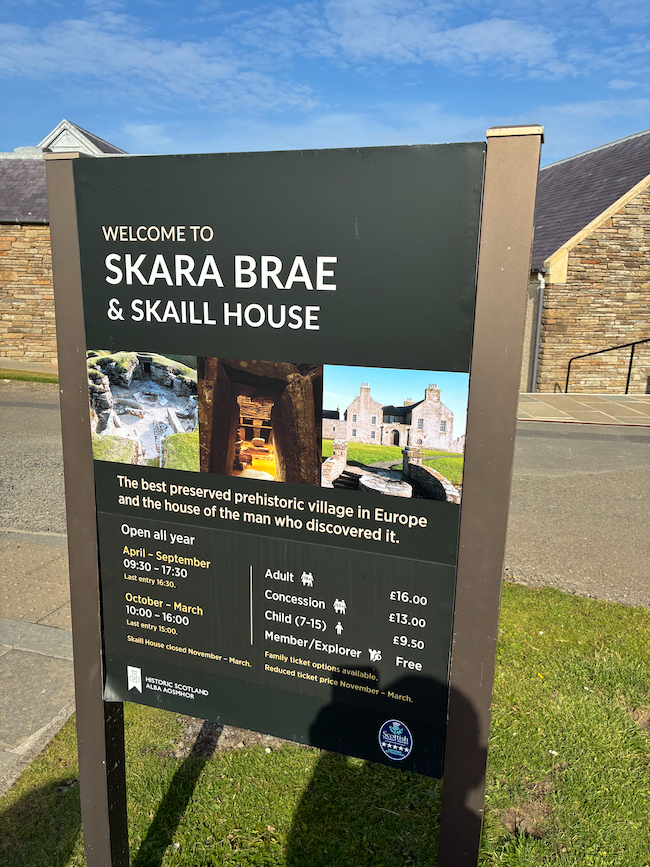
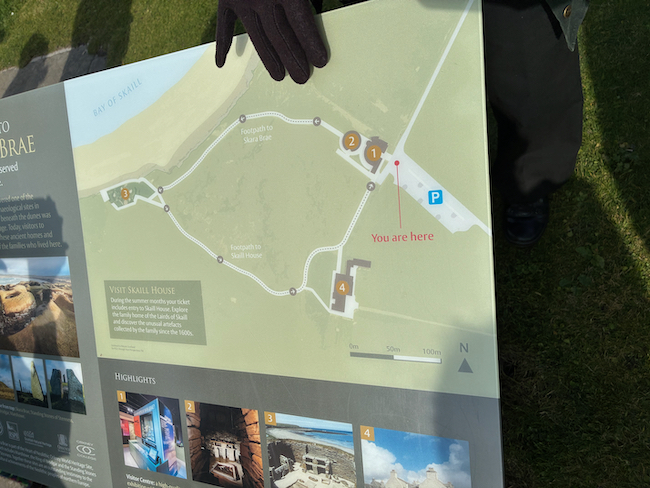
Scara Brae was discovered by accident when a huge storm uncovered stone dwellings buried by sand and soil, which were beginning to erode away. The dwellings are over 5,000 years old, created to shelter from wind and cold, to store goods, and to house families. There are areas created for food preparation, food storage and cooking, areas for sleeping, and a special area for crafting items like pottery and tools to make life easier.
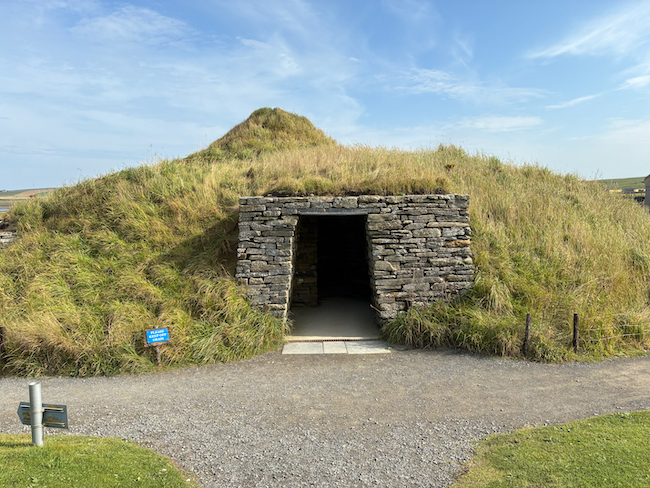
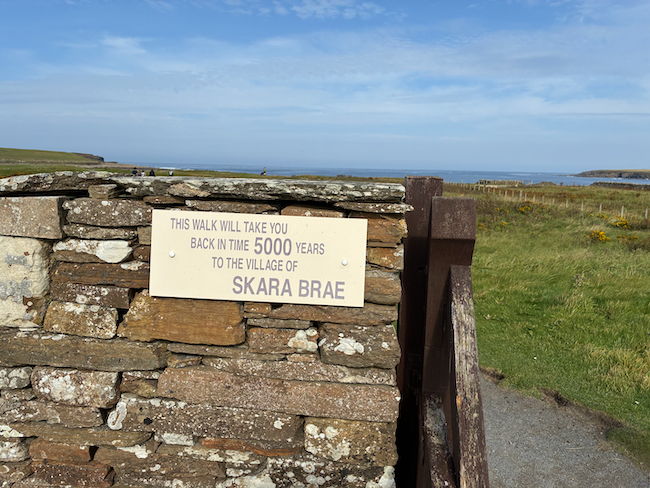
Many people today think we are smarter than earlier man, but when I look at the smart things these people created to make their lives livable, I believe they were every bit as smart as we are, and in some ways, smarter.
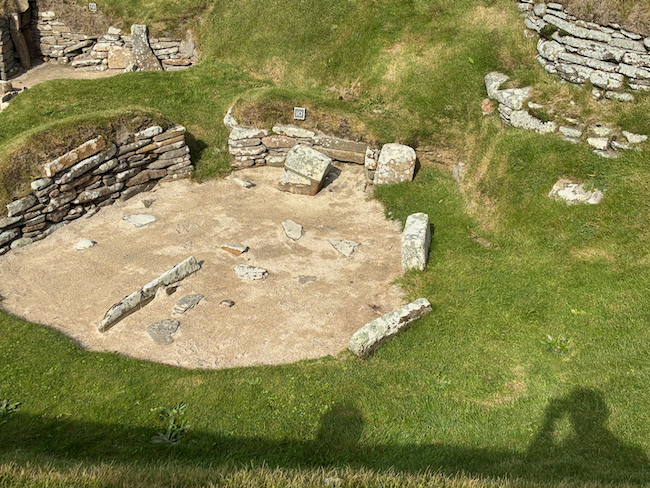
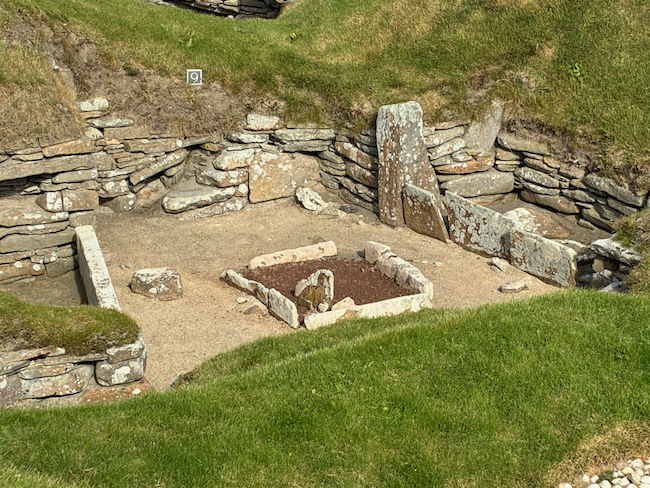
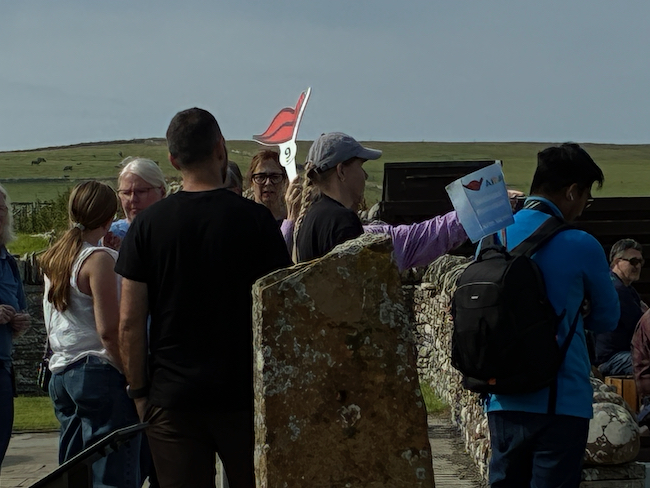
Look how closely these stones fit together to keep the earth out of their houses, fitted without mortar. Our archaeologist guide tells us there is no way to date a stone wall like this, that the inhabitants of the Orkneys build their walls the same way to this day, only now they also use mortar. Traditionally, they will put pointy flat stones on top, vertically, to discourage sheep and cattle from trying to get in (or out). In the museum there are artifacts – combs, needles, tools – which help date the findings.
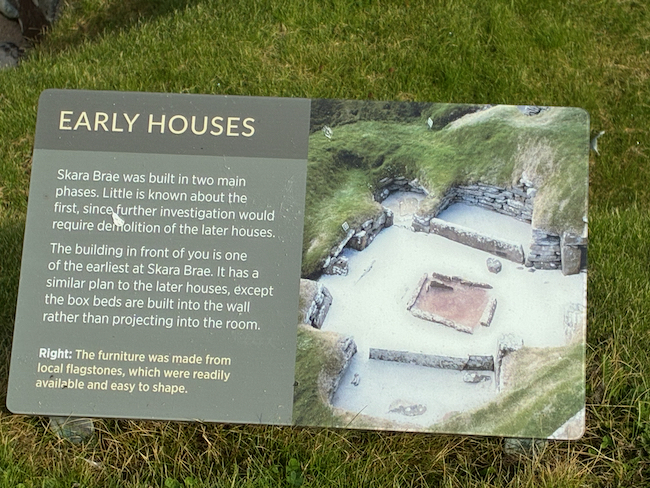
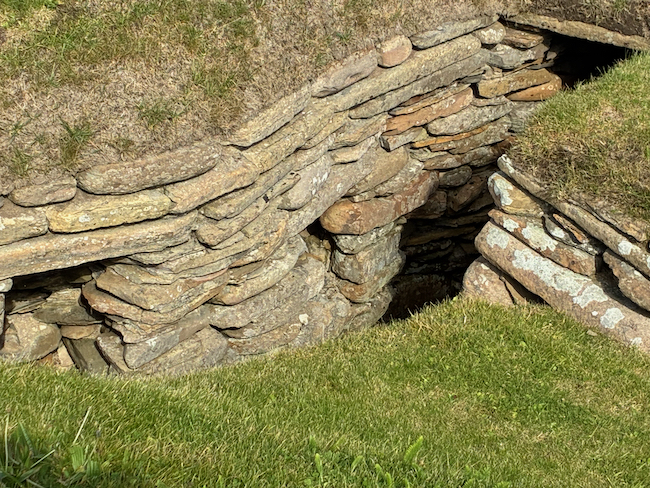
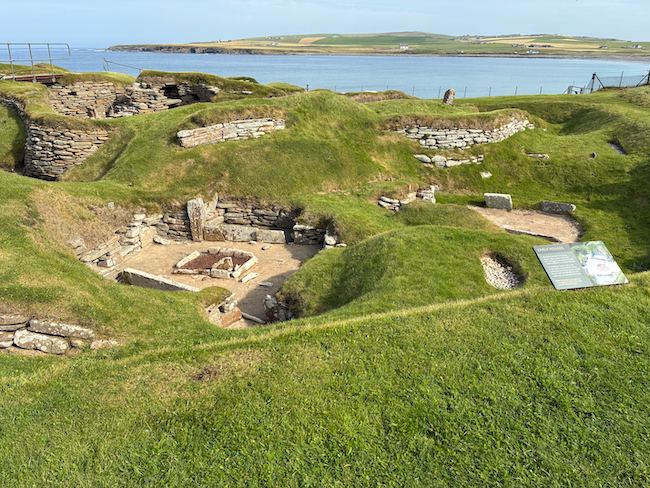
It is a beautiful location, by the sea. It was a thrilling visit.
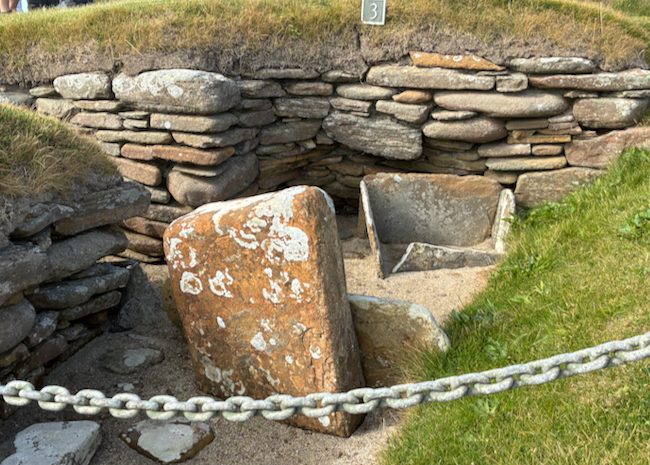

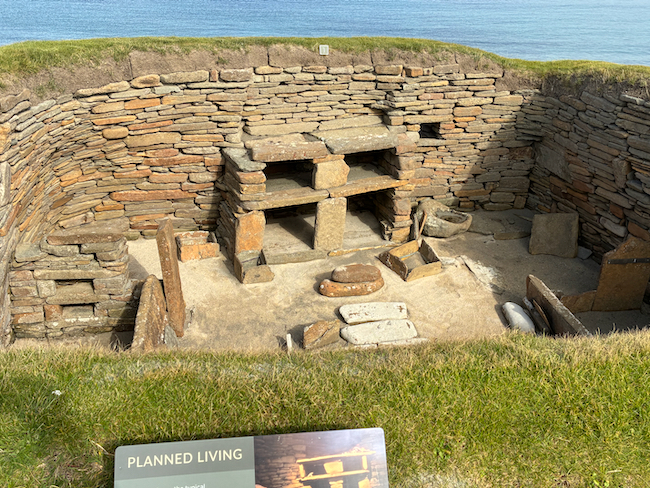
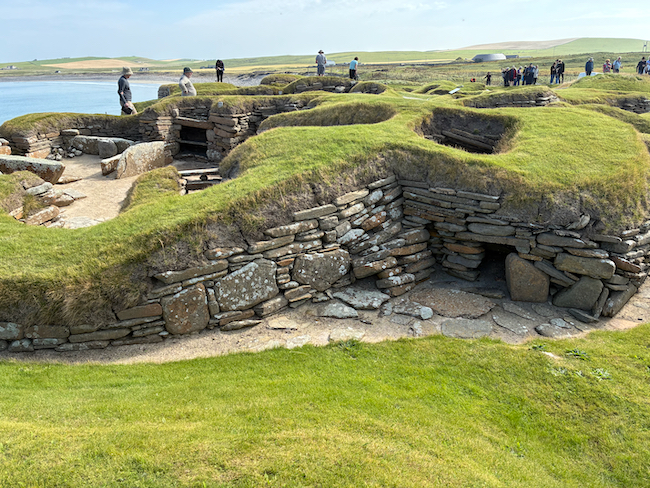
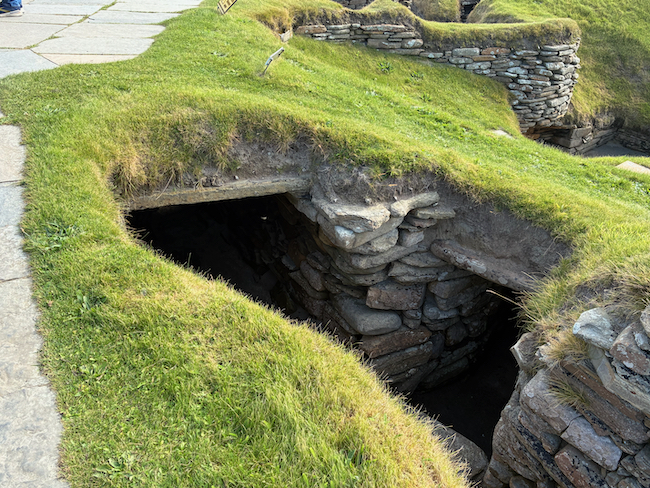
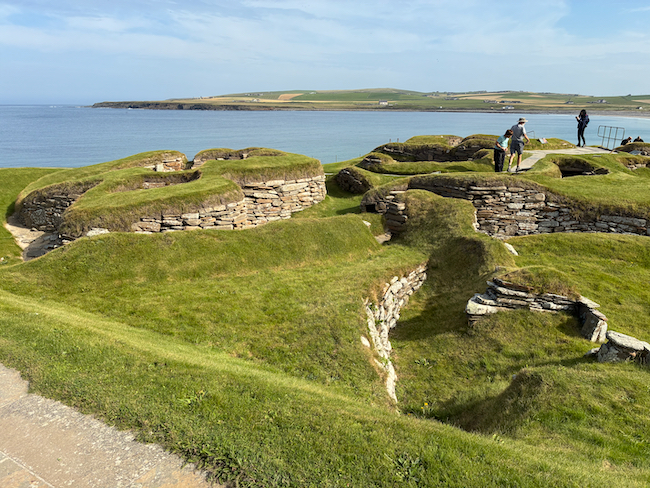
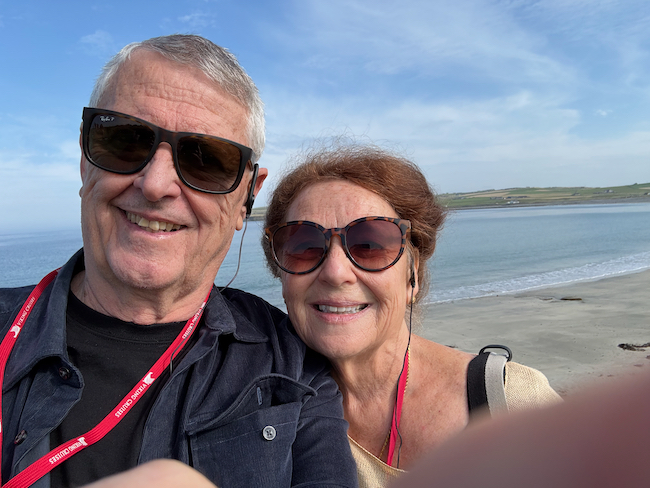

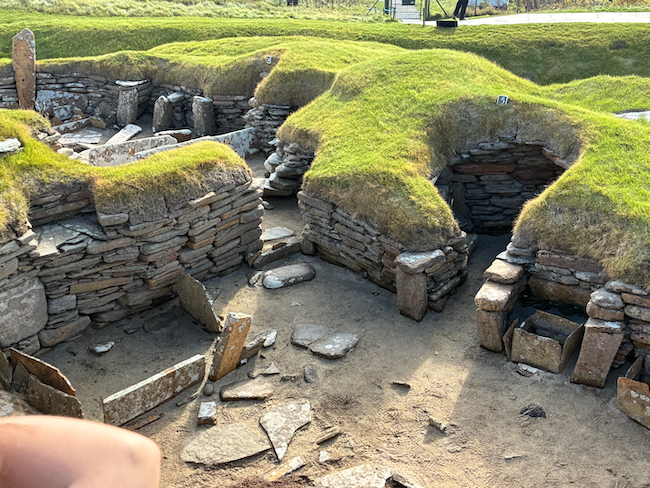
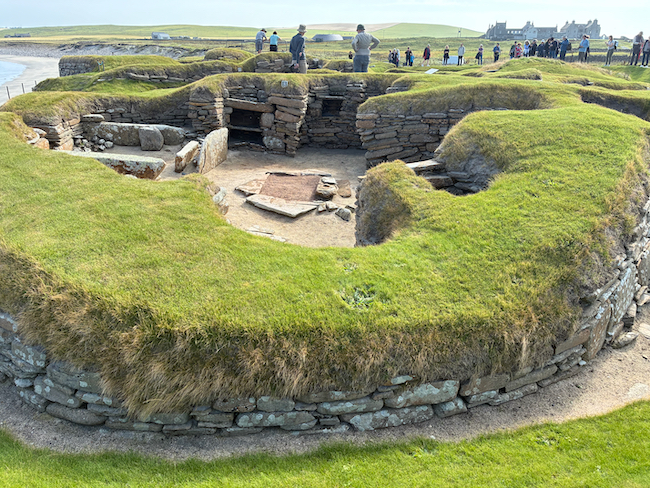
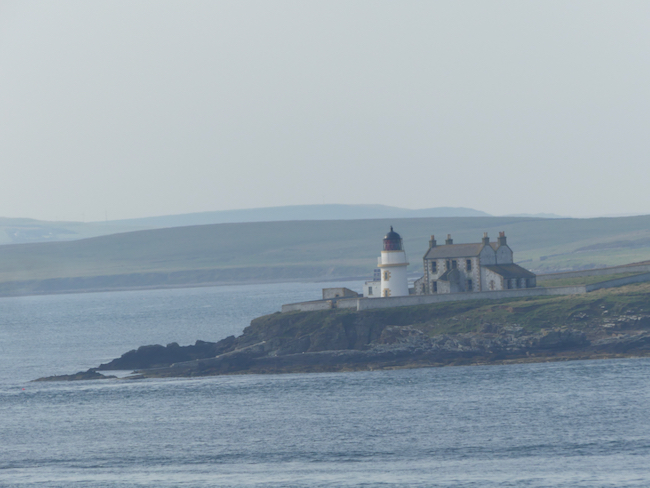

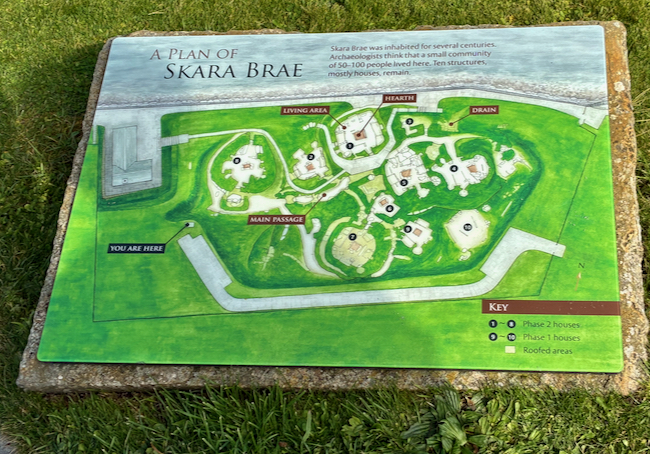
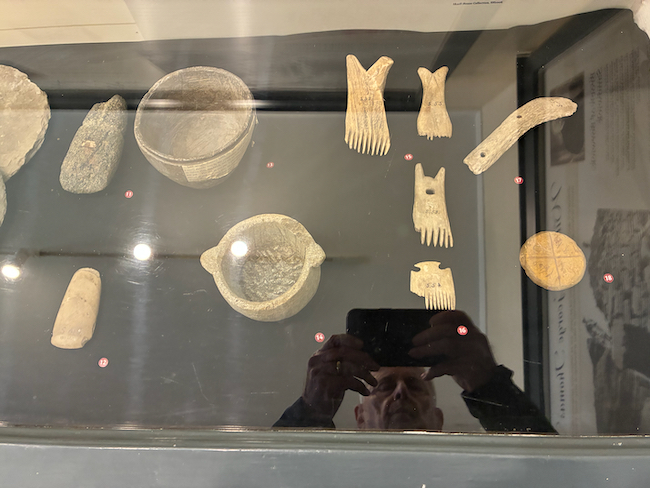
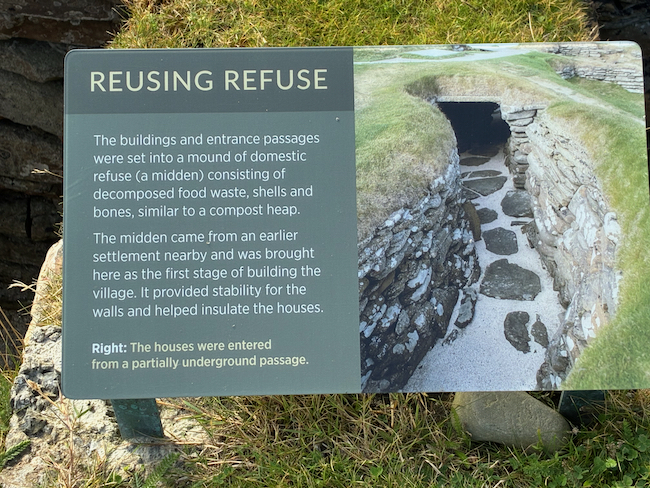
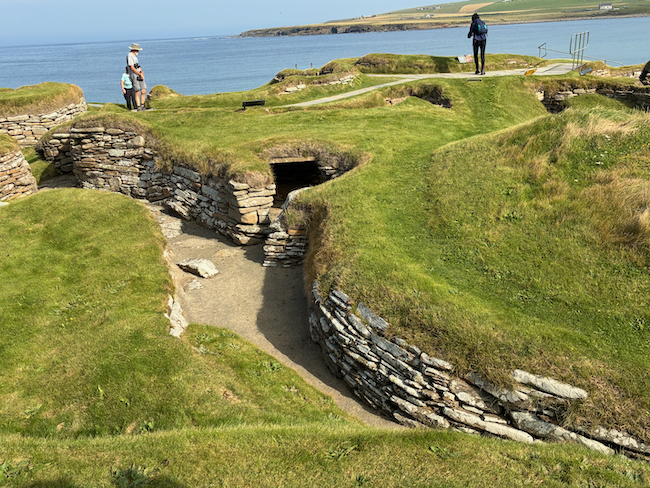
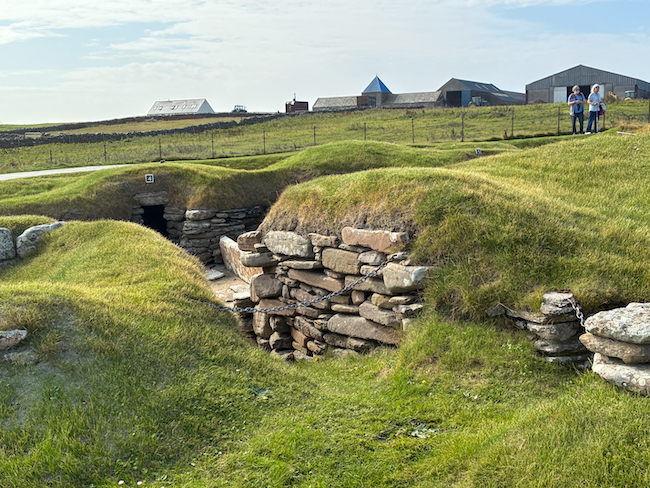
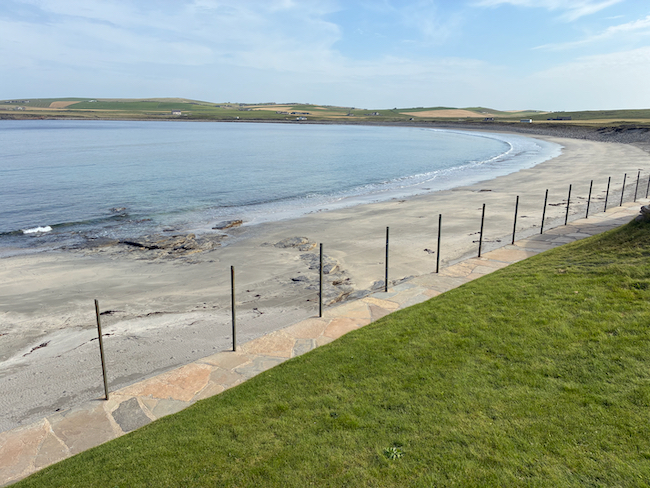

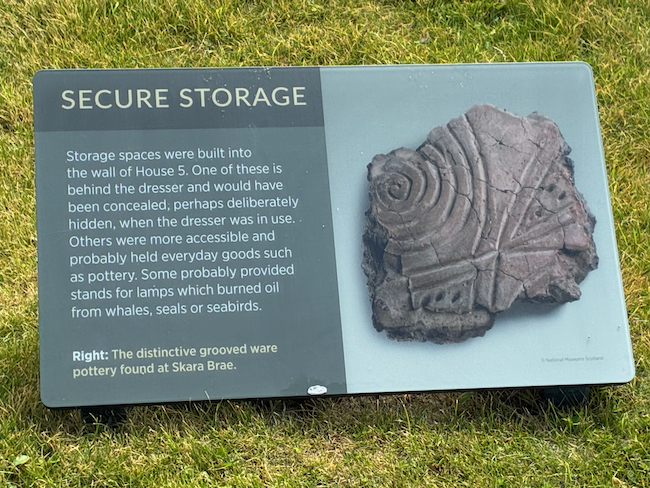


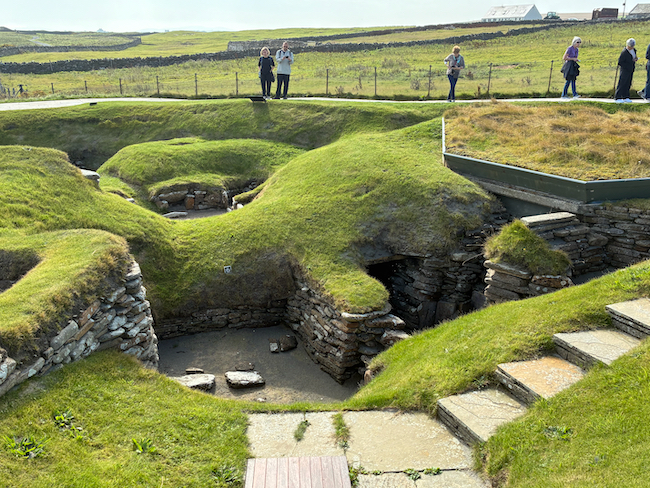
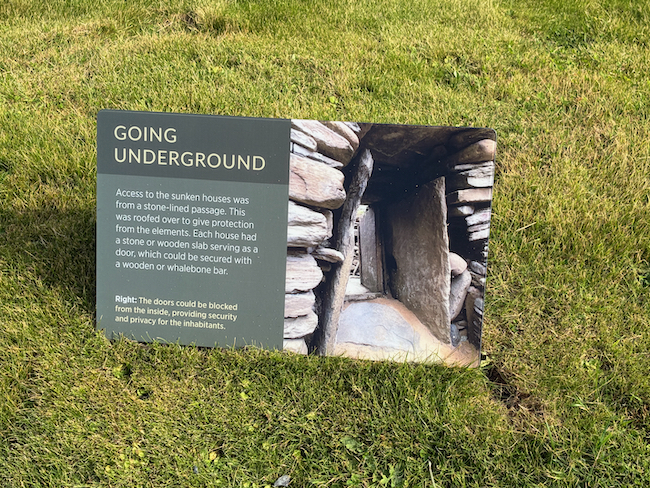
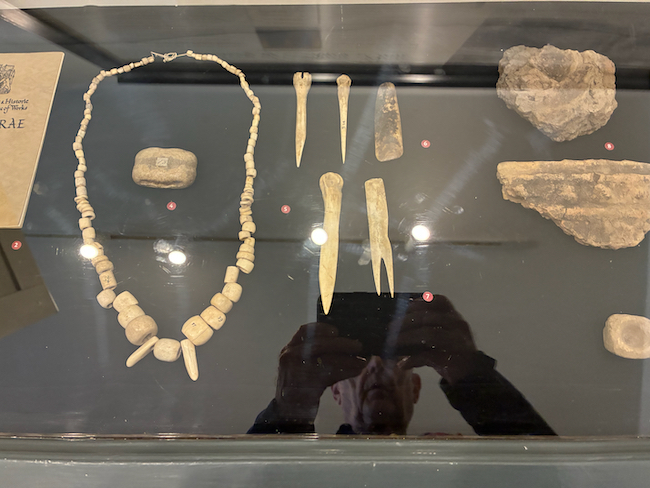


”Graham Watt, the 7th Laird of Breckness, who unearthed the world famous neolithic of Skara Brae in 1850 put in a seawall to forestall further erosion and archaeological experts have excavated several of the houses, although more exist still underground.” (I believe this quote came from a Scara Brae booklet, but I am not sure. 🤔)
On the way back, our bus drives slowly by a series of Neolithic marvels, the Stones of Stenness, the Ring of Brodgar and the tomb at Maeshowe. The bus isn’t allowed to stop because separate bus tours go to those sites (bureaucracy is international!)
(For a lot of fun, read Ann Cleeves newest book in the Shetland/Orkneys Inspector Perez series, The Killing Stones. It is better if you read all the Ann Cleeves Shetland series first, but I read this as a standalone and then started reading the Shetland series, and it worked just fine. )
“The Stones of Stenness are part of one of Europe’s richest archeological landscapes—the legacy of a Neolithic society that flourished between 3800 and 2200 B.C., after the introduction of agriculture but before the advent of metal tools. A mile to the northwest, on higher ground, is another mesmerizing assemblage of megaliths in open space: the Ring of Brodgar, a stone circle some three hundred and forty feet in diameter. To the east is the tomb at Maeshowe, where, beneath a grass-covered mound, Stenness-size slabs anchor a thirteen-foot-high chamber with a corbelled roof. Like Stonehenge and other Late Stone Age sites, Maeshowe has a solar alignment: on the midwinter solstice, the setting sun shines down the entrance passage. Together, these monuments, which are part of a UNESCO World Heritage complex called the Heart of Neolithic Orkney, seem to constitute a minimalist holy land.” (Another regrettably unsourced quote.)
Back in Kirkwall, we decided to have lunch and return to the boat later. We found an Italian restaurant and feasted on Caprese Salad; AdventureMan had a specialty Seafood pasta and I had Spaghetti Aglio Oglio. After lunch, we visited St. Magnus Cathedral, one of the oldest churches in the British Isles. There was a community flower show/competition – the sort of event I love. Groups and individuals created lavish floral displays around the church and won prizes for the best in several categories. It was magnificent and the cathedral was full of people! Then, to celebrate, we had ice cream at the famous Daily Scoop.
Kirkwall is a place to which we would happily return. There is so much more to see and learn.
If you think I am amazing because I remember all these details, you will be happy to know that I have forgotten much, but that I kept a daily journal that reminds me of the details of our daily life on board the ship and at our destinations. Honestly, now we have trouble remembering which day we were in which city.

We tendered back to the ship and enjoyed a deeply satisfying nap before meeting up with our friends for dinner.
The food on board Viking Jupiter is fantastic. It’s a great life, being a grown-up, having options. One night we can focus on salads and seafood, another night on soups or Chinese specialties, another night on roasted salmon and sides – we can choose what we want to eat, and we can choose how much. Viking makes little tiny desserts, maybe a quarter cup of chocolate mousse with a meringue star on top, or one small scoop of ice cream – or two very large scoops with toppings, whatever is your pleasure.
When we get back to our room, it is newly cleaned, every night, with fresh towels and clean sheets, all set up for a good night’s sleep.
It’s not like we live like this at home. We cook, we clean, we keep up the yard, we repair the house, we handle our grown-up responsibilities. For just this short time, it is so wonderful to be taken care of.
I have to give full credit to my husband for most of the Scara Brae photos. I also take full responsibility for the fact that there is a jumble of Scara Brae photos in the middle of this post in no order. Somehow they all got grouped and I can’t figure out how to ungroup them. I used to laugh at my elders who struggled with technology, and now karma is biting me in the butt, and once again I am humbled.
British Isles: We Become THOSE People 😳
This was one of those days full of the unexpected. Our plan was to have breakfast and grab an early cruise shuttle to Greenwich. AdventureMan has done his homework; we like to have a little wine and cheese of our own choice in our cabin, and we want to try some more English cheeses, so he has found a specialty shop, and we know how to get there.
We go out at 9:00, as the schedule says, to catch the shuttle boat, and no one seems to know anything about it. We look around, but all we find is a bridge to the pier with a gate across it, locked and impenetrable. As we start back, a Viking tour person is running towards us and tells us that the boat will arrive at 10, so we wait, and others who want to take advantage of the shuttle arrive and wait with us.
We had an odd experience – before the others arrived, we met a British man who looked healthy and happy and we started talking. He told us he was in rehab, and recovering from years of alcoholism. We learned a lot about his former life – he was successful, and somehow managed his alcoholism, but it was ruining his marriage and his health, and his doctor told him that rehab was his only choice for living a full life. It took a while for him to make that decision, but he is so full of joy telling his story. A deeply cynical part of me was thinking he was going to hit us up for some money, but as it turned out, he was immensely wealthy, and now he was becoming healthy and had clarity for the first time in years. He was a new man. It way an inspirational conversation, waiting for that shuttle to arrive.


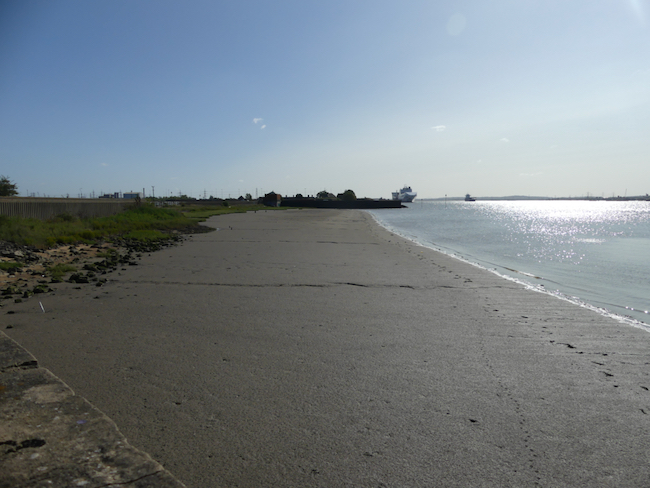
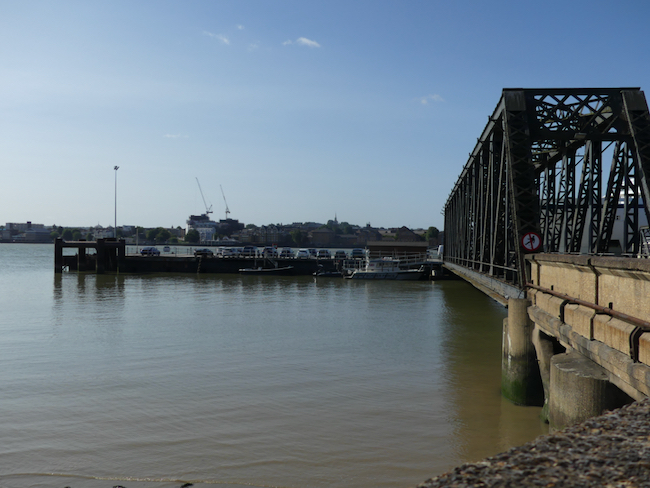
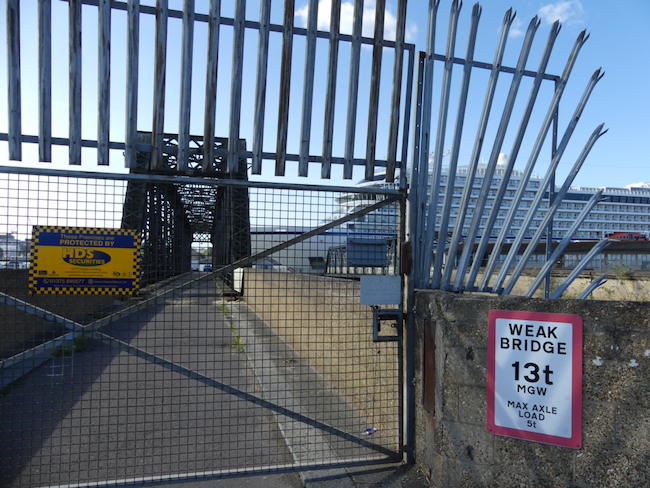
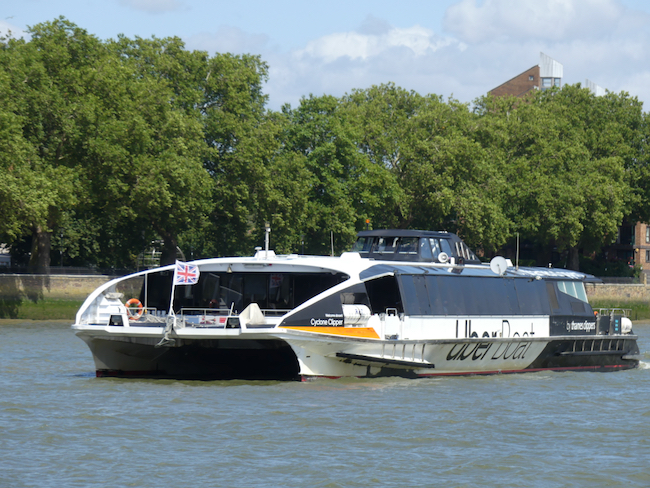
The shuttle arrived, we said goodbye to our new friend, a uniformed security person unlocked the gate and we boarded the chartered Uber boat. And then we sat there; something had happened to the groups going to Greenwich for their walking tours and we had to wait for them. It was nearly an hour before they arrived, and we were wondering if we could do this and still make our 2:00 tour to the Tower of London. We decided it would be tight, but we could do it.
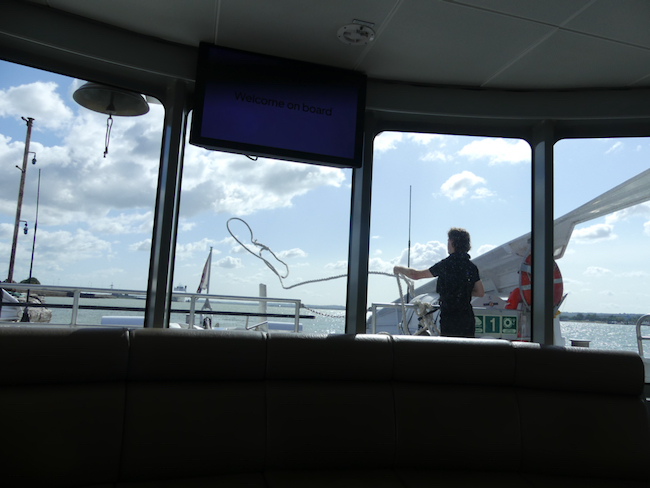
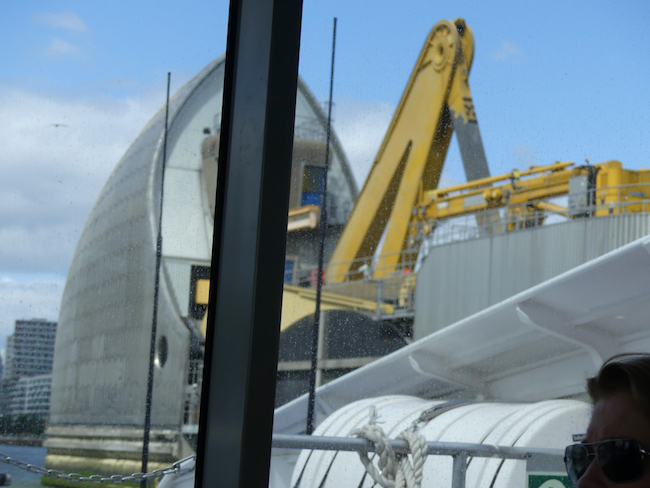
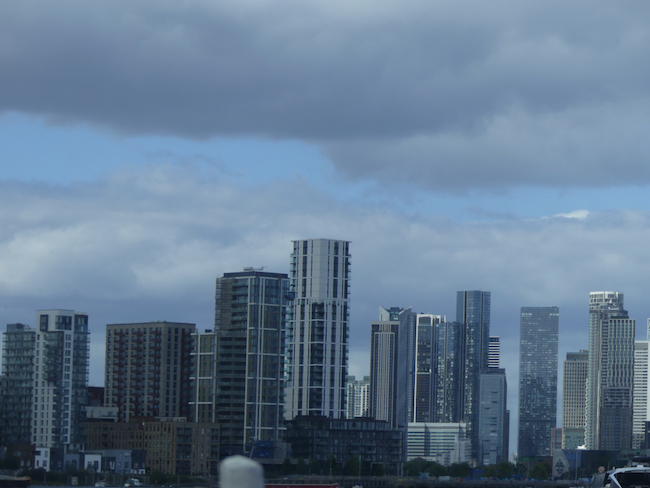
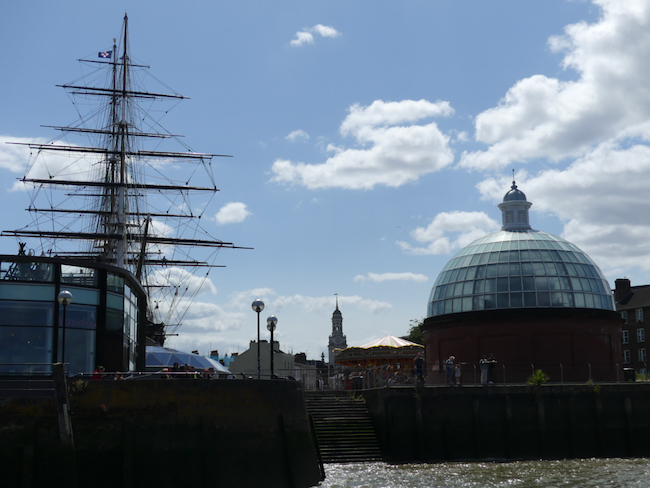
Below; the Cutty Sark
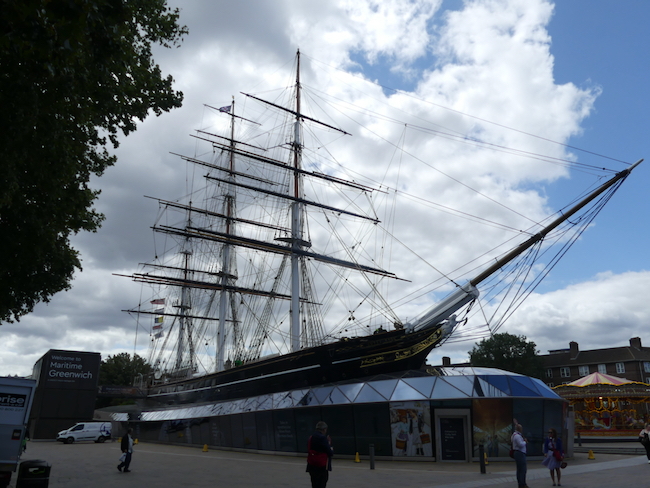
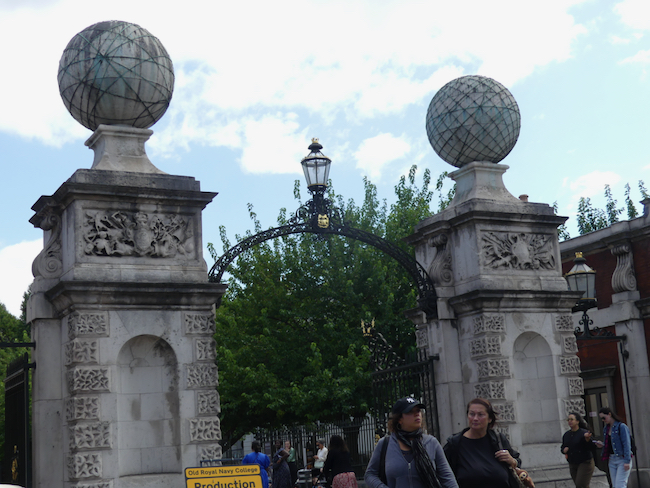
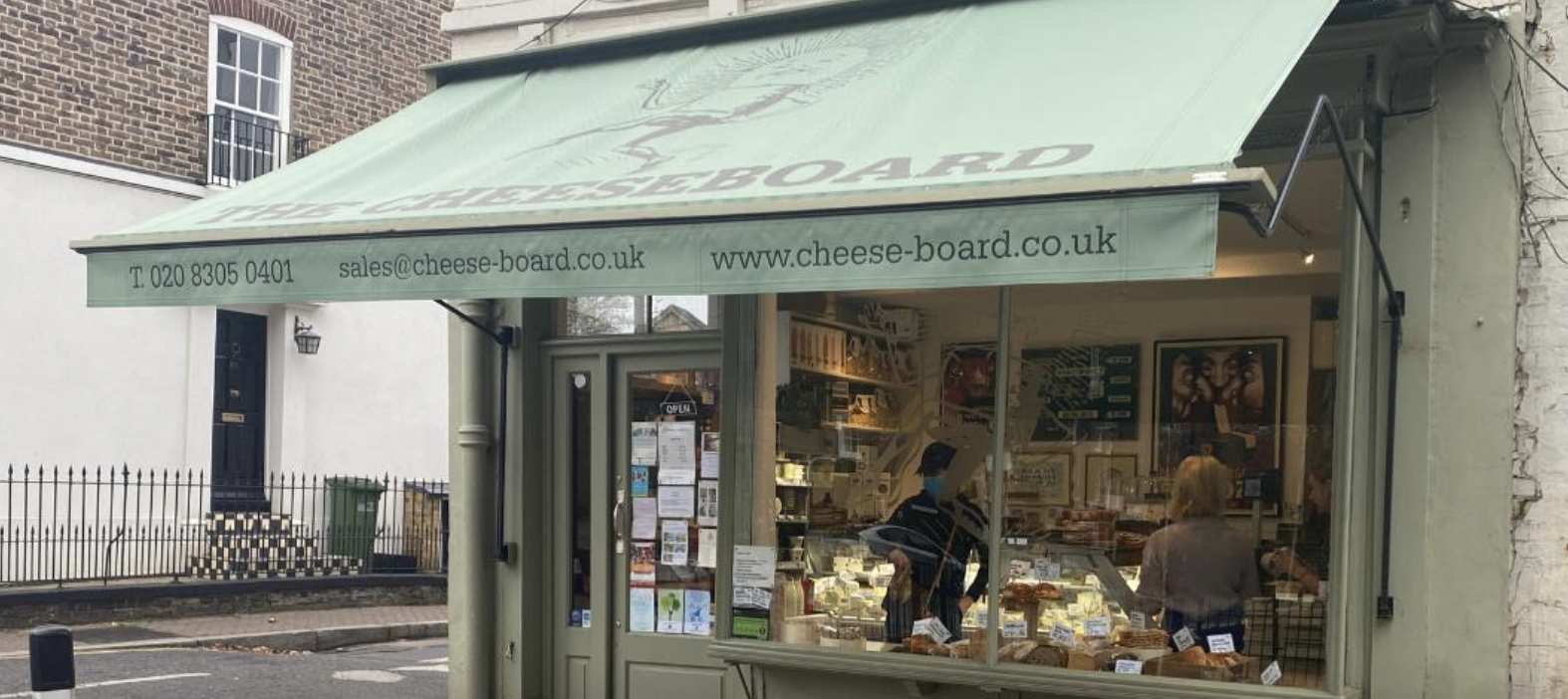
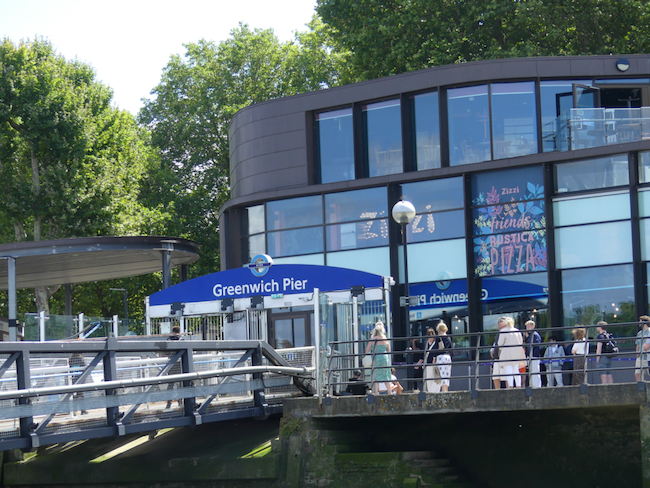
Arriving in Greenwich, we rushed off the boat, and walked as fast as we could to the Cheeseboard, where AdventureMan had a great conversation with the young man who did their website (how we learned about this shop) and was very helpful, providing us with four cheeses and descriptions printed on the label so we would know what we were eating. He also provided two very good bottles of wine from Bleye, one red, one white, and we were on our way to catch the shuttle back. We were able to get on, and thought we were home free, but the ship slowed several times, maybe fighting the tide, and stopped one time to pick up supplies for their on-board snack shop, so we began to accept we would not get back in time for our tour.
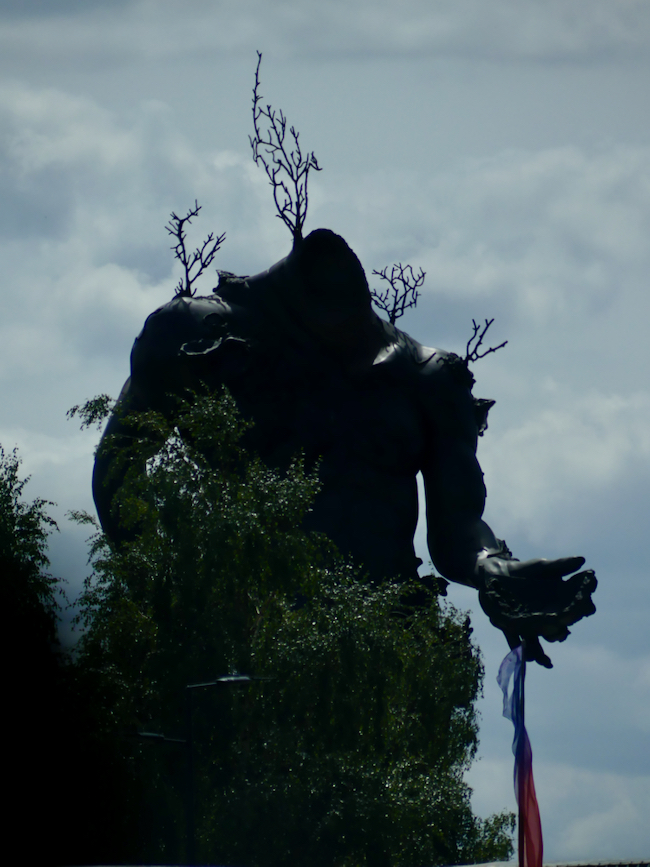
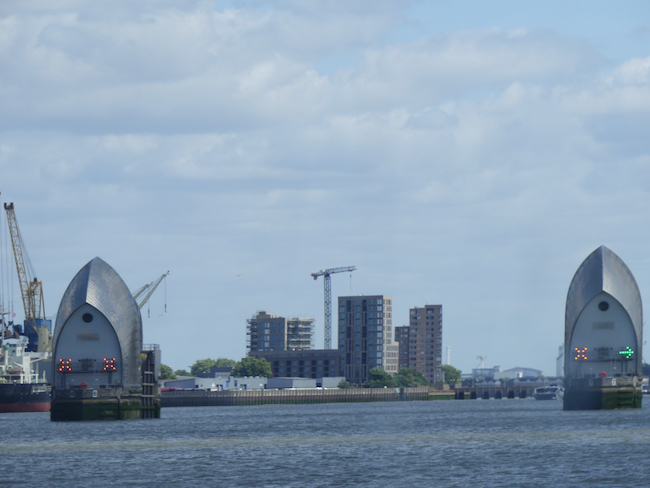

We docked at two oh two. Just two minutes too late. But our tickets for the tour were in our stateroom, and we were supposed to meet at 1:45 so we were just too late, and figured we would console ourselves in the spa.
A Viking tours person was at the gate as we came it. “Have the tour buses for the Tower of London left?” we asked, and she said yes, the last just left. We headed to the boat, but were interrupted by another Viking tour person, standing by a bus who asked if we were the people supposed to be on the London Tower Tour, and we said yes, we were – and asked if this was the bus? She said yes, we told her we didn’t have our tickets and she said it was all right, Viking would manage it. A miracle! We were last on the bus and sat in the way back, happy just to be on board.
Oh wait. Not so fast. The guide tells us we are too late, we are not going on this bus. Like the bus is already late, WE are the problem, and we are standing there. I said meekly “I think we are on this bus. You need to talk to the Viking rep who just directed us here.” And he made us exit the bus while he and the Viking rep had a spirited discussion. We get it. We don’t even have our tickets with us! We are the problem, and we hate to miss the tour but we get it.
The Viking rep convinces him to take us, so we straggle onto the bus, again, and make our way to the rear, not looking anyone in the eye. We have become THOSE people, people so inconsiderate that their lateness has made the whole bus wait. Oh the agony!
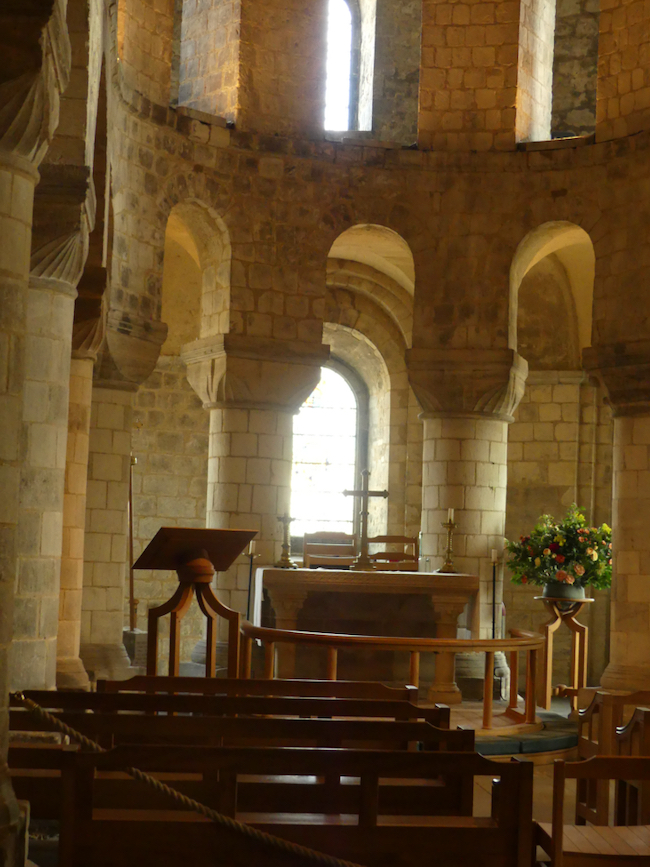
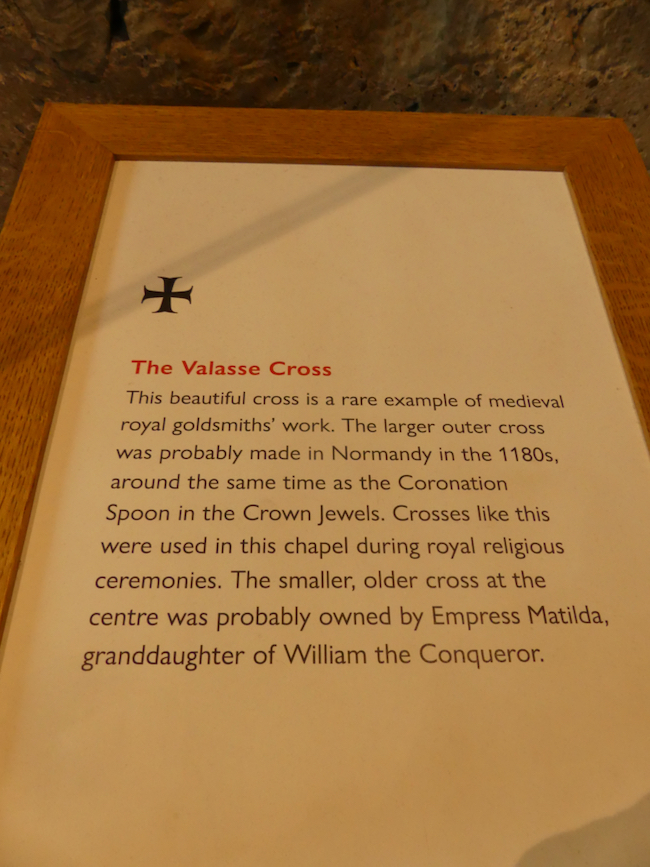
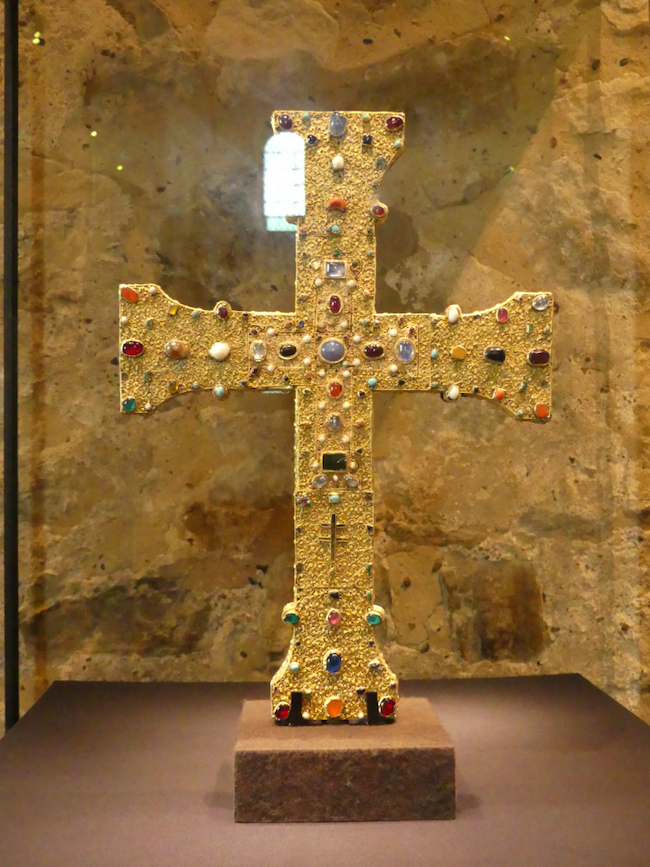
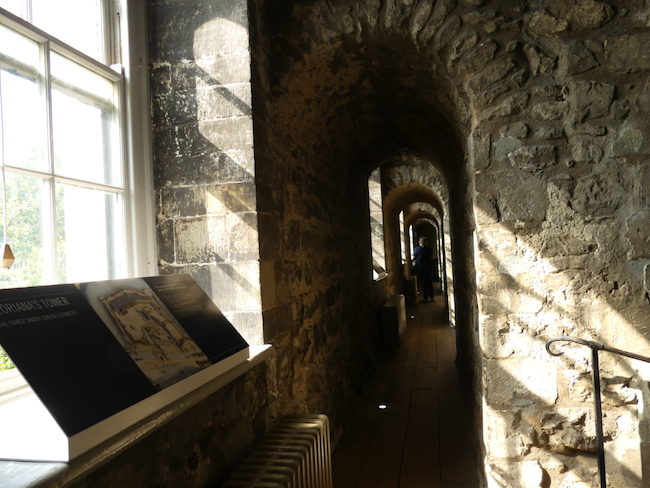
We are so glad it worked out this way. During the ride back into London, the skies suddenly cleared, we had blue skies, the crowds at the Tower were less than two days ago when we had lunch there, and we had a superb Blue Badge tour guide who really knew his history, and even better, knew how to make it interesting. We had time on our own – most went to see the jewels. I’d seen them other trips, I wanted to see the White Tower, which I climbed all the way to the top. I loved the interior spaces. Built in 1070 by William the Conqueror, it had an unexpected graciousness even though its purpose was defensive. AdventureMan spent his equally happy time in the Fusiliers Museum, and we met up with happy hearts for a time well spent in areas we love. It was a very long day. We got back late, and happy. As it turned out, people were not so angry with us, we all got along, and we made friends with the guide, who really was terrific.
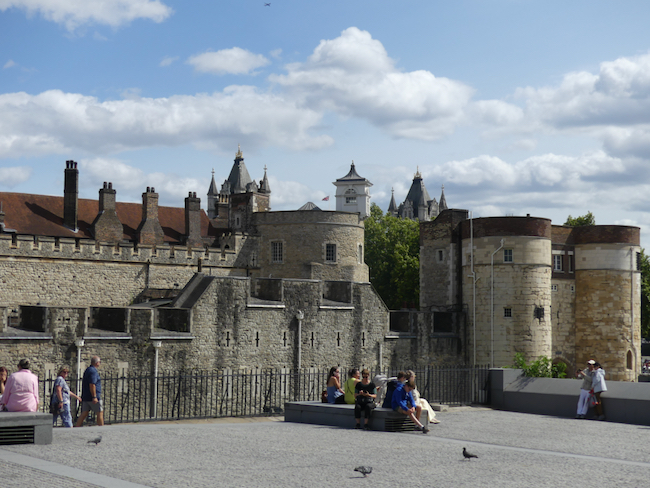
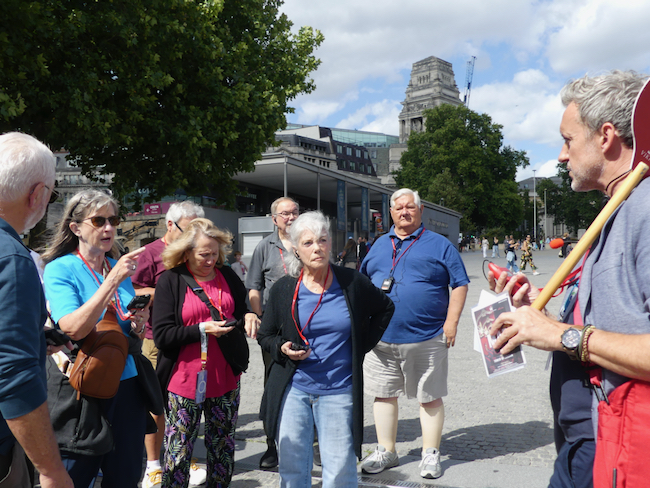
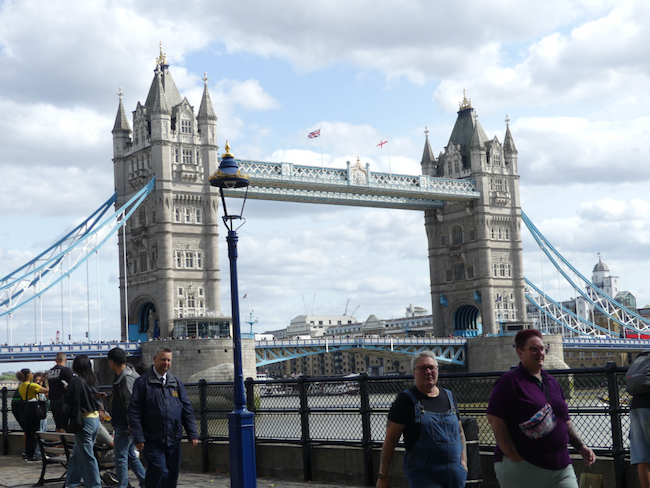
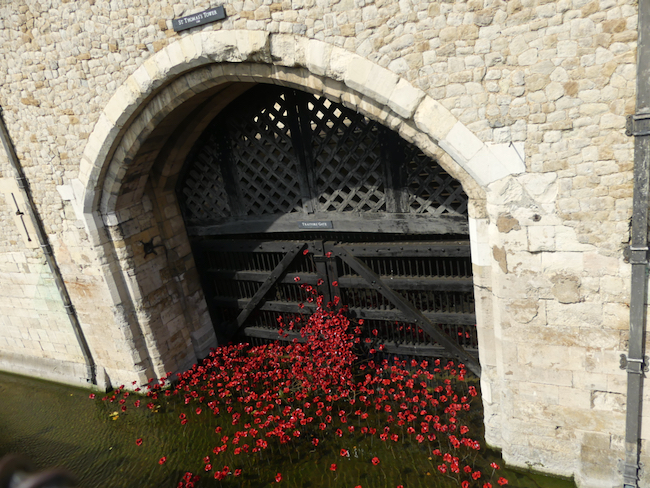
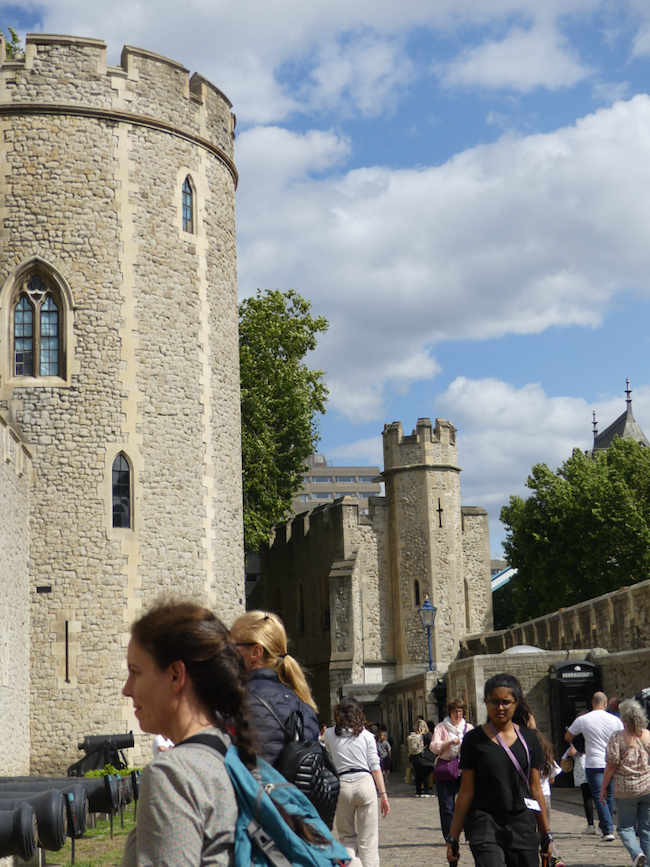
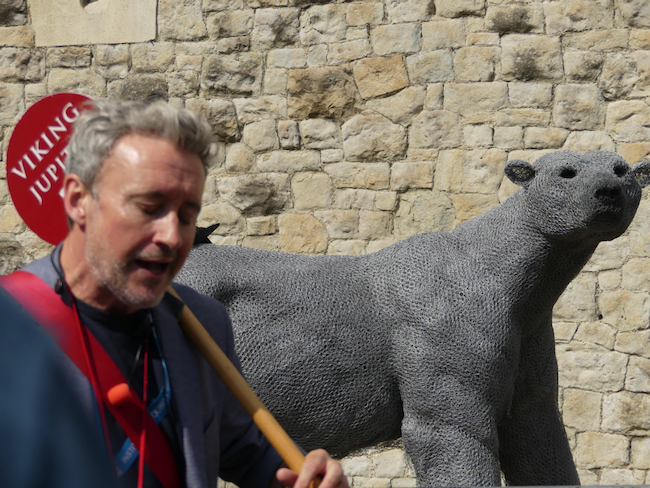
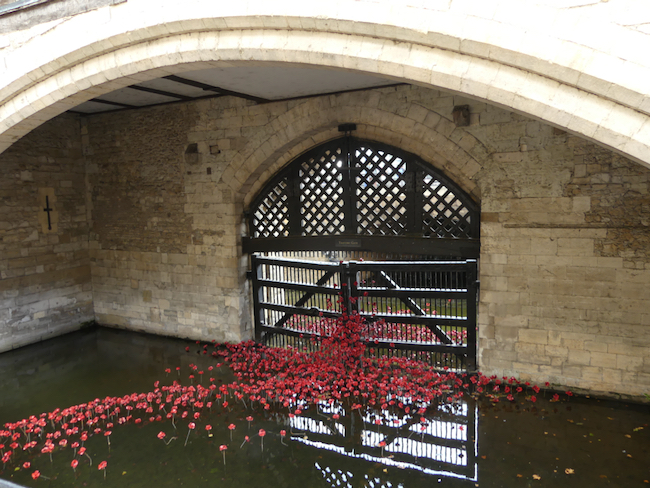
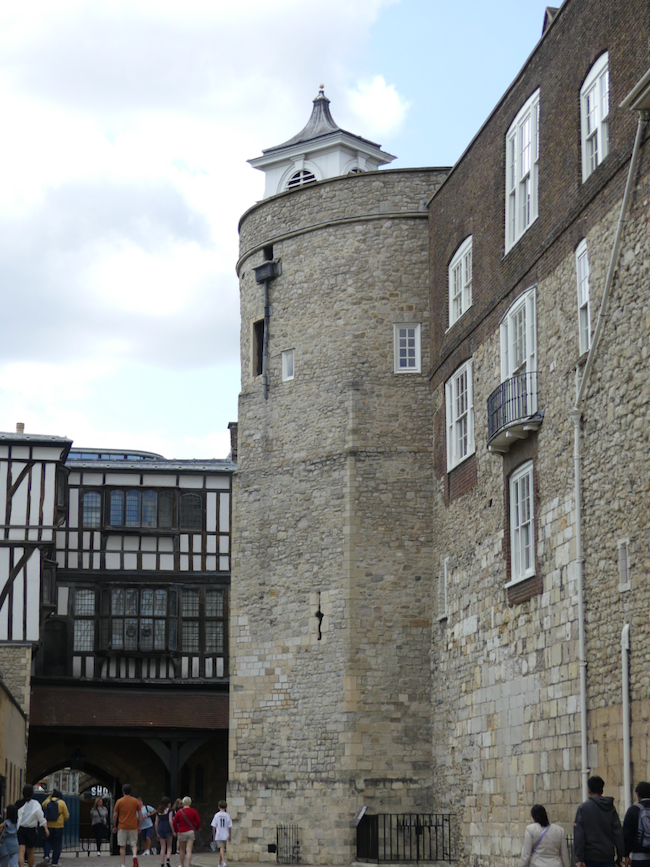
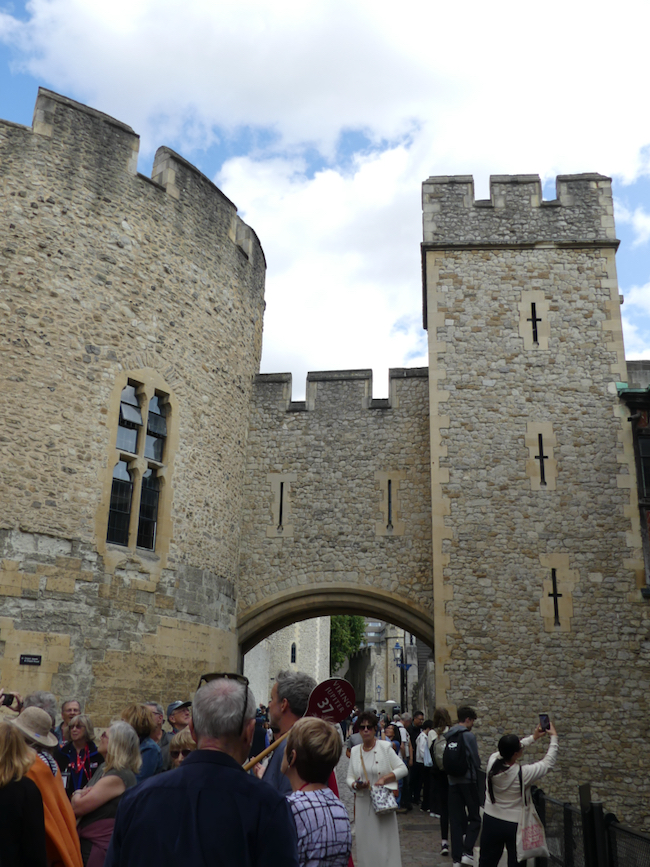
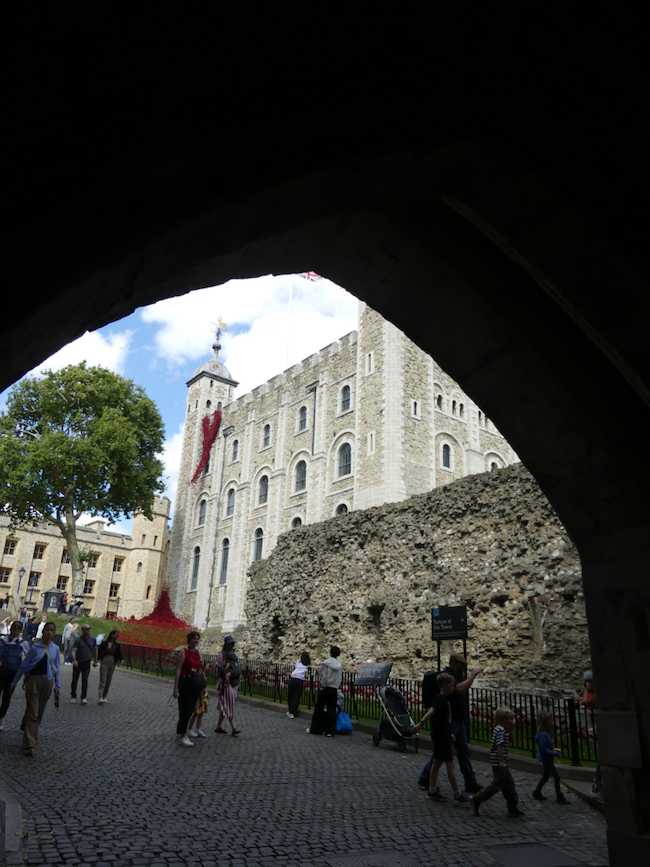
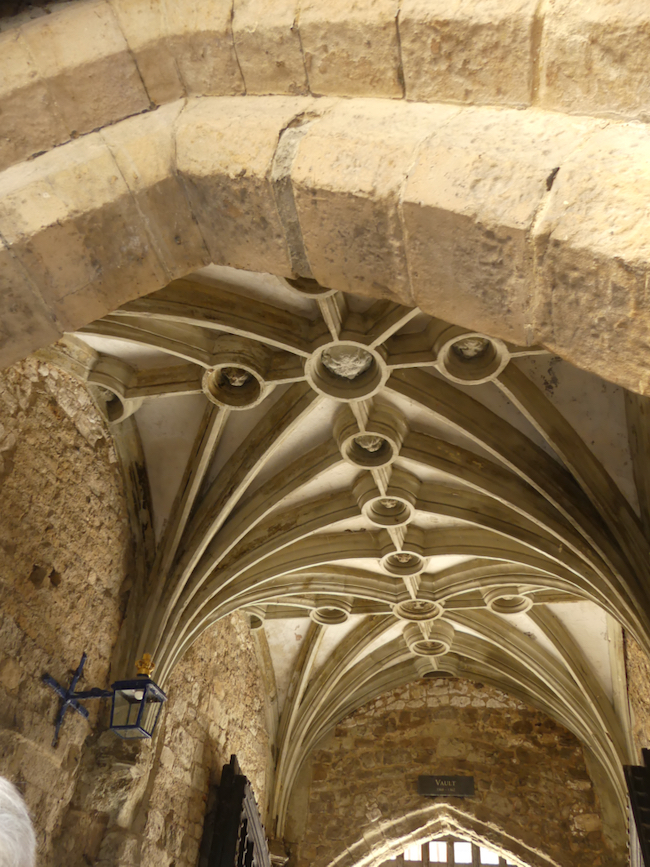
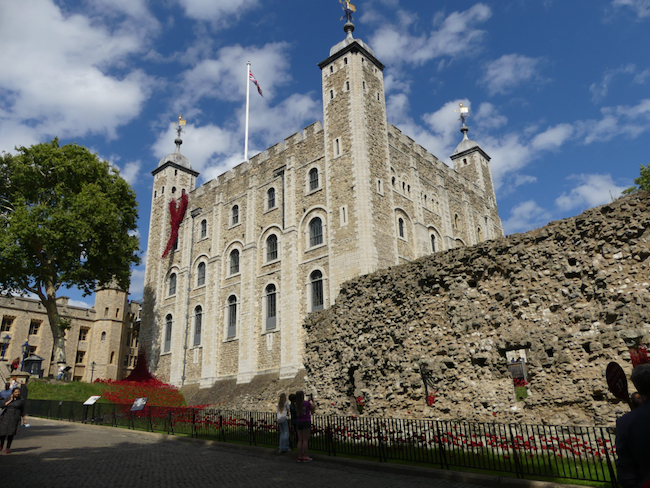
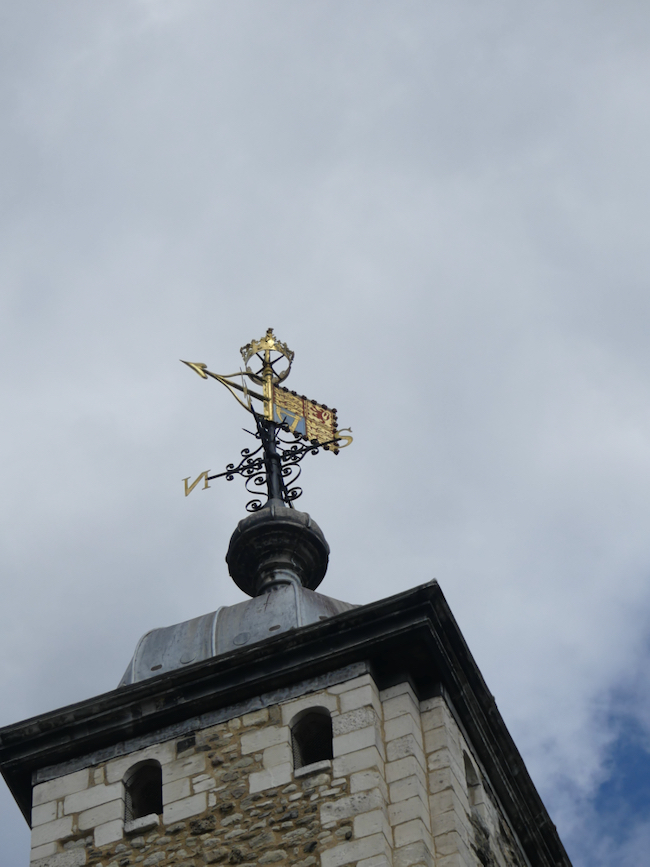
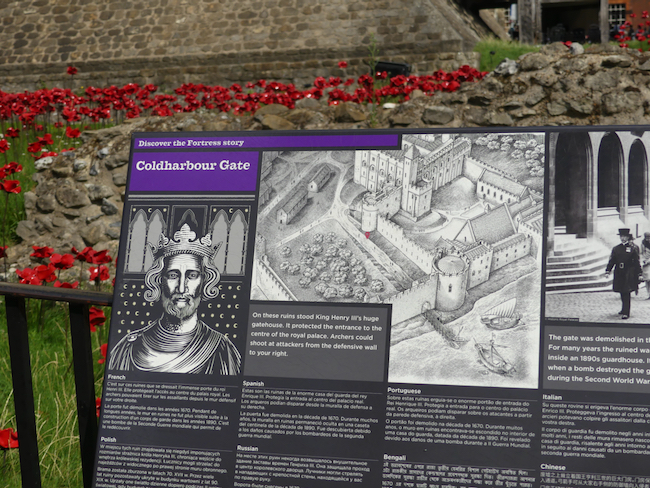
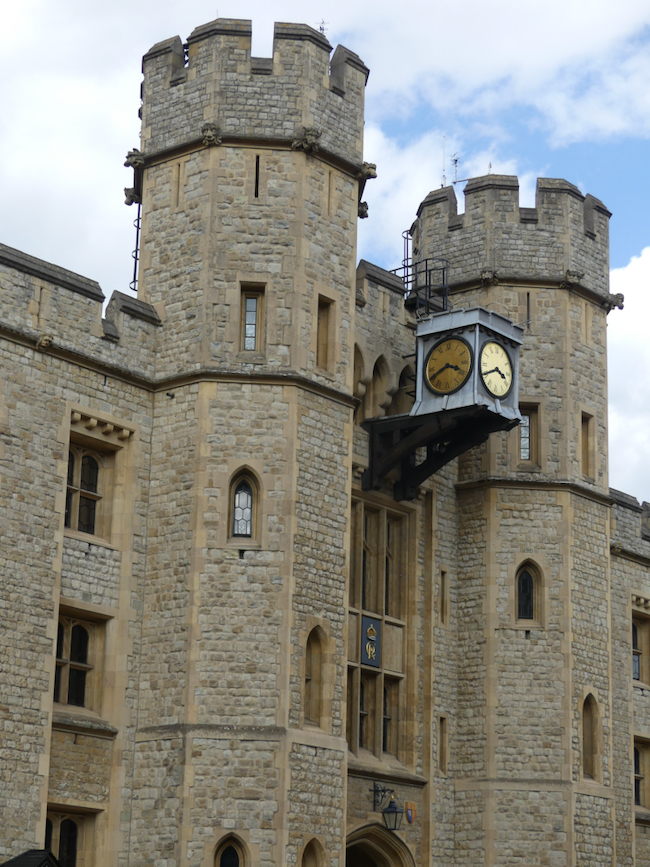
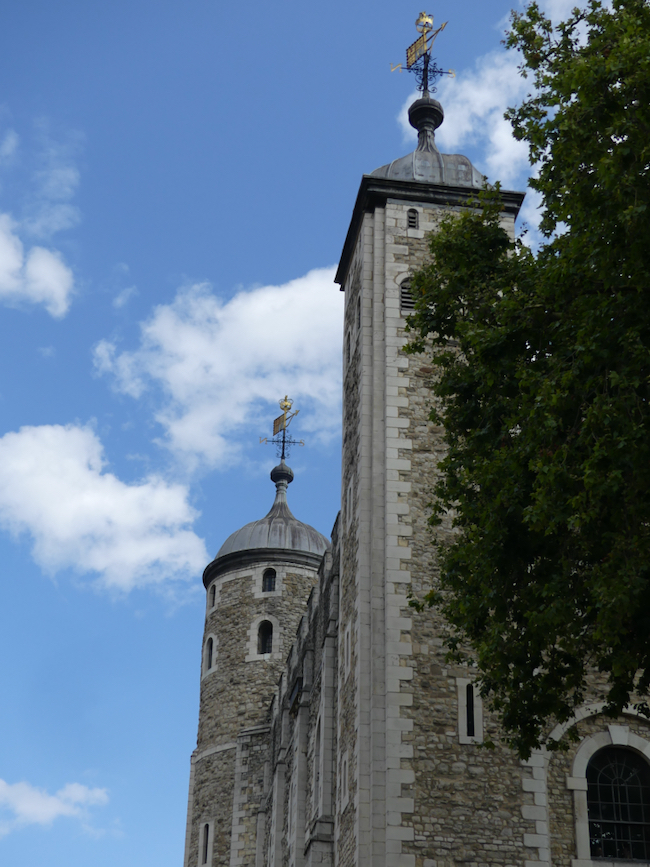
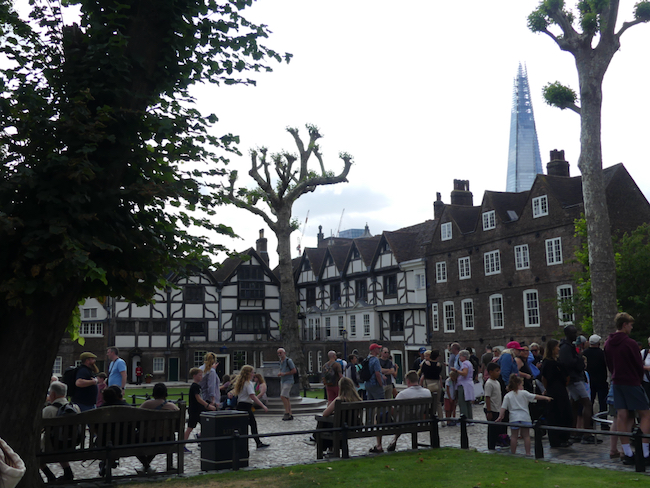
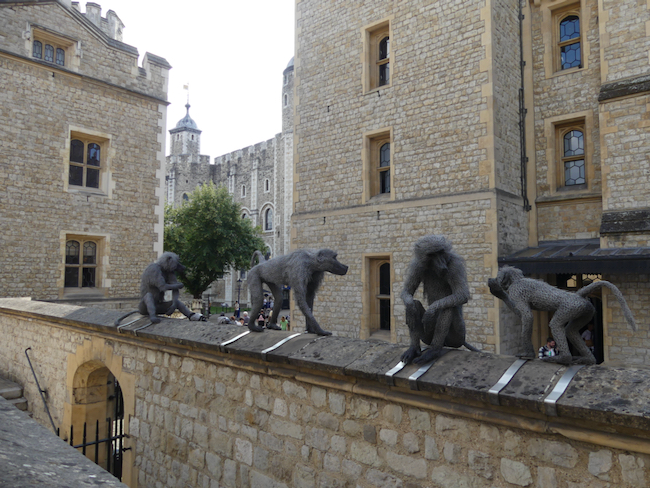
Inside The White Tower – military equipment and beautiful spaces!
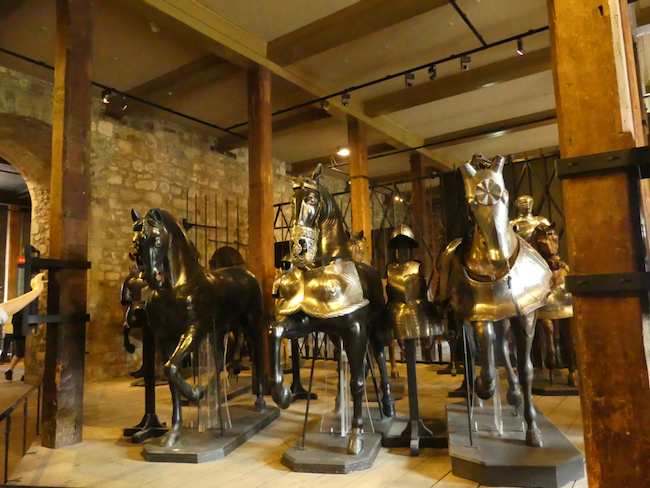
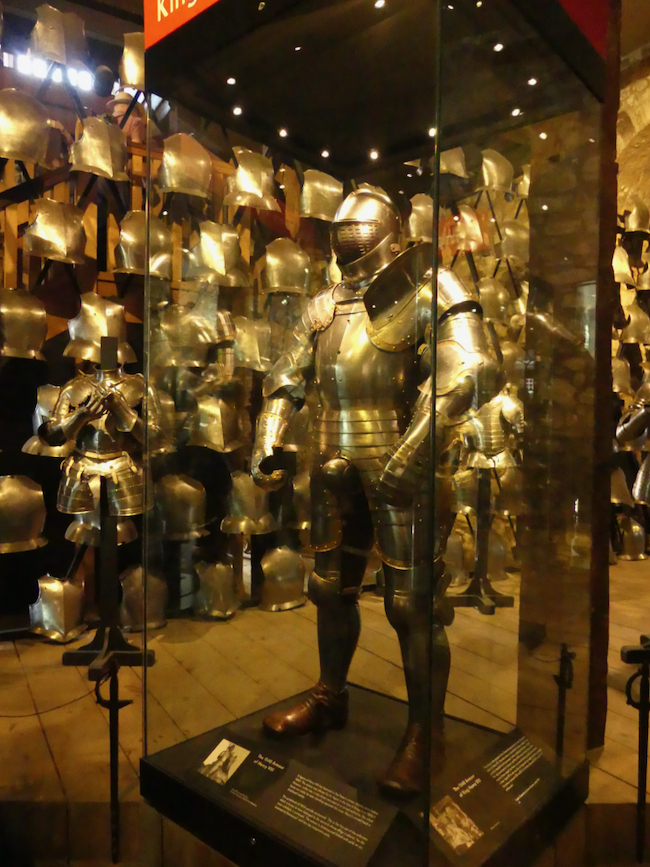
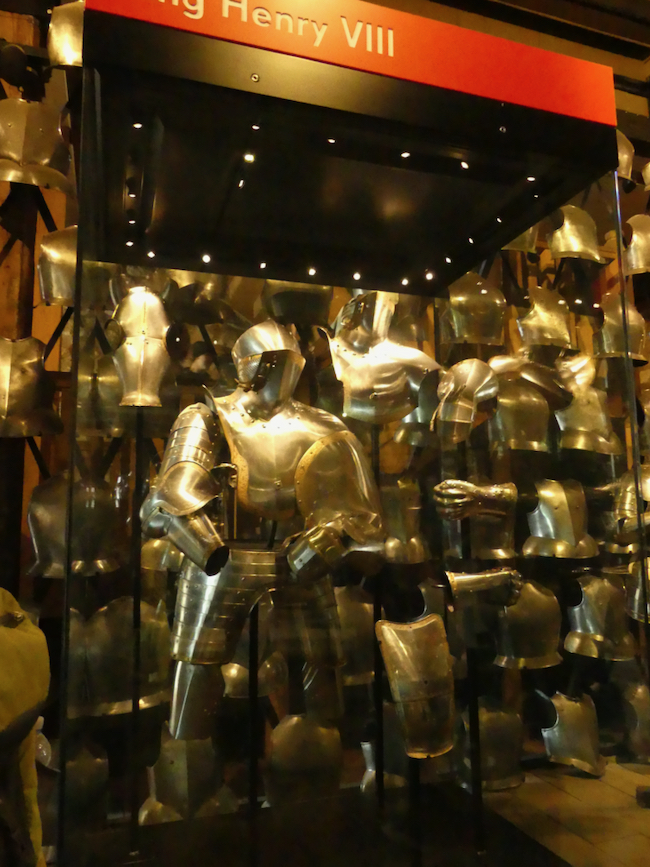
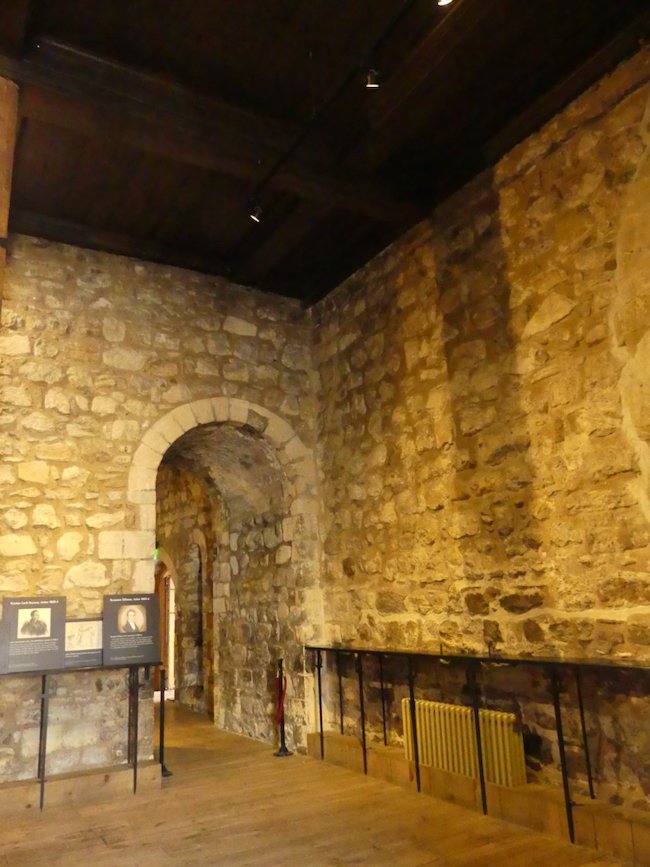
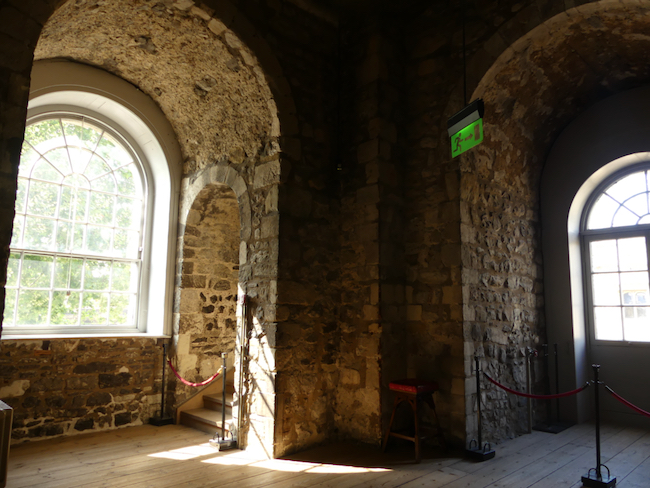
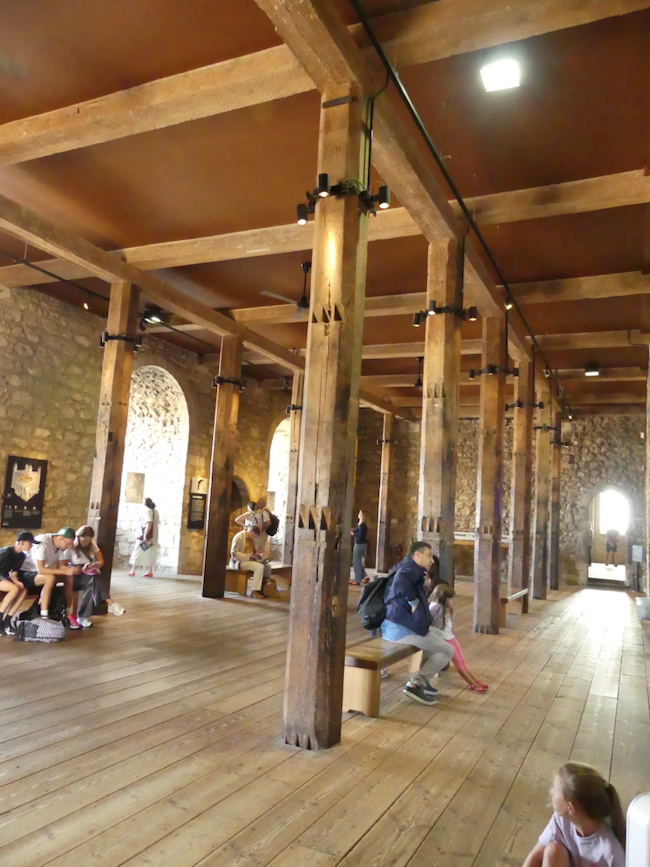
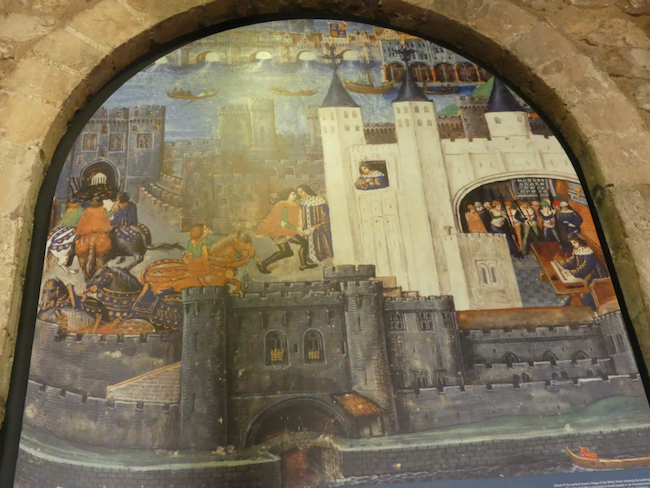
(detail on a painting in White Tower: “Detail of the earliest known image of the White Tower showing the building’s exterior. The view includes a cutaway to reveal people in an invented interior. From a late 15th century collection of poems by Charles, Duke of Orleans, British Library) Royal MS 16F11:173” (?)
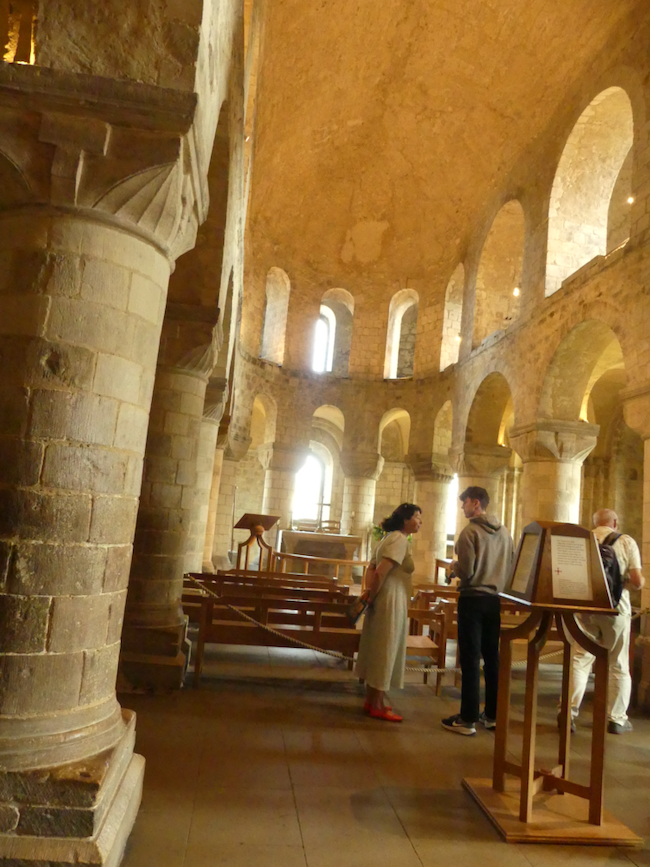

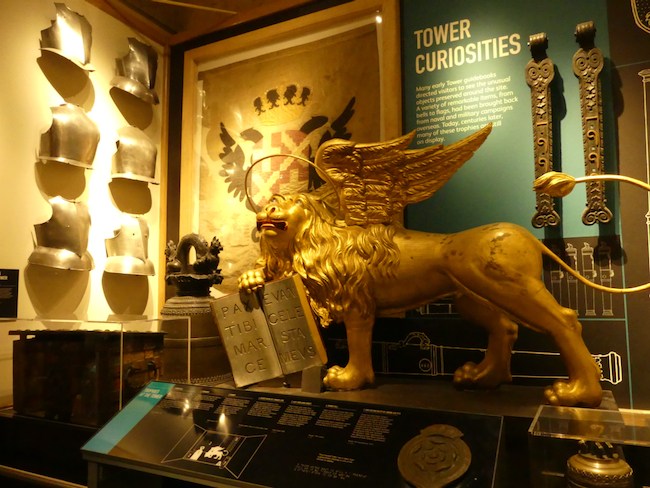
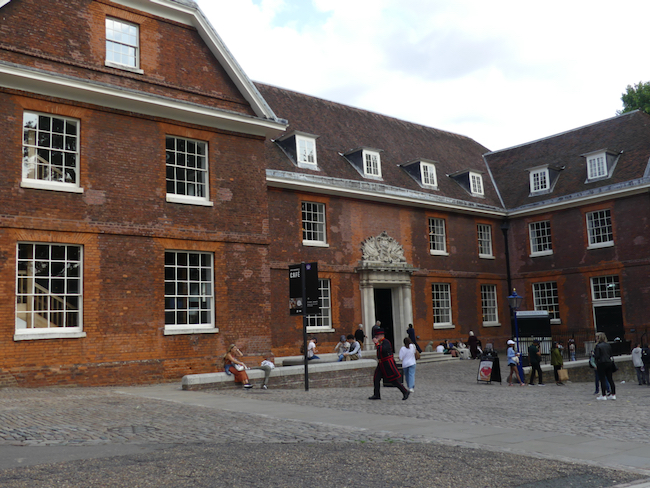
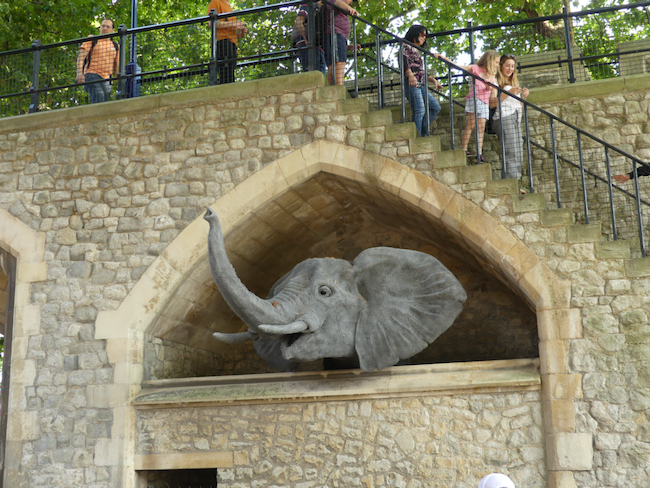
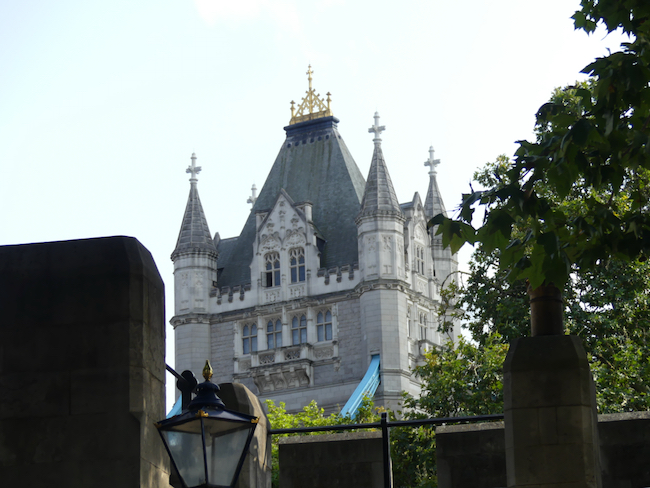
Just look at this glorious day!
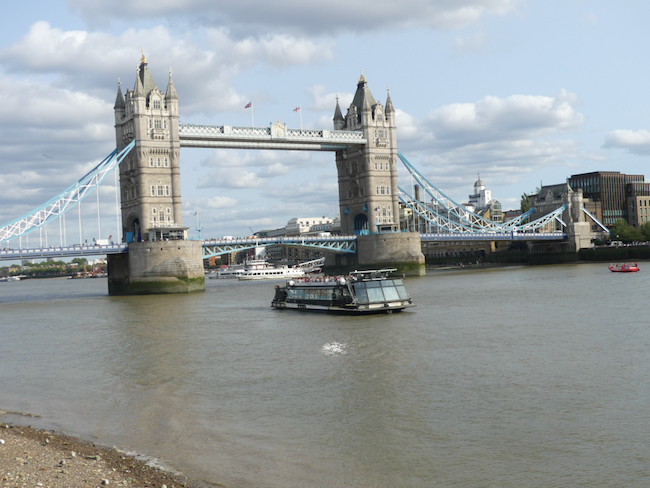
I love the juxtaposition of it all, sometimes.
You just never know how a day is going to turn out. Sometimes the things you have the greatest excitement about go bust – something just isn’t right. And some days which seem designed from the beginning to disappoint turn out just the opposite – and this was one of those. Yes, we were late; we were those horrible late people. And despite it, we had a great time in Greenwich, met a great young man who loves his wares and knows how to make a sale, and we had a bonus – we got to take the Tower of London tour with a great guide on a gorgeous sunny afternoon. Yeh. We suffered some embarrassment. It was humbling. We survived.
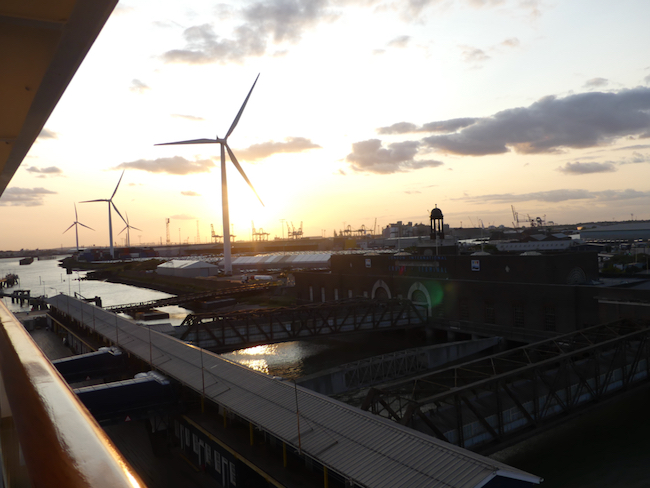
When we got back we had a message from our friends that they were at dinner in the place where we meet up, and we exchanged news of our day – they were at the Churchill War Room and War Museum, deeply meaningful day for them. Dinner was all the better for great conversation, and we split up early for sail-away, knowing we had early departures for our tour reaching Dover.
History the White House Doesn’t Like: The List of Exhibits Trump Wants Gone
It’s a strange honor to have exhibits selected that the President wants gone. As in Literature, when you read through the list, you learn a lot about the fears and the prejudices of the creator. In recent decades, the United States of America has had a greater tolerance for the idiosyncratic views of artists, appreciating their differing perceptions. The list below is taken word for word from the White House Post called The President is Right About the Smithsonian.
- The National Museum of African American History and Culture debuted a series to educate people on “a society that privileges white people and whiteness” — defining so-called “white dominant culture“ as “ways white people and their traditions, attitudes, and ways of life have been normalized over time” and portraying “the nuclear family,” “work ethic,” and “intellect” as white qualities rooted in racism.
- The campaign featured content from hardcore woke activist Ibram X. Kendi

As part of its campaign to stop being “wealthy, pale, and male,” the National Portrait Gallery featured a choreographed “modern dance performance“ detailing the “ramifications“ of the southern border wall and commissioned an entire series to examine “American portraiture and institutional history… through the lens of historical exclusion.”
The National Portrait Gallery features art commemorating the act of illegally crossing the “inclusive and exclusionary” southern border — even making it a finalist for one of its awards.
(Intlxpatr comment: This painting reminds me of the painting of Mary, Joseph and the Baby Jesus escaping to Egypt to avoid King Herod’s massacre of the innocents)

The National Museum of African Art displayed an exhibit on “works of speculative fiction that bring to life an immersive, feminist and sacred aquatopia inspired by the legend of Drexciya,” an “underwater kingdom populated by the children of pregnant women who had been thrown overboard or jumped into the ocean during the Middle Passage.”
The American History Museum’s “LGBTQ+ History” exhibit seeks to “understand evolving and overlapping identities such as lesbian, gay, bi-sexual, transgender, queer, transsexual, transvestite, mahu, homosexual, fluid, invert, urning, third sex, two sex, gender-bender, sapphist, hijra, friend of Dorothy, drag queen/king, and many other experiences,” and includes articles on “LGBTQ+ inclusion and skateboarding“ and “the rise of drag ball culture in the 1920s.”
The National Museum of the American Latino features programming highlighting “animated Latinos and Latinas with disabilities” — with content from “a disabled, plus-sized actress” and an “ambulatory wheelchair user” who “educates on their identity being Latinx, LGBTQ+, and disabled.”
The National Museum of the American Latino characterizes the Texas Revolution as a “massive defense of slavery waged by ‘white Anglo Saxon’ settlers against anti-slavery Mexicans fighting for freedom, not a Texan war of independence from Mexico,” and frames the Mexican-American War as “the North American invasion” that was “unprovoked and motivated by pro-slavery politicians.”
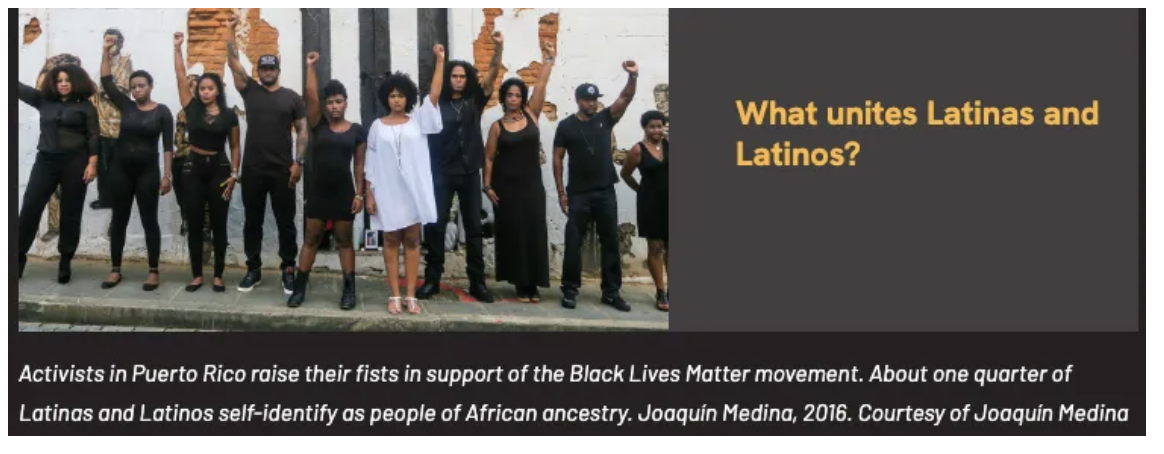
According to the National Museum of the American Latino, “what unites Latinas and Latinos“ is “the Black Lives Matter movement.”
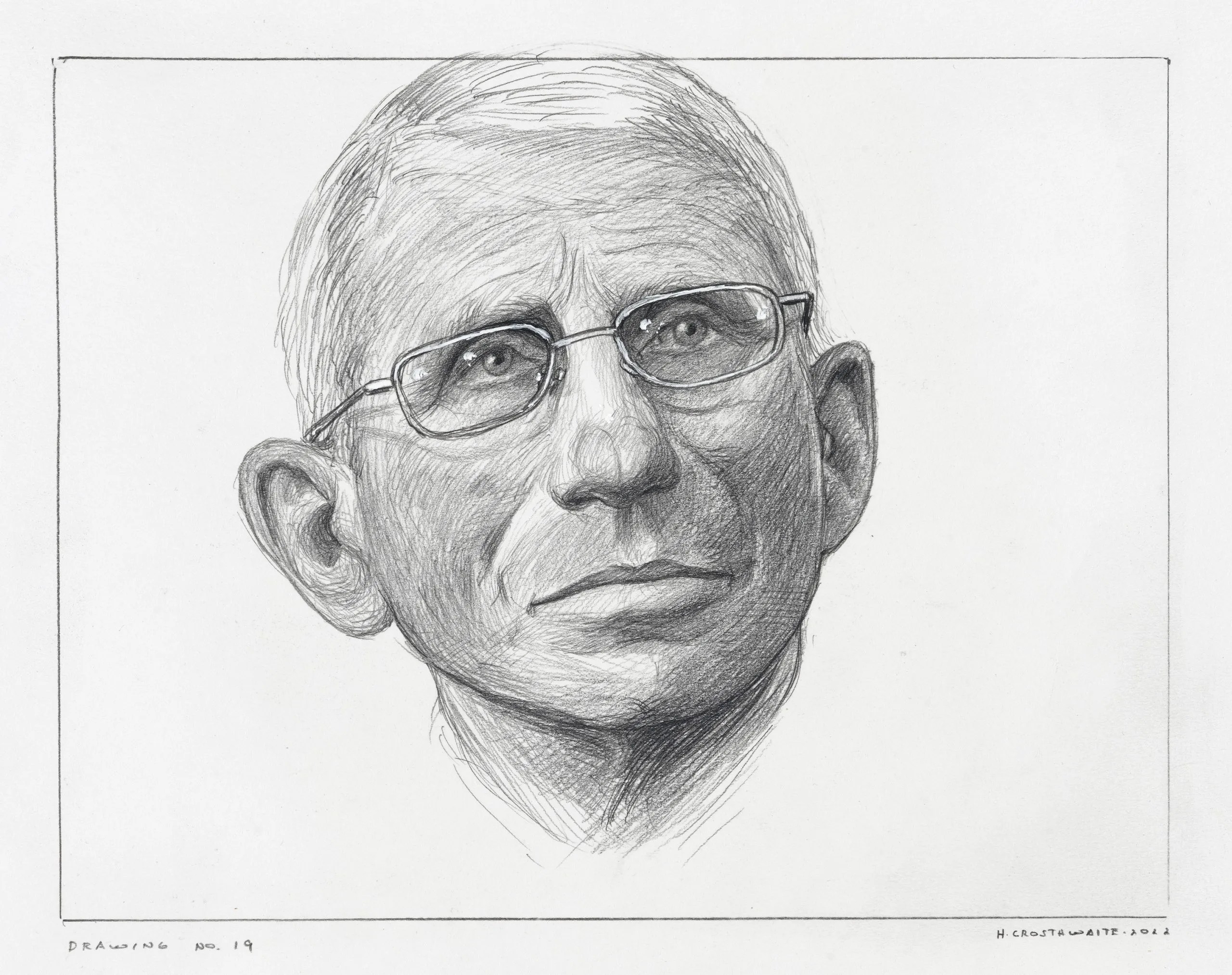
The National Portrait Gallery commissioned a “stop-motion drawing animation” that “examines the career“ of Anthony Fauci.
The American History Museum’s exhibit marking the 50th anniversary of Title IX includesbiological men competing in women’s sports and argues in favor of “transgender” athletes competing in sports against the opposite biological sex.
A exhibit at the American History Museum depicts migrants watching Independence Day fireworks “through an opening in the U.S.-Mexico border wall” and says America’s founders “feared non-White immigration.”

The American History Museum features a display that refers to the founding of America as “a profound unsettling of the continent.”
The American History Museum’s “American Democracy” exhibit claims voter integrity measures are “attempts to minimize the political power” of “new and diverse groups of Americans,” while its section on “demonstrations” includes only leftist causes.
An American History Museum exhibit features a depiction of the Statue of Liberty “holding a tomato in her right hand instead of a torch, and a basket of tomatoes in her left hand instead of a tablet.”

- The National Museum of the American Latino features an anti-American exhibit that defines Latino history as centuries of victimhood and exploitation, suggests the U.S. is stolen land, and characterizes U.S. history as rooted in “colonization.”
- The exhibit features writing from illegal immigrants “fighting to belong.”
- The exhibit displays a quote from Claudia de la Cruz, the socialist nominee for president and a director an anti-American hate group, as well as another quote that reads, “We didn’t cross the border; the border crossed us.”
- The exhibit remains prominently featured on its website alongside a quote from the Communist Party USA’s Angela Davis, who was once among the FBI’s Top 10 Most Wanted Fugitives.

- The National Museum of the American Latino features an anti-American exhibit that defines Latino history as centuries of victimhood and exploitation, suggests the U.S. is stolen land, and characterizes U.S. history as rooted in “colonization.”
- The exhibit features writing from illegal immigrants “fighting to belong.”
- The exhibit displays a quote from Claudia de la Cruz, the socialist nominee for president and a director an anti-American hate group, as well as another quote that reads, “We didn’t cross the border; the border crossed us.”
- The exhibit remains prominently featured on its website alongside a quote from the Communist Party USA’s Angela Davis, who was once among the FBI’s Top 10 Most Wanted Fugitives.

The former interim director of the future Smithsonian American Women’s History Museum declared the museum will be “inclusive” of biological men posing as women.
Commentary from The Hill, August 22, 2025:
White House lists 20 objectionable Smithsonian exhibits, artworks
BY ASHLEIGH FIELDS – 08/22/25 10:34 AM ET
The Trump administration specifically targeted the American history museum’s “LGBTQ+ History” exhibit and condemned a separate display lauding the 50th anniversary of Title IX with a focus on transgender athletes. President Trump signed an executive order in February barring transgender women from competing in women’s sports.
The decision to highlight more than a dozen exhibits and artworks as “woke” comes days after Trump criticized the history museum for its depiction of slavery and its impact on Black Americans.
“The Smithsonian is OUT OF CONTROL, where everything discussed is how horrible our Country is, how bad Slavery was, and how unaccomplished the downtrodden have been — Nothing about Success, nothing about Brightness, nothing about the Future,” the president wrote Tuesday in a Truth Social post.
“We are not going to allow this to happen, and I have instructed my attorneys to go through the Museums, and start the exact same process that has been done with Colleges and Universities where tremendous progress has been made,” he added. “This Country cannot be WOKE, because WOKE IS BROKE.”
During his first term, Trump lauded the opening of the National Museum of African American History and Culture for its portrayal of harsh truths and storied victories for disenfranchised Black citizens.
Trump’s issue with the depiction of slavery in museums has been widely challenged by Black historians and community leaders.
“Just as the Holocaust is remembered in all its brutality, so must America reckon with the truth of chattel slavery, Jim Crow and racial terror,” Toni Draper, publisher of the Afro-American Newspaper — the archives of which were used to help curate the museum — wrote in a recent op-ed for Afro.com. “Anything less is historical erasure, a rewriting of facts to make the nation appear more palatable.”
“But history is not meant to comfort — it is meant to confront. And only in confrontation do we find the lessons that lead us forward,” she added.
Recent Comments
ExpatAlien on What Country am I Living … intlxpatr on Yellowstone: Old Faithful to C… Michelle on Yellowstone: Old Faithful to C… Cathy on No Grown-Ups in Charge intlxpatr on Waiting for Snow Wikipedia Donate Button

Amazina


Early Voting in Florida


 Here There and Everywhere