Iran Raids Coffee Shops as Un-Islamic

(Starbucks in Dubai Mail)
I always thought coffee shops started in that part of the world – oh wait, right, those were just for men.
LOL, found this on AOL, from Huffpost, from a Reuters report:
DUBAI, July 15 (Reuters) – Iranian police shut down dozens of restaurants and coffee shops over the weekend, Iranian media reported, in a renewed crackdown on what the state sees as immoral and un-Islamic behaviour.
Regular officers and members of the “morality police” raided 87 cafes and restaurants in a single district of the capital Tehran on Saturday and arrested women for flouting the Islamic dress code, according to the Iranian Students’ News Agency (ISNA).
“These places were shut for not following Islamic values, providing hookah to women, and lacking proper licenses,” said Tehran police official Alireza Mehrabi, according to ISNA. Women are not allowed to smoke hookah, water pipes, in public.
Mehrabi said the raid came as part of a plan to provide “neighbourhood-oriented” security, and would continue in other parts of Tehran.
Coffee shop culture has flourished in Iran in recent years, offering wireless Internet, snacks, hot drinks, and a place to hang out for Iranian youth in a country where there are no bars or Western chain restaurants or cafes.
But that trend has been criticised by conservative Iranians who consider it a cultural imposition from the West and incompatible with Islamic values. The government periodically cracks down on behaviour it considers un-Islamic, including mingling between the sexes outside of marriage.
In 2007, Tehran police closed down 24 Internet cafes and other coffee shops in as many hours, detaining 23 people. (Reporting By Yeganeh Torbati; Editing by Robin Pomeroy)
Reading Eight Months on Ghazzah Street by Hilary Mantel
When I told my niece I had become thoroughly engrossed in Hilary Mantel’s Wolf Hall and Bring Up The Bodies, she asked me if I had read her book Eight Months on Ghazzah Street. I hadn’t.

Meanwhile, I had started re-reading George R.R. Martin’s A Storm of Swords, so I’ll be ready when HBO does Season Three, and while there is no redeeming value, I sure enjoy the escape, and like my sister Sparkle, sometimes I forget it isn’t the real world, it’s not history, it’s FICTION. I enjoy every minute.
But now I am reading Eight Months on Ghazzah Street, and from the opening pages – where the main character is living in Zambia – I have been totally engrossed.
Frances and her husband Andy move to Saudi Arabia. It’s 1985, Andy is going to build a Saudi ministry headquarters, but it might well been the late nineties, when we lived there. Her flight into Saudi Arabia whipped me back to those days, and to all the loud-mouthed drinkers who kept the rest of us awake.
Frances goes in with preconceptions, but also with a spirit of adventure, and is quickly stifled by the claustrophobic apartment, the limited social opportunities and the lack of free movement as a woman. The heat is oppressive, the clothing rules arbitrary and annoying, and Frances finds all the cockroaches good company during her long lonely days while her husband works.
Her situation was not mine. I lived on a compound, with bus routes that took women shopping every day, twice many days. We had a pool, and a small store, and a video rental kiosk. I had more options, and I probably had more fun. AdventureMan was good about taking me down to the souks at night; it was exotic and interesting. It was also, as Frances describes it, stultifying. It was oppressive. Sometimes the phone worked just fine. Sometimes your dial-up access to the internet functioned. Even on a compound, where some women did drive, walking on your own invited ogling and comments from non-Western men. Living in a country where your sponsor holds on to your passport, and where you need to ask permission to leave the country, and where laws are enforced sometimes, and sometimes not, and where women cannot drive but 12 year old boys have their own cars – it’s La La Land, it’s crazy-making.
Even though I had options and friends, Hilary Mantel captures the time alone. You spend a lot of time alone. In my case, I got used to it . . . we also had a lot of time on our own in Qatar and in Kuwait, where you are more free, where women can drive, but where you can only go to the malls and souks so many times; even when the heat isn’t enough to knock you over, there really just isn’t that much to do. You learn to amuse yourself, you develop a talent for creating, you learn to like your own company.
Then you get back to the USA and the availability of so many options makes you feel semi-autistic, bombarded by so much stimulation you quail and retreat.
I haven’t even gotten to the meat of the plot; I’m about a third of the way in, and I’m feeling hot and sticky and restless and she has totally taken me back to expat life in Saudi Arabia.
She Cried

“I wanted to thank you,” I said to my son’s sixth grade teacher “I can’t imagine how hard it was to get 30 sixth graders to go through the paper-writing process, but I know my son learned from it and he will use the skills you taught him for many years to come. One day he will thank you in his heart, but I wanted to thank you now.”
It was one of those small expat military communities, where your child’s teacher also goes to the same church you go to and shops in the same commissary. We were at a church benefit, chatting before dinner.
She started crying.
She told me that every year, she teaches the sixth graders to write papers, and they hate it. She started with library research, making bibliography cards on little index cards, formal writing, footnotes and a formal bibliography at the end with a formal title page at the beginning.
I was the first one who had ever thanked her. She believed in what she was doing, but it was so hard, and she never got any positive feedback.
Imagine. Do you remember what sixth graders are like? This lady had courage, and persistence. She gave these students (in spite of themselves) a skill which would take them through the rest of high school and into college. They learned to do it right, so they never had to embarrass themselves by turning in an inferior, poorly-done paper. It was a great gift she gave these students – and no one thanked her.
Well, it would be a rare, very rare sixth grader who has the maturity to understand that while it was a difficult and demanding section in their school year, it was a tool in their tool box of life, a gift that just kept on giving.
Thank you. Thank you, all the teachers out there who knock themselves out to give our children (and grandchildren) the tools they need to be good students and good citizens.
Departing Chongwe River Camp
Oh! What luxury! To sleep in until 0615 and to watch the sun rise from my bed, hearing the Egyptian Geese, the hippo, the Fish Eagle- and across the river, from the Lower Zambezi River Park, the sound of the roaring lion, one last thrilling morning at Chongwe River Camp.
I dress quickly once I am up – it’s not yet 0630 – but the mornings are chill in late June, and we have learned to lay our clothes out so we can jump into them soon after we arise, so as to keep warm. We are dressed to travel today, so many flights, so many people. . .
Although it is chilly, it is not cold this morning, and there is no wind. When we look out, there is this perfect reflection:

Victor joins us for breakfast, and CJ, and . . . we hate to leave. We are packed on time, our bags go, but we linger. . .
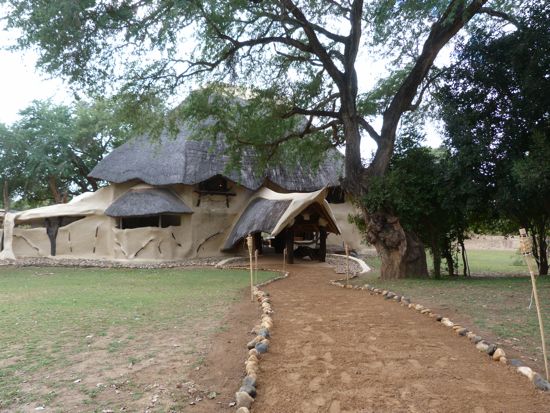
Victor says it’s time to go, he wants to take us by the Chongwe River Lodge – we had asked to see it. It is a marvel, sort of Gaudi-on-the-Chongwe, all natural materials and space, all privacy and perfect for family or a group of friends. There are four bedrooms with King sized beds, and more beds can be moved in to each room or the common rooms, if you really want to fill the house. 🙂

We head out to the landing strip; we can hear the plane coming in, but here is what is cool – the plane is for us! If he dawdle, he will wait! LOL, we don’t dawdle, we are there to check in – check in is the pilot asking if we are the passengers, and we can go whenever we are ready. Oh, I could get so used to this 🙂


The check in counter:
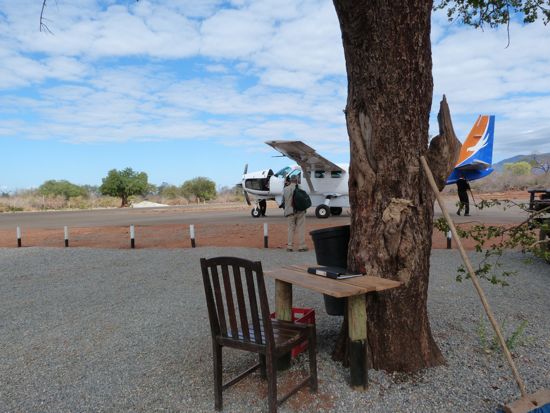
A few last photos with Victor, promises to write, we scramble aboard. Sigh. Farewell, Chongwe River Camp Adventure . . .

Customer Service; the Good and the Ugly
We are not rich people. You might look at the places we go and the places we stay and think that we are more comfortable than we are. We learned a secret a long time ago, and that secret is to live UNDER your income. We live under what we can afford, we pay our bills in full, and we pay attention to small leaks that can add up to big financial leakages over time.
First, the ugly. Today I checked my KLM Flying Blue mileage, and they only gave me 25% of the miles I earned flying from Pensacola to Johannesburg and back. That should have been a huge number, but 25% of that number is very very low. I did some exploration on KLM and learned it has to do with a lot of factors, including type of ticket you buy.
To me, that’s just sleazy customer service. A person who buys a ticket should get the full mileage. If you want to give bonuses for higher levels, then do so, but give me the miles I earn, don’t swindle me with a fraction of the miles I flew. It leaves a really bad taste in my mouth. Honestly, I don’t think Delta is all that much better, but I may switch my frequent flyer program to them because now I am flying Delta more often. I had thought because they were all “Sky Team Partners” that the miles were all the same, but I was wrong. And try booking an award ticket on one of the partners – they have wires and mirrors and a series of hoops to jump through, and you get to the end and the answer is not only “No” but then they have the gall to ask “Can I help you with anything else?”
I promise you, I am very polite, but when they ask that, I tell them “You didn’t even help me with what I asked help for!”
Here is the good. I paid as many bills as I could before I left, including some significant travel costs associated with the Grand Canyon / Mesa Verde Trip , but when I got home, I found a letter from the credit card service company, with the check my bank sent, saying that there wasn’t enough account information on the check to credit it. I could see the last five numbers of my account on the check, which I believe many banks are doing to help protect client privacy and exposure to identity theft, so I sent the check back with the account number and today I called and complained, and especially that they had charged me an interest charge, when I had paid the bill in full, they just hadn’t credited it to my account.
They credited the interest charge immediately, no argument. They were pleasant and helpful, and I felt like they were on my side. In a time when banks are not our friends, I had a positive feeling toward our card provider.
I smile when I hear AdventureMan in his office, talking with medical claims people – when we had a recent vaccination, a very expensive one, I was re-imbursed and he was not. He is taking on the bureaucracy, slowly and patiently, to make sure he gets that money back. He is also seeing what can be done about getting re-imbursed for our yellow fever immunizations. It takes a lot of patience and persistence, and it pays off. We laugh that we are becoming those old farts who have enough time to make those phone calls.
Little drops of water . . . and paying attention. Battling bureaucracy, trying to make the most of opportunities . . . that’s how we manage our lush lifestyle.
Sorry, China!
Found this on AOL News, reported by the Huffington Post
“Stop! Stop!” says China. “It is illegal to publish air pollution readings!”
LLLLLOOOOLLLLLLLL! Sorry, China, those days are past. Too many ways the information can get out and verified.
(Clarifies translated comment from ministry spokesman)
By Ben Blanchard
BEIJING, June 5 (Reuters) – A senior Chinese official demanded on Tuesday that foreign embassies stop issuing air pollution readings, saying it was against the law and diplomatic conventions, in pointed criticism of a closely watched U.S. embassy index.
The level of air pollution in China’s heaving capital varies, depending on the wind, but a cocktail of smokestack emissions, vehicle exhaust, dust and aerosols often blankets the city in a pungent, beige shroud for days on end.
Many residents dismiss the common official readings of “slight” pollution in Beijing as grossly under-stated.
The U.S. embassy has installed a monitoring point on its roof which releases hourly air-quality data via a widely followed Twitter feed. The U.S. consulates in Shanghai and the southern city of Guangzhou provide a similar service.
While China tightened air pollution monitoring standards in January, the official reading and the U.S. embassy reading can often be far apart.
Chinese experts have criticised the single U.S. embassy monitoring point as “unscientific”.
Deputy Environment Minister Wu Xiaoqing went a step further, saying such readings were illegal and should stop, though he did not directly name the United States.
“According to the Vienna Convention on Diplomatic Relations … foreign diplomats are required to respect and follow local laws and cannot interfere in internal affairs,” Wu told a news conference.
“China’s air quality monitoring and information release involve the public interest and are up to the government. Foreign consulates in China taking it on themselves to monitor air quality and release the information online not only goes against the spirit of the Vienna Convention … it also contravenes relevant environmental protection rules.”
Chinese Foreign Ministry spokesman Liu Weimin called on foreign diplomatic missions to respect China’s laws and regulations and to stop issuing the readings, “especially over the Internet”.
“If the foreign embassies want to collect this kind of information for their own staff and diplomats, I think it’s up to them,” Liu told reporters. “They can’t release this information to the outside world.”
The U.S. embassy acknowledges on its website (http://beijing.usembassy-china.org.cn) that its equipment cannot be relied upon for general monitoring, saying “citywide analysis cannot be done … on data from a lone machine”.
Despite his criticism, Wu acknowledged that China’s air quality and overall environmental situation remained precarious, with more than one tenth of monitored rivers rated severely polluted, for example.
“What needs saving is the country’s air quality, not the government’s face,” Zhou Rong, an energy campaigner for Greenpeace, said in emailed comments. “The environmental authorities must stop finger pointing and start taking actions that really address the issue.” (Additional reporting by Sui-Lee Wee; Editing by Nick Macfie)
And this also from the Huffington Post:

A mushroom-like cloud was spotted over Beijing earlier this week, closely resembling the explosion of an atomic bomb, reports China Daily.
Now, footage of the mysterious cloud has been released on YouTube. One shows raw video of the haze taken from what appears to be a high-rise building, while another video is an edited version documenting the haze on June 14.
The yellow and green haze led Chinese authorities to advise residents to stay inside Monday, according to Agence France-Presse.
While rumors swarmed online about the cause of the unusual cloud, Chinese police arrested two internet users who said the pollution had been triggered by a chlorine leak at a chemical plant or an explosion at a steel refinery, notes The Economic Observer.
Meanwhile, government authorities told the Xinhua news agency straw burning was the cause and denied there had been any industrial accidents.
Air pollution is increasingly becoming a major problem in China, and the government is often accused of downplaying the severity of the problem in metropolitan areas.
Earlier this month, China demanded the U.S. Embassy in Beijing to stop publishing air pollution readings, saying it was against diplomatic conventions and the law.
Here, There and Out of My Mind
I’ll start with the ending, it’s all come to a crashing halt. I feel like a child who has been taken to a day in the park, all the rides, all the sugary foods and now they say I have to come home?
Yes. I will tell you about the trip, with lots of photos, so you won’t think I am just being a bore, you can look at the photos and imagine yourself there with us. At the end of the trip, it all goes downhill, the lovely African adventure has ended.
Leaving our last camp, we fly in a very small airplane back from the lower Zambezi to Lusaka. We drive to the airstrip, the pilot checks our names against his list, we climb aboard and take off. That’s the airstrip. The last time we were there, we don’t think it was paved.
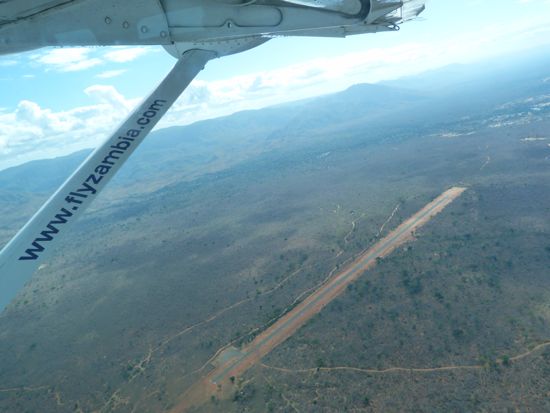
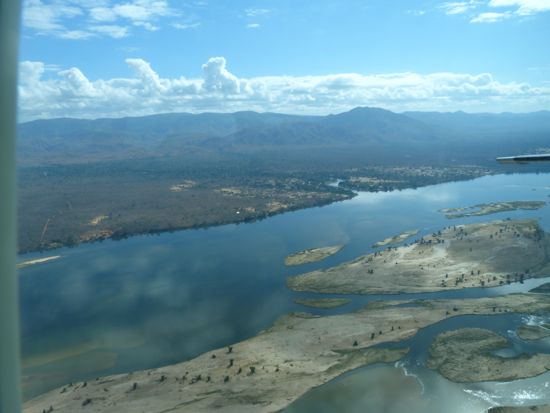
It is the best flight we have all day – two charming pilots, five passengers, it is a great flight. Lusaka isn’t so bad; we have a competent ticket agent who manages to book our bags all the way to Pensacola, so we don’t have to scurry around picking up bags, then coming back in to check them in, because we booked our travel to Johannesburg separately from out travel from JoBurg to Lusaka, it’s complicated but it all has to do with alliances. Not my alliances, airline alliances.
BTW, Lusaka International airport is sweet. Quiet. One tiny little restaurant in the departure area where we found good grilled ham and cheese sandwiches. Some shops, not greatly stocked.
Lusaka airport – you walk to the plane, walk up the stairs, the old fashioned way:

Johannesburg transit is horrible. It always is. We have flown in from Frankfurt several times, from Dubai several times, and from Windhoek and Gaborone and Lusaka – transiting Johannesburg is, for some reason, irrationally annoying. No matter how crowded the transit area is, or how isolated, the computers are always slow, or . . . the operators. No matter what airline we deal with, that transit area, the one downstairs where you have to check in for your next flight, it is horrible. It takes so much longer than it needs to.
Upstairs, we hit the shops, junky Out of Africa with it’s schlock, some of the others. I made a big mistake; I was buying little fun things for our son and his wife, little coffee things and such at Taste of Africa, and I bought them some biltong; what we call jerky. They had ostrich and eland and several exotic kinds, so I bought several.
Loading up for the 17 hour (yes, you read that right, it is Delta’s longest non-stop flight) flight from Johannesburg to Atlanta was an unusual experience. Think Amsterdam on steroids. We are all sitting, and are rousted out of the waiting room and told to line up in two lines, with men in one line and women in the other. They look at our bags and ask us questions. This is the third time today my bags have been checked; I don’t mind, but it is a little unusual. Then we line up again once we are back in the waiting room; it is nearly time to board.
There is one of those wild-eyed women going down the line asking loudly “Is this the line for PRIORITY boarding? Are you all PRIORITY passengers?” and clearly she thinks she has a pretty high priority. But when the airline boards the Diamonds and the Platinums, she is still waiting back with the golds and silvers, so I guess she didn’t have as much priority as she thought she had.
It’s one of those big, huge flights with every seat taken. It’s sort of like being in a high school cafeteria, tempers flare as overhead baggage bins fill up, parents with children beg people to change places so they can fly together, while the privileged politely decline; they paid extra for those aisle seats. It’s all pretty horrible, but we have books and somehow we even catch a couple hours sleep. The flight attendants are like harried waitresses, hauling those drink carts and meal carts up and down the aisles, trying to get people to stay in their seats (who can stay in their seat for SEVENTEEN hours??) I discovered that if you are reading books, iPad batteries keep their charge longer than if you are playing Sudoku. I’m reading a great book, Wolf Hall, and it holds my interest.
Arriving in Atlanta, it’s all my fault, AdventureMan and I are shuttled into the agricultural inspection area, where it is pretty much us and all the Africans bringing back turnips and sugar cane and rice and meats and special foods. I didn’t know that the dried meat was a problem, but evidently ostrich meat is some of the very most threatening, and other countries have serious diseases that we have so far managed to escape. They are actually very kind to me, although they do confiscate all my jerkies. The inspector tells us they get all kinds of stuff (there was a huge barrel of confiscated agricultural products) including rats, and monkey brains.
Sadly, many of the people in there with us don’t really understand, and I know many of them went to a lot of trouble to bring a home specialty for some family member, only to have it confiscated. Many didn’t understand enough English and the inspectors didn’t know their languages.
We got off easy enough; all they cared about was confiscating the illegal meat.
Found a place with decent coffee and croissants, found a place to wash our faces and brush our teeth, so we boarded the Pensacola flight fresher than we got off the flight from JoBurg.
Our son met us at the airport and got us all home; we grabbed a quick lunch at the nearby Marina Oyster Barn (our comfort-food restaurant of choice) and then showered and tumbled into bed. We woke up again as our son and his wife and the darling little happy toddler came by for dinner. After dinner, we said good night and good bye to our guests, knowing we were all going to bed but that we would be awake in the middle of the night and they would probably leave to go to their home. As it turned out, we were all awake around 3:30 in the oh-dark-hundred, so we were able to hear them off.
We’ve been up since, trying to take care of business and to stay awake. I started with trying to get through (get rid of) over a thousand e-mail – two weeks is a LONG time. AdventureMan fell asleep in my office around 7:30 so I woke him up and made him go to aqua-aerobics with me, we hit the grocery store, and poor AdventureMan, his computer has bit the dust so he had to buy a new computer today. He picked up the mail in the afternoon, I paid the outstanding bills. Anything, anything to stay awake, to try to get us back on schedule, Pensacola time.
We caught the last episode of Game of Thrones, Season two, which helped us make it an extra hour last night, and AdventureMan has some things we missed lined up for tonight – HBO’s Girls, VEEP, and the first episode from the new season of True Blood, also he thinks Southland is starting up again, and we really like that.
I think I’m going out of my mind. Jet lag makes me a little crazy. Normally, I am all unpacked by now, but I couldn’t even stand to look at my suitcase today. I bought salmon for tonight’s dinner, but I don’t think I can cook it. I haven’t felt energetic since . . . 3:30 this morning, LOL. When I get tired, I can get weepy, or irrational, or a little unbalanced. What I yearn for is to take a nap, a nice, long, snoozy nap . . .
Z Z Z Z Z Z Z Z Z Zzzzzzzzzzzzzzzzzzzzzzzz . . . . ………..
“Never for Acclaim, Always for Country”
This weekend the CIA also honors fallen warriors, and in a new level of transparency, shares some of those names. It’s devastating to lose a loved one in the military, and I cannot imagine what it was like to lose a loved one and not to even be able to tell people your loved one was lost in service to his or her country. Heartfelt thanks to all those who have served silently and anonymously and sacrificed identity and history for our nation. You know who you are. 🙂
From ABC News:

Out of the shadows in death: The CIA honors its fallen
By Suzanne Kelly CNN – When you’re a spy, you have to accept the fact that everything you do will go unnoticed by most people during your life. Sometimes that secrecy even follows you in death, with a simple star carved into a marble wall at Langley being the only memorial to your service.
Sometimes though, in death, the names come out, along with just enough information to piece together a glimpse of what life — and death — have been like for CIA spies over the past three decades.
This past Monday, 15 names were added to what’s known by insiders as the “Book of Honor.” When a name is inscribed in the book, it allows family and friends of the fallen to publicly acknowledge in general terms, how their loved ones spent their lives, and how they died.
The names and brief stories shared with a crowd said to number in the hundreds gathered in the CIA lobby, told a story of an Agency spread far and wide; the story of an Agency not only consumed with tracking down terrorists, but sometimes becoming victims of the hunted.
Jeffrey R. Patneau, described by CIA Director David Petraeus as a “young can-do officer,” was killed in Yemen in September 2008. Yemen has become a hotbed of al Qaeda activity and is where a recent al Qaeda in the Arabian Pensinsula (AQAP) plot to bring down an airliner with a difficult-to-detect new explosive material, was recently foiled by undercover operatives.
Five of those honored this year died on April 18, 1983, when terrorists targeted the U.S. Embassy in Beirut, killing 63 people. Phyliss Nancy Faraci had also been one of the last four Americans evacuated from the Mekong Delta when Saigon fell, according to an Agency spokesman. She died in Beirut along with Deborah M. Hixson, Frank J. Johnston, and a married couple, James F. and Monique N. Lewis. Petraeus noted the Embassy bombing as the place where the Agency “first caught sight of the adversary we face today.”

To get a sense of just how widespread the CIA presence has been over the years, Matthew K. Gannon was killed in the December 1988 bombing of Pan Am Flight 103 over Lockerbie, Scotland; Molly N. Hardy was killed in the 1998 suicide bombing of the U.S. Embassy in Nairobi; Leslianne Shedd died when hijackers downed the plane she was on over the Indian Ocean in November 1996; Jacqueline K. Van Landingham was killed in Pakistan in March 1995; Barry S. Castiglione died during the ocean rescue of a colleague in 1992 in the waters off El Salvador; Lawrence N. Freedman was killed in Somalia in December 1992; Thomas M. Jennings, Jr. died in Bosnia in 1997; Freddie R. Woodruff was killed in Georgia in 1993; and Robert W. Woods died in a plane crash during a humanitarian mission to Ethiopia in 1989.
Petraeus told the group of gathered mourners and friends that the officers who have died for the mission “all heard the same call to duty and answered it without hesitation — never for acclaim, always for country.”
One more star has been carved into that wall so far this year, bringing the number of stars representing fallen officers to 103. We don’t know who the latest person was, or how they died, but maybe someday, we will.
Copyright 2012 Scripps Media, Inc. All rights reserved. This material may not be published, broadcast, rewritten, or redistributed.
Prescribed or Proscribed?
We will be taking a trip soon, and, thanks be to God, our travel companions alerted us in time that there is a new requirement for Yellow Fever Shots, malarial precautions are now strongly recommended, AND medications we buy over the counter are prescription medications in Zambia, and you can be arrested for carrying them into country; they would be contraband.

Horrors! I’ve always taken Benedryl for my allergies, and because I am also a mosquito magnet, I use Benedryl gel to survive the mosquitos, and the tse-tse flies. Our doctor is a gem; he wrote prescriptions and today we got them filled so we can take our OTC medications into Zambia with us. The pharmacists didn’t bat an eye. They see it all the time.

“You heading out on a mission?” another customer asked.
“Not a religious mission,” I laughed. AdventureMan has a mission to get some spectacular photographs. Pensacola has several churches that sponsor major missions throughout the world, and missionaries are found in Pensacola pharmacies stocking up on a couple years worth of prescription medications – as well as the medications proscribed by host countries. I also suspect that having all these people that travel and live throughout the world contributes to the variety of cuisines available and sought after in Pensacola restaurants. I just wish we’d get some Ethiopians!
Grand Canyon: Early East Rim, Breakfast at El Tovar and Shuttle along the West Rim
When your day starts at five in the morning, you have a lot of hours in your day!
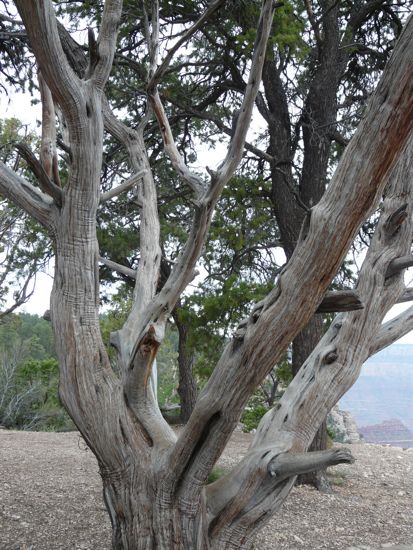
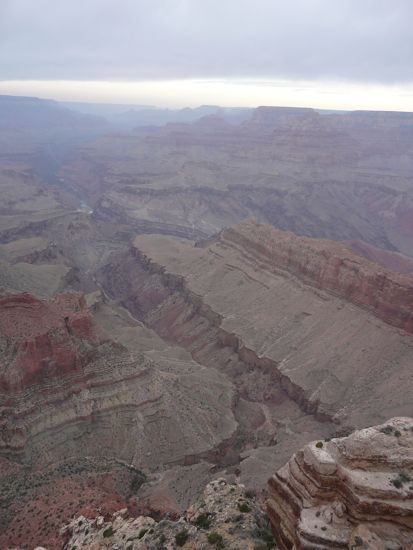
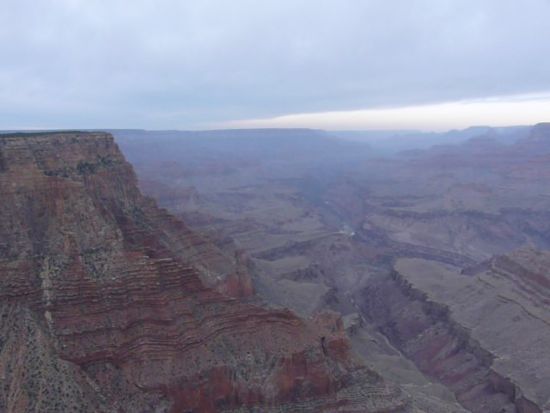

We were back at the lodge by seven, where there is already a crowd lining up for breakfast. We had such a great dinner the night before, we decide to have breakfast and then take the shuttles along the western rim of the canyon.
The El Tovar Dining room is as beautiful by day as it is by night:
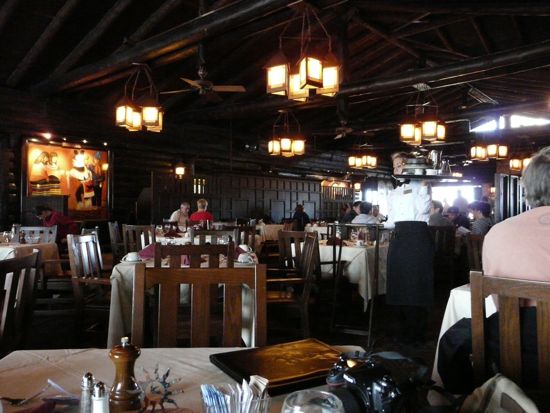
We are on the south west side of the dining room, near a large fireplace and far away from the view, but it hardly matters – the view is there, 24/7, for anyone who wants to visit. We see fabulous plates arriving at all the tables, and we watch a new wait-person being trained in the El Tovar way of doing things. It was great entertainment. Our breakfasts were divine.
AdventureMan’s breakfast:

I had Eggs Benedict, with smoked salmon instead of the traditional Canadian bacon:

We run upstairs to brush our teeth, and then head out to explore the western rim before the train arrives, at 1100, bringing in many more people, even in these early spring months.
The shuttle system is a marvel. Different colored lines have different routes, and there are maps that show what color the bus is that goes where you want to go. We walked to the red bus stops, hopped on, hopped off, hopped on, hopped off, hiked a little, hopped back on, hopped off, hiked a little more, met some great people and had a lot of fun taking photos.
The sun has burned off the clouds, it is still a little hazy but a great, sunny day.


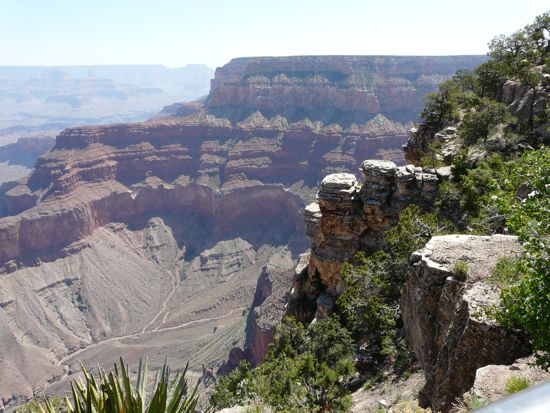

We hit Hermit’s Rest, at the end of the shuttle line, around 11:30, and head back to Grand Canyon village.

Recent Comments
ExpatAlien on What Country am I Living … intlxpatr on Yellowstone: Old Faithful to C… Michelle on Yellowstone: Old Faithful to C… Cathy on No Grown-Ups in Charge intlxpatr on Waiting for Snow Wikipedia Donate Button

Amazina


Early Voting in Florida


 Here There and Everywhere