Freedom of Speech: Je Suis Charlie
In our country, in the West, open discussion is a part of life. Your point of view may be ignorant, or repugnant to me, but I will defend to the death your right to express your opinion. One of the great weapons of freedom of speech is humor. It’s hard to maintain a dignified moral high-ground when one of the cartoonists piques with a cartoon showing the emperor has no clothes. Or at least the emperor has flaws, as do we all.
Pensacola is blessed with such an editorial cartoonist, Andy Marlette. Andy Marlette is controversial, and in a state with lax gun laws and pistol-packin-mamas, he risks his life daily, skewering the pomposity of us all. Occasionally, he is outrageous. Occasionally, he is offensive. That’s OK. If an editorial cartoonist isn’t skewering someone, or all of us at once, he isn’t doing his job. His job is to elicit discussion.

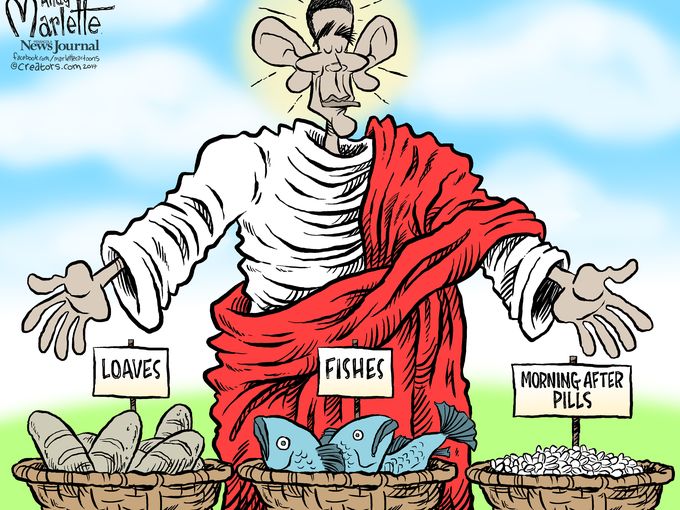

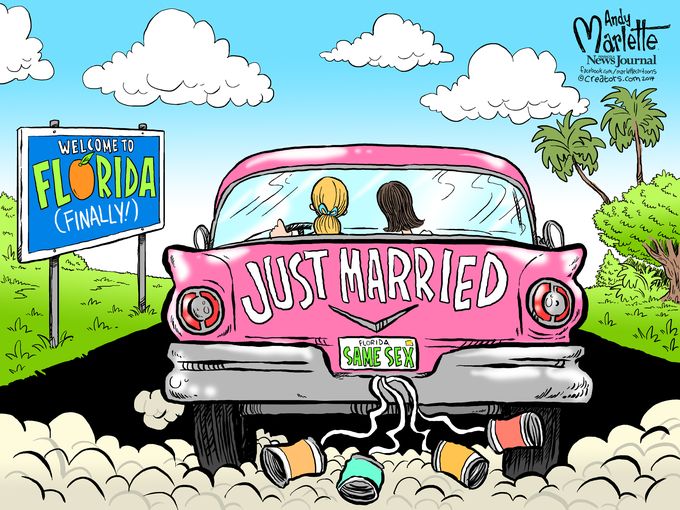

I have lived for so long in Moslem world that I take a risk now, offending my Moslem friends, by printing the cartoon of Mohammed weeping. It’s the cartoon that touched me to the bone. I have listened and learned in the Moslem world, and I have never met with hatred. The Mohammed I have read about in the Qu’ran and in hadith, and heard about in legend and stories from my Moslem friends portrayed a prophet who, like Jesus, was all about loving and serving the one true God. He would weep at what has been done in his name, as Jesus weeps for us, when we kill others in his service.

Where is Lafia, Nigeria?
Today the church prays for Lafia, Nigeria, which is near Abuja, in the part of Nigeria where Boko Haram runs rampant, and where over 250 girls were kidnapped from their school in 2014. Some few escaped, most were married off to poor young Boko Haram soldiers into hardship and near-slavery. Boko Haram does not believe in educating women. The Nigerian government at one point announced that Boko Haram had agreed to return the girls, but nothing happened. The Nigerian military and police do nothing to get them back.

Where is Kajo Keji, South Sudan?

Today the church is praying for Kajo Keji, South Sudan, the world’s newest country. While the world moves on, there is still so much unrest in a part of Africa that went barely noticed until oil was discovered there and the janjawi’in began systematically killing off villages and towns.
Today I pray for my friend Manyang, who visited us from South Sudan and who has rarely known a time in his life when the South Sudan was not being attacked.
Vic’s Touchdown Cafe Near RaceTrack, LA
We’re headed home again, but the day has dawned shrouded in a thick Halloween-y fog drifting up off the bayous and covering the low lying roads. We get on a fast road, and decide to have breakfast, hoping the fog will break.
We exit almost as soon as we got on the road, headed South on a road heading toward the Gulf, looking for something that is not fast food. And there it is, on the left, we just passed it, so we circle back for breakfast at Vic’s, Breakfast Lunch Dinner.

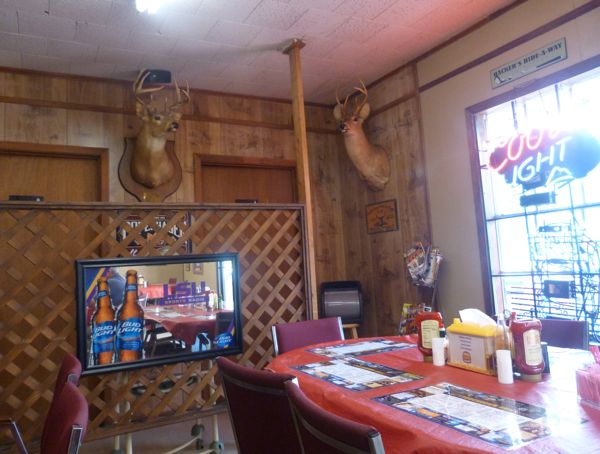
As it turns out, I believe the real name is Vic’s Touchdown Cafe. The interior is full of sports trophies, banners, team memorabilia, and stuffed deer heads. There are other customers, eating breakfast, chatting with a man whom I believe is probably Vic. We ordered breakfast off the plastic menu table mats, and settled back to listen and learn.
People in Louisiana are hospitable, and kind. They asked us questions, shared some local lore and when I asked Vic if he had any milk, he opened a little bottle of milk just for me and put it on the table so I could have milk in my coffee. I was impressed, but I get the impression he thought it was just good manners. My kind of place.

I didn’t take photos of the food; it might have spoiled the mood. It was traditional breakfast; eggs, bacon, biscuit and AdventureMan had hash browns. It was all good, even the coffee, and even better because it was not fast good. This was a great stop.
By the time we had finished, the fog had lifted and we had clear sailing all the way back to Pensacola 🙂
Confuse, Confound, Devastate and Dissipate ISIS
When I was a kid, I did not like reading the Old Testament, all those old-timey people, and it all seemed very confusing to me. As I grew older, I find I like the Old Testament part of our readings very much, the people come alive in all their faults and bad decisions, and God’s mercy shines through as we continue to rebel against him and follow too much our own devices and desires of our hearts.
I love Genesis 11, where mankind, in all our pride, decides to build a tower, and it must have been pretty good because it got God’s attention and he didn’t like it. He didn’t like it so much that he created confusion among all the languages spoken, but I bet it was also confusion and dissension among the decision makers, too, to scatter the mighty population.
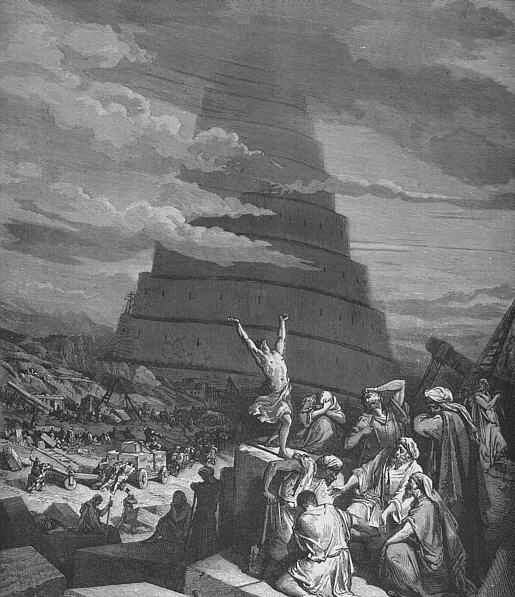
As the wandering descendants of Abraham began to settle, they often went up against armies and peoples much larger than they were, and God always told them not to worry, he would confuse the armies. He put fear in their hearts, in the confusion, mighty armies collapsed and scattered.
And why am I bringing this up, you might wonder?
This ISIS Army, it seems to me, is already cobbled together. I hear people people talking, people who know, they say ISIS is smart, fights smart. I believe they have some smart leaders, but I am willing to bet that they have some fatal flaws, also. They have overstretched. They are trying to enforce their will by violence and killing off the opposition, which might encourage the appearance of cooperation, but in reality breeds legions of those who will turn on them in a heartbeat.
Yes, we mistakenly dropped weapons which they were able to access. Mistakes happen in war zones all the time, with modern communication we just hear about it a lot sooner, not like 40 years from now when it is declassified and someone writes a book about it. Frankly, it’s not that big a deal.
What I believe is a big deal is their lack of cohesion. Lacking any strategic direct line to important decision makers, I am praying, and what I am praying is this, words from Psalms:
Confuse, O Lord, confound their speech
Disintegrate ISIS from the inside.
Create, Great and Merciful Father, miscommunications, misunderstandings, competing agendas and internal strife among the ISIS force.
All Mighty, All Powerful God, create a massive collapse, let their foot-soldiers drift away, drift home to their mothers and fathers and their families, and leave the Iraqi villages and the Syrian villages in peace.
Dry up the wealth of the Gulf, funneled through corrupt money changers in Kuwait, let it be mishandled, go missing, be stolen, be diverted and find its way to true charitable organizations providing a means of survival to those thousands of refugees who have been displaced.
Oh God! Collapse this abomination, the Islamic State of the Levant and Syria, collapse it utterly from within, strip it of all its power, devastate it like a virulent plague from within!
Oh God, bring good out of this downfall. Teach the remnants who return to their homes to live together in peace, to form peaceful and stable communities and then nations whose lives honor you!
All this is possible for the God who can do all things. Confound their speech, Lord, confuse them utterly, devastate and collapse them utterly from within. You are the one true God, there is no other God.
We are not without resources. We have the mighty fist of prayer.
Swamp Tour With Annie Miller’s Son
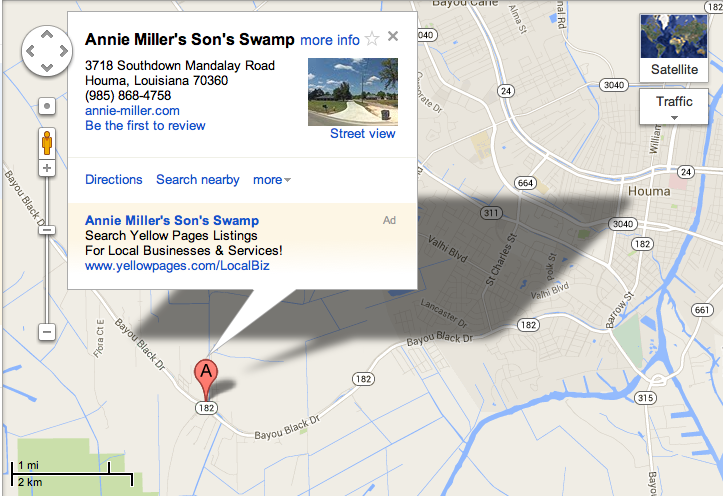
Annie Miller was a woman ahead of her time, out trapping, hunting and doing whatever she needed to do to keep her children fed and clothed and going to school. When oil went bottoms up, the town of Houma approached Annie Miller and asked her to start up some tours of the swamp, to attract business to the area. She did, and was so knowledgeable that people came from everywhere to take her tours.
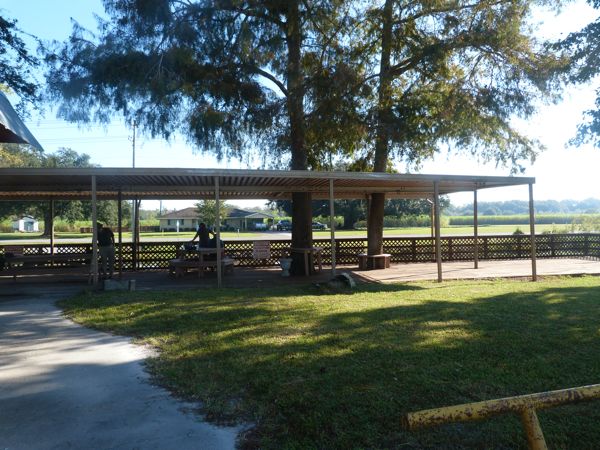
Now her son does the tours, and we liked his approach. We call it “Under promise and over deliver” which we think is a great slogan for contractors everywhere. At one time AdventureMan worked for a giant company whose contracts were called “The Gold Standard.” His company cost a little more, but they delivered on every promise and were good at figuring out problems that cropped up mid-contract and working with the government to support the mission.
As this tour departed from the gathering spot at Bayou Delights restaurant, the guide told us that with the colder weather, he couldn’t guarantee that we would see any alligators at all, but that there were other things he would show us. I love that approach. It prevents excessive expectations.
As it turned out, we saw all kinds of wonderful things, both inside and outside of the Mandalay Wildlife Refuge.
This is a revolving bridge over the Bayou Black. You can see the round base on which it can swing sideways to allow really tall boats up the Bayou. The guide saws he has never seen it work in his lifetime.

Almost immediately, we spy an alligator sunning on the side of the bayou.

Entering Mandalay Wildlife Refuge:
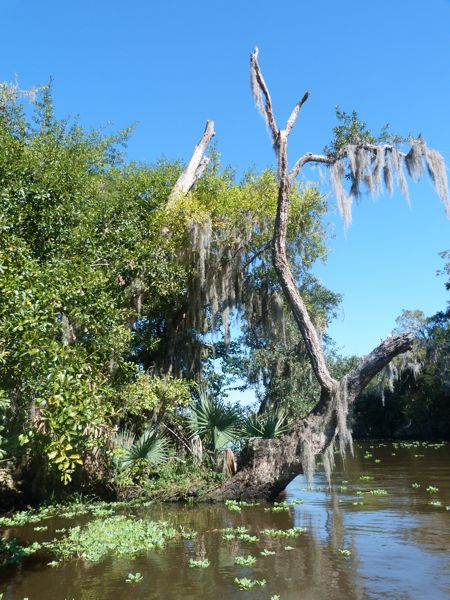
Shooting digital is a crap-shoot. You have that tiny delay, but a tiny delay makes shooting wildlife less predictable. I didn’t even know I had this shot until I uploaded my photos to my computer. It was absolutely glorious to see.

I have never seen anyone call an alligator before. “C’mon Ruby! C’mon b-a-a-a-a-a-a-a-by! C’mon Ruby!” And Ruby came!
So did Little Latin Loopy Lou! She jumps for the pieces of chicken that he puts on the end of the stick:


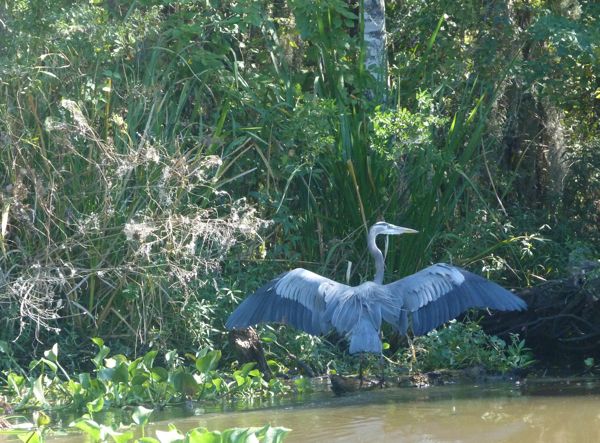
This is more exciting to me than alligators. These birds are gorgeous.
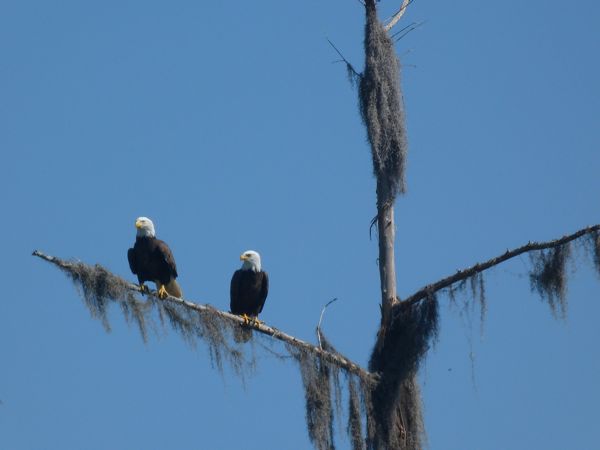
These two eagles would swoop at the same time for chicken skins; unfortunately, against the dark bayou, you couldn’t see them as they swooped, but I loved catching two of them together as they chowed down on their meal.
Back at the lovely Marriott Courtyard in Houma, I love having a balcony, especially in this weather. Gorgeous sunset, gorgeous weather.

The Devastating Power of Slander
Again, from the Lectionary readings for today, the devastation of gossip and slander, particularly appropriate during this season of vitriolic campaign ads, each more disgusting than the next:
Sirach 28:14-26
14 Slander* has shaken many,
and scattered them from nation to nation;
it has destroyed strong cities,
and overturned the houses of the great.
15 Slander* has driven virtuous women from their homes,
and deprived them of the fruit of their toil.
16 Those who pay heed to slander* will not find rest,
nor will they settle down in peace.
17 The blow of a whip raises a welt,
but a blow of the tongue crushes the bones.
18 Many have fallen by the edge of the sword,
but not as many as have fallen because of the tongue.
19 Happy is one who is protected from it,
who has not been exposed to its anger,
who has not borne its yoke,
and has not been bound with its fetters.
20 For its yoke is a yoke of iron,
and its fetters are fetters of bronze;
21 its death is an evil death,
and Hades is preferable to it.
22 It has no power over the godly;
they will not be burned in its flame.
23 Those who forsake the Lord will fall into its power;
it will burn among them and will not be put out.
It will be sent out against them like a lion;
like a leopard it will mangle them.
24a As you fence in your property with thorns,
25b so make a door and a bolt for your mouth.
24b As you lock up your silver and gold,
25a so make balances and scales for your words.
26 Take care not to err with your tongue,*
and fall victim to one lying in wait.
Baton Rouge Strangeness
Baton Rouge was a city we really wanted to like, and there are so many things about Baton Rouge we DO like. While we were there, however, every single day, we experienced a little bit of bad JuJu, a little bit of strangeness. By the grace of God, it was ameliorated by the goodness and kindness of others, but it was just strange.
First, I have to tell you I am not a huge fan of shopping, but every now and then when I find the right thing, I know it and I buy it. When I found Trader Joe’s, I knew just what to buy, quality products we love. Then, I headed out to Macy’s, a store we do not have in Pensacola.
The Mall is huge, but it was early in the morning, I got a great parking spot, and although I had ended up far from Macy’s, I enjoyed the stroll. This is the first thing I saw, and it delighted my heart.


What is not to love about this menagerie of zoo animals for little children to ride through the mall? Children HATE mall shopping, but this is a game changer 🙂
I actually didn’t find anything I loved at Macy’s, but I did find two very classic T-shirts I knew I could use, nicely made, so I went to buy them and the cashier asked if I wanted to use my Macy’s card. I said “sure” but it turns out because I hadn’t used it in a while, I had to re-instate it, and when you do that, you get 20% off all day and the next day, plus a WOW card that gives you more discounts, plus another 20% off when they bill you. Holy mole, sign me up! But even though I looked, I really didn’t see anything else I wanted.
Back at the hotel, I told AdventureMan about this hot deal and talked him into going back to Macy’s with me. He looked, but he also didn’t find anything he liked, and then I found the children’s section, ummmm, errrrr . . . .. grandchildren’s section, and there were all kinds of things I liked a lot, and Christmas is coming, so lets get a little dollar-cost-averaging going. (AdvntureMan is rolling his eyes.)
When I went to pay, the patient salesgirl rang everything up, and then had to call some number because my total was high, and then asked me to show my driver’s license. I knew I had it, because I had it earlier when I re-instated my card. So I dug. It wasn’t there. I dug some more, I looked and looked, but no card. I was so embarrassed. The patient clerk held all the grandchildren clothes while I went downstairs where I had shown my card earlier, and sure enough, there it was. Thank God! What if we hadn’t gone back to the Mall? Months go by where I never show that card, and months from now I wouldn’t have known where to find it. I felt like my guardian angel was sitting on my shoulder. And it still felt like strangeness.
When I went back upstairs to the cashier, I showed the drivers license, and she called the security number again, and he asked me all kinds of questions, places I lived years ago, what cars are associated with my accounts, it was totally strange, and AdventureMan is looking bullish, steam coming out of his nostrils, stamping and huffing and puffing (he is hungry). Finally, he tells the cashier I am OK, and she rings me up, very apologetic. I told her it is just the times we live in, and honestly, I want security to be tough on people who might pretend to be me, so it was just a minor inconvenience. But just another little piece of Baton Rouge strangeness, little things that could eat away at happiness and well being if you let them . . . .
Faithful Friends
Today’s reading in the Lectionary is from Sirach, one of the books of the Apocrypha, and features wisdom on faithful friends. I especially love “let your advisors be one in a thousand.” I have been greatly blessed to have found a few of those, and they stick with you for a lifetime.
Bless you, bless you, faithful friends!
Sirach 6:5-17
5 Pleasant speech multiplies friends,
and a gracious tongue multiplies courtesies.
6 Let those who are friendly with you be many,
but let your advisers be one in a thousand.
7 When you gain friends, gain them through testing,
and do not trust them hastily.
8 For there are friends who are such when it suits them,
but they will not stand by you in time of trouble.
9 And there are friends who change into enemies,
and tell of the quarrel to your disgrace.
10 And there are friends who sit at your table,
but they will not stand by you in time of trouble.
11 When you are prosperous, they become your second self,
and lord it over your servants;
12 but if you are brought low, they turn against you,
and hide themselves from you.
13 Keep away from your enemies,
and be on guard with your friends.
14 Faithful friends are a sturdy shelter:
whoever finds one has found a treasure.
15 Faithful friends are beyond price;
no amount can balance their worth.
16 Faithful friends are life-saving medicine;
and those who fear the Lord will find them.
17 Those who fear the Lord direct their friendship aright,
for as they are, so are their neighbours also.
Inequality: No Respect For Our First Nation Citizens (Blog Action Day)
I grew up in a small town, Juneau, Alaska, and not even in the main town, but on Douglas Island, across the Gastineau Channel from Juneau. My neighbors were fishermen, hunters, pilots, entrepreneurs and hard-working people struggling to make a living.
It was an upside down world. In most places, those who live there the longest are the leaders of society. In Southeast Alaska, those who lived there the longest were at the bottom of the heap, the Native Americans, the Tlingit, Haida and Tsimshian. I went to school with them. Yes, the boys carried knives. No, they were not dirty, and none of my little friends in elementary school were drunks. We were kids, we played together, we were all in the same classes all through elementary school – it was a small school.
Many of them did have family problems. There were problems of alcoholism, unemployment, domestic violence and hunger. They weren’t the only ones. The big problem was no respect. Although there were a few pieces of Native Art in the city museum, Native culture and Native craft were given little value. The Native way of life, living off the land, hunting and fishing, had greatly diminished as lands were apportioned off and hunting and fishing activities regulated.
In 1971 a huge lawsuit was settled and the Alaska Native Claims Settlement Act provided some restoration for the damaged peoples. Alaska Natives now have regional corporations to administer and grow funds to support the culture, to provide education for the children, to provide health clinics and hospitals. SEALASKA began to organize a biennial Celebration, a gathering of all the Alaska natives to share their stories, to celebrate their culture, to dance and to transmit culture to their children. It’s a great opportunity for people you might see every day in their western life to remember where they come from and to be proud of who they are. This Celebration is held every two years and includes Alaska Natives from all over Alaska who want to participate. It is a very inclusive Celebration. The next Celebration will be June 8 – 11, in 2016. You can read a little more about Celebration 2014 here.
They learn the legends of their clans – the Eagles, The Ravens, the Beavers, the Bears and a number of other clans. They spend the time between celebrations stitching together elaborate costumes for their parade and dance exhibitions, hollowing out canoes from trees, making elaborate hats and masks.
We first learned of the Celebration gathering in 2012, when we already had tickets to go back to Zambia at the exact time the Celebration was taking place, but my sweet husband promised we could go back for the 2014 Celebration. As we researched, we discovered just how much of Alaska we wanted to see, and did a reconnaissance trip in 2013. We loved our time there, and we were delighted to be able to return this last year for Celebration 2014.
It was one of the most thrilling moments of my life, to see the gathering, to see the old women cry as canoes came into sight full of young Alaskan natives, and say “I never thought I would see this again in my life”, to watch the exhilaration of the dancers, to feel the energy of the parade and especially – to see the children. To see the pride in marching, in dancing, to see the joy in being able to express who they are and to share that with others. I was moved beyond my ability to express in words; it was a feeling that in one small way, a train of events that had gone very off track had moved incrementally back in the right direction.
Here are some photos from the joyous Celebration of 2014:



Recent Comments
intlxpatr on Shampoo Ginger tigerbutterya0c5ff1d… on Shampoo Ginger intlxpatr on British Soldier Kidnapped, Esc… John on British Soldier Kidnapped, Esc… intlxpatr on British Soldier Kidnapped, Esc… Wikipedia Donate Button

Amazina


Early Voting in Florida


 Here There and Everywhere