Jennifer Egan: A Visit From the Goon Squad

Amazon.com kept telling me I needed to read this book, so finally, I ordered it and waited a couple months before I was ready. I just finished a major project AND I caught a miserable cold, so what better time?
I loved this book. It had a lot going against it; you know irrational factors like how you feel when you have a cold and your sinuses are all stuffed up and your chest is tight? A Visit From the Goon Squad took me out of my misery. While it appears random, it is tightly plotted, and I loved seeing how different strands intertwined. I also loved the effects of the goon squad (no, I am not going to tell you anything specific) and I loved how technology drove differences in how different generations thought and acted.
The last act takes place in a future where (this makes total sense) there is a high value placed on “pure”, no tattoos, no swearing – it is truly hilarious, the lengths to which we will go to NOT be our parents. Babies have their own hand-helds, which is already happening. My eyes have been opened, watching our own 18 month old grandson working an iPad and iPhone. It’s amazing to me the aps that are created to entertain, divert and teach our little ones.
This is not a straight line book, so there are times I had to go back and read a section again to remind myself where I met this character before, and how he tied into the plot earlier. It is a fascinating creation, this book, and I would love to sit down for coffee with this author, and her outside-the-box kind of thinking.
Bad Grandparents: Disaster Averted
“No! No!” he shouted, and pushed away the spoon full of rice and beans which he normally loves. No. He wanted BaBa to walk him around the restaurant some more, showing him serapes and sombreros and gaudily crowing roosters.
‘More. More,’ he signed.
“It’s dinner time, time to eat,” GaGa said calmly, signing for ‘eat.’
“No! No! Done!” He may not have a large vocabulary, but Happy Baby knows how to communicate pretty clearly. BaBa goes to pick him up, but I say no, it’s dinner time. Very calmly. The shrieks begin, the arched back, the tears. Baba looks at me accusingly; what to do? I know we need to hold our ground, but it is so hard when the piercing shrieks start.
And then, a miracle. The waiter shows up with a small plate of whipped cream with chocolate sauce over it.
What self-respecting grandparent would allow a child to feast on whipped cream??

Desperate grandparents. Grandparents who can’t bear to hear him shriek. We let him eat the whipped cream, but he had to eat it on his own, with the spoon. He’s not very efficient with the spoon yet, so he couldn’t really get much. And, between tiny spoon tastes of whipped cream, BaBa and I have discovered he will eat beans and rice after all. He ate all the beans and rice, and only got a little of the whipped cream, but he was happy. And so were we.
On some deep level I feel like we have shirked our responsibilities, but oh, those shrieks . . .
When we are at home, we can ignore the shrieks. One time he was shrieking, and when we ignored him, he stopped, came closer and then flopped down and started shrieking again. We couldn’t help it, we just laughed. It was so hilarious. When he saw us laughing, he gave up and got involved with something else. He is so much fun. 🙂
In The Middle of the Storm
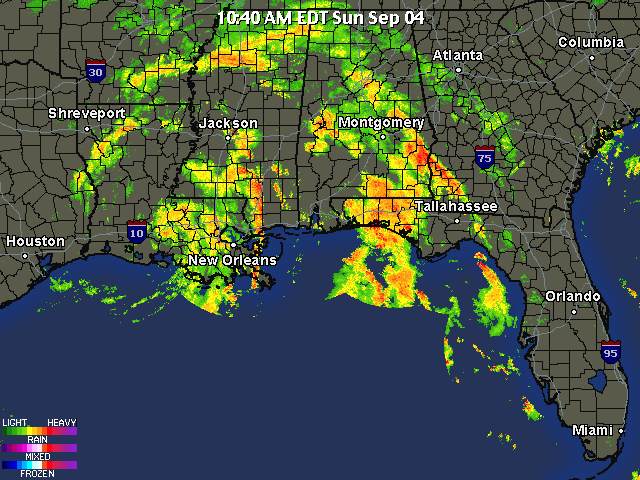
When you’re in the middle of the storm, it is hard to imagine just how BIG it is. It isn’t a hurricane, because the winds are not high enough, but oh man, the rain. Poor Pensacola has been about 10 – 15 inches short of its annual average, and I think we are getting all caught up this weekend.
AdventureMan is outside, picking up dead tree branches that came down last night. On our way to church, early this morning, we saw the electrical crews out trying to fix a line that went down. God bless these heroes who get out of bed on a national long weekend, early in the morning, so that people might have lights, and power, and air conditioning. We take them for granted, and yet they are everyday heroes.
Sobering Reading on Wealth
It’s a long weekend, Labor Day weekend, and Pensacola awakes to rain-sodden streets and forecasts of a rain soggy three day weekend (bad for hotels and restaurants at the beach who hope for a sell-out Labor Day) and high surf from off-shore storms.
The reading for today from James is equally gloomy. I always think of “Insh’allah” when I read it, because it probably has an equivalent somewhere in the Quran, and my Muslim friends say “Insh’allah” (As God wills, or If God wills it) when they state a planned event.
While we are not rich, we have a large homeless population in Pensacola, sleeping out under the skies in hidden camps, scrounging for food, often with a dog, seeking handouts, seeking scraps. They are a constant reminder, to me, of how comfortable we are, and how comfort wars with the religious spirit. When we are too comfortable, we often fail to keep our focus on God, and are distracted by our toys and interests.
(I told you this would be gloomy.)
On the other hand, I wonder how spiritual I would be if I were hungry, worried about getting enough to eat, worried about my safety sleeping out in one of the camps. I wonder if their community looks after one another, or if it is a brutal and chaotic life. I wonder how you can keep your mind on things of the spirit when the search for basic necessities takes up a large part of your life.
James 4:13-5:6
13 Come now, you who say, ‘Today or tomorrow we will go to such and such a town and spend a year there, doing business and making money.’ 14Yet you do not even know what tomorrow will bring. What is your life? For you are a mist that appears for a little while and then vanishes. 15Instead you ought to say, ‘If the Lord wishes, we will live and do this or that.’ 16As it is, you boast in your arrogance; all such boasting is evil. 17Anyone, then, who knows the right thing to do and fails to do it, commits sin.
5Come now, you rich people, weep and wail for the miseries that are coming to you. 2Your riches have rotted, and your clothes are moth-eaten. 3Your gold and silver have rusted, and their rust will be evidence against you, and it will eat your flesh like fire. You have laid up treasure* for the last days. 4Listen! The wages of the labourers who mowed your fields, which you kept back by fraud, cry out, and the cries of the harvesters have reached the ears of the Lord of hosts.
5You have lived on the earth in luxury and in pleasure; you have fattened your hearts on a day of slaughter. 6You have condemned and murdered the righteous one, who does not resist you.
Neighbors Key to Survival
“Americans don’t know their neighbors” my dinner guest said, in response to my asking him what surprises him most in his visit to this country. “In my country, we all know our neighbors. It’s important to know your neighbors.”
I agreed, and quoted him this article supporting his view that I heard on National Public Radio, one of those ideas I hear so often on NPR because they cover news other news sources ignore.
Below is just a portion of the story, which you can read in whole by clicking on this blue type. Even better, if you want, you can listed to the story yourself by clicking on the “Listen to the Story: All things Considered” button on this same page.

When Hurricane Katrina struck in 2005, one victim was political scientist Daniel Aldrich. He had just moved to New Orleans. Late one August night, there was a knock on the door.
“It was a neighbor who knew that we had no idea of the realities of the Gulf Coast life,” said Aldrich, who is now a political scientist at Purdue University in Indiana. He “knocked on our door very late at night, around midnight on Saturday night, and said, ‘Look, you’ve got small kids — you should really leave.’ ”
The knock on the door was to prove prophetic. It changed the course of Aldrich’s research and, in turn, is changing the way many experts now think about disaster preparedness.
Officials in New Orleans that Saturday night had not yet ordered an evacuation, but Aldrich trusted the neighbor who knocked on his door. He bundled his family into a car and drove to Houston.
“Without that information we never would’ve left,” Aldrich said. I think we would’ve been trapped.”
In fact, by the time people were told to leave, it was too late and thousands of people got stuck.
Because of his own experience in Katrina, Aldrich started thinking about how neighbors help one another during disasters. He decided to visit disaster sites around the world, looking for data.
Aldrich’s findings show that ambulances and firetrucks and government aid are not the principal ways most people survive during — and recover after — a disaster. His data suggest that while official help is useful — in clearing the water and getting the power back on in a place such as New Orleans after Katrina, for example — government interventions cannot bring neighborhoods back, and most emergency responders take far too long to get to the scene of a disaster to save many lives. Rather, it is the personal ties among members of a community that determine survival during a disaster, and recovery in its aftermath.
When Aldrich visited villages in India hit by the giant 2004 tsunami, he found that villagers who fared best after the disaster weren’t those with the most money, or the most power. They were people who knew lots of other people — the most socially connected individuals. In other words, if you want to predict who will do well after a disaster, you look for faces that keep showing up at all the weddings and funerals.
“Those individuals who had been more involved in local festivals, funerals and weddings, those were individuals who were tied into the community, they knew who to go to, they knew how to find someone who could help them get aid,” Aldrich says.
My visiting guest was from Lebanon, where neighbors have relied on one another for years as civil unrest rocks the country.
“I am guessing we move more often than your family and friends,” I ventured. “You are right, it is harder to establish long-lasting neighborly relations here where people come and go more often.”
Actually, we have settled in a fairly established neighborhood, where many people around us have lived for years and years, some all their lives. But we have only been here a year, and it takes time to build strong neighborly relations. But we are aware that connecting with our neighbors and staying connected is important in a part of the country vulnerable to life-threatening hurricanes and other natural emergencies.
You can listen to the entire report in 6 minutes and 3 seconds here.
Major Pettigrew’s Last Stand
 Major Pettigrew’s Last Stand by Helen Simonson
My rating: 5 of 5 stars
I loved this book. It follows all the themes I love – how convention blinds us, how our cultural assumptions make us unconsciously snobbish and leads us to hideous behavior, it is very cultural and also very cross-cultural. Major Pettrigrew is widowed, and his grief has made him old. At the beginning of the book, his life seems very dull and grey. It lightens as his friendship sparks with Mrs. Ali, a widow who runs a small convenience market in his small English village. They both love reading (of course I love that part!) and they talk books, and sparks of warmth kindle.
This book is also very uncomfortable for me, as Roger has a grown son who bullies his father. The book isn’t just cross-cultural, it’s cross-generational, and I see glimpses of myself in the boorish behavior of his son toward his father.
There are some amusing scenes, some wickedly insightful village-interaction scenes, some painfully introspective moments, and some truly grand moments when everything becomes clear and a person acts. For me, there was an added bonus in that as I read Mrs. Ali’s words, I could hear them so clearly, and she spoke in the voice of a dear friend. I could picture her, because I could see the sweet smiling face of a dear friend. It was like having a great visit.
<a href=
“We Have Lost Our Moral Compass”
There is something I need to confess, as I print my friend Amer’s most recent editorial from the Arab Times in Kuwait.
Amer is writing about the great loss of civility in Kuwait, a country where trade routes crossed, merchants ruled and differences were tolerated. While I lived in Kuwait, I was horrified at the flaunting of traffic rules and the reckless endangerment of the population because some people believed the laws did not apply to them.
Amer, with a few differences specific to Islam, your editorial, sadly, could be equally well applied many places in the United States today, where some people believe they should not have to patiently stand in line, or obey the traffic rules, or protect the quality of the food supplies or water sources that provide for the communities.
When we fail to restrain ourselves and our selfish greediness, we harm others – but we also harm ourselves. We damage the fabric of society that protects us from the chaos of anarchy. Well said, Amer.
We Have Lost Our Moral Compass
EVERY Ramadan we are inundated by articles and features highlighting the proper means of fasting, alms-giving, praying and other essential pillars of Islam. I am not going to do that.
Most citizens are decent, God-fearing individuals trying to improve their lot and the lives of their loved ones. I believe the Kuwaiti character in essence is one of integrity and generosity — we are a charitable people, evident by the Ramadan dinners we sponsor and the alms we pay (Zakat) — indeed we are almost always the first to rush in aid of others, local or internationally. We should be proud of this trait.
We are, however, far from perfect. Praying, fasting and spending alms on the needful are not enough to qualify us or other societies as superior Muslims.
Our Prophet (Peace Be Upon Him) stated, ‘The best amongst you are those who have the best manners and character.’
Recently, we have all been witness to a drastic deterioration in the way people treat one another and conduct their lives — a certain segment lack the proper traits, either due to absence of decent rearing, non-implementation of laws (which they view as ‘toothless’) or the gradual radicalism in society which encourages gender segregation, intolerance of foreigners and non-Islamic ideals and views.
Our society seems to have lost its moral compass; gaze around you, materialism and power is valued over integrity and honesty; harshness in tone is embraced, over humility and etiquette. An individual’s caliber is immaterial; what matters is how one can ‘benefit’ another, the extent of personal influence and how many laws one can break with impunity.
On the behavioral level, this is evident all around us, nothing is respected; people don’t wait their turn, they drive erratically, they walk into elevators without waiting for others to exit, they are rude to foreign workers, they disturb women in malls and public places, they cause a ruckus in movie theatres, road and traffic signs are ignored, municipality laws are ignored, smoking signs are ignored. The list goes on…
This personal methodology is poisoning society — we are all victims of and responsible for this collective, ethical Achilles’ heel.
Follow the law, pay your bills on time, stand in a queue, follow road signs and you’re regarded as a dimwit.
These days you get a taste of good manners when you travel to countries like the United States and the European Union where parents educate their children ‘not to point at others’, ‘scream’ and wait patiently for their turn in a queue, saying ‘please’ and ‘thank you.’
Even progressive GCC states such as the UAE — eager to attract foreigners and investment — do not tolerate any law breaking: speeding tickets affect the validity of your car license and insurance premiums; if unruly youths disturb or sexually harass women in public, security arrests them, shaves their heads, splashes their mugs in the papers, for example. People think twice before embarking on any moves which might offend the personal space or respect of others.
It’s the atmosphere of tolerance, openness and the implementation of laws that truly make an Islamic society, not the number of mosques built or how many foreigners converted to Islam. Where is Islam if society deems Expired Food Merchants and MPs and their ‘state benefactors’ — who dabble in tens of millions of corrupt money — for example, as ‘untouchables’?
People’s behavior forces one to ditch the law because the law is not really on one’s side, it’s not really being enforced — it’s an illusion. Additionally, we need to start embarking on ‘naming and shaming’ lawbreakers and criminals instead of shielding their identities from the public, who have a right to know.
The state apparatus — traditionally infatuated with forming committees, hosting seminars and running bloated campaigns — needs to execute them properly, namely by implementing a two-track initiative: On the one hand formulating an awareness campaign on ‘Islamic Moderation And Tolerance’ by highlighting the work of groundbreaking pioneers and world-renowned Moderate Islamic voices such as our very own Dr Naif Al-Mutawa (creator of the comic book series ‘The 99’) and Dr Reza Aslan, author of ‘No God But God,’ among other accomplished intellectual luminaries — so that younger generations may be able to benefit from their stimulating, refreshing views. Simultaneously, on the other track enforcing Civic and Constitutional Laws preaching freedom of speech, equality and appropriate justice — so individuals may learn to respect state laws and tolerate differing views – they need to realize grave repercussions are incoming, leading to imprisonment or worse, if they indulge in any lawbreaking or negative antisocial behavior. Ultimately, the State needs to step up to the plate and protect society, lest individuals take the law into their own hands and mob rule surfaces.
Islam without proper laws, justice for all and proper education is abridged, toothless — as a society we need to instill the values amongst ourselves and future generations, not just censure ‘external influences,’ the media or the West for our ills (many which are self created). Moreover, we need as a community to re-examine the way we conduct ourselves and treat others — to realize that no good can come from a society that obliquely persuades fraud, dishonesty and ill-treatment of others.
By: Amer Al-Hilal
Changes in the Air
“It’s still hot,” I said as we were coming out of the movie, “but can you feel a change in the air? Even though it’s hot, the air is changing, the light is changing – you can feel hints that Fall is coming . . . ”
We had just been to see “The Help,” and if you haven’t seen it yet, you need to make plans to see it soon. It is a really good movie, which will make you laugh, and cry, and remember that it wasn’t so long ago in our country when it took place. (You can read my review of the unforgettable book here.)
The movie is a serious movie, and at the same time, I loved the attention to detail – the hair, the fashions, the manners – all very 50’s, even though it is the 1960’s in Jackson, Mississippi.
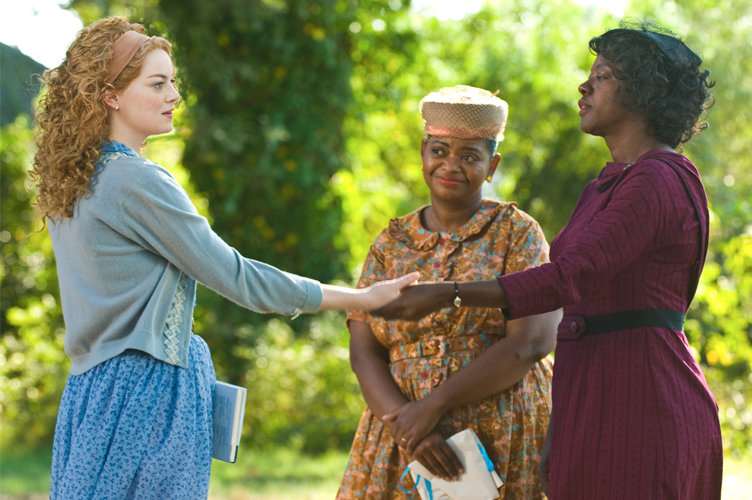
I remember reading this book in Qatar, just after I had moved back there from Kuwait. The Kuwait book club also read White Tiger and Half of a Yellow Sun, all of which had domestic service as at least part of the theme. It’s another one of those cultural things we all have in common – how do we treat the people who work for us? How do they see us? Who is raising our children and teaching them values?
In the Gulf, there are horror stories in the papers of servants who never receive their wages, or who work 16 hours a day, sun-up to sun-down, with never a day off. The families who take good care of their servants never make the papers, but I have seen good and caring relationships, lasting many years, between employers and employees. We’re glad we saw this movie, which sticks closely to the book. For a fuller experience – read the book.
Meanwhile, the temperature early this morning was below 69° F, which means that my tomatoes will begin setting once again and we may have a good crop coming before the cold sets in. I noticed, to my horror, I have a decent crop of weeds trying to establish themselves while it is too hot for me to go out and do battle with them. Some of my tomatoes actually continued producing even during the hottest days of the summer; I’m going to have to plant more of those next year. The golden pear and the red pear tomatoes are producing merrily; the bigger tomatoes have stopped – I hope temporarily.
The Sandpiper
Thank you, KitKat, for sending me this great story to share with my readers:
The Sandpiper
by Robert Peterson
She was six years old when I first met her on the beach near where I live.
I drive to this beach, a distance of three or four miles, whenever the world begins to close in on me. She was building a sand castle or something and looked up, her eyes as blue as the sea.
“Hello,” she said.
I answered with a nod, not really in the mood to bother with a small child.
“I’m building,” she said.
“I see that. What is it?” I asked, not really caring.
“Oh, I don’t know, I just like the feel of sand.”
That sounds good, I thought, and slipped off my shoes.
A sandpiper glided by.
“That’s a joy,” the child said.
“It’s a what?”
“It’s a joy. My mama says sandpipers come to bring us joy.”
The bird went gliding down the beach. Good-bye joy, I muttered to myself, hello pain, and turned to walk on. I was depressed, my life seemed completely out of balance.
“What’s your name?” She wouldn’t give up.
“Robert,” I answered. “I’m Robert Peterson.”
“Mine’s Wendy… I’m six.”
“Hi, Wendy.”
She giggled. “You’re funny,” she said.
In spite of my gloom, I laughed too and walked on.
Her musical giggle followed me.
“Come again, Mr.. P,” she called. “We’ll have another happy day.”
The next few days consisted of a group of unruly Boy Scouts, PTA meetings, and an ailing mother. The sun was shining one morning as I took my hands out of the dishwater. I need a sandpiper, I said to myself, gathering up my coat.
The ever-changing balm of the seashore awaited me.. The breeze was chilly but I strode along, trying to recapture the serenity I needed.
“Hello, Mr. P,” she said. “Do you want to play?”
“What did you have in mind?” I asked, with a twinge of annoyance.
“I don’t know. You say.”
“How about charades?” I asked sarcastically.
The tinkling laughter burst forth again. “I don’t know what that is.”
“Then let’s just walk.”
Looking at her, I noticed the delicate fairness of her face.
“Where do you live?” I asked.
“Over there.” She pointed toward a row of summer cottages.
Strange, I thought, in winter.
“Where do you go to school?”
“I don’t go to school. Mommy says we’re on vacation”
She chattered little girl talk as we strolled up the beach, but my mind was on other things. When I left for home, Wendy said it had been a happy day. Feeling surprisingly better, I smiled at her and agreed.
Three weeks later, I rushed to my beach in a state of near panic. I was in no mood to even greet Wendy. I thought I saw her mother on the porch and felt like demanding she keep her child at home.
“Look, if you don’t mind,” I said crossly when Wendy caught up with me, “I’d rather be alone today.” She seemed unusually pale and out of breath.
“Why?” she asked.
I turned to her and shouted, “Because my mother died!” and thought, My God, why was I saying this to a little child?
“Oh,” she said quietly, “then this is a bad day.”
“Yes,” I said, “and yesterday and the day before and — oh, go away!”
“Did it hurt?” she inquired.
“Did what hurt?” I was exasperated with her, with myself.
“When she died?”
“Of course it hurt!” I snapped, misunderstanding,
wrapped up in myself. I strode off.
A month or so after that, when I next went to the beach, she wasn’t there. Feeling guilty, ashamed, and admitting to myself I missed her, I went up to the cottage after my walk and knocked at the door. A drawn looking young woman with honey-colored hair opened the door.
“Hello,” I said, “I’m Robert Peterson. I missed your little girl today and wondered where she was.”
“Oh yes, Mr. Peterson, please come in. Wendy spoke of you so much. I’m afraid I allowed her to bother you. If she was a nuisance, please, accept my apologies.”
“Not at all! she’s a delightful child.” I said, suddenly realizing
that I meant what I had just said.
“Wendy died last week, Mr. Peterson. She had leukemia
Maybe she didn’t tell you.”
Struck dumb, I groped for a chair. I had to catch my breath.
“She loved this beach, so when she asked to come, we couldn’t say no. She seemed so much better here and had a lot of what she called happy days. But the last few weeks, she declined rapidly…” Her voice faltered, “She left something for you, if only I can find it. Could you wait a moment while I look?”
I nodded stupidly, my mind racing for something to say to this lovely young woman. She handed me a smeared envelope with “MR. P” printed in bold childish letters.. Inside was a drawing in bright crayon hues — a yellow beach, a blue sea, and a brown bird. Underneath was carefully printed:
A SANDPIPER TO BRING YOU JOY.
Tears welled up in my eyes, and a heart that had almost forgotten to love opened wide. I took Wendy’s mother in my arms. “I’m so sorry, I’m so sorry, I’m so sorry,” I uttered over and over, and we wept together. The precious little picture is framed now and hangs in my study. Six words — one for each year of her life — that speak to me of harmony, courage, and undemanding love.
A gift from a child with sea blue eyes and hair the color of sand
— who taught me the gift of love.
NOTE: This is a true story sent out by Robert Peterson. It happened over 20 years ago and the incident changed his life forever. It serves as a reminder to all of us that we need to take time to enjoy living and life and each other. The price of hating other human beings is loving oneself less.
Life is so complicated, the hustle and bustle of everyday traumas can make us lose focus about what is truly important
or what is only a momentary setback or crisis..
This week, be sure to give your loved ones an extra hug, and by all means, take a moment… even if it is only ten seconds, to stop and smell the roses.
This comes from someone’s heart, and is read by many
and now I share it with you..
;
May God Bless everyone who receives this! There are NO coincidences!
Everything that happens to us happens for a reason. Never brush aside anyone as insignificant. Who knows what they can teach us?
I wish for you, a sandpiper.
Answered Prayer: Please Lord, Don’t Let it be a Muslim
In the aftermath of the horrific events in Norway, I was praying along with all my immigrant friends – “Please, Lord, don’t let it be a Muslim.” It wasn’t. Just another hater, this one has blue eyes and blonde hair and seems to be a Christian conservative. This one hates for his own reasons. It doesn’t matter much what those reasons are, does it, to the grieving families whose children were slaughtered, or the grieving nations whose peace is destroyed?
The 32-year-old Norwegian man who allegedly went on a shooting spree on the island of Utoya has been identified as Anders Behring Breivik, according to multiple reports.
The Daily Mail and Sky News were among those to report the suspect’s name. According to witnesses, the gunman was dressed as a police officer and gunned down young people as they ran for their lives at a youth camp.
Police said Friday evening that they’ve linked the youth camp shooting and Oslo bombing. Breivik is believed to have acted alone.
Norwegian TV2 reports that Breivik belongs to “right-wing circles” in Oslo. Swedish news site Expressen adds that he has been known to write to right-wing forums in Norway, is a self-described nationalist and has also written a number of posts critical of Islam.
A Twitter account for Breivik has surfaced, though it only has one post, this quote from philosopher John Stuart Mill: “One person with a belief is equal to the force of 100 000 who have only interests.” The tweet was posted on July 17.
On a Facebook account that Norwegian media outlets have attributed to Breivik, he describes himself as having Christian, conservative views. He says he enjoys hunting, the games World of Warcraft and Modern Warfare 2, and lives in Oslo. He also lists political analysis and stock analysis as interests.
Recent Comments
intlxpatr on Shampoo Ginger tigerbutterya0c5ff1d… on Shampoo Ginger intlxpatr on British Soldier Kidnapped, Esc… John on British Soldier Kidnapped, Esc… intlxpatr on British Soldier Kidnapped, Esc… Wikipedia Donate Button

Amazina


Early Voting in Florida


 Here There and Everywhere