Obama and Dreams From My Father
It took me 20 days, but I finished Barack Obama’s Dreams From My Father. I didn’t read it because he is President of the United States, although that would be a good reason, but I read it because our book club is reading it, and I know how busy the next few months are going to be, so I read ahead during the slower times of summer.
And the trick to finishing it was not allowing myself to read anything else until I had finished – I had a stack of really intriguing books to urge me on. “As soon as I finish, I can read . . . ” Even with all that incentive, Obama’s book is a slog.
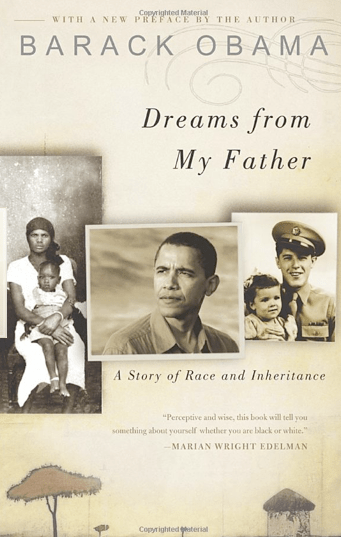
He is a gifted orator. He is a plodding writer. There is also a problem I find with autobiographies by anyone – we all fool ourselves, we all position ourselves in a better light, and we have no idea how transparent we are when we do so. Fellow bloggers, do you ever read anything you have written a couple years ago and squirm with embarrassment, or even delete? To be an author is a very very brave thing, when you have a book published, there is no going back, your transgressions are all right out there, and the public can be cruelly critical.
What I liked about the book is Obama-as-Third-Culture-Kid, a man of mixed identity. Most kids who have grown up moving or grown up in different countries from their own, or who have immigrated, can tell you, being an alien is no fun. Obama learns how to adapt, how to look for clues to fitting in, how to pass. It’s a common theme in Third-Culture-Kids.
My favorite part of the book was his return to Kenya, his openness to his African roots, the open-armed love with which his Kenyan half-brothers and sisters welcome him and his response. He had some truly extraordinary adventures, working out just who his father had been as a person. He was blessed to recognize the richness of his inheritance.
The book plods along, but it was worth the time. For all it’s flaws, I find I like that man, and I understand more about where he is coming from. (for grammarians, I understand more about from where the man is coming.) 🙂
Whoda Thunk? People Get Happier as they Age
I never dreamed it when I was younger. Who would want to be OLD? Having nice tight little bodies is fun, right? Even if you have to pay the price of worrying all the time about maintainence, LOL!
As it turns out, people get happier as they get older. Whoda thunk it?
People ‘get happier as they age’
From BBC Health News
Older people appear better able to control their emotions
Most people get happier as they grow older, studies on people aged up to their mid-90s suggest.
Despite worries about ill health, income, changes in social status and bereavements, later life tends to be a golden age, according to psychologists.
They found older adults generally make the best of the time they have left and have learned to avoid situations that make them feel sad or stressed.
The young should do the same, they told the American Psychological Association.
Ageing society
The UK is an ageing nation – in less than 25 years, one in four people in the UK will be over 65 and the number of over-85s will have doubled.
And it is expected there will be 30,000 people aged over 100 by the year 2030.
According to University of California psychologist Dr Susan Turk Charles, this should make the UK a happier society.
By reviewing the available studies on emotions and ageing she found that mental wellbeing generally improved with age, except for people with dementia-related ill health.
Work carried out by Dr Laura Carstensen, a psychology professor at Stanford University, suggested why this might be the case.
Dr Carstensen asked volunteers ranging in age from 18 to mid-90s to take part in various experiments and keep diaries of their emotional state.
She found the older people were far less likely than the younger to experience persistent negative moods and were more resilient to hearing personal criticism.
They were also much better at controlling and balancing their emotions – a skill that appeared to improve the older they became.
TIPS FOR A HAPPY OLD AGE
Envisage ways to thoroughly enjoy the years ahead and imagine living to a healthy and happy 100
Design your life and daily routines to reinforce this goal
Don’t put all your “social” eggs in one basket – invest time outside of your family and career too
Dr Charles explained: “Based on work by Carstensen and her colleagues, we know that older people are increasingly aware that the time they have left in life is growing shorter.
“They want to make the best of it so they avoid engaging in situations that will make them unhappy.
“They have also had more time to learn and understand the intentions of others which helps them to avoid these stressful situations.”
Dr Carstensen said the young would do well to start preparing for their old age now.
This includes adopting a healthy daily routine and ensuring some social investment is spent outside of the workplace and family home.
Andrew Harrop, head of public policy at Age Concern and Help the Aged, said the findings were encouraging.
“For many people, older age and later life is often looked upon with dread and worry.
“Far too many younger people assume that getting older is a process that will inevitably mean sickness, frailty and lack of mobility and greater dependence. However, this is far from the truth in very many cases.
“Many older people lead active, healthy lives enriched by experience and learning.
“This positive advantage can be brought to bear across so many aspects of daily life which – in turn – hugely benefits our ageing society.
“It’s vital that there is growing acceptance that just because someone is getting older, it doesn’t mean they no longer have a significant contribution to make.
“This study is one of many which shows that later life can be a enormously positive experience.”
China Trusts Prostitutes More than Chinese Politicians
LLLOOOLLLL, thank you, BBC News for livening up the deadly August news scene:
China ‘trusts prostitutes more’
China’s prostitutes are better-trusted than its politicians and scientists, according to an online survey published by Insight China magazine.
The survey found that 7.9% of respondents considered sex workers to be trustworthy, placing them third behind farmers and religious workers.
“A list like this is at the same time surprising and embarrassing,” said an editorial in the state-run China Daily.
Politicians were far down the list, closer to scientists and teachers.
Insight China polled 3,376 Chinese citizens in June and July this year.
“The sex workers’ unexpected prominence on this list of honour… is indeed unusual,” said the China Daily editorial.
“At least [the scientists and officials] have not slid into the least credible category which consists of real estate developers, secretaries, agents, entertainers and directors,” the editorial said.
Soldiers came in fourth place.
I can’t help but wonder how the same survey would result in other countries?
“Whip Me if You Dare” Sudan Woman Wears Pants
This woman doesn’t have to take the whipping – she was a UN employee, and could claim diplomatic immunity. She wears a headscarf, she wears modest clothing. She could have quietly escaped. But like Rosa Parks, the black woman in segregated America, who refused to give up her seat and move to the back of the bus, Lubna Hussein has chosen to take a stand, even take a whipping, rather than back down.
Do you think it is un-Islamic for women to wear pants?
‘Whip me if you dare’ says Lubna Hussein, Sudan’s defiant trouser woman
Lubna Hussein, the Sudanese woman who is daring Islamic judges to have her whipped for the “crime” of wearing trousers, has given a defiant interview to the Telegraph.

As the morality police crowded around her table in a Khartoum restaurant, leering at her to see what she was wearing, Lubna Hussein had no idea she was about to become the best-known woman in Sudan.
She had arrived at the Kawkab Elsharq Hall on a Friday night to book a cousin’s wedding party, and while she waited she watched an Egyptian singer and sipped a coke.
She left less than an hour later under arrest as a “trouser girl” – humiliated in front of hundreds of people, then beaten around the head in a police van before being hauled before a court to face a likely sentence of 40 lashes for the “sin” of not wearing traditional Islamic dress.
The officials who tried to humiliate her expected her to beg for mercy, as most of their victims do.
Instead she turned the tables on them – and in court on Tuesday Mrs Hussein will dare judges to have her flogged, as she makes a brave stand for women’s rights in one of Africa’s most conservative nations.
She has become an overnight heroine for thousands of women in Africa and the Middle East, who are flooding her inbox with supportive emails. To the men who feel threatened by her she is an enemy of public morals, to be denounced in the letters pages of newspapers and in mosques.
As she recounted her ordeal in Khartoum yesterday Mrs Hussein, a widow in her late thirties who works as a journalist and United Nations’ press officer, managed cheerfully to crack jokes – despite the real prospect that in a couple of days she will be flogged with a camel-hair whip in a public courtyard where anyone who chooses may watch the spectacle.
Her interview with The Sunday Telegraph was her first with a Western newspaper.
“Flogging is a terrible thing – very painful and a humiliation for the victim,” she said. “But I am not afraid of being flogged. I will not back down.
“I want to stand up for the rights of women, and now the eyes of the world are on this case I have a chance to draw attention to the plight of women in Sudan.”
She could easily have escaped punishment by simply claiming immunity as a UN worker, as she is entitled to under Sudanese law. Instead, she is resigning from the UN – to the confusion of judges who last Wednesday adjourned the case because they did not know what to do with her.
“When I was in court I felt like a revolutionary standing before the judges,” she said, her eyes blazing with pride. “I felt as if I was representing all the women of Sudan.”
Like many other women in the capital, Mrs Hussein fell foul of Sudan’s Public Order Police, hated groups of young puritans employed by the government to crack down on illegal drinkers of alcohol and women who, in their view, are insufficiently demure.
Despite their claims of moral superiority, they have a reputation for dishonesty and for demanding sexual favours from women they arrest.
Mrs Hussein was one of 14 women arrested at the Kawkab Elsharq Hall, a popular meeting place for the capital’s intellectuals and journalists, who bring their families. Most of them were detained for wearing trousers. The police had difficulty seeing what Mrs Hussein was wearing under her loose, flowing Sudanese clothes. She was wearing green trousers, not the jeans that she said she sometimes wears, and wore a headscarf, as usual.
“They were very rude,” she said. “A girl at a table near mine was told to stand up and told to take a few steps and then turn around, in a very humiliating way. She was let off when they ‘discovered’ she was not wearing trousers.”
After her arrest, on the way to a police station, she tried to calm the younger girls.
“All the girls were forced to crouch on the floor of the pick-up with all the policemen sitting on the sides,” she said. “They were all very terrified and crying hysterically, except me as I had been arrested before during university days by the security services.
“So I began to try to calm the girls, telling them this wasn’t very serious. The response of the policeman was to snatch my mobile phone, and he hit me hard on the head with his open hand.
“On the way I felt so humiliated and downtrodden. In my mind was the thought that we were only treated like this because we were females.”
Christian women visiting from the south of Sudan were among the 10 women who admitted their error and were summarily flogged with 10 lashes each. But Mrs Hussein declined to admit her guilt and insisted on her right to go before a judge.
While waiting for her first court appearance, she said she was surprised to find herself held in a single cramped detention cell with other prisoners of both sexes. “How Islamic is that?” she asked. “This should not happen under Sharia.”
Mrs Hussein is a long-standing critic of Sudan’s government, headed by President Omar al-Bashir, the first head of state to face an international arrest warrant for war crimes. Sudan has been accused of committing atrocities in the Darfur region.
Before her arrest she had written several articles criticising the regime, although she believes she was picked at random by the morality police.
The regime has often caused international revulsion for religious extremism. In 2007 British teacher Gillian Gibbons was briefly imprisoned for calling the classroom teddy bear Mohammed.
The government is dominated by Islamists, although only the northern part of the nation is Muslim. Young women are frequently harassed and arrested by the regime’s morality police.
Mrs Hussein said: “The acts of this regime have no connection with the real Islam, which would not allow the hitting of women for the clothes they are wearing and in fact would punish anyone who slanders a woman.
“These laws were made by this current regime which uses it to humiliate the people and especially women. These tyrants are here to distort the real image of Islam.”
She was released from custody after her first court appearance last week, since when she has appeared on Sudanese television and radio to argue her case – which has made headlines around the world.
She is not only in trouble with police and judges. A day after her court appearance she was threatened by a motorcyclist, who did not remove his helmet. He told her that she would end up like an Egyptian woman who was murdered in a notorious recent case.
Since then she has not slept at home, moving between the houses of relatives. She believes her mobile telephone has been listened to by the security services using scanners.
But she has pledged to keep up her fight. “I hope the situation of women improves in Sudan. Whatever happens I will continue to fight for women’s rights.”
The Doha Mumtaz Tailor
As a last resort, we head to the Mumtaz tailor to see if he knows where we might find the exact fabric for Little Diamond’s pants. No, says the Mumtaz Tailor, but actually he saw a lot of it just a couple years ago, but it is all gone now.
This tiny little shop, just off Karabaa, is probably not one you would go into if someone hadn’t taken you there.
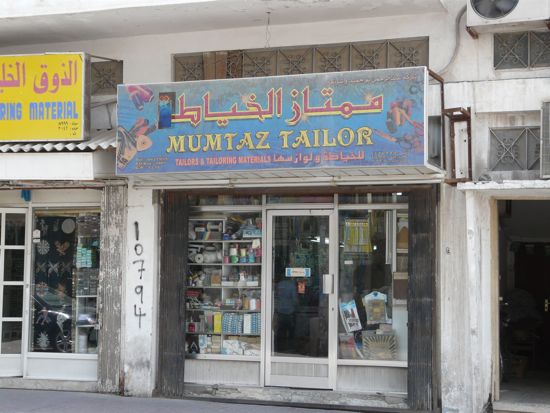
One of my stitch-group buddies took me on a Doha tour just before she was leaving, took me to all the tiny shops you would never know about if a good friend didn’t take you there. The Mumtaz Tailor is a gold mine. If anyone has just the buttons you need, that zipper in an unusual shade, the lining to go under the cut out brocade – he’s got it, or he knows who does. He also has all the tools-of-the-trade that people who quilt or sew need – good scissors, measuring tapes, embroidery threads, hoops, a whole host of things you don’t even know what they are until you need them. The Mumtaz Tailor has them, tucked inside his fairly small shop, from floor to ceiling, and he knows where they are.
One year, I bought about twenty hajj towels, the very large, thirsty cotton white towels available here in sets of two for men making the hajj to Mecca. I took them to the Mumtaz tailor and he embroidered my family member’s names in English on one end and in Arabic on the other end and I even got to choose the colors. It was the hit of Christmas; a totally unique gift from Doha.
Although he didn’t have the fabric we sought, the minute we walked in I spied a bolt of the only batik fabric I have ever seen in Doha. Six years ago, I bought several meters of this and I have been looking for it ever since, with no success. I bought five more meters. Wooo HOOOOO!

The Paper Moon by Andrea Camilleri
Ahhh! Another book about corruption, but this one is no where near so painful for me to read as The Appeal by John Grisham, because this one is set in Sicily, where we expect a certain level of corruption, and Italy, where the whole system operates by rules we can barely begin to comprehend, but it is ITALY, and fascinating, and funny, and another great page turner for these hot hot hot summer days.

Andrea Camilleri has a whole series of books about Inspector Montalbano, which I love almost as I love the Donna Leon series about the Venetian, Guido Brunetti. Brunetti has the edge because he is married and has a family, and it IS Venice – no competition there, Venice will always win, hands down. But Inspector Montalbano’s single status allows for a whole different flavor permeating his investigations, and he, like Guido Brunetti, shares the Italian reverence for really great food.
I didn’t want to fix dinner. I didn’t want to get out of bed. All I wanted to do was to read the whole book, and, when I finished, I wanted another one!
Inspector Montalbano is asked by a woman to find her missing brother, and he finds him almost immediately, dead, under bizarre circumstances. The brother has a very large amount of money unaccounted for, and unaccounted in terms of earnings, as well. He is a pharmaceutical representative, good at what he does – but he still has way too much money, and Inspector Montalbano finds he is rather fond of the prime suspect.
In the meantime, his office has also been tasked to find the reason several high level politicians have suddenly died, purportedly of a variety of causes, but in reality, all have died of drug overdoses. The problem is, that finding the culprit means exposing the reality of high level drug usage, and the inspector realizes the case has been dumped on his office because no one wants to take responsibility for what happens when the culprit is caught. It’s all very Italian, very Sicilian.
Between investigations, Inspector Montalbano eats some amazing meals. 🙂 He takes his glass of wine and walks in the sand out to the sea. We get to know the characters working out of his office better, and to appreciate their quirkiness. This is a great series, a lot of fun. I think I need to go to Sicily for a visit. I definitely need some Italian food and a glass of vino!
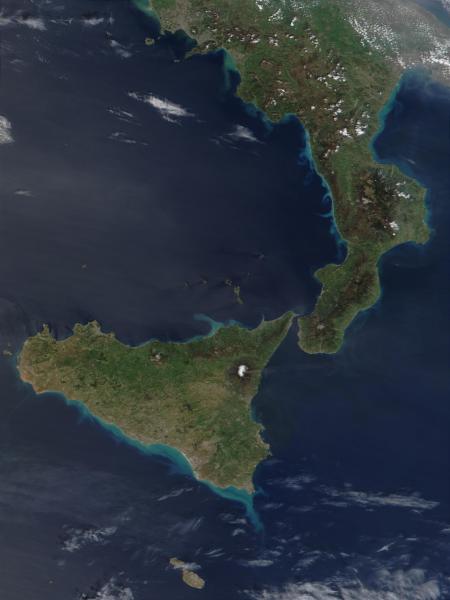
Photo courtesy of http://visibleearth.nasa.gov/)
From time to time a word or phrase would appear that required going to the back of the book where the word is not only translated, but the concept explained, something crucial when reading a novel from another culture. In this series, it is particularly valuable, as the background for the crimes and their investigations with political implications, and if you don’t understand the politics, you can miss the point of the novel.
I found this book at Amazon.com. for a mere $10.19 plus shipping.
The Appeal by John Grisham
One of the things I like about John Grisham is that he really likes the underdog. In his books, the person often the least likely to prevail does so, usually because he has a smart attorney, one who is paying attention and taking good care of the client. Warning – this book review contains a spoiler, so don’t go any further if you don’t want to know too much about the plot and resolution.
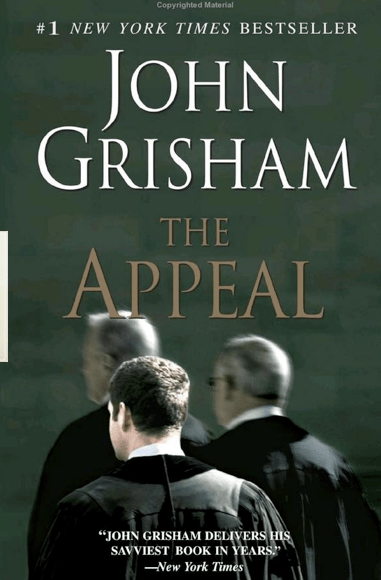
The Appeal is the exception. No one wins, not even the apparent winner, who sails off in the end with his empty, unsatisfying life. He schemes, he exploits, he lies, he buys elections, and he makes a fortune – and he isn’t satisfied. He is married to a woman who sounds more like a greyhound, all skin and bones and self-absorption.
The subject matter is a case where a chemical company has dumped toxic wastes into the ground in Mississippi, it has penetrated into the groundwater, and polluted the entire water system of a small fictional town. Two lawyers, married to one another, sacrifice everything and face bankruptcy to win a case for their client who has lost both husband and son to cancer caused by the toxic chemicals dumped. They win.
There is an appeal.
What this book is about isn’t just about groundwater contamination, or even about buying elections in Mississippi – it is an indictment of every state that elects judges. The core of the novel is about how big money, big corporations, pick candidates and fund them, legally and illegally, and insure that they win. They pack the courts with judges who are opposed to large settlements.
God bless John Grisham. With all his great legal thrillers, he has made a bundle and can take risks like writing a book like The Appeal, which should be an eye opener, and should be read by every caring citizen.
Judges should not be elected. When the judiciary are elected, they have to think about their next election, with every legal decision. It taints objectivity. It corrupts objectivity. It eliminates objectivity. Without an objective judiciary – why bother? They will always rule on the side whose interests are the most powerful and profitable.
Here are a couple quotes that tell you where the novel is going. My Kuwaiti friends are going to love this – I have taken so many shots at Kuwait corruption – so here it is, my friends, exposure of the institutionalized corruption in my country:
Barry laughed and crossed his legs. “We do campaigns. Have a look.” He picked up a remote and pushed the button, and a large white screen dropped from the ceiling and covered most of the wall, then the entire nation appeared. Most of the states were in green, the rest were in a soft yellow. “Thirty-one states are in the green. The yellow ones have the good sense to appoint their courts. We make our living in the green ones.”
“Judicial elections.”
“Yes. That’s all we do, and we do it very quietly. When our clients need help, we target a supreme court justice who is not particularly friendly, and we take him, or her, out of the picture.”
“Just like that.”
“Just like that.”
“Who are your clients?”
“I can’t give you the names, but they’re all on your side of the street. Big companies in energy, insurance, pharmaceuticals, chemicals, timber, all types of manufacturers, plus doctors, hospitals, nursing homes, banks. We raise tons of money and hire the people on the ground to run aggressive campaigns.”
* * * * * * * *
The Senator did not know who owned the jet, not had he ever met Mr. Trudeau, which in most cultures would seem odd since Rudd had taken so much money from the man. But in Washington, money arrives through a myriad of strange and nebulous conduits. Often those taking it have only a vague idea of where it’s coming from; often they have no clue. In most democracies, the transference of so much cash would be considered outright corruption, but in Washington the corruption has been legalized. Senator Rudd didn’t know and didn’t care that he was owned by other people. He had over $11 million in the bank, money he could eventually keep if not forced to waste it on some frivolous campaign. In return for such an investment, Rudd had a perfect voting record on all matters dealing with pharmaceuticals, chemicals, oil, energy, insurance, banks and on and on.
I like almost every book I read by John Grisham. He is a man with a conscience, and he is trying to raise our awareness of corruptive factors before our system goes entirely under. I couldn’t put this book down, and I can hardly wait to read the next one.
Enmegahbowh
Yesterday, one of the songs we sang was an oldie but goodie, To Be a Pilgrim, written by John Bunyan, who wrote Pilgrim’s Progress while serving a jail term for preaching without a license. We sang the old fashioned version:
Who would true valour see,
Let him come hither;
One here will constant be,
Come wind, come weather
There’s no discouragement
Shall make him once relent
His first avowed intent
To be a pilgrim.
Whoso beset him round
With dismal stories
Do but themselves confound;
His strength the more is.
No lion can him fright,
He’ll with a giant fight,
He will have a right
To be a pilgrim.
Hobgoblin nor foul fiend
Can daunt his spirit,
He knows he at the end
Shall life inherit.
Then fancies fly away,
He’ll fear not what men say,
He’ll labor night and day
To be a pilgrim.
(Actually, I may have drifted off because I don’t remember singing the part about the hobgoblins or foul fiends . . . or maybe we sang a slightly more updated version . . .)
Yesterday’s reading in The Lectionary had a great prayer, which also included the word “pilgrim:
Almighty God, thou didst lead thy pilgrim people of old with fire and cloud; grant that the ministers of thy church, following the example of blessed Enmegahbowh, may stand before thy holy people, leading them with fiery zeal and gentle humility. This we ask through Jesus, the Christ, who liveth and reigneth with thee in the unity of the Holy Spirit, one God now and forever. Amen.
And it had this wonderful story of an American Saint, Enmegahbowh – A saint from the original inhabitants of our country:
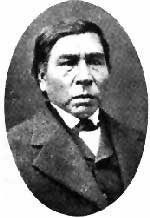
ENMEGAHBOWH
PRIEST AND MISSIONARY (12 JUNE 1902)
[James Kiefer has no bio for Enmegahbowh. Below is a biography from A Pioneer History of Becker County Minnesota by Alvin H. Wilcox (1907). Enmegabowh was the first Indian ordained in the Episcopal Church.]
In 1851, the Rev. Dr. Breck, a great missionary, whose name must be known to every reader of the “Soldier,” [“Christian Soldier”] began a mission at Leech Lake, among the Ojibwa Indians of Minnesota. This mission, from various circumstances, had only a partial success, and in the winter of 1855-56 troubles with the government agents roused the Indians to such madness that Dr. Breck was forced to leave, and the mission buildings were burned.
Two years later the Rev. Mr. Peake went to Crow Wing to establish another mission, and young Indian deacon, John Johnson, his Indian name Enmegahbowh, came to assist him. This man had beeen a catechumen under Dr. Breck, and had been baptized by him. He must have been born to some position in his tribe, as he had been set apart for a “Medicine Man” in youth, and his Indian name, Enmegahbowh, meant “The man who stands by his people,” a significant name, which in time proved to be a true one.
In 1861 Mr. Peake resigned the mission into the hands of Enmegahbowh. Crow Wing was then a settlement of very bad repute on the frontier. In 1862, the year of the Sioux outbreak, Hole-in-the-day, a leading Ojibwa chief, a bad man, full of craft and cunning, collected five hundred warriors, and prepared for a general massacre of the white people. Enmegahbowh, having prevented, by his influence, some other bands from joining these, was made a prisoner, but succeeded in escaping, and, through the midst of great perils, made his way to Fort Ripley, and by his timely information, such measures were taken that bloodshed and a more fearful massacre than that of the Sioux were prevented.
For a few years the mission work seemed at a stand still. From Canada Enmegahbowh received earnest invitations to go where comfort and hopeful work awaited him, but Bishop Whipple encouraged him, standing in the forefront for an unpopular cause and a hated people, and Enmegahbowh would prove the fitness of his name — he would not desert his people.
At last the government made new arrangements, and seven hundred Ojibwa were moved to what is called the White Earth Reservation, a tract thirty-six miles square in northern Minnesota. Of these seven hundred about one hundred and fifty were French half-breeds, or Roman Catholics. Amongst the remainder Enmegahbowh labored earnestly, the government now aiding in the work by encouraging the Indians in civilized ways. A steam sawmill was built at White Earth Lake, where Indians were taught to run the machinery, and from which lumber was furnished for building purposes. Eastern churchmen assisted the mission, and a church and parsonage were built.
At the time of the consecration of the church in August, 1872, quite a party of the clergy and laity, through the kindness of Bishop Whipple, were enabled to visit White Earth.
The consecration was on Thursday. Friday morning, the chiefs signified to the bishop their wish to meet with him in a council, which was therefore held, that afternoon, on the hillside in front of the church. It was a picturesque scene — the lovely landscape, the sunlight glancing through the tall oak trees on the bishop and Enmegahbowh, who sat in the centre, the chiefs and five or six clergymen grouped around. Behind the bishop three chairs were placed for the ladies of the party — the first time, I think, that ladies were ever admitted to an Indian council.
The chiefs spoke in turn, as they had themselves arranged, and were interpreted by Enmegahbowh. — Christian Soldier.
The Rev. John Johnson was born in Canada and died at White Earth on the 12th of June, 1902, at the age of 95 years.
God had someone in mind who was already set aside by his people to serve him, and he had the most wonderful name for a priest – The one who stands by his people. How cool is that? His heart was ready, when he heard the words, and he served mightily.
Recent Comments
ExpatAlien on What Country am I Living … intlxpatr on Yellowstone: Old Faithful to C… Michelle on Yellowstone: Old Faithful to C… Cathy on No Grown-Ups in Charge intlxpatr on Waiting for Snow Wikipedia Donate Button

Amazina


Early Voting in Florida


 Here There and Everywhere