Make No Peace With Oppression
From today’s Lectionary readings on the Feast Day of Saint Agatha of Sicily:
PRAYER (contemporary language)
Almighty and everlasting God, who strengthened your martyr Agatha with constancy and courage: Grant us for the love of you to make no peace with oppression, to fear no adversity, and to have no tolerance for those who would use their power to abuse or exploit; Through Jesus Christ our Lord, to whom with you and the Holy Spirit be all honor and glory, now and for ever. Amen.
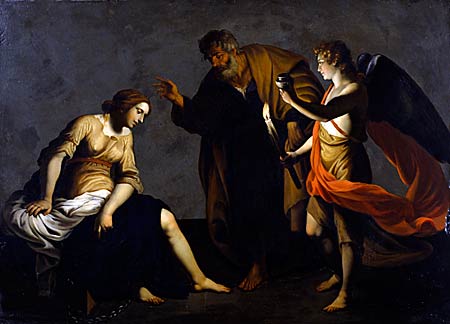
Read the story of Saint Agatha by clicking on link above.
Oath of Citizenship: Joyful Celebration
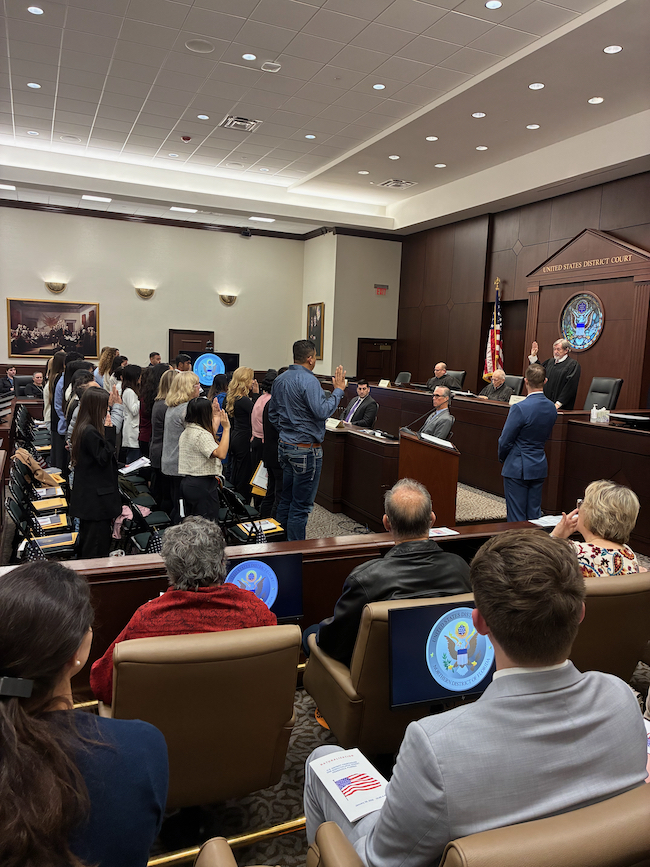
It’s not often a courtroom is packed with joyful people. And only for this one significant celebration are cameras allowed – even encouraged – in the courtroom. The difference in atmosphere is palpable.
Yesterday, 33 people from a variety of nations took their oath to be responsible American citizens. There were moments when their was no sound, no noise at all, in the courtroom; the silence was a salute to the importance of the event, and respect for the moment.
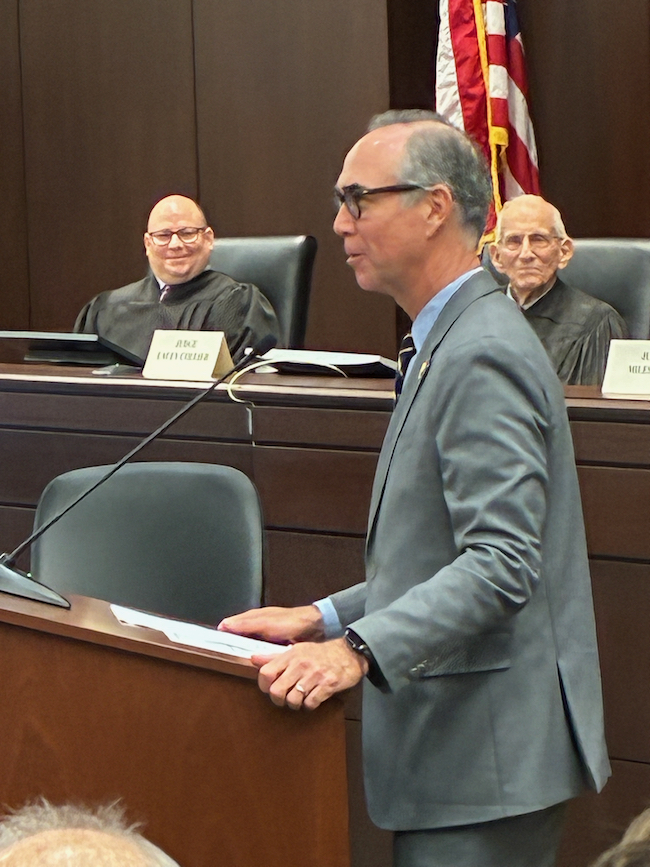
Judge Collier managed to be both solemn and celebratory, lauding the diversity of the group and the importance of their choice to be US citizens. He, and other, congratulated the applicants for “earning” their citizenship by learning our history, customs and language, and appreciating it’s rewards even more than those of us who are citizens by birth and heritage.
David Stafford, our long time Supervisor of Elections, now the right-hand man to Pensacola’s Mayor Reeves, gave a moving and motivating speech about the gift of citizenship, its rewards, and the great responsibility each citizen has to sign up to vote – and to vote.
My friends, you receive my frustrated rants and my frequent musings. Today, I share with you a day full of pure joy. A packed courtroom, for all the right reasons; official speeches, short, pithy, and full of positivity and possibilities, and people who fully believe in the Rule of Law, Equality, Diversity as a strength, and the great inclusionary current of neighborly brotherhood that connects people in the United States of America.
EPSTEIN Files, Please, DOJ Pam Bondi
While we watch aghast as ill-trained ICE agents take down and kill American citizens, and Pam Bondi demands voter registration rolls from Minnesota (and according to the Brennan Center for Justice and Democracy Docket, looking for “sensitive” voter registration information from ALL states), 2 million (estimated) Epstein files have yet to be released.
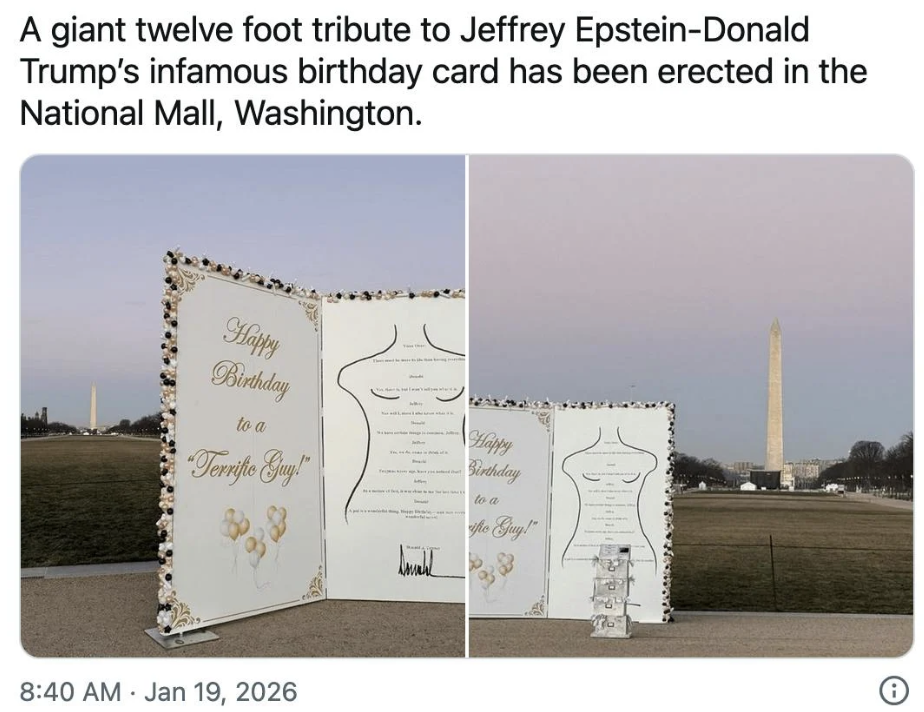
Minnesotans are the least likely “domestic terrorists” ever, dressed in their buffalo plaid wool shirts and snow boots. Minnesotan, those white bread Scandinavian immigrants from long ago, Paul Bunyan-esque in strength an behavior, amicably welcomed their Somali newcomers, and are now protecting them as best they can while staying alive.
We all have to step back and ask ourselves “Am I a DOMESTIC TERRORIST?”
Look at these good church-going Minnesotans, shuttling immigrant children to school, picking up and delivering groceries to them surreptitiously, taking families hidden in their SUV’s to medical appointments. Do these seem like people who are afraid of their immigrant neighbors?
I respect Customs officials. I respect the rules of our nation. I do not respect those who overstep their jobs, who take delight in the adrenaline rush of attacking protestors, who shoot, rather than exhibit the self-rstraint we expect of law-enforcement. Most of us have no problem with ICE going after, as they state, violent criminals, few as they are.
It’s a Numbers Game
What we object to is going after people who are NOT criminals just because the Toddler-In-Chief wants to be able to show numbers. Trump, you started off your campaign in 2015 going after those rapists, criminals and drug addicts. We didn’t believe you then, and we sure don’t believe you now. We believe our own eyes. We are witnesses to violations of our Constitution by people who should be models of legal behavior.
Corrupting the FBI to investigate political appointments, and firing prosecutors when they tell you there is not evidence to get a conviction is not the American Way.
We know you want to keep your party in power. We know you’re afraid you are going to lose big in upcoming elections, and that is the purpose behind bullying the blue states and trying to intimidate their officials is to get an upper hand on the elections. YOU, who complain about rigged elections, YOU who whine that you really won the 2020 election (and your own elections supervisors would not support your claims) YOU are trying to bully, intimidate and subdue the population so that YOU can rig the elections!
Props to Minnesota! Props to them for showing fortitude, for being good neighbors, for welcoming the stranger (as Moses and Jesus taught us) and for showing self-restraint in the face of thugs and goons itching for a fight. Trump is eager to invoke the Insurrection Act, we know because he says so! Props to you, Minnesota, and to you, Portland for having the maturity and persistence and yes, a sense of humor to outlast, outplay and survive this despicable tyrant.
Orwellian Insurrection Talk v. Free Elections
I am haunted by memories of our Janus-like leader telling people while running for the office of President that if we voted for him, we would never have to vote again. What could he have meant by that? Aren’t elections part of what we value as a Democracy?
I am troubled by a leader who insists that what we saw with our own eyes on January 6th, that the thugs beating policemen, breaking and entering the Congress, chasing down Mike Pence with a noose was NOT an insurrection, not at all what he was going for when he told followers to “Fight Like Hell!” or we would have no Democracy. This leader who said he would be with them, and scurried back to the white house to watch events unfold on his Presidential television. He didn’t call off these hooligans and goons until HOURS after the violence began.
He PARDONED these thugs who invaded the Congress. He now calls it a “Day of Love.” Like we can’t see with our own eyes?
Just in time for Black History Month, he continues to dismantle exhibitions exploring the relationship between the enslaved and the enslavers. If it makes white people uncomfortable, isn’t that appropriate? Is slavery something we want to return to? And who, exactly do we enslave. Like are camera bearing Democrats candidates for the new underclass?
Armed with Whistles and Phone Cameras
J.D. Vance tells us to “lower the temperature” and help the ICE forces. J.D. Vance, you are talking to Minnesotans! You are talking to the descendants of Norwegians, the very nationality our orange leader wants to come to the USA! You are talking to people who have peacefully incorporated people from many nations, welcomed them! YOU created a spurious policy, based on a poorly made video by a social influencer. Yes, there was a child care scandal, and the people charged were not Somali but US citizens! YOU are creating the rise is heated emotions, and those you are shooting are armed with whistles and phone cameras!
Who has a history of creating violent insurrections? Who has sent unwelcome storm troopers into Minnesota? Who is poking Minnesota officials? Who is creating the problem and like every school boy bully, blaming the victim – “You started it!”
Go HOME, ICE. You are not welcome, you are not needed. You are invading the homes of US CITIZENS without a warrant, and laughing! You are shouting “Boo HOO!” to witnesses when you shoot a non-violent demonstrator 10 times! 10 Times! If that isn’t excessive force, what is?
I applaud the citizens of Minneapolis who are standing against this villainy and this bullying. I applaud their self-restraint and their persistence. I applaud Portland, Oregon for utilizing the legal system to lower the temperature and resist the pressure to give the radical bullying thugs any opportunity to raise the stakes.
Self restraint and Persistence while we activate the legal system is our only hope if we want to continue to have free and safe elections, and I believe that is what this is all really about.
Waiting for Snow
Lest you think I sit around between trips finding things to rant about, I will share my Saturday with you.
I am religious. I am a believer. LOL, here is where Catholics and Muslims have something in common – when I say “I am a believer” my Catholic friends think I am Catholic, and my Muslim friends think I am Muslim. Sooner or later we get it all figured out. I believe in a Great Creator, without whom nothing was created, and who is magnificent beyone our ability to understand. I believe he cares about us on an individual basis, and that he wants only good for all of us, whether we agree or not. I do not understand why he gave us all free will, and I know it would be a terrible world without it. I believe God is infinitely merciful.
So in the midst of some of the political horrors of January, I texted a friend and said “I need a meet-up.” We met up this morning at a local cafe and hashed out our lives, just normal stuff, families, husbands, children, and what we CAN do to make a difference. I have a friend from high school, and a friend from college, and friends from almost every post where we lived. We don’t always see one another, but when we need a good connection, we get on the phone – yeh, old school – and it’s like we’ve never been apart. When I need to re-balance, when my emotions are unmanageable, my friends help me recenter. Thanks be to God. At the cafe, I also saw another old friend, of a different political persuasion, and we were delighted to see one another, reminding me that our current differences are temporary, and mendable.

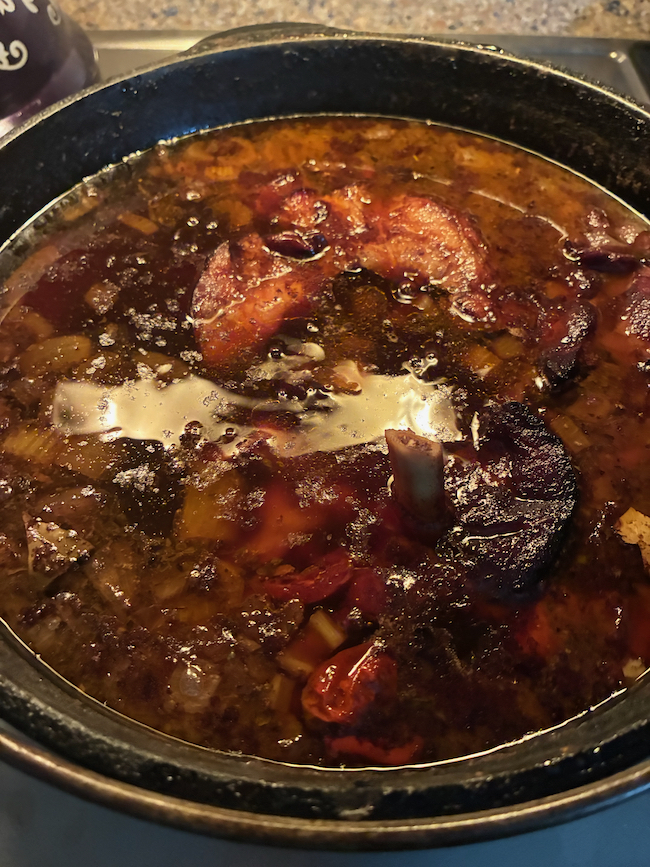
I arrived back home to the aroma of garlic and peppers sautéing; AdventureMan is making beans! We have been informed it MIGHT snow tonight, it is hovering just above and below freezing and a big pot of beans is a perfect hot weather meal.
Birds on the Bayou are chowing down, the fish must be running. We have pelicans plunging, an eagle chasing off a hawk, a cormorant and a heron.


Last year, almost this same time of year, we got several inches of snow. In previous years, I have seen a flake of snow here and there, but last year was a special confluence of factors – humidity, cold, polar vortex and a series of cold dry days in which the snow first fell, and then stuck around. It was like wiping away all the bad, a clean, clear new earth, few cars driving, lots of walking and lots of playing. Maybe we all need to play a little more. Pensacolians love a good snow, and it doesn’t stick around long enough to get old.

Our house is warm, we have a big pot of beans cooking, we have friends, I’ve recovered all my lost-for-a-very-short-time passwords and life is sweet. May you be equally blessed; may all your problems be little ones.
Oh Those Poor White People, Those Poor White Men
First, a disclaimer. I like men. I like men a lot. Some of my best friends are men, of all colors and nationalities. I am married to a white man.
Our Glorious Leader, the Bone-Spur Coward-in-Chief declares (as he has in Executive Orders from Day One of his Regency) that diversity, equality and inclusiveness are discrimitory against white males, and are hurting them.
I challenge Trump to take a look at statistics. I challenge him to tally the ranks of CEOs and Executives in the USA to see just what percentage of each sex and race are in those positions, and in what proportions. IF white males are not dominant, I will eat this post.
Yes. This is a rant. Yes, I am livid. As a woman, I was privileged to go to university, privileged because my own father was sure that women’s place was in the home, having children, taking care of you know, women things. He was shocked and horrified that I didn’t get a teacher’s degree or a nursing degree, or why had he sent me to college?
A very small percentage of women and people of color have managed to get to the highest positions of influence, power and wealth in the United States. So tell me about the poor white men!
For my American friends who scorn the Middle East; I lived in three countries, Qatar, Kuwait and Saudi Arabia where the voters – men – recently voted for the women in their countries to have the vote. These were men who love their mothers, sisters, cousins, wives and daughters and wanted them to have the dignity of choice of leadership in their own countries. They educated their daughters, and even, in Saudia Arabia, would take their daughters out to the deserts and teach them how to drive, even though it was illegal in Saudi Arabia for women to drive. These Arab, Islamic men you denigrate supported the right of females to vote, to have access to good education. At one time they sent them to the United States. I don’t imagine they will be sending their daughters -or their sons – here now.
It is unthinkable to me that these statements are issuing from privileged white men in charge of our country. We’re looking at universities in Ireland and Scotland where universities will, as US universities once did, encourage free exchange of ideas and fraternity, and equality and respect and dignity of all people.
At one time, not too long ago, in our country, we had laws, and those laws were obeyed! We had laws protecting the cleanliness of our air and water, we had laws protecting the rights of citizens – and non-citizens. We had laws against profiting from public office, laws requiring the disclosure of personal interests, and recusal from decisions that might enrich the decision-maker. We had laws requiring oversight of government policies. We had a Supreme Court that acted with impartiality. We had a President who was not above the law. We had alliances with countries with whom we stood shoulder to shoulder for decades against bullies and thugs.
I expect my son will call and warn me that our Orange Acting President of Venezuela is about to take away my citizenship and send his Goons to my door with zip ties for speaking out. Or maybe just come and shoot me in the face as I offer cookies and ice tea?
British Isles: We Become THOSE People 😳
This was one of those days full of the unexpected. Our plan was to have breakfast and grab an early cruise shuttle to Greenwich. AdventureMan has done his homework; we like to have a little wine and cheese of our own choice in our cabin, and we want to try some more English cheeses, so he has found a specialty shop, and we know how to get there.
We go out at 9:00, as the schedule says, to catch the shuttle boat, and no one seems to know anything about it. We look around, but all we find is a bridge to the pier with a gate across it, locked and impenetrable. As we start back, a Viking tour person is running towards us and tells us that the boat will arrive at 10, so we wait, and others who want to take advantage of the shuttle arrive and wait with us.
We had an odd experience – before the others arrived, we met a British man who looked healthy and happy and we started talking. He told us he was in rehab, and recovering from years of alcoholism. We learned a lot about his former life – he was successful, and somehow managed his alcoholism, but it was ruining his marriage and his health, and his doctor told him that rehab was his only choice for living a full life. It took a while for him to make that decision, but he is so full of joy telling his story. A deeply cynical part of me was thinking he was going to hit us up for some money, but as it turned out, he was immensely wealthy, and now he was becoming healthy and had clarity for the first time in years. He was a new man. It way an inspirational conversation, waiting for that shuttle to arrive.


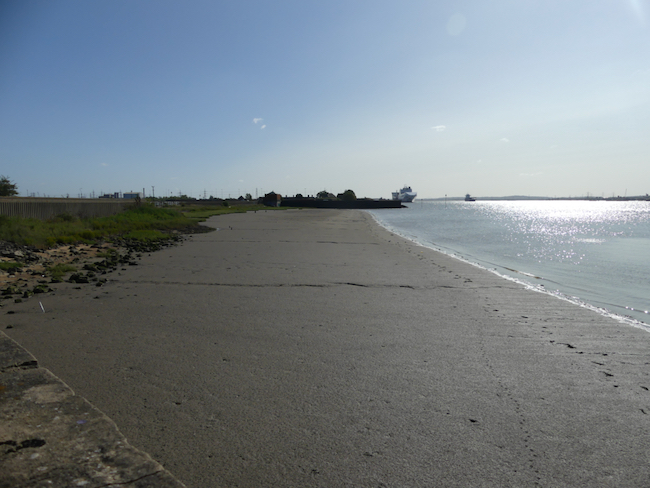


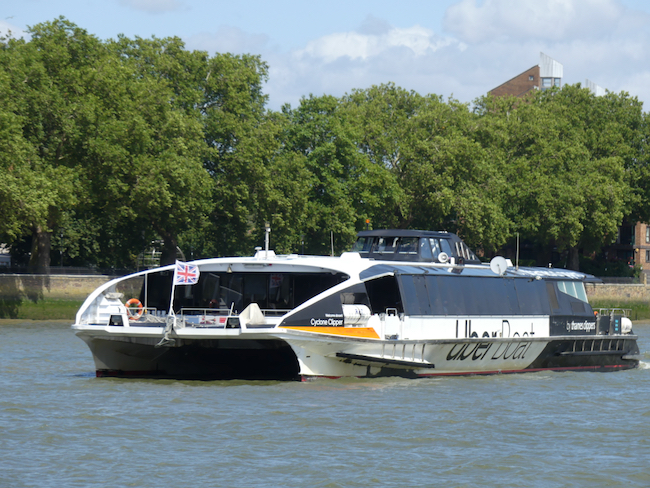
The shuttle arrived, we said goodbye to our new friend, a uniformed security person unlocked the gate and we boarded the chartered Uber boat. And then we sat there; something had happened to the groups going to Greenwich for their walking tours and we had to wait for them. It was nearly an hour before they arrived, and we were wondering if we could do this and still make our 2:00 tour to the Tower of London. We decided it would be tight, but we could do it.



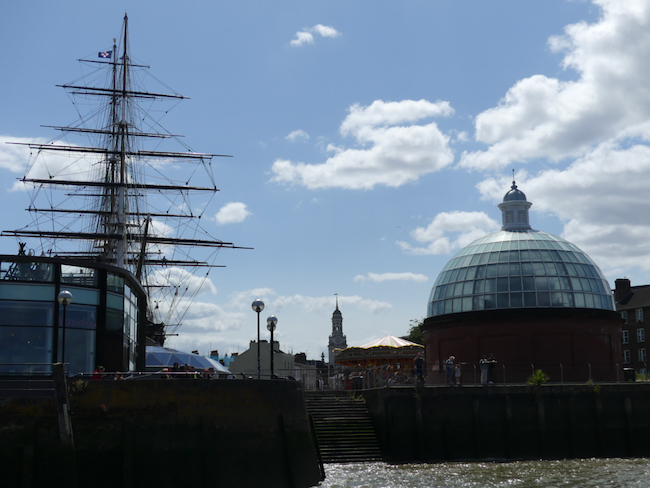
Below; the Cutty Sark
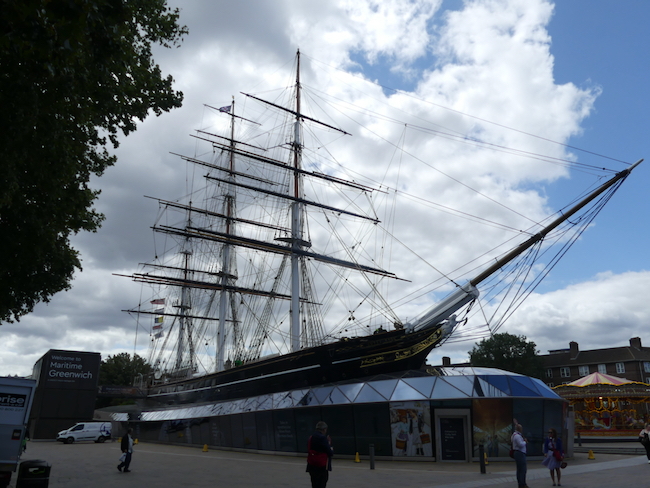
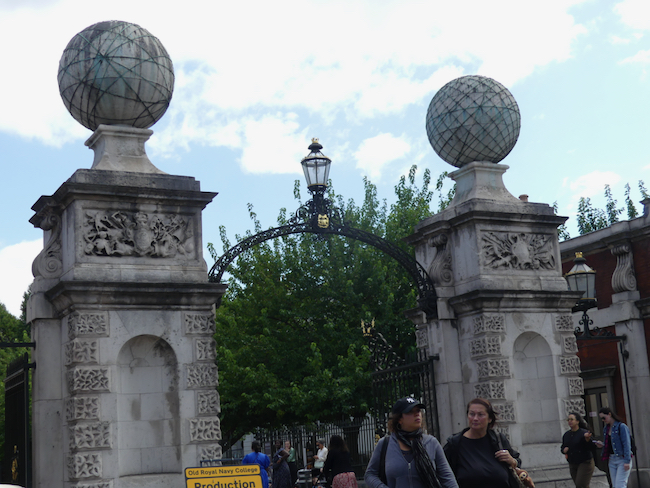
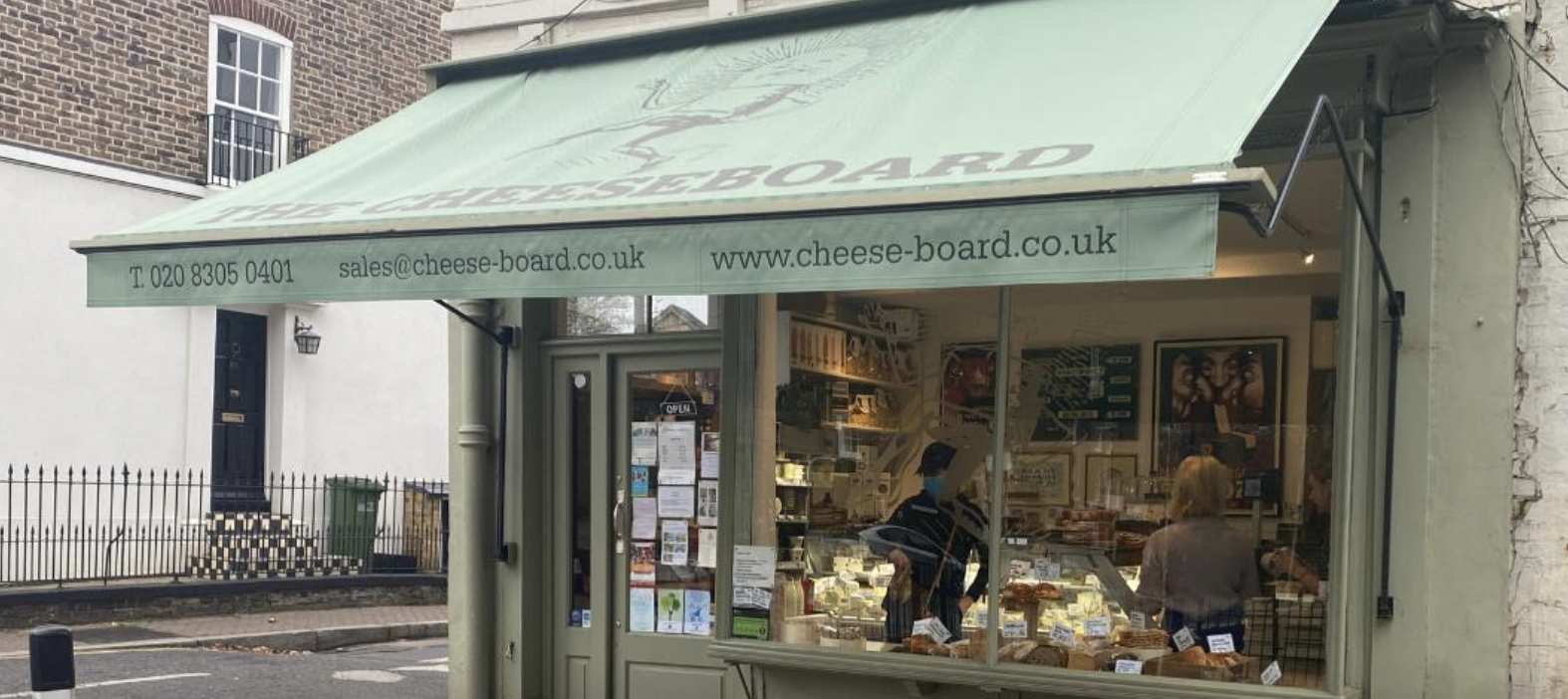
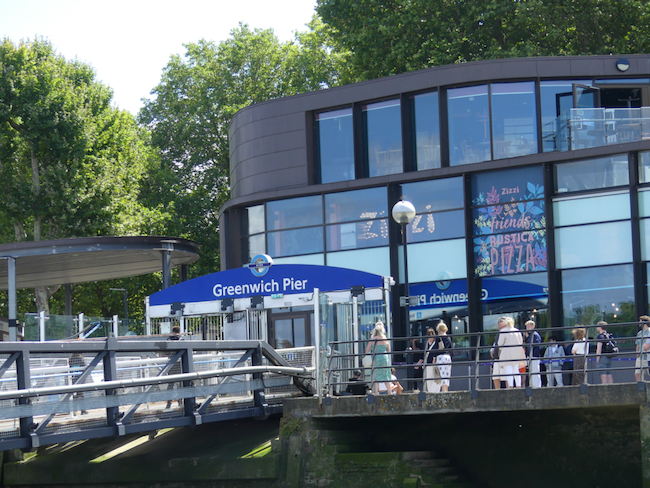
Arriving in Greenwich, we rushed off the boat, and walked as fast as we could to the Cheeseboard, where AdventureMan had a great conversation with the young man who did their website (how we learned about this shop) and was very helpful, providing us with four cheeses and descriptions printed on the label so we would know what we were eating. He also provided two very good bottles of wine from Bleye, one red, one white, and we were on our way to catch the shuttle back. We were able to get on, and thought we were home free, but the ship slowed several times, maybe fighting the tide, and stopped one time to pick up supplies for their on-board snack shop, so we began to accept we would not get back in time for our tour.

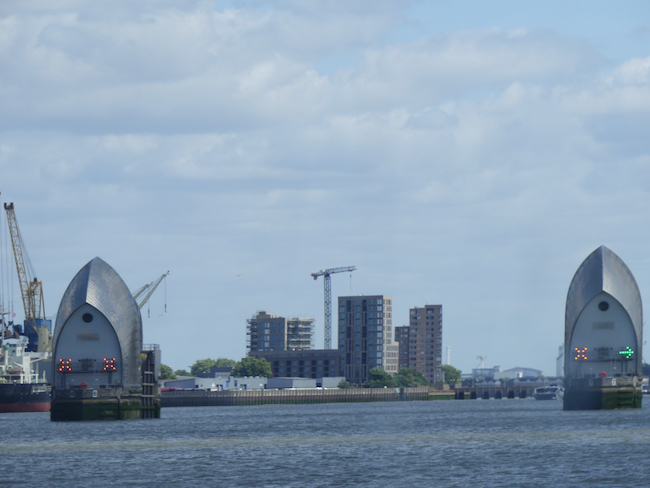

We docked at two oh two. Just two minutes too late. But our tickets for the tour were in our stateroom, and we were supposed to meet at 1:45 so we were just too late, and figured we would console ourselves in the spa.
A Viking tours person was at the gate as we came it. “Have the tour buses for the Tower of London left?” we asked, and she said yes, the last just left. We headed to the boat, but were interrupted by another Viking tour person, standing by a bus who asked if we were the people supposed to be on the London Tower Tour, and we said yes, we were – and asked if this was the bus? She said yes, we told her we didn’t have our tickets and she said it was all right, Viking would manage it. A miracle! We were last on the bus and sat in the way back, happy just to be on board.
Oh wait. Not so fast. The guide tells us we are too late, we are not going on this bus. Like the bus is already late, WE are the problem, and we are standing there. I said meekly “I think we are on this bus. You need to talk to the Viking rep who just directed us here.” And he made us exit the bus while he and the Viking rep had a spirited discussion. We get it. We don’t even have our tickets with us! We are the problem, and we hate to miss the tour but we get it.
The Viking rep convinces him to take us, so we straggle onto the bus, again, and make our way to the rear, not looking anyone in the eye. We have become THOSE people, people so inconsiderate that their lateness has made the whole bus wait. Oh the agony!
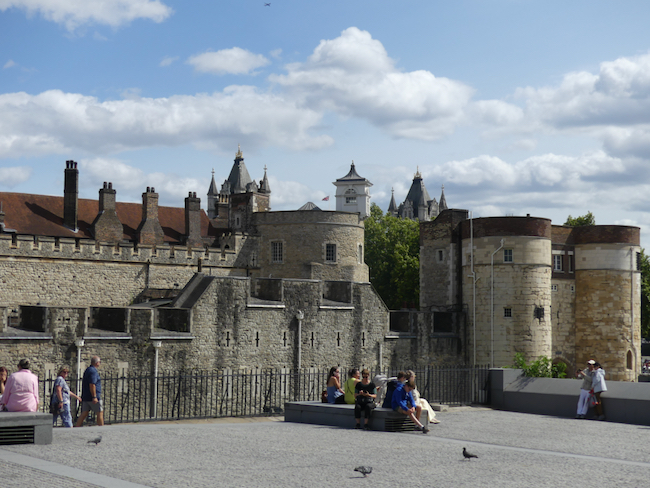
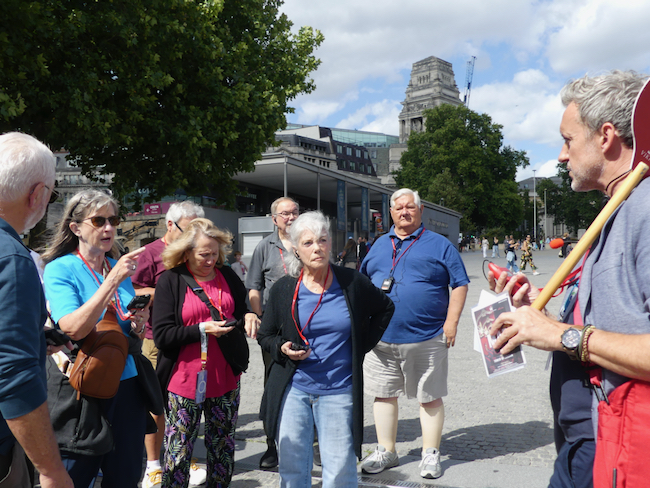
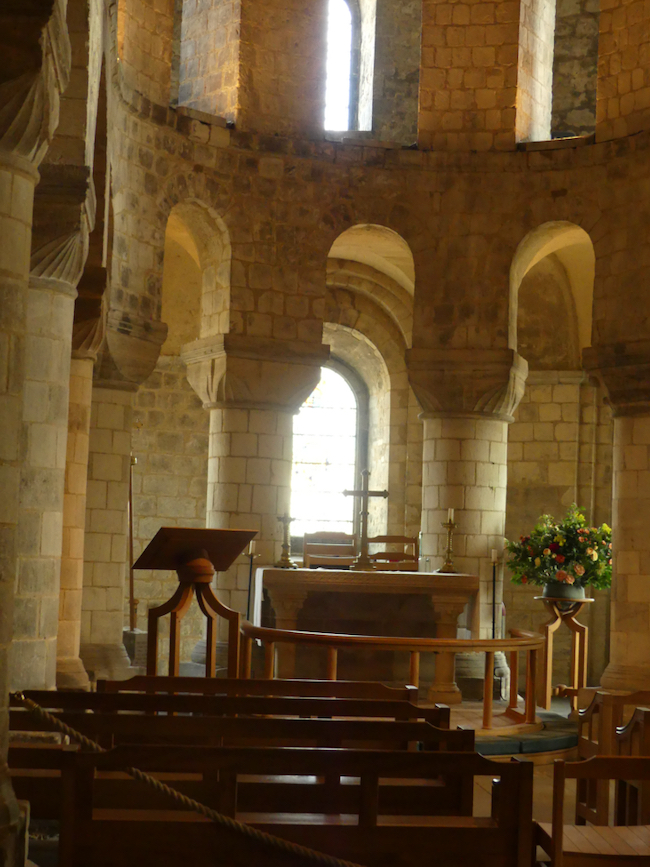
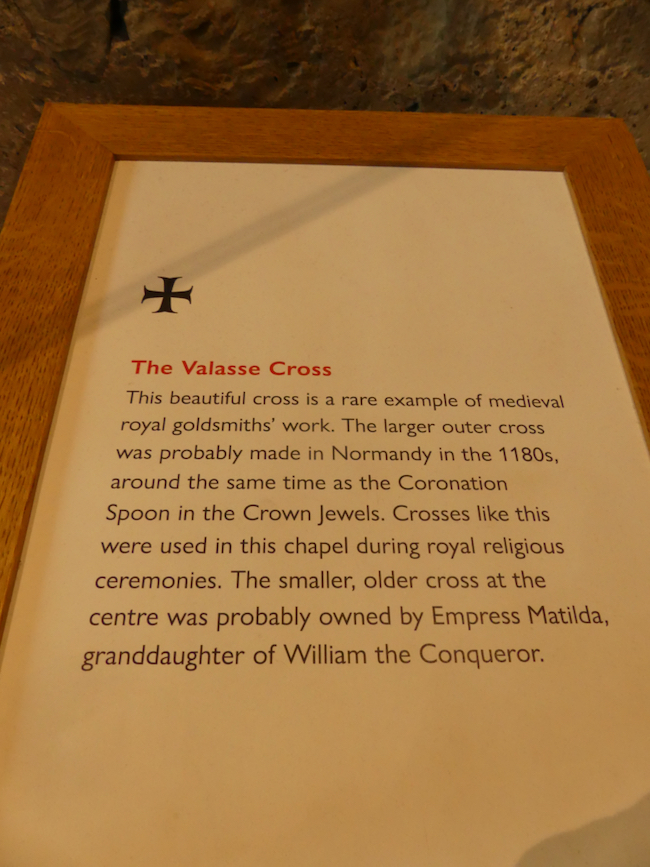
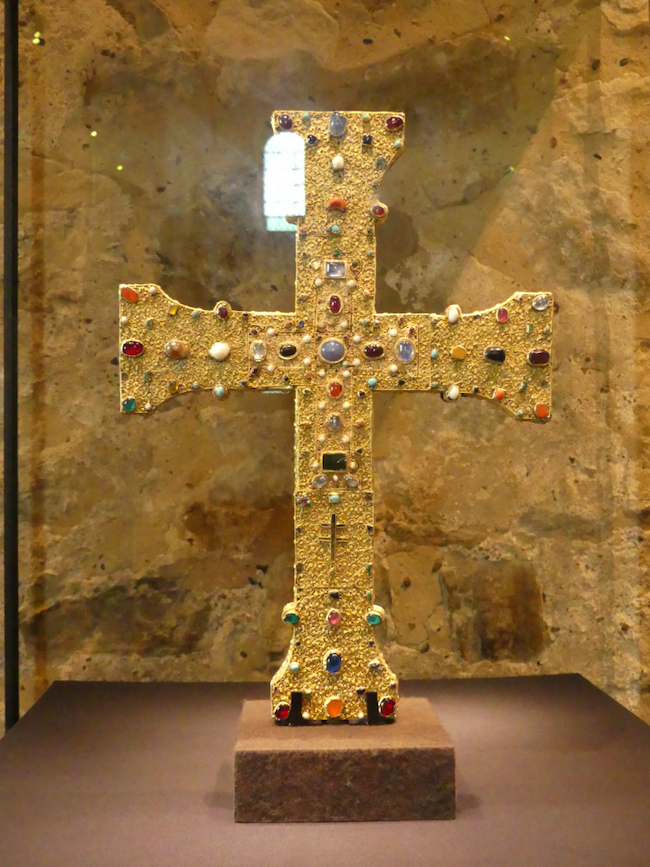
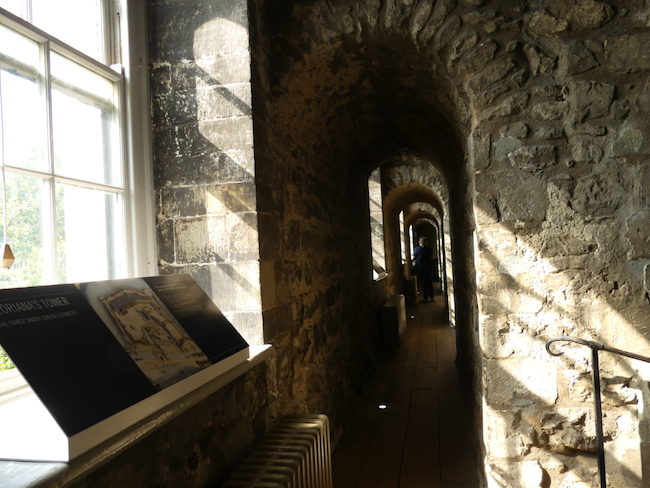
We are so glad it worked out this way. During the ride back into London, the skies suddenly cleared, we had blue skies, the crowds at the Tower were less than two days ago when we had lunch there, and we had a superb Blue Badge tour guide who really knew his history, and even better, knew how to make it interesting. We had time on our own – most went to see the jewels. I’d seen them other trips, I wanted to see the White Tower, which I climbed all the way to the top. I loved the interior spaces. Built in 1070 by William the Conqueror, it had an unexpected graciousness even though its purpose was defensive. AdventureMan spent his equally happy time in the Fusiliers Museum, and we met up with happy hearts for a time well spent in areas we love. It was a very long day. We got back late, and happy. As it turned out, people were not so angry with us, we all got along, and we made friends with the guide, who really was terrific.
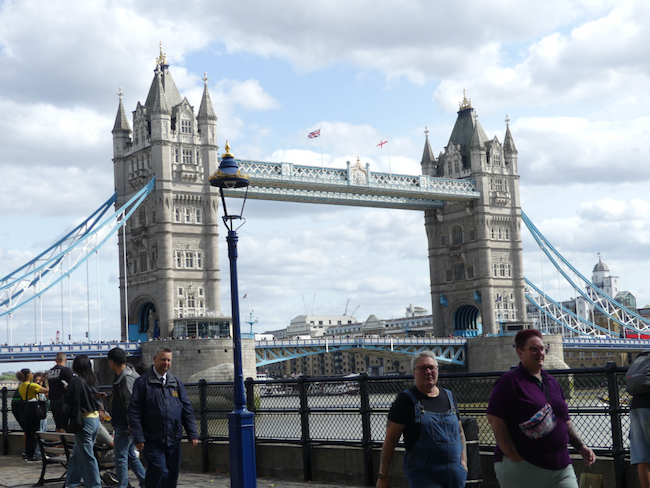
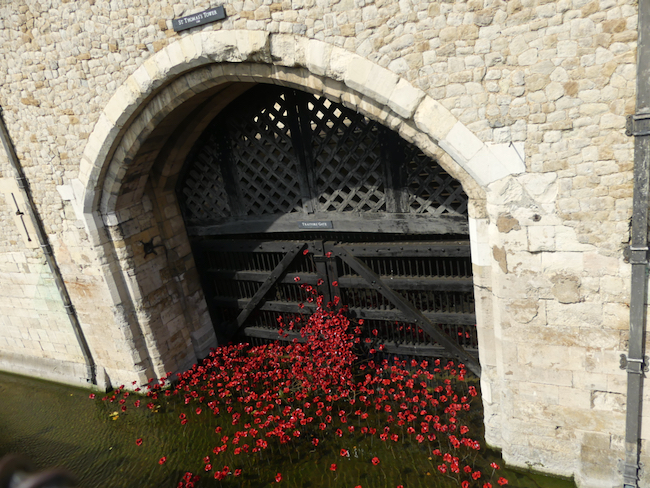
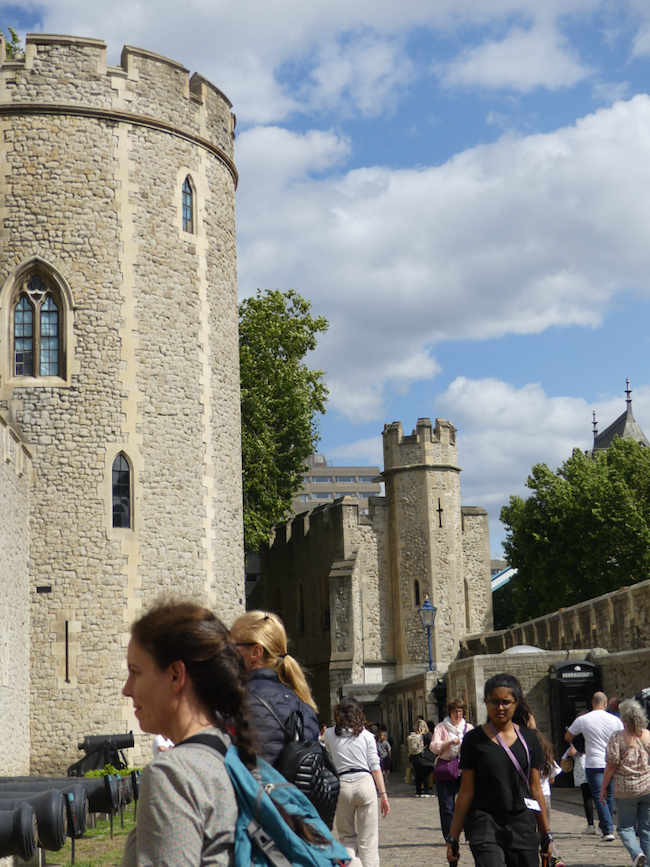
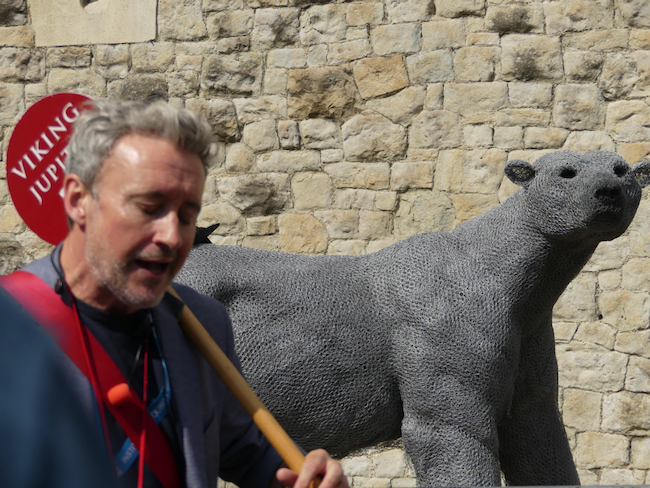
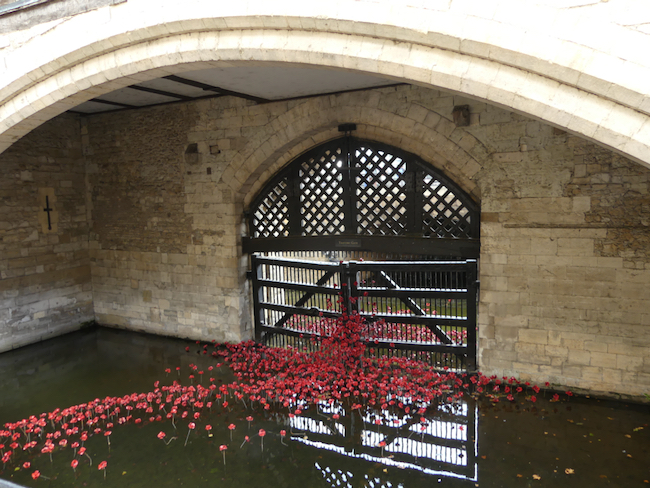
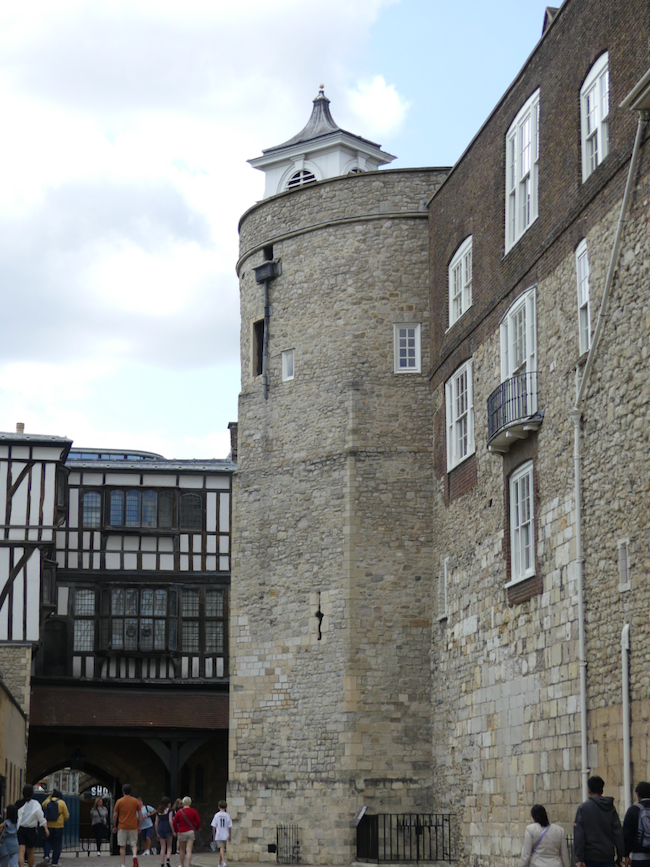
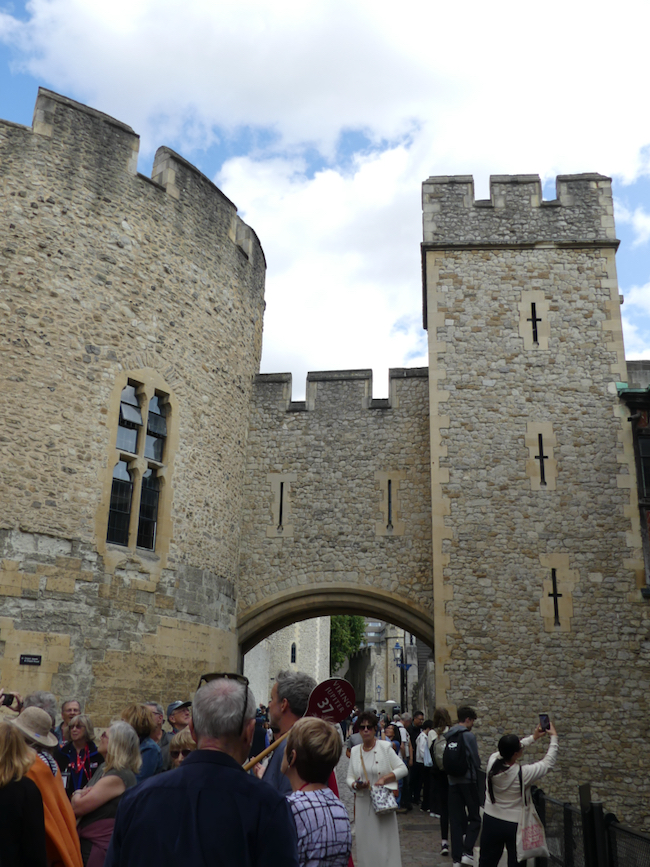
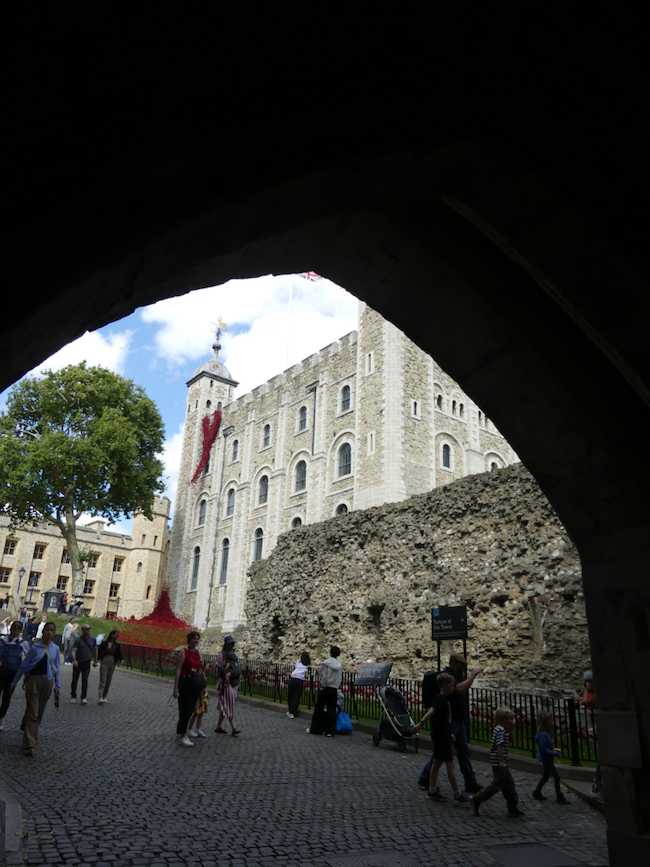
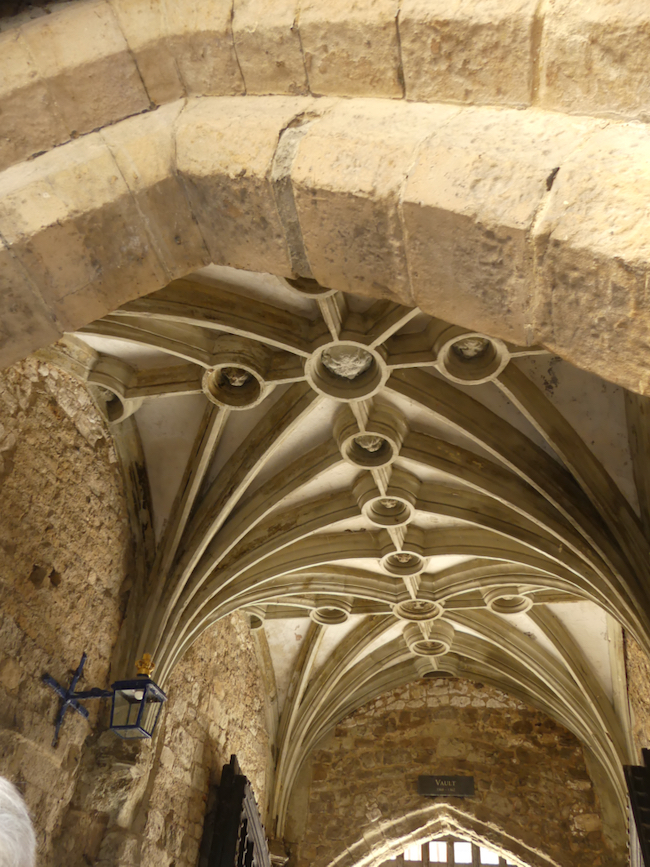
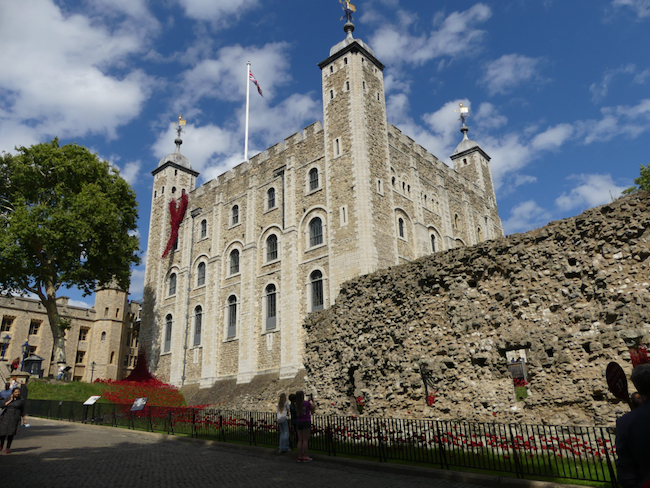
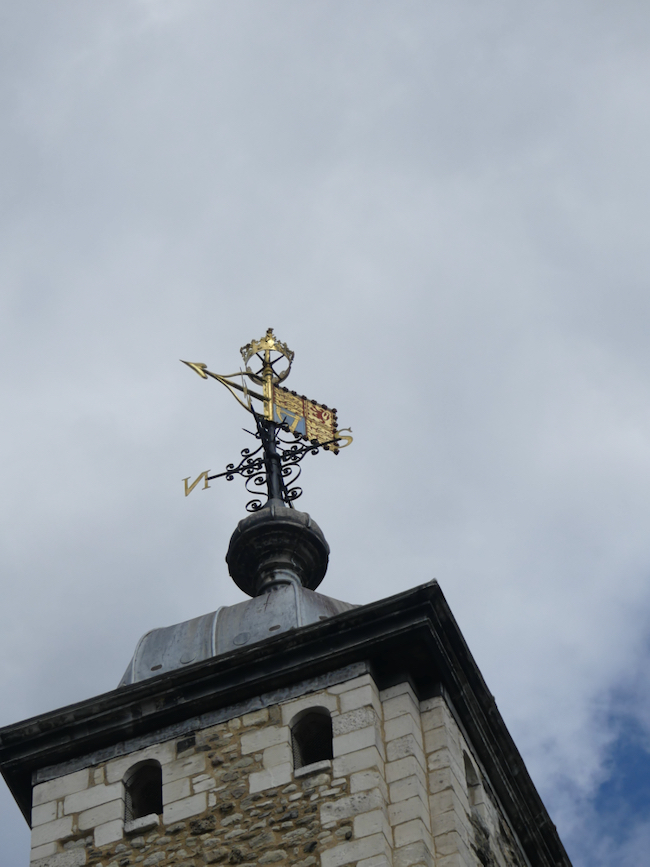
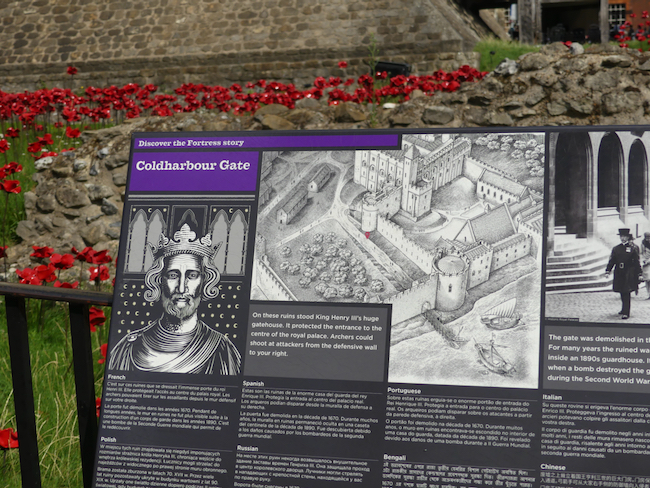
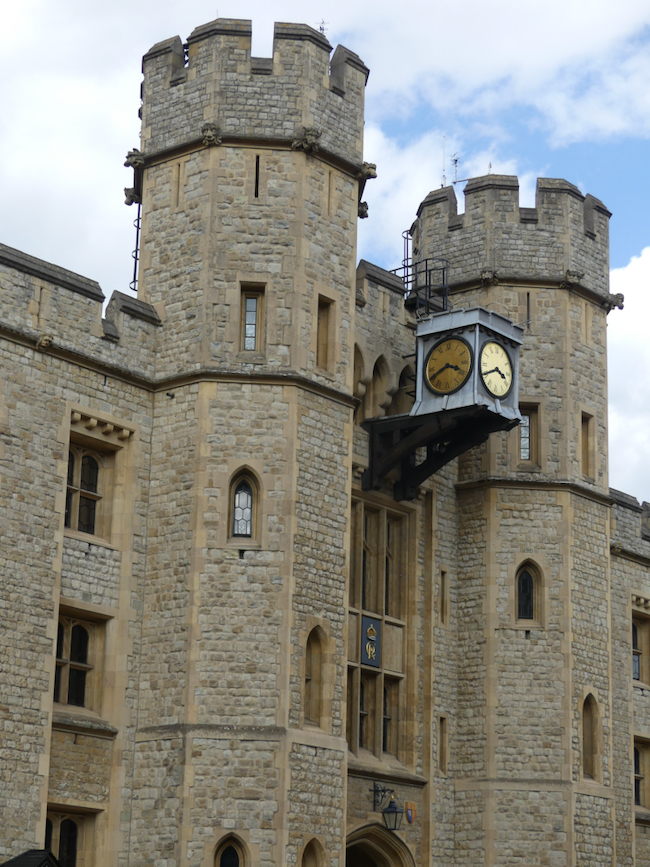
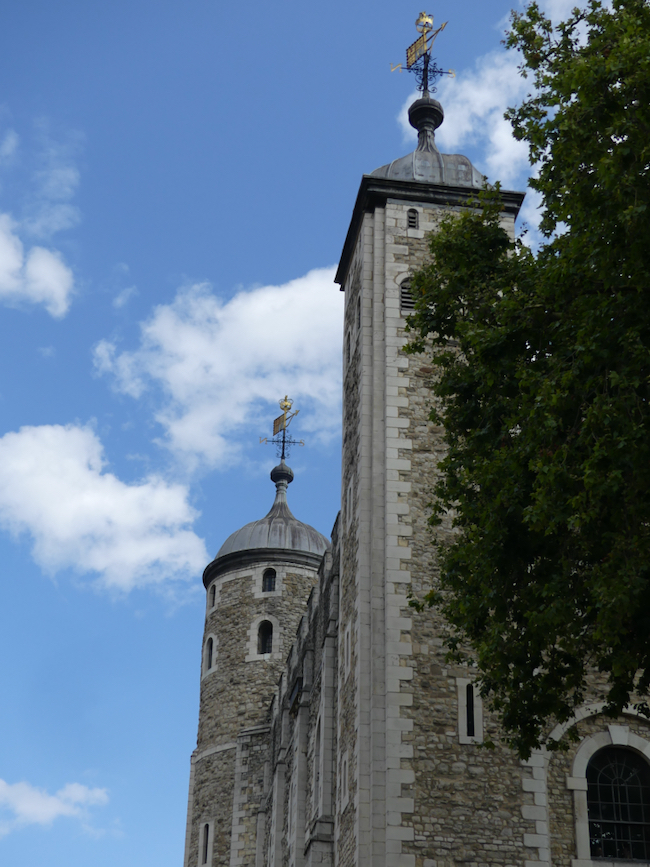
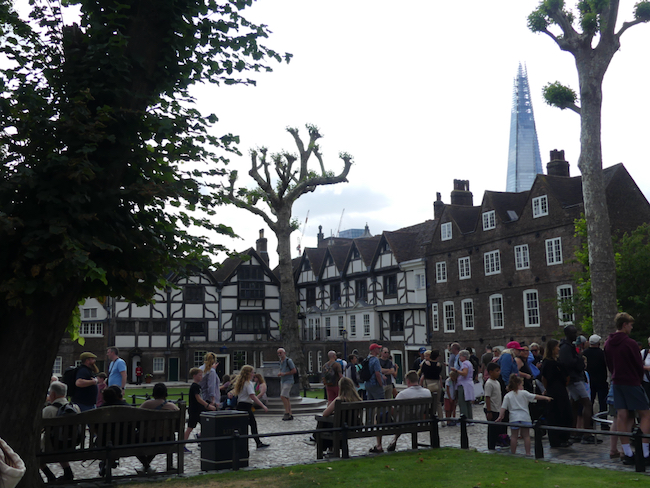
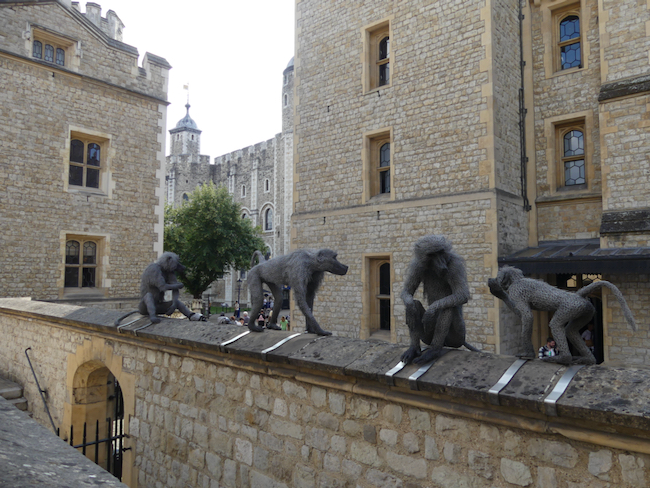
Inside The White Tower – military equipment and beautiful spaces!
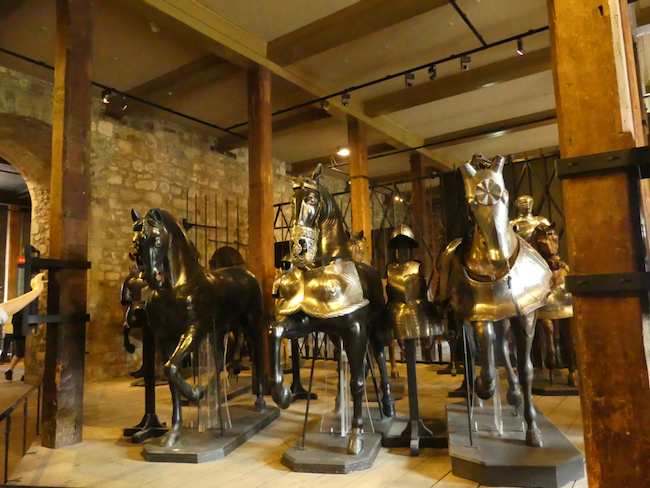
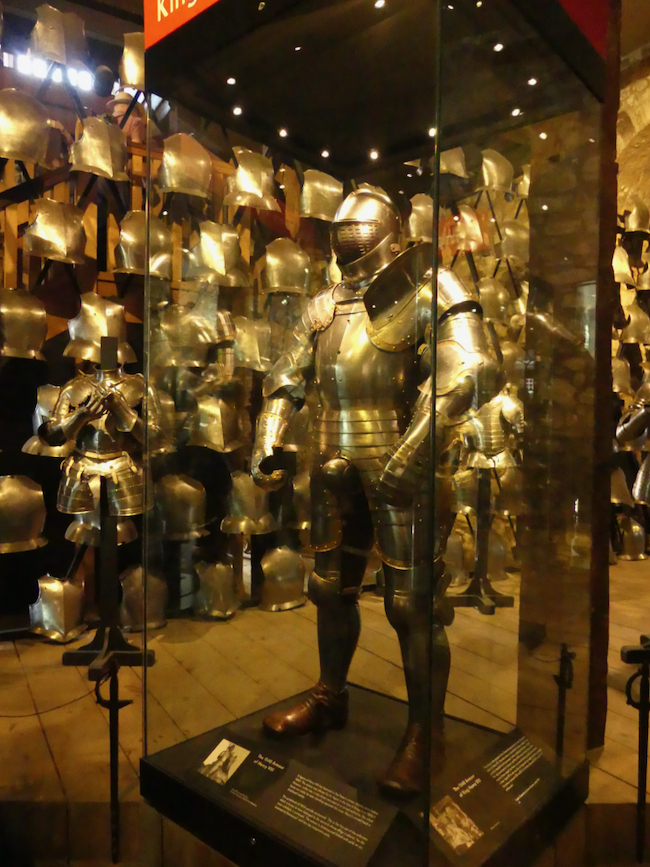
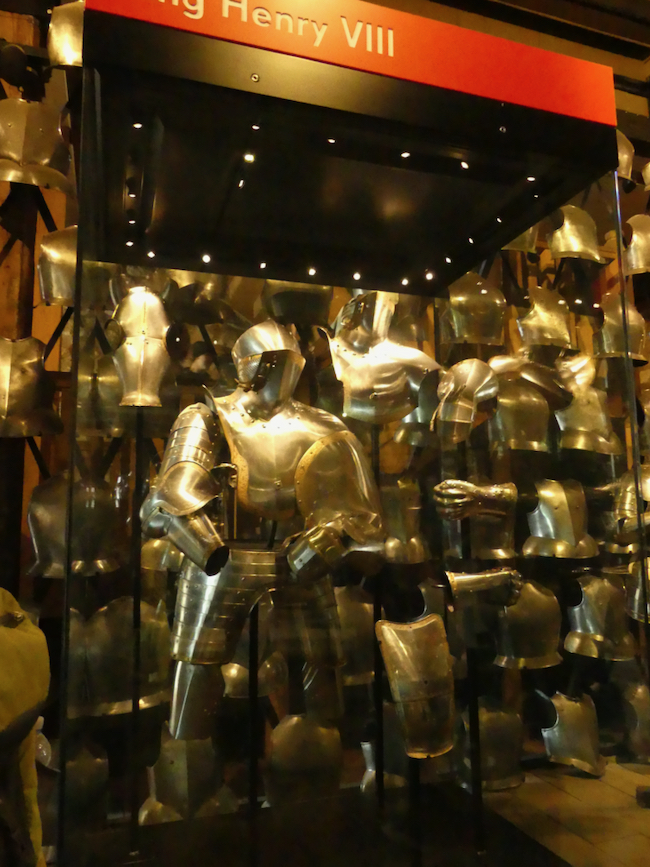
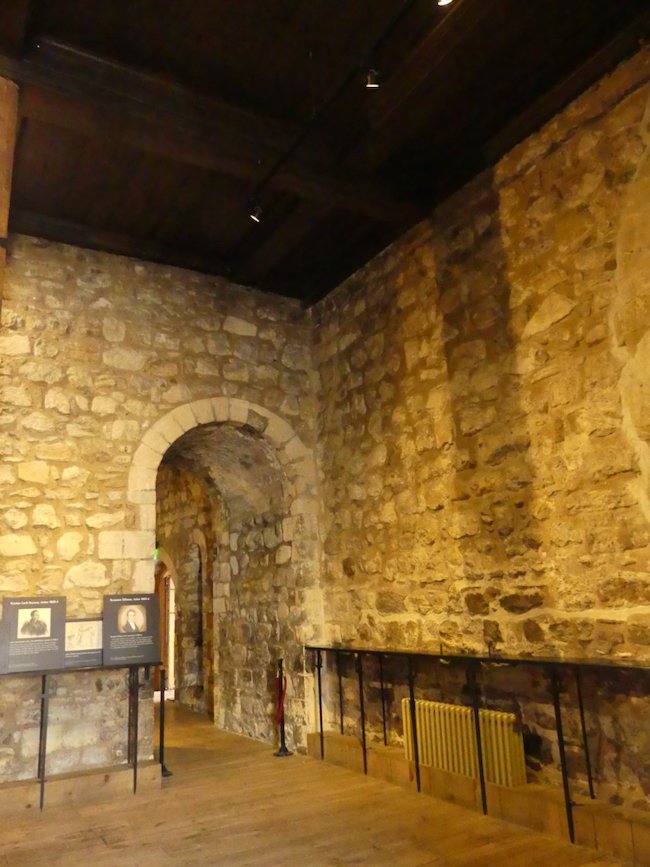
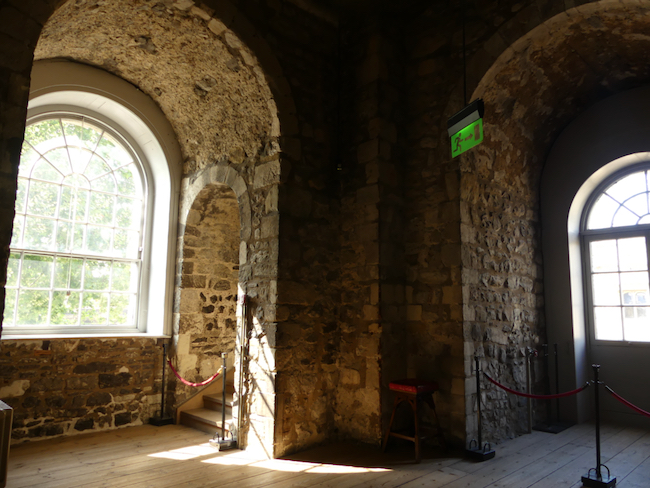
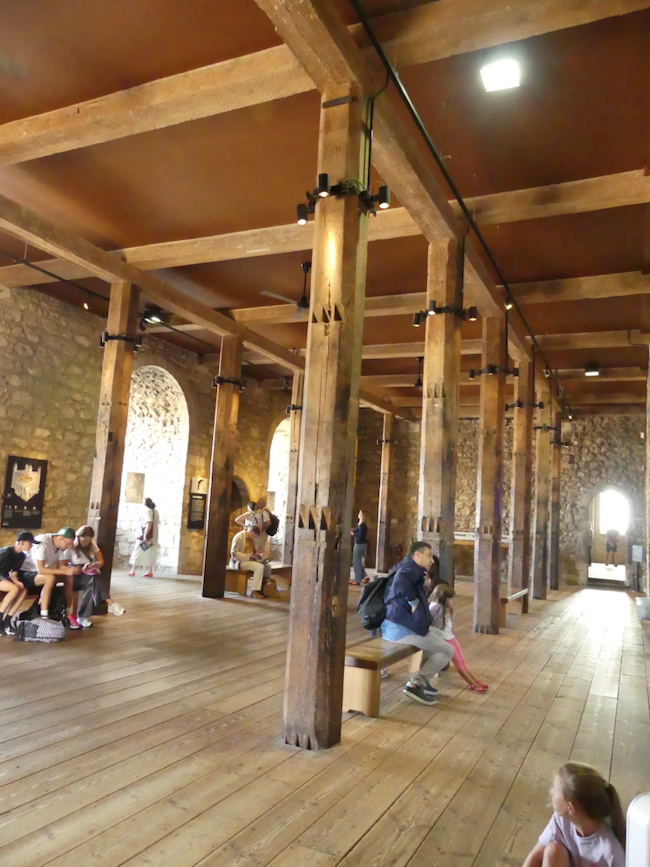
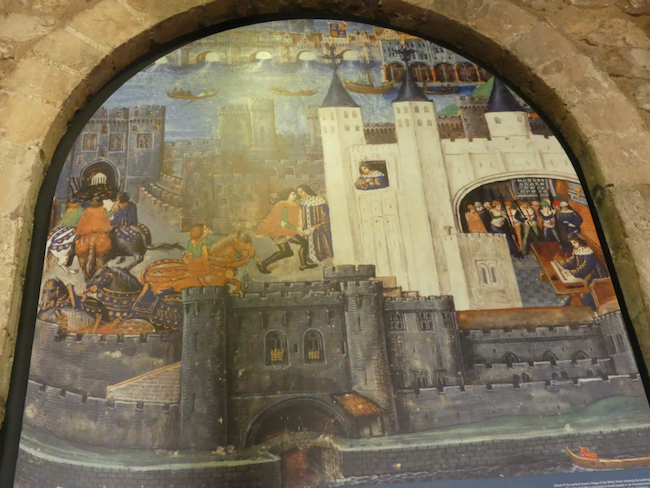
(detail on a painting in White Tower: “Detail of the earliest known image of the White Tower showing the building’s exterior. The view includes a cutaway to reveal people in an invented interior. From a late 15th century collection of poems by Charles, Duke of Orleans, British Library) Royal MS 16F11:173” (?)
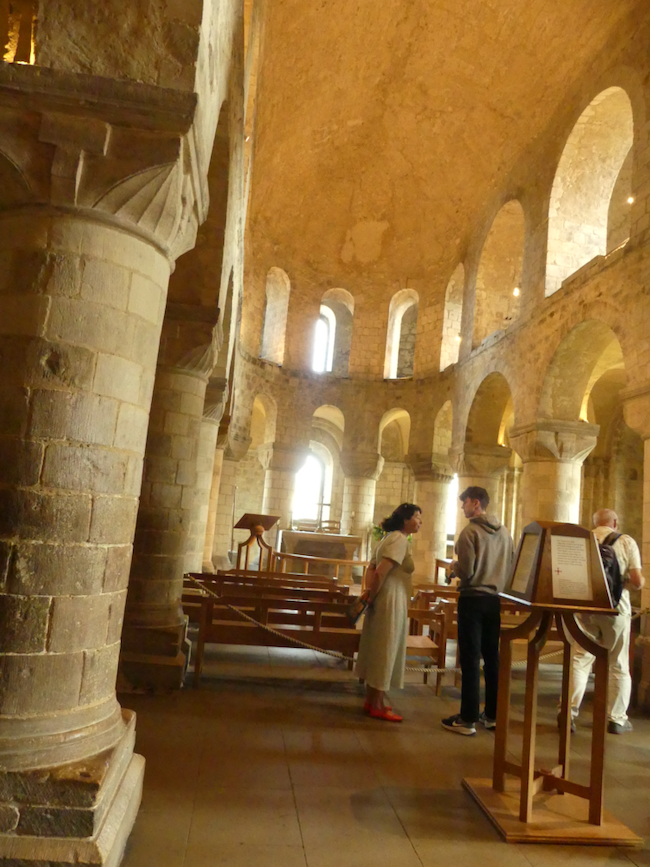

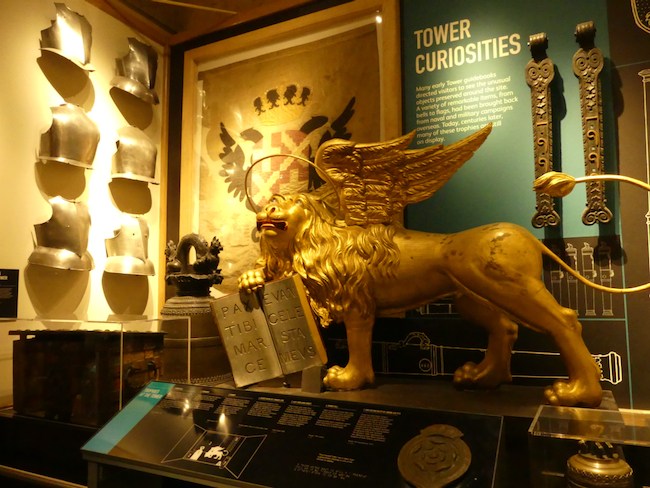
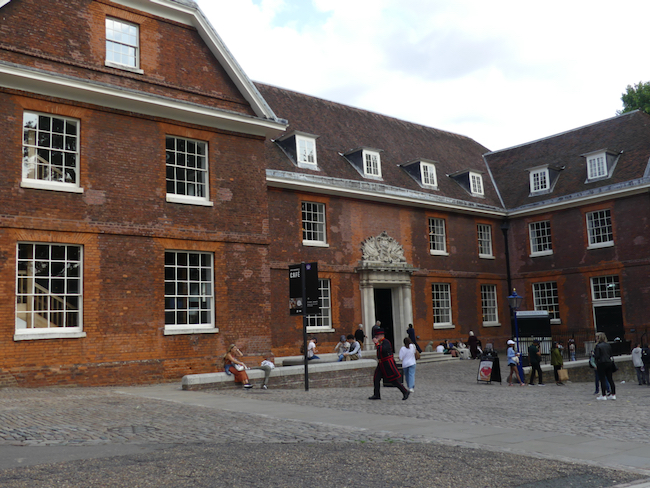
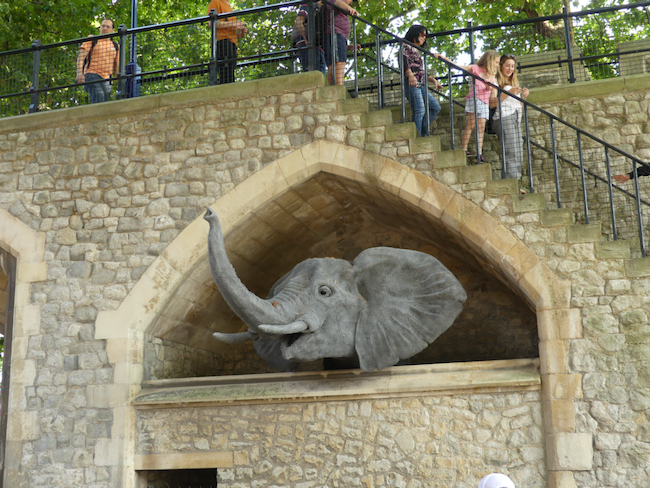
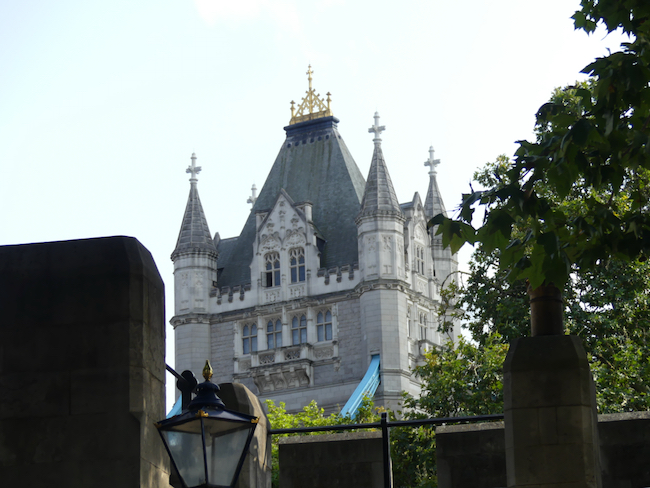
Just look at this glorious day!
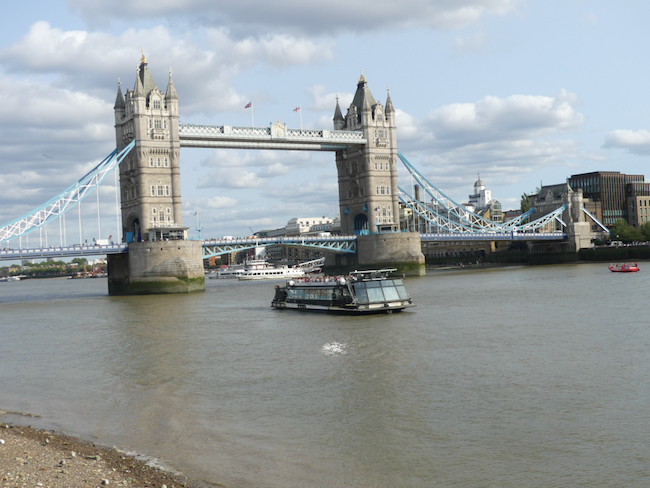
I love the juxtaposition of it all, sometimes.
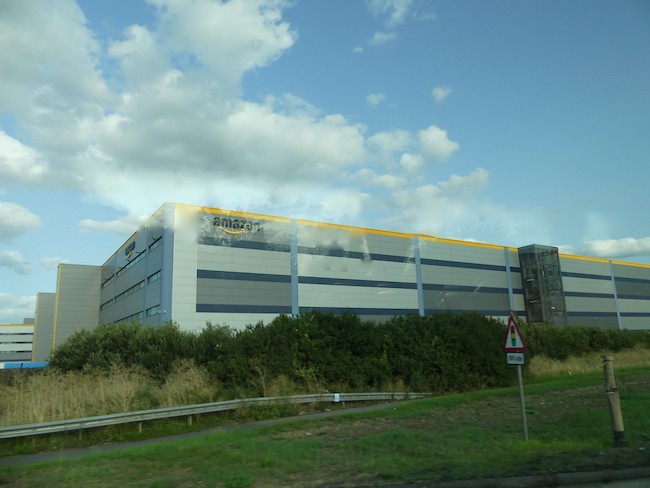
You just never know how a day is going to turn out. Sometimes the things you have the greatest excitement about go bust – something just isn’t right. And some days which seem designed from the beginning to disappoint turn out just the opposite – and this was one of those. Yes, we were late; we were those horrible late people. And despite it, we had a great time in Greenwich, met a great young man who loves his wares and knows how to make a sale, and we had a bonus – we got to take the Tower of London tour with a great guide on a gorgeous sunny afternoon. Yeh. We suffered some embarrassment. It was humbling. We survived.

When we got back we had a message from our friends that they were at dinner in the place where we meet up, and we exchanged news of our day – they were at the Churchill War Room and War Museum, deeply meaningful day for them. Dinner was all the better for great conversation, and we split up early for sail-away, knowing we had early departures for our tour reaching Dover.
From Oppressive Governments
Prayer from today’s Lectionary:
PRAYER (contemporary language)
Almighty God, we thank you for the faith and witness of Paul Sasaki, bishop in the Nippon Sei Ko Kai, tortured and imprisoned by his government, and Philip Tsen, leader of the Chinese Anglican Church, arrested for his faith. We pray that all Church leaders oppressed by hostile governments may be delivered by your mercy, and that by the power of the Holy Spirit we may be faithful to the Gospel of our Savior Jesus Christ; who lives and reigns with you and the Holy Spirit, one God, for ever and ever. Amen.
Diwali: A Light Sparkles in Dark Times

Today, Labor Day, when dark events are taking place in our country, shutting down the light of liberty and democracy, we got an unexpected invitation – to a Diwali party, coming up in a couple months.
We are so honored. And we know Diwali; we were living in Al Fardan 1, in Doha, Qatar, when an Indian neighbor invited all the residents of Al Fardan to come over for Diwali. We didn’t know what Diwali was, and our internet was dial-up and irregular, but we asked around and were told, with big smiles, to go and find out.
The night of Diwali came, and we walked to our neighbor’s house, along with many of our Al Fardan neighbors. We could see it long before we arrived – thousands of candles set out in patterns in the yard, lining the sidewalk, leading us inside, to more lights and a feast of sweets, platters of sweets, all illuminated by gleaming candlelight.
Such open-hearted hospitality. Such generous sharing. No one was excluded; everyone was welcome, and there was plenty for everyone.
Our neighbors’ beliefs were different from ours, and yet, I believe all such generosity, freely given, springs from the same spirit.
We can’t wait for this upcoming Diwali.
Crime Wave? Another Lie
Today I am sharing a blog post from Robert Reich, about how we can deal with the absurdities we are hearing about crime waves – but only in inconveniently Democratic majority cities:
How to respond to Trump’s lies about a “crime wave”
AUG 28, 2025
Friends,
Trump’s escalating rhetoric of a “crime wave” in America, coupled with threats to occupy Chicago, New York, Baltimore, and many other cities, has put many Democrats in a bind.
They worry if they deny crime is a problem, they could turn off swing voters who always and inevitably worry about crime.
As with immigration, crime is an issue that Trump can demagogue because, while the rate of serious crime his fallen dramatically, most Americans continue to fear crime. That fear has been heightened by expanding homeless encampments and drug overdoses in plain view, no matter what the statistics say.
Crime has also been a racial dog whistle. At least since Richard Nixon emphasized “law and order” and Ronald Reagan said he’d be “tough on crime,” Republicans have used fear of crime as code for white fear of Black people.
So what should Democrats do? My suggestion: Don’t simply give statistics showing that the rate of dangerous has fallen. Say safety is critically important, but local police rather than federal troops are best at dealing with it.
Don’t stop there. Hammer Trump for pardoning the 1,500 criminals who violently attacked the United States capitol and caused the deaths of four police officers — and for then firing the federal prosecutors who held them accountable.
Attack him for opening the floodgates to white-collar crime — hobbling the Consumer Financial Protection Bureau, freezing enforcement of the Foreign Corrupt Practices Act, disbanding the National Cryptocurrency Enforcement Team, and retreating from almost all federal lawsuits involving money laundering, crypto markets, and foreign corruption.
Since retaking the White House, Trump has granted clemency to Lawrence Duran, a health care executive who was convicted of leading a Medicare fraud and money laundering scheme. Trump has commuted the 14-year sentence of Jason Galanis, who defrauded investors, including a Native American tribe and a teachers’ pension fund, of tens of millions of dollars. He has pardoned Julie and Todd Chrisley, the reality TV stars convicted of bank fraud and tax evasion.
In April, the Wall Street Journal reported that Attorney General Pam Bondi was “swapping out and sidelining career supervisors who were responsible for charging crimes such as corruption, price fixing and securities fraud.”
Trump is soft on crime as long as the crime serves his own purposes. People who try to get on Trump’s good side — such as New York City Mayor Eric Adams, who was indicted on bribery charges during the Biden administration — have seen Trump’s Justice Department drop its charges against them.
Before they poured money into Trump’s initiatives and PACs, many Big Tech corporations were facing federal investigations and enforcement actions. Those investigations and lawsuits are now being dropped.
Earlier this year, the Department of Justice dropped its criminal case against Boeing, which involved the company’s role in two plane crashes that killed 346 people — despite Boeing previously agreeing to plead guilty in the case.
Trump is himself a criminal, found guilty on all 34 counts of falsifying business records in the first degree related to payments made to Stormy Daniels before the 2016 presidential election.
Don’t just accuse him of manufacturing a pretext to go into American cities. Hit him hard on his own horrific record of coddling criminals.
Recent Comments
ExpatAlien on What Country am I Living … intlxpatr on Yellowstone: Old Faithful to C… Michelle on Yellowstone: Old Faithful to C… Cathy on No Grown-Ups in Charge intlxpatr on Waiting for Snow Wikipedia Donate Button

Amazina


Early Voting in Florida


 Here There and Everywhere