If You Lived Here, I’d Know Your Name: Heather Lende

“You have to read this!” said my book friend, “You’re from Alaska! It’s about a woman who lives in some small town and writes obituaries!”
I grinned politely and put the book in my bag. Some books sound more interesting than other books – I’ve always loved adventures and mysteries and murders – add a little drama to the day-to-day-ness of everyday life. A woman who writes obituaries? Hmmm, not so much.
But spending my afternoons tending to my sweet little 3-month-old granddaughter means I often sit, anchored by the soundly sleeping baby who I don’t want to disturb, even by twitching. I have one hand free – and you can only play so much iPhone Sudoku.
An Alaskan friend had also recommended this book, so early this week I picked it up and started reading.
Oh. my. goodness. Yes, Haines is a small town, but oh the drama of writing obituaries. Oh, the things you learn about your neighbors and the surprises you get learning about their earlier lives. I love the way Heather Lende weaves the writing of the town obituaries with the current ongoing dramas in her own life and in the lives of her friends and makes it work.
It’s not unlike where I grew up, although my hometown had a hospital. We also had moose and bear and elk in our back yards, and learned to treat wildlife with respect, and that the best option was to back away slowly. There are the same senseless deaths from auto accidents, fishing boat accidents and unexpected changes in weather. There is the same feeling of wonder, almost every day of your life, knowing how very lucky you are to live in the midst of such awe-inspiring beauty. It’s hard for me to imagine being an unbeliever living in Alaska.
It’s also a great book to read before going to bed. Some of the books I read are too exciting or too disturbing to read before bed; books that infiltrate your dreams with images and situations that give you a restless night. While Lende deals with death and sadness and drama, there is an underlying message of hope in the neighborliness of your neighbors, the security of living in a town where everybody knows everybody else, in the civility even of people who strongly disagree with one another. If You Lived Here, I’d Know Your Name gives you peaceful sleep. She ties it all together with an ending that rips your heart out; you will never forget this book once you read it. After reading, you will feel like you have lived in Haines, Alaska.
The paperback version is available from Amazon.com for $9.73. No, I no longer own stock in Amazon.com.
“if You Can’t Prevent Rape, You Enjoy It”: Ranjit Sinha
The Chief of India’s Central Bureau of Investigation said this! Was he snorting cocaine in a drunken stupor? Of course he is apologizing, but his careless remark demonstrates the sentiments buried deep in his culture’s heart – it’s only women. Not worth much, not like us men. Outrageous.

NEW DELHI (AP) — India’s top police official apologized Wednesday for saying, “If you can’t prevent rape, you enjoy it,” a remark that has outraged women across the country.
Central Bureau of Investigation chief Ranjit Sinha made the remark Tuesday during a conference about illegal sports betting and the need to legalize gambling. The CBI, the country’s premier investigative agency, is India’s equivalent of the FBI.
Sinha said at the conference that if the state could not stop gambling, it could at least make some revenue by legalizing it.
“If you cannot enforce the ban on betting, it is like saying, ‘If you can’t prevent rape, you enjoy it,'” he said.
The remarks have caused outrage across India, which in the past year has been roiled by widespread protests following the fatal gang rape of a 23-year-old woman on a bus in New Delhi.
On Wednesday, Sinha said that his comments had been taken out of context and misinterpreted, and that he was sorry if he had caused hurt.
Angry activists, however, called for his resignation.
Communist Party of India (Marxist) leader Brinda Karat said Sinha’s comments were offensive to women everywhere.
“It is sickening that a man who is in charge of several rape investigations should use such an analogy,” Karat told reporters. “He should be prosecuted for degrading and insulting women.”
The New Delhi attack on the young woman last December caused nationwide outrage and forced the government to change rape laws and create fast-track courts for rape cases. New laws introduced after the attack make stalking, voyeurism and sexual harassment a crime. They also provide for the death penalty for repeat offenders or for rape attacks that lead to the victim’s death.
Wooo HOOO the New Q8 Books!
Brava! Brava, Fajer! What a great gift to the children and the community, to make Q8Books more accessible and family friendly. Woooo HOOOOO!
Reading and literacy are key to civilization. Brava!
From the Kuwait Times:
Kuwait’s community bookshop gets new life

Finding quality English books in Kuwait is a challenge as any book lover here knows. Local lawyer Fajer Ahmed, 26, recently took up the challenge when she acquired the small but well-loved bookshop, Q8 Books. She moved Q8 Books from downtown Kuwait City into a renovated space in Bayt Lothan, the non-profit arts and culture center located next to Marina Mall in Salmiya. Home to more than 15,000 titles of all genres including literature, general fiction, history, romance, thrillers and mysteries, westerns, classics, cook books, true crime, self help and motivation, family and lifestyle, business and philosophy and arts and crafts, Q8 Books has something to suit every reader’s taste.
By adding sofas, tables, chairs and beanbags, Q8 Books created a cozy, relaxed atmosphere along with free WiFi that invites customers to come and hang out. “We want to encourage reading, writing and communication in Kuwait, “Fajer explained. “As one example, we provide local writers with a place to display and sell their books free of charge, we also do all the administrative work for them.”
A community bookshop
Q8 Books also holds a free weekly story time for children, offers 50% store credit for trade ins, encourages book clubs and other responsible community groups free space to hold meetings and has an outreach project to support a library in Gambia. “We thank Bayt Lothan for giving Q8 Books a home,” Fajer said. “Without them none of this would have been possible.” Q8 Books’ erudite former owner, Jacob, started the bookshop almost a decade ago with only a handful of books. During his travels, he would browse used bookstores and markets to find quality titles that would be appreciated by the book-loving community in Kuwait. Jacob continues to help out at Q8 Books along with a group of dedicated volunteers and support from the Kuwait Writing Club.
Fajer also organizes regular events in order to build Q8 Books as a community space. On the first of November, Q8 Books hosted a Spooky Book night for kids, which included a story telling by local street artist Monstariam dressed in a bunny costume, a crafts and arts table, coloring and glitter, a costume contest and a chance for parents to browse and chat.
Kid and family friendly
“We really enjoyed Spooky Books night,” said Umm Sara, a mother of three children who attended the event all wearing ‘scary’ costumes. “The kids loved the story telling and we got several books. Much better than going to a mall and they got to draw and color and dress up.” The Kuwait Writing Club also took part, judging over 80 submissions for the writing competition. The winning submission will be published in Kuwait Times. “We also had a cover design competition for children to draw covers for the age appropriate horror story, Goosebumps, and every kid that took park received a free book of their choice,” Fajer explained.
Q8 Books will offer monthly events for children and parents with the goal of encouraging reading. “When kids come in playing games on electronic devices, we try to find books with the same characters and get them interested in reading,” Fajer noted. “Welovekuwait.com Children’s Bookshop has also donated coloring and reading books to give for free for every child that walks in.” Q8 Books encourages Kuwait’s community of readers to share their love of reading. They accept donations and offer store credit for traded in books. They also invite anyone to email ask@q8bookstore.com if they are interested in volunteering, donating or just want to talk to someone about suggestions for what to read.
Q8 Books is located in Bayt Lothan, next to Marina Mall. Store Hours: Weekdays 9am- 1pm and 5pm-9pm. Weekends 11am-9pm. Follow them on Instagram @q8bookstore
By Jamie Etheridge
“Mind Your Own Business”
You can be married for a long time and still be surprised. 🙂
I was thinking about other cultures, and then I thought about growing up in Alaska. Alaska is one of those kind of end-of-the-line places. Maybe it’s changed, but except for the native Americans, most people had come from somewhere else. Very few were second generation.
People at end-of-the-line places often have backstories they don’t want to talk about – bad divorces, or worse – bad marriage – no divorce, criminal records, or a million other situations they don’t want to talk about. From an early age, you learn not to ask. There were also a lot of laconic Scandinavians around; they talk about fishing and hunting but are seriously tongue-tied if asked a personal question. So again – you learn not to ask.
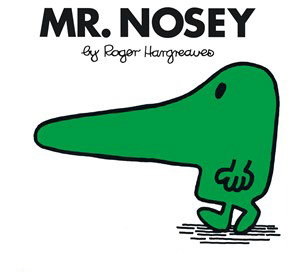
“Mind your own business,” I can remember my own mother saying, so I thought it was a rule. “Don’t be a Nosey-Parker.”
All my life I thought that was the rule. It was the way I was raised. Every now and then that curtain of pre-conceptions parts and a light gleams through. I was thinking about other cultures and it occurred to me to ask AdventureMan if he grew up with the same rule.
He just laughed. He looked at me in utter amazement, and laughed.
“I grew up in a town of 3,000,” he laughed, “and some of those were relatives, aunts, uncles, grandparents, cousins – everyone knew everything!”
“There’s no such thing as ‘mind your own business’ when your entire life is known by every single person in town!”
He hooted with laughter at the very thought.
“Everyone knew everything!” he repeated.
It’s expat world right here in my own house. This is a whole new way of thinking about things. I’ve always thought personal privacy was sort of universal, but not so.
One of the many times we lived in Germany, we lived in a small village where people told us everything. It was amazing, a whole different world, being on the inside, but not really being a part of it all. People seemed to feel we needed to be filled-in. One family didn’t speak to another family in the village, and it was awkward, because there were only like 300 people in the village, but many years ago someone’s grandmother had a terrible disagreement with the other family’s grandmother and no one in the families speak to one another now, even though no one can remember the reason.
I’ve escaped a lot of that being an expat, not sticking around longer than five years max, not long enough to develop a reputation you can’t shake. 🙂 But it makes me wonder if things are looser these days, if you can grow and change and be allowed to outlive your mistakes in small places where everything is everyone’s business . . .
Taliban Says Malala ‘Has Done Nothing To Earn Prize’
Mr. Taliban, did you see Jon Stewarts interview with Malala? (See below) All she wants is an education. She wants an education for herself, but also for all children in Pakistan. Your children, too! She wants them to have that opportunity, that’s all. And she has paid the price for her courage speaking out, and she bravely continues to state the obvious – there is nothing in Islam against educating women.
MIRANSHAH, Pakistan: The Pakistani Taliban Thursday said teenage activist Malala Yousafzai had done “nothing” to deserve a prestigious EU rights award and vowed to try again to kill her.
The European Parliament awarded the Sakharov human rights prize to the 16-year-old, who has become a global ambassador for the right of all children to go to school since surviving a Taliban murder attempt.
Malala survived being shot in the head by a TTP gumnan on October 9 last year and is seen as a leading contender for the Nobel Peace prize, to be announced on Friday.
“She has done nothing. The enemies of Islam are awarding her because she has left Islam and has became secular,” Tehreek-e-Taliban Pakistan (TTP) spokesman Shahidullah Shahid told AFP by telephone from an undisclosed location.
“She is getting awards because she is working against Islam. Her struggle against Islam is the main reason of getting these awards.”
He repeated the TTP’s threat – made numerous times in recent months -try again to kill Malala, “even in America or the UK”.
Malala and moved to Britain in the wake of the shooting for treatment and to continue her education in safety.
Feted by world leaders and celebrities for her courage, Malala has addressed the UN, this week published an autobiography, and could become the youngest ever Nobel Peace Prize laureate on Friday.
Her autobiography “I am Malala”, written with journalist Christina Lamb, has gone on sale in Pakistan and Shahid warned the Taliban would target bookshops stocking it.
“Malala is the enemy of Islam and Taliban and she wrote this book against Islam and Taliban,” he said. (AFP)
Palafox One of ‘Ten Best Streets in America’
From today’s Pensacola News Journal, the best parade street I have ever seen is recognized nationally for parades, restaurants and community spirit.
Palafox named one of Ten Best Streets in America

Written by
Julio Diaz
and Kevin Robinson
Need more proof that Palafox Place has become a thriving thoroughfare? Here it is: Palafox Place is one of 10 “Great Streets in America for 2013,” according to the American Planning Association.
The independent, not-for-profit educational organization — affiliated with the American Institute of Certified Planners — named Palafox Place alongside streets in Philadelphia; Galveston, Texas; Honolulu; and Corning, N.Y., on its 2013 list.
“For hundreds of years, Palafox Street has been at the center of life in our city,” Mayor Ashton Hayward said in a news release. “Over the past three decades, our community has reinvested in Palafox Street and, as a result, Palafox has once again become the anchor to a thriving, vibrant downtown and a city in renaissance.”
The organization recognized the eight-block stretch from Wright Street to Main Street. Locals will note that Palafox Place addresses run from 1 to 400 south of Garden Street, so this honor additionally includes parts of North and South Palafox Street (from Wright Street to Garden Street and from Government Street to Main Street).
The selection cites the historic architecture and character of the street, as well as popular events such as Mardi Gras parades and the annual Pelican Drop on New Year’s Eve; management of public events and street closures by the Downtown Improvement Board; private investment, including the Al Fresco food trailer court; and a variety of planning and preservation achievements.
You can read the entire article by clicking here.
Or better yet – come for Mardi Gras! See for yourself 🙂

“Is Your Cat Always Fractious?”

“Fractious” isn’t a word you often hear. Clearly the veterinary tech had just read the word off the record, perhaps there is some warning in there about the Qatari Cat.
The Qatari Cat was born on the streets of Qatar, and had a bumpy start with another owner. While the man and his daughter liked him just fine, the wife and her mother did not. When the Qatari cat came to live with us, he was very wary of me. It took a couple years for him to fully trust me. He watched my feet all the time. He quailed in fear, ears back, if I used a loud voice. He was terrified of the sound of plastic bags.
Slowly, slowly, we built a relationship. Today, ten years later, he is a sweet cat.
He is a sweet cat every single day of the year, but he still has his street instincts. AdventureMan has learned that you can’t play rough with the Qatari Cat; you play rough, you lose. I never speak loudly to him; it just won’t work, it just gets his back up. Because he knows I am the boss, I speak sternly, but softly to him and he will do just what I ask him to do.
Our first visit to the vet went badly. You can read about it here. He was fine until the buzzing razor hit his bottom and then all his survival instincts kicked in. He’s been back twice, and he has been as good as gold, but somehow . . . that notation has stuck.
“No!” I replied, maybe a little bit too loudly.”No! He is a sweet kitty! He is snuggly and loving and quiet and good! But if he is scared, he wants to defend himself.” I told the tech about the Italian vet the Qatari Cat fell in love with in Kuwait, she snuggled him and told him how beautiful he was and how much she loved him and he was putty in her hands. I was almost jealous. I thought maybe she distilled some catnip and mixed it with her perfume or something, Qatari Cat’s eyes glazed a little in sheer adoration when he was around her, and he even drooled a little. She could take his temperature, give him a shot and check his innards and he never complained, just looked at her adoringly.
The tech shot a skeptical look at me and exited the room. I could hear her repeat this to the vet, and muffled laughter before she entered the room again.
So the vet came in and snuggled Qatari Cat, and told him he was pretty, and while she did not say it with an Italian accent, Qatari Cat was clearly intrigued – and on his best behavior. It doesn’t take much . . . he’s a male. Snuggle him a little, rub his fur the right way, chat him up . . . it doesn’t have to be rational, it’s all in the tone of voice and the flirtation. He totally digs it, he eats it up. A little grope here, a quick look at the teeth, a quick injection and he’s finished, not a fractious moment in the entire visit.
On the way home, we laughed thinking of our sensitivity at having our cat called “fractious.” We remember the indignant response of friends whose cat was annotated as “vicious” by a German vet. The cat was diabetic and objected to the roughness with which the vet wanted to take his blood. I think if you are a veterinarian, you might have an understanding that a sick animal, or a scared animal, might act unpredictably or defensively, there are big thick gloves you can wear if an animal seems wired up.
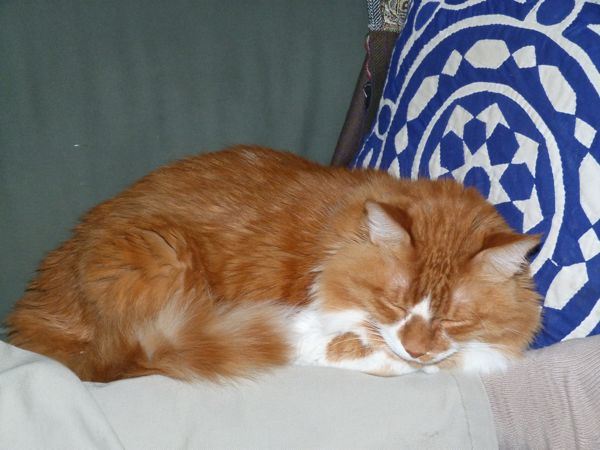
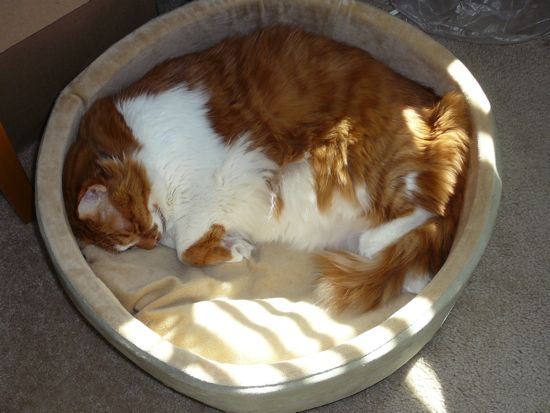
Does this look like a fractious cat to you?
Every Day Sadists Walk Among Us

“Trust your feelings,” my friend told me when I was telling her about a person who seemed so nice, but made me uncomfortable. This article says the same thing; if you feel like a person takes pleasure from humiliating or hurting others, stay far far away. It’s only a matter of time before they turn on you.
Everyday Sadists Walk Among Us, Study Says
(From AOL News/Every Day Health)
Although we may think of sadism in a sexual or criminal context, sadistic tendencies are common in everyday life.
By Laurie Sue Brockway, Everyday Health Staff Writer
Whether it’s the Marquis de Sade, the evil stepmother from Snow White, or Nurse Ratched from One Flew Over The Cuckoo’s Nest, all sadists take great pleasure in inflicting pain on others. Fortunately, you are unlikely to meet those particular three anytime soon, but according to an unusual duo of studies conducted in Vancouver, British Columbia, and published in Psychological Science this week, it is very possible you will bump into a boss, a colleague, or even a family member who may be considered an “everyday sadist.”
While most people try to avoid hurting others — and will feel guilty, remorseful, and distressed if they do hurt someone intentionally or unintentionally — an everyday sadist enjoys being cruel and may find it exciting.
“We have probably all encountered people in our daily lives who — at least seem to — enjoy hurting others,” said lead researcher Erin Buckels, MA, who conducted this work as part of her master’s thesis in Social-Personality Psychology at the University of British Columbia. She is now a doctoral student at the University of Manitoba in Winnipeg.
“Everyday sadists lack empathy, and they possess an internal motivation to hurt others. However, they are unlikely to act in a way that would be criminal or dangerous — at least in most contexts, where such behavior is met with social disapproval or punishment,” Buckels said.
Everyday sadists may be cousins to classic sociopaths in their lack of empathy, but they are not considered a danger to society in the same way. “It is only in situations where cruelty is encouraged or socially acceptable that dangerous behavior might enter the equation,” said Buckels. “Both sadistic personality and situational pressures are necessary for sadism to manifest with everyday people. War is one example of this confluence — we have all seen the images of the Abu Ghraib prisoner abuse. All forms of cruel behavior have the potential to be motivated by sadistic pleasure, including bullying and abuse by others. If it were done purely for pleasure, then it would be sadism.”
If You Like to Hurt Bugs, You May Be a Sadist
It’s one thing to take an empty mayonnaise jar to catch fireflies when you are a kid and accidentally forget to poke holes in it, causing the fireflies to die. It’s another thing to enjoy harming bugs (or animals). Buckels used a bug-crushing exercise to draw the everyday sadists out in a controlled laboratory environment. For the experiment, she defined sadists in two ways: Their cruel behavior and felt pleasure in the lab, and personality characteristics consistent with sadism. A group of 71 participants were asked to fill out a sadism personality questionnaire and also given a list of four tasks they could choose from:
Killing bugs
Helping the experimenter kill bugs
Cleaning dirty toilets
Enduring pain from ice water
A bug-crunching machine fashioned out of a coffee grinder made distinct crunching sounds. Placed close to this machine were cups containing live pill bugs that were labeled with names like Muffin, Ike, and Tootsie. Those who selected bug-crushing were told to put the bugs into the machine and grind them up. Unbeknownst to them, there was a barrier that prevented the bugs from being dropped into the grinder. No bugs were killed for this experiment, but it brought the sadists out of the closet. Of 71 participants, nearly 28 percent chose to kill bugs.
What Exactly Is a Sadist?
Sadistic personality disorder was once defined as a mental illness, but over time sadism has been considered more of a lifestyle choice or a personality quirk or trait. The new Diagnostic and Statistical Manual of Mental Disorders (DSM-5), does include sexual sadism disorder. “This is marked by recurrent and intense sexual arousal from the suffering of others as manifested by fantasies, urges, and behaviors,” said Wilfried Busse, PhD, a psychotherapist based in Bethesda, Md. “To meet full criteria for the disorder, an individual also has to act on such urges by inflicting harm on a non-consenting individual, or must experience such uncontrollable urges to cause significant social and occupational impairment.”
“The central feature of sadism is deriving pleasure from watching or inflicting physical or psychological harm on others,” added Dr. Busse. “In the extreme form a sadist will seek to inflict suffering on another for the psychological gratification derived from such an action.”
Buckel’s study did not use classic criteria to define sadism – most widely known as sexual or criminal behavior – and instead explored sadism as it exists in the “subclinical” range of personality, an aspect of sadism not considered a mental illness.
“There is clearly a difference between a person who gets pleasure from killing bugs and a person who kills other humans for pleasure,” said Buckels. “That being said, the core experience of sadism is probably pretty similar for both of them. Our research has also revealed both similarities and differences between people who enjoy acting cruelly, or direct sadists, and those who simply enjoy watching cruelty, or vicarious sadists.Regardless of whom the victim is, direct aggression requires a certain amount of callousness and a lack of distress towards the suffering of another living creature.”
How to Spot a Sadist
There is a big difference between the kind of evil sadists we know from history and movies and people with sadistic impulses, who fall into a category of sadism that is considered a personality trait rather than a personality disorder.
“It is very important to differentiate between an antisocial, or sadistic, personality disorder and sadistic impulses,” said psychologist Fran Walfish, Psy.D., a family therapist and author in Beverly Hills, Calif.
“Antisocial personality disorder is very rare,” Walfish said, offering examples such as Hitler, murderers who enjoy torturing their victims and watching them suffer, and, possibly, Syrian President Bashar Assad. “But the rest of us have unconscious sadistic impulses. Even the kindest, most loving person, when terribly mistreated, can feel an impulse of hate very strong,” she added.
Walfish explained that there are several sub-types of sadists:
Explosive sadist. When disappointed and/or frustrated with their lives, humiliated or hopeless, they lose control and seek revenge for the mistreatment to which they feel subjected. They are known for being unpredictably violent. This manifests through tantrums, fearsome attacks on others, especially family members, and uncontrollable rage.
Tyrannical sadist. They are frightening and cruel because they appear to relish the act of menacing and brutalizing others; forcing their victims to cower and submit gives them satisfaction.
Enforcing sadist. They tend to be military sergeants, deans of universities, prison overseers, police officers or people with other authoritative functions who feel they should be the ones controlling and punishing people who have broken rules, regulations or laws.
Spineless sadist. They are typically deeply insecure and act like cowards. In anticipation of real danger, they project their hostile fantasies and strike first, hoping thereby to forestall their antagonist and ask questions later. They use aggressive hostility to send the message to others that they aren’t intimidated or fearful, so that they can control their inner feelings and display the exact opposite of how they actually feel. They seek out scapegoats to gang up on, which allows them to assault the exact things that exist within themselves that they want to deny.
Everyday sadist. There is a renewed interest in studying subclinical sadism as a personality trait, said Walfish. Subclinical psychopathy, narcissism, Machiavellianism, and everyday sadism form the so-called “Dark Tetrad” of personality.
“These people aren’t necessarily serial killers or sexual deviants but they gain some emotional benefit in causing or simply observing others’ suffering,” said Walfish. “The type of person the study is referring to are, for instance, the co-worker who repeatedly humiliates you and smiles or appears to reap pleasure from hurting you. If you self-advocate and say something that inflames your co-worker, she retaliates with evil revenge, further humiliating you.”
Exercise Caution Around Everyday Sadists
The British Columbia researchers surmised that everyday sadists are not the most popular people.“A person who has a high score on a sadism personality questionnaire is unlikely to be regarded as a nice and loving person,” said Buckels. “That is not to say that they are always nasty or that they can’t love others; but in general, high scorers tend to be less nice than average.”
How does someone become an everyday sadist? “In general, the cause or reason someone wants to go the extra effort to hurt another is because someone terribly mistreated them,” said Walfish. “That someone is usually their mother, father, or an older sibling. The sadist was a receptacle, or container, for hostility and evil meanness. These toxic feelings become too much for one to bear. They have no choice but to find a weaker victim and spew their venom onto the other.”
“Within their own families and in the workplace these people cannot be trusted,” Walfish observed. “No one can ever feel safe with them. Therefore, they do not have real relationships. They engage by exploiting, manipulating, and using other people as a means to their own end. The best thing to do is keep reasonable distance from these people. Always be pleasant so you don’t become their target. This does not mean to kiss up. It just means you present yourself as a benign nice guy. Never do business or get close to one of these people. They will always take you down.”
Buckels said she was surprised to find such a low baseline of positive emotions reported by sadists. “They are not just acting out to compensate for deep-rooted insecurity or low self-esteem,” she said. “Interestingly, after an act of cruelty, their moods seemed to lighten, suggesting instead that the sadist’s appetite for cruelty derives from some diabolical need. Although speculative, our hypothesis is that sadists have an underlying deficit that is sated through cruelty’s rewards.”
Gospel for 9/11

Are we who we say we are?
Do we follow the spirit of The Word? Do we as believers pick and choose from our holy book(s) or do we humble ourselves, as Christ did, and do as he commands?
The Lord Jesus Christ commanded a very difficult life style. I have met holy people among all religions; I am forced to believe that “the way and the truth and the light” are behavioral, and that there will be many surprises when we get to the last days.
September 11th is a difficult day. This is a difficult Gospel reading for a difficult day:
Matthew 5: 38 – 47
Eye for Eye
38 “You have heard that it was said, ‘Eye for eye, and tooth for tooth.’h 39 But I tell you, do not resist an evil person. If anyone slaps you on the right cheek, turn to them the other cheek also. 40 And if anyone wants to sue you and take your shirt, hand over your coat as well. 41 If anyone forces you to go one mile, go with them two miles. 42 Give to the one who asks you, and do not turn away from the one who wants to borrow from you.
Love for Enemies
43 “You have heard that it was said, ‘Love your neighbori and hate your enemy.’ 44 But I tell you, love your enemies and pray for those who persecute you, 45 that you may be children of your Father in heaven. He causes his sun to rise on the evil and the good, and sends rain on the righteous and the unrighteous. 46 If you love those who love you, what reward will you get? Are not even the tax collectors doing that? 47 And if you greet only your own people, what are you doing more than others? Do not even pagans do that? 48 Be perfect, therefore, as your heavenly Father is perfect.
Presenter Ses Condoléances
Some things you do. Some things are hard, and you do them anyway. I always think of them in the formal – pour prendre conge’, respondez, pour rendre petite assistance . . . must do’s, societal niceties, the grease that keeps civilization running, never mind smoothly.
I had to call a friend this morning to tell her how sorry I am that her husband had died. When she came to the phone, I was initially shocked. For months, since her husband’s stroke, she has been subdued and tired, but this morning she sounded happy and energetic.
“He’s free!” she said to me. “”As it says in the Bible, his passing was a breath; if I hadn’t been holding his hand and paying attention, I wouldn’t have known he was gone. It was so easy.” She was joyful. We wept together, for joy. He was free of the burden his life had become.
What I thought was going to be a sad call turned out to be a joyful call. She loves her husband still. They had years and years and children and grandchildren together, and she let him go with joy because he was ready.
Thanks be to God.
Recent Comments
ExpatAlien on What Country am I Living … intlxpatr on Yellowstone: Old Faithful to C… Michelle on Yellowstone: Old Faithful to C… Cathy on No Grown-Ups in Charge intlxpatr on Waiting for Snow Wikipedia Donate Button

Amazina


Early Voting in Florida


 Here There and Everywhere
