The Secret Lives of Baba Segi’s Wives by Lola Shoneyin

I don’t know what it is about summer reading, but now and then I go on a theme-fest; a couple years ago it was Nigerian literature, and, once hooked . . . when my friend who is now living in Lagos recommended The Secret Lives of Baba Segi’s Wives, I ordered it right away, thinking from the title it would be maybe light and sweet and humorous.
From the start, that assumption was blown. This is a direct and edgy Nigeria, darker, rougher and full of family secrets, domestic details and messy relationships.
It is a very Nigerian book – this is a good thing. There are cultural things that are not explained, but it all ends up making sense in the end. There are foods I have never heard of – ekuro with shrimp sauce, asun. There is a rudeness in the way they speak to one another, (“Is this a parking lot?” “Do I look like a parking attendant?”), a crudeness in the constant need to carry small bills for bribes, even on public streets. People speak their minds, with little or no mitigation, depending on the status of the person and their own personal goals and agendas.
At the weekly meeting of wives, the senior wife, Iya Segi, doles out rations of household supplies to the other wives, including chocolate powder and hair conditioner . . . and as the senior wives complain about the new wife thrown in their midst, she says:
“You will trip over in your hate if you are not careful, woman. Your mouth discharges words like diarrhea. Let Bolanle draw on every skill she learned in her university! Let her employ every sparkle of youth! Let her use her fist-full breasts. Listen to me, this is not a world she knows. When she doesn’t find what she came looking for, she will go back to wherever she came from.”
There is a whole other world in that one paragraph – a whole other way of seeing life and expressing thoughts. The culture may be alien, but I thoroughly enjoyed being a tiny mouse in the corner at that meeting – and others – and inside the minds of the wives, of Baba Segi, of the driver – so many good stories, so many points of view, and I learned things from behind those high compound walls and closed and locked doors that I might never otherwise have learned. Alien as it was, for me, this was a very good book, new ways of looking at things, and a great recommendation from my friend in Lagos.
“I Will Wipe out the word WASTA from the Traffic Dictionary”
Wooo HOOOO on You, Major General Abdulfattah Al-Ali!
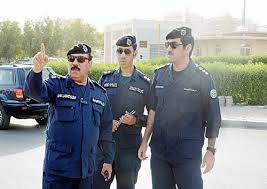
Sometimes, when you are reading a newspaper looking for content, the most significant articles can be little small ones:
Major Al-Ali vows to redraw traffic map
KUWAIT: “I have orders from higher authorities to organize the traffic and the law will be implemented strictly, Assistant Interior Ministry Under Secretary for Traffic Affairs Major General Abdelfattah Al-Ali said. “I will change the traffic map within six months and wipe out the word wasta from the traffic dictionary ,” he added. “I have strict orders from higher authorities to organize traffic and the law will be implemented very strictly,” Major Ali said.
The Kuwait Times got his title wrong; it is Major GENERAL, not Major, LOL, that’s a big difference. It appears he has the clout – and the backing – to make a brave and steadfast stand:
“WIPE OUT THE WORD WASTA FROM THE TRAFFIC DICTIONARY”
I can hardly believe my eyes. This is going to be very painful for young Kuwait men, who have learned – from prior experience – that the rules do not apply to them. IF Major General Abdulfattah Al-Ali can maintain his strong position, there may be more young Kuwait men who live to be grown-up men, there may be fewer heart-wrenching funerals, far fewer trips to the emergency room (did you know that some of the best head-trauma physicians in the world are in the ER’s in Qatar, Kuwait, and the UAE? There’s a reason for that.) The days of seeing babies on their daddy’s laps in traffic may be over. People may actually start wearing seatbelts!
Wooo HOOO on You, Major General Abdulfattah Al-Ali. You are a brave and courageous man, with a vision for a safer future for Kuwait.
11,800 Deported: Kuwait Deportations Continue “Without an End Date”
I still have a large contingent of loyal readers from Kuwait, but by early this morning, I could see something was up:
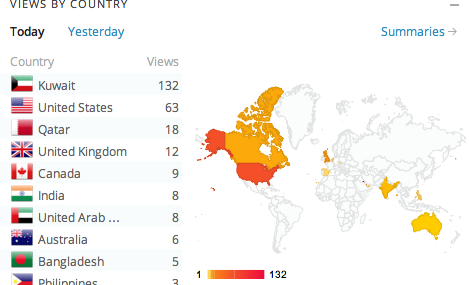
It’s not often that I have 132 Kuwait hits before noon.
So I checked the Kuwait Times:
Expat deportations will continue: Traffic chief – 11,800 deported in two-and-a-half months
KUWAIT: Major General Abdulfattah Al-Ali’s name has become synonymous with extensive traffic campaigns, aimed at enforcing the law at all costs, including implementation of mass deportations. The senior Interior Ministry official, who takes pride in deporting 11,800 people and impounding 3,000 vehicles during his tenure as head of the Ahmadi Security Department over the past two and a half years, told a local daily that deporting expatriates for serious violations will continue without an end date. “Administrative deportation of violating expatriates is not going to stop, especially of those carrying passengers illegally, in which case a person would be in violation of traffic and labor regulations,” Maj Gen Al-Ali, the Interior Ministry’s Assistant Undersecretary for Traffic Affairs, told Al-Rai on Friday.
He added that any ticket can be disputed “by a request to refer the case for traffic department investigations”. In the series of crackdowns that started late April, at least 2,000 traffic violations were registered, including 1,000 tickets issued directly on the street, while thousands of people were reportedly deported. Moreover, Maj Gen Al-Ali revealed that the ministry collected KD4 million, out of the KD24 million owed in traffic fines, during the same period. In that regard, the senior official pointed out that only KD8 million worth of fines are registered against individuals, while the rest are against companies and state departments. Out of the KD8 million, KD6 million is registered against expatriates, Maj Gen Al-Ali said. “Cases are soon to be filed with the traffic court in order to issue travel ban orders against people with more than KD80 in fines owed to the ministry,” he added.
Al-Rai published Maj Gen Al-Ali’s statement yesterday, along with a transcript of an interview with Al- Watan TV during which he defended the ongoing campaigns. “Our procedures are necessary to save lives, with average statistics indicating that 450 people are killed and 3,000 are injured annually due to traffic accidents,” he explained. During the interview, Maj Gen Al-Ali insisted that all drivers are equal when it comes to implementation of the law. “There have been doctors among the people deported, including a surgeon caught driving without a license for three years,” he said, before confirming news reports that he had taken a decision to impound a vehicle owned by Minister of Cabinet Affairs Sheikh Mohammad Al-Abdullah Al-Sabah on grounds of repeated violations committed by his personal driver. Meanwhile, the senior official urged any person who had obtained a license through illegal means to dispose of it “because once caught, they are going to be charged with forgery”. —Al-Rai, Al-Watan
Pensacola: Fiesta of Five Flag Parade
I’ve never lived anywhere with so many parades, and as Pensacola cools down a little and an offshore breeze blows away the heat of the day, a parade sounds like fun. Tonight is the Fiesta of Five Flags Parade. I can’t think of a parade since Lent, so maybe this is the kick off of the new season. Pensacola has an active and lively social scene, with all these Mardi Gras Krewes, and the older our grandson gets, the more of the parade we get to see! I think we got through three quarters of the parade tonight, and oh what fun.
The people on the floats are having a great time. They have these great alter-egos, get to wear elaborate costumes, and there may be some alcohol involved, LOL. The people on the ground are having a great time, you can really get into the waving and trying to catch the beads. Some of the beads are prettier than others, but as AdventureMan says, it’s all plastic. Having said that, you should see him scramble! He is good at catching beads.
And oh my, they are so good to the kids, with stuffed toys, beads, ice cream bars, frisbees, trinkets, including pieces of eight!
Honestly, there are some things in life I will never get tired of – parades and fireworks. I feel so blessed to live in Pensacola.
These photos are not in the right order because I just did a group dump into the photo gallery, and it scrambled them when they were inserted into the blog entry.
The parade always starts with the Pensacola motorcycle police, with flashing lights and roaring engines!

I love that they decorate the horses tails:
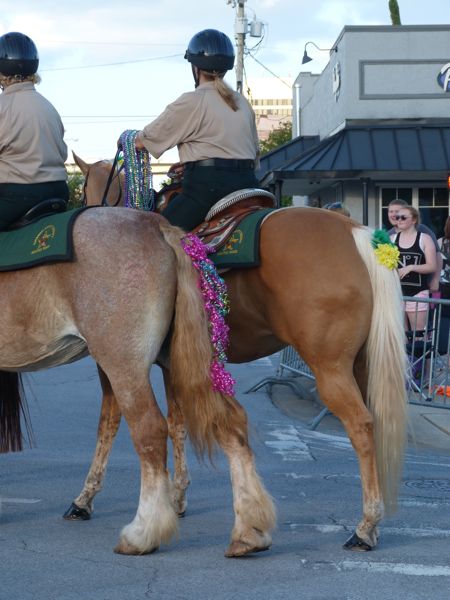
And then AdventureMan pointed out they also rubbed glitter into the horses haunches to make them pretty 🙂

So many beads! We got to the parade a mere ten minutes before it began, but it was more lightly attended, and we were able to be right up front. Our little grandson had a great view, and people were so kind giving him beads, throwing him beads, toys, etc.
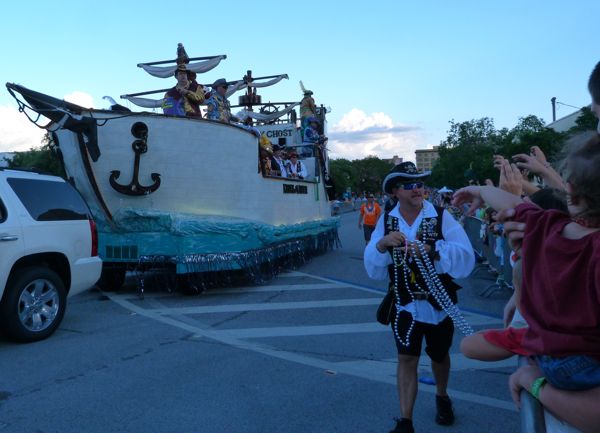

Look at all those beads they plan to throw! There was a throne on this float with King Tut!

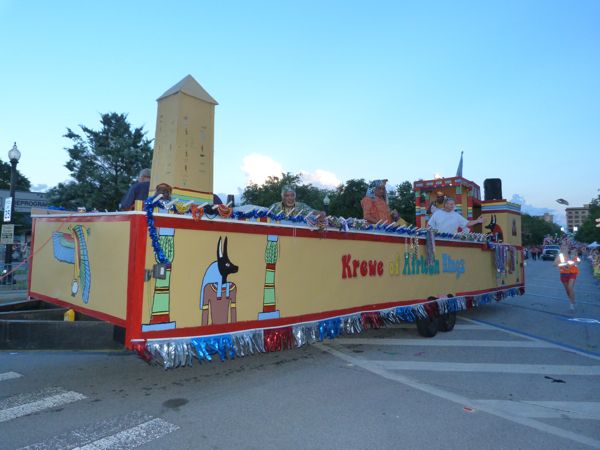
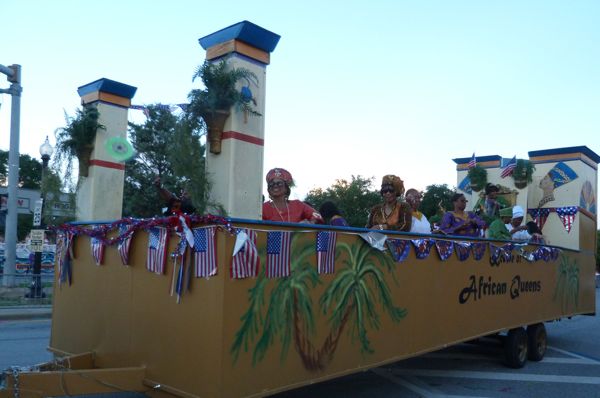
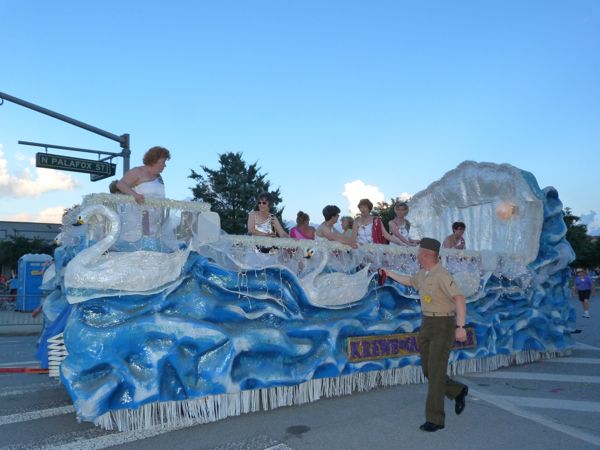
These ladies were having a grand time!


The Mayoki Indians seemed to be the Krewe having the best time of all, with two floats loaded with beads, and more ‘foot Indians’ handing and throwing beads into the crowds:
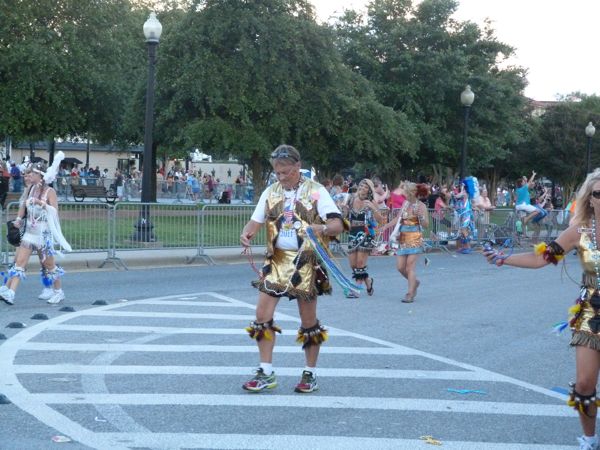




The flame throwing baton twirler got lots of applause:

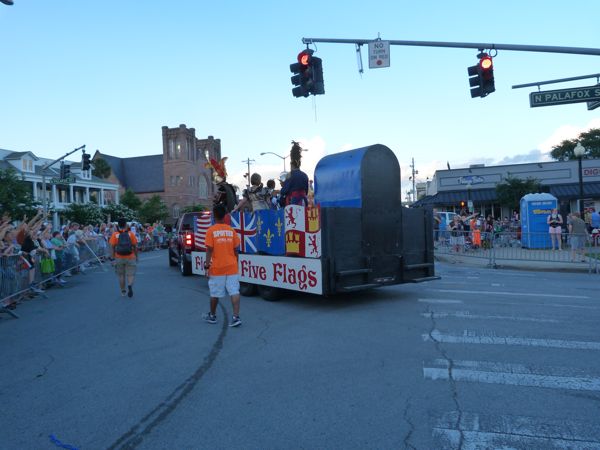
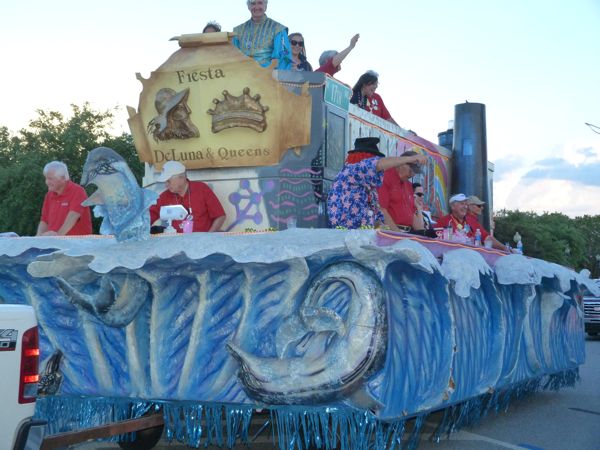


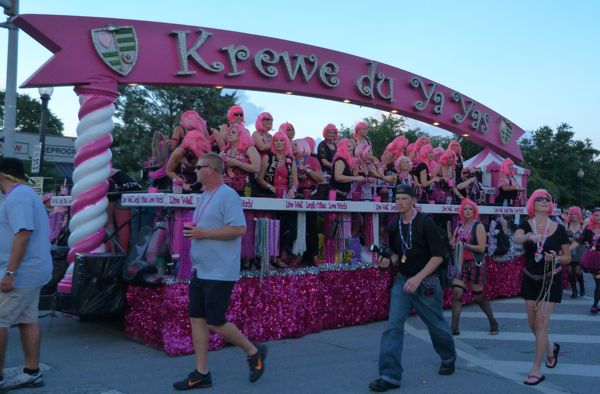


We saw our little grandson rubbing his eyes and asked if he was ready to go home, and he was. One of these days he will be old enough we will see an entire parade. I had a minor concern that Tropical Storm Andrea would blow in bad weather and make the parade unlikely, but nothing of the sort, we had great weather, a lovely evening and a wonderful time making good memories with our little grandson.
It’s Why We’re Here: Lunch at Taco Rock
There is a graciousness in Pensacola that reminds me of life in the Middle East, although the local Pensacolians would be astounded to be compared with the Middle East. If you look closely, though, you can see the similarities.

There is politeness and civility toward others, even strangers. When workmen are in your home, you offer them ice water, or iced tea, and you ask about their families before they start work. It seems to us that when we call for help, we get the same service people coming to our house; I don’t think it is an accident.
People chat a little before they get down to business. I think many a Pensacolian would feel comfortable in the souks, sitting and drinking a little tea before they start to discuss the appropriate price level for the bauble they are considering. They ask about a person’s health, and they ask about your family. They take meals to those who are suffering or recovering.
People spend time with family. Families go to church together, families have meals together, families share child rearing. Multi-generations live near one another. People who went to school together more than fifty years ago form their own kind of family, sharing deeply, attending the funerals of one another’s kin. Funerals are well attended. Very Arab, if only they knew.
There are pockets in the United States where you find groups of Arab nationals; Pensacola has these groups, even a discreet mosque or two. There are stores selling international supplies, including zaat’r and sumak and harissa, chana dal, bulger, wuhammara . . . and restaurants billing themselves as ‘Mediterannean’ whose food would be recognizable to those in the Levant and the Gulf.
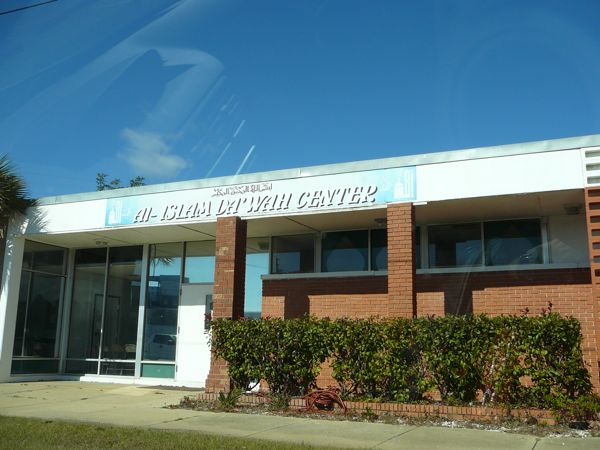
There is almost always a breeze off the Gulf to fight the heat and humidity and mosquitoes, and, by the grace of God, there is air conditioning and ice water coming out of the refrigerators. Life is sweet.
Life is all the sweeter because we can get together with our son and his family on the spur of the moment, and end up at a great family place like Taco Rock, where our little grandson can get down when he gets restless, and where there is plenty of time for us to chat, discuss Django Unchained, discuss new developments in entertainment technology, discuss upcoming vacations and arrangements – there is that great luxury of time together, and tasty food at reasonable prices. LOL, this is the Pensacola equivalent of a Michelin Red R, good local cuisine at reasonable prices. Hmmmm, Mexican is probably not qualified as good local food at reasonable prices, but close enough . . .


He is such a delight, our little grandson, who calls the coming baby “that little girl,” as in “when that little girl comes, I’m going to teach her how to float on her back!”
This week, there is another parade! Pensacola must be the parade capital of the world; so many parades! We’ll pick up our grandson, stand on the corner and wave our arms until they throw us some beads. Great fun and good exercise. 🙂


This post is really a great excuse to post some new photos of our grandson 🙂
Making Idols
A confluence of events happened at a period in my life when I was paying attention, and those things coming together have influenced me enormously. The first was participation in a bible study conducted in a branch of Christianity not my own, whose dogma is occasionally repellant and repugnant to me, but whose study of the chapter in the bible is thorough. The second was my move back to the Islamic world, and my choice to study Arabic at the Qatar Center for the Presentation of Islam.
In both cases, what I learned is that we have more in common than we have differences. I also learned that if we focus on the differences, it can be devastating.
Both groups know the Bible. My Moslem sisters knew the bible better than I did, and when discussing such issues as covering hair and wearing abaya, could quote me verses from my own book which re-inforced their argument. It was mortifying – and edifying.
My Baptist friends also surprise me. For every one who rails against gay marriage or ordination of women, there was another who would laugh and quote scripture saying “did you notice the same penalty for a woman who cuts her hair? or wears pants in public?” I learned a lot about my own religion, my own beliefs, and the goodness of others by my interactions with both these groups.

One of the differences in the Moslem world was that many houses I went into (I was honored to be invited into their homes) were very plain. The furniture might be basic or elaborate, but often, the walls were bare. Maybe there might be a calligraphy with a Quranic verse on the wall – that was it. No paintings, especially no human figures – no idols, no images.
In my house, I am surrounded by images, photos, paintings, weavings – they give me joy, but I do not worship them. They are not idols, they are merely art or family – things that make me smile. I distinguish between idols and gods. Yesterday’s reading from Deuteronomy sticks with me, however, and I can hear my sweet teachers at QCPI saying to me “But doesn’t it say in Deuteronomy 4 that you are to have no idols?”
Deuteronomy 4:25-31
25 When you have had children and children’s children, and become complacent in the land, if you act corruptly by making an idol in the form of anything, thus doing what is evil in the sight of the Lord your God, and provoking him to anger, 26I call heaven and earth to witness against you today that you will soon utterly perish from the land that you are crossing the Jordan to occupy; you will not live long on it, but will be utterly destroyed.
27The Lord will scatter you among the peoples; only a few of you will be left among the nations where the Lord will lead you. 28There you will serve other gods made by human hands, objects of wood and stone that neither see, nor hear, nor eat, nor smell. 29From there you will seek the Lord your God, and you will find him if you search after him with all your heart and soul. 30In your distress, when all these things have happened to you in time to come, you will return to the Lord your God and heed him. 31Because the Lord your God is a merciful God, he will neither abandon you nor destroy you; he will not forget the covenant with your ancestors that he swore to them.
The Lord Laughs at the Wicked
When I start to fret about those in high places who oppress the poor and the workers, whose lives are so far from worrying about a roof over their head and food to eat that they will pass still laws further oppressing the poor and homeless, I take consolation in this psalm.
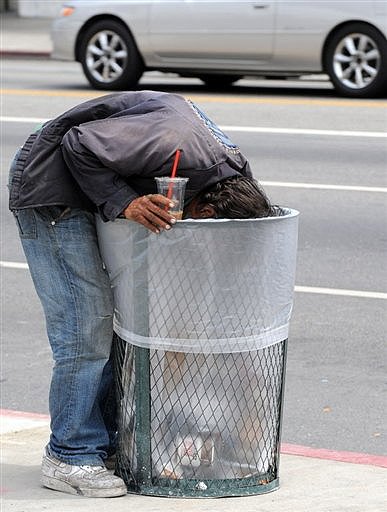
The Pensacola City Council is passing a draconian measure against the homeless. I’ve been so proud of Pensacola, and the citizen response to the homeless, the beds Pensacola provides, the meals the citizens, through a variety of church and social agencies, hand out. Their response is humane, and compassionate.
The homeless are attracted by the moderate climate; they are here in droves. They panhandle at the intersections, they approach you at downtown attractions. They often have dogs. For the most part, they greet people cheerfully or respectfully, and they aren’t aggressive.
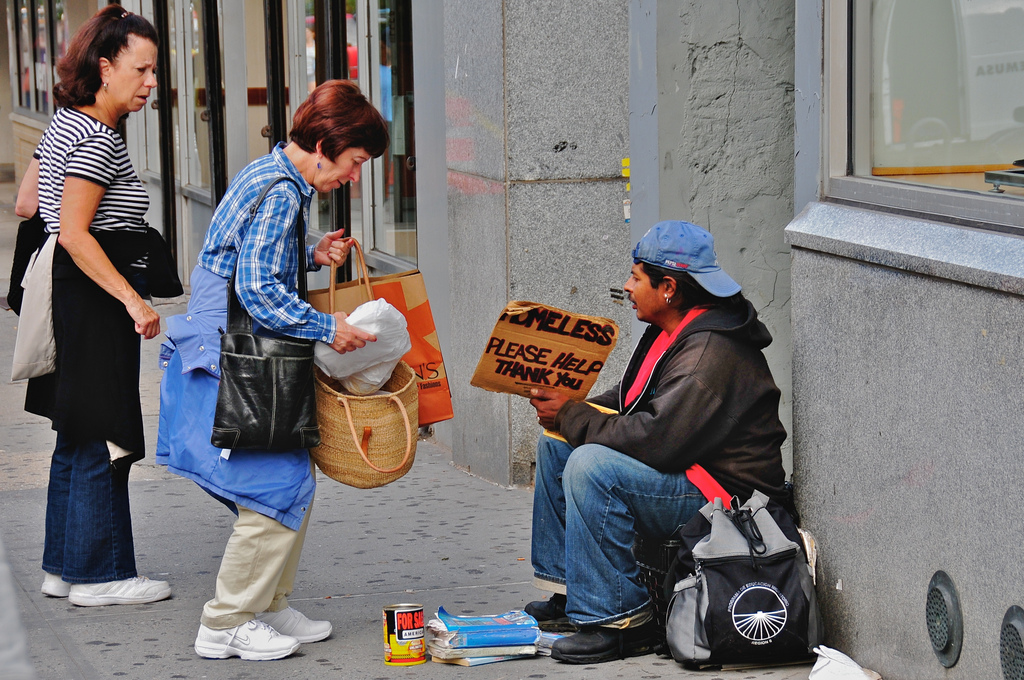
They are, in truth, a kind of plague on Pensacola, but as a traveler, I have brushed my teeth in many a restroom, changed my clothes, even had to rise out a coffee stained outfit before my next flight once – these are things for which the homeless will be charged with an offense against the law. If I were without a place for the night, I might look for a safe public restroom in which to sleep, especially if I had a child with me, as so many women did when I worked with homeless women.
I understand the problem.
But I also understand the desperation of those who have little, and that very little – a public restroom, a safe place to sleep outdoors – are being taken away from them by this statute. It’s heartless, and if there is truly an accounting at the end of our lives, and an afterlife, I fear for those who put additional burdens on the poorest of the poor.
Psalm 37
Of David.
1 Do not fret because of the wicked;
do not be envious of wrongdoers,
2 for they will soon fade like the grass,
and wither like the green herb.
3 Trust in the Lord, and do good;
so you will live in the land, and enjoy security.
4 Take delight in the Lord,
and he will give you the desires of your heart.
5 Commit your way to the Lord;
trust in him, and he will act.
6 He will make your vindication shine like the light,
and the justice of your cause like the noonday.
7 Be still before the Lord, and wait patiently for him;
do not fret over those who prosper in their way,
over those who carry out evil devices.
8 Refrain from anger, and forsake wrath.
Do not fret—it leads only to evil.
9 For the wicked shall be cut off,
but those who wait for the Lord shall inherit the land.
10 Yet a little while, and the wicked will be no more;
though you look diligently for their place, they will not be there.
11 But the meek shall inherit the land,
and delight in abundant prosperity.
12 The wicked plot against the righteous,
and gnash their teeth at them;
13 but the Lord laughs at the wicked,
for he sees that their day is coming.
14 The wicked draw the sword and bend their bows
to bring down the poor and needy,
to kill those who walk uprightly;
15 their sword shall enter their own heart,
and their bows shall be broken.
16 Better is a little that the righteous person has
than the abundance of many wicked.
17 For the arms of the wicked shall be broken,
but the Lord upholds the righteous.
18 The Lord knows the days of the blameless,
and their heritage will abide for ever;
19 they are not put to shame in evil times,
in the days of famine they have abundance.
20 But the wicked perish,
and the enemies of the Lord are like the glory of the pastures;
they vanish—like smoke they vanish away.
21 The wicked borrow, and do not pay back,
but the righteous are generous and keep giving;
22 for those blessed by the Lord shall inherit the land,
but those cursed by him shall be cut off.
23 Our steps* are made firm by the Lord,
when he delights in our* way;
24 though we stumble,* we* shall not fall headlong,
for the Lord holds us* by the hand.
25 I have been young, and now am old,
yet I have not seen the righteous forsaken
or their children begging bread.
26 They are ever giving liberally and lending,
and their children become a blessing.
27 Depart from evil, and do good;
so you shall abide for ever.
28 For the Lord loves justice;
he will not forsake his faithful ones.
The righteous shall be kept safe for ever,
but the children of the wicked shall be cut off.
29 The righteous shall inherit the land,
and live in it for ever.
30 The mouths of the righteous utter wisdom,
and their tongues speak justice.
31 The law of their God is in their hearts;
their steps do not slip.
32 The wicked watch for the righteous,
and seek to kill them.
33 The Lord will not abandon them to their power,
or let them be condemned when they are brought to trial.
34 Wait for the Lord, and keep to his way,
and he will exalt you to inherit the land;
you will look on the destruction of the wicked.
35 I have seen the wicked oppressing,
and towering like a cedar of Lebanon.*
36 Again I* passed by, and they were no more;
though I sought them, they could not be found.
37 Mark the blameless, and behold the upright,
for there is posterity for the peaceable.
38 But transgressors shall be altogether destroyed;
the posterity of the wicked shall be cut off.
39 The salvation of the righteous is from the Lord;
he is their refuge in the time of trouble.
40 The Lord helps them and rescues them;
he rescues them from the wicked, and saves them,
because they take refuge in him.
League of Women Voters
My friends and I had an animated conversation about Florida politics as we sat around the table having a late breakfast at Adonna’s Bakery, down on Palafox in Pensacola. We were explaining how in the last election, if it were not for the voters handbook the League of Women Voters published, explaining exactly what a yes or no vote would mean for each proposed amendment, Florida would be stuck with constitutional amendments voters never intended to approve.

The League of Women Voters cuts through all the baloney and explains the issues, clearly and objectively. Without their clear, cool voice of reason, voters would be blown to and fro by the turbulent election rhetoric which blows at hurricane force during each election in Florida, obscuring the clearest issues. The League is neither liberal nor conservative, but contains members of all parties. Their goal is getting people to vote, and to understand the issue on which people are voting.
So grown up. So mature. So wise and clear sighted. Way too grown up for me, all these years, until, after that conversation, one of these friends sent me an invitation she had received for an upcoming League of Women Voters annual luncheon. As an added attraction, a local NPR reporter would be the speaker.

I hate meetings. It brings out the ADD child in me; I fidget, I wish I were anywhere but in the meeting.
And yet . . . this is a group I have long admired, and I want to support them. So I agreed, and we attended.
It was so much fun. These women – and men, about a fifth of the attendees were men – are people focused on ISSUES. They have study groups for how juveniles in the local area are arrested and treated in our jails and custodial facilities. They have groups which study the impact on the environment of legislative and local government decisions. They go to civic meetings, speak out, and report back to the League. This is a group of people who take positions and recommend actions! Exciting stuff.
You know I am a believer, so I might see things differently from you, or others, but I met some really cool members, people I believe I was meant to meet. One said wonderful things about my son as he practices his profession. There is no Mother’s Day gift on earth that means as much as the words she spoke, praising his ethics and integrity.
An elderly man sitting next to me was leaving this week to go to Heidelberg.
“Are you going for the closing down?” I asked, and told him I had graduated from Heidelberg American high school, lo, these many years ago. “Yes,” he replied, he has family who have lived there many years, and he has been back many times. It led to a discussion around the table, where I discovered two other women who had been in DoDs schools in Germany. What an unexpected blessing!
Every now and then, as you lead your life, you get the feeling you are exactly where you are meant to be at this very moment, and I had that feeling as I left the meeting. I am so thankful for the serendipity that led me there, and for the rush of blessings the meeting provided.
LOL, the group I thought might be stuffy and staid played this wonderful Lady Gaga video:
Rovaer Norway: The Best Wedding Proposal Ever
The groom-to-be was able to rope the entire village into participating in his proposal to his girlfriend. He knocks her socks off – no matter what the highs and lows of the marriage to come, she will never forget this proposal:
Sunrise in Seattle: A Quick Trip
Oops!
Sorry! I intended to keep writing, but as it sometimes can, life just got away from me. I took a quick trip to Seattle to see my Mom on Mother’s Day, stayed with my best friend from college, ummm . . . when I count the number of years we have been friends, I am shocked!
Flying out of Pensacola, we flew over Bayou Texar:
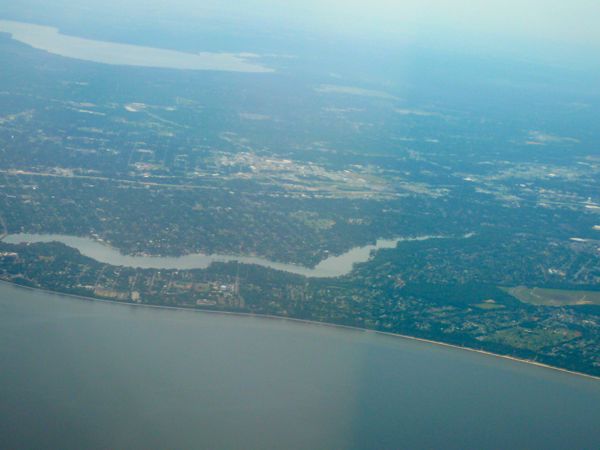
I had a great seat, but the lady next to me sounded like she had terminal pneumonia, so I kept my face toward the window. Everything went smoothly, arrived a little early. Two hassles: I had decided for just a short trip I would use a shoulder bag/suitcase, and even though it was light, it gets heavy lugging it from gate to gate. On the good news side, it sure is a lot easier to travel with just cabin baggage, easy on – easy off.
Second, I just hate it that Seattle has relocated all the rental cars to an off-site location. The buses only stop at one end of the terminal or the other so again, there is a lot of lugging, whether it is wheeled or shoulder. You have no control over when the bus will come or when it will leave. It used to be so easy, just dropping the car off and walking directly into the terminal; now I have to calculate extra time for unknowns in the rental return process, oh aarrgh.
Traffic to north Seattle was horrible, even on a Saturday, it was like a normal work day when all the workers are streaming out of the city. On work days, there are windows when traffic is less, but a Saturday! Aarrgh!
It was not raining, or not much. That was a really good thing. Temperatures were lower than Pensacola. That was a good thing. We had a great Mother’s Day brunch, with my sisters and their hubbies, and Mom and I did some shopping. The next day, more errands and catching up on banking and bureaucracies. Those were all good things.
My good friend and I had time to catch up and – as we are wont to do – analyze and strategize. We spent a good amount of time laughing at ourselves and our dilemmas. We laughed at the problems of aging. We laughed at who we thought we would be (who ever thinks they will get old??) and who we have become. Here is what sunrise over Lake Washington looks like from my friend’s house:

Flight home uneventful; arrived in Atlanta a few minutes early and I was out the door in a flash, running running running down one concourse and up the other to see if I could get on the earlier flight to Pensacola which was leaving in MINUTES! “No, no, not possible” the gate clerk said without even looking up; she was already working on two other women, I am guessing flight attendants trying to get back home. I waited a minute, bushed from the long run and lugging the shoulder luggage, then said “I think I will just go find a barbecue” and the gate attendant said “Wait!” and I thought she was going to tell me where to find the best barbecue, because I had like three hours, but no . . . she was printing me out a ticket! I got the last seat, back, back, way back in between two great big United States Marines, but it was a fun 45 minutes and I was home three hours earlier. All that is really good!
Even though it is not Seattle to Kuwait, I still like to shower after a long flight, I just feel germy! AdventureMan made me a beautiful salad with sauteed Portobello mushrooms on top, oh yummmmm and we delighted to be together again. Woooo HOOOOO, home again 🙂 Sorry to be out of the loop, but when you are one day out, one day back with two days in between, time just swooshes by.
Recent Comments
ExpatAlien on What Country am I Living … intlxpatr on Yellowstone: Old Faithful to C… Michelle on Yellowstone: Old Faithful to C… Cathy on No Grown-Ups in Charge intlxpatr on Waiting for Snow Wikipedia Donate Button

Amazina


Early Voting in Florida


 Here There and Everywhere