This is Your Boston Marathon First Victim – SHAME
This is on AOL News – information on the first victim from the first blast in the Boston Marathon. This is your victim, bomber, an eight year old boy. His mother is also hospitalized. Hang your head in shame.

Martin Richard was standing near the finish line, waiting for his father to complete the grueling Boston Marathon on Monday, when an explosion took his life.
He was 8 years old and in the third grade.
Neighbor Jane Sherman told WCVB that Martin was a typical little boy, who loved to ride his bike and play baseball.
Martin’s mother, Denise, was hospitalized with “grievous injuries,” The Times of London reported. She reportedly underwent surgery late Monday for an injury to her brain.
His 6-year-old sister, a first grader whose name was not made public, lost her leg in the blast, WHDH reported.
The status of his father, William, has not been released. A third child was reportedly unharmed in the explosion.
Boston Marathon Winners, lost in the aftermath of the explosions:

This is the face of America – welcoming all nations and all races to compete in the Boston Marathon. The winners were Ethiopian and Kenyan, and we celebrate their victories, year after year. Their nationality doesn’t concern us, their race is irrelevant, their politics are their own – they are all welcome to race, runners from all nations.
BOSTON — The Kenyans finally face a challenge to their dominance of the Boston Marathon, and it’s from their East African neighbors.
Ethiopia’s Lelisa Desisa took the title in the 117th edition of the world’s oldest marathon on Monday, winning a three-way sprint down Boylston Street to finish in 2 hours, 10 minutes, 22 seconds and snap a string of three consecutive Kenyan victories.
“Here we have a relative newcomer,” said Ethiopia’s Gebregziabher Gebremariam, who finished third. “Everything changes.”
In just his second race at the 26.2-mile distance, Desisa finished 5 seconds ahead of Kenya’s Micah Kogo to earn $150,000 and the traditional olive wreath. American Jason Hartmann finished fourth for the second year in a row.
“It was more of a tactical race, the Ethiopian versus the Kenyans. That fight played out very well,” defending champion Wesley Korir, a Kenyan citizen and U.S. resident, said after finishing fifth.
Undoing Public Disclosure, One Small Move at a Time
I am appalled. I have scoured the TV News, have looked through newspapers – not a word! I steam at corruption in Kuwait and Qatar and Saudi Arabia, and then a small NPR Report on yesterday’s news alerts me to a measure, passed in Congress, WITHOUT A WHISPER!
(oh? I was shouting? Sorry. Carried away. Outraged) You can access the NPR station and listen to the entire repulsive report by clicking here.
Congress Repeals Financial Disclosure Requirements For Senior U.S. Officials
by EYDER PERALTA

A tourist takes cover underneath an umbrella while snapping a photo of the U.S. Capitol on March 6, 2013 in Washington, DC.
Chip Somodevilla/Getty Images
Joining the Senate, the House of Representatives approved a measure today that repeals a requirement that top government officials post financial disclosures on the Internet.
The House, like the Senate, acted quietly without a vote. Instead, they sent the measure to the president’s desk by unanimous consent.
The provision was part of the Stop Trading on Congressional Knowledge Act (Stock), which became law in March of 2012. The act was intended to stop members of congress from profiting from nonpublic information.
As NPR’s Tamara Keith reported, at the time, Sen. Joe Lieberman called the law “the most significant congressional ethics reform legislation to pass Congress in at least five years.”
“That law mainly addressed conflict-of-interest policies for members of Congress and their staffs, but it also included a requirement that the financial disclosure forms filed by some 28,000 high-ranking federal employees be posted online.
“While those forms are public records, they must be requested individually from employing agencies. The Stock Act envisions online posting first on agency sites and later in a central, searchable database.
“The posting requirement was delayed three times out of concerns about the potential for identity theft and other crimes against career employees, as well as security risks to the government.”
The Sunlight Foundation, which advocates for a more open government,called today’s repeal an “epic failure.”
The foundation explained that instead of addressing specific security concerns, Congress has acted broadly.
For instance, they note, the president, vice president, members of Congress, congressional candidates and individuals subject to Senate confirmation are still required to make their financial disclosures public. But the change in law now makes the posting of those disclosures on the Internet optional.
Sunlight adds:
“Not only does the change undermine the intent of the original bill to ensure government insiders are not profiting from non-public information (if anyone thinks high level congressional staffers don’t have as much or more insider information than their bosses, they should spend some time on Capitol Hill) but it sets an extraordinarily dangerous precedent suggesting that any risks stem not from information being public but from public information being online.
“Are we going to return to the days when the public can use the Internet to research everything exceptwhat their government is doing? Will Congress, in its twisted wisdom, decide that information is public if journalists, academics, advocates and citizens are forced to dig through file cabinets in basements in Washington, DC to find it? And does anyone think that makes us safer?
“As my colleague Tom Lee noted, ‘This approach is known as ‘security through obscurity.’ Essentially, the idea is that rather than fixing a system’s flaws, you can just make the system opaque or unusable or unpopular enough that those flaws never surface.'”
Update at 5:35 p.m. ET. 30 Seconds:
NPR’s Tamara Keith tells us the House procedure took exactly 30 seconds.
Correction at 5:29 p.m. ET. An earlier version of his post said the House followed the Senate. In fact, the Senate voted Thursday and the House voted today.
Shadrach, Meshach and Abednigo Survive the Test of Fire
Some of the stories you come across in the Bible are so horrifying – and so human – that they still have a compelling immediacy. People do the most horrible things to one another, it mystifies me. This King, Nebuchadnezzar, is so incensed that his Jewish bureaucrats won’t bow down and worship his statue that he orders them cast into a furnace, which he heats seven times hotter than normal. That’s pretty angry!
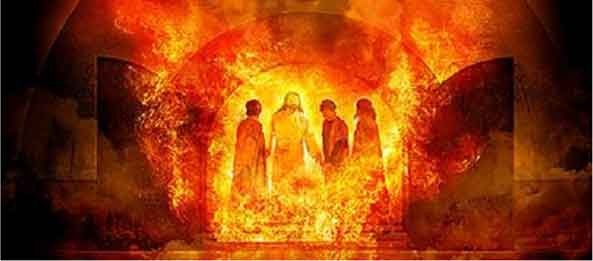
Daniel 3:19-30
19 Then Nebuchadnezzar was so filled with rage against Shadrach, Meshach, and Abednego that his face was distorted. He ordered the furnace to be heated up seven times more than was customary, 20and ordered some of the strongest guards in his army to bind Shadrach, Meshach, and Abednego and to throw them into the furnace of blazing fire. 21So the men were bound, still wearing their tunics,* their trousers,* their hats, and their other garments, and they were thrown into the furnace of blazing fire.
22Because the king’s command was urgent and the furnace was so overheated, the raging flames killed the men who lifted Shadrach, Meshach, and Abednego. 23But the three men, Shadrach, Meshach, and Abednego, fell down, bound, into the furnace of blazing fire.
24 Then King Nebuchadnezzar was astonished and rose up quickly. He said to his counsellors, ‘Was it not three men that we threw bound into the fire?’ They answered the king, ‘True, O king.’
25He replied, ‘But I see four men unbound, walking in the middle of the fire, and they are not hurt; and the fourth has the appearance of a god.’* 26Nebuchadnezzar then approached the door of the furnace of blazing fire and said, ‘Shadrach, Meshach, and Abednego, servants of the Most High God, come out! Come here!’
So Shadrach, Meshach, and Abednego came out from the fire. 27And the satraps, the prefects, the governors, and the king’s counsellors gathered together and saw that the fire had not had any power over the bodies of those men; the hair of their heads was not singed, their tunics* were not harmed, and not even the smell of fire came from them.
28Nebuchadnezzar said, ‘Blessed be the God of Shadrach, Meshach, and Abednego, who has sent his angel and delivered his servants who trusted in him. They disobeyed the king’s command and yielded up their bodies rather than serve and worship any god except their own God. 29Therefore I make a decree: Any people, nation, or language that utters blasphemy against the God of Shadrach, Meshach, and Abednego shall be torn limb from limb, and their houses laid in ruins; for there is no other god who is able to deliver in this way.’ 30Then the king promoted Shadrach, Meshach, and Abednego in the province of Babylon.
When I read this, I think of the recent legislation proposed in Kuwait against insulting God or his prophets. Let men insult. Let them build their gods, their statures, let them pursue their little gods of vanity, power and wealth. The one true God laughs. He holds all the true power. He doesn’t need our protection; he is in charge.
In Florida, some friends complain about “the law that says our kids can’t pray in school.” There is no law that says kids can’t pray in school. Kids pray in school all the time! I did, specially when I had a really hard test I hadn’t prepared adequately for 🙂 What the law says is that no one can make all pray together, using the same words, as we did at one time. It’s not such a bad thing; even as Christians, we don’t all share the same beliefs. You might not want your children praying a prayer I might compose 🙂 because I might have a dogmatic belief a little different from your own. Our job is to teach our children to pray; the Holy Spirit will be with them, and put the words in their hearts.
Mom Hugs; Babies Brains Get Bigger :-)
I saw this on one of the parenting posts on AOL and loved it. Hug your babies, yes, hug them and hug them again! Make their brains grow BIG and strong!

The Prophet Jeremiah Ponders the Ways of the Wicked
Today the prophet Jeremiah sounds like a modern man – asking why, when we know what is good and what is bad, that some choose bad, and seem to do just fine – even better than the rest of us?
From the Holy Week readings in The Lectionary:
Jeremiah 12:1-16
12You will be in the right, O Lord,
when I lay charges against you;
but let me put my case to you.
Why does the way of the guilty prosper?
Why do all who are treacherous thrive?
2 You plant them, and they take root;
they grow and bring forth fruit;
you are near in their mouths
yet far from their hearts.
3 But you, O Lord, know me;
You see me and test me—my heart is with you.
Pull them out like sheep for the slaughter,
and set them apart for the day of slaughter.
4 How long will the land mourn,
and the grass of every field wither?
For the wickedness of those who live in it
the animals and the birds are swept away,
and because people said, ‘He is blind to our ways.’*
Strangers in America; No American Friends
This article is so sad, and I have also seen it the other way around, hoardes of American students abroad, hanging out with other Americans, then other ex-pats, and lastly, the local inhabitants. It IS hard. The differences can seem overwhelming. (That is my very first blog entry, and it had to do with the risks you expose yourself to when you open yourself to a cross cultural relationship 🙂 ) Overcoming those differences makes life so much richer.
Thank you, Professor John Mueller, for forwarding this fascinating article:
Strangers in a Strange Land
March 4, 2013 – 3:00am
By
Elizabeth Redden
In interviews with 40 international students at four research universities, Chris R. Glass was struck by the relative absence of Americans from his subjects’ stories. The interviewees, half undergraduate and half graduate students, described close relationships with their international peers, including those coming from countries other than their own. But while they frequently characterized their American classmates as friendly or helpful, only rarely did they seem to play a significant role in their lives.
“Only one student has described a significant relationship with a U.S. peer and that student was from Western Europe and that peer was her boyfriend,” said Glass, an assistant professor of educational foundations and leadership at Old Dominion University. “That to me is a striking omission from the stories that they’re telling.”
As the number of international students at U.S. colleges continues to rise — and as the mix of international students has shifted in favor of undergraduates — there are increasing concerns as to how well they’re being integrated into campus life. There have been periodic reports of racist incidents and – overt discrimination aside – there is the question of disconnection raised by Glass’s research. Another study authored by Elisabeth Gareis, a communication studies scholar at Baruch College, found that nearly 40 percent of international students reported having no close American friends. In explanation, many of the students cited “internal factors” such as limited language proficiency or shyness, but they also described a perceived lack of interest on the part of American students.
At the recent Association of International Education Administrators annual conference, a roundtable session on the integration of international students (co-moderated by this Inside Higher Edreporter) drew a standing-room only crowd, as attendees discussed the difficulties they’ve encountered in encouraging and equipping American and international students to (productively) interact. Domestic students are not necessarily cross-culturally competent – a point made lucidly when one audience member described the tendency of American study abroad students to request compatriots as roommates. At the same time, international students may not always be interested in initiating contact. An audience member from a Midwestern institution shared his observation that a fair number of students from China – a rapidly growing and by far the biggest group of international undergraduates on U.S. campuses – seem to be more interested in interacting with one another than with their American classmates.
Yet, even those students who are interested may find social structures on campus to be exclusionary or mystifying or both. On American campuses dominated by fraternity and sorority life, or obsession over intercollegiate athletics, or where everyone seems to have gone to the same high school, international students may feel foreign in ways that go beyond their nationality. “The lack of interaction is as much due to individual attributes as it is to social context,” said Glass, who is conducting his qualitative research in collaboration with Rachawan Wongtrirat, the assistant director of Old Dominion’s international initiatives office. Given the natural tendency of people to gravitate toward others who are like them (what social psychologists call the “similarity-attraction effect”), “are universities creating contexts where these interactions can happen?” he asked.
In interviews with Inside Higher Ed, researchers and professionals in international education spoke about the challenges in this regard and their efforts to create opportunities for meaningful interactions between domestic and international students through programming. It seems that many universities have a long way to go in living up to the promise presented by increasing numbers of international undergraduates – the promise being increased opportunities for sustained and meaningful cross-cultural interactions in classrooms, dorm rooms, and so forth.
‘Encounters With Difference That Make a Difference’
“It’s a combination of factors that have made this issue so salient,” said Larry A. Braskamp, the president of the Global Perspective Institute and a professor emeritus at Loyola University Chicago. “One is there are just a lot more international students on campus now, particularly at institutions that have not historically had a lot. The second is that everybody is interested in global learning: we know we need to prepare students to be more globally competent. And the third is that these students represent on some campuses a fairly significant contribution to the bottom line. Most of these students pay full tuition and as a result a lot of institutions see them as one way to balance the budget. So they have to make sure that the retention rate is high; they have to develop a good reputation so that other students will come.”
In Braskamp’s research, he’s found that entering American freshmen do not tend to think complexly, are not comfortable amidst difference and do not typically have friends who are unlike them. “We’ve said, O.K., the implication of all this is we need to create ‘encounters with difference that make a difference,’ ” he said. “I’ve thought of it as students being on a journey: they start with rather simplistic views of themselves, of their social interactions and the ways in which they understand the world around them. So in some ways what we need to do in college is increasingly provide them opportunities for encounters to get them to rethink who they are, how they think, and how they relate to others. In many ways, international students coming on campus is an opportunity for students, faculty members, and international administrators to take advantage of that difference and that diversity. But it’s really hard work.”
Such encounters can be curricular, co-curricular or informal: in fact, Braskamp’s research suggests that informal encounters such as discussion of current events with other students may be the most impactful. Still, he emphasized that there’s much more that can be done in the classroom to facilitate such encounters. In a sample of about 48,000 undergraduates at more than 140 four-year colleges, he found that about one-third report never having taken a course that “focuses on significant global/international issues or problems” or that “included opportunities for intensive dialogue among students with different backgrounds and beliefs.”
As one audience member at the AIEA conference said, unless faculty members are on board, all the student services programs in the world won’t be enough: “Students really look to their professors to give them direction and advice and deepen their conversations, so if faculty were taught to embrace these conversations about ‘difference’ and ‘other’ and ‘cross-cultural competencies’ and international challenges in engineering, then those conversations would take on meaning for the students,” she said. Participants in the session described the value of professional development programs such as Duke University’s Intercultural Skills Development Program for faculty and staff.
Case Western Reserve University is another institution that has begun to offer training designed to help professors better serve international students and integrate them into the classroom: according to Molly Watkins, the university’s director of international affairs, the first two trainings focused on Chinese students and attracted 60 to 70 faculty members each. “There’s obviously a need,” Watkins said.
Opportunities for Meaningful Interaction
At the AIEA session, audience members discussed co-curricular strategies such as peer mentoring or “buddy” programs, living-learning communities and other residence life initiatives, and more robust orientations for international students. Many universities have some iteration of one or all of the above: Mount Holyoke College, for example, has a new “Global Partners” program that pairs returning study abroad students with new international students and holds “re-orientation” events for international students during the academic year. The University of Iowa is launching a new required online orientation program that will begin in the summer before the students arrive and continue with five to eight small-group sessions throughout the fall semester.
The University of Arkansas at Fayetteville, which had 611 international undergraduates last fall, has a host of programs with alliterative names like Campus Cousins, Friendship Families and Global Greeks, which pair international students with American students, local families and fraternity or sorority members, respectively. Wesleyan University is “trying to capitalize on the idea of roommates,” hosting a dinner for first-year international students and their roommates at the beginning of the fall semester, according to Alice Hadler, the associate dean for international student affairs and an instructor of English. St. Norbert College, a Roman Catholic institution in Wisconsin, has a living-learning community with 25 international and domestic students (international students are the resident advisers) and a 10-member interfaith group consisting of Muslim students from Saudi Arabia and domestic Christian students. Initiatives such as these reach only a small number of students, concedes Marcy O’Malley, St. Norbert’s director of international programming, but, she said, “What I’ve seen work is one-on-one.”
“Instead of superficial contact with a lot of people, do more meaningful contact with a smaller number, and let them be your ambassadors to the larger student body,” she said.
Christopher J. Viers, the associate vice president for international services at Indiana University at Bloomington, has used theInternational Student Barometer to survey students about their experiences, and cited the surprising finding that international students rate their relationships with American students as those that are most important to them (as compared to relationships with other students from their home country or international students in general). “In looking at the feedback that came in we thought very critically about what we could do to help facilitate opportunities for international and domestic students to interact in meaningful ways to hopefully have conversations and potentially build relationships,” Viers said.
In talking with colleagues across the country, Viers said he’s come to the conclusion that “too often our programming is limited to the one-time, big, annual event.” This event, which often takes the form of an international student fair or show, can be good in celebrating international students’ contributions to campus and perhaps can help a domestic student learn a bit about another culture or cultures, but, he said, “opportunities for meaningful transformative learning are pretty limited.” As such, he continued, “We work hard to provide the big annual event that helps to showcase the contributions of our students and the diversity of the population with the excitement and food and entertainment, but not a week goes by when we’re not putting together, hand-in-hand with students, small, highly interactive opportunities for domestic and international students to get together. We run a weekly noon concert series, for example, where students from our Jacobs School of Music perform classical music or folk music from their home country and then there’s a free lunch that’s provided. That regularly gets people who have an interest in music together.”
“It’s absolutely essential as colleges are putting in place plans to actively grow international enrollment that appropriate levels of service and support are put in place, and then the students have responsibilities as well,” Viers said. “So much of just about anything in life in terms of what you gain from an experience has much to do with what you put into it yourself. This is where at times perhaps those of us in the field of international education are not vocal about some of the very real, very significant additional hurdles and challenges that students from other countries face while they’re here: the enormous pressures that they’re under to succeed academically and to move as quickly as possible though a program. It’s very expensive to come to the U.S. to pursue an undergraduate degree. There are often major expectations from family members and others; there’s a lot of pressure to succeed and do well.” And then there are the extra academic challenges inherent in pursuing a degree in a non-native language. Is it any wonder that not every student will want to come out for mixers and “cultural coffee hours”?
“I think that sometimes we underestimate that pressure, and apply a different kind of meaning to the experience that we perceive a student is having,” Viers said.
The Orphanmaster by Jean Zimmerman
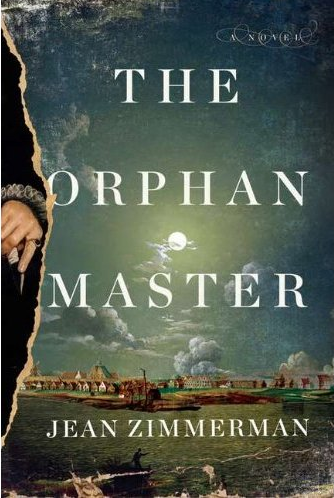
The Orphanmaster is another National Public Radio recommendation for people who like historical fiction, which I really do. I remember being a kid, and yawning my way through history, memorizing dates, it all seemed so irrelevant. Discovering historical fiction was like a light going on in a dark room for me – clever authors have found ways to illuminate events otherwise beyond my comprehension or worse – events I have a hard time making myself care about.
Suddenly, the times are right now and relevant when the right author handles it, and it isn’t always easy to get it right. I have a few very favorite authors – Philippa Gregory, Zoe Oldenberg, Sharon Kay Penman, Jean Plaidy, Edward Rutherford – authors who do a lot of research before they ever sit down to write a novel, and from whom you can learn a lot. They get the nature of the dialogue right, they get the customs, traditions and mind-sets right, and they get it right when a person is born ahead of his or her time in terms of the challenges they face.
I couldn’t put Orphanmaster down. It has to do with an era in American history which barely gets a paragraph in many history books, when the Dutch had a colony on what is now Manhattan Island, and trading posts up what is now the Hudson, into what is now New York. It was New Amsterdam, and many of the street names in modern day New York reflect their Dutch origins.
The Orphanmaster‘s main character is not the Orphanmaster. He is a supporting character to the main character to a girl orphaned at 15, daughter of a Dutch man and wife who were not rich, but who did all right. They had a business, they traded, Blandine learned many things before they died, leaving her an orphan. She was determined to be what would now be an “emancipated minor,” but until she turned 16, she was semi-legally under the responsibility of the Orphanmaster, who sort of kept hands off and sort of watched out for Blandine. She lives on her own and is a successful trader, in her early twenties. She is also a very clean housekeeper, and has plans to grow her trading business, and has a serious suitor she intends to marry.

Orphans start disappearing, and we discover a monster, a witiga, is on the loose. Blandine, and her new friend Drummond, are intrigued and disturbed by the disappearance of orphans, and the bloody, ritualistic mutilations of the orphans by the legendary Witiga.
It’s well written. You want to keep reading and keep reading because you want to know how it ends and how they are able to solve the problem.
It’s not one of the best books I’ve ever read for one reason – the author had the main characters talk as if they were modern people, using modern language, like ‘stuff.’ There was great openness between Blandine and her male friends. Blandine made all her own decisions, made her own arrangements and had full freedom, going where she wanted, doing what she wanted. The author explains it as part of the Dutch system, where some women had a lot of freedom, but I have a really hard time believing in a Dutch colony in the late 1600’s that any woman had the freedom Blandine had. There are parts of the novel where I am reading fast because I want to know what happens next and I get stopped up because Blandine says or does – or even THINKS – in a way that is very modern, and I just can’t buy it.
We are who we are. There are many smart women. Most women through the centuries have had to learn to maneuver in whatever societal constrictions they have been allowed. I suspect there were a lot of societal restrictions in New Amsterdam, and Blandine’s freedom to take off with only her male servant, to run off and live with a man not her husband (even though they are both escaping death sentences), to live an unescorted life . . . I just have a hard time buying it. I know how restricted women are even to day. Four hundred years ago, women were more restricted, and worse, we bought into it. We didn’t have a lot of choices.
So I like this book, and I think there is a lot of information that is true of the settlement of New Amsterdam, I loved the geography and the physical descriptions, I loved the maps included, I loved the descriptions of food and living conditions. I do not buy the heroine, not for one minute. I do not believe, in that historical context, she would have been possible.
Christ Church Antique Fair 2013
More people attending the Preview, more tickets sold, more people buying up antique linens, jewelry and silver . . . I think we’ve turned a corner on the economy. People seem to be feeling more optimistic, seem to be less concerned about buying a small luxury 🙂 I never see any pearling boxes, or Arabic calligraphy . . .





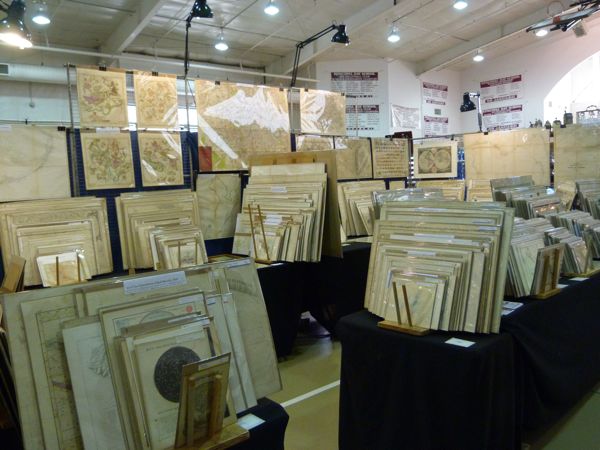
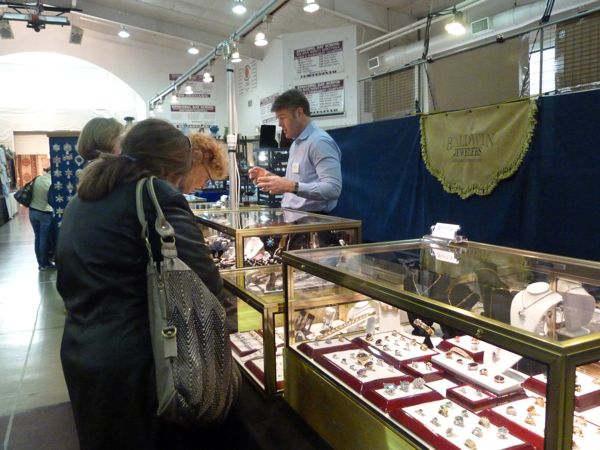
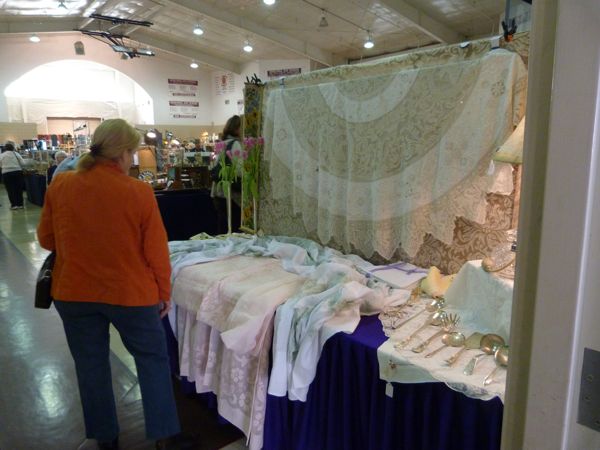
Christ Church has sponsored this Antique Fair for 56 years now; it is well-respected and well-attended by antique-loving Pensacolians. It raises a majority of the money the church uses to support charities in the communities, and all the labor is lovingly performed by the Episcopal Church Women, who toil and prepare for this event for months. It is open today (Saturday) until five, and from 11 – 3 on Sunday, February 3rd. Admission is $7.
Manohar Lal Sharma: “Until today I have not seen a single incident or example of rape with a respected lady”
If you are a follower of my blog, you know I am not a person of violent tendencies. This morning, however, I am so thankful to be half a world away from the scum lawyer who would make these statements about a woman so brutally raped by six men that she died of horrendous internal injuries.
I am fighting instincts which would wish him ill. When he accuses rape victims of being responsible for their attacks, it pushes me over the line.
A person should be free to take a bus without fear of assault. And I suspect that there are also male victims, too ashamed to come forward.

Manohar Lal Sharma, lawyer for one of the accused, speaks to journalists outside the Saket district court complex in New Delhi, India, on Jan. 10. Police badly beat the five suspects arrested in the brutal gang rape and killing of a young woman on a New Delhi bus, Sharma said Thursday, accusing authorities of tampering with evidence in the case that has transfixed India. (AP Photo/Saurabh Das)
As the trial of the men charged with the brutal gang rape and murder of a woman in New Delhi last month gets under way this week, a lawyer for some of the accused suggests the victim was partly to blame for the attack.
Lawyer Manohar Lal Sharma said his clients were innocent and implied that the 23-year-old student must have been in some way responsible for the horrific crime, Bloomberg reports.
“Until today I have not seen a single incident or example of rape with a respected lady,” Sharma said. “Even an underworld don would not like to touch a girl with respect.”
The lawyer’s controversial comments are sure to anger victim’s advocates, especially in light of somewhat similar sentiments proclaimed by Indian guru Asaram Bapu.
Last week Bapu said the victim should have “taken God’s name and could have held the hand of one of the men and said I consider you as my brother and should have said to the other two ‘Brother I am helpless, you are my brother, my religious brother,'” according to the Hindustan Times.
It is worth noting, however, that a representative for Bapu later said the media distorted the guru’s remarks.
“[He] never made such statements. He just asked his women followers to avoid such situation anyhow,” the rep told Asian News International. “He was only suggesting that women should try their level-best to come out from such situation by using diplomatic ways.”
News outlet The Week compiled a list of several other statements that seem to place blame on the rape victim. The compilation includes a comment from Andhra Pradesh Congress Committee president Botsa Satyanarayana, who suggested the victim stayed out too late.
“Do we roam in streets at midnight as we got Independence at midnight?” Satyanarayana said. “She should have assessed the situation before getting into the bus.”
The attack, which occurred on the evening of Dec. 16, has shocked Indian residents and prompted violent protests in cities across the country, CNN notes.
Sharma, who stepped in to help defend the suspects when many other lawyers refused to represent them, also claimed his clients had been tortured by police while in jail, Time reports.
The main suspect in the trial, the bus driver, will plead not guilty according to Reuters, as will the driver and a third suspect he represents.
“We will plead not guilty. We want this to go to trial,” Sharma said. “We are only hearing what the police are saying. This is manipulated evidence. It’s all on the basis of hearsay and presumption.
French Intercede to Save Mali
Heard yesterday on NPR that France was stepping up to the plate on Mali, found the story on BBC this morning . . . it isn’t easy. It’s like people in the US don’t get news of countries like Mali unless they really seek it out. You can find more stories on Mali and the Tuareg / Al Qaeda alliance tormenting Northern Mali at the BBC link.


The Ansar al Din is imposing in Mali the kind of Islam that the Taliban imposed in Afghanistan – an Islam which forbids music, forbids women to participate in public life, enforced by a group of ignorant, uneducated thugs with weapons. Everything Ansar al Din stands for is contrary to the true nature of Islam.
Go France!
French troops continue operation against Mali Islamists
Mali: Divided nation
French Defence Minister Jean-Yves Le Drian said army units had attacked a column of rebels heading towards the central town of Mopti.
He also revealed that a French pilot had been killed in fighting on Friday.
The French troops deployed on Friday after Mali’s army lost control of a strategically important town.
Mali’s government said its forces had recaptured the town, Konna, after the air strikes, but it was not clear if all Islamist fighters had left the area.
‘Terrorist state’
Armed groups, some linked to al-Qaeda, took control of the whole of northern Mali in April.
They have sought to enforce an extreme interpretation of Islamic law in the area.
Regional and Western governments have expressed growing concern about the security threat from extremists and organised crime.
Mr Le Drian said on Saturday that hundreds of French troops were involved in the military operation in Mali.
The minister said Paris had decided to act urgently to stop the Islamist offensive, which threatened to create “a terrorist state at the doorstep of France and Europe”.
He also revealed that a French pilot was killed in Friday’s fighting – during an air raid to support Mali’s ground troops in the battle for Konna.
“During this intense combat, one of our pilots… was fatally wounded,” the minister said.
Speaking on Friday, French President Francois Hollande said the intervention complied with international law and had been agreed with Malian interim President Dioncounda Traore.
It would last “as long as necessary”, Mr Hollande said.
French officials gave few operational details.
Residents in Mopti, just south of Konna, told the BBC they had seen French troops helping Malian forces prepare for a counter-offensive against the Islamists.
Mr Traore declared a state of emergency across Mali, which he said would remain in place for an initial period of 10 days.
He used a televised address to call on Malians to unite and “free every inch” of the country.
‘Crusader intervention’
The west African bloc Ecowas said it was authorising the immediate deployment of troops to Mali “to help the Malian army defend its territorial integrity”.
UN Secretary-General Ban Ki-moon says the situation in Mali is becoming increasingly volatile
The UN had previously approved plans to send some 3,000 African troops to Mali to recapture the north if no political solution could be found, but that intervention was not expected to happen until September.
French Foreign Minister Laurent Fabius said the aim of the operation was to stop Islamist militants advancing any further.
It was not clear how far the French would go in helping Mali’s government retake territory in the north.
At least seven French hostages are currently being held in the region, and Mr Fabius said France would “do everything” to save them.
A spokesman for al-Qaeda in the Islamic Maghreb (AQIM) said he considered the French operation a “Crusader intervention”, and told France it would be “would be digging the tombs of [its] sons” if the operation continued, according to the Mauritania-based Sahara Media website.
France ruled Mali as a colony until 1960.
This chart is from a Blog called The Moor Next Door:

Recent Comments
intlxpatr on Shampoo Ginger tigerbutterya0c5ff1d… on Shampoo Ginger intlxpatr on British Soldier Kidnapped, Esc… John on British Soldier Kidnapped, Esc… intlxpatr on British Soldier Kidnapped, Esc… Wikipedia Donate Button

Amazina


Early Voting in Florida


 Here There and Everywhere