Emergency Message for U.S Citizens – Demonstration Notice 13-2011
Emergency Message for U.S Citizens � Demonstration Notice 13-2011
September 14, 2011
Please circulate the following message without additions or omissions
immediately to all U.S. citizens within your area of responsibility.
Youth activist groups have called for a demonstration on Friday, September 16,
2011 in Kuwait City during the early evening hours at Safat Square and possibly
Determination Square located opposite the National Assembly. An increased
police and security presence is expected throughout the day in and around the
capital.
Spontaneous and planned demonstrations take place in Kuwait from time to time in
response to world events or local developments. At times, even demonstrations
intended to be peaceful can turn confrontational and possibly escalate into
violence. Do not let curiosity get the best of you; avoid the areas of
demonstrations and exercise caution if within the vicinity of any large
gatherings. Please stay current with media coverage of local events, be aware
of your surroundings, and practice personal security awareness at all times.
For the latest security information, U.S. citizens living and traveling abroad
should regularly monitor the Department of State’s Bureau of Consular Affairs
Internet website, where the current Worldwide Caution, Travel Warnings, Travel
Alerts, as well as the Country Specific Information for Kuwait can be found.
Up-to-date information on security can also be obtained by calling
1-888-407-4747 toll-free in the United States and Canada or, for callers outside
the United States and Canada, a regular toll line at 1-202-501-4444. These
numbers are available from 8:00 a.m. to 8:00 p.m. Eastern Time, Monday through
Friday (except U.S. federal holidays). You can also download our free Smart
Traveler App for travel information at your fingertips and follow us on Twitter
and the Bureau of Consular Affairs page on Facebook as well.
The U.S. Embassy is located at Al-Masjid Al-Aqsa Street, Block 6, Plot 14,
Bayan, Kuwait. If you are a U.S. citizen in need of emergency assistance in
Kuwait, you may reach the U.S. Embassy by calling +965-2259-1001 and requesting
the duty officer.
U.S. citizens living or traveling in Kuwait are encouraged to enroll in the
Department�s Smart Traveler Enrollment Program (STEP) so that they can obtain
updated information on travel and security. U.S. citizens without internet
access may enroll directly with the nearest U.S. Embassy or Consulate. By
enrolling, U.S. citizens make it easier for the Embassy or Consulate to contact
them in case of emergency. For additional information, please refer to “A Safe
Trip Abroad”.
This message may be accessed on the Embassy website, http://kuwait.usembassy.gov
Please note that the Consular Section is closed for U.S. and most local
holidays. The current holiday schedule for 2011 is posted on
http://kuwait.usembassy.gov/holidays.html
Neighbors Key to Survival
“Americans don’t know their neighbors” my dinner guest said, in response to my asking him what surprises him most in his visit to this country. “In my country, we all know our neighbors. It’s important to know your neighbors.”
I agreed, and quoted him this article supporting his view that I heard on National Public Radio, one of those ideas I hear so often on NPR because they cover news other news sources ignore.
Below is just a portion of the story, which you can read in whole by clicking on this blue type. Even better, if you want, you can listed to the story yourself by clicking on the “Listen to the Story: All things Considered” button on this same page.

When Hurricane Katrina struck in 2005, one victim was political scientist Daniel Aldrich. He had just moved to New Orleans. Late one August night, there was a knock on the door.
“It was a neighbor who knew that we had no idea of the realities of the Gulf Coast life,” said Aldrich, who is now a political scientist at Purdue University in Indiana. He “knocked on our door very late at night, around midnight on Saturday night, and said, ‘Look, you’ve got small kids — you should really leave.’ ”
The knock on the door was to prove prophetic. It changed the course of Aldrich’s research and, in turn, is changing the way many experts now think about disaster preparedness.
Officials in New Orleans that Saturday night had not yet ordered an evacuation, but Aldrich trusted the neighbor who knocked on his door. He bundled his family into a car and drove to Houston.
“Without that information we never would’ve left,” Aldrich said. I think we would’ve been trapped.”
In fact, by the time people were told to leave, it was too late and thousands of people got stuck.
Because of his own experience in Katrina, Aldrich started thinking about how neighbors help one another during disasters. He decided to visit disaster sites around the world, looking for data.
Aldrich’s findings show that ambulances and firetrucks and government aid are not the principal ways most people survive during — and recover after — a disaster. His data suggest that while official help is useful — in clearing the water and getting the power back on in a place such as New Orleans after Katrina, for example — government interventions cannot bring neighborhoods back, and most emergency responders take far too long to get to the scene of a disaster to save many lives. Rather, it is the personal ties among members of a community that determine survival during a disaster, and recovery in its aftermath.
When Aldrich visited villages in India hit by the giant 2004 tsunami, he found that villagers who fared best after the disaster weren’t those with the most money, or the most power. They were people who knew lots of other people — the most socially connected individuals. In other words, if you want to predict who will do well after a disaster, you look for faces that keep showing up at all the weddings and funerals.
“Those individuals who had been more involved in local festivals, funerals and weddings, those were individuals who were tied into the community, they knew who to go to, they knew how to find someone who could help them get aid,” Aldrich says.
My visiting guest was from Lebanon, where neighbors have relied on one another for years as civil unrest rocks the country.
“I am guessing we move more often than your family and friends,” I ventured. “You are right, it is harder to establish long-lasting neighborly relations here where people come and go more often.”
Actually, we have settled in a fairly established neighborhood, where many people around us have lived for years and years, some all their lives. But we have only been here a year, and it takes time to build strong neighborly relations. But we are aware that connecting with our neighbors and staying connected is important in a part of the country vulnerable to life-threatening hurricanes and other natural emergencies.
You can listen to the entire report in 6 minutes and 3 seconds here.
Major Pettigrew’s Last Stand
 Major Pettigrew’s Last Stand by Helen Simonson
My rating: 5 of 5 stars
I loved this book. It follows all the themes I love – how convention blinds us, how our cultural assumptions make us unconsciously snobbish and leads us to hideous behavior, it is very cultural and also very cross-cultural. Major Pettrigrew is widowed, and his grief has made him old. At the beginning of the book, his life seems very dull and grey. It lightens as his friendship sparks with Mrs. Ali, a widow who runs a small convenience market in his small English village. They both love reading (of course I love that part!) and they talk books, and sparks of warmth kindle.
This book is also very uncomfortable for me, as Roger has a grown son who bullies his father. The book isn’t just cross-cultural, it’s cross-generational, and I see glimpses of myself in the boorish behavior of his son toward his father.
There are some amusing scenes, some wickedly insightful village-interaction scenes, some painfully introspective moments, and some truly grand moments when everything becomes clear and a person acts. For me, there was an added bonus in that as I read Mrs. Ali’s words, I could hear them so clearly, and she spoke in the voice of a dear friend. I could picture her, because I could see the sweet smiling face of a dear friend. It was like having a great visit.
<a href=
“We Have Lost Our Moral Compass”
There is something I need to confess, as I print my friend Amer’s most recent editorial from the Arab Times in Kuwait.
Amer is writing about the great loss of civility in Kuwait, a country where trade routes crossed, merchants ruled and differences were tolerated. While I lived in Kuwait, I was horrified at the flaunting of traffic rules and the reckless endangerment of the population because some people believed the laws did not apply to them.
Amer, with a few differences specific to Islam, your editorial, sadly, could be equally well applied many places in the United States today, where some people believe they should not have to patiently stand in line, or obey the traffic rules, or protect the quality of the food supplies or water sources that provide for the communities.
When we fail to restrain ourselves and our selfish greediness, we harm others – but we also harm ourselves. We damage the fabric of society that protects us from the chaos of anarchy. Well said, Amer.
We Have Lost Our Moral Compass
EVERY Ramadan we are inundated by articles and features highlighting the proper means of fasting, alms-giving, praying and other essential pillars of Islam. I am not going to do that.
Most citizens are decent, God-fearing individuals trying to improve their lot and the lives of their loved ones. I believe the Kuwaiti character in essence is one of integrity and generosity — we are a charitable people, evident by the Ramadan dinners we sponsor and the alms we pay (Zakat) — indeed we are almost always the first to rush in aid of others, local or internationally. We should be proud of this trait.
We are, however, far from perfect. Praying, fasting and spending alms on the needful are not enough to qualify us or other societies as superior Muslims.
Our Prophet (Peace Be Upon Him) stated, ‘The best amongst you are those who have the best manners and character.’
Recently, we have all been witness to a drastic deterioration in the way people treat one another and conduct their lives — a certain segment lack the proper traits, either due to absence of decent rearing, non-implementation of laws (which they view as ‘toothless’) or the gradual radicalism in society which encourages gender segregation, intolerance of foreigners and non-Islamic ideals and views.
Our society seems to have lost its moral compass; gaze around you, materialism and power is valued over integrity and honesty; harshness in tone is embraced, over humility and etiquette. An individual’s caliber is immaterial; what matters is how one can ‘benefit’ another, the extent of personal influence and how many laws one can break with impunity.
On the behavioral level, this is evident all around us, nothing is respected; people don’t wait their turn, they drive erratically, they walk into elevators without waiting for others to exit, they are rude to foreign workers, they disturb women in malls and public places, they cause a ruckus in movie theatres, road and traffic signs are ignored, municipality laws are ignored, smoking signs are ignored. The list goes on…
This personal methodology is poisoning society — we are all victims of and responsible for this collective, ethical Achilles’ heel.
Follow the law, pay your bills on time, stand in a queue, follow road signs and you’re regarded as a dimwit.
These days you get a taste of good manners when you travel to countries like the United States and the European Union where parents educate their children ‘not to point at others’, ‘scream’ and wait patiently for their turn in a queue, saying ‘please’ and ‘thank you.’
Even progressive GCC states such as the UAE — eager to attract foreigners and investment — do not tolerate any law breaking: speeding tickets affect the validity of your car license and insurance premiums; if unruly youths disturb or sexually harass women in public, security arrests them, shaves their heads, splashes their mugs in the papers, for example. People think twice before embarking on any moves which might offend the personal space or respect of others.
It’s the atmosphere of tolerance, openness and the implementation of laws that truly make an Islamic society, not the number of mosques built or how many foreigners converted to Islam. Where is Islam if society deems Expired Food Merchants and MPs and their ‘state benefactors’ — who dabble in tens of millions of corrupt money — for example, as ‘untouchables’?
People’s behavior forces one to ditch the law because the law is not really on one’s side, it’s not really being enforced — it’s an illusion. Additionally, we need to start embarking on ‘naming and shaming’ lawbreakers and criminals instead of shielding their identities from the public, who have a right to know.
The state apparatus — traditionally infatuated with forming committees, hosting seminars and running bloated campaigns — needs to execute them properly, namely by implementing a two-track initiative: On the one hand formulating an awareness campaign on ‘Islamic Moderation And Tolerance’ by highlighting the work of groundbreaking pioneers and world-renowned Moderate Islamic voices such as our very own Dr Naif Al-Mutawa (creator of the comic book series ‘The 99’) and Dr Reza Aslan, author of ‘No God But God,’ among other accomplished intellectual luminaries — so that younger generations may be able to benefit from their stimulating, refreshing views. Simultaneously, on the other track enforcing Civic and Constitutional Laws preaching freedom of speech, equality and appropriate justice — so individuals may learn to respect state laws and tolerate differing views – they need to realize grave repercussions are incoming, leading to imprisonment or worse, if they indulge in any lawbreaking or negative antisocial behavior. Ultimately, the State needs to step up to the plate and protect society, lest individuals take the law into their own hands and mob rule surfaces.
Islam without proper laws, justice for all and proper education is abridged, toothless — as a society we need to instill the values amongst ourselves and future generations, not just censure ‘external influences,’ the media or the West for our ills (many which are self created). Moreover, we need as a community to re-examine the way we conduct ourselves and treat others — to realize that no good can come from a society that obliquely persuades fraud, dishonesty and ill-treatment of others.
By: Amer Al-Hilal
Changes in the Air
“It’s still hot,” I said as we were coming out of the movie, “but can you feel a change in the air? Even though it’s hot, the air is changing, the light is changing – you can feel hints that Fall is coming . . . ”
We had just been to see “The Help,” and if you haven’t seen it yet, you need to make plans to see it soon. It is a really good movie, which will make you laugh, and cry, and remember that it wasn’t so long ago in our country when it took place. (You can read my review of the unforgettable book here.)
The movie is a serious movie, and at the same time, I loved the attention to detail – the hair, the fashions, the manners – all very 50’s, even though it is the 1960’s in Jackson, Mississippi.
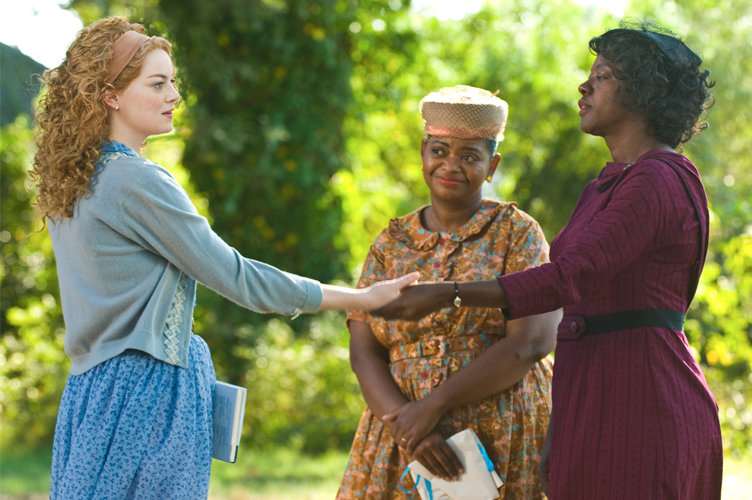
I remember reading this book in Qatar, just after I had moved back there from Kuwait. The Kuwait book club also read White Tiger and Half of a Yellow Sun, all of which had domestic service as at least part of the theme. It’s another one of those cultural things we all have in common – how do we treat the people who work for us? How do they see us? Who is raising our children and teaching them values?
In the Gulf, there are horror stories in the papers of servants who never receive their wages, or who work 16 hours a day, sun-up to sun-down, with never a day off. The families who take good care of their servants never make the papers, but I have seen good and caring relationships, lasting many years, between employers and employees. We’re glad we saw this movie, which sticks closely to the book. For a fuller experience – read the book.
Meanwhile, the temperature early this morning was below 69° F, which means that my tomatoes will begin setting once again and we may have a good crop coming before the cold sets in. I noticed, to my horror, I have a decent crop of weeds trying to establish themselves while it is too hot for me to go out and do battle with them. Some of my tomatoes actually continued producing even during the hottest days of the summer; I’m going to have to plant more of those next year. The golden pear and the red pear tomatoes are producing merrily; the bigger tomatoes have stopped – I hope temporarily.
The Sandpiper
Thank you, KitKat, for sending me this great story to share with my readers:
The Sandpiper
by Robert Peterson
She was six years old when I first met her on the beach near where I live.
I drive to this beach, a distance of three or four miles, whenever the world begins to close in on me. She was building a sand castle or something and looked up, her eyes as blue as the sea.
“Hello,” she said.
I answered with a nod, not really in the mood to bother with a small child.
“I’m building,” she said.
“I see that. What is it?” I asked, not really caring.
“Oh, I don’t know, I just like the feel of sand.”
That sounds good, I thought, and slipped off my shoes.
A sandpiper glided by.
“That’s a joy,” the child said.
“It’s a what?”
“It’s a joy. My mama says sandpipers come to bring us joy.”
The bird went gliding down the beach. Good-bye joy, I muttered to myself, hello pain, and turned to walk on. I was depressed, my life seemed completely out of balance.
“What’s your name?” She wouldn’t give up.
“Robert,” I answered. “I’m Robert Peterson.”
“Mine’s Wendy… I’m six.”
“Hi, Wendy.”
She giggled. “You’re funny,” she said.
In spite of my gloom, I laughed too and walked on.
Her musical giggle followed me.
“Come again, Mr.. P,” she called. “We’ll have another happy day.”
The next few days consisted of a group of unruly Boy Scouts, PTA meetings, and an ailing mother. The sun was shining one morning as I took my hands out of the dishwater. I need a sandpiper, I said to myself, gathering up my coat.
The ever-changing balm of the seashore awaited me.. The breeze was chilly but I strode along, trying to recapture the serenity I needed.
“Hello, Mr. P,” she said. “Do you want to play?”
“What did you have in mind?” I asked, with a twinge of annoyance.
“I don’t know. You say.”
“How about charades?” I asked sarcastically.
The tinkling laughter burst forth again. “I don’t know what that is.”
“Then let’s just walk.”
Looking at her, I noticed the delicate fairness of her face.
“Where do you live?” I asked.
“Over there.” She pointed toward a row of summer cottages.
Strange, I thought, in winter.
“Where do you go to school?”
“I don’t go to school. Mommy says we’re on vacation”
She chattered little girl talk as we strolled up the beach, but my mind was on other things. When I left for home, Wendy said it had been a happy day. Feeling surprisingly better, I smiled at her and agreed.
Three weeks later, I rushed to my beach in a state of near panic. I was in no mood to even greet Wendy. I thought I saw her mother on the porch and felt like demanding she keep her child at home.
“Look, if you don’t mind,” I said crossly when Wendy caught up with me, “I’d rather be alone today.” She seemed unusually pale and out of breath.
“Why?” she asked.
I turned to her and shouted, “Because my mother died!” and thought, My God, why was I saying this to a little child?
“Oh,” she said quietly, “then this is a bad day.”
“Yes,” I said, “and yesterday and the day before and — oh, go away!”
“Did it hurt?” she inquired.
“Did what hurt?” I was exasperated with her, with myself.
“When she died?”
“Of course it hurt!” I snapped, misunderstanding,
wrapped up in myself. I strode off.
A month or so after that, when I next went to the beach, she wasn’t there. Feeling guilty, ashamed, and admitting to myself I missed her, I went up to the cottage after my walk and knocked at the door. A drawn looking young woman with honey-colored hair opened the door.
“Hello,” I said, “I’m Robert Peterson. I missed your little girl today and wondered where she was.”
“Oh yes, Mr. Peterson, please come in. Wendy spoke of you so much. I’m afraid I allowed her to bother you. If she was a nuisance, please, accept my apologies.”
“Not at all! she’s a delightful child.” I said, suddenly realizing
that I meant what I had just said.
“Wendy died last week, Mr. Peterson. She had leukemia
Maybe she didn’t tell you.”
Struck dumb, I groped for a chair. I had to catch my breath.
“She loved this beach, so when she asked to come, we couldn’t say no. She seemed so much better here and had a lot of what she called happy days. But the last few weeks, she declined rapidly…” Her voice faltered, “She left something for you, if only I can find it. Could you wait a moment while I look?”
I nodded stupidly, my mind racing for something to say to this lovely young woman. She handed me a smeared envelope with “MR. P” printed in bold childish letters.. Inside was a drawing in bright crayon hues — a yellow beach, a blue sea, and a brown bird. Underneath was carefully printed:
A SANDPIPER TO BRING YOU JOY.
Tears welled up in my eyes, and a heart that had almost forgotten to love opened wide. I took Wendy’s mother in my arms. “I’m so sorry, I’m so sorry, I’m so sorry,” I uttered over and over, and we wept together. The precious little picture is framed now and hangs in my study. Six words — one for each year of her life — that speak to me of harmony, courage, and undemanding love.
A gift from a child with sea blue eyes and hair the color of sand
— who taught me the gift of love.
NOTE: This is a true story sent out by Robert Peterson. It happened over 20 years ago and the incident changed his life forever. It serves as a reminder to all of us that we need to take time to enjoy living and life and each other. The price of hating other human beings is loving oneself less.
Life is so complicated, the hustle and bustle of everyday traumas can make us lose focus about what is truly important
or what is only a momentary setback or crisis..
This week, be sure to give your loved ones an extra hug, and by all means, take a moment… even if it is only ten seconds, to stop and smell the roses.
This comes from someone’s heart, and is read by many
and now I share it with you..
;
May God Bless everyone who receives this! There are NO coincidences!
Everything that happens to us happens for a reason. Never brush aside anyone as insignificant. Who knows what they can teach us?
I wish for you, a sandpiper.
Sign of the Times in Pensacola

Pensacola, with its mild climate, attracts a lot of the nation’s homeless. In an area with high unemployment and where the housing crisis has wreaked havok with the economy, people still find it in their hearts to be generous and compassionate.
There are united efforts to clothe and feed the homeless, and efforts to help them get off the street – if they want to get off the streets, and a lot of them don’t.
I wonder what funds Krispy Kreme gives – bus tickets home? A donut and a cup of coffee? Help with a mortgage payment? I thought it might give a glimmer of hope to someone down and out.
Doha Debates and Where Are You From?
The Baked Salmon Dijon for last night’s dinner took a little longer to cook because Joe Patti’s cuts the salmon steaks so thick (we cook two, split one and freeze the other for another night), so while I was waiting, I flipped around and found WSRE’s Doha Debate coverage.
Who knew?
I didn’t know I could still watch the debates in Pensacola! This one was about whether or not Egypt should postpone elections in the interest of forming a more representative democracy. The vote was 84% in favor; the two young supporters carried the house. 🙂 This was the March debate and you can hear the entire 48 minutes by clicking here.

The winning female debater used a slogan I had not heard, but I love, because it is graphic and memorable – “we do not want a fast-food democracy that brings only indigestion.” The younger debaters want to scrap the entire constitution and re-write it, claiming the current structure needs to be thoroughly revised in order for democracy to have a chance of success.
I love it that these issues have a forum for debate in Doha.
Following the debate was a cringe-worthy video about asking people where they are from. His point was that when he is asked where he is from, and he answers ‘The Bronx,’ people say “No, where are you REALLY from?’ and the implication is racist. He says it is the same as saying that his color is darker, therefore he is not like us, so he must not be from around here.
I’ve asked that question. Never meant it to be insulting, but I will stop now. Or I will only ask those with a slight accent, maybe. Wherever we have lived, we have been asked that question – but then, in Kuwait and Qatar, most of the work force is not Qattari or Kuwaiti. Even in Germany, however, where we might look a lot like them, we are asked where we are from. It used to be a courteous way of showing interest, or initiating a conversation.
One time in Doha, a local man asked me about my breeding, LOL. I told him I was a product of the American melting pot, and from the earliest settlers to the latest, my family includes just about a little of everything. We were at the veterinarian’s office, and I knew the purity of his dog’s blood lines mattered, and probably his own, but I also felt a little insulted, and I haven’t forgotten it. Doesn’t science teach us that diversity in blood lines is a good thing?
We are in the middle of a heat spell in Pensacola, early this year, and because we haven’t gotten anywhere near the normal rainfall, there are also wildfires. The firefighters are struggling to put out the fires, and also fighting heat exhaustion. AdventureMan is out watering all our new plantings, and our tomatoes, every morning, God bless him, because when the temperatures go high, I just want to stay inside.
Nutcase in Pensacola
This is from today’s Pensacola News Journal following up on a story yesterday where a man in a truck shot up a seafood vendor with an AK-47 because the seafood vendor was out of crawfish. Now, the guy claims the laws don’t apply to him; he is a ‘sovereign citizen’.
It’s humbling. I used to read the Kuwait and Qatar papers, and found all kinds of strange behaviors I thought were hilarious, people who didn’t think the laws applied to them.
In Kuwait, they say “Kaifee Kuwaiti”. I think it’s pretty much the same thing; I’m special and I don’t have to obey the conventions and rules and laws.
But most people in Kuwait aren’t carrying AK-47’s . . . .
A manic shooter peppered a busy Ensley retail strip with assault rifle fire Sunday evening because a local seafood market ran out of crawfish, investigators said. (From yesterday’s PNJ)
Suspect’s beef goes beyond lack of crawfish;
Suspect in shooting claims sovereignty
Written by
Travis Griggs
Today’s PNJ Follow-up story:
Larry Wayne Kelly, the man arrested for blasting an Ensley seafood market with an AK-47 assault rifle fire Sunday, had ties to the anti-government “sovereign citizen” movement, Sheriff David Morgan said.
He also has filed dozens of bizarre lawsuits typically associated with the movement’s followers in the local court system.
“As best we can tell, they’re a fringe group — to put it kindly — and they don’t recognize the authority of the federal government,” Morgan said.
“This is the first time they’ve popped up on our radar. You want to write them off as an oddball fringe group, but when weapons and drive-by shootings are involved, you need to set up and take notice.”
Kelly, 42, is accused of speeding through Ensley, opening fire on a seafood restaurant and leading deputies on a car chase before crashing and being arrested. He’s jailed under $575,000 bond.
He is accused of calling the L&T Seafood Market on Pensacola Boulevard 11 times and becoming “incredibly irate” when an employee said the store didn’t have crawfish. At one point, he got out of his truck and fired numerous shots at the storefront.
After the rampage, Kelly told deputies he was a sovereign citizen and did not have to follow the law or obey law enforcement officers.
According to an FBI report, the sovereign citizen movement is composed of extremists who believe that even though they live in the United States, they are separate, or sovereign, entities.
They believe they can declare independence through an obscure legal process, after which they don’t have to pay taxes and are not subject to U.S. laws or courts.
They often refuse to obtain Social Security cards or register their vehicles, and they won’t carry driver’s licenses or use ZIP codes.
Kelly’s truck had a homemade license plate when he was arrested.
Followers attempt to claim their sovereignty by filing a blizzard of specifically worded legal paperwork with various government agencies and courts. Kelly has filed numerous such documents.
At first glance, the paperwork looks routine, but closer inspection reveals bizarre legal language and obscure references to outdated maritime law.
Followers place particular emphasis on capitalization and punctuation of names in the belief that the variations refer to separate legal entities.
In 2009, Kelly filed a 30-page document with Escambia Circuit Court, claiming that “Larry Wayne Kelly, a real man,” “LARRY WAYNE KELLY, a corporate entity,” and “Larry-Wayne: Kelly, Personam Sojourn and People of Posterity” are different things.
Kelly’s paperwork went on to claim hundreds of items as personal property, including fuel tanks and farm machinery. It also claimed intangible concepts, such as “all rights to exercise dominion over the earth,” as property.
One page titled “Attention and Warning” outlined penalties for government agencies violating Kelly’s supposed property rights. Penalties he cited included $2 million for denial or abuse of due process, $2 million for placing an improper garnishment on bank accounts, and numerous others.
The documents appeared to have been generated with a prepackaged “tool kit,” which can be downloaded from various websites, or copied from books written by supporters of the movement.
Scott Schneider, a special agent with the IRS, said such schemes have no legal basis and are common attempts to avoid paying taxes.
“The bottom line is the courts have regularly held that the movement, and those that participate in it, are wrong and there is no legal basis,” hesaid.
Schneider said he’s made serious attempts to decipher the legal language and references in the paperwork but hasn’t been able to do so.
“Besides the fact that some of the words exist in the English language, there is nothing legitimate about the schemes,” he said.
A God of Infinite Mercy
This morning, Father Neal Goldsborough of Christ Church Pensacola gave a sermon that held us all totally spellbound. It had to do with the fundamentalist preacher who – once again – forecast the coming rapture, which he says was scheduled for yesterday. (I wonder what he has to say today? He was wrong once before, in 1994. Or maybe people were raptured yesterday, but all the folk I know are, like me, sinners who didn’t make the cut.)

Father Neal talked about his service in the chaplain corp overseas, and faiths which exclude based on narrow rules, specific rules, churches and religions who say ‘this is the only way and all the rest of you are damned to everlasting fire” whether they use those words or paraphrases. He pointed to Jesus, who broke the rules of his time and flagrantly spent time with sinners, and the unclean, and showed them by his love and by his actions what the infinite love and mercy and forgiveness of Almighty God looks like.
It couldn’t have come at a better time for me.
Soon, I will be meeting up with three women who are particularly dear to me, friends for many years in Qatar, friends who worshipped at the Church of the Epiphany in Doha, Qatar. The new Anglican Church of the Epiphany is being built on land dedicated to church use by His Highness Sheikh Hamad bin Khalifa Al-Thani, the Emir of Qatar, and will be used by many denominations.
My friends and I all returned to the USA within months of one another, and have been sending e-mails with “reply to all” as we struggle with our re-entry into our old church communities. We struggle with the hatreds and prejudices and ignorance about our Moslem brothers and sisters, and we struggle with the narrow strictures imposed by our churches and study groups. I thank God to have these wonderful women among whom we can share our dismay and our hurting hearts, and re-inforce the lessons we learned living in a very exotic, and sometimes alien culture, but which had so many wonderful and mighty lessons to teach us. I often joke that in my life, God kept sending me back to the Middle East (Tunisia, Jordan, Saudi Arabia, Qatar and Kuwait) until he saw that I finally got it. My sisters-in-faith were quicker studies than I was. 🙂
It was a breath of the Holy Spirit I felt this morning, as Father Neal spoke about God’s mercy, his plan to redeem ALL of his creation, God’s desire for our love and our service. I couldn’t help it, it made me weep with relief to know my church is a church that serves God by including, rather than excluding, and which mercifully welcomes sinners like me.
Here is the really cool part. Christ Church Pensacola has recently begun putting the sermons online. If there is one thing Christ Church has, it is great sermons – and if you want to hear Father Neal’s sermon, you can click HERE, in a few days and you can hear his sermon for yourself. 🙂 Look for the May 22 sermon by Father Neal Goldsborough.
Recent Comments
ExpatAlien on What Country am I Living … intlxpatr on Yellowstone: Old Faithful to C… Michelle on Yellowstone: Old Faithful to C… Cathy on No Grown-Ups in Charge intlxpatr on Waiting for Snow Wikipedia Donate Button

Amazina


Early Voting in Florida


 Here There and Everywhere