The Psalm from today’s Lectionary readings:
140 Eripe me, Domine
1 Deliver me, O Lord, from evildoers; *
protect me from the violent,
2 Who devise evil in their hearts *
and stir up strife all day long.
3 They have sharpened their tongues like a serpent; *
adder’s poison is under their lips.
4 Keep me, O Lord, from the hands of the wicked; *
protect me from the violent,
who are determined to trip me up.
5 The proud have hidden a snare for me
and stretched out a net of cords; *
they have set traps for me along the path.
6 I have said to the Lord, “You are my God; *
listen, O Lord, to my supplication.
7 O Lord God, the strength of my salvation, *
you have covered my head in the day of battle.
8 Do not grant the desires of the wicked, O Lord, *
nor let their evil plans prosper.
9 Let not those who surround me lift up their heads; *
let the evil of their lips overwhelm them.
10 Let hot burning coals fall upon them; *
let them be cast into the mire, never to rise up again.”
11 A slanderer shall not be established on the earth, *
and evil shall hunt down the lawless.
12 I know that the Lord will maintain the cause of the poor *
and render justice to the needy.
13 Surely, the righteous will give thanks to your Name, *
and the upright shall continue in your sight.
Yesterday, several news sources discussed the rapid growth of the American Civil Liberties Union; this one is from Politicus USA:
Thanks to the election of Donald Trump as President of the United States, the American Civil Liberties Union (ACLU) has more than quadrupled its membership, according to an article in The New York Times.
Before Trump’s election the group had just 400,000 members and most of its actions were out of the public eye. But now, after 15 months of the Trump presidency, the membership is over 1.8 million and it has become one of the most active and visible opponents of Trump’s agenda.
Donations to the nonprofit group have also increased exponentially. The ACLU’s executive director, Anthony Romero, said that the organization has raised over $120 million since the 2016 presidential election. Before that watershed election, he said, donations had been in the range of just $3 million to $5 million annually.
Romero said that concerns over Trump’s attack on constitutional rights and civil liberties have brought a whole new generation of political activists into their group. “Until Trump most of our support came from people who have been with us since we challenged Nixon,” Romero told the Times. “Now we’re kind of cool. Cool’s not a word generally associated with us.”
The surge in membership, coupled with the massive increase in contributions, has for the first time given the ACLU all the resources it needs to fight Trump and other administration officials in court and elsewhere. They have been involved in more than 100 legal actions against Trump administration policies, including the White House’sseries of travel bans on the citizens of several Muslim-majority nations, which happened shortly after he took office.
More recently, the group has been challenging the Justice Department’s family separation policies, Trump’s voter fraud commission and the president’s reversal of an Obama-era contraception mandate.
According to Romero, his group has over 170 times taken what he calls “Trump-related legal actions” since he became president. This number includes the filing of 83 lawsuits, Romero said.
As the Trump administration steps up its attacks on refugees and asylum seekers, the ACLU has been filing class action lawsuits and also seeking injunctions to attempt to make the government stop separating families and incarcerating children. In some cases they have already been successful, and they are continuing to fight for the legal rights of people who may have been illegally detained and deprived of due process.
The large increase in ACLU membership is a good sign for American democracy. It shows that many Americans not only disapprove of Donald Trump’s policies and actions but are willing to support the fight against them. Ultimately this may be what saves our country from becoming a dictatorship and what preserves and protects the Constitution of the United States of America.
I’m one of those people. I used to think the ACLU was extreme, that was until I saw them first to man the tables offering free legal advice to incoming passengers the night Trump implemented his first travel ban. I sent my first check. I was asked why I had joined, and I told them because they are now our front line against thugs with no moral values, oppressors of the poor, led by a heartless, selfish, man who must be reined in. They sent me a sweet little ACLU pin, which I don’t dare wear in Pensacola.
July 6, 2018
Posted by intlxpatr |
Bureaucracy, Character, Civility, Crime, Cross Cultural, Cultural, Faith, Free Speech, Leadership, Lectionary Readings, Lies, Political Issues, Values | ACLU, American Civil Liberties Union |
Leave a comment
On Sunday, the organist played “America the Beautiful” in a minor key. It reflected what many of us are experiencing. We love our country. We hate what we are seeing.
An excerpt from an article from the Washington Post about declining democracies in the world, this part focused on the USA, land that I love:
Democracy declined precipitously in the United States
The United States fell 24 places in the country ranking on liberal democracy over the past two years, from seventh in 2015 to 31st in 2017. When we compare the United States’ score in 2017 with its average score over the past 10 years, the drop is precipitous and unprecedented.
 Liberal democracy in the United States: changes from the 10-year average.
Experts lowered their estimates of democracy in the United States because they began to be skeptical that the U.S. Congress will rein in executive overreach. Similarly, experts lost faith that the opposition party can contribute to overseeing, investigating or otherwise checking the majority party. The U.S. executive branch was assessed as showing less respect for the Constitution and compliance with the judiciary, two indicators that the judicial branch can restrain the executive.
For all four indicators, the score for the United States declined. The downward trend in the United States is much worse than in other countries. In terms of government compliance with decisions of the Supreme Court, the United States used to rank among the top countries of the world — but has now declined to No. 48.
I remember living in Kuwait, self-censoring my blog entries so I wouldn’t be expelled from the country, even blogging under a pseudonym. I think of the ICE officer who resigned, and was visited by law enforcement as he gave an interview to national news explaining why he (and others) were quitting ICE, disgusted and disheartened by the un-American practices they were being forced to engage in to export “illegals.” Yes, we still have freedom of speech, but we also look over our shoulders, now, never sure what new low will strike next.
July 5, 2018
Posted by intlxpatr |
Bureaucracy, Character, Civility, Cross Cultural, Cultural, Interconnected, Law and Order, Leadership, Living Conditions, Political Issues, Privacy, Quality of Life Issues, Social Issues, Values, Women's Issues, Work Related Issues | Democracy in decline |
Leave a comment

clipartxtras.com
AdventureMan is hollering from his office to mine “Can I read you something?”
We all find ways to express our indignation. He writes directly to our president, our representative (he calls him Trump’s butt-boy, to me, not to him), to Pruitt. He tells them, in acceptable language, exactly what he thinks.
“I’d say ( . . . . ), but as a retired army officer, I think I am still subject to the UCMJ (Uniform Code of Military Justice),” he says, and censors himself so that he is within civil boundaries.
How did we come to this, when our own national leader lies, again and again, even in the same day, and we have come to accept this as “normal?” How can we accept his calling people who are brown, and seeking a safer, better way of life “vermin” and their countries as “s-tholes?” The unthinkable has become our daily reality. It is not only the children, separated from their parents, who are becoming traumatized, it is also normal every-day Americans who believe that the American Dream is for everyone.
I think the American president is afraid of a world in which our nation is more brown than white, which it is well on it’s way to becoming. I think the thought of losing power terrifies him. I can’t imagine any other rational reason for his behavior towards the “other,” the stranger, those he labels as enemies.
So while I am startled when AdventureMan tells me he self-censors, I also understand. The unimaginable had manifested itself daily since this man was elected, and he will stop at no ends to complete his agenda. His cronies and fellow thugs will thrive, while we drink polluted water, and watch oil seep on to our shores from the off-shore drilling. We will watch our public schools fail, and our jails overflow. My heart breaks on a daily basis, watching what we, as a nation, are becoming.
I used to think the ACLU were a bunch of wackos. When the first travel ban went into effect, and we watched the stunned travelers arrive only to be told they must go back, the ACLU had tables in the airports offering free legal services. I sent my first check that night. I DO protest, via RESISTBOT (text Resist to 50409) wondering if my voice even matters. Sending checks to those who are resisting successfully gives me greater satisfaction. Reaching out my hands to “the other” gives me greater satisfaction. Building bridges and connections feeds my feelings of resistance, that together we can make a difference.
June 22, 2018
Posted by intlxpatr |
Character, Civility, Community, Counter-terrorism, Cultural, Faith, Family Issues, Free Speech, Interconnected, Leadership, Lies, Living Conditions, Political Issues, Quality of Life Issues, Random Musings, Relationships, Social Issues, Values |
Leave a comment
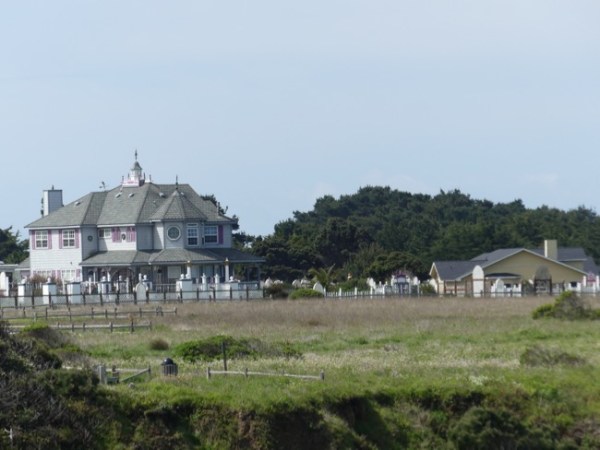
Most people, when they think of Fort Bragg, think of a military post in North Carolina. The Fort Bragg we discovered several years ago in California has little in common with the North Carolina Fort Bragg.
Our first time in Fort Bragg, as we left Cucina Verona, an Italian restaurant where we had eaten dinner, we were startled by the loud sound of hoofbeats, and the sudden appearance of two riders, galloping hell-bent down the middle of the road in Ft. Bragg. It was one of those adrenaline moments, when you wonder if you really saw what you just thing you saw, followed by all the things that could go wrong when you mix horses, highways, automobiles and high speed.
This time, one of the first things we saw was this sign:

But . . . it doesn’t say anything about riding horses, skateboards, or bicycles down the center of the street!
Ft. Bragg has a very laid back vibe. The town is full of couples who look a lot like us, maybe even a little older, maybe a little more hip and less retired military than we look, but relaxed, comfortable in their own skins. We love the vibe. My very favorite activity in Ft. Bragg is at the north end of the town, where they have a place called Glass Beach. Glass beach is where the old town dump used to be, a long time ago, and all the bottles dumped there broke and were washed by the waves, tumbled by the gravel and sand, and became beach glass. Most of what you find is pretty small these days; Glass Beach has been discovered, but if you venture out the the furthest inlets and rocks, you can find some larger pieces, sometimes even a green piece. I found one tiny little blue piece, the grand prize of all beach glass.
We love the North Cliff Hotel, where every room has the same view, looking out over the water at the inlet to the little bay.

We love the hot tub with a view.

We love the view. On the morning we were leaving, we looked out and someone had written a huge message on the sand, “Annie will you marry me?” How cool is that?!
Time is flexible in Ft. Bragg. We get up when we want to, we don’t have to drive to any destination, we can be lazy or we can just meander around, which is what we choose to do.
Love this tunnel of eucalyptus trees entering Ft. Bragg from the north:


This yard had no flower but yellow flowers, and a LOT of yellow flowers!



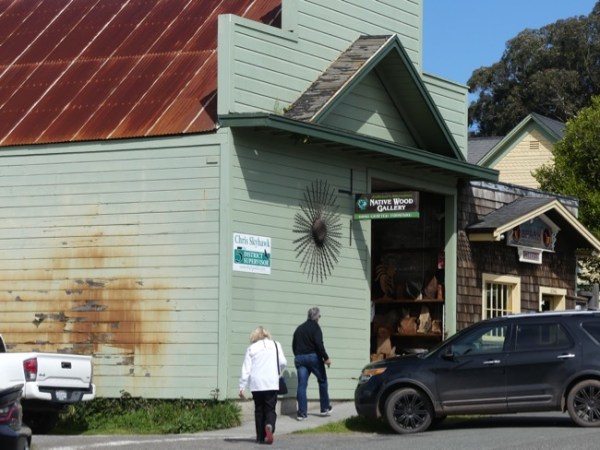
Just a short drive south is Mendocino, one of the most beautiful little California towns you could hope to find. We were looking for special gifts for two special people, and found them, polished carved natural bay laurel bowls, at this shop.
I read a recent article on how California leads the way for the American soul; it gives me hope for the future of our country. California pioneered gay rights, California champions the rights of immigrant children to education and health benefits, and Californians “welcome the stranger,” as all people of the book are supposed to do.
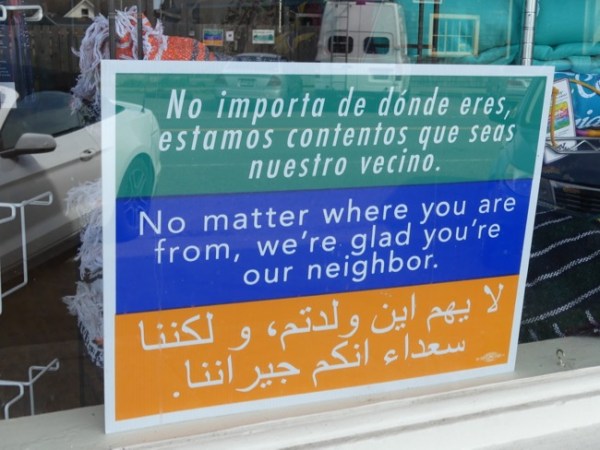
This was in the window of the main grocery/hardware/sundries store in Mendocino. When a woman saw me taking a photo, she asked me why, and I told her, it made me feel welcome and filled my heart with joy to know that it specifically would also make my Arab / Muslim friends feel welcome. She smiled, sternly, and said that they welcome ALL people, that is what California is all about. I was happily chastened. 🙂
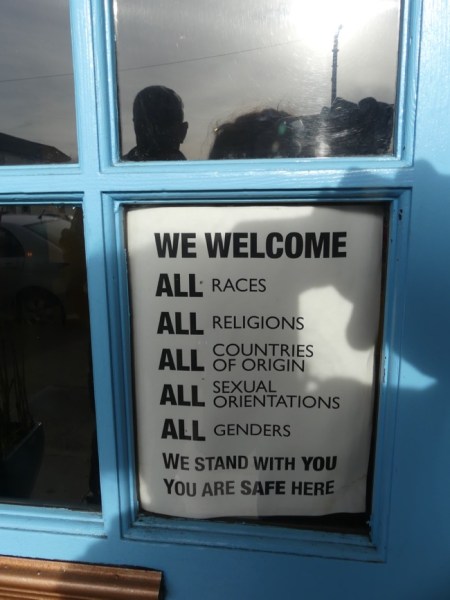
I want the United States of America to be a safe place for all people. No wonder I love California!
Well, there is another reason to love Ft. Bragg – they have one of the world’s best ice creameries right on the major through street in Ft. Bragg. 
Cowlicks Ice Cream is never not busy. On our first trip (we went twice in one day!) I had a scoop of ginger ice cream. It was a huge WOW. On the next trip, I had a chocolate which was really chocolaty, but I wished I had another scoop of ginger.
As we sat, eating our ice cream, I overheard a stylish but somewhat-frail looking 80’ish woman tell her daughter that she didn’t want to be bothered being married again, she was just looking to have a little fun without the complications of a relationship. Such is life in Ft. Bragg. 🙂
June 3, 2018
Posted by intlxpatr |
Adventure, Arts & Handicrafts, Beauty, Character, Civility, Community, Counter-terrorism, Cultural, ExPat Life, Faith, Hotels, Interconnected, Living Conditions, Quality of Life Issues, Road Trips, Social Issues, Travel, Values | California, Cowlicks Ice Cream, Ft. Bragg, Mendocino, North Cliff Hotel |
Leave a comment
Ramadan for Non-Muslims, through the years on Here There and Everywhere
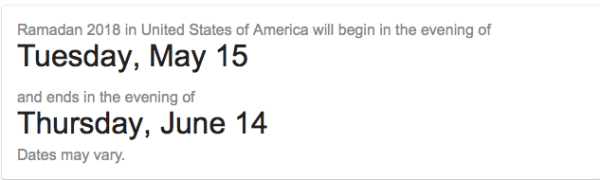
Checking my stats, I can see a sudden upswing on Friday, the day off in almost all Moslem countries. I haven’t posted in the last couple days, but it seems to me, it is just about time to be thinking about Ramadan starting.
When I was still living in the Middle East, I would write an annual entry explaining Ramadan to my non-Muslim readers. Even better, my Moslem friends and readers would add comments, correcting anything I had gotten wrong and adding more.
Bottom line – while for non-Muslims, it is easy to perceive the month-long fast as impossible deprivation, to the Moslems, it is a month of loving celebration, visiting with family, fabulous meals at the end of a long day of fasting, and an opportunity to devote one’s thought to God/Allah/Yahweh and to serve him in the holy tradition of fasting. Many times, overseas, I had Moslems serve me food during Ramadan; I would beg them not to, but they would tell me there was joy in serving food to others and not partaking themselves; they did it as an act of worship, a sacrifice. I could see their joy in their eyes and their visible pleasure in serving.
The traditional words of greeting to a Moslem during Ramadan are “Ramadan Mubarak” and “Ramadan Kareem.” The first is a wish that Ramadan be a blessing to the worshipper, the second a wish that Ramadan be generous, supply all the needs, spiritual and otherwise.
Ramadan Mubarak, my friends, and Ramadan Kareem.
May 5, 2018
Posted by intlxpatr |
Civility, Community, Cross Cultural, ExPat Life, Faith, Ramadan |
Leave a comment
In Pensacola, as in other places I have lived, I have met some very fine people. It isn’t unlike my other adventures, I have had to learn to observe and to adapt. Sometimes I may disagree, but most of the folk I deal with are civil people, reasonable people, and if they don’t agree with me, most of them have the generosity of spirit to just shake their head and chalk it up to my eccentricity.
And some people, you just don’t even bother to disagree. You don’t comment. You look the other way. I was lucky this time, to have my camera with me because if I didn’t have the picture, I’m not sure I would believe me telling the story. Here is what I see:

I see this and I am a stranger in a strange land.
April 11, 2018
Posted by intlxpatr |
Character, Civility, Communication, Community, Cultural, Living Conditions, Pensacola, Quality of Life Issues, Social Issues, Stranger in a Strange Land |
Leave a comment
I am livid. I am almost breathless with the shocking audacity of it. “Harden our schools.” And what does that mean, exactly?
“Harden our schools” means putting more armed people inside and outside. Arming our teachers, if Trump and the other NRA supported politicians have their way. More guns. More opportunity for fatal human error.
Our grandson goes to one of the sweetest elementary schools on earth. The thought of his teachers packing heat makes me ill. The thought of armed guards on his school outrages me.
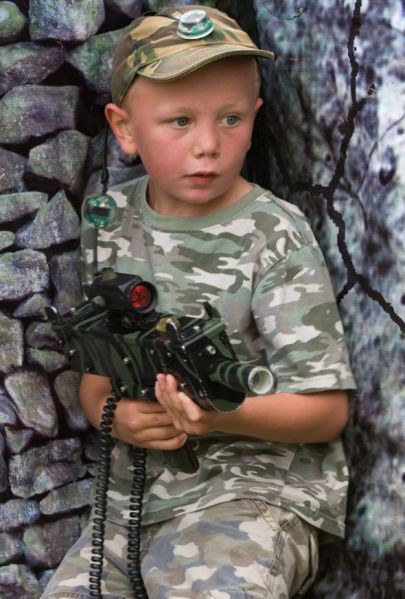
What message does this send our children? Schools should be SAFE, fun places to learn and explore who they are and all the wonderful ideas in the world, places to learn to tools of learning. Guards? Guns? That describes a prison, not a safe, fun place to learn.
Yes, I am all for better mental health. Since the Republicans put the mentally ill out on the streets, back in the good old days of Ronald Reagan, we’ve had increased problems with crime, homelessness, and heartless policies of incarcerating the mentally ill because we no longer give them asylum. The prisons are full of the mentally ill.
Many mass killers have no prior criminal record. The Las Vegas killer was a very “normal,” if strange, man who had a lot of weapons, assault weapons.
I’m not opposed to guns. I am opposed to people owning guns that are neither for hunting nor for sport, weapons designed for killing, weapons that make a mass killer efficient.
“Guns don’t kill people,” say the NRA, “people kill people,” but killing people without an automatic or repeating weapon is a much less efficient kind of killing. While you are in the slower process, you can be attacked and overcome. Banning assault rifles just makes sense. Tightening who can own weapons just makes sense. Oregon just passed a landmark bill taking weapons away from domestic abusers, some of the smartest, most progressive legislation in the nation, passed by lawmakers with backbones and brains. You tell the parents of Sandy Hook students, tell the parents of Parkland students that “guns don’t kill people.” They will have a very different point of view to your own.
I challenge you to Google this: Mass School Shootings in the United States.
Wikipedia has a comprehensive, if incomplete record of many, not all, of the school related shootings. Some take place in school parking lots. Some target school buses. Many shooters have no criminal records, no mental health records, but – they DO have guns.
2nd Amendment rights were created to protect our country; the rights were for militia, not people with a grudge against a woman who is divorcing you, a teacher whose assessment prevented you from attaining your graduate degree, the woman who scorned you, revenge against those who bullied you, showing what a big “man” you are (not a single mass shooter has been a woman.) Owning a gun should be a privilege, not a right.
Those who know me, know I grew up with guns. The first thing we did, in the Alaska where I grew up, was to go to rifle club to learn respect for our weapons. We learned how to clean and care for them, we learned how to shoot them safely, and we learned how to lock them up. We used our rifles for hunting (we ate the meat) and for occasional target practice. We didn’t even carry them when we went berry picking or hikes in the woods; we learned to avoid bear and other dangers, to walk away. I am in favor of responsible gun ownership.
I am opposed to hardening schools as a solution to mass school shootings. It isn’t effective, and it sends a terrible message to our children.
February 28, 2018
Posted by intlxpatr |
Alaska, Civility, Community, Counter-terrorism, Cultural, Family Issues, Florida, Health Issues, Law and Order, Living Conditions, Parenting, Political Issues, Rants, Safety, Values |
1 Comment
When you are watching The Post, the story is so interesting that you can forget that this really happened, that newspapers were told they could not publish the Pentagon Papers, and that the Washington Post ultimately defied the “cease and desist” and printed, believing the First Amendment protected their rights.

Meryl Streep is perfect as Katharine Graham, who inherits the Washington Post on the death of her husband, and Tom Hanks makes a great Ben Bradlee. The sets are wonders of 1970’s decor, and oh, Meryl Streep in the frowzy seventies clothes, hilarious.
What isn’t so hilarious, what is actually painful, is watching Meryl, as Katharine, dither and constantly ask the men around her what to do. She was the first woman publisher of a major American newspaper. It was her family newspaper; her father has asked her (now deceased) husband to take it over, and she was delighted. He was the man, and women weren’t expected to take on roles of such importance. As the movie opens, she is getting ready to take The Post public. It is painful watching the bankers and lawyers talk down to this intelligent woman, painful watching rooms full of men making all the decisions, and, as the movie points out, some very bad decisions in the management of the Vietnam War.
It is also a great reminder of who we are as Americans, and the power of a free press. It is a great reminder that the free press is here to put a spotlight on that which is hidden, to help us have transparency in our government, that decisions are not to be made in private huddles, but are to be in the “sunshine” of public awareness, so that we have the ability to question, and to debate, what we want our country to look like.
We found The Post exhilarating. We found it full of hope, even in these dark times.
January 15, 2018
Posted by intlxpatr |
Bureaucracy, Character, Civility, Cultural, Entertainment, Free Speech, Leadership, Political Issues, Women's Issues |
Leave a comment
I am not Mormon. Yes, I say good things about the Mormons, and that is because the Mormon people I know are smart, savvy, and hard working. They make time in their life in a structured way, to take care of those around them. They feed the poor, they welcome the stranger, they clothe the naked, they visit the prisoner, they take care of the widow and the orphans – all the things we are told are important to do in order to show the world our love for God and our love for one another. The Mormons have made a science of it, including teaching and learning foreign languages, and sending their young out into the world to spread the word, but also giving them an opportunity to develop a broader perspective, another point of view, living in a foreign country.
AdventureMan and I have a food-truck-turned-settled restaurant we have recently found and love, Taqueria El Asador, on North Davis in a Shell station. You’ll know it by the cars parked all around it as people get to know just how good the food is. My favorite is a burrito Campechano, and AdventureMan loves the Pollo Platter.

It’s outdoors. Mostly we take out. While I was waiting for our order, I saw this among all the ads looking for people to frame, do masonry, or to clean:

We are surrounded by immigrants. Many of the workers are in paint stained clothing, many are in overalls, many in scrubs from the nearby hospital and clinics. The prices are reasonable, and it’s lunchtime. This “ad” is in Spanish, offering free English lessons to those who want to learn English, and how else are you going to get ahead, to fit into your new home, get a better job? The Mormon church is giving exactly the kind of hand-up that will help them find the better life for themselves and their families, and it is offering this tool for free.
Someone more cynical might think they are just trying to convert more Mormons, but anyone who is in the helping business knows that helping doesn’t mean you will get an anticipated response. I would be willing to bet, however, that the kindness doesn’t end there, that the Mormon church has structures in place to help the English learners with clothing, maybe with better jobs, maybe with people who can explain customs, take them to interviews, explain benefits, etc. I would be willing to bet that it isn’t the services offered, but the pure kindness behind those offers that can change hearts. I may not be Mormon, but I can admire the way they do God’s work.
December 30, 2017
Posted by intlxpatr |
Charity, Civility, Community, Cross Cultural, Cultural, Eating Out, ExPat Life, Faith, Food, Interconnected, Language, Living Conditions, Pensacola, Quality of Life Issues, Restaurant, Work Related Issues | Mormons, Taqueria El Asador |
2 Comments
It’s been a strange year. I fought depression a lot of the year, faced with a political administration that is rolling back everything I believe to be good about my country. I watched our culture degrade, environmental protections roll back, air pollution standards roll back, financial institutions restrictions roll back, oversight disappear, the State Department erode, and truth become astonishingly irrelevant, civility hard to find. I also found friends, who, like me, welcome immigrants, fight against those who would restrict voting rights only to people a whole lot like them, and who support equal rights and the belief that we are called to be better people, and to do what we can to lift people, rather than to stomp on them.
One great wonderful event happened this year, my grandchildren were baptized. It was a private event, with friends and well-wishers, and it was joyful, and very funny. If I want a big smile, I think back on that precious day.
At that same time, two people we know were diagnosed with cancer, diagnosed in the very prime of their lives. One was the father of our dear daughter-in-law. He and his wife welcomed our son, and then us, into his sweet family, a family full of women as wild and wacky as I am. We laugh, my daughter-in-law and I, about how our relationship is “unnatural.” We are supposed to be hostiles, but in truth, we genuinely love one another and we enjoy one another’s company. I admire her, as a wife, a mother and an environmentalist. We enjoy her parents, and we spent two weeks in Zambia traveling with her father and his wife. We had a great time with them.

Her father was a poster boy for chemotherapy. He smiled and laughed his way through it, cheering up those around him who were trying to cheer him on. If he ever had moments of self-pity, we never saw it. He chose to spend his time loving others, and continuing to make this world a better place.
In November, he caught a cold, and then pneumonia. The family gathered, and he rallied for a while, and then sank slowly, unable to get enough oxygen into his lungs. Before Thanksgiving, he was gone.
Yes, I am faithful, and I also have a hard time accepting that it was this man’s time to go. I am guessing that part of it is being unable to accept my own powerless to stop this horrible thing from happening, this good man, cut down in his prime. He was just making plans to retire, to travel. He and his wife were excited. I couldn’t help it, his death made me angry, it was such a waste. Yes, you can be faithful and be really mad at God.
This man loved his grandchildren.


He loved fishing, and spent time teaching his grandchildren, nieces and nephews to love fishing, too. Here he is on the Zambezi, seeing what he might catch.
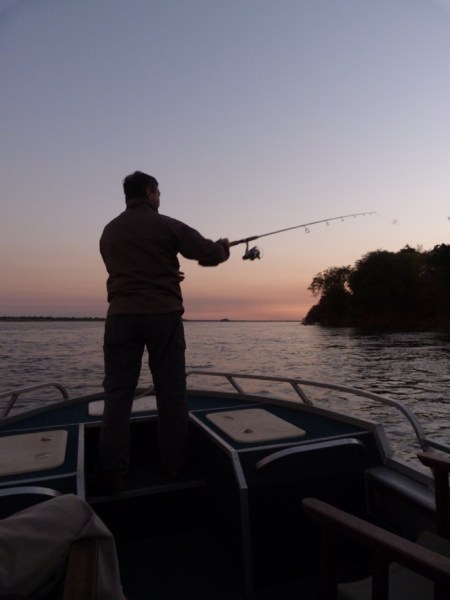
Every life he touched, he left better for it. He was a fine man, and I grieve for my sweet daughter-in-law, for this terrible, painful loss.

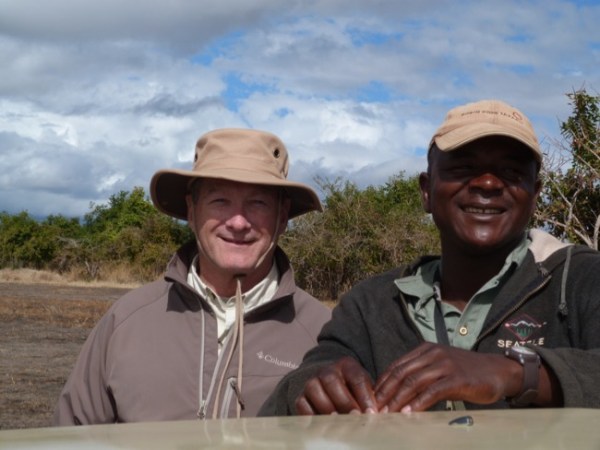

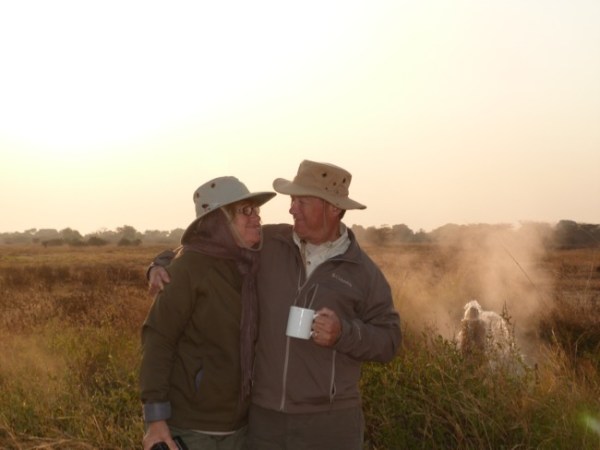

Here is hoping for a better year to come.
December 29, 2017
Posted by intlxpatr |
Adventure, Africa, Aging, Civility, Family Issues, Friends & Friendship, Interconnected, Living Conditions, Quality of Life Issues, Relationships, Stranger in a Strange Land, Travel |
Leave a comment


 Here There and Everywhere