Your Smart Phone Monitoring Your Every Move?
A new video out by Trevor Eckhardt documents how Carrier IQ transmits your activities to your mobile phone carrier:
You can read the entire (fascinating) article on this Huffington Post article.
Dubai Flash Mob – And I MIssed It!
Looks to me like maybe the Dubai Airport had a part in this . . . 🙂
Getting Scripture Wrong
As you know, many Christians do readings daily; there are readings recommended for each day from the Old Testament, the New Testament and the Gospels. Technology makes life easier and easier, you can just go online to The Lectionary and it is all right there for you. They have all the readings, every day, and even have write-ups about the Saints days.
This scripture makes me nervous. I attend a bible study where they tell us exactly what to think. They are very clear in their doctrine. Because I need the self-discipline in my studies, and because I believe that they are mostly women like me, trying to serve God to the best of their abilities, I don’t argue a lot, I don’t say “no! that’s not what it says!” or cause a disturbance. I trust God lives in each of us, as the Holy Spirit, and figure the Holy Spirit will guide me through our studies.
In this scripture, the disciples who know Jesus the very best, the ones who travel with him and who listen to him every day are talking about bread when Jesus is talking about hypocrisy. It worries me. What else to we fail to see? What else do we mis-interpret?

Matthew 16:1-12
16:1 The Pharisees and Sadducees came, and to test Jesus they asked him to show them a sign from heaven. 2 He answered them, ‘When it is evening, you say, “It will be fair weather, for the sky is red.” 3 And in the morning, “It will be stormy today, for the sky is red and threatening.” You know how to interpret the appearance of the sky, but you cannot interpret the signs of the times. 4 An evil and adulterous generation asks for a sign, but no sign will be given to it except the sign of Jonah.’ Then he left them and went away.
5 When the disciples reached the other side, they had forgotten to bring any bread. 6 Jesus said to them, ‘Watch out, and beware of the yeast of the Pharisees and Sadducees.’ 7 They said to one another, ‘It is because we have brought no bread.’ 8 And becoming aware of it, Jesus said, ‘You of little faith, why are you talking about having no bread? 9 Do you still not perceive? Do you not remember the five loaves for the five thousand, and how many baskets you gathered? 10 Or the seven loaves for the four thousand, and how many baskets you gathered? 11 How could you fail to perceive that I was not speaking about bread? Beware of the yeast of the Pharisees and Sadducees!’ 12 Then they understood that he had not told them to beware of the yeast of bread, but of the teaching of the Pharisees and Sadducees.
6 Things a Marriage Counselor Would Tell You
We have celebrated 38 years of marriage, and we still read these articles. 🙂 It’s all true – marriage takes work. I found this today on AOL Everyday Health
6 Things a Marriage Counselor Would Tell You
Every relationship has its bumps — but these expert tips can help feuding duos smooth things out again.
By Jennifer Acosta ScottMedically reviewed by Lindsey Marcellin, MD, MPH
A relationship free of spats, scrapes, and squabbles? That’s a thing of fairy tales (though we’re willing to bet that even Cinderella and Prince Charming had their problems).
Real-life matrimony — that has its ups and down. And while it’s certainly not fun to clash with your sweetheart, disagreements don’t signal the demise of your relationship. “There are always ways to resolve issues, overcome obstacles, and build a stronger bond because of it,” says Lori Bizzoco, a relationship expert and founder of Cupid’s Pulse, a Web site that provides relationship advice to couples.
What’s more? Each relationship (even the best of the best) has room to grow. But not everyone can afford to see a professional marriage counselor — and some marriages simply need a quick tune-up. That’s why we went to top relationship experts to find out the best ways to resolve disagreements, keep things fun, and ensure an emotionally health partnership for the both of you.
Here’s your at-home guide to boosting your marriage or long-term partnership (you may be surprised how well these work!).
1. Fight. It may sound contradictory, but arguments between couples can actually be a sign that the relationship still has a good foundation. “Indifference to each other tells me a marriage is in big trouble,” says Susan Fletcher, PhD, a psychologist in the Dallas area. “Couples who care enough to fight still care about each other.” Next time you find yourself in a war of words with your partner, don’t give up and walk away: Use the disagreement as a jumping-off point for coming to a resolution — and then kiss and make up!
2. If you love her, let her grow. Most people develop and change as they get older — but according to Bizzoco, this often comes as a surprise to a spouse. “Often we get so wrapped up in the relationship and think we know someone so well that we don’t allow them the freedom to be anything more than the person they were when we met them,” Bizzoco says. But embracing these changes can be extremely beneficial to a relationship. So if your husband wants to take up golf or your wife wants to return to school for another degree, encourage them to follow these interests (your spouse will appreciate the support).
3. Be the A-Team. It may sound cheesy, but the phrase is an apt term for the “us first” attitude that couples should have when it comes to their relationship. “This means that they consult, discuss, and make decisions as a couple and do not put other relationships, children, or extended family before this primary relationship,” says Karol Ward, LCSW, a psychotherapist in New York. If you put your partner first, he will feel cherished and valued — an important emotion for your marriage.
4. Add some oomph to your “Hello!” When you’ve been separated from your spouse for some time (even if it was just for the work day), greeting him enthusiastically, rather than just glancing up, can be a great way to show you care. “It sounds silly, but think about the feeling that it creates when you give them just a few moments of attention,” Bizzoco says. Your special greeting can be anything from a simple hug to a sexy dance move. Coming home will be even sweeter than before.
5. Don’t forget your manners: Say “Thanks.” It’s easy to get wrapped up in what your partner does wrong — and too often, we lose sight of what they’re doing right. Every night, get in the habit of writing down three good things about your spouse — something nice he did (it really was sweet how he DVR’d The Notebook for you), a fond memory you have of her (remember that trip to the Caribbean?), or one of his many good qualities (that cute butt, of course). “This keeps you feeling more positive toward him, which will benefit your relationship,” says Elizabeth Lombardo, PhD, a psychologist and therapist in Wexford, Pa. And it can benefit you, too: When you’re in the middle of a knock-down fight, think back to your list to remember the reasons you’re in the relationship.
6. Get good feedback. Even if your relationship is as old as the hills, it’s never too late to ask your partner this one simple question: “How do you know that I love you?” Listen carefully to the response. If nothing else, Ward says, you’ll discover which of your actions are the most appreciated and which behaviors to maintain moving forward.
Follow these relationship “musts” — and you may never need to call up a marriage counselor.
Last Updated: 10/11/2011
What Tiny Qatar Stands To Gain In Libya
Another fascinating discussion on National Public Radio, which covers subjects not covered by major national news sources.
Of course, anything having to do with Qatar is of interest to us, as we lived there for four years during a time of breathtaking and exhilarating change. It is astounding, and wonderful, to us, that Qatar defies the lethargy and inertia of the Gulf Countries, and has transformed itself into a major influence, in spite of its smaller size, and even smaller population of native Qataris. They have taken the huge influx of cash that came with the discovery of natural gas, and leveraged it into massive modernization, transformation, and influence on the international scene. It’s an amazing accomplishment.

ROBERT SIEGEL, host: The Libyan rebels received decisive air support from NATO. But there was another, less publicized, smaller-scale but equally remarkable foreign involvement in support of the uprising, the involvement of Qatar, Q-A-T-A-R.
Qatar is a peninsula, a little smaller than Connecticut. It juts north into the Persian Gulf. On the south, it borders Saudi Arabia. It is rich in oil and natural gas. Its population is only about 900,000. And while it is an Arab country, a monarchy ruled by the al-Thani family, the majority of its residents are non-Arabs, non-citizens from India and Pakistan. Qatar is also home to the TV channel Al Jazeera. It will host soccer’s World Cup and it was an important player in Libya.
Ibrahim Sharqieh is deputy director of the Brookings Doha Center. Doha is the capital of Qatar. And, Ibrahim, first, what did the Qataris do in support of the Libyan rebels?
Dr. IBRAHIM SHARQIEH: That Qataris’ support to the Libyan rebels has been politically, diplomatically and militarily. We had about five Qatari fighter jets. In Qatar, we had about the training of Libyan rebels. And Qatar also played an important role in developing an Arab League support through the military intervention in Libya, which this Arab League support actually has provided the umbrella for the NATO intervention and for the military intervention and provided the legitimacy that, for example, was missing in Iraq.
SIEGEL: Why? What are the motives behind Qatar’s involvement in Libya and some of its broader ambitions in the region?
SHARQIEH: Oh, there are many theories. The one that makes the most sense in my view is that Qatar is supporting the revolution for humanitarian reasons. And in addition to this, Qatar is working and supporting the revolution is they’re strictly with its vision for its role in the region and in the world.
SIEGEL: One thing we should note, though, in this year of the Arab Spring, one thing Qatar isn’t is it isn’t a democracy. It isn’t an elected parliamentary republic.
SHARQIEH: Well, there is very high level satisfaction of the people here in the country, of the political system and of its leadership. So there haven’t been – we haven’t seen any cause for change or any protests or any different types of complaints. So the system seems to work and we seem to have a stable country. That distance itself very far away from the protests that are happening in the region.
SIEGEL: How would you describe U.S.-Qatar relations?
SHARQIEH: We know it’s a strong relationship. Qatar hosts a military base, the largest in the region here, in Al Udeid. And this has been a sophisticated policy where Qatar managed to have a good relationship between the United States and other rivals in the region, like Iran. In order to protect yourself as a small, wealthy country, some sort of striking a balance is needed and Qatar has been more influential in this crisis and other regions in Benghazi.
Going back to Libya, when you go outside the offices of the National Transition Council, you see the American flag. You see the French flag. You see the British flag, and you see also the Qatari flag.
SIEGEL: Yes. Here’s a country that aspires to a very high profile in regional affairs, but it consists of fewer than a million people. And of them only about 350,000 I read are citizens. That doesn’t sound like a country that can really be a world player, you know? It just sounds too tiny.
SHARQIEH: Well, it is too tiny but, hey, we are living in an international system that you have the means to play it right and become an important player. Qatar has invested in the right political market by mediation. Qatar was successful in the mediating an agreement between the Yemeni government and the Houthi rebels. Prevented a civil war almost in Lebanon, brokered peace agreements between the Palestinians, Fatah and Hamas, and also intervened in the fall in Sudan.
So, Qatar has proved to me an important, major emerging power in the region and to play it right and position itself very well in the international scene.
SIEGEL: Well, Ibrahim Sharqieh, thank you very much for talking with us about Qatar.
SHARQIEH: My pleasure. Thank you for having me, Robert.
SIEGEL: Ibrahim Sharqieh is deputy director of the Brookings Doha Center. Doha is the capital city of Qatar.

“Is Your House Always This Clean?”
We had guests this week, visitors from overseas, and it was so much fun. One woman was full of questions. This was her first time out of her own country, and you know how it is when you are in a foreign culture, people think differently. Some of her questions bordered on impolite, according to our culture, but we could tell she was asking because she really was interested, and we didn’t let her questions bother us.
“No!” I laughed, “We cleaned because we had guests coming! My husband vacuumed and I washed all the floors!”
My daughter-in-law jumped in.
“Yes!” she laughed. “Yes, their house is always this clean!”
We all laughed.
“It’s just my husband and me,” I added, “it’s not that hard to keep it picked up and neat. We make extra effort when guests are coming.”
“Why do you do this?” she asked. “Why do you invite strangers into your home and give us dinner?”
“People have been so kind to us, in so many countries, in so many ways,” I began, “No matter how hard we try, we will never be able to repay all the kindness we have received. But we do our best.”
We were in my kitchen, which is not large, and I am trying to get dinner on the table. It is a simple, family dinner, a little chaotic, but with lots of dishes so the guests can find something they might like to eat.
“Do you clean yourself? You have no cook?” she asked.
“We clean. Both of us. We could hire help, but it is very expensive here,” I said, pulling the chicken out of the oven. “And we do our own cooking. My husband makes bread! He is very good at it.”
During the evening she continued asking questions, and now, several days later, we find ourselves thinking about the questions, and thinking . . . THIS is why we do it! We love these guests who come in with a different way of looking at things and their questions, which stimulate us to think in new ways, too, as we try to explain why we do things the way we do them.
I remember in Doha, the Philipina maids would ask me “how old are you?” because they couldn’t guess by looking at me. We never ask a woman how old they are once they are past maybe eighteen or twenty years old. We never ask how much money a husband – or wife – makes. It is culturally taboo, it just isn’t done. We never ask what kind of birth control someone is using. I am aware of these things because I have been asked, and it made me think about it.
But now I wonder what questions I have asked in foreign lands which shocked people, or made them uncomfortable?
The Value of the Trivial
“Be sure to use your full name, First, maiden and married, on your quilt labels,” our presenter instructed us.
Oh-oh. I’ve been lucky just to get labels on my quilts, and I haven’t used my maiden name at all.
“Years from now, if someone is trying to track you as a quilter, it will help to have your maiden name to distinguish you from other quilters who may have similar names,” she continued.
OK. So now I will include my maiden name. (For my Moslem friends, it is our custom to take our husband’s names when we marry. Some women don’t, but even now, the majority do. I know, I know, it seems backward to you, it is irrational, it is just the way it is. We also don’t have marriage contracts.)
At lunch with a long-time friend this week, she mentioned she still has her mother’s diaries. I suggested she offer them to a major university near where my friend grew up, to their historical collection, and my friend said “oh, it’s just daily weather, who’s sick, stuff like that.”
Stuff like that is just exactly what historians treasure. When I was at university, I worked for a time in the copying department of the library, and I specialized in the historical collections, many of which were from people who came west. The papers were fascinating – letters home, lists of supplies they asked to have sent West, to-do lists, old photos. The scraps of paper you and I throw away – there in the Northwest collection.
They become valuable, at least for historical research, for writing period fiction, for medical research – because we do throw them away, and so few survive.
Keeping up with this blog has become more problematic. I just don’t have the time in my life I used to have. My life is interesting to me, but now that I am no longer living in exotic locations, I don’t believe I am so interesting to others. My internal debate is whether or not to continue. I would let it go in a heartbeat and not miss the time, but . . . I think I would miss your feedback.
I’m not writing this for you. I’m sort of writing more for my own record-keeping, it’s why I include news articles and scraps of daily life (not my own) and all the oddities and irrationalities that catch my eye. I love having a place to store it all (this blog) and I love your comments, which can sometimes completely turn me around in point of view; you give me perspectives I hadn’t considered.
The point of all this is the ephemeral nature of our daily lives, and the records of our lives. There are things worth keeping.
I wish someone in Kuwait were doing oral histories on the older people who were living there ‘before oil’.
Sign of the Times in Pensacola

Pensacola, with its mild climate, attracts a lot of the nation’s homeless. In an area with high unemployment and where the housing crisis has wreaked havok with the economy, people still find it in their hearts to be generous and compassionate.
There are united efforts to clothe and feed the homeless, and efforts to help them get off the street – if they want to get off the streets, and a lot of them don’t.
I wonder what funds Krispy Kreme gives – bus tickets home? A donut and a cup of coffee? Help with a mortgage payment? I thought it might give a glimmer of hope to someone down and out.
Credit Card Blues
“Because your name and card number are on file with us, it is possible that your card information has been compromised. While we employ the strongest encryption processes, it is possible that a motivated and persistent hacker could access your information. For this reason, we suggest that you inform your credit card company and explore the possibility of closing your current card and starting another.”

I don’t even have a pit in my stomach this time when I get this message. This is our third change in one year on one card. One of the changes was due to our card company shifting its business to another company, but two were due to possible compromises of our information, which had nothing to do with anything we had done except to use our credit card.
In Saturday’s paper, we read that there has been a huge shift in the restaurant business. An owner said that ten years ago cash customers and credit card customers were about 50/50, but now, 90% of all customers use credit cards. (We’re in the 10% who use cash, but it’s because of all our years living overseas.)
The new cards have arrived, and I spent the day going to all the sites that bill me automatically, and monthly, and to my car rental people, and airline reservations people . . . all those automatic charges that would bounce if I didn’t get the correct new number to them. Even as I am sending out all this information, I cannot help but be aware that 1) It is the companies storing my information that make me so vulnerable, and 2) in some cases, there are no alternatives. Credit cards are the accepted way of paying these days.
It’s been a long journey. I remember my first eye-opening experience; I was back from Qatar, re-opening a mobile phone account and I handed the sales person a hundred dollar bill, and she just gaped. “No one ever pays in cash anymore,” she said, “I don’t even know what to do!” As it turned out, they didn’t have change, so I had to charge it, but it went against my grain – we use our cards, but selectively, and pay them off in full every month.
And we only really use one card. We have a couple back ups, but we never use them.
I can’t help but feel that we are all increasingly vulnerable by our reliance on the credit card system. Hackers are the least of the problem – I also worry about those heaps of paragraphs in 2 pt type that we have to ‘read’ and sign, because do you really read them? I know I scan them, but there are words in those agreements designed (I believe) to make you tired of reading, big words, lots of them strung together. They probably have some meaning, but although I am not stupid, reading financial disclosure statements makes my head spin.
What kind of vulnerability do we have to our banks with these cards?
What are our obligations that we don’t even know about?
While we were waiting for our cards, I had three pre-orders with Amazon.com that failed. I wrote to them, suggesting that because I was a good customer, a shareholder, and a faithful buyer with them almost from the very beginning, that maybe they could send them anyway (especially the new Song of Ice and Fire volume by George R.R. Martin, A Dance With Dragons,) but no, they would not. This is not the Amazon.com I used to know, who sent me a coffee cup for being a faithful customer, back in 1997. No, I had to zip up the road to Barnes and Noble, the old fashioned way.
On the other hand, our mail-order-pharmacy people were just great. I had an automatic order and when I explained the problem and that we were waiting for our new cards to arrive, the customer service lady just laughed and said “We’ll send it out and bill you later.” How very very civilized. (ExpressScripts – YAYYYYY)
I used to know my credit card number by heart. We had the same card for almost 20 years. I even memorized my next card, but not this one. I have little faith it will be good for all that long.
A Prayer for Samuel Occum
I don’t always get a chance to read about a saint of the church on his/her saint’s day, but this morning, while reading The Lectionary readings, I took the time, and was glad I did. These readings tell me about ordinary people who made a difference, Samuel Occum by being Mohegan (Mohican?) and serving his community by raising funds for the establishment of Dartmouth College.
But what I loved was the prayer for his saint’s day, which starts “God, Great Spirit” and talks about his voice in the thundering wind.
PRAYER (contemporary language)
God, Great Spirit, whose breath gives life to the world and whose voice thunders in the wind: We thank you for your servant Samson Occom, strong preacher and teacher among the Mohegan people; and we pray that we, cherishing his example, may love learning and by love build up the communities into which you send us, and on all our paths walk in beauty with Jesus Christ; who with you and the Holy Spirit, is alive and reigns, one God, now and for ever. Amen.
SAMSON OCCUM
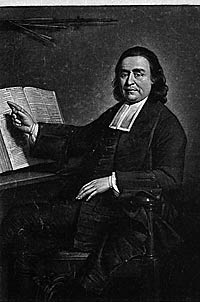
WITNESS TO THE FAITH IN NEW ENGLAND, 1792
The Reverend Samson Occom (1723 – 1792) (also spelled as Occum) was a Native American Presbyterian clergyman and a member of the Mohegan nation near New London, Connecticut. He has the distinction of being the first Native American person to ever publish documents and pamphlets in English.
Born to Joshua Tomacham and his wife Sarah, Occom is believed to be a direct descendant of the famous Mohegan chief, Uncas. In 1740, at the age of sixteen, Occom was exposed to the teachings of Christian evangelical preachers in the Great Awakening. He began to study theology at the “Lattin School” of Eleazar Wheelock in 1743 and stayed for four years until leaving to begin his own career.
Occom served as a missionary to Native American people in New England and Montauk, Long Island, where he married a local woman. It was also on Long Island where he was officially ordained a minister on August 30, 1759, by the presbytery of Suffolk.
Wheelock established an Indian charity school (which became Dartmouth College) with a benefaction from Joshua Moor in 1754, and he persuaded Occom to go to England in 1766 to raise money for the school, along with the Rev. Nathaniel Whitaker. Occom preached his way across the country from February 16, 1766, to July 22, 1767. He delivered in total between three and four hundred sermons, drawing large crowds wherever he went. By the end of his tour he had raised over twelve thousand pounds for Wheelock’s project. King George III himself donated 200 pounds, and William Legge, Earl of Dartmouth subscribed 50 guineas. The friendship between Occom and Wheelock dissolved when Occom learned that Wheelock had neglected to care for Occom’s wife and children while he was away. Occom also took issue with the fact that Wheelock put the funds toward establishing Dartmouth College for the education of Englishmen rather than of Native Americans.
Upon his return from England, Occom lived at Mohegan, then moved in 1786 with some New England and Long Island Indians to Oneida territory in what is known today as New York. He then helped to found Brothertown, and lived among the Brothertown Indians. Occom died on July 14, 1792, in New Stockbridge, New York.
Recent Comments
intlxpatr on Yellowstone: Old Faithful to C… Michelle on Yellowstone: Old Faithful to C… Cathy on No Grown-Ups in Charge intlxpatr on Waiting for Snow intlxpatr on Waiting for Snow Wikipedia Donate Button

Amazina


Early Voting in Florida


 Here There and Everywhere