Hope is Not a Strategy
Our leader has said other nations will come to escort ships through the Strait of Hormuz.
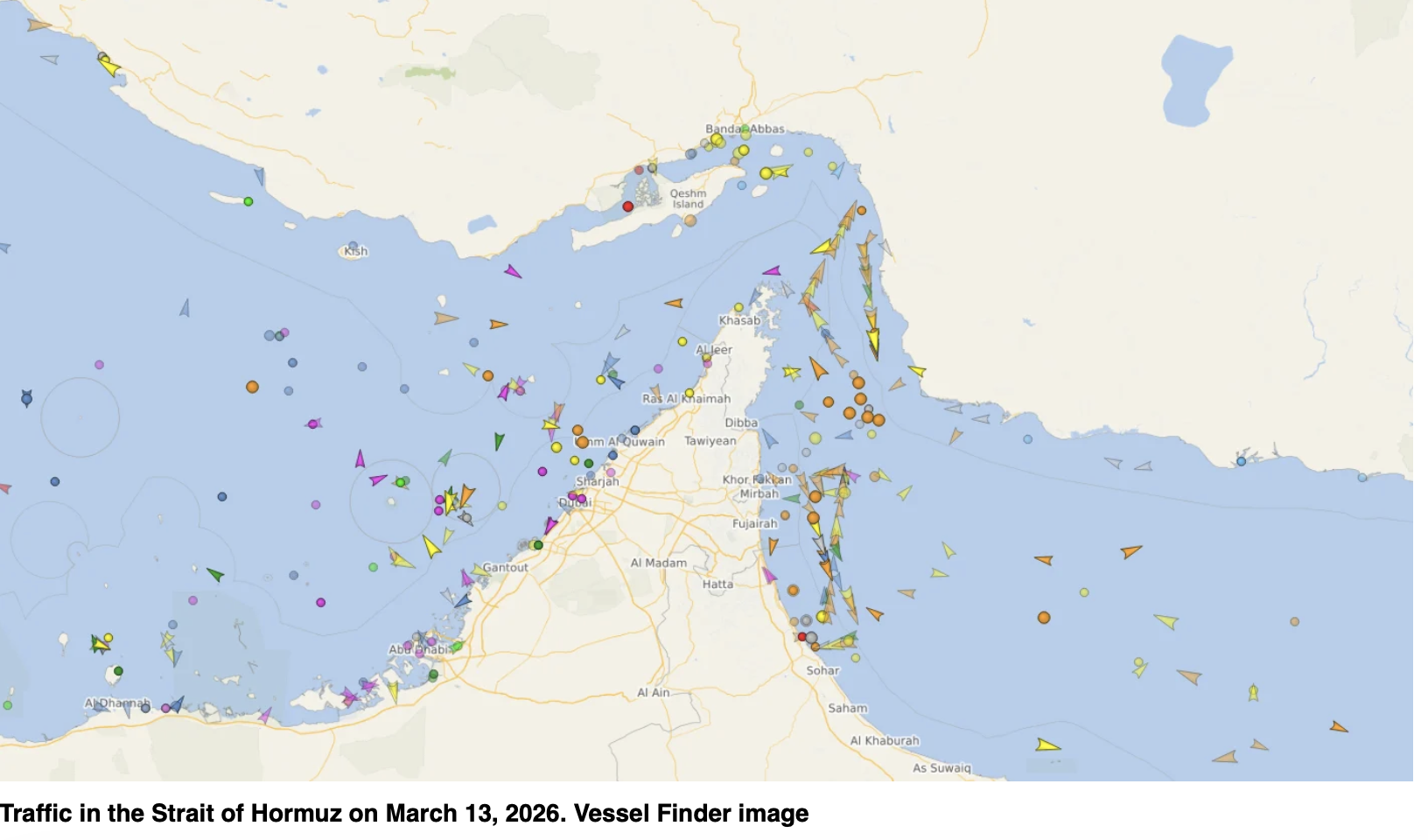
Trump last week first raised the idea of naval escorts for tankers in the strait “if necessary,” but on Monday, he hoped they wouldn’t be needed.
“When the time comes the U.S. Navy and its partners will escort tankers through the strait if needed. I hope it’s not going to be needed, but if it’s needed, we’ll escort them right through,” he said.
But even with Naval escorts, an expensive and time-consuming mission, it’s “not necessarily a guaranteed success,” according to Kirby.
“Drones can fly low and slow, they can fly fast and low, and they can do a lot of damage even to one ship with the Navy not being able to knock it out of the sky,” he said. (From TheHill.com)
And then this, from Associated Press:
“Many Countries, especially those who are affected by Iran’s attempted closure of the Hormuz Strait, will be sending War Ships, in conjunction with the United States of America, to keep the Strait open and safe,” Trump wrote on Saturday, later adding, “this should have always been a team effort.”
It was not clear if that multi-nation push was set to begin or if Trump only hoped it might, however. That’s because he also wrote: “Hopefully China, France, Japan, South Korea, the UK, and others, that are affected” will “send Ships to the area so that the Hormuz Strait will no longer” be threatened by Iran.
The normal route for declaring war is to communicate your intentions to your allies before you attack. It is to prepare and coordinate with your own national institutes before you attack. And, when you are going to seek assistance, it is a really good thing if you have not insulted your allies in numerous ways before asking for their help, especially when it involves great risking expensive ships, aircraft and lives.
“Hope” and “Hopefully” are not good substitutes for steady, consistent diplomatic relations and providing reliable, honorable leadership on the international level. This would-be war eagle has soiled his nest.
Small Groups and the Seven Deadly Sins

One of the great calming forces in my life is meeting with my small groups. One is a monthly book club; we are not all of the same mind; we bring different perceptions, and it is good for us. New doors open, we see things differently. Yesterday, I was confronted by a woman who reminded me that when she was reviewing a book she loved, and wondered why it was not popular, there was a silence. And then I said “Well, it was poorly written.” I expected a rebuke, but she said that having given it some thought, now she agrees. Whew!
(I hate confrontation. And I also have a big problem with lying. I believe lying hurts the person receiving the lie, and it hurts the liar. I think lies are seeds that grow wildly, creating a thicket of evil. Unintended consequences.)
My other small group doesn’t meet all the time, just for studies two or three times a year. Small group are where real connections are made, so the church makes an effort to help us connect with one another. This small group has met at the same time with the same leader for several years. It has several people who have been with this group for a long time. New people come once or twice and are never seen again, and some come and settle in for the long haul. We are diverse, from all segments of the church, and we have a wonderful gift in common. As we study and apply scripture, we laugh at ourselves. On rare occasions, we cry with one another. It is a band of buddies, and our buddies keep us safe in life.
Last night we were working on Envy. It was fascinating, and I learned something new. There is a technical difference between jealousy and envy. Jealousy is having something/someone and being afraid of losing what you have. Envy is wanting something – or something better than – someone else has, or something you lack. That’s food for thought for the rest of the week.
As a group, we thought the illustration for Envy was fabulous. One member asked to look at all the eyes, all green, and notice how cold envy is. Another said that Envy is the only deadly sin that gives no pleasure. We only have six weeks; it makes me laugh to know that the deadly sin of Lust is optional.
During an epoch when I find events stirring in me emotional turbulence, I leave these groups feeling at peace, and I sleep well at night. The world goes on. We find our people. They help us shoulder our burdens and march alongside us. Thanks be to God.
Rabbit Holes: Paul Samuelson, John Steinbeck and Anu Garg
It’s a rainy day in Pensacola, and Florida needs rain. The reservoirs are depleted, and a drought has been declared. As I go through my e-mail, I come to Anu Garg’s A Word a Day post. (Today’s word is “incubus”). I subscribed to his daily e-mail many years ago as I studied teaching English as an additional language.
Anu Garg is profound. He chooses wonderful words, words my foreign students adored. He also includes a quote at the end of each post. Today’s quote was from John Steinbeck.
A THOUGHT FOR TODAY:
The things we admire in men, kindness and generosity, openness, honesty, understanding and feeling are the concomitants of failure in our system. And those traits we detest, sharpness, greed, acquisitiveness, meanness, egotism and self-interest are the traits of success. And while men admire the quality of the first they love the produce of the second. -John Steinbeck, novelist, Nobel laureate (27 Feb 1902-1968)
And it just so happens that this coming month, my book club is looking at three Steinbeck novels; Tortilla Flats, Cannery Row, and The Moon is Down.
One thing leads to another. Tortilla Flats takes place on a hill above Monterey, California, where paisanos live.
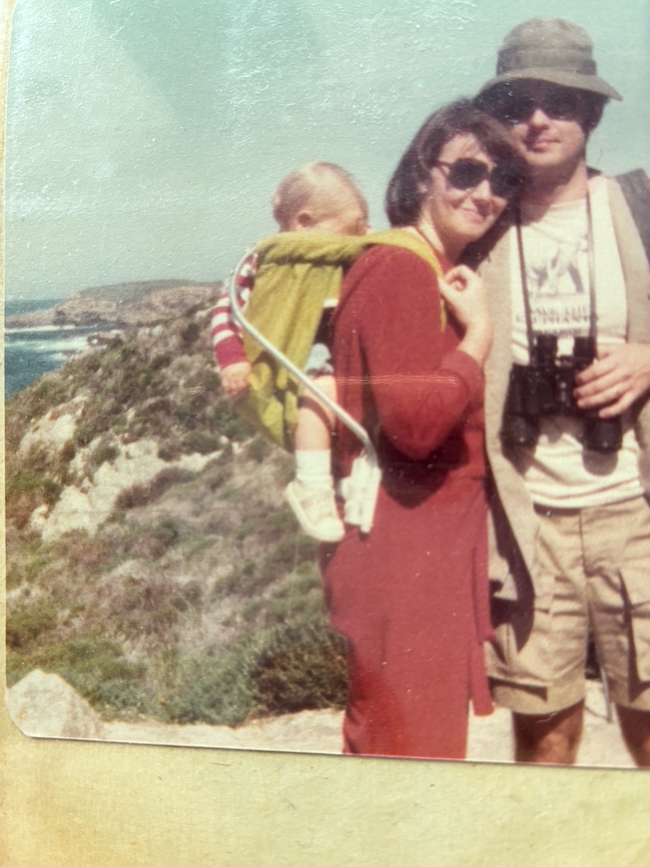
Of all the places I’ve lived, I have never loved a place the way I love Monterey, California. We lived on a hill above Monterey, above the old Del Monte Hotel, now the Naval Postgraduate School. The location sounds very suspiciously a lot like Tortilla Flats. The book bring back so many wonderful memories, particularly lying in bed at night and hearing the sounds of the sea lions barking down on the rocks, the gulls screeching, and the fog horn warning – we had a lot of fog.
And I remember Paul Samuelson, the author of the Economics textbook I used for an introductory economics class I took my freshman year in college. I never intended to like economics, but I found Samuelson readable – and even riveting. I remember one quote from his text: “Man does not always starve quietly” which had to do with his theories on economic development. Within that chapter, he also explains comparative economic deprivation.
This was a long time ago, so I am paraphrasing what I remember, and I might be getting it wrong. Samuelson talked about how once the most basic needs are met in a developing country, food, housing, clothing, jobs – you’d think everybody would be happy, but once people can stop scrabbling to survive, once they are stable, they start looking around and see someone who has more – and this is relative deprivation. The see someone with something they didn’t know they needed, and now they need this, too, to be happy.
So how does this relate to Steinbeck, and La Mesa Village, and Paul Samuelson?
My husband and I and our brand new little baby were leaving one military school and headed for schools in Monterey when he got a call from military housing in Monterey. It was such a nice, positive call when it started out, telling my husband about the lovely house we were to have with three bedrooms and a fireplace in La Mesa Village, and went on to give information about measurements and furniture and we were joyfully amazed. Our military housing had never been so fine, nor had any housing office called us and treated us so respectfully.
And suddenly everything changed. “Oh wait,” she said. “You’re not Navy?”
“No,” replied my husband, “I’m in the Army.”
“You’re not a Navy Captain?” she confirmed.
(silence as we looked in horror at one another)
“No,” my husband said shortly, the way you respond when a short-lived dream-come-true has just died.
“Oh. Well you’ll be in normal student housing then. Sir,” she added, respectfully, but all the pleasantness was gone.
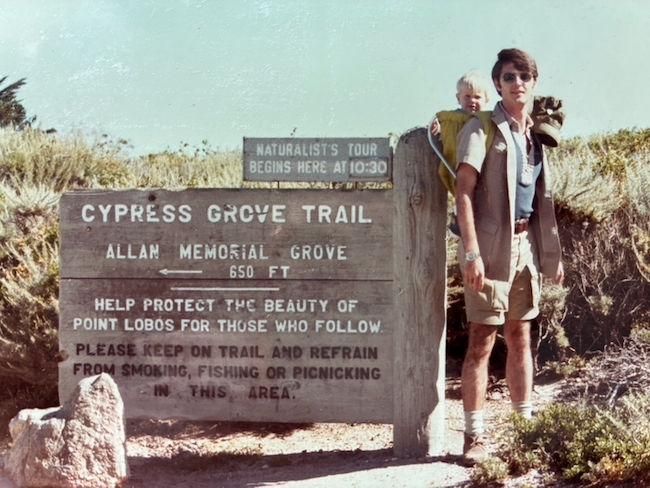
And that’s where my friend Paul Samuelson, the first Economist in the United States to be awarded the Nobel Prize (1970) comes in. How much do you remember from your college classes? As we accepted our student housing – not a beautiful 3 bedroom house with a fireplace, but a flat in a quad with two bedrooms and linoleom floors (no fireplace) I remembered the concept of relative deprivation. I had a roof over my head in Monterey, California, heaven on earth. I had a baby and good child care and great grocery stores; I attended the Naval Postgraduate School and the Defense Language School. On weekends, we hiked at Point Lobos, and we were happy. Happy, except for that occasional twinge of jealousy when we passed the houses higher on the hill with three bedrooms and a fireplace.
And when I felt that twinge, I smiled and thought of Paul Samuelson.
League of Women Voters: State of Union Bingo Cards
Gotta love those ladies in pearls, although lately the League has been attracting a much younger group of activists. An amazingly non-political group, the League looks at issues and candidates, and encourages INFORMED voters. All people are welcome; in spite of the name, the league also includes men. This is a group that makes a difference.

With their wicked sense of humor, the National League encourages all Americans to watch the dreaded State of the Union speech tonight, and has published a set of Bingo Cards to keep you engaged. You can download them for yourself and your family members at League of Women Voters: State of the Union Bingo or you can print these, which I downloaded from their website.



Yes, I am a member of this group. They keep up with the important issues, and they invite speakers to meetings to explain the substance to the public. They educate people about voting rights without bias.
They help with elections, and, where allowed, they help register new voters – people turning 18, new citizens, people who haven’t voted before. The current stereotype of this group as elderly educated women in pearls is quickly changing as super-charged young people seek to exert their rights in an orderly, lawful fashion.
By uniting women from all parties and all walks of life, they have a big voice and have effectively challenged unjust and unconstitutional laws at the local, state, and national levels. They take their commitment voting rights, issues, and impartiality very seriously.
And, they have a wonderful sense of humor 😄.
No Grown-Ups in Charge
We thought we would change the world, my generation. How on earth did we end up with a President who has the self-control, self-restraint, self-discipline, and dignity of a two-year-old?
How did we end up with a President who supports COAL, flying in the face of science, and wants to roll back protections against climate change, air pollution, water pollution, vaccinations, human rights, and stewardship of earthly resources?
What happened to the dawning of the Age of Aquarius, where we worked on harmony and understanding, and the dignity of ALL human beings?
How did we get stuck with a government of morons, whose first move was to remove all the bureaucratics who knew what they were doing? How did we allow all the oversights to be abolished?
How do we continue to allow the oligarchs to forbid the completion of a bridge between Canada and Michigan because of a conflict with a rich man who owns a competing bridge? How do we allow a Presidency which makes private deals to enrich his sons and son-in-law with opaque deals outside the public view?
How do we accept a new army of MERCENARIES, attracted by a $50K bonus for signing on, who have paltry training, disobey standard policing standards and who act with disregard to our national constitution?
I may be old, but I am not blind, nor am I stupid. I see, to my horror. I witness, and I document. I am part of a large and growing crowd of witnesses, (dead and alive!) who will call this administration to account for their grave injustices.
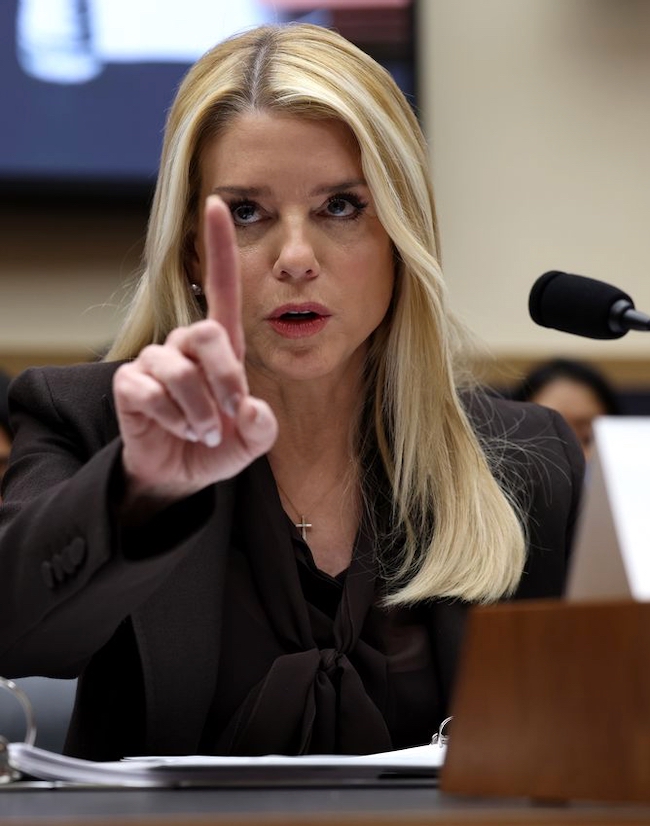
Pam Bondi, who cannot answer questions, who is protecting her boss, mentioned over one million times in the Epstein files, pointing her finger.
This week I attended a school service at our church, and the Old Testament reading was from Isaiah. It heartened me; this is what we are teaching our children
ISAIAH 58: 6-10
“Is not this the kind of fasting I have chosen:
to loose the chains of injustice
and untie the cords of the yoke,
to set the oppressed free
and break every yoke?
7 Is it not to share your food with the hungry
and to provide the poor wanderer with shelter—
when you see the naked, to clothe them,
and not to turn away from your own flesh and blood?
8 Then your light will break forth like the dawn,
and your healing will quickly appear;
then your righteousness will go before you,
and the glory of the Lord will be your rear guard.
9 Then you will call, and the Lord will answer;
you will cry for help, and he will say: Here am I.
“If you do away with the yoke of oppression,
with the pointing finger and malicious talk,
10 and if you spend yourselves in behalf of the hungry
and satisfy the needs of the oppressed,
then your light will rise in the darkness,
and your night will become like the noonday.”
Let us shine. Let us seek to shine.
“Your Mission is to Shine”
Today, our priest took on the brave task of dealing – not with politics or political events, (God forbid!) but addressing how we, as members of the body of Christ, are to respond to these events. We are to be light. We are to do what the bible tells us to do. We are to treat our fellow human beings – even those who are not like us, who do not share our opinions, with the dignity and love with which every human being were created.
Holy Smokes! That’s a tall order. We are to love one another. We are to welcome the stranger. We are to share. We are not to gossip or say mean things about our friends – or anyone!
In the resources posted online for his sermon, he quotes C. Andrew Doyle, 9th Bishop of Texas, from his blog. Because it is publicly posted, I am sharing because when he posts, he expects people to read.
Tuesday, January 27, 2026
An Embodied Christian Call to De‑escalation, Dignity, and Truthfulness in Immigration Enforcement
O God,… we thank Thee for Thy Church, founded upon Thy Word, that challenges us to do more than sing and pray, but go out and work as though the very answer to our prayers depended on us and not upon Thee… Help us to realize that man was created to shine like the stars and live on through all eternity. Keep us, we pray, in perfect peace, help us to walk together, pray together, sing together, and live together until that day when all God’s children, Black, White, Red, and Yellow, will rejoice in one common band of humanity in the kingdom of our Lord and of our God, we pray. Amen.
— Martin Luther King Jr.
A pastoral and theological statement for this moment — with particular concern for Minnesota.
Introduction
Episcopal Bishop of Minnesota Craig LoyaI write this statement not as a political pundit but as a pastor and teacher of the Christian faith, as a bishop in the line of the Apostles, now having served in that particular office for 18 years. I have read and followed events regarding immigration throughout my time as bishop and have made no secret of my belief that the church is called to serve all people. Over the last month, I have been watching events across the country, with particular interest in Minnesota.
The Church exists to care for souls, which means I will care for souls on both sides of any partisan debate. I will speak both to Republicans and Democrats, to Independents and the politically exhausted, to immigrants and citizens, to agents and to those who fear the agents, to people who protest and to people who feel threatened by protest. I will not tell anyone how to vote. But neither will I stand silently when fear overwhelms our public life. How could I? Our hearts grieve at what we are bearing witness to in the world around us, especially as it has to do with immigration.
Across the country, immigration enforcement has become a flashpoint of fear and rage. In Minnesota, that tension has sharpened into tragedy and public crisis.
In recent weeks, Minnesota has seen increased federal immigration enforcement, described by the DHS as the largest operation ever, alongside mass arrests, major protests, and increasingly fraught encounters between federal agents and Minnesotans. This includes multiple shootings involving federal immigration agents in Minneapolis this January alone, including both the killing of Renée Good and this weekend’s shooting that killed Alex Pretti. Nationwide demonstrations have followed over the past week, bringing unrest beyond Minnesota state lines.
Many Minnesotans who support aggressive enforcement are motivated by real concerns: the rule of law, public safety, fairness to those who immigrate legally, and the fear that communities can’t absorb disorder. Those concerns deserve a hearing. But no concern, however sincere, justifies dehumanization, disproportionate force, or policies that treat human beings as leverage.
In parallel with this violence, we have watched the conflict escalate rhetorically and tactically: on threats to invoke the Insurrection Act, talk of “occupation,” and weaponized public speech hardened into competing moral absolutes.
This is precisely the kind of moment that Christians should practice what I have elsewhere called an embodied apologetic: arguing not merely with words but demonstrating publicly, concretely, and nonviolently what we believe about the human person, the nature of authority, and the lordship of Jesus Christ.
By demonstrating, I mean far more than marching or civil disobedience. I mean demonstrating the love of Christ to all people. Remembering that in the migrant in our midst, we see the neighbor as defined by Jesus and the stranger God tells us to care for.
Groundwork: immigration enforcement and the theological depth of creation
To sit quietly while immigrants are demonized, blamed for crime, or dehumanized is to sit quietly while Christian doctrine is being threatened.
The Christian claim is that the Word became flesh, that humanity is encountered, named, and raised to new life in the material particularity of Jesus Christ. The Christian faith does not treat bodies, human lives, or human faces as incidental. When Christians claim that the incarnation altered the universe, we mean that the material world has theological depth.
Every human being bears the image of God, including the migrant at the border and the undocumented worker. That includes the asylum seeker fleeing gunfire and the citizen bystander who gets caught in the middle. It includes the protester holding a sign in the street and the federal agent wearing the uniform.
Human dignity is not conferred by paperwork, politics, or popularity. Human dignity is linked to God by the very generosity of the Godhead to bring us into being.
And when we understand human sinfulness not simply as “bad behavior” but as the fracture between what God has made and our too-often selfish desire to remake creation in our own image…well, then we have a theological framework for our contemporary moment.
The doctrine of sin explains our predicament. But the Christian gospel that Jesus Christ entered into our fractured humanity to redeem and reconcile us to God is our explanation of how things change.
As Christians understand human brokenness and healing, we are neither naïve about fear and disorder nor resigned to it. We recognize sin; we name it; we flee from it. But we do not stand and watch it with holy indifference.
We do not sanctify fear, baptize cruelty, or call dehumanization “prudence.” To insist otherwise isn’t pragmatism; it’s theological divorce: declaring some aspects of creation safe for politics and using Christian language to justify policies or tactics that degrade human dignity or scapegoat racial and ethnic minorities. The Church cannot allow this faith, the faith of every Christian generation, to be twisted in the service of anti-immigrant cruelty.
Which means we cannot accept a public order so structured that it trains us, through constant repetition and a steady diet of dehumanizing rhetoric, to see some people as contaminants, vermin, or existential threats by virtue of their very existence. That’s not realism. It’s idolatry.
And when that mythology attaches itself to nation-states, bullets inevitably follow. The Church has seen where such theological claims lead when fused with nationalism, racial mythology, and demands for unquestioned allegiance.
Christ alone is Lord. No other power takes precedence over the Church in Christ. And when any political ideology inclines that way, Christians must stand against it. If race-craft and nationalist mythology run rampant unchecked in our politics, they will destroy our democracy. Worse still, they are in the end a theological threat to the church.
If federal agents lose sight of their own humanity or basic constitutional rights amid tense confrontations, everyone loses. We are not only witnessing a newfound morality that allows harm, but we are also allowing a state to do moral injury to those who serve in law enforcement.
De‑escalation is Christian obedience
Because Christ is Lord, we cannot tolerate panic as policy. Christian leaders should call for immediate de‑escalation tactics in Minnesota and nationwide, especially from federal leaders, federal agencies, and ICE. Here’s why and how:
Because life is not a bargaining chip. When policies or tactical shifts treat human bodies as leverage, political leverage, intimidation leverage, violent “force multiplier” leverage, the state courts us into an anti‑human logic that Christians cannot affirm. It’s that simple.
Because fear is contagious. When immigration enforcement looks like a militarized invasion, everyone gets trained to be afraid: parents who teach their kids to hide, workers who avoid hospitals and schools, congregations that fear gathering for worship, citizens who fear recording with their phones, and agents who become afraid, too (more reactive, more quick to see every person of color as a threat).
That fear feeds on itself. Dehumanization multiplies. When any human group is treated as subhuman, everyone’s capacity for recognizing humanity begins to slip away, including the humanity of agents ordered to do their jobs.
Because the Church has something unique to say about what it means to be human.
Unlike many voices in our public life, the Church does not merely talk about human dignity; our allegiance to Christ compels us to embody it. Our witness must not be a slogan; it must be a public pattern of life: prayerful, truthful, courageous, nonviolent, hospitable, committed to the dignity of our neighbors and the strangers who live among us.
For these reasons and more, what we’re seeing must be named:
Agents are operating with increasing combat‑style visibility: helmets and vests, crowd‑control weaponry designed for more confrontational policing, tactical vehicles, and face masks.
Such a posture is often experienced as intimidation rather than order, and it can train communities toward avoidance and suspicion.
Whether you believe immigration law is too harsh or not harsh enough, Christians cannot remain silent about how our public life is changing. Domination is not justice.
When repeated lethal encounters happen across a concentrated operation, even if investigations ultimately exonerate agents in each incident, the moral burden shifts.
The question is no longer simply, “Was this legal?” but “What kind of society are we becoming, if incidents like this become normalized?”
Immediate steps we are asking for, nationwide
Stop. Take a breath. Listen. De‑escalate.
How can federal agencies and federal leaders de‑escalate tactics and posture immediately?
Pause operations that have produced multiple lethal encounters over a short period of time and inflicted widespread trauma across immigrant communities. Commit to visible accountability: name badges, clear chains of command, and timely release of video and incident documentation consistent with due process. Prioritize de‑escalation techniques in training materials and practices — especially community‑engaged operations where children and bystanders are likely to be present. End tactics that reasonably read as intimidation. Even if lawful, if their predictable effect is widespread fear and trauma in communities, stop them and adopt alternatives.
The DHS itself has framed this Minnesota operation as “the largest enforcement operation we’ve ever conducted in Minnesota.” That is cause for additional, not lesser, scrutiny.
What can state and local leaders do to protect both public safety and civil liberties?
Fully protect lawful protest while continuing to hold protesters civilly and criminally accountable should violence occur. Commit to clear nonviolent crowd‑management techniques that don’t replicate wartime intimidation. Do everything in your power to lower the temperature, rather than rhetorically inflaming the situation. Provide additional support and resources for communities experiencing disproportionate fear, including immigrant communities, communities of color, and neighborhoods receiving saturation enforcement.
What can protesters and activists do to practice disciplined nonviolence?
Commitment Card for Peaceful Protests
You are angry. You are grieving. Many of you are operating in understandable fear for your lives. But Christians do not get to numb ourselves to moral agency in the adrenaline of a crowd. Violence is not leadership. If you condemn dehumanization, you cannot then dehumanize the person in the uniform. If you are going to protest for dignity, you must demonstrate dignity.
What can the Church do?
Hold public prayers for peace and truthfulness.
Explicitly call on Christians to lower the temperature where they are: online, in-person, wherever misinformation, dehumanization, and fury are allowed to settle and fester.
Teach our people that anger is human, but vengeance is demonic. Demand better of our leaders. Insist on civil institutions that honor human dignity.
Open churches for pastoral care where needed.
For immigrants afraid to leave their homes. For families disrupted by ICE raids and detentions. For anxious citizens who feel too afraid to leave their homes. And yes, for agents’ families who love their children too much to let them keep policing. In the Diocese of Texas, we do not have the luxury of believing only one side of this conflict sits in our pews.
Consider organizing accompaniment/aid in lawful and disciplined ways: Food. Shelter support. Transportation to court hearings. Connections to legal resources. Trauma care. Emergency family preparedness plans. We are currently doing this in the Diocese of Texas, as are many dioceses around the country. You can contribute to our legal fund here. You can contribute and learn more about our convening a multi-faith initiative here feeding people. We will have a new immigration portal up in the near future. I hope this will inspire you to gather local leaders to demonstrate God’s love in Christ in various ways to our immigrant neighbors near our churches.
Train de‑escalation teams for vigils/demonstrations: Teams whose explicit task is to lower the temperature, protect the vulnerable, and prevent further harm. Consider training specific leaders for this ministry if it does not already exist in your community.
Preach and teach the holistic truth of Christian anthropology starting now. That Scripture does not sort people into worthy and unworthy buckets as our habit of Christian life. That there is no politics or policy so vital that we should make an idol of it. That we will not hand the American Church over as a get-out-of-accountability-free card to any national leader or political party that demands our silence or allegiance in return for temporary power.
Christianity is a serious faith precisely because it comes with a seriousness of expectation: that we will love our neighbors as ourselves. That we will speak truth to power. That we will love our enemies. And while Christians are not the silent majority, perhaps the silent Church will speak now.
The Associated Press has reported clergy in Minnesota risking arrest as part of their public witness.
People of faith are beginning to recognize what’s at stake in this moment.
We preach forgiveness, and we preach against sin.
We preach that Christ alone is Lord.
If we say the Word became flesh, we cannot allow policies and tactical shifts that treat human flesh as disposable. If we say Christ alone is Lord, we will not give the silence of the Church to any leader, any political party, or any government agency that demands our blessing as the price of patriotic cooperation.
Social de‑escalation is not merely political point‑scoring. It’s a confession that God’s government doesn’t require us to terrorize our neighbors into obedience, that Christ doesn’t radiate power through humiliation, and that the Spirit produces something other than fear within those who follow him.
Friends, we have been here before in our nation’s history. During my tenure, it was not that long ago that we faced the George Floyd period, among others. Yet, many who will read this can remember the fight for desegregation. We must rise to our better angels again in this moment, wherever we find ourselves. So I say:
To the anxious in our congregations: you are not forgotten.
To immigrant communities in our states: you are not alone.
To officers and agents who feel beyond the reach of critique or moral accountability: you are wrong about that. And, you are also not beyond God’s grace.
To the Church: we must not become the chaplain of fear.
Friends: de‑escalate.
Let’s insist publicly, prayerfully, and steadfastly for social de‑escalation in Minnesota and nationwide. Let’s demand accountable governance and policies that recognize our common dignity. Let’s refuse every ideology that functions by dehumanization. And let’s practice an embodied Christianity that shows our neighbors what it looks like when citizens are governed, not by panic, but by the peace of Christ.
Because otherwise it is not merely a political failure – it is a spiritual failure: a society willing to forget what a human being is. May God give us the courage to tell the truth. The discipline to refuse violence. And the grace to become, together, the kind of people who can carry that peace into a frightened world.
Posted by C. Andrew Doyle at 9:06 AM
Labels: ICE, immigrant, immigration, immigration reform, minneapolis, minnesota
EPSTEIN Files, Please, DOJ Pam Bondi
While we watch aghast as ill-trained ICE agents take down and kill American citizens, and Pam Bondi demands voter registration rolls from Minnesota (and according to the Brennan Center for Justice and Democracy Docket, looking for “sensitive” voter registration information from ALL states), 2 million (estimated) Epstein files have yet to be released.

Minnesotans are the least likely “domestic terrorists” ever, dressed in their buffalo plaid wool shirts and snow boots. Minnesotan, those white bread Scandinavian immigrants from long ago, Paul Bunyan-esque in strength an behavior, amicably welcomed their Somali newcomers, and are now protecting them as best they can while staying alive.
We all have to step back and ask ourselves “Am I a DOMESTIC TERRORIST?”
Look at these good church-going Minnesotans, shuttling immigrant children to school, picking up and delivering groceries to them surreptitiously, taking families hidden in their SUV’s to medical appointments. Do these seem like people who are afraid of their immigrant neighbors?
I respect Customs officials. I respect the rules of our nation. I do not respect those who overstep their jobs, who take delight in the adrenaline rush of attacking protestors, who shoot, rather than exhibit the self-rstraint we expect of law-enforcement. Most of us have no problem with ICE going after, as they state, violent criminals, few as they are.
It’s a Numbers Game
What we object to is going after people who are NOT criminals just because the Toddler-In-Chief wants to be able to show numbers. Trump, you started off your campaign in 2015 going after those rapists, criminals and drug addicts. We didn’t believe you then, and we sure don’t believe you now. We believe our own eyes. We are witnesses to violations of our Constitution by people who should be models of legal behavior.
Corrupting the FBI to investigate political appointments, and firing prosecutors when they tell you there is not evidence to get a conviction is not the American Way.
We know you want to keep your party in power. We know you’re afraid you are going to lose big in upcoming elections, and that is the purpose behind bullying the blue states and trying to intimidate their officials is to get an upper hand on the elections. YOU, who complain about rigged elections, YOU who whine that you really won the 2020 election (and your own elections supervisors would not support your claims) YOU are trying to bully, intimidate and subdue the population so that YOU can rig the elections!
Props to Minnesota! Props to them for showing fortitude, for being good neighbors, for welcoming the stranger (as Moses and Jesus taught us) and for showing self-restraint in the face of thugs and goons itching for a fight. Trump is eager to invoke the Insurrection Act, we know because he says so! Props to you, Minnesota, and to you, Portland for having the maturity and persistence and yes, a sense of humor to outlast, outplay and survive this despicable tyrant.
Orwellian Insurrection Talk v. Free Elections
I am haunted by memories of our Janus-like leader telling people while running for the office of President that if we voted for him, we would never have to vote again. What could he have meant by that? Aren’t elections part of what we value as a Democracy?
I am troubled by a leader who insists that what we saw with our own eyes on January 6th, that the thugs beating policemen, breaking and entering the Congress, chasing down Mike Pence with a noose was NOT an insurrection, not at all what he was going for when he told followers to “Fight Like Hell!” or we would have no Democracy. This leader who said he would be with them, and scurried back to the white house to watch events unfold on his Presidential television. He didn’t call off these hooligans and goons until HOURS after the violence began.
He PARDONED these thugs who invaded the Congress. He now calls it a “Day of Love.” Like we can’t see with our own eyes?
Just in time for Black History Month, he continues to dismantle exhibitions exploring the relationship between the enslaved and the enslavers. If it makes white people uncomfortable, isn’t that appropriate? Is slavery something we want to return to? And who, exactly do we enslave. Like are camera bearing Democrats candidates for the new underclass?
Armed with Whistles and Phone Cameras
J.D. Vance tells us to “lower the temperature” and help the ICE forces. J.D. Vance, you are talking to Minnesotans! You are talking to the descendants of Norwegians, the very nationality our orange leader wants to come to the USA! You are talking to people who have peacefully incorporated people from many nations, welcomed them! YOU created a spurious policy, based on a poorly made video by a social influencer. Yes, there was a child care scandal, and the people charged were not Somali but US citizens! YOU are creating the rise is heated emotions, and those you are shooting are armed with whistles and phone cameras!
Who has a history of creating violent insurrections? Who has sent unwelcome storm troopers into Minnesota? Who is poking Minnesota officials? Who is creating the problem and like every school boy bully, blaming the victim – “You started it!”
Go HOME, ICE. You are not welcome, you are not needed. You are invading the homes of US CITIZENS without a warrant, and laughing! You are shouting “Boo HOO!” to witnesses when you shoot a non-violent demonstrator 10 times! 10 Times! If that isn’t excessive force, what is?
I applaud the citizens of Minneapolis who are standing against this villainy and this bullying. I applaud their self-restraint and their persistence. I applaud Portland, Oregon for utilizing the legal system to lower the temperature and resist the pressure to give the radical bullying thugs any opportunity to raise the stakes.
Self restraint and Persistence while we activate the legal system is our only hope if we want to continue to have free and safe elections, and I believe that is what this is all really about.
Waiting for Snow
Lest you think I sit around between trips finding things to rant about, I will share my Saturday with you.
I am religious. I am a believer. LOL, here is where Catholics and Muslims have something in common – when I say “I am a believer” my Catholic friends think I am Catholic, and my Muslim friends think I am Muslim. Sooner or later we get it all figured out. I believe in a Great Creator, without whom nothing was created, and who is magnificent beyone our ability to understand. I believe he cares about us on an individual basis, and that he wants only good for all of us, whether we agree or not. I do not understand why he gave us all free will, and I know it would be a terrible world without it. I believe God is infinitely merciful.
So in the midst of some of the political horrors of January, I texted a friend and said “I need a meet-up.” We met up this morning at a local cafe and hashed out our lives, just normal stuff, families, husbands, children, and what we CAN do to make a difference. I have a friend from high school, and a friend from college, and friends from almost every post where we lived. We don’t always see one another, but when we need a good connection, we get on the phone – yeh, old school – and it’s like we’ve never been apart. When I need to re-balance, when my emotions are unmanageable, my friends help me recenter. Thanks be to God. At the cafe, I also saw another old friend, of a different political persuasion, and we were delighted to see one another, reminding me that our current differences are temporary, and mendable.

I arrived back home to the aroma of garlic and peppers sautéing; AdventureMan is making beans! We have been informed it MIGHT snow tonight, it is hovering just above and below freezing and a big pot of beans is a perfect hot weather meal.

Birds on the Bayou are chowing down, the fish must be running. We have pelicans plunging, an eagle chasing off a hawk, a cormorant and a heron.


Last year, almost this same time of year, we got several inches of snow. In previous years, I have seen a flake of snow here and there, but last year was a special confluence of factors – humidity, cold, polar vortex and a series of cold dry days in which the snow first fell, and then stuck around. It was like wiping away all the bad, a clean, clear new earth, few cars driving, lots of walking and lots of playing. Maybe we all need to play a little more. Pensacolians love a good snow, and it doesn’t stick around long enough to get old.

Our house is warm, we have a big pot of beans cooking, we have friends, I’ve recovered all my lost-for-a-very-short-time passwords and life is sweet. May you be equally blessed; may all your problems be little ones.
From Axios: America’s Healthiest and Least Healthy States

(The United Health Foundation was established by UnitedHealth Group in 1999 as a nonprofit, private foundation dedicated to improving health and health care. To date, the United Health Foundation has committed more than $845 million to programs and communities around the world, including a $100 million commitment to help advance and grow the health care workforce.” (from the United Health Foundation website)
This is one of the non-governmental agencies using facts and statistics to measure outcomes of health practices in the USA. Official statistics are disappearing. Entire years of government studies have been deleted from websites. Fortunately, there are people who saw it coming and who recorded the data from the websites, hoping for a future that respects science, research and statistics, and uses that research to create a greater good for us all, and shares that knowledge and best practices with the world.
Recent Comments
ExpatAlien on What Country am I Living … intlxpatr on Yellowstone: Old Faithful to C… Michelle on Yellowstone: Old Faithful to C… Cathy on No Grown-Ups in Charge intlxpatr on Waiting for Snow Wikipedia Donate Button

Amazina


Early Voting in Florida


 Here There and Everywhere
