Home Prices Drop, Sales Rise in Seattle
The Seattle Real Estate market has been fairly bullet-proof, until lately, when following the trend across the United States, prices here have also dropped, reports this morning’s Seattle Times. (If you have ever dreamed of having a home in Seattle, even after all my rain photos, now is the time!)
By ALEX VEIGA
The Associated Press
A real-estate-agents trade group says sales of existing homes rose 3.1 percent in July as buyers snapped up deeply discounted properties.
Stephanie Kuhn — who moved in March from the Seattle area to Orlando, Fla., because of a family emergency — has yet to find a buyer for her Mountlake Terrace condo.
The two-bedroom, 1,100-square-foot condo has been on the market since March but is drawing little interest.
“I can’t buy another house until I sell my house up there,” said Kuhn, 47.
Seattle and Portland, Ore., were among the top 10 metro areas in the nation with the most pronounced drop in home sales last month compared with July 2007, according to The Associated Press-Re/Max Monthly Housing Report, which analyzed all home sales recorded by all local agents.
The AP-Re/Max home-sales report was one of two released Monday. The second was from the National Association of Realtors.
Sales of existing homes in the West edged higher overall in July, as many buyers took advantage of falling prices in foreclosure-ravaged areas in California, Nevada and elsewhere, both reports show.
About 1.1 million pre-owned houses and condominiums were sold last month in the 13-state region, up almost 1 percent from the same month last year, the Realtors group reported. But the median home price plunged more than 22 percent to $273,200, it said.
You can read the rest of the article HERE.
Daily Odds and Ends
This cat was found as a kitten; he’d been hit by a car. The man who found him paid $1400 to get him well again. Now he had a home where he is happy, has special furniture just for him, and a life where he is treasured. His name is Lucky. He looks crabby, but he is a sweetheart:
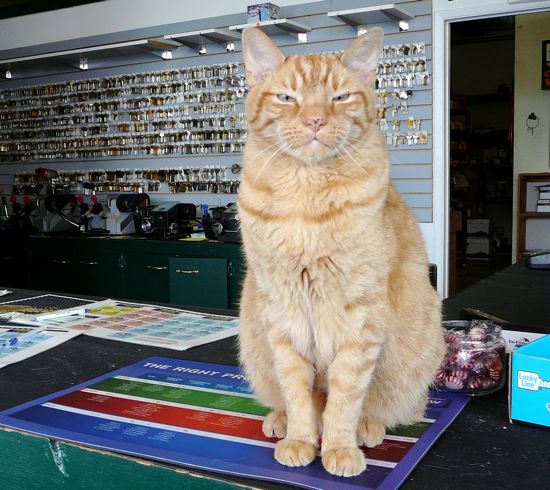
Lucky lives next door to an Ethiopian Grocery store:

In an antique store, I found this unique display:
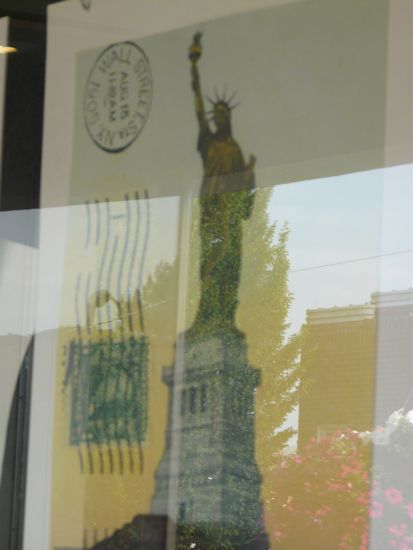
I’m crazy about old silver, and these pieces knocked my socks off. I am guessing it is old hotel silver – I didn’t ask.

I talked my military-wife-friend into going back to Tai-Ho’s and this time we tried their famous noodle soup with meat and chinese pickles. It is to die for!

Mom called as we were saying goodbye to say that if I was anywhere near the coast, there was going to be a fabulous sunset with magnificent clouds:
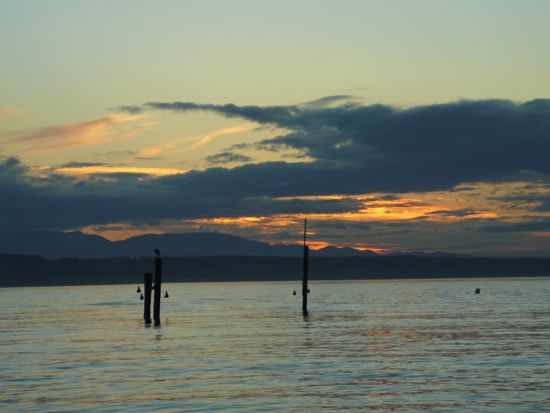
Everett Marina Park
This weekend there was an Arts Fest in the Everett Marina Park, drawing people from all over the area, as there were a lot of hands-on demonstrations and artists who encourage people to try developing a new skill. I saw this fabulous sculpture in the Marina Park:
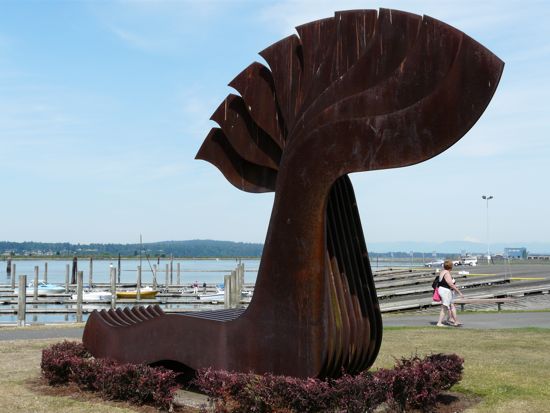
I love it because it looks like a whale, playing in the surf. It is made of like seven different slices of (wood?) (metal) bolted together, so that if you look from one end, all you see is flat slices, but the sculpture seems to move as you move around it. So creative!
All in One Day
Life is funny, in Kuwait, you are just getting up, brushing your teeth, getting ready to head for work, knowing tonight is date night and tomorrow you sleep in. I’m in my jammies, lying in bed with my computer, watching old Law and Order’s on TNT (sometimes the Olympics just get boring) and winding down, getting ready to call it a day.
And what a day! My long time Army-wife friend and I went out playing – picked up lunch at Ivar’s and took it over to the park to eat, where we found a whole flock of new friends:

This guy was persistent – after we ate our fish, we threw him the fries:

We looked at a house for sale – great bones, significant view, lousy location:

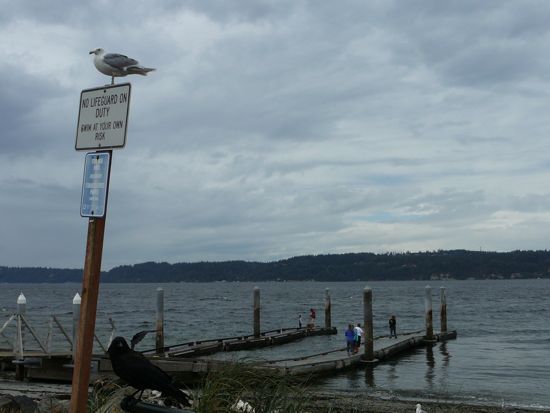
The day was warm, but there was a persistent wind, and at one point, we drove home from the crowded malls in a driving rain. Everywhere, for the next three hours, people were saying “this is October weather, not August weather!”
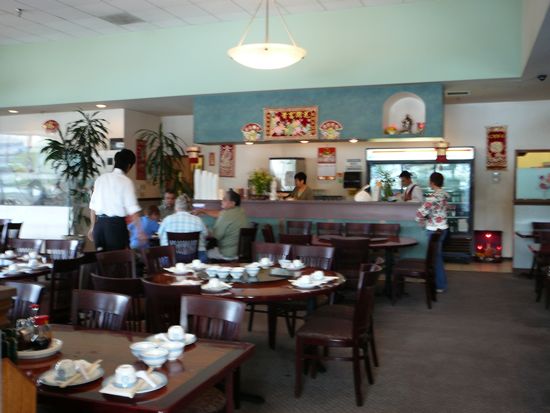
A great night for Chinese food. T&T’s Seafood is SO Chinese that there aren’t that many things on the menu I am comfortable ordering, and I fly close to the edge of the envelope when exploring Chinese food. I ordered Hot and Sour Soup, Green Beans with shaved meat, and Prawns with Honeyed Pecans. I sat with all the other take-out people waiting for their orders – it’s truly that kind of night. Everyone is talking about the weather. They don’t do a lot of delivery in Seattle; mostly you have to go pick it up yourself:

It was pouring when I went in – clearing when I came out:
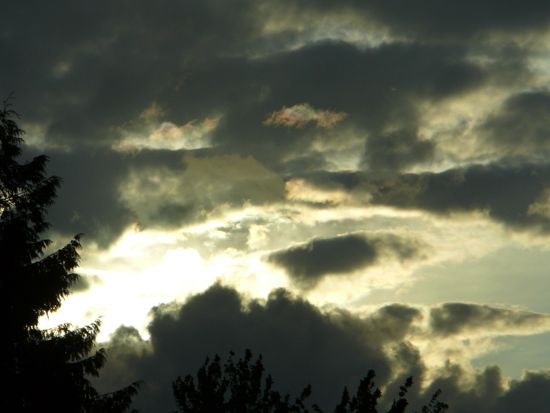
Heading toward the coast:

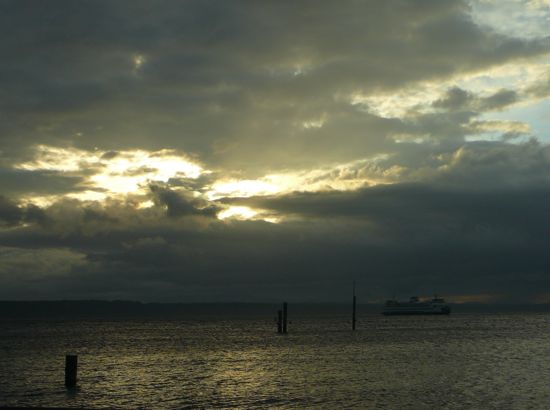
After dinner, I drove down to surfside to take a sunset photo with these wonderful clouds:
Long Way Gone in PB
Just a quick note to say that if you have been waiting to read Long Way Gone in paperback, it is now on the shelves.
Superlative Day: Gone Fishing
I’ve had some great and memorable days in my life, and this is one of them. My good friend said “Hey, you want to go fishing Friday?” and I said “Yes!” I had to go get a one-day fishing license, and I could add crab for a mere 50 cents, so I did.
We met up at 6:30 a.m. and were on the water by 7 a.m. on one of the hottest day’s in Seattle’s summer. As we left the marina, we passed an Eagle. (We thought of you, AdventureMan!)

AdventureMan must have heard us talking about him, because as the sun rises, he calls from Kuwait, eating Felafel sandwiches and ice cream as we watch the sun rise:

And set the crab traps – this is what an empty crab trap looks like. We put turkey legs and old fish heads in the bait box to attract the crabs:

It is a gorgeous morning. As my friends dig out the fishing polls, I admire the mountains and the sparkles on the waters of Puget Sound:
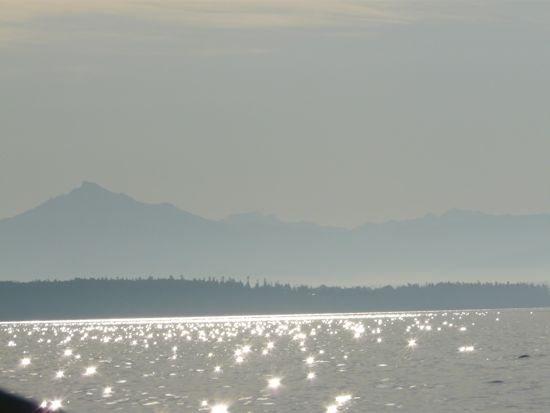
My friend has baited my hook and hands the rod to me. I lower the weight to the bottom, pull it up just a little and – an immediate nibble:
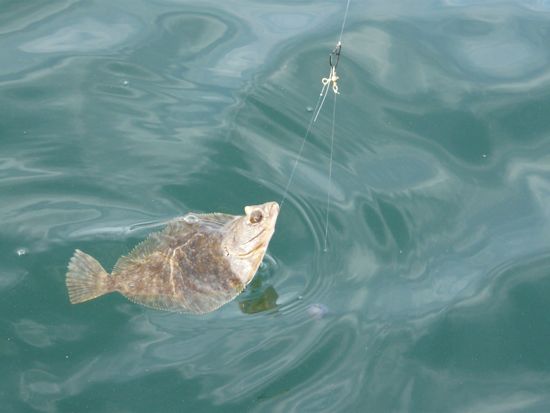
He’s a good size and he’s a keeper. My friend grabs my camera to take my photo with my first fish of the day, I hold the fish up – and just as she is snapping the shot, the fish does a little flip right off the hook and back into the water!
It doesn’t matter – the fish are biting and we are hauling them in. Some are too small; we take them off the hooks and throw them back, telling them to have a good life, grow big and we will see them again, we hope!
After about an hour of superlative fishing, we go back to check the crab pots. They are HEAVY with crab!
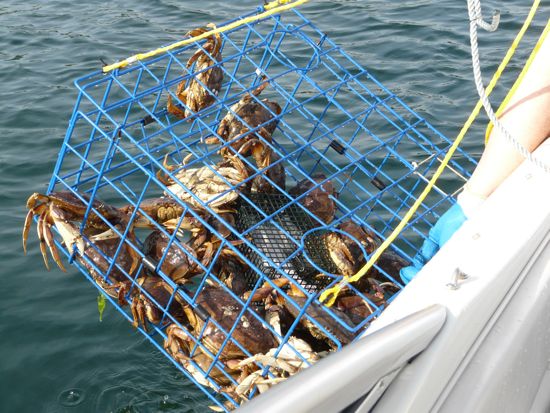
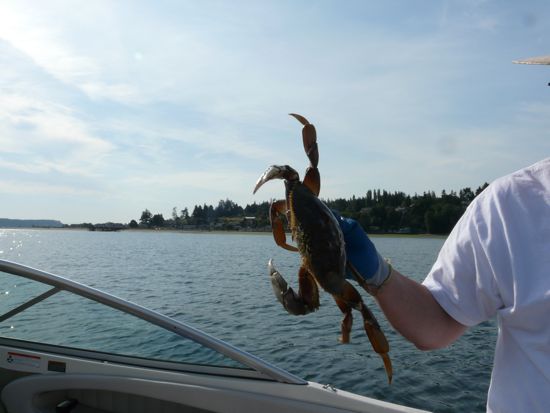
You can’t keep any female crab, or any male under a certain size, so any crab you think you might want to keep, you have to measure. You get a HUGE fine if you are caught with undersize crab. As we bring in the crab and the fish, my friend notes them down on our licence records, which have to be sent in to the state at the end of the season, listing fish we have caught, crab we have caught, and how many we threw back.

We catch a couple rock crab – those you don’t have to measure, and you can keep. Most of what we catch is the sweet and delectable Dungeness Crab – my very favorite after Alaska King Crab.

We had just decided to quit for the day – it was getting really, really HOT for Seattle, like 90°F/33°C (and there is an advisory for hot weather, and air stagnation) and we have nearly our limit for crab, and a respectable amount of fish, and we are happy, happy fisherpeople! Just as I am about to raise my line, I get a big bite, and catch the last fish!
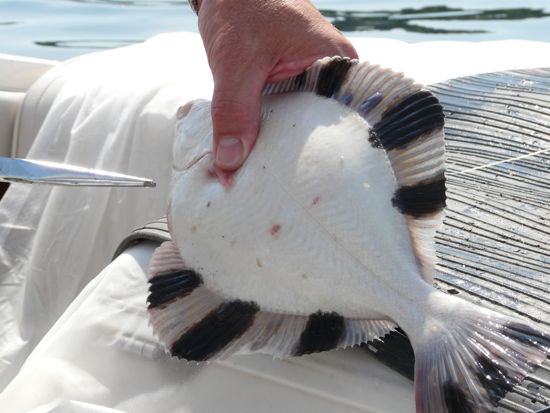
Here is our bucket, full of fish. The cooler is full of crab. What a great day to be alive.

Hard Times
I noticed it right away, driving home on the Seattle freeway – a significantly reduced number of cars, and NO one is speeding. Seattle has outgrown it’s freeways – even early mornings the roads are packed. Or they were – they aren’t now.
At first, I thought I might be imagining it, but the trip down to the ocean cabin in Oregon and back up and through and into Seattle several times have only driven the point home – there are fewer cars on the road.
The Starbuck’s have fewer customers. This is mid-summer, normally a carefree, free-spending time, but not this summer.
There are also fewer shoppers in the stores – and, in downtown Seattle, many of the shoppers were foreigners, here to take advantage of the bargains provided by the weakened dollar. I have to admit, it’s humbling to be a bargain destination. I know many Kuwaitis headed for the USA this summer, enjoying an improved exchange rate.
Sitting in Barnes and Noble with a friend, we heard a very plummy voice giving directions to friends who were to meet them there.
“We drove through the most amazing rural area,” she trilled, “SO picturesque, you must try to find it, it is called Bothell.”
Bothell picturesque? Bothell rural? Bothell is a bedroom community to Seattle, full of sub-divisions where there used to be farms. I wanted to give her a dirty look, but I remember saying the same things – glowing about the desert and camels or sweet little French villages, and I just figure what goes around comes around and I am just getting a little payback.
It’s also scary seeing how much prices have gone up – eggs! The same problem Kuwait is having – eggs are more expensive. Rice is more expensive. My Mother thinks some merchants are just marking things up because they can, and they can blame it on oil and it’s all just GREED.
I think all this has a lot to do with perception. Right now, people are feeling insecure and are trying not to spend too much money, not knowing what is around the corner. Americans have an irrepressible sends of optimism, and I suspect that a more positive approach will take hold in the next few months. Once it does, markets will rise, people will be spending again . . . and I wonder if the prices will go down, or just keep going up?


Geraldine Brooks: March
Geraldine Brooks knocks my socks off. If she writes a book, fiction or non-fiction, I will buy it and read it. The first one I read by her was Nine Parts Desire: The Hidden World of Islamic Women, and the second most memorable book was her Year of Wonders, a book about how the plague comes to a 17th century English village and how the villagers cope with it – how some survive. She has a knack for keen observations, and for writing so as to place you squarely in the scene she is describing.
So when she came out with a new book extrapolating from the experiences protrayed in Louisa May Alcott’s classic favorite Little Women, why didn’t I rush to buy it? March is described by Publisher’s Weekly as “the Civil War experiences of Mr. March, the absent father in Louisa May Alcott’s Little Women.”

Didn’t you love Little Women when you read it? What’s not to love? Those wonderful sisters, their saintly mother, working together, suffering together, prevailing through sheer grit and determination – we can read that book over and over again, loving it every time.
Geraldine Brooks takes us with Mr. March into the grim realities of the American Civil War, the “war to free the slaves,” the war to keep the United States united, or the war between the states. This is not the idealized world of Little Women, this is not the memory we have of the nice letters he writes home from the field, this is the reality of war and all it’s ugliness. As the book opens, Mr. March is fleeing a massacre, struggling to survive, he is surrounded by the dead and seriously wounded, bullets are flying past him and he has to cross a deep, rushing river. A man grabs him who can’t swim, and he has to push him away to gasp for air. The man drowns, March survives, feeling deep guilt. When he finally finds a group of his men, drying out by the side of the river, he sits down and writes to his girls about the sweet breeze in the air. Not a word about the horrors he has witnessed, not his personal despair about having failed a wounded comrade.
As we experience the horrors of this war with Mr. March, we experience with him the brutality, cruelty, and crudity of all conflict. There are no good guys. There is no “just cause,” just winners and losers, and it’s very hard to tell what they are fighting for. Seeing this war from the point of view of the combatants, we realize that no-one will remain untouched; that this experience will resonate through the rest of their lives.
Geraldine Brooks knows how to grab us and keep us gripped. Every chapter reveals a new facet – how March and Marnee met and married, how they built a life together, how, in their idealism, they lost everything. Most discouraging of all is how, below the surface, they understand themselves and one another and their relationship so little.
I dare you to read this book. It isn’t an easy book, and at the same time, it is a book with timeless qualities, and a book that will get you thinking and keep you thinking for a long time. Isn’t that the definition of a good book?
Summer Sunday at the Pike Place Market
We have a great favorite tradition – hit the early service, 0800 – what my friend calls “speed church”, the one hour service instead of the longer family services – and then head straight for the Pike Place Market. Things get started there slowly on a summer Sunday morning, and we even found a free parking space – totally amazing.
First stop is breakfast at Campagne. We don’t have reservations, but they find a place for us:


The sun breaks forth and the market is teeming with people by the time we are finishing up:

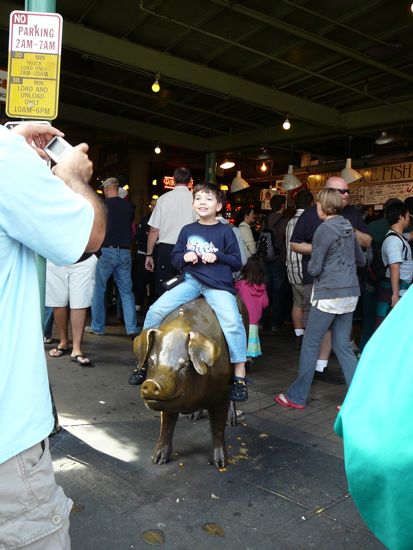
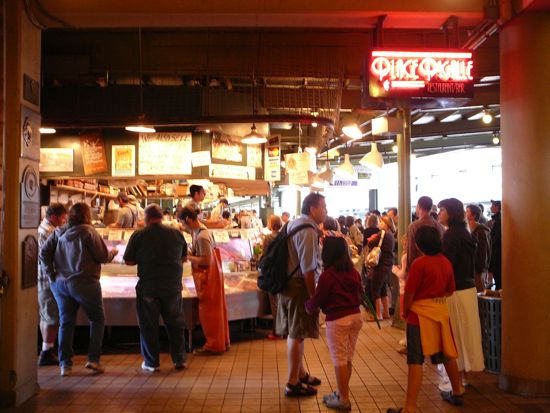

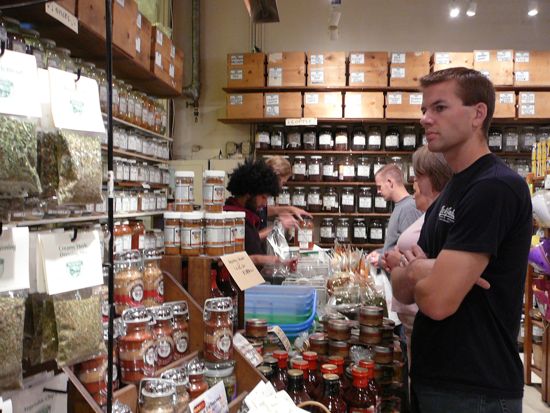

In the 1970’s, the market was a little run-down and shabby, and many business people wanted to raze it and use the space for office buildings. Seattle residents said “NO!” and instead, the market was revitalized. It is one of the major tourist destinations in the city, and a lively spot every day of the week.
A long time ago, before the big Seattle fire, my family lived just up the street from this market.
Recent Comments
intlxpatr on Shampoo Ginger tigerbutterya0c5ff1d… on Shampoo Ginger intlxpatr on British Soldier Kidnapped, Esc… John on British Soldier Kidnapped, Esc… intlxpatr on British Soldier Kidnapped, Esc… Wikipedia Donate Button

Amazina


Early Voting in Florida


