On What Grounds?
Let’s see. This guy was convicted, and sentenced to life imprisonment, and upon appeal, his verdict was upheld. Then an upper court of appeals judge reverses the conviction. When the Arab Times prints a story like this, they need also to report what the judge said, on what grounds he overturned the conviction, dont’ you think?
Bedoun acquitted in kidnap, sale of maid to Asian pimps
KUWAIT CITY: The Court of Appeals Wednesday overturned the verdict of a lower court and acquitted a Bedoun taxi driver, identified as Mohammed S., who had been charged with kidnapping and selling an Asian housemaid to three Bangladeshi pimps.
On March 4, 2007, the Criminal Court had sentenced the driver to life imprisonment in absentia. He submitted an objection letter to the same court, but the court upheld the verdict.
According to case papers the driver promised the victim a better job and lured her to run away from her sponsor. On June 17, 2006, the maid escaped from her sponsor. The accused waited for her in his taxi with two Bangladeshi men and the ‘four’ drove to an apartment in Riqei. There the maid was introduced to another Bangladeshi.
The man, who gave her shelter in his apartment, informed her that he had bought her from the driver for KD 150. The confused maid discovered she had been tricked and requested to go to the bathroom. In an attempt to escape by climbing down from the drainage pipes, she slipped and fell to the ground.
The building caretaker informed the authorities and police investigations revealed the apartment was rented by the driver, who reportedly went underground after the incident.
The session was presided by Judge Ibrahim Al-Obaid.
Congress Overturns Bush Veto
From BBC News.
The United States Congress has for the first time overturned President George W Bush’s veto, on a bill authorising spending on water projects.

The Senate voted 79-14 to overturn the veto, after the House of Representatives voted 361-54, well over the two-thirds majority required.
The last time a veto was overridden was in 1998, under President Bill Clinton.
The bill authorises billions of dollars-worth of local projects, many of which Mr Bush says are unnecessary.
It includes funding for coastal restoration in Louisiana after Hurricane Katrina, improving the Florida Everglades and fisheries in the Great Lakes.
Many local projects, such as dams, sewage plants and beach restoration, are considered important to local communities and therefore to politicians’ electors.
My comment: It’s about time. I only wish it had happened before, when Congress approved a child healthcare plan, Bush vetoed it, and Congress didn’t have the votes to override the veto.
In the US system, there are two houses in the legislature; the Senate, with two representatives from each state, and the House of Representatives, with representations allocated according to population. When a bill is passed, it has to be passed by both houses, by a simple majority, more voting for than against. Then the bill goes to the President for his signature. If he vetos the bill (says no) then the bill can still become a law if 2/3 of the members of the Senate and 2/3 members of the House vote for it.
Several members of Bush’s party, the Republicans, had to vote with the Democrats in order to overcome the veto.
You can read the rest of the story HERE.
In addition to national laws, there are state laws. In my state, Washington state, there is a really cool way a bill may be introduced by the people, called an initiative. If you can gather enough genuine signatures – and they will be sampled and verified, so you really have to have more than enough real signatures – you can put an issue on the ballot. It usually takes a lot of signatures, and most of the time the initiatives can be a little bit crack-pot, but it puts a lot of power in the hands of the people to have this instrument for making laws.
On the other hand, there are also referendums, in which the elected legislators will send a bill to the people to vote on.
These are both forms of direct democracy, where the people vote for themselves, instead of trusting elected representatives make the decisions for them.
You would think it would be an ideal form of democracy, but to work, it requires that people educate themselves on the issues, and people often aren’t willing to do that.
Operation Hope Newsletter
Hot off the press!
Greetings OH Family,
Lots of exciting news to share with you! On Wednesday, by God’s grace 1,027 bags were distributed!! The grateful recipients of our labor bore mile-wide smiles, while some had looks of disbelief as we handed out winter bags to them. If you haven’t been on a distribution this (or a previous) year, please DO try as you’ll be blessed beyond measure as you come face to face with our needy brothers and sisters. You’ll never be the same after the experience ~ but don’t just take my word for it ~ come out with us to find out for yourself!
We have had a request to serve the TCN workers at Al Jahra Hospital. A date for that distribution will be forthcoming.
Rumaithiya street cleaners (all 120 of them) received a winter bag on Saturday. Today 250 street cleaners for Salmiya area received their winter bags; and tomorrow, by God’s grace the Salwa cleaners (150) will receive theirs! OH wishes to provide the same for as many neighborhood cleaning crews as possible, SO if you can find out where the buses load and unload for your area we’ll organize a distribution for them.
Thank you to the Catholic Church in Kuwait City for a donation of KD 50 from their summer library proceeds ~ also, to the BLS for their donation of toiletries, which we’ll give to the Philippine Embassy very soon.
Your patronage to the following activities will add support to OH’s fundraising efforts:
· November 10th: Harvest Festival at N.E.C.K
· November 11th: Beauty Bazaar in Salwa
· November 16th: Fall Bazaar in Mubarak Al Kabeer
· November 17th: KTAA Bazaar @ the Dar Al Cid
· December 4th: BLS Bazaar @ Al Hashemi (SAS Hotel)
· December 8th: AWL Charity Bazaar
For more details on exact location and timings, please contact Becky & Chelly on ophopevolunteer@yahoo.com
OH’s 2nd packing of 1,200 winter bags commenced last Friday. Called Student Day we were assisted by scout troops, the ASK National Honor Society, and many other students of varying ages and backgrounds. What an awesome sight to see our children knee-deep in charity work. My hope is that their experience will be remembered (and carried out) for a lifetime! Thank you to everyone who participated!
Thanks also to the New English School teachers who spent their ½ day off on Wednesday to help load vehicles for our deliveries! While they could have spent the day doing something else they chose to spend their time helping us to help others! What a blessing!!
OH needs more volunteers to pack this Friday, November 9th at 3:30 PM. A small set-up team is also needed that day to arrive at 2:30 PM. 1,200 bags must be packed that day so we’ll need a lot of hands on deck! Please RSVP your commitment to Kathleen on ophopevolunteer@yahoo.com
Thanks to Barbara R. for hosting a very fun and successful Bunco fundraising event for us today! We raised KD 125 having fun and so can you! If you are interested in helping to raise much needed funds to cover the cost of our winter bags, please contact Chelly and/or Becky on ohq8fundraiser@yahoo.com. Simply gather your circle of friends for a quiz night, talent show, Bunco, dinner party, or whatever you wish! It gives your friends something fun to do, but moreover it helps us to help others!
Someone asked me a few days ago if I ever get discouraged by the enormity of our job in helping the poor living in Kuwait. The truth is ~ yes. When I am depending upon my own abilities to get the work done I feel very discouraged.
A wise young Australian man who was born without limbs said this, “The awesome thing about the power of God, is that if we want to do something for Him, instead of focusing on our capabilities, we should concentrate on our availability. Once we make ourselves available for God’s work, guess whose capabilities we rely on? GOD”
So when discouragement comes over me I return (with humility) under the authority and leadership of the Almighty in this mission of mercy that I might become available so that His capabilities may be glorified.
“I’ve Never Seen a Diabetic Cat Before”
I arrived in Qatar with my diabetic cat, and quickly had to find a vet who could help me keep her blood sugar stable. I had been working for a year with a German vet who had all the latest equipment, but we were never able to fully stabilize my little kitty.
I was told there was a vet in Qatar, and fortunately, his office wasn’t too far away. We made an appointment and went for a visit.
“I’ve never seen a diabetic cat before,” he said. “I’ve seen one diabetic dog, and I will go on the internet and find out what to do.”
Diabetes in animals is relatively new, and most of the vets think it is a combination of more people having housepets, the pets living long enough to develop these illnesses, and the poor quality of the processed kibble we buy them. My little cat had been put on special foods, those expensive cat foods which have a guaranteed formula.
He was a very friendly and open vet – always had lots of customers. When my cat would have a diabetic crisis, he would take a blood sample and run it to the lab across the street himself, even with a waiting room full of people and their pets. He loved his job and he was very open.
On yet another visit when my cat was in crisis (it’s not easy to give enough insulin and not too much insulin, and that can vary even day by day) he took her into his surgery, and the floor was littered with dead cats in nylon net bags. Dead cats everywhere! All over the floor! I was horrified!
“It’s spaying day,” he explained briefly. The cats were not dead, just anaesthetized, and kept in nylon string bags to keep them contained if they started to come out of anaesthesia. Believe me, there are sights you don’t want to see. That is one of them.
Eventually, my little sweetie gave up the fight. She died in the car on our way, one more time, to the vet. Diabetes is a terrible disease, and when the body fails, it just fails utterly. It can only manage so much destruction.
The vet suggested another cat – he always had cats that needed homes – but we weren’t ready yet. We needed some time to grieve our little sweetie. Adventure Man said “NO MORE CATS” because his heart breaks every time we lose one.
And this was the same vet who, when we were ready, gave us the Qatteri Cat. He said he thought the Qatteri Cat looked like me!
If you have a cat who develops diabetes, it is not a death notice. First, go online and gather all the information you can. Thousands of people have diabetic cats who are living fine, normal lives, they have formed an online community, and they can give you support and information. There is special animal insulin made for cats, and special small syringes. Some diabetes can be controlled with diet alone, other cases require one, two or three shots a day. The cats mostly don’t mind. (Mine did.)
My sister has a diabetic cat, too, and she tells me that he KNOWS when he needs another shot and comes to her at his injection time. He doesn’t resist, he seems to know the insulin helps him. You will think at first that you can’t give injections, but you can. It’s amazing what you can do when you have to.
“Madam, This is MY Job”
I had all kinds of ideas for my new garden – new climate, new challenges. Yes, I had been told that the climate was too hot for orange trees, but I want to give it a try. Yes, my gardening friends haven’t had much luck with lavendar, but maybe I will have better luck. I toted huge pots and bags of fertilizer, clipped bougainvillia and started more plants, wanting that half/half color, rising early to work in the cool of the day. Rosemary! Basil! Lemon trees! As soon as the weather began to cool, I planted my seeds to see what would sprout, what I could transplant, what would thrive. I’m willing to risk a little failure, but I was hoping for some spectacular results.

Inside once the sun had risen, having a glass of water, my front doorbell rang. Who could it be at this hour of the morning? I checked the security peephole, and it was the compound’s chief gardener. With him was the man assigned to take care of our house. He really didn’t know a lot about gardening.
“Madam,” the chief gardener started, with a wave of his hand indicating all the new potted flowers on my entry stairs, “this is MY job.”
I stood there, looking stupid.
“Madam, your job is to tell us what you want. You don’t want to take our work from us.”
I was stunned. People who garden, all over the world, share a sheer love of getting our hands dirty and watching gardens grow and thrive, we love the patterns, we love the floozies who get all the attention, we love the characters who give depth and texture, and we create the backgrounds, the stage, on which they dance.
Slowly, slowly, we worked out an arrangement. I would bring in pots and plants, the gardener would actually pot them – but I would show him exactly how I wanted it done. From time to time, I would pot one up myself, late at night when no gardeners were around, and he would pretend not to notice. I would do the starts from seeds, he would tend them. On a hot afternoon, he would occasionally drop by and take a rest in the garden, and I would pretend not to notice.


I didn’t achieve spectacular. I had some failures – lavendar and orange trees. I sometimes wonder whether we form the garden, or the garden forms us? My results were not what I had envisioned, but it had its’ own beauty.
Working together, the gardener and I created a lush paradise, a backyard retreat where my husband and I would sit in privacy and enjoy the bougainvillia, and the lemon trees, the pots of rosemary and basil and jasmine, making the garden aromatic as well as beautiful. The Qateri cat would enjoy the marvellous smells, and track the occasional bird who dropped by.
With the cooling temperatures in Kuwait, my hands are just itching to get dirty. 🙂
P.S. Those are illustrations, not my real garden.
Wind Up Lights for African Homes
My husband gave me a wind-up flashlight (British English = torch) and I love it. In movies like The Blair Witch Project or crime movies, the flickering and dying of a flashlight always foretells something really really bad is about to hapen. I love it that I have a flashlight I can keep winding up.
In our national legends, we have Abraham Lincoln doing his schoolwork on the back of a shovel, next to a flickering fire. That must have taken real dedication. Imagine what your own life would be like if we had no light after sundown. . .
From BBC News AFRICA:
The technology behind the wind-up radio could soon be helping to light up some of the poorest homes in Africa.
The Freeplay Foundation is developing prototypes of a charging station for house lights it hopes will improve the quality of life for many Africans.
The Foundation said the lights would replace the expensive, polluting and unhealthy alternatives many Africans currently use to light their homes.
Field testing of the prototypes will start in Kenya in the next few months.
Light and life
Kristine Pearson, director of the Freeplay Foundation, said few Africans in the continents most vulnerable areas had access to electricity to light homes.
“Their life stops or is very narrowed when the sun goes down,” she said. “Two extra hours of light would make a big difference to their life.”
You can read the rest of this article about developing this technology for Africa HERE
One Thing Too Many

I was tempted to volunteer for something yesterday, something I KNEW was wrong for me, but I just wanted to help so badly. Volunteer work can do that – how can you say no? You WANT to help. I have to remind myself that I want to do the things I must do WELL, that taking on commitments and making promises I end up not able to keep is not helpful. It doesn’t help the person I promised to help, and it makes me feel terrible about myself.
I already have a full plate. I really cannot take on more.
Sometimes we get a sign. If we are very lucky, if we have the eyes to see, we recognize it.
Some tomatoes had become overly ripe and I needed to toss them. I could easily hold four, but wanting to do it all in one swoop, I picked up all five, and one fell. When I saw the splat pattern on the floor, my first thought was that it had some artistic merit, and my second thought was that I needed to photograph it as a reminder of what happens in life when we take on one thing too many.
Poor Witness
I had hoped to miss the worst of the traffic yesterday morning when I got on the highway, but for some reason, traffic was still heavy. Suddenly, in less time than it takes for me to write it and for you to read it, there were silver and red sparkles in the air, a shrieking of tires, and a car two cars in front of me trying to regain control, bouncing between two lanes.
Everything slowed to an almost halt, without – thanks be to God – any further collisions. One car, weaving in and out, had clipped another.
I’ve often been amazed at how closely these cars whip in and out without crashing. I think I’ve just never seen it happen before. That impact sends the car that’s hit totally out of control. By the grace of God, no one appeared to be physically injured.
I wondered if I should stop, but I realized I didn’t know anything. I didn’t even know for sure which car had been the hitter and which had been the hittee. I would be a very poor witness. All I saw was this firework like explosion of silver and red – the tail light, I am guessing. And heard the sickening screech of tires as both cars tried to avoid a more serious collision.
A good witness isn’t someone who is guessing. I continued on. Saw the aftermath of an almost identical accident just another kilometer up the road. The good news is that it slowed down the traffic, made it more meditative. . . life is short, folks. There is nowhere we have to be in that big of a hurry.
Operation Hope Options
What I love about Operation Hope, in addition to the good works they are doing in the Kuwait Community, dreaming big and making it happen – is that they offer a variety of ways for the public to support them.
If you can give hands-on help, they welcome you.
If you cannot – they welcome your donations!
Here is there most recent newsletter – please, if you can help this worthwhile effort, in whichever way you are most comfortable, please, help. You could have a lot of fun helping pack the winter clothes, or delivering the bags. Or you could have a lot of fun throwing some of your money at the problem.
OPERATION HOPE – KUWAIT
A Mission of Mercy
October 28, 2007
Greetings OH Family!
Exciting news ~ 1,200 winter bags were packed Friday afternoon. Thanks to numerous volunteers the colossal task of setting up, packing, and cleaning up was very quickly accomplished (with the bulk of our winter apparel packed in about an hour’s time!). Moms, dads, children of all ages, business exec’s, and even someone’s grandmother helped to make the miracle happen! My daughter says the pile of bags resembles Mount Everest. . . I think I agree with her!
Another 1,200 coats, thermal underclothing, hats, socks and gloves will need to be packed this Friday, November 2nd at 3:30 PM. This packing date will be a very special one because it is the OH – KUWAIT Student Day. All students (pre-k to university) are encouraged to participate. Kindly RSVP your confirmation to Ms. Kathleen on ophopevolunteer@yahoo.com at your earliest convenience. We’ll require a set-up team to help at 1:30 PM as well. The set-up group should be strong and team-oriented.
The cement foundation for our new headquarters was laid yesterday, and the tent ought to be erected by the weekend ~ God willing. Thanks again to Mr. Nasir for his generous donation!
Thanks also to Debbie B. for donating some of her handicrafts for OH to sell at the bazaars this fall/winter. We appreciate your support!
Deliveries to the poor will begin on Wednesday, October 31st. We’ll need six drivers with SUV’s to arrive at my home at 12:45 PM to load & deliver 324 winter bags in Jabriya. (Mubarak Hospital janitors/porters)
Our second group of volunteer drivers should arrive to my home at 5:45 PM on Wed., October 31st to load & deliver 250 winter bags in Khaldiya. We’ll need 4 SUV drivers at that time. (Kuwait University janitors/porters)
Our third group of volunteer drivers should arrive to my home at 9 PM on Wed. October 31st to load and deliver 128 winter bags in Jabriya. We’ll need 2 SUV drivers at that time. (Mubarak Hospital janitors/porters)
Our fourth delivery will take place at 5 AM on Thursday, November 1st. OH Administrator, Jaye Lynn; Student Ambassador, Emily; and I will make that delivery of 73 bags to Mubarak Hospital janitors & porters.
Kindly RSVP your committment to Ms. Kathleen on the address mentioned earlier for the day & time you can help us deliver. We’ll also need one or two OH photographers are on hand at each delivery, please.
Donations have been steadily coming in ~ glory to God! We still need an additional KD 250 to pay for the next 1,200 hats, socks and gloves that students will be packing this Friday. Your support is most appreciated.
Currently the outstanding balance for the 5,000 coats that were shipped in is KD 17,475.000. Please prayerfully consider hosting a fundraising event, or making a donation that we may continue to pay off these coats. For those who have hosted a fundraiser or given a donation I thank you so very much! The number does seem rather large BUT God’s provision is larger! Each update to follow this one will feature the total outstanding balance at the start so that you may be blessed to watch the sum fall!
Proceeds from Kuwait’s largest charity bazaar (December 8th @ the Crowne Plaza Hotel – Farwaniya) will be donated to OH – KUWAIT!! Please support this exciting one-day event by volunteering (and attending). We estimate we’ll need 40 – 50 volunteers. If you are interested in helping please contact Ms. Kathleen as soon as possible. This may be an ideal opportunity for Boy/Girl Scouts and National Honor Society members to fulfill their obligations to community service hours. Also, if you wish to participate as a vendor, please contact Bazaar Coordinator Karla K. at 626-6223.
Brothers and sisters there are so many opportunities to help ~ so many means in which to make a profound difference in someone’s life. Let us not allow a busy schedule or even a social stigma dictate to whom and how much compassion we extend. Jesus didn’t just help people. He inspired others to do so and encouraged helping behaviors. My prayer for each of us is that the Lord would prompt us to lend a helping hand to the needy and deepen our compassion amidst suffering.
God bless,
Sheryll Mairza
OPERATION HOPE – KUWAIT
All Hallow’s Eve
In Kuwait, as in the USA and many other countries, there are mixed feelings about Hallowe’en. As a kid, we all dress up and go from house to house saying “Trick or Treat” and people give us candy. There isn’t anything scary – or spiritual – about it. It’s just a goofy day, not even a day off from school.
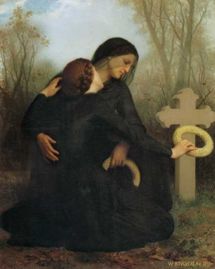
When we lived in Germany, All Saints Day (November 1st) gave a whole new, more spiritual meaning to the holiday, which has overlayed an ancient pagan New Year celebration. On All Hallow’s Eve, entire families go to the cemetaries carrying red-glass enclosed candles. The candles are placed on the graves of those who have died and are still remembered. German graveyards are beautiful, with lovely monuments, and flowers on the graves in summer, pine boughs in winter.
BBC religions gives us the modern meaning of Halloween:
With their pumpkin-lanterns and witch costumes there’s many a child who’ll have great fun this evening celebrating Hallowe’en. It was derived originally from an ancient Pagan festival, it has become part of our culture and generally it’s an innocent excuse for people to have a good time.
Literally, of course, it is the eve of All Hallows – a preparation for the observance tomorrow of the Feast of All Hallows or All Saints. That feast gives the assurance that there is a state of being that stretches beyond our life here on this earth – an affirmation of the essential spiritual nature of human life. People are made for more than can be experienced over our lifetime spent in this world.
The Apostle Paul underscores that when he writes to the Ephesians, that the highest role reserved for human beings is, as he puts it, “to rule with Christ in the heavenly world. And God has done this to demonstrate for all time the extraordinary greatness of his grace in the love he showed us in Christ Jesus”.
So this Christian season brings us a comforting reminder that there is a destiny designed for us humans that assures us of a continuing existence, and it’s a promise endorsed by Jesus when he spoke of the many mansions that he has prepared for us. [Hallowe’en assures] us that God’s love stretches far beyond death.
Rev George Loane, former Methodist superintendent on Prayer for the Day, 31 October 2006
More information on Halloween from Answers.com:
Jack-o’-lantern. Originally a turnip, this carved vegetable with a candle inside was used by a poor Irish soul named Jack to light his way as he wandered for eternity, denied entrance to both Heaven and Hell — Heaven because of his habitual stinginess and Hell because he had, while still alive, forced the devil into a pact that would spare Jack from ever going to Hell. Boy, did he live (or rather die) to regret it! The Irish brought this custom to the US in the 1840s but found it more convenient to use pumpkins than their traditional turnip, rutabaga or gourd.
Bobbing for apples. Bobbing for apples on Halloween (the time of the apple harvest) may have been inspired by the Celtic fables about heroes who journeyed across water seeking the magical apple tree on the mythical isle of Avalon. There is a more accepted theory: that the Celts (taking a leaf from the Romans who worshipped Pomona, the goddess of fruit and abundance) played a parlor game on Samhain in which unmarried people would try to bite into an apple in water or on a string; the first to succeed was thought to be the first to marry.
Trick or treating. This resembles the All Soul’s Day practice called “going a-souling” in which poor people would beg door-to-door. In exchange for a gift of soulcakes, the soulers would promise to say a prayer for the dead. It’s possible, though, that the practice developed independently in the US in the 20th century, especially the part where children threaten a trick if they don’t get a treat. (This may have been around the time manufacturers came up with fun-sized candy bars.)
Costumes. The Celts wore disguises, usually made of animal skins, during their Samhain celebrations, possibly to conceal themselves from the spirits who were afoot at the time. So those Catwoman and Spider-man outfits may be most true to the ancient roots of the practice.
Ghost stories. The Celts believed that during Samhain, the boundaries between this world and the otherworld became blurred and the spirits of those who had departed walked the earth. Those beliefs survive to this day in the form of ghost stories and divinations: asking for helpful hints or guides to the future from those who have second sight.
Recent Comments
intlxpatr on Shampoo Ginger tigerbutterya0c5ff1d… on Shampoo Ginger intlxpatr on British Soldier Kidnapped, Esc… John on British Soldier Kidnapped, Esc… intlxpatr on British Soldier Kidnapped, Esc… Wikipedia Donate Button

Amazina


Early Voting in Florida


