Learn to Linger
One of the most painful criticisms I would hear of Americans as I lived overseas was that we were all happy, friendly people, but we didn’t really care about people. We didn’t maintain relationships. While painful, it was also, as I looked deeper, true. Our lives are fast-paced, and we move from place to place, person to person, job to job and rarely develop the deep relationships that come from building a long, deep friendship. Today’s lesson from Rick Warren talks about how we can do better in our relationships:
“All of you should be of one mind. Sympathize with each other. Love each other as brothers and sisters. Be tenderhearted, and keep a humble attitude.” (1 Peter 3:8 NIV)
You’re never going to live in harmony with your wife, your husband, your friends, or anybody else without empathy. You can’t have a team without being aware of what’s happening in each other’s lives. That’s why when people work together in an office, they may do work together, but they’re not a team unless they know what’s going on in each other’s lives.
Empathy is so important because it meets two of our deepest needs: the fundamental need to be understood and a deep need to have our feelings validated.
If you’re going to build a team of friends or at work or in your small group, you have to build empathy into the structure. So how do you become an empathetic person?
Slow down. Because our culture teaches us to move fast, we end up relationally skimming. That means you’re hitting the high points and missing all kinds of details in the lives of people you care about most. James 1:19 says, “Be quick to listen, slow to speak, and slow to get angry” (NLT, second edition).
Ask questions. Proverbs 20:5 says, “A person’s thoughts are like water in a deep well, but someone with insight can draw them out” (GNT). Most people hold their emotions pretty close, and they don’t automatically share how they’re doing. “I’m fine” is the standard answer, but that doesn’t really tell you how they feel. If you ask, “””How are you doing?” and the other person says, “I’m fine,” here’s how you draw out a more telling response: Learn to ask the question twice. That’s how you develop empathy. Pause and say, “No. How are you really doing?” The other thing you do is learn to linger. That means don’t be afraid of silence. Just be in the moment, ask the question, and don’t be afraid to sit there and wait. Don’t immediately go into your agenda. Just listen and learn.
Show emotions. The Bible says in Romans 12:15, “Rejoice with those who rejoice, and weep with those who weep” (NASB). Empathy is more than saying, “I’m sorry you hurt.” It’s saying, “I hurt with you.” You’re willing to cry with them, and you’re willing to rejoice with them. There’s only one way you’re going to be that empathetic — stay filled up with God. If your tank gets low on God, you’re not going to be empathetic at all. You’ve got to stay filled up with God.
“All of you should be of one mind. Sympathize with each other. Love each other as brothers and sisters. Be tenderhearted, and keep a humble attitude” (1 Peter 3:8 NIV).
Female ISIL Recruits Surprised and Disappointed
They sign up for Hunger Games and get domestic drudgery and uber-control:
From Associated Press via Huffpost
PARIS (AP) — When three British schoolgirls trundled across the Syrian border; when a pregnant 14-year-old ran away from her Alpine home for the second time; when a sheltered girl from the south of France booked her first trip abroad — they were going to a place of no return.
Only two of the approximately 600 Western girls and young women who have joined extremists in Syria are known to have made it out of the war zone. By comparison, as many as 30 percent of the male foreign fighters have left or are on their way out, according to figures from European governments that monitor the returns.
In interviews, court documents and public records, The Associated Press has compiled a detailed picture of European girls and young women who join extremists such as the Islamic State group — a decision that is far more final than most may realize.
The girls are married off almost immediately, either in Turkey or just after crossing into Syria. With an estimated 20,000 foreign fighters — among them 5,000 Europeans — in Syria, there is no shortage of men looking for wives. That number is expected to double by the end of the year. Once among the jihadis, the women are not permitted to travel without a male chaperone or a group of other women and must remain fully covered outside, according to material published by Islamic State and researchers who follow the group. Otherwise, they risk a lashing or worse.
European women who blog about their lives under Islamic State tend to be chipper about the experience, but reading between the lines of an e-book of travel advice shows a life that will be radically circumscribed, with limited electricity, lack of even the most basic medicine, and practically no autonomy. Women do not fight, researchers say, despite the Hunger Games-like promises of recruiters.
“The lives of those teenage girls are very much controlled,” said Sara Khan, a British Muslim whose group Inspire campaigns against the dangers of extremist recruiters. “I don’t think that discussion ever comes up. It’s so romanticized, the idea of this utopia. I don’t even think those young girls have necessarily considered that there’s no way back now.”
The two exceptions to the rule of no return are perhaps most revealing in the very paucity of details about their journey — driving home how murky life is behind the Islamic State curtain.
Sterlina Petalo is a Dutch teenager who converted to Islam, and came to be known by the name Aicha. She traveled to Syria in 2014 to marry a Dutch jihadi fighter there and managed to return months later — apparently making her way to the border with Turkey, where her mother reportedly picked her up and brought her back to the Netherlands. Back home, she was immediately arrested on suspicion of joining a terror organization.
Her family, lawyers and prosecutors refuse to discuss the case. She was released from custody last November and has not been formally charged.
The second woman known to have made it out of the grip of Islamic State reconsidered after just a few weeks. The 25-year-old Briton, whom police have not named, had taken her toddler son all the way to Raqqa, the group’s stronghold, when she decided she had made a mistake and called home. She made her way back into Turkey and her father met her there. How she was able to travel the 250 kilometers (150 miles) from Raqqa to the Turkish border city of Gaziantep is not clear. Back in Britain, she was detained and is now free on bail pending formal charges.
Without knowing how the two escaped, it is difficult to say whether other girls and women could follow their path out of Syria, said Joana Cook, a researcher at King’s College London who studies the links between women and jihad.
“There are clearly many human smugglers working within Syria right now, helping Syrian civilians escape the violence, and I wonder if there is a similar, perhaps even growing market, for those trying to escape after joining ISIL,” Cook told The Associated Press in an email, using one of the acronyms for the Islamic State group. “There is great disillusionment for many who have traveled to Syria to join ISIL and you’ll find many stories of those who went abroad noting ‘this isn’t what we signed up for.'”
The question is whether the girls understood from the beginning how limited their choices would be once they crossed the frontier.
The case of a 15-year-old Avignon girl exemplifies such doubts. The girl hid her second Facebook account and Islamic veil from her moderate Muslim family, thereby managing to join a jihadi network, according to the family’s lawyer. Once within a unit of the al-Qaida offshoot Nusra Front, she was not permitted to leave, according to her brother, who went into Syria to fetch her and was turned away by the extremists. A French boy who joined the group around the same time was allowed to go home.
“I think they understand the premise of that, but not that they understand it in reality,” said Melanie Smith, another researcher at King’s College ICSR.
The networks that bring the women into Syria are increasingly organized around the extremists’ dream of building a nation of multinational jihadis, meaning European girls are particularly prized. Each new Facebook post, each new cheerleading Twitter account — and they pop up by the hour — helps them subvert government efforts to prevent young people from radicalizing and leaving.
The doggedness of jihadi methods for recruiting girls can be seen in the case of Amelia, a 14-year-old girl from France’s Alpine Isere region.
Amelia was first contacted on Facebook by a French fighter on Jan. 14, 2014 and within a month agreed to go to Syria and marry the man, who identified himself as “Tony Toxiko.” After she was turned back by airport border police in Lyon on her first attempt, “Tony Toxiko” persuaded another French adolescent girl to join him in Syria.
Amelia, meanwhile, ran away from home to Belgium, where an imam performed a religious ceremony that wed her to a different man, an Algerian jihadi. She returned to France homesick and pregnant, just long enough to speak to investigators building a case against a middleman who helped her run away. This winter, Amelia managed to deceive her family and left again — making it to Syria with the Algerian fighter, who is more than twice her age.
“It’s particularly difficult for these families. For them, radicalization is happening on the Internet and outside the family sphere,” said Sebastien Pietrasanta, a French lawmaker working on a program to de-radicalize young people. “For a girl of 14, I believe we can clearly save her from herself and save her from these barbarians.”
A French journalist got dangerously close to jihadi recruitment methods by creating a fake Facebook account that attracted a marriage proposal from a fighter in Syria.
Under the pseudonym Melodie, the journalist shared a video on the account, almost immediately getting a message from a man identified as Bilel, who asked how she’d liked the montage of him showing off in a 4X4 and with his weapons.
“I passed myself off as a 20-something, not stupid but a little lost, who suddenly found a huge response from a man in Syria,” said the journalist, who wrote a book “In the Skin of a Jihadist” under a pseudonym.
Bilel’s doubts about her began to grow as her reluctance to join him became clear. She ended up getting threats that she said would likely frighten a bewildered young woman into submission. As it was, the journalist, who never met Bilal in person, remains under constant police protection a year later.
“We’ll find you, we have the best operators here, you don’t know what you’re getting into, you’re messing with a terrorist group, you and your family will pay,” the woman said, recounting the litany of threats she received after returning to France. “If they were speaking to a 20-year-old, it would be very hard for her.”
___
Associated Press writer Mike Corder in Amsterdam contributed.
Busy Edmonds Saturday (and Mukilteo, too)
It’s a short trip, and we’ve stayed on Pensacola time, so we are up early on a Saturday morning; we know the Edmonds Pancake Haus will be open. I’ve been going there for about 20 years and it always looks the same. It’s an institution. When I lived in Edmonds, a large group of “8-o-clockers”, i.e. those who attended the 8 a.m. service at Saint Albans on Sundays would head down to the Edmonds Pancake Haus afterwards, hoping we could beat the Lutherans (or Baptists or Methodists or Presbyterians) to the coveted larger tables in the back room. There are a lot of Edmonds people up early.
The menu has undergone some renovations; prices up, a few things gone, a few added, but they always have Swedish pancakes with lingonberry sauce (sigh, yes, it is a Scandinavian thing). I think lingonberries also grow in Alaska; I can almost remember going out on a boat somewhere to pick them, but I was a kid and memory is fuzzy.
My memory of Swedish pancakes, however, is sharp, as is my appetite 🙂

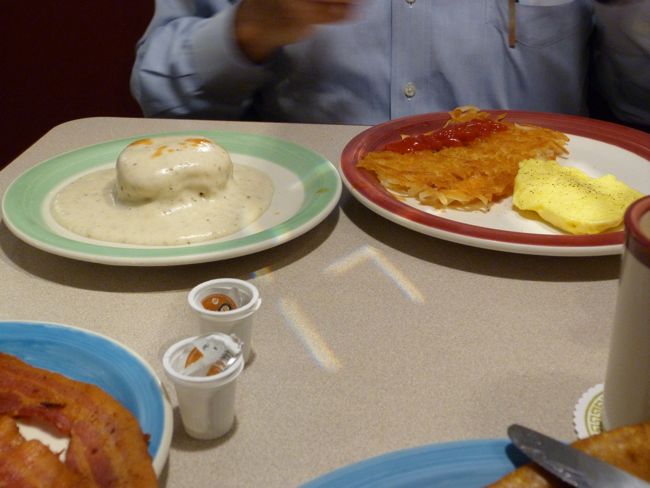
AdventureMan has his favorites, biscuit and gravy, and hash browns, and bacon, LOL. Now that we are all grown up and childless, we can do what we want. Sometimes, we even order dessert first, no, I am not kidding. Why waste calories on something healthy when you can have dessert?
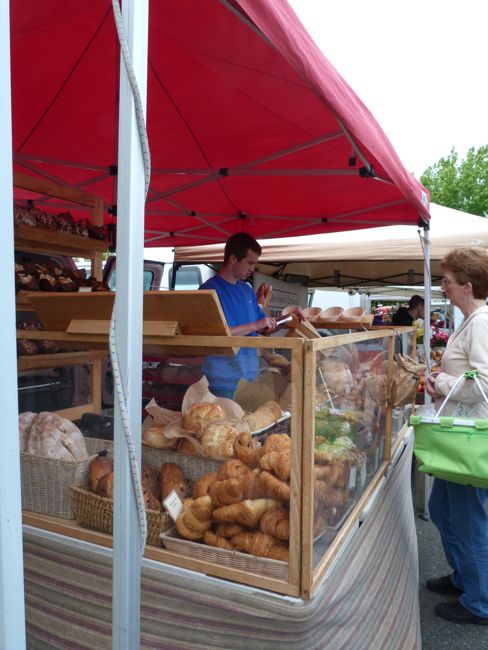
From the Pancake Haus, we head for the Edmonds Market. “It’s not a full market yet, not until June,” Mama warned, but it was actually a fairly large market, with bakeries, pizzas, many flower vendors, a few vegetable vendors, and a lot of assorted vendors – soaps, jewelry, knit goods, pictures, plants and fresh fish and frozen meats. Lots to see, lots to buy; we found a bouquet of flowers just right for Mama, to replace the Mother’s Day bouquets which have bit the dust.


We visit for a while with Mama, then head out for a drive to Mukilteo, where we almost bought a house once. I still go visit that house from time to time, knowing it wasn’t right for me, I am glad someone bought it and is enjoying the view.
AdventureMan loves me, he suggests we eat at Ivar’s in Mukilteo. I LOVE eating at Ivar’s in Mukilteo, and by one of life’s amazing and wonderful coincidences, we are seated at my favorite table.
This is the view:

Choosing something from all the great options at Ivar’s is hard, and just this very day, Copper River Salmon has come in.

I’ve been yearning for something else, however, something we can’t get in Pensacola. I would call it a Pacific Northwest Bouillabaisse, and I think that is what they used to call it, but now they call it something else. AdventureMan ordered the same thing, and because it is messy (Alaska crab legs; you have to pull them apart and crack them to get the sweet crab meat out of legs and claws) they bring a large plastic bib, which I am not to proud to wear because cleaning crab is truly a messy job.
We got so into it, I didn’t take a photo, LOL, but here is the description:

Actually, it was something a lot like that, something on the fresh menu last Saturday but not today. It was sort of like a ciopinno, something made specially for that day, I guess. It was so good, so good, we savored every morsel.
Outside the restaurant, fishermen are trying their luck at catching something as the ferry comes in and out, bringing waves of fish:
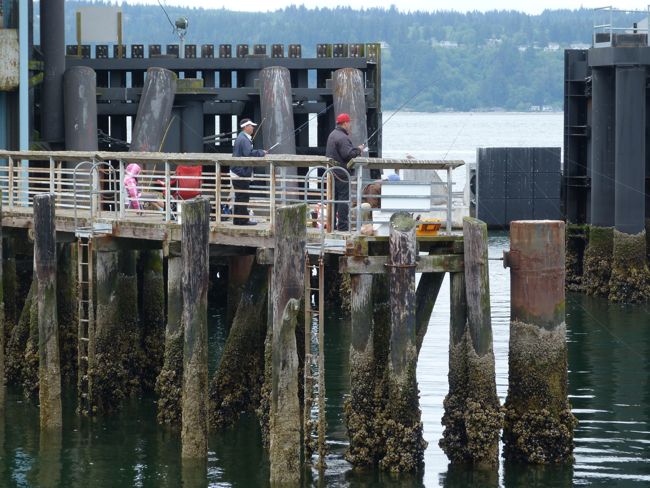
This is what the ferry boat riders see as they arrive, a view of Ivar’s from the water side:

And this isn’t even a holiday weekend; there are always lines for the ferries, but on weekends, especially during summer, those lines can take hours. Some people keep cars on both sides of the ferry, because you can always walk on; it is cheaper and you don’t have to wait in line.

The sign telling you what matters at Ivar’s in Mukilteo:

As we are leaving Mukilteo, we have a stream of historic planes coming towards us; it is part of the historic flight air show out of the Mukilteo flilght museum:

Small Glimpses of North Seattle
“As Sallam wa alaikum!” I smiled at the Sudanese women coming in to their jobs in our hotel.
They stopped still in their tracks.
“You speak Arabic!” they said, astonishment clear on their faces.
“Only a little!” I smiled back.
I had a whole squad of new friends.
Now that financial times are easing, many hotels we have visited over the last few months are renovating and getting new mattresses. This was a real bonus for our Sudanese friends, and all of their friends.
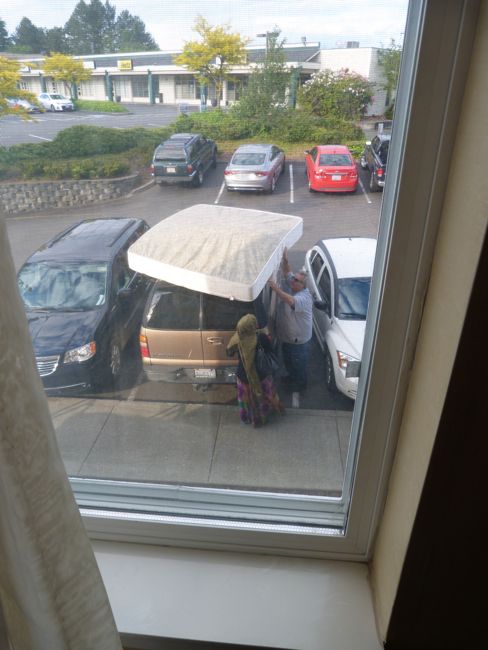

Have you ever tied a mattress on the top of your car and tried to drive? It is a wild and dangerous adventure; the wind lifts and pushes the mattress toward the back as you drive. Unless the mattress if firmly and thoroughly tied down, you are in for a wild ride.
And then again, if you are new in a country, and in need of a mattress, a wild ride is a small price to pay.
On our way back to the hotel, we see protestors in red shirts at every corner. This is not protestors Ferguson style, these are Seattle style protestors, making a big demonstration for fully funding public education, and all the signs are grammatical 🙂

We are so full from lunch that we just want a small dinner. We find a good Ethiopian restaurant listed near our hotel, and head there, but when we arrive, there is plywood over two windows and a sign saying “Sorry, dear customers, but due to car accident our restaurant is closed until it is fixed.”
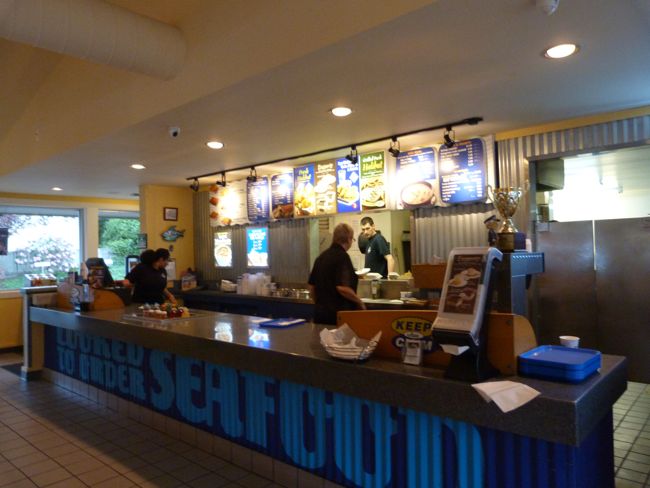
We end up at Ivar’s Seafood Bar, which is quick food, but not cheap food, and very very good food. We are greeted by an older man as we enter, he says “Welcome to Ivars! I hope you have a great meal.” We thought he might be an official greeter, but no, he was a customer like us. We ended up sitting in a booth next to his, so he stopped on his way out to see what we had ordered (halibut and chips, smoked salmon chowder, Dungeness crab cocktail) and just to chat. It’s an Edmonds kind of thing, neighborliness and civility.
The Edmonds Bakery
There is more than one Edmonds, in fact there are several layers of Edmonds experience, but the biggest distinction is between the day-trippers and the locals.
There is a great Starbucks, and it is usually packed. There is another cafe, on Walnut, and it has wonderful pastries and a loyal clientele. And then, there is the Edmonds Bakery, where the locals go.
We go the first time because we are killing time before my Mom’s hair appointment is over and we can take her to lunch. We are also two hours past our normal lunch time, so we tell ourselves we can have some tea and a cookie just to tide us over until lunch.

The Edmonds Bakery has the best pies, wonderful pies with a home-made taste, especially when berry season comes in. They also have maple bars, which we stop and buy for my Mom the next day, as she has always loved maple bars.
The Edmonds bakery also has a notable collection of cookie jars. Everywhere you look, a different cookie jar. I imagine a few of them are probably very valuable on the collectables market, but most of them are just so much fun.
Of course, I wouldn’t want to be the one to dust them all!
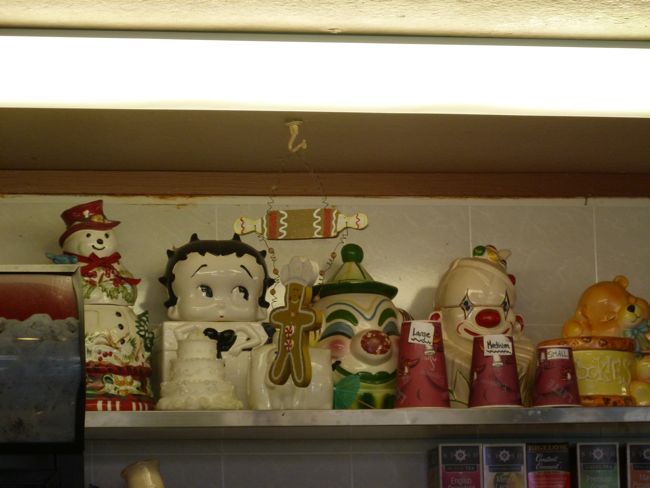
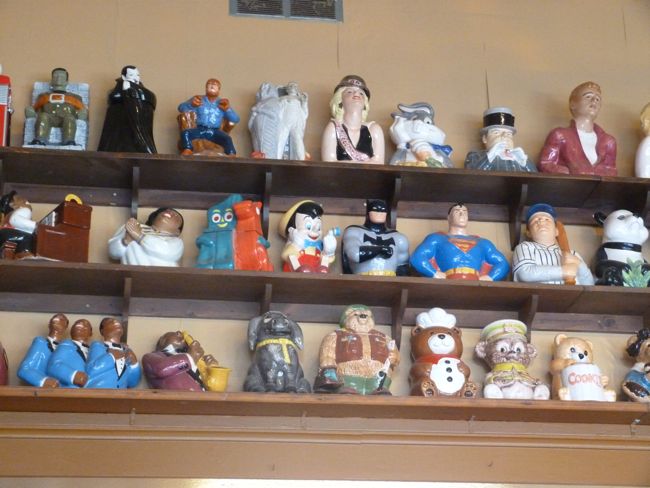
The Edmonds Bakery has a limited number of booths and tables where you can sit and enjoy your pastry 🙂 This is where the locals gather, and find out what’s going on in Edmonds.
A Quick Trip To Edmonds, WA
I’ve shared many photos through the years of my home town, a little town north of Seattle where ferry boats comes in and go out to the Olympic peninsula; the ferries are part of the highway system. It is a small town with several beaches, homes with great views of Puget Sound and the Olympic mountains, home and headquarters for Rick Steves Europe Through the Back Door, and a great community with a lot of emphasis on civility, community and the arts.
This trip is even better – AdventureMan comes with me. He hasn’t been in Edmonds for a while, and has forgotten how charming and fun it is. We check on our house, discover we love it as much as ever, and then head out around town.
Edmonds has an annual tour of gardens, and there are public gardens everywhere, and hanging baskets on the major streets.

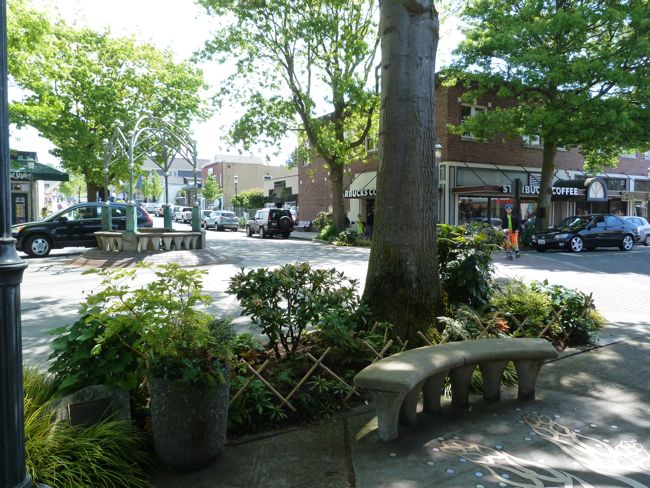
They have invested in a lot of public art, funded greatly by their annual Edmonds Arts Fest, held in June, usually on Father’s Day weekend:
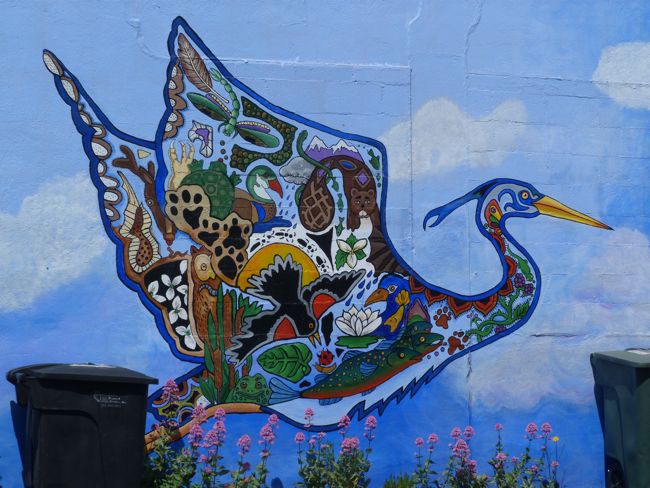

Down near the ferry, Adventureman spotted a bald eagle sitting on a piling:

This is one of those photos I kid myself about. Yes, it’s a cool sign, and the photo also includes that bald eagle, the Olympics, the sound, and the ferry landing. Can I include anything more?

There are all kinds of people gathered on the Edmonds beaches, soaking up the warm sunshine. These young women gave AdventureMan a candy bar; they had a bunch with them and were just giving them out. Anywhere else, you wouldn’t eat it, but in Edmonds . . . you might be safe

Who Is My Neighbor?
We just finished our year in EfM, Education for Ministry, and the overall theme was a multi-cultural world, where we confront our own assumptions and prejudices. It has been a grand journey.
We have friends, friends whose son is our son’s best friend for lo, these many years, and they know how to be good neighbors. They are the soul of hospitality. They take in immigrants, fresh-off-the-boat, and teach them how to survive, help them find furniture, apartments, and a living. They welcome visitors, and care for them and their children. They are helpful. They do all this because it is the right thing to do, and they do it tirelessly. I am in awe of these friends; they are the essence of the Good Samaritan.
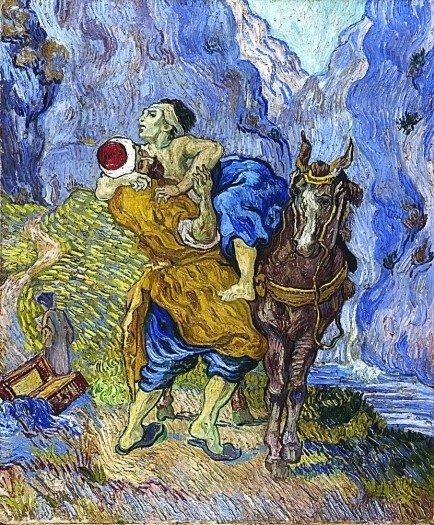
This is Vincent Van Gogh’s painting of The Good Samaritan
THURSDAY, May 21 (from Forward Day by Day)
Luke 10:29 And who is my neighbor?
This beloved parable is about more than being kind to our neighbor. It’s about the grace that is shared and the miracle that is manifested each time we help each other, and each time we allow ourselves to be helped. Both of the main characters in this story, the man who is beaten and left for dead and the man who rescues him and has him cared for, had to humble themselves in order to be in relationship.
Mutual distrust and mutual prejudice could have cost the injured man his life, either by the Samaritan refusing to stop, or in the injured man refusing help from such a suspicious source. Jesus asks us to look past the natural lines of religious creed, racial and ethnic identities, socioeconomic status, and all the other words we use to separate “us” from “them,” and to see his face in the man in the ditch. Jesus is asking us to look up and see his face in the man who is saving someone who cannot save himself.
We are invited to see the face of Jesus on each of these men—to realize that when we reach out in love or when we are being helped, Jesus is always present. Are you willing to be humbled in that way? Who or what can you help, today? Who or what can help you?
PRAY for the Diocese of North West Australia (Western Australia, Australia)
Ps 105:1-22 * 105:23-45; Ezekiel 18:1-4, 19-32; Hebrews 7:18-28; Luke 10:25-37
When I think of the Good Samaritan, I think too of a very pregnant friend, pregnant with triplets, a Jewish woman working in Qatar, whose car broke down. In this day of cell phones, she called her husband for help, but in the time she waited for him to arrive with help, many many Qatari men and families stopped to offer assistance, insisted on giving her bottles of cold water, stopped and waited with her until her husband came and she was safe. They saw a stranger in distress, and they didn’t hesitate, they stopped. Good neighbors 🙂
The MidPoint Cafe on Route 66
It’s one of those long lonely Texas roads, one with few stops along the way and it is time to eat. It is also Easter, and who knows what will be open and if there is any room at the inn, so to speak.
I spot a large CAFE sign near a gas station in an otherwise unpromising tiny strip of town. It is surrounded by cars, so we exit and head over to where the signs are.
Great choice.
There was a large chain-foods-with-greasy-selections at one of the gas stations, but the cafe was one of those home-cookin’ kinds of places, and full of tables of folk just out of church and looking to have an Easter meal out.
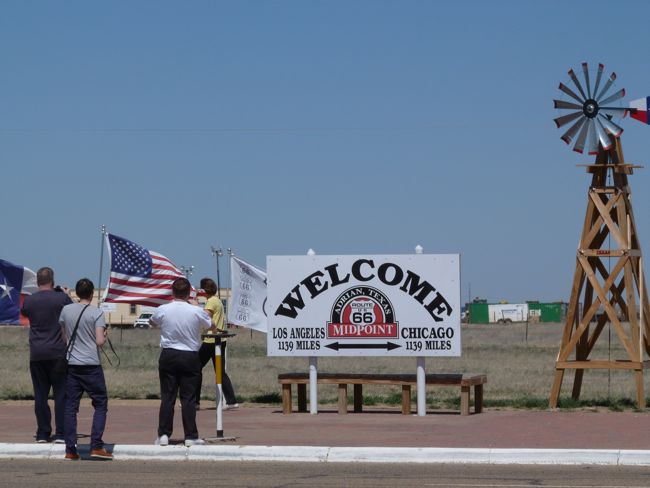
The Mid Point Cafe is exactly halfway from the beginning of Route 66 to its end.
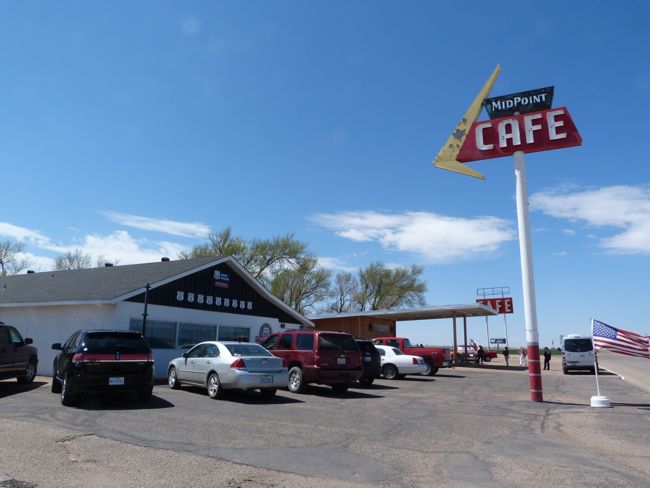


After two large groups (the Baptists and the Methodists, I think) departed, the owner, Dennis Purschwitz, had some time to talk with us. He had recently bought the MidPoint, talked officials into helping update the MidPoint signs, got all kinds of people to donate labor and supplies to make an interest point happen.
And he wasn’t even from around there. Now, he has retired (mostly) from engineering and is living his dream, running the MidPoint Cafe. He brought life back to a town with no dining out places, and gave people a place to gather. He is busy helping a community remain viable.
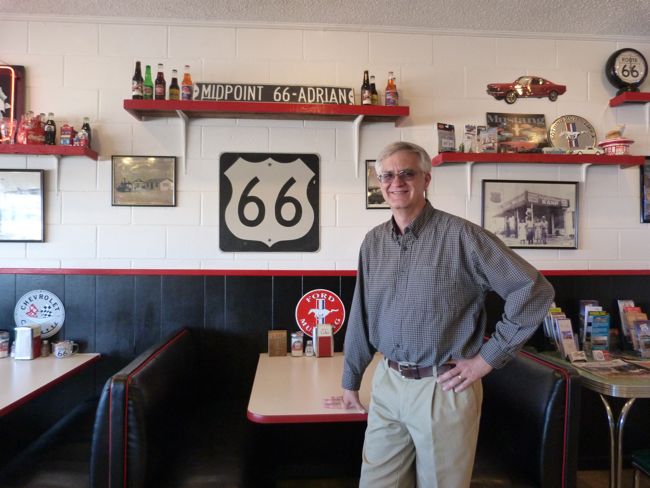
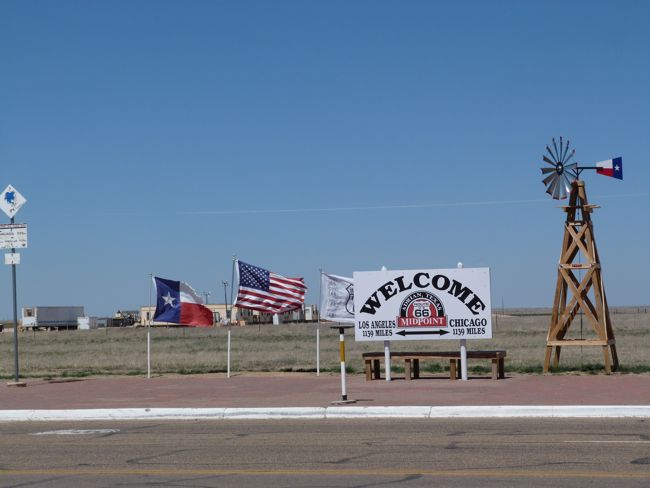
The food was excellent; the home made pies even better. A couple were already sold out, so AdventureMan reserved a piece of Coconut Creme before we even ordered lunch. This was one of those great stops that happen on a road trip; we didn’t know it was there and now, we are so glad it is.
Santa Fe Hotel and Hacienda, Santa Fe
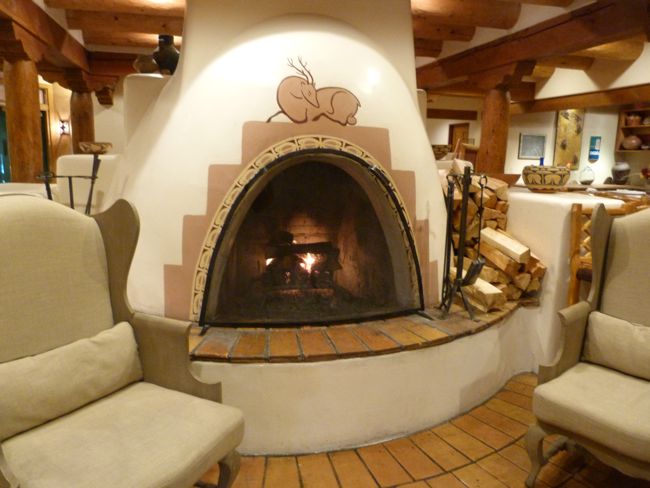
Twice in one trip I was able to totally WOW AdventureMan with a hotel. Seeing his face as we drove into the Santa Fe Hotel and Hacienda made my heart dance. Seeing his face as we checked in, surrounded by the smells of a wood-burning fireplace and the sounds of a solitary Indian flute playing and works of art everywhere put me over the top.
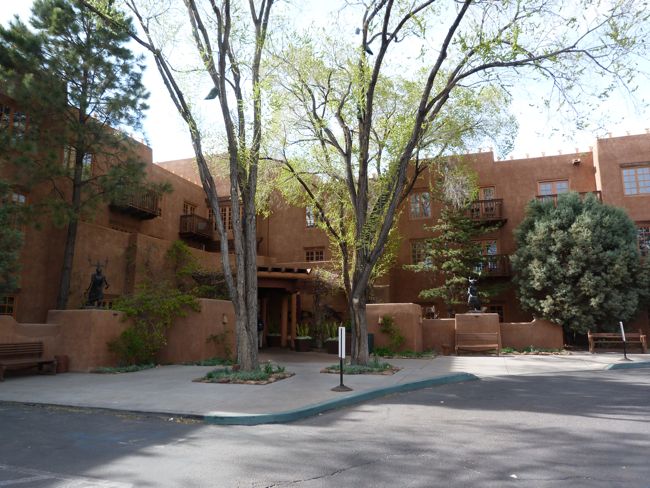
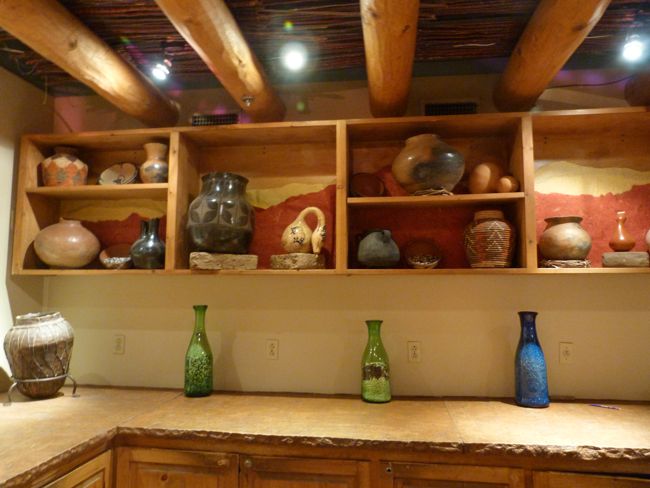
There are a lot of nice hotels in the arts-friendly city of Santa Fe. It was hard narrowing it down, but this hotel is majority owned and operated by Native Americans, and filled with Native American art, and I liked the looks of the rooms I could see online.
Just driving in to Santa Fe is a thrill. We love the desert-friendly adobe, we love walking friendly towns. We take one look at Santa Fe and we know this will be number one in the places to which we want to return, maybe with family and grandkids. This place is purely awesome.
Of course, it is Spring, and still chilly in Santa Fe. The big heat is coming 🙂
This is the exterior of the Santa Fe/Hacienda Hotel:
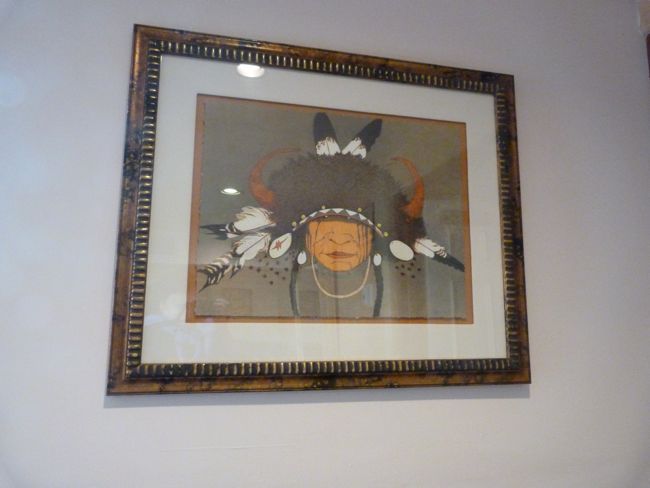
Sculpture at entry:

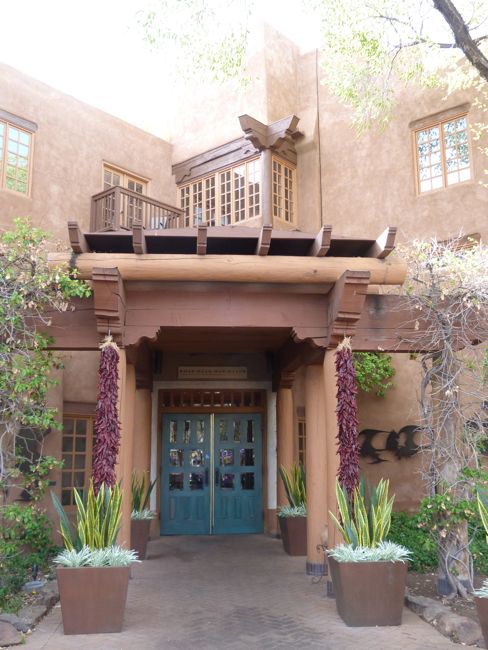
This is one of the landings where they serve coffee in the morning:

Another landing, each different, each beautifully done:


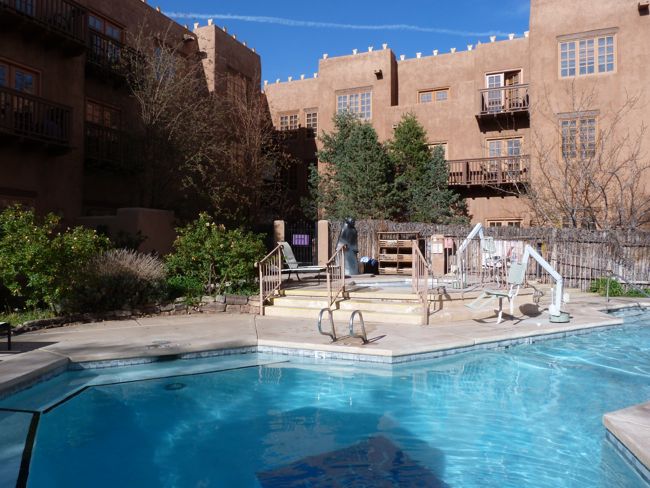
We spent the afternoon at the pool; we had it all to ourselves. It was pristinely clean. We also soaked in the hot tub in the glorious sun, but the breeze was cool so we were thankful for the nice bathrobes:
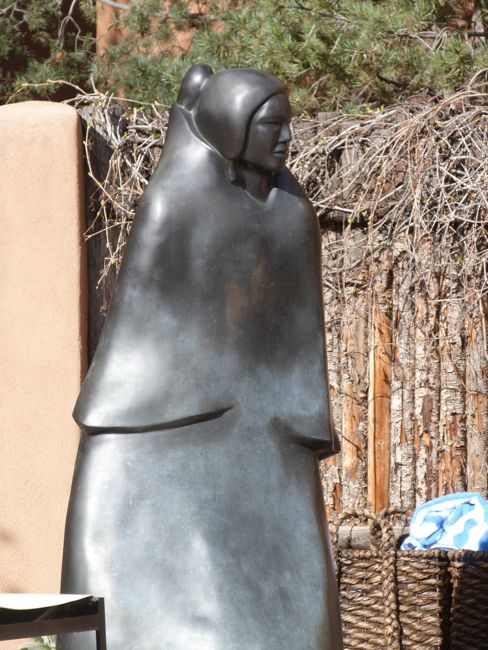
Sculpture by the pool:
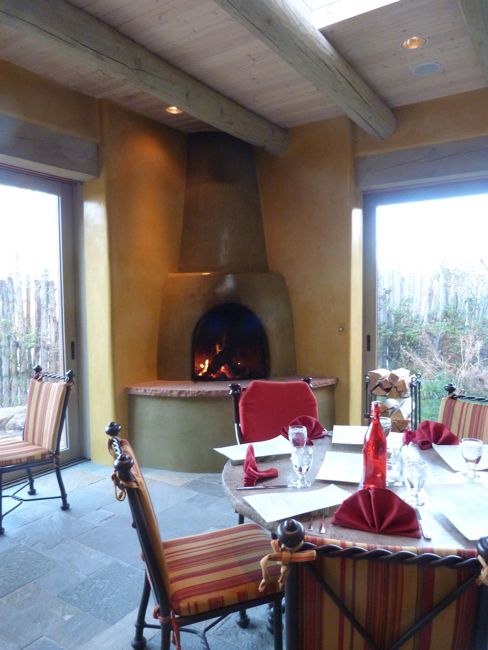
The dining room at the Hotel Santa Fe’s Amayo restaurant. This was one of the best meals of our trip:
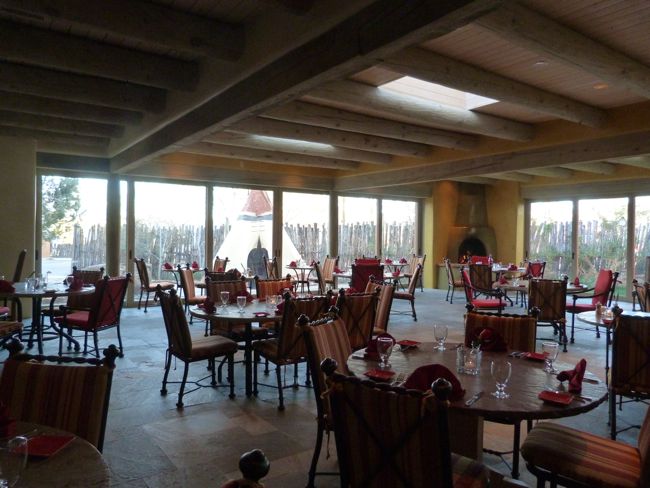
You can reserve the outdoor teepee for an evening of dining out Native American style:

AdventureMan loved his dinner, duck breast:

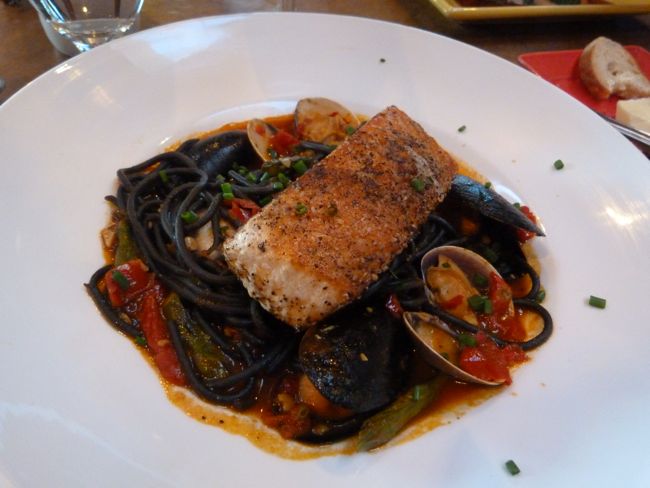
And anytime they serve grilled salmon on garlic spinach, I am delighted:
In the breakfast room the next morning, they had impressive buttery croissants as well as the normal choices:

Lots of seating areas; the lounge is also used for presentations on local history and culture for guests:


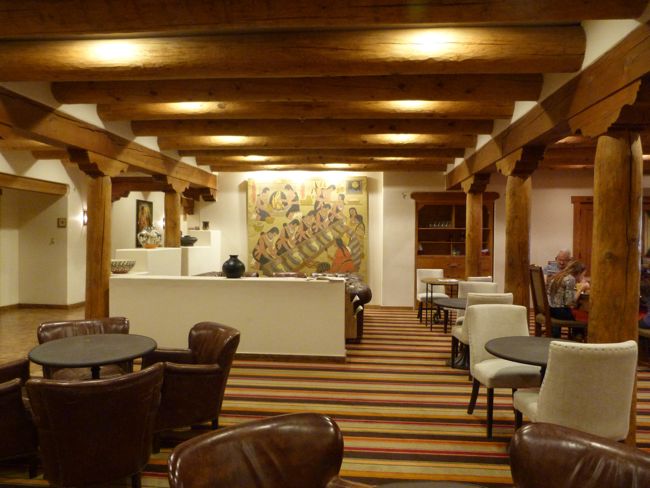

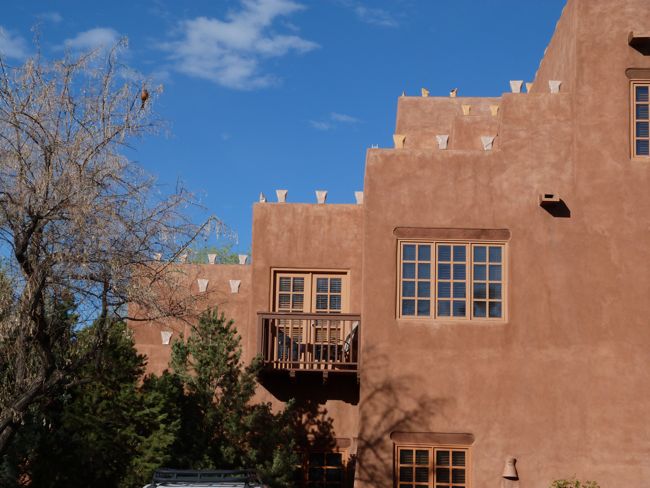
You get to Santa Fe, you park. You leave your car in the hotel and the Purple Bus takes you on a loop where you can get off anywhere you want, and it will come back and pick you up when you call:

We can’t wait to get back to Santa Fe.
Hot Springs in Glenwood Springs, CO
Today is a short day, and AdventureMan gets to sleep in. We’ve hit the road hard for two days, and today we have a rainbow at the end of the day, we get to hit the hot springs and we have massages scheduled, just the ticket for a man with a bad cold. Coughing makes his back ache, and he loves a good massage.
There is also no point starting too early because . . . it’s still snowing.


We hit the road around nine-thirty, following our GoogleMap instructions. Neither of us say anything when we end up in a mountainous area, very snowy, and the temperature keeps dropping. It is snowy. And icy.

Fortunately, we aren’t in the mountain pass more than half an hour, although it seems like forever, and then we are once again on flatlands, heading for I-70. We land in Colorado Junction for a quick lunch – which, due to extremely slow service, turned out to be a much longer lunch than we had intended – and then on to Glenwood Springs, a sweet resort town with a natural hot spring, very sulphuric, lots of mountains, lots of restaurants, and, as it turns out, lots of tourists.
We checked in, and headed to Splendor Mountain for a couple’s massage (wonderful) and then to the springs. The Glenwood Springs has several pools, and it is $20 per person entry during the day, less if you go at night. The $20 gives you all day coming and going, but we found that half an hour was enough for us – there were too many people! There is a ledge around the largest pool where people sit, and most of the seats were taken. People walked up and down the length of the pool. Too many people!


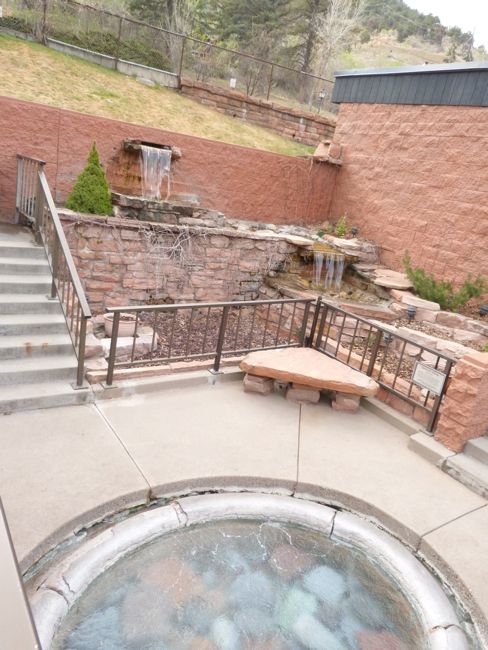
The sulphuric water comes into this pool and is mixed with more water for the pools – this water, pure from the springs, also has a very strong smell that many people can’t stomach, although it is supposed to be very good for your health.

We found a wonderful restaurant for dinner, the Italian Underground, thanks to our masseuses who told us how good the food was:
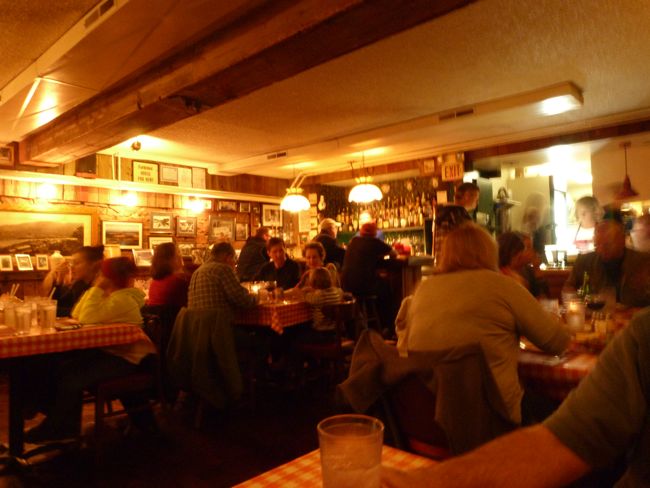
Our beds at the Best Western Antler Lodge were lodge-y, I love a lodge look:

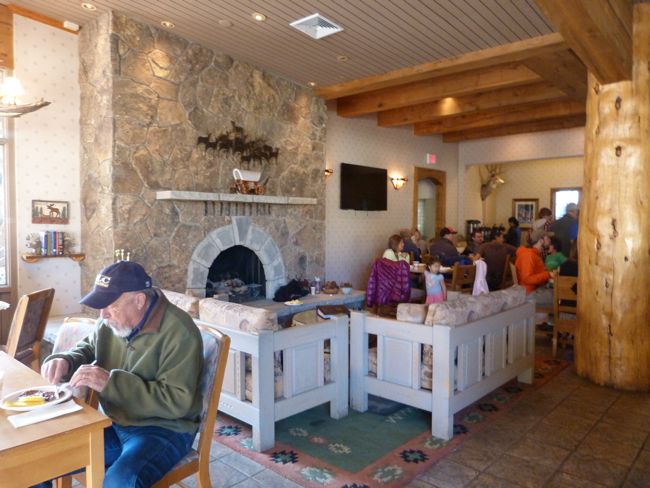
This hotel is within walking distance of the Splendor Mountain Spa, the Glenwood Springs pools and surrounded by many restaurants. This is the breakfast room:
Recent Comments
Kitchen on Isiais: Winding Down intlxpatr on Shampoo Ginger tigerbutterya0c5ff1d… on Shampoo Ginger intlxpatr on British Soldier Kidnapped, Esc… John on British Soldier Kidnapped, Esc… Wikipedia Donate Button

Amazina


Early Voting in Florida


