Flu Spreads Through Social Network
This is fresh off the press at The New York Times
Close Look at a Flu Outbreak Upends Some Common Wisdom
By NICHOLAS BAKALAR
Published: February 3, 2011
If you or your child came down with influenza during the H1N1, or swine flu, outbreak in 2009, it may not have happened the way you thought it did.
A new study of a 2009 epidemic at a school in Pennsylvania has found that children most likely did not catch it by sitting near an infected classmate, and that adults who got sick were probably not infected by their own children.
Closing the school after the epidemic was under way did little to slow the rate of transmission, the study found, and the most common way the disease spread was a through child’s network of friends.
Researchers learned all this when they studied an outbreak of H1N1 at an elementary school in a semirural community in spring 2009. They collected data in real time, while the epidemic was going on.
With this information on exactly who got sick and when, plus data on seating charts, activities and social networks, they were able to use statistical techniques to trace the spread of the disease from one victim to the next. Their report appears online in the Proceedings of the National Academy of Sciences.
The scientists collected data on 370 students from 295 households. Almost 35 percent of the students and more than 15 percent of their household contacts came down with flu. The most detailed information was gathered from fourth-graders, the group most affected by the outbreak.
The class and grade structure had a significant effect on transmission rates. Transmission was 25 times as intensive among classmates as between children in different grades. And yet sitting next to a student who was infected did not increase the chances of catching flu.
Social networks were apparently a more significant means of transmission than seating arrangements. Students were four times as likely to play with children of the same sex as with those of the opposite sex, and following this pattern, boys were more likely to catch the flu from other boys, and girls from other girls.
The progress of the disease from day to day followed these social interactions: from May 7 to 9, the illness spread mostly among boys; from May 10 to 13 mostly among girls.
“Our social networks shape disease spread,” said Simon Cauchemez, the lead author. “And we can quantify the role of social networks.”
Thirty-eight percent of children 6 to 12 were infected, compared with 23 percent of 11- to 18-year-olds and 13 percent of those older than 18. Adults were only about half as susceptible as children, but when they got sick they were just as likely to transmit the virus to others.
The school closed from May 14 to 18, but there was no indication that this slowed transmission. It may already have been too late — May 14 was the 18th day of the outbreak, and 27 percent of the students already had symptoms.
The scientists found no difference in transmission rates during the closure and during the rest of the outbreak. This, they write, confirms earlier studies showing that a school has to be closed quite early in an epidemic to have any effect on disease transmission.
Only 1 in 5 adults caught the illness from their own children, and this goes against one of the most common arguments for closing schools: that it will prevent the disease from moving from the school to households.
“Here we find that most of the infected adults were not infected by one of the children in their household,” said Dr. Cauchemez, a research fellow at Imperial College London. “This information could be used to understand whether it might be better to close a school, or to close individual classes or grades.”
Other experts were impressed with the work. “I think it’s a nice step,” said Ira M. Longini Jr., a professor of biostatistics at the Fred Hutchinson Cancer Research Center in Seattle. “It’s a beautiful analysis of an important dataset. This virus spreads very fast among school-age children, so the topic is important.”
Al Jazeera (English) Covers Egypt
If you are in the USA, the best coverage I have been able to find has been on Al Jazeera live. They have English language coverage. Unlike Egypt, which has closed down all access to the internet, you can stream Al Jazeera live by clicking on the blue type below.
Their coverage is – from what I can tell – fair and balanced.

It’s in the mid 70’s Fahrenheit, in Cairo in the daytime, getting down to the 50’s – 60’s at night – perfect weather for a protest. Looks like Paris in the late 60’s.
The Glass Rainbow by James Lee Burke
“Here’s the book,” Sparkle said, sliding into the restaurant seat as we all poured over the menu, wafts of garlic, white wine and butter drifting our way. “I’m getting kind of tired of Dave and Clete.”
“What, you mean not just bending the envelope but tearing right through it?” I asked “Or all the gratuitous violence?”
“Mostly the scorn for official procedures,” she started, two little lines between her eyes as she took in all the delicious possibilities, “How about some of that Montepulciano?”
She passed the book along to me. I was in the middle of another book, but oh, the temptation to drop it and get on with a new James Lee Burke.

The book opens with Dave Robicheaux, our recovering alcoholic detective, meeting up with a convict on a work crew whose sister has disappeared and who was found murdered. Bernadette Latiolais’s remains are thought to be the work of a serial killer working the area who targets prostitutes, but Bernadette was an honor student, graduating with a full scholarship promised to a Louisiana university. She was also an heiress, in a small way, to some property at the edge of a swamp. She doesn’t fit the profile, and her brother wants justice – not for himself, he’s doing his time, but for his sister, who never did anything to anyone, and who wanted to create a conservation area to preserve bears.
Right off the top, Robicheaux is outside of his parish, investigating a case nobody cares about in an area out of his jurisdiction.
OK, OK, my sister is right, this is pretty much another formulaic James Lee Burke. There are the corrupt rich families, the amoral women, the voiceless victims. Instead of the old Italian organized crime families, this time there are hired mercenaries, equally creative in killing, but way more efficient in cleaning up afterwards.
I’m just a sucker for James Lee Burke’s writing. Here’s one sample, from his interview with a very rich old man who goes a long way back with Robicheaux’s family:
“Don’t get old, Mr. Robicheaux. Age is an insatiable thief. It steals the pleasures of your youth, then locks you inside your own body with your desires still glowing. Worse, it makes you dependent upon people who are half a century younger than you. Dont’ let anyone tell you that it brings you peace, either, because that’s the biggest lie of all.”
Burke’s Dave Robicheaux and his private-investigator friend Clete are flawed men, prone to violence, but I cut them a lot of slack because in each novel they are bright shining avengers of all the wrongs done to the weak and helpless. They are Quixotic. They fight the rich and powerful for the rights of the common man. They know the risks they take, and they are too old to think they are going to survive every bad guy they go after. It’s a good thing the law of averages doesn’t hold true in novels; they should have been dead a long time ago.
What keeps me coming back are the lyrical descriptions of life along the Atchafalaya Bayou, community life in New Iberia, Louisiana, and Robicheaux’s family life, wife Molly, daughter Alifair (now grown to young womanhood) and Snuggs their cat and Tripod their raccoon, as well as the knowledge that at the end of the book, in spite of every evidence to the contrary, Dave and Clete will emerge alive, if damaged, and their indirect and violent path will have achieved some semblance of justice.

(I ordered the spaghetti with a white-wine mussel sauce, and Sparkle ordered the chicken marsala. Mom had seafood diablo.)
House Rules by Jodi Picoult
I got it all done – two days before Christmas. Wooo HOOOO, I get the reward, a new book! One I had been eager to read, House Rules by Jodi Picoult. (You can read reviews of other Picoult books by doing a blog search, enter Jodi Picoult in my blog’s search window.)

What I really like about Jodi Picoult is that she writes about really tough situations and exposes our ignorance and ambivalence to us. In this book, she writes about a single mother who is raising two sons, one of whom has Asperger’s Syndrome. He is extremely bright, but lives in a world where he is bombarded by too much sensation. He cannot block out sensory input that we learn to ignore, and some of it – noise, colors – in his case, the color orange – or any change in routine can cause him to spin out of control. Imagine a two year old having a tantrum in a grocery store . . . now imagine an eighteen year old young man having the same tantrum. It helps you see what the Mom is dealing with.
Dad left when the second son was born. “It’s too hard,” he said, and left her to cope with all of it.
She gets child support, while her husband is raising his new family a continent away. She free lances as an advice columnist, and edits from her home to supplement the bare bones family existence. She learns to cope with Jacob’s needs, and she advocates for him fiercely, to be mainstreamed in the school system AND to have some special supports to soothe him when he becomes over-stimulated.
Jacob isn’t a burden, although his need for routine – certain colors for different days of the week, including meals – can be burdensome. Jacob is also very very bright, and obsessed with crime scene forensics. He loves setting up “crime scenes” for his mom to solve and the one bright spot in his daily life is the Crime Busters show which comes on every day at 4:30.
And then, suddenly, a life which is already wobbling turns upside down. Jacob is implicated in the murder of his tutor, a young woman Jacob loved working with, who helped him develop an understanding of how people interact and behave. Those who know Jacob understand his quirks and eccentricities are due to his wiring, but Jacob looks very odd, very threatening and even violent to the outside observer – a nightmare client as a defendant.
It is a GREAT read. Picoult keeps her secrets up to the very end; the book is tightly wired and we are given clues all along the way. The edition I read had both a reader’s guide and an interview with the author at the end. It is NOT cheating to read those first! It gives you good guidance on what the author is trying to say, and what may be significant, while not appearing particularly so.
It gave me a great appreciation for parent’s of children outside the realm of ‘normal.’ It gave me an appreciation for the work and persistence and dedication it takes to try to get a more level playing field for their children.
It the book Jacob has some self-awareness, and compares Asperger’s Syndrome to seasonings, and he believes we all have a dose of Asperger’s Syndrome in our wiring, but that some children get a little extra.
‘Lost Boy’ Casts Vote for Independence
I found this today on NPR News and it delights me for a number of reasons. For one thing, I didn’t know David Eggars (you remember him from Zeitoun) had helped with the writing of ‘What Is The What?’. Second, who knew that any of these kids would survive? Survive, write a book, thrive, go back to the Sudan, give to the country – and vote. Every now and then in this sad world you hear a good story. This is one.
January 10, 2011
During Sudan’s civil war, in which some 2 million people died, Valentino Achak Deng fled to Ethiopia on foot. Separated from his family for 17 years, Deng is one of Sudan’s so-called Lost Boys, children who were orphaned or separated from their families during the brutal war.
Now, voting is under way in Southern Sudan in a referendum that is expected to split Africa’s largest country. Among those voting this week are the Lost Boys, including Deng, whose life became a best-selling novel in America and who has returned to his homeland to build a school.
After a peace agreement between north and south, Deng returned to Juba, the capital of Southern Sudan, in 2006. He says when he got there, the place was still a wreck.
“On some of these roads, you could see old war tanks. On some of these roads, in some neighborhoods you could see the bones and skulls of dead people,” he recalls now, driving around Juba.
Now, as Southern Sudan appears headed for independence, Deng is optimistic — and Juba looks a lot better. Paved roads, now lined with hotels and restaurants, arrived for the first time in 2007.
Juba is a booming city, one of incredible contrast: Barefoot women selling piles of gravel by the side of the road sit next to a Toyota dealership.
Peace is spurring investment and consumer demand. Juba’s growth is driven by Southern Sudan’s oil revenue as well aid from foreign governments and nongovernmental organizations.
Deng grew up in a tiny village called Marial Bai. In the 1980s, northern bombers and Arab militias came.
“They bombed Marial Bai, destroyed it, killed everything, burned crops and livestock,” he says.
Deng was there when the fighting came. He says he “ran away with the rest.” He was 9 years old.
Deng joined thousands of Lost Boys, who spent months trekking across Sudan to refugee camps in Ethiopia. His experience is captured in What Is the What, a novel by Dave Eggers, which reads like a modern-day story of Job.
The boys, some naked, march across an unforgiving landscape, facing Arab horsemen, bombing raids, lions and crocodiles.
Deng eventually resettled in the U.S., where he attended college and was mentored and sponsored by ordinary Americans.
In 2007, he returned to start a high school in Marial Bai, where there was none.
“We have 250 students. Our annual budget now stands at about $200,000 because the school is free,” he says.
The school is funded by Deng’s private foundation. He says most donations come from Americans touched by his story and the plight of Southern Sudan.
Deng, now 32, has just cast his vote for independence. He says that for a Sudanese child of war, his life’s journey is almost inconceivable.
“I never imagined I would be the person I am right now,” he says.
A Reliable Wife by Robert Goolrick
You know how wonderful it is when you start a book, and immediately you are hooked? This is not that kind of book. This is a book you start reading and you think “Why am I reading this? I don’t like ANY of the characters!”
And yet, somehow, I kept reading. And slowly, slowly, the hook was set, I could not stop reading.
Actually, I read the book several months ago, and I am still thinking about it. That’s a good book. 🙂
We meet one of the main characters as he stands waiting for a train to arrive, carrying his bride-to-be. As we stand waiting with the man, we discover that he is not very likable. We also learn that winters in his part of the country are long and hard, and very strange things happen to people cooped up together during these long, hard winters. It is a very bleak beginnning.
Then we are riding in the train with a woman who is answering an ad placed by the first man who was advertising for a wife. We get a few clues that she is misrepresenting herself, but . . . isn’t a little misrepresentation part of the mating process? Do we really show all our less attractive features to the person to whom we want to be married? And does she know what she is getting in for with this rather cold and distant man?
Do you really want to read this book?
It gets better. So much better. People are complicated, and they lead complicated lives. Sometimes evil leads only downward, and to more evil, and from time to time, there is a gleam of hope and the slim promise of redemption. It gives a clear slice of time from the early 1900’s, and a much earlier time in America. For anyone with the illusions that life in that turn-of-the-century America was a better, simpler, more moral time, this book is a reality check.
Nothing in the beginning of this book is quite what it seems, and yet every word is finely crafted to give a clue as to where the book is going. Will you be able to figure it out before you get there?
(I did not.)
There are so many good books out there. This one is slow to start, but builds steadily to an unforgettable ending. It is worth a read.
The Disciple Jesus Loved
In today’s gospel reading is this story, a story I love because it tells us, as all our mothers always have, to mind our own business, to look to correcting our own behavior and not that of others.
There is a note to this passage, in The Lectionary: “The most ancient authorities lack 7.53—8.11; other authorities add the passage here or after 7.36 or after 21.25 or after Luke 21.38, with variations of text; some mark the passage as doubtful.”
The story is in the book of John, who is believed to be the disciple Jesus loved the best, and who tends to see into the heart of things. Although his closest followers, the disciples, often got it wrong (like arguing over who would sit at his right hand in heaven), they lived and worked with Jesus while he was here living on earth, and John seemed to know him best of all. To me, this story shows what Jesus expects of us – that we look to our own sins – and also, his compassion towards women.

(This is an image by Dagmar Anders)
John 7:53-8:11
53Then each of them went home, 81while Jesus went to the Mount of Olives. 2Early in the morning he came again to the temple. All the people came to him and he sat down and began to teach them.
3The scribes and the Pharisees brought a woman who had been caught in adultery; and making her stand before all of them, 4they said to him, ‘Teacher, this woman was caught in the very act of committing adultery. 5Now in the law Moses commanded us to stone such women. Now what do you say?’ 6They said this to test him, so that they might have some charge to bring against him.
Jesus bent down and wrote with his finger on the ground. 7When they kept on questioning him, he straightened up and said to them, ‘Let anyone among you who is without sin be the first to throw a stone at her.’
8And once again he bent down and wrote on the ground.* 9When they heard it, they went away, one by one, beginning with the elders; and Jesus was left alone with the woman standing before him.
10Jesus straightened up and said to her, ‘Woman, where are they? Has no one condemned you?’ 11She said, ‘No one, sir.’* And Jesus said, ‘Neither do I condemn you. Go your way, and from now on do not sin again.’]]*
The Gift
AdventureMan and I used to have lavish Christmases, trying to delight one another, and we did. One year, I bought his some crystal goblets he had been admiring, and some years I was able to add to his collection. One year, he bought me a Mont Blanc pen, which I adored, and another year two beautiful salad serving bowls with irises in them. (I still have them and delight to use them.)
This year, he gave me the best gift of all. I was working on a committee in our church, helping to make sure children we had volunteered to sponsor in the Salvation Army angel program received gifts of clothing and a toy or bike or age-appropriate gift. There were a few children at the end who had not found sponsors, but other people had chosen to donate cash or checks in lieu of sponsoring a child.
As we were getting ready for church, AdventureMan told me he had an idea for my Christmas gift, but he wanted to run it by me.
“How about if I make a donation to the Angel Tree, to help sponsor the kids who don’t have sponsors?”
He took my breath away. He can still do that.
We are not rich, we are modestly comfortable. We have always lived within our means, and placed a high value on saving. We have a comfortable home, enough to eat, and we keep our spending under control so that we even continue to grow our savings a little while we are now ‘retired.’ There is nothing I need for Christmas.
I’m still grinning from the grandness of his gift; the delight it continues to give me every time I think about it.
The Salvation Army has one of the lowest rates of administration funds to charitable funds of all the charities in America. They make every dollar you donate squeak, they work it so hard. They feed the poor, they give hope to children, they comfort the homeless and veterans, and they counter pornography and human trafficking (Yes. It happens in America, too.)

To find out how you can help this organization which helps so many, so generously, just click on the blue type Salvation Army and it will take you to their home page. There are many options for giving, including donations, giving of your time and energies as a bell ringer, or working with them in a variety of human services.
Qatar National Day 2010
Qatar’s National Day Celebration is December 18th. Qatar has developed a website especially to publicize National Day activities. You can find it here: Qatar National Day – English)
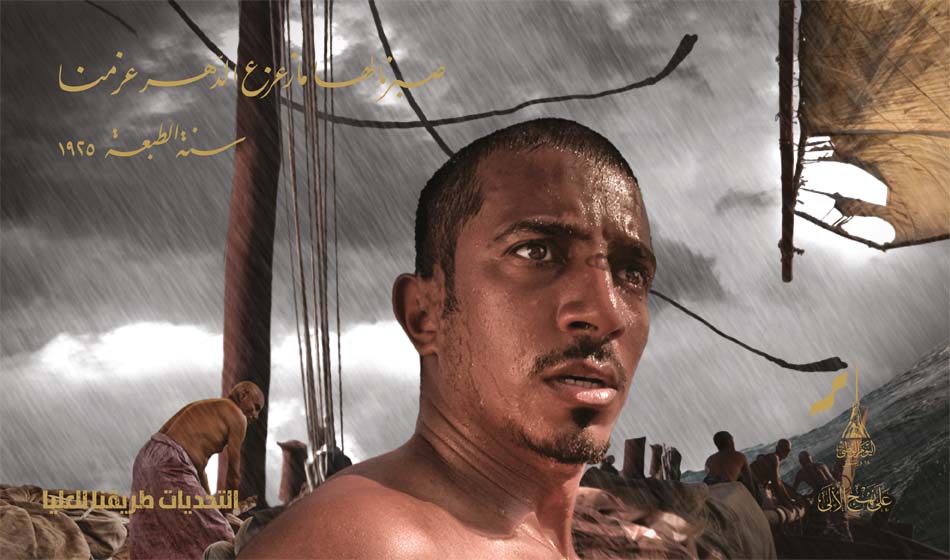
There is an interactive map on which you can click to find ongoing celebrations, and an event schedule:

I suspect this is going to be one fabulous celebratory year, with the win of the 2022 World Soccer Cup event. Wooo HOOO Qatar!
Recent Comments
ExpatAlien on What Country am I Living … intlxpatr on Yellowstone: Old Faithful to C… Michelle on Yellowstone: Old Faithful to C… Cathy on No Grown-Ups in Charge intlxpatr on Waiting for Snow Wikipedia Donate Button

Amazina


Early Voting in Florida


 Here There and Everywhere