A Prayer for Samuel Occum
I don’t always get a chance to read about a saint of the church on his/her saint’s day, but this morning, while reading The Lectionary readings, I took the time, and was glad I did. These readings tell me about ordinary people who made a difference, Samuel Occum by being Mohegan (Mohican?) and serving his community by raising funds for the establishment of Dartmouth College.
But what I loved was the prayer for his saint’s day, which starts “God, Great Spirit” and talks about his voice in the thundering wind.
PRAYER (contemporary language)
God, Great Spirit, whose breath gives life to the world and whose voice thunders in the wind: We thank you for your servant Samson Occom, strong preacher and teacher among the Mohegan people; and we pray that we, cherishing his example, may love learning and by love build up the communities into which you send us, and on all our paths walk in beauty with Jesus Christ; who with you and the Holy Spirit, is alive and reigns, one God, now and for ever. Amen.
SAMSON OCCUM
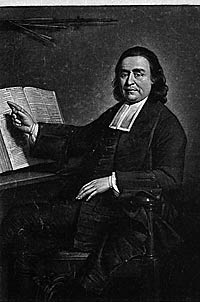
WITNESS TO THE FAITH IN NEW ENGLAND, 1792
The Reverend Samson Occom (1723 – 1792) (also spelled as Occum) was a Native American Presbyterian clergyman and a member of the Mohegan nation near New London, Connecticut. He has the distinction of being the first Native American person to ever publish documents and pamphlets in English.
Born to Joshua Tomacham and his wife Sarah, Occom is believed to be a direct descendant of the famous Mohegan chief, Uncas. In 1740, at the age of sixteen, Occom was exposed to the teachings of Christian evangelical preachers in the Great Awakening. He began to study theology at the “Lattin School” of Eleazar Wheelock in 1743 and stayed for four years until leaving to begin his own career.
Occom served as a missionary to Native American people in New England and Montauk, Long Island, where he married a local woman. It was also on Long Island where he was officially ordained a minister on August 30, 1759, by the presbytery of Suffolk.
Wheelock established an Indian charity school (which became Dartmouth College) with a benefaction from Joshua Moor in 1754, and he persuaded Occom to go to England in 1766 to raise money for the school, along with the Rev. Nathaniel Whitaker. Occom preached his way across the country from February 16, 1766, to July 22, 1767. He delivered in total between three and four hundred sermons, drawing large crowds wherever he went. By the end of his tour he had raised over twelve thousand pounds for Wheelock’s project. King George III himself donated 200 pounds, and William Legge, Earl of Dartmouth subscribed 50 guineas. The friendship between Occom and Wheelock dissolved when Occom learned that Wheelock had neglected to care for Occom’s wife and children while he was away. Occom also took issue with the fact that Wheelock put the funds toward establishing Dartmouth College for the education of Englishmen rather than of Native Americans.
Upon his return from England, Occom lived at Mohegan, then moved in 1786 with some New England and Long Island Indians to Oneida territory in what is known today as New York. He then helped to found Brothertown, and lived among the Brothertown Indians. Occom died on July 14, 1792, in New Stockbridge, New York.
Fourth of July at Christ’s Church in Pensacola
We usually make it to the early service at Christ’s Church, Pensacola, but this Sunday we took it easy, and headed to the second service instead. AdventureMan loves the second service for the music; I love it because sometimes our son and his family are there and we get to sit together.
Father Neil gave a thought-provoking sermon, as usual, incorporating some of the things he learned serving as a chaplain to our American troops in the desert in Kuwait. During communion, the choir sang a song known by some as the Navy Hymn and by others as the Armed Forces Hymn. The last two lines of each chorus pray for our men and women “in peril” on land or sea or in the air. While I am a stoic, that song shakes me to my core, and brings tears to my eyes.
At the end of the service, just after the recessional, our superb music director, Kenneth Keredine, with two fellow musicians on drum and cymbals, played a rousing Sousa march, a joyful and happy way to celebrate the Fourth of July weekend.
Episcopal Reading for the Fourth of July
For those in a hurry, in addition to the daily readings in The Lectionary, there is a small booklet, Forward Day by Day, which prints a short reading for each day.
I love the reading for today:
Today’s Meditation
monday, july 4 independence day
Deuteronomy 10:17-21. For the Lord your God is…the great God, mighty and awesome, who is not partial and takes no bribe…and who loves the strangers.
In the reading from Deuteronomy, Moses charges Israel to love the stranger, because the people of Israel were once strangers in Egypt. In Mark, Jesus entreats us to love our enemies and to pray for those who persecute us because God is not partial. The sun rises on the just and the unjust.
It is easy for us to love friends and people like ourselves. Christians are called to greater challenge: to create a community in which we love the stranger and pray for the one who wants to do us harm.
I remember standing on the Lake Erie shore and reading that during the War of 1812 soldiers died there so that the lake would not belong to the British. The British were the bad guys. A little over a hundred years later, the United States fought two World Wars on the side of Great Britain. The British were good guys. In the intervening years, each country learned to see the other not as evil strangers, but as allies with common interests.
As we give thanks for our country, let us accept the challenge to create a community that includes those who might be our enemies, the people who today don’t seem to be one with us. Our perspective can change.
PRAY for the Diocese of Ottawa (Ontario, Canada)
Ps 145 * 145:1-9; Hebrews 11:8-16; Matthew 5:43-48
How Hot is It?
Kuwait and Doha had hotter temperatures, but Pensacola FEELS hot these days, so hot that like Kuwait and Doha, if we have anything we need to do, we try to do it early in the day. This morning we were up early to head for the Pensacola street market on Martin Luther King, Jr. square, in the middle of Palofox street downtown.
It is a lovely market. We bought some eggplant, some new potatoes, some blueberry jam, and some plants good in this climate, and attractive to hummingbirds. AdventureMan is becoming an amazing gardener, but both his grandfathers also had big gardens, so he has inherited that garden-gene. I have ambitions, but the truth is, I am not so good with the garden as he is.
I was good for about 20 minutes, and then sweat was just pouring off me. Although the temperature is not quite 100°F, the humidity is HIGH:

It is the biggest weekend/week of the year for the Pensacola area; the Fourth of July fireworks AND the big Blue Angels shows are all in the early week of July. The beach is packed, and traffic is all one way – headed toward the beaches, Pensacola, Alabama, folks want the calming breezes coming off the Gulf to cool them off as they play in the sun and sand.
We met up this morning with our son and his wife and little Baby Q (who isn’t so little any more) at a local playground, but oh, it was so hot. Some of the equipment was too hot to use; a slide might have been very painful, too hot! Still, it is good for him to have some outdoor play time, and always good to have time together. 🙂 There is a nice cool breeze off the Bayou Texar, and there are shady trees to shelter us from the sweltering sun.

Concert Series at St. Paul’s Catholic Church
We had a delightful evening last night at St. Paul’s Catholic Church as several young people presented an evening of Baroque music. It started at seven, while the sky was still full of light, and you could see all the beauty of the renovation. Even though the renovation has been finished for months, it still smells new, and they must have use cedar extensively; it smells wonderful. The stained glass windows are beautiful with the end-of-day light streaming through. St. Paul’s windows are very Catholic; I especially liked the Mary-Queen-of-Heaven window, and the angels flanking the central altar.

As the light outside dwindled and darkened, the church’s interior lighting came more to notice, subtle and enhancing. The performing group also used candles, which contributed to a more intimate feeling in a very large church.
The music was lively, and played with passion and accuracy. Bach, Vivaldi, Rameau – it sparkled with life. They finished up with Bach’s Brandenburg Concerto Number 3 in G Major, and left us all on a music high.
What I really liked, at this concert in a church not my own, is that the players are unashamedly evangelizing, but they keep it light and subtle. There was a really good crowd, as the announcer mentioned, not something that can be counted on in Pensacola on a hot summer evening. The performers participate regularly in the weekly Catholic masses, and gave a plug, but it wasn’t hard core, it was more presentation of an opportunity, a drawing in. I admire their technique, and their devotion. We enjoyed the venue, and the atmosphere, and the sincerity.
We will be going back for further concerts; they are planning one for July and one for August. They advertise frequently and well, in the Pensacola News Journal, which was how we heard about it. There was no charge for the concert, but a donation basket was available at the entry to the concert. 🙂
Businesses Support Police Blue Shepherd Sting
I love it. Operations like this cost money, and Pensacola businesses stepped up to the plate, even though they could not be told what the operation was about. It makes all the difference in the world when a police force has the community support. From today’s Pensacola News Journal:
It takes a village to catch a predator
Written by
Jamie Page
When undercover law enforcement officers slammed accused child sex predators to the ground and arrested them, the police had plenty of backup.
That is, financial backing from at least four local businesses that sponsored the sting operation by providing food, water, paper products and Internet service.
It’s a novel concept, but a necessary one for a budget-intensive operation such as this one, said Pensacola Police Chief Chip Simmons.
“We have had to do what we could to maintain that undercover location, and to do that we had to make it have everything a normal house would have,” Simmons said.
“So, we contacted businesses and they agreed to donate things to the cause. It’s always good to know there are good people and businesses to chip in and help.”
For a month, law enforcement agencies rented a vacant northeast Pensacola home to use as the point of arrest for 25 men during the weeklong undercover Operation Blue Shepherd. Suspects were accused of using the Internet to set up sexual encounters with children.
The suspects came to meet the minors at the home.
“We had to make it look like a living, breathing home with toys, bicycles, mailbox and trash cans outside, and we had to have furniture inside to make the view from the roadway consistent with what an average home would have,” Simmons said.
Many of those things came from police-seized items or were contributed by officers or others for use in the sting.
But the police needed help with other things, such as food and supplies, which were provided by the Apple Market, Dillards, Pensacola Improv Event Center and Cox Communications.
Businesses were not told the nature of the sting, but simply that their contributions would go toward a Pensacola Police Department operation.
“I did not know what they were doing, I just had an officer come to me and ask if I would be willing to provide meals for several people for several days in a row, but I couldn’t talk about it, and I said fine,” said David Apple, owner of Apple Market in Pensacola.
“I just knew I was assisting the Police Department. And anything we can do to assist them, well, we are always eager to support our military and law enforcement any way we can.”
Apple had to sign a confidentiality agreement and could not talk about his catering, which he provided to officers at a rate that allowed him basically to break even.
Apple Market could not deliver the food. Officers would pick it up and take it to the location, which Apple also was not told about.
“The only complaint they had about the food was that everybody gained weight,” Apple said. “It was pretty enormously satisfying to know we helped feed those guys and they were so successful in what they set out to do.”
Representatives from Cox, Dillards and Pensacola Improv could not be reached for comment.
Operation Blue Shepherd
I was shocked to hear about this operation on National Public Radio this afternoon, and to know it was Pensacola. What got my attention was one of the police officers saying that they were shocked to capture so many local people; they had expected to attract predators from surrounding states, but not so many locals. Truly sad.
And kudos to all the men in blue and officers of the court who are putting away these people who would prey on children, taking them off the game board.
You can read the entire article yourself at the Pensacola News Journal:
25 men accused of setting up child sex encounters in Pensacola sting
Twenty-five men were arrested this month in Pensacola during a weeklong undercover operation in which suspects are accused of using the Internet to set up sexual encounters with children. The suspects came to meet the minors at a home in northeast Pensacola only to find a slew of law enforcement officials waiting for them.
The sting, called Operation Blue Shepherd, began June 20 with 30 officers from local, state and federal agencies participating, according to a Pensacola Police Department press release. The results were announced at a news conference this morning at PPD.
Pensacola Police Capt. Paul Kelly said officers used various social networking and E-commerce sites to respond to advertisements of a sexual nature and to place similar advertisements.
The suspects specifically described various sexual acts they were going to do with the male and female children, ages 12 to 14, with whom they believed they were talking. All of the suspects, except one who took a taxi, drove to the undercover house with the intent to perform these sexual acts with the children. Upon arrival, they were arrested and questioned.
Kelly said officers were surprised to find so many eager participants from the immediate Pensacola area.
“We expected to have more violators traveling from outside the area. What this tells me is that these violators do not have to travel far to find their victims. They are much closer to home than we imagined. Most of them were not reluctant or frightened to approach the door of a stranger’s house. They literally pulled up to the house and walked quickly to the door eager to meet the child,” Kelly said.
Agencies participating in Operation Blue Shepherd were the State Attorney’s Office, Florida Department of Law Enforcement, Immigration and Customs Enforcement , Naval Criminal Investigative Service, Escambia County Sheriff’s Office, Santa Rosa County Sheriff’s Office, Okaloosa County Sheriff’s Office, Walton County Sheriff’s Office, Alachua County Sheriff’s Office, Gainesville Police Department, Fort Walton Beach Police Department, Tallahassee Police Department and the Federal Bureau of Investigation.
Kuwait Time Lapse
My Kuwaiti friend sent this – these young people put together a fabulous video. Gorgeous work, you make Kuwait look so beautiful.
Adaobi Tricia Nwaubani: I Do Not Come to You by Chance
This book, the first novel from Adaobi Tricia Nwaubani, is hilarious, with moments of pathos, and a fresh point of view.
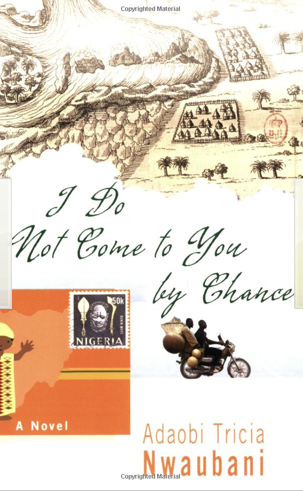
Amazon.com recommended it to me as I was busy buying books by author Chimamanda Ngozi Adichie; I thought ‘OK, I’ll read a series of Nigerian books as part of my summer reading.
Young Kingsley Ibe is the family’s first born male, and with that status goes many privileges – and responsibilities. After graduating with a Masters in Chemical Engineering, he has no success in his search for a job with an oil company in Nigeria, and consequently loses the love of his life, Ola, to another who has secure employment.
Worse, his retired father has a stroke, and the family discovers that with all the fees required, they haven’t enough for his continued care, so Kingsley must approach his uncle, Boniface Mbamalu, more familiarly known as Cash Daddy, for funds to transfer his father to a long term care facility, and, later, for his father’s funeral.
Serious Kingsley’s eyes nearly pop as he sees the life his uncle is living, cars, women, designer watches, shoes, suits and all the trappings of new wealth. Soon, his uncle makes a convincing case for Kingsley coming to work for him, the better to help out his family of mother, brothers and sister, now that he is the senior male in the family.
Kingsley discovers he has a gift for the work – which is writing 419s, those scam letters which I frequently publish in this column. I loved being on the inside, learning how strong possibility e-mail addresses are netted, how response e-mails are massaged – not unlike fund raising techniques by charitable organizations in the US. Kingsley’s education helps him achieve enormous financial success in a very short time – but he finds that all the cash and designer goods in the word do not solve his problems nor make him happy.
I learned a lot about how successful many of these scammers are, and how the money made is spread throughout the Nigerian communities. The author takes a balanced view, balancing the way the cash makes life easier for people – a lot of people, because the rich man has many obligations to his community, balanced against the disgust, and sick fear felt by his religious mother and aunt, and his one time girlfriend, when they learn the work he is doing. They are disappointed that a man of such promise has sunk to making so much money in a dishonest way. The book also does not deal sympathetically with those who have given or lost money to the scammers, nor, in my opinion, does the ending satisfy.
This is one of the funniest parts of the book – a group of Nigerian scammers is about to meet with a representative of a major US investment firm. He thinks he will be meeting with the Nigerian Minister of Transportation to discuss building a new airport; the reality is that Cash Daddy, in disguise, will be pretending to be the minister. Kingsley protests that Cash Daddy looks nothing like the minister, and Cash Daddy responds:
“Let me tell you something . . . Me, I really like these oyibo people. They’re very very nice people. See how they came and showed us that the ground where we’ve been dancing Atilogwu has crude oil under it. If not for them, we might never have found out. But Kings,” he dragged in his dangling foot and sat up in the tub, “white man doesn’t understand black man’s face. Do you know tht I can give you my passport to travel with . . . Even if your nose is ten times bigger than my own, they won’t even notice?”
It was a fascinating book. I understand better now why 419 scams work. (419 is the section of the Nigerian criminal code making scam e-mails a crime; thus the crime is called ‘a 419’) There are some very funny and very insightful moments in the book. It is no where near the level of literature that you experience with Chimamanda Ngozi Adichie, but there is more humor, and the book shows a more modern day Nigeria. Not a bad summer read, but not great literature.
Jeannette Walls: The Glass Castle

The Glass Castle was a hugely popular best seller in the USA, and it must have been while I was gone. A part of me remembers reading a little bit about it and deciding it wasn’t my kind of book, but after reading Half Broke Horses, I had forgotten what the subject matter was and was excited to have another Jeannette Walls book I could read.
Big mistake. This book is nothing like Half Broke Horses.
Or maybe it is. Maybe what I loved about Half Broke Horses was the voice of an amazing woman, and maybe what kept me reading The Glass Castle is the voice of an amazing child who tells a heart breaking story. Or maybe it isn’t so heartbreaking, because the children survive. They are scarred and damaged, but never so damaged or loony or self-deceived as their parents.
I don’t like reading books about kids whose parents don’t take good care of them. Oprah chose a lot of those books in her book club. These books depress me. I cannot imagine how parents can be so self-absorbed, how they can take on the responsibilities of children and then not put those children first. How can they?
The Glass Castle stars the daughter of Lily Casey Smith, who is the mother of Jeannette Walls, and her husband, who is Jeannette’s father. The book opens with little three year old Jeannette proudly cooking up a hot dog. Her mother is busy painting and has told her to find something to eat. Her nightgown catches fire, and she is terribly burned. She spends a long time in the hospital, which ends with her father taking her out in a hurry, bundling her into the car, already loaded with her family, and “doing the skedaddle” which is leaving town just in front of the bill collectors.
This is her life. From time to time, their alcoholic Dad will take a job and bring home some of the paycheck (he drinks and gambles most of it) and when he won’t work, on rare occasion, their mother will take a teaching job, but the kids have to get her out of bed in the morning, have to grade her papers and make her lesson plans. Often there is not enough for the family to eat. They don’t stay in one place; they ‘skedaddle’ before they are evicted for non-payment of rent. They eat cold food – when they eat – because the parents didn’t pay the electric bill.
The Dad is smart, charming and cajoling, and when he is sober, the kids learn amazing things from him, and educated engineer. Unfortunately, he is not often sober. He chases after alcohol and he chases after women; the people in the towns where they live know it and the children learn to know it, too, to their constant humiliation. When he wheedles money off his kids, and promises to repay, he asks “Have I ever let you down?” The answer is so stunningly obvious as to be heartbreaking – Yes. Yes, again and again and again.
The Mother is equally irresponsible. One time, when the family is starving, she is in bed and occasionally goes under the covers, where Jeannette discovers her mother has a chocolate bar hidden that she can eat – while her children go hungry.
The author’s voice is never self pitying, she just lays it all out and leaves us to draw our own conclusions. Each child escapes the family as soon as possible; the children plan and save their money to get out, first sending off the oldest sister, then Jeannette, then the son. They all head for New York, where they find work and support themselves. Like bad pennies, Mom and Dad show up in New York, cadge meals and money and join the ranks of the homeless in New York, going from food pantry to soup kitchen, and diving dumpsters for their worldly needs.
This is not a feel good novel. The good part about it is that children can survive this kind of criminal neglect, and become a successful author as Jeannette Walls has done. I am so glad I read Half Broke Horses first, because her grandmother is such an admirable character, whereas her parents are scum and I just felt so angry when I read the matter-of-fact descriptions of their behavior that I was glad they were not where I could get my hands on them.
I don’t know any parents as bad as Rose Mary and Rex Walls, but I know I believe this – if you choose to marry, and if you choose to have children, know that children require time, and love, and energy, and patience. Know that if you have grand ambitions, or an addiction, or a character flaw, you won’t be able to provide for your children’s physical, emotional and spiritual needs, unless you are willing to sacrifice your own needs and wants. While the children in the book loved their parents, they recognized that their parents were sadly lacking in the parenting roles. The way these children were neglected will make me remember this book for a long time.
Would I recommend it? Yes. It is a gripping book, at times even horrifyingly humorous, as when Jeannette figures out how to find lunch food in the garbage cans when all the other kids have finished eating. It is not a feel-good book. It is a horrifying indictment of self-absorbed, neglectful parents, parents you will love to hate.
If I sound a little overwrought, it’s because I worked with the homeless. We were able to help many, but I also ran into families like this family, families who would prefer not taking any help if it meant they had to play by the rules, you know, rules like “you have to take care of your children.” We had all kinds of classes and forums and mentors to help with learning skills, like feeding children well on a small budget, learning to discipline, simple skills, survival skills.
The problem is that these skills require self-discipline, and many of the parents would rather not take help than have to exercise self-discipline. I saw women who would sacrifice their children for their current boyfriend, a woman who was severely angry with her daughter for reporting a family member had molested her, a man who didn’t want to take a job that would ‘tie him down’ when his family was starving. I saw this, with my own eyes, and there is no way you can MAKE people take good care of their children. You have to ask if the children are better off with these parents, or ‘in the system.’ Not a pretty choice.
This book, too, is on Amazon.com. Reading it is like watching a disaster on CNN. You don’t want to believe it is happening and you can’t look away.
Recent Comments
Kitchen on Isiais: Winding Down intlxpatr on Shampoo Ginger tigerbutterya0c5ff1d… on Shampoo Ginger intlxpatr on British Soldier Kidnapped, Esc… John on British Soldier Kidnapped, Esc… Wikipedia Donate Button

Amazina


Early Voting in Florida


