The Hummus Wars
WARNING! This article is long, and will take some time to read! Found it in the AOL/Huffpost:
I wish they would start a Muhammara war; I love the stuff!
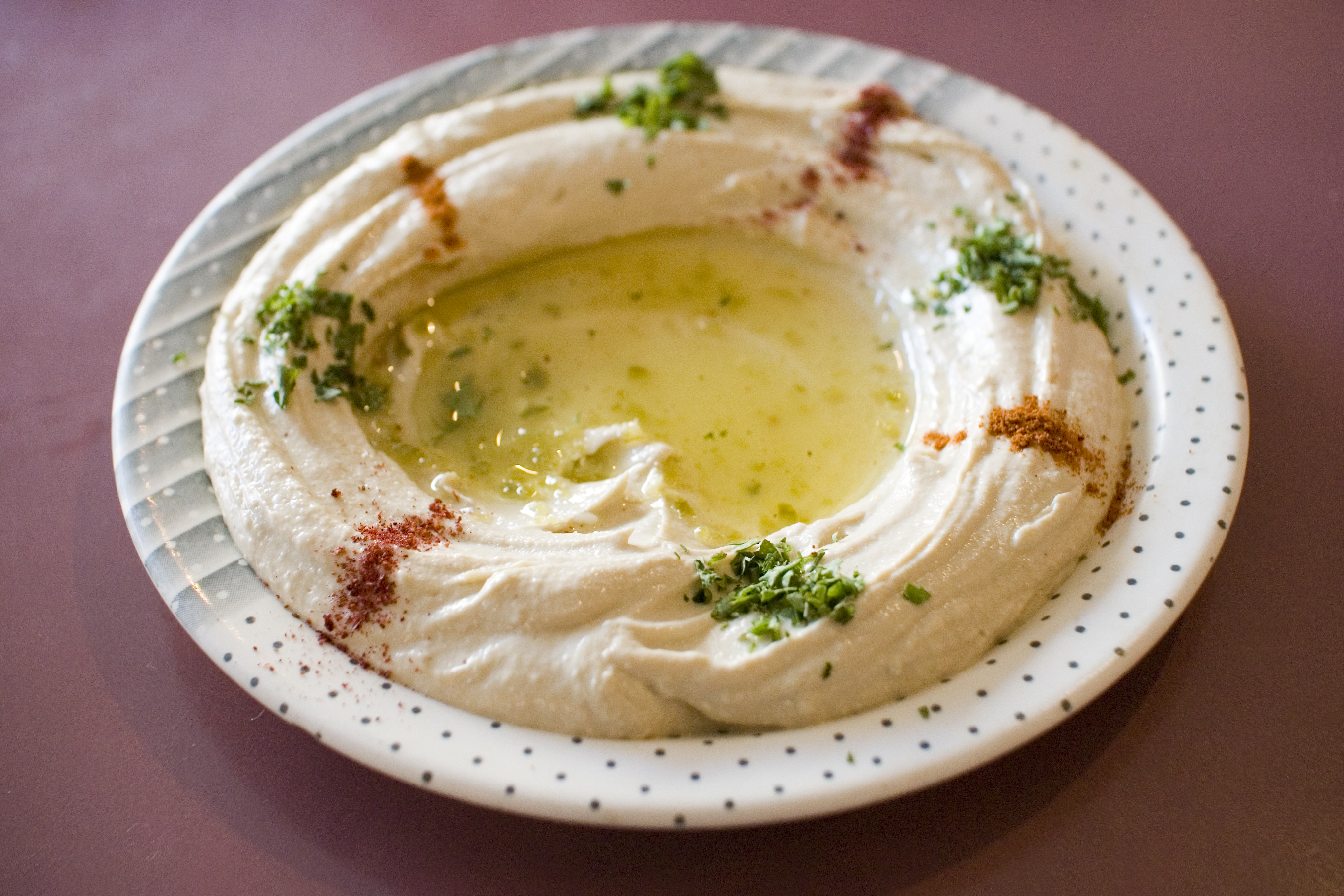

Sabra’s Quest To Push Hummus Mainstream Is About Much More Than Chickpeas
Posted: 06/10/2013 8:04 am EDT | Updated: 06/10/2013 5:01 pm EDT
Last winter, executives from the snack-food empire Frito-Lay invited Ronen Zohar, the Israeli head of America’s biggest hummus company, to watch the Super Bowl from a luxury suite at the Superdome in New Orleans.
For the snack-food industry, the Super Bowl amounts to something like Christmas and every kid’s birthday party wrapped into one, a day on which the average American consumes the caloric equivalent of 20 servings of Utz’s sour cream and onion dip. For Sabra, whose red-rimmed tubs of hummus are increasingly found inside American refrigerators, the stakes were particularly high.
“People are dipping in Super Bowl,” Zohar said. “They are looking for what to dip. Unfortunately they are dipping in the wrong product. But we try to change this. And we are doing okay.”
Around Sabra’s offices just outside New York City, employees are fond of saying that they hope to put their Middle Eastern chickpea dip “on every American table.” Though that mission is far from achieved, the company is off to an impressive start. In the last half-decade, overall sales of hummus have climbed sharply in the United States, with Sabra capturing about 60 percent of the market, according to the Chicago-based market research firm Information Resources, Inc. This spring, Sabra announced an $86 million dollar expansion of its Virginia factory, a move that the company says will create 140 jobs.
As the company’s leader during this stretch, Zohar has overseen a wide-ranging publicity effort aimed at simultaneously coaxing Americans to open their minds to a new taste of foreign origin while downplaying controversial aspects of the product’s provenance. In an age of significant spending by America’s pro-Israel lobby, even chickpeas have been swept into the debate over Israel’s occupation of Palestinian lands, its attitude toward its Arab neighbors and its reliance on American support.
Pro-Palestinian activists have in recent years organized boycotts of Sabra’s Israeli parent company, Strauss, for providing care packages to the Golani Brigade, a branch of the Israeli army that has allegedly committed human-rights abuses in the West Bank and Gaza. Groups in Lebanon have criticized Sabra for reaping the spoils of what they say is an intrinsically Lebanese dish. To quote a saying that has surfaced on the Internet, “First our land, then our hummus.”

Zohar, a blunt-spoken man of 52 who rose through the industry by persuading more Israelis to consume American corn products, dismisses both groups of critics as irrelevant. The Palestinian boycott amounts to mere “noise,” he says. As for the argument that hummus belongs to Lebanon: “I am very happy if Lebanon is going to fight about the hummus and not about anything else.”
Like any businessman, Zohar likes to talk about his product’s promising future. But hummus has a long history. And in the Middle East, history has a way of intruding upon the present, shaping questions about the legitimacy of what Sabra has been adding to the American table.
“The history of this food is that of the Middle East,” writes Claudia Roden, an Egyptian-Jewish cookbook author who has been credited with introducing Middle Eastern food to the West. “Dishes carry the triumphs and glories, the defeats, the loves and sorrows of the past.”
HUMMUS WARS
No one knows for sure how far back the history of hummus goes, but traces of chickpea, the key ingredient, have turned up in Middle Eastern archeological sitesdating to 7,500 B.C. In his bestselling book, Guns, Germs, And Steel, the anthropologist Jared Diamond identifies the chickpea as one of several hardy, nutrition-packed food crops that grew in the Fertile Crescent and enabled its people to develop agriculture and, in turn, cities, armies, systems of taxation and governments.
As civilization spread outward, chickpeas did, too, becoming garbanzos in Spain and chana in India. In the Middle East, they were boiled, mashed and mixed with the sesame paste known as tahini, becoming “hummus bi tahini,” more commonly known as hummus.
In recent years, the growing popularity of hummus has made the dip an object of controversy. Sabra instigated one of the fights at a publicity event in New York in 2007, where it served several hundred pounds of hummus on a plate the size of an above-ground swimming pool, prompting its executives to boast that they had produced the largest dish of hummus in the history of the world.
A year later, an Israeli competitor, Osem, responded by serving 881 pounds of hummus at an outdoor market in Jerusalem. The event took place on Israeli Independence day, or as Palestinians call it, Al Nachbar, The Disaster. A Guinness representative was there to document the victory.
Lebanon entered the fray about a year after that, doubling Osem’s record at a cook-off in Beirut. The chefs, who had been convened by a pair of Lebanese business associations, used spices to decorate what was now the world’s largest hummus plate with a picture of the Lebanese flag. While they were at it, they also broke Israel’s record for the largest bowl of of tabouli, a bulgur and parsley dish. According to The Daily Star of Lebanon, the groups that organized the event had a more grandiose goal than merely notching a volume record: They hoped to promote the idea that the Lebanese had invented both tabouli and hummus.
In the months after that feat, Lebanon and Israel traded shots, with Lebanon delivering what has so far proved the victorious blow, serving 23,042 pounds of chickpea dip at a weekend-long gathering in 2010. On the eve of the event, Ramzi Nadim Shwaryi, a Lebanese TV chef and one of the festival’s coordinators, told the Lebanese press that he and his allies were in it for Lebanon’s honor.
“We will stand together against this industrial and cultural violation and defend our economy, civilization and Lebanese heritage,” he said.
At about the same time the hummus wars were playing out in Lebanon, a group of Palestinian-sympathizers in the United States tried to call attention to Israel’s military activities in the West Bank and Gaza by pressing for boycotts of two Israeli-owned hummus companies — Sabra, and one of its larger competitors, Tribe.
The boycotters identified themselves as supporters of a broader movement called Boycott, Divest and Sanctions. Launched by Palestinian activists in 2005 following failed peace negotiations, the organization aimed to apply economic pressure on the Israeli government to end its 46-year occupation of Palestinian territories.
A YouTube video produced by protesters in Philadelphia who were part of the movement caught the attention of student activists at Princeton and DePaul universities in 2010. They tried to persuade their schools’ dining services to stop offering Sabra. Although they didn’t succeed, activists in the movement are still trying to garner support for their anti-Sabra efforts.
Still, Zohar does not seem particularly distressed by the potential implications for Sabra’s sales.
“The protesters make noise, but they make noise to themselves,” he said. “It doesn’t have any influence on our business.”
THE HUMMUS RELIGION
As the protests played out in the margins, Sabra aimed its product at the American mainstream. It deployed volunteers in trucks to hand out free samples of hummus in cities around the country, and expanded its product line to include more familiar dips, including guacamole and salsa.
It launched a national television ad campaign, exhorting people to “taste the Mediterranean,” and moved its staff in 2011 from an old industrial building across the street from a Queens cemetery to a sleek suburban office park, where the company heads plotted the conquest of the American marketplace in conference rooms named after touristy, exotic destinations like Madagascar and Morocco. (Perhaps unsurprisingly, none of the rooms were named after Lebanon or Israel.)
At the root of Sabra’s success was an influx of corporate money and resources. Strauss, an Israeli snack-food giant, bought half of Sabra in 2005, and Frito-Lay, the snack-food division of Pepsico, entered a joint-partnership agreement with Strauss in 2008. Zohar worked closely with the Frito-Lay people, who had scored a big victory for a foreign dip in the early ’90s, when Tostito’s salsa beat Heinz Ketchup to becomeAmerica’s best-selling condiment.
With Frito-Lay and Strauss’ investments, Sabra built its Virginia factory, where it developed flavors intended to appeal to the average American consumer: Spinach and Artichoke, Pesto, Buffalo Style. As Arabs and Israelis quarreled over the origins of hummus, Sabra was putting out a product that bore about as much resemblance to the authentic dish as a Domino’s BBQ Meat Lovers pie does to a genuine Italian pizza.
In Israel, meanwhile, yet another hummus debate was raging, and although it was the least overtly political of the controversies, it was no less capable of provoking feelings of hostility and anger. As the celebrated British-Israeli chef and food writer Yotam Ottolenghi and his Palestinian-born business partner and co-author Sami Tamimi wrote in the 2102 cookbook Jerusalem, “Jews in particular, and even more specifically Jewish men, never tire of arguments about the absolute, the only and only, the most fantastic hummusia.”
A hummusia is the Israeli equivalent of a New York pizza parlor, a cheap establishment that usually serves only hummus and a few other dishes. But the debates about hummusias are more intense than even the most impassioned pizza threads on Yelp.
“The hummusia fetish is so powerful that even the best of friends may easily turn against each other if they suddenly find themselves in opposite hummus camps,” Ottolenghi and Tamimi wrote. The arguments “can carry on for hours,” they noted, with the debaters delving into the minutia of whether hummus is better served warm or at room temperature, smooth or chunky, topped with fava beans or cumin and paprika, or nothing at all.
In a letter to The New York Times at the height of the hummus wars, Israeli food writer Janna Gur went even further, calling Israel’s fascination with hummus a “religion.” She noted that the most treasured restaurants are invariably owned by Arabs, a phenomenon she traced to the early Zionist settlers who arrived in the Holy Land determined to put the customs of the Diaspora behind them, while embracing a new identity in the Levant. They traded Yiddish for Hebrew, yeshivas for plowshares, and matzoh balls and tsimmis for falafel balls and hummus. “This love affair, that has been going on for decades, shows no signs of dying,” Gur wrote.
Last summer, while traveling in Israel, I visited as many of the hummusias as I could, hoping to come to my own conclusions about the craze. I was joined in this mission by my father, who moved from Israel to New York in the early 1970s and has griped about the quality of America’s hummus offerings ever since. Like many Israelis, he looks down not just on corporate hummus brands like Sabra and Tribe, but also on local shops that package their own hummus in take-out containers. As far as he is concerned, the religion of hummus forbids packaging of any kind.
In the Middle East, hummus is served fresh from the pot, on a big communal plate dripped with olive oil and sprinkled with paprika and cumin. The plate has to be big enough and flat enough so that you can comfortably wipe up the hummus with a pita, an activity that my father refers to as “swiping.” He insists that hummus should have a subtle, earthy flavor, and disdains spicy hummus, lemony hummus, hummus with chipotles, hummus with artichoke, hummus with basil, sun-dried tomato or spinach, and most of all, the dip referred to as “black bean hummus.”
As he has pointed out many times, hummus is the Arabic word for chickpea; by definition, hummus made of black beans isn’t hummus.
In Israel, my father and I ate at Abu Hassan, a bare-tabled hummus den in the seaside town of Jaffa, where the staff starts serving early in the morning and shuts down the shop after the pot runs out, often in the early afternoon. We wandered the narrow streets of Jerusalem’s Old City, past the pilgrims crowding into the Church of the Holy Sepulcher, until we reached a tiny hummus shrine adorned with black-and-white pictures of people sharing a meal at the shop sometime in the 1930s.
One day we drove to a city in Palestine’s West Bank known for its tahina factories and uprisings. By law, Israelis are forbidden from entering the Palestinian territories, except to travel to the Jewish settlements, but we felt that no hummus pilgrimage would be complete without a trip to Nablus.
At the checkpoint, an Arab cab driver pulled over and said he hoped, for our own sake, that we wouldn’t enter the city in our Israeli rental car. We thanked him and drove past the Israeli guards, through the rounded hills studded with olive trees. My father grew quiet. When he’d first traveled those hills, in 1967, he was in a tank, pushing forward toward the Jordan River as thousands of Palestinian refugees streamed down the sides of the road. The Six-Day War had broken out and the Israeli army had conquered the Palestinian villages.
After a while we reached the outskirts of Nablus, parked and made our way through the maze-like casbah, to a dim, windowless hummus restaurant with electrical wires hanging from the ceiling. A teenage boy strolled into the room with an unmarked bottle of olive oil, tipping it onto people’s plates. After a few minutes of “swiping,” my father announced that this was the best hummus he’d tasted on the trip — though he also remarked that the excitement of entering forbidden territory had enhanced the flavor. By that point I knew that my hummus palate wasn’t refined enough to discern the subtle differences between the various hummusia offerings, but I liked them all better than any hummus I’d ever had in America.
Toward the end of our stay, we traveled to the fertile hills of the Galilee region, where an Arab chef named Husam Abbas had been garnering praise for his gourmet take on Arab food, defying a number of Israeli assumptions about Palestinian culture.
Abbas, who has been described as a leading figure of Israel’s Slow Food movement, broke ground at his chain of high-end restaurants by showing Israelis that Arab cuisine isn’t just hummus and kebab. His specialties include a spicy watermelon salad with diced mustard stems and stuffed summer squash in a tomato bisque, and he uses produce grown in fields that his family has tended, by his account, for 1,700 years.
Abbas met us by the side of the road in his pickup truck and led us into his fields. A gruff man with a leathery face, he tramped down the leafy aisles with a cigarette lodged in his mouth, stooping to gather purple-tipped string beans, young cantaloupes that looked more like cucumbers, several kinds of summer squash, and beautifully misshapen heirloom tomatoes.
Later, in the dining room of one of his restaurants, he explained that when the growing season ends, he and his children go into the hills to gather wild herbs with names like “olesh” and “aqab” and “hobeza.” The herbs grow only locally and only in the winter.
“But because hummus is dry, it can be used throughout the year,” he said.
When I asked how he accounted for the dip’s popularity, he kept his answer short: “Low cost, high calorie.” He seemed a little annoyed at the need to deliver this dictum.
FLAVOR HOUSE
As Sabra strives to make its chickpea dip as popular as bagels, burritos and other foreign-born fixtures of the American diet, it is employing a flavor palette that would test the limits of acceptability in the Middle East.
One recent day, Mary Dawn Wright, Sabra’s executive chef, stood before an array of hummus containers at the company’s Virginia factory, discussing these techniques. She popped open a tub labeled Asian Fusion.
“Israelis would never ever think it’s considered to be hummus,” she admitted.
A glistening spoonful of some brightly colored carrot and ginger mixture distinguished the dip from anything you’d find in a hummusia. Sabra collaborates with outside “flavor houses,” whose scientists also help develop classic American products like Doritos, she explained.
Asian Fusion is just one of more than a dozen flavors that Sabra has invented in its effort to convert more Americans to hummus, and Wright was almost certainly correct in her frank assessment of what Israelis might think of them. Even Zohar didn’t bother to feign enthusiasm for Sabra’s Buffalo Style flavor. “I detest it,” he said.
But for Zohar, and presumably for the rest of Sabra’s executives, personal feelings about the flavors are as irrelevant as hummus’ place of origin. What matters are the cravings of the average American consumer, and Zohar seems to think that no American is beyond the company’s reach.
At the Superbowl, he noticed that many of the tailgaters were eating Louisiana fare — “all kinds of crabs and shrimps, whatever it is.”
He didn’t see any hummus containers amid the jambalaya and gumbo.
“Maybe in New Orleans they are eating hummus not as much as people in New York are eating hummus,” he said recently. “But give us two years. They are trying it, and when they try it they become a lover.”
Island Kitchen in Pensacola
“I think this is what MaMa might fix for us if we lived in Jamaica,” I said to AdventureMan as our meals were delivered at the Island Kitchen. We’ve passed Island Kitchen a hundred times, and many of those times AdventureMan has said one of these days he’d like to give it a try. This was the day.
There were other Islanders eating there – one eating oxtail and another eating goat curry. It looks like a lively place on the weekends, when expats come to eat food from home and listen to Island music.

I ordered the Jamaican Tea; it was delicious. I thought it was ginger, but the server said no, it was an herbal tea.
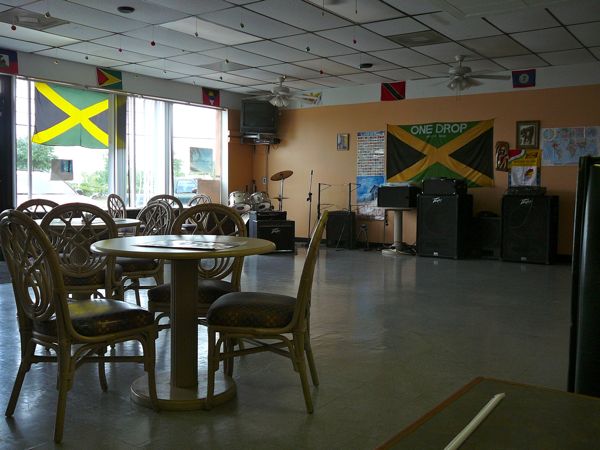
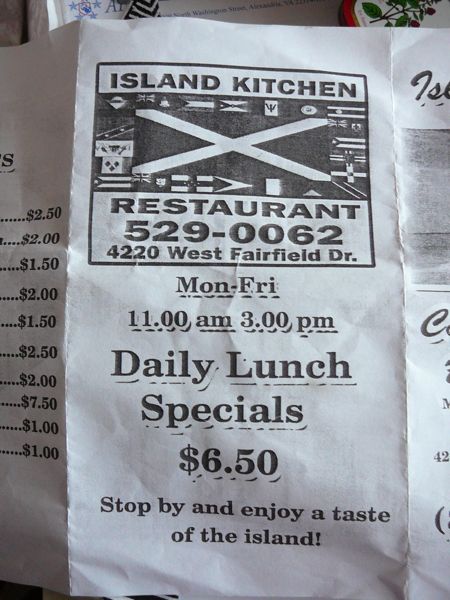
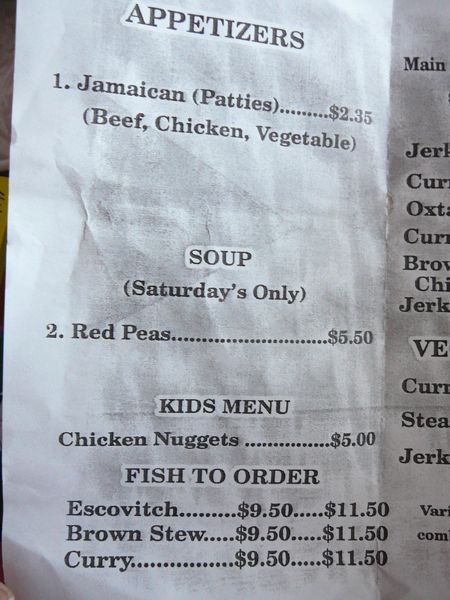
We ordered at the counter – so many options, and a set of choices unlike any other restaurant in Pensacola. Our orders were the special-of-the-day, AdventureMan ordered the Chicken With Brown Sauce and I ordered the Chicken Curry.


It was down-home chow. It was food like Grandmama would serve, if Grandmama were Caribbean. There are other options – Oxtail. Goat Curry. Beef Pasties. Everything looked well prepared, wholesome, and copious.



Still hoping for an Ethiopian restaurant in Pensacola . . . 🙂
Sunrise in Seattle: A Quick Trip
Oops!
Sorry! I intended to keep writing, but as it sometimes can, life just got away from me. I took a quick trip to Seattle to see my Mom on Mother’s Day, stayed with my best friend from college, ummm . . . when I count the number of years we have been friends, I am shocked!
Flying out of Pensacola, we flew over Bayou Texar:

I had a great seat, but the lady next to me sounded like she had terminal pneumonia, so I kept my face toward the window. Everything went smoothly, arrived a little early. Two hassles: I had decided for just a short trip I would use a shoulder bag/suitcase, and even though it was light, it gets heavy lugging it from gate to gate. On the good news side, it sure is a lot easier to travel with just cabin baggage, easy on – easy off.
Second, I just hate it that Seattle has relocated all the rental cars to an off-site location. The buses only stop at one end of the terminal or the other so again, there is a lot of lugging, whether it is wheeled or shoulder. You have no control over when the bus will come or when it will leave. It used to be so easy, just dropping the car off and walking directly into the terminal; now I have to calculate extra time for unknowns in the rental return process, oh aarrgh.
Traffic to north Seattle was horrible, even on a Saturday, it was like a normal work day when all the workers are streaming out of the city. On work days, there are windows when traffic is less, but a Saturday! Aarrgh!
It was not raining, or not much. That was a really good thing. Temperatures were lower than Pensacola. That was a good thing. We had a great Mother’s Day brunch, with my sisters and their hubbies, and Mom and I did some shopping. The next day, more errands and catching up on banking and bureaucracies. Those were all good things.
My good friend and I had time to catch up and – as we are wont to do – analyze and strategize. We spent a good amount of time laughing at ourselves and our dilemmas. We laughed at the problems of aging. We laughed at who we thought we would be (who ever thinks they will get old??) and who we have become. Here is what sunrise over Lake Washington looks like from my friend’s house:

Flight home uneventful; arrived in Atlanta a few minutes early and I was out the door in a flash, running running running down one concourse and up the other to see if I could get on the earlier flight to Pensacola which was leaving in MINUTES! “No, no, not possible” the gate clerk said without even looking up; she was already working on two other women, I am guessing flight attendants trying to get back home. I waited a minute, bushed from the long run and lugging the shoulder luggage, then said “I think I will just go find a barbecue” and the gate attendant said “Wait!” and I thought she was going to tell me where to find the best barbecue, because I had like three hours, but no . . . she was printing me out a ticket! I got the last seat, back, back, way back in between two great big United States Marines, but it was a fun 45 minutes and I was home three hours earlier. All that is really good!
Even though it is not Seattle to Kuwait, I still like to shower after a long flight, I just feel germy! AdventureMan made me a beautiful salad with sauteed Portobello mushrooms on top, oh yummmmm and we delighted to be together again. Woooo HOOOOO, home again 🙂 Sorry to be out of the loop, but when you are one day out, one day back with two days in between, time just swooshes by.
Western Diet Killer:
From the UK Daily Mail Online:
The Western diet really IS a killer: People who eat white bread, butter and red meat are most likely to die young
- Those who ate fried and unhealthy food had doubled risk of early death
- Key culprits include red meat, white bread, butter, cream and sweet foods
- Findings ‘help explain’ why heart disease is still the UK’s biggest killer
PUBLISHED: 13:20 EST, 16 April 2013 | UPDATED: 02:08 EST, 17 April 2013
The typical Western diet, high in fat and sugar, really does lead to an early grave, new research suggests.
A study of more than 5,000 civil servants found those who ate the most fried and sweet food, processed and red meat, white bread and butter and cream doubled their risk of premature death or ill health in old age.
It adds to evidence that ‘Western style food’ is the reason why heart disease claims about 94,000 lives a year in the UK – more than any other illness.
The findings published in The American Journal of Medicine are based on a survey of British adults and suggest adherence to the diet increases the risk of premature death and disability later in life.
 People who ate the most fried and sweet food, processed and red meat, white bread, butter and cream doubled their risk of premature death or ill health in old age
Lead researcher, Dr Tasnime Akbaraly, of the National Institute of Health and Medical Research in France, said: ‘The impact of diet on specific age-related diseases has been studied extensively, but few investigations have adopted a more holistic approach to determine the association of diet with overall health at older ages.’
She examined whether diet, assessed in midlife, using dietary patterns and adherence to the Alternative Healthy Eating Index (AHEI), is associated with physical ageing 16 years later.
The AHEI is an index of diet quality, originally designed to provide dietary guidelines with the specific intention to combat major chronic conditions such as heart disease and diabetes.
More…
Dr Akbaraly added: ‘We showed that following specific dietary recommendations such as the one provided by the AHEI may be useful in reducing the risk of unhealthy ageing, while avoidance of the “Western-type foods” might actually improve the possibility of achieving older ages free of chronic diseases.’
The researchers analysed data from the British Whitehall II cohort study and found following the AHEI can double the odds of reversing metabolic syndrome, a range of disorders known to cause heart disease and mortality.
 The research adds to evidence that Western style food is the reason why heart disease claims about 94,000 lives a year in the UK – more than any other illness
They followed 3,775 men and 1,575 women from 1985-2009 with a mean age of 51 years.
Using a combination of hospital data, results of screenings conducted every five years, and registry data, investigators identified death rates and chronic diseases among participants.
At the follow up stage, just four per cent had achieved ‘ideal ageing’ – classed as being free of chronic conditions and having high performance in physical, mental and mental agility tests.
About 12 per cent had suffered a non-fatal cardiovascular event such as a stroke or heart attack, while almost three per cent had died from cardiovascular disease.
About three quarters were categorised as going through ‘normal ageing’.
The researchers said participants who hadn’t really stuck to the AHEI increased their risk of death, either from heart disease or another cause.
Those who followed a ‘Western-type diet’ consisting of fried and sweet food, processed food and red meat, refined grains, and high-fat dairy products, lowered their chances for ideal ageing.
The Week Flew By
Yesterday when I got home from a day-long seminar on Heirloom Feathers (a follow up to another one earlier in the week on making quilts from Heirloom linens), with Cindy Needham, well-known expert and instructor, (that’s Cindy giving us an extra demo during lunch on how to do beading embellishments while on an airplane)

I found a huge bouquet of flowers from my sister and her husband, who had been house guests this week. It’s one of those gorgeous days we have a few of in Spring, warm and sunny, not too hot, and oh, this bouquet looks like Spring. Arriving home and finding this gorgeous bouquet just made my heart laugh. Can you see the Easter Bunny? We had time to walk and talk, to laugh and share stories, and we were able to take them to Five Sisters. We hope they come back soon 🙂

We’ve had a busy week. AdventureMan is getting ready for the big Expo and garden sale in May, we expect our next set of house guests tomorrow morning, and meanwhile, we have our normal daily busy lives to follow. Tonight we meet up with friends we love, people who spend their lives doing good for others, and with whom we always have great conversations, and tomorrow, early, we pick up the house guests, get them settled in, and share an Easter banquet with them, and with our son, his wife, our sweet little grandson and her mother and her husband.
I found a wonderful new Spring salad recipe to share with you 🙂 Very easy, very good:
Spring Asparagus Salad
Ingredients
1 tablespoon rice vinegar
1 teaspoon red wine vinegar
1 teaspoon soy sauce
1 teaspoon white sugar
1 teaspoon Dijon mustard
2 tablespoons peanut oil
1 tablespoon sesame oil
1 1/2 pounds fresh asparagus, trimmed and cut into 2-inch pieces
1 tablespoon sesame seeds
Directions
1. Whisk together the rice vinegar, red wine vinegar, soy sauce, sugar, and mustard. Drizzle in the peanut oil and sesame oil while whisking vigorously to emulsify. Set aside.
2. Bring a pot of lightly-salted water to a boil. Add the asparagus to the water and cook 3 to 5 minutes until just tender, but still mostly firm. Remove and rinse under cold water to stop from cooking any further.
3. Place the asparagus in a large bowl and drizzle the dressing over the asparagus. Toss until evenly coated. Sprinkle with sesame seeds to serve.
Tomorrow is our happiest of holidays, the day that sin and death are defeated and HOPE for all mankind is welcomed joyfully into the world. Happy Easter, my friends.
Native Cafe at Pensacola Beach

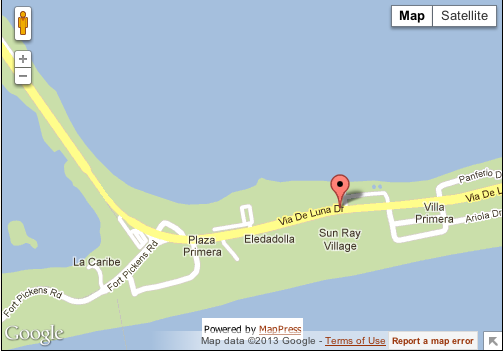
Just when we think we know all the restaurants in town, Urban Spoon comes up with a Pensacola restaurant we didn’t even know existed. It’s getting a big buzz, too, listed as one of the most talked about restaurants in Pensacola. Hoping it is too early for the Spring Break crowd, we head for the Native Cafe after early church. OOps!Too late! And it’s not the spring breakers, at least I don’t think so, these look like locals.
We wait for maybe thirty minutes on one of the sweetest Sundays of the year, not too hot, not too cold, a tiny bit breezy – perfect beach day, and we don’t mind at all sitting outside, waiting for a table or booth.
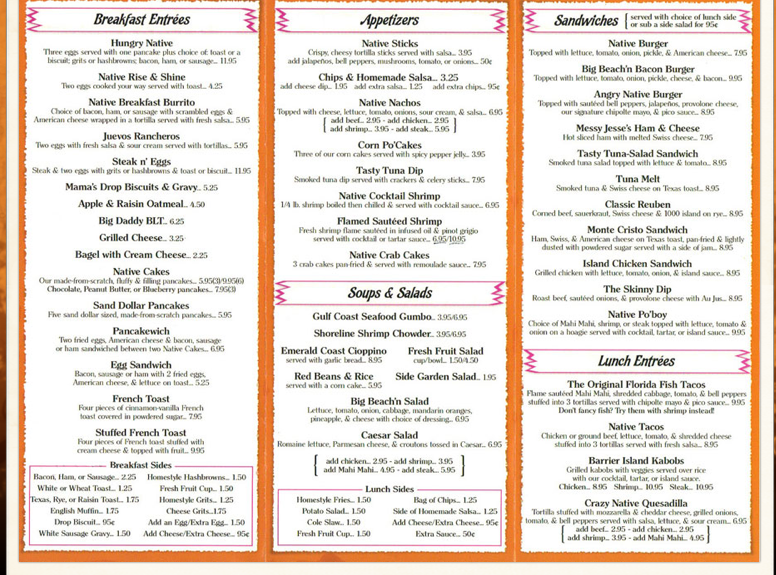
Once we’re in, we can see why people like it. It’s not so original as Andy’s Flour Power in Panama City Beach, but they have original art on the walls, a funky decor, and a LOT of customers.


We see a lot of huge breakfasts being delivered. The Crab Cake Benedict seems to be a big hit, all the platters look huge. People are digging right in and look happy. Service is quick and efficient.
AdventureMan has been dying for some Biscuits and Gravy. His favorite place for biscuits and gravy, Adonna’s, in downtown Pensacola on Palafox, no longer serves biscuits and gravy. He says these are pretty good!

The little Alaska girl who lives inside me wanted crab cakes, but not all the bread and sauce that comes with the Crab Cake Benedict, so I asked, and was able to order the appetizer Crab Cakes, which was perfect. It came with Remoulade Sauce – yummm.

LOL, you can see, as usual, I forgot to take a photo before I started eating. There were three complete crab cakes; just be glad I remembered when I did!
The food was good, but we probably won’t go back until October or so, when the tourist season dies down. The Native Cafe has been FOUND! Too many people, too long a waiting line. We have the luxury of being able to go when no one else is around except those of us who live here. (You can live here thirty or forty years and you are still not a local; local is people who grew up and went to school in Pensacola 🙂 )


Return to Five Sisters in Pensacola on a Rainy Saturday
It was another endlessly rainy Saturday when my husband asked where I would like to go for lunch.
I knew immediately where I wanted to go. I love Five Sisters almost any day, but especially on a rainy Saturday. I like it that they have live music on Sundays, and sometimes on Thursday nights, but I really like it that there is no music on a rainy, dreary Saturday, so we can talk and hear each other. 🙂
Five Sisters is packed – it often is – with people seeking the same thing, a warm, cheery place filled with great smells and great cooking.
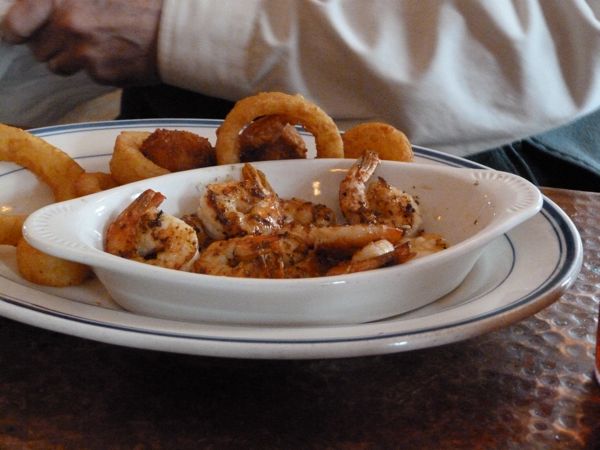
AdventureMan ordered the grilled shrimp platter:
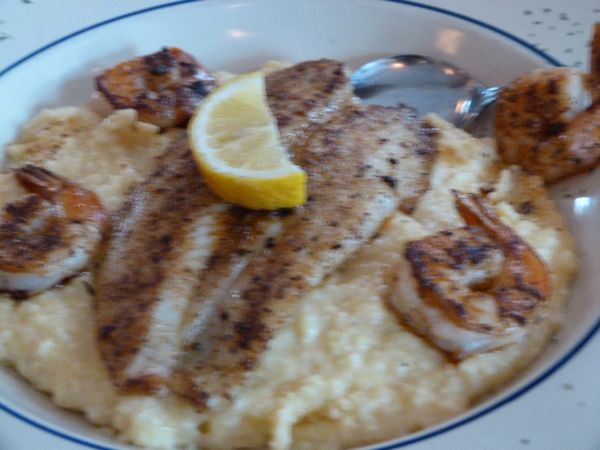
And I ordered the Blackened Fish on Cheese Grits (sorry, it is a little blurry, I must have been shaking with hunger . . . )
I never get tired of Five Sisters.
Thought While Not Moving
We’ve been in Pensacola three years this month, or anyway, I have. AdventureMan retired, but went back twice to help out and to start things up on a major contract. He was retired, but useful.
The longest we’ve ever stayed in any one place was 6 years. The second longest was 4.5 years. There were some 6 month places, 10 month places, and three years was a long posting. I feel the internal clock ticking; I am cleaning out closets and drawers. No, I am not packing. No, I am not moving, but the habits are still there and don’t go away. Go through everything. Weed and cull. Pass along. Give away. Evaluate.
AdventureMan is fully engaged in a very different life from before, and it requires some adjustment – for both of us. You’d think my life wouldn’t be that different, I still do aqua aerobics, I spend time doing volunteer work, serving the church, meeting up with other quilters, etc., same life, different location, right? No No Noooooooooooooooooooo!
Take the spice drawers. AdventureMan still tells the story of when we first got married and I did my first big grocery shopping, setting up household. As he lugged bags and bags into the house, he jokingly asked if I had everything (his bachelor refrigerator kept beer cold; there was nothing else in it!) and I said no, that I had groceries, but I would have to go back for spices.
When I got back with two bags full of herbs and spices and cooking things like baking powder and baking soda, he was wide-eyed. He was thinking “salt . .. pepper . . . what else is there?” He still laughs about it, lo, these forty years later.
Three years in Pensacola has given me time to think about the spice drawers. They frustrated AdventureMan, and he offered to re-arrange them more logically, which almost started a nuclear war in our family dynamics. Logically, he is now doing more cooking and he should have more input, but it is really, really hard for me to give up territory in the kitchen, and, well, AdventureMan can be a little bit aggressive in amassing his territory.
But, after three years, I agree, the spice drawers are not working, and one reason is I got this state-of-the-art rubberized drawer liner, but it crept back and made the spices rise up and then the drawers got stuck open or closed and it really was frustrating.
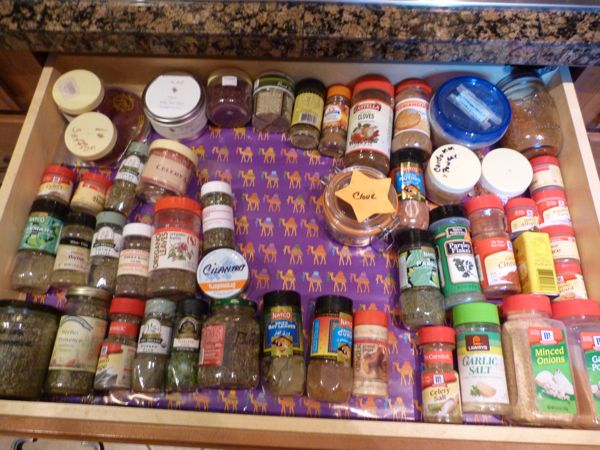
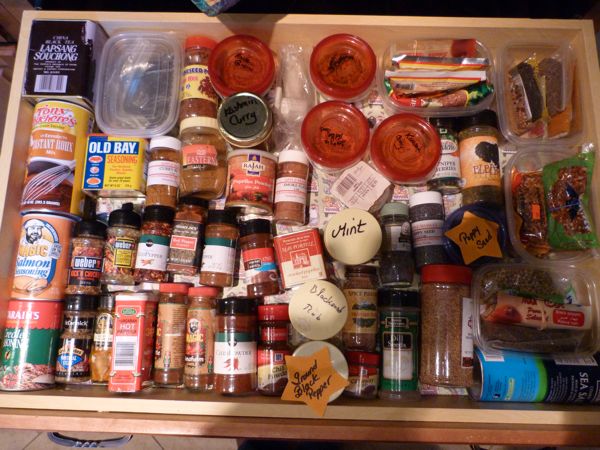
Yesterday, I had the house to myself and because I hadn’t planned it, it wasn’t something I dreaded, I just started fiddling with the spice drawers, just editing, getting rid of some really old stuff, combining duplicates and . . . well, because I hadn’t put it on the “To Do List” it was fun. So much fun I decided to go all the way, take out the annoying rubberized liner and have some fun.
I’ve always loved great drawer liners. Good thing, huh? I’ve lined a LOT of drawers. There are some wonderful liners out there, but I love to use wrapping paper. Every now and then I’ll see a design I love, or something that thrills my heart. Because I moved so often, I knew it wasn’t a lifetime commitment, so I just had fun with it. And that is what I did yesterday.
I have some great wrapping paper I brought back that I went to a lot of trouble to get, flying down from Kuwait to Doha to go to the American Women’s Bazaar in November, where I knew there would be the vendor from Saudi Arabia who makes and sells these quirky, whimsical Arabic-themed wrapping papers that I loved to use for all the Christmas gifts and house-guest gifts I would take back three or four times a year. I hand carried several rolls of this paper back to Kuwait, then shipped it back to Doha when we moved back there, then shipped it again, carefully protected, to Pensacola when we retired.
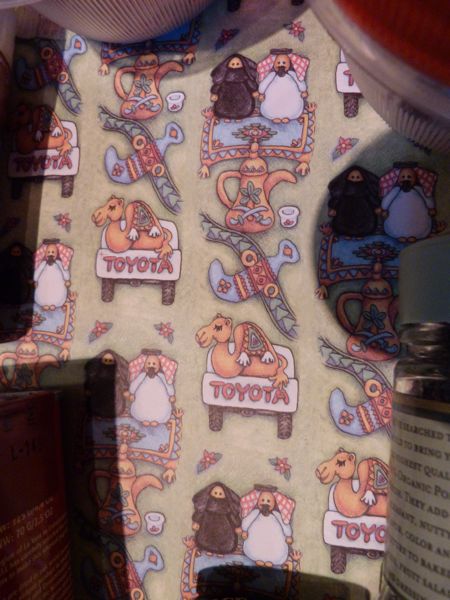
Here in Pensacola, however, it seems less and less relevant. I don’t use it to wrap my Christmas gifts like I used to because the gifts are no longer exotic surprises from the Middle East. And I still have a lot of this paper, paper which delights me, but for which I have no real purpose . . .
So I decided I would use it to line my spice drawers. I can see it every day and smile. It is making itself useful, and two or three years down the road when it is worn and needs replacing, I can find something else that delights my heart.
When AdventureMan comes in, I am just finishing up. I warn him, because he, like me, likes to know where things are.
“What’s the logic?” he asks, and I think “this is one of the reasons I married him; he knows to ask the most pertinent question.”
“Here are whole spices, seeds, peppers,” I tell him as I indicate a section, “and here are exotics, spices from the Gulf and Jordan and Tunisia. This section is grill mixtures and all kinds of chili powders and Creole mixes. Over here you have aromatics and baking spices, and here are the Italian and French herbs. The last section is onion and garlic powders and salts, flavored salts of all kinds, and frequently used multi-use herbs.”
He totally got it. 🙂
Seafood Platter Deli AKA Gulf Coast Seafood Deli on 9 Mile Road
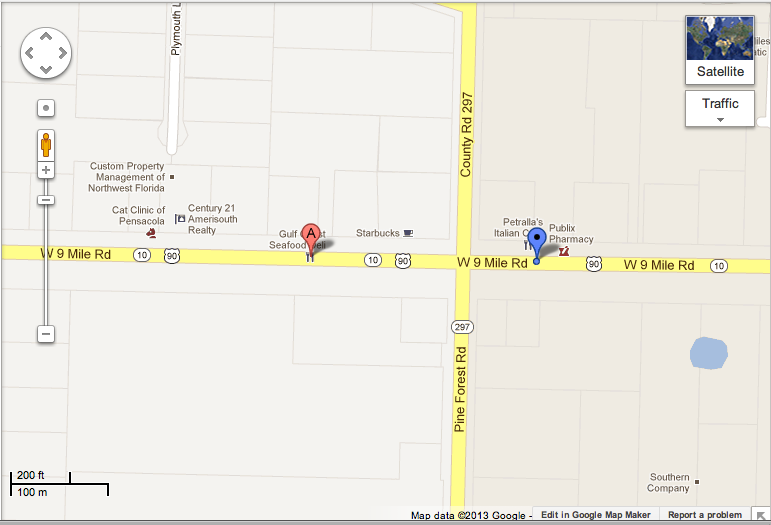
“We’re going to drive ‘all the way’ out there,” AdventureMan tells me and we laugh, because ‘all the way’ is such a relative term. When we lived in Kuwait and in Qatar, we would drive a minimum 30 minutes to get to a restaurant, any restaurant, not only because of distances but also because of traffic, horrendous traffic, in the evenings. While the Seafood Platter Deli is 13 miles away, it takes us less than 20 minutes to get there. Welcome to Pensacola 🙂

This is a very unusual restaurant. It is so old-timey Gulf Seacoast, and at the same time, I thought as we entered “My Moslem friends would love this!”
Many of my Moslem friends think Americans are unbelievers. They think we don’t talk about God. They don’t know we pray – sometimes without ceasing. Just as I was astounded as I learned things about Islam and Moslem culture living in the Middle East, they were also astounded learning things about us, like that we take care of our families. Think about it – most of what many people in the world know about Americans comes from the impact of cable TV. They watch American TV and they think they understand American culture. Horrifying thought, isn’t it?
So how amazing is it to walk into a restaurant where, as you stand at the counter to order, and you look at the big menu on the wall, there is a stand, with a bible on it. And there is paper, and a pencil, and a sign saying “Prayer requests.” I don’t know about your restaurant experiences, but this is unique in my experience – in America. In the Middle East, there are all kinds of restaurants with Qu’ranic verses on the walls, and the sounds of religious services piped into the restaurant. People talk about God all the time. It’s a whole different world; and my Moslem friends would feel right at home in the Seafood Platter Deli.

Of course, in Saudi Arabia, we would rush to buy our pre-sunset felafels, and then sit and munch, listening to all the souk grates coming down as shops closed for the Mahgrib prayer. Everything closed, five times a day, in Saudi Arabia, for prayer.
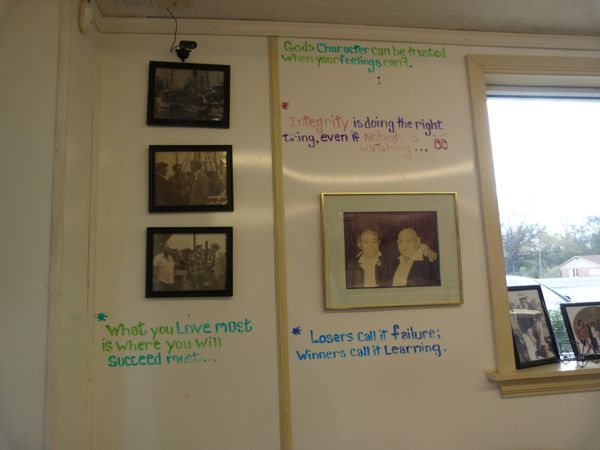
At the Gulf Coast Seafood Deli / Seafood Platter Deli (I don’t know what the real name is, and both names appear when you Google it) there are scriptures on the wall. When you sit down, the little basket holding condiments tells you to “count your blessings.”

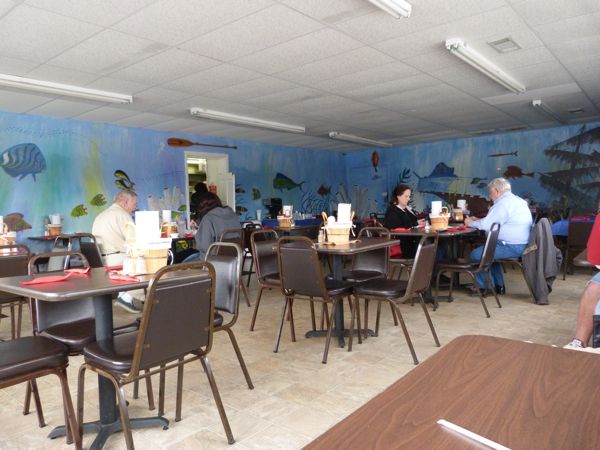
The interior dining room (as opposed to the deli section, and the counter where you order food when you come in) is wall-to-wall sea mural, family friendly, Fish and sea life everywhere. There are also families who pray when their meal is delivered to the table, before they eat. The wait-staff is patient, and personal. You get the impression they truly want you to have a good experience at this restaurant.
We were hungry. We are mildly disgruntled to see piping hot food delivered to tables around us who arrived after we did, but not very. Even though we are hungry, we know that our ordering our food grilled or blackened slows things up in the kitchen, where the majority of the meals are fried. It is really really hard for people like us to watch other customers thoroughly enjoying their fried shrimp, fried catfish, fried grouper, fried scallops, etc. They look SO delicious. Every now and then, maybe once every couple months, we slip up and eat something deep fried, just because yes, yes, it tastes so good, and we know it is like the WORST thing for us. What a pity that deliciousness can be so lethal.
Ah! There it is! Our meals! We tuck right in and then I remember “Oh no! I haven’t taken any pictures!” AdventureMan is used to this, and bless his heart, he stops eating so I can shoot what is left of his grilled scallops, so tasty and delicious, so fresh!
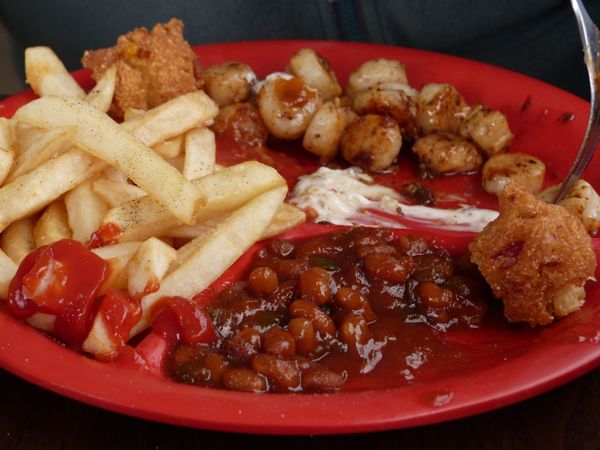
I had so much salmon on my platter that I had salmon and steamed vegetables for dinner, too! The salmon was copious, lightly blackened, seared on the outside, moist on the inside, just the way I love it. It was some of the best salmon I have had in Pensacola (not exactly salmon country, but that little Alaska girl still lives in my heart and I can’t resist salmon when I see it on the menu.)

There’s another thing we loved about the Seafood Platter Deli – remember Dembo’s Smokehouse? We love restaurants that honor their heritage, and the Seafood Platter Deli has this wonderful wall:
Last, but not least, the food was so good, and so plentiful, that we couldn’t eat it all and ended up taking some home. We also took home some dessert, one dessert, $1.99 for a goodly portion of Vanilla Wafer pudding, that old-fashioned kind, maybe Banana pudding. It was so GOOD, we wish we’d gotten two. 🙂
Gulf Coast Seafood Deli / Seafood Platter Deli
Address: 2250 W Nine Mile Rd, Pensacola, FL 32534
Phone:(850) 969-3299
We love this place, and look forward to driving ‘all the way out there’ for more fabulous Gulf seafood.
Mediterranean Diet Cuts Heart Attacks, Strokes and Deaths by 30%
What I love about the report of this study is that all the related researchers have gone to a Mediterranean diet – see the end of this article 🙂 I found this article at the New York Times.

About 30 percent of heart attacks, strokes and deaths from heart disease can be prevented in people at high risk if they switch to a Mediterranean diet rich in olive oil, nuts, beans, fish, fruits and vegetables, and even drink wine with meals, a large and rigorous new study has found.
The findings, published on The New England Journal of Medicine’s Web site on Monday, were based on the first major clinical trial to measure the diet’s effect on heart risks. The magnitude of the diet’s benefits startled experts. The study ended early, after almost five years, because the results were so clear it was considered unethical to continue.
The diet helped those following it even though they did not lose weight and most of them were already taking statins, or blood pressure or diabetes drugs to lower their heart disease risk.
“Really impressive,” said Rachel Johnson, a professor of nutrition at the University of Vermont and a spokeswoman for the American Heart Association. “And the really important thing — the coolest thing — is that they used very meaningful endpoints. They did not look at risk factors like cholesterol or hypertension or weight. They looked at heart attacks and strokes and death. At the end of the day, that is what really matters.”
Until now, evidence that the Mediterranean diet reduced the risk of heart disease was weak, based mostly on studies showing that people from Mediterranean countries seemed to have lower rates of heart disease — a pattern that could have been attributed to factors other than diet.
And some experts had been skeptical that the effect of diet could be detected, if it existed at all, because so many people are already taking powerful drugs to reduce heart disease risk, while other experts hesitated to recommend the diet to people who already had weight problems, since oils and nuts have a lot of calories.
Heart disease experts said the study was a triumph because it showed that a diet was powerful in reducing heart disease risk, and it did so using the most rigorous methods. Scientists randomly assigned 7,447 people in Spain who were overweight, were smokers, or had diabetes or other risk factors for heart disease to follow the Mediterranean diet or a low-fat one.
Low-fat diets have not been shown in any rigorous way to be helpful, and they are also very hard for patients to maintain — a reality borne out in the new study, said Dr. Steven E. Nissen, chairman of the department of cardiovascular medicine at the Cleveland Clinic Foundation.
“Now along comes this group and does a gigantic study in Spain that says you can eat a nicely balanced diet with fruits and vegetables and olive oil and lower heart disease by 30 percent,” he said. “And you can actually enjoy life.”
The study, by Dr. Ramon Estruch, a professor of medicine at the University of Barcelona, and his colleagues, was long in the planning. The investigators traveled the world, seeking advice on how best to answer the question of whether a diet alone could make a big difference in heart disease risk. They visited the Harvard School of Public Health several times to consult Dr. Frank M. Sacks, a professor of cardiovascular disease prevention there.
In the end, they decided to randomly assign subjects at high risk of heart disease to three groups. One would be given a low-fat diet and counseled on how to follow it. The other two groups would be counseled to follow a Mediterranean diet. At first the Mediterranean dieters got more intense support. They met regularly with dietitians while members of the low-fat group just got an initial visit to train them in how to adhere to the diet, followed by a leaflet each year on the diet. Then the researchers decided to add more intensive counseling for them, too, but they still had difficulty staying with the diet.
One group assigned to a Mediterranean diet was given extra-virgin olive oil each week and was instructed to use at least 4 four tablespoons a day. The other group got a combination of walnuts, almonds and hazelnuts and was instructed to eat about an ounce of the mix each day. An ounce of walnuts, for example, is about a quarter cup — a generous handful. The mainstays of the diet consisted of at least three servings a day of fruits and at least two servings of vegetables. Participants were to eat fish at least three times a week and legumes, which include beans, peas and lentils, at least three times a week. They were to eat white meat instead of red, and, for those accustomed to drinking, to have at least seven glasses of wine a week with meals.
They were encouraged to avoid commercially made cookies, cakes and pastries and to limit their consumption of dairy products and processed meats.
To assess compliance with the Mediterranean diet, researchers measured levels of a marker in urine of olive oil consumption — hydroxytyrosol — and a blood marker of nut consumption — alpha-linolenic acid.
The participants stayed with the Mediterranean diet, the investigators reported. But those assigned to a low-fat diet did not lower their fat intake very much. So the study wound up comparing the usual modern diet, with its regular consumption of red meat, sodas and commercial baked goods, with a diet that shunned all that.
Dr. Estruch said he thought the effect of the Mediterranean diet was due to the entire package, not just the olive oil or nuts. He did not expect, though, to see such a big effect so soon. “This is actually really surprising to us,” he said.
The researchers were careful to say in their paper that while the diet clearly reduced heart disease for those at high risk for it, more research was needed to establish its benefits for people at low risk. But Dr. Estruch said he expected it would also help people at both high and low risk, and suggested that the best way to use it for protection would be to start in childhood.
Not everyone is convinced, though. Dr. Caldwell Blakeman Esselstyn Jr., the author of the best seller “Prevent and Reverse Heart Disease: The Revolutionary, Scientifically Proven, Nutrition-Based Cure,” who promotes a vegan diet and does not allow olive oil, dismissed the study.
His views and those of another promoter of a very-low-fat diet, Dr. Dean Ornish, president of the nonprofit Preventive Medicine Research Institute, have influenced many to try to become vegan. Former President Bill Clinton, interviewed on CNN, said Dr. Esselstyn’s and Dr. Ornish’s writings helped convince him that he could reverse his heart disease in that way.
Dr. Esselstyn said those in the Mediterranean diet study still had heart attacks and strokes. So, he said, all the study showed was that “the Mediterranean diet and the horrible control diet were able to create disease in people who otherwise did not have it.”
Others hailed the study.
“This group is to be congratulated for carrying out a study that is nearly impossible to do well,” said Dr. Robert H. Eckel, a professor of medicine at the University of Colorado and a past president of the American Heart Association.
As for the researchers, they have changed their own diets and are following a Mediterranean one, Dr. Estruch said.
“We have all learned,” he said.
Recent Comments
intlxpatr on Shampoo Ginger tigerbutterya0c5ff1d… on Shampoo Ginger intlxpatr on British Soldier Kidnapped, Esc… John on British Soldier Kidnapped, Esc… intlxpatr on British Soldier Kidnapped, Esc… Wikipedia Donate Button

Amazina


Early Voting in Florida


