Yesterday, the Qatari Ambassador to the United States, Mohammed Jaham Al Kawari, spoke to a packed house at the New World Landing as the Tiger Bay Club gathered to hear how little Qatar is exerting big influence in the world peace-making arena.

The ambassador has an impressive biography, and in appearance very polished, very French. He isn’t afraid to tackle the tough questions, and presents Qatar’s position in a way that people can hear and understand.
December 6, 2014
Posted by intlxpatr |
Community, Counter-terrorism, Events, ExPat Life, Interconnected, Leadership, Middle East, News, Pensacola, Political Issues, Transparency | Mohammed Jaham Al Kawari, Tiger Bay Club |
Leave a comment
Article from The Daily Beast
RUN SILENT
11.14.14
ISIS Keeps Getting Better at Dodging U.S. Spies
There’s a reason ISIS leader Abu Bakr al Baghdadi has proven so hard to take out. He and his followers have become really good at keeping their communications covert.
On Thursday, around the same time ISIS leader Abu Bakr al Baghdadi announced that he had survived a U.S. airstrike and promised in a recorded message to “erupt volcanos of jihad,” American officials were meeting to discuss just how hard it was to track the militant group.
Baghdadi and his followers have proven exceptionally difficult to track and kill because they’re encrypting their communications and taking steps to avoid being detected by U.S. surveillance, according to several current and former officials. Without American intelligence operatives on the ground in ISIS’s home base of Syria—and with only a limited number of surveillance planes in the air—those communications are one of the only surefire ways to keep tabs on ISIS.
In addition to encryption that American officials say has proven very difficult to crack, ISIS is also using a commercially available service that permanently deletes messages sent via the Internet, making them nearly impossible to intercept, according to an individual who was briefed on the issue Thursday. This person didn’t name the service, but one application ISIS has been known to use is called FireChat, which allows users to send messages to each other without connecting to the Internet.
U.S. intelligence and counterterrorism officials told The Daily Beast that ISIS has adjusted its communications patterns because it knows that the group is constantly being watched. Fighters have been taking extra precautions for months, but the length of time that it took the U.S. to target Baghdadi—six weeks after airstrikes began in Syria and more than three months after they began in Iraq—and the fact that he wasn’t killed in the attack suggests that ISIS is practicing tight controls on their communications, especially at the top of the organization.
“These guys have a level of discipline. They will enforce through the ranks not using cellphones,” said the individual who was briefed on ISIS counter-surveillance techniques. The group has also used couriers to convey some messages in order to avoid digital communications altogether.
Testifying before the House Armed Services Committee on Thursday, Defense Secretary Chuck Hagel acknowledged that ISIS is ducking U.S. spies, particularly now that the military is bombing the group. “ISIL fighters have been forced to alter their tactics—maneuvering in smaller groups, hiding large equipment, and changing their communications methods,” Hagel said, using the government’s preferred acronym for the militant group.
A former U.S. official said that another factor has been complicating efforts to find ISIS members: the lack of combat troops on the ground to follow up on any leads collected by intelligence agencies or drones, which are monitoring the battlefield from the air. “When you literally have a force on the ground, you’re in a better position to take advantage of these communications,” the former official said.
In 2007, the National Security Agency tracked the computers and cellphones of members of al Qaeda in Iraq—ISIS’s predecessor—and then told ground forces where to find the fighters. That cycle of intelligence-gathering and capturing or killing fighters helped turn the tide of combat operations. But no such cycle exists now in Iraq or Syria.
“The easiest day of the air campaign against ISIS was the first day,” said Christopher Harmer, an analyst with the Institute for the Study of War. U.S. pilots knew the locations of ISIS command and control facilities and storage depots, and to an extent the group was taken at least partially by surprise, since it didn’t know the precise time the strikes would begin. “Past that first day or two of easy targets, ISIS predictably dispersed into the civilian population. They quit using high-power radios, satellite and cellphones, starting moving to a dispersed command and control model,” Harmer said.
With ISIS proving an elusive target, the intelligence agencies have taken to monitoring communications of Assad regime officials to find out what they are saying about ISIS. The Wall Street Journal reported that intelligence analysts have treated the Assad communications cautiously, however, because private conversations among regime officials have proven difficult to verify.
“The easiest day of the air campaign against ISIS was the first day. Past that, ISIS predictably dispersed into the civilian population. They quit using high power radios, satellite and cell phones, starting moving to a dispersed command and control model.”
ISIS members may be harder to track, but on the flip side, persistent U.S. electronic surveillance, as well as overhead monitoring by drones, has constrained the group. “At the end of the day, an intelligence organization [conducting surveillance] forces two choices: Communicate and be at risk, or don’t communicate and fail to coordinate,” said the former U.S. official. “Should I encrypt my communications? Should I use onion routers? Should I use cut-outs?” Those would be the kind of questions this former official said he would ask if he were on the militants’ side.
Onion routers refers to the TOR network, a system that allows users to mask their location and communicate anonymously online. But the number of users connecting from Iraq is low, around 2,000, down from a high of more than 15,000 in June, according to the TOR Project, which helps with the ongoing development the system. Connections from Syria are also down, with only about 2,500 users are connecting from there, the group said. It’s unclear whether ISIS is using the routing system, which has also been used by Syrian rebel groups fighting to overthrow the regime of Bashar Al-Assad.
ISIS isn’t new to the counter-surveillance game. But current and former officials debated whether disclosures by Edward Snowden about the massive reach of the NSA tipped the fighters off and led them to be more cautious when communicating with each other.
One U.S. intelligence official said ISIS has “likely learned a lot from recent unauthorized disclosures, and as many of their forces are familiar with the U.S. from their time in AQI [Al Qaeda in Iraq], they have adapted well to avoiding detection.”
November 14, 2014
Posted by intlxpatr |
Communication, Counter-terrorism, Political Issues | ISIL, ISIS |
Leave a comment
When I was a kid, I did not like reading the Old Testament, all those old-timey people, and it all seemed very confusing to me. As I grew older, I find I like the Old Testament part of our readings very much, the people come alive in all their faults and bad decisions, and God’s mercy shines through as we continue to rebel against him and follow too much our own devices and desires of our hearts.
I love Genesis 11, where mankind, in all our pride, decides to build a tower, and it must have been pretty good because it got God’s attention and he didn’t like it. He didn’t like it so much that he created confusion among all the languages spoken, but I bet it was also confusion and dissension among the decision makers, too, to scatter the mighty population.

As the wandering descendants of Abraham began to settle, they often went up against armies and peoples much larger than they were, and God always told them not to worry, he would confuse the armies. He put fear in their hearts, in the confusion, mighty armies collapsed and scattered.
And why am I bringing this up, you might wonder?
This ISIS Army, it seems to me, is already cobbled together. I hear people people talking, people who know, they say ISIS is smart, fights smart. I believe they have some smart leaders, but I am willing to bet that they have some fatal flaws, also. They have overstretched. They are trying to enforce their will by violence and killing off the opposition, which might encourage the appearance of cooperation, but in reality breeds legions of those who will turn on them in a heartbeat.
Yes, we mistakenly dropped weapons which they were able to access. Mistakes happen in war zones all the time, with modern communication we just hear about it a lot sooner, not like 40 years from now when it is declassified and someone writes a book about it. Frankly, it’s not that big a deal.
What I believe is a big deal is their lack of cohesion. Lacking any strategic direct line to important decision makers, I am praying, and what I am praying is this, words from Psalms:
Confuse, O Lord, confound their speech
Disintegrate ISIS from the inside.
Create, Great and Merciful Father, miscommunications, misunderstandings, competing agendas and internal strife among the ISIS force.
All Mighty, All Powerful God, create a massive collapse, let their foot-soldiers drift away, drift home to their mothers and fathers and their families, and leave the Iraqi villages and the Syrian villages in peace.
Dry up the wealth of the Gulf, funneled through corrupt money changers in Kuwait, let it be mishandled, go missing, be stolen, be diverted and find its way to true charitable organizations providing a means of survival to those thousands of refugees who have been displaced.
Oh God! Collapse this abomination, the Islamic State of the Levant and Syria, collapse it utterly from within, strip it of all its power, devastate it like a virulent plague from within!
Oh God, bring good out of this downfall. Teach the remnants who return to their homes to live together in peace, to form peaceful and stable communities and then nations whose lives honor you!
All this is possible for the God who can do all things. Confound their speech, Lord, confuse them utterly, devastate and collapse them utterly from within. You are the one true God, there is no other God.
We are not without resources. We have the mighty fist of prayer.
November 2, 2014
Posted by intlxpatr |
Bureaucracy, Character, Charity, Civility, Counter-terrorism, Cultural, Doha, Interconnected, Living Conditions, Political Issues, Quality of Life Issues, Relationships, Social Issues, Spiritual, Women's Issues, Work Related Issues | Daish, Gulf, ISIS, Kuwait, Qatar, Saudi Arabia |
1 Comment
This from yesterday’s Arab Times Kuwait:

‘Kuwait In Fight With Drugs, Money-Wash’UN Briefed On Efforts
NEW YORK, Oct 10, (KUNA): A Kuwaiti diplomat has briefed a United Nations commission about the State of Kuwait efforts to combat money laundering and other illegal financial activities as well as menace of narcotics. Ibrahim Faisal Al-Da’ee, the third secretary serving with the permanent Kuwaiti mission at the UN, in an address to the UN Social, Cultural and Humanitarian Affairs Committee (SOCHUM), underscored necessity of taking effective action against crime and boosting coordination at the international and regional levels in this respect. As to combating “corrupt financial activities and funding from illegitimate resources,” the third diplomat noted that the State of Kuwait issued lawinto- decree number 23 in 2012, setting up the public authority for combating corruption and issuing special rules for financial assets’ disclosure, as well as the Ministerial Resolution No. 37 (2013), containing executive regulations for combating money laundering and terrorism funding.
Established
On basis of the above mentioned, diplomat Al-Da’ee continued, the national commission for combating money laundering and terrorism was established. Moreover, the Central Bank of Kuwait issued a number of decisions aimed at clamping down on money laundering, in tandem with Kuwait’s endorsement of the UN convention for combating corruption. Regarding the drugs, Kuwait urges for taking necessary precautions to resolve this international problem by means such as encouraging planting of legitimate crops and improving living conditions in rural regions. Also in this respect, he pointed out, Kuwait had signed international conventions concerning such issues. According to Kuwait’s Ministry of Interior, number of drug-related crimes, during 2010-2013, dropped 6.4 percent, drug dealing cases 7.2 percent and narcotics-linked deaths 30 percent. He concluded his address to the international commission, stressing on respect for human and basic rights, through action against crimes, urging for collective global efforts against narcotics.
So . . . now we have legislation and a decree. Does Kuwait have the resources and/or the will to go after those who are funneling the funds to ISIS? Legislations and decrees are great, but even greater is following through; it gives a government credibility.
October 11, 2014
Posted by intlxpatr |
Bureaucracy, Character, Circle of Life and Death, Counter-terrorism, Cultural, ExPat Life, Financial Issues, Fund Raising, Kuwait, Leadership, Living Conditions, Political Issues |
Leave a comment
The Islamic State of Iraq and Syria (ISIS), now threatening Baghdad, was funded for years by wealthy donors in Kuwait, Qatar, and Saudi Arabia, three U.S. allies that have dual agendas in the war on terror.
The extremist group that is threatening the existence of the Iraqi state was built and grown for years with the help of elite donors from American supposed allies in the Persian Gulf region. There, the threat of Iran, Assad, and the Sunni-Shiite sectarian war trumps the U.S. goal of stability and moderation in the region.It’s an ironic twist, especially for donors in Kuwait (who, to be fair, back a wide variety of militias). ISIS has aligned itself with remnants of the Baathist regime once led by Saddam Hussein. Back in 1990, the U.S. attacked Iraq in order to liberate Kuwait from Hussein’s clutches. Now Kuwait is helping the rise of his successors.As ISIS takes over town after town in Iraq, they are acquiring money and supplies including American made vehicles, arms, and ammunition. The group reportedly scored $430 million this week when they looted the main bank in Mosul. They reportedly now have a stream of steady income sources, including from selling oil in the Northern Syrian regions they control, sometimes directly to the Assad regime.
But in the years they were getting started, a key component of ISIS’s support came from wealthy individuals in the Arab Gulf States of Kuwait, Qatar and Saudi Arabia. Sometimes the support came with the tacit nod of approval from those regimes; often, it took advantage of poor money laundering protections in those states, according to officials, experts, and leaders of the Syrian opposition, which is fighting ISIS as well as the regime.
“Everybody knows the money is going through Kuwait and that it’s coming from the Arab Gulf,” said Andrew Tabler, senior fellow at the Washington Institute for Near East Policy. “Kuwait’s banking system and its money changers have long been a huge problem because they are a major conduit for money to extremist groups in Syria and now Iraq.”
Iraqi Prime Minister Nouri al-Maliki has been publicly accusing Saudi Arabia and Qatar of funding ISIS for months. Several reports have detailed how private Gulf funding to various Syrian rebel groups has splintered the Syrian opposition and paved the way for the rise of groups like ISIS and others.
“The U.S. has made the case as strongly as they can to regional countries, including Kuwait. But ultimately when you take a hands off, leading from behind approach to things, people don’t take you seriously and they take matters into their own hands.”
Gulf donors support ISIS, the Syrian branch of al Qaeda called the al Nusrah Front, and other Islamic groups fighting on the ground in Syria because they feel an obligation to protect Sunnis suffering under the atrocities of the Assad regime. Many of these backers don’t trust or like the American backed moderate opposition, which the West has refused to provide significant arms to.
Under significant U.S. pressure, the Arab Gulf governments have belatedly been cracking down on funding to Sunni extremist groups, but Gulf regimes are also under domestic pressure to fight in what many Sunnis see as an unavoidable Shiite-Sunni regional war that is only getting worse by the day.
“ISIS is part of the Sunni forces that are fighting Shia forces in this regional sectarian conflict. They are in an existential battle with both the (Iranian aligned) Maliki government and the Assad regime,” said Tabler. “The U.S. has made the case as strongly as they can to regional countries, including Kuwait. But ultimately when you take a hands off, leading from behind approach to things, people don’t take you seriously and they take matters into their own hands.”
Donors in Kuwait, the Sunni majority Kingdom on Iraq’s border, have taken advantage of Kuwait’s weak financial rules to channel hundreds of millions of dollars to a host of Syrian rebel brigades, according to a December 2013 report by The Brookings Institution, a Washington think tank that receives some funding from the Qatari government.
“Over the last two and a half years, Kuwait has emerged as a financing and organizational hub for charities and individuals supporting Syria’s myriad rebel groups,” the report said. “Today, there is evidence that Kuwaiti donors have backed rebels who have committed atrocities and who are either directly linked to al-Qa’ida or cooperate with its affiliated brigades on the ground.”
Kuwaiti donors collect funds from donors in other Arab Gulf countries and the money often travels through Turkey or Jordan before reaching its Syrian destination, the report said. The governments of Kuwait, Qatar, and Saudi Arabia have passed laws to curb the flow of illicit funds, but many donors still operate out in the open. The Brookings paper argues the U.S. government needs to do more.
“The U.S. Treasury is aware of this activity and has expressed concern about this flow of private financing. But Western diplomats’ and officials’ general response has been a collective shrug,” the report states.
When confronted with the problem, Gulf leaders often justify allowing their Salafi constituents to fund Syrian extremist groups by pointing back to what they see as a failed U.S. policy in Syria and a loss of credibility after President Obama reneged on his pledge to strike Assad after the regime used chemical weapons.
That’s what Prince Bandar bin Sultan, head of Saudi intelligence since 2012 and former Saudi ambassador in Washington, reportedly told Secretary of State John Kerry when Kerry pressed him on Saudi financing of extremist groups earlier this year. Saudi Arabia has retaken a leadership role in past months guiding help to the Syrian armed rebels, displacing Qatar, which was seen as supporting some of the worst of the worst organizations on the ground.
The rise of ISIS, a group that officially broke with al Qaeda core last year, is devastating for the moderate Syrian opposition, which is now fighting a war on two fronts, severely outmanned and outgunned by both extremist groups and the regime. There is increasing evidence that Assad is working with ISIS to squash the Free Syrian Army.
But the Syrian moderate opposition is also wary of confronting the Arab Gulf states about their support for extremist groups. The rebels are still competing for those governments’ favor and they are dependent on other types of support from Arab Gulf countries. So instead, they blame others—the regimes in Tehran and Damascus, for examples—for ISIS’ rise.
“The Iraqi State of Iraq and the [Sham] received support from Iran and the Syrian intelligence,” said Hassan Hachimi, Head of Political Affairs for the United States and Canada for Syrian National Coalition, at the Brookings U.S.-Islamic World Forum in Doha this week.
“There are private individuals in the Gulf that do support extremist groups there,” along with other funding sources, countered Mouaz Moustafa, executive director of the Syrian Emergency Task Force, a Syrian-American organization that supports the opposition “[The extremist groups] are the most well-resourced on the ground… If the United States and the international community better resourced [moderate] battalions… then many of the people will take that option instead of the other one.”
(Thank you for the lead, Muller 🙂 )
September 25, 2014
Posted by intlxpatr |
Bureaucracy, Counter-terrorism, Cross Cultural, ExPat Life, Financial Issues, Fund Raising, Interconnected, Kuwait, Leadership, Middle East, Political Issues, Qatar, Quality of Life Issues, Saudi Arabia, Social Issues, Women's Issues | Kuwait banks, Kuwait moneychangers, Religious Freedom, Shuria Law |
5 Comments
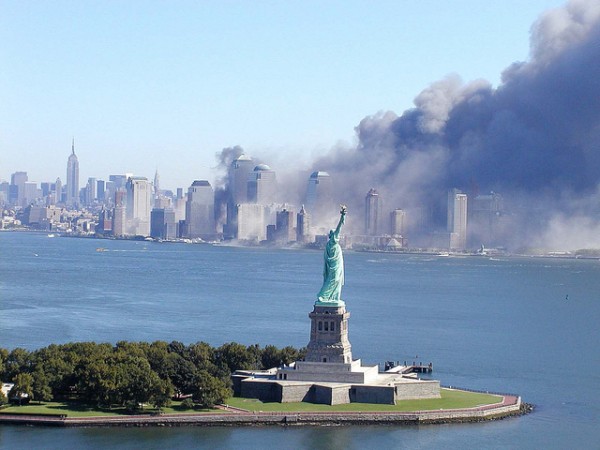
A reading from today’s Forward Day by Day helps us to cope with the resonating horrors of that monstrous day. We are living in a world where we are more and more inextricably interconnected. Where I am living, I often hear people talk about how “Moslems are killing Christians all over the world!” and my heart breaks, thinking of the wonderful friends I have lived among is so many Moslem countries, their kindness, their hospitality, our long pleasant conversations. I learned so much.
I am glad we believe in a God who knows our hearts. I am thankful for grace, and forgiveness. When we talk about killing, we also need to take account for all the civilians we have killed, trying to bring about peace, trying to eradicate Al Qaeda, Al Shebaab, those who would harm us.
God asks us to love one another. He doesn’t say “Christians, you love just the Christians.” He shows us how to love the Samaritans, the lame, the blind, the mentally ill, the “other”. He tells us, clearly, to love our enemies. The Gospel that speaks the loudest is the gospel of our lives lived to honor him.
THURSDAY, September 11
Acts 15:8-9 [Peter said], “And God, who knows the human heart, testified to them…and in cleansing their hearts by faith he has made no distinction between them and us.”
Thirteen years ago, this day became one of those days that divide time into what life was like before, and after; one of those days when you will remember, always, where you were, what you were doing—this time when you heard the news that airplanes had crashed into the World Trade Center and thousands of people had died.
Job asks, “Does not calamity befall the unrighteous?” (31:3), but we learned, vividly, on September 11, 2001, that the righteous and the innocent suffer too.
Psalm 59:6 exhorts God to “show no mercy to those who are faithless and evil.” The terrorists who flew the planes on 9/11 forced us to confront the power of evil and challenged us to find a way to respond with forgiveness. Perhaps we can learn something about that in Peter’s response to the heated discussions about Jews and Gentiles, about who could be saved, and how: “God, who knows the human heart…has made no distinction between them and us” (Acts 15:8-9).
Then, as now, there were good people and evildoers on all sides, religions, and races. Now, as then, judgment and salvation comes only through the mercy and grace of God.
September 11, 2014
Posted by intlxpatr |
Charity, Circle of Life and Death, Civility, Community, Counter-terrorism, Crime, Cross Cultural, Events, ExPat Life, Faith, Friends & Friendship, Interconnected, Lectionary Readings, Pensacola, Political Issues, Quality of Life Issues, Spiritual | 9/11 |
Leave a comment
From 7 August Arab Times
US Sanctions On 3 In Kuwait – ‘FUND EXTREMISTS’
WASHINGTON, Aug 6, (Agencies): The United States imposed sanctions on three men, two of them Kuwaiti, on Wednesday, accusing them of providing money, fighters and weapons to extremists in Iraq and Syria. Under the order, issued by the US Treasury, any assets the men hold in the United States are frozen and American citizens and residents are “generally prohibited” from doing business with them. The order accused Shafi Sultan Mohammed al-Ajmi, 41, and Hajjaj Fahd Hajjaj Muhammad Shabib al-Ajmi, 26, of raising money for the Al-Nusra front, a jihadist group fighting in Syria.
Both men are said to be Kuwaiti, and the elder Al-Ajmi’s street address in Kuwait was given A third man, Abdulrahman Khalafa al- Anizi, whose nationality was not disclosed and who is thought to be around 40 years old, is accused of supporting the so-called Islamic State, formerly al- Qaeda in Iraq. All three have been named a “specially designated global terrorist” by the United States government, which accuses them of soliciting donations for militants from wealthy donors in the Gulf region. “We and our international partners, including the Kuwaiti government, need to act more urgently and effectively to disrupt these terrorist financing efforts,” said Treasury Under Secretary David Cohen.
The Treasury statement alleged that Al-Anizi had worked in the past with al- Qaeda facilitators based in Iran, and that the younger Al-Ajmi had tried to get fellow Kuwaitis into leadership positions in Al-Nusra. The latest US terrorism report on the country noted “increased reports of Kuwait-based private individuals funneling charitable donations and other funds to violent extremist groups outside the country.”
On Tuesday, Kuwait’s social affairs and labor minister, Hind Al-Sabeeh, announced tighter transparency rules to “correct the course” of charities gathering and distributing private donations. The Islamic Affairs Ministry announced on the same day it had suspended all types of cash fundraising inside the country’s mosques, including collections “for the Syrian people.” Unlike some other Gulf states, US ally Kuwait is against arming rebels fighting to topple Syrian President Bashar al- Assad. But it has tolerated fundraising in private houses, mosques and on social media.
Earlier this year, Treasury’s Cohen accused Kuwait’s former justice minister of promoting terrorism funding and calling for jihad. The minister subsequently quit. In a speech in Washington in March, Cohen said Kuwait and Qatar in particular needed to do more to prevent humanitarian donations from getting channeled to militant groups.
August 6, 2014
Posted by intlxpatr |
Counter-terrorism, Cross Cultural, Cultural, ExPat Life, Fund Raising, Kuwait, Political Issues, Social Issues, Women's Issues | Hajjaj Fahd Hajjaj Muhammad Shabib al-Ajmi, Shafi Sultan Mohammed al-Ajmi |
Leave a comment
AdventureMan and I have a soft spot for South Africa, not the least of which for the dramatic and radical way they transformed from apartheid government to democratic government. It is not to say South Africa has been without problems – there are still problems. But the manner in which they confronted and dealt with their past and then moved on allows change to happen, change in the heart.
Today’s meditation from Forward Day by Day:
FRIDAY, May 30
Psalm 85:3. You withdrew all your wrath; you turned from your hot anger. (NRSV)
But for the grace of God and the work of extraordinary leaders such as Nelson Mandela and Desmond Tutu, the fall of apartheid in South Africa could have been marked by one of the worst bloodbaths ever seen.
The incendiary ingredients were all present: a repressive minority regime that ruled by violence, fear, and fiat over a majority population denied fundamental human rights and forced to live a subservient existence.
There was upheaval, but the nation never fell into anarchy as it radically changed its government, thanks largely to the Truth and Reconciliation Commission.
Chaired by Tutu, then the Anglican Archbishop of Cape Town, the commission held hearings throughout the country. Victims told their stories of torture, killing, and degradation, sometimes confronting the accused.
The goal was not vengeance or justice but truth-telling to clear a path for healing. Powerful emotions were released. There were tearful confessions and apologies. There was forgiveness. The people of South Africa managed to turn from their hot anger and begin building a new nation.
Can we do the same? Where can we forsake our anger for the liberating power of forgiveness?
May 30, 2014
Posted by intlxpatr |
Bureaucracy, Character, Civility, Community, Counter-terrorism, Cross Cultural, Cultural, Faith, Living Conditions, Political Issues, Relationships, South Africa |
Leave a comment
I’ve always loved statistics. You can use statistics, shuffle them, re-arrange them and they can help you see the same old things in new ways (or they can be used to point you in the wrong direction entirely, admittedly). Tracking the money, Atlanta is ranked #1 primarily because of the number of conventions Atlanta attracts. Conventions attract sex traffickers. They plan, they co-ordinate, they follow the conventions.
Which U.S. City Ranks No. 1 in Sex Trafficking?
A new federal study looked at the sex economies of several major U.S. cities.
Posted by Brian Slupski , March 13, 2014 at 05:57 PM
By Deb Belt
A study of sex trafficking around the United States ranked the metro Atlanta area No. 1, in part because of the many conventions held in the city.
The report, conducted by Washington D.C.’s Urban Institute for the U.S. Justice Department, looked at the sex trade in eight major American cities and found that Atlanta had the largest sex trade between 2003 and 2007.
“Atlanta went from $232 million to $290 million over that five year span,” Meredith Dank, the lead author for the report, told WSB Radio. As a comparison, $290 million is more than the revenue generated by metro Atlanta’s illegal drug and gun trade combined.
Atlanta’s revenue also was far above any other city studied, with Miami second at $200 million. Denver’s sex trade was worth $40 million, San Diego’s $97 million and Dallas’ $99 million. Seattle came in at $112 million and Washington, D.C. at $103 million.
Why is Atlanta No. 1? Dank says the many events and conventions bring people to town with lots of time and money. Some escorts charge more than $1,000 per hour.
One pimp the researchers spoke with in Atlanta made, on average, about $33,000 a week, according to the WSB story.
According to FBI statistics, Atlanta ranks among the top 14 cities in the United States for domestic minor sex trafficking. And some 300 girls across Atlanta are lured into trafficking every month.
Trending on Patch is a category showcasing popular stories from across Patch’s network of 900 local news sites.
March 16, 2014
Posted by intlxpatr |
Bureaucracy, Counter-terrorism, Crime, Law and Order, Social Issues, Statistics |
Leave a comment
This is disgusting. We’ve all known it’s true. The warrior culture protects those cowards who impose themselves sexually on both men and women. God willing, things will change. It’s already started, with the relieving of those in power who have imposed themselves on women who came forward with their complaints. Let there be more, until this culture is wiped clean of their disgrace.
Rape isn’t about sex. It’s about power. Rape is a personal violation.
It’s time for the good men and women in the military to police this up, to stop the outrage. Expose those bullies and cowards who prey on others.
Military Sex Abuse Investigation: Documents Reveal Chaotic Punishment Record
AP
by RICHARD LARDNER and YURI KAGEYAMA
TOKYO (AP) — At U.S. military bases in Japan, most service members found culpable in sex crimes in recent years did not go to prison, according to internal Department of Defense documents. Instead, in a review of hundreds of cases filed in America’s largest overseas military installation, offenders were fined, demoted, restricted to their bases or removed from the military.
In about 30 cases, a letter of reprimand was the only punishment.
More than 1,000 records, obtained by The Associated Press through the Freedom of Information Act, describe hundreds of cases in graphic detail, painting a disturbing picture of how senior American officers prosecute and punish troops accused of sex crimes. The handling of allegations verged on the chaotic, with seemingly strong cases often reduced to lesser charges. In two rape cases, commanders overruled recommendations to court-martial and dropped the charges instead.
Even when military authorities agreed a crime had been committed, the suspect was unlikely to serve time. Of 244 service members whose punishments were detailed in the records, only a third of them were incarcerated.
The analysis of the reported sex crimes, filed between 2005 and early 2013, shows a pattern of random and inconsistent judgments:
—The Marines were far more likely than other branches to send offenders to prison, with 53 prison sentences out of 270 cases. By contrast, of the Navy’s 203 cases, more than 70 were court-martialed or punished in some way. Only 15 were sentenced to time behind bars.
—The Air Force was the most lenient. Of 124 sex crimes, the only punishment for 21 offenders was a letter of reprimand.
—Victims increasingly declined to cooperate with investigators or recanted, a sign they may have been losing confidence in the system. In 2006, the Naval Criminal Investigative Service, which handles the Navy and Marine Corps, reported 13 such cases; in 2012, it was 28.
In two cases, both adjudicated by the 1st Marine Aircraft Wing, the accusers said they were sexually abused after nights of heavy drinking, and both had some evidence to support their cases. One suspect was sentenced to six years in prison, but the other was confined to his base for 30 days instead of getting jail time.
Taken together, the cases illustrate how far military leaders have to go to reverse a spiraling number of sexual assault reports. The records also may give weight to members of Congress pushing to strip senior officers of their authority to decide whether serious crimes, including sexual assault cases, go to trial.
“How many more rapes do we have to endure to wait and see what reforms are needed?” asked Sen. Kirsten Gillibrand, D-N.Y., chair of the Senate Armed Services personnel subcommittee. She leads a vocal group of lawmakers from both political parties who argue that further reforms to the military’s legal system are needed.
Air Force Col. Alan Metzler, deputy director of the Defense Department’s Sexual Assault Prevention and Response Office, said the department “has been very transparent that we do have a problem.” He said a raft of changes in military law is creating a culture where victims trust that their allegations will be taken seriously and perpetrators will be punished.
The number of sexual assault cases taken to courts-martial has grown steadily — from 42 percent in 2009 to 68 percent in 2012, according to DOD figures. In 2012, of the 238 service members convicted, 74 percent served time.
That trend is not reflected in the Japan cases. Out of 473 sexual assault allegations within Navy and Marine Corps units, just 116, or 24 percent, ended up in courts-martial. In the Navy, one case in 2012 led to court-martial, compared to 13 in which commanders used non-judicial penalties instead.
The authority to decide how to prosecute serious criminal allegations would be taken away from senior officers under a bill crafted by Gillibrand that is expected to come before the Senate this week. The bill would place that responsibility with the trial counsel who has prosecutorial experience.
Senior U.S. military leaders oppose the plan.
“Taking the commander out of the loop never solved any problem,” said Sen. Lindsey Graham, R-S.C., the personnel subcommittee’s top Republican. “It would dismantle the military justice system beyond sexual assaults. It would take commanders off the hook for their responsibility to fix this problem.”
Gillibrand and her supporters argue that the cultural shift the military needs won’t happen if commanders retain their current role in the legal system.
“Skippers have had this authority since the days of John Paul Jones and sexual assaults still occur,” said Lory Manning, a retired Navy captain and senior fellow at the Women in the Military Project. “And this is where we are.”
___
Lardner reported from Washington. Associated Press writer Leon Drouin-Keith in Bangkok and AP researcher Rhonda Shafner in New York contributed to this report.
February 9, 2014
Posted by intlxpatr |
Bureaucracy, Character, Community, Counter-terrorism, Crime, Cultural, Law and Order, Living Conditions, Political Issues, Relationships, Social Issues, Statistics, Survival, Values |
Leave a comment




 Here There and Everywhere