Eid Mubarak 2026

May Allah bless you greatly on this great holiday, may you join with family and may you have peace and love in your hearts.
I give thanks for all the kindness you have shown me through the years, and for how you have helped me understand some of the nuances of the beliefs we share. We have more in common than we have differences.
“I Have No Need of You”
From this morning’s Lectionary Readings:
1 Corinthians 12:12-26
12 For just as the body is one and has many members, and all the members of the body, though many, are one body, so it is with Christ.13For in the one Spirit we were all baptized into one body—Jews or Greeks, slaves or free—and we were all made to drink of one Spirit.
14 Indeed, the body does not consist of one member but of many. 15If the foot were to say, ‘Because I am not a hand, I do not belong to the body’, that would not make it any less a part of the body. 16And if the ear were to say, ‘Because I am not an eye, I do not belong to the body’, that would not make it any less a part of the body. 17If the whole body were an eye, where would the hearing be? If the whole body were hearing, where would the sense of smell be?
18But as it is, God arranged the members in the body, each one of them, as he chose. 19If all were a single member, where would the body be? 20As it is, there are many members, yet one body. 2
1The eye cannot say to the hand, ‘I have no need of you’, nor again the head to the feet, ‘I have no need of you.’ 22On the contrary, the members of the body that seem to be weaker are indispensable, 23and those members of the body that we think less honourable we clothe with greater honour, and our less respectable members are treated with greater respect; 24whereas our more respectable members do not need this. But God has so arranged the body, giving the greater honour to the inferior member, 25that there may be no dissension within the body, but the members may have the same care for one another. 26If one member suffers, all suffer together with it; if one member is honoured, all rejoice together with it.
Unintended Consequences
It is rare that I am stunned into silence.
This is not the world I grew up in. This is not the country I served. These are not the values we were taught as children, in a United States full of post WWII optimism, as we allied with other nations for the greater good.
I am a blessed woman. I have what I need, and my son married a woman with deeply perceptive insights. An environmental specialist, she taught me the concept of Unanticipated Consequences. We are witnessing a host of unanticipated consequence unrolling by the minute, consequences which will have reverberations far into the future – not forseeable consequences but lasting.
Our current Administration is whacko. They command the mightiest military on earth, and they hold the keys to nuclear weapons. I have a friend who says “We’re Doomed,” only he uses a stronger, vulgar word I don’t want to use here.
What Iran and the United States Have in Common

I don’t think I ever met an Iranian woman I didn’t like.
The Iranian women I met – it seemed to me – were all gorgeous. They were educated, and they liked to read books and if you ever want to have a great conversation, look for the Iranian woman. I survived many a stuffy reception, finding intelligent women and talking books, or customs, or history.
So I shudder as I see our forces gathering for a potential strike on Iran.
I get it. Iranian men are smart too, I used to run into them in college, always talking engineering, as in huge national engineering projects, and, way above my head, nuclear physics. They are smart, creative, and great problem solvers.
Here is what makes me laugh. I don’t think the Iranian nuclear threat is the problem. I think Iran is too much like the USA.
Iran has a strong, unpopular leader who is particularly tough on uppity women (do you see where this is going?) and has an economy which is slowly tanking. Iran wants the population to be COMPLIANT and does not like civil protest. Iran is hard on student protestors, but especially hard on non-compliant women.
Our equally unpopular leader, equally chaotic, arbitrary, and cruel, envies the Ayatollah’s theocratic autonomy. Theocracy in Iran has all the power; they can jail people with impunity. They kill protestors with impunity. Not only are they the LAW, but they are above the law.
So how is that working out for Iran? Not so great. It hasn’t worked out so great since the overthrow of the Shah. When people don’t have a voice in how the country are run, they aren’t happy, and unhappy people have ways of resisting, and sabotaging the oppressive regime.
I think that all this massing of power and threatening to invade Iran is a distraction from our own orange leader’s problems with leading. After one year of his leadership, jobs are declining, people cannot afford health care, colleges are afraid to teach critical thinking skills, and we have poorly trained goons and thugs with carte blanche to invade people’s houses, shove demonstrators around, and to kill with impunity. Or at least that is how I see it. I have seen no accountability for the killing of Renee Good or Jonathan Pretti in Minneapolis, nor for the homicides in the “detention centers” which are like huge cattle corrals.
And to what point? As long as the Iranians are increasingly unhappy with their own leader, their leadership has big problems. When the leadership can point their finger at an impending danger caused by an encroaching bully, it rallies the people to the national cause.
Oh, but the power and the might makes the heart beat faster, and what a perfect opportunity to play with all our ships and planes and the great glory of it all, you know, like what happened in Iraq and Afghanistan.
Oh wait! Another similarity! Our leader uses emergency powers because of an ALIEN INVASION! The Rule of Law no longer applies! We are overrun by our roofers! Our gardeners and landscapers! Our waiters! Our housekeepers! Our fruit and vegetable pickers! Our meat packers! Our teacher assistants! Our janitors! Our nursing home care-givers! Our teachers and professors! Our potential citizens, tempest-tossed, waiting by the Golden Door (posted on our Statue of Liberty, welcoming our fore-fathers to this country).
These are not the criminals and rapists our toddler-in-chief tells us he is saving us from; over 90% of those violently arrested and detained are NOT criminals, just people who will work hard to try to provide their family with a living wage and a roof over their heads, and enough food. Many are documented, going through the system. The system is failing them, and failing us, as a country. We are a nation of immigrants.
Like the Ayatollah, our leader seeks total control, including “protecting” our elections – protecting us from voting against him and his politics of hatred, inequality, and humiliation.
Do you think there is a long-term strategy in all this? Do you believe in the Board of Peace as a functional institute? Do you see anything here that is truly in the national interest of the citizens of the United States of America? All I see is a dance of chaos, self-enrichment, self-aggrandizement, vanity, and a grab for all the power.
Diwali: A Light Sparkles in Dark Times

Today, Labor Day, when dark events are taking place in our country, shutting down the light of liberty and democracy, we got an unexpected invitation – to a Diwali party, coming up in a couple months.
We are so honored. And we know Diwali; we were living in Al Fardan 1, in Doha, Qatar, when an Indian neighbor invited all the residents of Al Fardan to come over for Diwali. We didn’t know what Diwali was, and our internet was dial-up and irregular, but we asked around and were told, with big smiles, to go and find out.
The night of Diwali came, and we walked to our neighbor’s house, along with many of our Al Fardan neighbors. We could see it long before we arrived – thousands of candles set out in patterns in the yard, lining the sidewalk, leading us inside, to more lights and a feast of sweets, platters of sweets, all illuminated by gleaming candlelight.
Such open-hearted hospitality. Such generous sharing. No one was excluded; everyone was welcome, and there was plenty for everyone.
Our neighbors’ beliefs were different from ours, and yet, I believe all such generosity, freely given, springs from the same spirit.
We can’t wait for this upcoming Diwali.
When the News is Personal
MARTYRS OF THE SUDANS
(16 May 1983)

Photo From the Episcopal News Service
The Christian bishops, chiefs, commanders, clergy and people of Sudan declared, on May 16, 1983, that they would not abandon God as God had revealed himself to them under threat of Shariah Law imposed by the fundamentalist Islamic government in Khartoum. Until a peace treaty was signed on January 9, 2005, the Episcopal Church of the Province of the Sudan suffered from persecution and devastation through twenty-two years of civil war. Two and a half million people were killed, half of whom were members of this church. Many clergy and lay leaders were singled out because of their religious leadership in their communities. No buildings, including churches and schools, are left standing in an area the size of Alaska. Four million people are internally displaced, and a million are scattered around Africa and beyond in the Sudanese Diaspora. Twenty-two of the twenty-four dioceses exist in exile in Uganda or Kenya, and the majority of the clergy are unpaid. Only 5% of the population of Southern Sudan was Christian in 1983. Today over 85% of that region of six million is now mostly Episcopalian or Roman Catholic. A faith rooted deeply in the mercy of God has renewed their spirits through out the years of strife and sorrow.
From the proposal before the 75th General Convention
We have a friend in South Sudan, Manyan Debid Mayer. We met him with a delegation of African Journalists here in Pensacola looking at Freedom of the Press with Gulf Coast Diplomacy. He came to our house, with two other African delegates, shortly before Christmas, and we had a lovely and memorable evening together sharing our stories.
Manyan Debid told us about his childhood, as the Janjaweed attacked in Sudan, and how very suddenly, often in the middle of the night, an entire village would have to evacuate, carrying only what they could carry on their backs. It was chaotic, terrifying – and deadly. Villages would be burned and razed to the ground.
The villagers would run towards the missions in Uganda for safety. Sometimes families got separated. The children found shelter, and care, at the missions while they waited to be reunited with their desperate parents. At the missions, the priests would teach the children the basics, using a stick, and drawing letters, shapes and numbers on the ground. Manyan Debid, now a journalist, got his start with those very basic lessons at the mission churches.
We Americans know so little. Few even know where South Sudan is, or that it is a separate nation from Sudan, one of the newest nations in the world.
I got caught in a comical situation as I tried to wire funds to Manyan Debid once during continued difficulties in South Sudan. I went to my bank and asked them to wire x amount of money to my friend. They looked at me oddly. They called the bank manager, and had hushed conversations. The manager came in and interrogated me very gently, asking how I know this person, did he contact me over the internet, how often did he ask me for money, questions that were none of his business – except, as it turns out, it was. They thought I was an old lady being scammed by some internet scammer. Did I even know, they asked me, that Sudan was on the restricted countries list?
I explained equally gently and firmly that South Sudan is a separate country from Sudan, and how I knew this man, how we had met in Pensacola through a visit arranged by the Department of State, how he had been a guest in my house and that we had corresponded as friends, on Facebook for years. They didn’t believe me. They didn’t believe there was a separate country called South Sudan. At the end, I finally had to tell them it was MY money, and that I could send him this amount and even if it were a scammer, it would not hurt me. Very reluctantly, they wired the funds to my friend.
Manyan Debid and I are still in touch. Today, he is a working journalist in South Sudan, still bravely facing the forces who would like to take South Sudan, and all its oil wealth, and destroy the existence of South Sudan.
There are still martyrs in South Sudan. And most Americans don’t even know South Sudan exists.

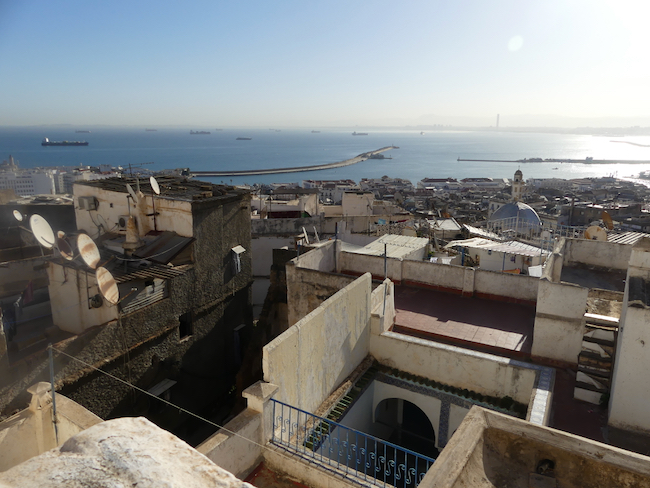
Morocco Malta and the Med: Algiers!

We are excited. Algiers is one of the reasons we booked this tour, knowing that things can happen, and that for political reasons, or because of weather, it might not really happen. When you travel, you just have to accept that things are not always going to work out.
(On this trip, by the grace of God, every single thing worked out.)
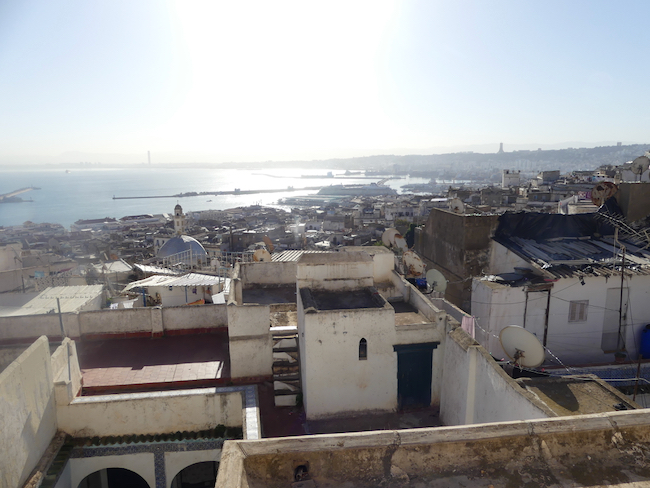
It’s still dark, and we are sailing into the harbor at Algiers. On the hill I see – A Christmas Tree??!! No, as it turns out, this is a memorial to the martys of the war, the Algerian war for freedom from the French.
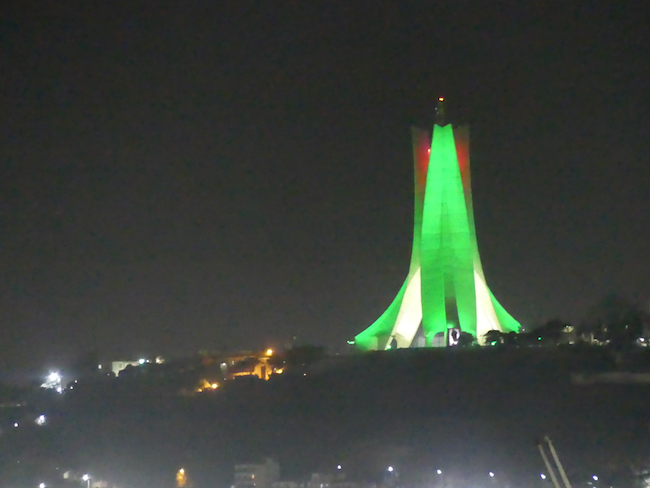
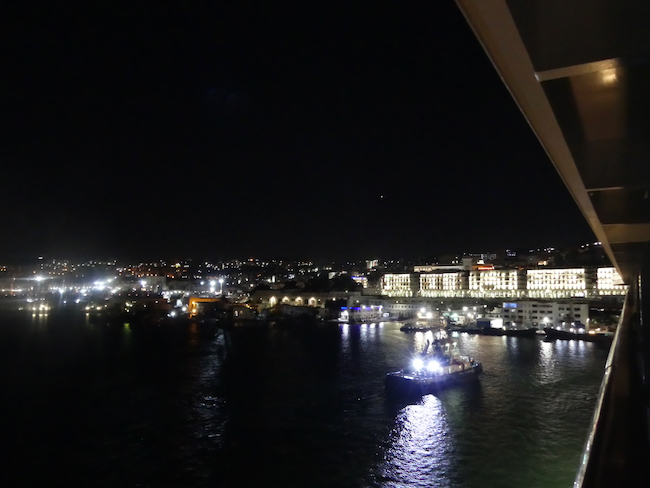

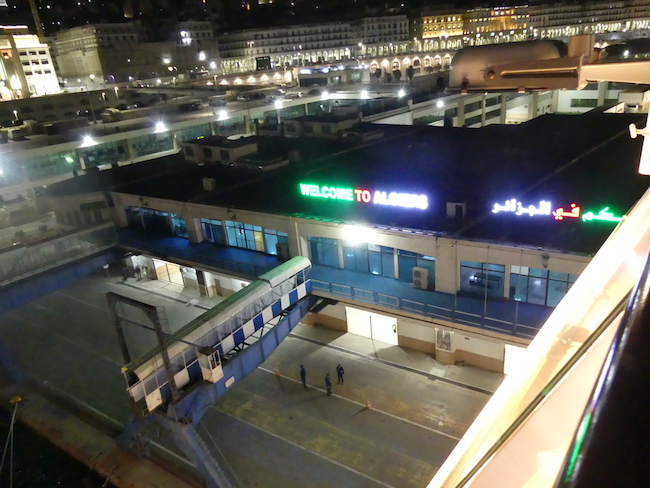
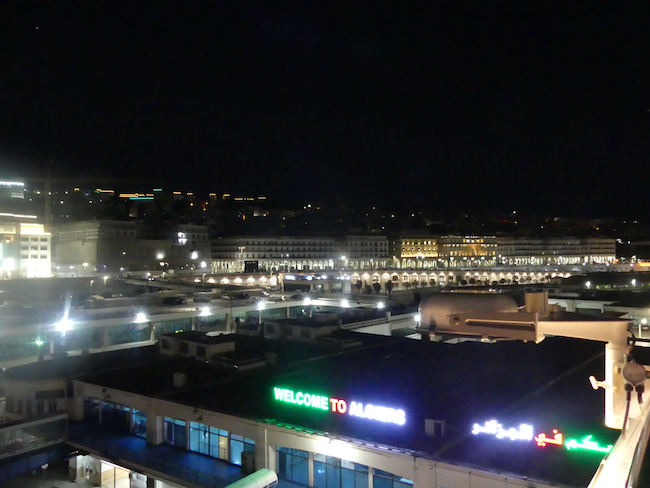
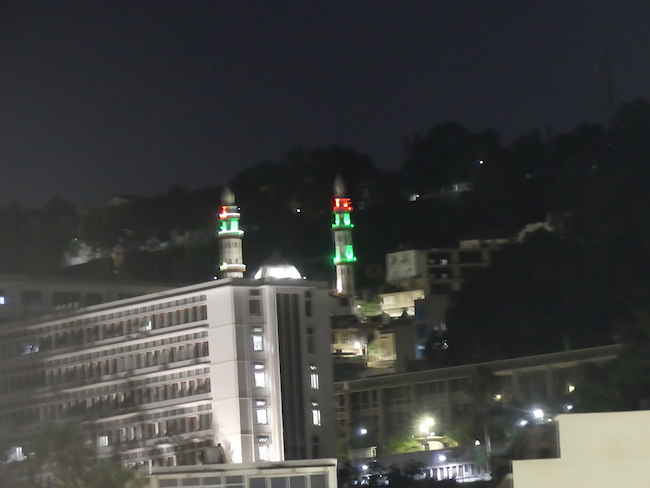
Algiers is the only port in which I heard the call to prayer. It was hauntingly beautiful. The mosques do not all start at the same time, so there is a kind of cacaphonic beauty from a large number of prayers going up at the same time.


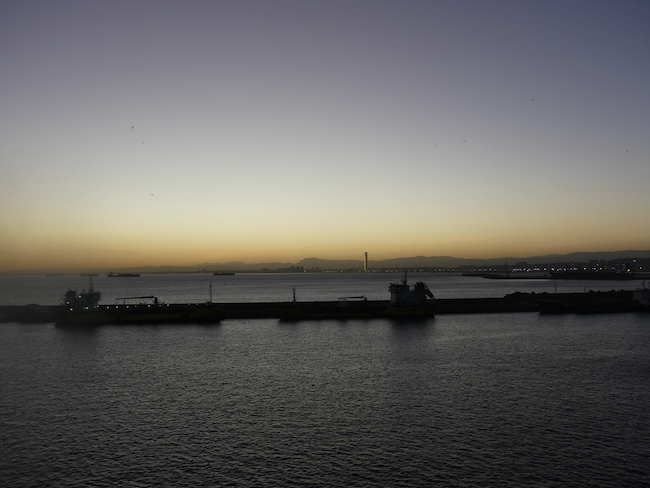

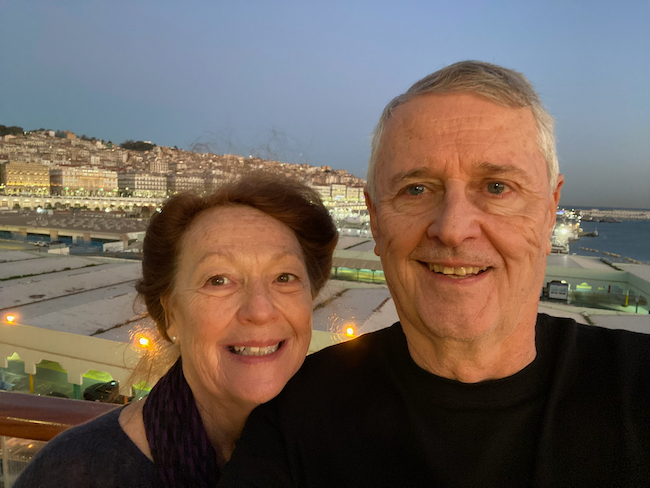
The Hall of Honor is where we process through to get to our buses.

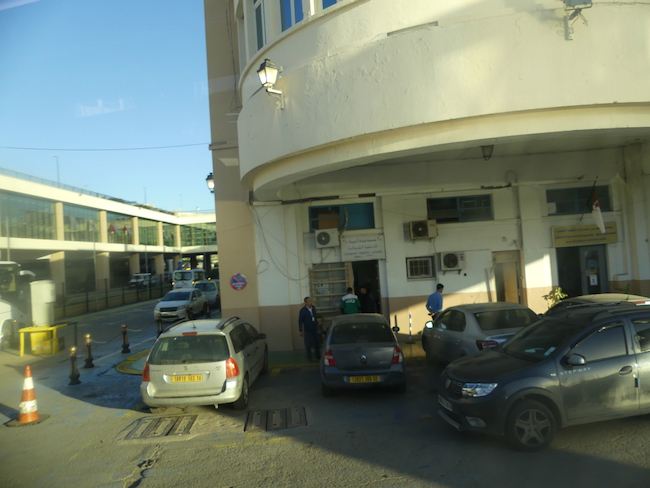
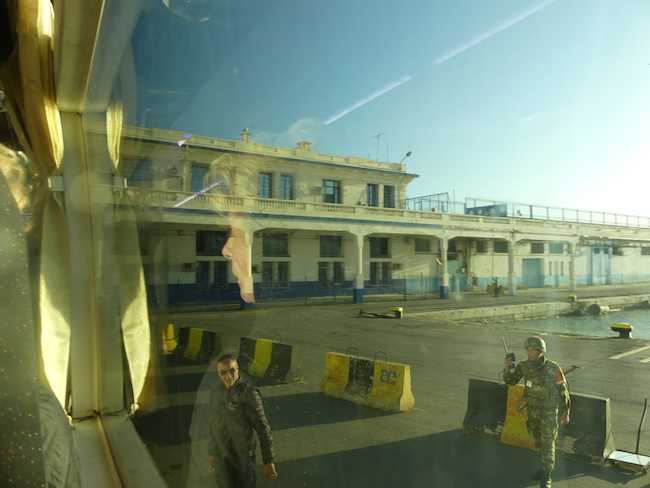


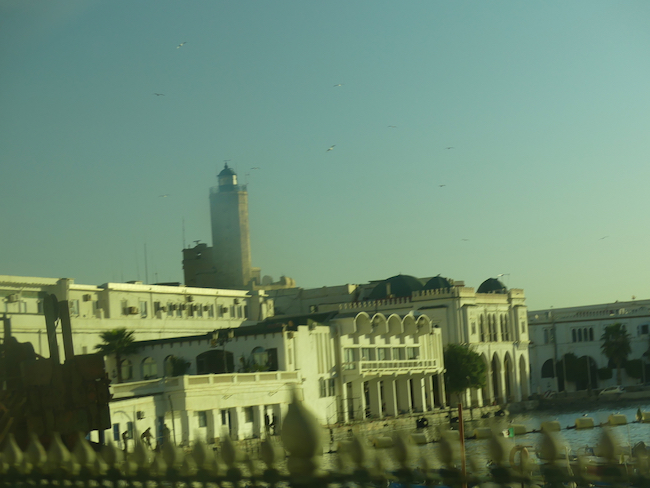
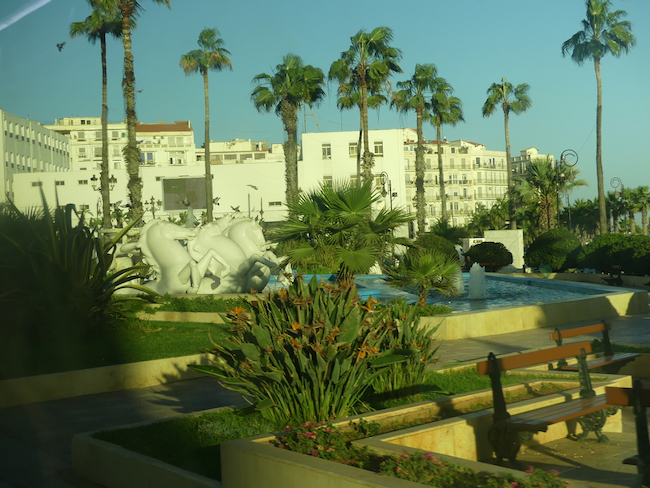
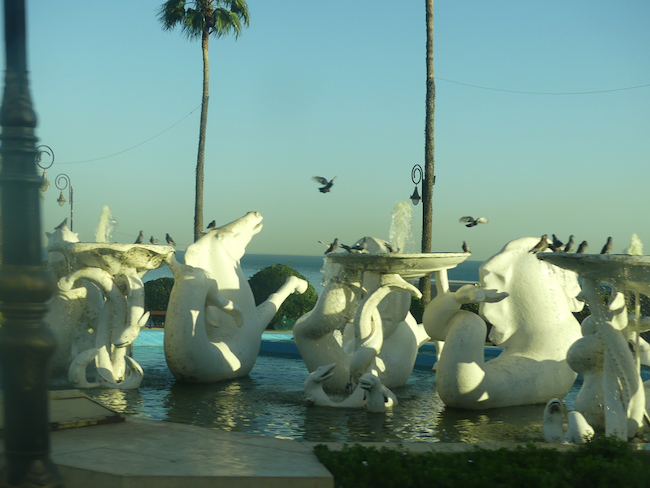
We used to see these “Palm Trees” in Kuwait, really communication towers.
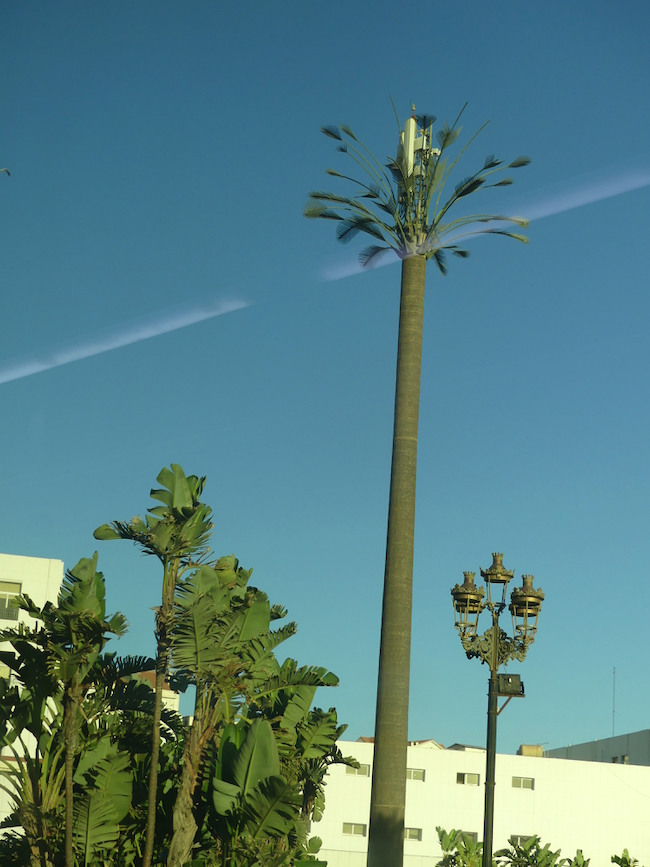
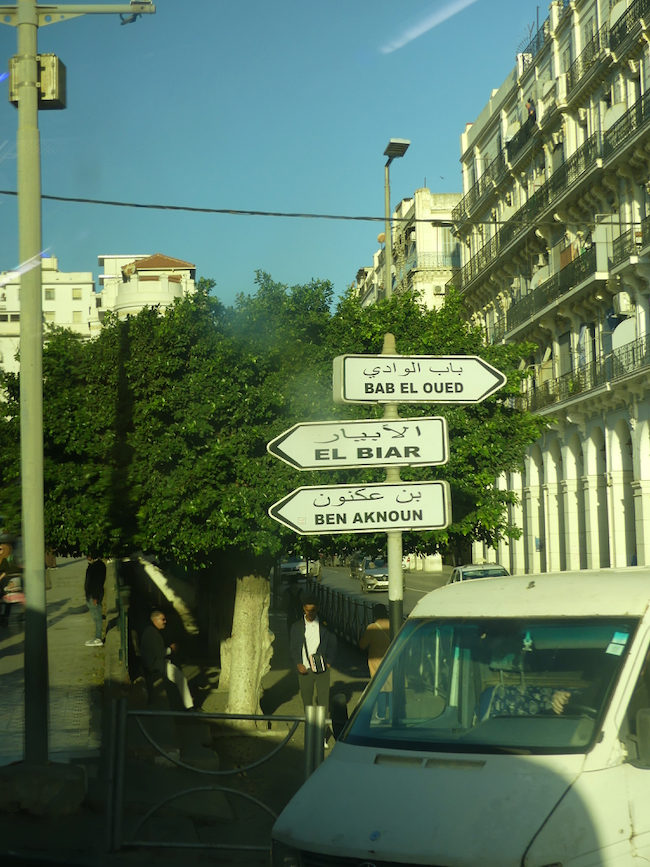
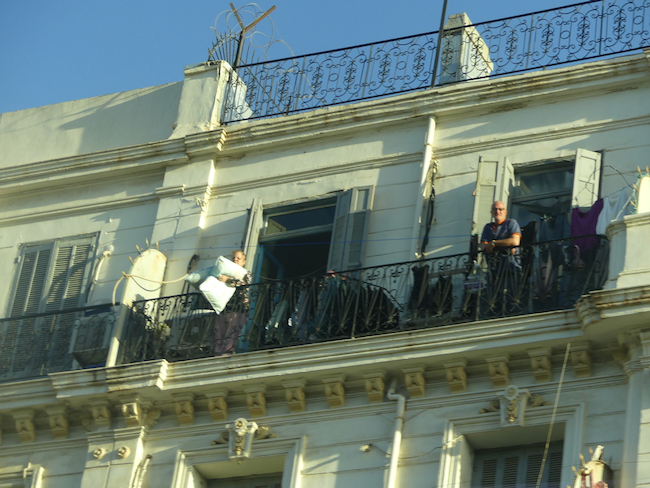


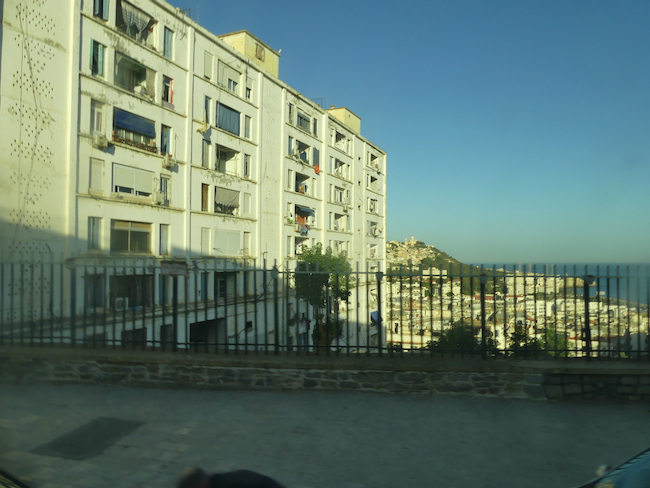
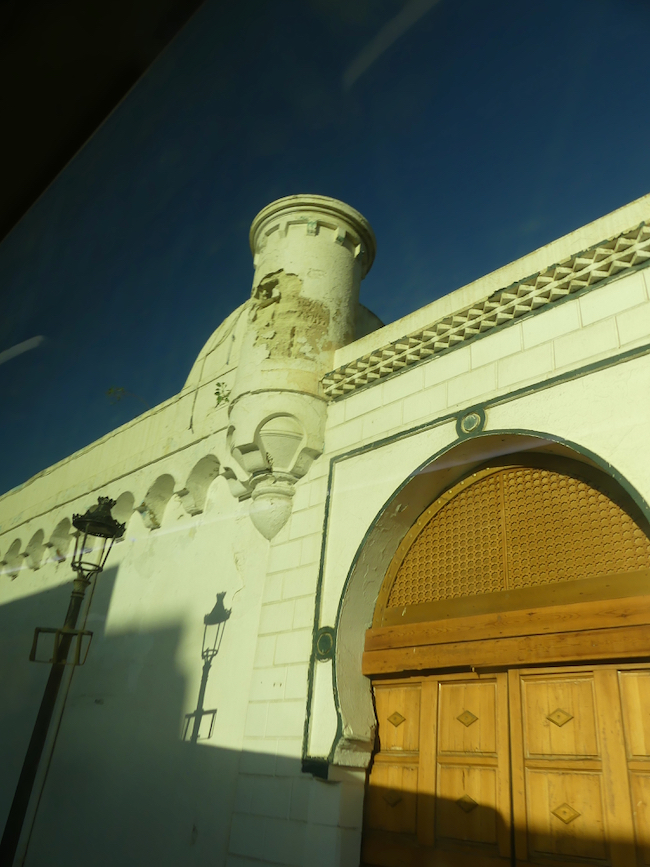


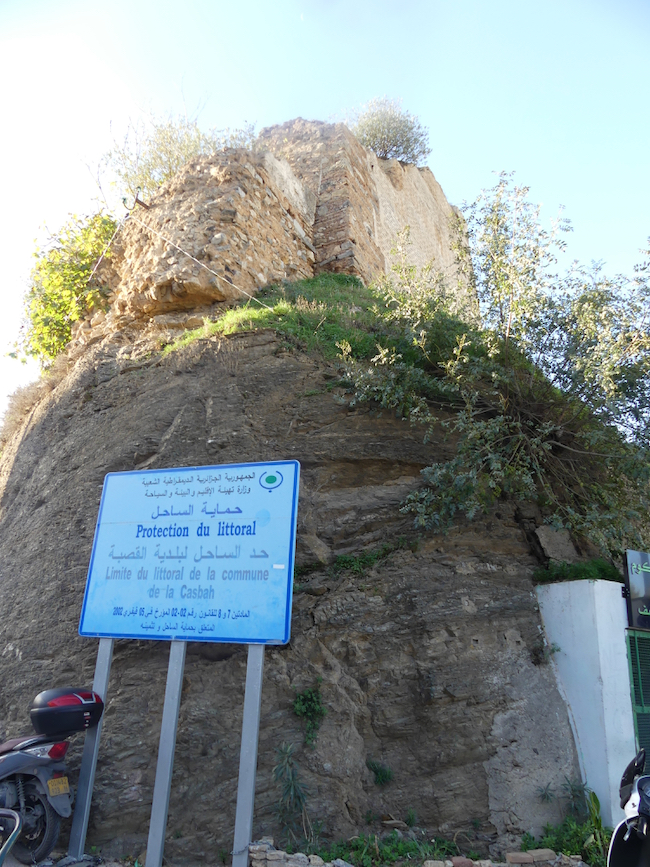


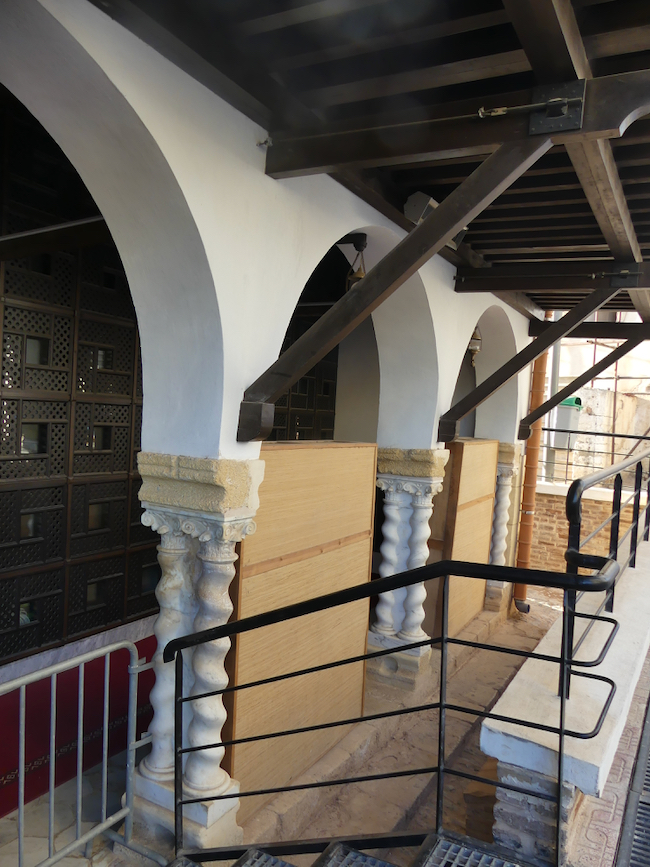
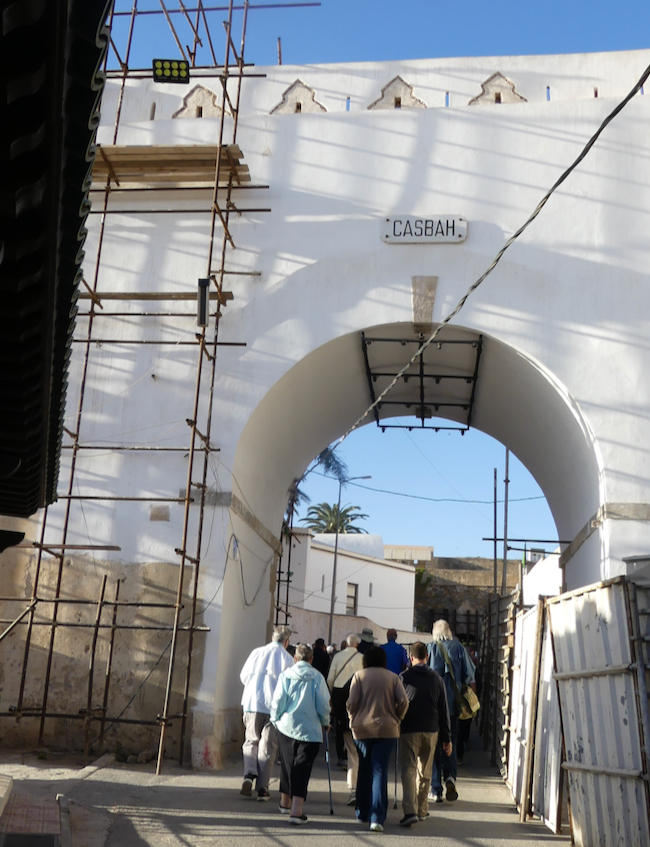
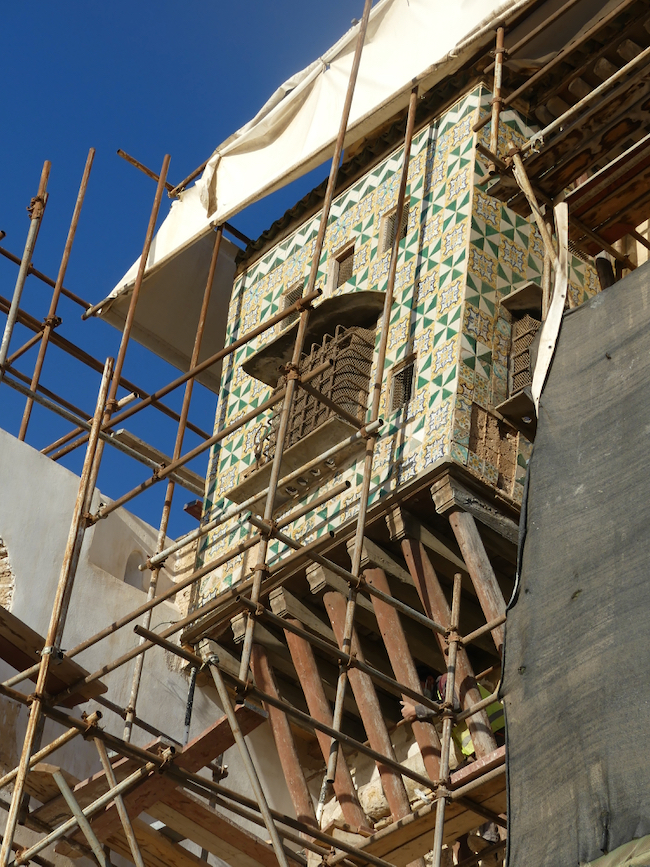



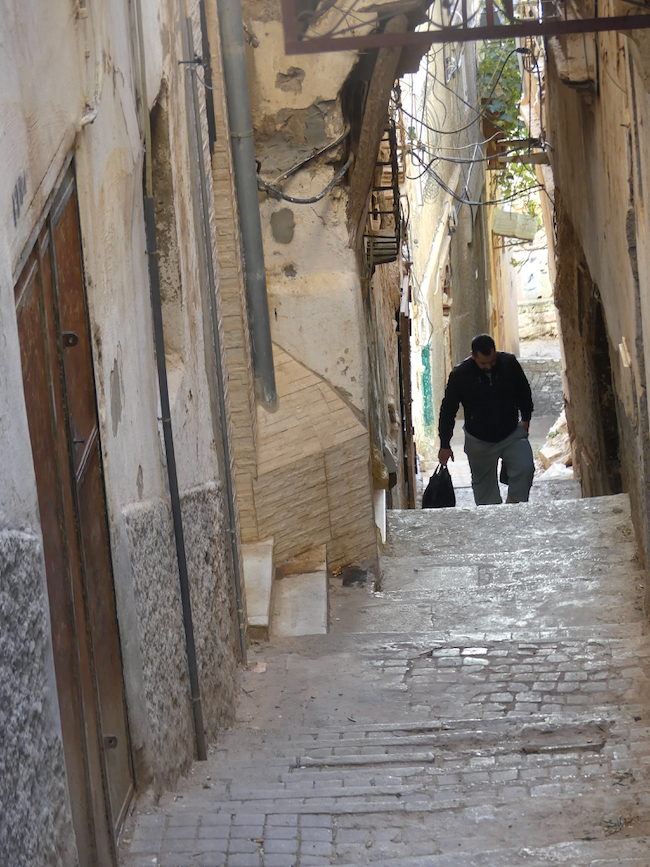
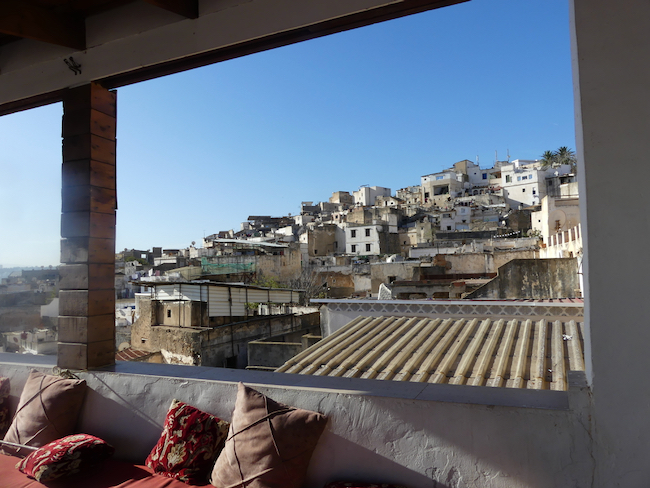
You may be thinking, “Some of the photos here are not the quality we expect!” So, I will explain that I am shooting as fast as I can, surrounded by people I am trying to keep out of my shots, so I can give you an idea of what we are seeing. There is one group after another, all holding up their cameras, getting in one another’s shots. I try to stay ahead or behind, but trust me, the pressure is on. Each group is about twenty-five people, each group with five poorly disguised armed guards, trying to not look like armed guards. They turned out to be really nice guys. Trying to keep American tourists in a line going at a steady pace is a thankless task.




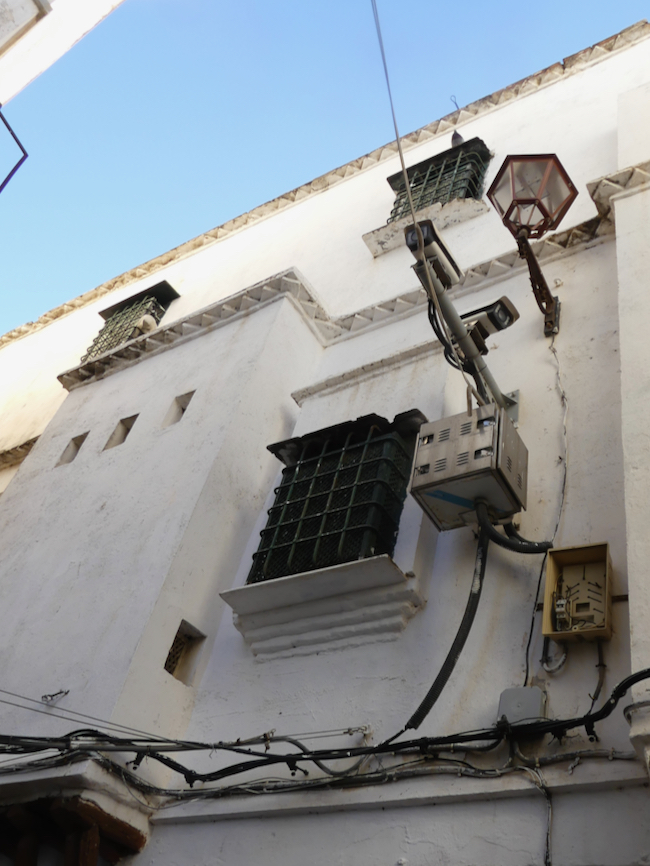
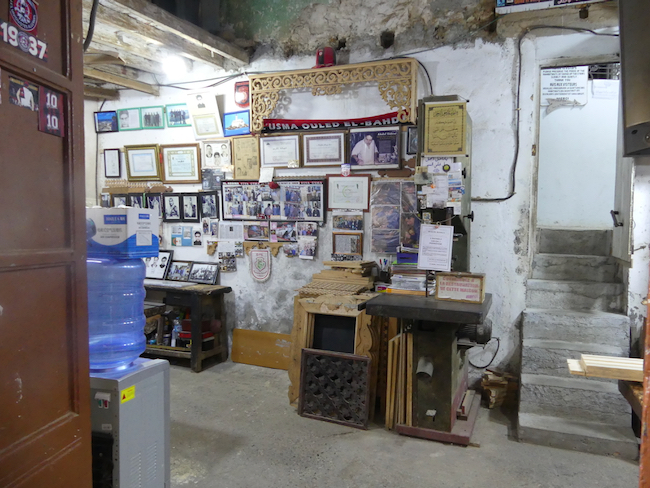

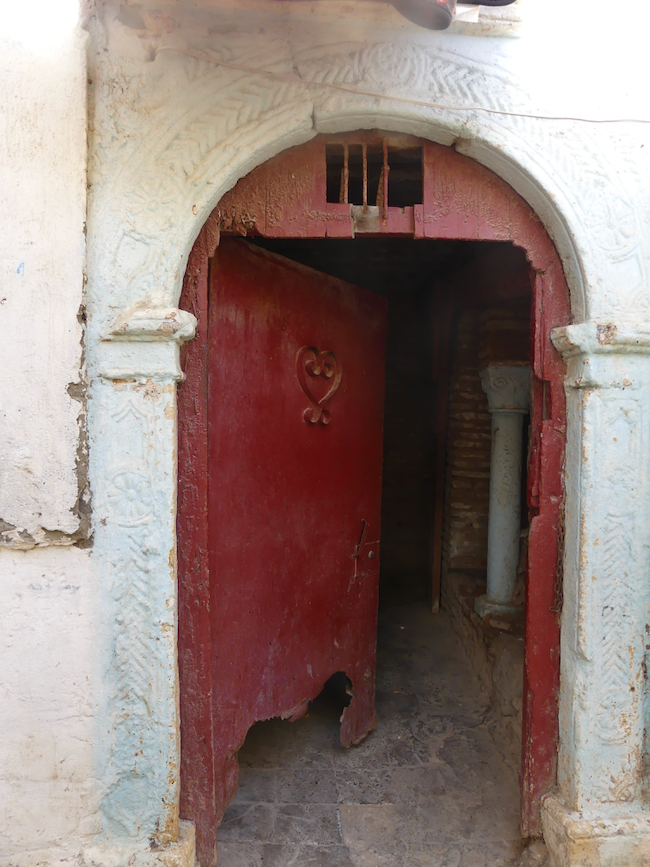


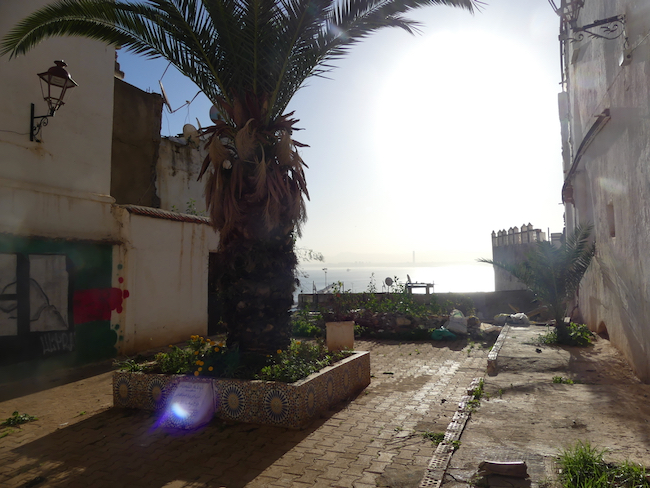
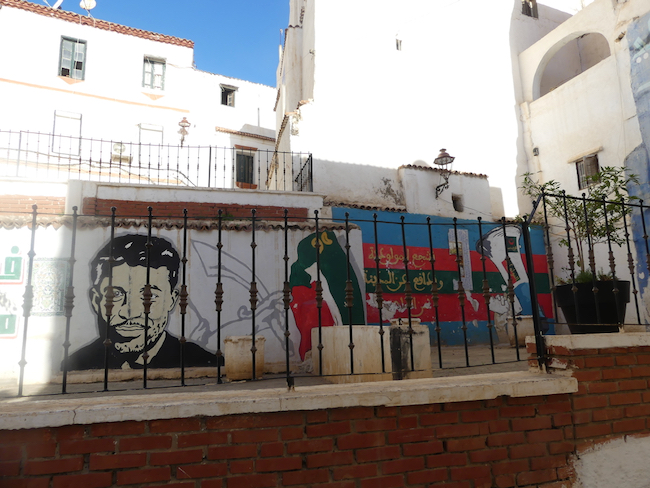

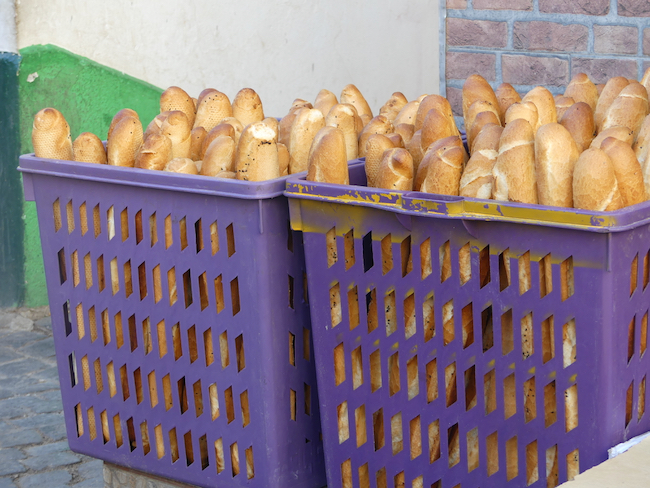
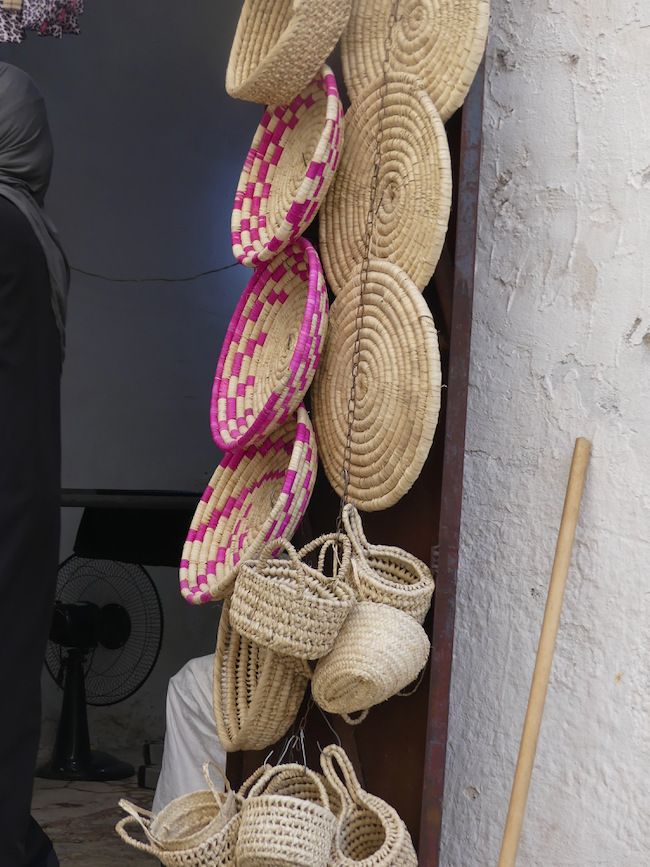
To me it was a little weird that every rectangular plastic basket I saw was purple.
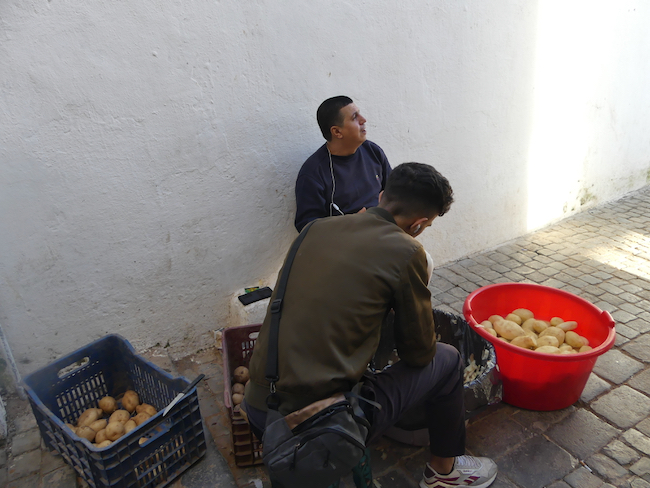
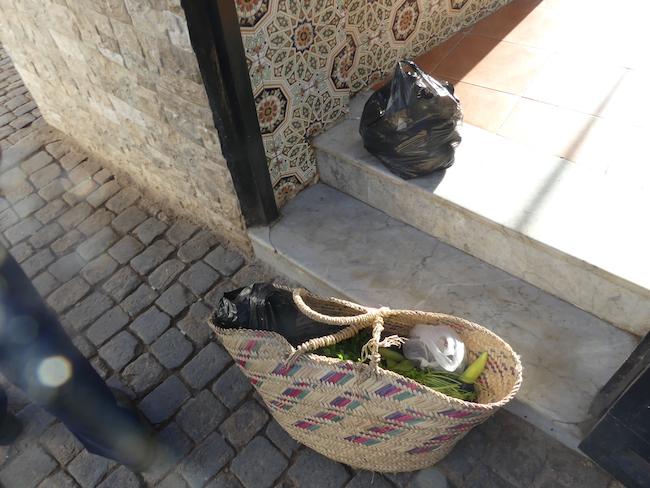
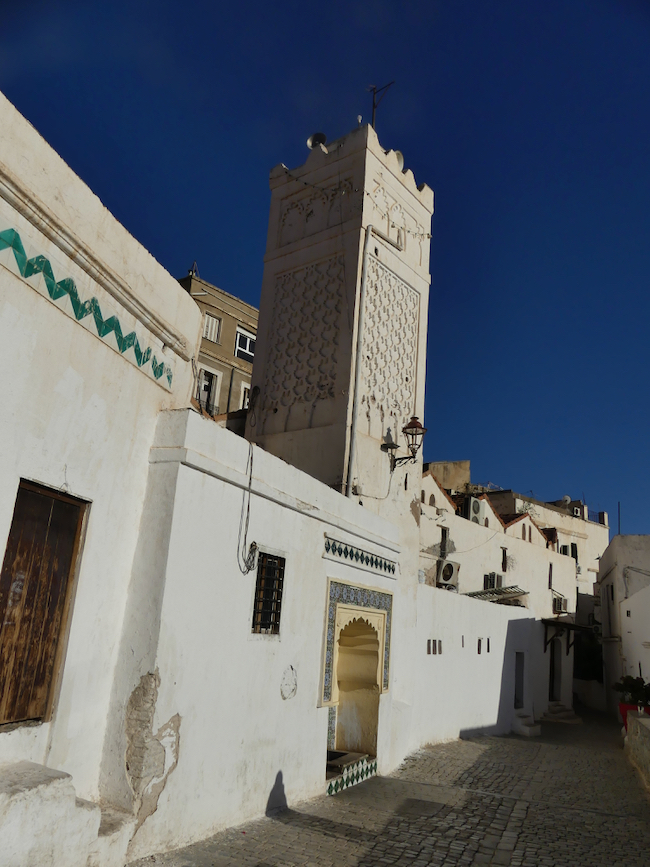

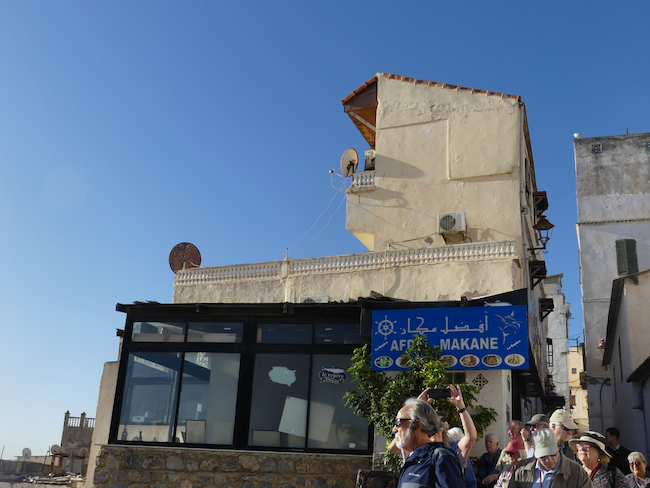
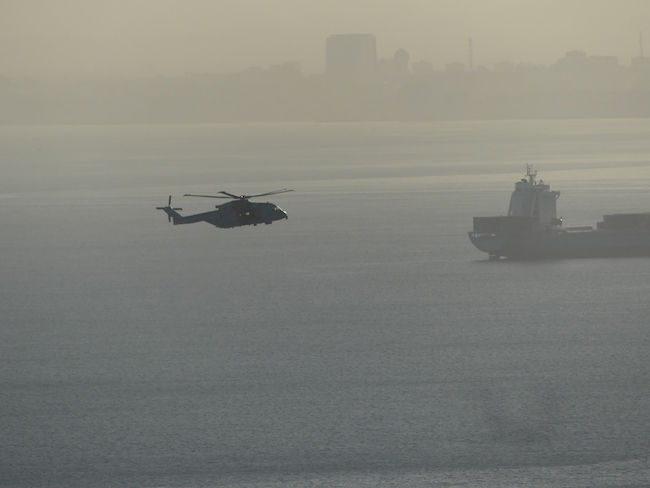
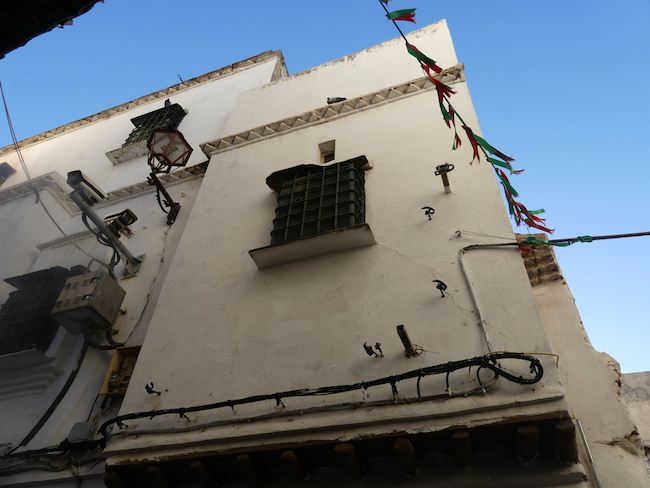
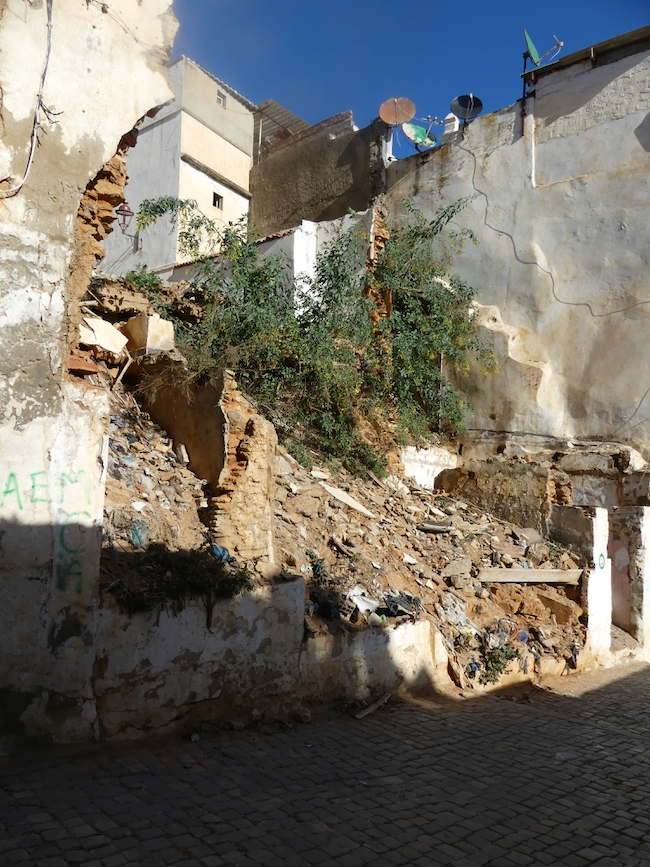
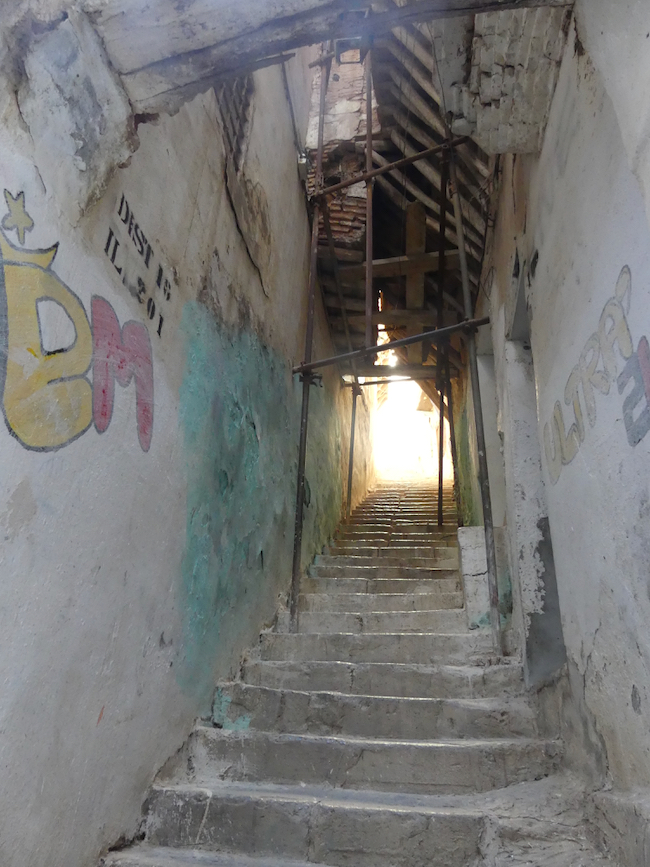
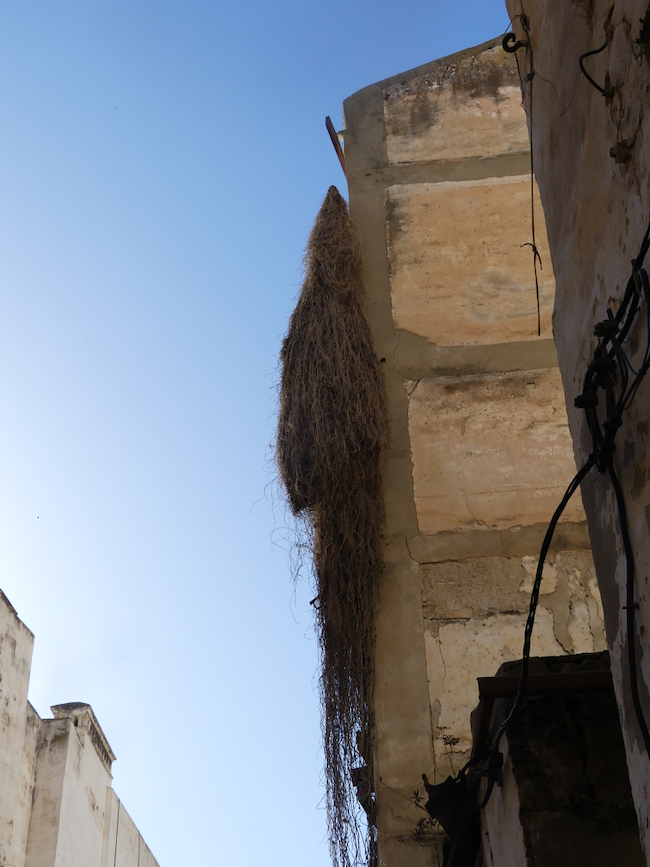
I find some of these construction techniques and electrical wiring workarounds concerning.

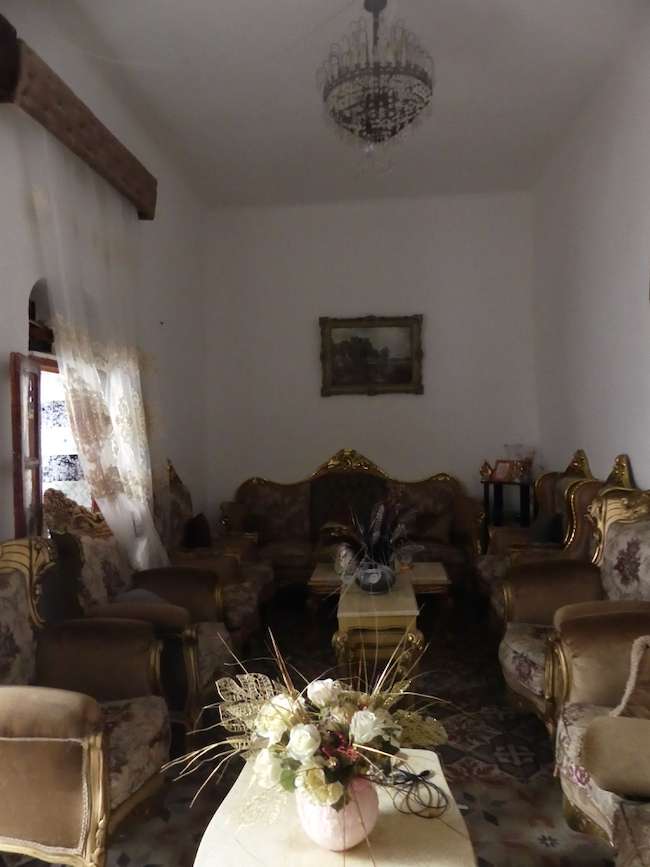
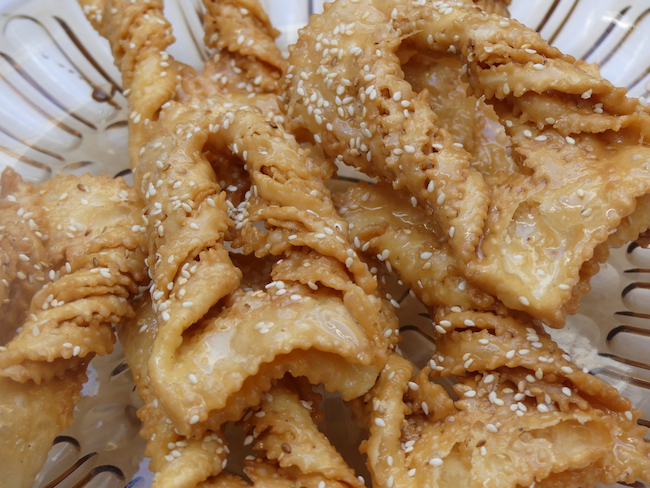
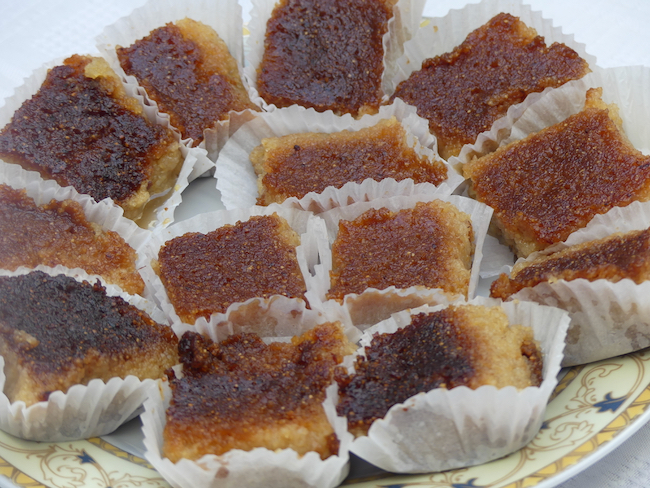
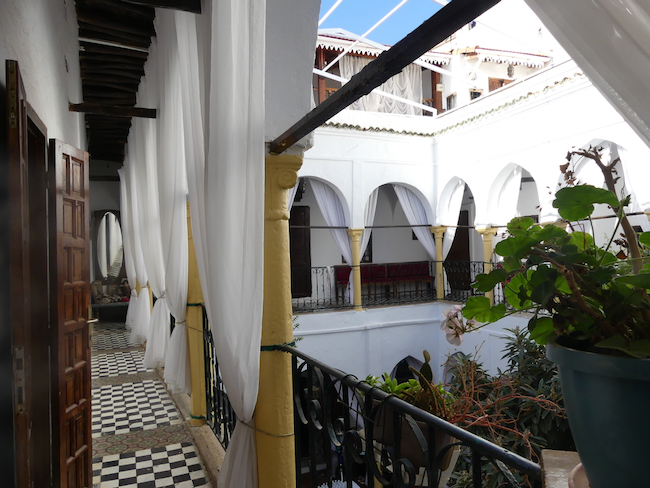
We are taken to a hospitality villa, where they serve fresh dates, mint tea from fresh mint leaves, and fresh baked cookies and pastries.


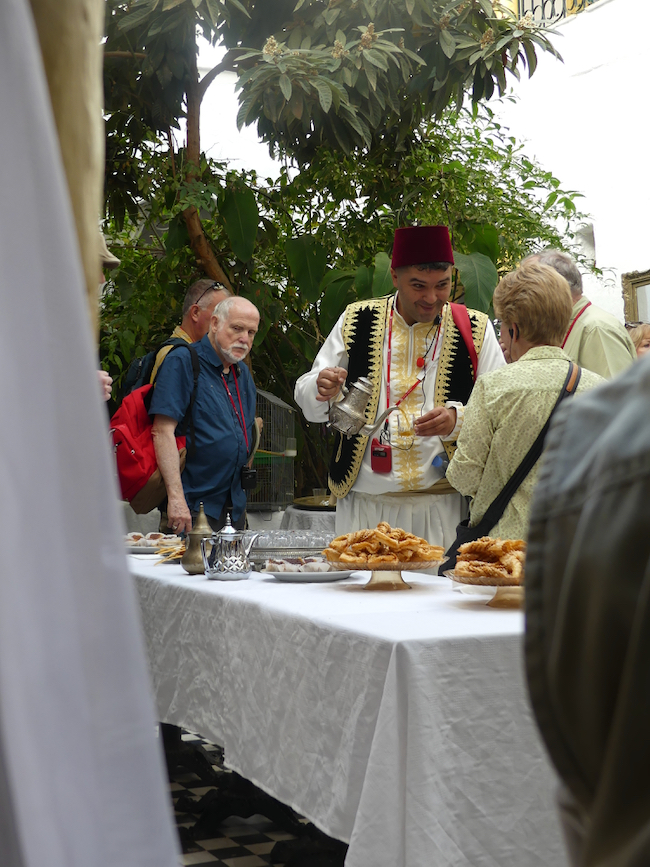
We think our guide is terrific. First, we love that he showed up in old traditional garb (which we learned he had specially made for this very purpose.) He is full of great information, very patient with his flock, and somehow he manages to get us all going in the same direction and is able to keep us somehow together.








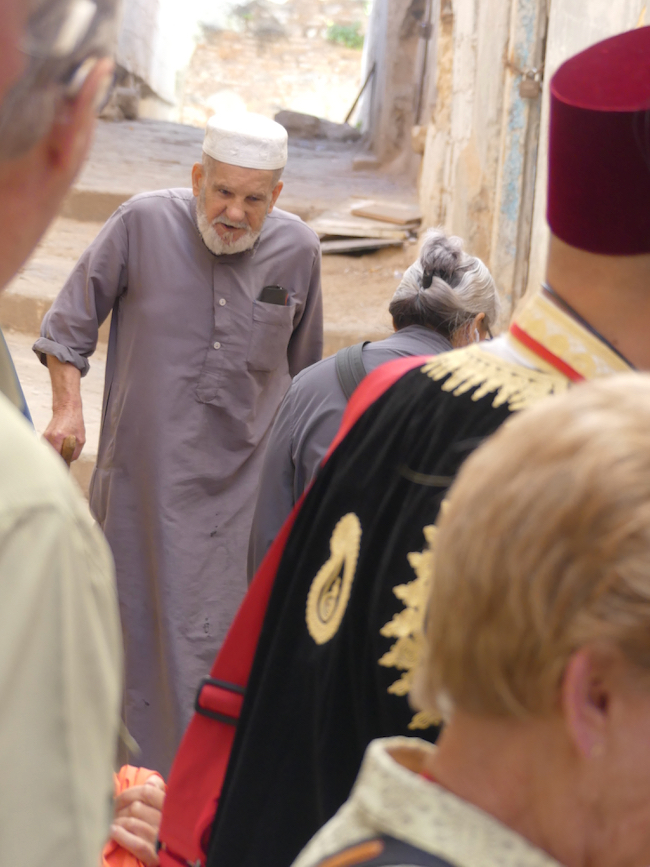
I love this photo. The shopkeeper, trying to keep his street clean and orderly; the donkey, picking up garbage on the street impossible for a garbage truck (and with steps!) and our guide in his traditional garb.


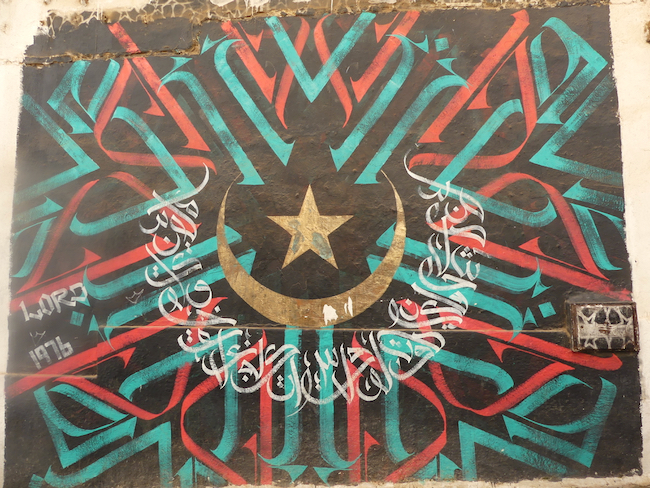



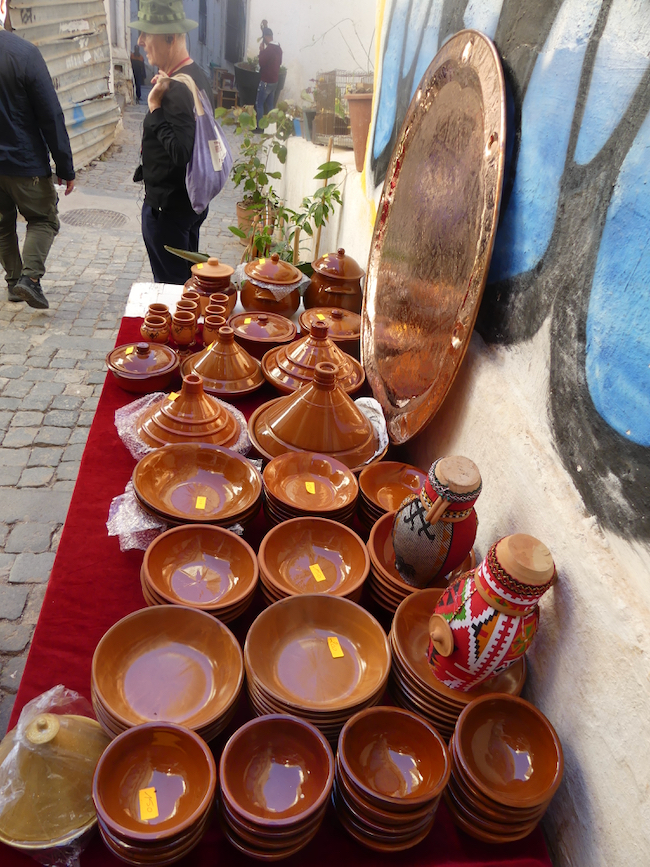
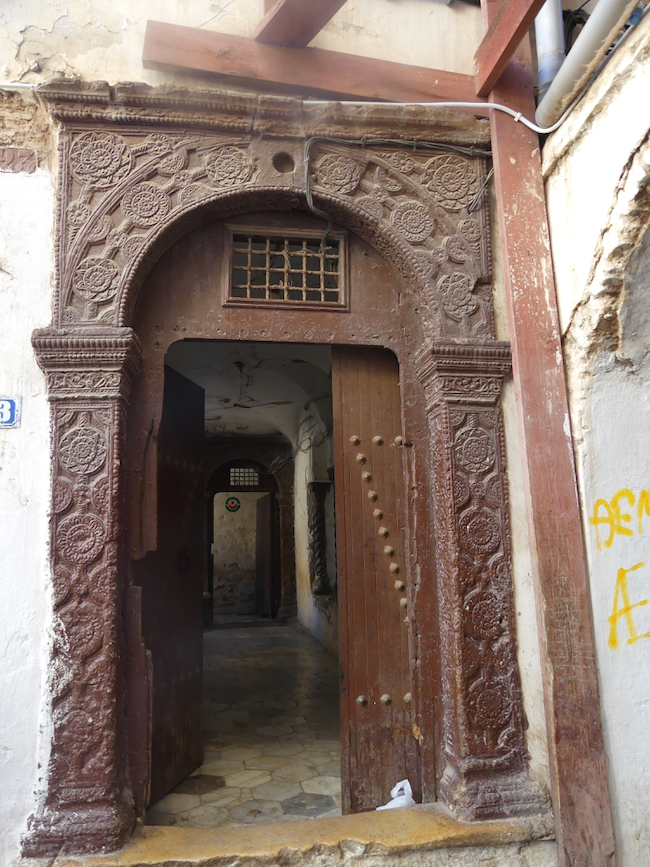



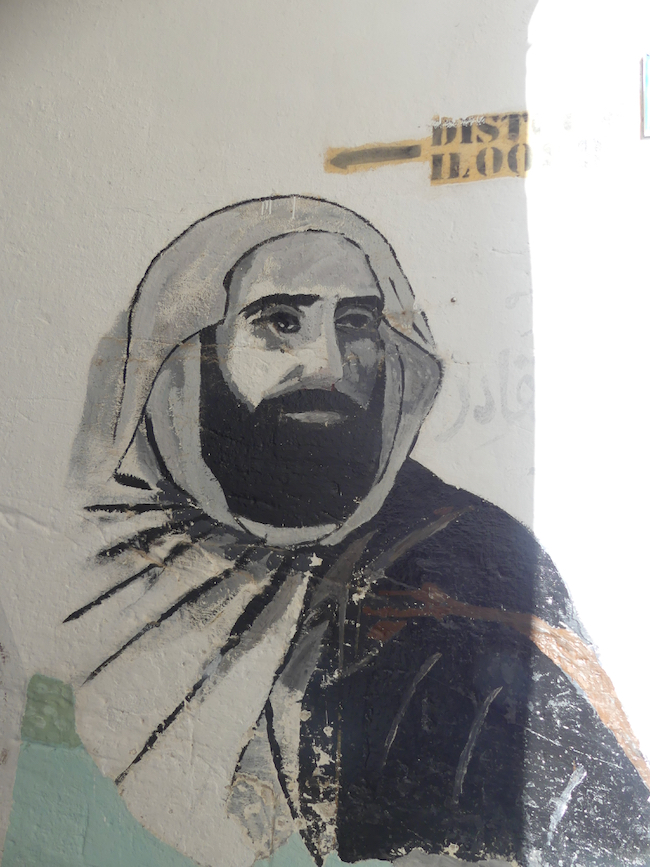
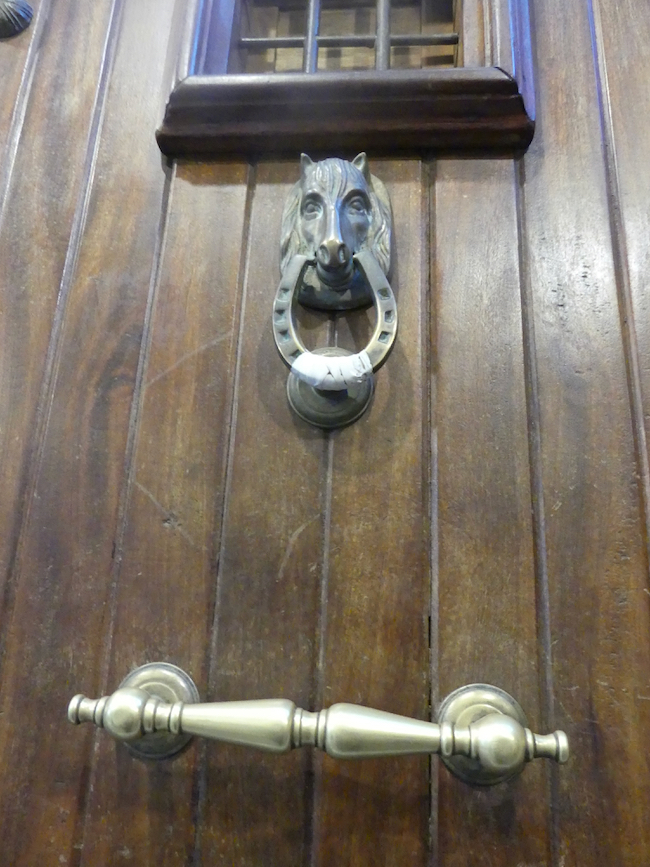

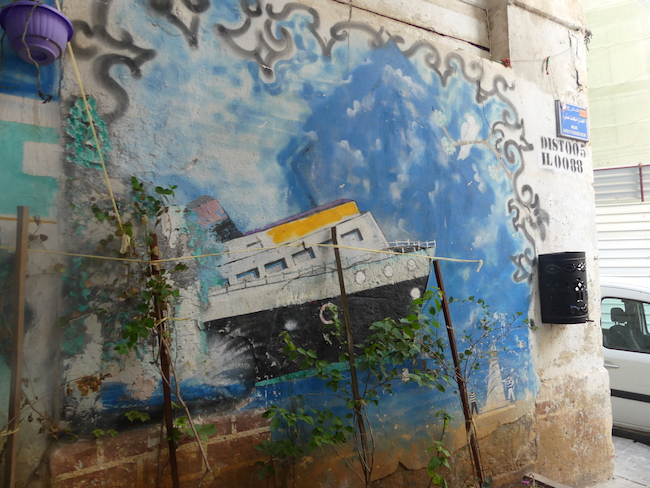
I believe this is the shop that made the traditional outfit for our guide.


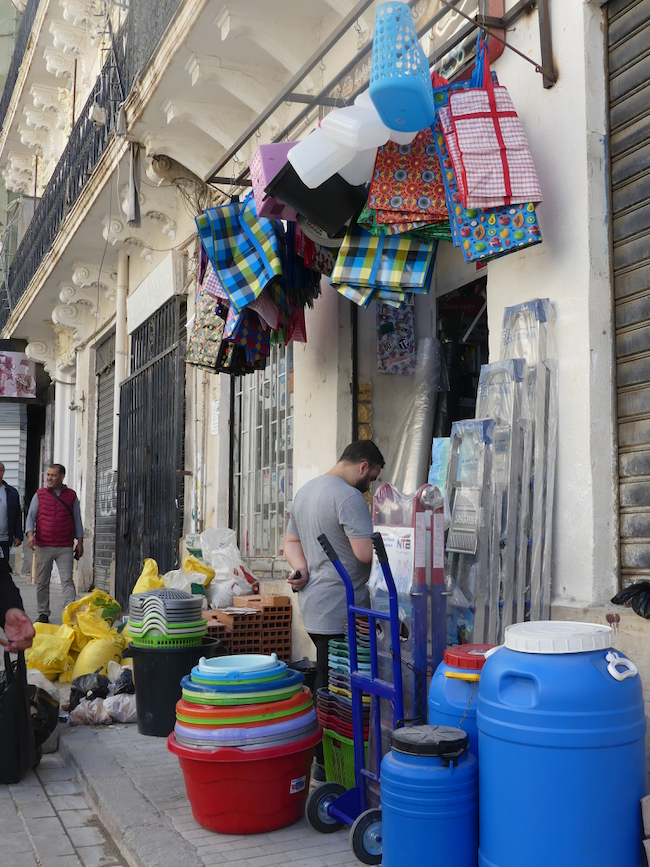


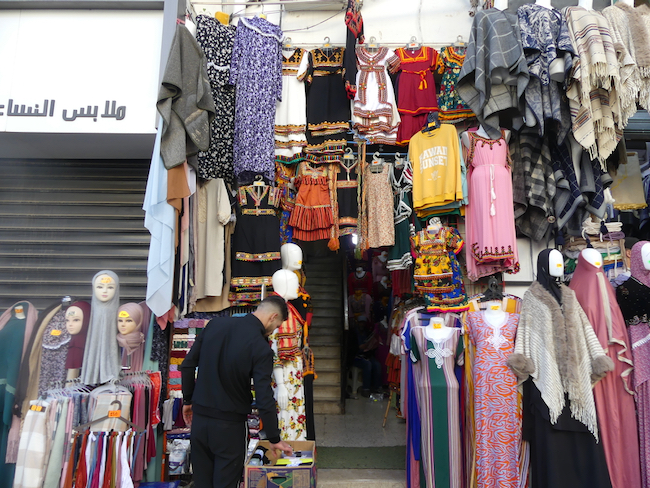
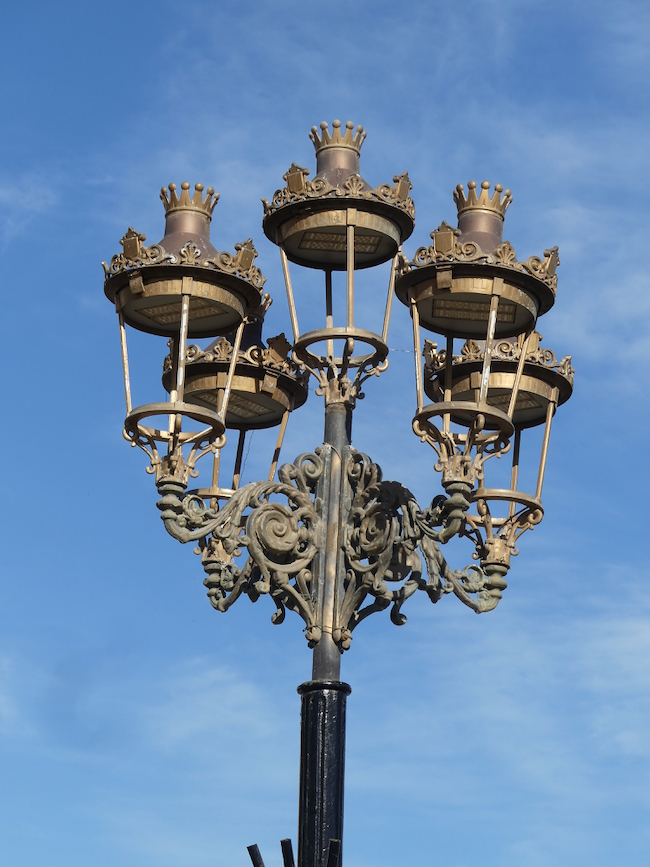
I am betting this is the fish market.
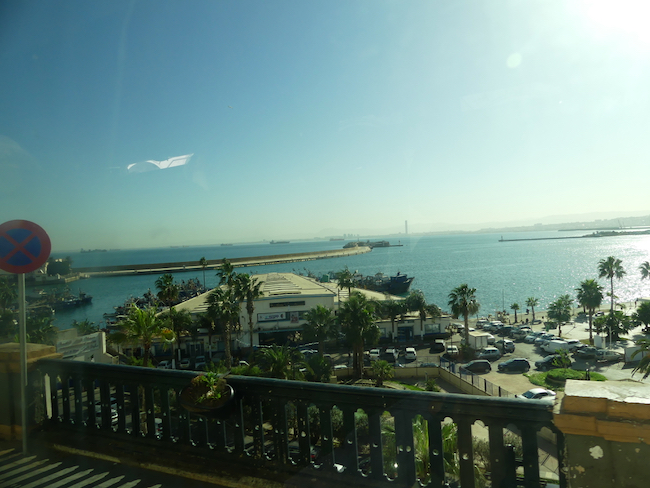
Now I am pretty sure it is the fish market!
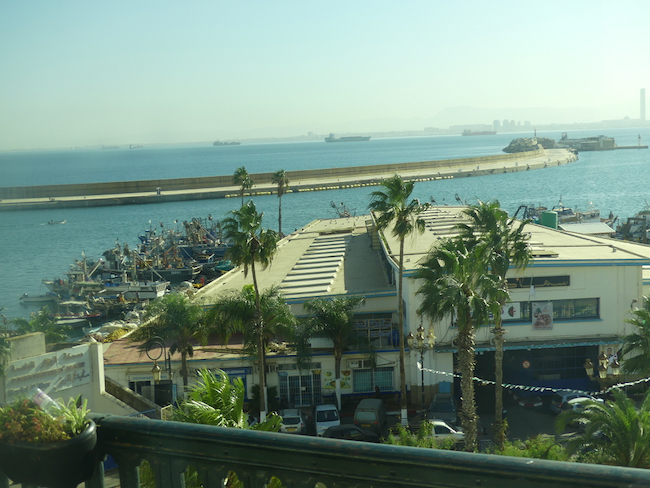
We reboard the ship. We can’t get off again. We are really glad we chose the Casbah walking trip, we feel we got a good feel for that part of town. We never felt hostility, only curiosity, even though a huge crowd of Americans in groups of twenty-five on the narrow, normally quiet pedestrian streets must have been disruptive.
For many of the people who chose this trip, the terrain was challenging. It was stone, sometimes slippery due to sand or moisture. The steps were uneven, the stones rough and irregular. For many, the poverty was distressing, and the dirtiness and disorderlyness made them uncomfortable. I think, too, that it would have been good to let them do a little shopping, good for the tourists and good for the Algerian merchants, but the security concerns were so great that tourists were not given any time to interact with the people or the economy. Too bad. We learned that Algiers will not be included in future Morocco Malta and the Mediterranean trips.
I think, too, maybe it felt familiar to us because the slice of Algiers that we saw was very like Tunisia in the late 1970s, and it was at first a challenge to us, but we learned and adjusted.
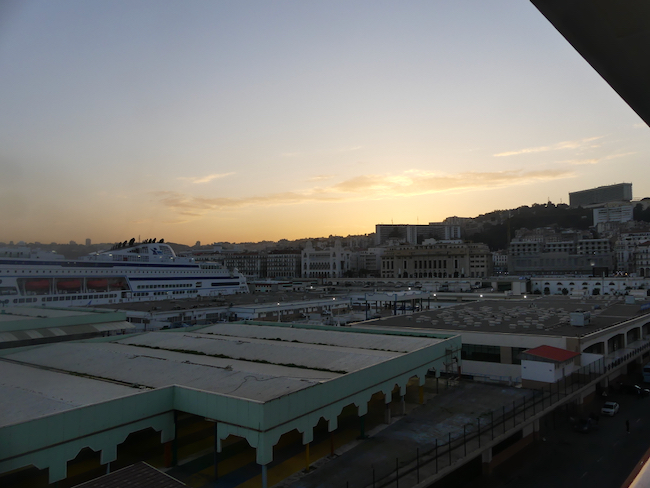


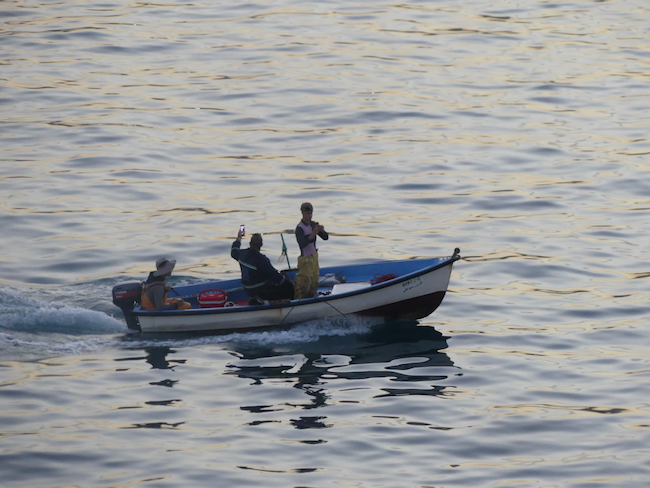

Farewell, Algiers!
Morocco Malta and the Med: Tunisian Interlude
We aren’t just sailing away from Malta. We are sailing toward a part of our history, and please pardon that these photos are not that great; I don’t even know what kind of camera we were using and they are now very old.
We lived in Tunis for two years, courtesy of the US Government, wanting us to be linguistically and culturally more fluent. For me, it was scary at first – coming from Monterey, CA and entering into what seemed to be a very alien culture.
It began a great leap in opening our visions to other ways of thinking.
Below is our old villa – I am showing you this because when we went to visit it, it looked entirely different.
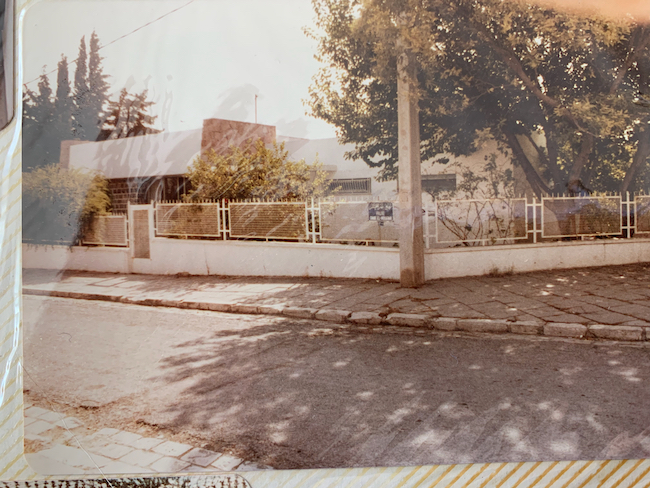
Our son went to a local Pre-School, Joie de Vivre, the Joy of Life 😊. This is his class photo.

AdventureMan on our back porch, where we often ate. We only had air conditioning in our bedrooms. The candelabras (there were two) were made for us in Binzerte.


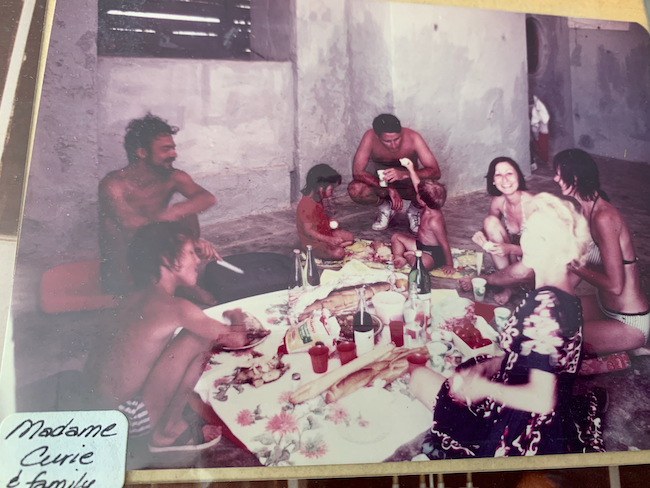
My French teacher, Madame Huguette Curie invited us into her culture; she lived on Avenue Habib Bourgiba in a palatial apartment and had this seaside cottage where we could swim and picnic together. She was beautiful and cultured, and helped us learn about and love our time in Tunisia.


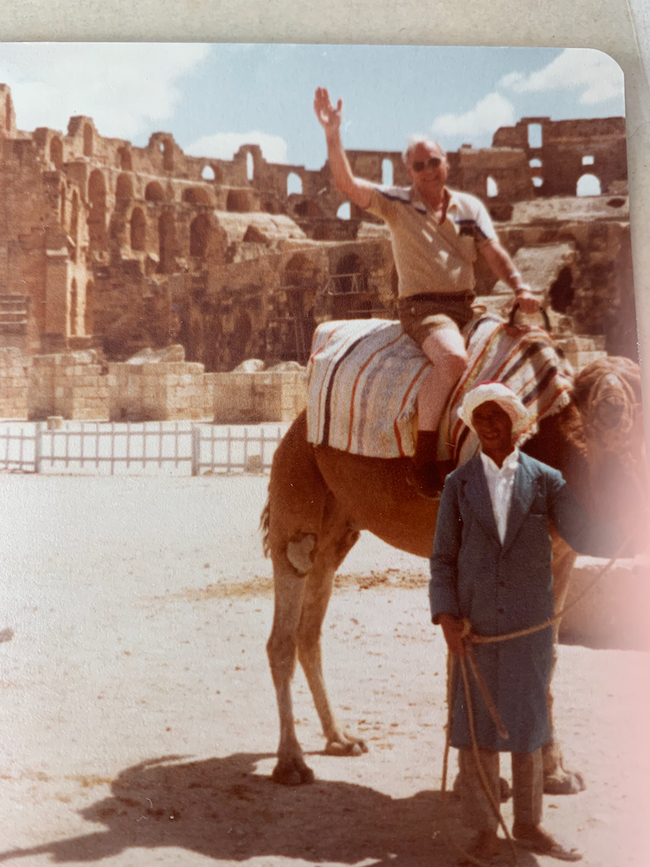
My parents came to visit, and we had a wonderful time showing them Tunisia. This was at the Ampitheatre in El Jem.

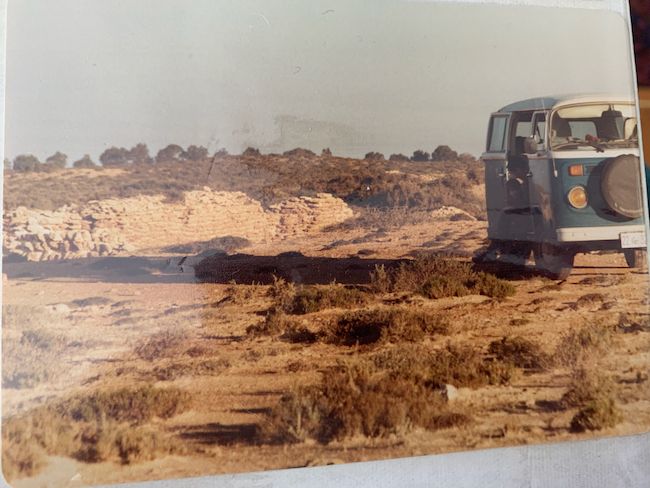
We camped in desolate areas – now built up – in our Volkswagon Bus.
Once a year, there was a Bedouin festival in Douz (where much of the original Star Wars was filmed.) We camped there, too, and have never been colder in our lives than in the Tunisian desert in late November.

The Camel Market in Nabuel was a great weekend favorite.
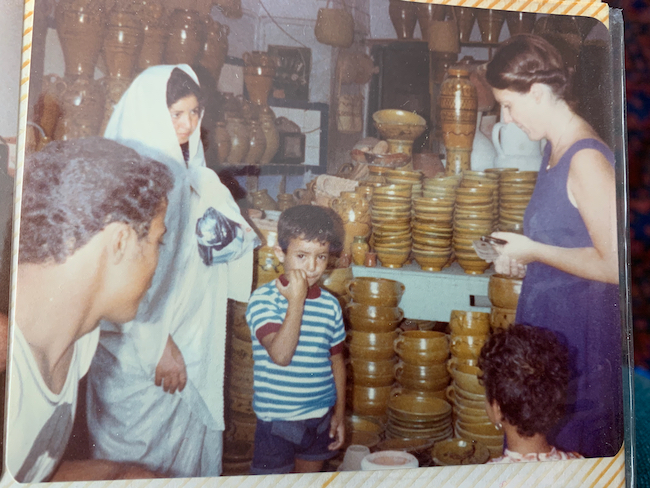
So my friends, on! on! We are on our way back to Tunis, 46 years later.
Morocco Malta and the Med: Day 2 Barcelona and Monserrat
Traveling with Viking passengers is to see ourselves in others. After a good nights sleep, we are up at dawn to have breakfast before our guide, James will arrive to pick us up at 8:15 to get us to Monserrat and in to see the Black Virgin before the crowds.
Too late. When we get to the restaurant, there is already a line of Viking early-birds in front of us. Fortunately, it is a large restaurant, and we all get seated quickly. The buffet breakfast is lovely, all kinds of cereals, breads and condiments, fresh egg dishes, lots of breakfast meats. It seems to be there is something to make everyone happy.

The restaurant is on the top floor and has views to die for in every direction. I’ve been trying to get to the roof deck and pool, but it seems it can only be accessed through the restaurant, and only during certain times. I kept trying. I never made it. It may be because it is mid-November and most people aren’t looking for a pool.
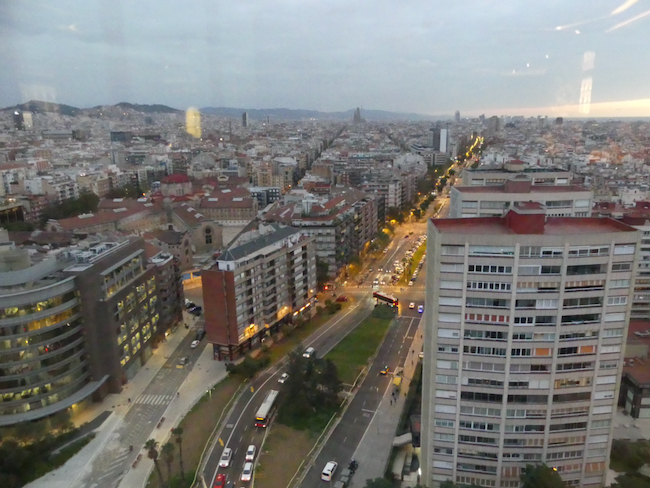

We booked with Autos Driver through Viator. Our driver and guide, James, showed up promptly at 8:10 (we were ready) in a suit with a slick shiny new Mercedes. We were impressed. He explained what we were seeing as we exited Barcelona to head for the serrated mountains (the meaning of the name Monserrat), and made it all relatable by putting it all in context. We really liked James. The statue below is in the industrial area.

Looking back toward Barcelona and the sun rising through the haze.


You can see why it is called “serrated mountains.”
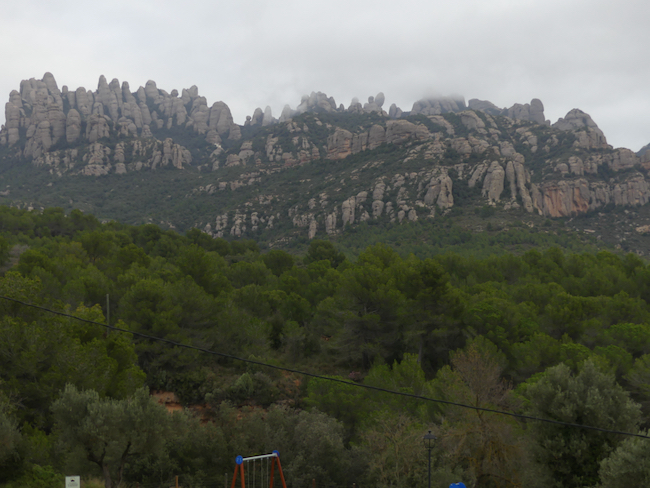

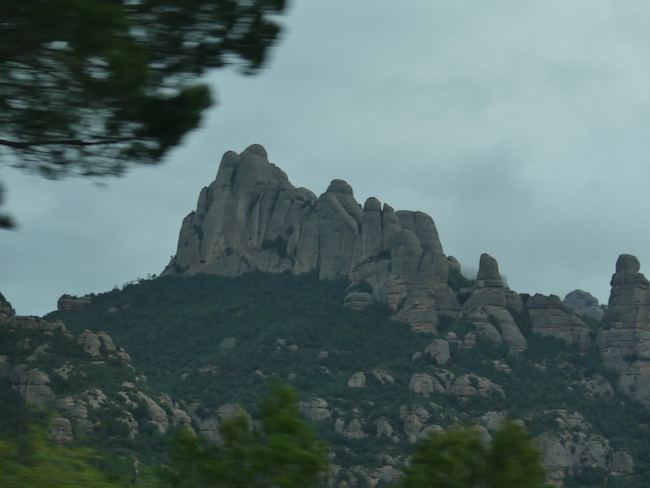
We stopped for a stretch break at Santa Cecilia, a former nunnery, now an event venue.

On the left is James, who made this day so special for us, telling us the inside stories of Barcelona.
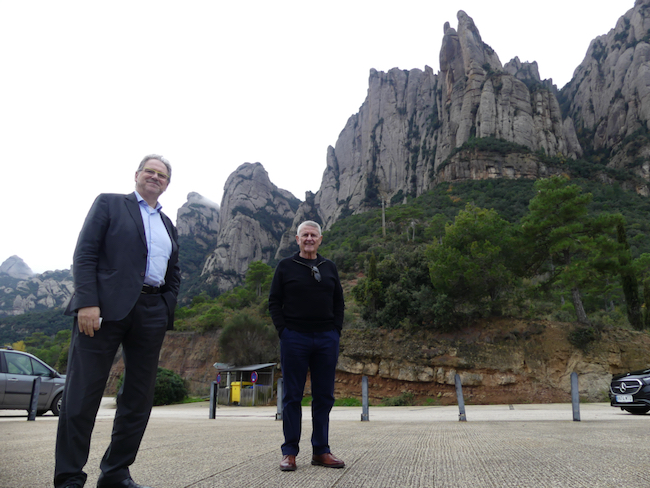
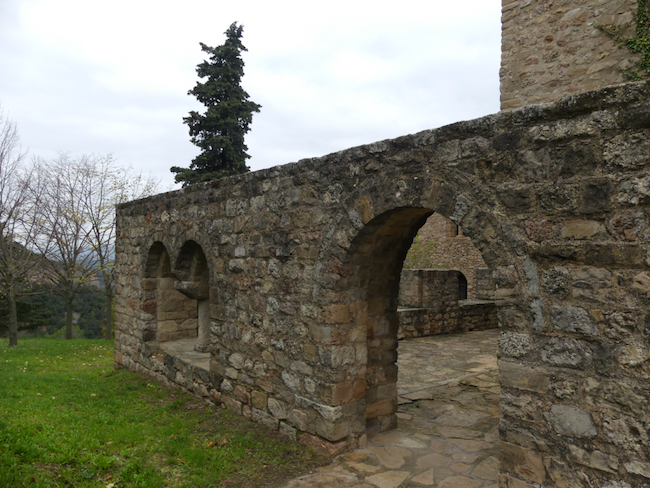
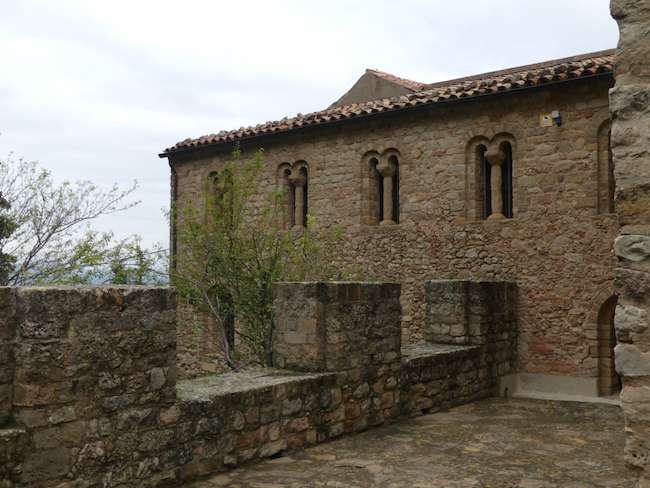

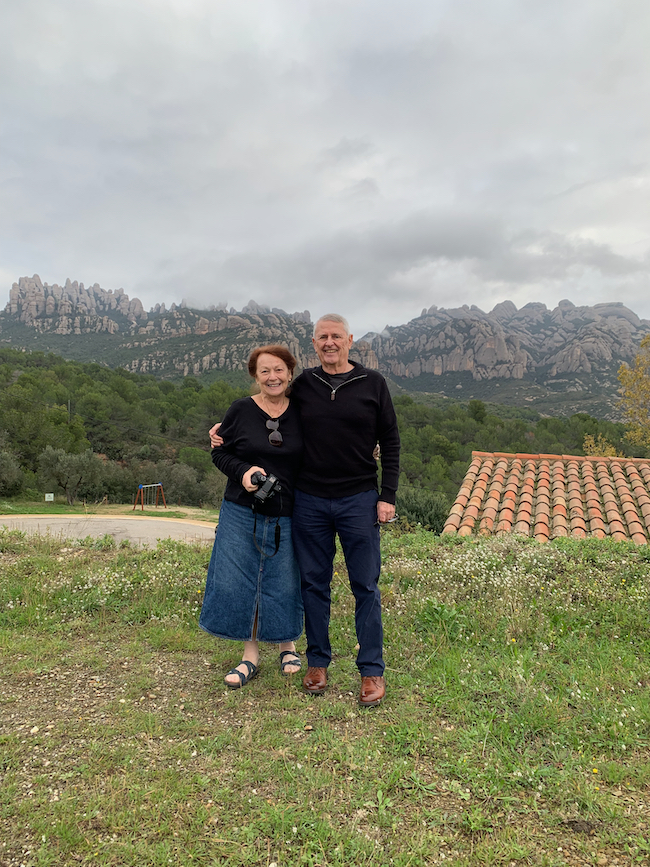
Our first view of Monserrat is of St. Michael’s Cross:
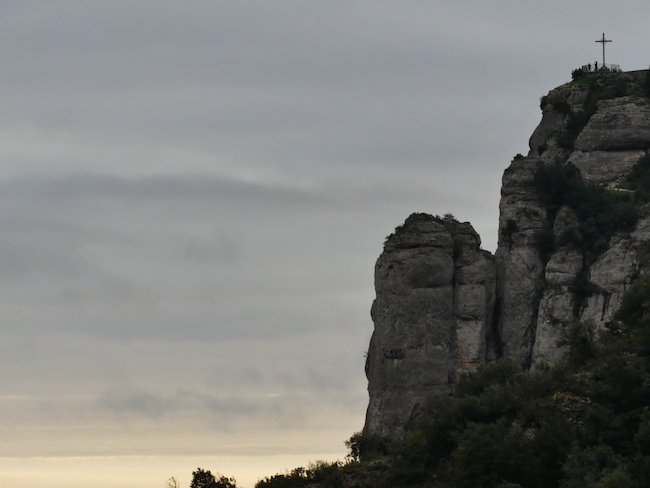
Tickets have to be reserved, and are for certain times only. James was looking out for us, contacted us ahead of time, picked up the tickets and had us to the line with plenty of time. He showed us where to meet with him after the tour of the Church and the Black Virgin.
It’s November. We had thought it would not be too crowded early in the morning, but it was full of Japanese tour groups, mostly school groups. We wedged between two groups as we waited to see the Black Virgin.


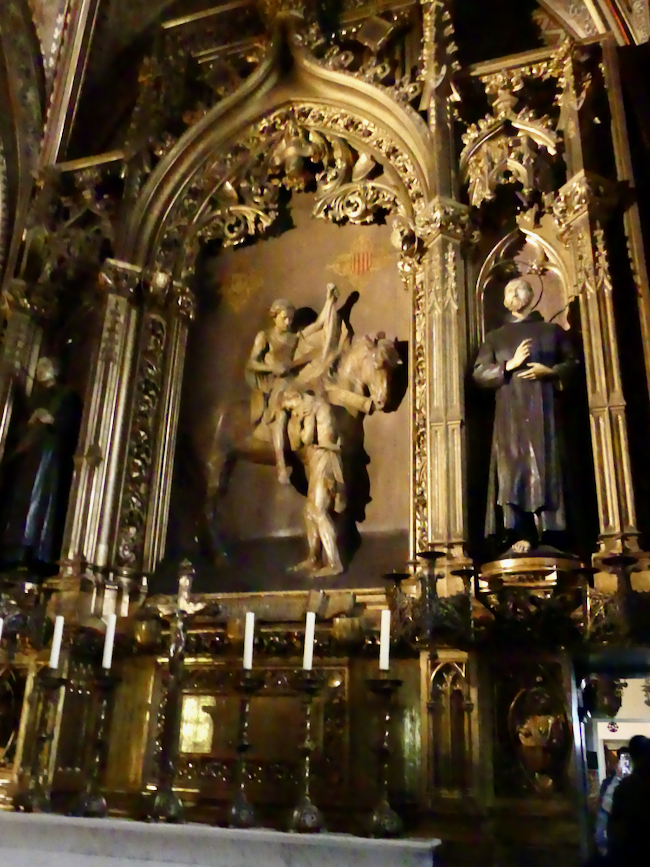

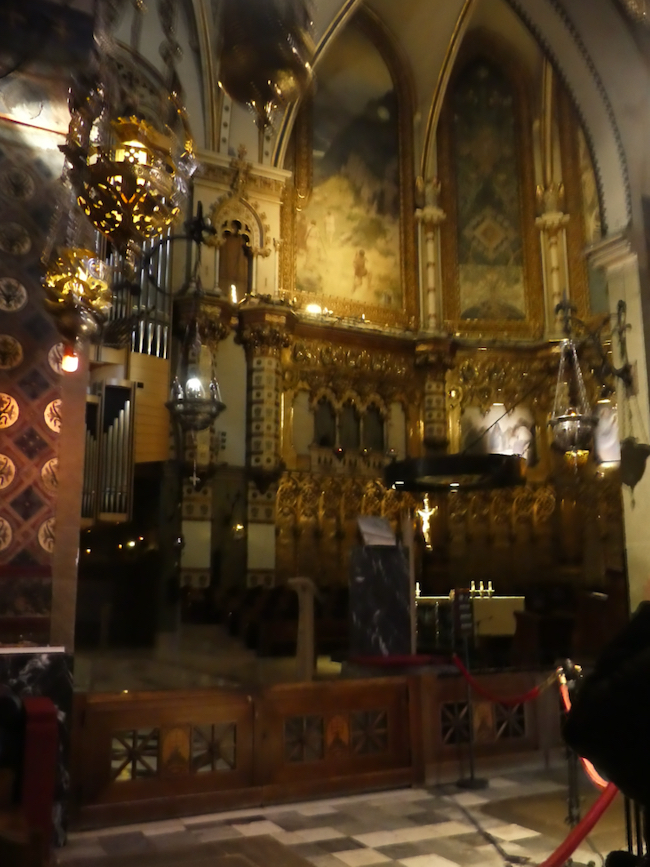


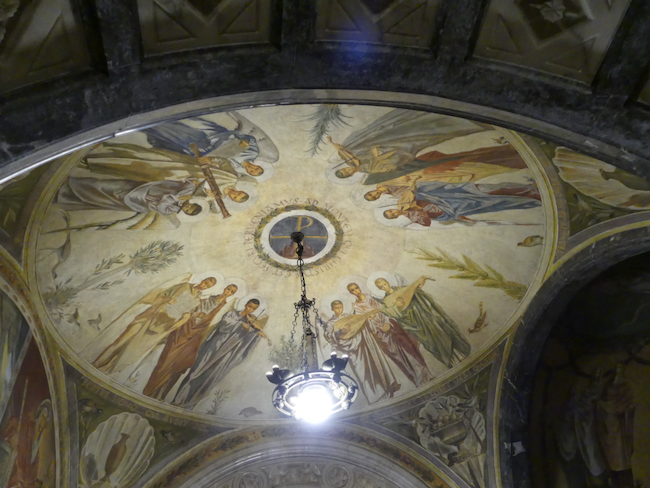


At last, one at a time, we are allowed about 10 seconds with the Black Virgin. The legend is that this Madonna and Child was carved in the earliest days of Christianity. Said to have been moved to Monserrat (home to the Goddess Venus) in the 700s to avoid Moorish explorers, she was found underground and was to be transported to some church but was not able to be moved, so they built a monastery around her.


You can see an orb in the Virgin’s hand. One at a time each Japanese school girl put both hands on the orb and looked solemn while one of the teachers (?) chaperones (?) guides (?) took a photo of her.


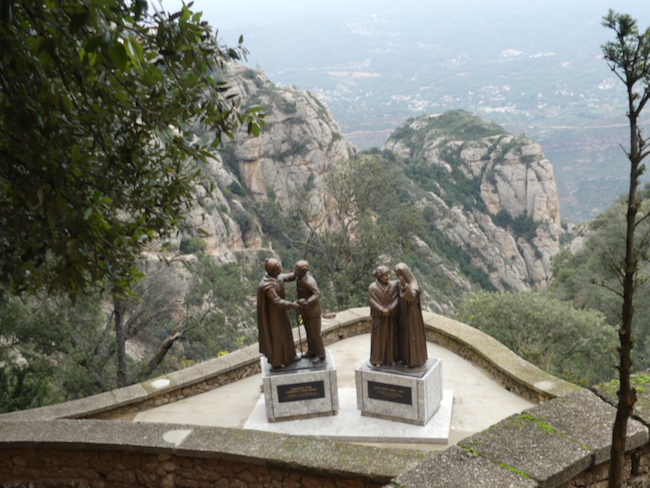
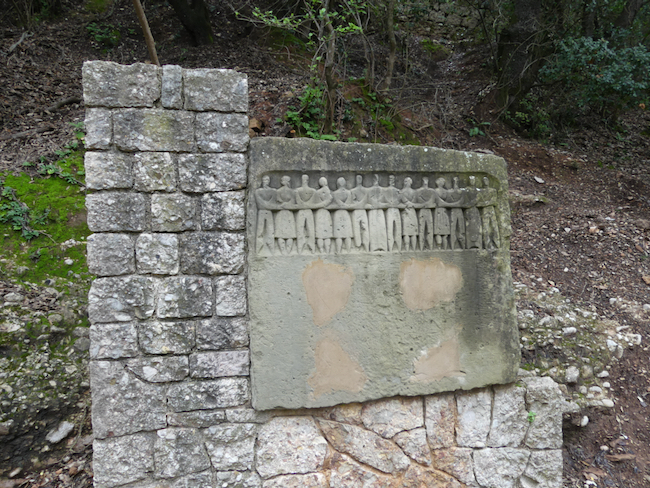
We had enough time to walk part way to Saint Michael’s Cross:


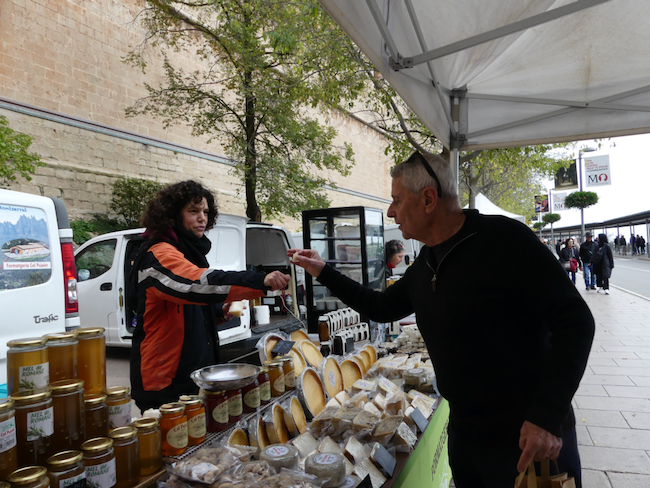
AdventureMan wanted to have some good cheese to have on board so we could have wine and cheese before dinner, and he found a really good one! We enjoyed this cheese so much, dry, nutty, salty, kind of grainy, and delicious!


We met up with James, had a great drive back to Barcelona as he answered all our questions, we talked ecology, climate change, cultural differences and economics. We talked about the impact of COVID-19 on our countries and social practices. Before he let us out in downtown Barcelona, he gave us directions to the oldest chocolate shop in Barcelona, not far off Las Ramblas, but far enough that not a lot of tourists get there.
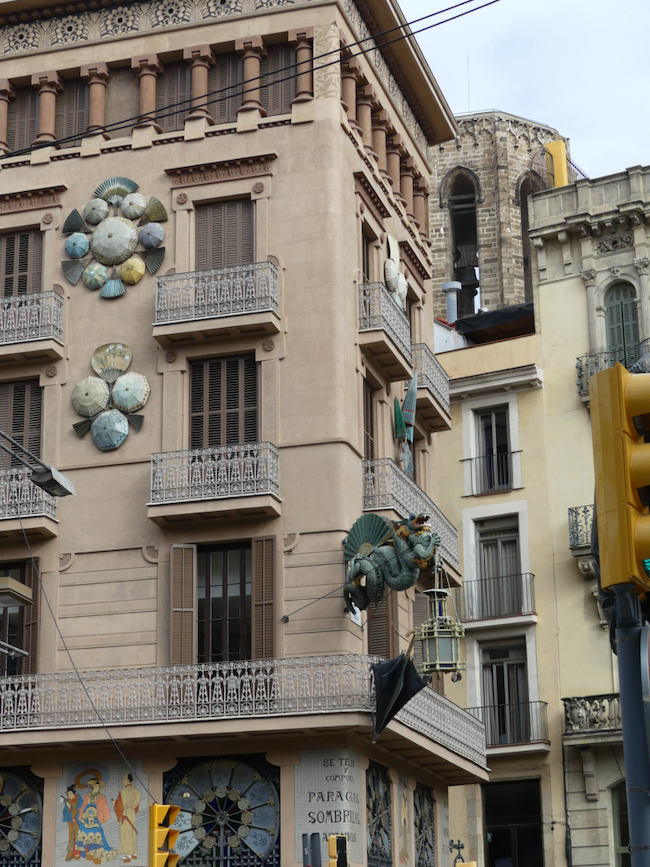
Love these old signs on Las Ramblas.
Last time we were in Barcelona, we had grabbed empanadas at the Boqueria, along with fruit drinks, and AdventureMan wanted a particular spicy beef empanada we had the last time. We darted up and down the aisles until we found the exact shop, and both bought spicy beef enpanadas, and fruit drinks, then found a place to sit at the little plaza behine the Boqueria to eat in peace, except for the pigeons.

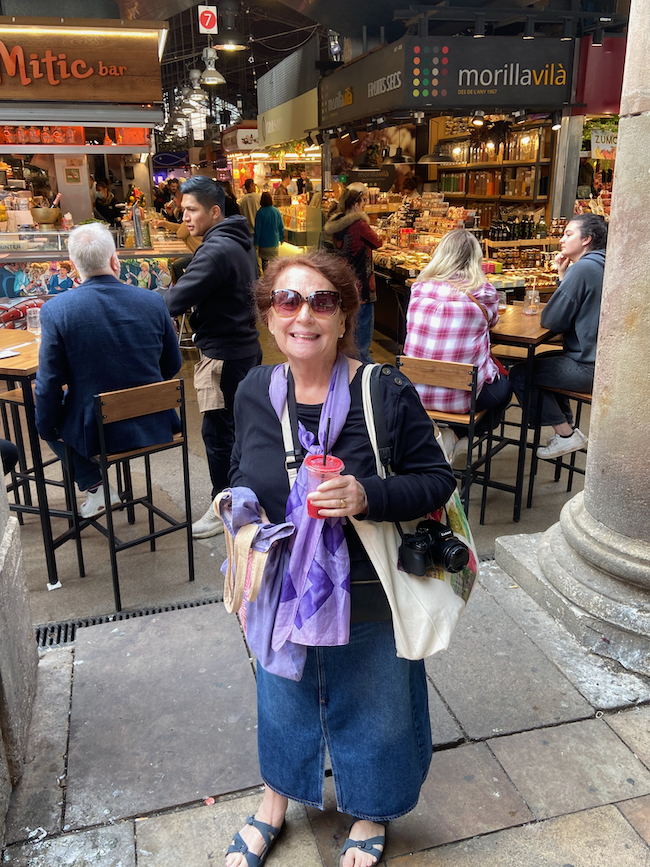
We ate lightly so that we could have hot chocolate at the oldest chocolate shop in Barcelona, very close to the Boqueria. The name is La Granja, and it is a couple streets behind La Rambla and the Boqueria.

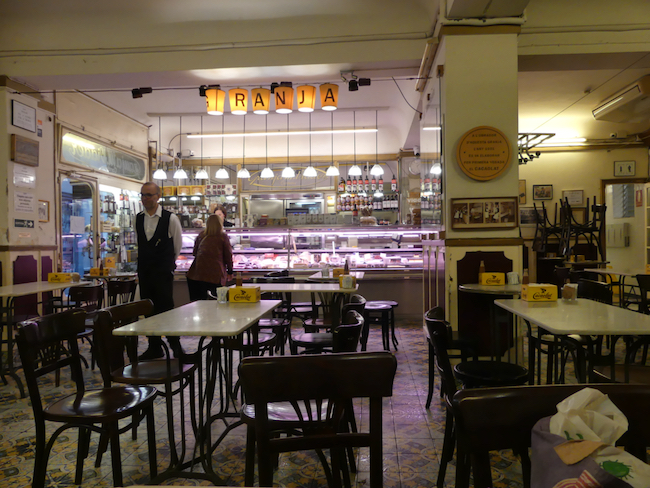
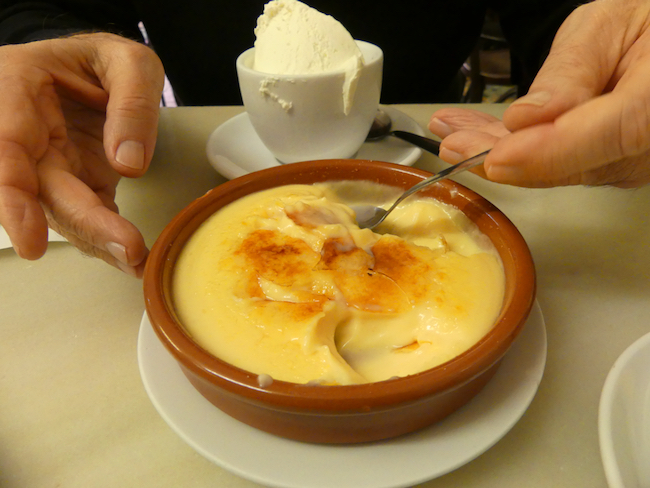
It was delicious and fun. When we got there, they wanted to make sure we knew they were closing for the mid-day break. We assured them we only wanted chocolate, and creme brulee, and they welcomed us. We loved the place, with customers coming in for cut meats and other kinds of delicacies, we don’t really know what because we don’t speak Spanish except for a few words. It didn’t matter. The chocolate was thick and smooth and like eating a little bit of heaven, if heaven to you is chocolate, thick dark chocolate, as it is to me. The creme brulee’ is to be tapped with the spoon to break the crust before you eat.

On a total sugar high, we head out to find the metro and head back to the hotel for a nap. The metro takes us half a block from our hotel – why don’t all cities have great public transportation like Paris and Barcelona?
We are ready for a nap 😊.
Saying Goodbye to Al Marai Coffee Cups

All my nomadic life, I have had to sift, sort and weigh the value of my belongings – literally. As an Army wife and later a corporate wife, I had a weight allowance as we moved from country to country. My life was full of leaving things behind – friends, churches, social groups, jobs, my identity – as well as belongings.
Unlikely items made the cut. In 2003, when we moved to Doha, Qatar, I discovered a nearby store, the LuLu (which means lovely large pearl), where a gallon of Al Rifai milk came with a free coffee cup sturdily taped to it. I was delighted. I’ve always believed good design does not necessarily correlate with price – and these cups were a perfect size and had these wonderful scenes from Doha life, where there was a dhow harbor in the center of town, dhows in the harbor, and camel races with human riders on Saturdays. Look! The dhow coffee cup even has a wind tower in the background.
So yesterday, Christmas Day, as I opened two beautiful new coffee cups, one from Giverney and one from Barcelona, my husband looked at me sorrowfully, and approached the subject gently.
“It’s time we give up the Doha coffee cups,” he said.
“They have served us well. They are over 20 years old. They were free, probably made in China from materials we don’t even want to think about. I use them all the time, and even as I do, I wonder what might be leaching into my drink.”
I know he is right. There is no marking of any kind to indicate origin. After all these years, marks are appearing where we have stirred for twenty years. And yet – these cups have served me loyally. They are still bright and unmarred. I love their memorialization of a slower time in Doha. And I have options.
At Christmas breakfast, I have the cups out on display and offer them to my son. He is a discerning collector of first editions by selected authors, first edition Legos from the space exploration collections, edged weapons, and selected items that catch his attention. He also knows how to buy and sell on the Internet when he wants to refine his collections.
He expresses interest but does not take them with him. Their departure, however, is Christmas Day chaotic – bags full of presents, the food divided to be used for quick meals in the coming week (even our grandchildren contributed to our Christmas Eve dinner, my grandson a crab dip and my granddaughter a wreath made of crescent roll wrapped little smokies. My son, who was never interested in cooking, astonished us with a baked Brie!) and last-minute check-ins on upcoming family plans.
I am a patient woman. I know those cups deserve to find new appreciation in a new home. I believe my son will get involved but if not, I have other options.
Update: This is what it is like to be me. It is not that I am getting older, it is that I will tell you things I believe to be true, and they are close, but not the same.
My friend Yusuf, below, said he thought it must be Al Marai, and that sounded familiar. AdventureMan said maybe really we should keep the cups, and as he handled them, He found Al Marai logos on the cups. Not just one. Two on each cup.

In our family, we are all very very sure we are right. When we are not right, we are required to humbly state it. I was wrong, so very very wrong; the cups were labeled, Al Marai, not Al Rifai, and YOU, Yusef and AdventureMan, were RIGHT.
And we are keeping the cups!
Recent Comments
ExpatAlien on What Country am I Living … intlxpatr on Yellowstone: Old Faithful to C… Michelle on Yellowstone: Old Faithful to C… Cathy on No Grown-Ups in Charge intlxpatr on Waiting for Snow Wikipedia Donate Button

Amazina


Early Voting in Florida


 Here There and Everywhere