Before You Leave Doha – No Regrets
I was neither the first nor the last of my group to leave Doha. Well, yes, actually, I was the first, I left Doha for Kuwait, but it doesn’t count because I came back and then was no longer the first to leave. The next to leave are leaving soon, so I want to share something with you.
All my visitors from Kuwait bought these at the Museum of Islamic Art in Doha. I didn’t get it. It just doesn’t rain that much in Kuwait, but the umbrellas are only 100 QR, and that is a reasonable price for a big umbrella, well made.
My last visit to the Museum of Islamic Art, just before leaving, I broke down and bought one, too, and packed it immediately for moving to Pensacola. I was with a good friend, she bought one too. I kind of wondered if I would ever use it.
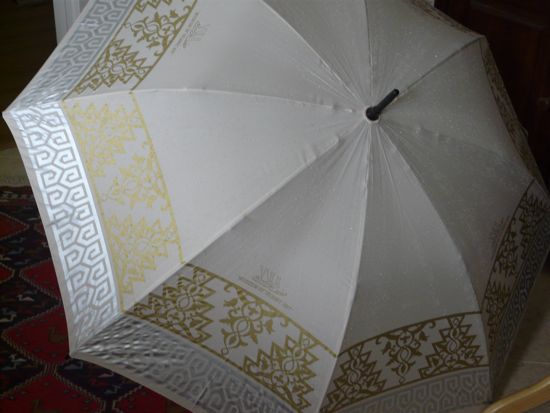
We are getting some serious rain in Pensacola, related to Hurricane Alex. Do you have any idea how BIG hurricanes are, even smaller ones? They whoosh around in a huge counter-clockwise circle, and if you look at a satellite photo, you will see that the circular whoosh can cover hundreds of miles – thus, pouring rain in Pensacola.
I had put my umbrella in the car, as a just in case. Yesterday, I had an opportunity to unfurl it for the first time.
It is gorgeous.
Some things don’t translate well. Some things you buy, you look at and wonder ‘Why did I buy this?” It looks so good in Doha, but you get it back to the USA and . . . sometimes, it doesn’t look so good.
This umbrella looks GREAT. It is so classic, in the ivory, and I love the silver and gold pattern; it is subtle and beautiful. It really covers well, too, and keeps the rain off you and one other. 🙂 This is a very good buy!
Truth in Packaging?
I am always skeptical of the products I call “hope in a bottle” (to my great amusement, there is actually a great product line which is now called Hope In A Bottle) but people will buy anything in hopes that it will keep their skin looking young and fresh.
When you live in heat, and when you do water aerobics, you need more. I was looking for something light I could put on often, something for day, and something for night. This is above and beyond the magic elixirs I put on my face that show “amazing, visible results in 7 Days!!!!” although seven days later I wonder what my face might have looked like if I hadn’t been using Product X . . .
So I bought some hope in a bottle to use days and nights, and yes, partly I will admit I bought the beautiful packaging. It is beautiful, isn’t it?
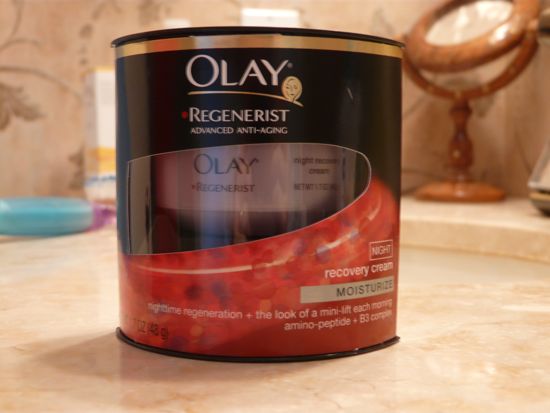
And it wasn’t that hard to open, which is a bonus. But wait! What is this inside? I paid for a lot of AIR!

The next package was the same – beautiful packaging; a lot of air . . .
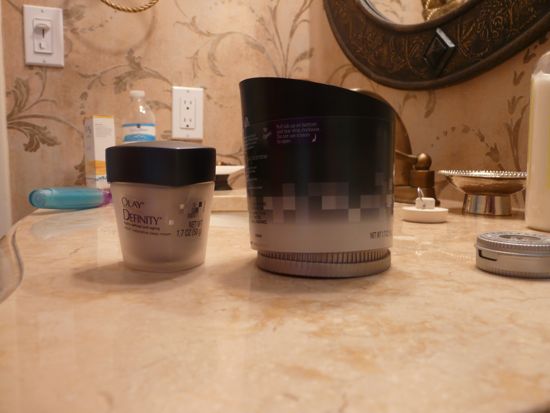
Maybe, in its own way, it is more true than fiction. After all, when we are buying vanity, when we invest in the hope of beautiful skin, a lot of it is illusion and air, isn’t it?
Breath of Fresh Air at Christ’s Church, Pensacola
AdventureMan and I slid into our seats just as the bell started ringing, and looked at one another in concern – “Does it feel hot in here to you?” “Yep.”
It was only eight in the morning, but the church was breathless.
It made me smile, remembering our church in Tunisia, St. George’s, where there was no air conditioning, only fans – when the electricity was working. St. George’s is the oldest Anglican Church in Africa, and is located in the large Tunis souk. Summers were long and hot, and many a Sunday I had to gather my squirming two-year-old and take him out to the garden for a stern talking-to. It was a wonderful, diverse church, and we loved our time there – breathless or not.
And we got through the service, heat and all, it wasn’t that bad.
The sermon was really good. Father Neal was talking about Jesus, invited to a banquet, having his feet washed by the tears of Mary Magdelen, and dried with her hair.
As an aside, one of the things I love about Jesus was his kindness to women, including them when he talked, healing their hurts, defending them against stoning – in a culture not unlike that in which we have been living, where women are contracted into marriage, “protected” by laws which often deprive them of independence and choices, and living lives greatly separate from men. Jesus spoke to women, and he spoke to their hearts. He included them among his followers and supporters. In the context of his society, his behavior was radical and challenging to the status quo.
Father Neal totally got that. He talked about the scandalous sensuality of Mary’s act, washing Jesus feet and then drying them with her long hair. He talked about hair, traditionally covered in that part of the world, being a woman’s glory, and only privately displayed among family and to husband. He talked about her remorse, and her humility, and that through her loving act, her spirit was cleansed and her sins forgiven. And he talked about the customs and traditions of hospitality, and the shock of Jesus criticizing his host – who was criticizing him – for his lack of welcome, and signs of hospitality to an honored guest.
His sermon was a breath of fresh air in a very warm church. We held on to every word.
Later in the day, old friends came for dinner, and our son and his wife and our grandson. Cannot imagine a more wonderful day. 🙂
Shhhh! I’m Reading!
The doorbell rang, it was after dinner, and we figured it was our son coming by, so we ran to the door. No-one there, but we can see back of the UPS man trying to cross to his vehicle on the other side of the road, and there is a small package on our porch.
I was briefly disappointed, but not for long. The package was a book I had pre-ordered:

I don’t often order a hardcover book; I don’t care that much. Most of the time. Now Stieg Larsson is another story. His last book, The Girl Who Played With Fire, was a cliff-hanger, which I read while waiting to move in to our house, while it was being rewired. I could hardly wait to find out how everything resolves, so I pre-ordered from Amazon, and started reading as soon as I had opened the box. 🙂
While in Sam’s Club doing some shopping for Memorial Day, I noticed that on a very full book rack, the Stieg Larsson paperback books are flying off the shelf.

This time, I couldn’t wait for the paperback edition. 🙂
Kuwait or Qatar or Pensacola?
Showering after my water-aerobics class, I could hear voices discussing a local political-social situation. A benefits agency has groups of families working in it, and they know all the tricks. They know how to insure more of their own family members hired, and they know how to help all their family members (and friends) take advantage of all the entitlements.
Expats abroad call it nepotism, and scorn it as a third-world corruption. In truth, it happens everywhere.
There is an ongoing schism taking place in Qatar and Kuwait, countries that have been gracious and welcoming to me. The nationals of Kuwait and Qatar control citizenship carefully. The citizen base is about 20% of the population, on a good day. The rest of the population are people who are in Kuwait and Qatar to work. Most there to work can never hope for citizenship. For many, the poverty in their home country is so brutal that no matter how hard the working conditions, at least it is a salary, and they can send something home so that, literally, their families can eat. They dream – like we do – of educating their children so that they will have a better, more secure life.
Here is the problem. When 80% of the population is NON-Kuwaiti, or NON-Qatari, your country starts to change. One way in which things have changes is that in a very short time, the highways have gone from very quiet to gridlock, due to a dramatic increase in drivers and cars. In Qatar, the situation is made worse by nationalization of the taxi service, resulting in so few taxis that hotels now use private limo services, because finding a taxi at peak times is near to impossible.
That’s one issue. The second issue is language. Imagine your elderly parents going into shops to buy something – in their own country – and the clerks don’t speak their language. As they are stumbling and bewildered, some noisy “workers” walk in, state their needs, are understood, conduct their business and exit before you even get served. This is happening in Kuwait and in Qatar; everyone is speaking English. In a country where the workers are Indian, Nepalese, Philipino, Saudi, Yemani, Omani, Lebanese, Syrian, French, Dutch, English, Australian, South African, American (and about thirty or forty others) the common language has evolved to be English, not Arabic.
How do you think you would feel if it were happening here? If the great majority of cars on the road were not “us” but “guests” in our country? If the clerks in stores couldn’t understand what you want, because although they are in your country, they don’t speak your language?
Another problem is what to do with the huge, disproportionate number of geographically single males brought in to work as builders, cleaners, heavy equipment operators, dishwashers, drivers, security guards and other fairly low-paid positions? In Kuwait and in Qatar, non-married sex is strictly forbidden, even holding hands in public is considered an affront to morality. These men are banned from malls where families might gather, and from other public places. Their existence is grim, and they often find themselves unpaid, or paid far less than they were promised for their labor.
Last, but not least, this very modest Gulf culture has people – foreign guest workers – parading themselves on their streets in various states of undress. Think about it – that’s how we look to them. We have no shame. We bare our faces. We flaunt the glory of our uncovered hair. Sometimes a shawl might drop and a glimpse of bare arm or even a hint of cleavage might shock the modest eyes of a believer.
In Pensacola, there are also fundamentalists who wear long skirts, long sleeves, and determinedly modest clothing. I wonder what these believers think about the skimpy clothing on the beaches, or in the malls?
Coming home has been a real eye opener. It was easy for me to be critical of things I saw in Qatar and in Kuwait. Coming home, we joke all the time about “Kuwaiti drivers” here in the US, but the real joke is – they sure look a lot like us.
Last week, we saw a man here make a U-turn right in the middle of the road, and rock as he tried to regain control of his truck, and almost blast right through a red light he didn’t see. The back of his truck was down, and items loose in the truck bed were heading toward the highway – fortunately he figured that out, and last we saw, he had stopped to fix his rear door. Maybe he wasn’t sober. Maybe he had had an argument with his wife or boss or someone and was not paying close attention to his driving. All I know is that we have seen a goodly number of inattentive drivers here, too.
When a bureaucracy gets corrupted, when the rules are not applied equally to all, when select groups get favored treatment – here in Pensacola, at the immigration department in Kuwait or in the traffic department in Qatar – everyone suffers. It’s a political problem, a social problem, and a systemic problem. God willing, if we are truly evolving as a species, we will find a way to create truly fair and transparent systems which will work as they are ideally intended to work.
It’s on us. We have to make it happen. We have to want it badly enough to make it happen, even making sacrifices for the greater good.
I don’t have any answers. I don’t know how to make us better people that we are, how to make ourselves make the right choices. I do know this – whether it is a tiny village in Germany, or an eagle’s aerie in Kuwait, or the lush life of Doha – we are all more alike, and share more similarities and problems, than we are different. If we could only learn to see through one another’s eyes, maybe we could find ways to resolve our differences and learn to cooperate.
Old Time Pottery
We were on a reconnaissance; an exploratory trip, or so I thought. We had passed through Elberta, Alabama, “Woh Das Leben ist Gut” and the Lutheran Church welcomes you; AdventureMan said it was a settlement of Germans, and the German names still dominate as you scan the businesses in town. We had perused the Foley Outlet Mall, and we were on our way down to the beach road to head back to Florida when AdventureMan said “What’s that?!”
It was Old Time Pottery! We had looked for Old Time Pottery in Destin last week, but I didn’t know there was one in Foley, too. I could see the grin on AdventureMan’s face, he had known.

“How did you know?” I asked.
“Oh, zee internet, it is a vonderful sing,” he replied, grinning and turning into the huge, gigantic store.
Right in front were the terra cotta pots I had been seeking, at a reasonable price. I picked up two 14″ pots.

For some reason my camera refused to focus, but as I pulled off the pots, I was surprised to find two bright green frogs. I thought they were decorations, and one quickly hopped through the pot hole and back into the dark:

“Only two?” AdventureMan asked, disappointment loud in his voice. “We come all this way and you only buy two?”
“I wasn’t planning to buy anything!” I protested. “You totally caught me by surprise! I thought we were just looking around.”
You can look around inside the Old Time Pottery for a LOOONNNNGGG time. They have everything. A lot of what they have is also available around the same price at other discount stores, TJ Maxx, Bed, Bath and Beyond, etc. But the sheer massive amounts of stuff was purely mind-boggling. It would be easy to buy stuff you didn’t even know you needed, just because it is all there. Actually (she congratulates herself) I managed to hold it to just the two pots. I know where the store is. It’s not that far away, about an hour, I can go back if I need to. 🙂
The Alabama Muttawa
As we were driving into Alabama this morning (not such a big deal as it sounds, as we live right on the border of Alabama) we passed through Foley, where we found a large group of Alabama members of the committee to prevent vice and promote virtue:

They find a busy corner and parade their signs, hold up their Bibles, and read aloud from the bible to passing motorists. No switches to hit women in shorts or sundresses or swimming suits, no authority to tell people how to behave, only armed with conviction. It’s a very gentle kind of moral authority, encouraging people to make the right choice.
How To Be a Southern Lady
You’d think moving back to your own country would be a piece of cake, wouldn’t you? We nomads know better. Young people who travel to other countries to go to school know better. Military people know better. Missionaries know better. Diplomats know better. Anyone who has spent time living abroad know that it works both ways – you have an impact where you are living, and where you are living has an equal impact on you. You may go back, but you are never the same.
With this move, AdventureMan and I have been too busy trying to get settled and to take care of the incredible amount of bureaucratic detail it takes to relocate. Even with AdventureMan ‘retired’, the days are flying by, and we don’t know why we are so busy.
For one thing, I am doing my own housework, and I am finding I am not very good at it. Like I am good at getting laundry done, and even folded, but I haven’t ironed in a long time, and the things that need ironing are stacking up. I have bought a beautiful new ironing board, and a beautiful iron . . . and some starch, the liquid kind I like, not the spray kind. . . but I haven’t set it up, and I haven’t ironed, not a thing. I have discovered that all my packed things looked a lot better after hanging in the closets for a week, most of the wrinkles fell out, lucky me. But . . . the day of reckoning is coming.
The worst part, for me, is cleaning my floors. My floors are supposed to be beautiful; wood and tile floors. They actually ARE beautiful, maybe two days a week, the day I clean them and the next day, but five days a week, they need work. I wish I had asked my cleaning lady in Doha how she got my floors so beautifully clean. I wish I had paid more attention. I keep looking in the store for some miracle, a machine that will clean them in a heartbeat and make them all shiny. . .
The wonderful thing about moving into this culture – and it truly is a different culture from the one in which I was raised – is that we have our wonderful son and his wonderful wife to give us hints on what to do and not to do, and we have his wife’s wonderful family.
Mostly, I try to keep my eyes open. Southern women admire things extravagantly, and after living for so many years in the Middle East and Gulf, learning to admire extravagantly goes against all my instincts.
In the MIddle East, when you admire extravagantly, you can make people nervous. Some people worry about attracting “the evil eye” of jealousy, evil intentions, people who envy you and wish you harm. Some people, if you admire something, will give it to you! It’s true, those stories, it has happened to me. So now I have to un-learn my lessons in retraint and learn to appreciate, if not extravagantly, at least enough to be polite.
One of my wife’s relatives gave us a house-warming gift, an iced-tea maker, with a darling card that states Rule #1 is that every Southern Hostess knows that a pitcher of iced tea is a MUST for all occasions. I like iced tea, but I have never kept it on hand to serve, and I guess I need to start!
Her second rule was one that made me burst out laughing – “A Southern Lady, the most interesting ones anyway, know that rules are made to be broken.”
“Just be prepared for people to leave your home saying “Bless her heart, she must be getting forgetful. There was no iced tea!”
And then rule #3 – “The only correct and acceptable way to criticize anyone is to add ‘bless his/her heart!’ and then, anything goes!”
At a party at her house this weekend, I learned a couple more – the first rule being that when you are invited to a great big family dinner, bring dessert! Thank God, I did take a little guest gift, but now I know – bring dessert! And it had better be sweet!
The next rule is would make any Kuwaiti or Qattari feel right at home – spare nothing in making our guests comfortable. This Southern Hostess had seating areas inside the beautiful air conditioned home, and also seating outside for those who don’t mind a little heat. She had a big basket loaded with all kinds of insect repellents to keep her guests from being bitten. She took time with each guest, and although she was running her little bottom off getting everything organized, she made it all look easy, and as if she was having a good time. I have a sneaking suspicion the truly was enjoying having all the people around and that her great big heart loves taking care of the crowd. She was the essence of gracious hospitality. Did I mention she has also lived in Kuwait?
Dinner was “Perlow” an old Southern tradition, made in a huge old kettle from her husband’s mother, and hung from a tripod over a roaring fire to cook. The actual cooking was the men’s work as they sat outside drinking iced tea:

Home grown peas and beans mix – delicious!
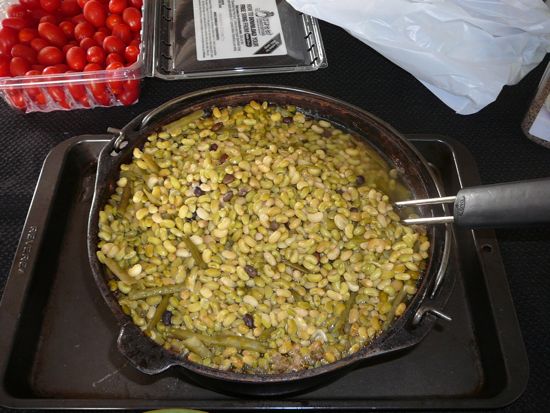
Serving up the perlow:
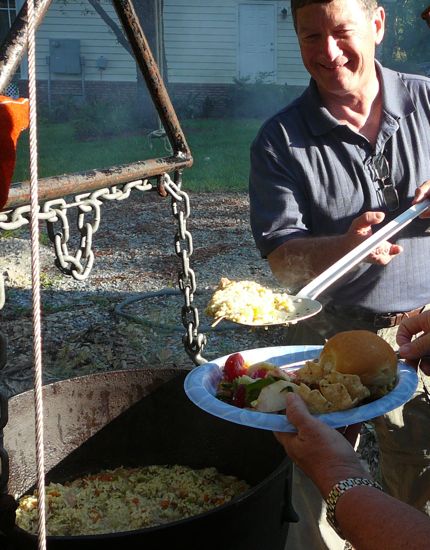
My Middle East / Gulf friends would be comfortable eating this meal – Perlow is a variation of Pilaf, and very similar to Biryani. No alcohol served. No pork. Lots and lots of fabulous sweet desserts.
It’s funny, I used to tell people in Kuwait and Qatar that it was a lot like Alaska; when the weather got too bad, you just stay inside most of the time. When the weather gets good, you go outside as much as you can. When it’s too hot/cold, you run from your air conditioned/heated car to your air conditioned / heated store or movie theater, or restaurant, and then back to your air conditioned / heated car and back to your air conditioned/ heated house.
In the same way, I am beginning to wonder if the South and the Middle East know how much they have in common? In Pensacola, on Saturdays, we have the religious people on the corners shouting at passing cars, not a whole lot different from the volunteer morality police in Saudi Arabia. In the South, as in the Middle East, ‘family’ isn’t just blood, it’s also who you’re married into, and there is a lot of emphasis on family getting together and spending time together. In the South, as in the Middle East, men tend to gather in one area, women in another.
In the South, they drink iced tea; in the Middle East, it’s hot tea. Both have passionate patriots, fundamental believers and a tradition of gracious hospitality. Both have a passion for hunting and fishing. Nobody much likes obeying the rules in either culture. Maybe I’m still in the MIddle East?
Slow Cooker Cassoulet
When I first saw this recipe on allrecipes.com I thought “this isn’t right! Where’s all the fat?” Cassoulets we have eaten in the high plateau central southwest part of France had duck in them, and goose fat, and some mutton, maybe a little pork. They have elaborate rituals, where you boil it in a large enamel pot for hours, then bake it, pulling it out now and then to break and stir in the crust that forms, baking again, breaking the crust, for hours. Cassoulet is a ritual, not just a dish.
But I saved the recipe, because our son and daughter-in-law have gotten us intrigued with slow cooker cooking, and this week, I gave it a try:
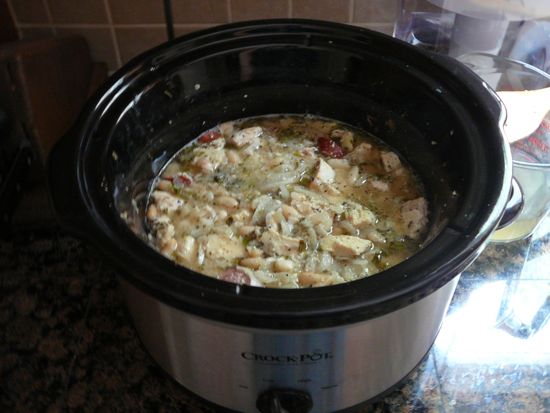
The hardest part of this recipe is finding cannelini beans. After I finally found dried beans (at the Four Winds International Grocery at 9th and Creighton) I actually found canned cannelini at WalMart. (I know! Whoda thunk?) I wanted to go ahead and try it with the dried beans, so I soaked them overnight, cooked them, and then went ahead with the following recipe:
Cassoulet Slow Cooker
• 2 pounds skinless, boneless chicken breast halves, cut into chunks
• 1 onion, quartered and thinly sliced
• 2 large cloves garlic, minced
• 1/4 cup chopped fresh parsley
• 1/2 teaspoon salt
• 1/4 teaspoon black pepper
• 2 (15 ounce) cans cannellini beans, drained and rinsed
• 1 pound turkey kielbasa, cut into 1/2-inch slices
• 1/3 cup dry white wine
Directions
Place the chicken into the bottom of a slow cooker.
Stir together the onion, garlic, parsley, salt, pepper, cannellini beans, and turkey kielbasa in a large bowl. Pour the mixture over the chicken in the slow cooker, and pour the wine over all the ingredients.
Cover, set the cooker to Low, and cook until the chicken is very tender and the cassoulet is thickened, 5 to 6 hours.
This recipe perfumed the house with rich aromas. We could hardly wait to eat. Such simple ingredients, so easy to fix! Toward the end, I had to add a little more wine and I also added about a teaspoon of Herbes de Provence. If you live in Kuwait or Qatar, or don’t use alcohol in your cooking, you can substitute chicken broth for the wine, or an unsweet grape juice, or one of the non-alcoholic wines available in some supermarkets.
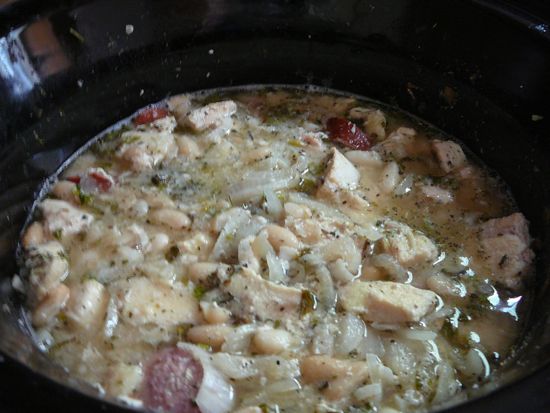
Here’s how it looked close up, shortly before serving. 🙂 Hope you try it, hope you like it. 🙂
Unexpected and Delightful – Dancing Outbreak
My Kuwait friend sent me this – it delighted my day! I hope you love it as much as I do – wouldn’t you love to be there when one of these events happen?
I told her I would love to see this in Kuwait! A group who dances, unexpectedly, here and there . . . even at a traffic light. Can you see the look on people’s faces? Some would get it, and share the joy. Some would think that men and women dancing together is the end of the moral world as we know it, LLLOOOLLL! A little outbreak of high spirits might be a good thing now and then . . . 😉
Recent Comments
ExpatAlien on What Country am I Living … intlxpatr on Yellowstone: Old Faithful to C… Michelle on Yellowstone: Old Faithful to C… Cathy on No Grown-Ups in Charge intlxpatr on Waiting for Snow Wikipedia Donate Button

Amazina


Early Voting in Florida


 Here There and Everywhere