Hop On, Hop Off in Barcelona
The first time I ever rode a Hop On Hop Off (HOHO) bus was in Barcelona. I was attending an International Quilt Show with two other friends, and we had a ball. I’ve raved about it for years, eager to get AdventureMan to Barcelona. I knew he would love it.
Leaving Sagrada Familia, we hopped back on the HOHO bus. It is the most beautiful day, sunny, warm but not too warm, and Barcelona is full of the most idiosyncratic architectural detail. I am in heaven.
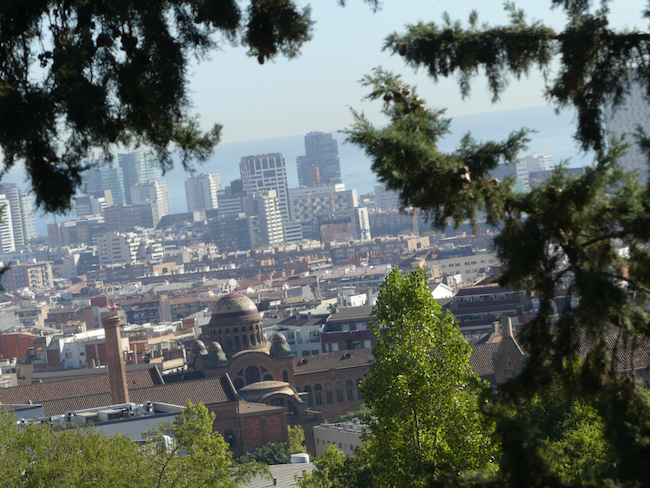

People-who-know tell us we MUST drink Vermouth in Barcelona. I think my parents used vermouth when they made martinis, but I have no idea what it tastes like. We are intrigued.


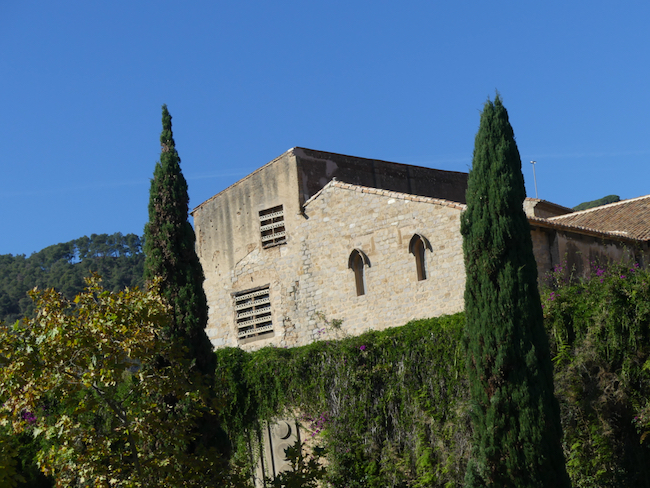
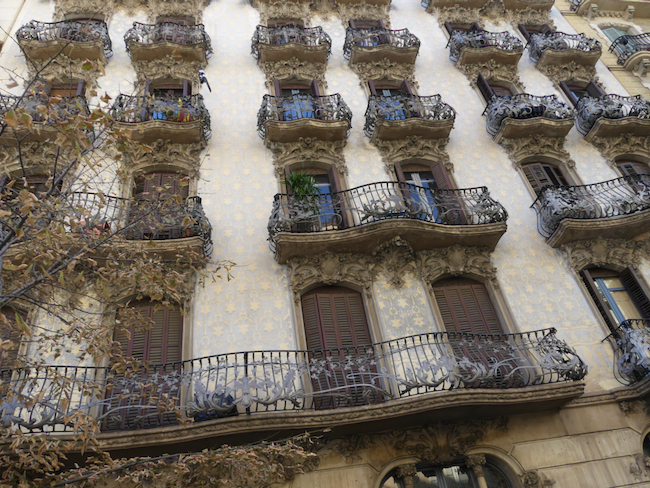
Imagine, just for a minute, living in this house. It must have high ceilings and spacious rooms. Imagine the added space, up on the rooftops, where you can have drinks or dinner, or put out the clothes drying racks where no one can see.

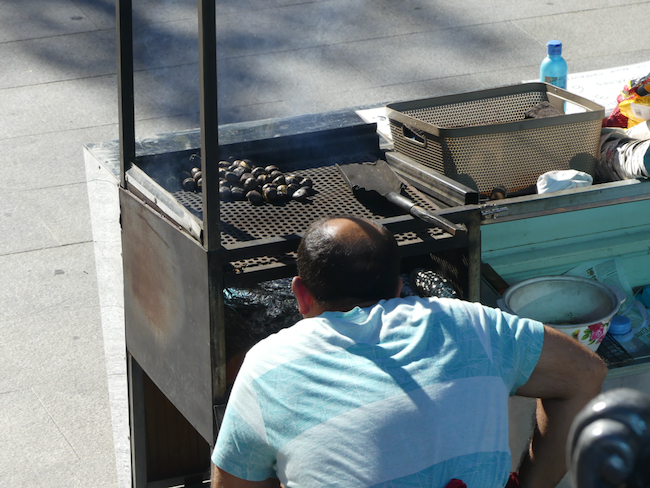
Fresh roasted chestnuts! They smell so much better than they taste (my opinion)


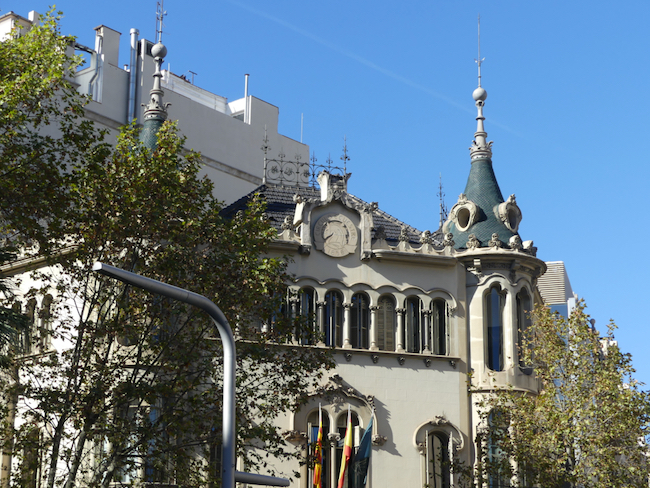
Of all the jobs I wouldn’t want, replacing huge plates of glass far above the ground would be one of them.

Gaudi apartment building; the same architect who drew up the plans for Sagrada Familia.


We returned to Place Cataluna, starving. We had a great breakfast, but it has now worn off and we want something light to eat for lunch and some famous Barcelona chocolate!
Barcelona to Abu Dhabi: We Revel in Barcelona
We know we are getting old, no matter how young we feel. We delight in our hotel room, modern, not the kind of hotel I would normally choose, but this was chosen for us, and . . . it has a young vibe, a modern vibe, and Barcelona has that same vibe, so we decide we are going to be just fine. It is ALL done with electronics. Dim the lights, use a remote. Close the curtains, use a touchpad. Call the desk on a mobile phone provided. It’s a little intimidating because it’s not the way we do business.

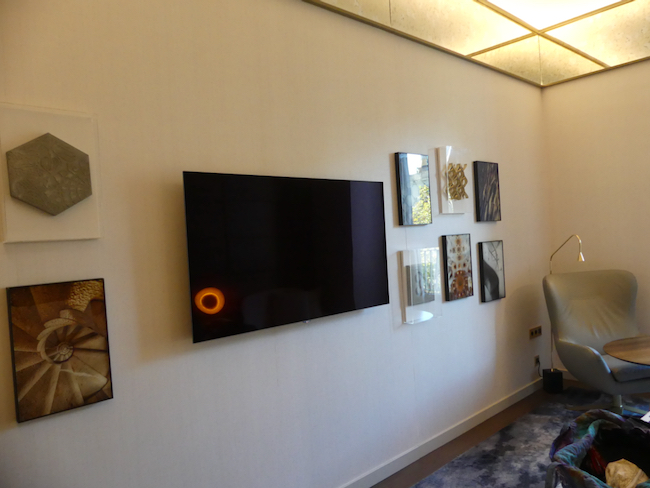
The artwork was all very abstract, but the next day after we visited Sagrada Familia, the abstract became concrete, as we recognized details of that exquisite, imaginative structure.

This little couch cracked us up. Just about a foot off the ground, very low, we couldn’t imagine it was comfortable or how we would get up once we sat down. Actually, it was both comfortable enough and easy to get up from.

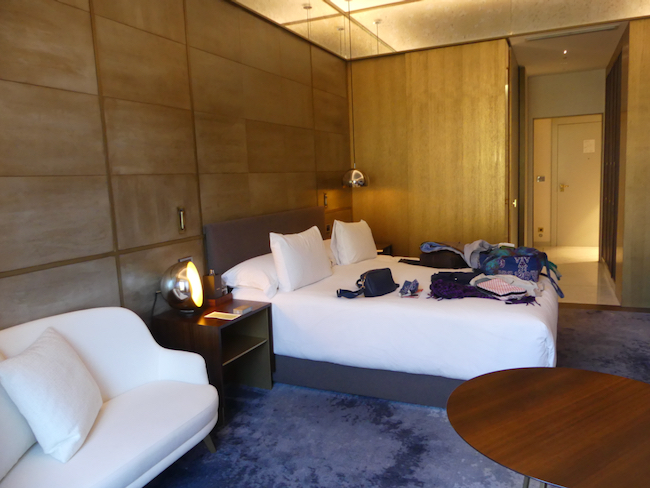
Once we would have headed straight out to begin our Barcelona adventure. Now, we settled into our hotel and took a brief nap, then headed out around sunset to explore a little of Barcelona. Our hotel, the Hotel Almanac Barcelona, is very modern and wonderfully located near many of Barcelona’s attractions. Tonight, a Saturday, we headed to La Boqueria, a huge market on La Rambla, a major pedestrian street, full of nightlife.

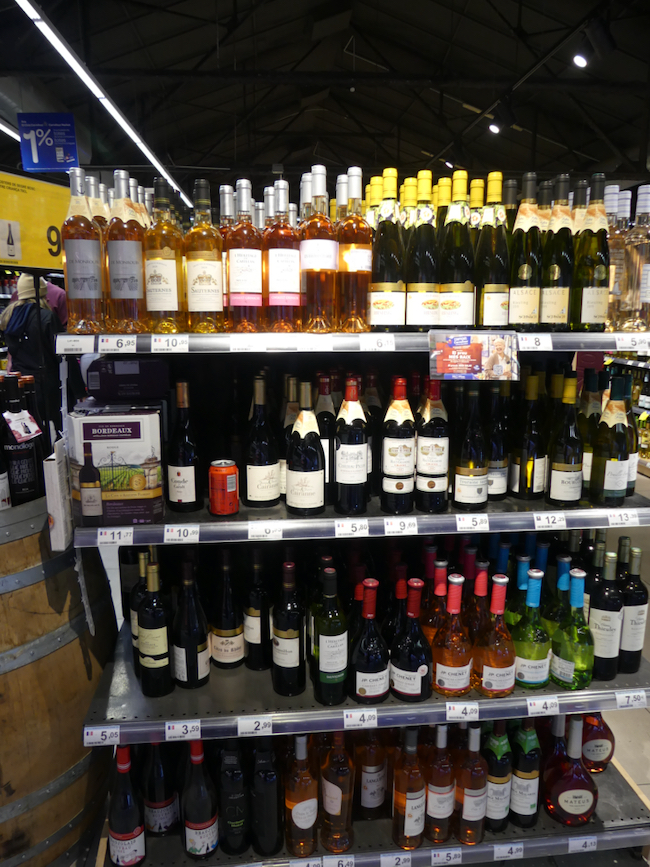
We knew we needed to stop at the Carrefour on La Rambla; Carrefour carried just about anything, and we found what we needed – manicure scissors, a corkscrew, and three bottles of wine. We resisted Barcelona chocolates and other delicacies; our cruise ship is said to cater to foodies. Carrefour was full of local people grocery shopping, so much fun to see what they were buying. The check-out line went almost the full length of the store, but it moved surprisingly fast and we were out, with everything we needed, in no time.

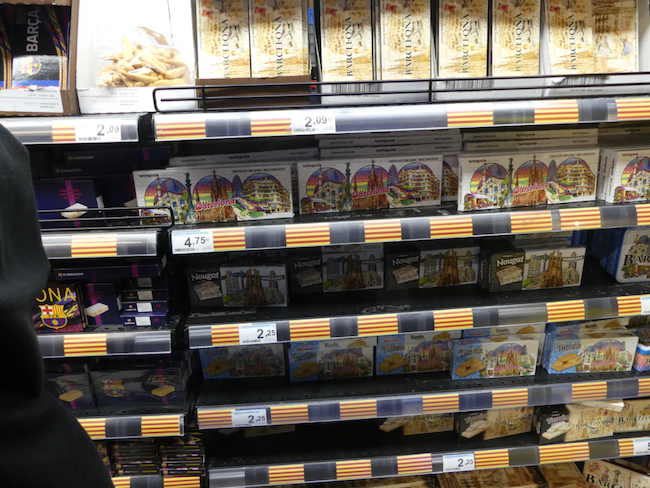
I don’t have a lot of regrets, but I regret not buying a few little boxes of chocolates to sample, and to share with family on our return. The boxes were so interesting and could be used in a lot of ways.



I’m sure there are Spanish supermarkets that will do the job, but we have a comfort level with Carrefour from several other places we have lived and knew we could quickly find what we needed. I got such a grin out of the children’s games on sale – we know these games, AdventureMan has played all of these with our Grandchildren – Connect 4, Battleship and Monopoly. We love strange Monopoly sets, and have them from the WWII Museum, from Pensacola, and from Doha (!)
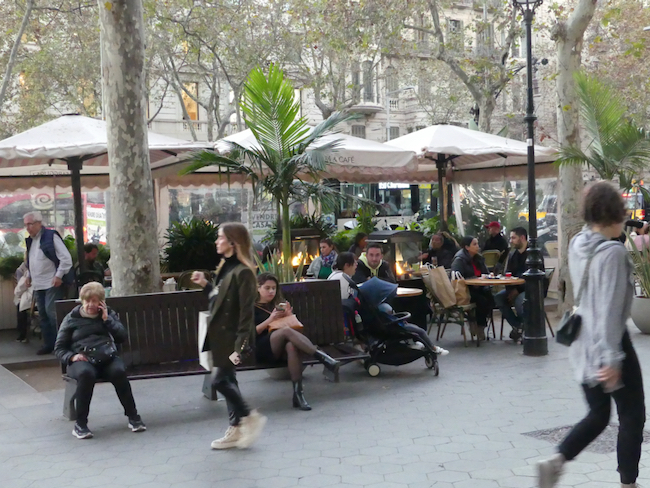
There were crowds of people in the streets, from the language we could hear, mostly local (it is November, a wonderful time to be here.) It was girls-night-out, guys night out and date night, with families and friends’ gatherings thrown in – Barcelona was one big party.

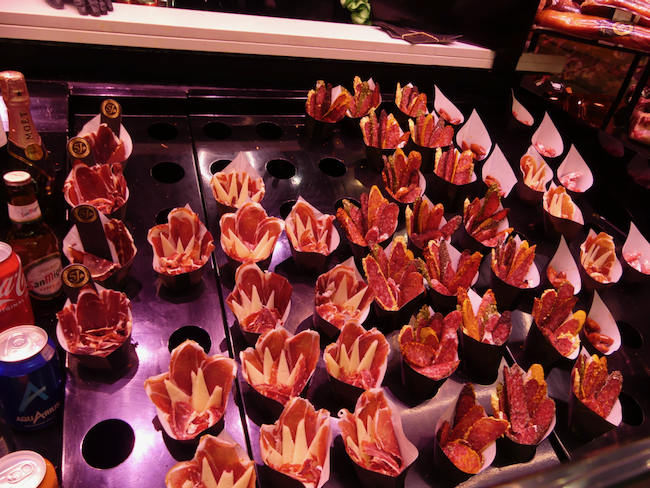
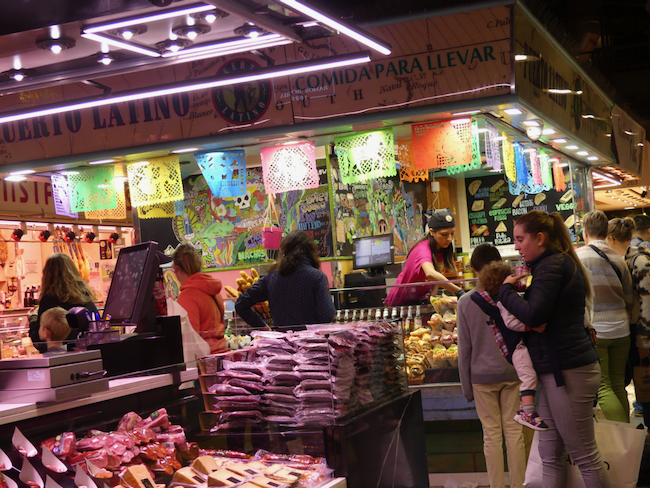
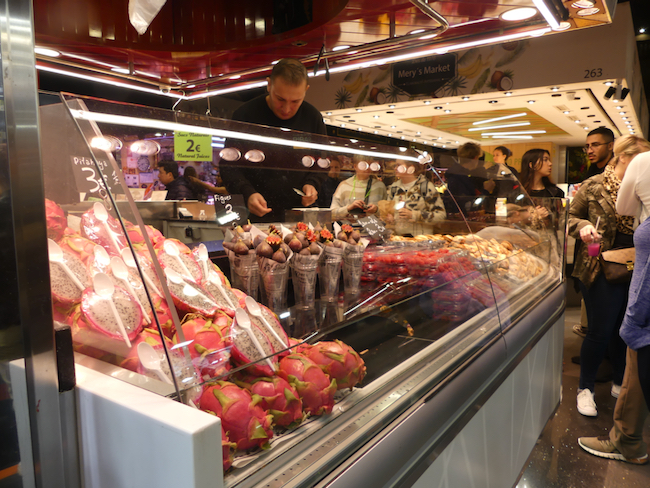
La Boqueria, a large open market with booth after booth of specialties, was colorful and exciting. There are a few places with chairs and tables, a few with bars, but mostly there is a lot of takeaway food. One was a paper cone of the famous jambon Iberica, a very tasty, thinly sliced ham.

AdventureMan bought a fruit drink with coconut, then I bought a spicy meat empanada, which we shared and decided it was delicious. Then we both bought raspberry-blueberry-(something) drinks, which were also wonderful, blended but full of pieces of fruit and it felt like drinking vitamins, only delicious. Then AdventureMan bought a mixed vegetable empanada, which we both found boring, and I bought a pumpkin empanada, which we both thought was also boring. So much fun, so colorful, noisy, and exciting.



We were amazed at how many delicious foods and drinks we tasted, and how little it cost us. When you travel, you aren’t always so hungry at the appropriate meal times, so we were delighted to be able to sample and snack for our first meal in Barcelona.

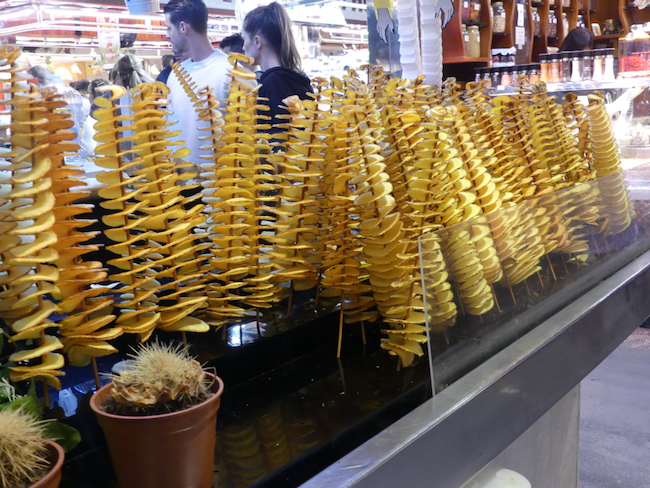
We loved the look of these delicately sliced potato snacks, below. Aren’t they beautiful?

We wandered and got a little lost on our way back.
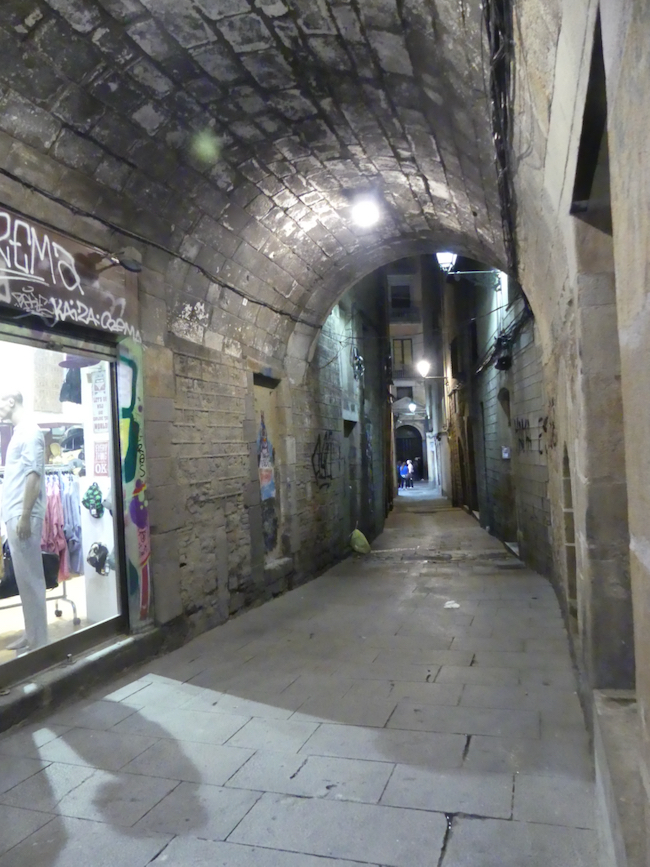

We don’t speak a lot of Spanish, or Catalan, so we would ask “La Rambla?” and throw out our hands with a look of “Where is it?” on our faces and people would point us in the right direction.
Once back at La Rambla, we quickly found our way back to the hotel, and headed up to the roof bar for a drink and to look out over the city.


This was a perfect way to end one very long, exciting day.
Now that we don’t have to pack for the airplanes, we are reorganizing our bags and looking forward to Monday when we will go aboard the Nautica and unpack for the next three weeks.
Somewhere, in the next twenty-four hours, I lost / misplaced / or someone took my little AirTag, tucked in an outside pocket on my duffel bag. I never missed it until we were almost home, and I discovered it is traveling the world without me!
Mary Peltola, First Alaskan Native Elected to U.S. Congress
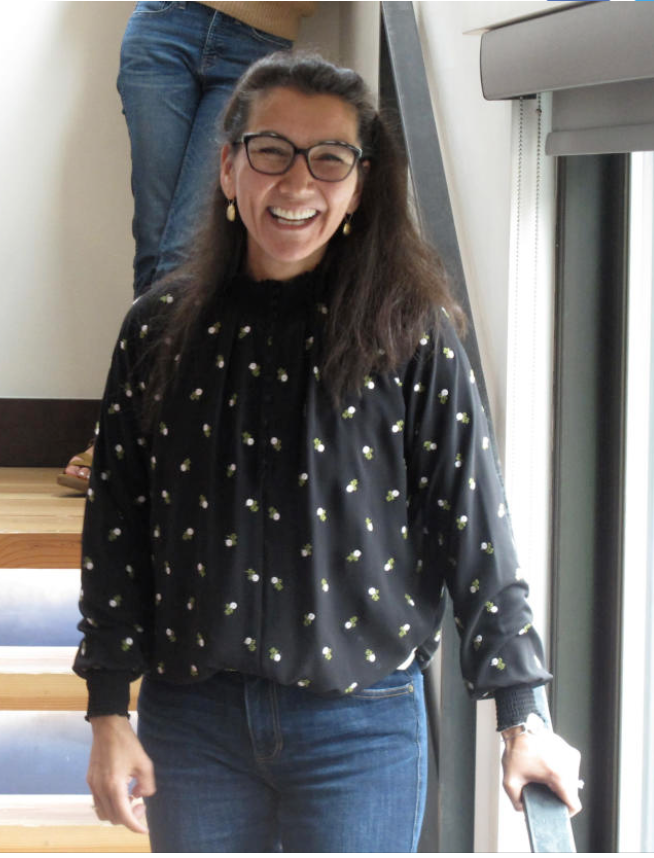
I am dancing for joy this morning as Yup’ic Mary Peltola is headed for Congress. This woman truly represents Alaskans; she is hard-working, and gritty, and her goal is to unite Alaskans. She was elected to fill a temporary position left by Don Young’s death, but will also be on the ballot in November running for the same position. The following article is from Associated Press:
Election 2022 Alaska
Democrat Mary Peltola smiles at supporters after delivering remarks at a fundraiser on Aug. 12, 2022, in Juneau, Alaska. Peltola is in two races on the Aug. 16, 2022, ballot in Alaska. One is the U.S. House special election, a ranked choice election in which she is competing against Republicans Sarah Palin and Nick Begich. The winner of that race will serve the remainder of the late U.S. Rep. Don Young’s term, which ends early next year. The other race she is in is the U.S. House primary. (AP Photo/Becky Bohrer)
ASSOCIATED PRESS
JUNEAU, Alaska (AP) — Democrat Mary Peltola won the special election for Alaska’s only U.S. House seat on Wednesday, besting a field that included Republican Sarah Palin, who was seeking a political comeback in the state where she was once governor.
Peltola, who is Yup’ik and turned 49 on Wednesday, will become the first Alaska Native to serve in the House and the first woman to hold the seat. She will serve the remaining months of the late Republican U.S. Rep. Don Young’s term. Young held the seat for 49 years before his death in March.
“I’m honored and humbled by the support I have received from across Alaska,” Peltola said in a statement. “I look forward to continuing Don Young’s legacy of bipartisanship, serving all Alaskans and building support for Alaska’s interests in DC.”
Peltola’s victory, coming in Alaska’s first statewide ranked choice voting election, is a boon for Democrats, particularly coming off better-than-expected performances in special elections around the country this year following the Supreme Court’s overturning of Roe v. Wade. She will be the first Democrat to hold the seat since the late U.S. Rep. Nick Begich, who was seeking reelection in 1972 when his plane disappeared. Begich was later declared dead and Young in 1973 was elected to the seat.
Peltola ran as a coalition builder while her two Republican opponents — Palin and Begich’s grandson, also named Nick Begich — at times went after each other. Palin also railed against the ranked voting system, which was instituted by Alaska voters.
All three are candidates in the November general election, seeking a two-year House term, which would start in January.
The results came 15 days after the Aug. 16 election, in line with the deadline for state elections officials to receive absentee ballots mailed from outside the U.S. Ranked choice tabulations took place Wednesday after no candidate won more than 50% of the first choice votes. Peltola was in the lead heading into the tabulations.
Wednesday’s results were a disappointment for Palin, who was looking to make a political comeback 14 years after she was vaulted onto the national stage when John McCain selected her to be his running mate in the 2008 presidential election. In her run for the House seat, she had widespread name recognition and won the endorsement of former President Donald Trump.
After Peltola’s victory was announced, Palin slammed the ranked voting process as “crazy, convoluted, confusing.”
“Though we’re disappointed in this outcome, Alaskans know I’m the last one who’ll ever retreat,” Palin said in a statement.
During the campaign, critics questioned Palin’s commitment to Alaska, citing her decision to resign as governor in July 2009, partway through her term. Palin went on to become a conservative commentator on TV and appeared in reality television programs, among other pursuits.
Palin has insisted her commitment to Alaska never wavered and said ahead of the special election that she had “signed up for the long haul.”
Peltola, a former state lawmaker who most recently worked for a commission whose goal is to rebuild salmon resources on the Kuskokwim River, cast herself as a “regular” Alaskan. “I’m not a millionaire. I’m not an international celebrity,” she said.
Peltola has said she was hopeful that the new system would allow more moderate candidates to be elected.
During the campaign, she emphasized her support of abortion rights and said she wanted to elevate issues of ocean productivity and food security. Peltola said she got a boost after the June special primary when she won endorsements from Democrats and independents who had been in the race. She said she believed her positive messaging also resonated with voters.
“It’s been very attractive to a lot of people to have a message of working together and positivity and holding each other up and unity and as Americans none of us are each other’s enemy,” she said. “That is just a message that people really need to hear right now.”
Alaska voters in 2020 approved an elections process that replaced party primaries with open primaries. Under the new system, ranked voting is used in general elections.
Under ranked voting, ballots are counted in rounds. A candidate can win outright with more than 50% of the vote in the first round. If no one hits that threshold, the candidate with the fewest votes is eliminated. Voters who chose that candidate as their top pick have their votes count for their next choice. Rounds continue until two candidates remain, and whoever has the most votes wins.
In Alaska, voters last backed a Democrat for president in 1964. But the state also has a history of rewarding candidates with an independent streak. The state has more registered unaffiliated voters than registered Republicans or Democrats combined.
Living off My Fat: Adaptation
It probably all started growing up in Alaska, where my mother would measure us in July to order our snowsuits as soon as the new catalogs came out. We lived where ships didn’t come in the winter, so supplies for the winter needed to be ordered – and received – before the ships could no longer navigate the channel.

Then came our life in Germany, where we lived by what my sister called “Commissary rules.” Her one word of advice as a newlywed leaving Germany, while I was staying, was “When you see something in the Commissary or PX you think you MIGHT need, buy it.” Definitely a no-regrets philosophy.
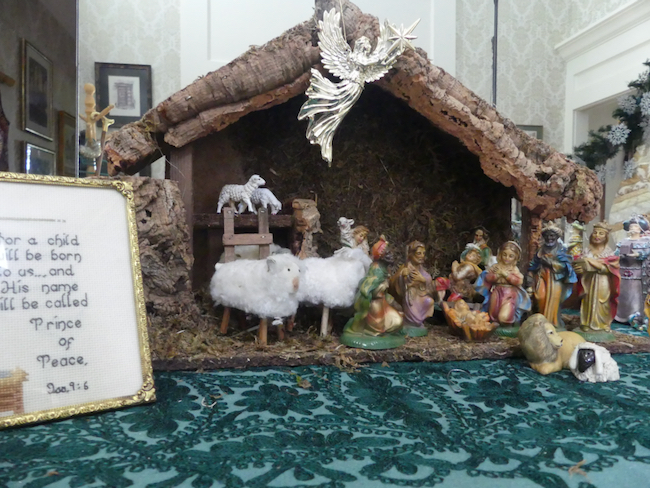
When we were sent to live in Tunisia, in the late 1970’s, we were instructed to take everything we might need for the next two years. Some things – chocolate chips – we learned to live without. We adapted to new foods, new ways of doing things. One of the great treats was the fresh, gorgeous, silky olive oil; I would take my jar to the little olive oil vendor at the nearby souk and he would weigh my jar, fill it, subtract the weight of the jar and charge me for the oil, which made everything taste French.

I did have a two-year supply of shoes for a growing toddler, also clothing for him in graduated sizes, and two years of age-appropriate books I could pull out of the closet. We were able to mail-order through the embassy pouch, and my mother was able to mail me little extras. One year, when I was running the Christmas bazaar, she was able to find red and green Christmas fabrics in July, at a discount, and mail them to us for our crafting. It was such a luxury!
In Qatar, I was always bringing back duffels with quilting rulers and rotary cutters for my quilting friends. In Kuwait, it was books for my book club and American sugar for a friend who liked to bake. Kuwait had sugar, but more coarse, and American sugar melts more quickly for a finer result. Who knew?
There are items from the past I still have in abundance – dental floss, women’s underwear, shoes – and staples I buy but no longer use in the quantities I once did because we no longer live a life where we entertain a lot nor prepare for unexpected people on temporary duty who need a meal and an exchange of currency. I am trying to bring down my supplies of artichoke hearts and pimentos, beans and rice, canned tomatoes, chutney, Tupperware and hand soap.

My Little Free Library, one of the best birthday gifts ever, helps me keep my books from overflowing.
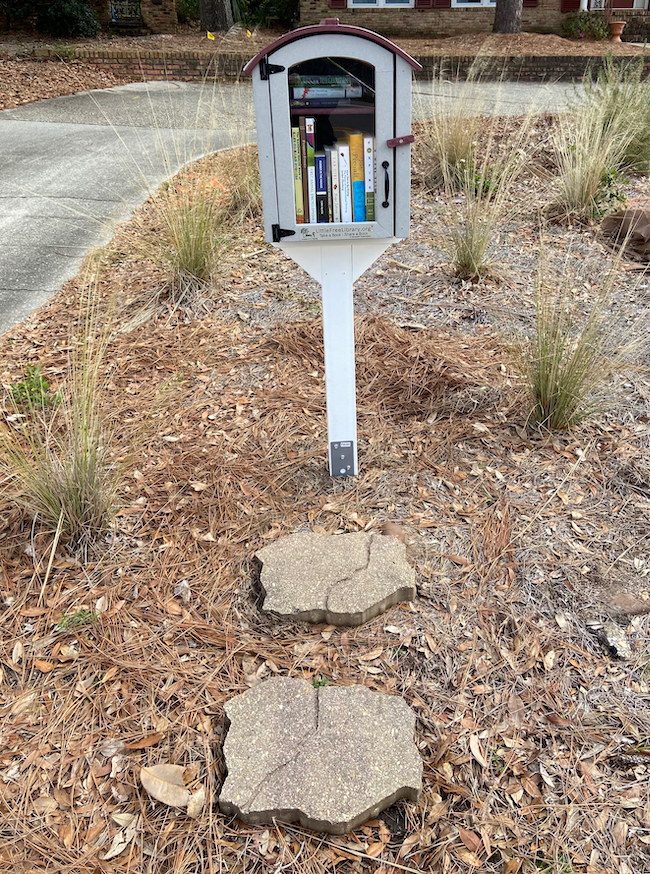
We are happy, these days, to be living with less. We are still caught by surprise by rolls of baking parchment we are still using from Kuwait, dental floss leftover from our years in Tunis and an excess of Christmas decorations we still need to pare down. We try to go easy on ourselves. “Ah,” we sigh, “it’s a process.” God grant that we live long enough to use up all those supplies we bought “just in case.”
Ignoring the Law

I still get ads and info from Qatar sources. Living in Doha was such a vivid experience; experiencing the life of a country going from a sleepy little village to a mecca of skyscrapers was an astounding experience.
Qatar was full of contradictions, and the treatment of domestic workers, all imported from mostly Asian countries, was abysmal. While some few families treated their servants well, most did not. Contracts were not honored. Few had any time-off, most were on call 24 hours a day.
So this new law from the Ministry of Labor is . . . interesting. I find myself cynically wondering if this legislation will have any impact on how Qataris treat their servants, or if it is just national window dressing?
Not to be hitting unfairly on Qatar, it brings to mind the Florida Sunshine Laws. Florida passed some truly progressive laws suggesting that citizens of Florida had a right to know what their elected officials were doing, and how they made their decisions. I know – amazing stuff, even in a democracy. Florida took a lot of pride in those laws, and for many years, those laws were, to a great extent, observed and enforced.
Fast forward to Florida in the times of COVID and there is not a mention of the Florida Sunshine Laws. Some of the Sunshine Laws have been amended, to protect Law Enforcement and court officials. Most of the Sunshine Laws are now just ignored.
How does this manifest? How about the governor telling the Health Department not to publish health statistics, and telling them not to count people from out-of-state who come here and catch COVID. How about not allowing them to collect all the statistics, just every other week? How about not publishing the transmission rate on a daily or even weekly basis?
How about concealing how Universities recruit and select college presidents?
Publishing laws that look good on paper is one thing. Writing the laws so that they have teeth, and can be enforced, is another. Having a police force on the city and county level which will enforce laws as written is another. Having courts that will support the enforcement of the laws as written is another.
Having an independent legislature is another critical factor, we have to ask if the intention is for them to represent our will as citizens or if they exist to rubber-stamp gubernatorial stage-craft?
One of my friends at church mentioned yesterday that the state of Florida now has a holiday, Juneteenth, the explanation for which is not legally allowed to be taught in Florida schools, where any acknowledgment of the history and damages of enslavement might make young white school children uncomfortable.
When people behave badly towards one another, whether in Qatar or in the USA, maybe feeling uncomfortable is appropriate.
Back in Kuwait
No, No don’t get excited. It’s a metaphor.
When I lived in Kuwait, I would tell my friends it was a lot like living in Alaska, and I loved the look on their faces. Then I would explain – in Alaska, people wait eagerly for good weather, and when it comes, they can’t get enough of it. We are outdoor people.
For much of the year, Alaskans are trapped inside, and have to be good at finding things to do to keep themselves from going crazy.
In Pensacola, as it was in Kuwait, the temperatures are very hot. Kuwait was mostly very dry, and had sandstorms, unlike Pensacola, but shared having a long coastline, and heat with humidity in the summers.
So now, as in Kuwait, I am up early, to get to the pool and swim my laps, so lovely and cool. If I need to grocery shop, I try to shop on the way home, so as not to have to venture out again as the day heats up. I get home, and tend to the Little Free Library while it is still in the shade. Most of the rest of the day I spend inside, except for picking up grandchildren at their camps.
It is a great time to do some quilting. I am just about to start when Ragnar, my helper, comes in to join me. (Also, AdventureMan is outside weed-eating and edging, which is of endless amusement and torment to Ragnar, who forgets he was once a feral, outdoor cat, and was lucky to survive.)

I do a couple more things to set up, hoping Ragnar will take the hint and move off to find something more interesting. He doesn’t. In the end, I have to lift him (lovingly) and place him in another room on a blanket we call Blue Mama, because Ragnar particularly loves sleeping on this blanket.
He doesn’t come back, and I spend the morning “back in Kuwait,” enjoying my confinement by working with fabrics and colors I love, patterns I would never wear but enjoy the challenge of working them into quilts.

Chasing Petroglyphs: Our Last Day in Moab

Today is a day purely for leisure and having fun; we head into Moab for the Moab Arts Fest. It is very family-oriented, with games and entertainment and food, and booths with hand crafted items. I find a fiber artist and a great gift for my sister, a spidery light bright red wrap with silk fibres pressed into it. It is stunning. I can easily imagine it on my stylish sister.
We decide to have lunch at Singha Thai because we so thoroughly enjoyed their food our first night in Moab. This food was equally impressive.


So much food, the veggies crisp-cooked and delicious! AdventureMan had the basil chicken with lots of broccoli, and I had the ginger chicken, more sweet red peppers and spring onions. We couldn’t begin to eat it all, so we packed it up and had it on our Trail’s End veranda for our own sunset dinner.
Chasing Petroglyphs: Tour of the Tilted Rocks
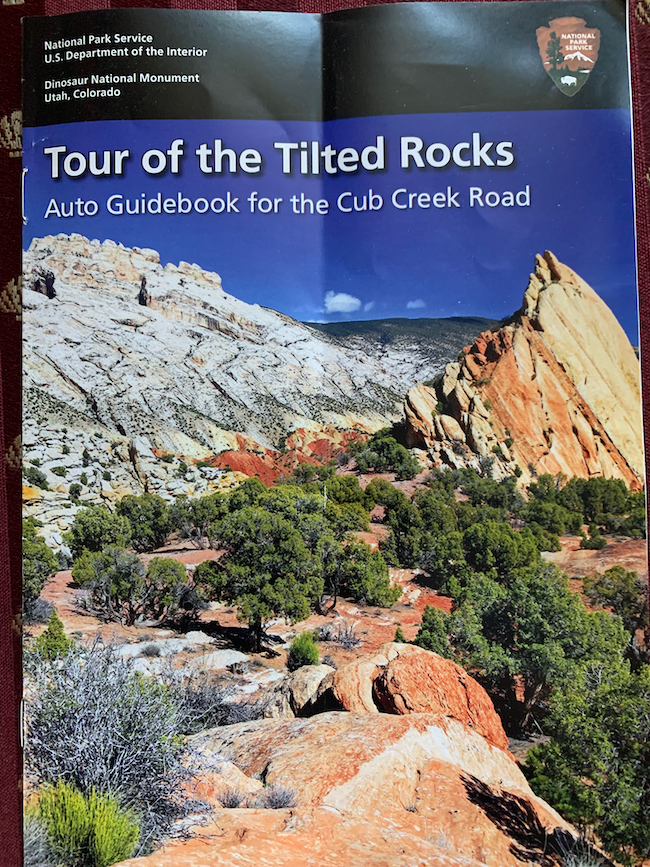
We leave the Wall of Bones to go back to the visitor center to pick up our car and hit The Tour of the Tilted Rocks.

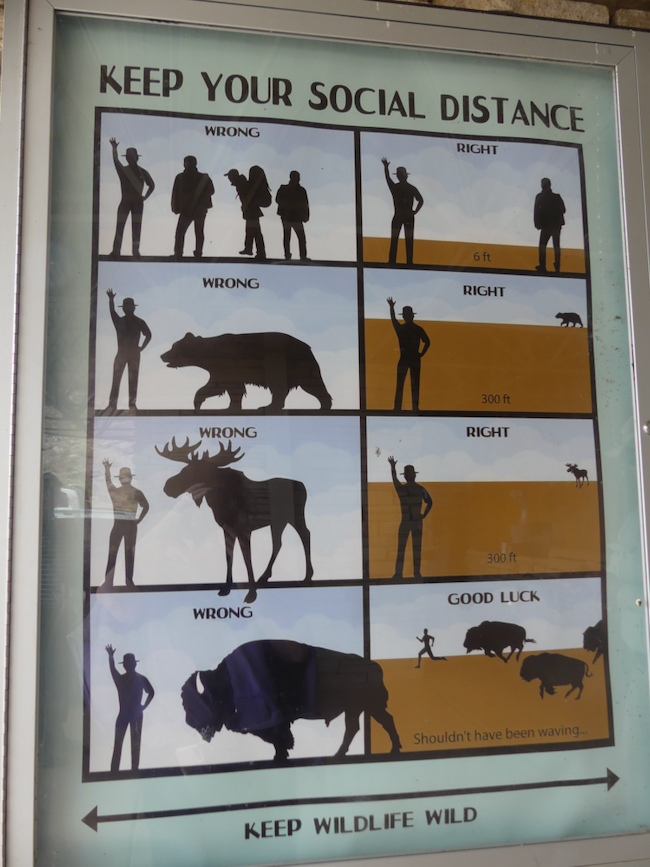
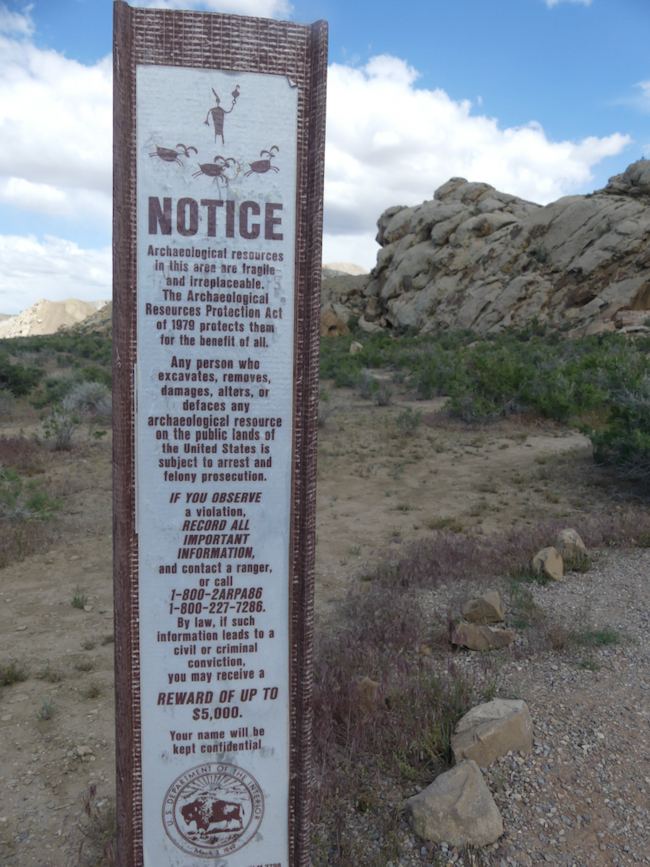
Most of the visitors in this late May time frame seemed to be people in our demographic, 60s and older, people out exploring our country as singles and couples. We saw a couple of groups, and a couple of tours, but most of the people we saw looked a lot like us – retired, with the luxury of time to go exploring.
Most of these people were, like us, physically fit enough to climb the uneven trails, climb a few slippery rocks and hike straight uphill to view the petroglyphs.
Leaving the Quarry Hall “Wall of Bones,” we got into our car for the “Tour of the Tilted Rocks” and spent the next couple of hours engaging with the spectacular scenery, helped along by both the brochure and the frequent guideposts along the way. We visited four separate petroglyph sites and countless sites of geological and paleontological interest.

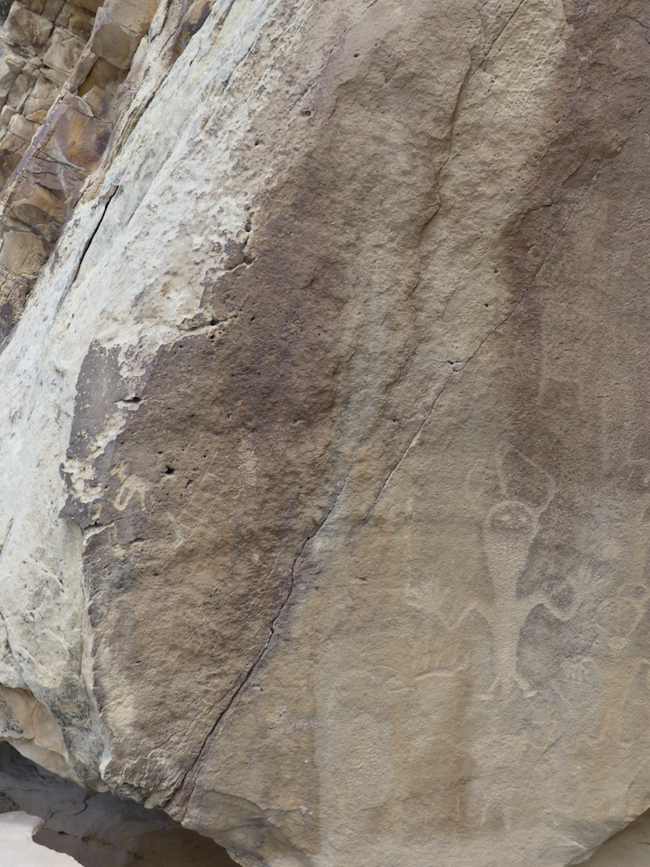

A wealth of petroglyphs! I can see similarities in these glyphs to the Fremont glyphs we saw yesterday, but these are more on the level of scratch sheets, practice for the advanced figures we saw at the McConkie ranch. You can see some elementary necklaces. I overheard in a passing group a person say that square heads are men and more rounded heads are women. I’m not sure that is true, but now I have more to evaluate.

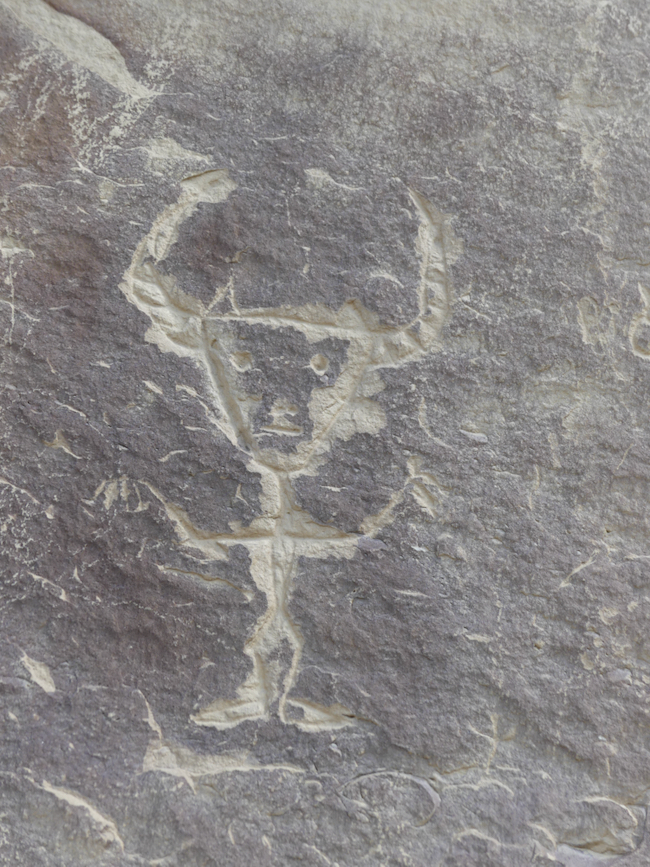


Yet another site; love this . . . headdress? Or is it a jug with flowers – and legs?

The shoulder – waist proportion appears to be still evolving here. I can see a crescent moon and indications that some figures are probably men. Or maybe fertile women, with the moon?
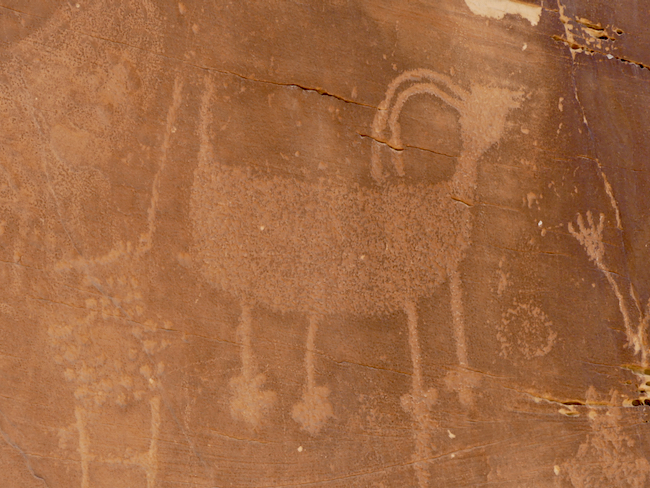


So does the round head mean this is a woman? Her body seems more elaborately patterned than others. She appears to be waving. In some cultures, the spiral indicates long life, but maybe it can also mean a trail of life or a giver of life? More questions than answers 🙂

As the day heats up, these climbs seem more aggressive. We have hats, we have water and the dry heat sucks the moisture out of us.

So, a square head with elaborate patterning, maybe slaying a deer? So no, elaborate patterning is not a female thing.


This site has a lot of lizards

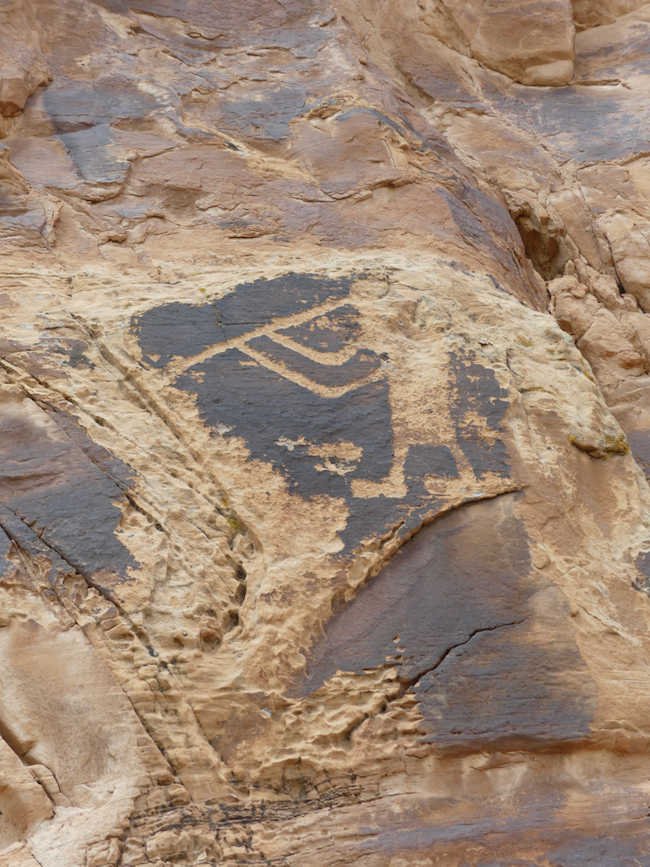


I would love to know what this is about. An altar, with celestial bodies above? I wish I had a clue.
On the way back to Vernal, we had lunch at the Naples Country Cafe. I ordered the Naples Country Breakfast, and thank God for a helpful waitress who asked me what kind of gravy I wanted over it all. I hadn’t read it very carefully, just saw that it had a couple of eggs. She advised me to get the Junior version of it, and I asked for no gravy, no cheese. What arrived at the table was two eggs over easy on a plate full of hash brown potatoes, with a sausage, a slice of bacon and a piece of ham, and two slices of sourdough bread with homemade boysenberry jam. I was picky about what I allowed myself to eat, but I did eat all the jam, on half a slice of bread, because it was so irresistibly delicious.
We got back to our room mid-afternoon to rest or nap a little, and to pack up for our drive tomorrow down to our cabin outside of Moab, Trail’s End at Pack Creek, which we hope will provide four nights of spectacular night sky viewing.
Chasing Petroglyphs, the McConkie Ranch
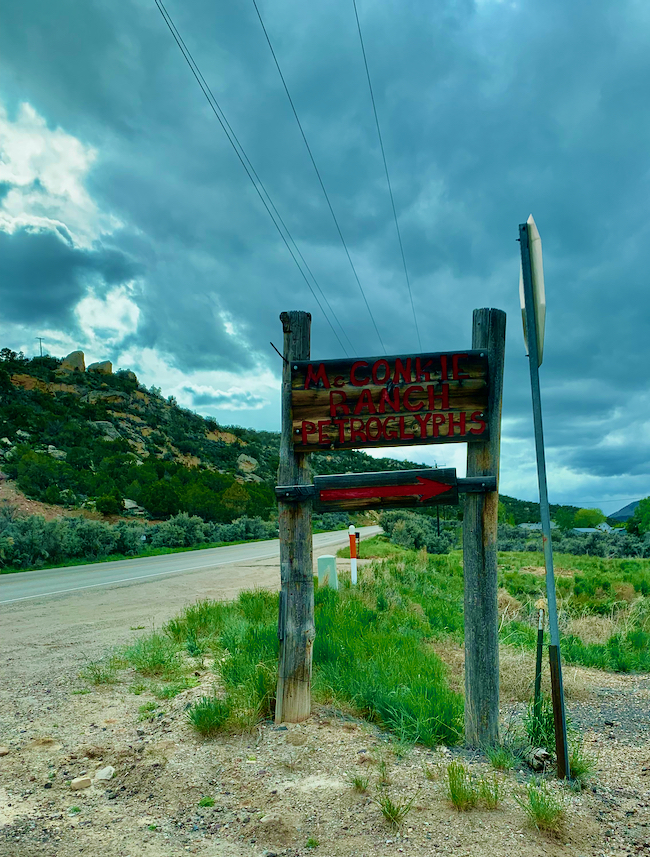
Imagine a ranch at the bottom of a huge long red cliff, a private ranch, which allocates land to public parking and has created a path about a half a mile to the cliffs and then up the cliff itself, to the shelves where the petroglyphs are.
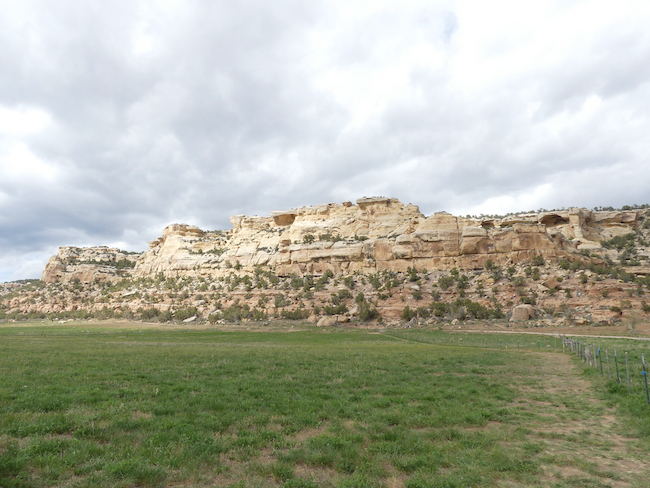
I hope they had volunteers helping, as there were steps and a well-cleared path to help us make the climb. To top it all off, there is no charge. There is a donation box in the parking lot. There is signage, there are marked trails. This is the generosity of the human spirit in action, making these petroglyphs available to those of us who take an interest in them. Not charging us anything, trusting we will donate. Creating paths and a place to park. God bless the McConkies.
We are delighted we can still make this sort of trek. While the path zigzagged, it felt like we were going straight up. In places, we needed to climb up rocks. We were both panting when we reached the top, but oh, it was so worth it. These petroglyphs, were Fremont people petroglyphs, some very simple and dramatic, but many glyphs of people with elaborate necklaces, headdresses (or else they were aliens), and clothing. It was worth every minute of the climb. These are some of the loveliest petroglyphs I have ever seen.

We were very conscious as we climbed that it was dangerous. There were slippery spots, and other places which required some climbing. It isn’t just a matter of fitness, it is also a matter of acclimation to the altitude – AdventureMan and I were both very aware of how vulnerable we are, making these climbs. And we are so exultant when we make it to the top. We can still do this!
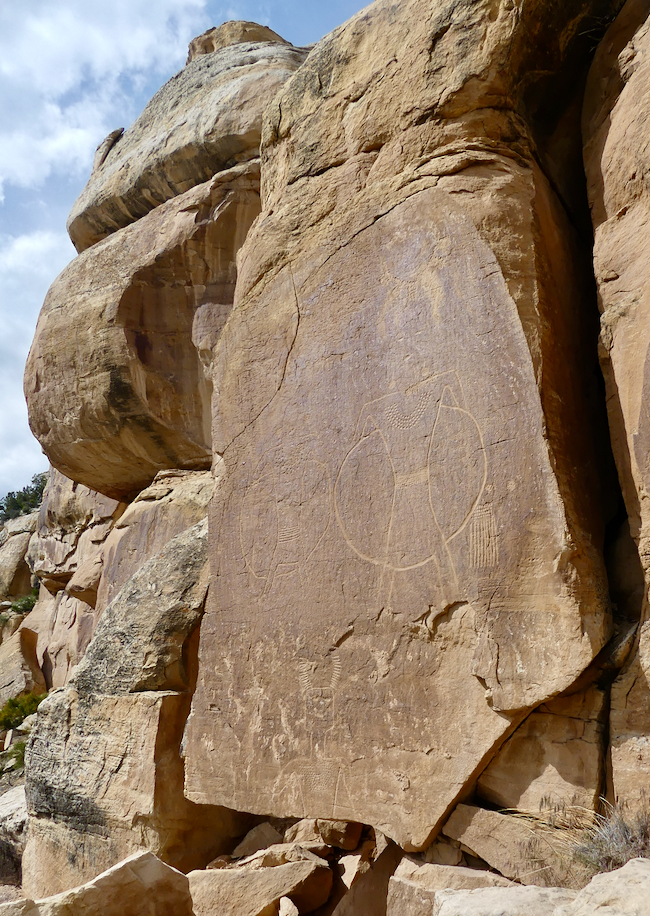
What does it mean that there is a circle around so many of the figures? Does it mean they are living? Does it mean they have moved on to the next life? Is it some kind of ancient hula-hoop? What I love are the bodies, the way these figures are more modern, with wide shoulders narrowing to a smaller waist.
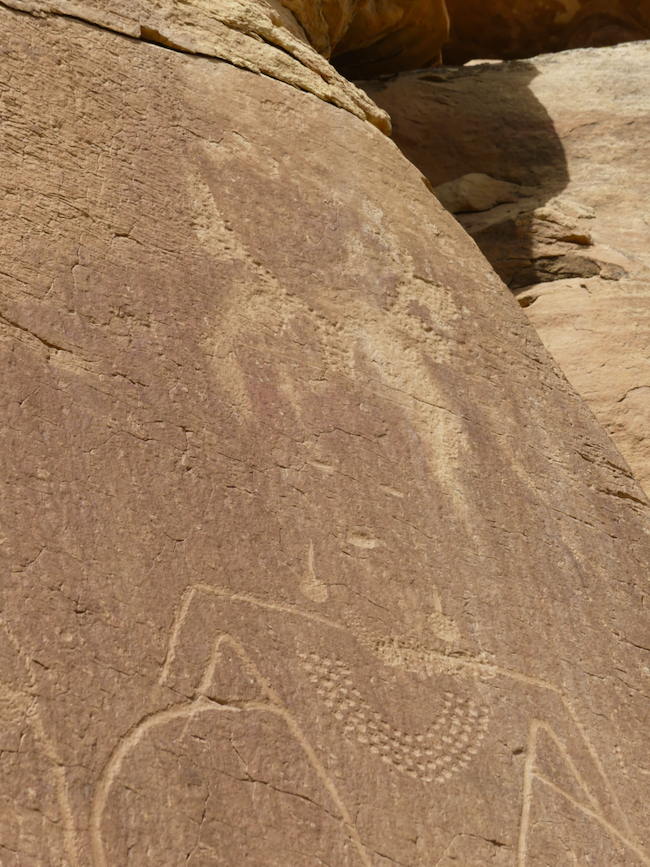
Culturally, we tend to think of people wearing earrings and necklaces as female – are these female? No sign of breasts. Are they warriors? Priests? We don’t know.

A purse? A warrior decoration? A metaphor for seeds and falling rain? This is a fertile field for speculation.

Circles. Ear decorations. Necklace. Eyes and Mouth!

I am fascinated by the creature to the left. Some kind of skirt – corn husks? What would constitute a lower covering with separate strands? Gives a masculine feeling, but shoulders not so broad as the others. (Can you see why we chase petroglyphs? So much mystery!)

Parts are lost as rock cleaves and sheds . . . this head appears square, but what is this decorated halo-like circle around the top of the head? What is in his hand – is that a bell of some kind, with a clapper? The head of an enemy? A space suit helmet?
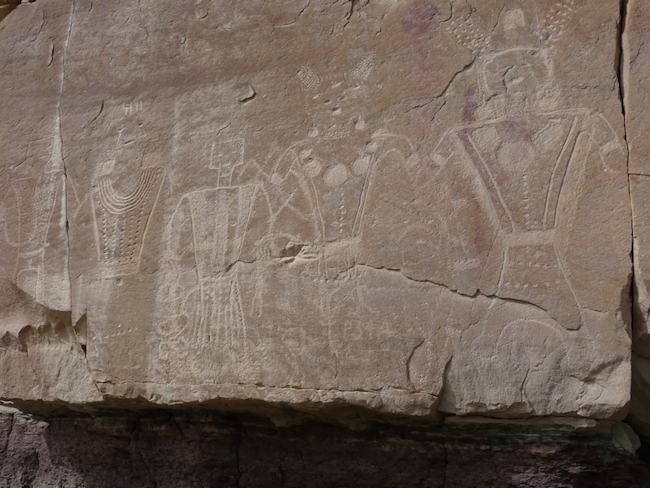
Look – horns! AdventureMan, who loves to yank my chain, says this is clear proof of aliens among us from earliest times, with their space suit and buttons and elaborate decorations.

So many questions. Feathers? What is he holding? What are the extra lines from shoulder to waist? Is that a helmet on his head?

AdventureMan would say that this is proof of jet-propulsion suits. I think it may have more to do with procreation . . . But what about this guy in the lower right, his head is more rounded and he looks like he has antannae?
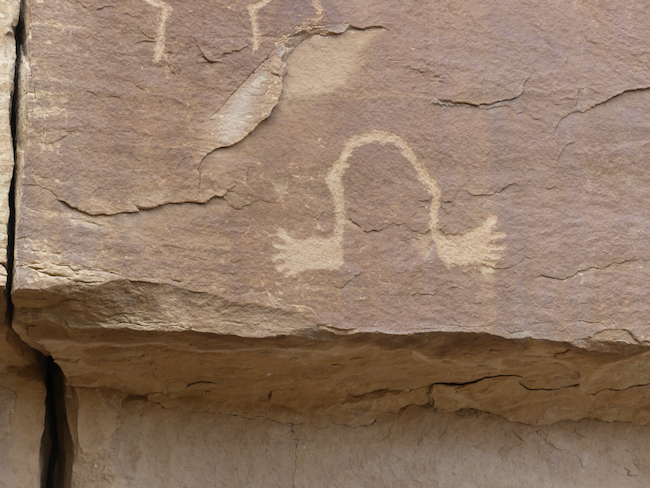
These crack me up. It looks like a scratch-pad to me, practice for something else. But wait – see below – an entire section appears to have been cut away! Where is it? What is missing? I don’t even begin to know where to start looking for answers.

For me, this interlude, at the McConkie Ranch, physically challenging, in the heat of the late afternoon (but what great light for photos!) was one of the highlights of our trip. I look at this work by an ancient people and I marvel.
We have chased petroglyphs in Botswana and Namibia, in Saudi Arabia, in France, and in the United States. None have enchanted me the way these have.
Chasing Petroglyphs: White Mountain, Eden and the Pilot Butte Ponies
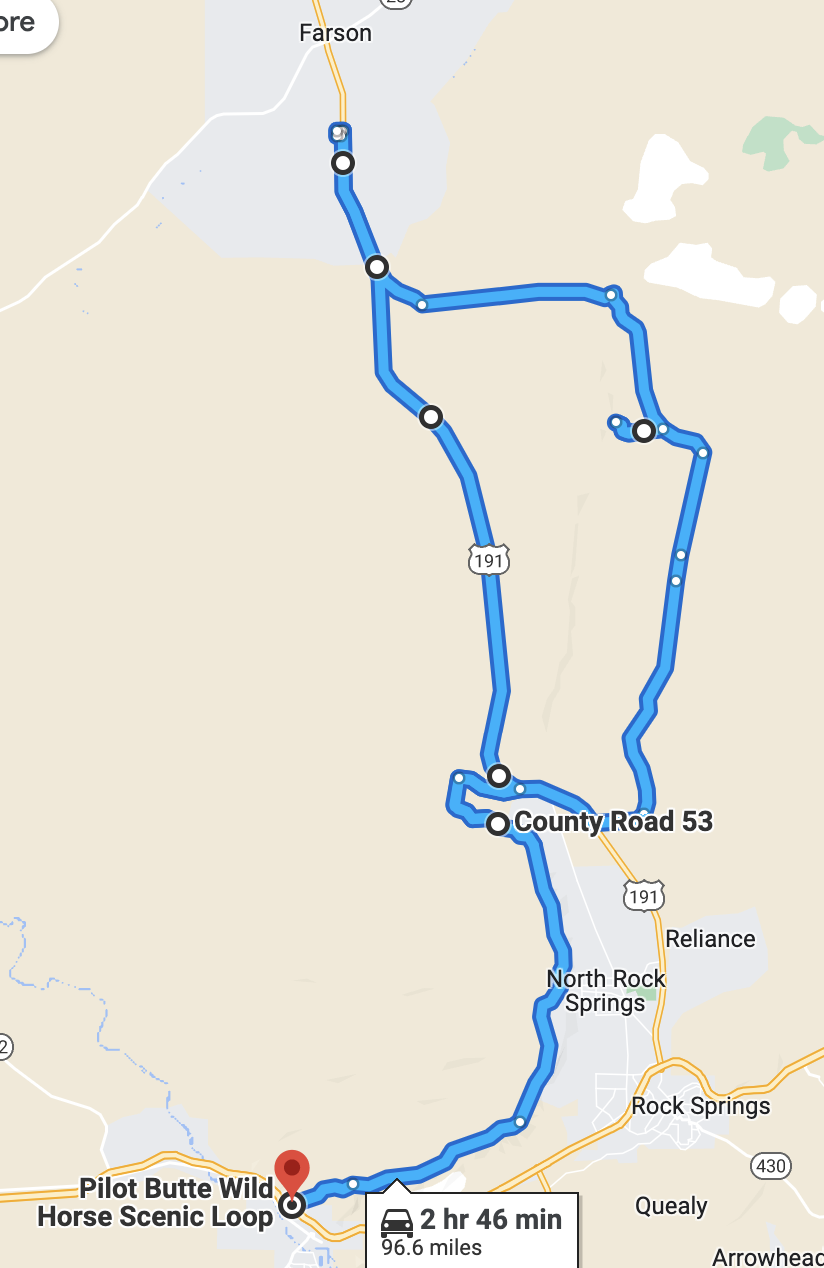
This morning, we slept in. Well, 0830 is sleeping in for us, it’s 9:30 in Pensacola and we are up and ready to hit the day. It is a quiet Sunday morning. We have a quick breakfast at the Outlaw Inn, and head out with our friend Google Maps to find White Mountain, and our first petroglyphs of the trip.
It’s an easy drive, just turn right outside the Outlaw Inn and then turn right onto a pretty good County Road. It’s a dirt road, but well maintained. Then we turn onto another county road, a road less travelled. And then Google tells us we’ve missed our exit to White Mountain. What?? There was not a sign of an exit! Not a road sign, not a track, not a visible indicator of a way. We back up. We get out. Oh. There. Faint tire marks turning off the road. AdventureMan goes further on foot to make sure the road continues.

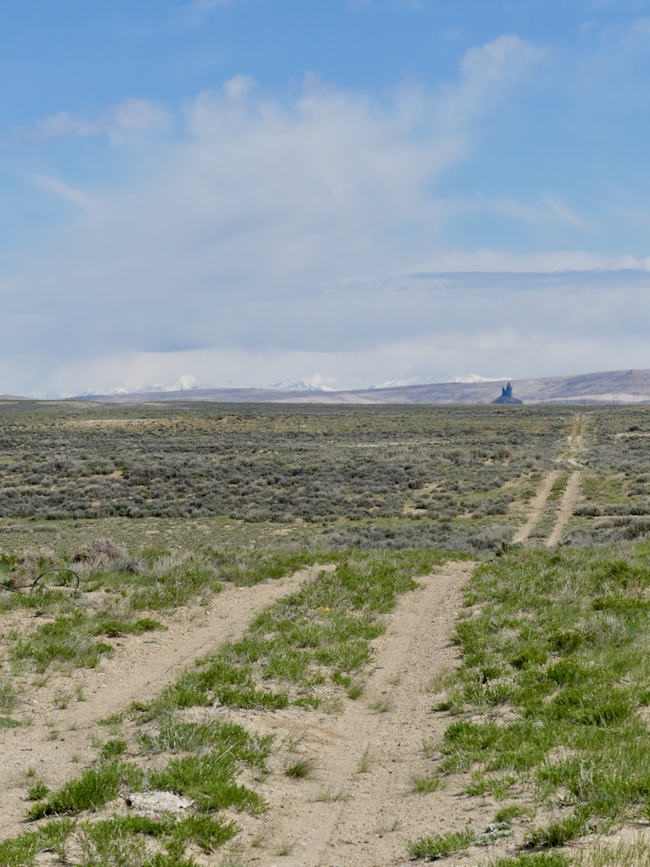
The tracks are more visible once you are actually out in the field. We have an AWD vehicle, we have experience – so we decide to continue on the track. We continue for about half a mile, and the ground is softer. We have visions of being rescued, elderly, dehydrated, because we’ve bogged down out of sight of any road . . . we turn back and decide to follow the county road.
We are so glad we do. Just a couple miles further, we see signs for White Mountain Petroglyphs, and then come to a legitimate turn-off, a marked turn-off. Part way to White Mountain we see those tracks join the road, and we are glad we are not still out there in the field, worried about getting stuck in the sand, no shovels, no cardboard, nothing to help us free ourselves.

Although remote, there is a parking lot, a long-drop toilet, and a clear trail to the base of the mountain, and a clear trail – straight up.
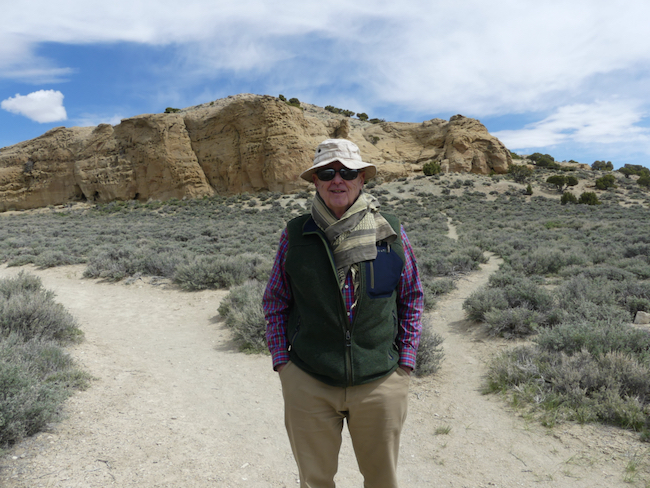
Although Rock Springs is not as high up as Denver, we are still adjusting to the altitude and the dryness of the air. It is still cold, we are glad of it, because the hike heats us up and we take it at a comfortable pace because the air is so dry and our lips and faces are chapping.
Totally worth the hike. While these are not the best-preserved petroglyphs we’ve ever seen, they are original and intriguing. There is also a lot of modern-day petrographic activity of the high school demographic.

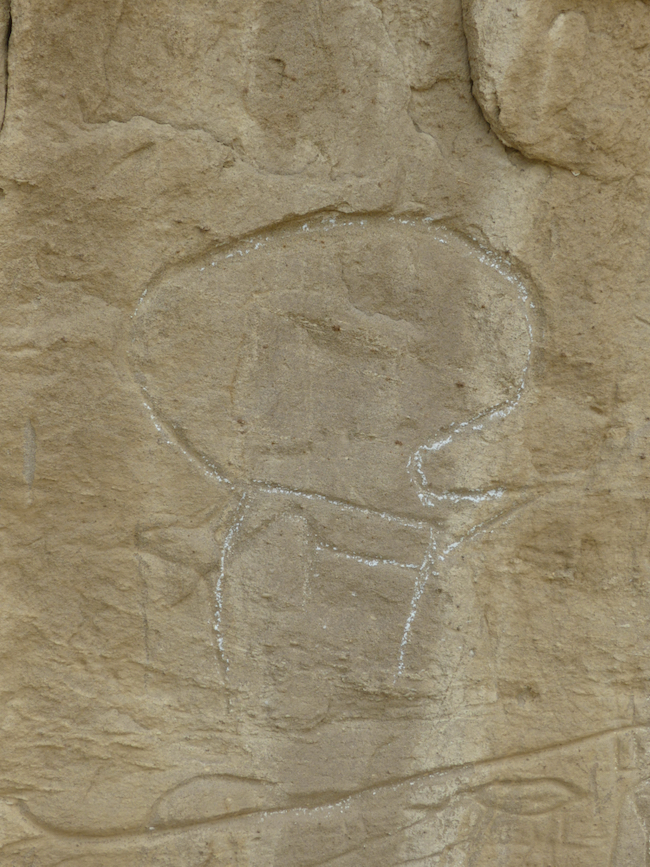
The standard rule with petroglyphs (carved into rock) and petrographs (drawn onto rock) is NO TOUCHING. No rubbing, no outlining with chalk, nothing which might degrade the incision or erode the lines. Someone has used chalk, probably a guide, to help viewers understand what they are seeing. If you know anything about petroglyphs, you know that we can speculate, we can ask modern-day First Nation people, and in the end, it is all speculation. Are they celebrating a triumphal hunt? Are they imploring the spirits to be available for the hunt? Are these incised bear claws a tribute to the bear’s strength? A brag about a bear-clan strength? We can only guess.


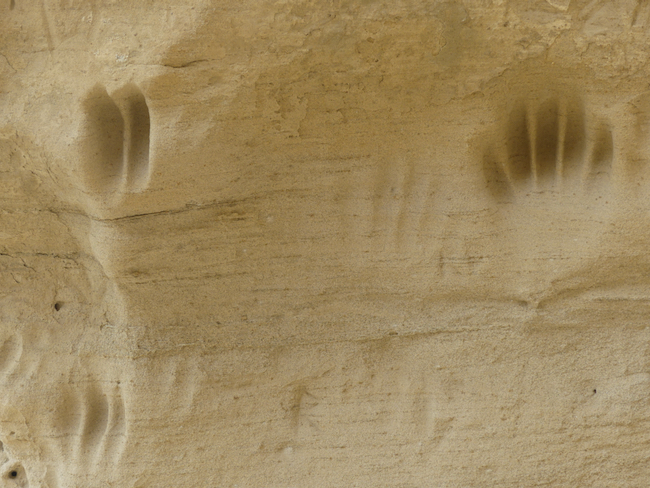


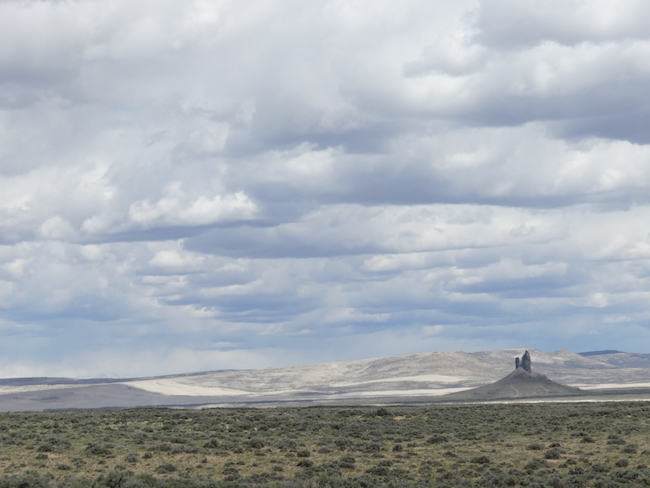
Boars Tusk is the remnant of an ancient volcano thrust 400 feed above the plain; an instantly recognizable landmark for hikers (and people looking for White Mountain.)

We are pumped. We’ve spent a couple hours traipsing around the mountain, seeking out these obscure petroglyphs, trying to decipher what they were meant to communicate. Bottom line – we don’t know, but we are exhilarated and delighted to have found this site.
The county road loops back around to the main road to Farson, and we know that just short of Farson is the Sweet Water Smoke, a barbecue restaurant we’d like to try. We are famished. Hiking and cold fresh air will do that to you!
We find Sweet Water Smoke and are delighted. It is small, and four of the five tables are taken, which leaves one for us. The entire time we were there, people were coming and going, take out orders rolling out the door, this place is humming with activity.
And no wonder! This is not ordinary barbecue! Their cole slaw is Sriracha cole slaw. They offer roasted brussel sprouts as a side, along with more traditional baked beans, macaroni and cheese, etc. I was just blown away to find roasted brussel sprouts as a side in a small Wyoming town. We remember one time traveling through Wyoming when we felt desperate for vegetables and were told to go to this “wonderful restaurant with a salad bar.” The steak was delicious. The salad bar had potato salad, cottage cheese, jello salad, and macaroni salad.
Sweet Water Smoke changes out two additional entrees every week and features a goat-cheese cheesecake with chocolate ganache. Who could resist?


There is a route we want to follow next, the Pilot Butte Road, which is supposed to be challenging, but I think they may have improved the road since we read the warnings because it was easy with our AWD. Having said that, we passed another group busy changing a tire; the road was dirt and gravel and some potholes. Not what we would consider challenging, but a road where we took care.
We were looking for the herds of wild ponies.

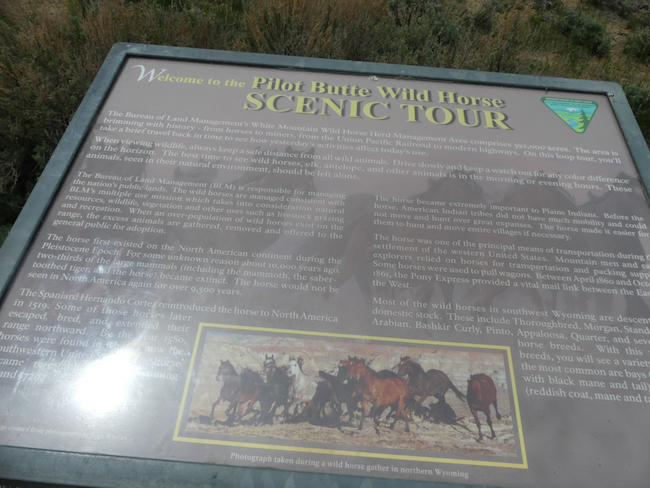


No wild horses in sight, but some mind-blowing expanses of scenery along the track. There were inescapable signs of wild horses, piles and piles of signs of wild horses, but we never saw a single wild horse.

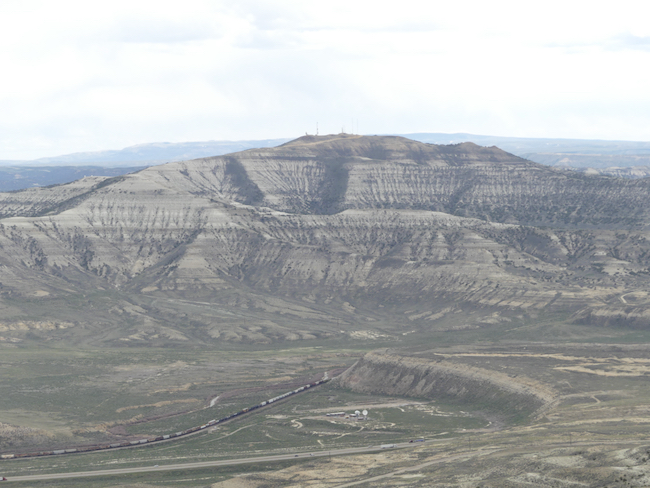
In front of us is a valley where Interstate 80, the old Lincoln Highway, runs. It is also where the Pony Express trail ran before the coast-to-coast railroad took over prompt mail delivery. It makes me sad to see that prompt delivery of mail is no longer a priority for the US Mail system. Here also ran several of the migratory trails as America moved westward. What courage and initiative it took – blasting away hills, bridging canyons and rivers, tunneling through mountains and building across swamps – feats of imagination and engineering. We are in awe of the minds that solved these problems.
Recent Comments
ExpatAlien on What Country am I Living … intlxpatr on Yellowstone: Old Faithful to C… Michelle on Yellowstone: Old Faithful to C… Cathy on No Grown-Ups in Charge intlxpatr on Waiting for Snow Wikipedia Donate Button

Amazina


Early Voting in Florida


 Here There and Everywhere