Pilgrimage to Powell’s World of Books
It’s the last day of the trip, and we are back in Portland. In a day when Amazon reigns supreme, Powell’s still stands tall, a bookstore that is a legend, taking up city blocks in Portland in its multi level building, all sectioned off with a mix of new and gently used books in every subject.
Powell’s World of Books is overwhelming. If you love books, if you love all things related to reading, you must at some point in your life make the pilgrimage to Powell’s.
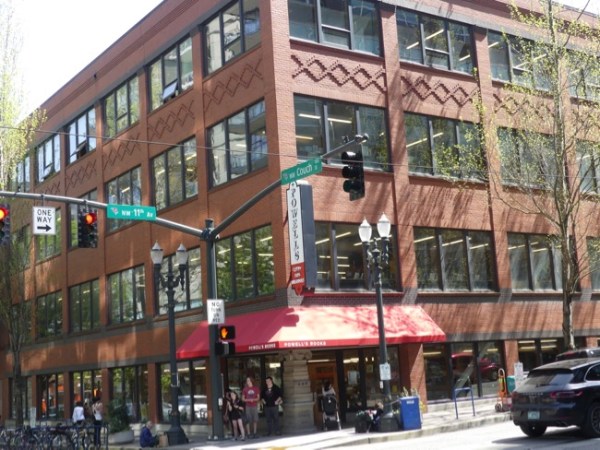


When you’ve got your fill of books, they also have a wonderful coffee shop.
Columbia Gorge Discovery Center and Museum
“She shows us the same things,” you might complain, and again I say “I write this blog for myself and for the love of writing about the things I love. You are welcome, all are welcome, and if you are not happy, you are welcome to go elsewhere!”
I’ve lived an odd life, a life I would’t trade with anyone. I grew up in Alaska, on an island with a lot of native Americans as my fellow students in my little elementary school. I grew up with Alaskan art, Indian artifacts, masks, baskets, and the hand made costumes, red and black images, sparked with trimming of white shirt buttons. I went to high school in Germany, traveling far and wide with my family or with friends through that continent, visiting more than a few churches and museums, even making special trips to see an exhibit or two.
Then a big change, life in the Middle East and Africa, where I learned to see things through a very different set of eyes and experiences, but something strange started happening, as I noted the differences, I could also see amazing similarities.
I love women’s handwork. I love the nomadic textiles, often made on very narrow looms that could be mostly a couple sticks and yarn from sheep or goats you’ve raised and slaughtered, died with whatever you could get your hands on. And, oddly, the weavings and patterns from Native American baskets and weavings have a lot in common with weavings from the Middle East, West Asia (the ‘Stans) and Africa. There is a love of working with black, white and red, for example, and a similarity to the structure of the animals, even when the animals themselves differ.
If you are interested in the work women do with their hands, you never lack for conversation wherever you go. There are always groups where women are teaching one another new techniques. I’ve met wonderful, creative women in Germany and in Kuwait and in Tunisia, all finding new and innovative ways to create, and also exploring preservation of early and ancient techniques.
So this Museum, the Columbia Gorge Discovery Center and Museum was richly rewarding for both AdventureMan and myself; it was rich in history, in interviews and movies showing early salmon runs, for example, and interviews with early Native Oregonians. It was also rich in exploring the techniques of early basket making and cooking techniques, preservation of salmon by drying and salting, etc. We spent hours in this museum, and we heartily recommend that you do, too 🙂 It is also a very gorgeous museum, rich in sensory impact, unforgettable.
I will show you pictures, and every now and then I will put in a little explanation.

Below is a dugout canoe, created from one very large cedar tree trunk, carved out by hand

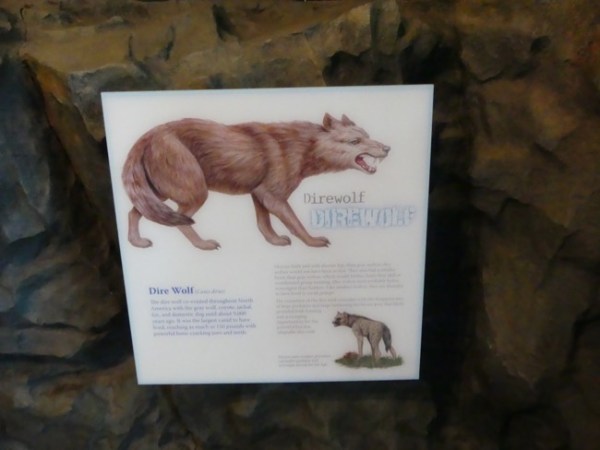
There were really Direwolfs? GOT didn’t make them up?


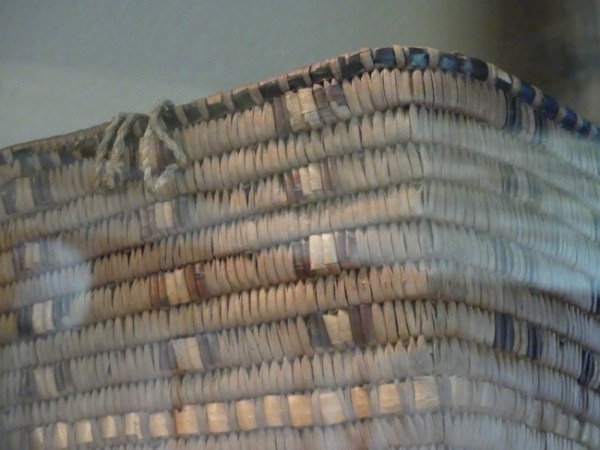
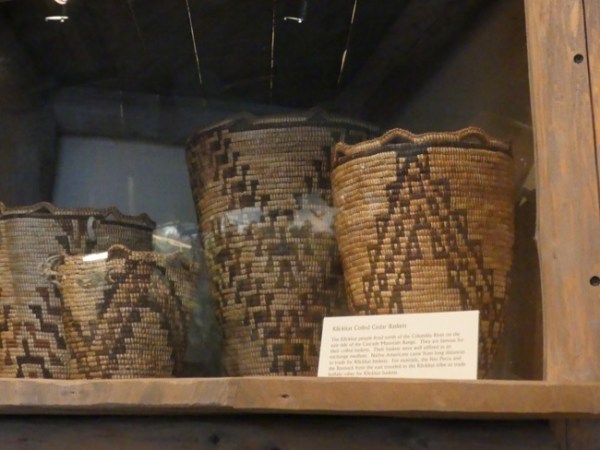
Look at the motifs on these baskets! African? Azerbaijani? Kazakh? Kuwaiti?






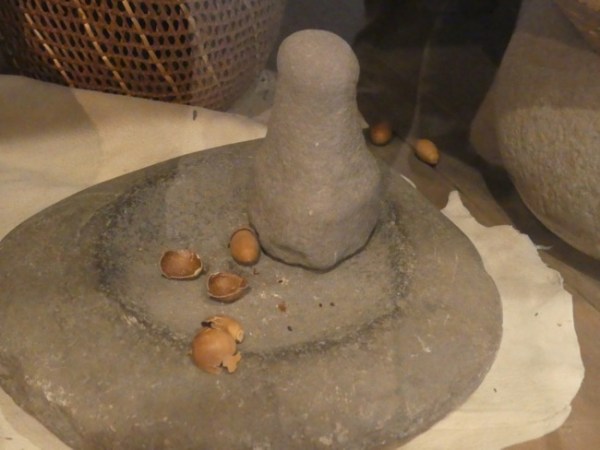
For grinding chestnuts into paste, then the paste is cooked into a kind of meal like oatmeal. The morter and pestle is the same in so many places.
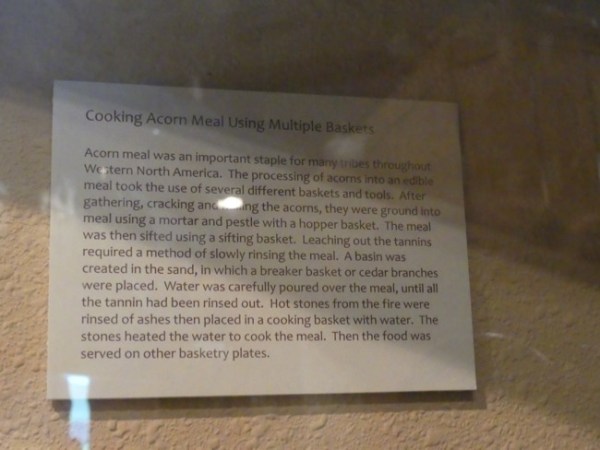
The round cooking stones, heated in fires, dropped into the meal, fished out once they start losing their heat, washed, reheated and put in again until the meal reaches a boil, all in this tightly woven basket.


Activity in the Children’s exploration area

We love the creativity and persistence of humans who preserve our heritage and traditions for future generations. It is particularly delightful when the preservation is in a museum conceived and manifested with beautiful elements and natural materials.
Timberline Lodge, Government Camp, Oregon
Just as AdventureMan had a yearning to visit Crater Lake, I’ve had a longing, lo these many years, to stay at Timberline Lodge. I remember going there when I was little, maybe for lunch, maybe for a soda and for my Mom to meet up with friends, I don’t know, I was really little. All I remember is how much I loved this timbered lodge, and I told her I wanted to stay there. She said we were going back to Portland; we were just visiting the Lodge.
I’m not a believer in bucket lists. I’m a believer in doing it along the way, if you can. When AdventureMan and I married, we had a lot not-in-common, but we shared a common way of outlining and attaining our objectives in life.
- Live within your income.
- Save for goals (retirement, education, property, etc).
- Have a great life along the way.
We’ve done well. When we first married, AdventureMan wanted to go to Africa and see the animals. We saved for a year and spent a month in Kenya and Tanzania before starting a family, then once we were living back overseas, we went back to various African countries on safari ten times. We worked hard, and we have a ball along the way.
But I had never had an opportunity to stay at Timberline Lodge. It’s TIME!
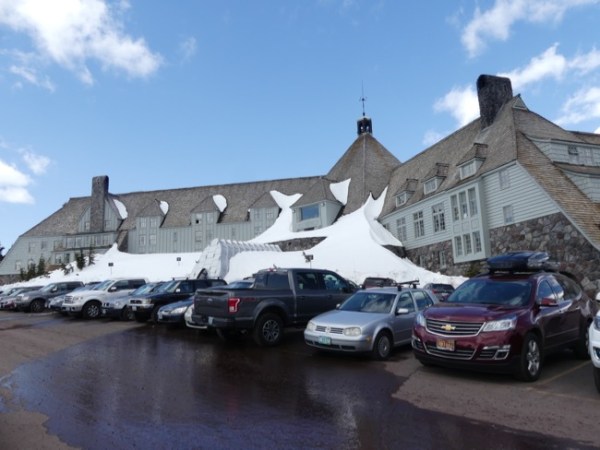
It was another case of not wanting to mention to AdventureMan that it might be a bit tricky getting up there, but although there is still a lot of snow, we didn’t have any problems on the roads. And, even though the parking lot, we are told, is full, AdventureMan, with his famous great luck, waited while I checked us in, and while he was waiting a beautiful parking spot opened up right in front of the Lodge. Woo HOOOOO!
This is our room, up on the third floor. All the beds have thick comforters and Pendleton blankets.

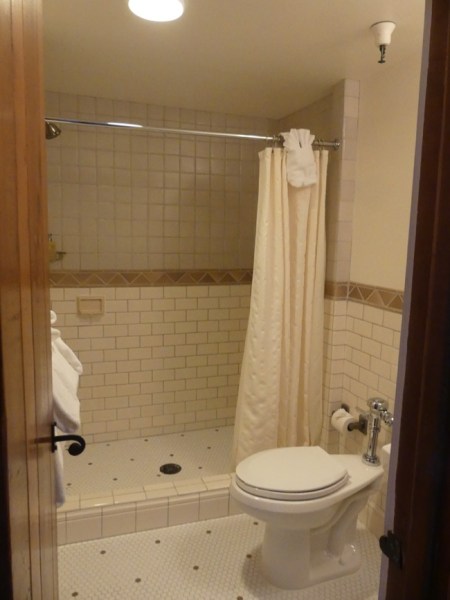
The view from our room is out over one of the ski trails 🙂

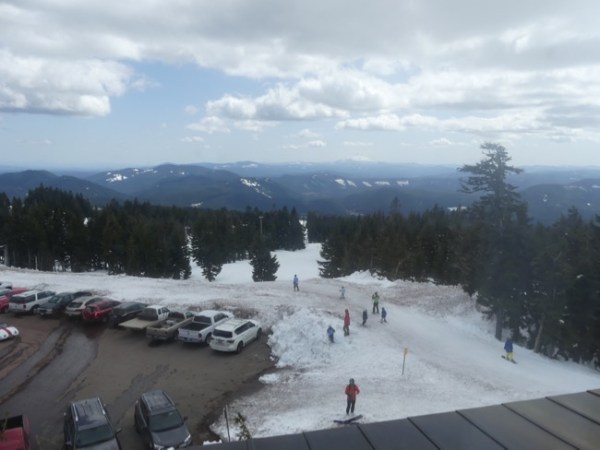
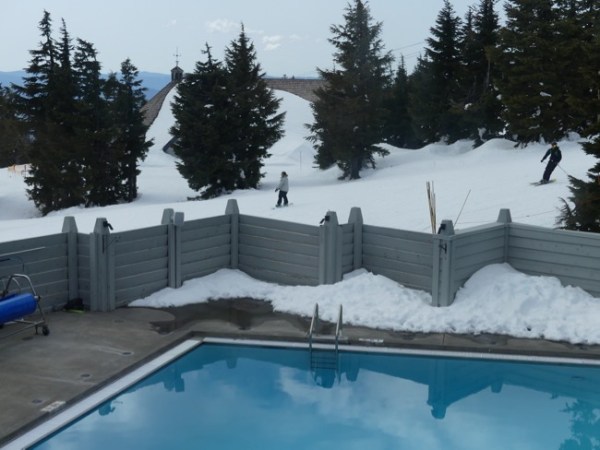
I am totally in heaven. A dream has come true, and we are having a lot of fun. AdventureMan asked if we should bring in our swim suits, and I looked at him like he was crazy. “It’s a SKI lodge,” I informed him, a little haughtily. Oh, Intlxpatr, woe! The registration clerk looked at me and said “We do! We have an outdoor pool down at the end of this hall” and pointed down the hall. I was humbled, and the pool was beautiful; a gorgeous contrast in hot and cold. Don’t you love the skiers skiing right by the pool?
We ate all our meals in the Lodge, the spaces were so beautiful. This is the downstairs lounge:
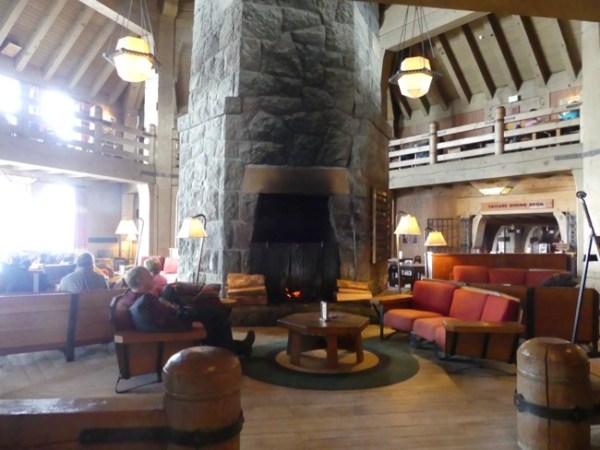
I am such a sucker for stone fireplaces, wood floors and leather furniture. I should live in Montana!
We ate in the Rams Head restaurant, looking out over the peak of Mount Hood:

I ordered the cassoulet, which, when it came, I said “I thought it had chicken in it!”
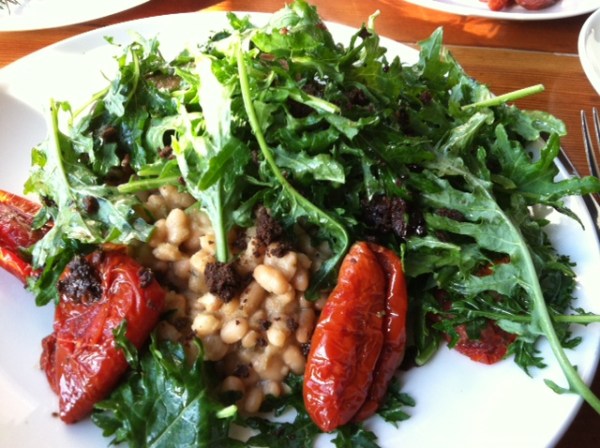
It did, it was hiding under the endive salad.

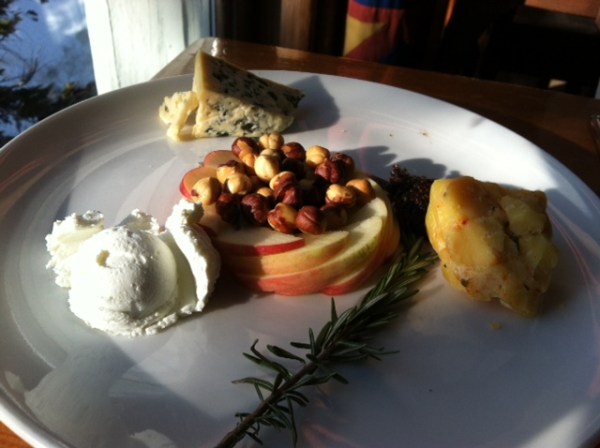
AdventureMan ordered the charcuterie platter, and loved every bite.

He couldn’t even finish his cheese platter, not could I finish my cassoulet, too much food and we can’t take it with us.
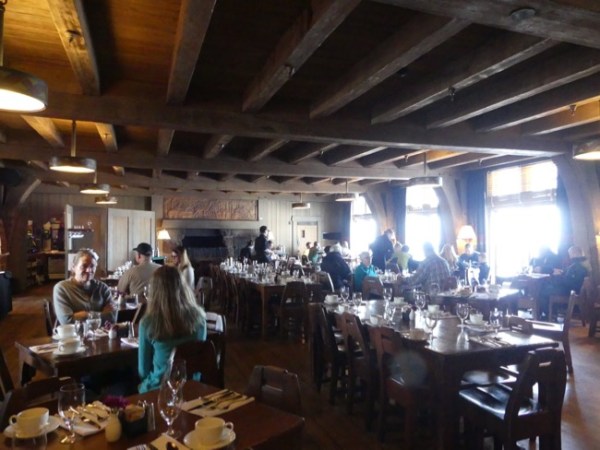
This is the Cascade Dining Room, where we had breakfast the next morning:
This trip has had so many highlights, and we both agree that staying at Timberline Lodge is a life-high experience. 🙂
When talking with my Mom, she said back in the day, she and a bunch of friends from university would head over to Timberline Lodge for the weekends, and that they stayed in large bunk-room dorms, because it was all about the skiing. 🙂
The High Desert Museum in Bend, OR
Today is a piece of cake. It is a very short driving day, we get up late, only to discover that the normally generous breakfast at the Best Western has been set-upon by all the martial arts participants and the gun show enthusiasts, and the crew is working valiantly but is unable to keep up with the hoards of folk interested in breakfast. We find enough – some hard boiled eggs, some milk, enough. We are on the road by 9:30 only to stop just outside of Bend at one of the most beautiful museums we have ever visited, the High Desert Museum.
Look at that gorgeous elk statue, look at the definition. Look at his relaxed posture. Isn’t he gorgeous?

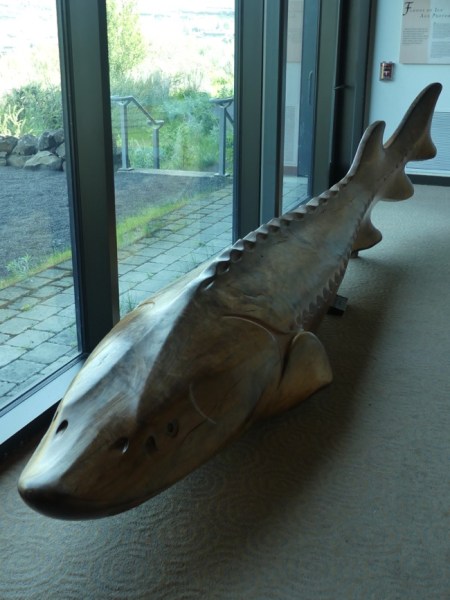
That is not a real salmon jumping up a river to spawn, but another gorgeous piece of art work at the entrance to this museum. I am loving this place already. They’ve put some big bucks into making this a high end product.

I suppose I should be embarrassed waxing so enthusiastic over the materials and craftsmanship that have gone into the structure, but I’m not. It’s my blog; I get to be as enthusiastic as I want. I loved this museum before I even got in the front door.
This is the entrance. Look at that natural light invited in! Look at the stone walls, the wooden ceiling and the textured panels on the walls! It seems most of the people we encounter working in the museum are volunteers, and they love their work and take great pride in serving their museum.
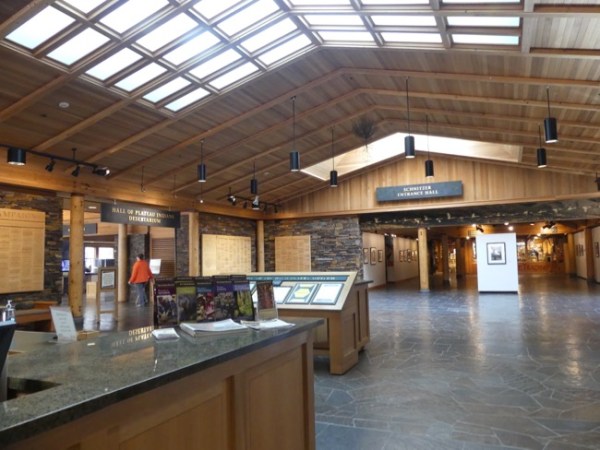
I know you’ve been wondering (as I did) exactly what the High Desert is:
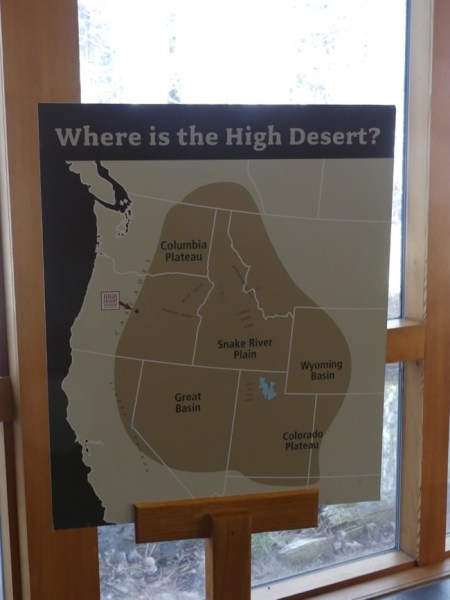
The entire states of Idaho and Utah? Most of Nevada? Extensive parts of Washington, Oregon and Wyoming, as well as segments of California and Montana? I had no idea!
There is SO much to see. There is a lot of history along with the natural sciences, and it is all beautifully displayed, with a lot of human context.

I learned a lot about ritual root digging, which I had never heard of, but since seeing this exhibit, it has come up in two books I’ve read by Louise Erdrich, The Future Home of the Living God and LaRose, so I’ve been able to integrate what I learned with more information. If we ever have a monumental natural disaster, or zombie apocalypse, we will need these survival skills.

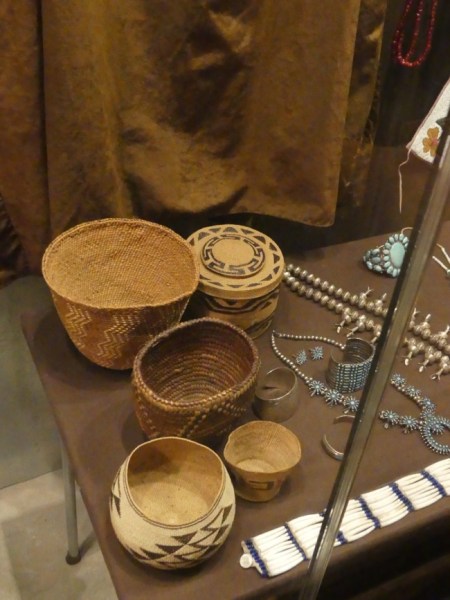


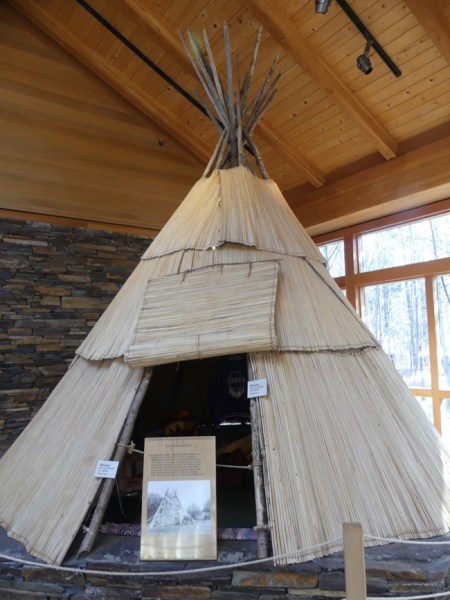
A tule mat tee pee. The women also wove baskets so fine and so tight you could cook in them. They used fire heated round stones to bring food temperatures up even to a boil.
This wild cat sculpture is next to the real wild cat, resident at the museum for many years due to an injury that made it impossible to return her to the wild.


Panoramas from the historical displays.


The museum also has a really nice gift shop, lots of original art work, good cards, great children’s gifts. They also had a very nice cafe, with an outdoor terrace where you can sit, drink some excellent coffee, and listen to the birds.

We spent two or three hours here, and it was worth every minute. The volunteer guides do tours of the outdoor animal displays, including some very cute and cuddly otter, and all kinds of other themed 30 minute or so walks. Well worth a visit.
McCloud and the McCloud Mercantile, and the White Mountain Cafe
As we checked into our beautiful hotel, we asked if there were somewhere we could eat. It was a quarter of 2:00 and breakfast was wearing thin.
“You can eat at the White Mountain Cafe,” our hotelier replied, “but go now! They close at 2:00!”
We hurried down the street, where the waitress graciously welcomed us and told us we had plenty of time to eat, so not to hurry.

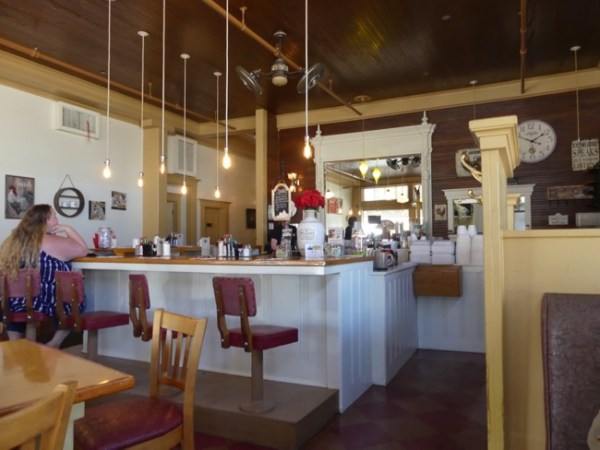
This is the White Mountain Cafe Bacon, Lettuce, Avocado and Tomato. AdventureMan says it is one of the best BLT’s he has ever had; the bacon was especially tasty.
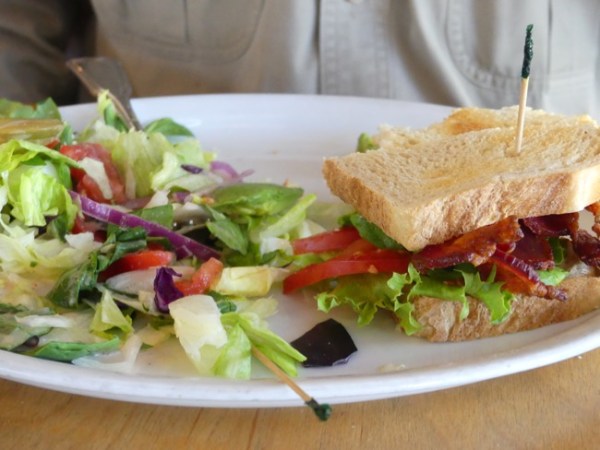
This is my grilled chicken salad, which also contained some of the fabulous bacon. This led to a long discussion with an equally enthusiastic waitress, and we all three agreed that life is too short to eat bad bacon, and that really really good bacon is one of the sweetest of life’s joys. She told us that anyone who doesn’t like bacon has never tasted really good bacon. As she works so closely with food every single day, I am inclined to give her a lot of credibility.

I also found myself thinking deeply about how difficult it would be for me to be a good Jew or a good Muslim if I could never eat good bacon or an occasional slice of Smithfield ham.
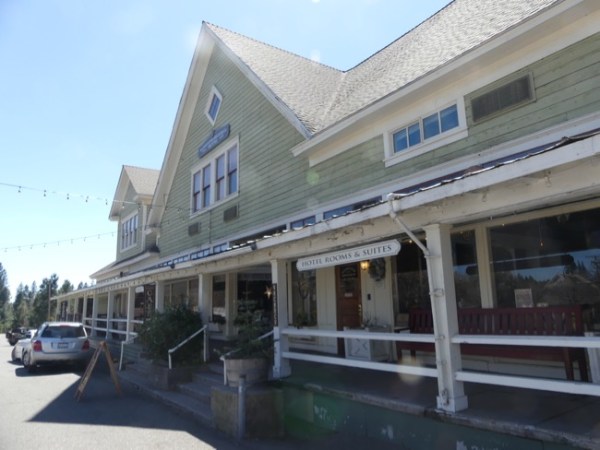
The White Mountain Cafe (walk out the door and you see a huge Mt. Shasta) is connected to the McCloud Mercantile, a winding old-timey store with all kinds of goodies, and a lot of original old store furnishings. McCloud is a historical timber town.

Ft. Bragg to Calistoga Springs; A Short Day and a Mud Bath

OK, here it is. There is no point in being “old enough to know better” and not taking any chances. Life is short. It might as well be sweet, and sometimes, you just have to take some risks.
You might say, and we might agree, that life is full of unknown risks, like ending up on California highway 1 through the hilly, unguarded woods in late afternoon. On the other hand, a little adrenaline is the spice of life for AdventureMan and me.
One year, long ago, AdventureMan and I were living in Tunisia and we found ourselves at the beginning of the road General Montgomery took to break the Mareth Line in WWII.
(from Wikipedia:
Battle of the Mareth Line
Montgomery launched Operation Pugilist against the Mareth Line on the night of 19/20 March 1943. Elements of the 50th (Northumbrian) Infantry Division penetrated the line and established a bridgehead west of Zarat on 20/21 March. A determined counter-attack by 15th Panzer Division destroyed the pocket, re-establishing the line by 22 March. On 26 March, X Corps (Lieutenant-General Brian Horrocks) drove around the Matmata Hills, capturing the Tebaga Gap and the town of El Hamma at the northern extreme of the line in Operation Supercharge II, making the Mareth Line untenable. The following day anti-tank guns from German and Italian units checked the advance of X Corps, to gain time for a withdrawal. In the next 48 hours the Axis defenders pulled out of the Mareth Line, establishing a new defensive position 60 kilometres (37 mi) to the north-west at Wadi Akarit near Gabès.)
The road was challenging at first, a rocky dirt road, very narrow. “How on earth did they get tanks through here?” I wondered to myself as my 3 year old son went sound asleep in the back seat. The road became dicey, but there was no place to turn around, so AdventureMan gamely drove on. Several times, he had to find a place in the road wide enough for me to get out without falling over the cliff, to guide him around ruts in the road that went 2 – 3 feet deep. It got later and later in the afternoon, there was no other traffic on this pass, and I was beginning to . . . . have a little anxiety, but we never say anything, like to say it might make it true. There comes a point where the adrenaline doesn’t even surge any more, you just want it to be over, you want to be safe. And, as you can see, we lived to tell the tale 🙂
All that to introduce that today is a day of challenges.
First, as we drove down Highway 101, we looked for a winery I really wanted to find, Graziano winery. We had a bottle of Zinfandel from there, a red, complicated zinfandel, which changed my idea about zinfandel wines. We never found the winery, but we did see a sign for it, pointed back the way we had come. Arrrgh.
On to Calistoga Springs, where we check in to the Golden Haven Spa, a quirky motel/hotel with it’s own hot springs and spa, where we are going to have a first – a mud bath.
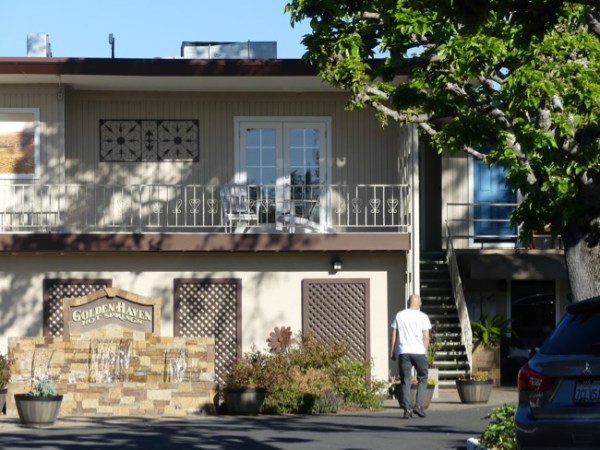
This is our very spacious room, with lovely high ceilings.
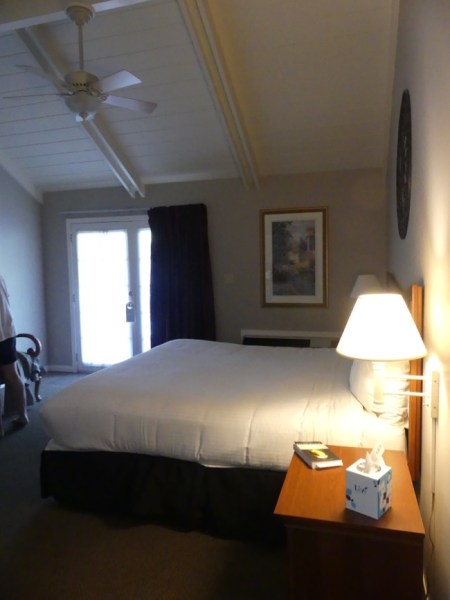
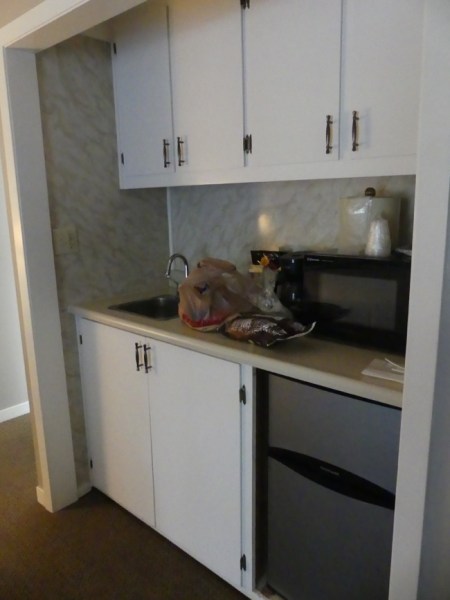
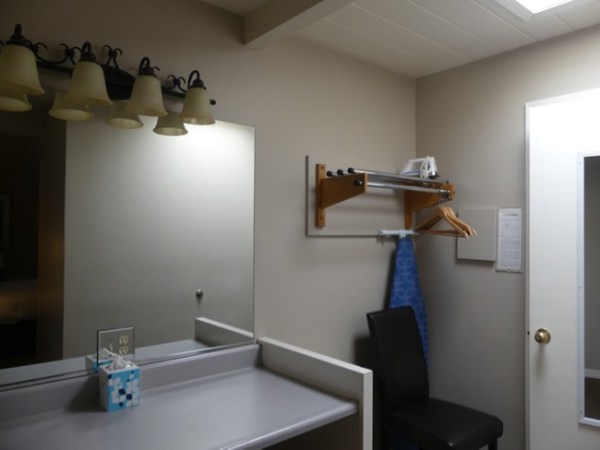
This is in the quiet room, at the entrance to the spa itself.

It’s always fun when you really don’t know what you are getting into. I couldn’t tell from the photos if this place was “nice” or “clean. You can read reviews, and you can’t always believe either the really good or the really bad. I looked at all the places in Calistoga, and this one looked quirky and fun, and I just had to hope it was clean (it was.)
The other thing is that with these mud baths, you can be totally nude, you can wear a bathing suit or underwear, whatever makes you comfortable. There will be an attendant in the room with you to help you, so how does that work? We brought our bathing suits, but once we saw the mud bath (black black mud mixed with peat moss) we figured we might as well just go nude. There were two of us, and we’ve seen each other nude before. It made us a little braver.
The attendant was sweet and modest, explained how things worked and then left us, saying she would be back. Well, the whole process is actually funny; you don’t climb into these big concrete tubs that look a lot like sarcophagi, you are supposed to ROLL into them, which got us giggling right away. And they are very hot, and you are not supposed to put your feet on the bottom, or you could get burned feet, and the mud is so thick you really do float. While you are waiting for the attendant to return, you use your hands to put mud over all the parts you . . . ummm. . .. you know, like want to keep hidden, and that made us giggle more, but you can’t giggle too much or you bend and might start sinking and the mud/peat moss is really HOT.
Then the attendant knocks, and comes back in and puts a special mud on your face and then leaves again for about half an hour while you soak. We were ready when she came back, and we ROLLED out, but actually, I couldn’t figure out how to do it by myself so AdventureMan came over to give me a hand, but he looked so funny I was laughing too hard and couldn’t roll out the right way for a couple minutes.
Then you take this two-person shower, which sounds a lot sexier than it really is, because you have mud everywhere, and it really needs two people to spray each other in places you can’t see for yourself, like your upper back and your hairline, and other places where you can’t see yourself, the other person needs to spray you.
After you’ve sprayed as much as you can, you get into the hot tub, which is also very hot and I forget to mention, sulpher-y. Sulpher doesn’t bother me in hot springs; I got used to it as a kid, Baden-Baden, Wiesbaden, there were fountains where you could “take the waters” and it was always sulfur-y. It’s kind of stinky, but you get used to it. After the hot tub, we were like limp noodles, perfect for having massages, which was our mid-trip treat, along with the adventure of having a mud bath. We slept well that night. 🙂
So was it worth it? Oh yes, it was. It’s not often we are so out of our comfort zone, nor that we laugh so much. It’s a good thing to try something new and different. Would I do it again? I might, but I wouldn’t seek it out. It was fun, and there are other fun things in the world we haven’t tried yet.
Ft. Bragg . . . where??? (California)
Most people, when they think of Fort Bragg, think of a military post in North Carolina. The Fort Bragg we discovered several years ago in California has little in common with the North Carolina Fort Bragg.
Our first time in Fort Bragg, as we left Cucina Verona, an Italian restaurant where we had eaten dinner, we were startled by the loud sound of hoofbeats, and the sudden appearance of two riders, galloping hell-bent down the middle of the road in Ft. Bragg. It was one of those adrenaline moments, when you wonder if you really saw what you just thing you saw, followed by all the things that could go wrong when you mix horses, highways, automobiles and high speed.
This time, one of the first things we saw was this sign:

But . . . it doesn’t say anything about riding horses, skateboards, or bicycles down the center of the street!
Ft. Bragg has a very laid back vibe. The town is full of couples who look a lot like us, maybe even a little older, maybe a little more hip and less retired military than we look, but relaxed, comfortable in their own skins. We love the vibe. My very favorite activity in Ft. Bragg is at the north end of the town, where they have a place called Glass Beach. Glass beach is where the old town dump used to be, a long time ago, and all the bottles dumped there broke and were washed by the waves, tumbled by the gravel and sand, and became beach glass. Most of what you find is pretty small these days; Glass Beach has been discovered, but if you venture out the the furthest inlets and rocks, you can find some larger pieces, sometimes even a green piece. I found one tiny little blue piece, the grand prize of all beach glass.
We love the North Cliff Hotel, where every room has the same view, looking out over the water at the inlet to the little bay.

We love the hot tub with a view.

We love the view. On the morning we were leaving, we looked out and someone had written a huge message on the sand, “Annie will you marry me?” How cool is that?!
Time is flexible in Ft. Bragg. We get up when we want to, we don’t have to drive to any destination, we can be lazy or we can just meander around, which is what we choose to do.
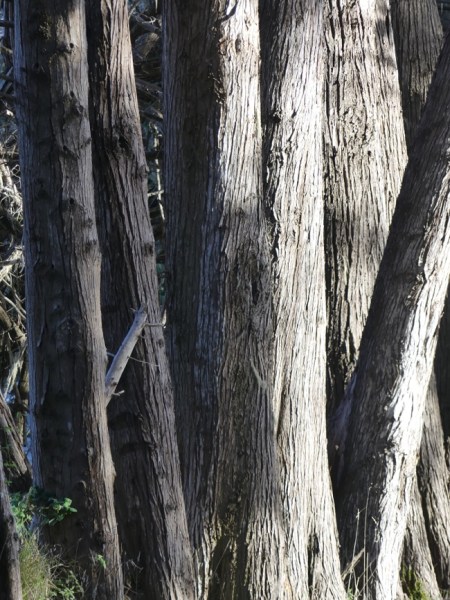
Love this tunnel of eucalyptus trees entering Ft. Bragg from the north:

This yard had no flower but yellow flowers, and a LOT of yellow flowers!
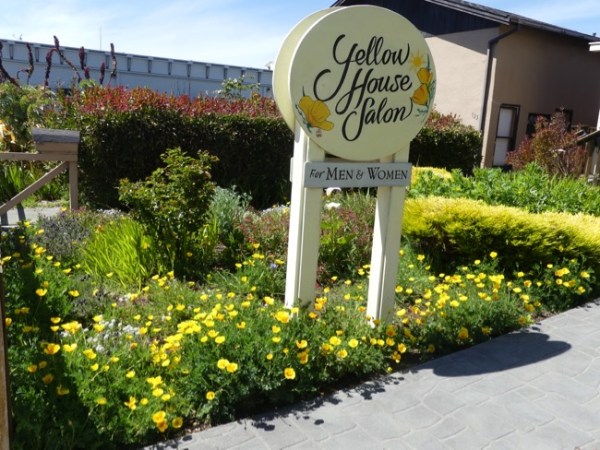
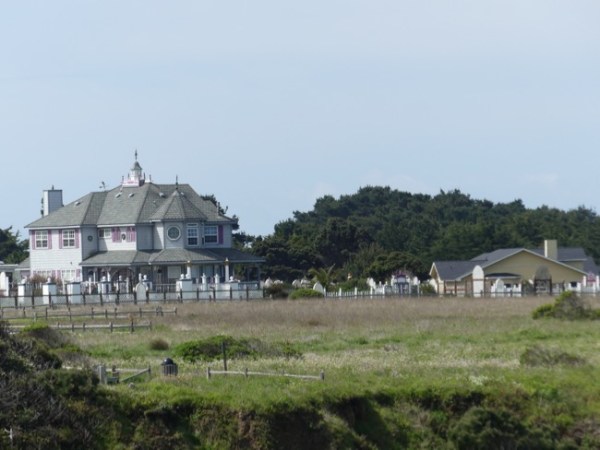


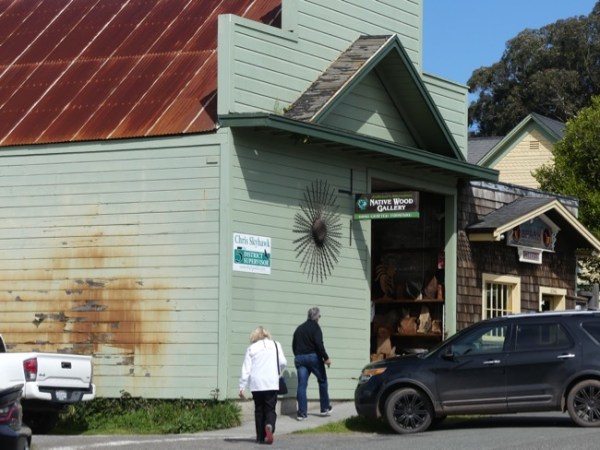
Just a short drive south is Mendocino, one of the most beautiful little California towns you could hope to find. We were looking for special gifts for two special people, and found them, polished carved natural bay laurel bowls, at this shop.
I read a recent article on how California leads the way for the American soul; it gives me hope for the future of our country. California pioneered gay rights, California champions the rights of immigrant children to education and health benefits, and Californians “welcome the stranger,” as all people of the book are supposed to do.
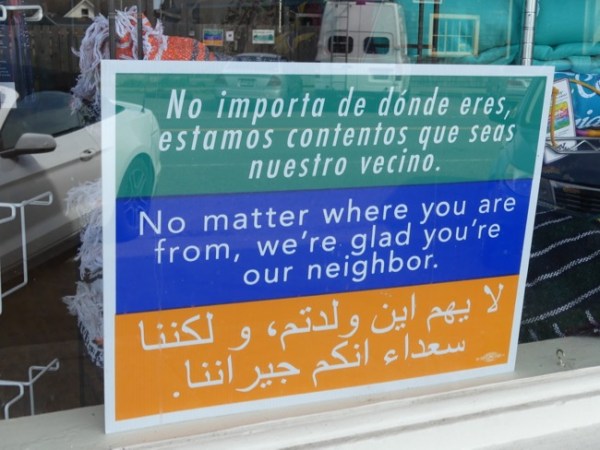
This was in the window of the main grocery/hardware/sundries store in Mendocino. When a woman saw me taking a photo, she asked me why, and I told her, it made me feel welcome and filled my heart with joy to know that it specifically would also make my Arab / Muslim friends feel welcome. She smiled, sternly, and said that they welcome ALL people, that is what California is all about. I was happily chastened. 🙂
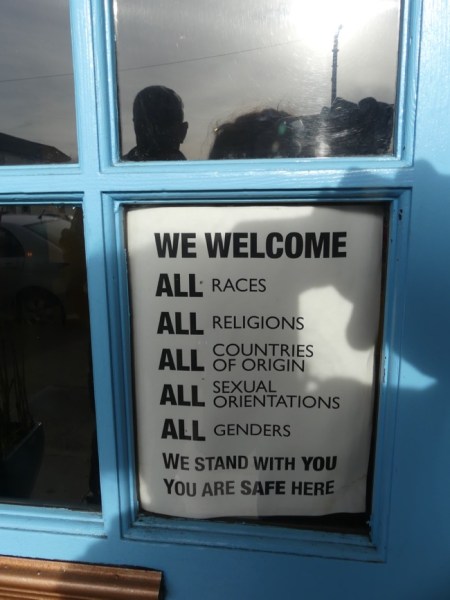
I want the United States of America to be a safe place for all people. No wonder I love California!
Well, there is another reason to love Ft. Bragg – they have one of the world’s best ice creameries right on the major through street in Ft. Bragg. 
Cowlicks Ice Cream is never not busy. On our first trip (we went twice in one day!) I had a scoop of ginger ice cream. It was a huge WOW. On the next trip, I had a chocolate which was really chocolaty, but I wished I had another scoop of ginger.
As we sat, eating our ice cream, I overheard a stylish but somewhat-frail looking 80’ish woman tell her daughter that she didn’t want to be bothered being married again, she was just looking to have a little fun without the complications of a relationship. Such is life in Ft. Bragg. 🙂
The Martyrs of Sudan
Today the church remembers the martyrs of Sudan.
I have met one, personally, a wonderful journalist in the Sudan, who told us his story one December, just before Christmas. I have never forgotten him; we are still friends on FaceBook. He spent mot of his youth running from those attacking his village. As a child, sometimes he would be separated from his family for months. Although a treaty has been signed, the persecution continues in South Sudan, as even heavily pregnant women have to run for the swamps, or the nearest border, when the lawless janjaweed attack. South Sudan has oil.

The Christian bishops, chiefs, commanders, clergy and people of Sudan declared, on May 16, 1983, that they would not abandon God as God had revealed himself to them under threat of Shariah Law imposed by the fundamentalist Islamic government in Khartoum. Until a peace treaty was signed on January 9, 2005, the Episcopal Church of the Province of the Sudan suffered from persecution and devastation through twenty-two years of civil war. Two and a half million people were killed, half of whom were members of this church. Many clergy and lay leaders were singled out because of their religious leadership in their communities. No buildings, including churches and schools, are left standing in an area the size of Alaska.
Four million people are internally displaced, and a million are scattered around Africa and beyond in the Sudanese Diaspora. Twenty-two of the twenty-four dioceses exist in exile in Uganda or Kenya, and the majority of the clergy are unpaid. Only 5% of the population of Southern Sudan was Christian in 1983. Today over 85% of that region of six million is now mostly Episcopalian or Roman Catholic. A faith rooted deeply in the mercy of God has renewed their spirits through out the years of strife and sorrow.
(From the Lectionary, Martyrs of Sudan, for May 16, 2018)
This is the prayer for the Martyrs of Sudan:
O God, steadfast in the midst of persecution, by your providence the blood of the martyrs is the seed of the Church: As the martyrs of the Sudan refused to abandon Christ even in the face of torture and death, and so by their sacrifice brought forth a plentiful harvest, may we, too, be steadfast in our faith in Jesus Christ; who with you and the Holy Spirit lives and reigns, one God, for ever and ever. Amen.
Astoria, Oregon
We are taking the backroads; we are more interested in the experience than the destination. We are on old highway 101, along old familiar beach fronts, and going into old rural Washington en route.
I couldn’t resist these fabulous mossy trees:

And this wonderful huge Quinault painting on one of the old buildings, I am thinking in Aberdeen, WA:

We see a lot of timber; we see it growing, we see it clear cut, we see it replanted, we see it at mills and we see it transported along the great Columbia, going who knows where? China?
We find ourselves briefly along the old Lewis and Clark trail along the banks of the Columbia as we approach Astoria, our goal for today. We made it a point to come into Astoria over one of the old bridges, an elegant bridge.

AdventureMan wants to explore the Columbia River Maritime Museum, which he heartily recommends to all with an interest in history and commerce in America.

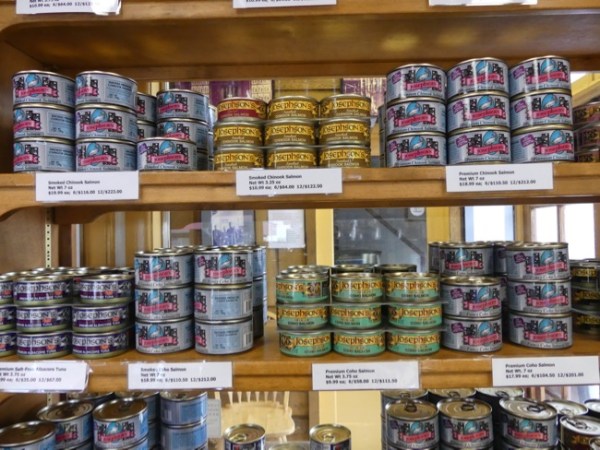
Before we go, however, we want to have lunch. We stop at Josephson’s Smoke House for some clam chowder and some of the best local made salmon burgers we have ever eaten. I apologize; they were so delicious we ate them before I remembered to take a photo. I do have some photos of Josephson’s, which is more a processor, smoker, canner and seller of salmon products than a real restaurant. Their menu is limited, but their salmon products are outstanding.
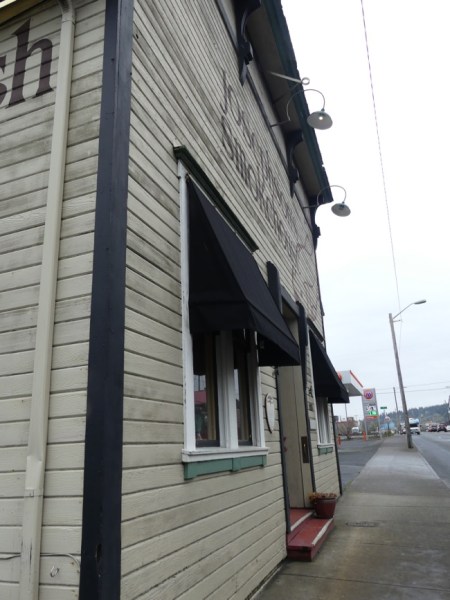

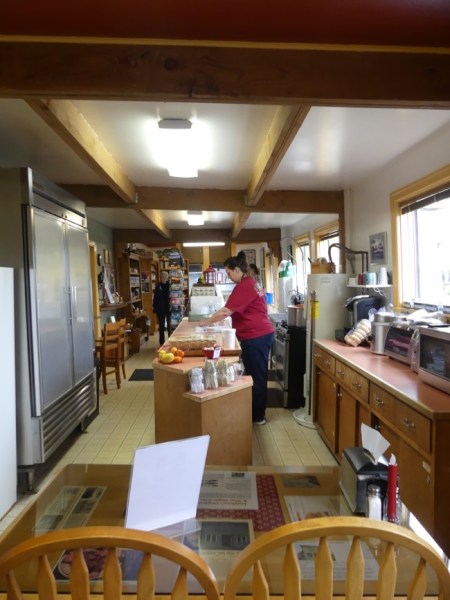
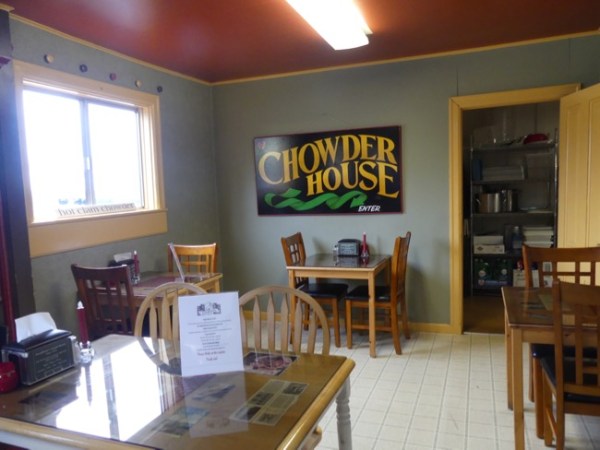
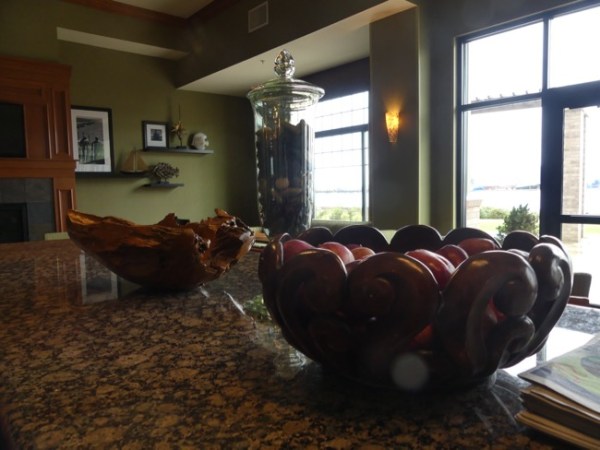
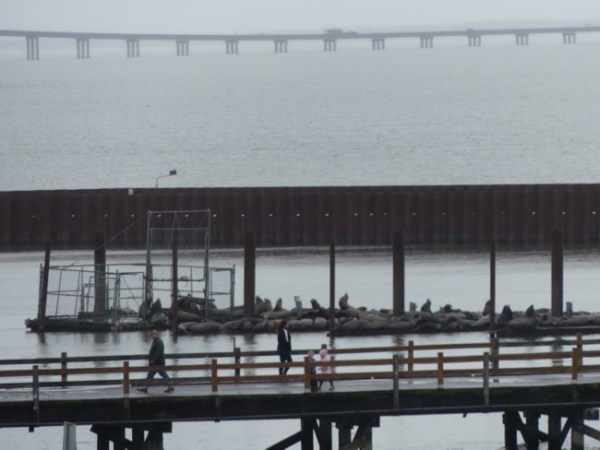
Our hotel was a nondescript and not all that welcoming Hampton Inn. Having said that, in spite of the lackluster welcome, they had a great pool, we could open the doors to our balcony and hear sea lions barking, and we got a great night’s sleep. There is something to be said for all that. I also liked some of the hand crafted art work in the dining room.

The nearby sea lions:
Kalaloch Lodge and Creekside Restaurant
OK, I am going to risk boring you. I have a think about lodges and historic hotels. I love the old architecture, the high ceilings, the spacious rooms. I love the restorations and renovations that include gracious private bathrooms (!) and I love the vision that created these lodges in the first place. So I am going to show you lots of photos, because I can’t help myself. Honestly, I have shown restraint, but you may not think so.
This is the exterior of Kalaloch Lodge
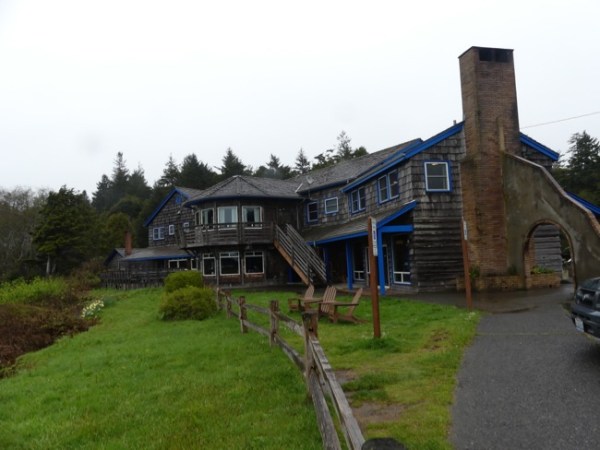

These are some of the cabins. Many of them have cabins with kitchens, and people bring their own food for the week.

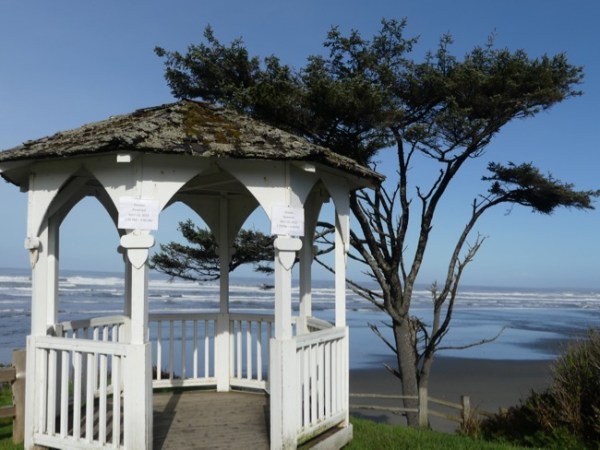
This is the wedding pagoda; the signs posted say that the pagoda is reserved from like 1 – 4 for a private event 🙂
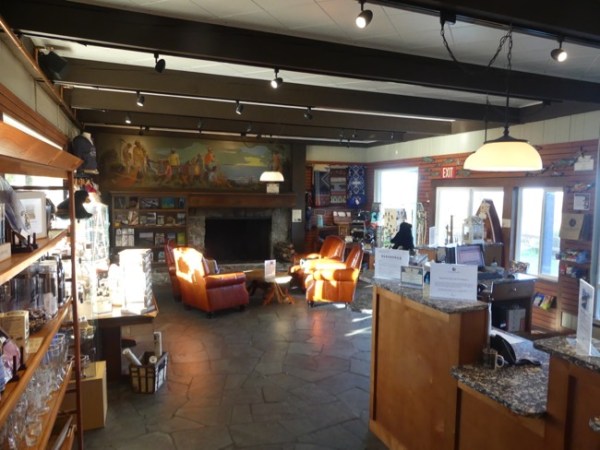
The registration area and gift shop
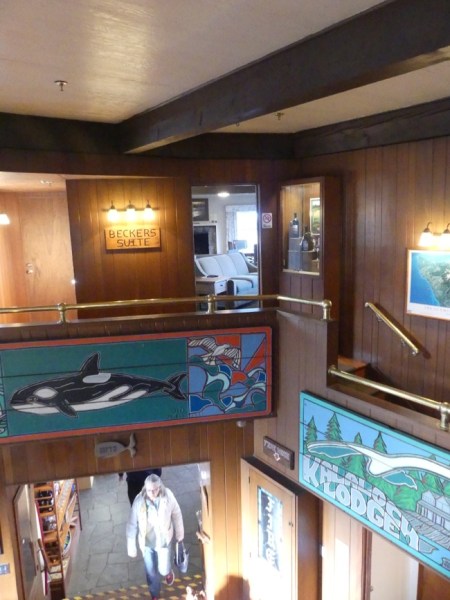
Upstairs area
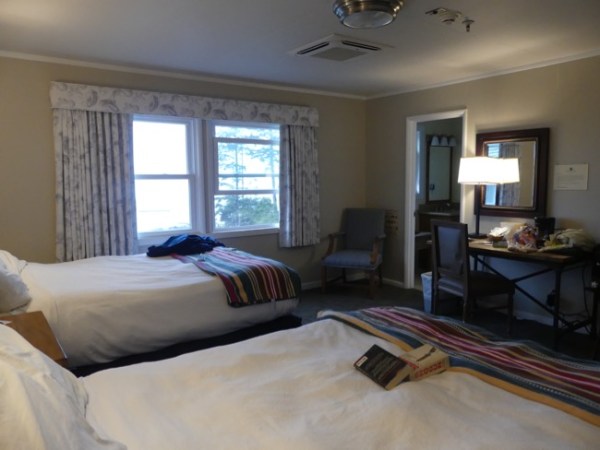
Our room looking out over the beach
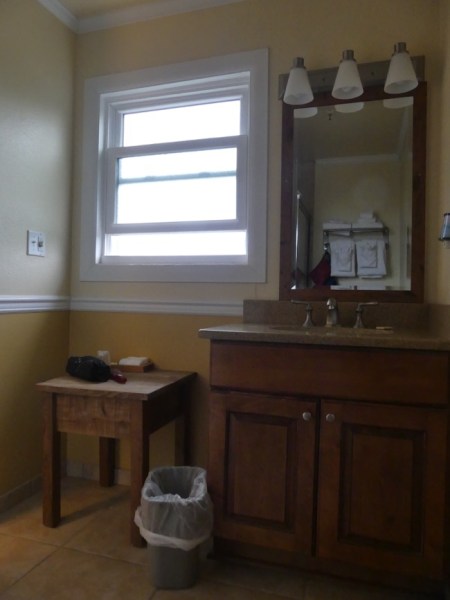
Our view – oh WOW. I just wish you could hear the waves.

Sunset at Kalaloch
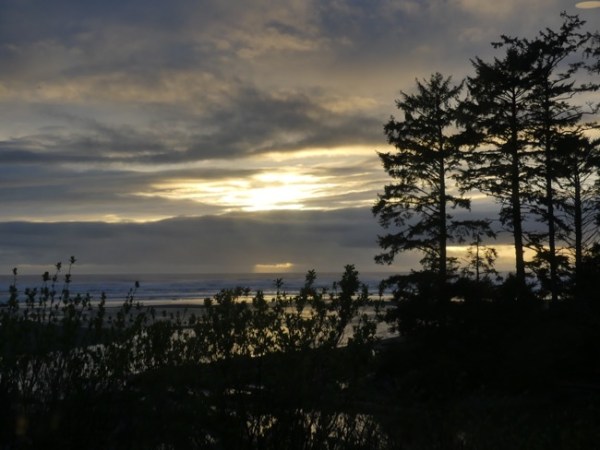
We ate dinner that night in the Creekside restaurant at the lodge, thanks to being urged to make reservations when we arrived. There is no place anywhere near Kalaloch you can eat without 30 minute drive. Fortunately, the Creekside Restaurant had delicious food, and some great choices for wine and beer.
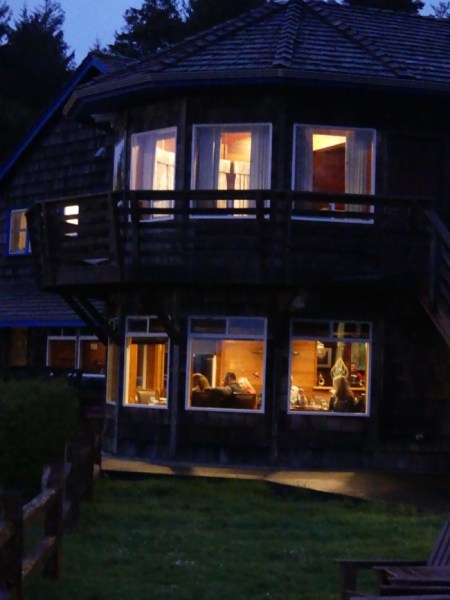
Restaurant is on lower floor; above it is one of the suites.
We don’t often end up ordering exactly the same thing, but this night we did. A great arugula salad and a big bowl full of clams, and some really good sourdough French bread. AdventureMan had a local beer, and I had a dry red wine. Life can’t get much sweeter 🙂 I am very proud that for once, I remembered to take a photo before we started eating.

He restoreth my soul.
Recent Comments
intlxpatr on Shampoo Ginger tigerbutterya0c5ff1d… on Shampoo Ginger intlxpatr on British Soldier Kidnapped, Esc… John on British Soldier Kidnapped, Esc… intlxpatr on British Soldier Kidnapped, Esc… Wikipedia Donate Button

Amazina


Early Voting in Florida


