Wake of the Vikings: Vikings in the Faroe Islands
We can’t say enough good things about the Viking business model, and we are critical travelers. We headed out on a tour this morning, we who are not good at touring in groups, and had to give our admiration to the facility with which Viking gets large numbers of people on the ground and going out and learning something. When you book a cruise, there are always “included” tours, included means you don’t pay extra. The included tours are usually overviews, often panoramic, i.e. you get in a bus and drive and stop now and then for a photo. Everyone who wants a tour gets a tour.
Having lived overseas most of our married life, we know that it is so much easier to stay comfortable than to go out and see something and learn something. About 10% of people will make it happen for themselves, another 80% will go if it is made easy enough, and 10% will never go. In the Embassies, that 10% will hang out at the American Club or the Marine Bar, and if military, shop almost exclusively at the PX (BX, Navy Exchange) and commissary.
Viking makes it easy. The night before we reach a port, there is a Port Talk, where the local currency is explained, a few good phrases (usually like “good morning” and “thank you”) taught, and photos and videos (all very full of sunshine) are shown to give you an idea what to expect. The daily newsletter always tells you how to say “Please take me back to my ship” in the appropriate language. Buses show up on time. There are enough guides for all the passengers. The guides have the patience of Job.
Our guide for Vistas, Vikings, and Village Woodturner was very very good. I don’t really know that I learned a lot about Vikings. Really, Vikings raided a little, intermarried a little, and are just a part of the history of the Faroes, the way Angles and Picts and the Norse are a part of the English. We had a very good guide, a funny man who often broke into song, and who has probably attended to more tourists than is good for him.
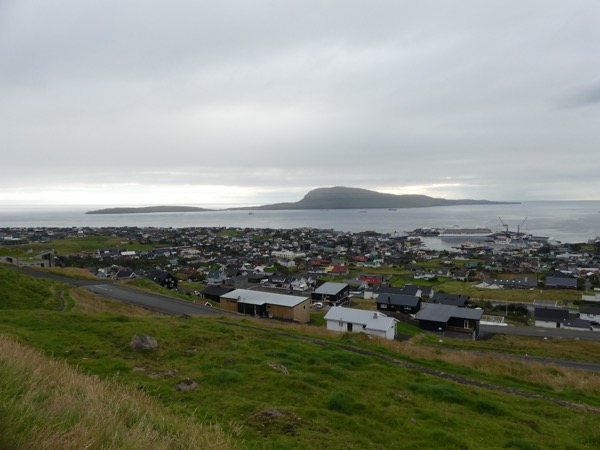
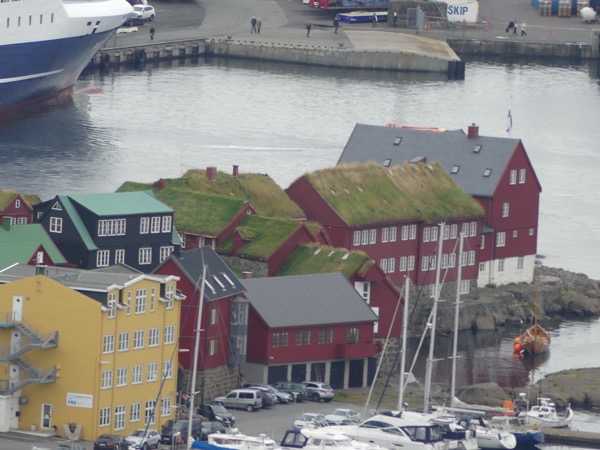


There were sheep everywhere, including sleeping alongside the road. Drivers are all very careful, because if you hurt a sheep, you pay the owner like $500. for his loss. The sheep were every color from white to brown, and black, and spotted white and brown and black. If I lived in the Faeroe Islands I would learn to sheer and card sheep wool, and spend evenings spinning the raw wool into threads for weaving into cloth and yarns. I’ve always wanted to learn to spin. LOL, too late to be a spinster 😉


What do I think is a good guide? This man told us a lot about life on the Faroes, about choices people make. Do they want to be a part of Denmark or not? It would require an election, and people can figure about half want one thing and half want another, and no matter who won, it would be narrow and cause turmoil, so why spend all that money on an election, just leave things as they are.
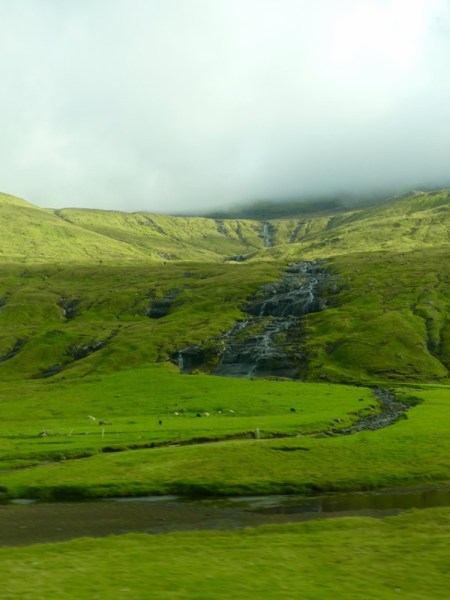
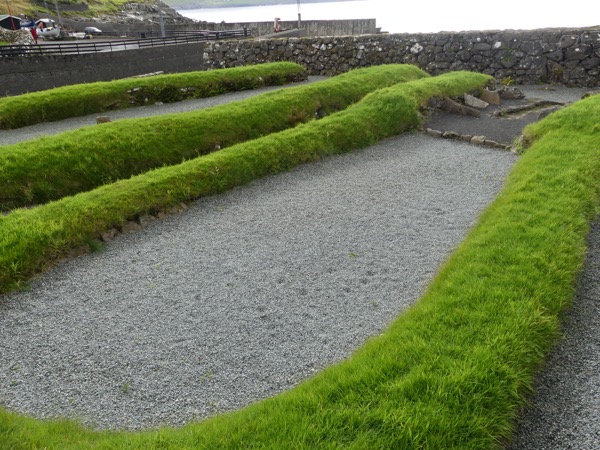
We head to the village of Kvivik to see the Viking longboat remains, or where they once were, and then to Leynar to visit the Village Woodman.

Below are stone built salmon jumps, old technology, but with devices which keep count of each salmon who climbed the steps, new technology. Can you see how green and lovely everything is, evan as fall approaches?

Drama Drama Drama! Who could be bored when the weather changes every minute with such verve and gusto?

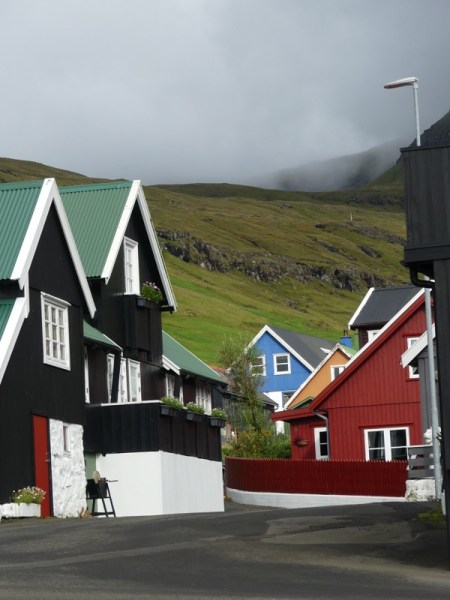
We are always interested in how people choose to live. Our guide explains that houses often contain three generations, the grandmother, the mother, and the daughter. Isn’t that an interesting way to describe it? We tend to think in male-ownership terms, but these houses are communal based on matrilineal lines.
I wonder where daughters-in-law fit in?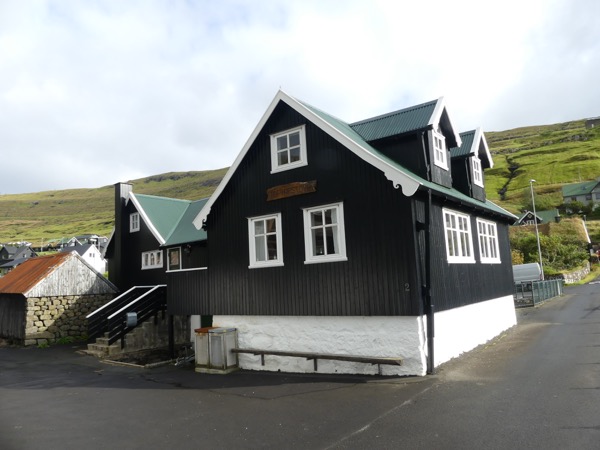


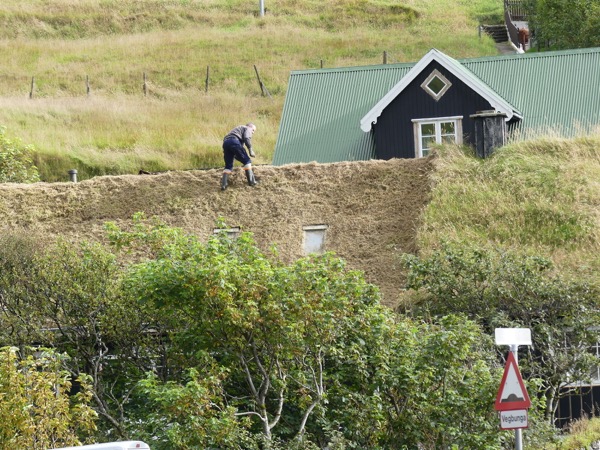
Look closely here, a man is up on his turf roof, trimming things down for the winter.
Viking longboat site
They teach their children three important rules. 1. Be kind. 2. Be kind. 3. When one and two fail, be kind.
He told us how houses are built, and how people help one another get their houses built. They are taught “better that many are not poor than that a few are rich.” We did not see a single dump any where in our journey took us; everything was clean and well-kept. People are fined heavily for dropping trash. There are only two policemen in the Faroes, and there is no prison, there is so little crime. “Where would you run? Where would you hide?” he asks. “Everyone would know you, so you don’t do it.”
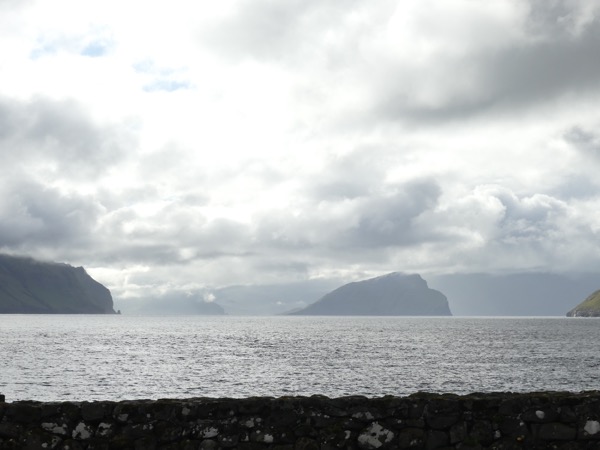
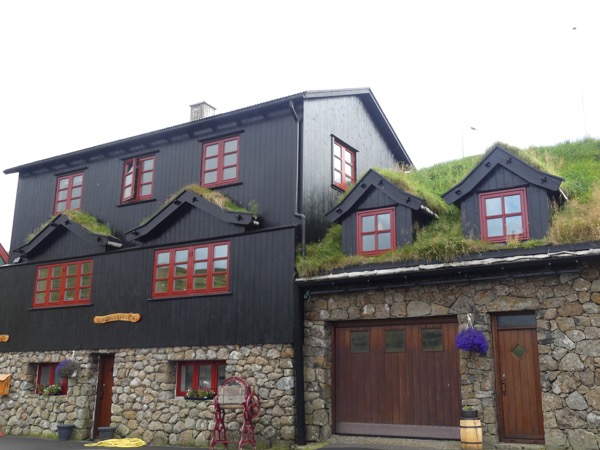
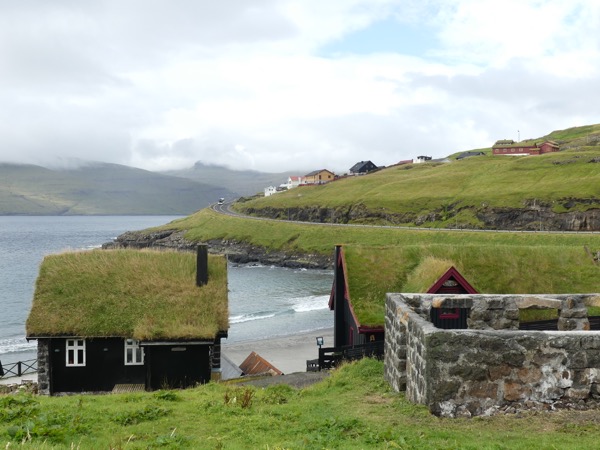
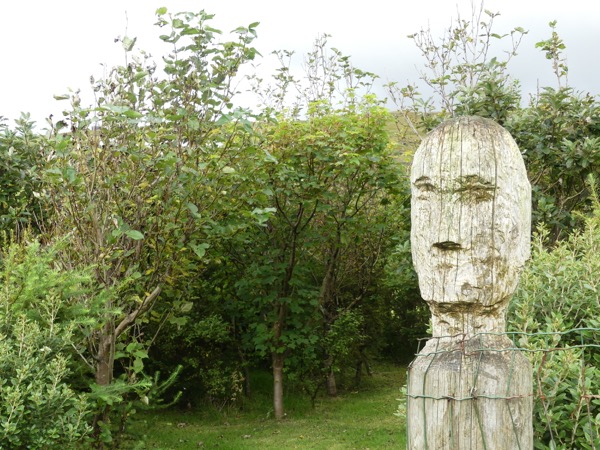
He told us that many of the families of the Faroes were started by Norsemen who found local girls and were afraid to go home and face their wives, who were waiting for them with big sticks. He made us laugh, and laughter always helps us understand.
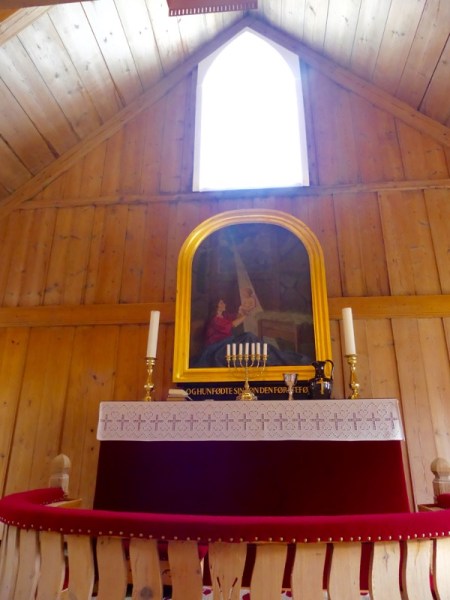
He took us into a beautiful little church, beautiful finished wood on the inside (see below) and he sang to us a familiar hymn, in Faraoese, Nearer My God to Thee. It was so sweet, and so beautiful, my eyes teared. He told us he waited 30 years to get married, and was the first one to wed once the Danish stopped insisting on state churches. (The church is now Lutheran.)

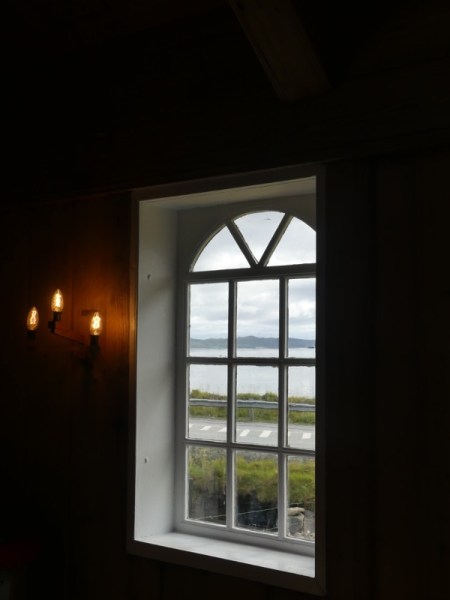
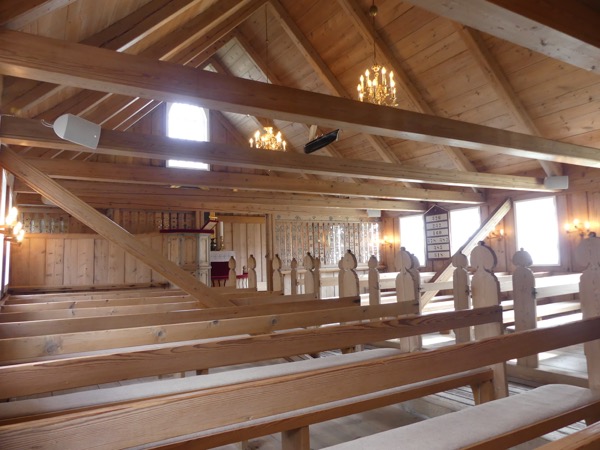

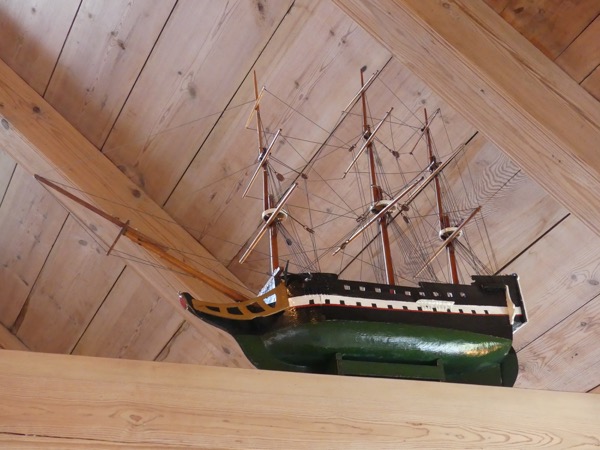
The Faero Islands reminds me of where I grew up, in Alaska, where neighbors held that same kind of concern for one another and for the communal life. We lived on an island full of Scandinavian immigrant families, along with the native Haida, Aleut, Tlingket, and occasional Inuit. It never mattered that we differed, when someone needed help, we helped. A neighbor didn’t go hungry, their children didn’t go unclothed. I remember the delight when our neighbor passed along her daughter’s lightly used clothing they had outgrown, and we could wear it. I remember one skirt in particular, a grey and yellow plaid Pendleton skirt which I wore for years, and maybe fifteen years later my old neighbor saw me wear it and said “I used to have a skirt just like that!” and I laughed and said “This is your skirt!” When you have a Pendleton skirt, you can wear it for the rest of your life; they wear so well. We were frugal people, and we never wanted for anything. We shared what we had.
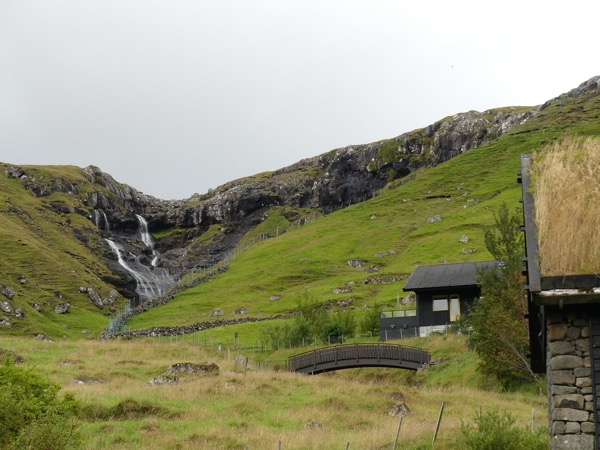
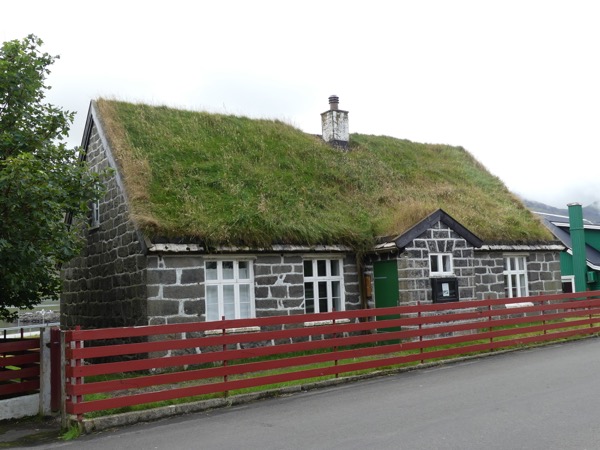
I got the impression that actually the guide doesn’t much like Americans. It didn’t matter, he was kind, he was professional, and I believe he gave a great value for the money. He shared the truth of his culture as he lives it and was fair to us. That’s good enough.
I can’t give you a lot of information about the photos, only that I took what I thought would give you an idea of what life on the Faroe Islands might look like. For me, this was a great day, very little rain, even some sunshine, and I learned about a culture I really like. I like that they teach their children: Be Kind. Be Kind. Be Kind.
Wake of the Vikings: My Favorite Places Aboard the Viking Sky
I have a dear friend I met on a previous Viking Trip. We met outside a museum of Archaeology in Zadar, and we were astounded, watching the Viking Tours go by and not one mention of this really good museum for the bargain price of 4 Euro.
Every time we saw one another, we had very quick but high quality conversations. It might be we’d pass at a restaurant in Dubrovnik, and they would tell us about a purchase and we would tell them about a cauldron of mussels. It might be in a quiet corner outside the WinterGarden. Even aboard ship, we led very different lives, but have developed a lively friendship via correspondence, greatly about books and politics and efforts to create a better world.
We laugh at how different we are. I told her about yesterday, the rolling waves and going to the spa and laughing as we rolled around in the hot pool, the waves sloshing back and forth and front to back. She wrote back that not only does she not believe she will ever see her husband in a spa, but that he would also be “knee-walking sick” in those “rollicking” waves. She makes me laugh, and I make her laugh, and part of our friendship is respecting our differences.
So my favorite parts of the ship may not be your favorite parts of the Viking Sky. I am an introvert. I would rather pay more for a room, and spend time there, than in most of the public spaces, no matter how lovely they are, and the Viking Sky truly has many lovely and serene spaces.
Here are mine: the room
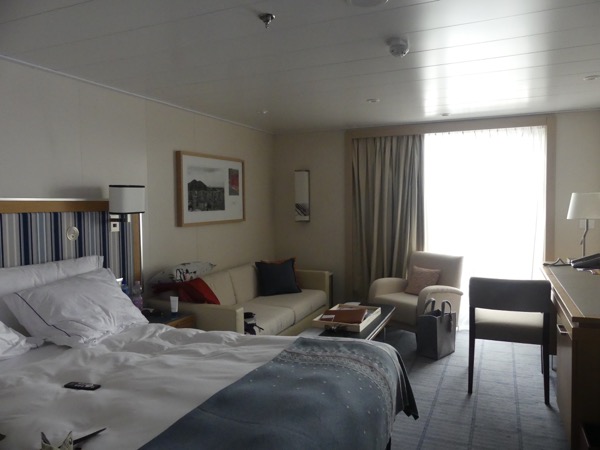

The spa:
Below is the snow room; there really is snow underfoot and snow falling, you go there after the wonderful hot pool
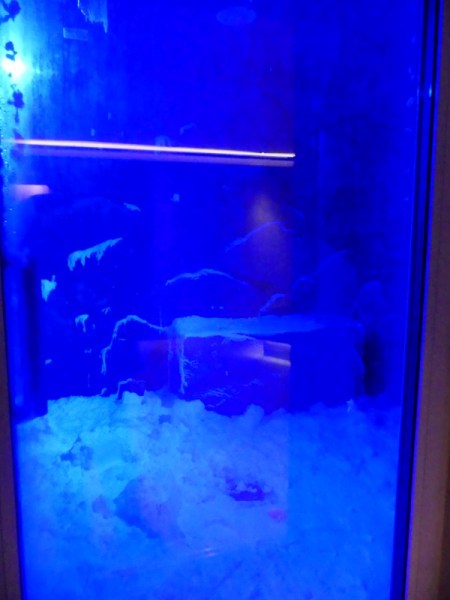

The wonderful hot pool, above

Where you rest before you go back to real life again 😉
A quiet corner just outside the Winter Garden

I would have also taken a couple photos in the Explorer’s Lounge, but . . . it was full of people! On our last cruise, it was rarely full, not even close, only some people would come, for Mamsen’s, for the view, for the quiet and privacy. When the bar is open, it is more crowded and noisier. You can see photos of the Explorer’s Lounge from our last trip, on the Viking Sea.
Wake of the Vikings: The Fantoft Stave Church
People are irrational, or anyway I know I am irrational. I think I am logical and make decisions using my mind, but I know that I often make decisions based on an emotional tug, and I rationalize my decision to make it seem logical. Such is the Fantoft Stave Church just outside of Bergen.
I really wanted to see this church. I found a way to take a bus there, but it was a long way out and it was a Sunday and I wasn’t sure about buses running on Sunday. I signed us up for a tour.
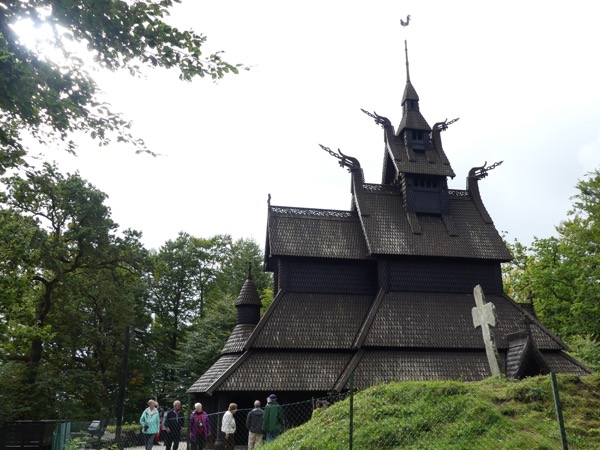
I really like churches.
I really like being alone in a church, or being with other church-y people, people who respect churches as a place where people do their best to communicate with a God they can’t figure out.
This was not that kind of visit.
One group out, another group in. I never had a moment alone in this lovely church, built entirely of pegged wood. Imagine, putting an entire church together without a nail. Pretty amazing. The church is beautiful and unique. I just wish I had had time there to get to know it better.


The roof is stunning. They used the same technology they used to build Viking boats.
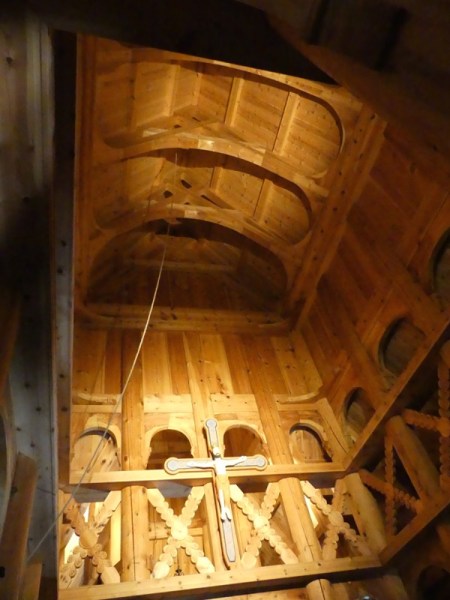
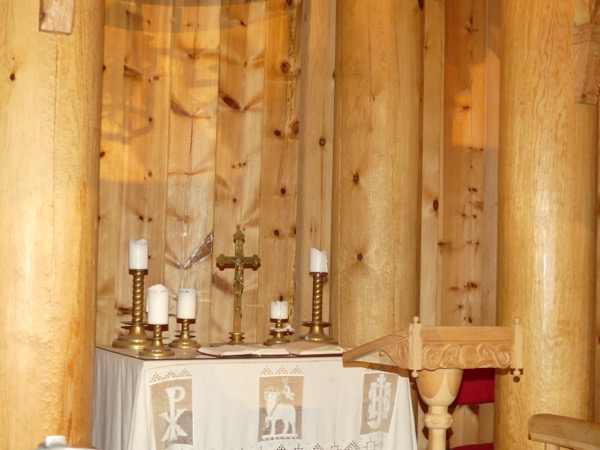
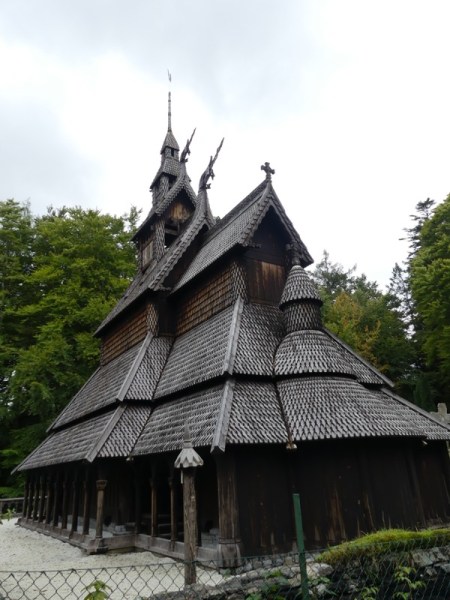
The tour was also listed as “moderate” walking, but several people were on the tour who had wheelchairs or walkers. The second part of the tour, visiting Grieg’s house, museum, studio, grave site, etc required hiking up and down rock paths and leaf strewn paths in wet, rainy conditions. There were places I just didn’t go; I didn’t want to take a chance on a slip-and-fall that could hold me up the rest of the trip. I did fine, but I felt really sorry for those who had signed on thinking it was ‘moderate’ walking and it was really some fairly dangerous turn for those with mobility impairments.
Back on the ship, we went straight to the safety muster, where we gather to be shown how to put on a life-jacket and to go to our life boat, when and if needed.
Best part of the day was Sunday church services held in the Torshavn Bar. It’s a light interdenominational service with inspirational readings, but it soothes my grumpy soul and sets me right for the week to come.
Wake of the Vikings: An Evening in Bergen
We arrive in Bergen around seven in the evening, and we don’t even bother unpacking our bags. They will be picked up the next morning to be transferred to the ship, the Viking Sky, while we are touring Bergen. Meanwhile, we are in the most wonderful location, in Bryggen, the old commercial center of Burgen, full of beautiful colored, crooked houses, and areas full of white houses, and all kinds of places which we can reach by walking, which we love to do.


Except that AdventureMan has a terrible cold, and my throat is sore. He is apologizing profusely, but who knows if I caught it from him, or from touching a chair somewhere? Sore throats happen, but we can treat the symptoms, and I saw just the place as we came into town.
Our hotel, the Radisson Blu, is wonderfully located. We walk a short distance and find an ATM where we can purchase Norwegian kroner, then, just past the fish market, we find the China Palace.
As we are going, we hear singing. Across the street, a group of men on bicycles are singing! They are three abreast on their bikes, holding hands, dressed in suits and ties, and singing. It is dusk and it is magical.


We have no idea what it was about. Is this a fraternity thing? Is this a gay group thing? We have no idea, we only know it was delightful.
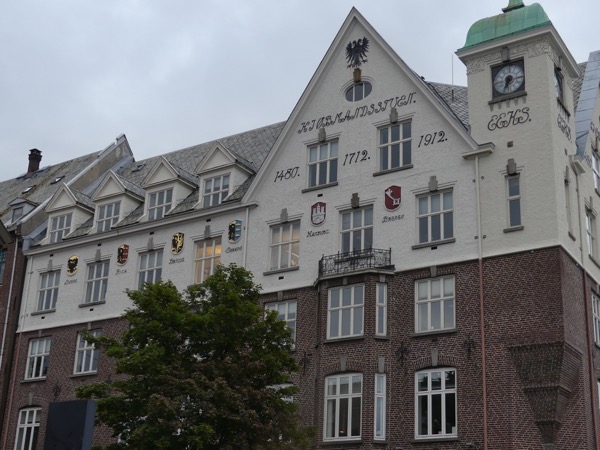
The China Palace was nearly full, but they found a table for us. We ordered soup and egg rolls; even if the food was really good, we were too sick to enjoy it much. When it came, it was perfect for us, Pekingsuppe and large egg rolls. Exactly right, comfort food. We felt much better.
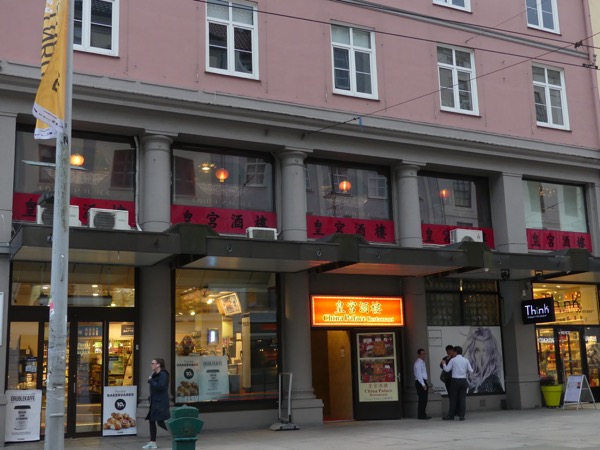
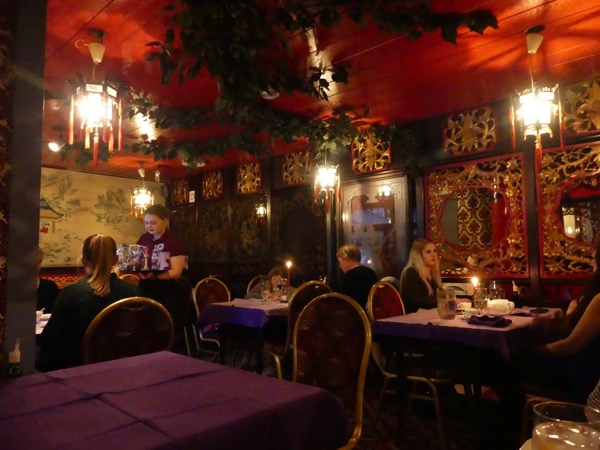

On our way back to the hotel, the light was that wonderful light just before dark fully falls. The streets are crowded with young people and old meeting up for an evening of visiting and drinking.
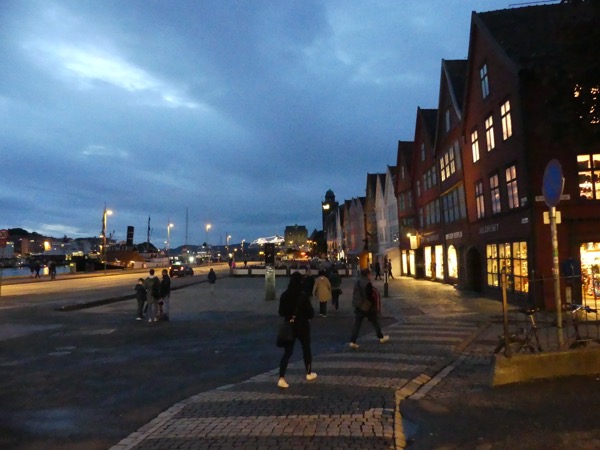
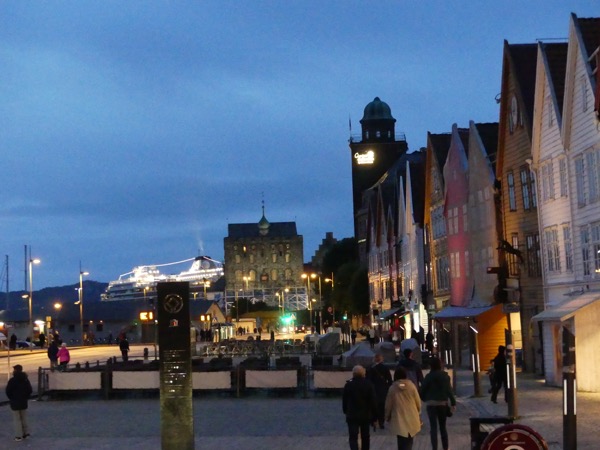
And here is what I really love, the Viking Sky is nearby, so near we can walk there, which we do, often, the next day. That’s the Sky in the background.
Wake of the Vikings: Bergenbahn from Oslo
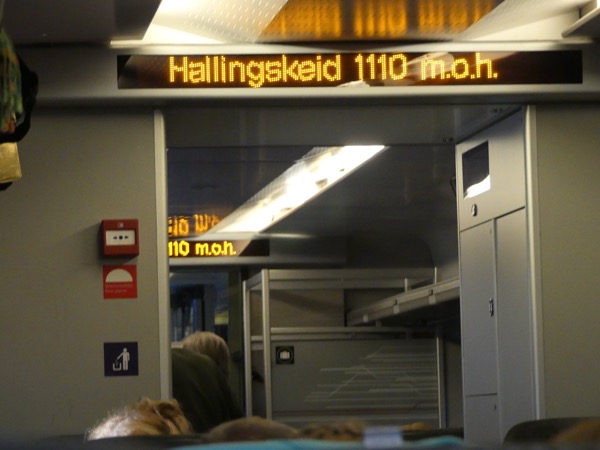
Seven hours of the most beautiful train ride in the world!
The Bergenbahn is very comfortable, and we have nice seats. We are given vouchers so we can eat what we choose from the train restaurant, and AdventureMan braves the line and brings back a lovely smoked salmon salad, which exactly hits the spot.
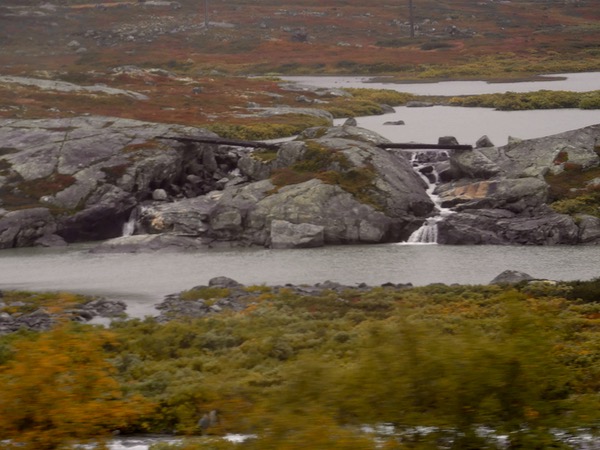
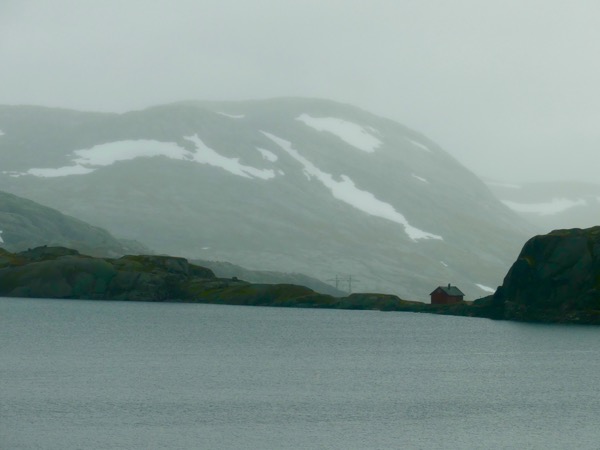
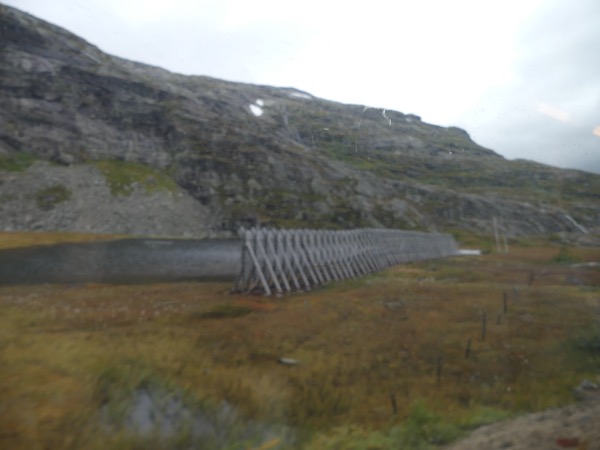
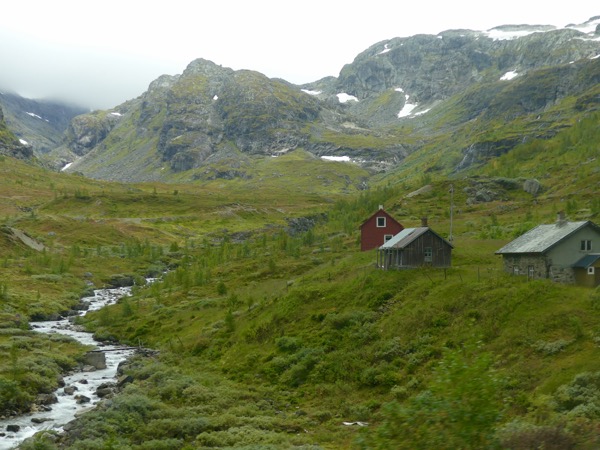
AdventureMan slept. I took photos. Lucky you, I’ve edited out most of them. The following thousand or so photos (LOL) is the ones I chose to share with you.
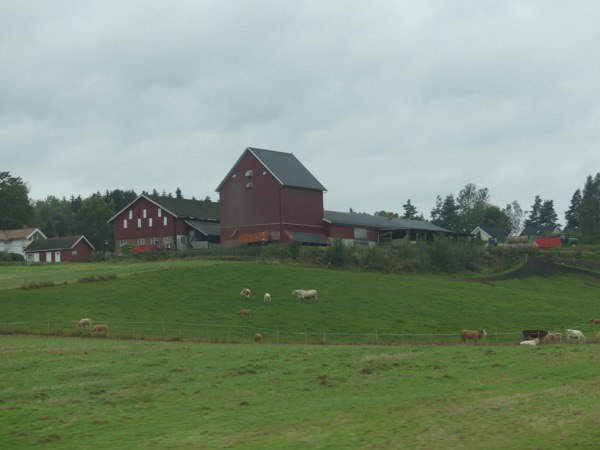
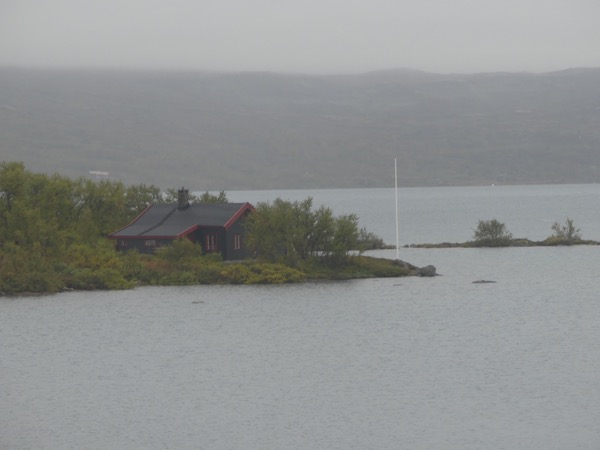
The trip starts off rural, with lots of white houses and red barns, lots of fat wooly sheep and green pastures, and then gives way to mountain scenery. In seven short hours (the scenery is not unlike crossing the mountains in Washington State except for the lack of these deep red barns, every single barn is the same shade of red. How do they know what to paint their barns? Is there a rule? We are told Norway has a lot of rules for the good of the community, but I didn’t think to ask about the barn color.
The train car

Norwegian Wood 🙂
(I once had a girl, or should I say she once had me . . . . )


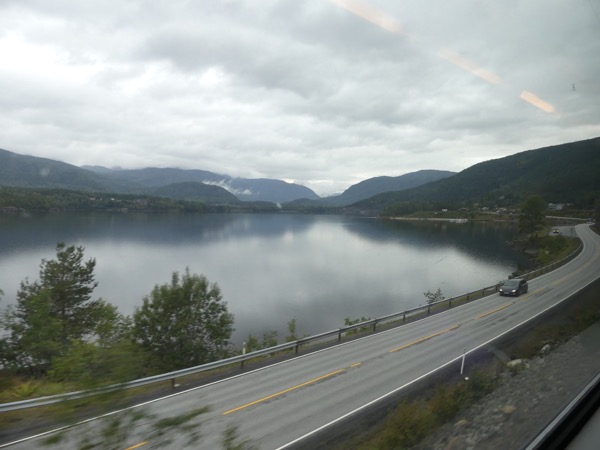
This is the traditional type of tiles used on the roofs, reminiscent of fish scales


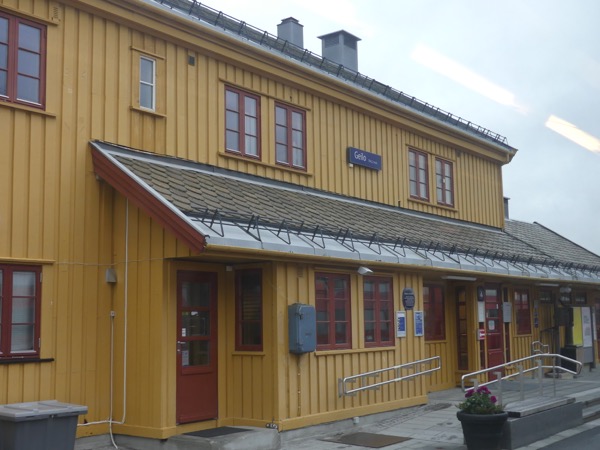
A local train stop; most of them were this mustard color, but some were the red-brick color
“Norwegians love quiet, and to be alone, ” the guide said. AdventureMan started looking at me oddly, and as people who have been married a long, long time do, I knew what he was thinking. He thinks I am Norwegian.

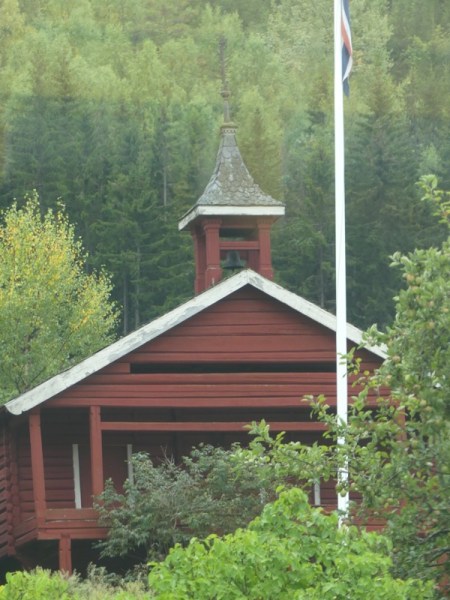
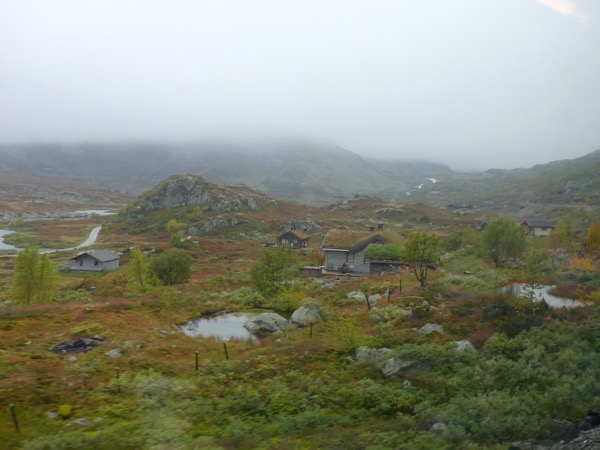
It might be hard to see, but the house in the center of the photo has a traditional roof with grass growing on it. I’ve seen this in Seattle; all things old become new again 🙂




Before leaving us in Bergen, our guide, Kathryn, donned her own precious traditional garb to show us. Everyone loved her for it, and took many many photos. With her intelligent commentary, and faithfulness in sharing all kinds of insights and lore, she was a great ambassador for her country.

In the Wake of the Vikings: The Viking Ship Museum in Oslo
I don’t have a bucket list. There are things I would like to do, and to the best of my ability, I just keep doing them, but I don’t worry about checking things off. If I don’t do it, I must not have cared enough. At the same time I am following in the Wake of the Vikings, my best friend from college is walking more than 100 miles on a trip. 100 miles! She showed me her Fit-bit readings, and she is doing like 38,000 steps a day!
You go, friend! (Not me!) There are days I do 10,000 steps, and once I even did 20,000 but I don’t expect those to happen often. I am proud for my friend to do this, and I have other challenges 🙂
Having said that, I really wanted to see the Viking Ship Museum, oh yeh, me and ten thousand other visitors in Oslo, and how on earth do we all end up at the museum at the same time? By deserting my group, and waiting patiently, I was able to get some people-less shots. You can’t imagine how hard that is.

I really like this one, above, because of the parallel shadow; the influences of the early Norse culture live on.

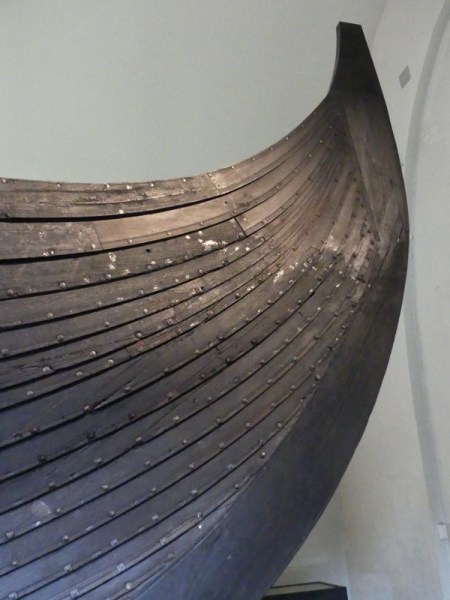
Imagine the patience and artistry it took to carve this piece!


This is a wagon; sorry for the reflection but it is encased in plastic to protect it from all the people (like me) who might like to touch . . . It was interesting to me to see a wheel built out of sections held together with metal clips.

This is a carved sled – imagine all that trouble for an item of daily use. Must be the long, cold, dark winters gave them the time to imagine and bring to reality.

Another sled. So beautiful.
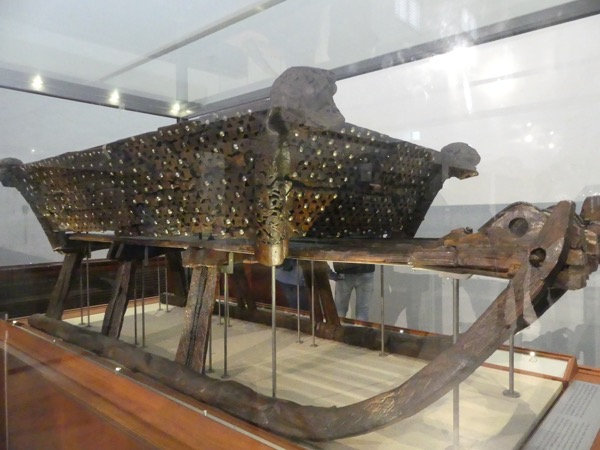
This is a small museum, but inspiring. There is also a movie, which I missed because I wanted to take photos without other people in them.
I find Oslo beautiful. I find their traditional buildings beautiful, even those with grass roofs. How practically beautiful! And the new buildings they are doing knock my socks off! Look at the “iceberg” and at their new Opera and Ballet center!


This might look like the same photo as the above, but the above is to show some of the new high rises going up, where below is to highlight the statue called She Lies. I love this collection of statues. This is another one I would give to high school students and ask them to tell me the story. The body language is so ambivalent, I am sure that there are as many possibilities as there are viewers!
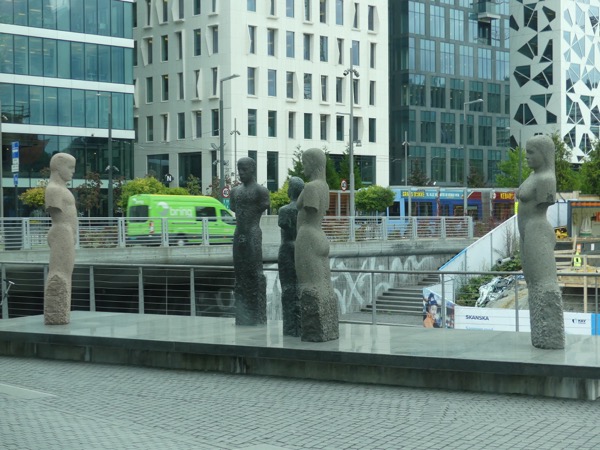

More traditional Oslo; less daring, equally beautiful.

Wake of the Vikings: Oslo City Tour – Vigeland Park
In the last post, I told you AdventureMan and I are not very good about staying on track with a tour. Sometimes there is too much information, and too much time at a location about which I care little. VIgeland Park was just the opposite, for both AdventureMan and I. Vigeland Park was so extraordinary it made us want to come back to Oslo and to walk the streets and visit all the public art we can, and spend a lot more time with these lovely, terrifying, amazing sculptures.
This gutsy sculptor told the city of Oslo that he would do a series of sculptures for free if the city would pay for materials, provide a location, and provide help for the project. After lengthy debate, astonishingly, the city agreed. Vigeland created the statues, the park was completed and Oslo had a cultural treasure.
Vigeland’s sculptures deal with mankind, in all glory and in all despair, in all conditions. I will show you one of my favorites, because I am one of three sisters, and what I read into this statue is sisterhood:
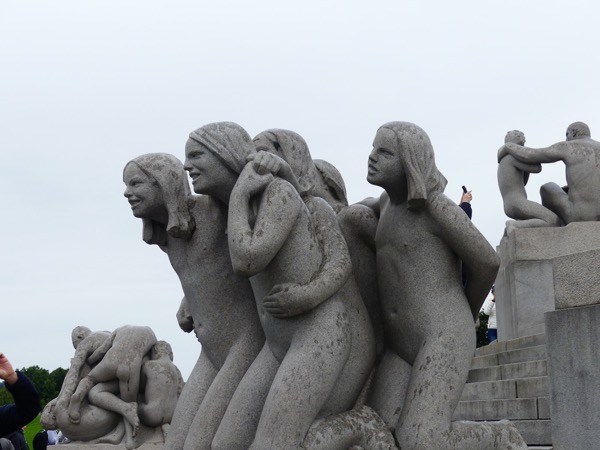
Can you see why I like this statue? You can read so much into his statuary. If I were teaching high school art, I would put out a series of photos of his sculptures and ask each student to choose one and to write about what he or she sees in the sculpture.
There are mothers and fathers with their children:
What do you see? Some saw a man, overwhelmed, careless as he handled his children. I saw a metaphorical balancing act, and don’t children alway find their fathers the most fun because of the risks they take?

Some saw joy in this mother racing with her child. What do you see?
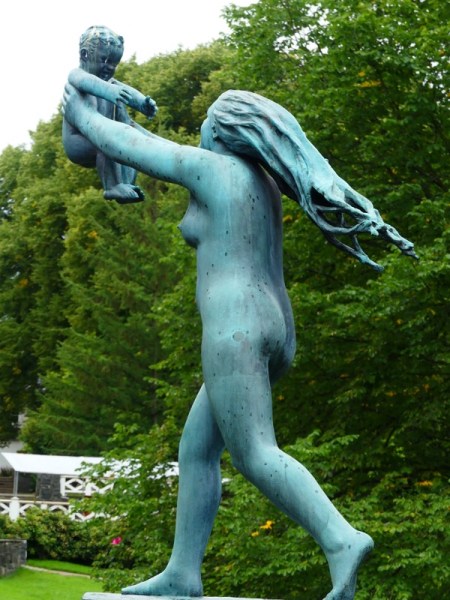

This column centers the exhibit. It is full of people and children, surrounded by people, men and women, all nude, all naked spiritually and open for our observation and interpretation:
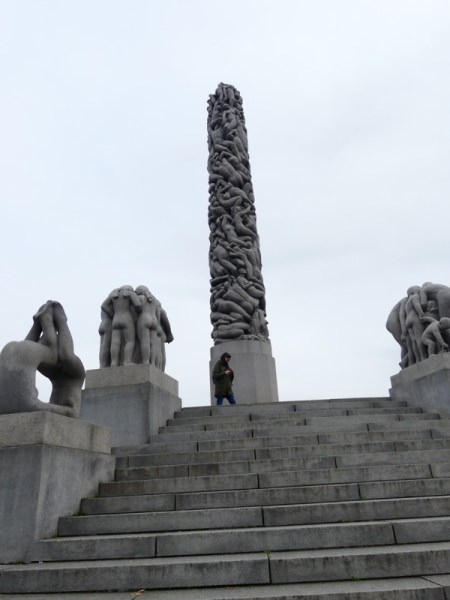
This park is incredibly popular. I would love to go back when there aren’t a lot of people. This is a park where you can spend a lot of time speculating.
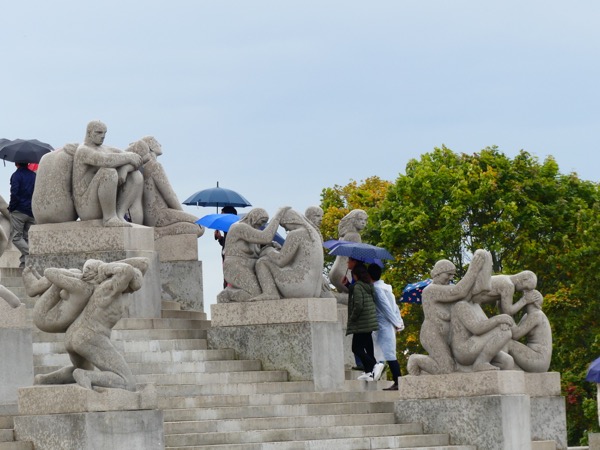

This is a separate pavilion with depictions of the stages of a life, and the transitions back and forth from the “other world” to this world.

I struggle with this series below – I’ve only shown two. It is a woman with a dragon – or is it a demon? Is she fighting with it, or dancing with it? And in the last picture, is he embracing her? Is he devouring her?


These sculptures are like a good book, you can think about them for a long time, and at different times in your life you may come to understand them in different ways.
Wake of the Vikings: Oslo City Tour
If this is your first time visiting this blog, there are things you don’t know yet. One important thing would be that AdventureMan and I love to travel, and the other is that we are very independent. We are pretty awful about tours. We aren’t very good at following with a crowd, we sort of break off, and often disappear altogether. I have pity for the tour guides who get us; they have a job to do and we are not compliant. We ARE good at keeping the guide informed, like when we are dropping off, and assuring them that we will be able to meet up with them elsewhere.
Having said that, this tour of Oslo was very thorough. Much of it was “panoramic” which is travel industry code for drive-them-around-in-a-bus-and-show-them-things, stop-a-couple-times-to-let-them-take-photos. It did that. What I liked was that the guide really knew her stuff, and gave us a lot of cultural information, a lot of local lore along with the “this is the parliament building” kind of information. We got a lot of information, buildings, institutions, and we also got a lot of information about how the locals live and how the locals view things.
As we drove through posh neighborhoods, the guide told us about how the housing costs in Oslo have forced most Norwegians out of the city; that old buildings and new have spaces rented by foreigners and corporations. For the same price as a small apartment, Norwegians can buy a house out of town. The commute is horrible, but many get up at five and are at their desks by seven to avoid the traffic.
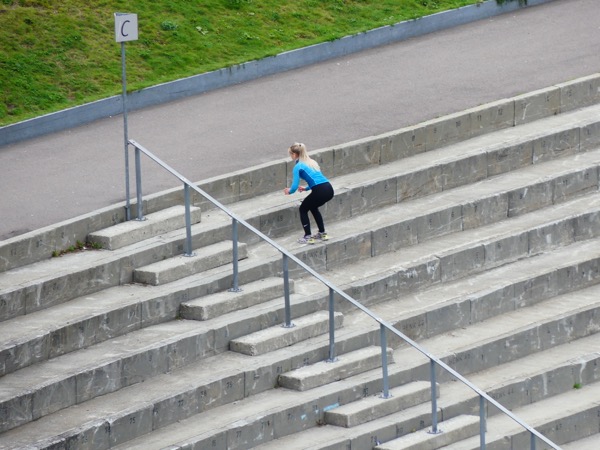
She took us to see a famous ski-jump. Now this is one of those things I would have said “I don’t care,” but when I got there, I could see that it was like a DESIGNER ski-jump, curvy and futuristic looking. I also loved it that there were kids roller-skiing (roller-skiing ? ! ?) and adults doing all kinds of fitness running, jumping – it has become a space where people go for exercise and experiencing the outdoors.
I have to stop a minute here – look at the design of this ski-jump. Is that not thrilling, so perfectly functional and so simply beautiful?


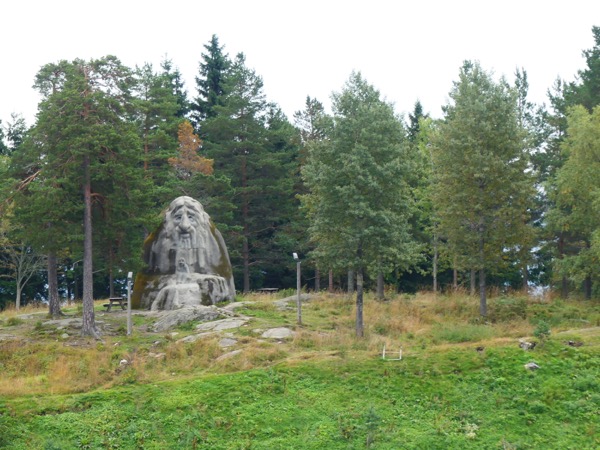
At the foot of the ski jump is a forest troll – can you spot him?
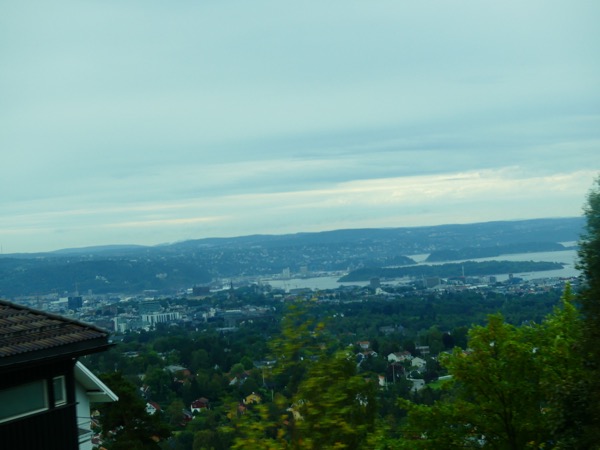
People living in the vicinity of the ski jump have a wonderful view of the city and bay:
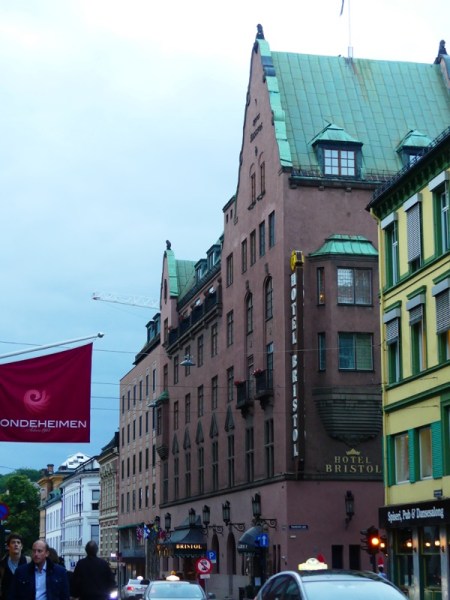
Wake of the Vikings: Oslo – Bristol Hotel and Surroundings
A quick ride from the airport to downtown Oslo, where we find The Bristol Hotel, and inside a table with Viking local guides, armed with key sets with each passengers name. So easy, so well thought through – no waiting, just pick up your keys and an information sheet (like what time to meet up with your guide the next morning – critical information) and up to our room. Smooth. Efficient. Well done.
The room is charming and welcoming. You would think we would drop all our bags and hit the town, but you would be wrong. We dropped all our bags and hit the sack; slept like the dead for two hours and forced ourselves to wake up and get morning. It works for us.
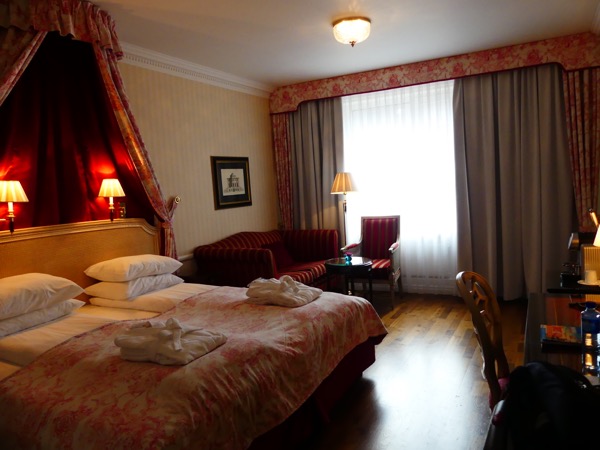
I loved the spaciousness of this room, and oh, YES, wooden floors. I am such a sucker for wooden floors.
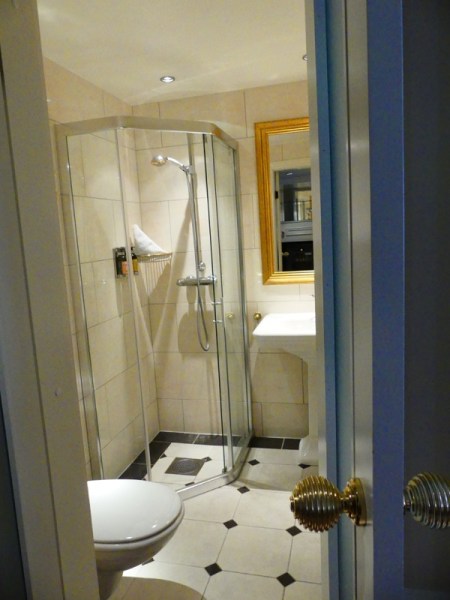
The bathroom was nice enough; I took a photo to show you the teeny tiny shower. I estimated it was about two feet by maybe two and a half feet at the longest, but a door cut across at a 45 degree angle, slicing space out of the shower. The controls were interesting; you control hot and cold with the right lever, and volume with the left. Well, it got the job done, it just felt cramped.

A storage rack and a pay bar in the entry hall.
We ate dinner in the Bristol Library Bar; the most fun was watching the locals gather in groups to have a drink on the way home. It was a busy, happy place, and we decided to eat dinner there and then go for a walk.

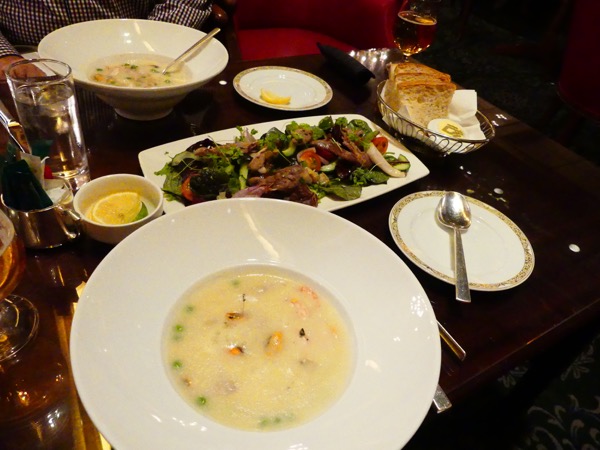
Our dinner was a bowl of Norwegian fish soup and an Autumn salad. The fish soup was delicious; we don’t put peas in fish soup in the Pacific Northwest, nor in the South, so it was a lovely addition that surprised me and delighted me. The Herbstsalad had roast duck pieces, and roasted beet, on a bed of mixed greens. The whole meal was lovely.
After dinner, we walked around the shopping area near our hotel, it was a beautiful night and the streets were crowded with a festive crowd. I thought the below was a church, and perhaps it was at one time, but I was told it is no longer a functioning church.
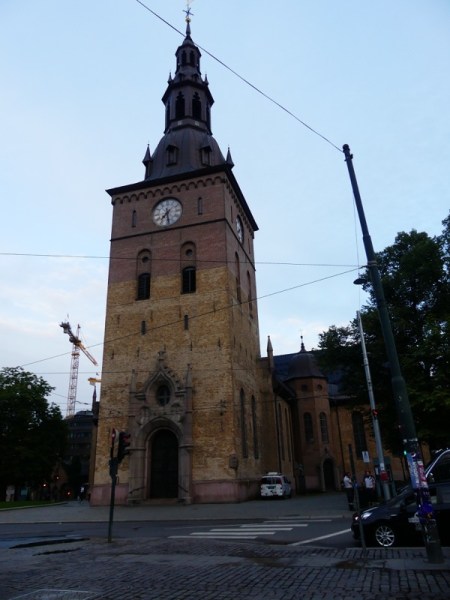
Some public art – Oslo is full of lovely statuary, and beautiful parks.

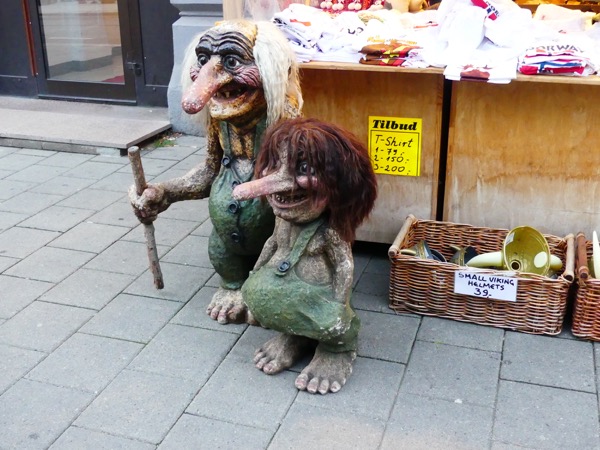
Oslo is also peopled by these trolls, in infinite variety. I sort of like them, I think of Father Richard Rohr and his message that our dark side is sometimes the way we find our path to God, in our brokenness.
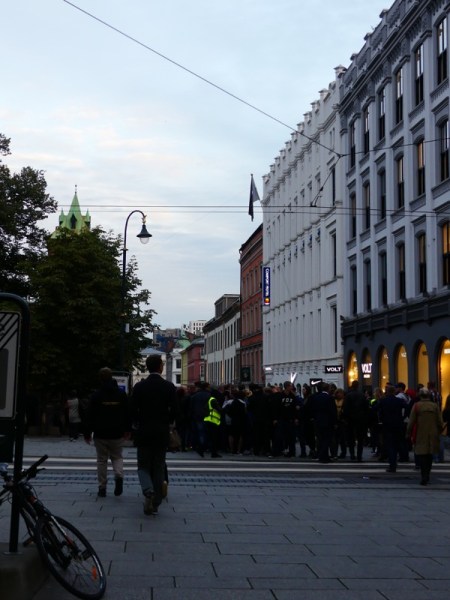
As we walked, more and more people were gathering along the pedestrian way. We would ask, but no one we asked seemed to know what was happening, but all suggested it was probably a political rally with elections coming up soon. It was a very festive rally, not hostile or threatening in any way. Ah, to have such civil politics . . . .
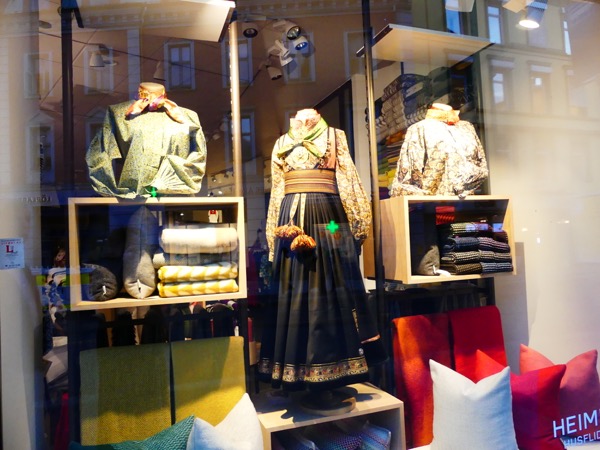
Near our hotel was a store which sold what we called in Germany, “trachten” which means traditional folk-clothing. This traditional folk clothing is still made and is increasingly worn on high social occasions – weddings, important political occasions, National day, etc and is very expensive. One guide told us an outfit might start at $2,000. and then for special occasions, your husband might buy you the traditional jewelry which goes with the clothing.

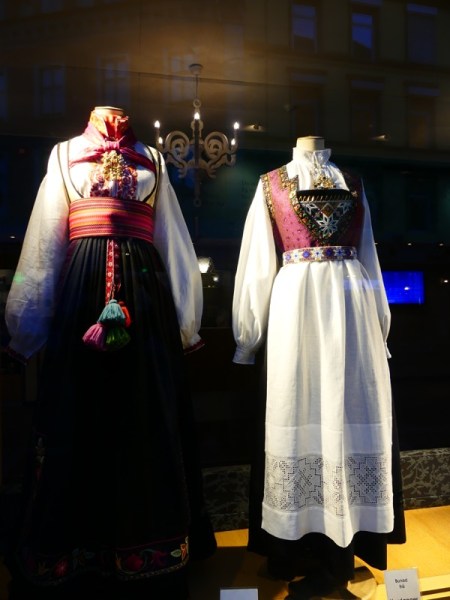
This is actually my favorite, below. The Norwegian traditional clothing seems to me to have some Middle Eastern influence in the trims and buttons and modesty. No, I am not the least bit tempted; it would not work in Pensacola. It would be too hot and too heavy, and the heat and humidity would harm the valuable wool fabrics.

We slept wonderfully at the Bristol Hotel, and were up bright and shiny the next morning for our tour of Oslo and train trip over the mountains to Bergen.
A Dramatic Beginning to The Wake of the Vikings
It’s not that I am THAT compulsive, but I do like to plan ahead, and things that happen at the last minute that require attention can disturb my sleep.
This is a trip we’ve had planned for over a year and a half. We didn’t plan for Hurricane Harvey, and we are flying out of Houston. We didn’t plan on Hurricane Irma, another all-time historical hurricane, headed toward Florida, and possibly into the Gulf. Possibly into Pensacola.
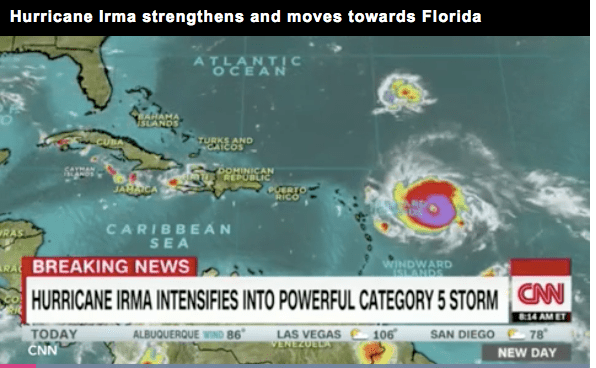
We have a wonderful couple who take care of our house and our cats while we are gone. She called the day before we were leaving to ask if we had any plans for the hurricane she needed to know about. Hmmmm. No, I didn’t. I planned not to worry about it. And . . . at the same time, all around me, people are stocking up on propane, and Sam’s has run out of water, and . . . . some people are preparing to hunker down and some to leave home, heading north.
We got moving. I had an hour before my last meeting, and spent that hour figuring out what really mattered to me (photo albums) and putting photo albums up high and in cupboards, and fragile things, like the crystal candelabra AdventureMan gave me for our first anniversary in the safest place I could think of.
Law and Order Man (our son) said he would take Ragnar and Uhtred, our very young cats, to a safe place, if needed.
AdventureMan braced the garage doors with huge specially made steel beams that bolt into place, and we called our contractor who said if it looked like Irma was heading our way, he would put up all the ballistic window and door covers.
It’s not everything, but it’s something. We all felt a lot better.
And thanks to the ‘net, we know that Houston is up and running, and our flights into Houston and out of Houston will fly.
Around eleven, we hear the front door opening (? ! ? ! ? !) and it is the couple who are coming to stay with the house and cats; they thought we were leaving at night, not the next morning. We all laughed, got them settled, and went to sleep peacefully.
The flight into Houston was the best kind, uneventful. We love uneventful flights. You can still see a lot of standing water, and water damage, but the greatest part of the upswell of waters appears to have subsided.
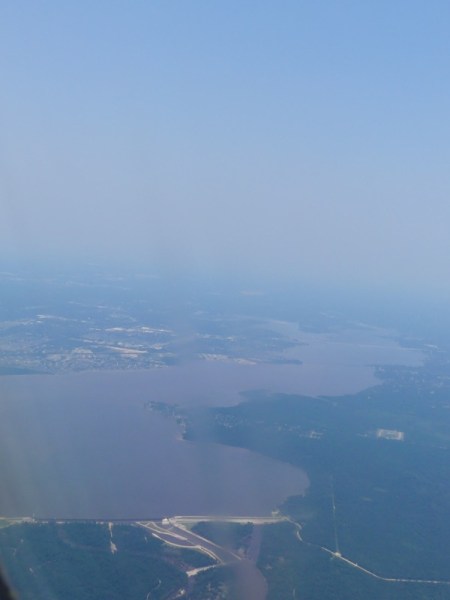


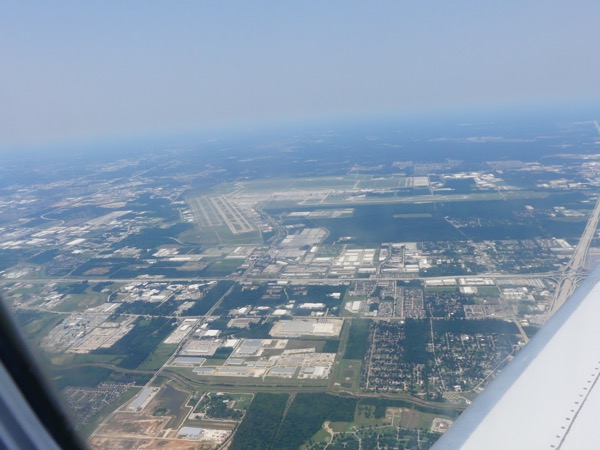
“Today is the first day that the airport is 100% up and running,” a Houstonian tells us. We are good listeners, and he tells us that the worst part of all this drama is that the death count continues to mount as rescue-workers go into places where people thought they could shelter in safety. The mold is also hitting hard and fast, and emergency facilities are strapped. They are functioning, and they are prepared, and some things are beginning to run out.
The best, he followed up with, is that “you know how divided we have all been? Once the storm hit, it didn’t matter if you were black or white or Mexican or Confederate, we were all just people, and we helped our neighbors, we helped each other. In that way, it was one of the best things that has ever happened in Houston.”
Who would have thought? Houston-strong!
Recent Comments
intlxpatr on Shampoo Ginger tigerbutterya0c5ff1d… on Shampoo Ginger intlxpatr on British Soldier Kidnapped, Esc… John on British Soldier Kidnapped, Esc… intlxpatr on British Soldier Kidnapped, Esc… Wikipedia Donate Button

Amazina


Early Voting in Florida


