25 Reasons to Drink Green Tea
I am a great believer that one way to stay well is to stay away from clinics and hospitals, where bad germs lurk, just waiting for the next victim. I am always looking for natural remedies, and science is finding that many times, old natural remedies work for a reason. Like chicken soup when you have a cold, like the benefits of drinking green tea.
I don’t know that green tea works in every way this article says it does, but there are enough benefits, and enough scientific research showing that it improves bodily functions, that I regularly imbibe.

Green tea has increasingly become a very popular drink worldwide because of its immensely powerful health benefits.
It is extraordinarily amazing what green tea can do for your health.
And if you’re not drinking 3 to 4 cups of green tea today, you’re definitely NOT doing your health a big favor.
Here Are The 25 Reasons Why You Should Start Drinking Green Tea Right Now:
1. Green Tea and Cancer
Green tea helps reduce the risk of cancer.
The antioxidant in green tea is 100 times more effective than vitamin C and 25 times better than vitamin E.
This helps your body at protecting cells from damage believed to be linked to cancer.
http://www.finegreentea.com/green-tea-cancer.html
2. Green Tea and Heart Disease
Green tea helps prevent heart disease and stroke by lowering the level of cholesterol.
Even after the heart attack, it prevents cell deaths and speeds up the recovery of heart cells.
http://www.finegreentea.com/green-tea-and-heart-disease.html
3. Green Tea and Anti-Aging
Green tea contains antioxidant known as polyphenols which fight against free radicals.
What this means it helps you fight against aging and promotes longevity.
4. Green Tea and Weight Loss
Green tea helps with your body weight loss. Green tea burns fat and boosts your metabolism rate naturally.
It can help you burn up to 70 calories in just one day.
That translates to 7 pounds in one year.
http://www.finegreentea.com/green-tea-weight-loss.html
5. Green Tea and Skin
Antioxidant in green tea protects the skin from the harmful effects of free radicals, which cause wrinkling and skin aging.
Green tea also helps fight against skin cancer.
http://www.finegreentea.com/green-tea-skin.html
6. Green Tea and Arthritis
Green tea can help prevent and reduce the risk of rheumatoid arthritis.
Green tea has benefit for your health as it protects the cartilage by blocking the enzyme that destroys cartilage.
http://www.finegreentea.com/green-tea-and-arthritis.html
7. Green Tea and Bones
The very key to this is high fluoride content found in green tea.
It helps keep your bones strong.
If you drink green tea every day, this will help you preserve your bone density.
8. Green Tea and Cholesterol
Green tea can help lower cholesterol level.
It also improves the ratio of good cholesterol to bad cholesterol, by reducing bad cholesterol level.
http://www.finegreentea.com/green-tea-and-cholesterol.html
9. Green Tea and Obesity
Green tea prevents obesity by stopping the movement of glucose in fat cells.
If you are on a healthy diet, exercise regularly and drink green tea, it is unlikely you’ll be obese.
10. Green Tea and Diabetes
Green tea improves lipid and glucose metabolisms, prevents sharp increases in blood sugar level, and balances your metabolism rate.
http://www.finegreentea.com/diabetes-and-green-tea.html
11. Green Tea and Alzheimer’s
Green tea helps boost your memory.
And although there’s no cure for Alzheimer’s, it helps slow the process of reduced acetylcholine in the brain, which leads to Alzheimer’s.
12. Green Tea and Parkinson’s
Antioxidants in green tea helps prevent against cell damage in the brain, which could cause Parkinson’s. People drinking green tea also are less likely to progress with Parkinson’s.
13. Green Tea and Liver Disease
Green tea helps prevent transplant failure in people with liver failure. Researches showed that green tea destroys harmful free radicals in fatty livers.
http://www.finegreentea.com/green-tea-liver.html
14. Green Tea and High Blood Pressure
Green tea helps prevent high blood pressure.
Drinking green tea helps keep your blood pressure down by repressing angiotensin, which leads to high blood pressure.
http://www.finegreentea.com/green-tea-and-high-blood-pressure.html
15. Green Tea and Food Poisoning
Catechin found in green tea can kill bacteria which causes food poisoning and kills the toxins produced by those bacteria.
16. Green Tea and Blood Sugar
Blood sugar tends to increase with age, but polyphenols and polysaccharides in green tea help lower your blood sugar level.
17. Green Tea and Immunity
Polyphenols and flavenoids found in green tea help boost your immune system, making your health stronger in fighting against infections.
18. Green Tea and Cold and Flu
Green tea prevents you from getting a cold or flu.
Vitamin C in green tea helps you treat the flu and the common cold.
19. Green Tea and Asthma
Theophylline in green tea relaxes the muscles which support the bronchial tubes, reducing the severity of asthma.
20. Green Tea and Ear Infection
Green tea helps with ear infection problem.
For natural ear cleaning, soak a cotton ball in green tea and clean the infected ear.
21. Green Tea and Herpes
Green tea increases the effectiveness of topical interferon treatment of herpes.
First green tea compress is applied, and then let the skin dry before the interferon treatment.
22. Green Tea and Tooth Decay
Green tea destroys bacteria and viruses that cause many dental diseases.
It also slows the growth of bacteria which leads to bad breath.
http://www.finegreentea.com/green-tea-tooth-decay.html
23. Green Tea and Stress
L-theanine, which is a kind of amino acids in green tea, can help relieve stress and anxiety.
24. Green Tea and Allergies
EGCG found in green tea relieves allergies.
So, if you have allergies, you should really consider drinking green tea.
http://www.finegreentea.com/green-tea-allergy.html
25. Green Tea and HIV
Scientists in Japan have found that EGCG (Epigallocatechin Gallate) in green tea can stop HIV from binding to healthy immune cells.
What this means is that green tea can help stop the HIV virus from spreading.
Anthony’s At the Airport
We like the Anthony’s chain of seafood restaurants in the Seattle area, and we did not know they had one at the Seattle airport. We got there early, our flight was delayed, so we decided to have breakfast. There were all kinds of options, but when we saw the Anthony’s, we knew that was where we wanted to eat.
First, as you walk in, the floor is sort of sea-like, beach and sea-like, all done in stone and concrete and glass, but in waves. I was so fascinated by having all that beauty underfoot that I completely forgot to take any photos, but it thrilled me to have artwork so beautifully utilitarian. I can’t imagine who designed it, but it delighted my heart.
And, speaking of hearts, AdventureMan and I were disgustingly good. We just got our blood tests back and while our cholesterol levels have improved, we are still borderline, and want to be careful. I am not a big fan of oatmeal, but when it is smothered in brown sugar and pecans and blueberries it is a whole different ball game.

AdventureMan had the granola with bananas and blueberries – and said it was a “Yumm.”

We loved the windows of the restaurant – it reminded us of the old Saarinen TWA wing at JFK airport, with it’s soaring ceilings and feeling of flight.

I love the care taken with the details – even the teacups:

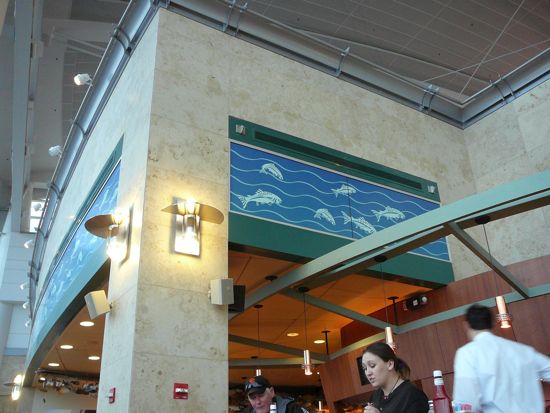
And the reminder that Anthony’s – even at the airport – sticks close to the sea:
Larger Waist Size Predicts Early Death
This is from today’s BBC Health News
‘Love handles’ raise death risk
A thickening girth can be a sign of type 2 diabetes
Carrying extra fat around your middle dramatically increases your risk of early death, even if your overall weight is normal, say researchers.
A study of almost 360,000 people from nine European countries found waist size a “powerful indicator” of risk.
Each extra 2ins (5cm) raised the chance of early death by between 13% and 17%.
The New England Journal of Medicine study stressed GPs should regulraly measure patients’ waists as a cheap and easy way to assess health.
The link between waist fat and health problems has been established for some time, but the sheer size of the study gives scientists a far more accurate picture.
The researchers, including some from Imperial College London, followed the volunteers, who were an average of 51 years old at the start of the study, for the next 10 years, during which time 14,723 of them died.
The standard measure of obesity, body mass index (BMI) remained a reasonable predictor of health problems, with those with a high reading more likely to die from cardiovascular disease or cancer.
However, the ‘hip/waist ratio’, a number produced by dividing the waist size by the hip measurement, and just the waist measurement on its own, were both good ways of sorting out those at highest risk.
Some people who had a completely normal BMI score, but a larger than average waist, were at significantly higher risk of early death.
At the extremes, men with waists exceeding 47ins (119cm) had a doubled rate of death compared with those with waists under 31.5ins (80cm), and a similar statistic was found when women with waists over 39ins (99cm) were compared to those under 25.5ins (64.7cm).
An increase in risk of death could be plotted every time the belt was let out by another two inches – for two people with the same BMI, every additional 2ins (5cm) on their waistband added up to a 17% increase in risk for men, and 13% for women.
BODY MASS INDEX
Calculated by dividing weight in kilograms by height in metres squared
Normal: 18.5 – 24.9
Overweight: 25 – 29.9
Obese: Above 30
Professor Elio Riboli, from Imperial College London, said: “We were surprised to see the waist size having such a powerful effect on people’s health and premature death.
“There aren’t many simple individual characteristics that can increase a person’s risk of premature death to this extent, independently from smoking and drinking.”
He added: “The good news is that you don’t need to take an expensive test and wait ages for the result to assess this aspect of your health – it costs virtually nothing to measure your hip and waist size.”
Fat message
The reason for the link is not entirely clear, but another researcher, Dr Tobias Pischon, from the German Institute of Human Nutrition at Potsdam-Rehbrucke, said that abdominal fat was not like other fat reserves, but could directly influence the development of chronic disease by releasing “messenger substances”.
A British Heart Foundation spokesman welcomed the findings, saying they supported previous research which found the risk of heart disease to be higher when fat was concentrated around the waist area.
“It is important a variety of measurements are used to assess body weight and shape. – as well as BMI (Body Mass Index), waist circumference and waist-hip ratio can help to provide a better assessment of health risk.
“If you tend to gather weight around your middle, increasing the amount of activity you do and watching what you eat will help to reduce your risk of heart disease and of dying early.”
Alternatives to Statin Drugs
I found this article through Google News at US News and World Report.
I know statins work – many of my friends testify to their having lowered cholesterol through use of statins. But doesn’t it make you nervous that most of the tests proving their efficacy are done by the very drug-merchants who are selling them? For me, it is that way with most medications. I watch people lining up their pills, lowering their blood pressure, lowering their cholesterol, and it makes me very nervous.
My father stayed alive using cortisone. He tried to get off cortisone, but his body was so addicted to it that every time he tried, he suffered horrible pain. By the end of his life, you could barely touch him without injuring his skin, thinned by many years of cortisone usage. We pay a price for the drugs we take – I want to know the price – and the alternatives – before I choose a pill I have to take every day for the rest of my life.
6 Ways to Reduce Inflammation—Without a Statin or a Heart Test
By Deborah Kotz
Posted November 11, 2008
There’s been a lot of hoopla this week over research showing that the cholesterol-lowering drug Crestor lowers the risk of heart attacks and strokes in those with normal cholesterol but high levels of inflammation—measured by a marker called C-reactive protein, or CRP. The Jupiter study, which involved nearly 18,000 people and appears in the current issue of the New England Journal of Medicine, found that people taking the statin Crestor for two to five years cut their risk of having a heart attack or stroke by 50 percent during that period. They also had a lower risk of bypass surgeries and angioplasties.
Experts predict that as a result of the study, many millions of seemingly healthy people will be screened for inflammation using a blood test called high-sensitivity C-reactive protein (hs-CRP) and that millions of them will be put on statins to combat inflammation. While statins certainly are lifesaving for those with high cholesterol or established heart disease, their benefits are more modest for those at fairly low risk of heart disease: About 0.72 percent of the statin takers in the trial had a heart attack or stroke compared with 1.5 percent of those taking placebos.
So, some experts say, if you have high CRP but are otherwise healthy, “go slow,” and consider all the benefits and risks of statins before you decide to take them. Where that hs-CRP screening test might come in handy is to spur you to make lifestyle changes that will naturally lower excess inflammation—and your heart disease risk. Try these six measures:
1. Stop smoking. Smoking hardens the arteries and could send CRP levels surging. But research shows you can reverse all the damaging effects to your arteries within 10 years of quitting. (For help quitting, you can click here.)
2. Think olive oil, fish, and nuts. Researchers have shown that overweight folks who stick with a Mediterranean-style diet—based on fruits, vegetables, whole grains, nuts, and olive oil—can lower their levels of inflammation. “An anti-inflammatory diet is about reducing saturated fat and trans fats and eating more foods rich in alpha-linolenic acid—like flaxseed, walnuts, and canola oil—and omega-3 fats, which fight inflammation,” says Evangeline Lausier, a staff physician at Duke Integrative Medicine. On the flip side, scientists have shown that the typical American fast-food diet increases heart attack risk by 30 percent. (Here’s the latest on four healthful diets and on 11 easy ways to load up on omega-3s.)
3. Get active. No one wants to exercise, but it’s a great way to lower inflammation without any side effects associated with medications. An ideal amount? Not too much (which raises inflammation) and not too little. Aim for five days a week of steady exercise (brisk walking, swimming, biking) for 30 to 45 minutes. (You can read up on how to make your workout quick and sweaty.)
4. Shrink your waist size. Take a tape measure and measure your waist, right around the point of your bellybutton. If you’re a woman with a waist measurement of over 35 inches or a man with a waist of over 40 inches, you probably have high inflammation. Whittling a few inches off the waist by reducing your portions and increasing activity can go a long way toward solving that problem. (Here’s a dietary technique that might help you lose weight.)
5. Get enough sleep. A new study out this week shows that elderly people with high blood pressure who sleep less than 7.5 hours a night have dramatically elevated chances of having a stroke or heart attack or suffering sudden cardiac death. Other research has shown that too little sleep (less than six hours) or too much (more than eight hours) results in more inflammation. The American Academy of Sleep Medicine says most adults need between seven and eight hours of shut-eye a night. (Not convinced? Consider these 10 reasons not to skimp on sleep.)
6. Reduce stress. High levels of stress hormones can lead to the release of excess inflammatory chemicals, so try each day to pencil in 15 minutes of relaxation—deep breathing, meditation, or a bubble bath that lets you leave the world behind.
Eat Fast, Get Fat
This is from BBC Health News and it reminds me of all the times our parents told us to chew our food and eat more slowly! I hate to say it – they were right.
Speed of eating ‘key to obesity’
Slow down!
Wolfing down meals may be enough to nearly double a person’s risk of being overweight, Japanese research suggests.
Osaka University scientists looked at the eating habits of 3,000 people and reported their findings in the British Medical Journal.
Problems in signalling systems which tell the body when to stop eating may be partly responsible, said a UK nutrition expert.
He said deliberately slowing down at mealtimes might impact on weight.
The latest study looked at the relationship between eating speed, feelings of “fullness” and being overweight.
Just under half of the 3,000 volunteers told researchers they tended to eat quickly.
Compared with those who did not eat quickly, fast-eating men were 84% more likely to be overweight, and women were just over twice as likely.
Those, who, in addition to wolfing down their meals, tended to eat until they felt full, were more than three times more likely to be overweight.
Stomach signals
Professor Ian McDonald, from the University of Nottingham, said that there were a number of reasons why eating fast could be bad for your weight.
He said it could interfere with a signalling system which tells your brain to stop eating because your stomach is swelling up.
He said: “If you eat quickly you basically fill your stomach before your gastric feedback has a chance to start developing – you can overfill the thing.”
He said that rushing meals was a behaviour that might have been learned in infancy, and could be reversed, although this might not be easy.
“The old wives’ tale about chewing everything 20 times might be true – if you did take a bit more time eating, it could have an impact.”
‘Biological imperative
In an accompanying editorial, Australian researchers Dr Elizabeth Denney-Wilson and Dr Karen Campbell, said that a mechanism that helps make us fat today may, until relatively recently, have been an evolutionary advantage, helping us grab more food when resources were scarce.
They said that, if possible, children should be encouraged to eat slowly, and allowed to stop when they felt full up at mealtimes.
Dr Jason Halford, Director of the Kissileff Human Ingestive Behaviour Laboratory at the University of Liverpool, said that the way we eat was slowly being seen as a key area in obesity research, especially since the publication of studies highlighting a genetic variant linked to “feelings of fullness”.
His own work, recently published in the Journal of Psychopharmacology, found that anti-obesity drug sibutramine worked by slowing down the rate at which obese patients ate.
He said: “What the Japanese research shows is that individual differences in eating behaviour underlie over-consumption of food and are linked to obesity.
“Other research has found evidence of this in childhood, suggesting that it could be inherited or learned at a very early age.”
He said that there was no evidence yet that trying to slow down mealtimes for children would have an impact on future obesity rates.
I am also guessing that when we were out hunting for our food and gathering our food, we got a lot more exercise than we are getting today, and we burned more calories. We drank coffee black, without 1,000 hidden calories from flavorings and whipped cream. We walked, instead of jumping in our cars. . . Spent less time sitting at our computers, and more time moving around.
Becoming Kuwaiti and Oatmeal
I’m not a big fan of oatmeal, so when my best-friend-from-college raved about eating oatmeal in the morning, I listened, even though the gag-reflex was about to kick in. She raved about one particular brand – Snoqualamie Falls oatmeal:
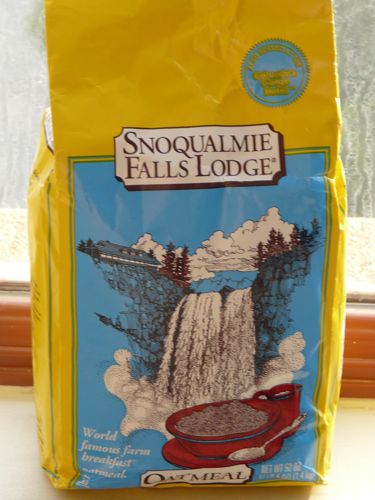
And then, she went one better, she sent me a bag of it. I tried it a couple times. It’s still oatmeal.
Where do the skaters come in, you are asking?
Age creeps up on you. With any luck at all, you lose your bad habits along the way, but some of them stick like glue. I am telling you this, because it is Ramadan, and I am guessing you understand a little. Our sermon in church this week and our readings have had to do with temptation, and how if you focus on something – like “I will not think about jellybeans,” then it is all you think about. Our readings tell us to focus on something else, like reading spiritual writings, or becoming actively involved in some activity that takes you mind totally off the temptation.
I think of myself as a skater. When I was an adolescent, I had what I call roller-coaster grades. I would skate along doing the minimum, and then when it was time to get a paper in or study for a final grade, I would pull out all the stops, and I would get the grade I wanted . . . . most of the time. I underachieved just often enough to stick a grain of doubt in my mind that this was the path to success.
Because God has a sense of humor, he gave me a son with the same pattern, and this smart, cheerful, inventive kid did the minimum until grading time, and then he would pull through, while my I watched in horrified fascination. (Have you noticed, you are always tougher on those who exhibit your own shortcomings?)
So, mature as I am, I have developed a lot of self-discipline and patience and persistence through the years, things I call the harder gifts. I learned them from Motherhood, and from dealing with the normal troubles that come through living life, and all that life throws at you.
Or so I thought. This summer, at my well-woman appointment, I gave up my blood samples and received, in return, a lot of bad news.
I am borderline diabetic. I am borderline hypertensive. I am overweight. I have bad cholesterol out of proportion to the good cholesterol.
I’ve been skating close to those readings for years, but coming to Kuwait, I sort of stopped exercising. I haven’t been as physically active as before. I started blogging, which is sedentary to the max. I thought I could skate, but now the grim reckoning has been presented to me.
I really don’t want to go on a medication I will have to take for the rest of my life. I really don’t want to go on a medication that may have side effects no one knows yet because they are so new. To avoid going on medications, the doctor is giving me one year to reduce my weight, and I had to promise to exercise a minimum of 30 minutes 5 days a week. He gave me a long list of foods not to eat, and foods to avoid. Aaarrgh.
Because God is merciful, and knows our needs long before we do, and because he provides generously, I still have my oatmeal, which I have now pulled our and am eating regularly. I eat it Pacific Northwest Style – with blueberries and raspberries, which are also supposed to be good for me.

I found something else in the US that I love, but I can’t find it here – or at least not yet. Have you seen Kashi Pilaf or Kashi breakfast cereal?
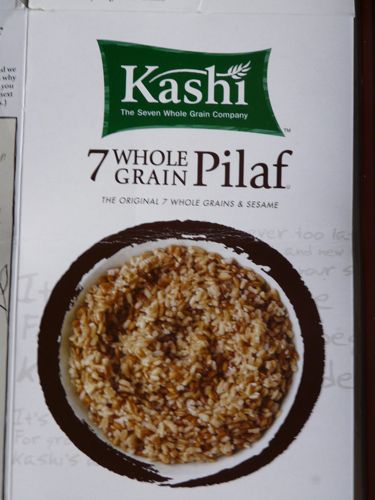
I know I promised not to post any food photos while you are fasting, but oatmeal? To me, oatmeal doesn’t even count, it’s like medicine, like who on earth yearns for oatmeal?
Weight Loss: Fat Burning Beads
I could not believe my eyes. Would you buy these beads? You can read the entire story at BBC Health News.
‘Fat-burning’ bead marketing ends
A company that said its “fat-burning” beads triggered “automatic weight loss” has agreed to stop marketing in the UK.
One claim suggested that Accu-Slim Beads worked “faster than total starvation” by placing one bead behind each ear.
The Office of Fair Trading (OFT) sought assurances from Global DM Licensing, based in Hong Kong, that it would stop mailings being sent to UK consumers.
The OFT says thousands fall victim to claims about weight loss products.
Misleading claims
The company, using the name The AccuSlim Centre, claimed the beads were “fat burning acupuncture without needles, diets, exercise or effort”.
It claimed that users could eat as much as they liked but still lose 30lbs in 30 days, as the bead stimulated acupressure points that led to automatic weight loss.
The company claimed guaranteed results and charged £65 for a package of up to 120 beads.
OOps – I just noticed that they only have to stop marketing these beads in the UK. So if someone approaches you on the streets of Kuwait offering to sell you fat-burning beads (wouldn’t you feel like punching someone who thought you needed fat burning beads?) DON’T BUY THEM! THEY DON’T WORK!
Mediterranean diet ‘cuts cancer’
While this is not new news, it is verification of what we know to be true – that using olive oil in place of other oils can reduce your risk of serious disease. From BBC Health News:
Mediterranean diet ‘cuts cancer’
A study of 26,000 Greek people found just using more olive oil alone cut the risk by 9%.
The diet, reports the British Journal of Cancer, also includes higher amounts of fruits, vegetables, cereals, and less red meat.
A separate study found adding broccoli to meals might help men vulnerable to prostate cancer cut their risk.
It shows there are a number of things you can do, and there is no one ‘superfood’ that can stop you developing the disease
The Mediterranean diet came under scrutiny after researchers noticed lower rates of illnesses such as heart disease in countries such as Spain and Greece.
They noticed that people living there generally ate more vegetables and fish, less red meat, cooked in olive oil and drank moderate amounts of alcohol.
The latest study is one of the largest yet to look at the potential impact on cancer of the various parts of this diet.
‘No superfood’
Researchers from Harvard University persuaded thousands of Greek people of various ages to record their food intake over an eight-year-period.
Broccoli may help ward off prostate cancer
Their adherence to the Mediterranean diet was ranked using a scoring system, and the group with the worst score compared with those who followed a couple of aspects of the diet, and those who followed it the most closely. The biggest effect they found – a 9% reduction in risk – was achieved simply by eating more “unsaturated” fats such as olive oil.
But just two changes – eating less red meat, and more peas, beans and lentils, cut the risk of cancer by 12%.
Dr Dimitrios Trichopoulos, who led the study, said: “Adjusting one’s overall dietary habits towards the traditional Mediterranean pattern had an important effect.”
Sara Hiom, from Cancer Research UK, said the research highlighted the importance of a healthy balanced diet.
“It shows there are a number of things you can do, and there is no one ‘superfood’ that can stop you developing the disease.”
Broccoli benefit
The other study suggesting that food had the power to prevent cancer came from the Institute of Food Research in Norwich.
Scientists compared the effects of adding 400 grams of broccoli or peas a week to the diet of men at high risk of prostate cancer – and in the case of broccoli found differences in the activity of genes in the prostate which other studies have linked to cancer.
Their findings raised the possibility that broccoli, or other “cruciferous” vegetables, such as cauliflower and Brussels sprouts, could help prevent or slow down the disease, particularly if the man had a particular gene variant – GSTM1.
Professor Richard Mithen, who led the research, published in the Public Library of Science journal, said: “Eating two or three portions of cruciferous vegetables per week, and maybe a few more if you lack the GSTM1 gene – should be encouraged.”
Professor Karol Sikora, medical director of CancerPartnersUK, said the study was the first time in a properly controlled clinical trial that broccoli had been shown to change the expression of specific genes in the prostate gland.
“Although the observation period was too short and the numbers too small to show that the incidence of cancer actually fell, it is the first clear demonstration that broccoli and presumably other cruciferous vegetables may well reduce cancer risk.”
Grin for the Day
Thanks to some great long-time friends for this visual:
The American way of life!

Michelangelo’s famous statue, David, returns to Italy this week after a successful 12 week, 20 city tour in the United States of America.
The David statue after a visit to the USA
Hot Weather Foods
I’ve been making an effort to eat breakfast, and I have finally found something I can like. I have tried to find the post where someone recommends Activia in the comment section, but I can’t find it. Whoever you are, it got filed away in the recesses of my memory – I was looking for non-fat yoghurt to make smoothies with, and my friend handed me a six-pack of Activia and said “Use this.”
I trust my friend, she is all into nature, and being interconnected and fresh fresh food, so when she says “use this,” that’s enough for me. Plus, I remembered someone else telling me about how good Activia was, along with a cheese, maybe called Kiri. I had asked what I could use as a local cheese substitute for Philly Cream Cheese. Kiri isn’t really a subsititute, but it sure is good! 🙂
So here is what I am eating for breakfast:

It tastes SO good! I use one container of Activia (maybe 8 oz.), throw in some frozen raspberries, throw in some frozen blueberries, put in some honey and some cinnamon and blend. YUMMMMM. I am also eating walnuts and almonds, as you can see, because they are good for me, but also because the almonds and walnuts that we buy here seem fresher, they taste more walnutty and more almond-y than the ones we buy in the USA, I don’t know why.
The other thing I make that tastes SO good in this hot weather is tomato salsa. There are a million kinds of salsa, but I use this as a condiment with so many things, I even use it on sandwiches!

I take about:
five fresh Kuwaiti tomatoes, and chop them finely,
one onion, chopped finely,
1/2 bunch cilantro – cut coarsely with scissors,
a sprinkle of sea salt
a big grating of peppercorns (it makes a difference; always use freshly ground pepper)
(the secret ingredient) a sprinkle of lime juice.
Oh, it tastes so good! It tastes so fresh! You can even eat it on crackers.
Recent Comments
ExpatAlien on What Country am I Living … intlxpatr on Yellowstone: Old Faithful to C… Michelle on Yellowstone: Old Faithful to C… Cathy on No Grown-Ups in Charge intlxpatr on Waiting for Snow Wikipedia Donate Button

Amazina


Early Voting in Florida


 Here There and Everywhere