Doha Reunion and Marching Madness
We just finished a five day Doha reunion, a group of us who used to gather frequently in Doha, ironically most of us introverts, but who found gathering together forced us to exercise regularly, helped us to run our errands downtown, and helped us laugh a lot at our own foibles in a strange land. It’s not all that often you can find four women who all get along equally well with one another, but this group was that rarity, and having them in my house was a joy. We were together in worship and in friendship for several years, so having another opportunity to gather was just magical. (We also gathered in May, for a wedding.)
Yes, for those of you who are wondering, AdventureMan was here, and what a blessing he was. He cooked dinner and cleaned up two of the nights, after days when we had been out exploring all day. We could not have had so much fun without his help. I think the other husbands were jealous; they like to be a part of the conversations, too. We always have so much fun together, and such great issues to cover, big topics, small topics, family issues, political issues, fund raising, social and cultural challenges. We share frustrations and experiences, we share resources and brain-storm solutions. For us, it doesn’t get any better, these gatherings feed our souls.
Cat-like women, they all arrived on their own time and schedule, as it would fit, so there was a couple days of total overlap, and some days with fewer. The day the first visitor arrived was also the day of Pensacola’s newest parade, Marching Madness.

“Want to see it?” I asked her? They were going to try to set a new record for the largest number of people in the world doing a line dance.
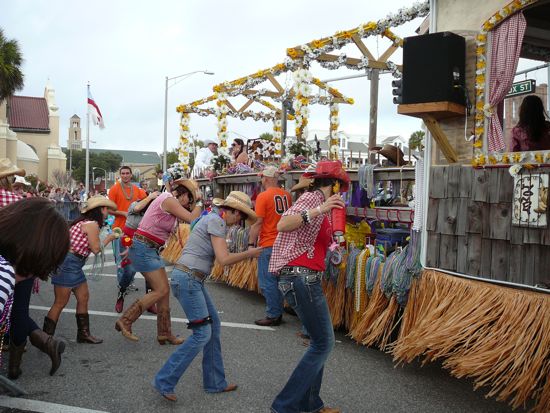
“Sure!” she said, always a good sport.
This parade was hilarious. First, it was a daytime parade, and most of the parades I have been to in Pensacola have been night parades. There were like fourteen marching bands and many floats, so it was LOUD! The Happy Toddler would have loved it. Lastly, they were generous with the beads, people were loaded with beads, and some of the beads were special!
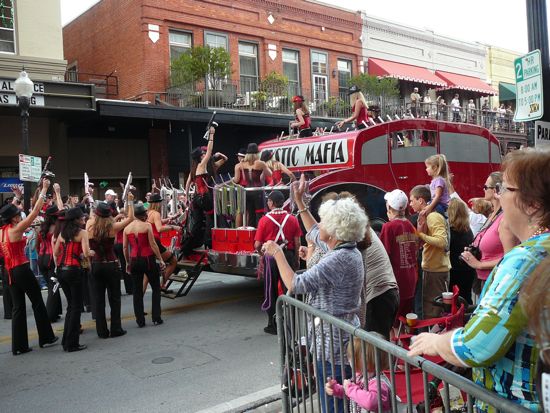
“I’ve never seen anything like this!” shouted my friend, over the bedlam of trumpets and drums in a compelling jungle rhythm. She was dancing and waving her hands madly at the passing Krewe, hoping for a strand or two to come her way. She ended up with a LOT of beads.

It was so much fun!

This isn’t New Orleans. This was a family parade, lots of babies, lots of children, lots of grandparents, so no one was underdressed, or showing off the wares, if you catch my drift. The people throwing beads were generous across the board, especially to the babies. 🙂
Pensacola is amazing. As we walked back to the car, the street cleaners were standing by, and the street was cleaned and re-opened to traffic within an hour. How amazing is that?
Qatar, the Magical Kingdom
I just finished watching the 13 minute segment 60 minutes showed this last weekend on Qatar:
Oh, to be in the Souk al Wakif in January / February. My Doha buddies and I are getting together next weekend; if only we could have breakfast once again together at the Beirut. We truly enjoyed our years in Qatar.

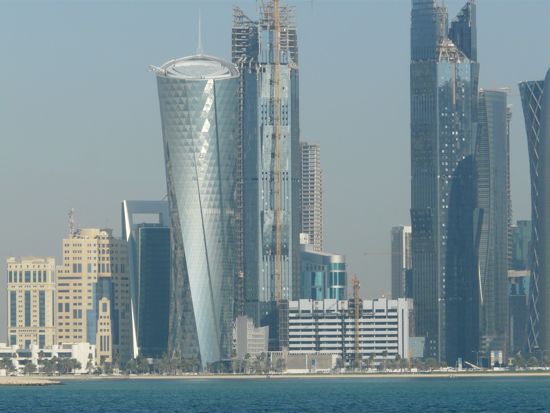
It was fun seeing the shiny sparkly skyline, only five or six of those buildings were there when we arrived in January of 2003. When my husband used to travel to Doha in the ’80’s, it was called “sleepy little Doha” or even “Doh-ha-ha-ha” but no one is laughing at Doha any more, and sleepy little Doha has gone uptown in a big way.

The Emir used to carry a lot more weight – literally. He looks good, he looks healthier and more fit, and consequently younger, and more vital. I’m betting he has the Sheikha Moza to thank for that; don’t we all nag our husbands a little to encourage them to take care of themselves? We want them to live a long, healthy life.

Not a single mention of the Sheikha Moza in the entire segment, nor of her influence in the creation of the Qatar foundation, bringing reputable American and Canadian universities to Qatar, the creation of the Islamic Museum of Art, the face-lift to the Souk al Waqif, the creation of the symphony. Not a mention of her influence on the schools, the health system, the modern face of Qatar.

Only a passing reference to the appalling conditions under which the laborers work in Qatar, treated like animals, worked to the bone. Not a mention that many of those glorious buildings don’t meet any codes, that proper building standards have not been enforced, and that the standards for safety are noticeable in their absence. Not a mention of the malls where the laborers are not allowed on Fridays, their only day off, or the beatings they get if they wander into the Souk al Waqif. The miracle of this richest city on earth is built on the back of the Indians, Philipinos, and Nepalese who sacrifice health, family and comfort to be able to send something back in hopes that their children will be educated and live better lives.

Not a mention of the concerns among the conservatives that Qatar has modernized too fast, that traditional standards are not being respected, that English is the language spoken in all the stores, not Arabic. Not a mention that this ‘richest nation on earth’ is now also the fattest nation on earth, that the Qatari children are suffering obesity, and are greatly raised by the household help. Not a mention of the crisis of intermarriage, and the tragic health problems the children suffer from inbreeding. The 6 minute segment showed a Qatar that was all shine and glitter, and none of the dark underbelly.

First Flash Mob in Doha, Qatar
Thank you, my friend Hayfa, for sending this flash mob from City Center Mall; very nice;
But this one dates from May 2011, and I love the energy!
And one more, this time at Villagio! Wooo HOOOO, Qatar!
I’m eager to see one done at the Souk al Waqif!
I think Qatar’s National Day is December 18th, and the Qataris know how to party. It would be lovely to see a Qatari flash mob.
What Tiny Qatar Stands To Gain In Libya
Another fascinating discussion on National Public Radio, which covers subjects not covered by major national news sources.
Of course, anything having to do with Qatar is of interest to us, as we lived there for four years during a time of breathtaking and exhilarating change. It is astounding, and wonderful, to us, that Qatar defies the lethargy and inertia of the Gulf Countries, and has transformed itself into a major influence, in spite of its smaller size, and even smaller population of native Qataris. They have taken the huge influx of cash that came with the discovery of natural gas, and leveraged it into massive modernization, transformation, and influence on the international scene. It’s an amazing accomplishment.

ROBERT SIEGEL, host: The Libyan rebels received decisive air support from NATO. But there was another, less publicized, smaller-scale but equally remarkable foreign involvement in support of the uprising, the involvement of Qatar, Q-A-T-A-R.
Qatar is a peninsula, a little smaller than Connecticut. It juts north into the Persian Gulf. On the south, it borders Saudi Arabia. It is rich in oil and natural gas. Its population is only about 900,000. And while it is an Arab country, a monarchy ruled by the al-Thani family, the majority of its residents are non-Arabs, non-citizens from India and Pakistan. Qatar is also home to the TV channel Al Jazeera. It will host soccer’s World Cup and it was an important player in Libya.
Ibrahim Sharqieh is deputy director of the Brookings Doha Center. Doha is the capital of Qatar. And, Ibrahim, first, what did the Qataris do in support of the Libyan rebels?
Dr. IBRAHIM SHARQIEH: That Qataris’ support to the Libyan rebels has been politically, diplomatically and militarily. We had about five Qatari fighter jets. In Qatar, we had about the training of Libyan rebels. And Qatar also played an important role in developing an Arab League support through the military intervention in Libya, which this Arab League support actually has provided the umbrella for the NATO intervention and for the military intervention and provided the legitimacy that, for example, was missing in Iraq.
SIEGEL: Why? What are the motives behind Qatar’s involvement in Libya and some of its broader ambitions in the region?
SHARQIEH: Oh, there are many theories. The one that makes the most sense in my view is that Qatar is supporting the revolution for humanitarian reasons. And in addition to this, Qatar is working and supporting the revolution is they’re strictly with its vision for its role in the region and in the world.
SIEGEL: One thing we should note, though, in this year of the Arab Spring, one thing Qatar isn’t is it isn’t a democracy. It isn’t an elected parliamentary republic.
SHARQIEH: Well, there is very high level satisfaction of the people here in the country, of the political system and of its leadership. So there haven’t been – we haven’t seen any cause for change or any protests or any different types of complaints. So the system seems to work and we seem to have a stable country. That distance itself very far away from the protests that are happening in the region.
SIEGEL: How would you describe U.S.-Qatar relations?
SHARQIEH: We know it’s a strong relationship. Qatar hosts a military base, the largest in the region here, in Al Udeid. And this has been a sophisticated policy where Qatar managed to have a good relationship between the United States and other rivals in the region, like Iran. In order to protect yourself as a small, wealthy country, some sort of striking a balance is needed and Qatar has been more influential in this crisis and other regions in Benghazi.
Going back to Libya, when you go outside the offices of the National Transition Council, you see the American flag. You see the French flag. You see the British flag, and you see also the Qatari flag.
SIEGEL: Yes. Here’s a country that aspires to a very high profile in regional affairs, but it consists of fewer than a million people. And of them only about 350,000 I read are citizens. That doesn’t sound like a country that can really be a world player, you know? It just sounds too tiny.
SHARQIEH: Well, it is too tiny but, hey, we are living in an international system that you have the means to play it right and become an important player. Qatar has invested in the right political market by mediation. Qatar was successful in the mediating an agreement between the Yemeni government and the Houthi rebels. Prevented a civil war almost in Lebanon, brokered peace agreements between the Palestinians, Fatah and Hamas, and also intervened in the fall in Sudan.
So, Qatar has proved to me an important, major emerging power in the region and to play it right and position itself very well in the international scene.
SIEGEL: Well, Ibrahim Sharqieh, thank you very much for talking with us about Qatar.
SHARQIEH: My pleasure. Thank you for having me, Robert.
SIEGEL: Ibrahim Sharqieh is deputy director of the Brookings Doha Center. Doha is the capital city of Qatar.

“Feels Like . . . “
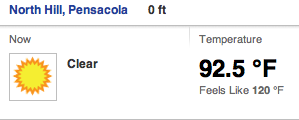
AdventureMan is at a meeting, and I had been thinking lunch at the beach later today when he gets home. At “feels like 120°F,” I think maybe not the beach today.
Oddly, while the temperatures are high, it hasn’t felt like the worst days of summer. I have tomatoes growing again, so some of our nights must be going below 70°F, and with the recent rains, the roses are blooming again and the lantana in the former pool area (not our doing, the original owner) is going bananas. The bees are busy, and I am hoping they will fertilize the eggplant, so the plant I have been nursing all summer will not have been for nothing. It FEELS like Fall is coming, in spite of the temperatures.
On my Weather Underground home page, I have temperatures for Doha and Kuwait also listed. Doha, nine hours ahead, has almost the same exact temperature at 6 pm that Pensacola has at 9 am. God’s mercy is showing in Doha, cooling the evening for the Ramadan celebrations. 🙂
Changes in the Air
“It’s still hot,” I said as we were coming out of the movie, “but can you feel a change in the air? Even though it’s hot, the air is changing, the light is changing – you can feel hints that Fall is coming . . . ”
We had just been to see “The Help,” and if you haven’t seen it yet, you need to make plans to see it soon. It is a really good movie, which will make you laugh, and cry, and remember that it wasn’t so long ago in our country when it took place. (You can read my review of the unforgettable book here.)
The movie is a serious movie, and at the same time, I loved the attention to detail – the hair, the fashions, the manners – all very 50’s, even though it is the 1960’s in Jackson, Mississippi.
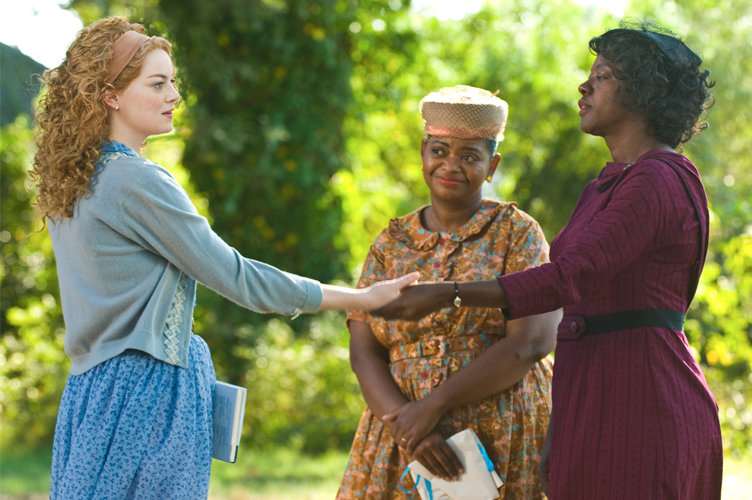
I remember reading this book in Qatar, just after I had moved back there from Kuwait. The Kuwait book club also read White Tiger and Half of a Yellow Sun, all of which had domestic service as at least part of the theme. It’s another one of those cultural things we all have in common – how do we treat the people who work for us? How do they see us? Who is raising our children and teaching them values?
In the Gulf, there are horror stories in the papers of servants who never receive their wages, or who work 16 hours a day, sun-up to sun-down, with never a day off. The families who take good care of their servants never make the papers, but I have seen good and caring relationships, lasting many years, between employers and employees. We’re glad we saw this movie, which sticks closely to the book. For a fuller experience – read the book.
Meanwhile, the temperature early this morning was below 69° F, which means that my tomatoes will begin setting once again and we may have a good crop coming before the cold sets in. I noticed, to my horror, I have a decent crop of weeds trying to establish themselves while it is too hot for me to go out and do battle with them. Some of my tomatoes actually continued producing even during the hottest days of the summer; I’m going to have to plant more of those next year. The golden pear and the red pear tomatoes are producing merrily; the bigger tomatoes have stopped – I hope temporarily.
Waking Up Cold
I shivered as I woke up; about a thousand gulls screaming past, up from the water, circling the town, loudly gossiping. It is a shiver of delight – I can sleep with the window open, no air conditioning needed, and the morning air is very cool. I am in heaven, also called Seattle.
It is so totally different coming in from Pensacola. As I showered the night before, I was thinking “about now I would be landing in Amsterdam, with several hours wait for my next flight. Being able to sleep in my own bed, get up early in the morning, five minutes to the airport, a breezy check-in and then a bare half day of traveling – so easy.”
Er . . . almost. I still trip the full inspection triggers, and got the complete pat down yesterday. The TSS lady was very professional, although much more thorough than ever before. It is annoying, but on the level of swatting a mosquito away; one minute later you’ve forgotten all about it.
Flight leaves late out of Pensacola, I have to RUN in Atlanta to make my connection, but it’s good to get some aerobic exercise in the middle of a long day of flying. 🙂 Unfortunately, my bag doesn’t make it, so when I reach Seattle they tell me it will come in on the next flight and they will deliver it. After all these years of back and forth, I have learned to have a nightgown and a change of clothes with me, and there are stores where I can pick up mascara and small things I need short-term. The bag arrives in the early evening, so all is well.
As I entered the Seattle airport from the A-concourse, I had a big grin. Where am I? This looks so much like Doha; there is a roundabout near the airport with the same collection of water gourds:

Seattle is cool and beautiful, and has rolled out a sunny day for my arrival. It’s always a thrill to see the Seattle skyline, and even more of a thrill when the roads are dry:

I pick up lunch on my way to my Mom’s, Ivar’s, as is our tradition, oh yummmm – halibut and chips for Mom, and a Salmon Ceasar for me.
I guess I’m a little more tired than I thought – it was an early flight. I grab a quick nap, and I feel like myself again. Mom and I head out shopping – we have a week of errands and appointments ahead of us, and some fun stuff too. Mom turns 88 this week – something to celebrate!
Cultural Issues as Qatar races Towards 2022 World Cup
In the same issue of The Peninsula (Qatar), this author addresses cultural sensitivity when it comes to dress, but includes some intriguing mistakes. He (or she) states that all women are required to ‘veil their faces’ in Saudi Arabia, which is untrue. There is no law requiring women to cover their faces. Custom drives many – but not all – Saudi women to cover their faces. Western women are asked to cover their hair and to wear an abaya, and must do so when going off compounds or out of their hotels, but no one is required to cover their face.
The Issue: Is Qatar ready for 2022? Well, the country is all set to launch mega infrastructure projects worth billions of dollars in order to have facilities in place to host the coveted event.

But the key question being asked by many is whether the conservative Qatari society is ready to take in its stride the cultural shock that the preparations for the event and it being actually held here would trigger.
With no less than half-a-million international soccer fans expected to descend on the Qatari soil in 2022, Qatar must build the requisite mindset — and not just physical infrastructure — to be able to absorb the social and cultural tremors such an avalanche of people from different ethnicities and cultures would cause.
Or, will the Qatari society rise in rebellion against the onslaught, especially as Western values and traditions are seen gradually overshadowing local customs and the way people dress up and behave in public?
Already, there is widespread fear in the Qatari community about their identity being diluted due to the sheer size of the expatriate population. Official estimates suggest that out of a total of 1.7 million people living in Qatar, an incredible 1.5 million are foreigners. This means that some 90 percent people in the country are non-Qatari.
Since expatriates come from all over the world (unconfirmed reports suggest there might be people from more than 80 nationalities living here) the threat to Qatari identity and culture is real, say social analysts.
Some, though, argue that since Qatar is a small country with a tiny population, its people must pay the social price for development and prosperity. “Given the situation, you can’t have both—prosperity and identity. You must compromise and choose between the two,” says another social analyst not wanting his name in print.
Concerns in the Qatari community about its age-old culture and identity being compromised due to the ever-rising numerical preponderance of foreigners, are growing.
Rising indebtedness in the community due to limited income and growing consumerism has been relegated to the background as fears deepen over the local customs and folklore falling prey to what seems to be unstoppable intrusion of foreign cultures.
There is immense hostility in the Qatari community towards the way foreigners, especially young women, dress up. Foreign cultures have already reached Qatari homes with children being largely raised by foreign maids.
“Things are still under control since we can influence our children, but we are helpless when it comes to stopping outside influences that are causing damage to our society,” says a Qatari requesting anonymity. “The most harmful outside influences are TV and foreigners living in our midst.”
Objections are raised to young non-Qatari women, particularly Westerners, wearing skirts and sleeveless tops.
A number of Qatari mothers have expressed ire and want the state to intervene and ‘discipline’ young non-Qatari women who dress up ‘indecently’ in public. The mothers say they fear that their daughters might ape such negative behaviour.
There are some Qatari women, though, who see the media (read: foreign TV stations) posing a bigger threat than foreign women wearing skirts and sleeveless tops here in public.
Says Wisam Al Othamn, a lecturer at Qatar University: “It’s necessary to monitor the media, not foreign women.”
There are others, though, who feel that dressing up in public is one’s freedom and choice, so no one should impose restrictions.
Qatari social websites are filled with comments from people talking about threats to their identity. Some have called for setting up a ‘religious police’ to especially monitor young foreign women dressing up ‘indecently’ in public.
The commentators argue that Saudi Arabia has such a police and it is compulsory for every woman, whether local or foreigner, Muslim or non-Muslim, to veil her face in public.
But there are others who laud Qatar for the freedom people have in personal matters such as dressing up in public, and claim that foreigners here dress up decently if comparisons are made with neighbouring countries like Bahrain and Dubai.
There are still others who favour Qatar forcing foreign women to veil their faces while in public. They argue that since countries like France and Belgium have banned Muslim women from using face veils in public, Qatar and other Muslim countries should take counter measures and force all women, whether Muslim or non-Muslim, to cover their faces while moving in public.
An interesting comment on the way Qatari women dress is from a man writing on a local social website. He suggests that there is nothing like Qatari attire for women. Abaya is used by women in Yemen, Iraq and Syria, so it has come here from these countries.
As for naqab or full face and body veil, it did not exist in Qatar until 20 years ago, suggests the man. “So there is nothing called Qatari dress for women,” he says.
There are some who find fault with some schools having co-education and say Qatari girls tend to ape their foreign peers from these schools.
There is ire in sections of the Qatari community over the schools’ regulator, the Supreme Education Council (SEC), giving the freedom to schools on imparting lessons in Qatari history, language (Arabic) and religion.
Writing on social websites, some commentators are critical of the SEC and say that since land, history, language and religion are the four pillars of a society’s cultural identity, the schools must impart lessons in these subjects.
“It’s surprising why the SEC has not made the teaching of these subjects compulsory in schools. It’s a step that would destroy the Qatari identity,” wrote an angered commentator.
About language, the commentator quoted a famous Qatari writer, Dr Mohamed Al Kubaisi, as saying that it is only through their version of English language (different from the British English) that the Americans have built their identity and are dominating the world by popularising it (American English).
Another commentator said he saw the SEC move as a step aimed at diluting the Qatari identity. He even suggests that some teachers are opposing the SEC’s decision individually.
“Go to Germany and France and if you don’t speak the local language you wouldn’t get a response,” the commentator said, hinting that everyone in Qatar must speak the local language, Arabic.
Social analysts believe that Qatar faces a huge challenge over the coming 11 years (during the run-up to the 2022 event) in its struggle to maintain its cultural identity, and much of the onus will be on the Ministry of Awqaf and Islamic Affairs and the Ministry of Interior.
Talk of a dress code being imposed by the Interior Ministry is going on for a while with analysts wondering if at all it would see the light of day. Despite opposition to foreign women dressing up ‘indecently’ in public, there are some in the Qatari community who say they believe a dress code is unwanted and how people dress up in public should better be left to them, respecting their freedom.
There are some in the community, though, who want the government to act and impose a dress code, particularly as the number of foreigners in the country is quite high. Moreover, the fact that the foreigners come from so many nationalities makes it necessary to have some code in place to help protect Islamic values, they argue.
“If not a dress code, it should be accepted in principle by everyone living in the country that one must dress up decently to respect local customs and values,” says a community source.
“It’s normal for a country to have some say in matters like how people, especially women, dress up in public. This will in no way tantamount to curbing individual freedom,” he insists.
Analysts say that the Ministry of Interior introduced the concept of community policing sometime ago with this vision in mind. The entire concept of community policing where the law-enforcement agencies actively coordinate with different expatriate communities as well as civil societies and the locals is based on the idea of how to help protect and preserve Qatari identity and culture in the midst of threats being posed by the swelling population of foreigners in the country.
The focus of the effort (community policing) is on helping preserve basic social and religious values, knowledgeable sources say. Critics, however, maintain that the effort having been launched quite a while ago, is yet to yield results.
Qatar Women Want Dress Code to Maintain Cultural Norms
Every year around this time The Peninsula (Qatar) runs an article reminding other nationalities to respect Qattari values on modesty, and asking women to wear loose clothing, cover arms and shoulders and wear skirts at least to the knees. This year, there are comments about women wearing ‘indecent’ clothing around the hotel swimming pools, and calling for a national dress code with enforcement.

Qatari women lament disregard for norms
By Huda NV
DOHA: Dress code in any country is a very sensitive topic, for, while it protects the rights of many, it may hinder the rights of many others. When France issued ban on Hijab in public places, many Muslims who used the attire had to let it go. Same is the case in Saudi Arabia where all, including non-Muslims have to wear the abaya.
As of now, there is no strict ruling on dress code in Qatar except that it asks for modest dressing in public. The rules are with loose ends, according to some. With the on going development much have changed in dressing over the last 10 years.
Some Qatari women who spoke to The Peninsula said that due to the lack of awareness or mainly due to disregard for local norms, many people flout with the Qatari Penal Code that “prohibits wearing revealing indecent clothing”. Since no action is taken against the violators, rules or laws are being flouted with.
“The law asks one dress decent lyto protect oneself and the society as a whole. We are functioning in a society in various roles and at various levels. We go out, do what we need to do and go home, as other women do. But it pains to see many women bring with them negative influences into the community and dress in a way which is against the discipline of the community,” said Sheikha Al Naimi, a Qatari woman.
“We are not asking them to use hijab or abaya. We just want them to be modest, by which we mean covering the arms and shoulders, wearing skirts at least up to knee length, and wearing loose clothes. We are asking for respect not hindering their personal choices,” said Asma Abdullah.
RIGHTS?
So would not any law or dress code be against personal rights? Then, is not smoking or drinking a personal choice and a law banning these are against the so called rights, ask some.
“There are laws banning smoking and penalties for violating traffic rules, which are issued in public interest and these are strictly followed, for fear of heavy fines on violations. So a dress code is also needed for public security. We all have our own freedom, but in public we need to check the rights of public too. One’s freedom should not hinder other person’s rights and people should realise that rights come along with duties,” said Mariam Al Ali.
However some argued dressing in skimpy clothes is not freedom, but rather lack of self respect. “We would say the western idea of freedom and right is twisted and is not based on truth. For example, when it comes to dressing, the so called right is more or less like what men want to see,” said Tammy, a US expatriate.
“Our policy is you see what we want you to see rather than you decide what you need to see. We choose to whom we show our beauty. It is not for public attention,” one of the Qatari women said
THE WORRIES
One of the key problems, most of the Qatari women who spoke to The Peninsula, was on encroachment on their identity. “We are a minority in our own land; this does not mean we leave our identity. We are trying to pass it over to next generation and all these influences is a threat to our identity as Muslims, Arabs and Qataris,” Al Naimi said.
“All the expats come here for a reason, mainly financial, and hence they need to respect the culture here but now its more on destroying the society,” she laments. “Even in some schools and colleges, teachers dress badly. Even if it’s a girls-only school, it does not mean teachers show their body parts which we ourselves do not show to our children. Wearing translucent dress, shirts which are waist length and short skirts are in no way modest for a teacher,” said Al Ali
PROTECTING IDENTITY
Some Qatari women revealed the measures they take to ensure their children are not influenced by the changes. “My children have gone to the malls or shopping centers only few times. I want them to know what the Qatari identity is. They are not usually taken for shopping here. For their amusement and entertainment, I built a house away from Doha with all the amenities.
“So the question would be how will they learn to live in the society if they are kept isolated? Its just that we do not want these influences at very young age. After they get to know their roots, children will go out and understand the world,” said Asma.
“Earlier, when I was young, we used to go out to the beaches and enjoy as a family. But now we cannot take our children to the beaches as people wear indecent clothing even in public beaches,” said Sara Yousuf.
“Even some of the Qatari media post almost nude pictures, especially when it comes to movies. So we do censoring at home so that our children at young age do not have to distinguish between the right and wrong,” Sara said. “I would love to take my children to hotels here and enjoy time with them in the pool. But how can we do it when many are indecently dressed,” said a Qatari woman.
DRESSING WHEN ABROAD
Even when dress code is debated here, Qataris are much criticised for not abiding to the Qatari customs while abroad. “These are mainly people who are ashamed of their identity. Abaya or hijab is part of culture and our culture is based on Islam, which is same throughout the world. Hence, indecent dressing while abroad tarnishes the whole Qatari community. I have gone abroad, and even recently when I visited Thailand, I was wearing the exact costume – abaya — which I wear here. They should respect laws of other countries when abroad but at the same time try to protect their identity,” said Sara.
“I was educated in the US. I did face few problems but I knew the influences were coming from all directions and made sure I held on to my traditions,” said Asma.
THE CULPRITS
Majority of the Qatari women say that some of the Arab communities themselves are responsible for violating the dress code. “We feel that majority of the westerners and Asians know and understand us and respect the culture. People from sub-continent culturally they have their own modesty which is almost similar to ours. If these people are dressing badly it is because they think ‘if Arabs can do, why not we’,” says Al Ali.
“The sad part is that there are some Arab communities who mock themselves and us wearing skimpy dresses. Also some are so talented that they know how to dress exactly as Qataris and impersonate — they actually tarnish our image. They also talk indecently when faults are pointed out,” said Hessa Al Kuwari.
“Worse is when many dress indecent inside the abaya and pose as Qataris. The very purpose of abaya is to cover, but now it is turning into something that is used for showcasing the body,” Sara said.
SUGGESTIONS
1. Set up a new committee to establish and implement specific regulation with regard to dress code
2. Define exactly what modest dressing means
3. Malls should have individuals to warn people as they have people to keep out bachelors on family days.
4. While issuing visas, embassies should inform people about the dressing. They should also make strict rulings.
5. The existing laws on dresses should be activated by the authorities.
URGENT ACTION
Few of the women say there is an urgent need for a law or enforcement of existent regulations, as the situation is getting worse. “Over last three to four years, we are seeing women wearing very-short shorts in public places. I would ask what next? Will we have to see ladies in bikinis in malls in the next few years? It can happen if there is no enforcement,” said Sara.
“The identity change that we talked is not going to happen today or tomorrow. We will see the effect in some 10 to 20 years — majority of our people will not know what being an Arab or Qatari means. The values what we have will be lost,” Asma said. “We need development, but it should be framed in our identity. It’s not fair to cut our roots and establish on top of us,” she said.
The Peninsula
Doha Debates and Where Are You From?
The Baked Salmon Dijon for last night’s dinner took a little longer to cook because Joe Patti’s cuts the salmon steaks so thick (we cook two, split one and freeze the other for another night), so while I was waiting, I flipped around and found WSRE’s Doha Debate coverage.
Who knew?
I didn’t know I could still watch the debates in Pensacola! This one was about whether or not Egypt should postpone elections in the interest of forming a more representative democracy. The vote was 84% in favor; the two young supporters carried the house. 🙂 This was the March debate and you can hear the entire 48 minutes by clicking here.

The winning female debater used a slogan I had not heard, but I love, because it is graphic and memorable – “we do not want a fast-food democracy that brings only indigestion.” The younger debaters want to scrap the entire constitution and re-write it, claiming the current structure needs to be thoroughly revised in order for democracy to have a chance of success.
I love it that these issues have a forum for debate in Doha.
Following the debate was a cringe-worthy video about asking people where they are from. His point was that when he is asked where he is from, and he answers ‘The Bronx,’ people say “No, where are you REALLY from?’ and the implication is racist. He says it is the same as saying that his color is darker, therefore he is not like us, so he must not be from around here.
I’ve asked that question. Never meant it to be insulting, but I will stop now. Or I will only ask those with a slight accent, maybe. Wherever we have lived, we have been asked that question – but then, in Kuwait and Qatar, most of the work force is not Qattari or Kuwaiti. Even in Germany, however, where we might look a lot like them, we are asked where we are from. It used to be a courteous way of showing interest, or initiating a conversation.
One time in Doha, a local man asked me about my breeding, LOL. I told him I was a product of the American melting pot, and from the earliest settlers to the latest, my family includes just about a little of everything. We were at the veterinarian’s office, and I knew the purity of his dog’s blood lines mattered, and probably his own, but I also felt a little insulted, and I haven’t forgotten it. Doesn’t science teach us that diversity in blood lines is a good thing?
We are in the middle of a heat spell in Pensacola, early this year, and because we haven’t gotten anywhere near the normal rainfall, there are also wildfires. The firefighters are struggling to put out the fires, and also fighting heat exhaustion. AdventureMan is out watering all our new plantings, and our tomatoes, every morning, God bless him, because when the temperatures go high, I just want to stay inside.
Recent Comments
ExpatAlien on What Country am I Living … intlxpatr on Yellowstone: Old Faithful to C… Michelle on Yellowstone: Old Faithful to C… Cathy on No Grown-Ups in Charge intlxpatr on Waiting for Snow Wikipedia Donate Button

Amazina


Early Voting in Florida


 Here There and Everywhere