Souk al Waqif: Soy Restaurant
I’ve heard mixed reviews of Soy, and since I love Chinese, Thai, Japanese, Vietnamese and Korean foods I was eager to give it a try. I’ve been twice, love the menu, love the chairs, and holy smokes, the place is HUGE.
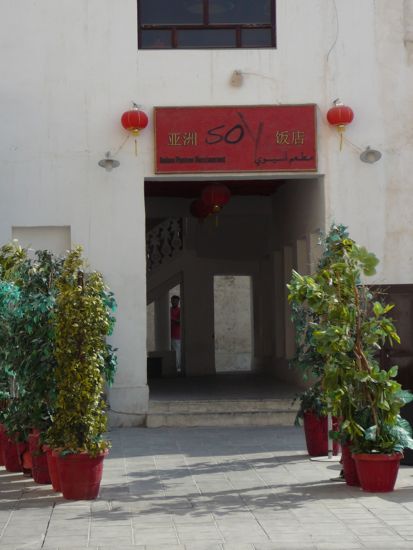
I love the variety of restaurants in the Souk al Waqif, and it is nice to have this alternative. I will never order the Chinese set menu again, however. The main course, grilled shrimp, came with three delicious looking breaded shrimp on skewers. I carefully removed the tail and bit in – there was shell on the shrimp!
Maybe this is really authentic, I thought. Maybe real Chinese people eat the shrimp shell and all, but my lunch-mate scowled and called the waiter over and complained. “These breaded shrimp were deep-fried with their shells still on!”
The waiter disappeared, and we waited. He came back and told us that is the way they were cooked, every time. Well, OK, so we took the shell off and ate the shrimp, but you can bet money that we will never order that set meal again!
The set meals are a nice deal. 49QR takes care of a soft-drink (ironically, you pay for water, but the soft drinks come with the meal), and then your choice of one of three set meals – the Chinese, the Japanese or the Thai.
Back another time, I tried the Japanese, which I liked, except the Teriyaki chicken had barely any teriyaki taste. The miso soup was very good, the salad strange, and the green tea ice cream for dessert was good.
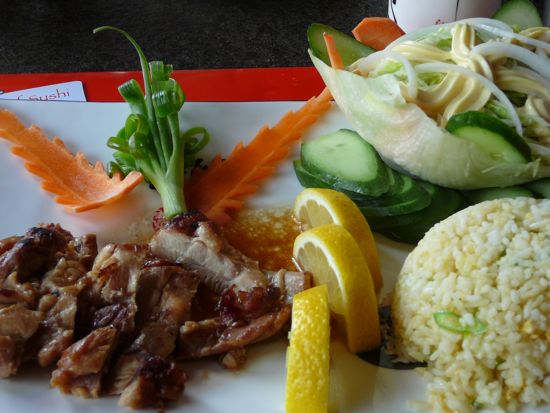
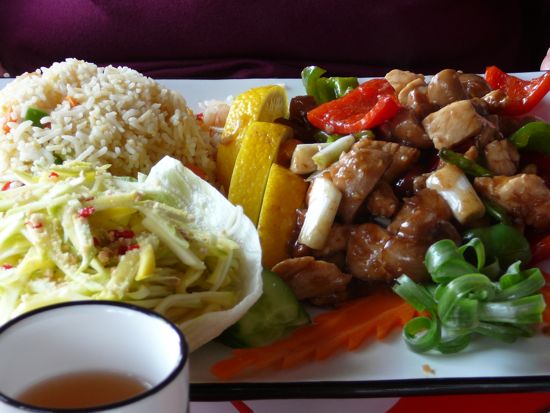
My lunch friend had the Thai, which had a very good soup, a strange salad, a very good main course and a good dessert, I think deep fried ice-cream.
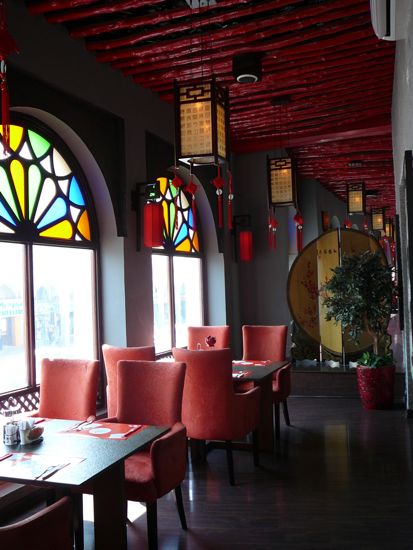
I love the chairs. I love having comfy chairs with arms to eat in. I love it that the restaurant is huge, with lots of different dining areas, tucked away behind the other restaurants.
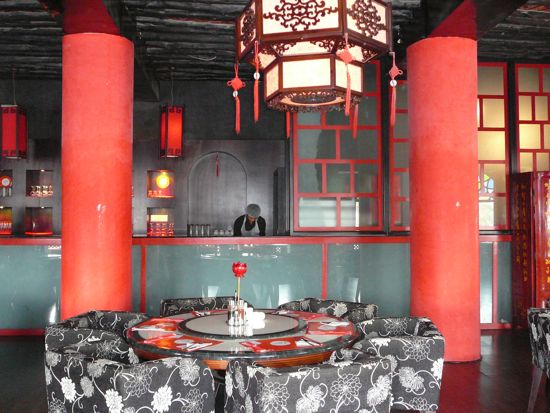
My favorite part of the set meals are the soups and the rice. Both are excellent.
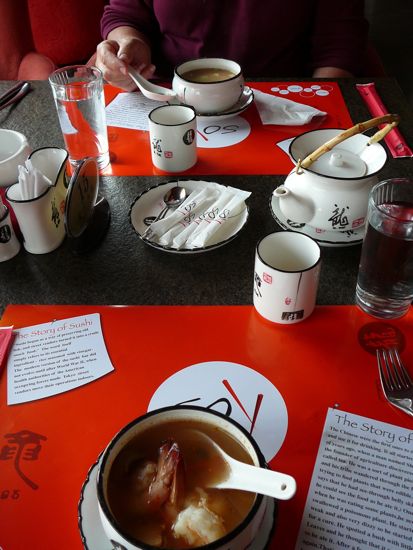
Even after the Chinese shrimp disappointment, I would like to go back again and try ordering a la carte from the menu, to see how we like it. Even if a restaurant is uneven, often there are things they do really well, and if you stick with those things you can have a good dining experience. So my review is mixed, but it’s not like I am saying I will never go back. It was a good experience, and I want to give it another shot.
The Heart of Doha – Disney Does Doha?
“No, it’s not DOHALAND!” I snapped at my friend. ‘It’s called the ‘Heart of Doha’ project.”
We were exploring the project in it’s first phase, the destruction phase, which is turning old haunts into several circles of hell – shopping hell, driving hell, parking hell, disorientation hell. And just as we were inching our way into a new diversion, I saw the big sign describing the future this funky area of Doha and telling us to go to ‘Dohaland.com.’
Oops. I apologized profusely and she very humbly pretended not to be gleeful that she was right and I was wrong. Well, actually, we are both right. It is both ‘Dohaland’ and ‘The Heart of Doha,’ but I shouldn’t have snapped at her over something so inconsequential. Blame it on the rain . . . umm . . . .err . . . the traffic.
Dohaland. I’m sorry, it sort of cracks me up. It’s just like Disney – JungleLand, FutureLand, etc.
I remember when the Suq al Waqif project first started, how outraged I felt, and how delighted I am to go down there now, where the shop-keepers have electricity that is reliable, even air-conditioning wafting out into the corridors, the appearance of ancient woven mats shading the twisting cobblestone street which no longer reaches out and grabs your heels, or changes levels unexpectedly. How can you be a successful curmudgeon when it turns out so positively? Even if it is a little bit Disney-does-Doha, it is so attractive!
What I love about what has been accomplished so far is how it has enhanced the experience for everyone. If you go down into the souks, you see more people. You used to see only a few westerners, now you see all kinds, even tourists, even your neighbors; you see every nationality down in the souks now, and people are actually buying things, not just killing time. There is a great variety of shops and restaurants, and even if the parking spots are tiny, there is parking.
Have you visited the website yet? Dohaland.com? I love the vision, although in one shot with people in suits crossing the streets, I want to shout “Hurry! Hurry! Or you’ll get run over!”
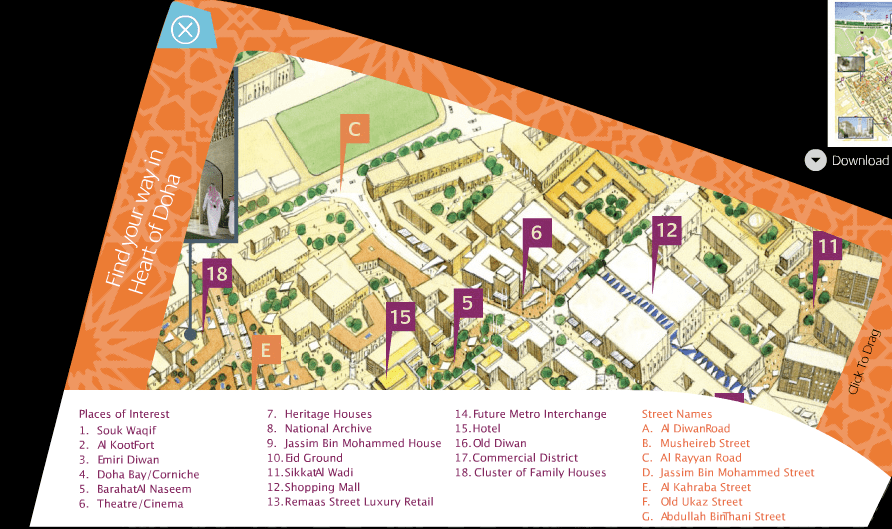
Here is what it is going to look like – and you can go to the Dohaland website and get a great big full screen map:
And here is what it looks like now:
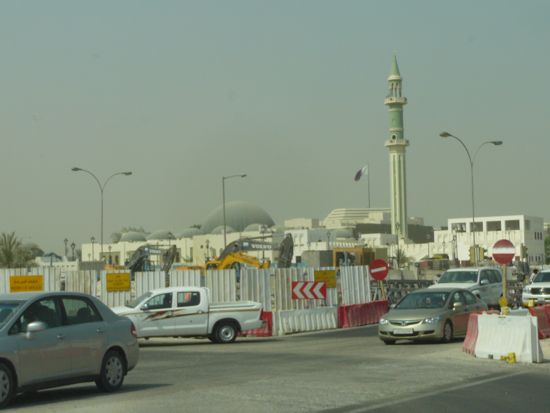

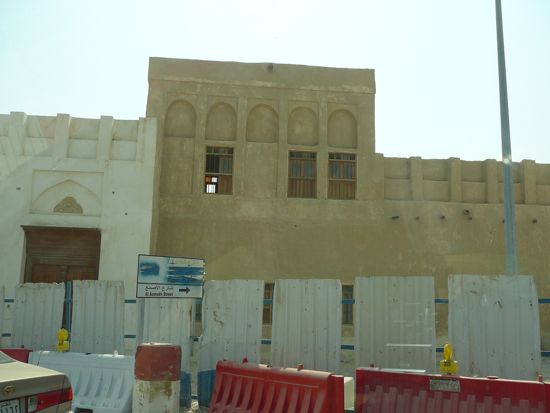
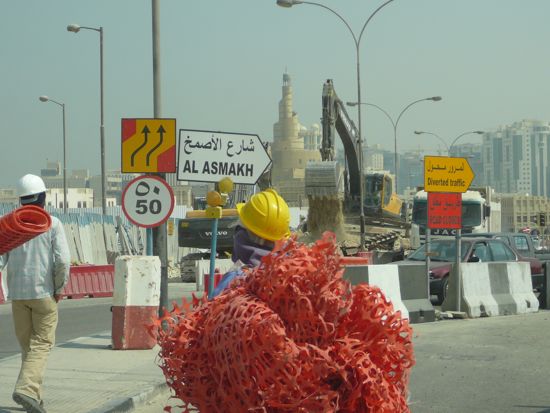
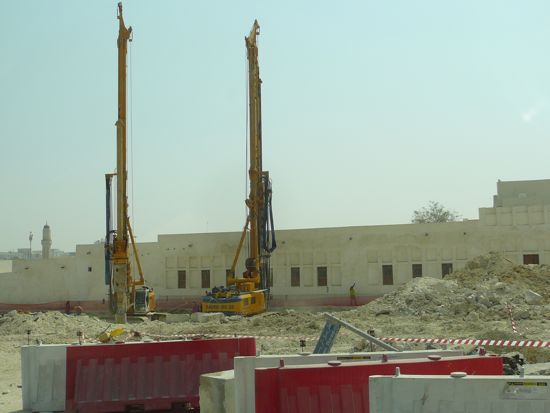
These machines are like huge dentist’s drills, with points that pound down into the hard-packed Qatar soil to break it up so that foundations can be built:
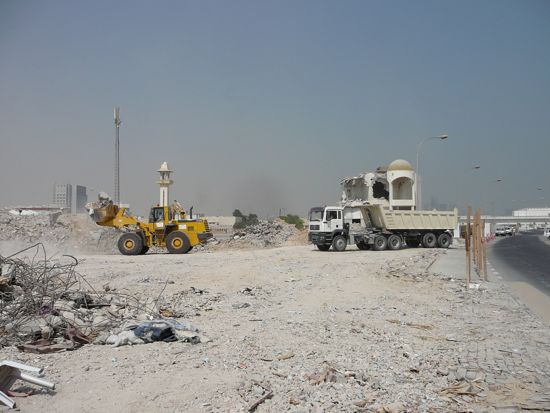

It’s not unlike house-cleaning. When you pull everything out of the closets, out from under the beds, the drawers, those piles of things in the corner, for a while everything looks worse than it did before you started. Slowly, slowly, you create areas of organization and calm amidst the chaos, and slowly, slowly those areas expand, join, until the chaos is eliminated, you know where things are, and your living area is a calm and peaceful and organized oasis. I hope I get to see that day in Doha.
Update: Dohaland AKA Heart of Doha is now known as Musherib
Mermaid Fabric
One of the things my friend and I were seeking on our Souk Quest was mermaid fabric. My friend has a grand daughter who loves to be The Little Mermaid, and I knew that the exact right fabric existed in the souk, I had seen it and didn’t have any excuse to buy it.
We found it. It is perfect – sea green, and shiny scales:
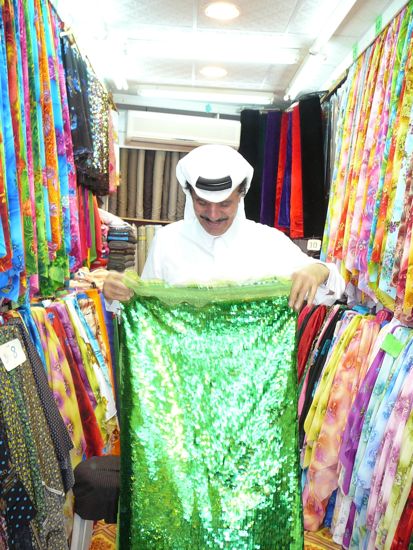
Doha is full of wonderful fabrics for dress-up.
Where Al Rayyan Used to Begin
Leaving the Suq al Waqif, we got a shock – where you could once go straight ahead onto Al Rayyan, you can’t!

There is a left turn, a shaky bridge, and then you can go right to access Al Rayyan. It all appears temporary, and when the fix is accomplished, it will probably be a better intersection.
But this is Doha. When you think you know the route, suddenly, and often without notice, your traffic pattern makes a sudden change. The temporary diversion may last for weeks, or months, or . . .
I’m a map person, I remember once discovering that the road I intended to take, the road on the map, wasn’t there yet! In Doha, a map is only an overview, it is not reality based, the roads you see may or may not be open. In the end, I am sure there is going to be a smooth traffic pattern, but oh, in the meantime!
This is a relatively small change, with a relatively easy fix.
Souk Fire Damage
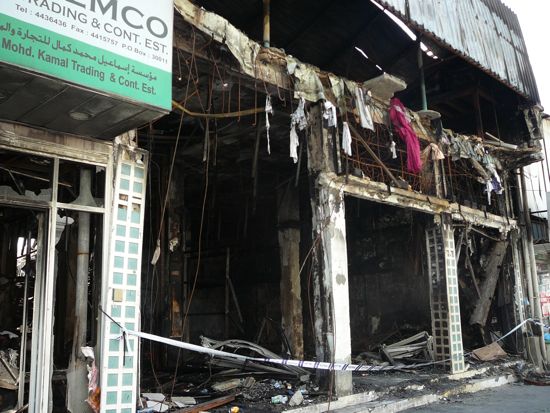
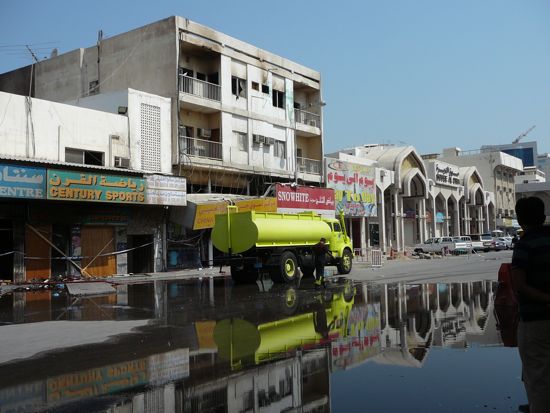
The fires in the souks between Souk al Dira’a and Souk al Asseiri caused a serious drop in customer traffic to an area already hard hit by the current economic situation world-wide. While Qatar claims to be relatively untouched, there are small signs that non-Qatteris living in Qatar are touched, indeed – expats losing jobs, expats going home, and expats not spending a lot of money because they do not feel secure about tomorrow.
We only had to drive around the long block three times before we found a parking spot. Pretty amazing, huh?
I wanted to see how badly the Dar al Thaqafa had been hurt. There was a fire truck nearby, and the fireman said that there had been a smoldering spot. It smelled like a campfire.
Here are some shots of how the area looks today:


Where Great Decisions are Made
Today, on my way home from a marathon-fun day, even though it was full of errands, I got to thinking great thoughts – in my car. Some of my best ideas come when I am sitting in traffic, something about the enforced nothing-to-do frees up my unconscious to tackle things I don’t otherwise think about.
One of the things I was thinking about was what, when I studied it, was called The Decision Making Process. It’s something you study in Political Science, and, although I can’t say this for sure because I haven’t specialized in these other areas, I am betting you would also study the process in Business, in Economics, in Engineering . . . when you know the process by which decisions are made, so the theory goes, you can get better at predicting how the decision making will go, what people will decide.
Or so the theory goes. . .
My personal observation is that human beings are highly unpredictable, and sometimes will make an opposite decision, even an irrational decision, in order not to be so predictable. I hate to be so cynical, but I think we are not so rational as we like to think we are.
In my Kuwait life, I remember being at a not-so-important meeting, more just a gathering, but at one point, I saw four people – influential people – meeting off in a corner, very casually, probably no one else even noticed, but they were deciding an outcome of an election, I realized later that day. OOps – not THE Kuwait election, my friends, no no no, a much lesser election. But that was where the decision was really made. These four quiet people were people who had the respect of others, and once they decided, they quietly shared their opinion with others, who shared their opinion with others and on it went, until the deed was done.

I have seen decisions made in a swimming pool. I know decisions are made on golf courses. I was hired for one job once after attending a concert, and for another because I had a responsible position in my church (it had nothing to do with the job I was hired for, but the skills were transferable.) I was hired once because my hair and eyes matched another woman working in the front office, and the boss wanted a “matched pair.” (I didn’t know that until later.)
I know that at one time AdventureMan helped lay out a military base. He said they were in a truck, and as they drove along someone dropped big stones out the back to mark the boundaries. Don’t you love it?
Gulf women tell me that weddings are important; young women are often spotted by future mother-in-laws, so moms try to make sure that their daughters are well appointed for major weddings, major events where they may be on display . . . and then they ask around checking on character and personality and suitability. But I wonder on what basis those decisions are really made, deep down? Family alliances? Securing a future? Business connections? I know there are rare alliances based on true and lasting love; I wonder how often that happens?
I know there are matrixes, and even simple two-column + – lists by which people can rationally work out what to decide. What I am cynical about – after all the matrixes are filled out, after all the plusses and minuses are totaled – I think that the decision can go counter to rationality, because we are – if not irrational – then intuitive, we are people who make decisions with other than our conscious minds. I think our hearts get involved, and you KNOW that feelings/emotions get involved. Sometimes we have “a gut feeling”; sometimes we know something on an unconscious level that we don’t know on a conscious level. If we all acted in our own rational self interest, there would not be young drivers dying on our roads, people would not be irrationally exuberant about investments, young people would not fall in love with the wrong people and life would sure a lot more dull, wouldn’t it?

I am cynical even about decisions made at the highest levels, because even decisions made by boards and after studies – even these decisions are ultimately based by human beings, and sometimes on “hunches.”
So I am wondering if YOU have had similar experiences? Have you seen major decisions made irrationally?
All this because I was stuck in traffic . . . .
The Royal Tandoor in Doha
More than a year ago, some friends took us to a restaurant in Doha that we loved. We looked and looked, and we never could find it.
Then, when we were taking our friends to eat at the Majliss, AdventureMan stopped and said “Isn’t that the restaurant we were looking for? I think it is!” and it was almost right across the street from the Majlis.
We decided to give it another try as soon as possible – and oh, was it worth it.
Every now and then, you have a meal where every single thing you order is exactly right. This was one of those meals.
We had the sizzling grilled shrimp, a hammour dish, a vegetable jalfrezi, and a veg biriyani, with a side of raita. Every dish was delicious.

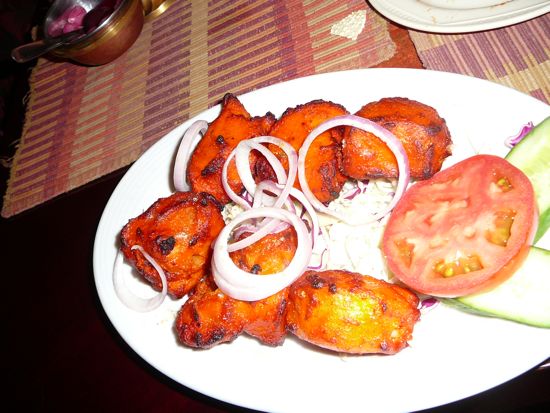
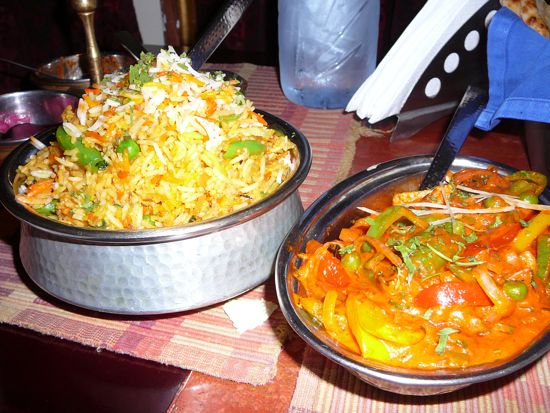
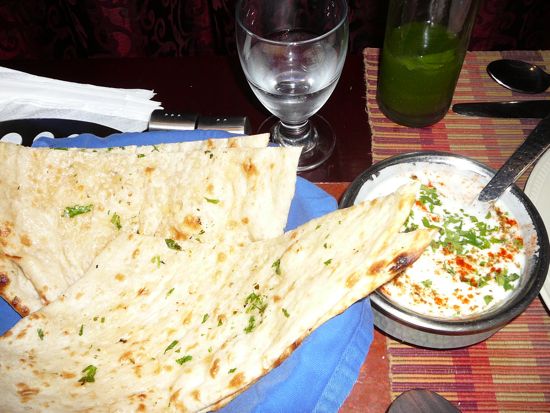
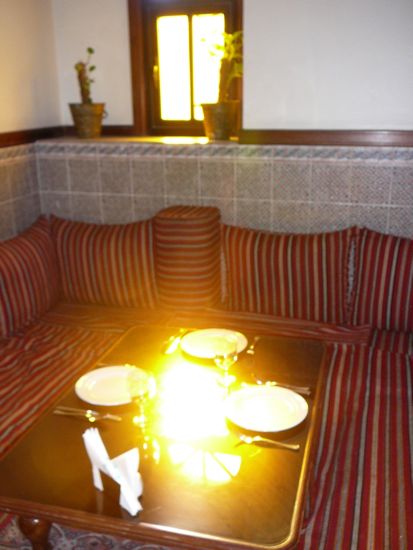
They have little booths with curtains across them, if you get there early enough, or you can sit out in the open area. Service is courteous and prompt. We can hardly wait to go again – it is really good.
Fuel Station Inspections
This last week an underground tank at a fuel station not too far from us blew up. There were no fatalities, thanks be to God, but some very scared laborers, who were in a bus that fell into the hole after the explosion.
This morning AdventureMan called; he had driven by and saw the scene: a blown-out underground tank, evidence everywhere of the blast, and a sign that says “Station temporarily closed for maintenance.”
Fuel station safety to be reviewed
Web posted at: 10/17/2009 1:2:52
Source ::: The PENINSULA / By ABDULLAH ABDULRAHMAN
DOHA: Safety conditions at petrol and automobile service stations across the country might be reviewed by the authorities.
The government is setting up a committee to study the condition of petrol and service stations.
The move follows a massive explosion which took place in a fuel storage tank at a service station in the city early on Wednesday morning.
The incident left a bus and car, which were refuelling there, partly damaged. Some labourers who were being transported to their work site in the bus, suffered minor injuries. Some shops in the vicinity of the tank were also damaged, albeit slightly.
The explosion, an Interior Ministry source told Al Sharq, did not take place due to any laxity in safety measures. Rather, it was a freak accident.
Nevertheless, plans are afoot to have a panel in place which would assess the need to review the condition of the existing fuel storage tanks at petrol and service stations and see if they could be reconstructed, if the need be, the source said.
The proposed committee will have experts and work under Qatar Petroleum (QP). It will have representatives from the Interior Ministry and other government agencies as well.
The Civil Defence Department, which is a part of the Interior Ministry, monitors safety conditions at fuel stations. It is studying the conditions and assessing if they need to be improved.
It is likely that regular monitoring of fuel storage tanks would be done.
Meanwhile, there have been 478 incidents of fire in the country so far this year.
At least two people have died in these incidents and eight have suffered serious injuries.
Some 26 incidents of fire have taken place in homes, 99 in vehicles and 43 in commercial establishments other than industrial units. Some 30 industrial units have reported fires, while nine farm houses and two ships were also involved in incidents of fire.
THE PENINSULA
The Majliss in Doha
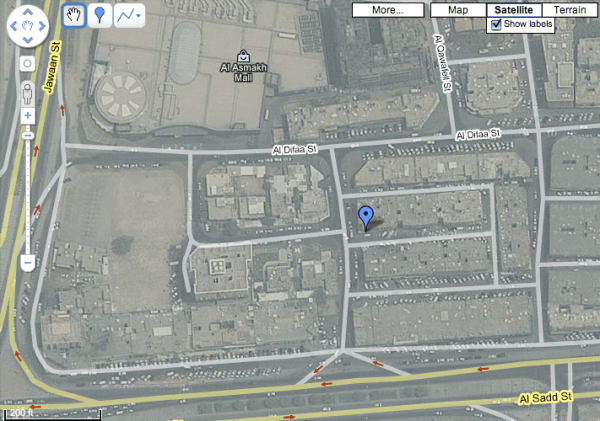
When we lived in Doha the last time, we often brought people to The Majliss. Most Americans had never been there, never knew it was there. It is off Al Sadd – if you are going from C Ring to D Ring, you turn right at the Kentucky Fried Chicken and stay on the slip road that goes in front of the stores. At the second possible right, you turn right, and you will see the Royal Tandoor on your left, and The Majliss on your right.
There two really great things about The Majliss. First, the food is really, really good. Second, they have a bunch of individual rooms where you can sit on the floor, majliss style, with cushions and a big, low table. Some rooms are small, some are large enough for maybe 12 – 14 people.
They also have booths, some that have curtains you can pull if you need privacy, like if you are a woman wearing niqab and you want to eat without people seeing your face. They also have booths without curtains, and a more open area where mostly just men eat.
There was a time when soldiers would come here from Iraq, and you could sort of check them out like library books to take out for dinner, or to the malls, or to your house. We often took them to the Majliss, and it always blew them away, it was such a great experience. The Majliss is also where we took our son and his wife when they first came to visit us in Doha. We have so many happy memories at The Majliss.
This time, it was our visiting Kuwait friends, and since we all know what it is like to sit in a Majliss, and we all have older knees and hips, we chose to sit in a booth. Here is what is cool – our Kuwait friends loved it as much as our American friends do.
This was our first time back at the Majliss since our return to Doha. We worried that it had changed, deteriorated, that the food would not be so good as we remembered. We had a happy surprise – it is the same, but even better. 🙂


I have to admit, one reason I love the Majliss is because they have Mohammara, made of walnuts and chilis and other good stuff. This one was really good, a little spicy!
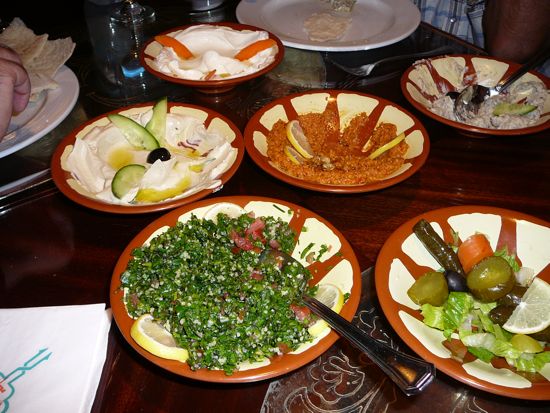
And oh, the fresh, hot bread . . .

Now, I am embarrassed to tell you, when our main dinners came, I forgot to take photos until late . . . so this is where the delicious Majliss hammour used to be – my very particular and discerning Kuwaiti friend ate every bite!
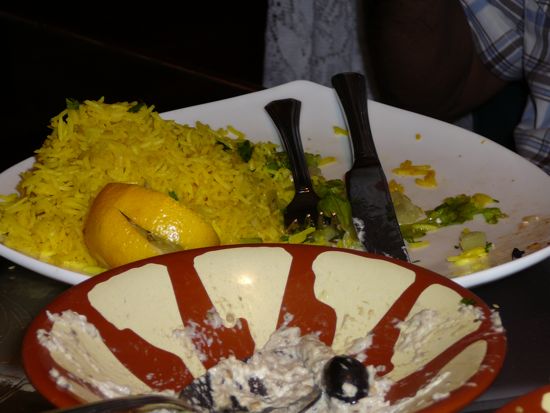
And here is what is left of my Shrimp machboos, before we gobbled the rest of it all up:

And the kabob, just before it disappeared entirely!
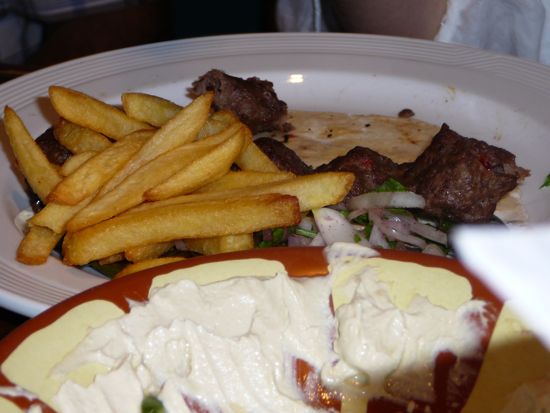
We were all so full, we didn’t even have room to order the creme caramel, which always comes swimming in caramel, yummmm. We had Turkish coffee and rolled ourselves out the door – stuffed!
Prices are reasonable, it is a great place for good local food at reasonable prices – the Michelin red “R” in Doha.
Suq al Waqif Bird Market
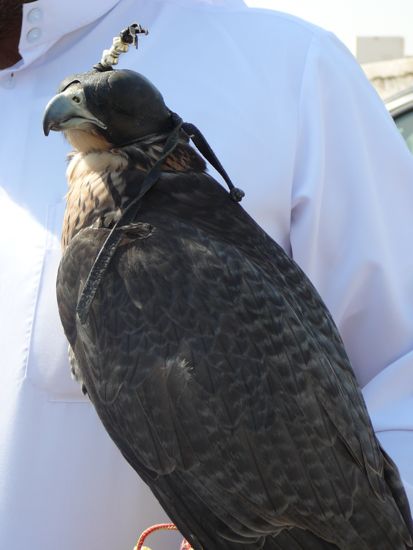
As we were heading into the Suq al Waqif for breakfast Saturday morning (Yes! Several of the restaurants are open for breakfast!) we saw a man and his son, both carrying falcons.

AdventureMan joked that they are hired by the administrators to walk around adding local color. We scoffed. Maybe someday, but for right now, these are still real people, with their own falcons. We know because our Kuwaiti visitor stopped them and asked about the falcons. They were so sweet and so delighted to tell us about their birds, and to allow us to photograph them:
There was also a lively bird auction going on:

What we love about the renovated market is that it is still a true market, where real people by daily items for use.
Recent Comments
intlxpatr on Shampoo Ginger tigerbutterya0c5ff1d… on Shampoo Ginger intlxpatr on British Soldier Kidnapped, Esc… John on British Soldier Kidnapped, Esc… intlxpatr on British Soldier Kidnapped, Esc… Wikipedia Donate Button

Amazina


Early Voting in Florida


