Fresh Orange Souffle
This recipe is a little more complicated than most, because of the collar, but once you’ve done it – and it isn’t that hard – it is a piece of cake. You can leave out the Grand Marnier and it still tastes just fine. Delicious and cooling, light on a hot hot hot summer’s eve in Kuwait – or anywhere else. 🙂
Fresh Orange Souffle
This is another recipe from our time in Tunis, where oranges are so good and so sweet!
2 small naval oranges
2 envelopes unflavored gelatine
6 eggs
1 cup sugar
1 can frozen concentrate for orange juice, thawed
2 Tablespoons lemon juice
1 pint heavy cream
1/4 cup Grand Marnier or other orange flavored liquer
1. Prepare six cup clear souffle dish, or other clear straight sided glass dish with a collar – here’s how. Fold a 24” length of waxed paper in half lengthwise, wrap around dish to make a 3 “ extension of dish. Tape or use string to hold in place. (You use a clear glass dish so that the sliced oranges show around the sides)
2. Cut one orange into thin slices, arrange slices against side of souffle dish, chill.
3. Grate rind from remaining orange, measure 4 teaspoons.
Squeeze the juice of the oranges; measure into 1 cup measure adding water, if necessary, to equal 1/2 cup. Sprinkle gelatin over the orange juice, let stand 5 minutes to soften.
Set cup in a saucepan of simmering water, stirring until gelatin is completely dissolved. Remove from heat.
4. Beat eggs and sugar in a large bowl with electric mixer at high speed until thick and light. (10 – 20 minutes)
5. While eggs are beating, whip 1 1/2 cups of the cream in a small bowl until soft peaks form, refrigerate.
6. Combine orange rind, orange juice concentrate, lemon juice, orange liquer and dissolved gelatin; pour into egg mixture. Continue beating the mixture until it is well blended. Remove bowl from mixer, chill about 5 minutes by placing in larger bowl lined with ice cubes. Stir often, just until mixture mounds slightly when spooned.
Fold whipped cream into chilled mixture until no streaks of white remain. Pour into prepared dish, taking care not to disturb the orange slices. Refrigerate until firm, about 4 hours.
9. To serve, gently remove collar. Beat remaining cream in a small bowl until stiff. Garnish with chopped pistachio nuts.
Warning: Ummm, I just remembered, this is an old fashioned recipe that uses raw eggs. People with immune system difficulties, pregnant women, anyone worried about raw egg issues should not eat this souffle.
Ministry Conducts Demographics Study
This is from today’s Kuwait Times. I LOVE demographics. I love tagging factors, loading them all into a data base and seeing where the stats fall. You learn so much.
The Ministry of Social Affairs and Labor is studying effective means to rectify the country’s demographic imbalance. The ministry has reportedly reached the conclusion that the blend of different nationalities in Kuwait has proved detrimental to its societal fabric. One Arab nation’s expatriate population in the country has exceeded 300,000, sources say, which puts the states economic and political stability at great risk. Sources said that the matter is complicated and needs all the ministries’ undivided support.
Expatriates, it is felt, bring with them their own modern culture and customs which are alien to the local citizens, most of whom follow archaic customs deeply rooted in tribal practices. Expatriates are also accused of taking the law into their own hands without approaching the concerned authorities whenever they are confronted with a problem. It has also been observed that expatriates belonging to a certain nationality inhabit certain areas in droves, leaving security officials at a loss to change the situation.
As a move towards controlling the situation, the ministry is to form a permanent committee comprising officials from different ministries to scrutinize all the expatriates who arrive at Kuwait.
It will issue a fitness certificate to eligible expatriates on the lines of medical fitness test. Employers will then be able to decide whether to appoint those workers or repatriate them. The ministry also plans to come down heavily on expats who obtain jobs using illegal residence permits.
Hmmm. Rectifying the population imbalance might require giving up expatriate labor. What laborers do you want to give up? The largest number are probably doing low-skill level work – cleaning houses, cleaning the streets . . .Or do you want to give up those who are managing your stores, taking your orders in all the restaurants, cooking, taking care of the office chores?
I can guess which expatriates are bringing in alien modern customs and practices, but unless you are going to give up television, cable, the internet and travel . . . that train has probably left the station.
So which nationality has over 300,000 expats in Kuwait? And which nationalities “inhabit certain areas in droves?”
Who takes the law into their own hands?
First Dates
There are some advantages to being in Kuwait in the dead heat of summer. One is that even in peak driving time, the roads are far less crowded. Restaurants are less crowded. Shops are full of all the things that go missing when the entire population is in town.
And – if you are here in July, and if you have good Kuwaiti friends with date trees – you get a big bowl of fresh, sweet DATES!

These are unbelievably yummy. I always liked dates, but until we moved to Tunisia, I didn’t know the pure joy of fresh dates. Living in Kuwait when the first dates of the season start ripening – pure bliss.
No, my Kuwaiti friends are very generous, they gave me a great big plate of dates, it’s just I’ve already eaten most of them! I had to take a photo quickly, before I ate the few remaining!
I went to Wikipedia on Date Palms to discover there are countless varieties of dates. They give this lengthy list of dates, and then say that in Iraq there are more than 100 different dates cultivated:
Aabel – common in Libya
Ajwah – from the town of ‘Ajwah in Saudi Arabia, it is the subject of a famous hadith of the prophet Muhammad.
Al-Barakah – from Saudi Arabia
Amir Hajj or ‘Amer Hajj’ – from Iraq, these are soft with a thin skin and thick flesh, sometimes called “the visitor’s date” because it is a delicacy served to guests.
‘Abid Rahim (Arabic: عبد رحيم), from Sudan
Barakawi (Arabic: بركاوي), from Sudan
Barhee or (barhi) (from Arabic barh, a hot wind) – these are nearly cylindrical, light amber to dark brown when ripe; soft, with thick flesh and rich flavour. One of the few varieties which are good in the khalal stage when they are yellow (like a fresh grape as opposed to dry, like a raisin).
Bireir (Arabic: برير) – from Sudan
Deglet Noor (Arabic: ‘translucent’ or ‘date of light’) – so named because the centre appears light or golden when held up to the sun. This is a leading date in Algeria, the USA, and Tunisia, and in the latter country it is grown in inland oases and is the chief export cultivar. It is semi-dry and not very sweet.
Derrie or ‘Dayri’ (the ‘Monastery’ date) – from southern Iraq – these are long, slender, nearly black, and soft.
Empress – developed by the Deval Family in Indio California USA from a seedling of ‘Deglet Noor’. It is larger than ‘Deglet Noor’, somewhat softer and sweeter. It generally has a light tan top half and brown bottom half.
Ftimi or ‘Alligue’ – these are grown in inland oases of Tunisia.
Holwah (Halawi) (Arabic: ‘sweet’) – these are soft, and extremely sweet, small to medium in size.
Haleema – in Hoon, Libya (Haleema is a woman’s name)
Hayany – from Egypt (Hayani) (Hayany is a man’s name) – these dates are dark-red to nearly black and soft.
Iteema – common in Algeria
Kajur – common in Pakistan / India
Kenta – common in Tunisia
Khadrawi date / Khadrawy (Arabic: ‘green’) – a cultivar favoured by many Arabs, it is a soft, very dark date.
Khalasah (Arabic: ‘quintessence’) – one of the most famous palm cultivars in Saudi Arabia, famous for its sweetness level that is not high nor low, thus, suits most people. Its fruit is called ‘Khlas’. Its famous place is ‘Huffuf’ (Al-Ahsa) in the Eastern Province of Saudi Arabia (Al-Sharqheyah).
Khastawi (Khusatawi, Kustawy) – this is the leading soft date in Iraq; it is syrupy and small in size, prized for dessert.
Maktoom (Arabic: ‘hidden’) – this is a large, red-brown, thick-skinned, soft, medium-sweet date.
Manakbir – a large fruit which ripens early.
Medjool date
Medjool or (Mujhoolah) (Arabic: ‘unknown’) – from Morocco, also grown in the USA, Saudi Arabia, Jordan and Israel; a large, sweet and succulent date. It is named unknown because who owned it at first didn’t know its specie and thus called it unknown.
Migraf (Mejraf) – very popular in Southern Yemen, these are large, golden-amber dates.
Mgmaget Ayuob – from Hoon, Libya
Mishriq (Arabic: ‘East’ – مشرق) – from Sudan and Saudi Arabia
Nabtat-seyf – in Saudi Arabia.
Rodab – from Iran, they are dark and soft.
Sag‘ai – from Saudi Arabia.
Saidy (Saidi) – soft, very sweet, these are popular in Libya.
Sayer (Sayir) (Arabic: ‘common’) – these dates are dark orange-brown, of medium size, soft and syrupy.
Sekkeri – (lit. sugary) Dark brown skin; distinctly sweet and soft flesh, from Saudi Arabia.
Sellaj – in Saudi Arabia.
Tagyat – common in Libya.
Tamej – in Libya.
Thoory (Thuri) – popular in Algeria, this dry date is brown-red when cured with a bluish bloom and very wrinkled skin. Its flesh is sometimes hard and brittle but the flavour described as sweet and nutty.
Umeljwary – in Libya.
Umelkhashab – Brilliant red skin; bittersweet, hard white flesh (Saudi Arabia).
Zahidi (Arabic: ‘[Of the] ascetic’) – these medium size, cylindrical, light golden-brown semi-dry dates are very sugary, and sold as soft, medium-hard and hard.
Morning Reflections
I am sure you have noticed that I have not been taking any sunrise photos lately; one problem with summer is that the sunrises tend to go flat. There may be no horizon, there may be dust and haze, or one sunrise just looks exactly like the day before.
Not this morning! This morning, the Gulf had alternate patches of glass and wave activity, making for an unusually reflective and glorious sunrise:

Weight Loss: Fat Burning Beads
I could not believe my eyes. Would you buy these beads? You can read the entire story at BBC Health News.
‘Fat-burning’ bead marketing ends
A company that said its “fat-burning” beads triggered “automatic weight loss” has agreed to stop marketing in the UK.
One claim suggested that Accu-Slim Beads worked “faster than total starvation” by placing one bead behind each ear.
The Office of Fair Trading (OFT) sought assurances from Global DM Licensing, based in Hong Kong, that it would stop mailings being sent to UK consumers.
The OFT says thousands fall victim to claims about weight loss products.
Misleading claims
The company, using the name The AccuSlim Centre, claimed the beads were “fat burning acupuncture without needles, diets, exercise or effort”.
It claimed that users could eat as much as they liked but still lose 30lbs in 30 days, as the bead stimulated acupressure points that led to automatic weight loss.
The company claimed guaranteed results and charged £65 for a package of up to 120 beads.
OOps – I just noticed that they only have to stop marketing these beads in the UK. So if someone approaches you on the streets of Kuwait offering to sell you fat-burning beads (wouldn’t you feel like punching someone who thought you needed fat burning beads?) DON’T BUY THEM! THEY DON’T WORK!
Three Cups of Tea
My best-friend-from-college and I were chatting the other day and I asked her “what are you reading?” because we have always exchanged book recommendations back and forth.
“I’m reading a biography of Teddy Roosevelt,” she started, and I groaned, because most of the time biographies don’t interest me that much. “And I am reading Three Cups of Tea . . . “ and I interrupted her (rudely) to exclaim “so am I!”
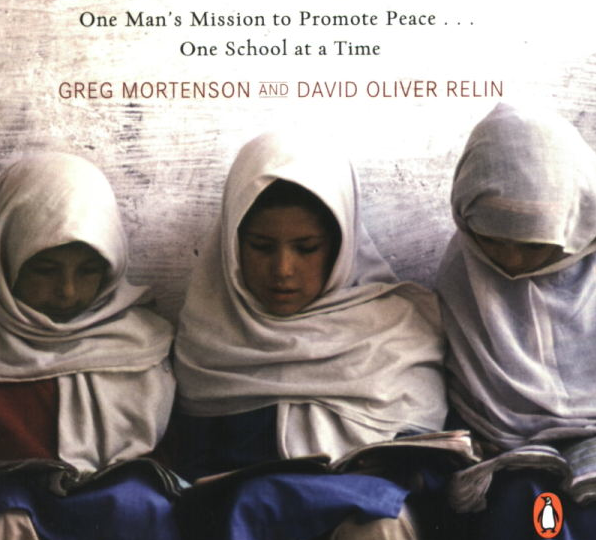
Three Cups of Tea is a must-read in the US. It was actually published in 2006, and has sold more and more books every month, and has been on the New York Times best seller list almost since it was published.
The book begins with a failure. A mountaineer, attempting a climb on K2 runs into problems, including evacuating two severely injured fellow climbers from the mountain. Exhausted, and devastated by his failure to capture the summit, he gets lost on his way back to the base camp, and ends up in a village where the people are very kind to him. He is treated as an honored guest, he regains his strength, and on his last day in the village, learns the children have no school. He rashly promises to come back and build a school for them.
One of the great redeeming features in this book is Greg Mortenson’s endless humility. He has a co-author, to whom he gave a long list of people he could talk with, including all his enemies and people who thought he was crazy. He’s that kind of guy. He talks about his life’s personal failures and his toughest moments, and he moves on.
He doesn’t take credit for the dogged persistence with which he keeps his promise, in spite of daunting obstacles. He doesn’t take any credit for the good will he builds.
Several years ago, I read another book which has changed my life, The Purpose Driven Life (which, by the way, the hardcover is $9.99 and the paperback is $10.19, go figure) in which the basic premise of the book is that we are each created uniquely, individually, by a loving creator, for a purpose. As I read Three Cups of Tea, I thought this man is greatly blessed; he discovered his purpose and nothing kept him from fulfilling it!
The book deserves every single one of it’s Amazon Five Star ratings.
I had a hard time putting the book down. Even though my life is full of other demands, once I had the chance, I spent an entire afternoon finishing this great book.
Greg Mortenson isn’t discouraged that his first school takes three years, and first he has to build a bridge. His second, third and fourth schools take just . . . three months! He has a gift for inspiring others, and people give what they can. The villagers give their time and their efforts, and western supporters donate funds.
By the end of the book, 24 school have been built, in the very poorest mountain villages in Pakistan, where money from the government for education doesn’t trickle at all, until near the end of the book. He doesn’t build the schools himself – he meets with the villagers, they donate a plot. He buys the materials, and together, they all build a school. These villagers are hungry for their children to become educated, to have a chance for a better life. Mortenson learns to focus on the girls.
He learns that as the boys become educated, they leave the villages for the city, but as the girls become educated, they come back, and like yeast, they raise the standard of living for the entire village, providing health care services and information, providing education for the newest crop of children, learning new skills, bringing them back and sharing them.
One of Mortenson’s gifts is that he isn’t interested in changing these mountain people into westerners. He likes them, and he learns from them, just the way they are. He dresses like them, he prays with them, he learns their language, and he has no western agenda for the curriculum in these schools. He also helps the government schools – building an additional room here for an overflowing school, paying a teacher’s salary there – his goal is to educate children. That’s it. No political agenda. The people of the villages love him for it, and give him their full support.
You cannot undertake a project like this without a lot of help. Mortenson had some extraordinary experiences, experiences that to me look like the grace of God, that drew together teams of people to help build and supply his schools.
“I looked at a sign in front of the school and saw that it had been donated by Jean Hoerni, my cousin Jennifer’s husband,” Bergman says. “Jennifer told me Jean had been trying to build a school somewhere in the Himalaya, but to land in that exact spot in a range that stretches thousands of miles felt like more than coincidence. I’m not a religious person,” Bergman says, “but I felt I’d been brought there for a reason and I couldn’t stop crying.”
A few months later, at Hoerni’s memorial service, Bergman introduced herself to Mortenson. “I was there!” she said, wrapping the startled man she’d just met in a bruising hug. “I saw the school!”
“You’re the blonde in the helicopter,” Mortenson said, shaking his head in amazement. “I heard a foreign woman had been in the village, but I didn’t believe it.”
“There’s a message here. This is meant to be,” Julia Bergman said. “I want to help. Is there anything I can do?”
“Well, I want to collect books and create a library for the Korphe School,” Mortenson said.
Bergman felt the same sense of predestination she’d encountered that day at the school. “I’m a librarian,” she said.
After struggling for many years, seeking donors who would help to build a school, Mortenson now has a foundation eagerly supported by many Americans, and especially the mountaineers, who continue to build schools. At the end of the book, the foundation is moving into the poorest sectors in Afghanistan, and building schools there. They have children’s programs in many of the schools in the United States, where children donate pennies to help pay for books for the schools, and for the teacher’s monthly salaries, where salaries are not reaching the teachers. You can donate to the school building fund, teacher’s salaries and books using your credit card, online, at the website Three Cups of Tea. You can order this book there, too, as well as music CD/s and learn more about the work being done.
France Rejects Veiled Muslim Wife
From BBC News: Europe

France rejects veiled Muslim wife
A French court has denied citizenship to a Muslim woman from Morocco, ruling that her practice of “radical” Islam is not compatible with French values.
The 32-year-old woman, known as Faiza M, has lived in France since 2000 with her husband – a French national – and their three French-born children.
Social services reports said the burqa-wearing Faiza M lived in “total submission to her male relatives”.
Faiza M said she has never challenged the fundamental values of France.
Her initial application for French citizenship was rejected in 2005 on the grounds of “insufficient assimilation” into France.
She appealed, and late last month the Conseil d’Etat, France’s highest administrative body which also acts as a high court, upheld the decision to deny her citizenship.
“But You Don’t Even Drink Coffee!”
“But you don’t even drink coffee!” I exclaimed to AdventureMan as he utilized the miracle of modern technology to pick up some shares of Starbucks, which had plunged to unbelievable depths.
“No, but they have shown they are quick on their feet,” he responded, clicking away on his online-investing account. “I like the way they cut their losses quickly, and they are always looking for new twists to keep their customer base coming back.”


We have very few investments in individual stocks; most of our money is in funds. When we do invest in individual stocks, we choose stocks we have a personal interest in, like, for me, Amazon. I read books. I buy books. It makes sense to me.
If you have ever studied decision making, you learn that people make decisions – on a personal level, on a financial level, on a national level – based on irrational criteria. We can put together a matrix, we can put together a decision-making process, we can get all the pros and cons – and when the decision has to be made, other factors come into play.
The perfect suitor, good family, good character, hard working and handsome might be rejected because you don’t like his cologne.
The perfect candidate for the job, well qualified, having a magnetic personality, a great track record – may be rejected because the manager has an unidentified fear that the candidate could outshine him/her.
Nations go to war for irrational reasons. We understand rational processes – and then we bypass them.
We have a mental list of how we will rationally make a decision – and then we have the primitive brain undermining our rational choices.
Or that is how I see it.
The truth as I see it is that I am happy he bought shares in Starbucks because it is a Seattle company. I love going into Starbucks, seeing people sitting around drinking coffee, tutoring students, old folks passing the time, couples getting to know one another – on a cold, rainy day in Seattle, a cup of Starbucks tastes great. I vote for Starbucks for emotional reasons.
I have my favorites, and you never see them here in Kuwait. At Thanksgiving / Christmas, they have a Gingerbread Latte, and they have a Peppermint Mocha. I adore them.
With Ramadan coming up, they should put together a Ramadan cup of coffee, for after Ifthar, don’t you think? Maybe a little cardomon in it, maybe a little cinnamon?
Al Shamal Travel
AdventureMan called his contact at Al Shamal Travel about an upcoming trip:
“Mr. Flan, I have our itinerary, is everything still on schedule?”
“Yes, Mr. AdventureMan, I just checked on it this morning. You are booked all the way through, all the flights are exactly as shown on your schedule. I booked your seats on all the legs and I think you will be very happy. Just show them your itinerary; the reservation number is on it.”
(Sigh of pure pleasure)
Real service, CUSTOMER service. So rare that when it happens, we notice it.
If You Have the Eyes to See
I have a dinner party coming up, and I always have to keep my menus flexible – I am never entirely sure what I will find in the stores. The most unlikely things will show up, and then, just when you really need them, disappear.
I usually keep a little corn syrup on hand, but I also use it a lot – remember that Pecan-Date Pie?
First step, check the cupboards. Nope, no corn syrup. I can make something else, but one of my guests has a real sweet tooth, and this pie disappears in a heartbeat where people love sweets.
Second step – scour the stores. Nope, no corn syrup. They sometimes have it. Not today when I need it.
Third step – pray. Actually, I started this step while I was still in the store. I didn’t used to believe in prayers for selfish things, but I discovered that sometimes God delights in answering small prayers. I was in a bible study, where they told us to keep a prayer journal, and when we prayed for a person or something, to write it down, that a lot of times when prayers are answered, we don’t even say thank-you, we just move on.
I was astonished. They were right. When you write down what you’ve prayed for, especially for long, complicated situations, and then you go back and see the prayers that have been answered, prayers you forgot you even prayed, it is astonishing. God is so Good! And imagine answering prayers and the person praying doesn’t even say “thank you!”
When I got home, I put the cold things in the refrigerator or freezer, washed off all the vegetables, put away the other groceries, and then got the stepping stool, still praying that somewhere in my kitchen was a bottle of corn syrup that was misplaced.
I checked the baking cupboard – again. Moved everything so I could see even in the darkest corners. No corn syrup. Checked my “spares” cupboard. Nope, not there. Checked my back-up spares cupboard, sigh, no not there. Checked the breakfast / snack cupboard, can’t see anything, but I’ll check Little Diamond’s shelf, where the breakfast cereal and Canderelle are kept – and oh my! It’s a genuine miracle! When did I put the corn syrup on that shelf?
This is what a miracle looks like in my life this morning:

Thanks be to God! He takes care of our smallest needs!
Recent Comments
intlxpatr on Shampoo Ginger tigerbutterya0c5ff1d… on Shampoo Ginger intlxpatr on British Soldier Kidnapped, Esc… John on British Soldier Kidnapped, Esc… intlxpatr on British Soldier Kidnapped, Esc… Wikipedia Donate Button

Amazina


Early Voting in Florida


