The Children’s Costume Contest at Celebration 2014
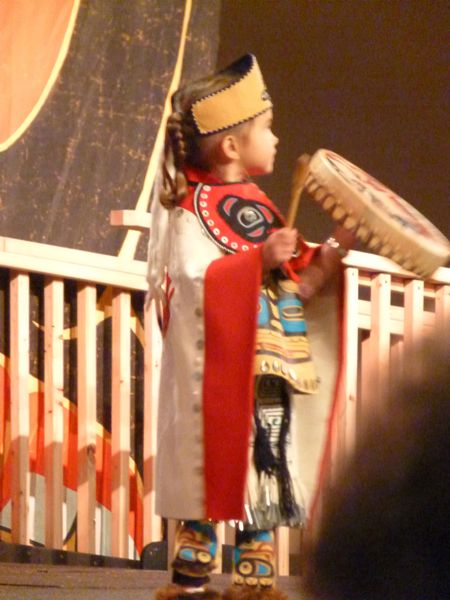
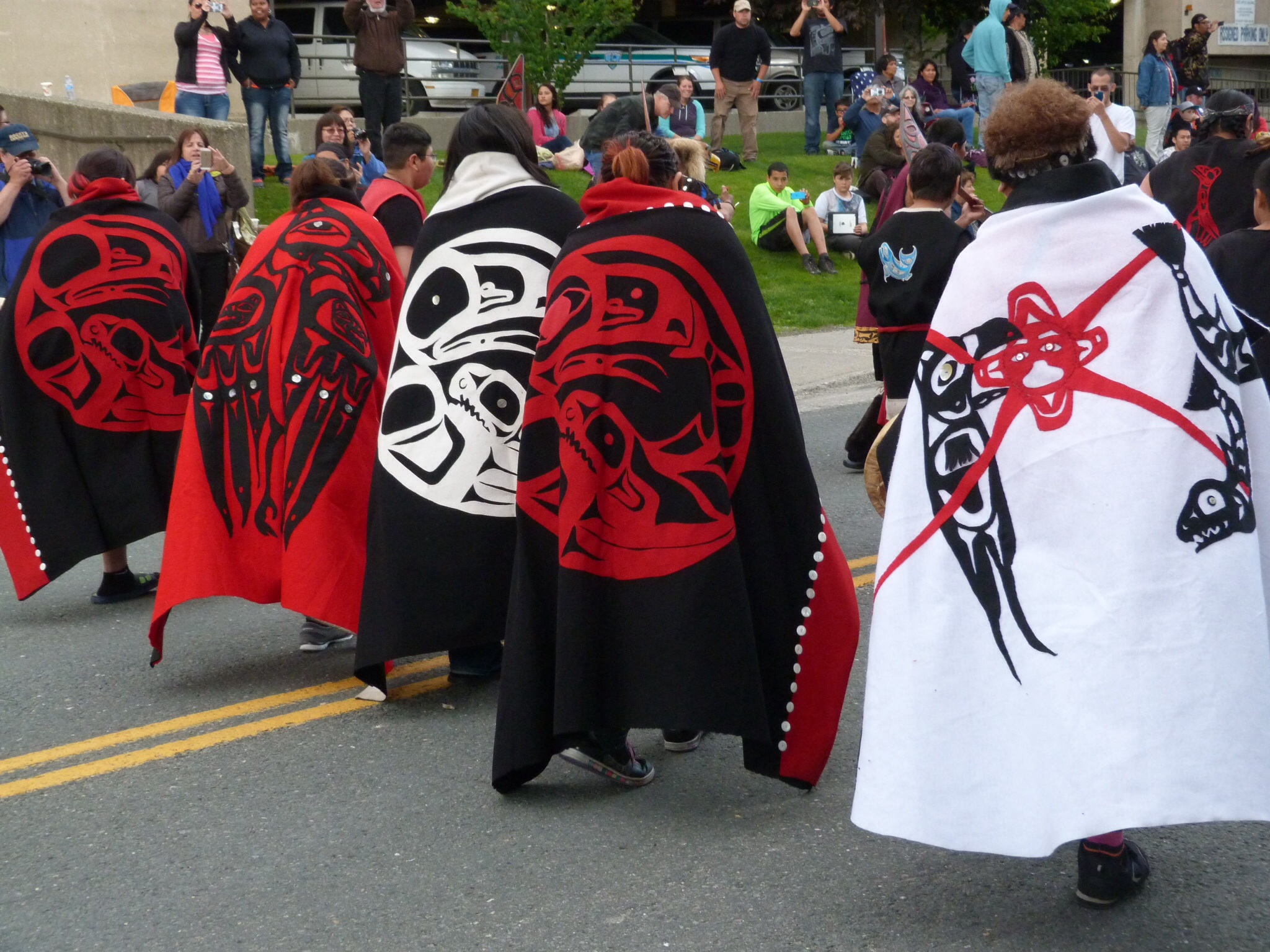
One of the sweetest events at Celebration 2014 is scheduled early early in the morning, so early, we missed a part of it. The families of the clans take great pride in creating their ceremonial robes with clan markings, and get the children started in the tradition early.
These children were SO adorable, and their costumes finely and lovingly wrought. They had an enthusiastic – if fairly sparse – audience at the early hour, but it was necessary with all the many different groups dancing throughout the day.

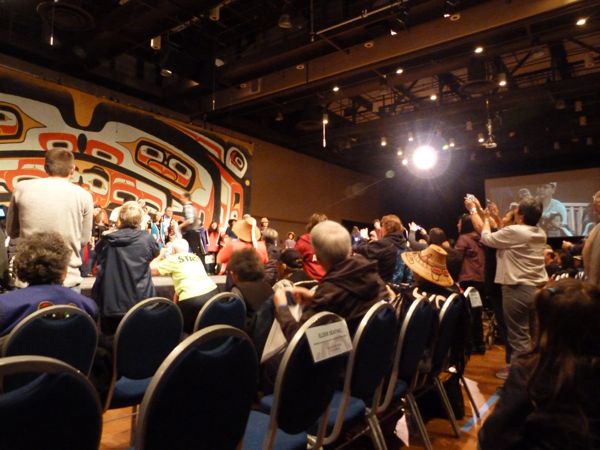


I THINK this might have been the winner, but I am not sure. Not everything was in English, and sometimes I couldn’t understand what was said. Winner or not – adorable 🙂

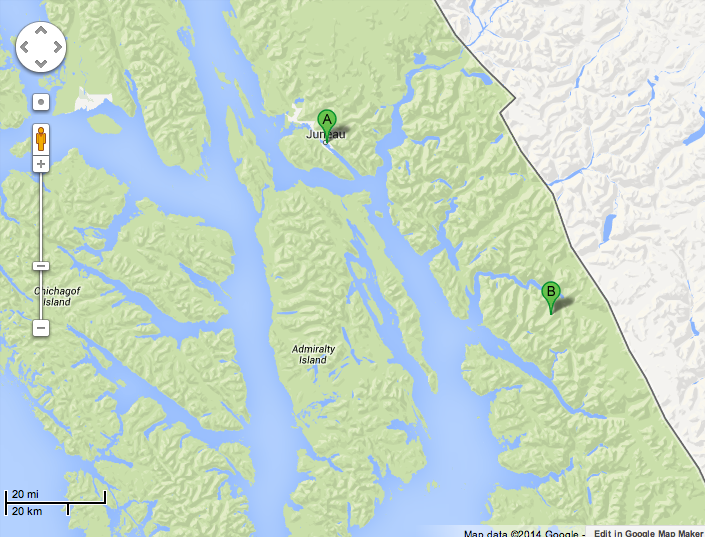
From Juneau to Tracy Arms Fjord on AdventureBound
Taking a break from The Celebration, we get up early, drive to our Juneau friend’s house and park our car and she drives us over and drops us off to catch the AdventureBound trip out to Tracy Arms. For two weeks the weather forecasts have told us that this day will be sunny, bright and warm, and ha ha ha on us, it is cloudy and cold, but not much rain. In Juneau, not much rain is a pretty good day :-).
We meet some really fun people as we wait to board – one couple married four days, one couple of young adventurers who, like us, travel on their own as opposed to group travel or cruise ship travel. Our lively conversation made us late to board, only to discover that everyone else had booked for this “sunny” day and every seat in the cabin would be occupied. Once you sit down, that is YOUR spot, oh ugh, this is the worst kind of tour for us, but we discover we can go in and out at will and this works. We spend a lot of time outside, taking photos, watching for whale and porpoise and bear and eagles – all kinds of wildlife. It’s not so bad.
Before we leave, I shoot this photo. It’s not original; I had a similar poster once from the 1920’s or 1930’s advertising trans-Atlantic boat travel on some French line. I just love the lines:

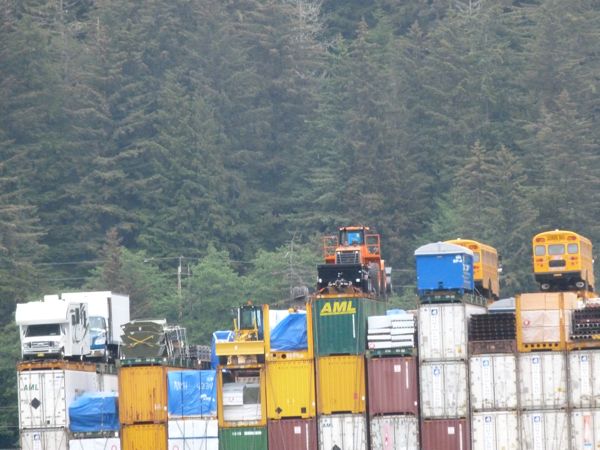
Juneau is landlocked, so everything that comes in or goes out goes by boat or plane. Container barges bring in larger items, and I was amazed how high they can stack a barge. I was also amazed that on top of the containers are vehicles strapped on tight; school buses, campers, snow plows – no wonder everything costs so much more in Alaska!

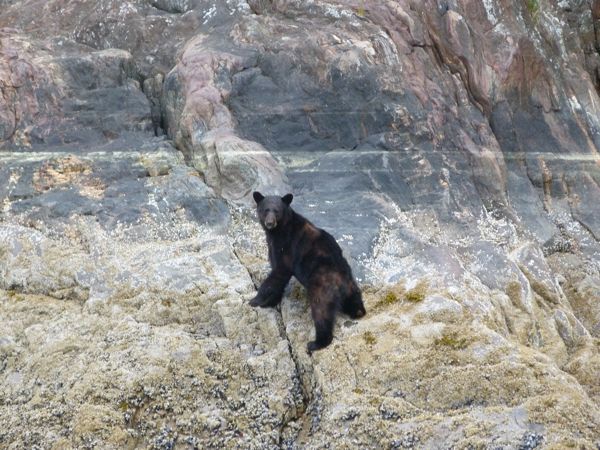
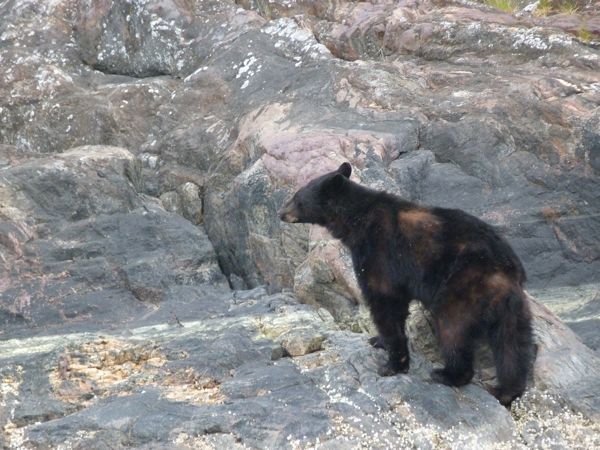
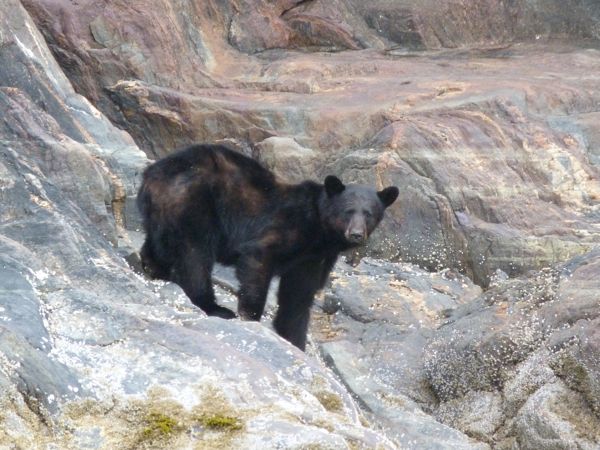
These bear made me so sad. Look how skinny they are, down at the bottom of tall, steep cliffs, eating barnacles. Bear eating barnacles – they must be starving. Some of them look all molty and have fur coming off.
I never saw these glaciers when I was little. The Mendenhall glacier is relatively large compared to the Sawyer glaciers (1) and (2) but the Sawyer glaciers are calving. The sound is unforgettable, the cracking, the thunder, and entire sections of the glacier falling into the bay. Other burgs crack off underwater, and they come up huge, whole and a sparkling, unforgettable icy deep blue:
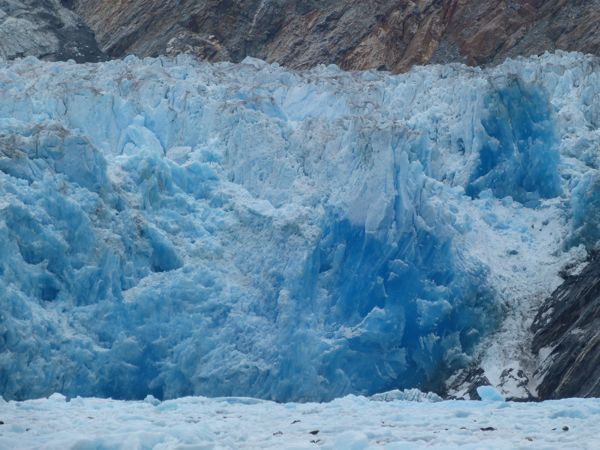
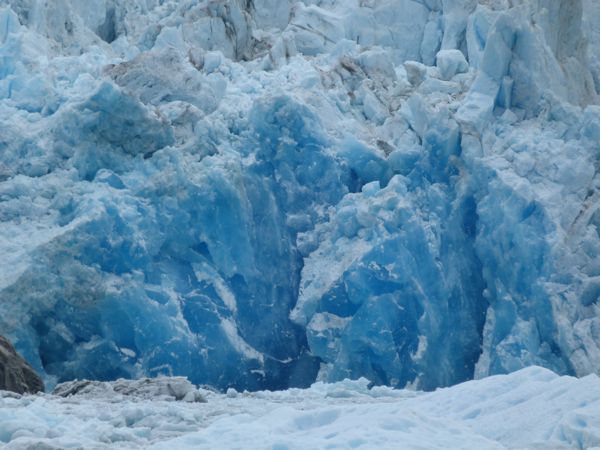
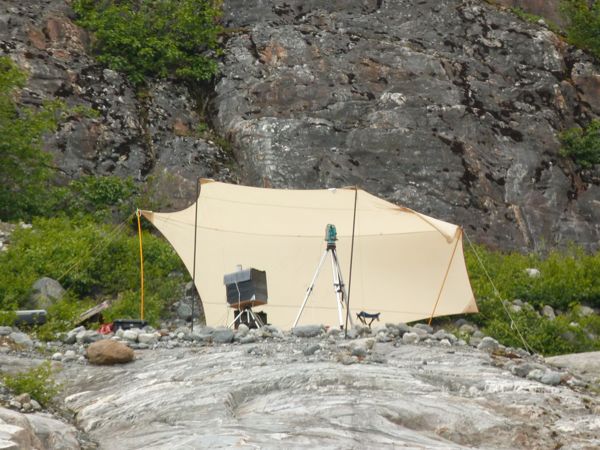
There is equipment going all the time at Tracy Arms to record the calving, the sights and sounds:
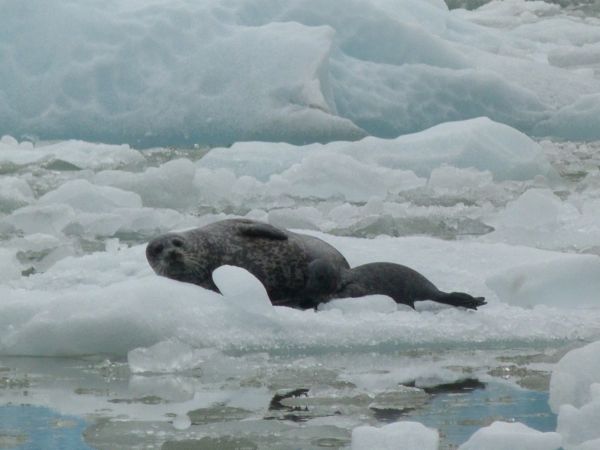
Mama and baby seals catching a few rays at high noon near the glacier:
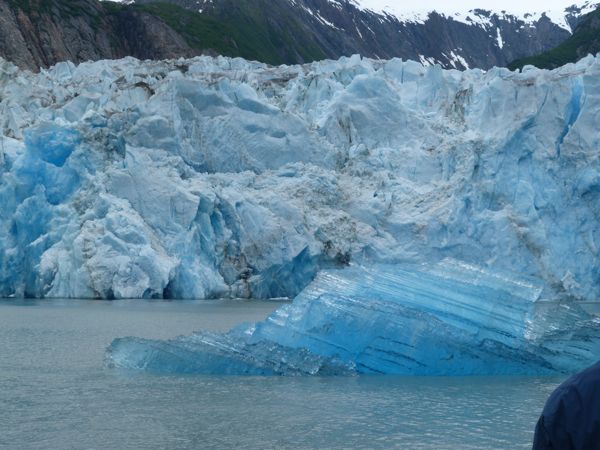


Here is a piece breaking and falling into the water:
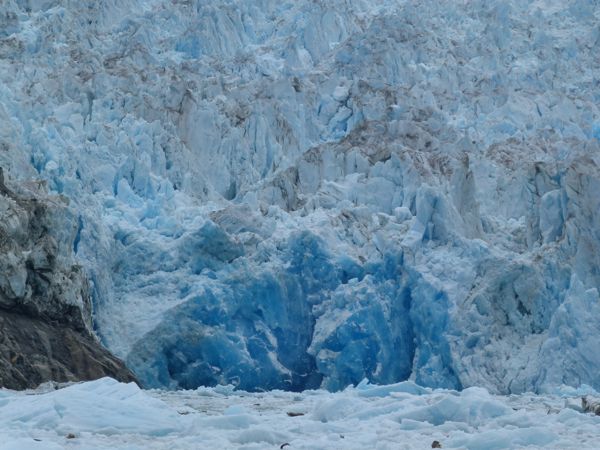


You can see the tour boat is surrounded by ice and icebergs:
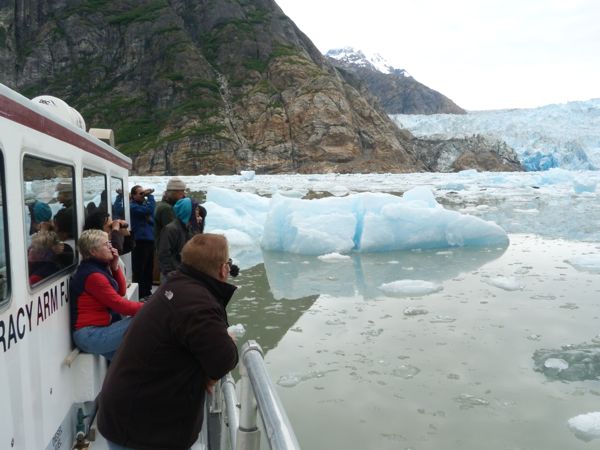
The glaciers are currently neither advancing nor receding, but you can read the trail of the glacier’s recession over thousands of years in the steep, ice-scraped mountains on both sides:

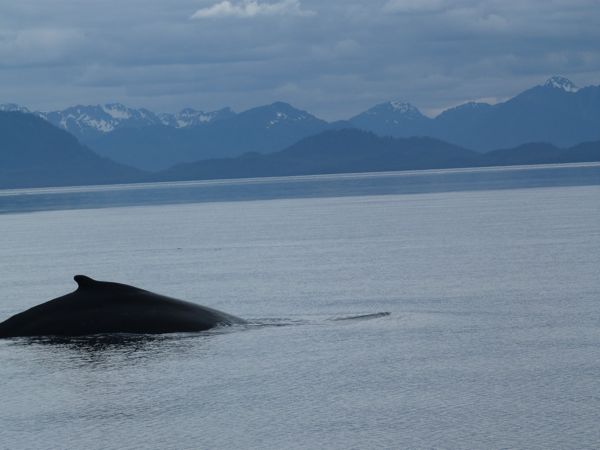
On our way home, we spot whale. You can shoot a lot of shots of a piece of whale, or where the whale was a split-second ago, LOL.

As we reach the dock, I call our friend to tell her we are arriving and she laughs and tells me she is already on her way; she was watching the boat arrive from her place across the channel. Within minutes, she is picking us up for home made fish cakes and chop chop salad. Best of all, great conversation, lots of laughter and wonderful stories of past times in Alaska. Her family was a pioneer family in Nome before she married and came to Juneau, so she has some great tales to share. Our families have had a lot of joint adventures, in Alaska, in Germany and in Edmonds.
She also asks great questions like “how did you buy groceries in Kuwait?” and “what did you do about laundry?”, practical questions, and exactly the kinds of things that made our lives more challenging – and interesting – to us. It was a great evening.
The Hanger at the Wharf in Juneau
First, we really love eating at the Hanger at the Wharf. So does just about everyone else. Twice, we got really lucky. It is easier getting a table if you are just two people, and it is easier getting a table if you eat early. As we are still on Pensacola tummy time, we are in luck. As the Celebration 2014 parade ended, we zipped straight over and as larger groups waited, we were immediately shown to a table for two.
No wonder The Hanger is so popular. The food is terrific and this is the view – straight down the Gastineau channel with Douglas and the cruise ships. As the sun slides behind the mountain, it is a stunning view:

Some hardier souls were eating outside on the deck. I used to be this hardy, but my years in the Middle East have softened me, made me not so good at eating in cool and drafty places, even in the middle of the Alaskan summer.

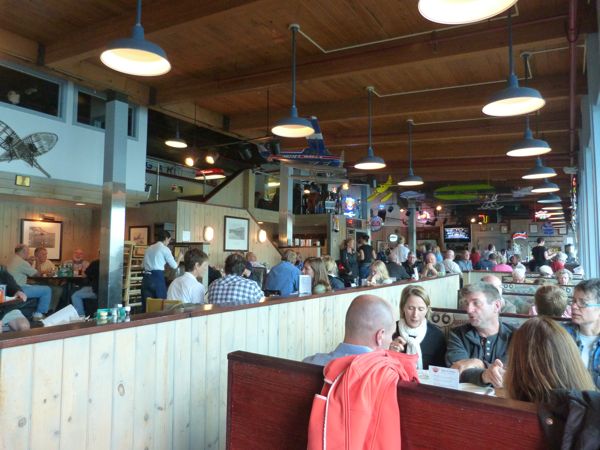
Inside The Hanger: great, courteous, friendly and efficient employees

Every table taken, the bar is packed, and people are waiting in the hallway to be seated:
My halibut tempura:
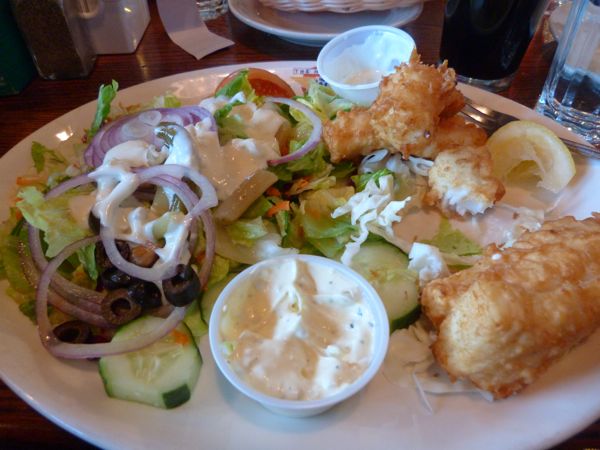
AdventureMan’s halibut burger and fries:

We liked the food and atmosphere so well that we went back a second time during the ceremonial dances and were happy to see a lot of the dancers eating there, too. I had the first mate’s plate, with salmon and halibut and a berry chutney and AdventureMan had grilled halibut. We both left happy. We would go there again in a heartbeat.
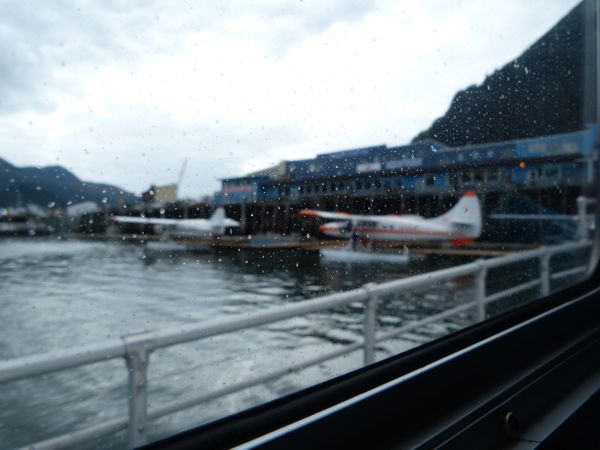
There is only one little thing about The Hanger that makes me uneasy, and it has nothing to do with The Hanger. When I was a little girl, living across the channel, I would watch for my Dad to come home – this was the airport for the amphibious planes, Alaska Coastal Airlines (now part of Alaska Airlines) and Ellis Airlines. When his plane would land, we would all rush to the car and drive like crazy across the bridge to pick him up (no cell phones then, LOL). So I still feel a little frisson and feel the ghosts of the past when I eat there.
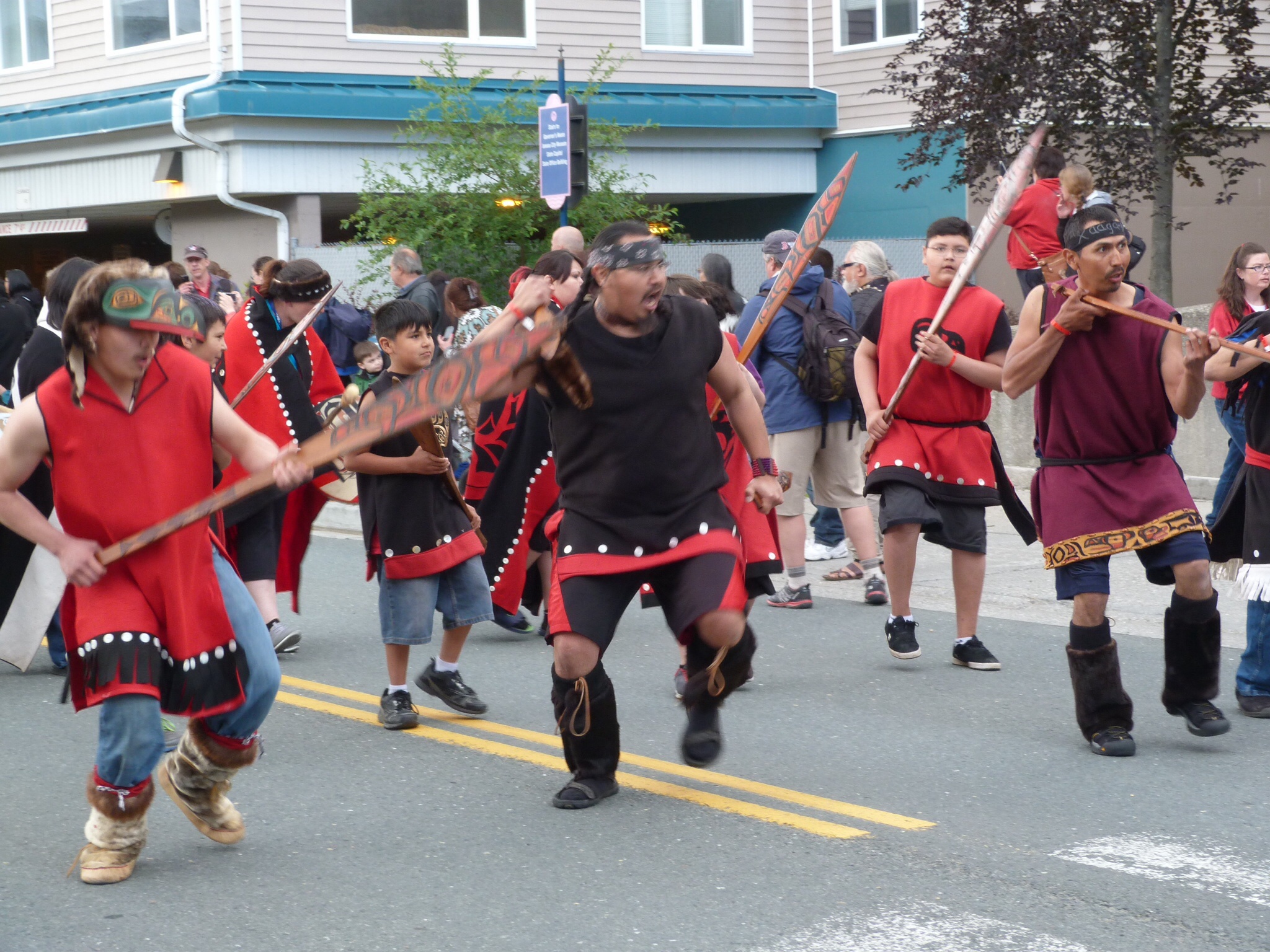
Celebration 2014 Parade Continues
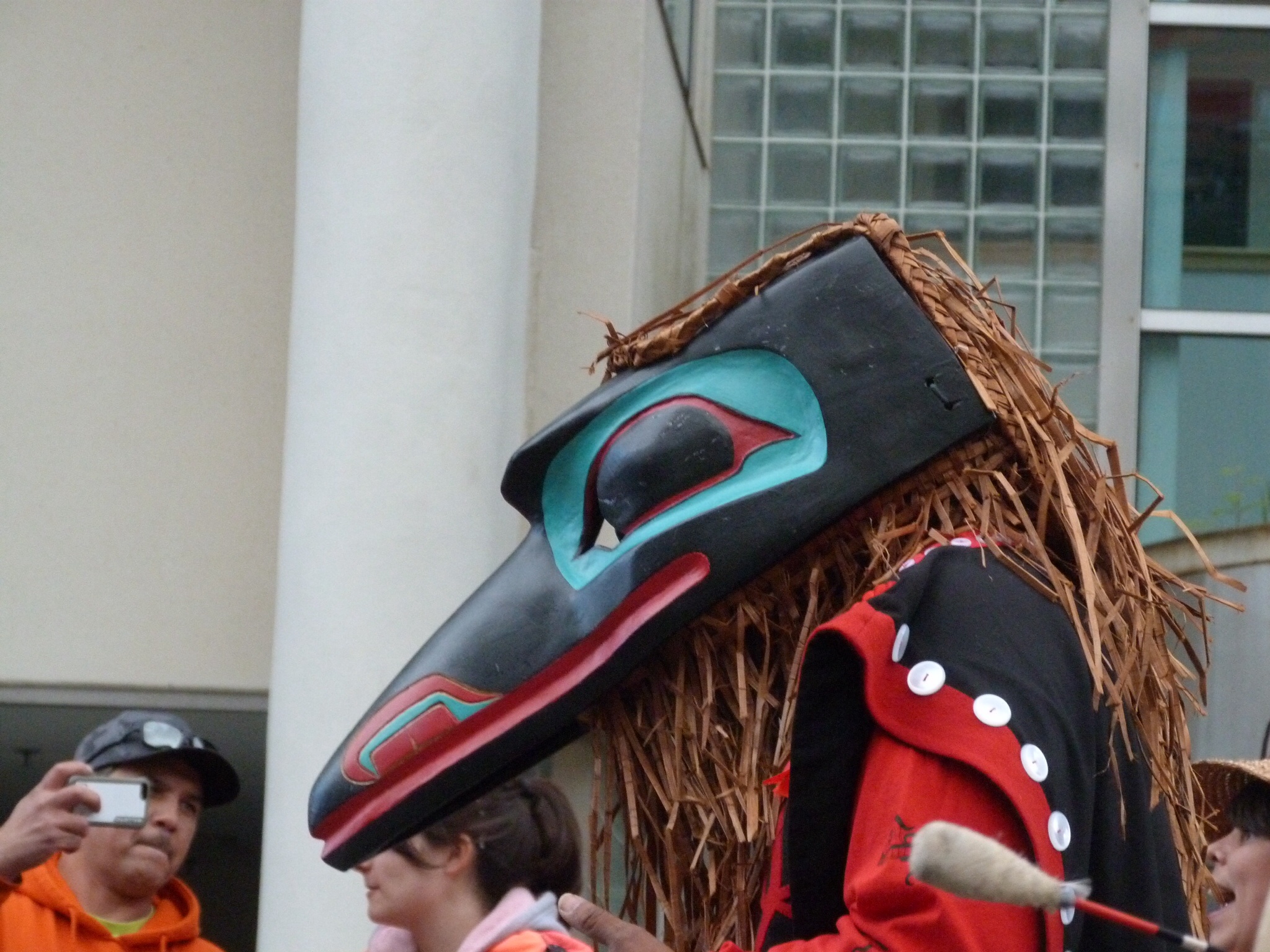
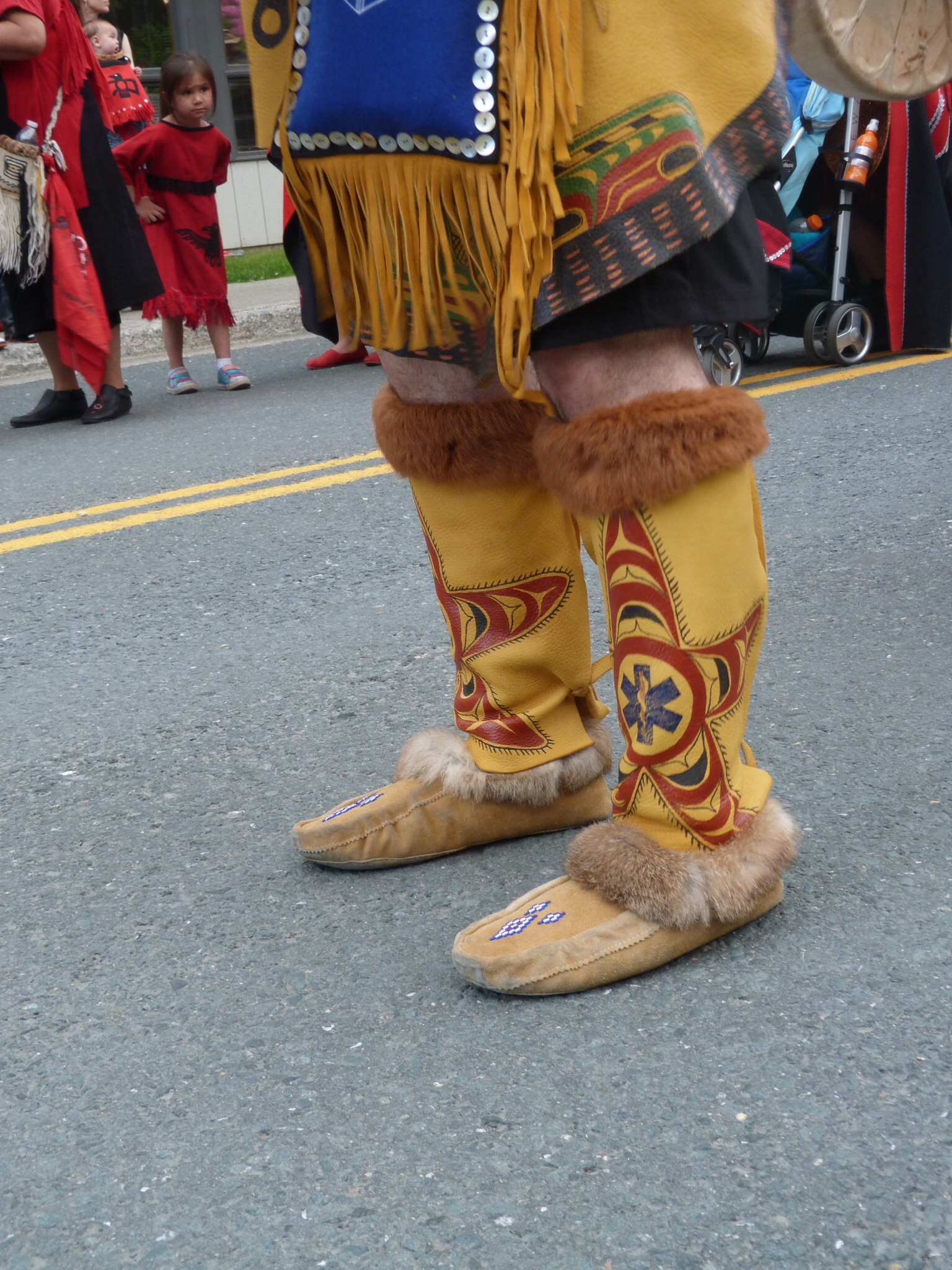
I hope you will forgive me; I am not able to do the same work on the iPad I can do on my computer, so these photos are uncropped, unenhanced, they are what they are. It isn’t about the photos, it is about the people they are celebrating. These are more photos from the opening parade, which was rich with colors and sounds:






Bear in Mind . . .
As a kid growing up in Alaska, I learned to respect bear, and all wildlife. I don’t think they are cute. I think they are creatures like us, who struggle to survive, and who will hurt, maim or kill us if we get in their way. It’s not personal; it’s just the way it is. I’ve seen the damage bear can do; I steer clear.
I did not go with AdventureMan on his bear safari. Hmmm. Let’s see, spend a lot of money to tromp around on a stony beach, maybe cold, often wet, fighting mosquitos and no-place to potty with dignity? Hmmm . . . No thank-you!
But he did get some spectacular bear photos, one I absolutely love, it looks like bears doing the polka, it makes me laugh. I am hoping he will share with me so I can post some bear photos for you later on the blog.


All to Ourselves: Mendenhall Glacier
It’s one of those wonderful mornings, we are still on Pensacola time and wide awake. LO, why not, we hit the sack the night before around seven, unable to stay awake another minute. Quick breakfast in the lobby – we brought our own home-mix cereal, but there is milk and fruit we can add, grab a quick cup of coffee, then out to the glacier. When you say ‘the glacier’ you mean the Mendenhall. People havre been coming for years to visit this glacier.
When I was a kid, it was bigger, farther out, and there were only little trails to take out to get closer. Now, it is built up – a place to watch bear catch salmon as they swim up the stream to spawn, and several built up places where tourists can view the glacier, nice paths to walk on. Normally, there are bus loads of people, and I mean that literally. This morning – holy smokes – we are the only car in the parking lot at almost seven ayem.
There are blue places in the sky between white fluffy clouds. There is sunlight filtering through, lighting up the glacier, and making the icebergs glisten.

While AdventureMan shoots shots of Alaskan terns for his birding friends, I shoot icebergs. We listen to the silence, the utter peace of being alone out in this majestic location.
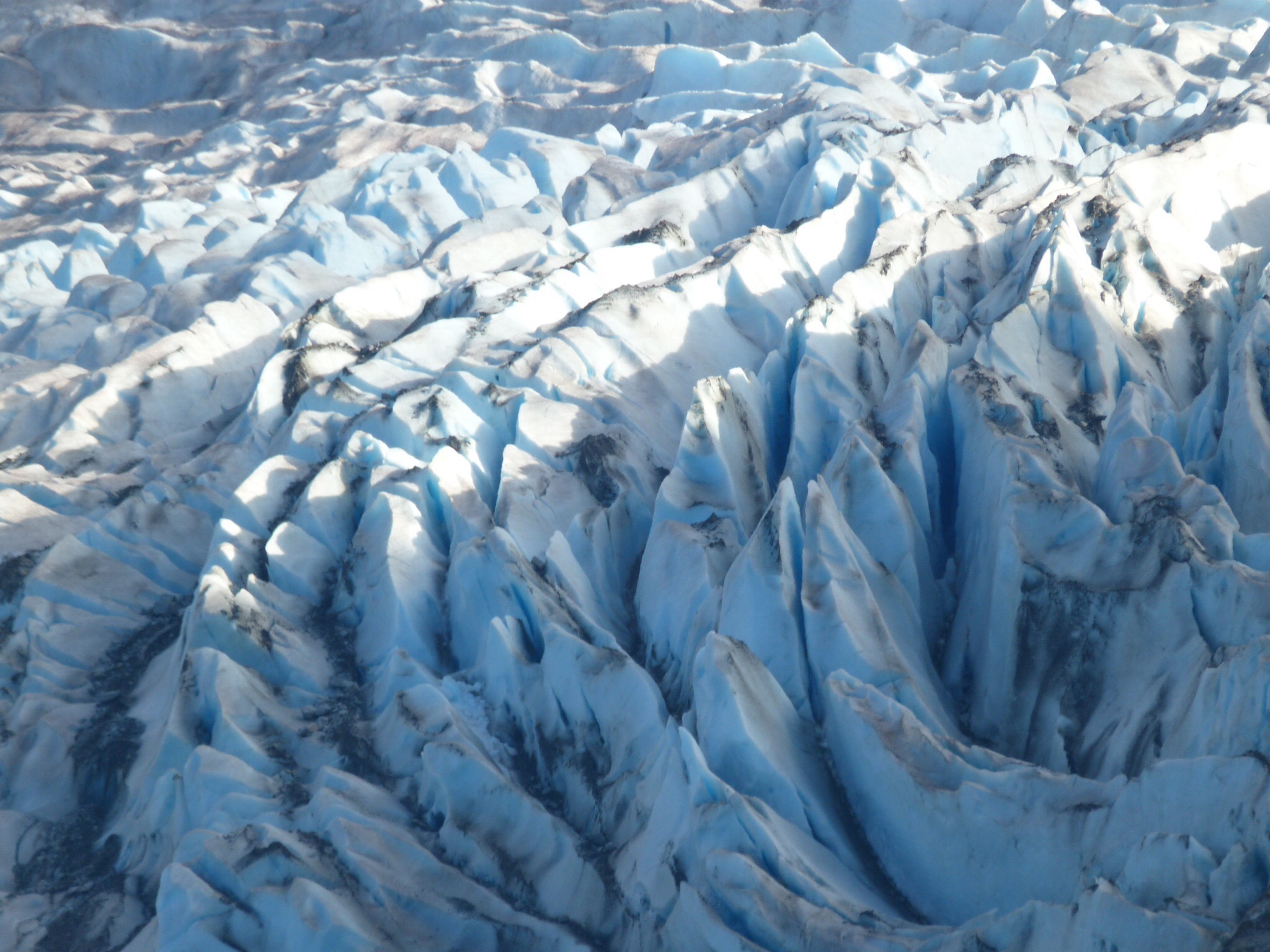
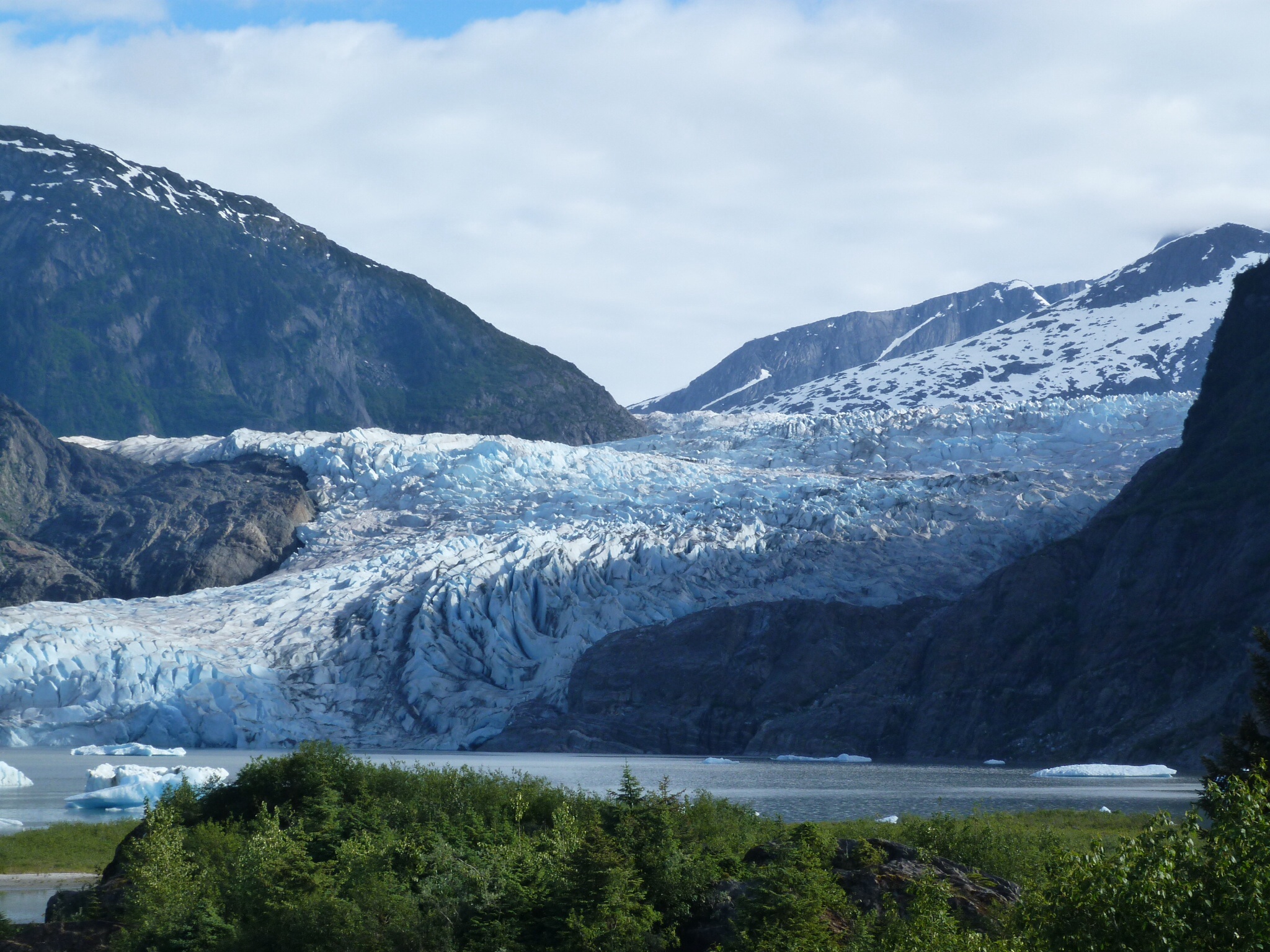
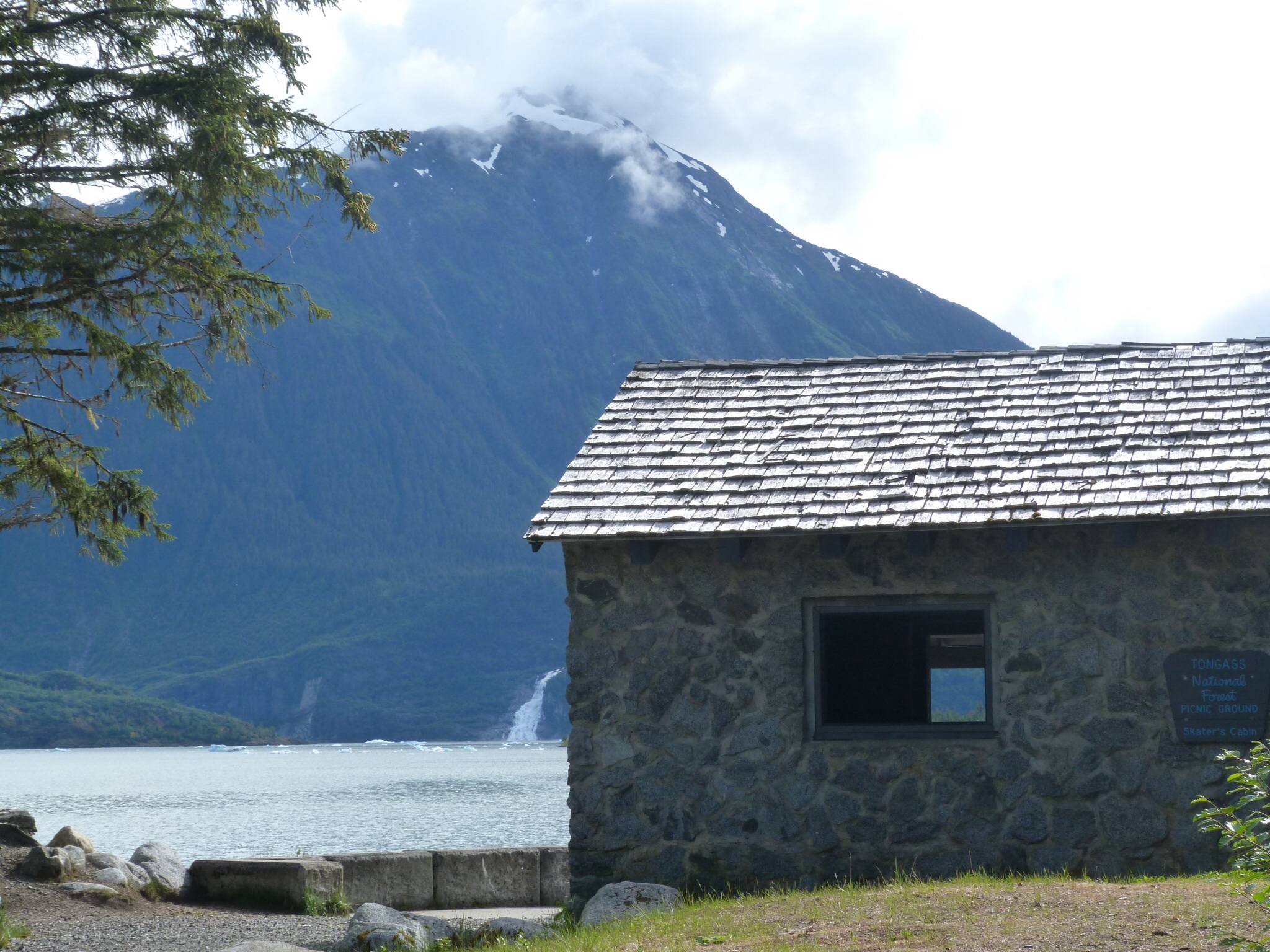
We spend about an hour, hiking around the various viewpoints, feeling so luxurious, the luxury of sheer privacy. As we leave, the buses start arriving. We take the Mendenhall Loop around the lake to Tongass National Forest campgrounds, to see the glacier from another viewpoint.

As we near Skater’s Cabin, full of old memories of my Mom tying up my ice skates and giving us hot chocolate out of a thermos, our old friend calls. We used to go out fishing and berry picking with them on their big former Coast Guard boat, Dad would go hunting with her husband. She is now 90, and she is on the phone inviting us to dinner the next night.
We are so honored. We don’t want to put her out, we don’t want her to have to fix dinner, but we always have such wonderful conversations with us (she asks us things like ‘tell me what it is like grocery shopping in Tunis?’) and we get her to tell tales of life in early Juneau, so we accept.
It’s been a wonderful morning. We know just where we want to have lunch, a place we haven’t tried before. And tonight is the opening parade for Celebration 2014!
Waji’s in Seattle Airport
O
Airports are so much more interesting and varied than they used to be (except the Pensacola ‘International’ Airport that went in the opposite direction, with chains instead of local specialties . . . )
If you are familiar with Seattle, you wii know Uwajumaya, a wonderful supermarket in the International district. Now, you can get your favorite to-go from Waji’s, wooooo hoooooo.
41 Years on the Road Less Taken
We’ve had an unconventional road, AdventureMan and I, with all our moves, and most of our lives spent outside our own country. We celebrate 41 years this weekend, and AdventureMan asked me where I wanted to go.
“How about Alaska?” I joked, since we have a trip planned there, and we will be going to lots of fun places. He’s used to my answers, my non-sequitors. He asked me if I wanted a diamond, and I laughed and said, “no, just let me buy houses.” We’ve done well.
“No! To eat on our anniversary!” AdventureMan protests, knowing I can draw a celebration out for days or even weeks.
He named off a couple really nice restaurants and I said “I want to go out to Nine Mile Road.”
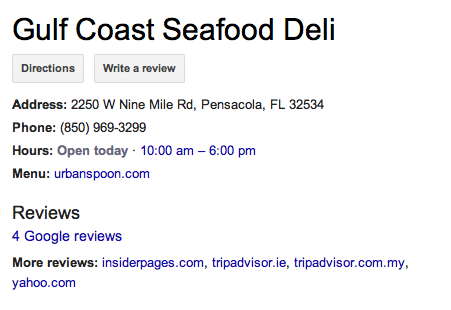
He just laughed. We both love this little seafood restaurant he discovered, the Seafood Platter Deli, sometimes called the Gulf Coast Seafood Deli. It is unique, the food is fantastic, it’s this genuine little place not like any other place I have ever been. It has a podium by the huge chalkboard menu on the wall, and on the podium is a book where clients write their prayer requests. Every morning, before they open the restaurant, the staff prays together.
I am awed by this. It blows me away. We live in such earthly times; few people are really focused on practicing their faith. We are all so tempted by the bread and circuses offered by our consumer-driven culture.
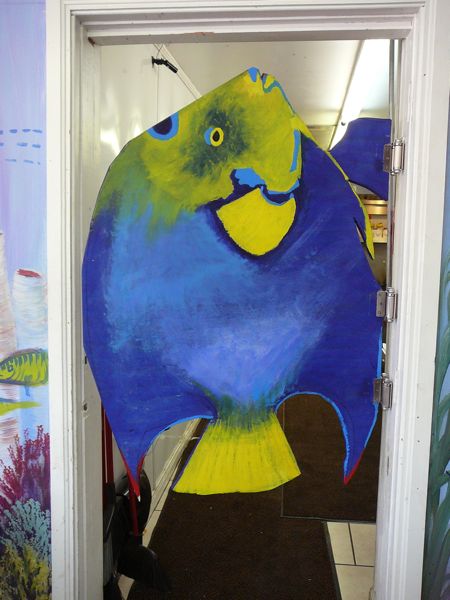
The last time we were there, they had added new doors to the kitchen. No, I wouldn’t want them in my house, but for a seafood restaurant? They are perfect, somebody went to a lot of trouble to make these doors.

“I was hoping you would want to go there,” AdventureMan admitted, and we grinned. There’s a reason we’ve been married this long; we take the road less travelled – together.
Nick’s Boathouse: A Happy Surprise
Here’s the truth – we were really headed to 5 Sisters, but when we got there and saw all the people lined up and waiting for tables, we thought “uh-uh, not for us” and headed on down the street. We’d wanted to try the new Nick’s Boathouse for a while, and this was the perfect opportunity.
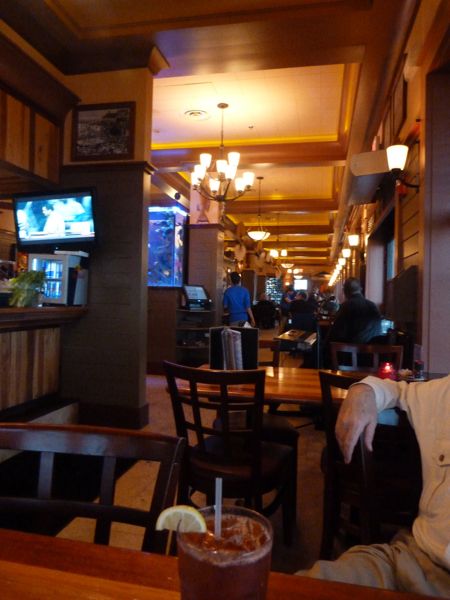
We like the interior. It has different areas where you can sit, not one great big interior where everyone can see everyone. We like the privacy.
This is a view of the bar area: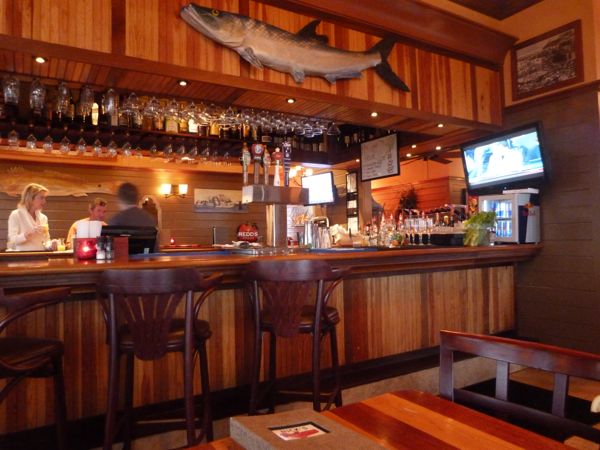
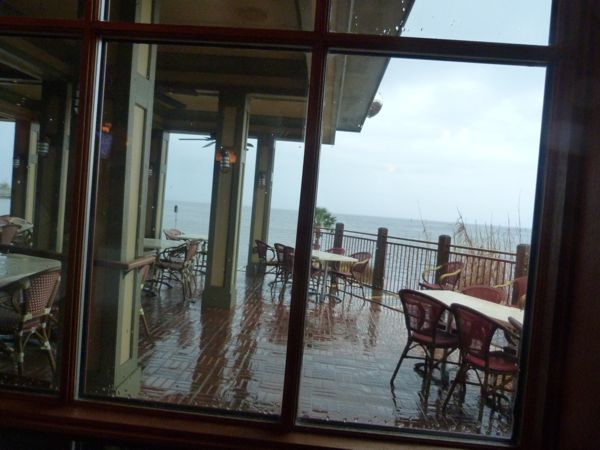
The outside area looks like a great place to sit on a nicer day, breezy and covered, or to have a party or celebration of any kind.
I’m a sucker for seafood bisque, and Nick’s has a really good seafood bisque
AdventureMan says the gumbo is also awesone 🙂
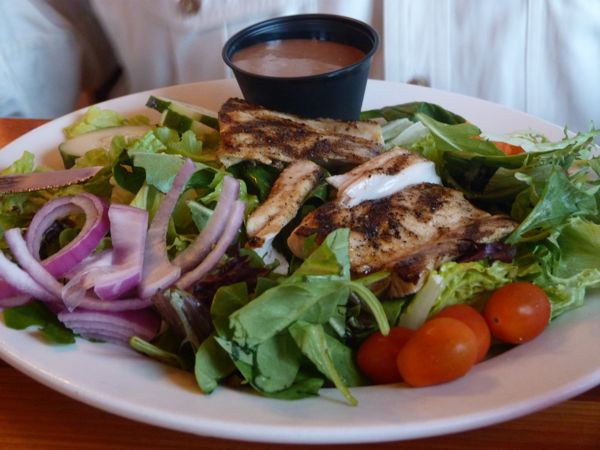
The grilled chef salad was a total win for AdventureMan 🙂
And I adored the grilled salmon Ceasar 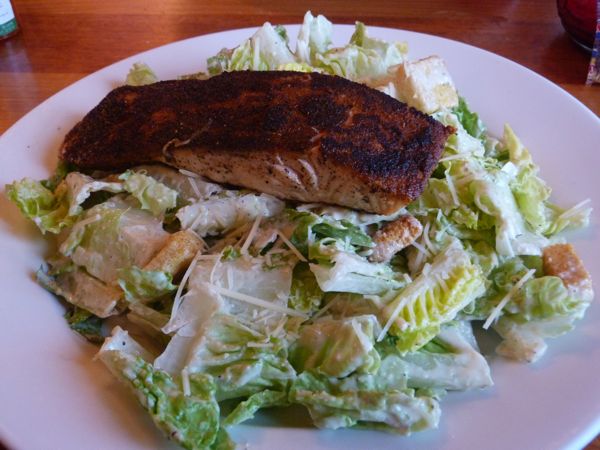
On such a day, having such a good time, we can’t resist dessert, the molten chocolate, LOL and sadly, we tucked right in, neglecting to photograph it first. This is all that remains. Yes, we would do it again. 🙂
Nick’s Boathouse | 455 W Main Street Pensacola FL | (850) 912-8775
Nick’s is relatively undiscovered, so far. It’s not the see-and-be-seen kind of place that other downtown places – The Fish House, Jackson’s Steak House, Jaco’s, Global Grill – have become. . . yet. As of now, it is still quiet and private with great service. Go now, go quickly, before it changes into a go-to place with a line outside!
Worst Places in the World to Work
From AOL Huffpost Business:
Where are the worst places on the planet to be a worker?
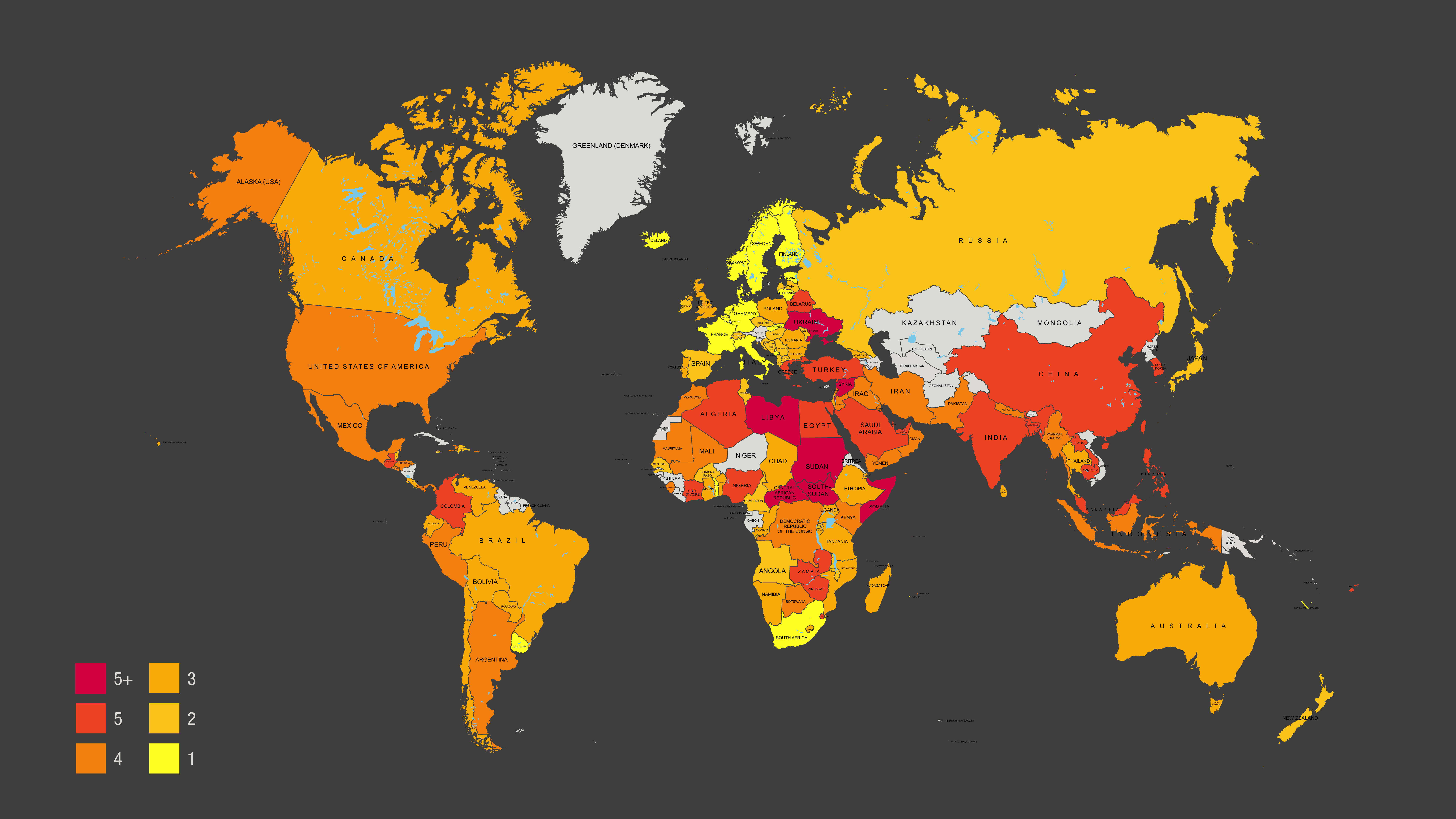
A new report by the International Trade Union Confederation, an umbrella organization of unions around the world, sheds light on the state of workers’ rights across 139 countries. For its 2014 Global Rights Index, the ITUC evaluated 97 different workers’ rights metrics like the ability to join unions, access to legal protections and due process, and freedom from violent conditions. The group ranks each country on a scale of 1 (the best protections) to 5 (the worst protections).
The study found that in at least 35 countries, workers have been arrested or imprisoned “as a tactic to resist demands for democratic rights, decent wages, safer working conditions and secure jobs.” In a minimum of nine countries, murder and disappearance are regularly used to intimidate workers.
Denmark was the only country in the world to achieve a perfect score, meaning that the nation abides by all 97 indicators of workers’ rights.
The U.S., embarrassingly, scored a 4, indicating “systematic violations” and “serious efforts to crush the collective voice of workers.”
“Countries such as Denmark and Uruguay led the way through their strong labour laws, but perhaps surprisingly, the likes of Greece, the United States and Hong Kong, lagged behind,” wrote ITUC general secretary Sharan Burrow in a statement about the report. “A country’s level of development proved to be a poor indicator of whether it respected basic rights to bargain collectively, strike for decent conditions, or simply join a union at all.”
Here’s a look at the world rankings. Darker shades represent worse protects for workers. A score of 5+ means that active conflicts, like those in Syria or Sudan, block any legal protections for workers.
Recent Comments
intlxpatr on Shampoo Ginger tigerbutterya0c5ff1d… on Shampoo Ginger intlxpatr on British Soldier Kidnapped, Esc… John on British Soldier Kidnapped, Esc… intlxpatr on British Soldier Kidnapped, Esc… Wikipedia Donate Button

Amazina


Early Voting in Florida


