Here be Bears!
While our first day had been exciting, it was also full of drenching cold rains and while AdventureMan NEVER complained, I could see he was . . . hmmmm . . . . supportive but underwhelmed. Fortunately, our next day dawned with high clouds and not a drop of rain in sight. We went immediately to the Mendenhall Glacier, something everyone sees when they are in Juneau, and, thanks be to God, it was not fogged in nor covered with rain clouds, but there, in all it’s icy blue glory:

There were iceburgs floating away, looking cool and serene:

The glacier is always awe inspiring, but there is also something else. The municipality knows that all these tour boats coming in need things to do and see, so in addition to the glacier, they have built a state-of-the-art walkway along a stream flowing from the glacier, a stream full of salmon. And when there are salmon spawning – as they are in August – and bear who are trying to store up fat for the winter, there is a wonderful confluence of needs. The salmon need to spawn, the bear need to eat and the tourists need to see something exciting. Bear chasing and eating salmon fits the bill.

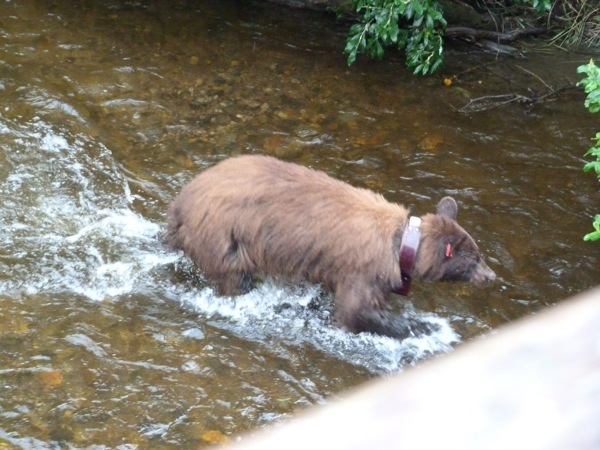


This was a very very good day 🙂
No Internet??? No Wi-Fi??? No Phone Service???
No, I have not abandoned you.
When my son asked about communicating with us from Alaska, I confidently assured him “oh, Alaska will be like Africa! Land lines are so expensive to install, there will be cell towers everywhere, and besides, my iPhone is covered everywhere! I can use the internet.”
Oh Pride, Intlxpatr, Pride. You speak whereof you do not know!
Our time in Juneau was a lot of fun. From the moment we arrived, it was just so smooth. The airport is small, like Africa. You can be in and out of the airport in minutes. We picked up our car; it was so easy, the reservation was waiting, and the car is out in the small lot. It is a car a lot like our own and we really like it. Not five minutes later, we are in our room at a nearby hotel, and it is a nice room, and of course it has Wi-Fi, that’s how I sent the earlier entries.
I called an old friend of my Mother’s, a friend I remember well from my childhood, she and my mother would laugh a lot together, and our families travelled together, out on a big old Coast Guard cutter fishing in Alaska, or out to islands where we would pick berries, or out, just out, because it was a beautiful weekend and when the weather is good, Alaskans go outside.
We planned to meet up for coffee, and when we did, she was just like the old days, only older. I laughed and told her I am now older than when I knew her before. She laughed at AdventureMan’s jokes, and she had a beautiful living place near where my family used to live, with a view to die for. It reminded me of Kuwait. I could lose hours looking out her window, if I lived there. Eagles flying by, cruise ships coming in and out, the weather changing on the mountain across the way – it was a magnificent location, and it was all made even better by good coffee, good conversation and a great deal of love based on old relationships.
But we needed to go! We had things we needed to see!
This is the view from our friend’s house in West Juneau:
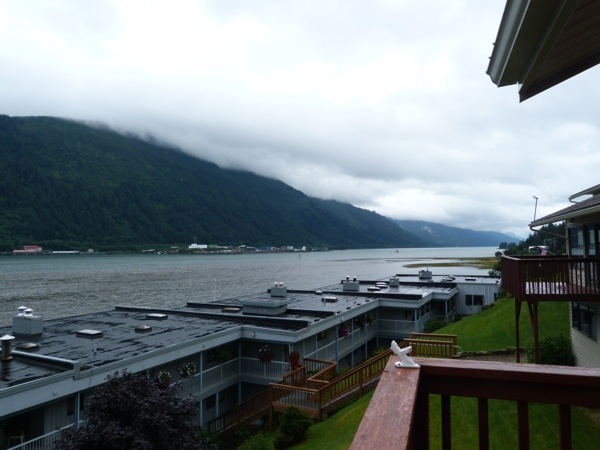

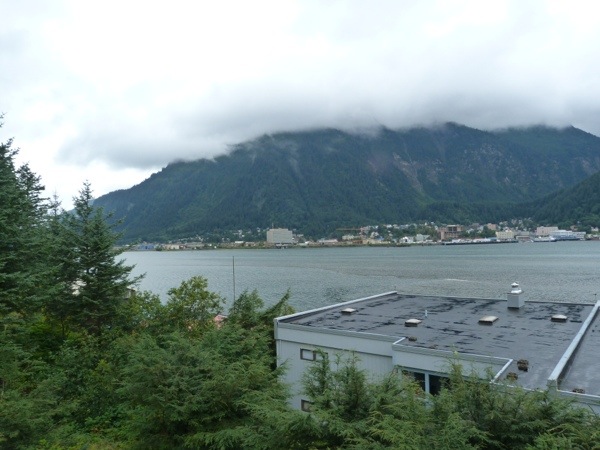
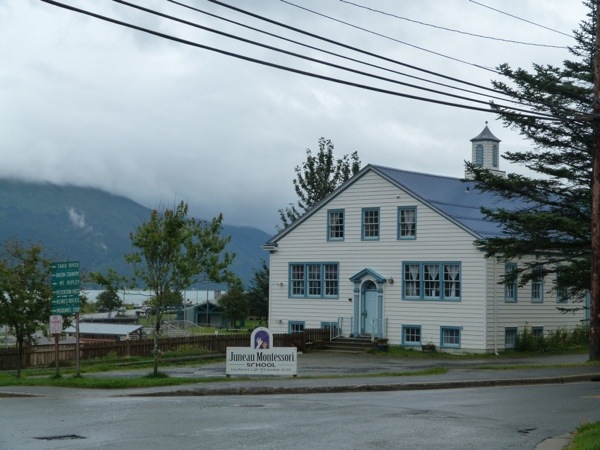
My old school:
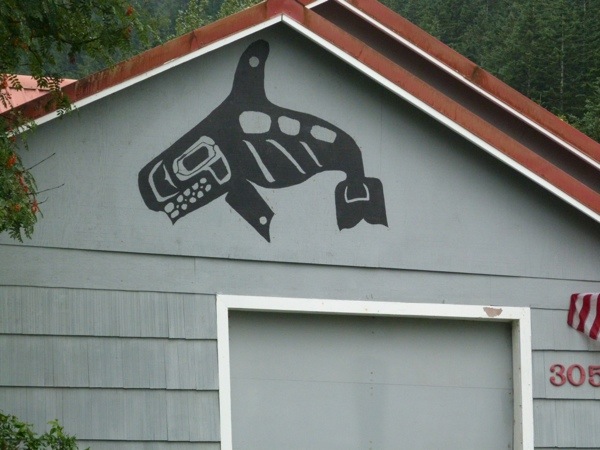
Alaskan Indian art, painted over a garage door:
The beach we used to go to, called Sandy Beach. Occasionally a dead walrus would wash up there, causing no end of excitement to us young people.

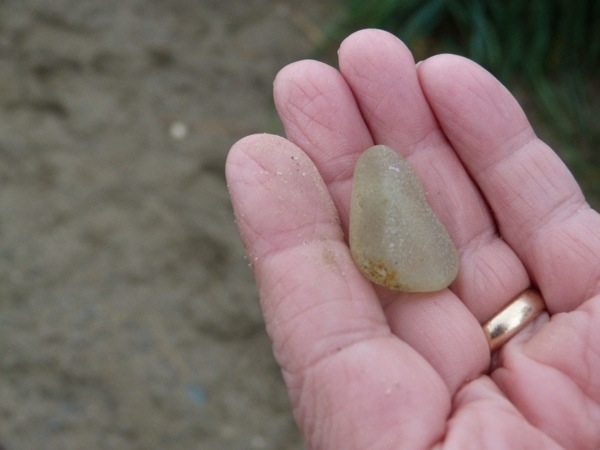
AdventureMan found a piece of the sea glass I love:
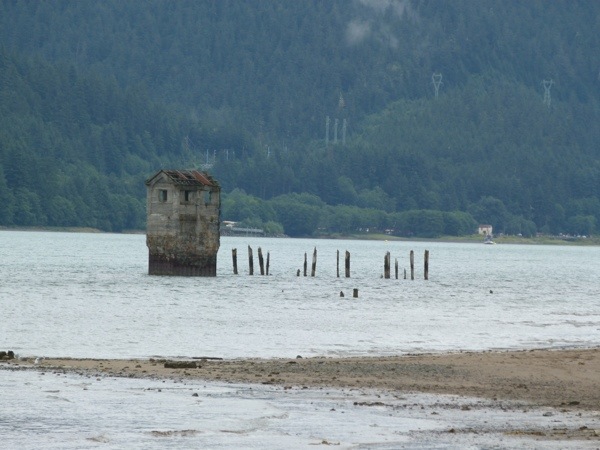

I thought this school above was a lot bigger than this . . . . I remember it being a lot bigger . . . LOL!
This is our old house, many many years ago. It used to have a much bigger front yard, before they widened the road. It also seemed farther from the little grocery store near the bridge that my Mom would send me to, but it’s gotten shorter!

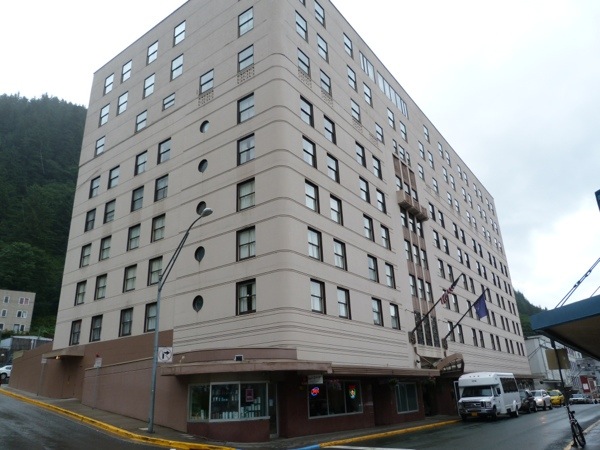
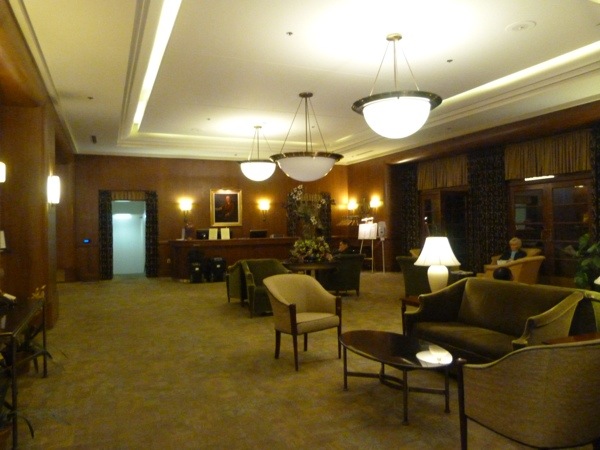
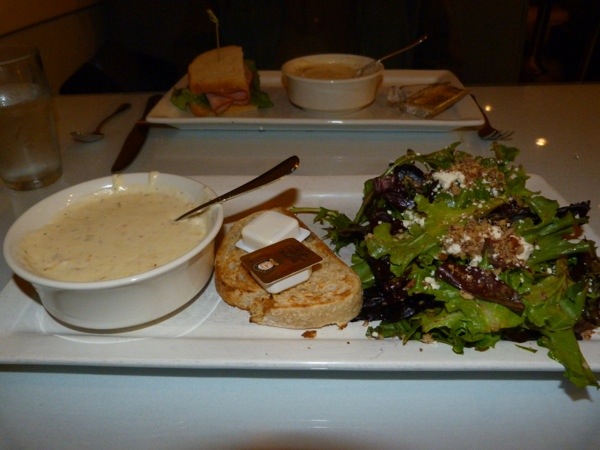
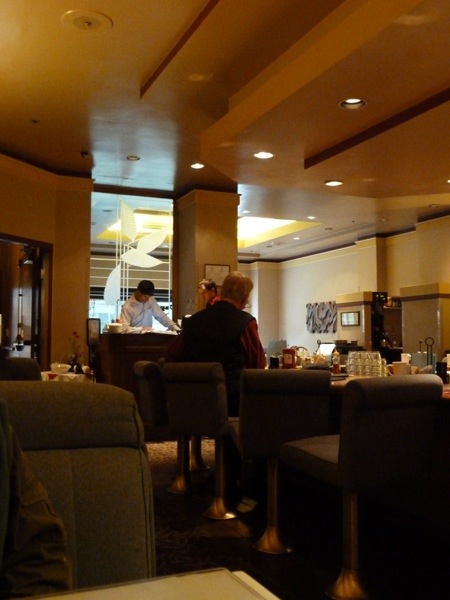
This is the Baranof Hotel, where my parents met. It used to be a very grand hotel, but it is now a Westmark hotel, and while it pretends to still be grand, it is shopworn and tired, and needs a major overhaul to be back in the game. We ate lunch there – to honor my parents meeting – and it was also a very mediocre meal. The very chipper waitress, Holly, tried to make it nice, but the Capitol restaurant needs better lighting and brighter colors. It was very, very dark.
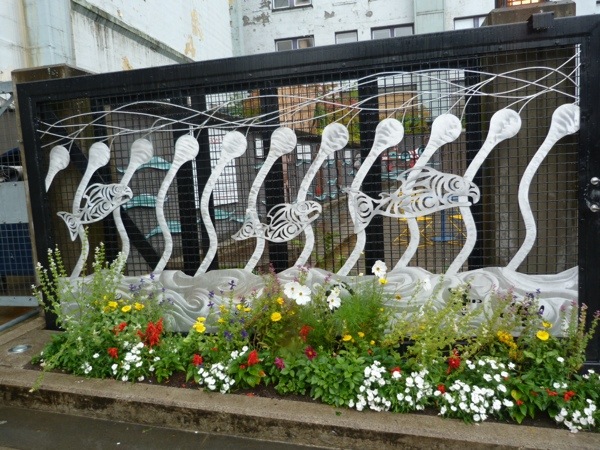
Some public art. Later as we passed the same location we heard guys call out “The police are coming!” and saw them approach three men who looked like maybe they were drinking or drugging.
AdventureMan is so patient with me. When I spotted a quilt shop, he said he was going down the street and to call him when I was finished. 🙂

The best part of the day was picking up our friend for dinner, and hearing her stories. We loved hearing about Juneau in the old days, and hearing her laugh.
The SeaTac Food Court
“Terminal T? Is that new? I don’t remember arriving at Terminal T before!”
Not even two weeks have passed, and we are going through SeaTac again, this time en route to Alaska. As we enter “Terminal T” we discover terminal T is like saying “Shrimp scampi” you are saying the same thing. T is the Terminal, it used to be the only terminal. It’s what used to be the original airport before all the South Terminals and North Terminals and others I don’t even know. Oh yeh, A, B, and C.
But the Main Terminal is a delight. Seattle loves public art, as do I, and arriving in Seattle at the main terminal, you find schools of little brass fish swirling under your footsteps, if you think to look. These little touches delight me.
We are flying out of Seattle to Alaska, and Alaska Airlines flies out of terminals C or N, and as it turns out, our flight flies out of N, or the North Concourse. On our way there, we are wondering if we will find something healthy to pick up for our dinner, when we come to the Food Court.
We’ve eaten here before, breakfast. They have an Anthony’s-in-the-Airport, and my best friend recommended their breakfast egg dishes. I hate oatmeal, but discovered that the oatmeal at Anthony’s is delicious! It must not be good for me; how can oatmeal that is good for me taste so good?
And, as it turns out, Anthony’s has a take-out section! Woo Hooo!


Well, hmmmm, not quite. They don’t have the Ceasar Salad with a piece of grilled salmon or halibut on the top, but isn’t salmon and chips almost as healthy? Although in intend to wait to eat on the plane, the odor of delicious deep fried salmon calls to me, along with a cup of freshly brewed mocha, and I go ahead and eat my dinner in the Seattle airport.
I love it that there are so many options. Anthony’s has a great restaurant, right in the old main terminal, with floor to ceiling glass, it is a glorious situation. There are other eating establishments where you can order and then sit in the same area at tables and chairs – Ivars, some Mexican, some others which are good, it’s just I love the take out from Anthony’s. Normally airport food can be a total drag, unless you go through Memphis and have some BBQ – or Seattle. Seattle does airport food right.
For Unto Us a Child is Given . . .
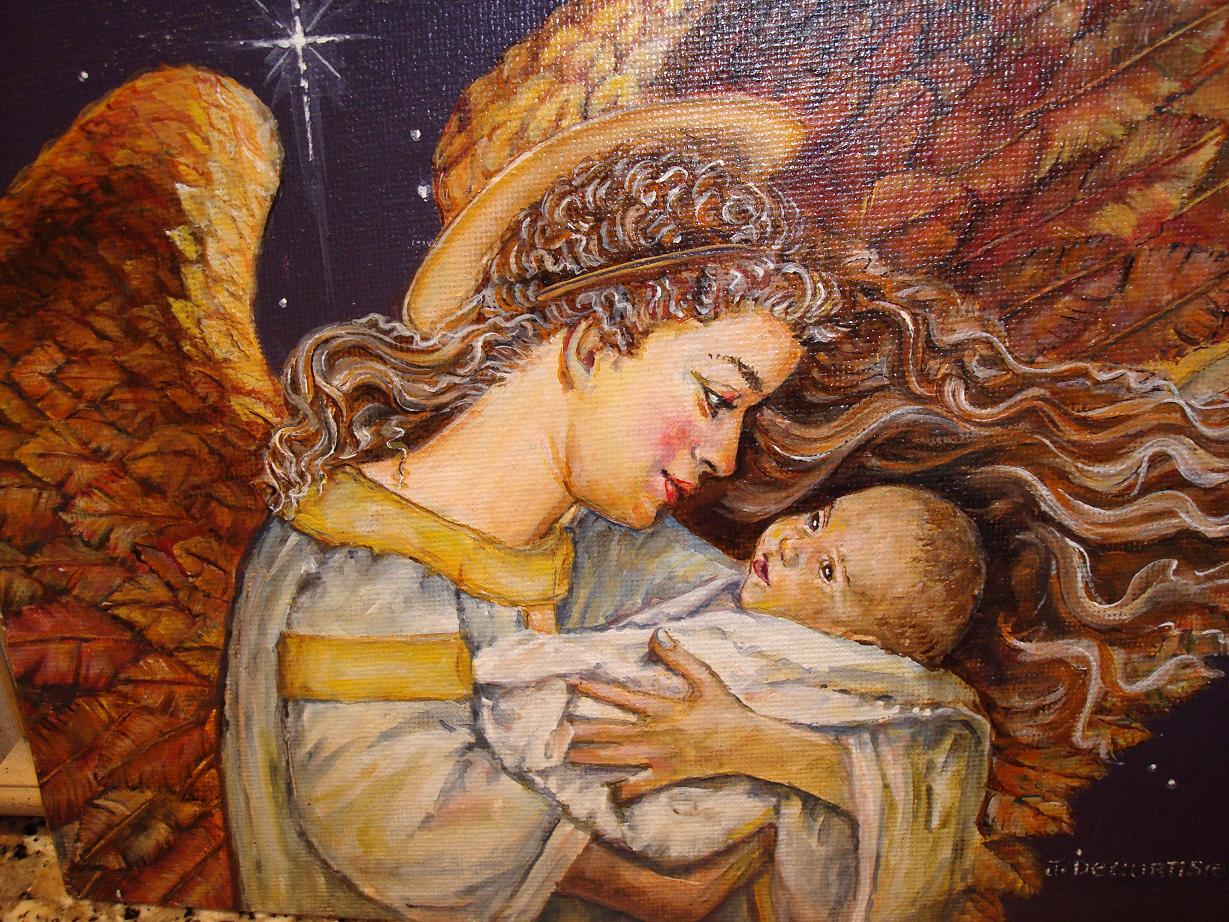
I am hearing those wonderful lines from Handel’s Messiah, because on this wonderful day, just after noon, a new child came into this world, a treasured girl-child, a warrior-princess is born. Thanks be to God, al hamd’allah!
Her Mother’s prayer for her is that she be the child that God created her to be. She hopes her daughter has courage, and a heart for adventure. When we met her, this amazing daughter-in-law, she played rugby, and she went off to France for a year to teach English.
We all pray that she will be healthy, and compassionate, with a heart for others. Courageous and passionate, and a woman of strength who will, like her Father, “give voice to those who have no voices.”
It is taking all our strength not to run to the hospital to visit. We feel very Middle-Eastern at this time; I am remembering my friend who went to Hamad hospital to have her babies. I took her daughters there the next morning, laden with canisters of coffee to serve guests.

“Guests?” I thought to myself. I had NO idea. Our Western idea is to give the new parents and their new baby time to recover from the physical and mental exertion of giving birth, time to bond as a small family unit.
When we got to Hamad Hospital, my friend had a huge suite, like a hotel suite, and her hospital bed was maybe King sized, with a curtain that could be drawn around it. She had a wall of mirrored closets and a seating area for about twenty people. No. I am not kidding.
We got there around seven in the morning, and within fifteen minutes, guests started arriving, all women, of course, come to give congratulations to the new Mom. Each came, greeted the new Mother, sat and drank a couple cups of coffee served by the delighted older daughters, greeted their friends, cousins and new arrivals, and then departed. Waves of guests arrived, and, thank God, waves of re-inforcing coffee pots.
So so different from our own customs, but today, oh, how I would love to fill a canister or two and be at the hospital sooner, rather than later, to greet the parents and to meet my new little lion-hearted grand-daughter, who insisted she would arrive when SHE wanted, LOL, not on schedule.
Here is the quilt I made for her:
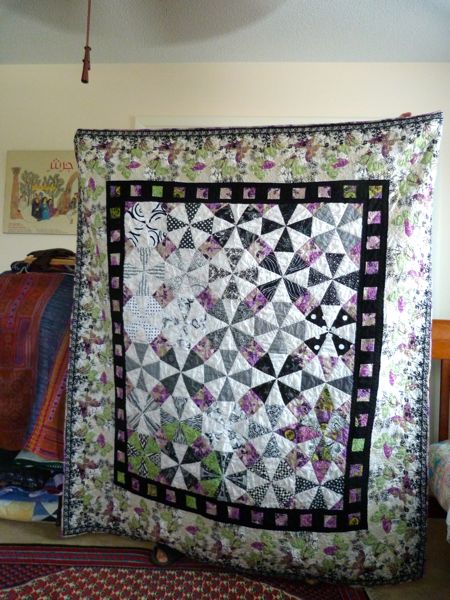
And here is the guide to the colors; I bought the border five years ago:

When AdventureMan say it, he said “that doesn’t look like a baby quilt” because it is so black and white, but, if you have eyes to see, it isn’t all black and white, it also has shades of purple, fuchsia, and a celery Spring green. I made the center Kaleidoscope pieces with a variety of blacks and whites, because babies LOVE black and white, and it can fascinate them and calm them.
I call it “I See Things Differently” because no, it doesn’t look like a baby quilt, but it is very much a baby quilt, it just doesn’t meet our cultural expectations. The longer I live, the less I meet any one’s expectations, LOL!
Thanks be to God! Thanks be to God for the safe delivery of this precious baby!
ARCO Gas Station: Something Doesn’t Feel Right

Just before leaving Seattle for the airport, I filled my gas tank. I went to an ARCO station, opened my tank lid and went to swipe my card when I saw a sign saying everyone must pay inside.
Annoying. It’s so convenient when you can just swipe your card at the point of service. I go inside and the Ethiopian woman at the counter asks me how many gallons I want.
I said “I need to fill the tank; I don’t know how many gallons. Swipe my card and then I will come in and sign the charge receipt when we know how much it is.”
She said that’s not how it works, they need to charge me and then they will give me back change. My bad. At that point I should have walked. I should have gone to the next gas station. I didn’t.
So I guessed 15 gallons, and she charged me $60. My car didn’t even take nine gallons. When I went inside, she gave me back $26.81 in cash, not refunded to my credit card. That is just such a strange way to do business.
It bothered me. What bothered me more was that when I got home and looked at my receipt, I had been charged $61.00. It’s only a dollar more, but the cost of my gas ($33.19) and my change back (26.81) add up to $60. Why was I charged $61?
Here is my dirty suspicion – she thought for $1. no one will bother complaining. If you read my previous entry, you can see why – my life is busy in its own way, but other people’s lives are busy in their ways. Who is going to made a big deal over $1.00 overcharge?
I don’t have time to deal with it right now and I will hold on to the receipts to see if I want to spend my precious time later trying to make it right. Or will I just figure my time is more precious than arguing over $1. in which case the scam works every time?
If this was a $1. charge for something, I don’t see it anywhere on the receipts. Do you? Why would they charge me for the inconvenience of buying gas in such a convoluted way?
I will NEVER go to that gas station again.
Second thought: Maybe I should just think of it as a charitable contribution?
God Laughs; Life’s Craziness
One of my favorite Psalms is Psalm 2, which advises us to humbly submit to the will of Almighty God or suffer the consequences of our own actions. I’ve heard God laughing all week, sometimes at me, sometimes with me.
Psalm 2
1 Why do the nations conspire,
and the peoples plot in vain?
2 The kings of the earth set themselves,
and the rulers take counsel together,
against the Lord and his anointed, saying,
3 ‘Let us burst their bonds asunder,
and cast their cords from us.’
4 He who sits in the heavens laughs;
the Lord has them in derision.
5 Then he will speak to them in his wrath,
and terrify them in his fury, saying,
6 ‘I have set my king on Zion, my holy hill.’
7 I will tell of the decree of the Lord:
He said to me, ‘You are my son;
today I have begotten you.
8 Ask of me, and I will make the nations your heritage,
and the ends of the earth your possession.
9 You shall break them with a rod of iron,
and dash them in pieces like a potter’s vessel.’
10 Now therefore, O kings, be wise;
be warned, O rulers of the earth.
11 Serve the Lord with fear,
with trembling 12kiss his feet,*
or he will be angry, and you will perish in the way;
for his wrath is quickly kindled.
Happy are all who take refuge in him.
I’m a planner. I figure out what I want, and then I figure out how to get it. When we decided we wanted to take a trip to Alaska, we booked – and paid – a year in advance to get the kind of room we wanted. We also planned to buy a new car, and started saving for that, being pay-cash kind of people.
Then, early in the year we discovered we were going to become grandparents to a granddaughter! She would arrive shortly after we get back from our Alaska trip.
This week, God laughed. The doctors told our son and his wife that she needed to go on bedrest, and that this baby will be coming early. All the grandparents have been helping with childcare through the summer, now we just ratcheted it up a notch.
Do you know why God gives children to YOUNG parents? LOL, a three year old has SO much energy! So much curiousity! We have such a good time with him and when at the end of the day, we return him to his parents – we need a nap!
We are also trying to pack and prepare for our trip, get the Qatari Cat prepared for the cat hotel, get the guest suite prepared for the people who will stay while we are gone, and oh yes, finish up the purchase of that new car.
I had thought the first week in August would be a snooze, isn’t it always? Those long, hot humid days hit Pensacola, often one of those violent and emotional thunderstorms that clears the air in the late afternoon, lazy day after lazy day, right?
Not this year. This year was fly to Seattle for my Mom’s 90th birthday celebration, fly back, take care of our grandson for a week, do whatever we can to help out our son and his wife while she is on bed rest, buy and sell two cars, do our normal volunteer work – oh, and we had scheduled two meetings at our house, so we had to be presentable, and have some delicious things available. I could hear God laughing.

In the midst of all this, we are healthy. We have a good roof over our heads. We have the means to get a new car and travel to Seattle for Mom’s birthday. We pre-paid much of the Alaska vacation. Our little grandson is happy, and strong, and articulate, and fun to be around. Our son and his wife are wonderful, loving parents, and hard workers, and are preparing for this sweet new arrival. God laughs, and we thank him for his abundant blessings, and his abundant patience with us thinking we have any control over the months that come. We pray for the safe and healthy arrival of this little granddaughter who may arrive while we are gone, for a safe delivery, and a speedy recovery for her mother, and for strength and courage for her father, our son, who is a valiant man. We welcome your prayers.
Sinkholes in Florida
Dont you just love Google? Today I asked Google to find “images sinkholes Florida” hoping I could find some graphic which would show me how often they occur in parts of the state, which is very very long. There it was.

It is not something I ever worried about until the neighborhood we bought a house in near Tampa suddenly had a rash of sinkhole damage and property values plummeted. I was lucky, not only was I not in the “band” of sinkholes, but my house sold very quickly, at the same price we had paid. I breathed a sigh of relief and moved on.
You never know where a sinkhole will suddenly appear, but as the graphic above demonstrates, some places are likelier than others.
Here is an article from today’s AOL Weather News:
ORLANDO, Fla. (AP) – Sections of a building at a resort near Orlando’s theme park district collapsed into a sinkhole late Sunday, forcing the evacuation of 105 guests in the structure and also dozens of visitors staying in two adjacent three-story buildings.

Watch out for those blue zones!
Sinkholes are as much a part of the Florida landscape as palm trees and alligators. Florida has more of them than any state in the nation. Earlier this year, a man near Tampa died when a sinkhole opened up underneath his bedroom.
PHOTOS ON SKYE: Astonishing Sinkholes Around the World
Experts say sinkholes aren’t occurring at a greater rate than usual but that the high-profile nature of recent one in populated areas has drawn attention to them. There also has been a rise in sinkhole claims in Florida, but insurance officials believe some of those claims are questionable. Here are some answers about why sinkholes form and their costs.
WHY ARE THERE SINKHOLES IN FLORIDA?
Florida’s peninsula is made up of porous carbonate rocks such as limestone that store and help move groundwater. Dirt, sand and clay sit on top of the carbonate rock. Over time, these rocks can dissolve from an acid created from oxygen in water, creating a void underneath the limestone roof. When the dirt, clay or sand gets too heavy for the limestone roof, it can collapse and form a sinkhole. Sinkholes are caused naturally but they can be triggered by outside events.
WHAT TRIGGERS SINKHOLES?
Although sinkholes are formed naturally, they can be triggered by heavy rainfall, drought followed by heavy rainfall, tropical storms and human activity. The most common actions by humans that cause sinkholes are heavy pumping of groundwater to spray on oranges and strawberries during freezes to keep them from being damaged, well drilling, excavating, creating landfills, leaking broken water lines and pounding or blasting from construction.
WHERE ARE SINKHOLES MOST COMMON IN FLORIDA?
Three counties in the Tampa region are known as “sinkhole alley.” Two-thirds of thesinkhole damage claims reported to the state Office of Insurance Regulation from 2006 to 2010 came from Hernando, Hillsborough and Pasco counties. Sinkholes are less common in South Florida, home to the state’s two most populous counties – Broward and Miami-Dade.
HOW MANY SINKHOLES OCCUR IN FLORIDA?
The state Office of Insurance Regulation says reported claims from sinkholes have risen in recent years. More than 2,300 claims were reported in Florida in 2006 but that figure jumped to almost 6,700 claims in 2010. There is no geological explanation for the rise and state insurance officials believe many claims are questionable. There must be structural damage to a home for a policyholder to claim a loss from a sinkhole, but insurance officials say claims are often paid without that proof.
HOW MUCH DAMAGE DO SINKHOLES DO?
The state Office of Insurance Regulation says sinkhole claims in Florida cost insurers $1.4 billion from 2006 to 2010.
Camels Source of MERS?

From today’s BBC News:
Mers coronavirus: Dromedary camels could be source
By Rebecca Morelle
Science reporter, BBC World Service
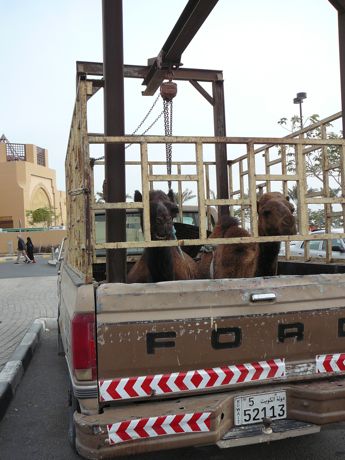
Dromedary camels could be responsible for passing to humans the deadly Mers coronavirus that emerged last year, research suggests.
Tests have shown the Mers (Middle East Respiratory Syndrome) virus, or one that is very closely related, has been circulating in the animals, offering a potential route for the spread.
The study is published in the journal Lancet Infectious Diseases.
But the scientists say more research is needed to confirm the findings.
The Mers coronavirus first emerged in the Middle East last year. So far, there have been 94 confirmed cases and 46 deaths.
While there has been evidence of the virus spreading between humans, most case are thought to have been caused by contact with an animal. But until now, scientists have struggled to work out which one.
‘Smoking gun’
To investigate, an international team looked at blood samples taken from livestock animals, including camels, sheep, goats and cows, from a number of different countries.
They tested them for antibodies – the proteins produced to fight infections – which can remain in the blood long after a virus has gone.
Professor Marion Koopmans, from the National Institute of Public Health and the Environment and Erasmus University in The Netherlands, said: “We did find antibodies that we think are specific for the Mers coronavirus or a virus that looks very similar to the Mers coronavirus in dromedary camels.”
The team found low levels of antibodies in 15 out of 105 camels from the Canary Islands and high levels in each of the 50 camels tested in Oman, suggesting the virus was circulating more recently.
“Antibodies point to exposure at some time in the life of those animals,” Prof Koopmans explained.
No human cases of the Mers virus have been reported in Oman or the Canary Islands, and the researchers say they now need to test more widely to see if the infection is present elsewhere.
This would include taking samples from camels in Saudi Arabia, the country where the virus is the most prevalent.
‘Priority search’
Prof Koopmans said: “It is a smoking gun, but it is not definitive proof.”
Commenting on the research, Professor Paul Kellam from the Wellcome Trust Sanger Institute in Cambridge and University College London, said the research was helping to narrow down the hunt for the source of the virus.
But he told BBC News: “The definitive proof would be to isolate the virus from an infected animal or to be able to sequence and characterise the genome from an infected animal.”
Health officials say confirming where the virus comes from is important, but then understanding how humans get infected is a priority.
Gregory Hartl, from the World Health Organization, said: “Only if we know what actions and interactions by humans lead to infection, can we work to prevent these infections.”
Data suggests that it is not yet infectious enough to pose a global threat and is still at a stage were its spread could be halted.
Air Rage and the Boeing 767
As soon as I got on the plane, I could see the dramatic potential. The planes charge for baggage, unless you have elite status. More and more people are using carry-ons, and there is an exact size. The flight attendants are quick to tell people to put the bags in the ovehead compartment wheels first, and most passengers are already trained to put them in that way. So what happens when you board your flight and your optimal sized bag does NOT fit?
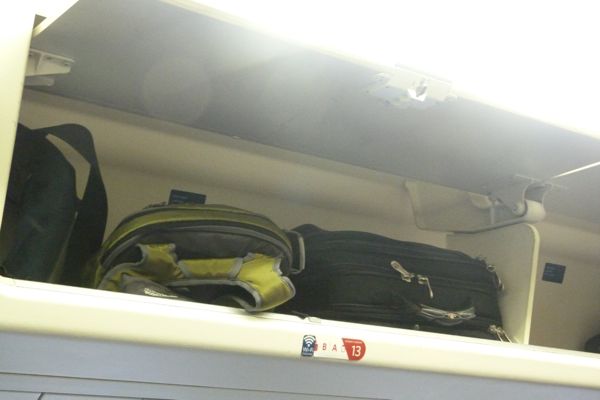
What I saw happen is that the first passengers to board put their suitcases in sideways. Then, as people board for whom there is no room in the overhead containers, they have to move their bags to places where there is room. Chaos, as people try to pass one another going opposite directions in the aisles, carrying luggage too big for the overhead cabinet.

Boeing is a Seattle company, and I’ve always had a lot of loyalty to Boeing. I cannot understand, not for a heartbeat, taking away that extra two or three inches that allowed bags to go in wheels first. It’s dumb, it makes passengers angry and resentful. It makes you hate the airlines.
ReVisit Mr. and Mrs. T’s in Edmonds, WA
You wouldn’t think such a good restaurant would be in a strip mall, but it’s a good thing we got there early. Within half an hour of our sitting and ordering, the place was packed. It’s a large place, but people just kept coming in. Friday night, and truly great Chinese food is also comfort food in Seattle. The clientele was probably 75% Chinese descent and 25% the rest of us.
“Let’s try something new,” I suggested. We eat at this restaurant almost every time I am in town. I miss GOOD Chinese food. “I read that we can forestall dementia by forging new neural connectors in our brains, and you do that by making yourself do something new. Let’s all try a dish we’ve never had before.”
My friends ordered. Actually, they laughed, they eat there more often than I do, and have tried almost everything on the menu. They said unless it were jellyfish or something of that ilk, it would be hard to find something they hadn’t tried, but they would find some things less ordered, but good.
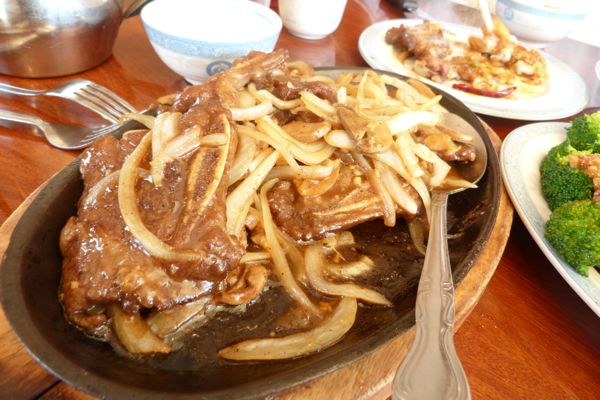
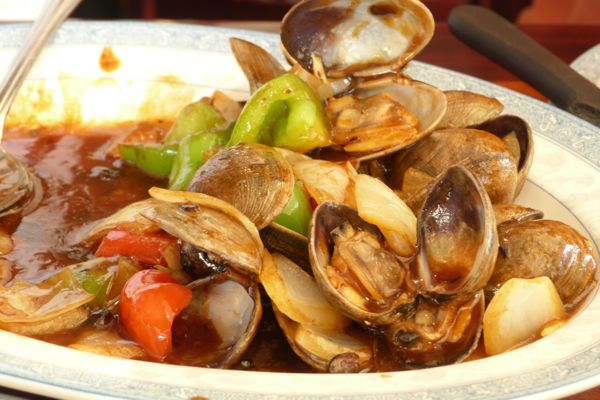
This is what they came up with:
Fish Shanghai Style
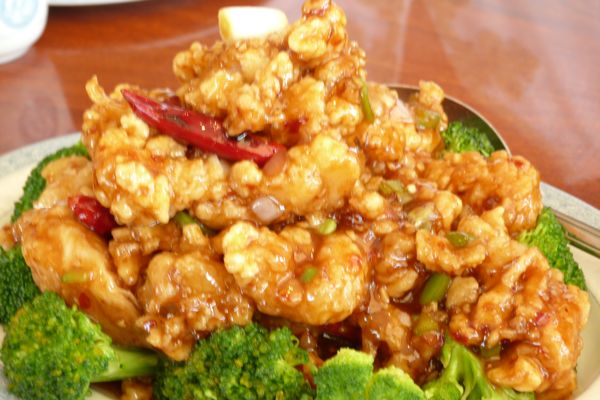
Spicy Ginger Beef
Clams and Black Bean Sauce (this was my favorite!)
Delicious! Every bite! Or maybe that it is seasoned with a friendship that goes back thirty years or so 🙂
Recent Comments
intlxpatr on Shampoo Ginger tigerbutterya0c5ff1d… on Shampoo Ginger intlxpatr on British Soldier Kidnapped, Esc… John on British Soldier Kidnapped, Esc… intlxpatr on British Soldier Kidnapped, Esc… Wikipedia Donate Button

Amazina


Early Voting in Florida


