Make No Peace With Oppression
From today’s Lectionary readings on the Feast Day of Saint Agatha of Sicily:
PRAYER (contemporary language)
Almighty and everlasting God, who strengthened your martyr Agatha with constancy and courage: Grant us for the love of you to make no peace with oppression, to fear no adversity, and to have no tolerance for those who would use their power to abuse or exploit; Through Jesus Christ our Lord, to whom with you and the Holy Spirit be all honor and glory, now and for ever. Amen.
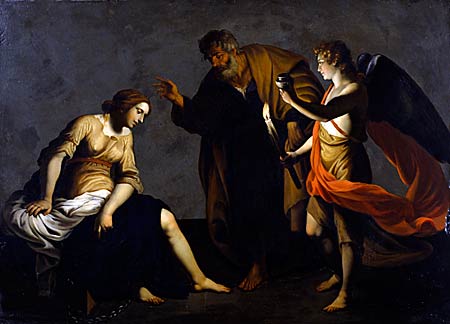
Read the story of Saint Agatha by clicking on link above.
From Oppressive Governments
Prayer from today’s Lectionary:
PRAYER (contemporary language)
Almighty God, we thank you for the faith and witness of Paul Sasaki, bishop in the Nippon Sei Ko Kai, tortured and imprisoned by his government, and Philip Tsen, leader of the Chinese Anglican Church, arrested for his faith. We pray that all Church leaders oppressed by hostile governments may be delivered by your mercy, and that by the power of the Holy Spirit we may be faithful to the Gospel of our Savior Jesus Christ; who lives and reigns with you and the Holy Spirit, one God, for ever and ever. Amen.
EUPHROSYNE/SMARAGDUS OF ALEXANDRIA
MONASTIC, 5TH c.
From today’s lectionary, one of my favorite stories of early Saints
Prayer for today: (contemporary language)
Merciful God, who looks not with outward eyes but discerns the heart of each: we confess that those whom we love the most are often strangers to us. Give to all parents and children, we pray, the grace to see one another as they truly are and as you have called them to be. All this we ask in the name of Jesus Christ, our only mediator and advocate. Amen.
“Saint Euphrosyne of Alexandria (fl. 5th century CE) was a female saint who adopted male attire and lived at a local monastery as an ascetic.
Euphrosyne was the beloved only daughter of Paphnutius, a rich man of Alexandria, miraculously born in her parents’ old age in answer to a monk’s prayer. Her loving father desired to marry her to a wealthy youth.
But having already consecrated her life to God and under pressure to break her vow, she dressed as a man and assumed the identity of “Smaragdus” (“emerald”). She then escaped to a nearby men’s monastery, where she made rapid strides toward a perfected ascetic life. She was under the guidance of the abbot, who also happened to be the same monk who had prayed for her birth.
Years later, when Paphnutius appealed to the abbot for comfort in his bereavement, the abbot committed him to the care of Euphrosyne, still under the guise of Smaragdus. Paphnutius received from his own daughter, whom he had failed to recognize, helpful advice and comforting exhortation. Not until she was dying did Euphrosyne reveal herself to him as his lost daughter. After burying her, Paphnutius gave up all his worldly goods, and became a monk in the same monastery. There, he used his daughter’s old cell until his own death ten years after. “
from Wikipedia

A dying Euphrosyne reveals herself to her father
As I read today’s lectionary, I am struck by how very blind we are to the realities of God’s creation, that in every tribe and every nation, there are those who are outside the normal boundaries of gender, and who are, at the same time, the people God created them to be. How cruel we are! We judge, and we call names, we cast out – in every tribe and nation in the world – those who are Other, who do not fit into our tiny human conception of “right.” I can imagine the overwhelming revelation as we transcend into the after life.
Diwali: A Light Sparkles in Dark Times

Today, Labor Day, when dark events are taking place in our country, shutting down the light of liberty and democracy, we got an unexpected invitation – to a Diwali party, coming up in a couple months.
We are so honored. And we know Diwali; we were living in Al Fardan 1, in Doha, Qatar, when an Indian neighbor invited all the residents of Al Fardan to come over for Diwali. We didn’t know what Diwali was, and our internet was dial-up and irregular, but we asked around and were told, with big smiles, to go and find out.
The night of Diwali came, and we walked to our neighbor’s house, along with many of our Al Fardan neighbors. We could see it long before we arrived – thousands of candles set out in patterns in the yard, lining the sidewalk, leading us inside, to more lights and a feast of sweets, platters of sweets, all illuminated by gleaming candlelight.
Such open-hearted hospitality. Such generous sharing. No one was excluded; everyone was welcome, and there was plenty for everyone.
Our neighbors’ beliefs were different from ours, and yet, I believe all such generosity, freely given, springs from the same spirit.
We can’t wait for this upcoming Diwali.
Morocco Malta and the Med: Ajaccio (Corsica) and Napoleon
Early morning arrival in Ajaccio

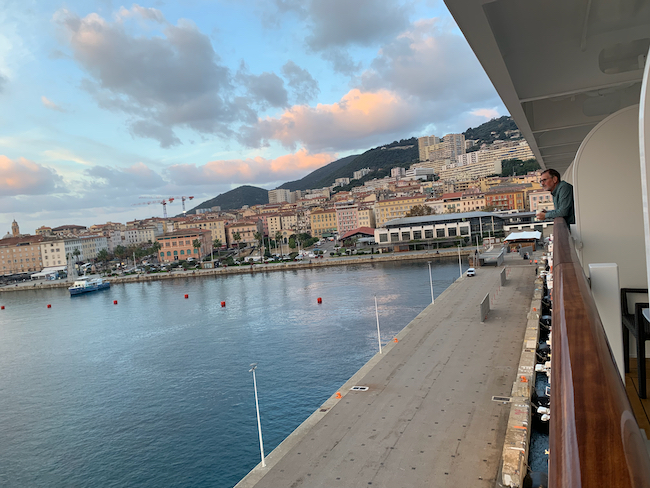
Breakfast at Mamsens, the small Norwegian style kiosk in the Explorer’s Lounge. We love their waffles with fruit and I especially love the golden gjetost, soft smooth and nutty.
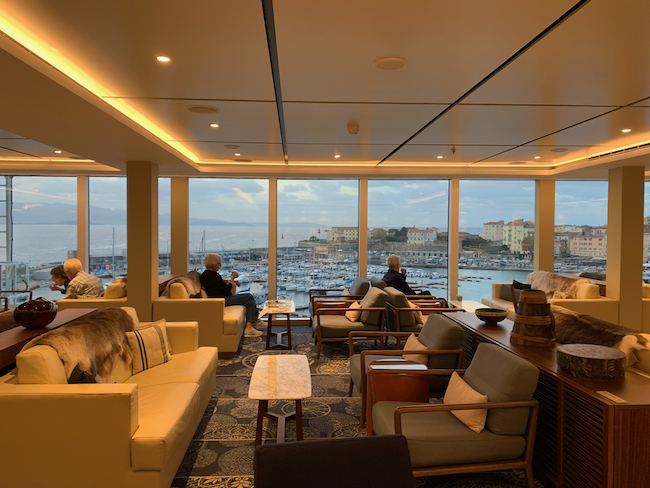

We can see the buses lining up for our excursion. We signed up for the earliest; I like the early morning light for photos and we are docked right in town; we can leave the tour as it finishes and explore on our own. We hope we can also have lunch in Ajaccio. We’ve never been here before, and AdventureMan is a long-time appreciator of Napoleon, his strategies and tactics, who was born in Ajaccio.
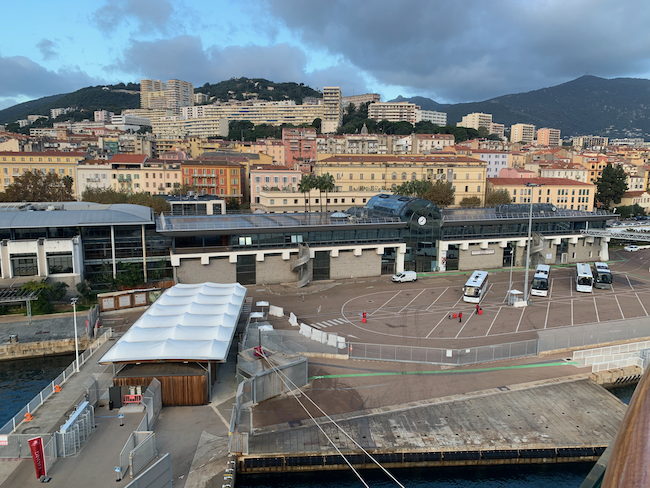

Sometimes I overthink. My morning is cloudy and grey, and light flat and sullen. Ah well, we do the best we can with what we’ve got. Fortunately Viking has their nice bright red canopy and carpet to usher us off the ship and to our buses.


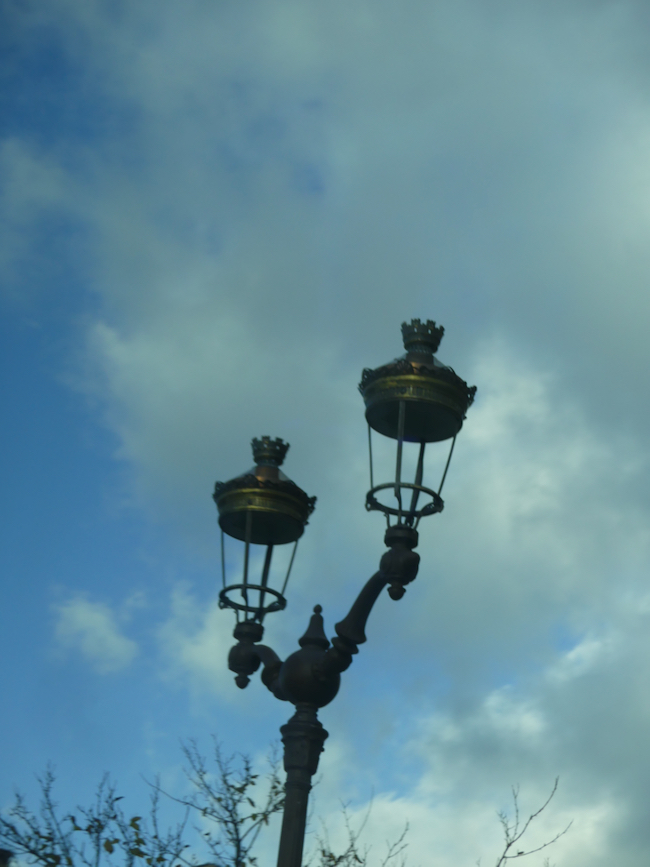
The light fixtures are interesting, Napoleonic crowns
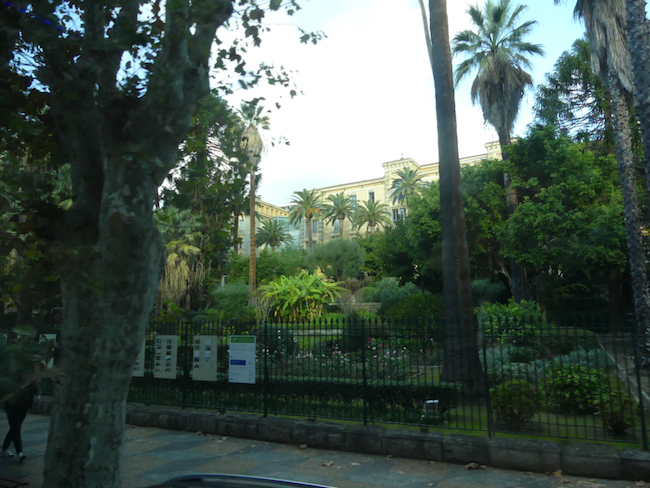

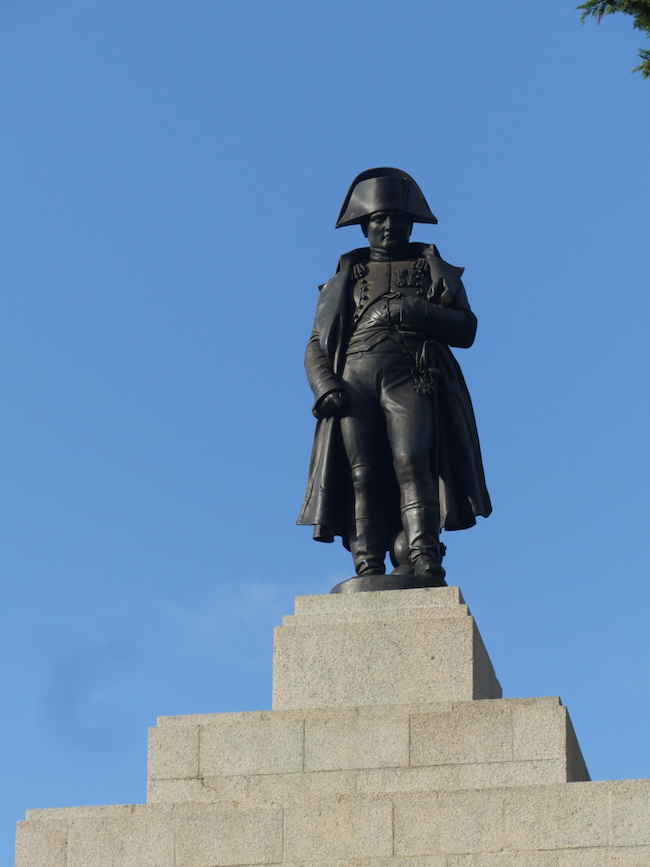
Napoleon looking at AdventureMan with appreciation. 😉

The cave of Napoleon (he hid there? I don’t know the significance.)


We drove along the coastline, I never mind a coastal drive! This is some of the priciest real estate in Corsica, overlooking the sea. These are family crypts, so beautiful that families picnic, even sleep in these houses where their family members are encrypted.
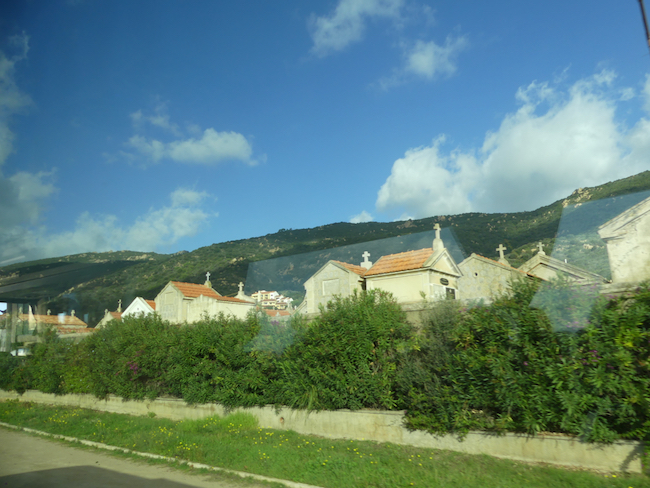
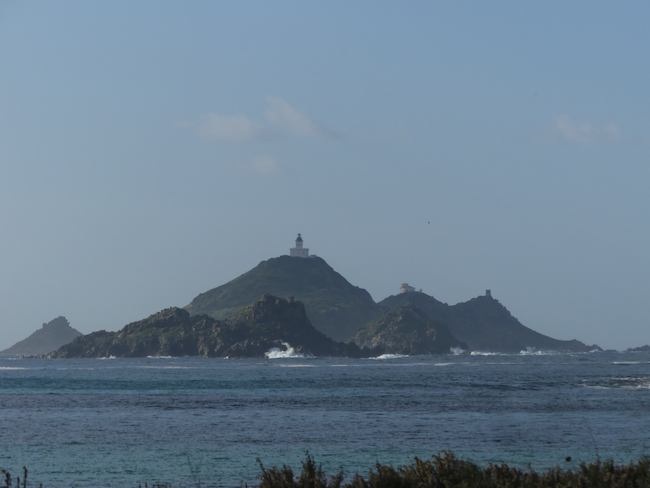
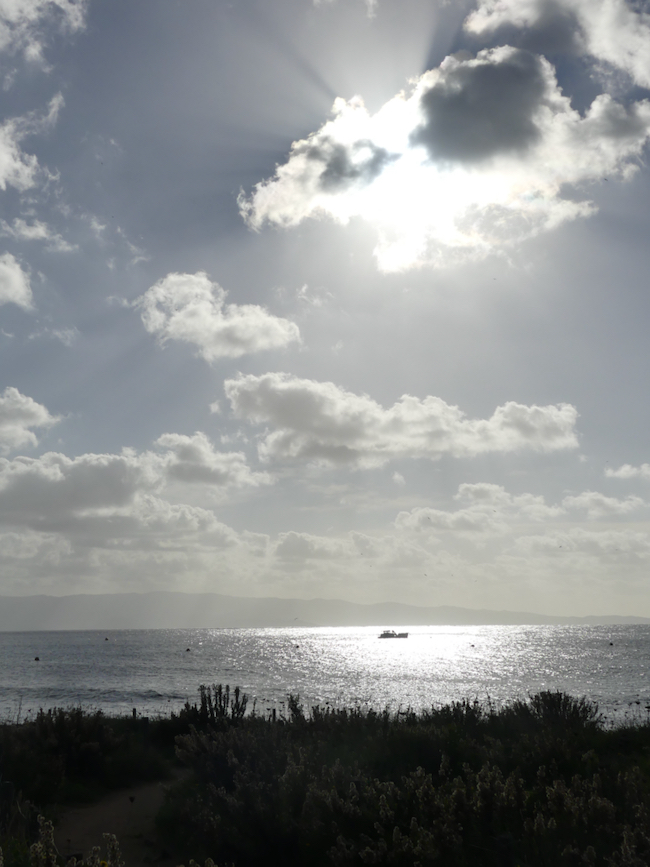
We come to a rest stop, and the three island/mountains with towers on top are significant, but I can’t remember how. It is sunny now, and windy, and we appreciated the time to walk and breathe in the sea air. Their were powerful waves hitting the wharf, so it was chained so we wouldn’t walk out there.




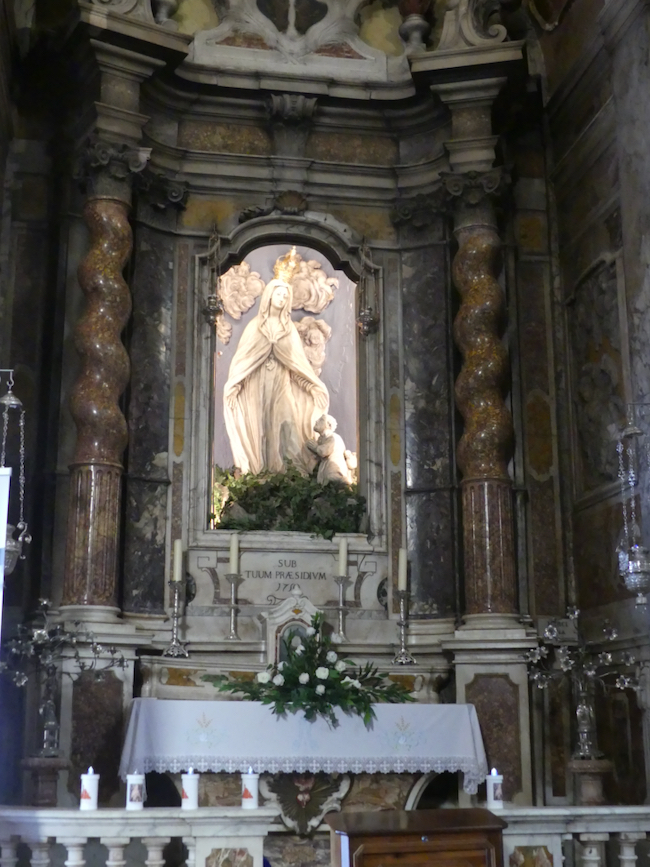
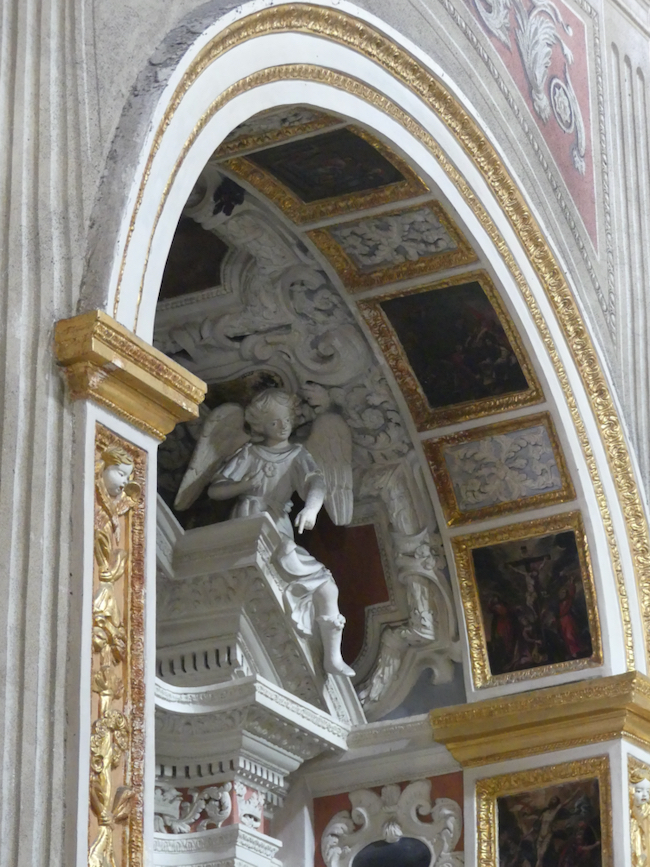
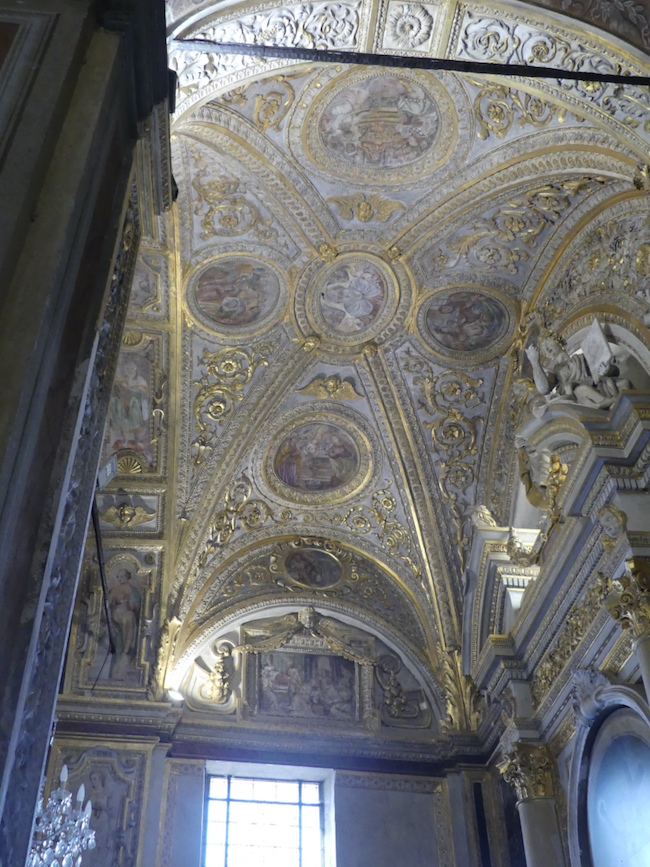
Back in town, we exit the bus at the church where Napoleon was baptized, which is undergoing some repairs and renovations now, but they let us go in.


We are told that these are Corsican windows, special to the area because Corsicans are snoopy and into one another’s business and these windows allow snoopy women not to be seen but to keep up with the happenings in the neighborhood. I tell you this because in Malta, these same windows are reported as a Maltese invention because Maltese women are snoopy, and in Rome, of course they were a Roman invention because – well, you get the picture. I guess the women were snoopy because they were often confined to the home, and learned what they could by peeping out these screened windows?

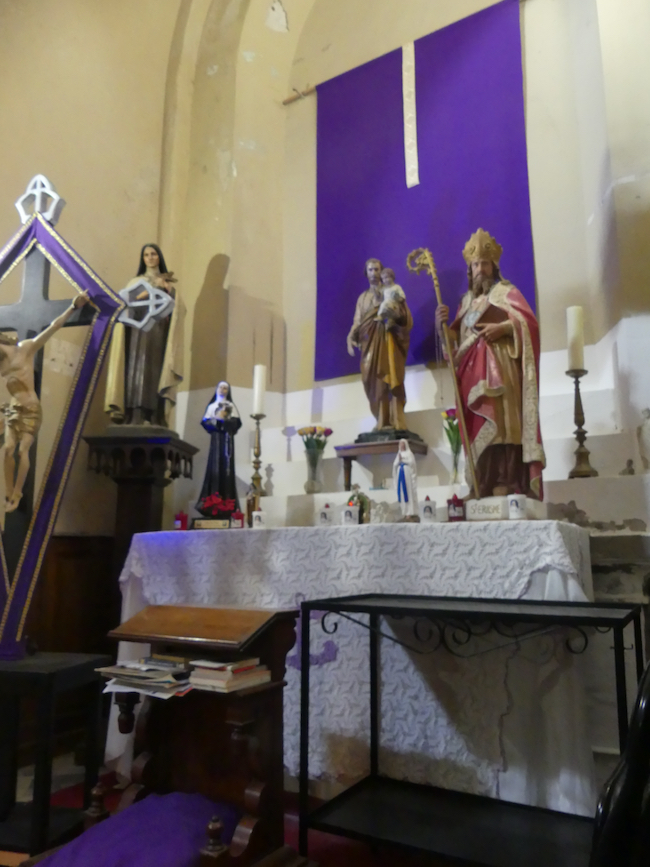
The next church was dear to my heart, the Mariner’s church. Far less elaborate than Napoleon’s church, this church was in place to pray for those who go to sea, who fish, who are sometimes late returning, and for those who never come back. Growing up in Alaska, among fishing folk, I have a great respect for and a healthy fear of the sea. I feel at home in this beautiful, heart-felt church.

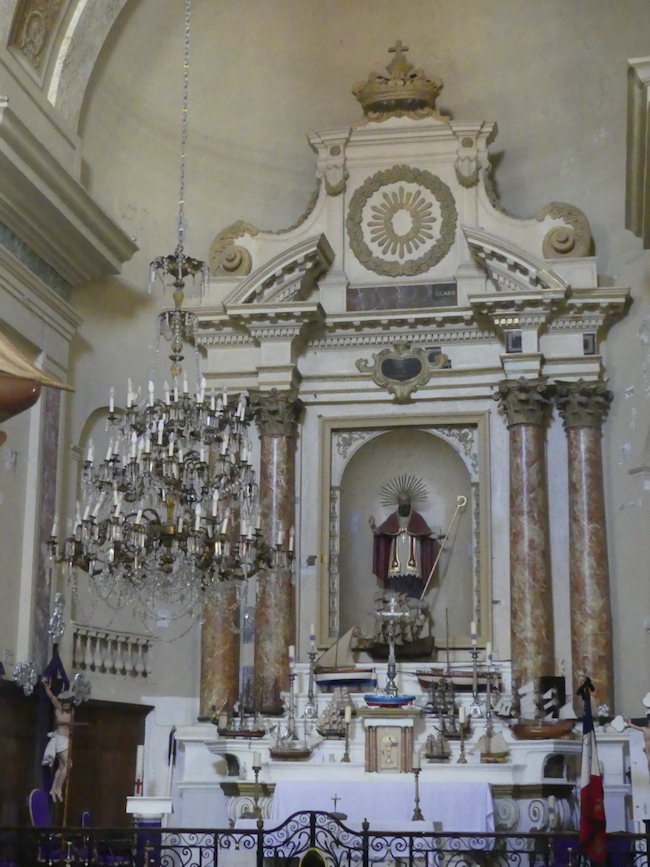


Leaving the Mariner’s Church and nearby, the Fortress and moat. And something else, can you see?

I’ve changed the angle just a bit, can you see now?
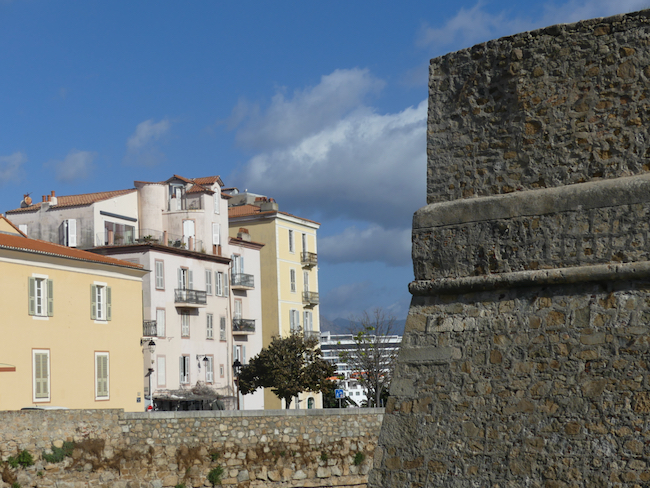
That’s our ship! We’re the only ship docked in the center of town, and you can see it from everywhere. We have no concern leaving the group when we are ready; we know how to get back to the ship before it sails.
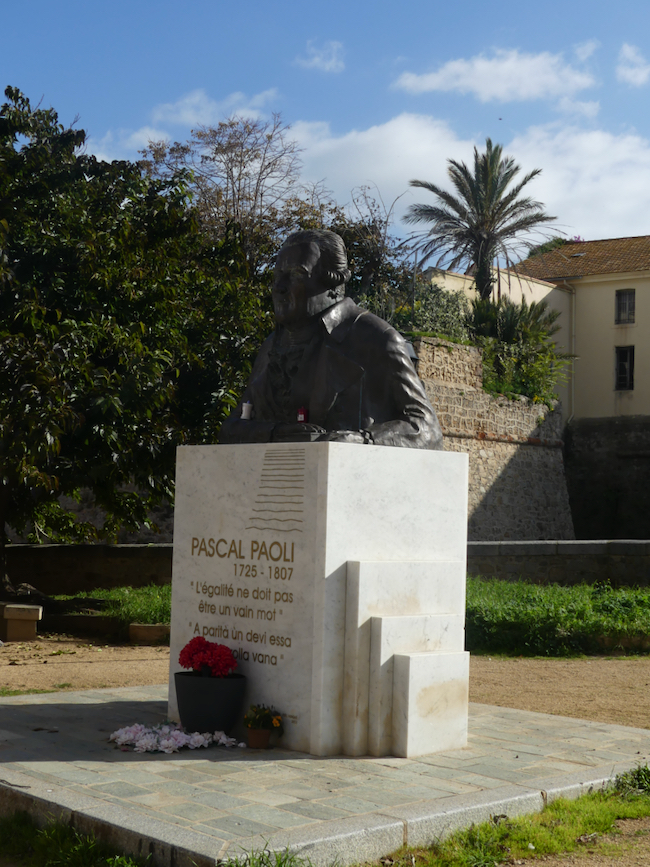
Our guide implied that the people of Ajaccio are actually prouder of Pascal Paoli than Napoleon, and that we should be too, we Americans. Do you know who he is? Wikipedia says:
Paoli commemorated in the United States
The American Sons of Liberty movement were inspired by Paoli. Ebenezer McIntosh, a leader of the Sons of Liberty, named his son Paschal Paoli McIntosh in honour of him. In 1768, the editor of the New York Journal described Paoli as “the greatest man on earth“. Several places in the United States are named after him. These include:
- Paoli, Colorado
- Paoli, Indiana
- Paoli, Kentucky
- Paoli, Oklahoma
- Paoli, Pennsylvania, which was named after “General Paoli’s Tavern” a meeting-point of the Sons of Liberty and homage to the “General of the Corsicans”.
- Paoli, Wisconsin
Our guide told us that the first democratic constitution in the world was Paoli’s 1755 Constitution for the independent Republic of Corsica and that it was written in conjunction with with Thomas Jefferson and was directly influencial in the formation of the US Constitution.. I can find no verification of that information, but I found the following in Grunge. Hmmmm.
The American Dream is born
Emanuel Leutze
Across the Atlantic, Patriots in the Thirteen Colonies eagerly followed the Corsican War. According to the Journal of the American Revolution, Corsica’s heroism made Paoli highly respected in America, inspiring the Patriots (especially the Sons of Liberty) to push for a war of independence. William Pitt called him “a hero out of Plutarch.” According to the Colonial Society, the leader of the Boston Riots, Ebenezer Mackintosh, named his son after Pasquale. At Columbia University (then King’s College), a battalion of student volunteers of the NY militia nicknamed “the Corsicans” formed in 1775. Its most famous member? Alexander Hamilton.
Pennsylvania, Ohio, Indiana, and Wisconsin all contain towns named Paoli after that famous Corsican hero. At Paoli’s Tavern, PA, British forces defeated George Washington and Anthony Wayne. The significance of the name was surely not lost on either side. But was Paoli’s spirit present at the Old Pennsylvania State House in 1787?
According to Thomas Jefferson, he was not. The US Constitution was a purely American product, free of foreign influence. But Georges Coanet, secretary-general of the Pasquale Paoli Foundation, during a visit to Paoli, PA, noted that Paoli ran in the same Masonic circles as Benjamin Franklin and Lafayette, so they would have at least known about his constitution and ideas. It will never be certain, but given his American fame after Ponte Novu, it is certainly plausible that Paoli was at least on the minds of some of the founders during that hot Pennsylvania summer.
Read More: https://www.grunge.com/441925/the-heroic-story-of-the-island-that-inspired-the-american-revolution/
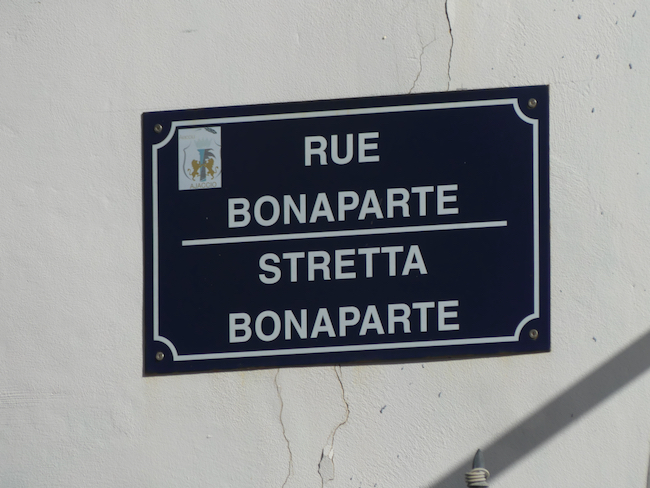
Paoli and the Bonaparte family did not get along. There’s a history. Below is the house where Napoleon was said to be born.
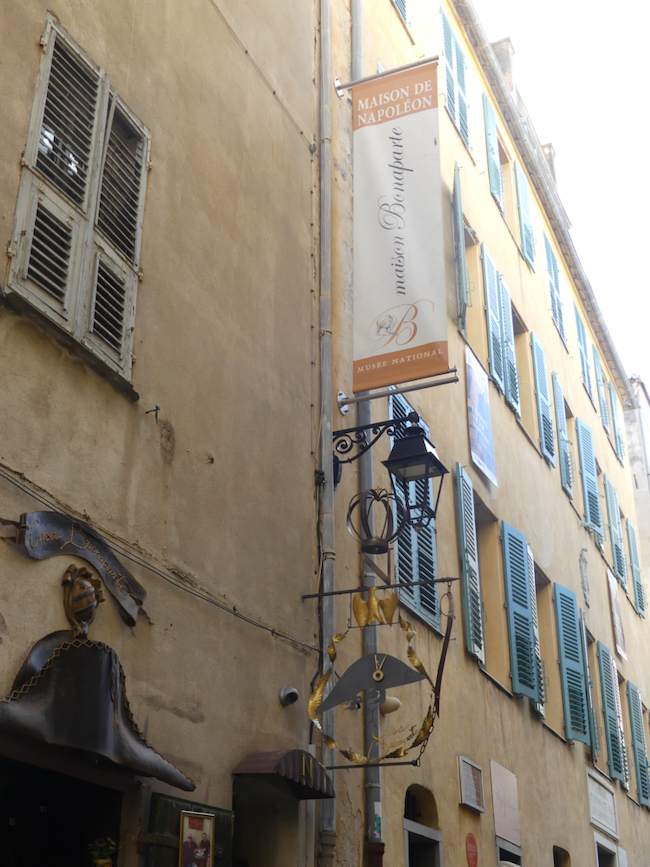
Lots of little shops open selling Napoleonic schlock, but it is Monday, and the Napoleonic Museum is not open.
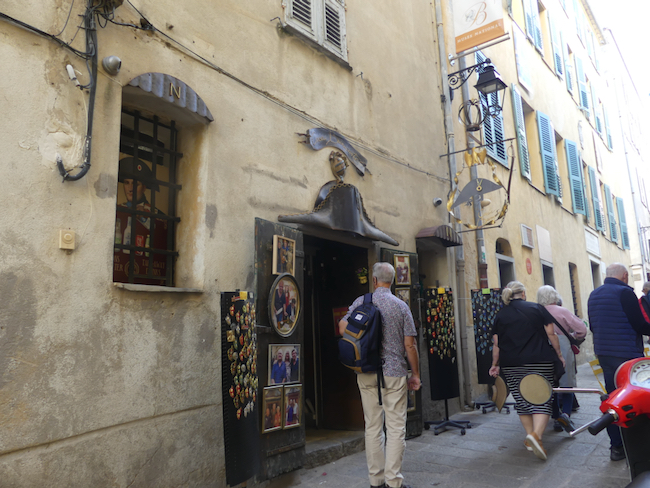
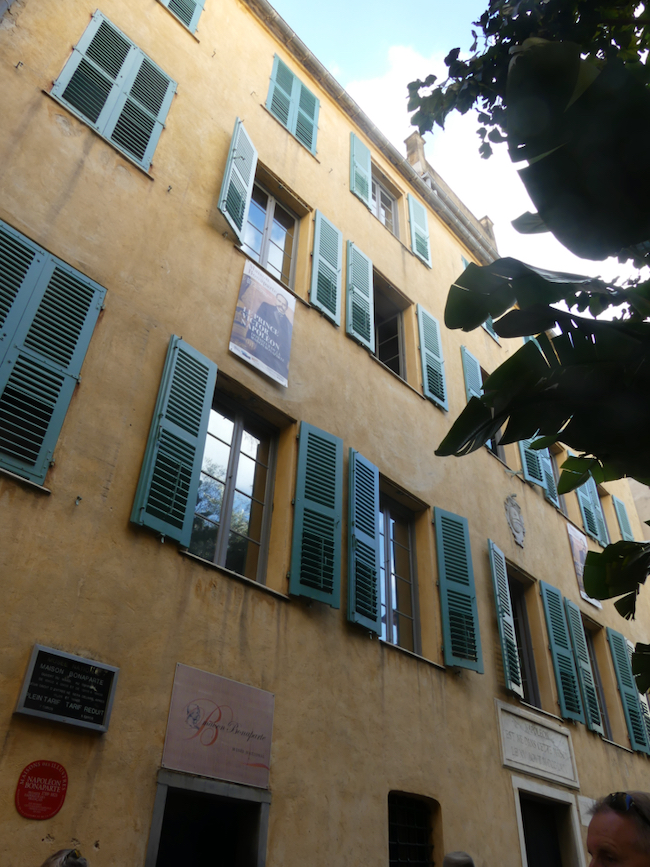


At this central plaza, we separated from the group; I knew where the open market was and I wanted to see it. It was nearby. It was closed. No big deal, I also urgently needed to buy some mascara, and we had seen a large French department store on a main street, so we looked it up on Google and followed the blue dots until we got there. French store, lots of mascara, emergency met. As I paid at the caisse, I had to wait while a very long conversation took place between the cashier and a woman I thought to be a customer. But no, the cashier turned to me, although the other woman kept talking, and took my payment.
We are always trying to break large Euro bills so that we have small coins for bathrooms and for tips, so I broke a 100 Euro bill and as the cashier handed me the change (the mascara was not expensive so there was a lot of change) the woman was talking to me, and she was telling me she had not eaten for several days and that she was very hungry.
I am on a 23 day trip on a large ship going to wonderful places and I have a fist full of change in my hand. A part of me feels extorted, and a part of me sees me – privileged, buying a luxury, not a necessity, and with a handful of bills. I was ashamed I had even hesitated. Yes, I gave her some money to eat.
I never know when it is right or wrong, and I am sure I have been taken advantage of. In my readings, I came across this exhortation in scriptures: Matthew 5:42 Give to everyone who begs of you.
We are hungry, and we wanted to eat in Ajaccio. We find a place that looks promising, there is a local man sleeping with a glass of brandy in his hand and a dog on his lap. We take that as a promising sign. Here is another promising sign:
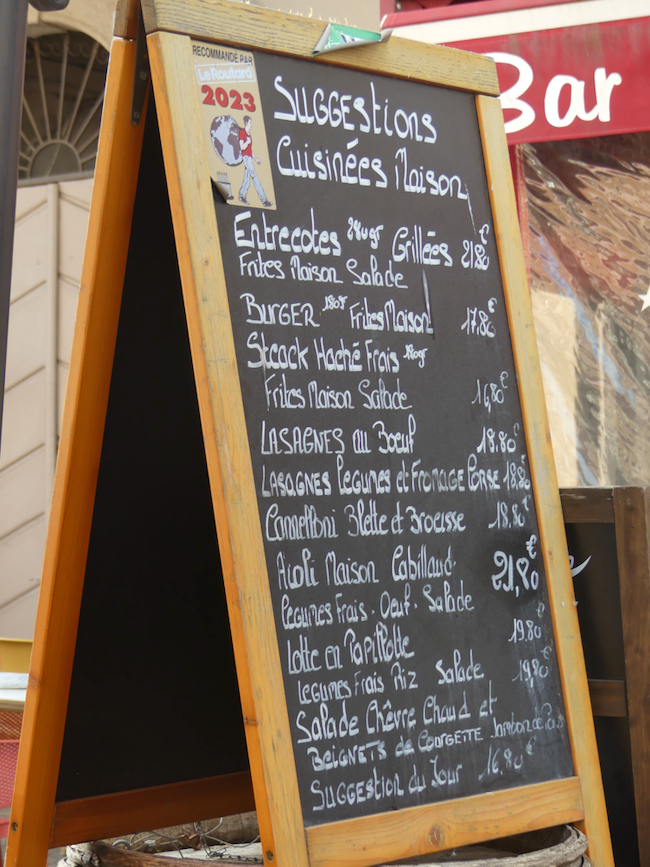
We love this name, liberally translated “The Hole in the Wall”

If you look very closely, you may see the sleeping man and his dog on his lap 😊
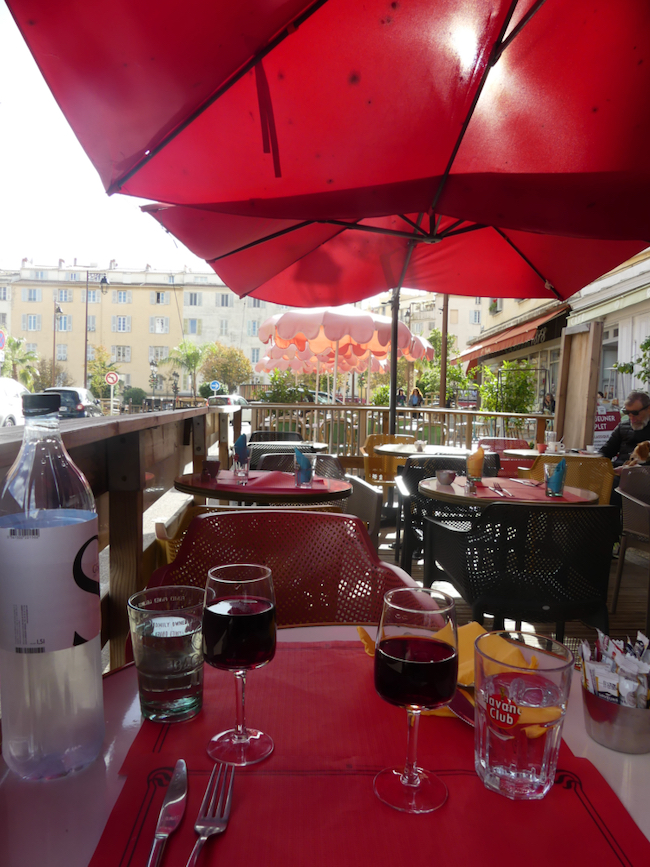
My husband orders the Entrecôte, and I order the Aioli Maison Cabillaud. It’s too much food, but it is delicious! Sorry, I ate most of my fish before I remembered to take a picture.


Here’s something interesting to me – we eat like kings. On these cruises, we eat what we wish, and we eat desserts. We are walking so much – most days 10,000 steps or more. Sometimes way more. We are so active, the weight doesn’t stick. Also, we really like vegetables and salads and seafood with lighter sauces or no sauce at all, so we don’t worry, and we don’t gain weight. Also, the desserts served on board are very small, and even so, we might split a dessert so we usually get home our same weight or – even a little less! It’s a mystery.
We walk back to the ship – we had wine with lunch and are ready for a short nap. After our nap, we head for the spa, the beautiful Viking spa with hot water pool, a snow room, a wet steam room, a dry steam room – oh what luxury.
We are back in our cabin for sunset and Sail Away, and we see a spectacular sight – it’s nearing sunset, and suddenly the starlings start flocking; they look like schools of fish in the water, same movement, a glorious, joyful dance! I looked it up. It is called a murmuration. A murmuration . . .


This must be a frequent occurrence; guns are going off all over town, and fireworks. I don’t know if it is to keep the starlings from landing or to provide everyone with this spectacle.



At sundown the Christmas lights come on!

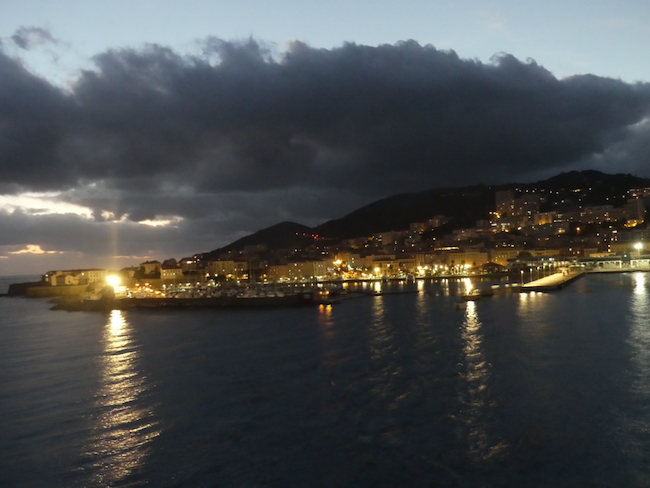
And we sail away from Ajaccio.
Tauck Seine: Les Andelys and Chateau Gaillard
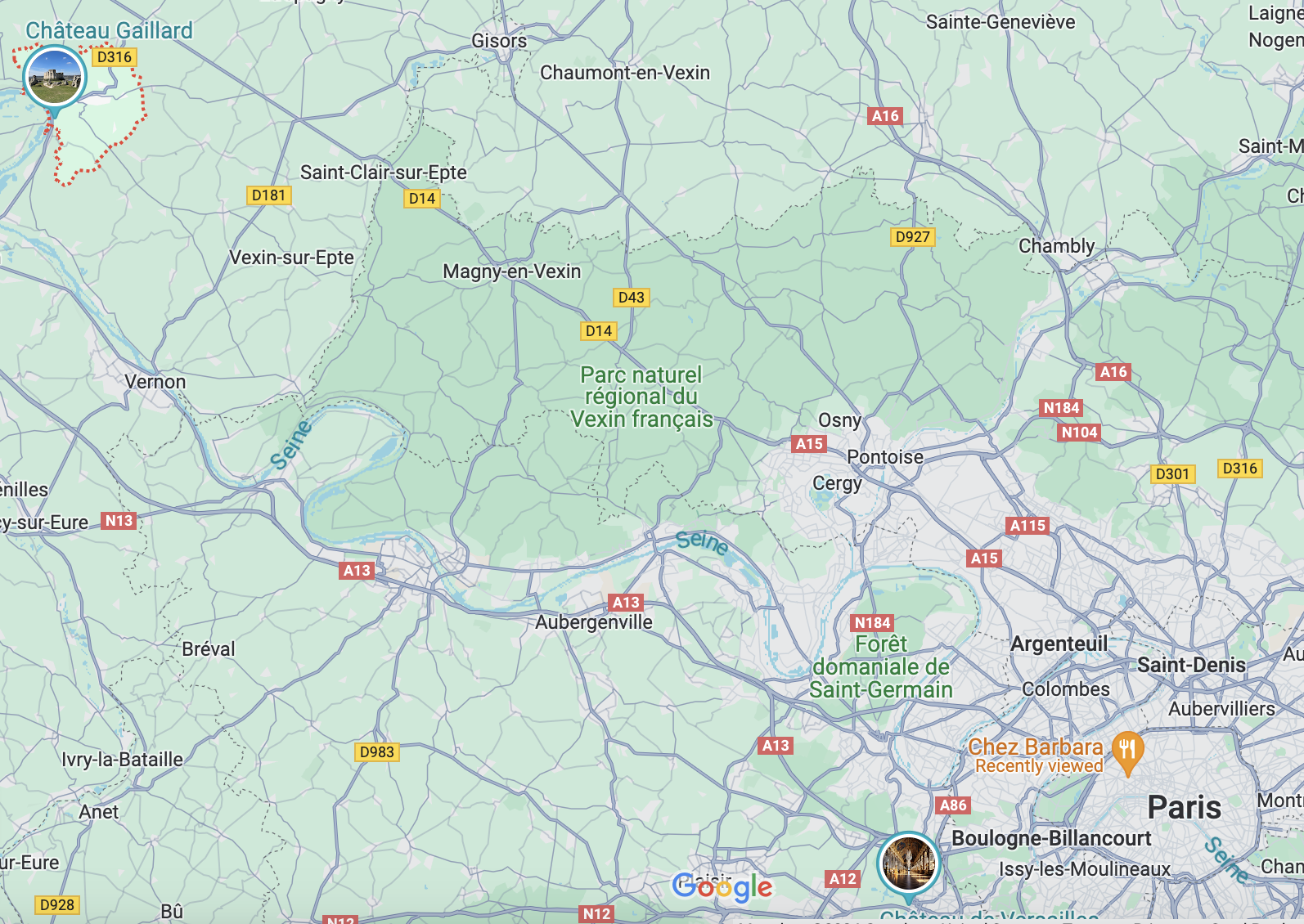
You can see the Seine twist and turn as it flows from Paris to Vernon (and Giverny) and to Chateau Gaillard.
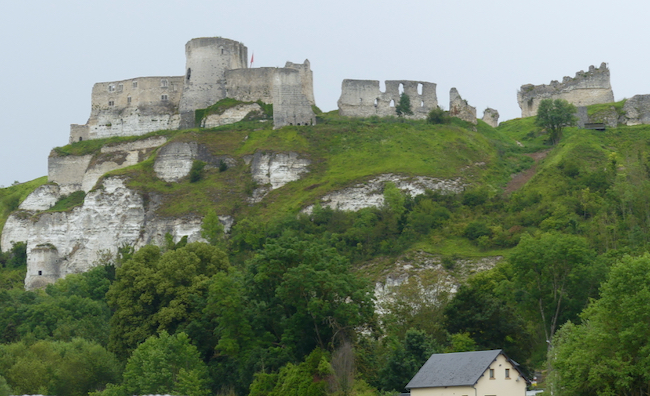
We dock in Les Andelys to hike up to Chateau Gaillard, a castle built by Richard the Lionheart in record time, and later used by King Philip the Fair to jail his adulterous daughters-in-law.

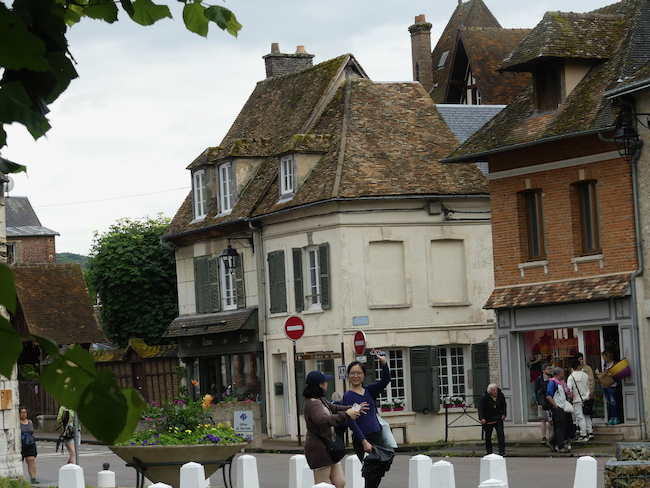

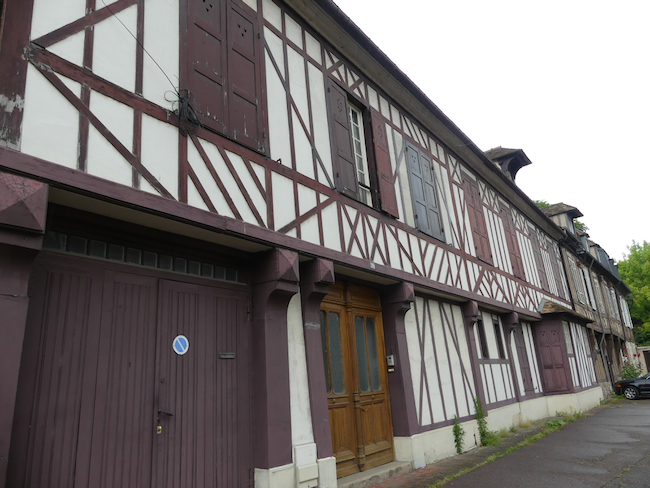
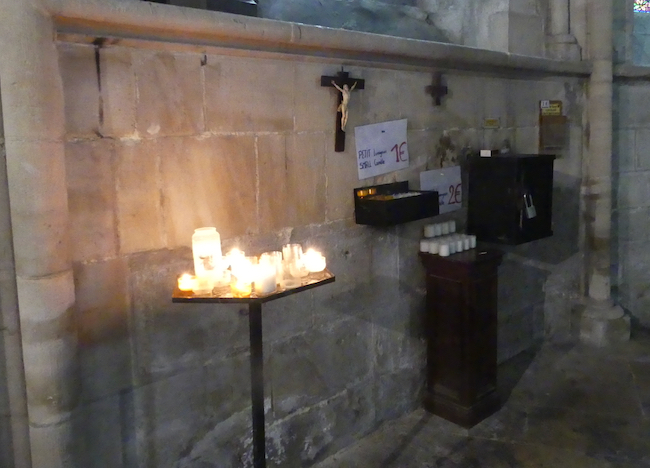
The Church, Notre Dame, shows signs of needing repair, but the French government is currently strapped for cash. In front of the church, the guide pointed to a statue, and said “This is Jesus.”
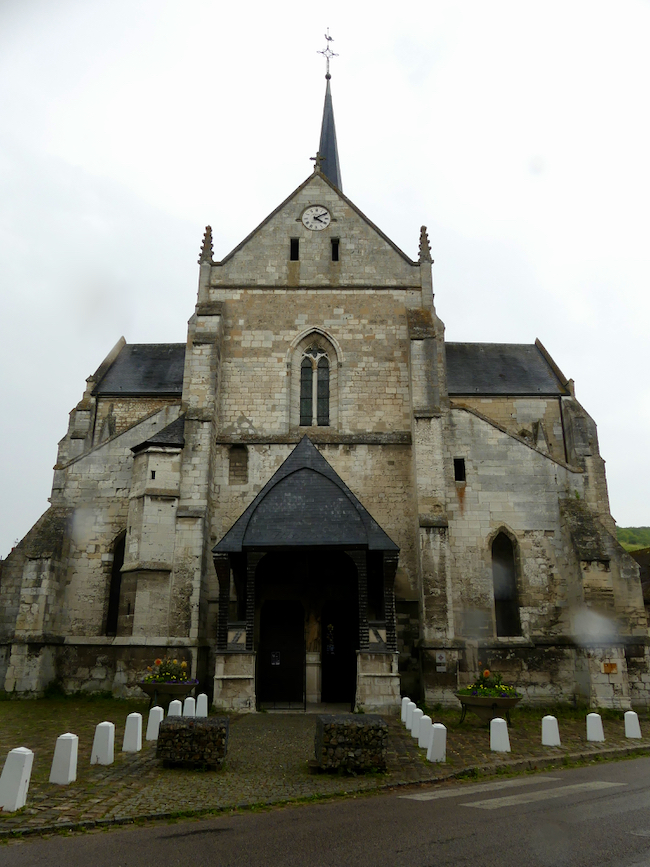

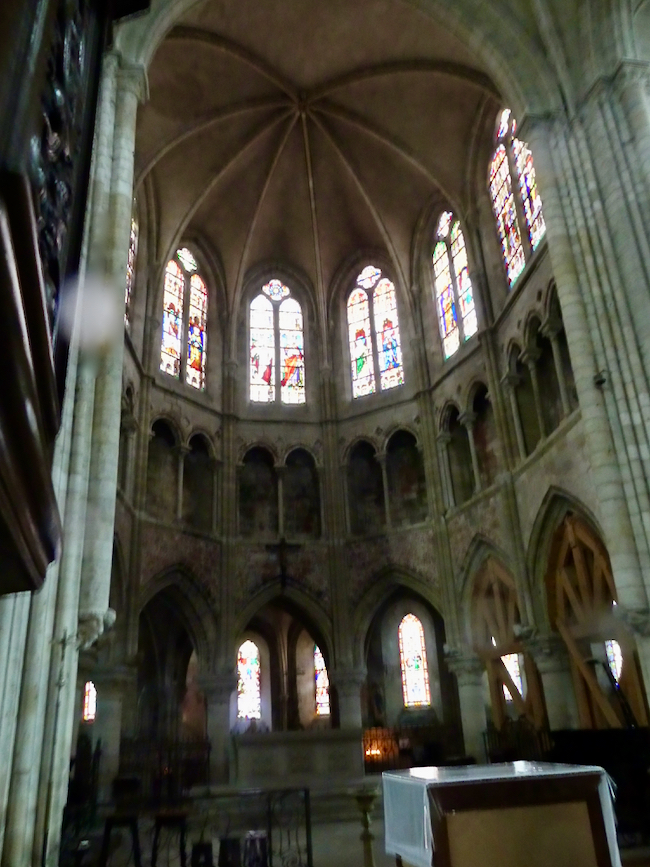

You can see signs of water damage on the walls. I can’t imagine what it would take to fix that and make it waterproof.
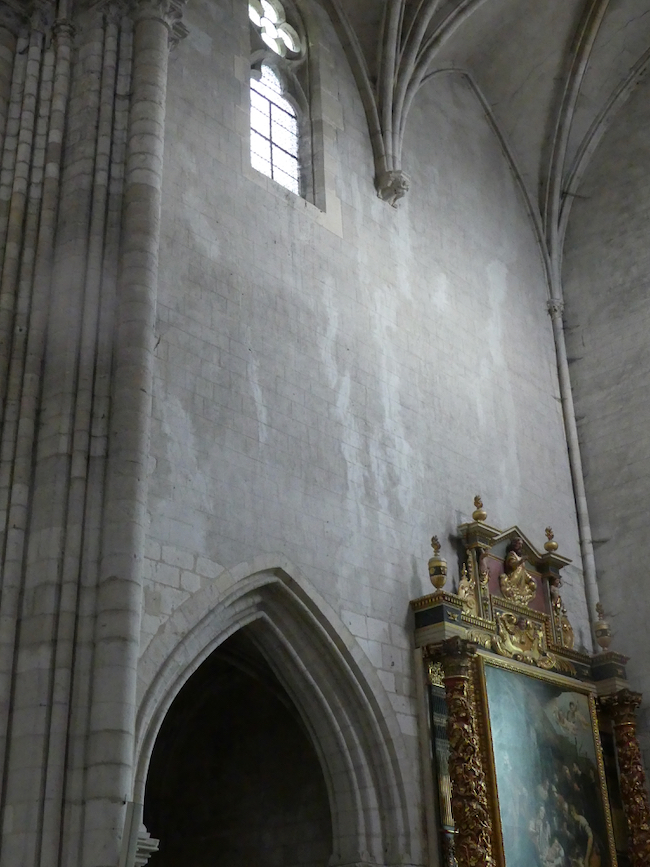
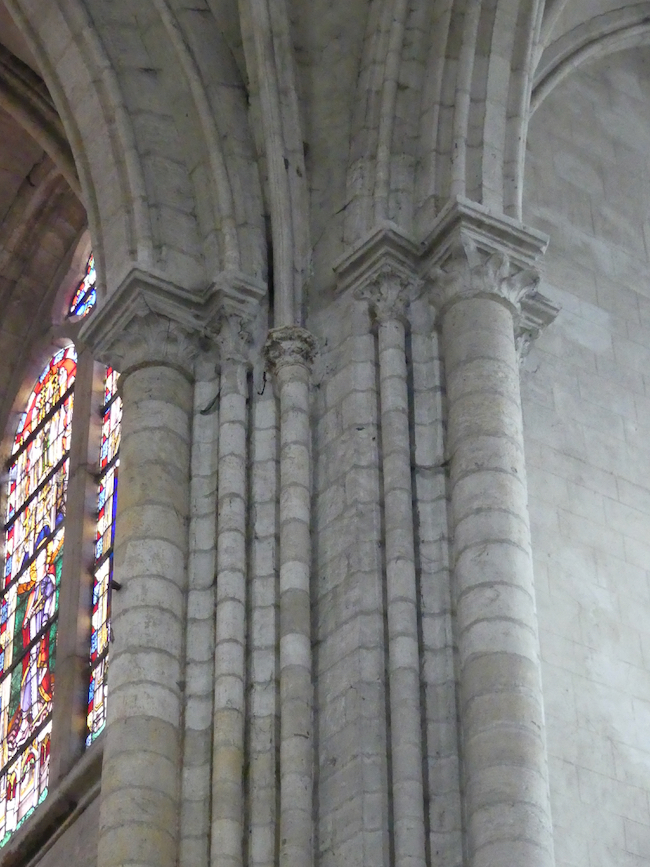



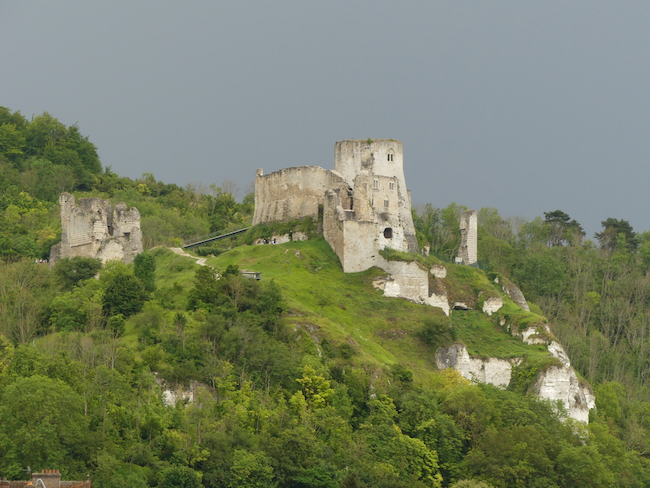


We have little sprinkles of rain, the first we have seen, and fortunately it is a rare occurrence on this trip.
The “Righteous Gentiles”
Today in our church Lectionary, we celebrate those who stood up to the Nazi policies and shielded and rescued thousands of Jewish people who might otherwise not have survived the torture, imprisonment and extermination, solely for being “the other.”
PRAYER (contemporary language)
Lord of the Exodus, who delivers your people with a strong hand and a mighty arm: Strengthen your Church with the examples of the Righteous Gentiles of World War II to defy oppression for the rescue of the innocent; through Jesus Christ our Lord, who lives and reigns with you and the Holy Spirit, one God, now and for ever. Amen.
“THE RIGHTEOUS GENTILES”
Although the phrase “Righteous Gentiles” has become a general term for any non-Jew who risked their life to save Jews during the Holocaust, it here appears to apply specifically to: Raoul Wallenberg [Swedish, d. 1947] Hiram Bingham IV [d. 1988, American]; Karl Lutz [d. 1975, Swiss]; C. Sujihara [d. 1986, Japanese]; and Andre Trocme [d. 1971, French].

Raoul Wallenberg (August 4, 1912 – July 17, 1947?) was a Swedish humanitarian who worked in Budapest, Hungary, during World War II to rescue Jews from the Holocaust. Between July and December 1944, he issued protective passports and housed Jews, saving tens of thousands of Jewish lives.
On January 17, 1945, he was arrested in Budapest by the Soviets after they wrested control of the city from the Germans, and was reported to have been executed while a prisoner at Lubyanka Prison, although this is not entirely certain.
Wallenberg has been honored numerous times. He is an honorary citizen of the United States, Canada, Hungary and Israel. Israel has also designated Wallenberg one of the Righteous among the Nations. Monuments have been dedicated to him, and streets have been named after him throughout the world.
— more at Wikipedia

Hiram “Harry” Bingham IV (July 17, 1903 – January 12, 1988) was an American diplomat. He served as a Vice-Consul in Marseille, France, during World War II, and helped over 2,500 Jews to flee from France as Nazi forces advanced.
In 1939, Bingham was posted to the US Consulate in Marseille, where he, together with another vice-consul named Myles Standish, was in charge of issuing entry visas to the USA.
On June 10, 1940, Adolf Hitler’s forces invaded France and the French government fell. Several influential Europeans tried to lobby the American government to issue visas so that German and Jewish refugees could freely leave France and escape persecution.
Anxious to limit immigration to the United States and to maintain good relations with the Vichy government, the State Department actively discouraged diplomats from helping refugees. However, Bingham cooperated in issuing visas and helping refugees escape France. Hiram Bingham gave about 2,000 visas, most of them to well-known personalities, speaking English, including Max Ernst, André Breton, Hannah Arendt, Marc Chagall, Lion Feuchtwanger and Nobel prize winner Otto Meyerhof.
— more at Wikipedia
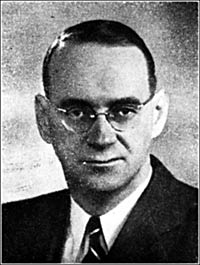
Carl Lutz (b. Walzenhausen, 30 March 1895; d. Berne, 12 February 1975) was the Swiss Vice-Consul in Budapest, Hungary from 1942 until the end of World War II. He helped save the lives of tens of thousands of Jews from deportation to Nazi Extermination camps during the Holocaust.
Lutz immigrated at the age of 18 to the United States, where he was to remain for more than 20 years. Lutz’s sojourn in the United States ended with his assignment as vice-consul to the Swiss Consulate General in Jaffa, in what was then Palestine.
Appointed in 1942 as Swiss vice-consul in Budapest, Hungary, Lutz soon began cooperating with the Jewish Agency for Palestine, issuing Swiss safe-conduct documents enabling Jewish children to emigrate.
Once the Nazis took over Budapest in 1944 and began deporting Jews to the death camps, Lutz negotiated a special deal with the Hungarian government and the Nazis: he had permission to issue protective letters to 8,000 Hungarian Jews for emigration to Palestine. Lutz then deliberately misinterpreted his permission for 8,000 as applying to families rather than individuals, and proceeded to issue tens of thousands of additional protective letters, all of them bearing a number between one and 8,000. He also set up some 76 safe houses around Budapest, declaring them annexes of the Swiss legation. Among the safe houses was the now well-known “Glass House” (Üvegház) at Vadász Street 29. About 3,000 Jews found refuge at the Glass House and in a neighboring building.
— more at Wikipedia
Chiune Sugihara (1 January 1900 – 31 July 1986) was a Japanese diplomat, serving as Vice Consul for the Japanese Empire in Lithuania. During World War II, he helped several thousand Jews leave the country by issuing transit visas to Jewish refugees so that they could travel to Japan. Most of the Jews who escaped were refugees from German-occupied Poland or residents of Lithuania. Sugihara wrote travel visas that facilitated the escape of more than 6,000 Jewish refugees to Japanese territory, risking his career and his family’s life.
When asked why he did it, he responded:
“You want to know about my motivation, don’t you? Well. It is the kind of sentiments anyone would have when he actually sees refugees face to face, begging with tears in their eyes. He just cannot help but sympathize with them. Among the refugees were the elderly and women. They were so desperate that they went so far as to kiss my shoes, Yes, I actually witnessed such scenes with my own eyes. Also, I felt at that time, that the Japanese government did not have any uniform opinion in Tokyo. Some Japanese military leaders were just scared because of the pressure from the Nazis; while other officials in the Home Ministry were simply ambivalent.
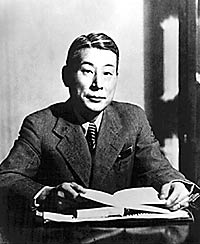
People in Tokyo were not united. I felt it silly to deal with them. So, I made up my mind not to wait for their reply. I knew that somebody would surely complain about me in the future. But, I myself thought this would be the right thing to do. There is nothing wrong in saving many people’s lives …. The spirit of humanity, philanthropy … neighborly friendship … with this spirit, I ventured to do what I did, confronting this most difficult situation —and because of this reason, I went ahead with redoubled courage. ”
When asked why he risked his career to save other people, he quoted an old samurai saying: “Even a hunter cannot kill a bird which flies to him for refuge.”
— more at Wikipedia
André Trocmé ( April 7, 1901 – June 5, 1971) and his wife Magda (née Grilli di Cortona, November 2, 1901, Florence, Italy – Oct. 10, 1996) are a couple of French Righteous Among the Nations. For 15 years, André served as a pastor in the town of Le Chambon-sur-Lignon on the Plateau Vivarais-Lignon in South-Central France. He had been sent to this rather remote parish because of his pacifist positions which were not well received by the French Protestant Church. In his preaching he spoke out against discrimination as the Nazis were gaining power in neighboring Germany and urged his Protestant Huguenot congregation to hide Jewish refugees from the Holocaust of the Second World War.

In 1938, André Trocmé and Reverend Edouard Theis founded the Collège Lycée International Cévenol in Le Chambon-sur-Lignon, France. Its initial purpose was to prepare local country youngsters to enter the university. When the refugees arrived, it also took in many Jewish young people wishing to continue their secondary education.
When France fell to Nazi Germany, the mission to resist the Nazis became increasingly important. Following the establishment of the Vichy France regime during the occupation, Trocmé and his church members helped their town develop ways of resisting the dominant evil they faced. Together they established first one, and then a number of “safe houses” where Jewish and other refugees seeking to escape the Nazis could hide. Many refugees were helped to escape to Switzerland following an underground railroad network. Between 1940 and 1944 when World War II ended in Europe, it is estimated that about 3500 Jewish refugees including many children were saved by the small village of Le Chambon and the communities on the surrounding plateau because the people refused to give in to what they considered to be the illegitimate legal, military, and police power of the Nazis.
— more at Wikipedia
I am thankful for Sawtucket, who has kept me up with my daily Lectionary readings for more than 22 years. I thank Sawtucket for today’s reading, reminding us that we are all of one blood, one humanity, no matter our skin color, our nationality, nor our religion. We are human beings, and our job is to watch over one another.
Bravo, Kuwait!

Bravo, Kuwait, for the first election in years, supplying Kuwait with what the New York Times describes as a “robust” collection of representatives.
As we know, democracy is messy. It is often compared to sausage making – you don’t want to know what goes into it. Having an autocratic leader, however, leads to increasing gaps between the very wealthy and privileged, and those who are at the bottom, working their bottoms off just to put a roof over their heads and food in the mouths of their children.
I look at the turbulence and polarization in my own country and thank God for a breath of fresh air, as this news of the election in Kuwait gives me hope. We are praying for a fair election in the United States.
Christmas Markets on the Elbe: Wittenberg
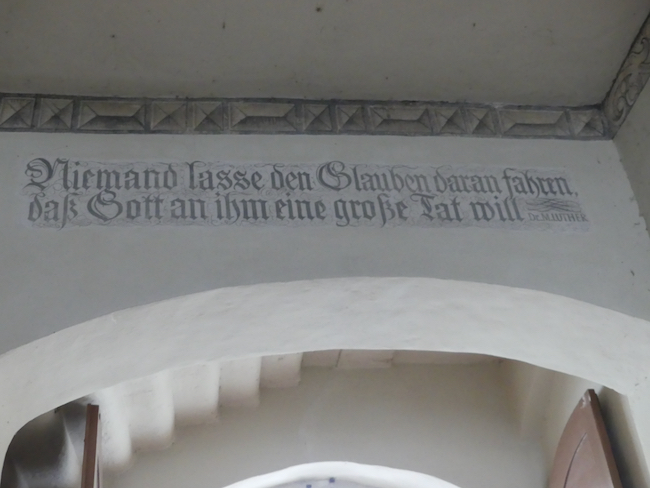
Off to Wittenberg, where our guide Christian takes us first to the old Catholic Church where Martin Luther posted his 95 theses, against practices of the Catholic Church which, according to his reading of scriptures, were just wrong and needed to be corrected. He did not intend to create a schism or a new religion. So here is the portal where there once was a door that is no more, burned in a fire, where Luther posted his 95 theses requesting correction of wrong-doings by the church.

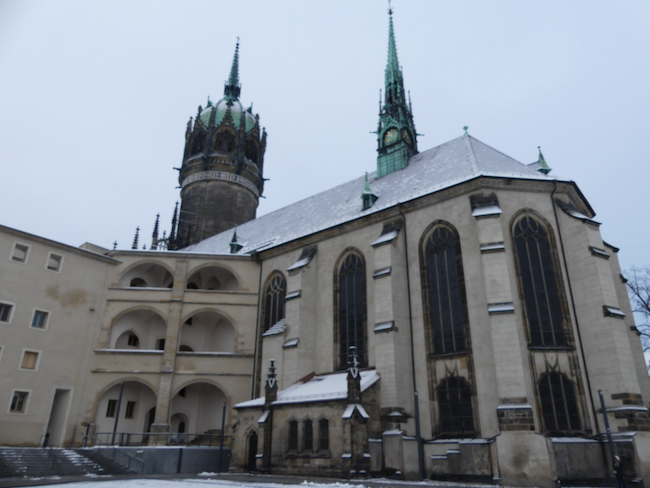
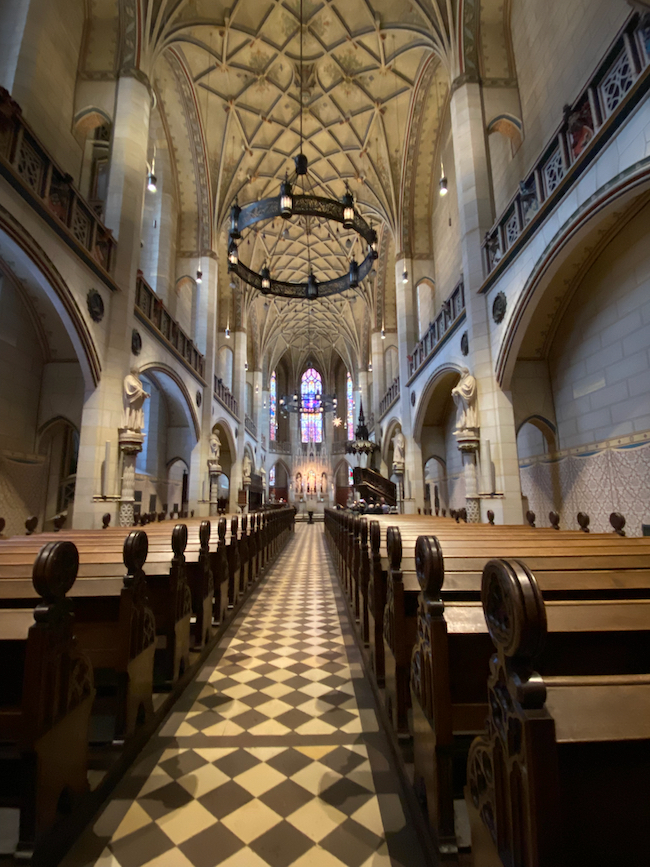
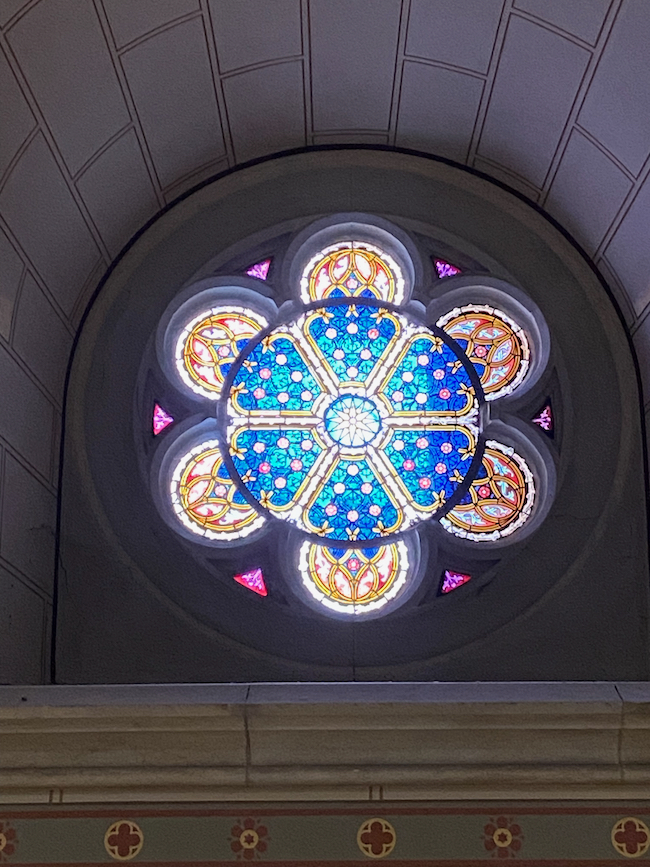


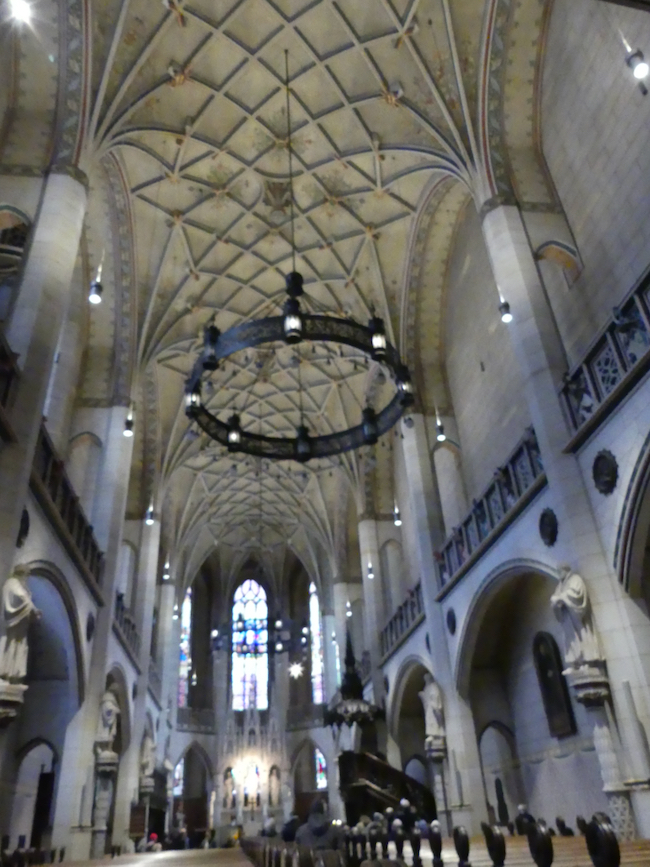

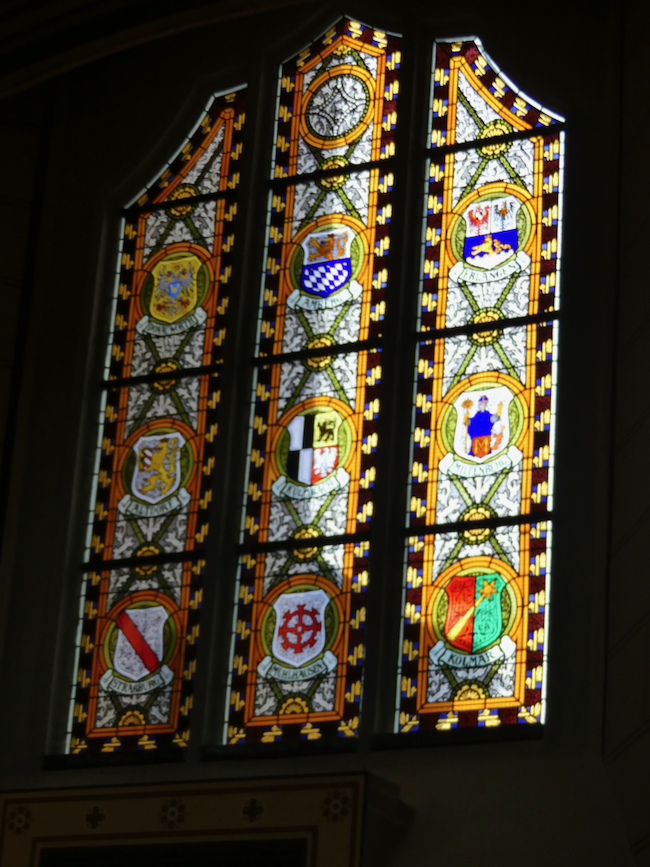

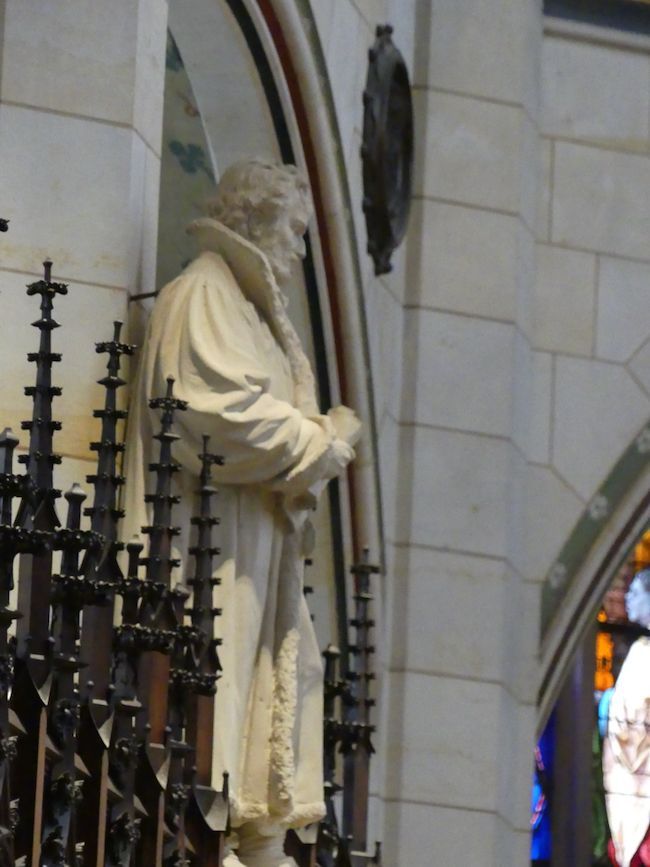

From there, visited various neighborhoods in Wittenberg, visiting Martin Luther’s home with Katerina Von Bora (a wondrous woman Luther referred to as his morning star, a hilarious reference with a double entendre, as a morning star is also a lethal medieval cudgel with pointed spikes on its head.
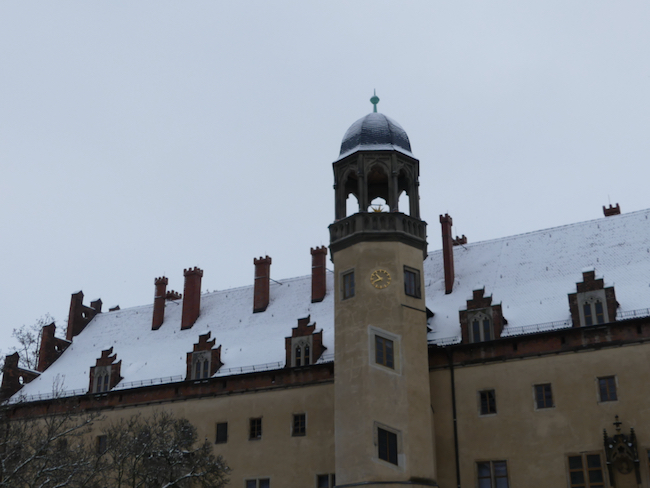
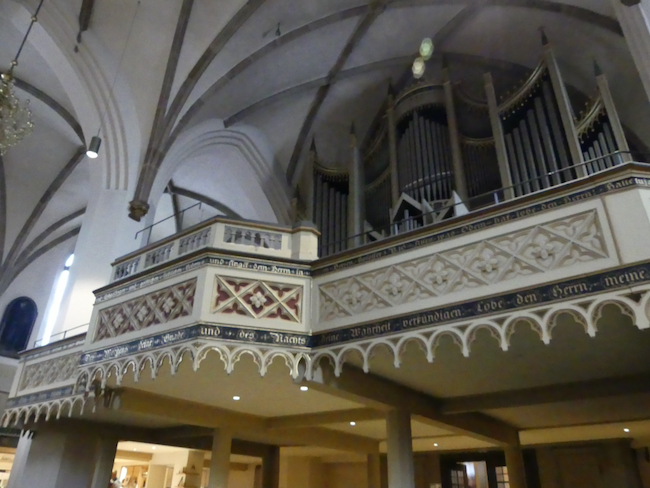
We ended up downtown at St. Mary’s, the church where Martin Luther preached, a beautiful fine place, more simple and much less elaborate than the Catholic Church. Christian gave us so much information; that I am now not able to keep it all straight.


I am grinning because someone had made a snowball and tucked it in Katarina’s curled hand. It wasn’t me! I didn’t do it! But it did give me a grin.
Below is the church where Martin Luther preached, after being excommunicated from the church and marrying Katarina Von Bora, who escaped a nunnery with several other women not interested in being nuns.




He told us about Luther’s anti-Semitism, in the context of the times, and of the town and the church’s continuing attempts to find redemption in coordination with its Jewish community. Christian told us about the tragic waste of the holocaust, how it hurt all humanity, and that the German people are determined that such a mindset will never again take hold in today’s Germany. We can only hope.
This time, we were successful in obtaining money from the ATM. We wandered through the Christmas Market and found our way back to the bus. We had a short trip to meet up once again with the Beyla, which in our absence, had transferred to the little town of Zahna-Elster. We quickly cleaned up, ate lunch and the Beyla left Zahna-Elster to make our way up the Elbe to Torgau, where the American Forces and Russian forces met near the end of World War II.
For the first time since our departure on Monday, we have had some time to breathe. We strolled through the lounge, admiring all the decorated Christmas trees, we organized our room, participated in the safety drill, and met up once again with Janice and Don. It was over very quickly, we came back to our cabin and as my husband napped, I uploaded photos, caught up with correspondence, and organized my thoughts to begin this journal of our journey.
I went to the nearby coffee and tea station, which also has three kinds of cookies, to pick up some chocolate cookies before I woke my husband (his favorite cookies). We gathered in the lounge for the Port Talk with Eva, as she briefed us on tomorrow’s excursions and events. After that, there is a walk into Torgau to view the memorial.
We went early enough to get good seats for the Port Talk, but as my husband decided he would go after all (he hadn’t wanted to get so cold again), and I decided not to go – Eve had emphasized how slippery it was and that anyone with mobility problems might not want to go, and that Torgau is always the coldest place she has ever visited, LOL. I thought “I’ll just skip this one.”
I snuggled under the featherbed, happy not to be out hiking in the dark.
EUPHROSYNE/SMARAGDUS OF ALEXANDRIA
MONASTIC, 5TH c.
The prayer in today’s Lectionary is dear to my heart:
PRAYER (contemporary language)
Merciful God, who looks not with outward eyes but discerns the heart of each: we confess that those whom we love the most are often strangers to us. Give to all parents and children, we pray, the grace to see one another as they truly are and as you have called them to be. All this we ask in the name of Jesus Christ, our only mediator and advocate. Amen.
Saint Euphrosyne of Alexandria (fl. 5th century CE) was a female saint who adopted male attire and lived at a local monastery as an ascetic.
Euphrosyne was the beloved only daughter of Paphnutius, a rich man of Alexandria, miraculously born in her parents’ old age in answer to a monk’s prayer. Her loving father desired to marry her to a wealthy youth.
But having already consecrated her life to God and under pressure to break her vow, she dressed as a man and assumed the identity of “Smaragdus” (“emerald”). She then escaped to a nearby men’s monastery, where she made rapid strides toward a perfected ascetic life. She was under the guidance of the abbot, who also happened to be the same monk who had prayed for her birth.
Years later, when Paphnutius appealed to the abbot for comfort in his bereavement, the abbot committed him to the care of Euphrosyne, still under the guise of Smaragdus. Paphnutius received from his own daughter, whom he had failed to recognize, helpful advice and comforting exhortation. Not until she was dying did Euphrosyne reveal herself to him as his lost daughter. After burying her, Paphnutius gave up all his worldly goods, and became a monk in the same monastery. There, he used his daughter’s old cell until his own death ten years after.
from Wikipedia

Recent Comments
ExpatAlien on What Country am I Living … intlxpatr on Yellowstone: Old Faithful to C… Michelle on Yellowstone: Old Faithful to C… Cathy on No Grown-Ups in Charge intlxpatr on Waiting for Snow Wikipedia Donate Button

Amazina


Early Voting in Florida


 Here There and Everywhere