Maladies of the Soul
Part of my morning meditation is that after I finish my readings from The Lectionary, I find the daily reading in Forward Day by Day. Today’s is particularly interesting, relating to Jesus healing the woman who touched the hem of his garment and was cured of her hemorrhagic disease. He lists some of the maladies of the soul, for which belief in Jesus is the best medicine:
MONDAY, January 28
Mark 5:21-43. [There was a woman] who had endured much under many physicians, and had spent all that she had; and she was no better, but rather grew worse.
Even the most talented and dedicated physician has an occasional patient who can identify with those words. Doctors, being human, are fallible, and some unhappy conditions have no human cure.
But then there is Jesus. Healing was a major part of Jesus’ earthly ministry. Often, as in this woman’s case, a physical malady is cured. This is true today as well. But many people, in Jesus’ day and ours, suffer from illnesses which are not cured, either by Jesus or a physician. What of them?
Three things: First, it is appropriate to pray for healing. Second, dying is integral to the world as God has created it. Generations are meant to come and go; no one should try to hang around here forever. Everyone’s body will wear out someday and a holy death is part of holy living. Third, the most important healing is not of the body but of the soul. Diseases of the soul include bitterness, anger, greed, seeking revenge, grasping for control, and condemning other people and groups of people. From these maladies, Jesus heals not some but all who follow in his way.
Feast Day of St. Anthony
In our Lectionary Readings for today, they list today as the Feast Day for St. Antony, one of the early monastics of the Christian Church.

ANTONY
ABBOT IN EGYPT (17 JAN 356)
Before the conversion of the Emperor Constantine in 312 AD, back in the days when Christianity was still a persecuted religion, the act of becoming a Christian involved turning one’s back on the pursuit of security, of fashionable prestige and popularity, of success as the term is widely understood. After the Emperor had changed Christianity from a persecuted religion into a fashionable one, many earnest Christians felt the need to make such a renunciation in the service of Christ, and did not see mere Church membership as any longer enough to constitute such a renunciation. Accordingly, many of them sought Christian commitment by fleeing from society into the desert, and becoming hermits, devoting themselves to solitude, fasting, and prayer. Although this trend was much accelerated and reinforced by the conversion of Constantine and attendant changes, it had already begun earlier. An outstanding early example is Antony of Egypt, often reckoned as the founder of Christian monasticism.
Antony of Egypt, the son of Christian parents, inherited a large estate. On his way to church one day, he found himself meditating on the text, “Sell all that you have, and give to the poor, and come follow me.” When he got to church, he heard the preacher speaking on that very text. He took this as a message for him, and, having provided for the care of his sister, he gave his land to the tenants who lived on it, and gave his other wealth to the poor, and became a hermit, living alone for twenty years, praying and reading, and doing manual labor.
In 305, he gave up his solitude to become the head of a group of monks, living in a cluster of huts or cells, devoting themselves to communal singing and worship, to prayer and study and manual labor under Antony’s direction. They did not simply renounce the world, but were diligent in prayer for their fellow Christians, worked with their hands to earn money that they might distribute it as alms, and preached and gave personal counseling to those who sought them out.
In 321, Christians in Alexandria were being persecuted by the Emperor Maximinus (the rule of Constantine was not yet universal), and Antony visited Alexandria to encourage those facing the possibility of martyrdom. He visited again in 335, when Arianism was strong in the city, and converted many, by his preaching and testimony, and by prayer and the working of miracles. His biography was written by Athanasius, who said of him: “Who ever met him grieving and failed to go away rejoicing?”
The Forward Day by Day website summarizes St. Antony just a little differently:
Today the church remembers Antony, Abbot in Egypt, 356.
Father of Christian Monasticism Many young men of the third-century world despaired of their decaying, materialistic, and licentious society. In Egypt many fled into the desert in protest and for their own souls’ health. Sometimes their behavior became almost as bizarre and unbalanced as the behavior of those from whom they fled. This was not true of Antony. Antony’s quiet and well-ordered life of devotion in the desert stood out in contrast both to the wickedness of the contemporary world and the eccentricities of some other hermits. He gave away all his possessions to the poor and thereby freed himself from the demands of property. Still, he found that he had to fight a seemingly endless battle against his personal passions and temptations. He helped fellow Christian hermits to organize their lives in meaningful patterns of prayer, work, and meditation. His own solitude was frequently interrupted by his concern for the secular church and by requests for counseling. He was a friend to Athanasius (see May 2) and his orthodoxy was unquestionable. It has been said that, “Alone in the desert, Antony stood in the midst of mankind.”
This is not the same St. Anthony who helps you find lost things; that is St. Anthony of Padua, but when I read about this St. Anthony, and his orderly life, I thought that beating back the forces of chaos keeps things from getting lost in the first place. 🙂
French Intercede to Save Mali
Heard yesterday on NPR that France was stepping up to the plate on Mali, found the story on BBC this morning . . . it isn’t easy. It’s like people in the US don’t get news of countries like Mali unless they really seek it out. You can find more stories on Mali and the Tuareg / Al Qaeda alliance tormenting Northern Mali at the BBC link.


The Ansar al Din is imposing in Mali the kind of Islam that the Taliban imposed in Afghanistan – an Islam which forbids music, forbids women to participate in public life, enforced by a group of ignorant, uneducated thugs with weapons. Everything Ansar al Din stands for is contrary to the true nature of Islam.
Go France!
French troops continue operation against Mali Islamists
Mali: Divided nation
French Defence Minister Jean-Yves Le Drian said army units had attacked a column of rebels heading towards the central town of Mopti.
He also revealed that a French pilot had been killed in fighting on Friday.
The French troops deployed on Friday after Mali’s army lost control of a strategically important town.
Mali’s government said its forces had recaptured the town, Konna, after the air strikes, but it was not clear if all Islamist fighters had left the area.
‘Terrorist state’
Armed groups, some linked to al-Qaeda, took control of the whole of northern Mali in April.
They have sought to enforce an extreme interpretation of Islamic law in the area.
Regional and Western governments have expressed growing concern about the security threat from extremists and organised crime.
Mr Le Drian said on Saturday that hundreds of French troops were involved in the military operation in Mali.
The minister said Paris had decided to act urgently to stop the Islamist offensive, which threatened to create “a terrorist state at the doorstep of France and Europe”.
He also revealed that a French pilot was killed in Friday’s fighting – during an air raid to support Mali’s ground troops in the battle for Konna.
“During this intense combat, one of our pilots… was fatally wounded,” the minister said.
Speaking on Friday, French President Francois Hollande said the intervention complied with international law and had been agreed with Malian interim President Dioncounda Traore.
It would last “as long as necessary”, Mr Hollande said.
French officials gave few operational details.
Residents in Mopti, just south of Konna, told the BBC they had seen French troops helping Malian forces prepare for a counter-offensive against the Islamists.
Mr Traore declared a state of emergency across Mali, which he said would remain in place for an initial period of 10 days.
He used a televised address to call on Malians to unite and “free every inch” of the country.
‘Crusader intervention’
The west African bloc Ecowas said it was authorising the immediate deployment of troops to Mali “to help the Malian army defend its territorial integrity”.
UN Secretary-General Ban Ki-moon says the situation in Mali is becoming increasingly volatile
The UN had previously approved plans to send some 3,000 African troops to Mali to recapture the north if no political solution could be found, but that intervention was not expected to happen until September.
French Foreign Minister Laurent Fabius said the aim of the operation was to stop Islamist militants advancing any further.
It was not clear how far the French would go in helping Mali’s government retake territory in the north.
At least seven French hostages are currently being held in the region, and Mr Fabius said France would “do everything” to save them.
A spokesman for al-Qaeda in the Islamic Maghreb (AQIM) said he considered the French operation a “Crusader intervention”, and told France it would be “would be digging the tombs of [its] sons” if the operation continued, according to the Mauritania-based Sahara Media website.
France ruled Mali as a colony until 1960.
This chart is from a Blog called The Moor Next Door:

Epiphany and The Star of the East at Christ Church in Pensacola
“Pay attention!” AdventureMan nudged me, hard. I was trying to find the Star of the East that Father Neal Goldsborough had just pointed out on our Christ Church dome, but I couldn’t find it. And I WAS listening, I was paying attention, I just also wanted to see the star, the special star on our dome, signifying the star that the wise men followed to find the child Christ.
I see a lot of other heads swiveled to look up, searching the dome for that special star. It’s one of my favorite feasts of the year, Epiphany; I can hear those camels grumbling and sputtering as they clop across the hard roads, I can feel the bite of the cold in the deserts (yes, in the winter deserts can be bone-freezing cold), and I can imagine the wise man consulting as to exactly where that star is leading.
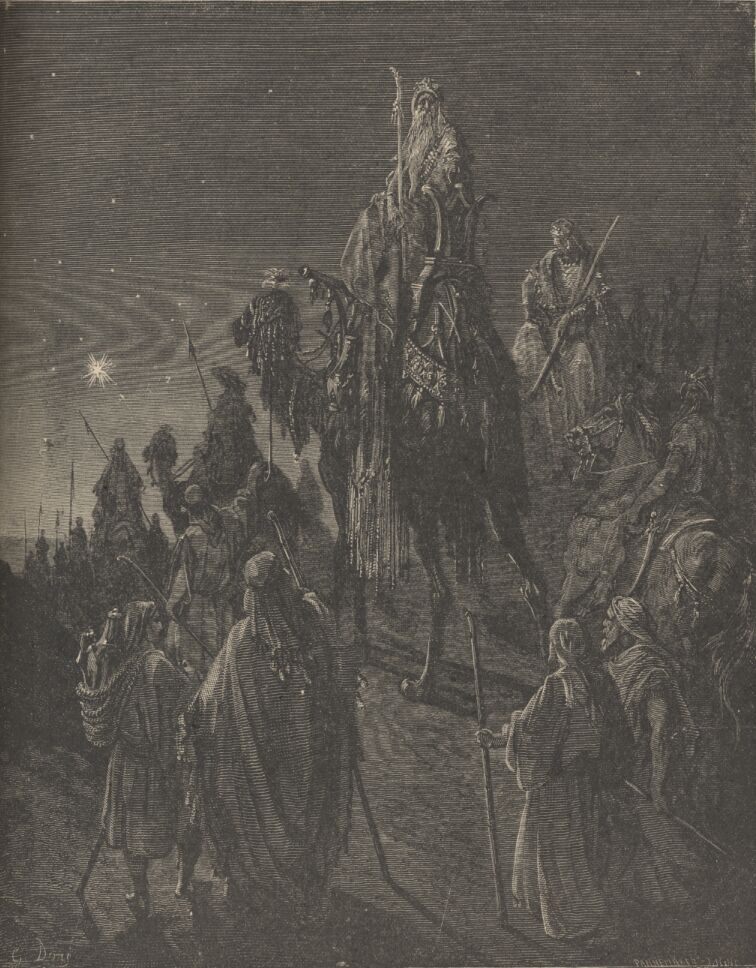
Later after the service, a kind Christ Church parishoner shows us where the star is – painted with more gold, shining brightly just over the horizon in the dome of Christ Church. It is beautiful, subtle, and it makes me happy to know that one star is special.
In this photo, you can see the hanging lamp that obscured my view of the star during the sermon, and you can see a slightly brighter star in the center of the lower dome:

A little closer, and the star shines even more brightly:

“Watch Out For those Christians”
AdventureMan and I knowingly make bad choices every now an then, and Chow Time is one of them. We haven’t been for months, ever since the nearby Mediterranean Plus shut its doors because of the competition from Chow Time, it broke our hearts. But today, AdventureMan just had a hankering for Chow Time, and it’s fresh oyster day, so we went.
We had hit the early service at our church, 0800, so we had been home, changed, AdventureMan hit the garden and I hit the Christmas decor, taking it all down, which I do superstitiously since my Chinese friend told me the way I come into the new year is the way I will spend my new year, so you need to have everything done, EVERYTHING, so that your new year will be prosperous and easy and not full of tasks left undone. You have to have your bills all paid and money in your pocket and a clean clean and organized house.
Oh aaarrgh. It’s a lot of pressure to get it all done by New Year’s Eve. But we had accomplished a lot by noonish, and AdventureMan was hungry – STARVING! I like Chow Time, too, because you can have whatever you want, in the amount you want it. I like tiny bites of bad things, and I try to make myself focus on eating good things.
So I am thinking about my strategy when I see an older woman with a walker, the kind with a seat in it, so she has her plate on the seat and she is very carefully and sedately making her way along the buffet stations, but there are well-dressed crowds of people politely pushing in front of her, all around her. These are no-make-up, long skirt, long hair kinds of people, and they are all sitting together in very nice clothes at several tables in one area, and unbidden, the thought comes to me “Oh! Watch out for those Christians!”
And then I have to laugh, because of course, I am one of THEM. We all think we are so good in our own way, but don’t get between these Christians and the buffet, or, even if you are elderly and pushing your plate on a walker, you might get run-over by these good Christian folk!
I am telling you this, knowing that I have my own weakness. I can be perfectly polite at a buffet, I can patiently allow others to push in front, or rush to get all the crab legs – I’m not going to starve. I think of our Kuwaiti friend who would jokingly tell his wife “have you never seen food before?” He told us it was something Kuwaiti parents would say to their children, teaching them to be polite.
My weakness is airports, airplanes, air travel. Partly it comes from growing up in Europe, where even if seats were assigned, everyone just rushed on the plane and sat where they wanted. It was hilarious, but if you are from a culture where people think seat assignment means something, it is also kind of frustrating. If you didn’t edge your way onto the plane, you got a rotten seat, like the middle seat, where you have to sit stiffly so your shoulders don’t bump someone else’s.
These days it is even worse. Even if you have an assigned seat, with all the people afraid to pay a baggage charge, they are heaving these hefty bags on board, and overhead space is first-come, first served. Those late on the plane have difficulty finding a place in the overhead bins.
So here is the dilemma. Not even a dilemma, we all KNOW what the right answer is. Do you politely let others go ahead? Do we courteously allow those who are disabled, or accompanied by young children, or having trouble walking, do we courteously allow them to board first, with no grumbling?
I still remember being Platinum, getting to board first, getting frequent upgrades, getting all the perks . . . being treated “special.” It’s kind of addictive, being treated as if you are special.
I contrast that with what we KNOW to be true, that the first will be last, and that those who serve others, who wait upon others, who allow others to be preferred – those are the ones who will inherit the kingdom of heaven.
So as I sit in our little booth at Chow Time, I wonder if I show the face of Christ by my behavior, and I cringe a little at all the instincts in me that still want to be first. Even if I step back and allow the lady with the walker to go ahead, I still have my failures in other areas of my life, areas where I step up rather than step back. Food for a new year’s resolution . . . .
Declare His Praise in the Coastlands!
The old testament reading for this morning continues in Isaiah, and I think he is talking to me! He mentions the coastlands several times, ending with “Let them give glory to the Lord,
and declare his praise in the coastlands.”
Isaiah 42:1-12
42Here is my servant, whom I uphold,
my chosen, in whom my soul delights;
I have put my spirit upon him;
he will bring forth justice to the nations.
2 He will not cry or lift up his voice,
or make it heard in the street;
3 a bruised reed he will not break,
and a dimly burning wick he will not quench;
he will faithfully bring forth justice.
4 He will not grow faint or be crushed
until he has established justice in the earth;
and the coastlands wait for his teaching.
5 Thus says God, the Lord,
who created the heavens and stretched them out,
who spread out the earth and what comes from it,
who gives breath to the people upon it
and spirit to those who walk in it:
6 I am the Lord, I have called you in righteousness,
I have taken you by the hand and kept you;
I have given you as a covenant to the people,*
a light to the nations,
7 to open the eyes that are blind,
to bring out the prisoners from the dungeon,
from the prison those who sit in darkness.
8 I am the Lord, that is my name;
my glory I give to no other,
nor my praise to idols.
9 See, the former things have come to pass,
and new things I now declare;
before they spring forth,
I tell you of them.
10 Sing to the Lord a new song,
his praise from the end of the earth!
Let the sea roar* and all that fills it,
the coastlands and their inhabitants.
11 Let the desert and its towns lift up their voice,
the villages that Kedar inhabits;
let the inhabitants of Sela sing for joy,
let them shout from the tops of the mountains.
12 Let them give glory to the Lord,
and declare his praise in the coastlands.
John the Baptist Illuminated
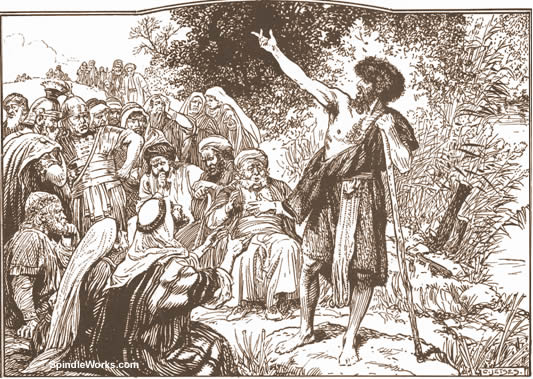
Today’s Gospel reading in The Lectionary is the very first chapter of Mark, featuring John the Baptist. As I read it, I had a memory flash of sitting in the Anglican Church in Kuwait, hearing a reading on John the Baptist’s Feast Day, a new reading I had never heard before, and it was beautiful, read in the rich, plummy tones of British English by their Ambassador. At the end, he said it was from the Quran.
John the Baptist in the Quran?
I was so ignorant about so many things. I still have so much to learn.
Here is today’s reading from Mark:
Mark 1:1-8
1The beginning of the good news* of Jesus Christ, the Son of God.*
2 As it is written in the prophet Isaiah,*
‘See, I am sending my messenger ahead of you,*
who will prepare your way;
3 the voice of one crying out in the wilderness:
“Prepare the way of the Lord,
make his paths straight” ’,
4John the baptizer appeared* in the wilderness, proclaiming a baptism of repentance for the forgiveness of sins. 5And people from the whole Judean countryside and all the people of Jerusalem were going out to him, and were baptized by him in the river Jordan, confessing their sins. 6Now John was clothed with camel’s hair, with a leather belt around his waist, and he ate locusts and wild honey. 7He proclaimed, ‘The one who is more powerful than I is coming after me; I am not worthy to stoop down and untie the thong of his sandals. 8I have baptized you with* water; but he will baptize you with* the Holy Spirit.’
This is from an Islamic website, Soundvision, one which uses many sources to illuminate the teachings of the Quran and the Bible:
The birth of Prophet John is miraculous because he is the offspring of a barren mother and an elderly father. His father, it should be noted, was also a Prophet named Zecheriah.
“‘Zecheriah, We bring you the good news of the birth of a son whose name shall be John, one whose namesake We never created before.’ He said: ‘My Lord! How can I have a boy when my wife is barren and I have reached an extremely old age?’ He answered: ‘So shall it be.’ Your Lord says: ‘It is easy for Me’, and then added: ‘For beyond doubt, I created you earlier when you were nothing’ (Quran 19:7-9).
“Zecheriah exclaimed: ‘My Lord! How shall I have a son when old age has overtaken me and my wife is barren?’ He said: ‘Thus shall it be; Allah does what He wills'”(Quran 3:40).
With the birth of John, Allah granted Zecheriah his desire for an heir.
“And We bestowed favor upon Zecheriah, when he cried to his Lord: ‘Lord! Leave me not solitary [without any issue]. You are the best Inheritor.’ So We accepted his prayer and bestowed upon him John, and We made his wife fit (to bear a child). Verily they hastened in doing good works and called upon Us with longing and fear, and humbled themselves to Us” (Quran 21:89-90).
The beautiful qualities of John
Allah did not just miraculously grant Zecheriah a son. He made this child a blessing for his parents and beautiful in character. Prophet John is described in the Quran as chaste and righteous.
“Then Zecheriah prayed to his Lord: ‘O Lord! Grant me from Yourself out of Your grace the gift of a goodly offspring, for indeed You alone heed all Prayers. As he stood praying in the sanctuary, the angels called out to him: ‘Allah gives you good tidings of John, who shall confirm a command of Allah, shall be outstanding among men, utterly chaste, and a Prophet from among the righteous” (Quran 3:38-39).
“‘O John! Hold fast the Book with all your strength. We had bestowed wisdom upon him while he was still a child; and We also endowed him with tenderness and purity; and he was exceedingly pious and cherishing to his parents. Never was he insolent or rebellious. Peace be upon him, the day he was born, and the day he will die, and the day he will be raised up alive. (Quran 19: 12-15).
Part of a line of honored Prophets
Finally, as mentioned above, Prophet John is one of the Prophets Muslims must believe in. He is one of the 25 mentioned in the Quran.
“And We bestowed upon Abraham (offspring) Isaac and Jacob and each of them did We guide to the right way as We had earlier guided Noah to the right way; and (of his descendants We guided) David and Solomon, Job, Joseph, Moses and Aaron. Thus do We reward those who do good. (And of his descendants We guided) Zecheriah, John, Jesus and Elias: each one of them was of the righteous.” (Quran 6:84-85).
Prince of Peace
Today, in our Lectionary readings, we have the powerful words of the prophet Isaiah, telling of the birth of the babe who will bring us endless peace, justice and righteousness . . .

Isaiah 9:1-7
9*But there will be no gloom for those who were in anguish. In the former time he brought into contempt the land of Zebulun and the land of Naphtali, but in the latter time he will make glorious the way of the sea, the land beyond the Jordan, Galilee of the nations.
2 *The people who walked in darkness
have seen a great light;
those who lived in a land of deep darkness—
on them light has shined.
3 You have multiplied the nation,
you have increased its joy;
they rejoice before you
as with joy at the harvest,
as people exult when dividing plunder.
4 For the yoke of their burden,
and the bar across their shoulders,
the rod of their oppressor,
you have broken as on the day of Midian.
5 For all the boots of the tramping warriors
and all the garments rolled in blood
shall be burned as fuel for the fire.
6 For a child has been born for us,
a son given to us;
authority rests upon his shoulders;
and he is named
Wonderful Counsellor, Mighty God,
Everlasting Father, Prince of Peace.
7 His authority shall grow continually,
and there shall be endless peace
for the throne of David and his kingdom.
He will establish and uphold it
with justice and with righteousness
from this time onwards and for evermore.
The zeal of the Lord of hosts will do this.
Jesus and the Woman to be Stoned for Adultery
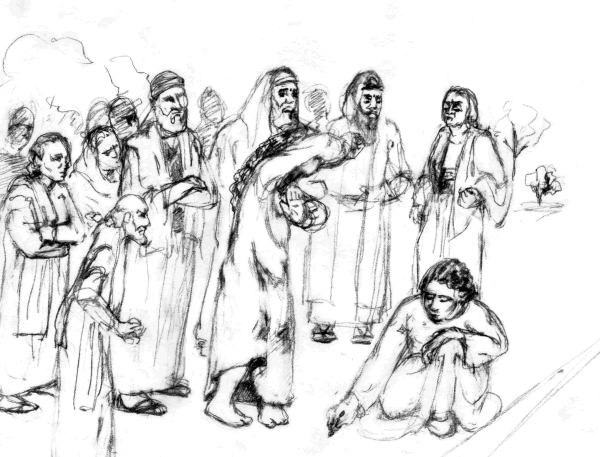
I’ve always loved this passage, along with the woman at the well, and the woman who touched the hem of his garment to be healed from a bleeding disease – Jesus was kind to women, in a time and culture where a pious man would not speak to a woman.
Hilary Mantel captures the stunning experience in Eight Months on Ghazzah Street, where she asks a man at a counter for an item and he looks right past her. She repeats her request and he acts as if she isn’t there. Her husband walks up, asks, and receives an answer. Cultural biases most often do not favor women. In this regard, Jesus – and the prophet Mohammed – changed everything, and treated women as equal people. It’s amazing to me how many of the Jesus anecdotes featuring females survived; it must have been astonishing in his time to treat females – property – with such compassion and humanity.
Footnote to this passage from The Lectionary: The most ancient authorities lack 7.53—8.11; other authorities add the passage here or after 7.36 or after 21.25 or after Luke 21.38, with variations of text; some mark the passage as doubtful.
John 7:53-8:11
53Then each of them went home, 81while Jesus went to the Mount of Olives. 2Early in the morning he came again to the temple. All the people came to him and he sat down and began to teach them. 3The scribes and the Pharisees brought a woman who had been caught in adultery; and making her stand before all of them, 4they said to him, ‘Teacher, this woman was caught in the very act of committing adultery. 5Now in the law Moses commanded us to stone such women. Now what do you say?’ 6They said this to test him, so that they might have some charge to bring against him. Jesus bent down and wrote with his finger on the ground. 7When they kept on questioning him, he straightened up and said to them, ‘Let anyone among you who is without sin be the first to throw a stone at her.’ 8And once again he bent down and wrote on the ground.* 9When they heard it, they went away, one by one, beginning with the elders; and Jesus was left alone with the woman standing before him. 10Jesus straightened up and said to her, ‘Woman, where are they? Has no one condemned you?’ 11She said, ‘No one, sir.’* And Jesus said, ‘Neither do I condemn you. Go your way, and from now on do not sin again.’]]*
The Gift of Saint Nicholas
This is from today’s Lectionary reading on the saints, by James Kiefer; today is the feast of Saint Nicholas, and in many European countries, little children find their shoes filled with little gold coins (chocolate) or . . . sticks with coal (usually also candy, these days)
The true Saint Nicholas embodied the spirit of anonymous giving – a grace more rarely seen in these days of blogs and twitters and 15 seconds of news coverage.
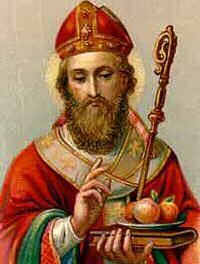
(of course I chose this image of Saint Nicholas because of the pomegranates 🙂 )
NICHOLAS OF MYRA
FRIEND OF CHILDREN, GIVER OF GIFTS, CLIMBER OF CHIMNEYS, ETC. (6 DEC 326)
The story of St. Nicholas offers a possible way of dealing with the “Santa Claus” problem, to parents who do not want to lie to their children, even in fun, but do not want to say simply: “Bah, humbug! There is no such thing as Santa. Forget about him.”
Nicholas was a native of the western part of what is now Asiatic Turkey. He became Bishop of Myra in the fourth century, and there are many stories of his love for God and for his neighbor.
The best-known story involves a man with three unmarried daughters, and not enough money to provide them with suitable dowries. This meant that they could not marry, and were likely to end up as prostitutes. Nicholas walked by the man’s house on three successive nights, and each time threw a bag of gold in through a window (or, when the story came to be told in colder climates, down the chimney). Thus, the daughters were saved from a life of shame, and all got married and lived happily ever after.
Because of this and similar stories, Nicholas became a symbol of anonymous gift-giving. Hence, if we give a gift to someone today without saying whom it is from, it can be called “a present from Saint Nicholas (or Santa Claus).” Some parents explain this to their children and invite the child to join them in wrapping a toy (either something purchased for that purpose, at least partly with the child’s allowance, or else a toy that the child has outgrown but that is still serviceable) or an outgrown but not shabby item of the child’s clothing, or a package of food, and then going along to donate it to a suitable shelter that will give it to someone who will welcome it. This gift is then called “a present from Santa,” so that the child understands that this is another name for an anonymous gift given to someone whom we do not know, but whom we love anyway because God does. (Presents within the family can be “From Santa” or “From Santa and…”)
Pictures of Nicholas often show three bags of gold next to him, and often these bags have become simply three disks or balls. Nicholas became the patron of an Italian city (I think Bari, which is where his body is now buried) that was a center of the pawnbroking business, and hence a pawnbroking shop traditionally advertises by displaying three gold balls over its front. It is thought that some persons looking at pictures of Nicholas confused the three round objects with human heads. Hence there is a story of a wicked innkeeper who murdered three boys and salted their bodies to serve to his guests, to save on the butcher’s bill. Nicholas visited the inn and confronted the innkeeper, who confessed his crime, whereupon Nicholas prayed over the brine-tub and the three boys leaped out unharmed. Other stories have him saving the lives of three innocent men who had been condemned to death. Still other stories have him coming to the rescue of drowning sailors (could this be related to the brine-tub incident?). Nicholas has always been popular with children, mariners, pawnbrokers, the Dutch, the Russians, and recently, the department-store owners. (American readers may remember the story of the brine-tub through reading it as children in the book The Dutch Twins, by Lucy Fitch Perkins, author of The Spanish Twins, The Italian Twins, and many similar books, all children’s favorites in the middle of this century. They may now be banned as politically incorrect — I have no idea. If your children know the brine-tub story, from this book or elsewhere, they may be interested to know how it may have originated.)
In many countries, Nicholas visits children on his feast day, 6 December, and brings them gifts then. In these countries, there is usually no exchange of Christmas presents, but there may be gifts again on January 6, the feast of the coming of the Wise Men, who brought gifts to the Holy Child of gold, frankincense, and myrrh. In America, it may be thought necessary to yield to outside pressure and let Nicholas distribute gifts on December 25.
If you want to show your children (or yourself) how Nicholas is remembered by Christians with a background different from your own (unless, of course, this IS your background), you might want to attend an East Orthodox service at this time. Many Eastern Orthodox congregations have services on the evening before 6 December that feature “visits from Saint Nicholas.” He appears as a bishop, with no red suit. The faithful leave their shoes outside the church door, and find in them afterwards gold coins (actually chocolate wrapped in gold foil) representing the gold dowries of the three daughters. To find a service and inquire what it is likely to be like, look up CHURCHES, ORTHODOX in the Yellow Pages. For an English-language service, “Orthodox Church in America” or “Antiochan Orthodox” parishes are likely choices, but do not overlook other possibilities.
We are told, but it is uncertain, that Nicholas was imprisoned for his faith before the accession of Constantine, and that he was present at the Council of Nicea in 325. We may note in passing that the picture of him as roly-poly is a late development. Early stories indicate that he was generous to others, but not given to self-indulgence. Indeed, even as an unweaned infant, he fasted regularly on Wednesdays and Fridays.
by James Kiefer
Recent Comments
tigerbutterya0c5ff1d… on “Who Would Do Such a… intlxpatr on A Lawless, Authoritarian … Kuwait Someday on A Lawless, Authoritarian … intlxpatr on Oh Thank You, Amazon! Rivergirl on Oh Thank You, Amazon! Wikipedia Donate Button

Amazina


Early Voting in Florida


 Here There and Everywhere